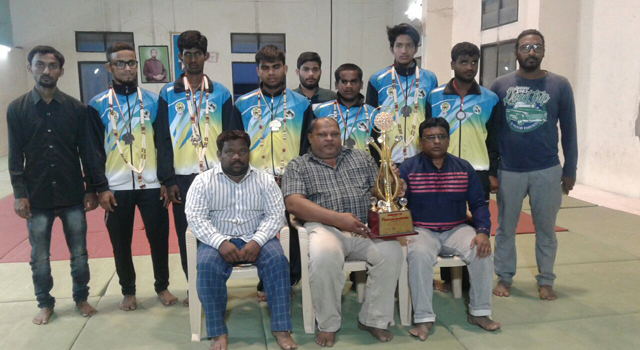
The Telangana State members who won seven medals in the sixth National Judo Championship in Lucknow
Hyderabad:
Telangana managed to bag seven medals in the recently held sixth National Judo Championship at the Babu Singh Badminton Stadium in Lucknow.
Telangana led by coach MA Aziz managed to clinch a gold, a silver, and 5 bronze medals for its outstanding performance in various categories. Participants of the 28 membered brigade also made the state proud by securing the 2nd position in the junior category of the all India championship.
While K Shiv Kumar received the gold medal under the above 70 kg category and Sujit was awarded the silver for his performance in the “50 kg above” category. Hasan Ali Bawazir,Md Sohail, Ghazansarullah Khan, G Venkatesh and Nagaraj secured bronze medals in their respective divisions.
source: http://www.thehansindia.com / The Hans India / Home> Sports / February 12th, 2018
An alumnus of SMJN post graduate college in Haridwar has written a book “Muslim Vayask aur Media” which dwells of the views of the community members regarding their presentation in the media.
Dhanesh Dwivedi says that in his study, about 80 percent of adult Muslims in parts of Rajasthan, said that they felt as if media is not playing a positive role and at times is totally indifferent to them. This is based on an analysis of data from a 2014 survey conducted by research scholar Dwivedi.
A voracious writer, Dwivedi has worked as technician and interpretor of Russian language in Indian Air Force for almost 10 years. He conducted a survey of 600 Marwar Muslims, from the areas of western Rajasthan including Jodhpur, Jaisalmer, Barmer and Uttarlai in Hindi and his research work got published by Maulana Azad foundation. His questionnaire of 50 points was distributed at various Madrasas and other Islamic institutions where adult Muslims could understand Hindi language.
“On the question if the world looks upon Muslims with a different outlook and whether propaganda was being aimed at defaming Islam, 52 per cent opined that the media was responsible for negative propaganda while 30 per cent said that media was totally indifferent with 18 per cent of the responders terming the media’s attitude as positive,” said Dwivedi.
On the question of whether Muslims were treated as votebanks by political parties, 66 per cent replied in affirmative and 15 per cent in the negative while 19 per cent said that they did not know. Drawing conclusions from the study, Dwivedi says in his work that the heat is felt by Muslim community members, which is a matter of concern. The electronic media must rethink on how they can create a positive attitude towards the Muslim community members.
He told this correspondent that the adult Muslims he questioned in his study seemed to be much contented with the print media in comparison to the electronic media. Also, the young Muslim generation appears less interested in Urdu language and the print media can come forward to generate their interest in the language in some way, he added.
The secretary of Marwar Muslim Educational and Welfare Society, Mohammad Ateek opined,”In the past four years, the neglect factor towards the Muslim community has increased. The condition has worsened than what Dhanesh Dwivedi has highlighted in his book. It is pure vote bank politics being played with us.
source: http://www.dailypioneer.com / The Pioneer / Home> State Editions> Dehradun / by Radhika Nagrath, Haridwar in Dehradun / Monday – February 05th, 2018
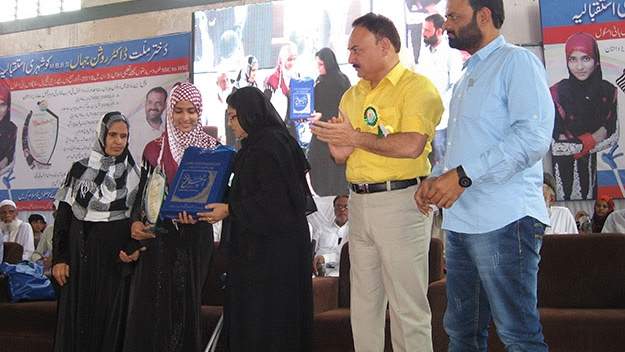
Ex Mayor Tahera Rasheed felicitating Roshan Jahan as her mother Ansara Khatoon, ASP Sunil Khadasne (second from right) and MLA Asif Shaikh (supplied photo)
Fighting all odds and overcoming physical and language barrier, she cracked MBBS exams and is now preparing for post-graduate entrance.
Having lost both legs in a train accident, facing acute poverty, and belonging to a conservative Muslim family. She would not have needed any other excuse to give up in life.
Yet, fighting all odds and overcoming physical and language barrier, she cracked MBBS exams and is now preparing for post-graduate entrance.
The inspiring story of Roshan Jahan, the 23-year-old Muslim girl from Mumbai who hit the headlines after passing this year’s MBBS finals, went viral on print and electronic media, Internet and social networking sites, with each minute detail, except for one thing that she also has a golden voice.
Roshan Jahan left hundreds of students who had gathered at Zaini Basheer Hall in Malegaon to hear her story, mesmerised, and teary-eyed, by reciting tunefully a poem written and composed by her.
The poem was dedicated to her mother, who Roshan said, deserved, after Allah the Almighty, all credit for her extraordinary success.
“It is because of my mother, after Allah, the Almighty and the most Merciful, that I am standing here in front of you as a role model,” she said amid applause from hundreds of students.
She said after losing her both legs in the train accident, there were times, when she would feel completely hopeless. But, it was her mother, she said, who lifted her spirits up and gave her hope in her darkest hours.
“After I survived the train accident, my mother would say think…why Allah gifted you a ‘second life’. It must be for something really big,” she recalled.
Roshan Jahan’s legs had to be amputated after she fell off a local train in October 2008 while travelling from Andheri to Jogeshwari. She has been using prosthetic legs since April 2009. She was returning home after writing her college exam papers at Anjuman-i-Islam Girl’s college, Bandra, when she lost her balance and fell onto the tracks and her legs came under the moving train.
Recounting her ordeal, she said, “Orthopedic surgeon Dr Sanjay Kantharia who operated on me took care of me like I was his daughter. Even after the accident in 2008, I did not drop out and studied at home and appeared for exams.
“I cleared the state’s medical entrance exam, MHCET, and was later asked to go for a medical test for the handicapped at JJ Hospital. The doctors there said that as per the rules, only students who had between 40% to 70% disability could be given admission in the MBBS course. I was denied admission as I had 88% disability.”
She said Kantharia then suggested she move court.
“We met senior lawyer V P Patil, who took up my case for free. During the hearing I would go to the court with my relatives. Justice Shah, after hearing my petition and seeing me visiting the court, directed the college authorities to admit me,” Roshan said.
source: http://www.khaleejtimes.com / Khaleej Times / Home> Specials> Happiness Times / by Ummid.com / April 14th, 2016
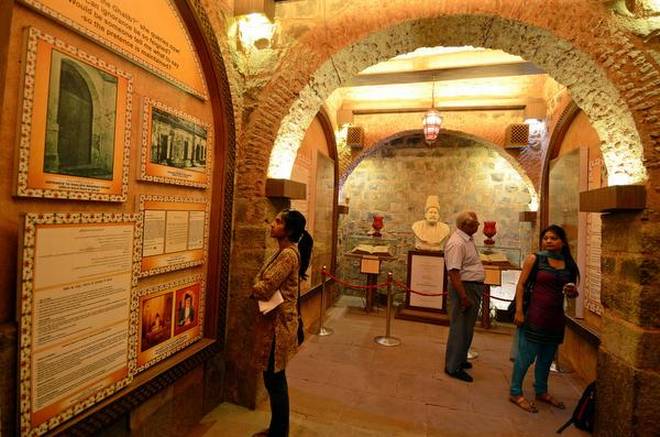
AT HOME Visitors at Ghalib’s Haveli | Photo Credit: Sushil Kumar Verma
We know Mirza Ghalib as a Dilliwallah, but the bard had a strong emotional connection with Agra as well
Mirza Ghalib’s death anniversary on 15th February did not evoke the same interest as his birth anniversary two months earlier. Of course, there was a literary festival in Connaught Place and another in India International Centre, one can say the 210th birth anniversary drew greater public attention than probably that of any other Urdu (or Hindi) poet. The haveli he lived in and the Town Hall were the main venues of the functions then, along with the Subz Burj Park in Nizamuddin, now named after him. But nobody thought of holding a function at Kala Mahal in Agra, where Mirza Nausha was born on December 27, 1797 and of which he was so nostalgic because of childhood memories. Just goes to show how possessive Delhiwallahs have become of Ghalib and of Mir Taqi Mir, who was not only born in Agra but also had an affair with his cousin in the vicinity of the Taj. An enraged family then shunted off the Mir to Delhi where he attained great heights before moving to Lucknow at the invitation of the Nawabi Court of Awadh, where his outdated attire provoked him to recite his famous introduction: “Dilli jo ek Shahr tha alam mein intikhab…/Jisko falak ne loot ke bezar kar diya/Hum rehne wale hain usi ujre dayar ke” (I’m a resident of the same looted garden, Delhi, devastated by heaven).
Incidentally, it was the Mir Sahib who had predicted that the boy Ghalib (whose early recitals he had heard) would one day become a big shair. But Yours Truly spent a whole afternoon in and around Ghalib’s haveli last week and wondered at the sudden twist of destiny that has brought it into the limelight again. The area of Ballimaran, of which Gali Qasim Jan is a part, got its name (there are other versions too) from the boatmen who once inhabited it. Thereafter, it saw a sea-change with the high and mighty deciding to build their havelis there. It is after Nawab Mir Qasim Jan, an Iranian nobleman, that the gali is named. Qasim Jan at first lived in Lahore, where he was attached to the court of the Governor, Moin-ul-Mulk, in the 1750s. That was the time when Ghalib’s grandfather also migrated to India from Turkey.
Qasim Jan was an influential man and a great friend of the Governor. But when the latter fell fighting Ahmad Shah Abdali, who had invaded Punjab, Qasim Jan helped Moin-ul-Mulk’s widow, Mughlai Begum, to rule the province in the name of her infant son. He seems to have been particularly close to the begum, who admired his sagacity. But the admiration was mutual for Qasim Jan could not have been immune to the charm of the begum who continued to defy Abdali despite losing her husband.
It was during the reign of Shah Alam that Qasim Jan joined the court at Delhi. He was conferred the title of Nawab, and in order to be close to the Red Fort built his haveli in Ballimaran. After the death of Qasim Jan, his son Nawab Faizullah Beg resided in the haveli. Ghalib also lived in Ahata Kale Sahib for some time after his release from debtors’ prison and that is the time he is said to have remarked that after being an inmate in the “Gora” (white man’s) jail he had moved to Kale’s (black man’s) jail.
Ghalib subsequently moved to the haveli in Qasim Jan Street. But during the First War of Independence of 1857, he lived for some time in Sharif Manzil where Hakim Ajmal Khan’s father used to reside. The reason was that Sharif Manzil was a protected place in those days because its owner was the personal physician of the Maharaja of Patiala, who was on good terms with the British. After the upheaval, Ghalib went back to his house, where his wife Umrao Begum held sway and made it into a virtual mosque.
However, there is still a mosque next to Ghalib’s house. An old bearded man, wearing a brand new sherwani and with a stick in hand, was standing next to it. Asked if Ghalib ever visited the masjid, he shook his head and declared, “I don’t think so, unless when he became old. What else can you expect from a man who wrote: ‘Masjid ke zer say ek ghar bana liya hai/Ek banda-e-qamina hamsaye khuda hai” (I have set up abode in the vicinity of a masjid so a wretch is now God’s neighbour). As one walked away after hearing him, the first “degh” of biryani was being opened by the roadside seller and the smell was too appetising to resist the temptation of tasting it. Ghalib too must have eaten like this sometimes or sent his faithful servant Kallu to buy the stuff.
Before settling down in Gali Mir Qasim Jan, Ghalib lived in the house of his in-laws, where several mushairas were held. Why they were discontinued at the haveli is not known but one reason may have been the opposition of his puritanical wife. So the mushairas the poet attended were generally the ones held at the Red Fort and Haveli Sadr Sadur in Matia Mahal. In Agra, of course, he was too young to take part in poetry recitation and instead flew kites with the son of Raja Chet Singh at Kala Mahal, where some claim that his spectre is still seen on moonlit nights. He, no doubt, missed Kala Mahal and the Redstone Horse at Sikandra, Agra, to which he always sent greetings through his friend Mirza Tafta Secundrabadi. The Ballimaran haveli somehow did not evoke the same nostalgia in him, probably because most of his children died in it in infancy. Wonder if he would have approved of the museum set up there! But at Kala Mahal fateha is still offered for his repose.
source: http://www.thehindu.com / The Hindu / Home> Society> History & Culture> Down Memory Lane / by R.V. Smith / February 26th, 2018
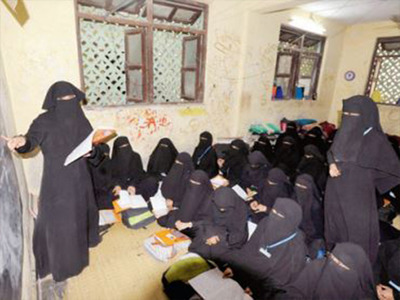
Over a dozen students, all clad in burqas, are in a small classroom.Their teacher, dressed identically, keeps a close watch.Everyone is on the floor while books on Hadith (traditions of the Prophet), commentaries on the Quran and tomes on fatwas line the walls.
This is the Madrassa Jamiatul Mominath in Moghalpura, which is the city’s first and only institute that trains women to become muftias. Instruction is imparted in the Darul Ifta, or fatwa department.
Fatwa is an opinion that Muslims seek on a range of subjects, including marriage, menstruation, divorce, adoption, property issues, and rituals like namaz and roza.Countless madrassas in the country–such as UP’s Darul Uloom Deoband–run training courses, but most of them are for men.
“There are several questions that women hesitate to ask muftis. We thought women would be more comfortable discussing their issues with muftias. That’s why we introduced this one-year course 12 years ago,” said Hafiz Mastan Ali, Jamiatul Mominath’s founder.
Set up in 1991, the madrassa has 2,500 students today , of whom 400 are hostellers. The muftia course began with only five girls, but this year, the department is training 15.So far, the madrassa has produced 318 muftias.
The fatwa department’s head, Nazima Aziz, said making girls muftias is empowerment. “Once an alima (female graduate) completes fazila (post-graduation), she is eligible for the fatwa course.”
Aziz explained that the course is divided into five segments: prayers, women’s personal issues, limitations (what women can and can’t do), property issues and current issues. ” A fatwa is given in the light of Quran commandments and the Prophet’s traditions. Muftis try their best to be neutral while giving judgments on disputes. If someone is not satisfied with the decision, he or she can consult another mufti or muftia,” she said.
The girls share Aziz’s opinion on the importance of their role. A muftia in the making, Suraiya Shakeel Khan wants to help women. “I can guide people on religion.” Khadeeja Fatima feels she would get more respect in the community once she becomes a muftia. Most of them, like Aziz, are in favour of setting up more Darul Iftas for women across the country .
Interestingly, Aziz and her students backed the All India Muslim Personal Law Board (AIMPLB)’s stand on triple talaq. “Talaq in one sitting should be discouraged, but it cannot be banned as that will be tantamount to interference in sharia laws,” said Mohammed Hasnuddin, head of Mominath’s fatwa department for men. “We don’t agree that talaq is a sword dangling over the heads of women. It’s an option to end an oppressive marriage and should be used as last resort.”
source: http://www.timesofindia.indiatimes.com / The Times of India / News> City News> Hyderabad News / by Mohammed Wajihuddin / TNN / January 09th, 2017
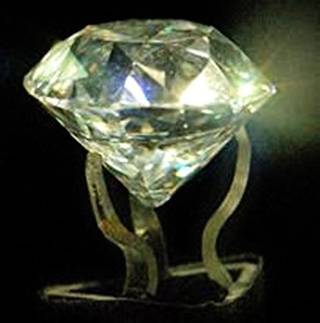
Mir Mahboob Ali Khan was taken to court by the trader who sold him the huge Jacob diamond
Of all the Nizams who ruled Hyderabad ,Mir Mahaboob Ali Khan — the sixth Nizam — was the most delightful and pleasure-loving monarch. He had great liking for everything western, be it dress, cars, manners and habits.
Born in 1866, he came to the throne at the age of three after the death of his father Afzal ud Daulah, and ruled till 1911. Mahaboob Ali kept the most lavish court in Hyderabad that several native rulers in India tried to emulate. He had a passion for expensive jewellery and precious diamonds. A number of exquisite pieces of jewellery including that of the famed necklace of Mary Antoinette of France, found place in his prized collections. However, the most renowned in his collection was the Jacob diamond, said to be the fifth biggest in the world.
Victoria Diamond
Originally known as Victoria Diamond, Jacob diamond had a short, but eventful, history before reaching Hyderabad. It was found in Kimberly mines in South Africa in 1884 and was secretly transported to England to avoid heavy duties then in place for raw diamonds. It was sold to a consortium of jewellers at the Hutton Garden diamond market in London. The gem was then sent to Amsterdam in 1887 where it was polished in a specially erected workshop. The finished gem, with 58 facets, weighing 185. 75 carats was stunningly beautiful, in its cut, clarity and colour. (Kohinoor weighed only 105.6 carats).
It was this Victoria diamond, also called Imperial diamond that Alexander Jacob, the Shimla-based diamond dealer, sold to Mahaboob Ali Khan, the Nizam of Hyderabad in 1891. Since then it came to be called, Jacob Diamond.
Deal Went Murky
Like many famous diamonds of the world, Jacob diamond too had its own tale of woes due to the shady deal in its sale by Jacob to the Nizam. Jacob was a well-known, but notorious, Jewish merchant dealing in antiques and jewels having a shop in Shimla. Quite aware of Mahaboob Ali Pasha’s obsession for diamonds, Jacob arrived in Hyderabad in early 1891 to sell the Victoria diamond that was still in London. Jacob met the Nizam through Albert Abid, Nizam’s trusted Chamberlin, himself a jeweller and like Jacob, a Jew.
Jacob, with his alluring eloquence, spoke of the fabulous Victoria diamond and showed its glass replica that he had got made. Finally, after negotiations, both agreed for a mutual price of ₹46 lakhs. Half of the agreed amount, ₹ 23 lakhs, was paid as advance immediately by depositing in the bank and the remaining amount was to be paid on delivery of the diamond.
_______________________________________________
Czar Nicholas views Nizam’s Jewels
Czar Nicholas II, the last Emperor of Russia, was a guest of Mahboob Ali Khan in Hyderabad. Nicholas, as the Grand Duke of Russia, visited Hyderabad in 1892, two years before he succeeded his father as Emperor of Russia. The Duke stayed at the Falaknuma Palace along with other Russian officials accompanying him. The Nizam exhibited his famed jewel collection for the Russian Prince at a specially erected grand pavilion at the Chowmahalla Palace. Nicholas went on a hunting expedition in the Nekkonda forests near Warangal. A number of sports events were also organised at the magnificent Mahaboob Mansion in Malakpet for the visiting Prince and his entourage.
Much later, in the wake of Bolshevik Revolution that broke out in Russia, Czar Nicholas II was executed with family in July 1917
_________________________________________________
It was Jacob’s suggestion that the Nizam would use it as a paper-weight on his official papers and that his image would go up with such a use.
On July 21, 1891, when Jacob came with the original diamond, the Nizam to his disappointment found the diamond was much smaller than what the model was. Therefore he refused to buy the diamond and Jacob was asked to return the money paid as advance. But the wily Jacob by then, contrary to the understanding, had withdrawn all the advance money from the bank.
Jacob insisted that the Nizam pay him the remaining amount, and went so far as to file a case in the High Court in Calcutta. During the trial, the Calcutta High Court wanted to interrogate the Nizam as a witness. Accordingly, the Nizam met the commission at the Residency on October 5, 1891 but felt it an insult to go before a Commission of enquiry. On returning from the Residency, the angry Nizam, wrapped Jacob Diamond in a piece of cloth that was used to wipe the nib of his pen, pushed it into a shoe, and staved it off in his table draw, vowing never to open.
His son and successor, Mir Osman Ali Khan who succeeded his father in 1911, discovered it and used as paper weight, the purpose for which his father bought it.
What happened to Jacob?
The case Jacob filed proved to be his nemesis for, he had to spend all his money on his advocates. Born in Armenia , to Jewish parents, Alexander Malcolm Jacob was an ambitious and unscrupulous person. He came to India in 1871 with nothing and grew enormously influential as a dealer in jewels, diamonds and antiques. After his relations with the Nizam were strained, other native rulers treated him like the plague and refused seeing him. Jacob ultimately died in penury in Bombay. His life served a model for India-born Rudyard Kipling, to create the character, Lurgan in his Nobel prize winning novel, Kim, published in 1901.
source: http://www.thehindu.com / The Hindu / Home> Society> History & Culture / by K S S Seshan / February 21st, 2018
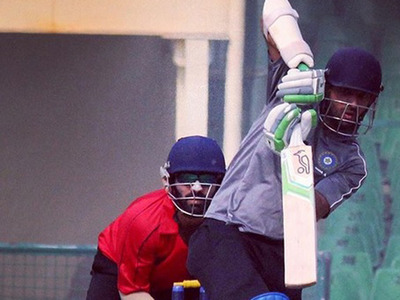
Faiz Fazal’s strike rate in the tournament is currently 253.
Nagpur :
Faiz Fazal has always been a free-flowing player. He has all the shots in the book.
In fact, during his Under-19 days, he was known to be one of the talented stroke players in the country. His highest score in limited overs cricket at the Under-19 level was 181, which came against Railways. However, with responsibilities in the Vidarbha fold, he had to curb his natural instincts. He became the mainstay of Vidarbha batting right from his first season.
Despite scoring 912 runs in the latest Ranji Trophy, Faiz didn’t get a look in for the IPL. However, that hasn’t stopped him from performing well. The Vidarbha skipper is in blazing form during the ongoing DY Patil Twenty20 tournament in Mumbai, where most of the IPL players are playing.
Faiz, who plays in the Times Shield and DY Patil Twenty20 for Jain Irrigation, is hitting some big sixes. In fact, his power hitting has surprised some of the IPL scouts, who are keeping an eye on their players’ performance. His strike rate in the tournament is currently 253. His brilliant performance has helped Jain Irrigation qualify for the knockouts.
In the qualifier match against Income Tax, Faiz hit 72 in just 27 balls, which had eight sixes and two fours. “He hit some big sixes. Most of the hits were sixes in any ground in the world. It’s just pure bad luck he couldn’t get into any IPL team. Maybe this performance can remind talent scouts about this different aspect of his batting. This is a quality tournament where you get good bowlers,” a talent scout, who doesn’t wish to be named, told TOI on Thursday.
He had watched Faiz’s knock against Income Tax. Incidentally, Faiz got out to Vidarbha allrounder Himanshu Joshi.
The tournament, which is generally prelude to the IPL, was postponed as the BCCI preponed the Syed Mushtaq Ali Twenty20 Trophy. Now, it’s acting as a preparatory tournament for the IPL. In the first match of the main draw against Reliance 1, Faiz scored 31 in just 13 balls, hitting four boundaries and two sixes. He took India Under-19 pace sensation Kamlesh Nagarkoti to cleaners pulling him for a six and four. He also smashed Punjab seamer Baltej Singh for a six and four in the first four balls. Reliance 1 also had the Kerala seamer Nidhish MD, India Under-19 spinner Ankul Roy and leg-spinner Rahul Chahar.
Former India stumper Kiran More, who is part of the Reliance support staff, was all praise for Faiz’s aggressive display. “He played extremely well against us. There are a lot more permutations combinations in the IPL. There are many international players who didn’t get to any team. Teams know what and who they want and you need to fit into their requirement,” More told TOI.
“Faiz is good, compact player with a solid technique. He has all the shots in the book. If he performs like this, he will surely get his chances. He has played for the country so he knows what it takes to get there. Sometimes you need a bit of luck going your way. I don’t see age will be an issue for him,” More added.
In the second match against Air India, the 32-year-old scored 34 in just 16 balls with the help of four boundaries and two huge sixes. Jain Irrigation won both the matches by comfortable margins. These knocks are perfect answers to those who only term him a four-day player.
source: http://www.timesofindia.indiatimes.com / The Times of India / News> Sports News> Cricket News / by Ruchir Mishra / TNN / February 25th, 2018
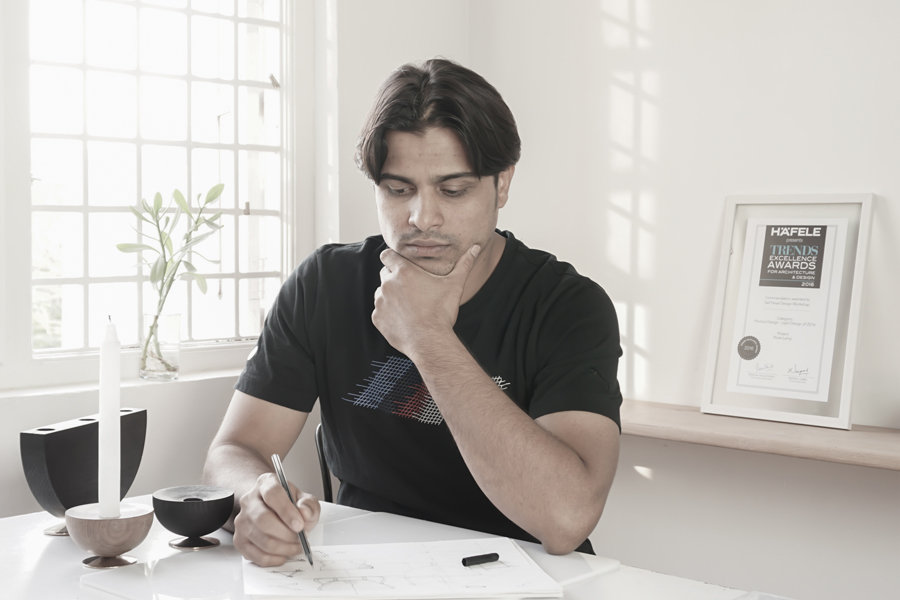
It all started with cars, as Saif explained to us. His dream of becoming an Automotive Designer started early on to which point he even enrolled into an Architecture Undergraduate program near Bangalore just to be able to pursue a Master’s degree in car design. There, in college, he also joined the Formula Student Racing Team, where he acquired diverse experience in design and technical know-how. Now that’s real commitment.
But things took a U-turn when later he dropped the plan to go ahead with his Master’s, thinking that it was too restricting to be involved in just one specific field. At that point, he had discovered that only an Industrial Design course could give him the freedom to be multi-disciplinary, and to be able to work on Architecture, Product design, Automotive design and more. Then, the rest is history.
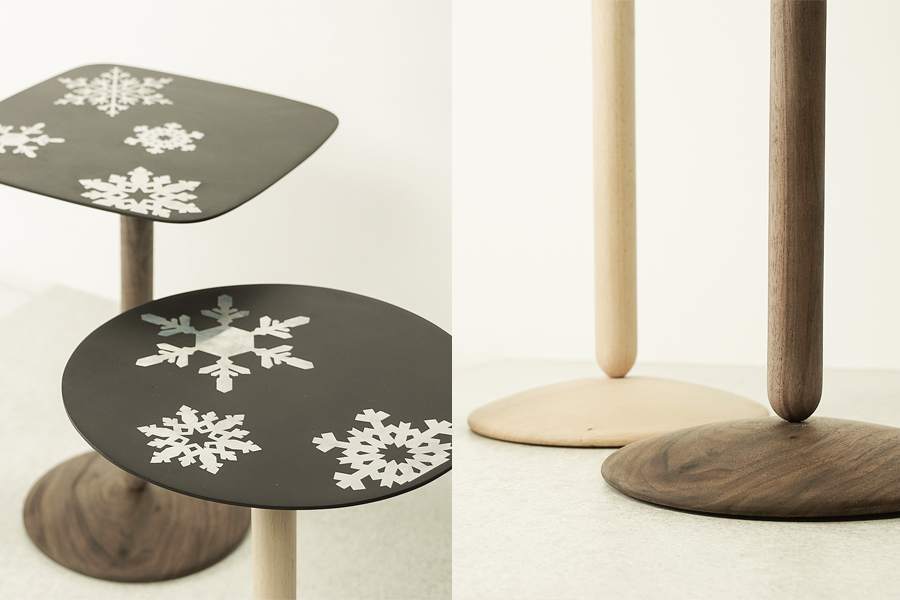
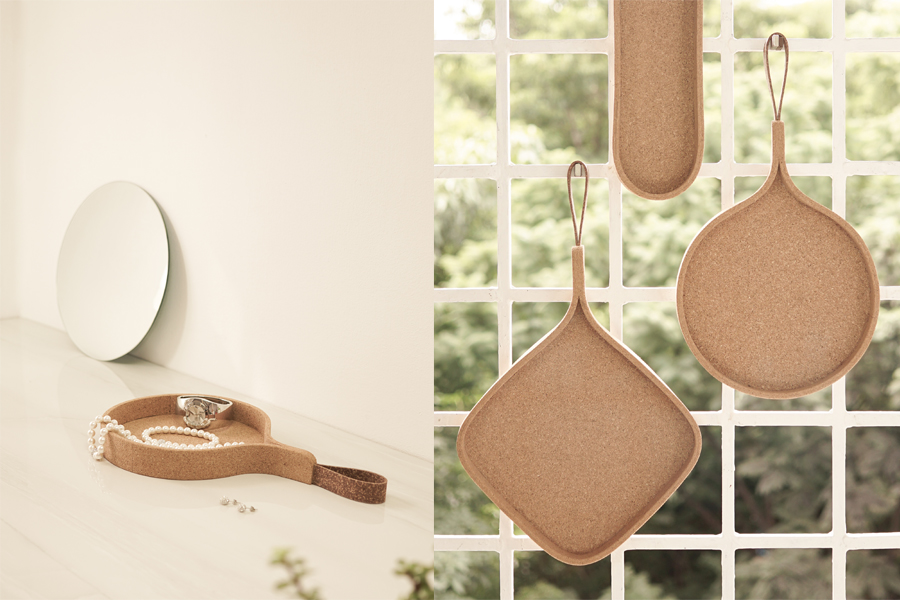
Winning design from EDIDA INDIA 2017: Qaiser Series (T) and Cork Trays (B).
“Design, in general, is what gets me going,” he said, “So it is all a playful adventure.” Since setting up his creative office in 2014, Saif had been steadily creating designs that draw heavily from his appreciation of technology and processes. But it wasn’t until he won the recent EDIDA India for furniture and tabletop with the Qaiser Series and Cork Trays that he finally caught the eyes of the global design industry.
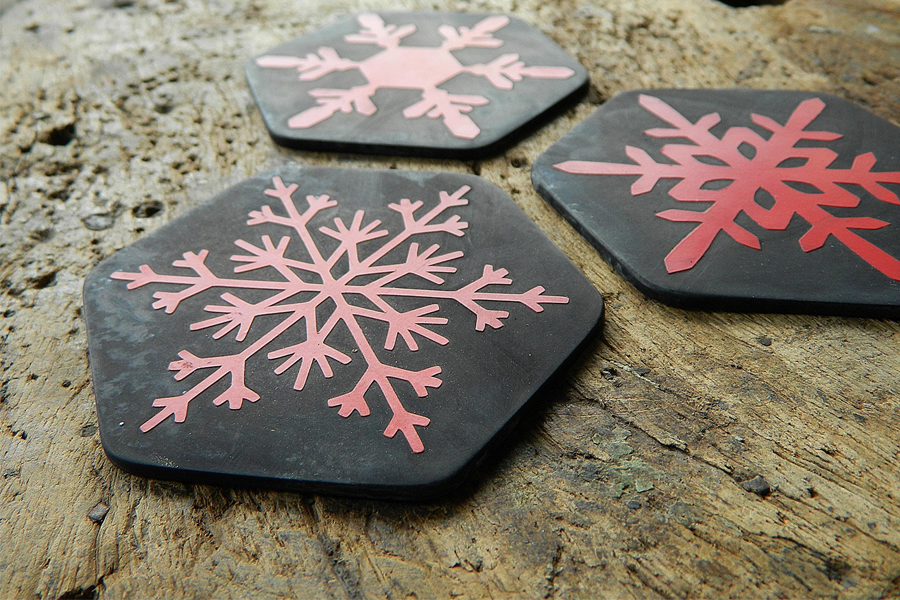
The former is a series of side tables with tops that used a unique craft form called ‘Bidriware’. “One of its kind in the world,” explained Saif, “It uses a special mud from the medieval fort in Bidar, in South India. So it is made by us with local craftsmen.” The latter, a quite self-explanatory design, takes the shapes of typical hanging cutting boards, but with a thick border to hold objects in their place. Akin to Enzo Ferrari who used to build and sell cars to fund his racing, the trays are currently self-produced by Saif but would definitely like to be mass-produced. “Maybe by a manufacturer from Scandinavia perhaps…” he hoped. And so do we.
We talked to him about his journey so far and his future endeavours.
Qaiser Series used a unique craft form called ‘Bidriware’.
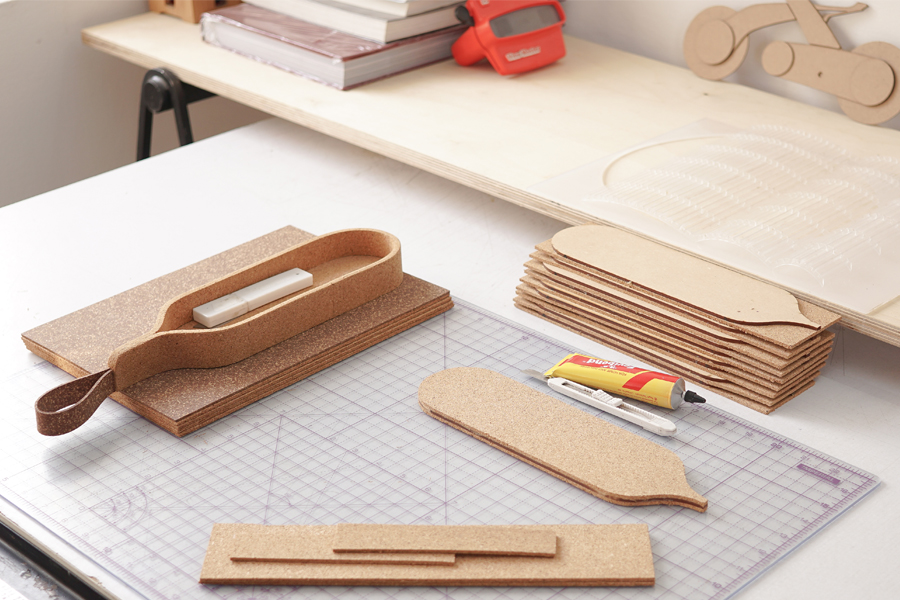
In the process of making the Cork Trays.
For people who are not yet familiar with you, tell us about your background.
I’m an Industrial designer working on Architecture, Interiors, Product design, Brand Identity, Design Development, Creative Direction, Motorcycle design, Automotive racing, Furniture, Lighting, Craft & Jewelry. I’ve always had an admiration for things and objects: their materials, beauty and how they were made. I always found it fascinating to watch a carpenter or a mason engaged in his craft. I could make stuff out of anything that was around; I used to make miniature farms with plantations and worked on irrigation, inspired by the country life I experienced during the summer stays at my grandfather’s farm. I’d also make models of scooters and bikes out of wheat flour dough. That’s one of the reasons I still love scale models so much, making them and collecting them. It was around 16 that I discovered design could be a legit career. I wanted to become an automotive designer. I’m an autodidact, and it’s quite natural for me to pick up something that interests me and pursue it with certain passion on my own, learning and doing on the way.
How do you describe your design aesthetic?
I’m an ‘ESSENTIALIST’; my focus is on sensitive, thoughtful and meaningful design. I have quite a contrasting way of looking at things; some designs are practical and functionalist while others are poetic expressions that can have certain humour and curiosity. All in all, everything has to have that beauty. Making stuff has been a huge part of the process; so much so that some of the products hardly have any drawings or detailed sketches – it’s just straight from the concept sketches to the making of the prototype.
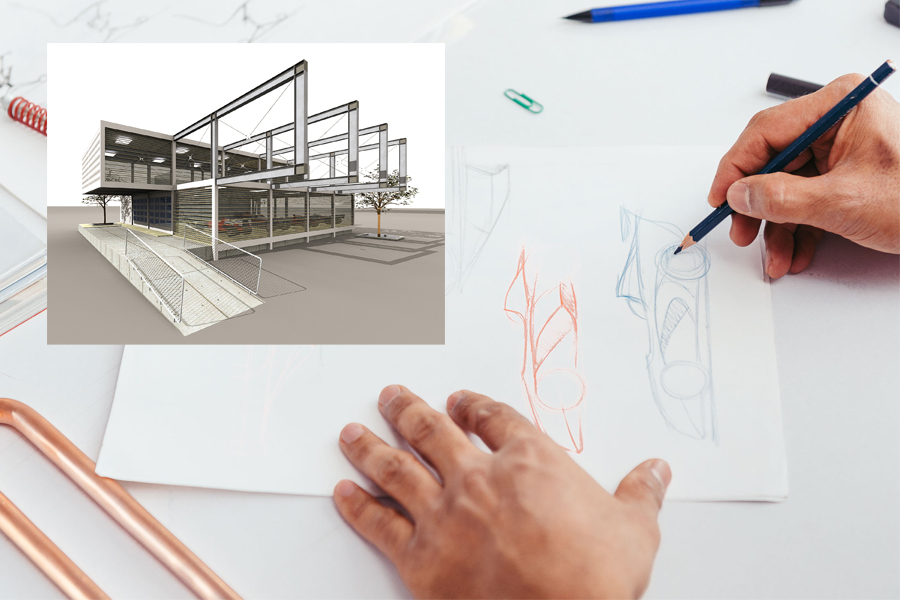
Designing cars, including racing architecture has always been Saif’s dream.
Lots of your pieces used natural materials like wood and cork. What's your fascination with these materials?
I love working with beautiful, humble natural materials; they have great quality regarding how they age gracefully. I love exploring their properties in new and expressive ways, for instance, the Cork trays have two variations of cork, the rubberised one for the strap and the hard one for the tray body, perfectly coming together, not to mention the ecological aspects of these materials.
Where are you based now? What made you want to be here? What are the advantages?
I’m based in Bangalore at the moment; I came here for my undergraduate about 12 years ago, while doing my Architecture I was part of the Formula SAE team which mostly had Mechanical engineering students, I used to design the Chassis, Ergonomics, Suspension, Brakes, Safety and Packaging. During this time I developed a great network of vendors and suppliers. This field felt quite indispensable when I wanted to start my multidisciplinary studio. But I seem to have exhausted the potential of the city. Maybe I will shift to Scandinavia in future; you’ll never know…
What is the current design scene in India?
Its still evolving and not that refined at the moment. There is this underlying fascination with Bollywood and Kitsch with a ‘Royal’ hangover from the bygone era of the ‘Maharajas’ that I feel is quite hindering. But otherwise, there is new breed of young designers with a more progressive perspective that is doing some significant work that I feel would be worth something in the coming years.
Where do you find your inspiration?
Inspiration to me comes from a social concern, a beautiful material, an inspiring craft, a practical need, a curiosity… I look to other creative fields too. At this moment, in particular, I’m fascinated with the contemporary culinary scene. Also, it’s quite difficult not to notice the tech-innovations of late…
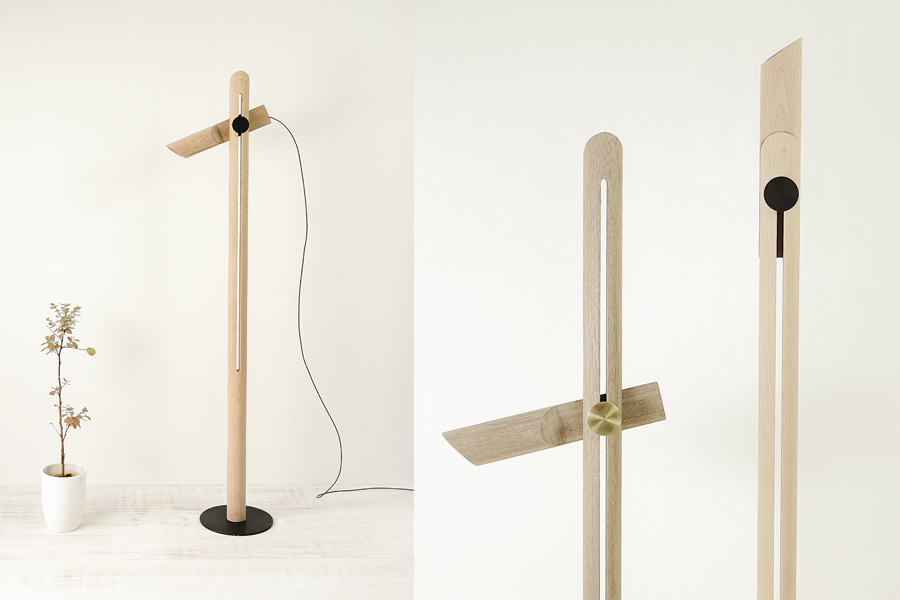
Another EDIDA winning design from 2016: Poise Lamp.
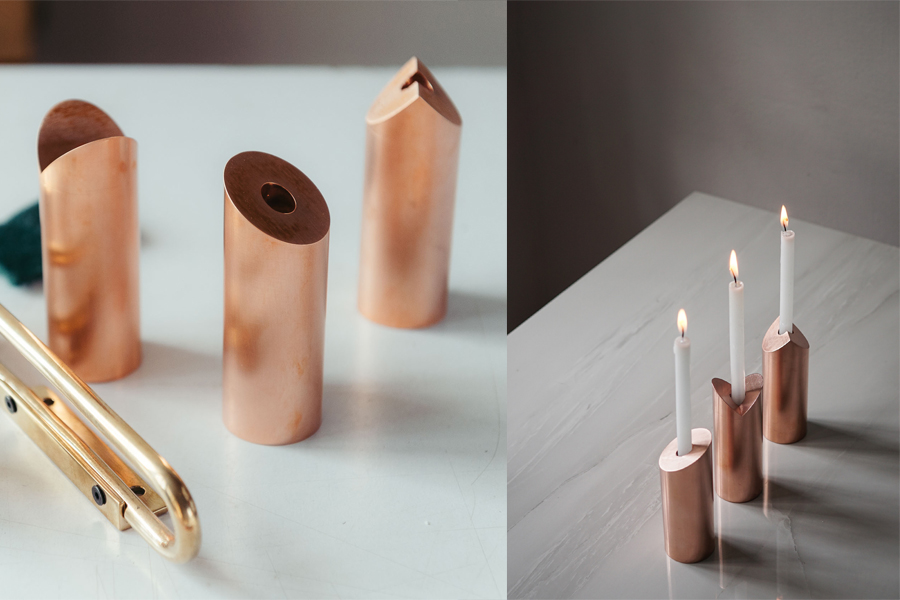
The new Euclid Series of candleholders.
Where will we see you next?
We have several projects that we have completed and are speaking to different manufacturers to get them in production. Among other stuff, I’m working on an electric Café racer that will host a couple of very innovative features in response to the whole Autonomous vehicle scene. Also, I’ve been approached for an electric car; it’s more on conceptual lines at the moment focussing on the future of urban mobility in developing nations like India, I’m working on the Packaging, Interiors & Styling. One important thing at the moment is we are working with a manufacturer who is looking at working with a couple of craft form to launch innovative contemporary Art-Design pieces soon, hopefully during I Salone 2018 in Milan. This is a new direction for my work; I’m quite pleased with the progress at the moment.
Filmmaker Danish Iqbal’s movie, “Sadho” will be screened at UK Asian Film Festival. This festival will begin on 14th March and is planned to be held in Edinburgh, Manchester Leicester and London.
Sadho is a film based on true events and it highlights Child Trafficking menace.
Talking about the movie, Mr. Danish said that Sadho is a heart touching film. In the film, character Sadho finds a newborn child who survives in a car accident. He was supposed to make a decision whether to return the child to parents or not.
It may be mentioned that the movie was produced by Mr. Varad Gupta. Role of Sadho was played by Mr. Sukumar Tudu.
Earlier, Sadho was selected in nine international film festivals.
In Haryana International Film Festival, the movie won best film critics award and best actor award.
Filmmaker Danish’s career started from the theatre in 1994. He did graduation from Allahabad University and was a student of National School of Drama and Central School of Speech and Drama, London.
He got British Council’s Charles Wallace Award, Sahitya Kala Parishad’s Mohan Rakesh Award and Sangeet Natak Akademi’s Ustad Bismillah Khan Award.
source: http://www.siasat.com / The Siasat Daily / Home> Entertainment / February 21st, 2018
Saqib Majeed is the first Kashmiri and second Asian after Atul Kamble to receive the prestigious award.
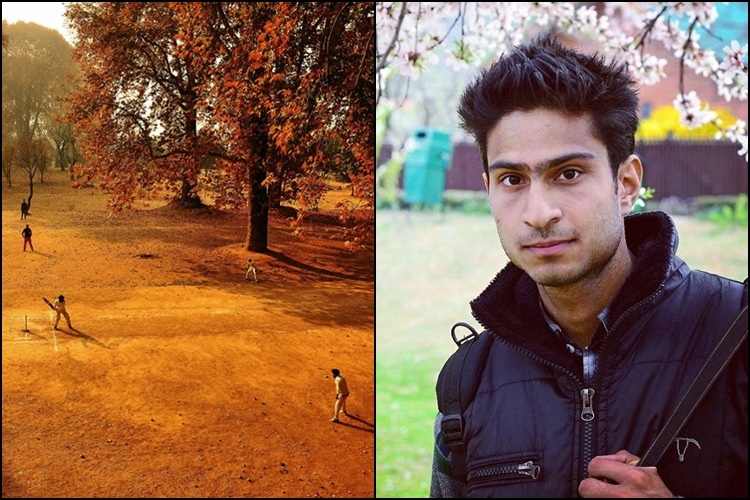
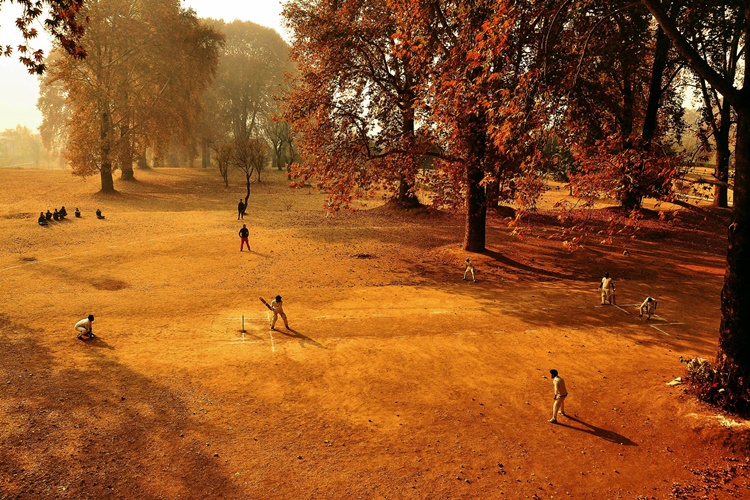
A Srinagar based freelance photographer has done Kashmir proud, pocketing the prestigious 2016 Wisden-MCC (Melbourne Cricket Council) Cricket Photograph of the Year for a stunning image, which captured boys playing cricket in the outskirts of the city, clicked by him.
Saqib Majeed, an engineer by profession clicked the award-winning picture at the Nishat garden in Srinagar.
Majeed is the first Kashmiri and second Asian after Atul Kamble to receive the prestigious award. Every year MCC publishes a book titled Wisden Cricketer Almanack, which includes best sports pictures from across the globe.
This year’s edition includes Majeed’s picture.
Majeed’s picture in Kashmir’s autumn setting certainly had all the ingredients to make the cut. It had nature’s own beauty coupled with cricketers playing the game in their own way that typify the sport with the man behind the camera having a feel of the occasion to capture the decisive moment.
“The historic Lords Cricket Ground will display my image for a year,” said a visibly happy Majeed, who was chosen among 450 participants.
“It was an autumn day when I visited the Nishat Garden with a friend to click some pictures. When I reached the garden, some guys were playing cricket under the shade of Chinar trees. I started to click the pictures for next half-an-hour,” he said.
Majeed recalls trying different angles to get a perfect shot, but ended up clicking only a few.
“I am very thankful to my family, friends and The Counselor Magazine, who always encouraged me,” he added.
source: http://www.inuth.com / inUth.com / Home> Sports> Cricket / by ANI News Agency / May 06th, 2017