All posts by mpositiveone@gmail.com

Indian community bids farewell to Saleem

Riyadh, SAUDI ARABIA :
SaleemMPOs28feb2018

Riyadh  :

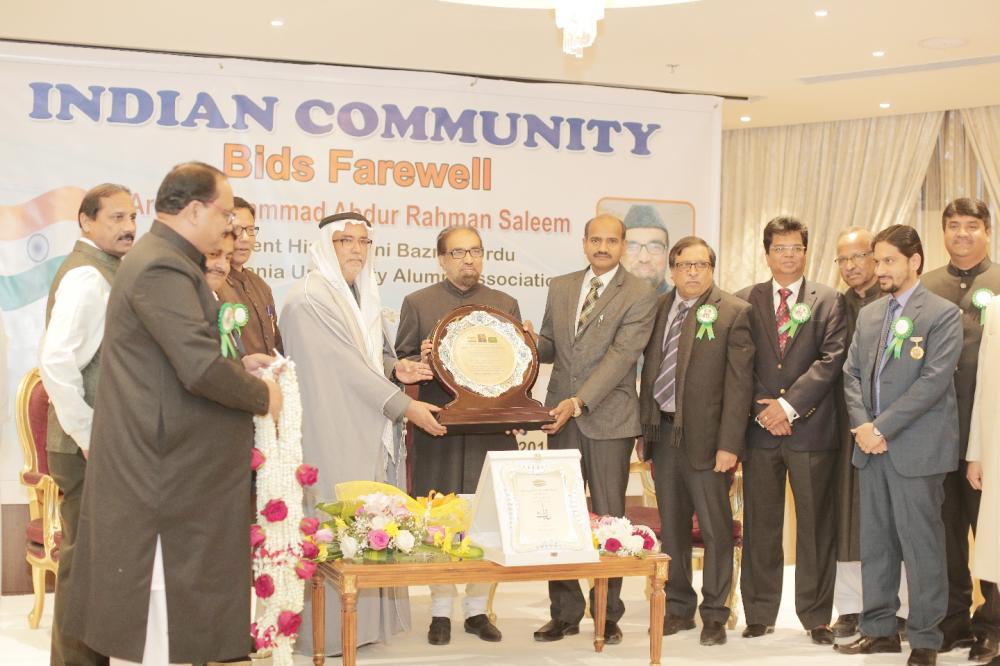
The Indian community here bid farewell to longtime resident and senior NRI Arch. Mohammed Abdur Rahman Saleem, who is leaving the Kingdom after over four decades here.

Saleem who spent 43 years in the Kingdom, was a prominent social activist and promoter of the Urdu language and culture. He established different cultural and social organizations and organized many cultural events.

Saleem was the torch bearer of Urdu culture and tradition. After successfully establishing many organizations he formed the Toastmasters Club in Riyadh. Bazm-e-Urdu Toastmasters Club (BUTMC), which is successfully running with many youth joining it to excel in linguistic skills along with personality development and public speaking abilities.

By organizing elocution competitions for the students of Indian schools in Riyadh, Saleem was successful in attracting students to get interested in and opt for Urdu in their studies.

Chief Guest Dr. Hifzur Rahman Azmi, First Secretary, Embassy of India Riyadh, said, “Nowadays people with positivity are rarely found in our society whereas Saleem is a multi-faceted person who is filled with positivity. He dedicatedly works likes an organization in himself, and has organized many events on a grand scale. Even the Embassy needs the help of different organizations to arrange such events. In addition to organizing cultural events for entertainment, he has striven for many constructive works and events; elocution competition for school students is one such example.”

Rahman also disclosed that Saleem holds the credit of organizing the first Republic Day Mushaira in Riyadh, over 25 years back, under the banner of the Indian Embassy. His organization was associated with all the Mushairas organized by the Indian Embassy as he regularly felicitated all the poets.

Saleem successfully tried to link the people from all parts of India and managed to make an excellent group of like-minded people and hoped that his team will carry forward his legacy, he added.

In his welcome address THH and OUAAAR President Mohammed Qaiser said, “As an architect Saleem played an important role in giving beautiful buildings to this country. In addition to his professional commitments, his services and contributions towards the Indian community and for the promotion of Urdu were remarkable.”

K.N. Wasif read out a sketch about Saleem and said that he always was for justice among all and hence represents the justice of Jahangir. Ghouse Arsalan also read another sketch titled “Hindustani Tahzeeb ke Me’maar” (Architect of Indian culture) and said, Saleem truly represented the Deccani culture and tradition in the Kingdom and in USA.

Firasat Ali Khusro paid poetic tribute to Saleem’s long services and contributions. He said Saleem always did good deeds and never showed off, and it is very rare to find such humble people in the current period.

Taqiuddin Mir presented a humorous sketch “Pati Patni Aur Woh” about Saleem’s addiction to mobile and using social media to get in touch with all his friends. The community leaders from all parts of India spoke on various aspects of Saleem’s personality.

Zaigham Khan from Aligarh said that Saleem is Baba-e-Urdu of the Kingdom and will be remembered here for the long time. Ghazanfar Ali Khan said that Saleem has been the cultural ambassador of India to the Kingdom for over four decades.

Ghizal Mahdi appreciated Saleem’s affection for the Urdu language. Representing Jamia Millia Islamia, he said, Jamia played an important role in freedom struggle and its founders laid emphasis on education through mother tongue. Due to this factor Mahdi had long time association and friendship with Saleem.

Prominent Businessman Nadeem Tarin said that Saleem and his associates played an important role in introducing Hyderabadi community to the north Indian community, especially Aligs. Due to this a new impetus was prominent among both the communities and it was evident with the successful and historical events arranged and attended by all these communities.

AIUS President Dr. Mohammed Ashraf Ali appreciated the contributions and services of Saleem as he invited many prominent personalities from India and offered a platform to the community to interact with them.

Senior banker Shahid Ali Khan recalled his long time association with Saleem. Vice President Hindustani Bazm-e-Urdu Eng. Abdul Hameed introduced Saleem with the help of PPT presentation. Prominent Businessman Mir Muzaffar Ali was the Guest of Honor.

Saleem thanked the organizers, speakers and attendees for the marvelous display of love and affection for him. He promised that he will continue to strive for the promotion of Urdu wherever he goes. He announced that he will try his best to start Urdu Toastmasters Clubs in Hyderabad and USA.

On this occasion Mubibb-e-Urdu award was presented to Saleem. The organizing committee members presented him a memento of appreciation in recognition of his contributions and services.

Floral bouquets and gifts were presented by different organizations — Deccan Cultural Association, All India United Society, Ghazal Sara Group, Telangana NRI Forum, Paradise Group, Bazm-e-Farogh-e-Urdu and Bihar community.

Organizing committee members Aftab Nizami, Mohammed Mubin, Sohail Siddiqui, Mohammed Kaleem, Syed Ateeq, Aliuddin Ahmed, Shakeel Mah presented freshly prepared beautiful garland specially arranged for the event.

Mohammed Farooqui Shahbaz conducted the proceedings, while Dr. Shoukat Pervez, principal IISR proposed the vote of thanks. Hafiz Abdul Malik recited verses of Holy Qur’an at the start of the event. — SG

source: http://www.saudigazette.co.sa / Home> Saudi Arabia / Riyadh – February 22nd, 2018
 

UM’s Ikhlas Khan Wins Lifetime Achievement Award

Aligarh, UTTAR PRADESH / Mississippi,  U.S.A  :

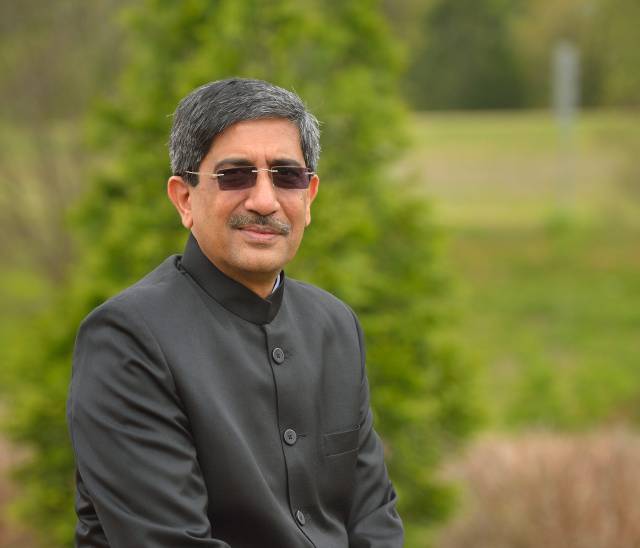
Ikhlas Khan. Photo courtesy of Ole Miss Communications

Ikhlas Khan, director of the National Center for Natural Products Research at the University of Mississippi School of Pharmacy, is the winner of AOAC International’s 2018 Harvey W. Wiley Award, which recognizes lifetime scientific achievement.

AOAC International develops global quality standards for microbiological and chemical materials, ranging from food to pharmaceuticals in an effort to ensure public health. Khan, who has been with the university since 1992 and directed the natural products center since 2017, has spent much of his career developing standards for dietary supplements.

“I’m very pleased to receive this award,” Khan said. “AOAC is the top organization for chemical standards, and I appreciate this recognition of my work in this area.”

As part of the honor, Khan will deliver the Wiley Award address and chair the Wiley Award Symposium at AOAC’s annual meeting in August in Toronto.

The Harvey W. Wiley Award has been given to one person a year since 1957, with past recipients including scientists from government, industry and academic institutions from around the world.

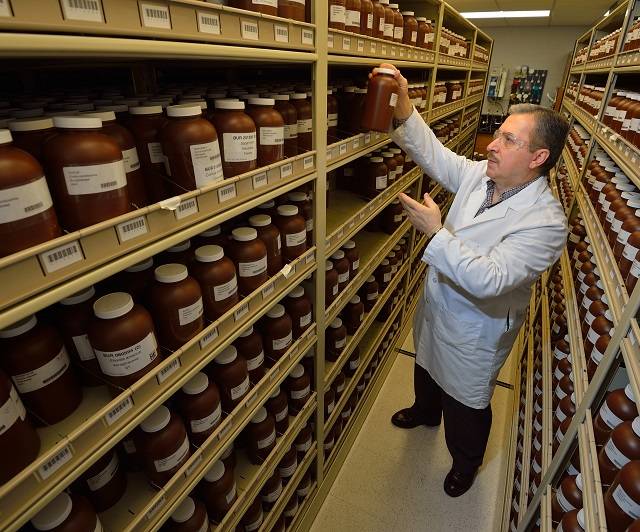
The National Center for Natural Products Research maintains a repository with more than 18,000 natural product specimens, derived extracts and pure compounds. Photo by Robert Jordan/Ole Miss Communications

Story by Sydney Slotkin Dupriest, courtesy of Ole Miss Communications

source: http://www.hottytoddy.com / HottyToddy.com / Home> Headlines> News & Views / February 21st, 2018

HAM Leader and Former Minister Shahid Ali Khan Dies of Heart Attack

Patna, BIHAR :

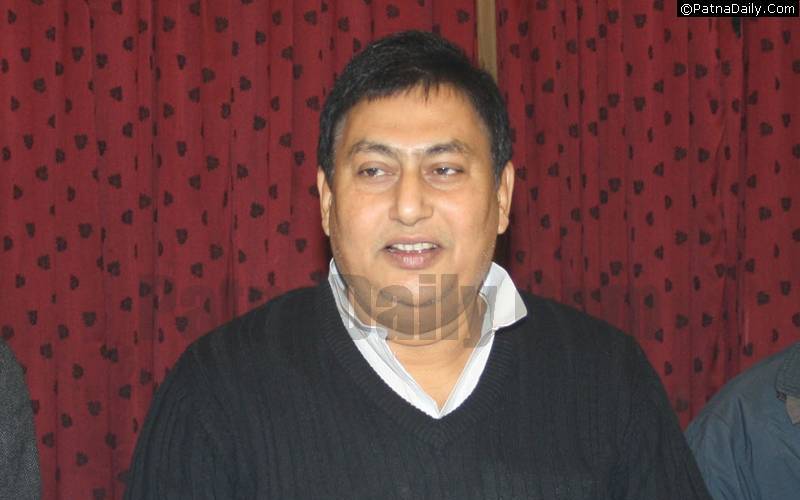
HAM leader Shahid Ali Khan (file photo) / Patna Daily

Patna:

Former Bihar Minister and senior Hindustani Awam Morcha (HAM) leader Shahid Ali Khan died of a massive heart attack on Thursday during his visit to Ajmer Sharif in Rajasthan where the 54-year old politician had gone to pay a visit to the tomb of Khwaza Moinuddin Chishti.

Party spokesperson Danish Rizwan informed the press in Patna about the sudden passing away of Khan’s death.

Khan was elected to the state Assembly for the first time in 1990 from Sitamarhi on Janata Dal ticket, the forebearer of the current Rashtriya Janata Dal (RJD). At the time, he was the youngest person ever to be elected to the Bihar Assembly.

He was re-elected from the same constituency in 2000 under the RJD ticket and won twice as a Nitish-led Janata Dal – U candidate in 2005 and 2010 from Pupari and Sursand constituency. He held different portfolio under Nitish administration that included the Minority Welfare, IT, and Law departments.

He later resigned from the JD-U and joined hands with former Chief Minister Jitan Ram Manjhi pledging allegiance to the HAM.

Khan leaves behind his wife and three daughters along with other family members.

Chief Minister Nitish Kumar, HAM President Jitan Ram Manjhi, former ministers Brishan Patel, Mahachandra Prasad, and JD-U state President Vashisht Narayan Singh were among many who expressed their condolences to the grieving members of the family calling it a huge loss for the state.

Khan had hit the headlines in 2014 when rumor of his alleged links with Indian Mujahideen terrorist outfit led to an investigation against him. He later, repeating a famous line from Bollywood actor Shah Rukh Khan’s film ‘My Name is Khan’, said “I am Shahid Ali Khan and I am not a terrorist” in the state Assembly.

The so-called investigation did not go anywhere as Chief Minister Nitish Kumar, at the time, called it a conspiracy by the ‘communal Bharatiya Janata Party (BJP)’ to malign a member of the minority community and a minister in the Nitish government.

The Chief Minister has announced a state funeral for the former minister.

source: http://www.patnadaily.com / Patna Daily / Home> News / January 04th, 2018

Africa, India and royalty

An on going art exhibition reveals the African legacy in India begins even before the Mughal period

Thriving in india -- Politically, culturally and socially
Thriving in india — Politically, culturally and socially

Gujarat is not only home to the lost city of Dwarka, but also houses another secret heritage, of African kings in India. Till date, two dynasties of African kings live on in the former princely states of Sachin and Janjira.

The exhibition “Africans in India — A Rediscovery”, on view at the Southern Regional Centre of the Indira Gandhi National Centre for the Arts (IGNCA), remembers their forgotten legacy. The exhibition has been curated by Dr. Sylviane A. Diouf and Dr. Kenneth X. Robbins of the Schomburg Center for Research in Black Culture, part of the New York Public Library.

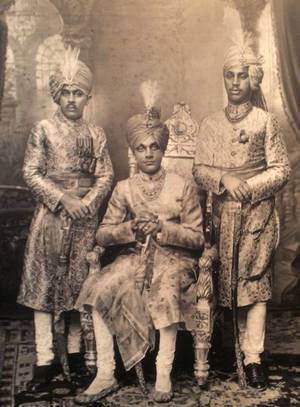
The exhibition reveals how the African legacy in India begins even before the Mughal period in the 1400s. Beginning as slaves migrating from East African regions around Ethiopia, Eritrea and Somalia, Africans rose up the social ladder to become generals, commanders, admirals, prime ministers, rulers and architects, largely known as Sidis or Habshis.

“The exhibition portrays how a community that travelled across the globe and came to India thrived here, politically, culturally and socially. Most of the immigrants came as slaves and some of them reached high offices in the army, some even became rulers,” says Dr. Mangalam Swaminathan, Programme Director, IGNCA, New Delhi.

According to Mangalam, this aspect of heritage isn’t widely known because of lack of information and research. “Even this exhibit, according to curator Sylvianne is only a fraction of the material lying scattered,” she adds. Through photographic reproductions of paintings from several collections across U.K. and U.S.A., the exhibition thematically displays several significant milestones of this heritage captured in diverse paintings spanning across eras. The exhibition showcases the role played by the Africans in four major kingdoms in the regions of Bengal, Deccan, Sachin and Janjira.

Some of the most famous African rulers were Prime Minister Ikhlas Khan who was Prime Minister and Commander-in-Chief for the Bijapur Sultanate, Malik Ambar, who was regent and Prime Minister in the Deccan and the Nawabs of Janjira and Sachin.

The forts, mosques, mausoleums and other physical testimonies to their skills as city planners, architects and rulers, can still be found in these regions. There were also some famous African queens, Mehr Lekha Begum Sahiba, Yasmin Mahal and Bamba Muller.

“The major aspect that one can take away India was a flourishing nation, where people came seeking employment, as far back as fourth century. Indian culture assimilated them into the society, as it had done with several other faiths, cultures and lifestyles. There was mutual give and take culturally, part of the broadminded tolerance of India. Africans in India are an indelible part of Indian history and heritage. We need to do more research and come up with exhibitions, research papers and publications,” says Mangala.

The exhibition was also taken to UNESCO in Paris, IGNCA New Delhi, National Science Center in Surat, M.S. University in Baroda and Gujarat National Law University in Ahmedabad. It was also shown at the India Africa Forum Summit in New Delhi.

The exhibition will be on view till December 26 at IGNCA-Southern Regional Centre (SRC), Kengute Circle, Magadi-Kengeri Ring Road, Near IIPM, Mallathalli, Jnanabharathi Post.

source: http://www.thehindu.com / The Hindu / Home> MetroPlus / by Harshini Vakkalanka / December 21st, 2015

A fight to preserve history

Kozhikode , KERALA :

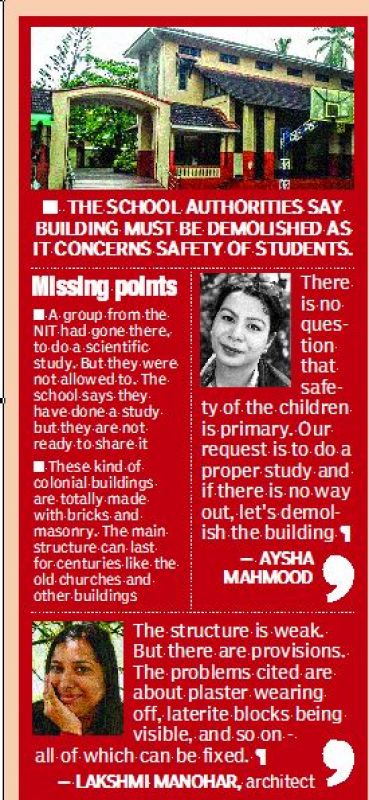
Aysha Mahmood, alumnus of St Joseph’s HSS, is campaigning for safe keep of 150-year old building.

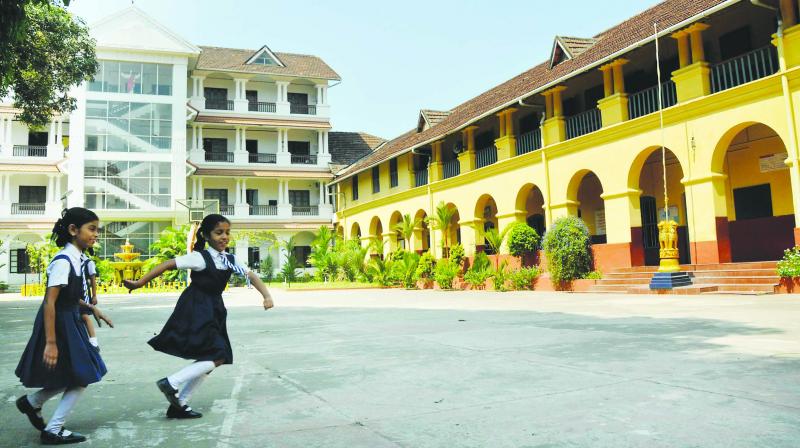
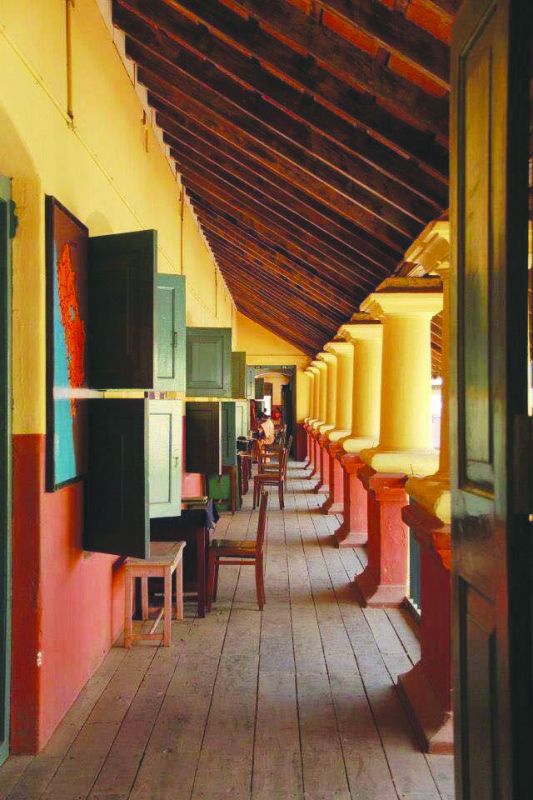
Children at St Joseph’s Anglo Indian Girl’s Higher Secondar School, the first school for girls in Malabar, built in 1862.(Photo: Venugopal)
Children at St Joseph’s Anglo Indian Girl’s Higher Secondar School, the first school for girls in Malabar, built in 1862. (Photo: Venugopal)

Thiruvananthapuram:

It was a chance meeting. Aysha Mahmood had come to her hometown, Kozhikode, to take part in the Offir Food Fest. She has been settled in Taiwan for a while, but couldn’t stop reacting to stories from home that shocked her.

Two years ago, she heard her beloved alma mater – St. Joseph’s Anglo Indian Girls’ Higher Secondary School – will have its oldest building demolished. A few of the alumni had then got together, spoke to the school and the idea had slowly died down. Now, after a chance meeting with someone she knew, Aysha heard the plan was back on.

Frantically, she gathered together some of the old girls who studied there, tried talking to the school, and finally had to start a petition online to save the old, old school – 155 years old.

“Some time back they celebrated the 155th anniversary of the building, now they are planning to pull it down, and in its place, build a glass and steel structure,” she says, remembering another old building that is no longer there. It was the boarding house where Aysha had spent many happy days. The building had a library in the centre which had a lot of really old Reader’s Digest magazines.

It was not accessible to the girls. But like in Enid Blyton novels, the girls found an old door from their dressing area that led to the library. Aysha’d sneak in, after opening the rusty hinge, and stay there with her torch or a candle, reading those old, old Reader’s Digest magazines.But that building and the library had got pulled down. Now there is only the original convent and this building they are planning to demolish, left of the first school for girls in Malabar, built in 1862. “We have very few 100 plus year old buildings left in Kozhikode. One reason they give for demolishing the building is space constraints. That they cannot have smart classrooms there. But there are architects interested in conserving it, who say, it can be done. We could add modern amenities, restore the building. A group from the NIT had gone there, to do a scientific study. But they were not allowed to. The school says they have done a study but they are not ready to share the report.”

StJosephs02MPOs28feb2018

The school has been giving the reason that it concerns the safety of the students. “But we feel that is an excuse,” says Abdul Hameed, an electrical engineer who runs an architectural consultancy. He got involved only because of his love for his hometown.

“We suggest we can get the best structural engineers from NIT, to ascertain the safety of the building. And then do a programme to restore it. The funding – can be thought out later. These kind of colonial buildings – were before concrete, so it is totally made with bricks and masonry. The main structure can last for centuries like the old churches and other buildings across the world. But maintenance should be done.”Abdul, with the collector, the new building’s architect, and a few others are planning to meet the headmistress on Monday. “Lots of people are calling. Venu IAS, former tourism secretary, K.K. Muhammed, former ASI director, have all shown their interest,” Aysha says.

Her petition has collected 2574 signatures as this is written. But she adds, “There is no question that the safety of the children is primary. Our request is to do a proper study and if there is no way out, let’s demolish the building.”There might be a way out. Architect and another alumnus of the school Lakshmi Manohar has just come back from a visit to the school on Saturday evening.

StJosephs03MPOs28feb2018

“We just wanted to meet the old teachers and find out what the issue is. According to us, the structure is weak. But there are provisions. They showed us the old classrooms. There are more students now, so the space is less, to take class. It is all congested. Their requirements need one or two floors more to the building. The question is whether the structure has the strength to withstand the extra floors. That’s what we should evaluate. The problems they cite are about the plaster wearing off, the laterite blocks becoming visible, foundation troubles, and so on – all of which can be fixed. But I am not a conservation architect. We should bring a technical expert to study the condition and tell what the situation is,” she says.

‘A collective memory which shaped Kozhikode society’
The St. Joseph’s building, since 1862, has played an undeniable role in making education attainable and accessible to girl children from all walks of life- par caste and creed. It contains the collective memory of thousands of women and girls, panning almost six generations. It has played alma mater to a large section of Calicut society- ensuring quality education. Keeping that heritage alive is of high importance.

Those interested in the demolishing of the building may be of the opinion that it affects the modern outlook of the management or that it is a threat to the safety. Both concerns can be addressed if the right people are involved.

There is a large Architects Guild active in Calicut that specialises in the restoration and strengthening of historical and heritage buildings. We must be prepared to give them a chance to present their expert opinion and help in this matter. The professors of NIT Architecture Department have made known their availability and deep interest in studying the building and presenting their proposal for the same.

While it does need some work, respected architects who have assessed it generally opine that the building is structurally sound. They feel that it could be refurbished at a cost lesser than that required for demolishing and rebuilding.The restoration will only add to the historical value and character of the school. A building that is  150 years old must be considered an asset to the city. In a world where characterless and soulless skyscrapers and steel-glass embodiments are dime a dozen, buildings like these serve as a place of solace for the soul and soothing to the sight. They embody our past and our culture. Caretakers of our colonial architecture and history must know that the St. Joseph’s School and its many buildings are rich and heavy with these values.To conclude, I think preserving buildings like these is essential because of the collective memories, Calicut and its people attach to it.

Generations are emotionally attached to this school building in which they have spend a big part of their childhood. It has had a formative and a positive role to play in all our lives and it will be the saddest day in our lives to see it being pulled down.
(Excerpts from the online petition of Aysha Mahmood)

source: http://www.asianage.com / The Asian Age / Home> India> All India / CRIS / February 23rd, 2018

MCD Elections 2017: Congress candidate Yasmin Kidwai wins Darya Ganj ward after recounting

UTTAR PRADESH / NEW DELHI :

New Delhi :

In a setback to Bharatiya Janta Party, Congress candidate Yasmeen Kidwai has won Darya Ganj seat after recounting of votes.

Delhi State Election Commission has earlier declared the Bharatiya Janta Party candidate Meeta Bhambri declared victorious after the first round of counting. Darya Ganj has been a stronghold of Congress for many years.

Former cabinet minister Harun Yusuf also hails from old Delhi. However, the territory of Muslim areas have been snatched by the saffron party. The party has fared well in the neighbouring of Chawri Bazar and Kashmiri Gate. The party is leading on 179 seats in MCD.

In an earlier development, Delhi Congress President Ajay Maken resigned from the post.

Former Cheif Minister Sheila Dikshit had accused him of leading the party in an irresponsible manner. Former Congress Delhi women Chief had accused him of not listening to party workers. She later joined the Bhartiya Janta Party after Arvinder Singh Lovely and Amit Malik embraced the saffron party.

source: http://www.india.com / India.com / Home> News> India / by Ravi Kaushal / April 26th, 2017

Sheikh Salim Gafur, driver who saved Amarnath pilgrims, gets second highest award

GUJARAT :

Salim Sheiekh, the bus driver of the ill-fated Amarnath bus who saved the lives of yatra pilgrims during a militant attack. FIle photo.

The Gujarati bus driver who saved 52 Amarnath pilgrims from terror attack has been awarded the “Uttam Jeevan Raksha Padak.”

A bus driver from Gujarat who drove through a hail of bullets and saved the lives of more than 50 Amarnath Yatra pilgrims last year has been selected for the Uttam Jeevan Raksha Padak, the second highest honour given to civilians for gallantry after the Sarvottam Jeevan Raksha Padak.

The Home Ministry announced this on Wednesday ahead of Republic Day.

Sheikh Salim Gafur displayed rare grit and bravery and continued to drive the bus which came under attack on July 10, 2017 in Jammu and Kashmir, an official said.

Daring escape

Seven pilgrims were killed and 14 injured when terrorists opened fire on the bus near Batengoo in Anantnag district, while 52 passengers escaped unharmed as Mr. Gafur showed presence of mind.

The State government will also honour him with a ₹1 lakh cash prize at a function to be held later.

The Jammu and Kashmir police got 38 of the 107 gallantry medals, followed by the CRPF (35) and the police forces of Chhattisgarh (10), Maharashtra (7) and Telangana (6). Five IPS officers are on the medal list.

The highest number of gallantry awards were won by security personnel involved in counter-terror operations in Jammu and Kashmir.

A total of 35 personnel serving in Naxal-affected areas and three in the Northeast too have won them.

Seven police officials have been awarded the medal posthumously.

Among them six were from Chattishgarh who laid down their lives in anti-Naxal operations at Chintagufa in Sukma district.

Nand Kishore Prasad, assistant sub-inspector, CRPF, has been selected for the police gallantry medal for showing exemplary courage in an operation against terrorists who attacked a bus carrying BSF personnel on June 3, 2016.

Of the 785 police medals announced, 616 are for distinguished service.

source: http://www.thehindu.com / The Hindu / Home> News> National / by Special Correspondent / New Delhi – January 24th, 2018

Bhapang player Yusuf Khan from Mungaska reaches out to music world with a click

Mungaska (Kaman Taluka), Alwar,  RAJASTHAN :

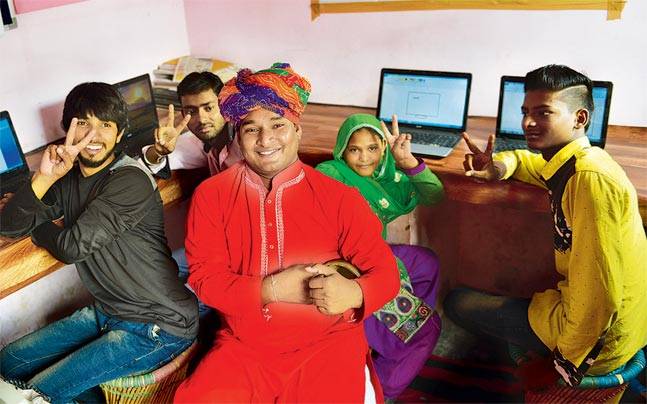
22-year-old Yusuf Khan (wearing a turban) is a Bhapang player and is using the Internet to digitalise his father & grandfather’s music

MUNGASKA-based 22-yearold folk musician has brought digital revolution among locals and other folk artists after the area received a high-speed Internet connection in 2014.

Yusuf Khan, a Bhapang player, is on a mission to digitalise dying folk music of Mewat area in Alwar. “I am an engineer but didn’t know how to operate a computer. I went to a computer institute where I realised that Internet can break geographical boundaries. In the last one year, I have opened an account on a social networking site and have also posted my music on YouTube. This has helped me get opportunities to perform in foreign countries,” said Khan, who is also a coordinator at six computer training centres.

Khan sacrificed his professional career to make the ancient musical instrument Bhapang popular. It is an instrument inspired by Shiva’s damroo.

DIGITISE MUSIC

“My grandfather and father are both renowned artists but the art is dying. I wanted to revive it. The first thing I did was digitalise all of their recordings. In order to promote the music we need to improvise. So I started following international and national artists through the Internet and have started doing fusion with Bhapang,” Khan explained.

Khan said that over 100 local and folk artists visit his computer centre to book tickets online, contact international music organisations along with creating their websites and digitalising their music.

COMPUTER LITERACY
His computer centre is famous among the locals as almost every house now has a computer literate.

Digital literacy has brought a significant change in the area as even women of the locality have email ids and social media accounts. Locals, mostly uneducated, have applied for PAN cards, passports and availed other government schemes through this centre.

source: http://www.indiatoday.in / India Today – Mail Today / Home> News> Mail Today / May 30th, 2016

Insha Allah, I will plant one crore trees: Gaffar Bhai

Ramdechi (Gir), Junagar District, GUJARAT :

Talala (Gir forest border):

Rambechi village in Talala region boasts of Quraishi Baagh which has the unique distinction of 23 lakh plants / trees in 4 acre of land with 210 medicinal plants, to their credit the Qureshi couple – Gaffarbhai Muhammadbhai and his wife Zebunnisa provide cheap cure to hundreds of patients on very nominal rates.

With, on an average 25000 visitors every year; the plantation received several awards.

In addition to the prestigious Sardar Vallabhbhai Patel Award of the state government, Qureshi has been felicitated twice by the Presidents of India – Gyani Zail Sinh and A. Kalam.

Having visited plantations all over the country Qureshi imbibed on the spot knowledge of plants and medicines though he has no formal education in agriculture nor any diploma in horticulture.

He maintains a nursery from where people buy plants of their choice.

His most cherished desire is to enrich the earth with one crore trees, Allah willing.

source: http://www.milligazette.com / The Milli Gazette / Home> Online News> Community News / Online April 27th, 2013 (Print April 16-30th, 2013)

Be the change you want

Hyderabad, TELANGANA :

Break Free: Jameela believes it is every woman's right to create her own identity. Photo: Nagara Gopal
Break Free: Jameela believes it is every woman’s right to create her own identity. Photo: Nagara Gopal

The journey was anything but smooth for Jameela Nishat, now a ray of hope for victims of domestic abuse.

It’s not easy giving up a secure job to work for women’s rights in an area where domestic violence and discrimination is the accepted norm. But if you dream about change and a world of equality, like poet and activist Jameela Nishat did, the transition is not hard at all.

Originally a teacher at a school for special children with a regular pay package, Jameela decided to give it all up to live for her conviction. What followed was a tumultuous journey filled with hostility, social boycott and accusations. But one thing remained constant – Jameela’s patience and perseverance. Today, not only is she well respected, she is also the person most women in Old City turn to for help.

Over the years Jameela has managed to help several women who have been victims of domestic violence, sexual abuse, incest, polygamy and forced marriages to much older men through her organisation Shaheen.

The journey was never smooth though. When she first began her journey as a women’s rights activist, Jameela was met with stiff opposition by not just the men in the locality but even the women.

“Domestic violence was a way of life for these women. I was met with statements like Woh mard hi kya jo aurat ko na maare (what kind of a man doesn’t beat women). When I set up Shaheen in this locality of Sultan Shahi not too many people were open to change. It is only over time that women have begun to realise that they too have a choice,” says Jameela, who is also an executive member of Asmita Resource Centre for Women. On several occasions Jameela and her team have busted fake marriage attempts by Arab men with young city girls.

It took tremendous tact and patience on her part to get her point across. “When I first began coming to this place, I approached the girls saying I could help them with English. Being summer vacations more than 50 girls came forward to learn the language. Gradually a month later I broached the topic of sexuality. Instantly 50 girls stopped coming and I was left with just five who were willing to work with me to create awareness. That is how Shaheen began,” she explains.

Needless to say, there was a lot of resistance. “I remember one particular incident when I was surrounded by more than 25 men, who did not agree with my work. This happened after the 2003 riots in Old City. I decided to hold a workshop for the Muslim, Dalit and BC boys on communal harmony. When our staffers and other girls sat alongside them for the workshop, the boys were livid. They were worried the girls would elope with Dalit boys,” she says.

But the transformation did come about. Slowly women began approaching Jameela for help and numerous cases of domestic violence and incest came to light. “There have been cases of women seeking a divorce after tolerating violence for 25 years. They are slowly beginning to realise that abuse is not a way of life. Most heartrending are the cases of incest. We once had a seven-year-old girl tell us that her 12-year-old sister was covered in cigarette burns by their step-father. When we met the girl we learnt that the man had been sexually abusing her. In another case a mentally unstable girl had been violated for several years by a maulvi under the pretext of treating her. We intervene and try to rehabilitate these girls. But resistance still persists in some people,” says Jameela, recalling an incident where a young woman was tied to the cot and set ablaze by her husband. Yet nobody from the girl’s family wanted to press charges. The girl herself told the police that it was just an accident.

For Jameela these are not mere cases. “I live these cases myself. Victims don’t need our sympathy, they need empathy. And that is what I do,” she says. Quiz her on how her family reacts to her work and she says, “I come from a very cosmopolitan family. My father was a painter and I’m a poet. My husband is an atheist and does not believe in these practices. We are like friends living under one roof. My sons also understand and appreciate what I do. As such I do not discuss my work with my family. My siblings know about what I do through newspaper articles.”

Her true dream though was to become an artist. “However, my father was sceptical about me going to art school since we would have to paint nude models. However, writing was encouraged in Muslim households, so I took to poetry,” she says, adding that she spent her childhood watching M.F. Husain paint on their living room floor. “He was my father’s close friend. He would roll out a canvas on our living room floor, sit on it and create a masterpiece in no time. Sometimes he would just use his hands to spread the colour. I would watch him and paint some pieces myself and pass it off as my brother’s work,” she laughs.

Through all of this, Jameela’s poetry is her constant solace. “I begin my mornings by writing a couplet. I write about the incidents I come across. It helps to channel my feelings through words,” she says, sharing a couplet she recently penned, which she says aptly describes her life.

Iss zindagi ki raah mein

Aese nikal padi

Meri talab sab ko hai,

Mera hisab kucch nahi

source: http://www.thehindu.com / The Hindu / Home> Society / by Ranjani Rajendra / Hyderabad – September 26th, 2013