All posts by mpositiveone@gmail.com

Muslim Lifestyle Beyond Maqbara, Masjid and Madrasa

Aligarh,  UTTAR PRADESH :

Housed in the Ibn Sina Academy, Aligarh, the museum is one man’s effort to preserve articles of Muslim lifestyle or tehzeeb that include textiles, crockery, manuscripts, and musical instruments among other things.

While Taj Mahal may be the edifice of the moment, caught in the eye of a political storm and being showered with both barbs and bouquets, not very far from it is a museum of Muslim ‘tehzeeb’ that brims with tales of nobility and sophistication. Housed in the Ibn Sina Academy, Aligarh, the museum is one man’s effort to preserve articles of Muslim lifestyle or tehzeeb that include textiles, crockery, manuscripts, and musical instruments among other things.

The academy is primarily a museum of Medieval Medicine and Sciences, founded by Padma Shri Hakim Syed Zillur Rehman in the year 2000, but soon it diversified into chronicling Muslim lifestyle and tehzeeb of the past. People wonder why a science museum would be generous enough to grow into accommodating the articles of Muslim lifestyle. And he answers all of the queries with a note of hope and love for future, “I have the articles of Muslim houses preserved in the cupboards of my museum, from the royal families of Bhopal, Hyderabad, and Rampur etc.”

He said that he is preserving all this for posterity – “After acquiring education, prosperity and wealth there will be a time when they would want to know their civilizational facts, culture and past and at that time my museum will give the future generation a glimpse into their tehzeeb and lifestyle. It will respond to their search for roots.”
There are almost 4,500 articles of Muslim tehzeeb showcased in his museum – which include crockery that keeps the food warm till the last bite because of the vacuum that takes hot water, there are dupattas three meter long that were tied differently in different Muslim societies of Hyderabad and Bhopal etc., there is a fruit tray from the dining table of Begum Sultan Jahan of Bhopal, her brooch made of precious stones, with her name inscribed in gold, a chogha that belonged to the Qazi Shamsuddin of Rewari, dating back to 1830, a paandaan weighing over 5 kg and a betel stand to name a few.

There are other items that chronicle Muslim culture through objects like: gramophones, harmoniums, costumes for weddings and trays for biryanis designed keeping the sense of style and comfort of those times. There are heavy paandaan (a box for preserving items used to make paan), ugaldaan (spittoon for the pan user), fancy haath ka pankha (a hand fan), and pretty batua (wallet), gem-studded gharara (a dress item), there are also silver-lined razais (quilts). The museum grew out of his fondness for all things with rich history, some of which were also priceless – coins from ancient times, stamps, pens and other artefacts. He makes sure to mention the source of the specimens he gets from Muslim families and pin them in the cupboard with the name of the person donating it or belonging to.

Times for Muslims have also changed in many ways, he said, “Somehow they are not able to think beyond maqbara, masjid and madarsa. They are always ready to contribute in the growth of masjid and madarsa but don’t understand the values of museum of heritage and culture of Muslim families. In this time of collective ignorance about out past I designing this for the future generation that will come in search for roots,” he added. Some of the objects on display were inherited by him. Some were gifted by people who saw that he had the wherewithal to preserve priceless items for posterity.

He takes pride in showing the guests original royal orders of Mughal emperors that have come to Rehman from his father, and a paper weight made of shells that was used by Sir Syed Ahmad Khan. These orders come from Aurangzeb, Babur and calligraphy by Bahadur Shah Zafar. When asked how he continues to enrich the museum of Muslim past in times of attack on Taj Mahal, he said, “The attacks on Taj Mahal or anything associated with our past are just seasonal things, it is more to do with politics than our society and its commitment to celebrate history.”

In his view these attacks don’t mean anything in the larger picture of history, “Taj Mahal and Qutub Minar are part of our pride, we cannot be attacking them because they were made in medieval times. By that logic Connaught Place and Parliament should also be broken down because they were made angrez (British),” he added.

Rahman served as a professor and chairman, department of Ilmul Advia at the Ajmal Khan Tibbiya College, Aligarh Muslim University. After serving as a dean, faculty of Unani medicine, he retired after 40 years. He is the author of 45 books and several papers on different aspects of Unani and boasts of being the possessor of the largest collection of books on Unani medicine. Conferred the Padma Shri in 2006 for his contribution in the field of Unani medicine he is now expanding his museums to start taking items like animal skin, which formed an important part of households of the past.

Also, unsure of who will take it forward after him, Rahman has given this endeavor to a Trust to take charge of it. There is huge collection of Ghalib’s work, which he claims to be one of the largest in South Asia and attracts scholars from other parts of the country to study. In his library lined with thousands of books, manuscripts and dedicated works of Ibn Sina and medieval medicine, sciences, youngsters from all backgrounds especially economically weaker come to study in the quiet atmosphere.

source:  http://www.news18.com / News18.com / Home> News18> India> Sunday Feature  / by Eram Agha, News18.c0m / November 05th, 2017
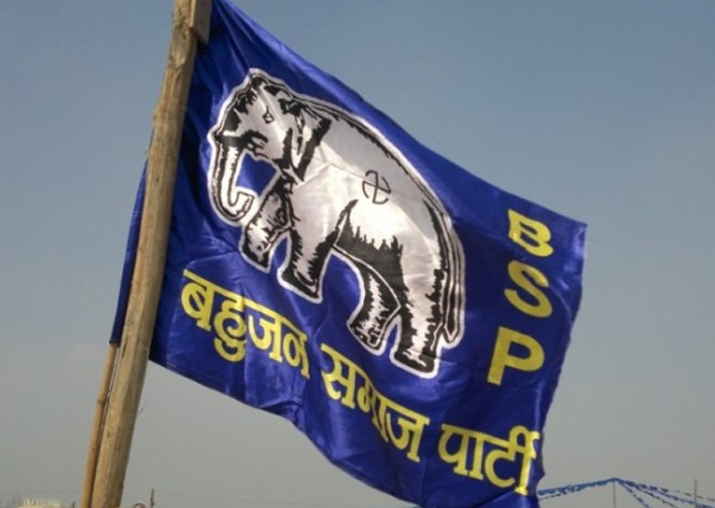
UP Civic Poll Results: BSP’s Mohammad Furqan beats BJP rival to become Aligarh Mayor

Aligarh, UTTAR PRADESH :

UP Civic Poll Results: BSP's Mohammad Furqan beats BJP rival to become Aligarh Mayor
UP Civic Poll Results: BSP’s Mohammad Furqan beats BJP rival to become Aligarh Mayor

Mohammad Furqan, BSP candidate’s victory is significant as the Mayawati-led party was badly mauled in the state Assembly elections earlier this year.

In a shot in the arm for Bahujan Samaj Party (BSP), its candidate Mohammad Furqan won the mayoral contest in Aligarh even as the BJP otherwise dominated the civic polls in the state.

Furqan defeated BJP candidate Rajiv Agarwal by a margin of 11,990 votes in what was virtually a direct contest to become the first Muslim to occupy the post after independence.

The BSP candidate’s victory is significant as the Mayawati-led party was badly mauled in the state Assembly elections earlier this year.

Traditionally, Aligarh has been a bastion of the Bhartiya Janta Party (BJP) , which has never lost this seat ever since the system of direct voting was introduced for the mayoral post in 1995. The saffron party bagged this post in all the four previous elections.

Aligarh city has since the past quarter of a century mostly witnessed direct contests between the BJP and the Samajwadi Party, with the 3rd and 4th place going either to the Congress or the BSP.

This election also marks a new low for the SP whose candidate Mujahid Kidwai lagged behind even the Congress and ended up in the fourth position securing just about 16,000 votes.

source: http://www.indiatvnews.com / India TV / Home> Election News> Uttar Pradesh Municipal Elections News / PTI, Aligarh / December 01st, 2017

Principals take charge

Patna, BIHAR :

Patna:

Padamlata Thakur and Ejaz Ali Arshad on Wednesday took charge as principals of Magadh Mahila College and Patna College respectively.

The Patna University issued the notification for the appointments on Tuesday night.

Thakur who took charge as 22nd principal of Magadh Mahila College was earlier working as head of the history department and she was also the coordinator of the Department of Women’s Studies.

Arshad, who was appointed principal of Patna College, had served as vice-chancellor of Maulana Mazharul Haque Arabic and Persian University, Patna, from February 2014 to February 2017.

Arshad whose tenure completed this year as VC of Maulana was working as head of Urdu department at Patna University. Arshad had also worked as dean students’ welfare at Patna University.

Thakur said: “It is a proud moment for me to become the principal of Magadh Mahila College which is one of prestigious educational institutions of Patna University.”

Thakur said she had called a meeting of teachers, staff and members of college students’ council to discuss ways for academic and infrastructure development.

“My first priority will be to look into students’ issue. As MMC is a women college, ways to strengthen gender-sensitisation cell will be a priority and so is girls security,” she said.Arshad said his priority was to restore the glory of Patna College. “Improvement in academics and infrastructure facilities will be my top priority.”

source: http://www.telegraphindia.com / The Telegraph, Calcutta,India / Home> Bihar / by Special Correspondent / November 02nd, 2017

National Education Day celebrated at Farooqia College of Pharmacy

Mysuru, KARNATAKA :

FarooqiaCollegeMPOs01dec2017

Mysuru :

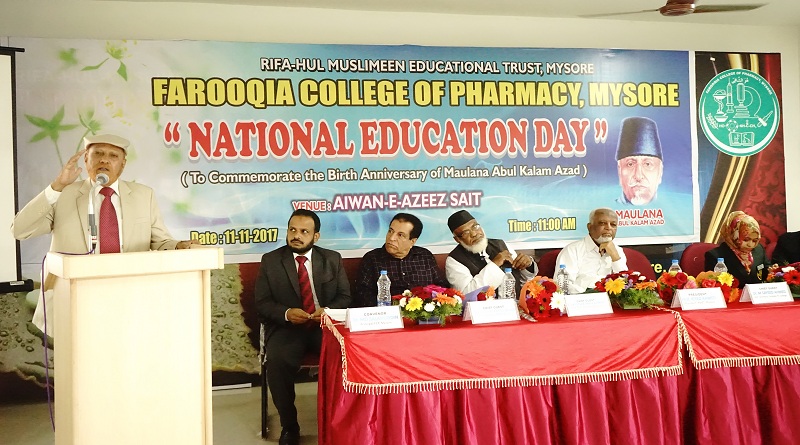
The National Education Day to commemorate the birth anniversary of Bharat Ratna Maulana Abul Kalam Azad was celebrated at Farooqia College of Pharmacy at Tilaknagar here recently.

Speaking on the occasion, Taj Mohammed Khan, secretary of Farooqia Educational Institutions, encouraged the students to follow the footsteps of Maulana who fought for the freedom of India and brought a revolution in education with his reforms as first education minister of post-independent India.

Dr M Sayeed Ahmed, secretary of Farooqia PU College, who was the chief guest, gave a detailed power-point presentation on Maulana’s life.

He said it is Maulana who first opposed the partition and separation of India and Pakistan. Maulana was a firm believer in the co-existence of religions. His dream was that of a unified Independent India where Hindus and Muslims can live peacefully.

Kolar Mustafa said that nowadays the institutions like UGC, AICTE and IITs are still running without modification in their regulations due to the broad based think tank of Maulana Abul Kalam Azad.

President of RMET Prof Riyaz Ahmed in his presidential remarks briefed about the post- independent educational system and highlighted Maulana’s simplicity, who didn’t amass property and wealth for his own family members and relatives even though he was an education minister for 10 long years.

Prizes were given away to Essay Competition winners on “Life of Maulana Abul Kalam Azad after post-independent India.”

Maryam Postdar, a D Pharma student, recited verses from the Quran. Principal Dr MD Salahuddin presented a video documentary on Maulana Abul Kalam Azad’s Life.Sara Ateeq, vice-president, Pharmaceutical Society and others were present.

source: http://www.citytoday.news / City Today / Home> Headlines> Mysore / by CT Bureau / November 30th, 2017

Qutb and Mehrauli: The Past and Present of an Iconic Site

Minnesota, USA / NEW DELHI :

In Delhi’s Qutb Complex, Catherine B. Asher goes beyond Mehrauli and Delhi to look at the afterlife of the iconic tower that is the Qutb Minar.

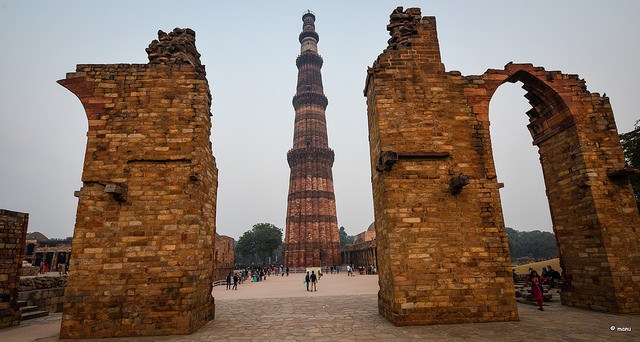
Qutb Minar. Credit: lensnmatter/Flickr (CC BY 2.0)

Mehrauli is truly a magical place. The average visitor skims but the surface, marvelling at the towering Qutb Minar and taking a cursory stroll through the other buildings that lie within the popular UNESCO World Heritage Site known as the Qutb complex. Those who go beyond, into the neighbouring village, may visit the shrine of the Sufi saint Qutbuddin Bakhtiyar Kaki, or a restaurant. There is now, of course, a smaller group of more adventurous explorers who are discovering the treasures of Mehrauli – particularly in the village and the Mehrauli Archaeological Park, mainly through the medium of increasingly popular ‘heritage walks’.

But though one may visit these monuments and learn the stories that lie in this locality’s long and eventful history, there are many layers that lie awaiting a more rigorous and meaningful analysis. A scholarly study by a leading art historian is, therefore, a very valuable addition to what is admittedly the rather sparse literature on the subject.

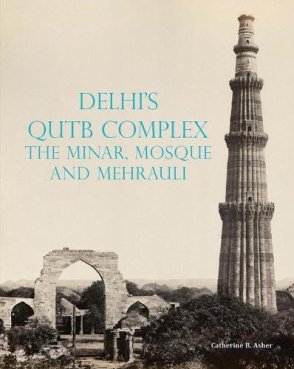
Catherine B. Asher Delhi’s Qutb Complex: the Minaret, Mosque and Mehrauli Marg Publications, 2017
Catherine B. Asher
Delhi’s Qutb Complex: the Minaret, Mosque and Mehrauli
Marg Publications, 2017

Catherine B. Asher’s Delhi’s Qutb Complex: The Minar, Mosque and Mehrauli starts by setting the monuments of the Qutb Complex within the physical space and history of Mehrauli, and in the context of its many historic structures. Construction on the oldest congregational mosque of Delhi and its attached monumental tower began in the late 12th century, and was commissioned by a newly-arrived political power, the Turks – under Muizzuddin Muhammad bin Sam, also known as Muhammad Ghori – as part of a capital complex that comprised fortifications, palaces and water works. Many structures had of course already been standing there, the legacy of the earlier regimes – those of the Chauhan and Tomar rulers.

Some of these relics of the earlier period were appropriated and modified, such as the city wall. Others were cleared away and their materials reused. Notable here are a number of temples, destroyed during the conquest, whose stones were used to build the congregational mosque. Asher relies on recent research to analyse the complex nature of this appropriation and reuse, and its cultural ramifications. The systematic way in which the various elements were placed in the newly constructed mosque suggests that they were not treated as random spolia. For instance, the largest and most elaborately carved pillars were used in the western arcade, the part of the mosque closest to Mecca, and therefore the direction in which the congregation faced.

While the tower, the mosque, royal tombs and some waterworks were commissioned by the rulers, significant construction in Mehrauli in that period is attributable to the many other inhabitants of the capital city. Important remnants include mosques, tombs and shrines of Sufi saints, which added a layer of Islamic sacred spaces, in addition to the pre-existing Yogmaya Temple, an ancient site dedicated to a revered goddess, and the 11th century Dadabari Jain temple.

Over the succeeding centuries, as the centre of power shifted and the capital moved to newer sites in Delhi, the character of Mehrauli shifted in favour of its spiritual significance, as the site of important shrines. The book describes many of the religious structures – dargahs, tombs, mosques, temples, a church and a Buddhist centre, that have been constructed here right up to modern times. It also details the many secular structures that were built as Mehrauli became a popular resort for those fleeing the crowded conditions of urban life in the capital city. These structures included mansions, gardens, the 19th-century palace of the last two Mughal emperors, and British ornamental ‘follies’. The overwhelming impression is one of the continuing importance of the site. This importance was reinforced through longstanding traditions, not only of religious observances such as the Urs of the Sufi saint, but of festivals like the Phool Walon ki Sair. The latter was instituted by the later Mughals in the early 19th century, and involved veneration of both the dargah of Qutbuddin Bakhtiar Kaki and the Yogmaya Temple.

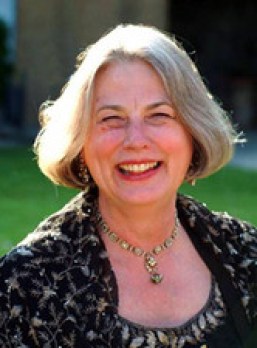
Catherine B. Asher. Credit: University of Minnesota website

Asher has gone beyond Mehrauli and Delhi to look at the afterlife of the iconic tower that is the Qutb Minar. She shows us how strong its impact was on later structures, which mimicked its form in miniature, either as freestanding towers or engaged columns. Examples of such appropriation range from structures as far flung as the Qutbuddin Mubarak Khalji’s mosque in Daultabad, to several in Delhi itself, for instance the 16th century mosque in Lodi Garden.

And yet the meaning of the original tower and its attached mosque is not uncontested. There have been suggestions, expressed first by Sir Syed Ahmad Khan, that the Qutb Minar was built by the Chauhans. While this is an opinion that is not generally espoused, at least by an educated readership, more common is the interpretation of both mosque and tower primarily as signifying the triumphalism of Islam. This is done on the one hand through an emphasis on the temple destruction associated with the site. On the other, it is fostered by the ASI signage and publications calling the mosque Quwwat al-Islam, literally, ‘strength of Islam’. This name, in fact, was not used for the mosque before the 19th century.

Asher questions many of these popular ideas, which often have their roots in colonial scholarship. She follows recent scholars such as Finbarr Flood, whom she refers to several times, in asking for a more nuanced reading of the site and what it signified in the past. Yet she does not break free of some of the more well-entrenched notions. Dichotomous ‘Islamic’ and ‘Indic’ traditions are treated as a given, without going into details of the motifs that are seen on the early Sultanate architecture to analyse their roots. The problem of the discipline of history becomes very apparent in such cases. A scholar of ‘Islamic’ art and architecture is trained to see the Qutub complex as Islamic architecture. The author, while she makes detailed comment on the calligraphy that adorned the early Sultanate structures, has no comment on the use of motifs like the lotus and the kalash, Indian motifs which also feature in the surface decoration. These motifs, in fact, persisted as an integral part of the ornamentation of mosques and tombs in Mehrauli and elsewhere, through the centuries, till the end of the Mughals.

Moreover, while it is important to study the architectural creations of the Ghurids in Afghanistan, as Asher has done, to understand their buildings in Delhi, it may not be enough to trace the roots of Ghurid architecture in Afghanistan merely to the previous ‘Islamic’ dynasty – the Ghaznavids. There were examples of pre-Ghaznavi art and architecture that abounded in the landscape – notably the great Gandhara tradition. It is time that its significance for later developments is also studied.

On the whole, however, the book is a valuable resource and informative read on a very important archaeological site. The inclusion of a large number of contemporary photographs and also archival images, match the scholarship, and live up to the standards set by the Marg series of scholarly volumes.

Swapna Liddle wrote her PhD thesis on the cultural and intellectual history of 19th-century Delhi. She is the author of Delhi: 14 Historic Walks and Chandni Chowk: The Mughal City of Old Delhi.

source: http://www.thewire.in / The Wire / Home> Books / by Swapna Liddle / November 30th, 2017

BMC-run Urdu school goes online to help girl students realise their dreams

Mumbai, MAHARASHTRA :

Mumbai :

An army officer, a policewoman, a teacher, a civil engineer, a management executive, a doctor, a beautician. These are some of the jobs that Class X girls of the BMC-run Imamwada Urdu School aspire to.

Their school, on its part, is taking all possible initiatives to compete with private educational institutions to ensure the students inch closer to the dream job. In an attempt to enable its students, the school has started a blog, a Facebook  page and a WhatsApp group for parents, and begun posting You Tube videos. It’s mobile app is at the trial stage.

Around 200 girls travel as much as 20km in dedicated BEST buses from Govandi and Sion to reach the school located in Bhendi Bazar. Their bus fare is paid by Aaisha Bai Trust, an NGO, and school teachers. “To keep up with the changing era, we need to update our students and make sure that they can compete with others. We are therefore trying to provide them with all the facilites we can,” said Shah Fakeer Ahmed, head master of the school.

“Last year, our students’ pass percentage in Class X was 76.9. We are working very hard to increase it. These girls come from various parts of the city and we have seen an increase in the number of admissions, from 217 students last year to 350 this year,” said Mohammed Aslam, an assistant teacher who is credited with taking up the web initiative for the school. “We want our students to be experts in using the latest technology for their career.”.

The school, located opposite Mughal Masjid, has two playgrounds, a garden, a sewing class for students, a science laboratory and a digital classroom. “Our students are brilliant and we expect them to reach great heights,” said Imran Khan, another teacher.

School authorities send announcements, results and attendance reports on WhatsApp. Currently, as many as 115 parents are on the group. The app, being developed by a Hyderabad firm, will be used to send notices, day-to-day activity details and results, said a teacher. The school has posted YouTube videos on the annual day, plays and activities.

The enthusiasm is palpable among students. Govandi’s Sakeen Bano said, “I am studying hard and want to join the Indian army to serve the nation.” She was her school’s best NCC cadet last year. Saira Khan hopes to ‘teach in the same school’. Sayyed Muskan and Rahe Huda want to become doctors. Shaikh Saober wants to be a police officer. The school is compiling records of its successful students for inspiration. One such recent example is Dr Rehnuma Khan, who holds MD (Unani).

source: http://www.timesofindia.indiatimes.com / The Times of India / News> City News> Mumbai News / Schools & Colleges News / by Mateen Hafeez / TNN / Novmeber 25th, 2017

Sopore Police kick boxing team win medals in State championship

Sopore(aka Suyyapura), Baramulla District, JAMMU & KASHMIR :

The Kick Boxing team of Sopore Police bagged three medals in the 4th J&K State Kick Boxing Championship-2017 held at Sher-i-Kashmir Indoor Sports Complex, Srinagar from November 16 to 19.

The team was imparted free coaching at DPL Sopore by Coach Manzoor Ahmad of Shah Hamdaan Sports Academy Sopore. During ensuing Kick Boxing Championship Mehraj-ud-Din Dar and Adil Akbar Lone proved their talent by winning two gold medals while as Shadaab Ali Dar won Silver medal.

Besides MuskanAlsam (14) from NowporaRafiabad was declared best player of the championship who earlier won 23 gold medals at national/state and district level. The winning players were felicitated on Thursday.

The free martial  art coaching which includes kick boxing, karate, taekwondo, wushu shall continue for the youth.

Team: Mehraj-ud-Din Dar, Adil Akbar Lone, Shadaab Ali Dar, Umar Mohammad Tantray, MuskaanAslam, Touseef Ahmad Malik, Mohammad Iqbal Mir, Mudasir Ahmad Khan, Wasim Ahmad, Tanveer Ahmad, Waseem Raja and Rameez Jan.

source: http://www.greaterkashmir.com / Greater Kashmir / Home> Sports / by Ghulam Muhammad / Sopore – November 24th, 2017

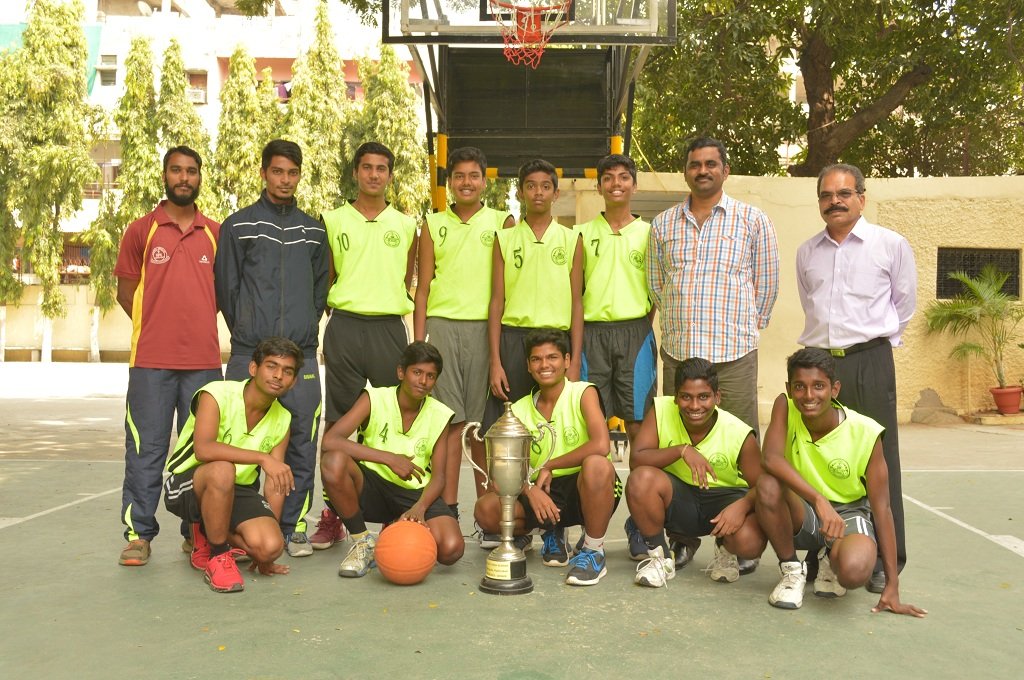
St Paul’s lift basketball title in inter-school championship

Hyderabad, TELANGANA :

Nihal Kumar and Majid Ali Khan showed their shooting prowess by scoring  12 and 10 points respectively.

St Paul’s High School team that emerged winners of the inter-school basketball championship.

Hyderabad:

 St Paul’s High School defeated All Saints High School 30-25 in the summit clash to lift the Under-17 Inter-School SSC Clusters Basketball Championship, being organised by School Games Federation, Hyderabad Zone, at the Victory Play Ground here on Sunday.

Nihal Kumr and Majid Ali Khan showed their shooting prowess by scoring 12 and 10 points respectively while Shankar shone for the losing outfit with a 10-point show.

Result:

Final: St. Paul’s High School 30 (Nihal Kumar 12, Majid Ail Khan 10) bt All Saints High School 25 (Shankar 10).

source: http://www.telanganatoday.com / Telangana Today / Home> Sport> Other Sports / by Telangana Today / October 30th, 2017

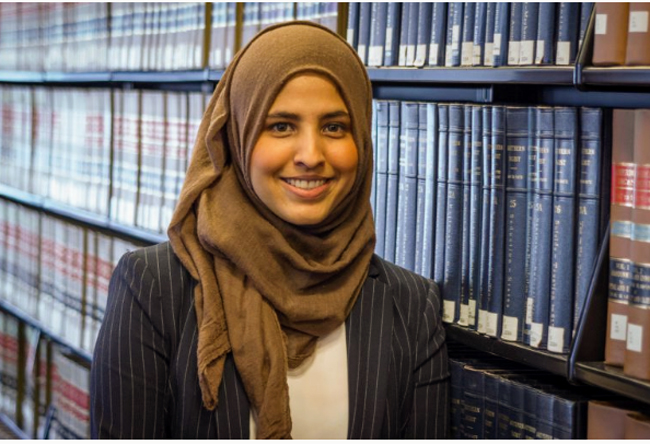
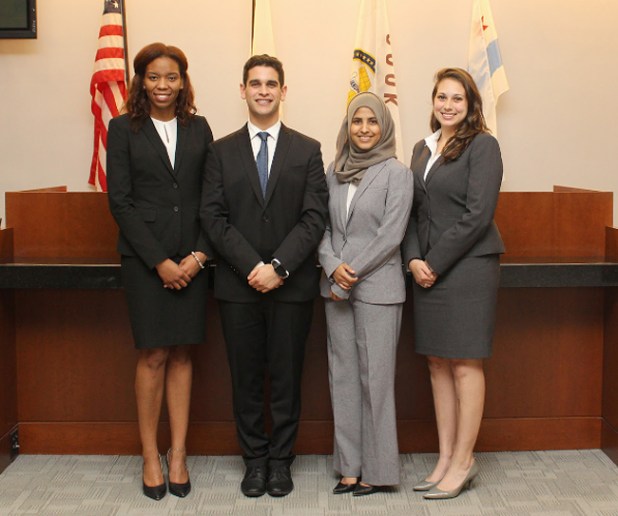
Trial advocacy team represented by Indian American Shahina Khan won over Georgetown University

Hyderabad, TELANGANA / Chicago, USA :

ShahinaMPOs29nov2017

Chicago:

The Chicago-Kent trial advocacy team represented by Shahina Khan, 3rd year JD student with three other students in the National Civil Trial Competition Championship 2017, held at Santa Monica and Los Angeles, Calif. Chicago-Kent won over Georgetown University Law Center, Drexel University Thomas R. Kline School of Law, and American University Washington College of Law twice in the quarter and semi finals rounds.

In the finals, Chicago-Kent got 1st runnerup to the team of Stamford University Cumberland School of Law. She also the recipient of prestigious J.J. Bittenbinder Award in UIC and the Obama Award for her championship in extra and co curricular activities during High School years .

Shahina02MPOs29nov2017

Shahina Khan belongs to the aristocratic and respectable family of old Hyderabad Estate. She is the daughter of Engineer. Ameer Mohammed Ali Khan, Practicing Consultant of IDOT, and grand daughter of President’s Gold Medalist, Late Nawab Wajid Ali Khan, Superintendent of Police, Ex. AP, India.

Shahina Khan’s great grand father, Late Abul Faiz Mirza Mohammed Ali Baig, was an eminent lawyer in pre and post independent India Hyderabad. He was the President of Bar Councils, Civil and Criminal courts, Hyderabad, India. He was one of the few eminent lawyers of India who had an opportunity to write the constitution of India.

Shahina Khan is the President for Criminal Law Society, Muslim Law Student Association and member of Trail advocacy Team ( 2017-2018).

Earlier to this, she also served as the Vice President for these associations. She graduated from University of Illinois at Chicago in 2015 with a bachelors in Criminal law with honors. She is doing her internship in Cook County State’s Attorney’s Office, Chicago. She wants to pursue a career in Criminal Litigation.

source: http://www.siasat.com / The Siasat Daily / Home> News> NRIs Corner / November 02nd, 2017

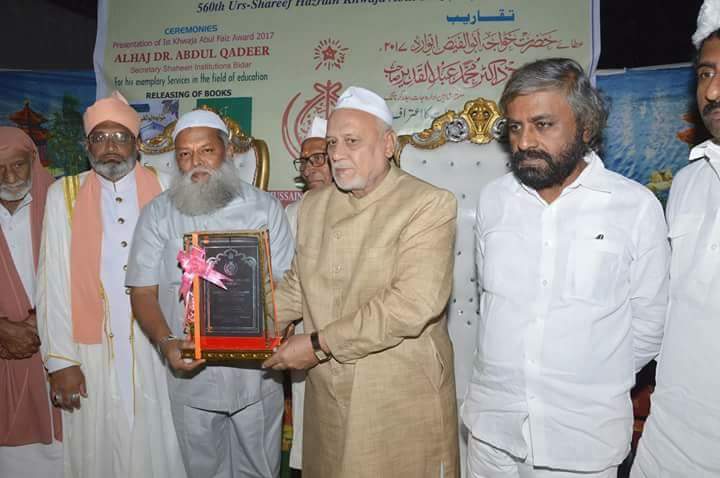
Dr. Abdul Qadeer of Shaheen Group conferred with “Hazrat Khwaja Abul Faiz R.H Award” for his unmatched educational service.

Bidar, KARNATAKA :

AbdulQadeerMPOs29nov2017

Gulbarga :

Dr. Abdul Qadeer, Secretary Shaheen Group of Institutions, Awarded with “Hazrat Khwaja Abul Faiz R.H Award” for his excellent educational service.

Dr. Abdul Qadeer has been awarded with “Hazrat Abul Faiz RH Award” Dated on 26 November 2017. This award presented to him on 560th death anniversary of Syed Khaja Abul Faiz RH. Dr. Abdul Qadeer, has been awarded for his excellent educational services and it has been presented by Syed Shah Hussain Shabir Hussaini sajjada Nasheen Dargah Hazrat Ganj bakhsh Rahmatullah Alai, Gulbarga.

During this occasion special guest were Honorable Minister Sri, Eshwar Khandre District In-charge Minister Bidar, Honorable Mohammed Rahim Khan MLA, Deputy Commissioner Dr. HR Mahadev, Senior Editor Mr. Shiv Sharnappa Valli, Honorable Mohammad Faheemuddin Sarika district wakf advisory committee were also present.

Dr. Abdul Qadeer in his impression recall Bidar history and said, Bidar was one of the biggest educational hub, it was the capital of various Kingdom in the past and it also had Asia’s biggest universities famously known as Mahmood Gawan University, wherein students from different countries used to come, to learn various educational courses.

Dr. Abdul Qadeer said Bidar’spast makes us proud for its excellent history and I believe in future we will achieve the same and we are making an effort to achieve it once again. Here in Shaheen Group of Institution, we are focusing on the regions like Bidar, which has very poor educational level, with this effort, we are not only getting the student from Karnataka but also we are getting from various country. Today Bidar has become well known place in education and various people throughout the world are attracting toward it.

source: http://www.deccandigest.com / Deccan Digest / Home> News / November 28th, 2017