All posts by mpositiveone@gmail.com

Remembering Umrao Begum

Basti Nizamuddin, NEW DELHI  :
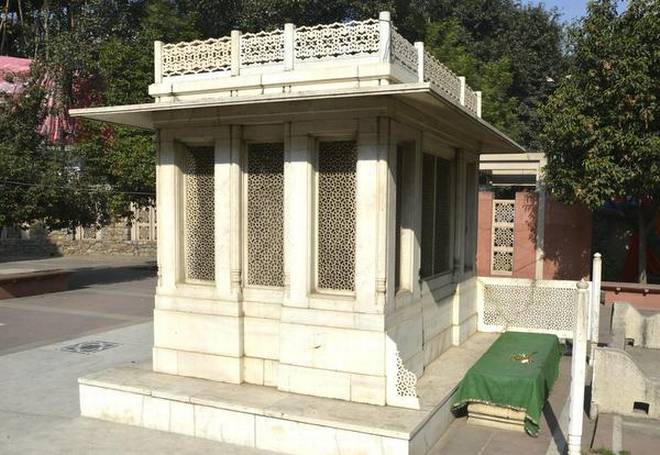
RAVE CONCERN Umrao Begum’s grave, covered in green cloth in Nizamuddin | Photo Credit: V. Sudershan

The unmarked resting place of Miza Ghalib’s wife deserves an epitaph

The grave of Mirza Ghalib’s wife, Umrao Begum, in Basti Nizamuddin, just at the side of her husband’s tomb, lacks an epitaph, probably because nobody tried to inscribe one on it in 1955 (when the poet’s memorial was built) or because she preferred anonymity as per the strictest tenets of Islam. Even so she deserves one for posterity’s sake. Umrao Begum was a pre-teenager when she married Ghalib, who himself was just 13 at that time, and the two shared conjugal bliss for nearly 57 years.

Umrao Begum was a kinswoman of the Nawab of Loharu, an erstwhile State now merged with Rajasthan, and her cousin was Bunyadi Begum, Ghalib’s sister-in-law. The begum, who was the Nawab’s sister, gave her haveli in Gali Mir Qasim Jan to Ghalib when he was in need of accommodation.

Umrao Begum bore seven children, all of whom died in infancy, leaving her and the poet heart-broken all their lives. Even the nephew, Nawab Zainul-abadin Khan Arif, whom they adopted, died young at the age of 18, though he had made his mark in Urdu poetry by then.

Strict lady

Umrao Begum was a strict Muslim lady, whereas Ghalib was not at all orthodox. After the First War of Independence of 1857, the poet was accosted by an English officer who asked him if he was a Muslim (as most members of the community were suspects in the eyes of the British). Ghalib replied “Half”. The officer sought an explanation to which Ghalib said that though he drank, he did not eat pork. The amused officer, marvelling at his wit, left him in peace.

Once Ghalib came home with a man carrying a basket full of wine bottles, bought with his first pay. Umrao Begum asked him why he had spent all the money on liquor, to which his reply was that God had promised to feed everyone but had not made any provision for drink, for which one had to make one’s own arrangements.

At another time he entered the courtyard of the house with his shoes on his head. To the Begum’s query, he replied that as she had made the whole haveli a masjid by her piety he had no other option. Umrao Begum died in 1870, a year after Ghalib, when Mahatma Gandhi was only a few months old and was buried according to her wish next to the poet.

Unfortunately, the Ghalib memorial built 85 years later became a barrier between the two graves, both of which should have come within its ambit. But it’s never too late to make amends for an oversight — if need be with Government help.

Her love for Ghalib was intense or he wouldn’t have been able to lead the carefree life he did. She was the one who took care of the house despite the poet’s love for gambling and dance girls, one of whom took undue advantage of him. Despite mischievous gossip by mohalla women, Umrao Begum was unruffled because she was convinced of her husband’s goodness of heart. Even when there was paucity of funds, she managed to see it to that Ghalib and nephew Arif got three square meals a day.

After the death of her children, she was the one who comforted her Mian Nausha so that the misfortune did not affect his mental equilibrium, without which his wit would not have continued to flow like the sparkling Thames.

Facing the music

Ghalib spent most of his time outside the haveli, except when he was writing poetry, having his meals or resting. So it was Umrao Begum who faced the creditors as she was the one who responded to the knock on the door in the absence of a regular maid. When the fat Kotwal of Delhi tried to bully Ghalib, as he disliked the poet because of their love for the same tawwaif and considered him a potential rival (as he always stole the limelight at the kotha), his wife was the one who confronted the Kotwal’s importunate minions at the haveli’s entrance and sent them away with the proverbial flea in the ear.

When Arif was grooming Alexander Heatherley “Azad” as a shair, despite his Anglo-Indian antecedents, Umrao Begum took it upon herself to see to it that they were not disturbed and had some refreshments too during the long hours of coaching. Ghalib who had earlier imbibed the love for shairi in Arif, also fawned on him and when he died an untimely death, poured out his grief in a heartfelt elegy (quoted from memory) that is among his best poems: “Jatey huey kehtey ho qayamat ko milenge kya khoob, qayamat ka goya din hai koi aur!” (While departing you say will meet on the Last Day of Judgement, what an excuse on the pretext of a reunion on a vague day in Eternity).

Reading the elegy Umrao Begum burst into tears and told Ghalib not to rub salt into her raw wounds, according to Arif’s pupil, Alexander Heatherley’s descendant, George Heatherley who died in Perth a few years ago. Umrao Begum’s grave close to Ghalib’s is testimony enough, if one were needed indeed, of the emotional link between the two. Then why deny her the courtesy of an epitaph to seal the bond for the benefit of future generations? No matter how distant may be Arif’s final place of repose.

source: http://www.thehindu.com / The Hindu / Home> Society> Down Memory Lane – History & Culture / by R.V. Smith / November 27th, 2017


Karimnagar students win medals

Karimnagar, TELANGANA :

Students of Vivekananda Residential School (VRS) in the town have won nine medals at the State-level karate championships conducted in Hyderabad recently.

The medal winners include Shivaramakrishna (two gold and a silver medal), G. Manishankar (two silver), M. Navdeep (silver and bronze) and Md. Anas Nawaz (silver and bronze). School principal Lalitha Kumari and karate instructor Vasanth Kumar complimented the students.

Similarly, the students of Paramita Explorica in Jyothinagar locality also won some medals – K. Ansh (bronze medal and yellow belt) and K. Vasistha (bronze and white belt).

source: http://www.thehindu.com / The Hindu/ Home>  News> Cities> Hyderabad / by Special Correspondent / Karimnagar – November 01st, 2017

Experienced Shamim Khan weathers the storm, beats young Veer Ahlawat in playoff to lift second IndianOil SERVO Masters Golf title

NEW DELHI :

Shamim narrows gap with Order of Merit leader Udayan Mane.

Shamim produced a fine performance through the week to lift the title

Digboi, Assam : 

The experienced Shamim Khan weathered the storm called Veer Ahlawat to register his second win at the IndianOil SERVO Masters Golf on Saturday.

The 39-year-old Shamim came through in a playoff against the 21-year-old Veer after both the Delhi-based professionals ended the regulation 72 holes with identical scores of nine-under-279 at the tranquil Digboi Golf Links. It was Khan’s third title of the season and his 15th overall.

Khan took home the winner’s cheque of Rs. 6 lakh from the Rs. 40 lakh event and continued in second place on the PGTI Order of Merit. However, with Shamim’s season earnings moving to Rs. 35,58,250, he has now narrowed the gap between himself and the money list leader Udayan Mane to just Rs. 1 lakh.

Shamim Khan (72-66-71-70), the overnight joint leader, looked in control when he sank his second birdie of the day, a 35-footer on the fifth, which gave him a two-shot lead. But there was a twist when Veer Ahlawat (71-70-69-69), who was overnight tied third and one off the lead, produced birdies on the sixth, seventh and ninth while Shamim dropped a bogey on the eighth.

After nine holes, Veer, playing one group ahead of the leaders, drew level with Shamim to emerge as a top contender. Ahlawat, playing only his second season as a professional, finally took the sole lead when he drove the 12th green to set up a birdie. Veer, who plays at the DLF Golf & Country Club, Gurgaon, dropped a shot on the 13th but regained his outright lead with a brilliant chip-putt birdie on the 15th.

Ahlawat then missed a few chances to seal his maiden title, notably an up and down for par on the 18th. The match went into a playoff as Khan made pars on his last 10 holes which included a crucial five feet conversion on the 18th.

Veer hit the green while Shamim was in the bunker after two shots each during the playoff on the par-4 18th. Khan managed to turn the tables with a gem of a bunker shot that set up a tap-in for par. The six-foot-three-inch tall Ahlawat, on the other hand, three-putted from 20 feet for a bogey that gave Shamim his 13th PGTI title.

Shamim, who previously won in Digboi in 2014, said, “My putting wasn’t great for the second consecutive day and when I missed a two-footer for par on the eighth, I knew I was in trouble.

“However, I hung in there with pars all the way till the end. I was quite happy to take it into the playoff after having trailed Veer on the back-nine. In a playoff situation, experience always counts. That’s what saw me through at the end. I felt Veer tried a bit too hard during the playoff.

“The birdies were hard to come by on the last two days but my chipping average was excellent. I landed all my chips within a short distance of the pins. The win puts me in a good position to once again contend for the Order of Merit crown,” added Khan, the 2012 PGTI Order of Merit champion.

Veer Ahlawat, who came close to causing a major upset on Saturday, jumped 14 spots to 16th position in the Order of Merit as a result of his career-best runner-up finish.

Ahlawat said, “The four birdies on the first 12 holes really got my confidence going. I checked the leaderboard on the 15th and that’s when I realized that I was very close to victory.

“I knew Shamim will not be easy to beat but I was quite confident as I was hitting and putting really well. I just couldn’t end it well. I didn’t feel much pressure but I think I got a little excited.

“But I’m quite happy with this performance as it is my best finish as a professional. I feel I’m now coming into my own after an ordinary rookie season on the PGTI last year. Every aspect of my game is better this year.”

Manu Gandas of Gurgaon, another 21-year-old, fired a final round of 71 to take third place at seven-under-281.

Bangladesh’s Md Zamal Hossain Mollah struck a 67, the best score of the last round, to end up in tied fourth at five-under-283 along with Noida’s Rahul Bajaj (71).

Bengaluru’s M Dharma, the joint leader from round three, slipped to tied 10th at two-under-286 after a fourth round of 77.

Digboi’s Dulal Kalowar (76-74-76-77), the only local player to make the cut, shot a 77 on Saturday to end the week in tied 47th at 15-over-303.

IndianOilMPOs27nov2017

source: http://www.sportskeeda.com / SportsKeeda  / Home> Golf / by Press Release / November 25th, 2017

Samima Khatun: Multiple-medal winner in National Paralympics for West Bengal, but no recognition or rewards

Basant Village(Nalhati Block) Birbhum District, WEST BENGAL :

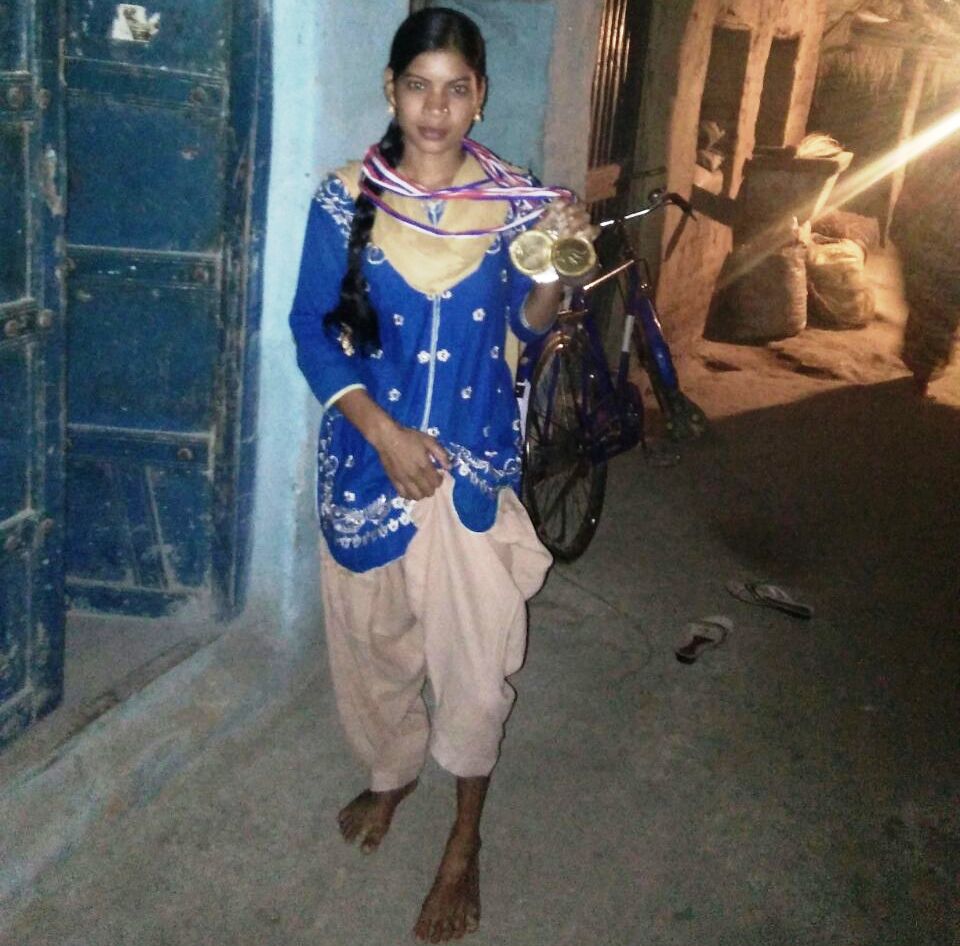
Samima Khatun with her medals in her home.

It is a well-known fact in India that compared to cricketers, sportspersons belonging to every other discipline have to struggle to make their name and earn a livelihood. The situation gets worse with athletes, and more so when they are physically handicapped. But as we showed last week, even among such struggles, there are enough shining lights like Bodruddoja Saikh. And among the many students that he has trained, Samima Khatun would surely rank among the top: with more than 15 medals in National Paralympic games in the past four years including four this year, Khatun should have been hailed as a role model for millions of physically handicapped citizens of this country. Instead, despite all the laurels that she has brought to West Bengal, she is still struggling to ensure that she and her family’s future is slightly better than it is now.

In fact, the news of her amazing achievements barely made it to national media and except for a small news item in The Telegraph, Khatun’s name did not even make it to the news portals.

Khatun, who is 16, won four medals at the National Championships held in Udaipur this year. Samima was among the three participants to the said Championship who participated from Bengal who won two gold, one silver, and one bronze. The other two are Reshmita Maal from Gobindapur village, a graduation first-year student in a nearby college situated in Nalhati, and Saina Khatun, an eighth-grade student of Koitha village. Reshmita secured two silvers and one bronze and Saina one bronze.

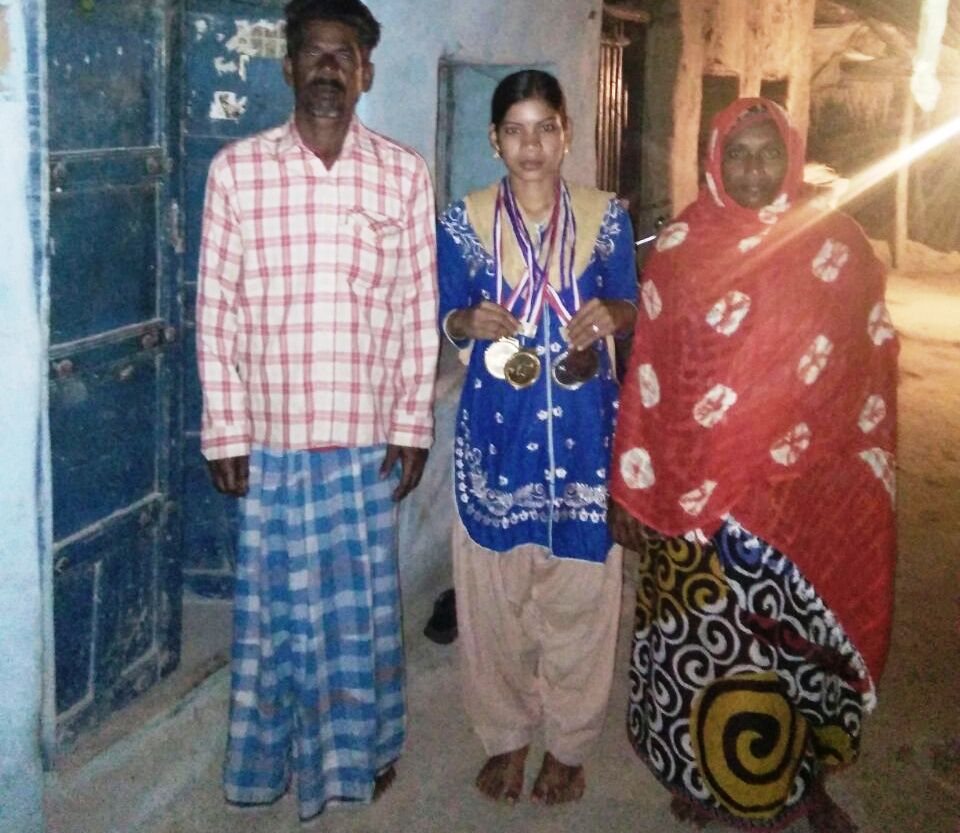
Samima with her parents in her home.

Samima hails from Basanta village of Nalhati block of the Birbhum district and is the daughter of Maijuddin Mondol, who works as a daily wage labourer and earns about Rs 200 per day. Samima completed her Matriculation from a nearby Madrasa, Nalhati High Madrasa School and is currently enrolled in the eleventh-grade (Science) for her Higher Secondary from Nalhati High School for Girls.

According to her parents, she is a patient of Genu Varum, or bandy-leg, an irredeemable deformity in the legs, mostly from the knees to the ankles which she got at the time of her birth. “Even if it is remediable, we are unable to spend the money needed for the operation. It is very hard for me to run a family of six members with an income of Rs 200 rupees per day and we can only dream of spending so much money for her treatment”, her father said.

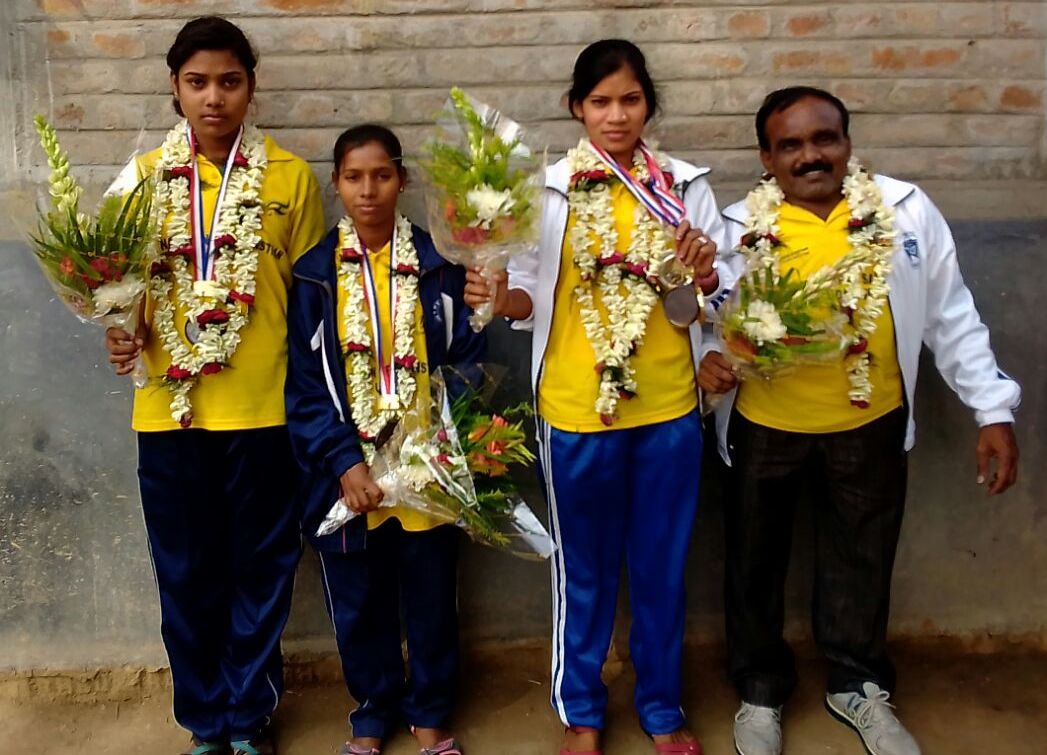
Resmita, Saina and Samima are being felicitated in their locality with their Coach

After securing her position in the State-level Swimming Championship in 2013 held in Kolkata’s Kumartuli, Samima set out her journey into the National level championships under the guidance of Bodruddoja Saikh. Since then, she has succeeded to retain her position in the National Championships for the last four years held in four different cities of India. In 2014, she won two gold, two silver that was held in Indore, Madhya Pradesh; two gold, two silver, and one bronze in Belgaon, Karnataka for 2015 and two silver and two gold for 2016 in Rajasthan’s Jaipur.

In her early days, she used to practice swimming in her village pond. “When I was in my eighth standard, one day I was swimming in the nearby pond of my village. There my present Coach (Saikh) saw me and asked me whether I would like to swim under his guidance as a part of the competition. After that, whatever I have achieved now only for his insistence and influences,” she said. She started practising swimming in a lonely pond near Nalhati, quite far away from her village.

Bodruddoja Saikh spoke to TwoCircles.net about the tribulations that they faced at the start. “It was very tough for me to train her in the village pond as many adults would stand with their mobiles to capture her photos. Even locals would rebuff me for doing these sorts of things with a Muslim girl.” He added, “But when Samima won some competitions and news about it came out in papers, people left rebuking me. Since then, I started taking my students to a pond quite far from the villages near Nalhati to train them.”

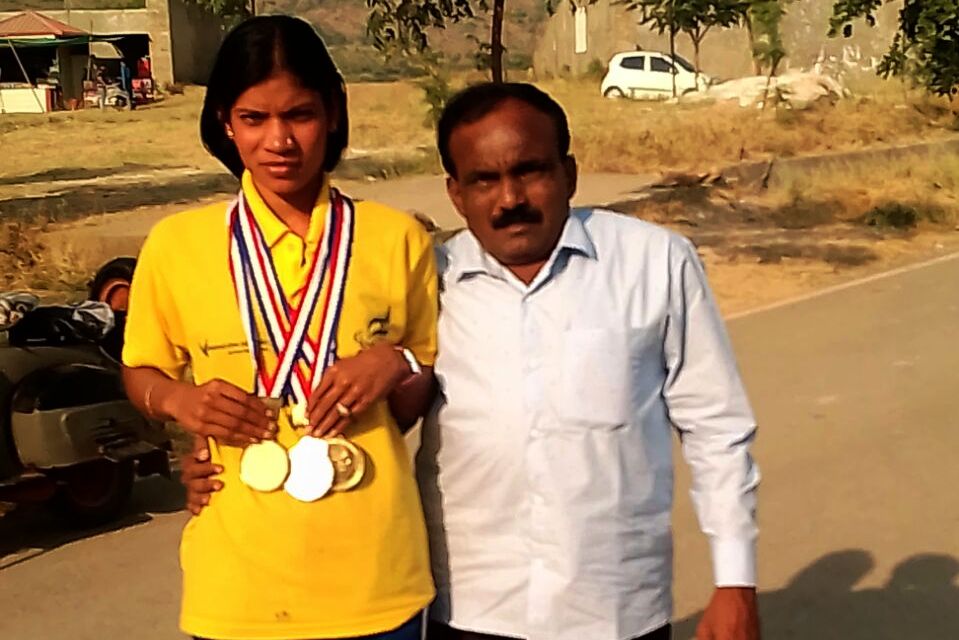
Samima with her Coach, Bodruddoja Saikh.

When she was asked whether there was any problem with her parents to allow her swimming, she said, “We are very poor. So my parents allowed me to do what I am doing so that I can help them financially in order to get rid of poverty.”

But the bitter truth is that even after bringing laurels to West Bengal at the national level competitions, the Bengal government did not pay any attention to the girl or to her family. Though local administration did facilitate the winners this year after their return, no financial help was assured to them and the students are way too poor to afford training in the reputed clubs. Though other states have sanctioned some money for the winners at the national level, Bengal government is yet to think over that. Saikh lamented, “The Haryana sanctioned Rs 3 lakh for gold winners, Rs 2 lakh for silver winners and Rs 1 lakh for bronze winners. Recently, even the Bihar government implemented the same. But our government has done nothing like this. If the government does so, then lakhs of physically deformed children may get enthusiasm to devote themselves to these sorts of sports.”

Samima’s father also urged the same. “If benevolent persons come forward to help my daughter to achieve her ultimate successes, then we would be grateful to all of them,” he added.

PS: If TwoCircles.net readers would like to help Samima and her family, the bank details of the family are as follows:

Name: SAMIMA KHATUN
A/C NO— 35188578498 (STATE BANK OF INDIA)
NALHATI BRANCH, BIRBHUM.
IFSC CODE—SBIN0008540.

source: http://www.twocircles.net / Two Circles.net / Home> Indian Muslim> Lead Story> TCN Positive / by Mirza Mosaraf Hossain, TwoCircles.net / November 24th, 2017

For Habibullah Badsha, public interest trumped officialdom

Chennai, TAMIL NADU :

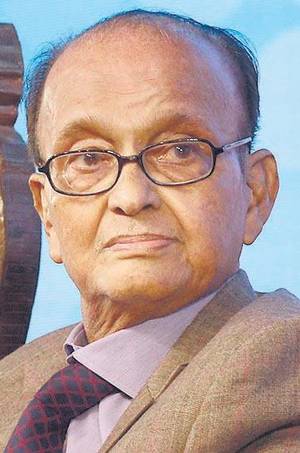
Habibullah Badsha
Habibullah Badsha

He was respected by judges and lawyers alike, and many others

Habibullah Badsha (1933 – 2017) was born in an illustrious family and was apprenticed to an illustrious lawyer. He joined S. Govind Swaminadhan in 1956 and became one of his favourite juniors. Soon he acquired an extensive practice of his own. For several decades, that trio — SGS, A.C. Muthanna and Badsha — were a combination hard to beat.

Badsha was steeped in the mould of his senior. He held every important law office, and in each he ensured that fairness overrode partisanship, and public interest trumped officialdom and politics. As Public Prosecutor, he would readily concede that the State had no case, as Central Govt Counsel he declined to support Emergency orders of detention, as Advocate – General he made it clear that if the government disregarded his advice, they could look for a new A-G.

When he took on a public interest case, he made sure that he gave to it the same amount of prodigious labour and interest as a paying brief. When he took on a public cause, eg. protesting the city being shut down for a mega wedding organised by a former Chief Minister, he was undeterred by threats. Manifold public organisations and charities benefited from his support. Many individuals did too, monetarily and otherwise, but this came to light only when unknowns came to pay respects to the departed soul; he followed the adage — for your generosity let the left hand not know what the right hand giveth.

He was respected by judges and lawyers alike, in his home court and the apex one, and many others in the country. Many juniors looked upon him as a role model and tell of his generosity of time, ensuring that the young lawyer was well paid, and other acts of help and assistance; he always responded when asked and sometimes surprised the recipient unasked. His attitude and manner of mildness, gentleness and soft speech was a constant — at home, in society, and in court. Dispelling the notion that the litigation lawyer must display aggression, Badsha always displayed calm and courtesy; these traits would coax the judge into agreeing with him and then virtually espousing his cause to the chagrin of the other side.

He was mindful of the fact that the Muslim community, of which he was a prominent member, needed his special attention, and he was a prominent name in several prominent organisations. But that did not prevent him from being secular in outlook, thought, speech and practice. In declining judgeship when offered, he did what his senior had done; there are many voices which are critical of the best lawyers staying clear of the Bench, but it must also be kept in mind that his outstanding services in many areas would not have been forthcoming from that gilded cage. Nevertheless, it was a matter of pride for him that three of his juniors became High Court judges and served with distinction — Justices Sudhakar, Kirubakaran and Akbar Ali.

In his closing years he was saddened by falling standards in the legal professions, Bench and Bar and academics. It was much better in our time, he used to say. We agree; and when a prominent member of the old guard leaves us, we feel it all the more.

(The writer is a senior advocate in the Madras High Court. His email id is sriram.panchu@gmail.com)

source: http://www.thehindu.com / The Hindu / Home> News> States> Tamil Nadu / by Sriram Panchu / Chennai – November 25th, 2017

Mairaj Ahmad Khan crowned Skeet champion at Shotgun Nationals

Khurja (Bulandshahr District), UTTAR PRADESH :

Mairaj emerged victorious after edging out youngster Angad Vir Singh Bajwa of Punjab 26-25 in a marathon shoot-off.

Mairaj Ahmad Khan via Facebook

India’s top Skeet shooter, Mairaj Ahmad Khan, was on Saturday crowned national champion after a marathon final at New Delhi’s Dr Karni Singh Shooting Range on the concluding day of the 61st National Shooting Championship Competitions for Shotgun events.

In a battle between India’s present and future of Men’s Skeet shooting, Mairaj, representing Uttar Pradesh (UP) and youngster Angad Vir Singh Bajwa of Punjab, were engaged in a grueling battle for top honours as both recorded 57 out of 60 hits in the final and then went through a marathon shoot-off before Mairaj came through 26-25 to clinch gold. Man Singh of Haryana won the Bronze with a score of 46 in the finals.

Earlier in qualification, Angad topped the field with a high score of 123 out of 125 while Mairaj was third among six to qualify with a score of 122. Angad however won the Team gold in the event, combining with Amarinder Cheema and Sukhbir Singh Harika for a total of 356, ahead of Haryana’s 351.

Mairaj and his UP team won Bronze with a combined total of 348.

There was another shoot-off to determine the winner of the gold medal in the Junior Men’s Skeet, where Chattisgarh’s Mohammad Hamza Sheikh prevailed over Punjab’s Gurnihal Singh Garcha 7-6 after both were tied on 53 hits.

Ayush Rudraraju of Tripura won Bronze recording 38 hits in the final.

Just like Angad in Men’s Skeet, Gurnihal did manage to win the Junior Team Gold with his Punjab teammates Abinash Pratap Singh Sidhu and Indereshwar Singh Sekhon recording a combined total of 336, ahead of second placed Rajasthan with 326 and third placed Madhya Pradesh with 285.

We welcome your comments at letters@scroll.in.

source: http://www.thefield.scroll.in / Scroll.in / Home> The Field> Indian Sport / by Scroll Staff / November 25th, 2017

Little scientists showcase talents at Children’s Science Congress

Kodagu, KARNATAKA :

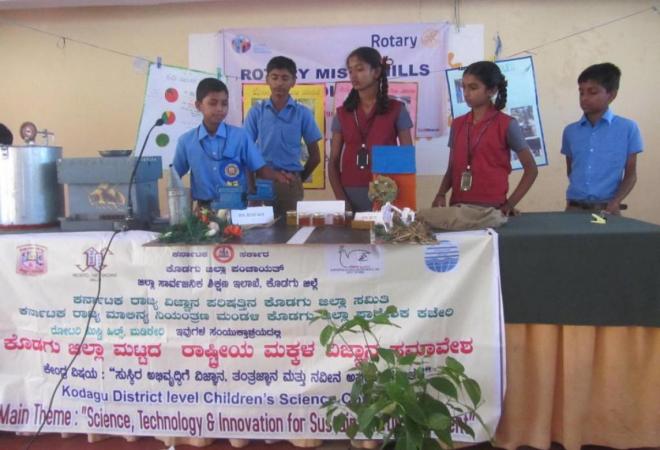
Students showcase their talents at the Childrens science Congress.

The district-level 25th Children’s Science Congress was organised by the departments of Science and Technology and Education at Rotary Children’s Science Centre here on Wednesday.

The Science Congress was meant for primary and High School students. The students presented project reports on ‘sustainable development through Science and Technology’ based on local issues.

The topics included natural resources, cleanliness and hygiene, agriculture, environmental conservation and waste management.

Inaugurating the convention, District Scouts and Guides Patron K T Mathew called upon students to develop a scientific temper. He added that students should know about the research, inventions and achievements of veteran scientists.

State Pollution Control Board Regional Office Environment Officer G R Ganeshan, Rotary Misty Hills president H T Anil and Vijnana Parishat district committee Secretary T G Premkumar also spoke.

10 best teams in the district-level will take part in the state-level Science Congress to be held in Mysuru from November 29 to December 1. The first 30 teams getting selected in the state-level will be eligible to take part in the National Children’s Science Congress to be held in Ahmedabad, Gujarat between December 27 and 31.

District Committee Vice President M E Mohiddin, Kodagu Vidyalaya Bharatiya Vidya Bhavana, Madikeri, Principal E Shrinivasan and Education Coordinator G Shreeharsha were present.

source: http://www.deccanherald.com / Deccan Herald / Home> District / DH News Service / Madikeri – November 22nd, 2017

Dr Noor Mohammad passes away

Srinagar, JAMMU & KASHMIR :

Srinagar:

Dr Noor Mohammad Mir, former Head of the Plant Pathology department at the Sher-i-Kashmir University of Agricultural Sciences and Technology, passed away on Thursday.
His ‘Rasme Chaharum’ would be held on Monday at 10:30 am at the family’s ancestral graveyard at Chotta Bazar, Kanikadal, in downtown Srinagar. (KNS)

source: http://www.risingkashmir.com / Rising Kashmir / Home / Srinagar – November 25th, 2017

Grand Double Crown for Mustafa in AITA Championship Series

Bengaluru, KARNATAKA :

MustafaMPOs25nov2017

Mysuru :

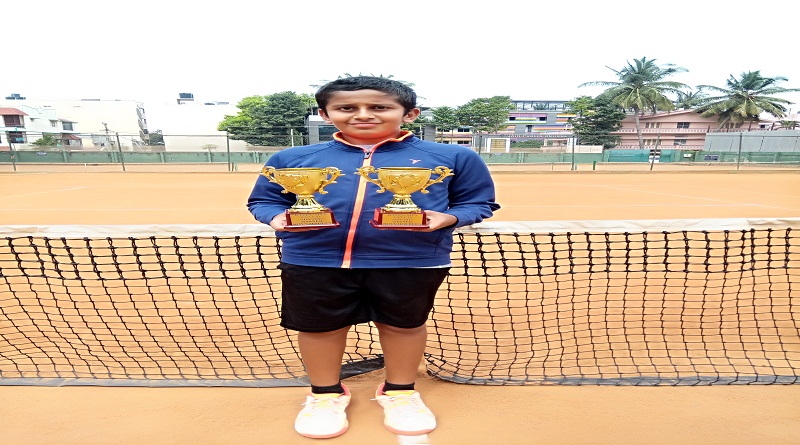
City’s young 10 year old tennis player Mustafa M Raja won a grand double crown winning both the singles and doubles trophy of the Championship Series 7 days AITA 12 and Under National Tournament held at Top Spin Tennis academy in J P Nagar, Bengaluru.

This is Mustafa’s biggest win of his career.  This tournament saw players participating from all over India including Maharashtra, Assam, West Bengal, Tamil Nadu, Karnataka etc.

Mustafa played consistently throughout the 5 days and did not drop even one set in the entire tournament.  In the semi finals third seeded Mustafa won against the top seed player Keshav Goel from West Bengal with the score of 6,2 and 7,6(7,4).  In the finals Mustafa overcame Prakash Bhuvan from Karnataka with the score of 7,6(7,1) and 6,4.

In the doubles finals second seeded pair of Mustafa and Jason M David from Karnataka defeated the No 1 seeded pair of Keshav Goel (WB) and Arnav Paparkar (MH) with the score of 6,3 and 6,1.

This is Mustafa’s 21st AITA Trophy which includes 16 winner titles and 5 Runner Up titles. Mustafa has achieved this feat in less than 24 months.

Mustafa studies at Excel Public School and trains at the Nagaraj Tennis Centre.  He is the son of Murtuza Raja and Farida Raja. -(KK)

source: http://www.citytoday.com / City Today / Home> Mysore / CT Bureau / November 25th, 2017

Shrines of sand

Hyderabad, TELANGANA :

Tucked away in the locality of Urdu Shareef is the shrine of a sufi saint

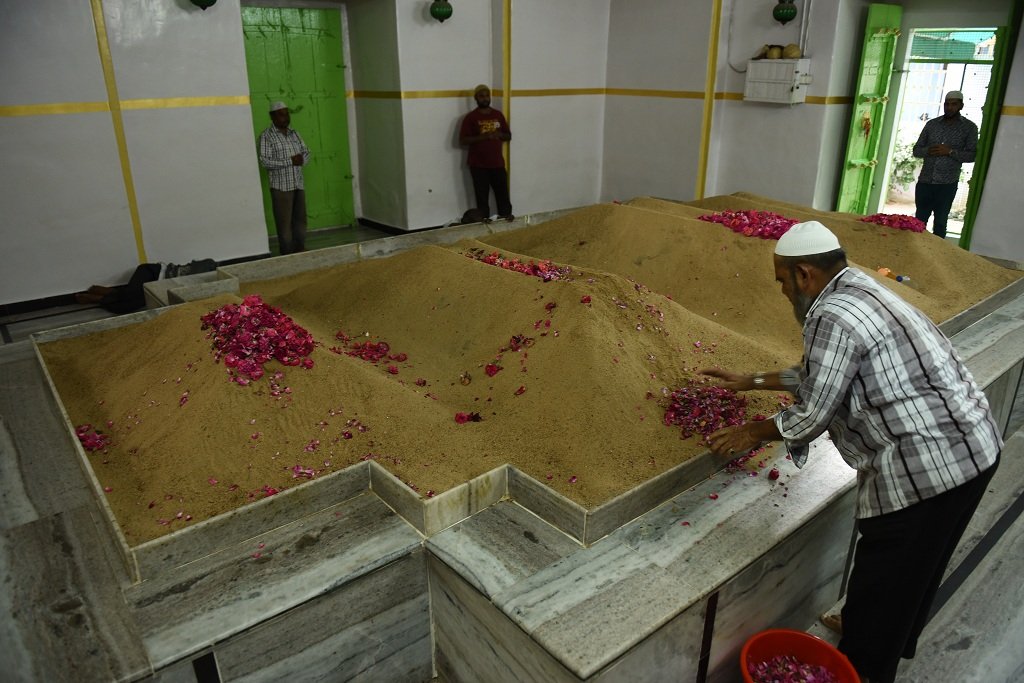
The sand graves of Hazrat Arifullah Syedna Shah Saadullah Saheb Naqshbandi and others in Urdu Shareef. Photo: Hrudayanand

The Deccan region has been blessed by the influence of many sufis, saints, gurus and spiritual leaders. It is said that 1400 paalkis (palanquins) came to Deccan, symbolising the number of sufi-saints. They spread the message of universal brotherhood, love, tolerance, peace, harmony, humanity and amiable relations between the two major communities. Many devotees and followers also embraced Islam. The entire Deccan region and the city of Hyderabad, in particular was visited by many god men, who not only commanded respect and reverence from common man, but also from nobilities and elite class of the society.

The old city of Hyderabad i.e. the southern part has shrines of many famous Sufi-saints, whose annual Urs are still celebrated with great devotion.

A little away from Pathergatti High Court road is the locality called Urdu Shareef, where the army of Mughal Prince Kaambakhsh stayed during that period. The palace of Kaambakhsh was also constructed in the vicinity.

It is in this area that you will see the shrine of Hazrat Arifullah Syedna Shah Saadullah Saheb Naqshbandi. The 175 year old shrine has a large dome with beautiful architecture housing four graves made of fine sand. It is an uncommon and unusual sight, as graves are usually made of cement, mortar, lime and stones; and rarely are covered by marble, the graves appear like sand dunes, and lie adjacent to one another. The biggest grave is that of Hazrat Saadullah Saheb.

The adjacent one on the left side is of his brother, Md Osman Saheb, the next one is of Osman’s wife, while on the far right is the grave of his favourite disciple, Mirza Ashraf Ali. The entire area of these graves is seven feet long and four feet wide. The sand is changed annually and many devotees, both Hindus and Muslims pay their respect and seek his blessings.

Hazrat Saadullah was born in the Frontier Province. He came to Deccan during the reign of Nawab Nasir-ud-daula, the fourth Nizam, and settled here. Many nobles including, Maharaja Chandu Lal, used to come to seek his blessings. A great scholar, he was an Arabic and Persian poet as well. Since he was physically disabled, he would sit on the back of a disciple when roaming around the city.

The impressive dome was constructed by one of his ardent followers, Maulvi Mohd Hussain, who was the tutor of the fifth Nizam, Mir Mahboob Ali Khan.

Just opposite the shrine is a small mosque built by Hazrat which bears similarity with Charminar. The architecture on the parapet, minarets and the ceiling is extraordinarily magnificent.

source: http://www.telanganatoday.com / Telangana Today / Home> SundayScape> Telangana Diaries / by Dr. Anand Raj Varma / October 15th, 2017