All posts by mpositiveone@gmail.com

Bastar SP Sheikh Aarif Hussain is first IPS officer to be honoured with IACP award

Bastar, CHHATTISGARH :

Pennsylvania :

Arif Sheikh has become the only Indian Police Service (IPS) officer of the country to win this award in community policing twice in a row.

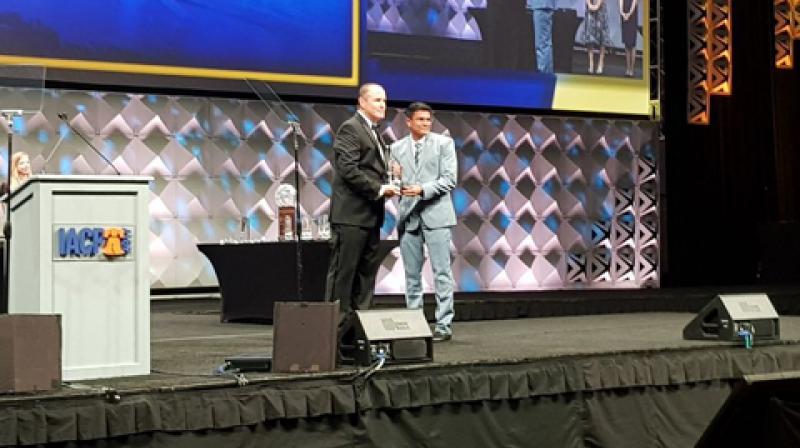
Arif Sheikh has become the only Indian Police Service (IPS) officer of the country to win this award in community policing twice in a row. (Photo: ANI | Twitter)

Bastar:

Bastar Superintendent of Police (SP) Sheikh Aarif Hussain has been awarded the prestigious International Association of Chief of Police (IACP) Award 2017 in Pennsylvania in the ‘Homeland Security’ category for his campaign ‘Amcho Bastar, Amcho Police’.

Arif Sheikh has become the only Indian Police Service (IPS) officer of the country to win this award in community policing twice in a row.

Arif Shaikh has dedicated this award to the martyrs, who have sacrificed their life at the altar of their duty in Bastar and to the brave and innocent tribals of the region, who have supported and collaborated with the Bastar Police in this fight against the Naxalism.

Through his campaign, the Bastar Police have come to the aid of few children, who were trapped in the clutches of the Bal Sangham of Maoists, who were used to plant IEDs against the security personnel. They also tried to bring back the surrendered Maoists into the mainstream by giving them alternative earning opportunities.

The ‘Amcho Bastar, Amcho Police’ initiative aimed at bridging the gap between the police and the tribal communities by assimilating with their culture. At the same time, the police has focussed on neutralising the Left wing extremist and also by encouraging the ultras to surrender and join the main stream.

The annual IACP award ceremony and Banquet was held on Wednesday in the Pennsylvania convention centre in a majestic ceremony.

The IACP is a 126-year-old organisation of all the chiefs of police in the U.S. with its headquarters located in Virginia.

The IACP president, Donald W. De Lucca, was the chief guest. The other guests of honour were the executive board directors of the IACP.

Total 15 different awards were given in various categories including forensic sciences, prevention of terrorism, community policing, human rights awards, victim services awards and Reuters awards for excellence in criminal investigations et al.

The IACP/Cisco Leadership award in community policing recognises outstanding community policing initiatives undertaken by law enforcement agencies worldwide.

The other agencies across the world which won the community policing awards were the Oelwein Police department from Iowa, the Monrovia Police department from California, the Roanoke Police department from Virginia, the Fujairah Police department from the UAE and the Arlington Police department from Texas.

source: http://www.asianage.com / The Asian Age / Home> Newsmakers / by ANI / October 25th, 2017

Mewat sisters launch anti-dowry drive, ask qazis to join the fight

Pingwa,Mewat (HARYANA)  / NEW DELHI :

HighLights

  • Six sisters of Delhi’s Malaviya Nagar have launched a campaign against dowry in their native village in Mewat.
  • They are carrying a door-to-door campaign against the social evil in Mewat.
  • They have also urged the qazis, or Sharia magistrate, to not allow such weddings in the district.

________________________________________________________________________

MewatSistersMPOs24nov2017

Gurugram :

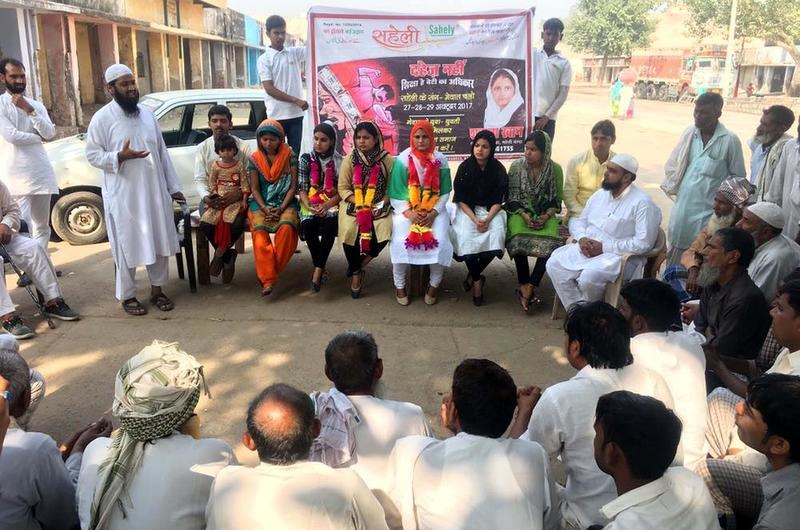
This is what a silent revolution looks like. Six sisters, who live with their parents in Delhi’s Malaviya Nagar, have launched a campaign against dowry in their native village, Pingwa in Mewat. Since Friday last, they have been busy in a door-to-door campaign against the social evil in Mewat.

They have declared they will also urge qazis, or Sharia magistrate, to not allow such weddings in the district.

Shabana Khan, 29, the eldest of six sister, was married to a Sikandrabad, UP, resident 10 years ago. Tormented by her in-laws for dowry, she returned home to her parents after suffering for two years. Since then, she realised most women around her suffered after marriage for “not bringing enough dowry”.

Noticing the plight of their sister, Shabana’s five younger sisters — Nishi (26), Neelu (24), Shahin (23), Abida (21) and Nafisa (15) — have declared they would rather remain unmarried if there is dowry involved in a potential alliance. It also inspired them to launch their campaign against dowry. They founded an organisation in 2014 — Sahely, for victims of dowry, and now have decided to return to their roots to empower girls in Mewat.

“As dowry, my father gifted all kinds of household articles, but he didn’t have enough money for a car and the lakhs of rupees in cash sought. For this, I was harassed by my in-laws and eventually my marriage broke. Dowry is an epidemic. Girls are mentally and physically tortured for it. It has to stop, and it’s time somebody did something about it,” said Shabana.
The sisters will organise public meetings in the villages to raise awareness. They chose Mewat not only because it is their ancestral home, but also because of its high illiteracy.

 “Both Islam and country’s laws prohibit dowry, yet it’s given and taken openly. We’ll approach all qazis and tell them not to consecrate any wedding where dowry is exchanged. In fact, dowry seekers should be boycotted. It’s against Islam, and is a cancer that is eating away at the foundations of the institution of marriage,” said Shahin, another sister.

The sisters will target both youths and elders for their campaign. “We as a society spend more on girl’s dowry than her education. We should provide all resources to a girl for education, and not give any dowry at all. Even if in one generation, family of the bride/groom refuse to give/accept dowry, our job is done. That will transform society and will be the way to save the girl child,” added Neelu.

source: http://www.timesofindia.indiatimes.com / The Times of India / News> City News> Gurgaon News / Chetna Choudhry / TNN / October 30th, 2017

Kolkata Maidan coach Abdul Monayem to nurture aspiring Bengal cricketers

Kolkata , WEST BENGAL :

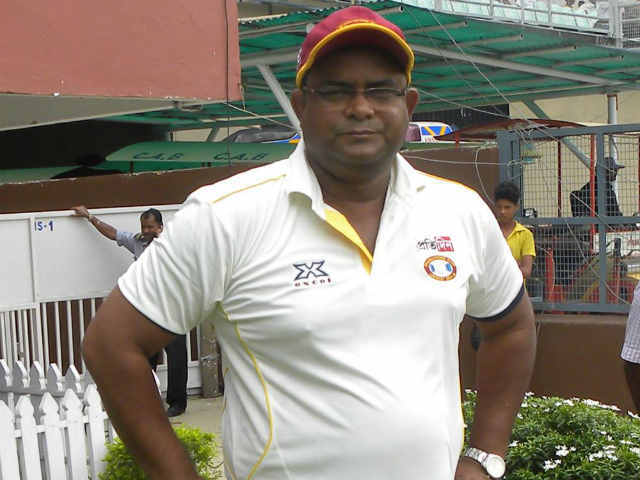
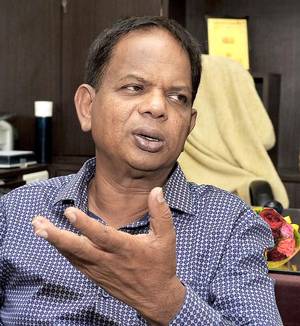
Abdul Monayem (Image credit: Facebook)

Kolkata:

Former Bengal cricketer and Maidan coach Abdul Monayem takes up the role of the Cricket Operations Head and the bowling coach of the Aditya School of Sports launched by the Aditya Group, here on Thursday.

The Aditya Group, in a press conference at the Calcutta Sport’s Journalist’s club announced the launch of The Aditya School of Sports of in the presence of coach Monayem, Anirban Aditya, chairman of the Aditya Group, Ankit Aditya, vice-chairman, Subrata Talukdar, CEO of Atletico De Kolkata and Jhulan Goswami, former captain of the Indian women’s cricket team.

The Aditya School of Sports is a new and a first initiative of it’s own kind as it seeks to promote the idea of sports as career option. Initially, the institution would have training personnel for only cricket and football but other sports like rifle shooting are set to be included soon.

The students will have to undergo practice sessions for six days a week along with well balanced education.They would be provided with the latest training equipment and no stone, in their path of becoming able sportspersons, would be left unturned.

Anirban Aditya said that this initiative has mainly been taken to give importance to sports along with studies. He told ,”We have built this institution following the lines of The Tata Football Academy.”

“We are trying to contact the Dumdum and Barasat municipalities so as to get them repair the unkept fields. After they have been rebuilt they could be made available for even local players use them.” Coach Monayem, the man who had played for both East Bengal and Mohun Bagan clubs, and has big responsibilities of nurturing young talent, came out supporting this initiative.

He said, “This was needed from a long time. Here, along with education, people would take interest in sports, especially cricket”. He goes to say, ” Some of these cricketers may end up playing for Bengal one day.” He also says that not only boys but girls too, are free to take up admission in this institution.

Monayem had won the CAB First Division league with the Bhowanipore Cricket Club in the 2015-16 season. He also carries with him an experience of coaching first division clubs for 15 years.

The football training will be provided by specialized coaching staffs from the inaugural Indian Super League champions, Atletico De Kolkata.

The CEO of the club Mr.Subrata was present for occasion and said that, “ATK has helped the development of football in the country.” He also assured continuous help and support from the club to this institution.

source: http://www.sportscrunch,in  / Sports  Crunch / Home> Cricket / by Souryaprokas Bhaduri / November 23rd, 2017

Mughals were leaders of first independence war, says NALSAR University of Law V-C

Aligarh, UTTAR PRADESH :

SirSyedMPOs22nov2017

Lucknow :

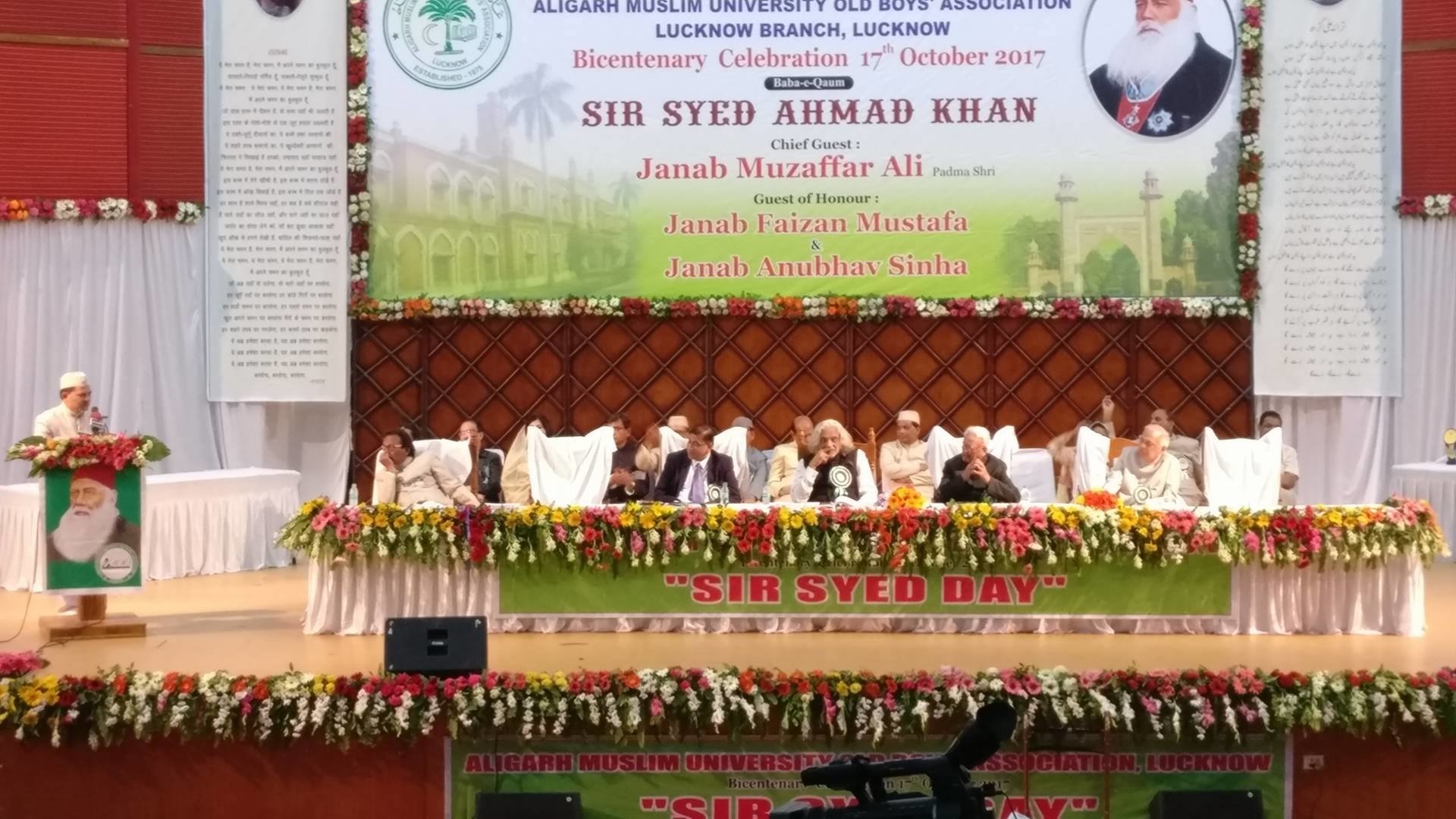
These are times of aggressive nationalism we are living in, said vice chancellor of NALSAR University of Law, Hyderabad, Faizan Mustafa, where we have started to consider Mughals not part of the country. Mustafa speaking at the grand 200th bicentenary birth anniversary celebrations of Sir Syed Ahmad Khan in Lucknow on Tuesday went ahead to say that Mughals were in fact leaders of the first war of independence of 1857 and were considered so by the likes of Tipu Sultan, Tatya Tope and others.

“Mughals were an integral part of India who could not be fragmented from its soul and now we are here in these times of aggressive nationalism where we are having doubts about them. And this nationalism has not only made us target the Mughals, but also recently there were similar talks about Rabindranath Tagore,” said Mustafa who was the guest of honour at the Sir Syed Day organised by Aligarh Muslim University’s (AMU) Old Boys’ Association. Filmmaker Muzaffar Ali was the chief guest on the day, both of whom being former pupils of the university, recounted their time spent at AMU.

Mustafa also cleared that now when criticising the government is equated to being seditious, it was in 1860 after a fatwa (decree) from clerics at Deoband against the British that the law of sedition as a charge was enacted. Mustafa also exhorted his fellow Aligs (as past pupils of AMU are popularly known) that the dream of Sir Syed has not yet been realised with Muslims lagging in both modern education and securing government jobs.

In his brief speech, Mustafa also touched upon the controversy around AMU’s minority status and said, “People say that the minority status was for the college and with AMU a university, it does not stand now. I researched for this when I had to submit in Allahabad high court as AMU’s stand on the case and I found that when Sir Syed laid the foundation of the madrasa it was the university he had in mind and when he gave his first speech in 1877 when the school was raised to the college level, in front of Lord Lytton he said that one day the college would be a university.

Mustafa also said that blaming Sir Syed for the two nation theory was not just wrong but also absurd. “In several of his recorded speeches, he has identified and defined both Hindus and Muslims as not separate identities but one qaum (community) and one nation. Mustafa considered an authority on law also said that reforms in Muslim personal laws were needed and could only be possible through the ideas of Sir Syed Ahmad Khan.

ON the day, the AMU Old Boys’ Association and its members that had gathered in the city from different parts of the state passed the resolution to raise demand of Bharat Ratna for Sir Syed and to generate funds for a Sir Syed House in Lucknow to carry on his Aligarh movement of education.

source: http://www.timesofindia.indiatimes.com / The Times of India / News> City News> Lucknow News / by Yusra Hussain / TNN / October 18th, 2017

Jamia Milia Islamia alumni meet evokes nostalgic memories

NEW DELHI :

The ex-Jamia students came all the way from India, Oman, Saudi Arabia and the UK for the meet

The meet not only fostered the alumni bond, but also extended a helping hand to fresh graduates

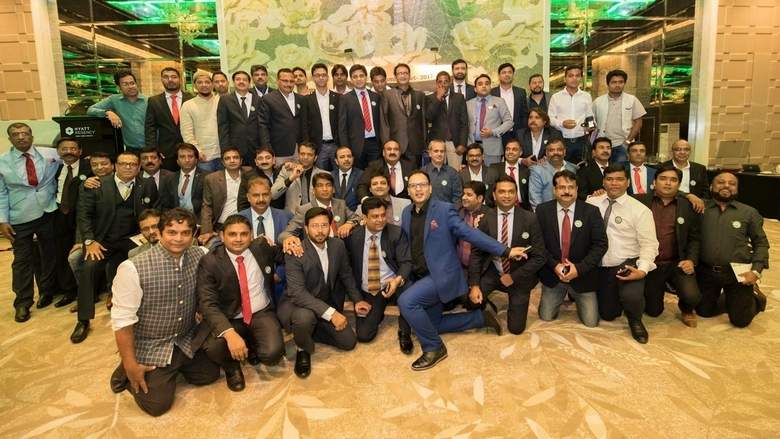
It was an evening steeped in nostalgia, as over 500 alumni of New Delhi’s central university and one of India’s most famous – Jamia Millia Islamia – came from all across the world to celebrate their alma mater’s 97th birthday.

Scores of ex-Jamia students who travelled all the way from India, Oman, Saudi Arabia and the UK along with their families, attended the event at Hyatt Regency, Dubai Creek Heights.

Apart from the distinguished guest list that included Ambassador of India to UAE Navdeep Singh Suri, the university’s vice chancellor Talat Ahmed and other dignitaries, successful alumni shared nostalgic memories of their time at the school.

The programme began with a recitation from the Holy Quran, followed by the university’s anthem called sung with full enthusiasm.

Addressing the gathering, prominent alumni Parvez Akram Siddquie welcomed the guests and JMI alumni and highlighted the university’s key objectives. He spoke about starting a medical college in the university’s campus, expansion of the campus, and campus placement for students.

Talking about the role of the alumni meet, Siddquie added: “The heart of the alumni meet lies in giving back in kind to their alma mater. Such meets not only aim to bring together and foster a bond among alumni, but also are a means of extending a helping hand to fresh graduates in different aspects, from job-hunting to settling down in the UAE. Many a time, the alumni chapter has also generated funds for pressing needs like a hostel accommodation at the university.”

Dr Haji Ibrahim, co-chairman of Malabar Gold & Diamonds, announced the company’s support in building the hostel facility for students, on the Jamia campus.

JMI vice-chancellor Talat Ahmed delivered a powerful speech on the values and ideals that define the university. Stating that JMI is a confluence of modern and age-old values of brotherhood and mutual coexistence, he said: “JMI is a platform from which students embark on a journey of learning and self-discovery. It is a model of national integration where children of every religion, sect, and denomination study together,” Ahmed said.

“We recalled our college days today, as we met our batchmates and friends after so many years, even 20 years in some cases. We shared the same jokes that we cracked as students and had a great time catching up,” said Imtiyaz Ahmad, a JMI alumni and one of the meet’s organisers.

Suri assured his support in getting the Global Jamia Alumni Network (GJAN) official recognition and registration in the UAE.

Talking about the role of Indian expats in the UAE, Suri said: “I was talking to some very high officials in the UAE government, and they said we have been told to drive the India-UAE relationship because our leaders believe that Indians are the people we trust. Why? ‘Because, at home, we leave our children in the care of Indians, in hospitals we put our lives in the hands of Indian doctors, and in banks, we put our money in the hands of Indian bankers’ he said. There is a lot of goodwill earned by the Indian community.”

The show concluded with the vote of thanks by one of the main organisers and JMI alumni Nadeem Hasan. Others key alumni members who helped in organising the event were Imtiyaz Ahmad Ansari, Eqbal Ahmad, Abdul Khaliq, Abbad Khan, Ahmad Khan, Riyaz Khan, Shams Khan, Jalal Ahmad, Rizwan Ahmad, Salauddine Ansari and Amjad Khan has been appreciated to make this event successful and Syed Nadeem Zaidi.

saman@khaleejtimes.com

source: http://www.khaleejtimes.com / Khaleej Times / Home> Nation / October 24th, 2017

Novel project to promote reading habit in children

Vijayawada, ANDHRA PRADESH / Hyderabad, TELANGANA :
Sadiq Ali has been on a mission to promote book-reading through a mobile library.A.V.G. Prasad

Cart loaded with books set to reach schools in State

To inculcate the love of reading in children, former journalist and Hyderabad-based businessman Sheik Sadiq Ali has embarked on a unique mission. He operates a mobile library by stacking books on a pushcart that moves around remote villages and distributes books to young children who do not have access to them.

The collection of books has all genres that cater to different tastes. “Books stimulate our imagination, curiosity and creativity, thereby enriching our lives. Realising the need to make books accessible to people at the grassroots level, I decided to take up this task,” he explains.

Why use push cart when he can afford a car or other comfortable mode of transport? “Most of my friends suggested that I fix motors to the cart or at least hire workers to push it. But I refused and chose to do it myself because I wanted to create interest among people who usually see vegetables, toys or other things sold on such four-wheeled carts. I was sure that it would raise the curiosity of kids, my target group,” he explains.

Mr. Sadiq, popular as Thopudu Bandi Sadiq, has done his Masters in Telugu from the Osmania University and his wife Usha is Joint Director in Agriculture Department. He invests in real estate and also runs an online matrimonial website and the money generated there is spent on purchase of books in bulk from publishers, most of who are generous with subsidies.

His pushcart first hit the road on February 22 at the People’s Plaza on the Necklace Road in Hyderabad in 2015, covering 350 km in the twin cities. The next year in January, the vehicle loaded with books set out with a slogan of Palle ku prematho thopudu bandi, covering about 1,000 km in 100 days across villages in Hyderabad, Ranga Reddy, Nalgonda, Medak and Warangal districts. This was followed by Vooroora Grandhalayam (library in every village) wherein he started libraries in 130 villages.

If his badi-badi ki thopudu bandi catered to the need of books in village schools, his Basthi lo pustakala panduga is aimed at taking books to children in summer holidays. His next programme Adavi thalli ki akshara thoranam targets Girijan thandas in the Bhupalapalli district of Telangana, from November 27.

Foray in AP

In collaboration with the Andhra Pradesh Library Association (APLA), Mr. Sadiq Ali now plans to expand his library facilities to children in Andhra Pradesh as well.

“Based on the route map given by the APLA, I’ll start books distribution from February 1, from Thiruvuru,” he says.

He intends to set up two godowns at Kallur which borders Thiruvuru and at Mylavaram and each of them will have stocks of books sufficient for 15-20 libraries.

“The APLA will give all possible support to him,” said Sarada Raavi, general secretary of the Association.

source: http://www.thehindu.com / The Hindu / Home> National> Andhra Pradesh /  by P. Sujatha Varma / Vijayawada – November 20th, 2017

World record? 191 tumours removed from Omani woman’s uterus at Kerala hospital

Kozhikode, KERALA :

A doctor at the hospital said they performed the operation in four hours without removing the patient’s ovaries or uterus. The previous record was held by an Egyptian woman, who had 186 tumours removed from her body last December.

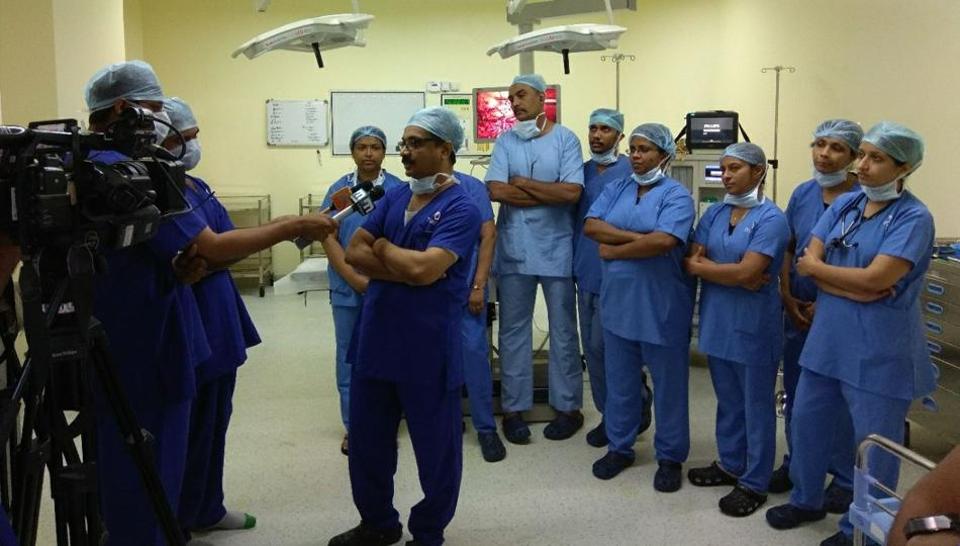
Mediapersons interview the medical team that conducted the surgical procedure. (HT Photo)

As many as 191 benign tumours were removed from the uterus of an Omani woman at a private hospital in Kozhikode, north Kerala, on Saturday.

Doctors at the city’s Starcare Hospital claimed this was a new world record. They said the previous one was held by an Egyptian woman, who had 186 tumours removed from her body last December.

Dr Abdul Rashid, the hospital’s chief gynaecologist, told Hindustan Times they performed the operation in four hours without removing the patient’s ovaries or uterus. “We blended keyhole and traditional mechanisms to do it. We were expecting 80-odd tumours, not so many,” he said, adding that the woman was now recuperating from the procedure.

The existing record in the country is 84 tumours.

Dr Rashid said the hospital will soon update Guinness World Records authorities on the development. “We did not operate on the 34-year-old woman to break any record. We had initially considered laparoscopic surgery, but decided against it when we realised that the tumour was really big,” he added.

A team of three doctors had performed the surgery.

The chief gynaecologist said a leading medical body has already confirmed that this was a unique case. “The woman seemed to be in an advanced stage of pregnancy when she first came here, but we were keen on protecting her ovaries and uterus. She can now lead a normal life, and even conceive after a couple of years,” he added.

According to Dr Rashid, there has been a significant rise in middle-eastern patients visiting super-specialty hospitals in the state lately. “Our facilities are economical when compared to hospitals in the West, while keeping with similar standards. Kerala has always been a leading tourist destination, but it may soon become a medical hub too,” he said.

source: http://www.hindustantimes.com / Hindustan  Times / Home> India / by Ramesh Babu – Hindustan Times, Thiruvananthapuram / November 19th, 2017

‘Books important for knowledge society’

Vijayawada, ANDHRA PRADESH :

Books play key role in creation of a knowledge society, said Krishna district Collector B. Lakshmikantham, on Sunday.

Addressing a meeting organised by Andhra Pradesh Library Association at Sarvotham Bhavan near Benz Circle as part of 50th National Library Week celebration, Mr. Lakshmikantham said the library movement has great significance in Andhra Pradesh State as people who spearheaded the library movement also were important part of the freedom struggle.

The Collector said every individual must take to book-reading as books never let down anybody. He said knowledge was essential for all-round development of a society and pointed to the fact that Andhra Pradesh State was in the forefront in implementation of many good people-centric programmes.

Former MP Chennupati Vidya was honoured with this year’s Gadicherla Foundation Award, named after freedom fighter and champion of library movement Gadicherla Harisarvottama Rao. Sheik Sadiq Ali, a former journalist who is working relentlessly to promote reading habit among children in villages, was presented with the Paturi Nagabhushanam Grandhalayam Puraskaram on the occasion.

source: http://www.thehindu.com / The Hindu / Home> National> Andhra Pradesh / by Special Correspondent / Vijayawada – November 20th, 2017

Lucknow University declares medal list, 84% in girls’ kitty

UTTAR  PRADESH :

Lucknow :

Girls once again roost the rule in Lucknow University’s medal tally, with Ayushi Kapoor, MSc Mathematics student sweeping with 12 medals.

In the list of 179 medals released by LU on Friday, 84% winners who will awarded on the convocation ceremony to be held on December 9 are in girl’s kitty.

According to the list, 150 medals have gone to 74 girls while 22 boys have won only 29 medals. LU will award around 192 medals at its convocation. Remaining medal winners are expected to be announced after November 25.

Securing 96.62% in MSc Mathematics, Ayushi Kapoor has won the maximum of 12 medals. With 67.54% marks, LLb student Asha Tiwari will be awarded nine medals.

Four students – Prasansha Mishra who scored 80.27% in MSc Physics, Megha Walecha who scored 76.23% in MCom, Ankita who secured 67.90% in MA Political Science and Gulshan Jahan who secured 67.95% in MA History – won six medals each.

Students can raise objections, if any, in the medal list, till November 21. According to university officials, applications for the award of Chancellor’s medal and Chakravarti medal have already come, and interviews with the students are most likely to be held after November 25.

source: http://www.timesofindia.indiatimes.com / The Times of India / News> City News> Lucknow News> Schools & Colleges / by Isha Jain / TNN / November 17th, 2017

As Urdu gets a fillip from Telangana govt, khatibs see a glimmer of hope

Hyderabad, TELANGANA :

UrduMPOs20nov2017

As he sits in the quiet, nondescript lane of Chatta Bazaar, surrounded by stacks of paper and the smell of fresh ink of screen-printing, one could easily mistake Mohammed Ghouseuddin Azeem for just another vendor taking orders for wedding cards. wading through the rickety scooters that dangerously lean onto each other, we reach Azeem, who eyes us rather suspiciously when we ask: “Kya aap khatib hai?”
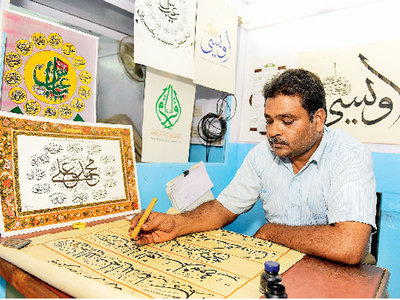
A khatib, (which roughly translates to calligrapher), is the name for artists who master the age-old art of designing alphabets and words in Urdu using a specialised pen and Indian ink. But for Azeem, khushnawees or khushkhat (calligraphy) is more ‘grammar’ than art. “It may seem like we are writing it anyway we want, but if I draw the alphabet ‘ba’ in font size 12 and font size 60, the distance between the first part of the letter to the end part will be same across the two sizes,” explains Azeem who has been a khatib for over 26 years.
Chatta Bazaar, where his simple workshop is situated, was once the hub of khatibs. But today, only seven-eight are left, rues Azeem, who admits khushnawees is a dying art.
“In the 1990s, the computers came and soon, the Urdu font followed. suddenly khatibs were no more in demand,” recollects Azeem. The first blow came from Urdu newspapers, which once mass-recruited khatibs for chronicling the city’s daily life. But once the print industry moved onto the faster, cost-effective digital medium the art of khushkhat was restricted merely to ornate cards and banners. “I won’t say khushnaweesi has lost its demand completely. The advent of the digital era just made it more precious and rare — something to be cherished,” says Azeem, wistfully.
For Chatta Bazar’s seven-odd khatibs, who run Urdu printing shops parallely, the recent announcement that the government has declared Urdu the second official language of Telangana, serves as a small glimmer of hope to do all they can to preserve their art. “we are the only few remaining who know this art. We have to do this, we have to keep at it, so we ensure this stands the test of time,” says Azhar Hashmi, another khatib.
But passion alone doesn’t fill stomachs and that is precisely why one of them only has his father’s calligraphy collection to show in reminiscence of old times. “I left khushnawees long time back. I used to write for Urdu dailies, but when they stopped, I lost my speed completely so I set up a printing shop,” says 51-year-old Afzal Mohammed Khan. He pulls out his father’s blue scrapbook from under his desk, and shows it to us, with a hint of nostalgia and pride lighting up his face. “My father, Ghouse Mohammed Khan was the best khatib in town in the 60s and 70s. He made all these,” says Afzal, as he turns the 50-odd pages of the book to show off his father’s artistry. One of them shows the drawing of Rajeev Gandhi, with words in Urdu reading, ‘Humara Maseeha’. Another shows the masthead of the daily, Rehnumaye Deccan, another shows the masthead of a paper Munsif. “This was a pandra-roza, or fortnightly,” he says, pointing to the cut out of the masthead his father designed. An old picture falls off the leaf — that of Ghouse, with some dignitaries. Afzal turns over the photo to read the lines written: “This was clicked over 35 years ago with the Education Minister Muddu Krishnama Naidu.”
The male-dominated Chatta Bazar has no sight of women, even as customers. So looking for a woman khatib is like trying to find a needle in a haystack. “Women used to write for the fortnightly or weekly papers. But once the computers came, they too were pushed back into the homes. Now they do write, but as a hobby, not commercially,” explains Afzal. He shows another photograph of his father with a bunch of students at the Marqaz Kushnawwezi in Nampally, where he taught young women calligraphy.
Clearly, things today are a far cry from back then when Urdu got its due. Even as attempts are being made to revive the lost glory of the language, the khatibs lament that outside Old City, their art has barely any takers. “Our market will always be the same — Old City dwellers who want wedding cards and other special correspondence written. The wedding card demand is also there only because the religious heads have mandated the use of Urdu. else everyone would have switched to English,” says Mohammed Abdula, a khatib, adding, “Jab tak Urdu ko tawajjon nahi milega, khatib ka haal aisa hi rahega.”

An evolving art
With changing times, the art too had to evolve and adapt. While the computerised fonts of Urdu run in thousands, there are just seven fonts used for Khatib — Nastaleeq, Riqa, Diwani, Suls, Nasq, Kufi and Diwani Jali. Each of these fonts are unique not just in the way they are recreated on paper, but also unique in terms of their usage and significance. while a Suls is preferred for headings, a Kufi finds its place on the walls of a Masjid and Riqa decorates the Quran. The khatibs uses a pen with nibs of varying sizes, ranging from 1mm to a 3cm. These are entirely made with bamboo. Pens with metallic nibs are called ‘Baru ka Kalam’ by some. “Calligraphy as done before is hardly seen anymore. We use any water based ink now. earlier we used to go to a colour shop in Gulzar House were a special color called Kala Kankar was available. We would heat it in decoction to make ink,” recollects Mohammed Abdula. Now the color shop has gone, Gulzar house has changed and so has the khatib’s precious artform.

 
Will the newfound recognition that’s coming Urdu’s way from the Telangana government rewrite the khatib’s tale and change his fortune? Only time will tell.

Urdu was born here, it grew here, it’s our language
The beauty of the language is that it is linguistically much richer. We say ‘I love my dog and love my son’ with no difference between the two kinds of love in English. But in Urdu, we say ‘Main apne kutte se pyaar karti hoon aur apne bete se Mohabbat karti hoon’. that impact is what Urdu gives to expression. That difference between ‘mohabbat’ and ‘pyaar’ is where Urdu’s beauty lies.
Iqbal Patni, poet

I’m happy that urdu is getting its due finally
The move to make Urdu the second official language of the state is a good one. Now, the government must employ translators at all offices from Mandal to Secretariat level to ensure that those who learn Urdu will get employment as well because the perception that it is only spoken by minorities is plaguing its growth.
Prof Naseemuddin Farees, MANUU

Urdu is India’s awaam ki boli

I can’t explain how happy I am that Urdu, my mother tongue, has become the second official language of Telangana — this news made my day. Trust me, I’ve been asking Mahmood Ali (deputy CM of Telangana) for years now, why we don’t have names of roads in Urdu. That’s the only way people will see it and get familiar with it. Though my father lived in England for a while and I studied in an English medium school, at home we never spoke in English; it was always Urdu. When we were kids, an Urdu master would come home to teach us. It was that important.

Laxmi Devi Raj, textile revivalist 

Urdu is a language of poetry, music and culture. All kinds of books were translated into Urdu for the general populace to read, including the religious books. But in the 70s the state saw an influx of migrant population, that was alien to Urdu and knew little about it. My parents could read and write in Urdu, but I could only speak. So people are losing touch with the language. We are losing out on our culture and manuscripts chronicled in Urdu. the state recognition is a step to achieve the multi-lingualism which Hyderabad was once famous for.

Anuradha Reddy, historian

Humare liye sona khana peena uthna baithna odhna bichana — everything is Urdu. I think Urdu is the zabaan of a whole lot of Indians. from Lucknow to Bhopal, Punjab to erstwhile Deccan provinces, the language on the street is Urdu. Strangely, it’s ‘called’ Hindi. Urdu was largely the awaam ki boli. At a time when Farsi, persian et al were court languages, Urdu was made for the common man to speak. After independence, Hindi became the official languages. Now that the Telangana government has taken a step in the right direction, they should not simply announce it and forget about it. We should work towards making Urdu a part of everyday life. mushairas should be held again, government offices should allow public to submit requests / applications in Urdu, apart from Telugu and English, sign boards should feature Urdu prominently. Only then will this move make any real impact.

Fawad Tamkant, artist

source: http://www.timesofindia.indiatimes.com / The Times of India / News> City News> Hyderabad News / November 19th, 2017