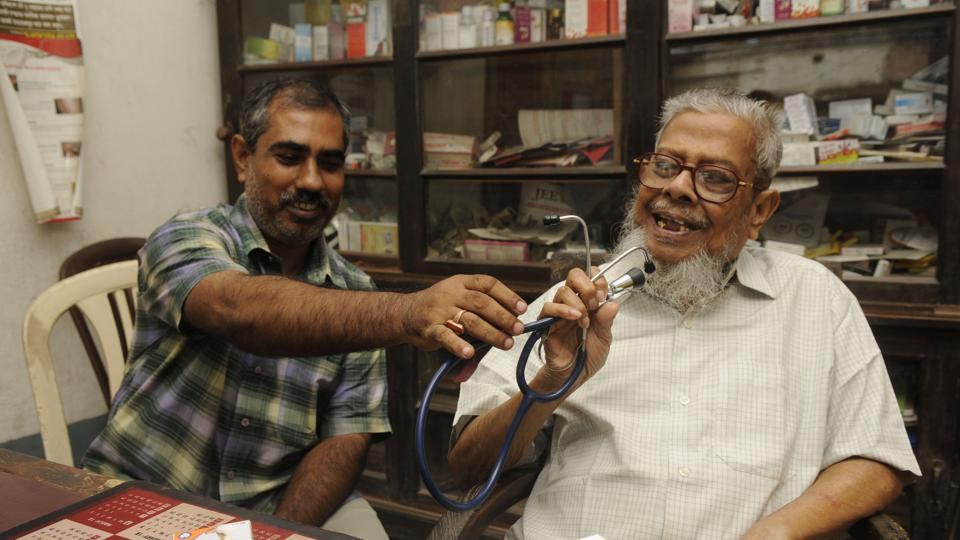
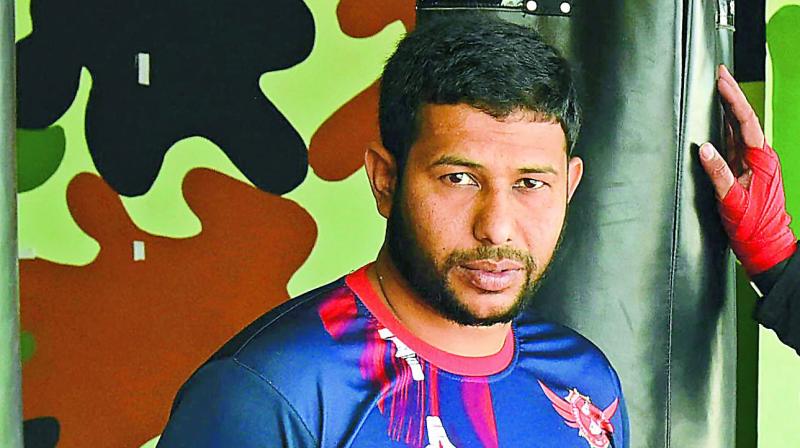
Compounder Debprasad Bairagi (left) has been working for the last 35 years with Dr Kaseed Ali (right) in Basirhat.(Samir Jana/HT PHOTO)
Dr Kaseed Ali and his compounder Deboprasad Boiragi have been working together for nearly 35 years. Ali tells his patients that Boiragi has been no less than a family member.
Patients coming out of doctor Kaseed Ali’s chamber in violence-hit Trimohini area of Basirhat town are carrying, apart from the medical prescription, advice on communal harmony.
Ali and his compounder Deboprasad Boiragi are working together for nearly 35 years. Ali has made it a point to tell each of his patients that Boiragi has been no less than a family member and any loss to him would have been a personal loss to the Ali family.
“Over the last five days, I was always tense about his family’s security. I told the local leaders from my community to ensure his safety. Fortunately, since I have been practising here for the past 45 years, the leaders took my advice seriously and Debu’s family is safe,” Ali said.
“I find no difference between Debu and my two sons. I consider his wife as my own daughter-in-law and his kids as my own grandchildren,” Ali says.
Boiragi said a doctor’s chamber is the right place to spread the message of communal harmony.
“We are telling everyone how our professional engagement led to emotional bonding between two families and this was normal for Basirhat. It is not that patients are unaware of these facts. But it is time we remind each other of the true character and traditions of Basirhat,” Boiragi said.
Close to his chamber is a medicine shop run by Benoy Krishna Pal, who was horrified by the violence at Trimohini. He even planned on leaving the town with his family, until a Muslim friend, Gazi, asked him not to.
However, Gazi refused to take any credit.
“I did not do anything special to be thanked for. Anybody would have done the same to save a childhood friend. We are like brothers,” he said.
source: http://www.hindustantimes.com / Hindustan Times / Home> India / by Sumanta Ray Chaudhuri / Hindustan Tim ess, Bashirat (West Bengal) / July 10th, 2017
Two teachers set precedent by promoting reading habit among students
Kochi :
The tale of Totto-Chan, a girl who has come to symbolise unorthodox learning, is among the best-selling books published by NBT in Malayalam. Translated by poet and film-maker Anwar Ali, the book has been flying off the shelves like no other.
But besides the big purchasers, there are dedicated souls like Ramanunni, a retired teacher from Palakkad who set up a non-profit book selling venture. He has also played a key role in popularising books among school students and teachers.
T.N. Gopalakrishnan Nair
Another compulsive book promoter is T.N. Gopalakrishnan Nair, a resident of Kallara near Koothattukulam, who retired as a government high school Malayalam teacher in 1994. “He comes with an autorickshaw to ship books for sales exhibitions,” says NBT assistant editor Rubin D’Cruz. “Considering that NBT books are heavily subsidised, leave alone profit, he ends up spending money from his own pocket in popularising these books.” Sure enough, Mr. Nair’s tryst with books began back in the 1980s during his association with the Kerala Sastra Sahitya Parishad. He saw before his eyes his son becoming a bookworm and excelling in studies and co-curricular activities alike. “This brought me closer to books big time. Subsequently, I found myself sourcing rare volumes for parents and teachers alike and began to extensively travel between Thiruvananthapuram and Kozhikode for books which were in short supply those days,” he says. Over time, Mr. Nair carved a niche for himself by single-handedly organising book exhibitions, which grew in scale with publishers, NGOs, schools, and like-minded individuals coming on board.
Recuperating from a medical condition, Mr. Nair is concerned about not being able to host a few exhibitions he had promised at schools in Kottayam this month.
“I should be active, hopefully from the second week of August, and I have committed book exhibitions at three spaces already. I have enough books with me now to hold five such. Fortunately, there is an auto driver who helps me out in transporting books,” says Mr. Nair.
source: http://www.thehindu.com / The Hindu / Home> News> Cities> Kochi / by Special Correspondent / July 09th, 2017
Born into a family of ‘coolie Indians’, Ranjith Kally was important in documenting the role of Indians in the anti-apartheid movement
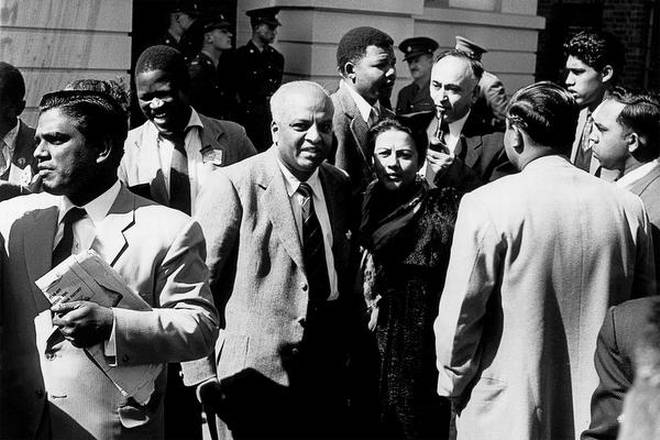
Monty Naicker, Nelson Mandela, and Yusuf Dadoo at the Treason Trial, Pretoria, 1958.
For most Indians with some awareness of the history of South Africa, India’s connection with the country begins and ends with Mohandas Karamchand Gandhi. As Nelson Mandela famously put it, India sent Mohandas to South Africa and received a ‘Mahatma’.
If the province of Natal was one of several places around the globe where the epic of Indian indentured labour was writ large, South Africa was nearly distinct as the site of an unusual and inspiring solidarity between black people and Indians in the equally epic struggle against racial oppression. Photojournalist Ranjith Kally, who died at the age of 91 in Johannesburg this June, was the great chronicler of both Indian life in Natal and the resistance to apartheid.
Kally was born near Durban in 1925 into a family of ‘coolie Indians’. His grandfather worked on a sugar plantation; his father, likewise, left for the fields early every morning. As was common in his generation, Kally was educated only up to Class VI. He worked in a shoe factory for 15 years and stumbled upon a Kodak Postcard camera at a rummage sale. In 1956, Kally procured a job as a photographer with Drum, a magazine that had been launched to give expression to the lives of black and coloured people.
Chronicling a struggle
Kally’s first photographs of anti-apartheid figures would be taken in the late 1950s. One of his favourite subjects was Monty Naicker, an Indian who trained as a doctor before turning to political activism. At a break during Pretoria’s Treason Trial in 1958, Kally captured Naicker with a young Mandela and the venerable communist leader Yusuf Dadoo in the background. Kally’s many photographs of Fatima Meer, another titanic figure in the anti-apartheid struggle, furnish insights both into how women assumed political roles in the public sphere and the little-discussed role of South African Indian Muslims in shaping secular narratives of freedom.
In one photograph, taken in the early 60s, Kally seated Meer’s daughters, Shamin, Shehnaaz and Rashid, around their buoyant-looking mother in Durban’s Botanical Gardens. The photograph was intended for Ismail, Meer’s husband, who was then indetention, as a keepsake of his family. There is no hint here of anxiety, fear, or the oppressiveness of racial terror. But Meer was also godmother to Nelson and Winnie Mandela’s children, giving them a home and hope at a time of despair.
Kally knew better than most that the story of the anti-apartheid struggle was not only one, or even mainly, of ‘great’ figures. In a rigidly racist society, the occasions for transgression were many and the outcome generally was painful for those animated by the desire for equality and social justice. The anti-miscegenation laws were severe, but, as one of Kally’s most stunning photographs shows, this did not prevent Syrub Singh and the dazzling Rose Bloom (seen emerging from a court hearing) from joining hands in matrimony.
Courting the everyday
What is striking in Kally’s large and still largely unknown body of work is his attentiveness to the quotidian life of Indians in and around Durban. Close to half a century after the end of the indentured system, the greater majority of Indians still lived below the bread line. In one photograph, an Indian woman scrubs dishes outside a group of shacks; a very young girl, clutching a toddler, stands by her side. Kally closely observed young Indian boys and girls working in the cane fields.
His 1957 photograph, ‘Children Gotta Work’, is illustrative of not only Kally’s approach to the grittiness of Indian life in Natal but of the self-reflexivity in much of his work. Four Indian children, some unmistakably teenagers, are on their way to work in the fields. Shovels are flung across their shoulders; two of them firmly grasp lunch boxes in their hands. They walk barefooted in the morning light. The photograph resonates with pictures of Partition, but there are also shades of the historic march of Indian miners from Natal to the Transvaal in 1913. Workers on the move, the daily walk, the look of determination: all this is part of the ensemble.
I didn’t know Kally well enough to say whether he was a man of sunny optimism, but his photographs nevertheless suggest an eye for the whimsical and a zest for life. The whimsical touch is nowhere better captured than in his photograph of a boy with a large tortoise on his head.
The wide grin on the boy’s face reveals the unmistakable fun he is having in ferrying his slow-moving companion. The boldest expression of this element of joie de vivre in Kally’s work is a photograph called ‘The Big Bump’. Two men, both amply endowed at the waist, are rubbing against each other. Each man seems to be saying, ‘My tummy is larger than yours, and all the better for it.’ Kally’s camera paves the way for understanding the extraordinariness of the ordinary.
That is not an inconsiderable gift.
Professor of History at UCLA, the author has the distinction of being listed among the 101 Most Dangerous Professors in America.
source: http://www.thehindu.com / The Hindu / Home> Society> Spotlight – History & Culture / by Vinay Lal / July 08th, 2017
The Adil Shahis made Bijapur (now Vijayapura) a city ahead of its time in terms of infrastructure development and security. This well-planned city had two fortifications, one around the principal Adil Shahi administrative and residential buildings, and a larger one around the rest of the city. Both were roughly circular and had moats and several gateways. To further strengthen the defence of the city walls, the Adil Shahis built many bastions and about 96 gigantic cannons were placed on them. Only a dozen of these canons exist today. Most of them are placed in the Archaeological Survey of India (ASI) museum housed in the Nagaad Khana in front of Gol Gumbaz and some of them still sit atop the surviving bastions.
First line of defence
The fortifications have crumbled due to neglect and the moats are overgrown with thorny shrubs and in some places, they are filled with sewage and garbage. The only gateway that the citadel still has is on the south. This was the principal gateway into the citadel but now wears an abandoned look. Just inside this once splendid gateway are the remains of guardrooms constructed entirely of pillars from Hindu temples mostly belonging to the Vijayanagara period.
One of the surviving bastions is the Sharza Burj or Lion Bastion which is also the largest bastion in the city. It is famous for housing the cannon Malik-i-Maidan or Lord of the Plains, which was a war trophy won after the defeat of the Vijayanagara Empire at the Battle of Talikota. The cannon is made from a special alloy and can fire not only cannon balls but also metal slugs and copper coins.
Nearby is Haidar Burj which is the highest gun platform in Vijayapura and is a very conspicuous solitary structure.
It is also called the Upri or Upli Burj by the locals. It was built in 1583 by Haidar Khan, a general during the reigns of Ali Adil Shah I and Ibrahim Adil Shah II. A spiral stairway leads to the top which houses two long cannons. The tower was most probably customised for the guns which needed to be fired from a height so that they can have a long range.
The Adil Shahis wanted to transform their capital city to match the Mughal cities in the North by building imposing courtly structures, gardens, wells, waterways and granaries. While most of the structures have fallen to ruin, some have been converted to government offices and only a handful are open to tourists. The Gagan Mahal was built by Ali Adil Shah I as a palace and an audience hall. Only its structural skeleton remains today. A short walk from the Gagan Mahal is the Sath Manzil (Seven Pavillions) or Haft Manzil built by Ibrahim II as a pleasure pavilion. Only a few storeys survive now and there is no way to go inside. Just opposite this is Jal Mahal or Water Pavilion that has been decorated exquisitely and is crowned by a dome. It is set in the middle of a square pool which is now dry and filled with garbage. Again, there is no way to go inside.
Reservoirs & stepwells
Water was and is a precious resource for Vijayapura and the Adil Shahis built a complex hydraulic system to bring water from distant sources into the city and supplemented this with reservoirs and stepwells. Only a few stepwells and reservoirs survive today and the system of aqueducts and horizontal wells are lost. The Taj Baoli is the biggest stepwell in Vijayapura and was built by Malik Sandal, a Persian architect, in honour of Taj Sultana, the wife of Ibrahim Adil Shah II. Sadly the well, its gateway and the gallery around it are in a very bad state. It won’t survive for long if no action is taken immediately.
Another well-known stepwell present here is the Chand Baoli. The stepwell was built by Ali Adil Shah I in honour of his wife Chand Bibi and it served as the model for Taj Baoli. Chand Bibi is best known for courageously defending Ahmednagar and Bijapur against the attacks of the Mughal Emperor Akbar. She was the regent of both Ahmednagar and Bijapur and was known to be a good warrior, musician, linguist and artist. The structure is now completely cordoned off from the public. One can only see it through the grill gate.
Present-day Vijayapura would have benefited if the administration had preserved the hydraulic system of the Adil Shahis and used the many stepwells and reservoirs instead of letting them turn into garbage dumps. Waking up to this, the Minister for Water Resources, M B Patil announced in April that starting with Taj Baoli, around 20 wells in Vijayapura will be rejuvenated at the cost of Rs 4.25 crore. As a part of the rejuvenation process, the dirty water present in the wells is being pumped out, the garbage is being removed, and the well is being desilted. Additionally, there are plans to repair the structures around them. When fresh water accumulates, it will be pumped and stored in tanks, from which people can collect water for domestic purposes apart from drinking. This will ease the water scarcity the city is facing to a certain extent.
Unless people surrounding these monuments understand their historical importance and realise that a clean baoli can help face water scarcity, all efforts to revive the heritage structures will be futile.
source: http://www.deccanherald.com / Deccan Herald / Home> Supplements> Spectrum / by Rijutha Jagannathan / July 04th, 2017
‘Growing up as the son of immigrants, I think it was cool because you grow up with like a dual mind.’
Mouth stuffed with “desi soul food” at a restaurant named Hyderabadi House, Zeshan Bagewadi talks about his family’s journey from Hyderabad to Chicago in Desi Soul, a biopic on his life. The musician explains his relationship with music and the complexities and subtleties of living in America as an Indian Muslim immigrant in this film made by Loyola University, Chicago, and MALA (Muslim American Leadership Alliance).
“You know, growing up as the son of immigrants, I think it was cool because you grow up with like a dual mind. Like I said, you learn different languages and you learn different customs, different ways of life,” he says in the video. Zeshan was born an Indian-American in Chicago, his parents having immigrated to the United States in the mid-1980s.
“I’m proud of all the melanin in my body.”
Bagewadi isn’t simply an Indian-American or a Muslim, though – he is primarily a singer and a musician. “Music’s taken me to the White House, the Apollo Theatre, taken me to India, taken me to England, Italy…but most importantly, it’s taken me where I am right now,” says the singer, whose claim to fame are his powerful vocals – he used to be an opera singer – and his video, Border Anthems, which unites the Pakistani and Indian national anthems:
Music came to Zeshan early in his life, but after delving into, and studying, classical music and becoming an opera singer, he realised he savoured soul and blues music, which he grew up listening.
“Growing up, black music, particularly blues, rhythm and blues, soul, that was sort of the soundtrack of my childhood,” he says, claiming that the Black experience and narrative has a certain proximity in his life, which he has grown to love and respect, especially the “blue note”, which he feels is “a note of instability” that is “born in oppression” and can be felt on a visceral, real level.
He previously covered and repurposed Cryin’ in the Streets by George Perkins, which supposedly resonates with his own experiences growing up as an Indian-American Muslim in Chicago, and is a song for today’s civil rights struggles:
Bagewadi says, “What I like about this, what I like about singing the music that I sing is that there’s no way it ought to be done, as long as it’s just real, you know? And I dig that.”
source: http://www.video.scroll.in / Scroll.in / Home> Video> Around the Web / by Scroll Staff / July 03rd, 2017
“Do you know I can read and write Telugu fluently? I can write the script as good as anyone else. I had a tuition teacher for my Telugu language,’’ Azharuddin said.
Hyderabad:
The magic, mystery and awe were unmistakable as Mohammad Azharuddin strolled into the Telangana Today newsroom on Tuesday evening. The white T-shirt with the collar up and light blue denims marked the legend’s customary style well-known to his lakhs of fans. Many journalists — some with generous amount of grey and some others much younger — greeted him with eager enthusiasm, bringing alive memories of his incredible batting many years ago.
The former Indian cricket team skipper went down memory lane with the effortless ease which he displayed in the wrist-flicks in his prime. Reminiscing his Vittawaldi days, he recalled those glorious times as an upcoming cricketer. “Do you know I can read and write Telugu fluently? I can write the script as good as anyone else. I had a tuition teacher for my Telugu language,’’ he said.
Azharuddin continued: “I miss those golden days. The roads were empty. It was easy to drive. But, now the traffic is so chaotic. Basically, the people are not disciplined. If told, they would disagree with you.’’
The former stylish cricketer said there could have been a better planning while constructing the metro rail. “It is in the middle of the road and the pillars are very dangerous. If you see in other countries, the metros are positioned to a side, away from the motor roads. It looks scary here.’’
He also revealed his love for the bikes. “I always liked ‘Jawa’, particularly the red ones. It had a royal look. We had a few in and around our streets in Himmayatnagar. Those days owning a Jawa or Yezdi was a big thing.’’
Going to his younger days as cricketer, he said he first played for Deccan Club. “I think I joined in 1977. I remember playing on the bumpy outfields of Parade grounds. It was horrific. We usually played without helmets. But it was enjoyable and there was a lot of camaraderie. I learnt my game from this ground. At times, it was challenging.’’
Azhar said he always enjoyed fielding. ”Somehow, fielding came naturally to me. I would attack the ball. We should be focused and should not shy away from the ball. You know, if a fielder is scared, the ball will chase you. I never flinched from hard work and I used to make it a point to put in extra hours in my training session for fielding.’’
In a lighter vein, he even cited the example of Indian women fielding better than their male counterparts. “In Champions Trophy, our fielders missed some easy run outs while the women ran out six batters in the World Cup,’’ he made a tongue-in-cheek statement.
source: http://www.telanganatoday.com/ Telangana Today / Home> Sport / by N Jagannath Das / July 05th, 2017
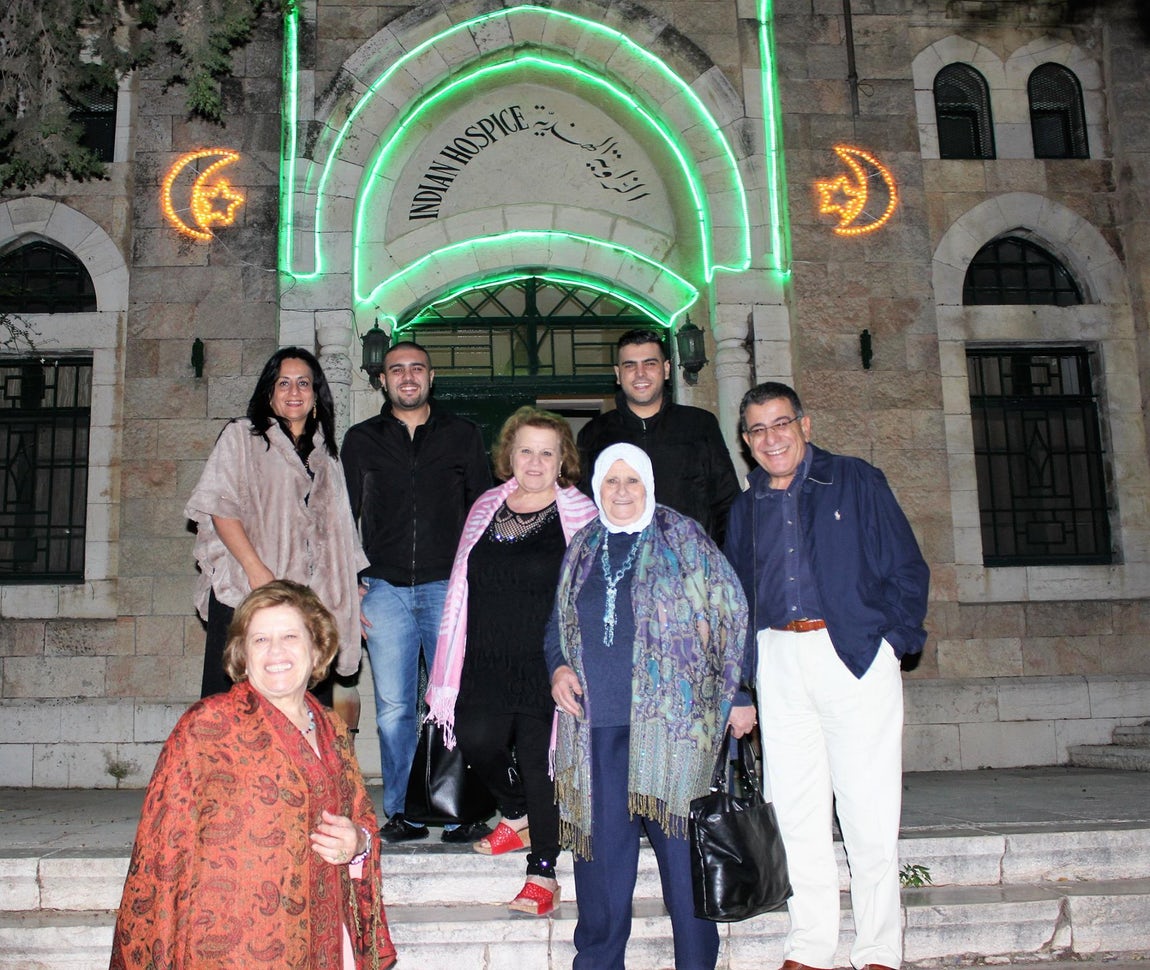
The Ansari family in front of their house in Jerusalem. (Photo Courtesy: Facebook/The Indian Hospice)
Did you know that there is a corner of Jerusalem that has a distinct Indian stamp to it and its various residents wear their Indian origin like a medal?
Next to the Al-Aqsa mosque in the city there is the Indian Hospice in Jerusalem. The hospice is managed by the Ansari family and has a centuries-old connect to India.
The Indian Hospice in Jerusalem. (Photo Courtesy: Facebook/The Indian Hospice)
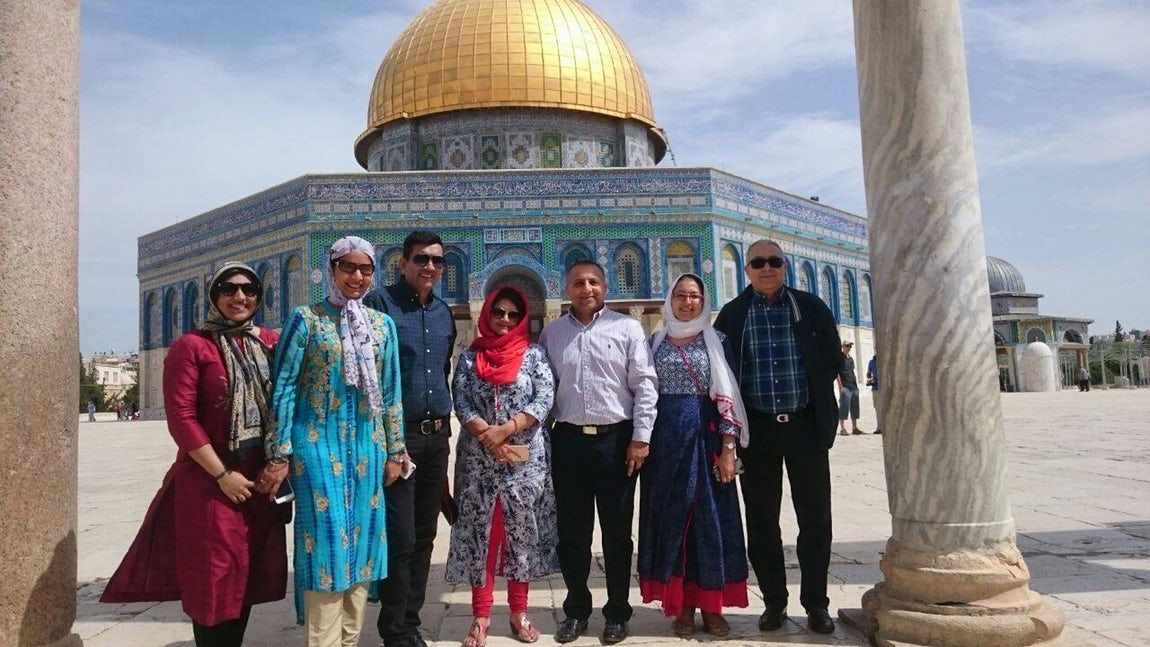
Indian pilgrims to the “holy city” of Jerusalem, can stay at the ‘Indian Hospice’ and pay homage to the Indian Sufi saint Baba Faridudding of Shakar Ganj, who visited the place 800 years ago.
Seen here, celebrated Indian chef Samjeev Kapoor at the Al-Aqsa mosque in Jerusalem. (Photo Courtesy: Facebook/The Indian Hospice)
The Indian Connection Through Baba Farid
The year is 1200, a little over a decade after the armies of Saladin had forced the Christian Crusaders out of Jerusalem. And an Indian Sufi saint from Punjab named Baba Fariduddin of Shakar Ganj travels to the war torn city.
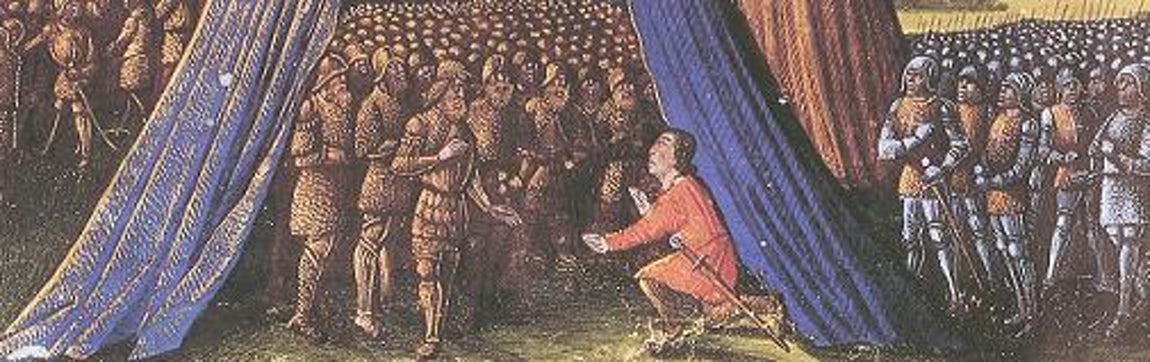
The victory of Saladin against the Crusaders. Balian of Ibelin surrendering the city of Jerusalem to Saladin, from Les Passages faits Outremer par les Français contre les Turcs et autres Sarrasins et Maures outremarins, c. 1490. (Photo Courtesy: Wikipedia)
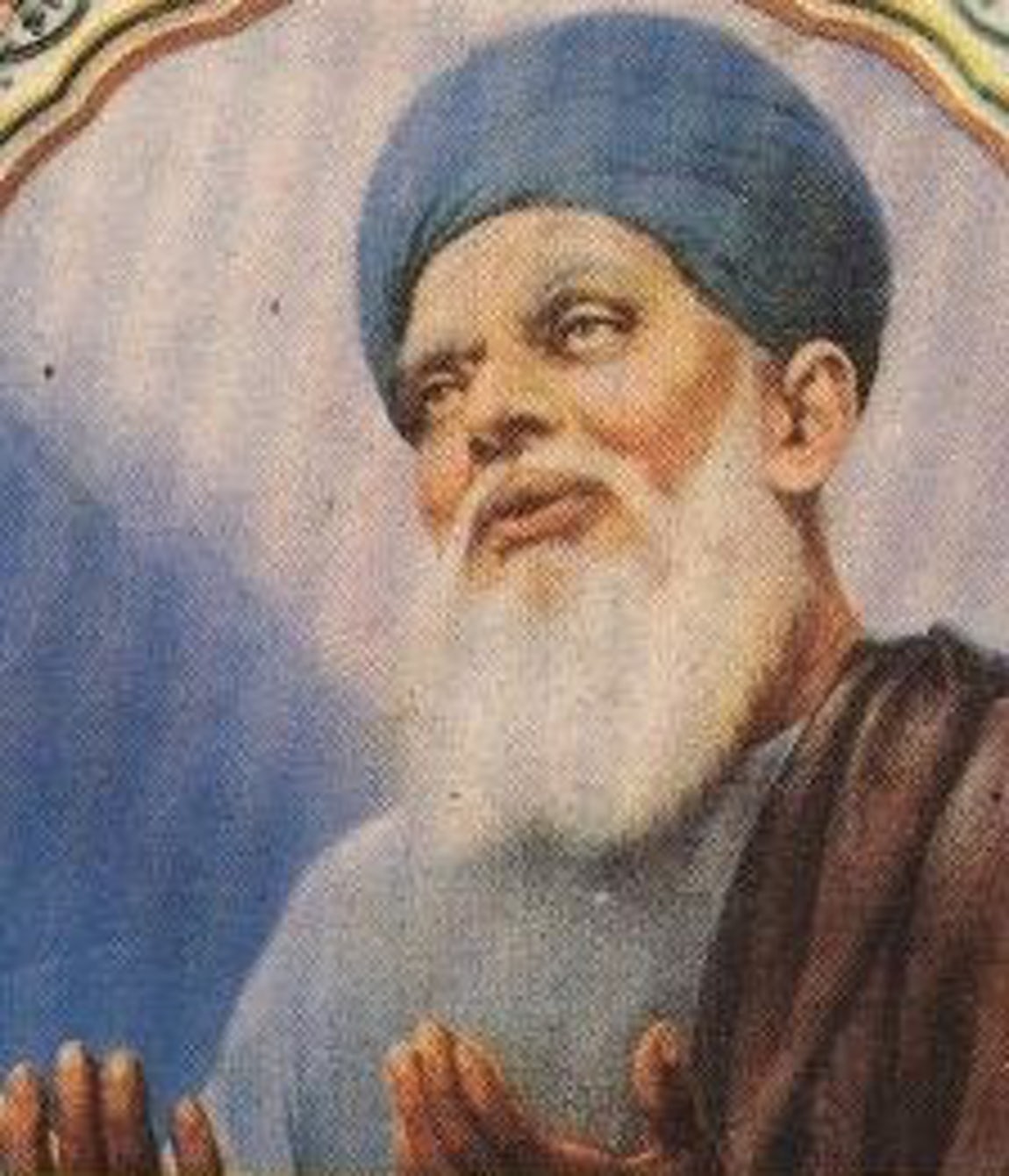
Sufi saint Baba Farid (Photo Courtesy: Seeker of Sacred Knowledge)
It is said that Baba Farid swept the stone floors around al-Aqsa mosque as a mark of devotion. He is also known to have taken up fasting in the silence of a cave nearby.
Long after he went back to India, Muslims from the sub-continent who passed Jerusalem on their way to Mecca stopped at this spot in memory of Baba Farid. It became a sort of temporary residence for the pilgrims.
Ansaris Deputed To Care For Baba Farid’s Legacy
In early 1920s, Jerusalem’s Supreme Muslim Council requested the leaders of the Khilafat Movement of British-ruled India to nominate someone to care for the hospice. The Khilafat leaders honoured the request of the Supreme Council then headed by Arab nationalist Mohammed Amin Al-Husseini. That is how in 1924 Sheikh Nazir Hasan Ansari – who was also part of the Khilafat Movement – was chosen to go to Jerusalem to take charge of the hospice.
Sheikh Nazir Hasan Ansari (Photo Courtesy: Facebook/The Indian Hospice)
Sheikh Munir Ansari who now heads the place, seen here as a boy. (Photo Courtesy: Facebook/The Indian Hospice)
His son Sheikh Munir Ansari now heads the place. The two have during their respective years as administrator of the hospice, persuaded the rulers of several Indian Muslim states, including Hyderabad, to make contributions for the upkeep of the hospice. Munir’s son Nazeer proudly explains the glorious history of the place.
Not only pilgrims, but Indians from all walks of life who visit Israel like to meet the Ansaris. They are amazed by the way the Ansaris care for that piece of India in the land of Arab-Jewish confluence. Past visitors include famous journalists, presidents, Indian politicians, celebrities and commoners.
The Ansaris have been gracious hosts to many Indian journalists. Seen in this picture, among other journalists is Suhasini Haider of The Hindu. (Photo Courtesy: Facebook/The Indian Hospice)
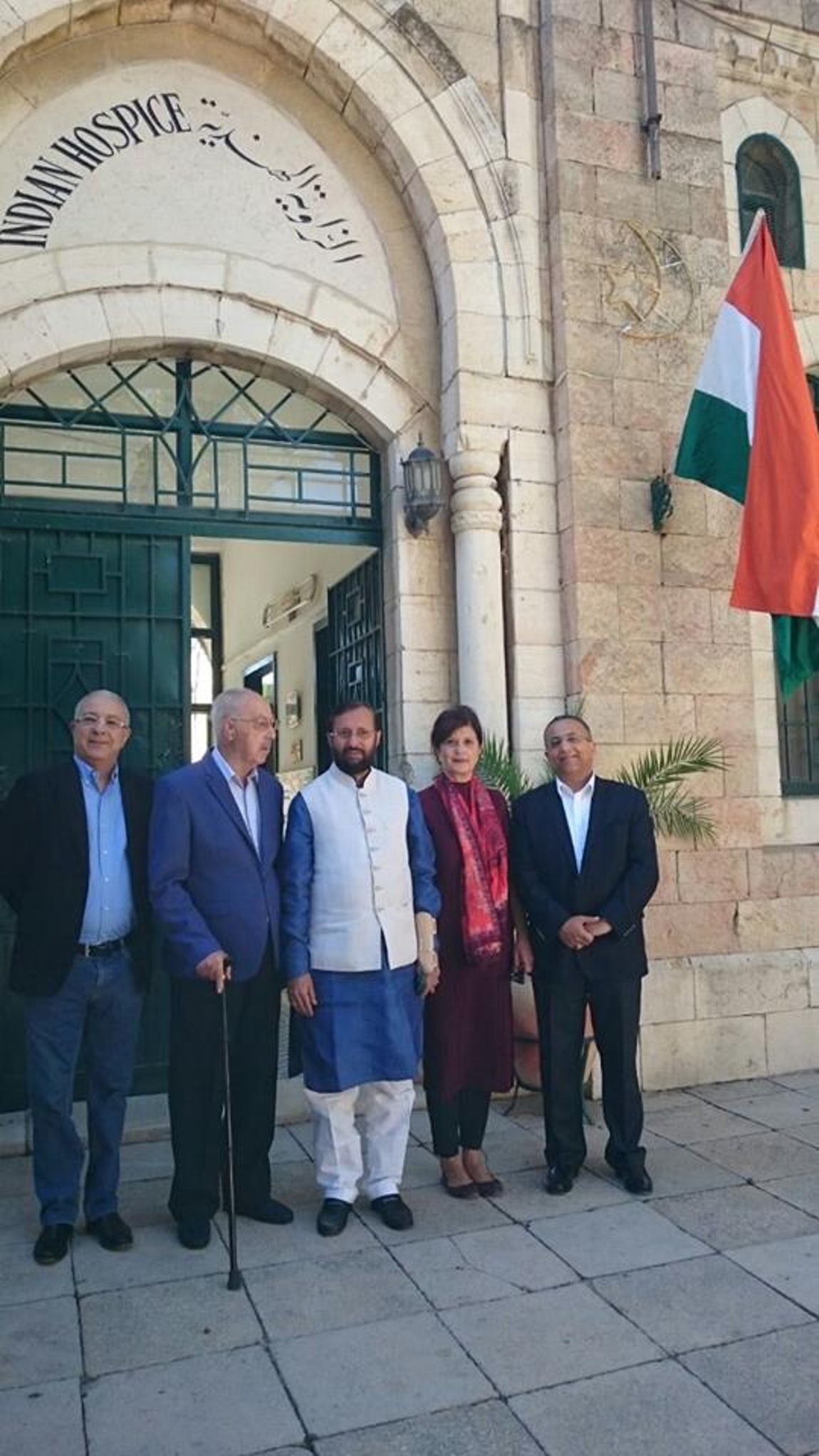
Union HRD Minister Prakash Javadekar at The Indian Hospice. (Photo Courtesy: Facebook/The Indian Hospice)
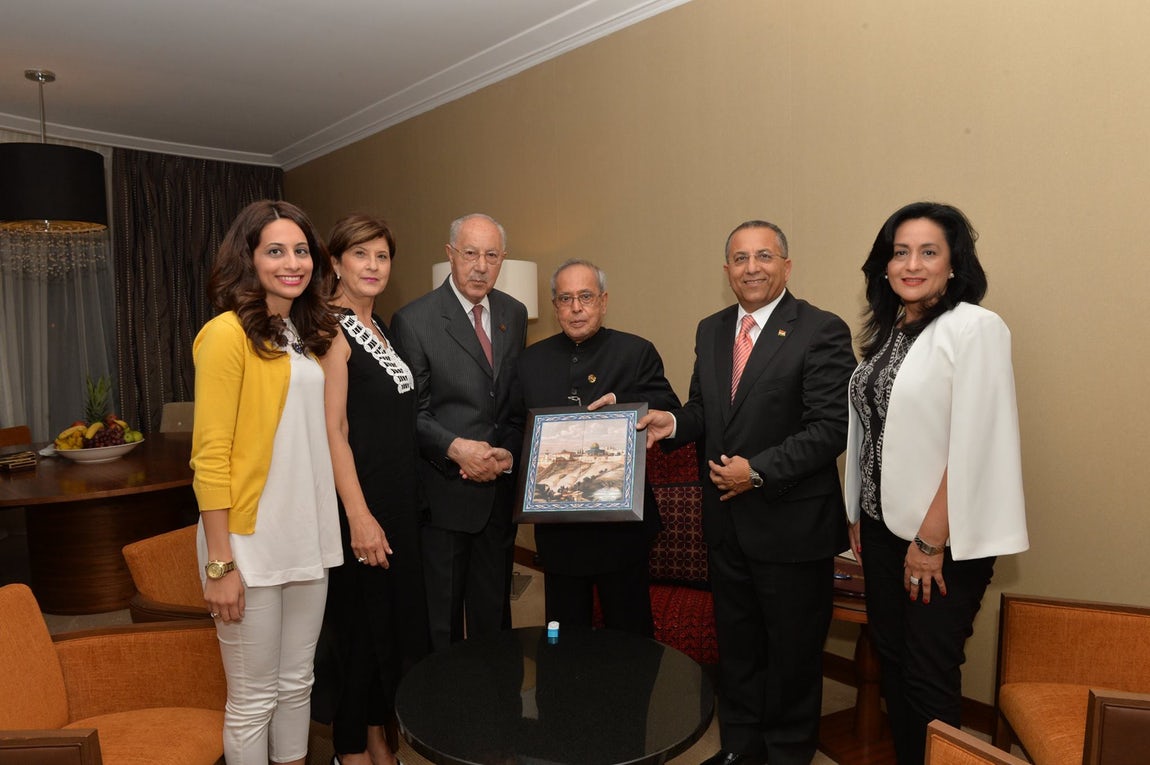
President Pranab Mukherjee too visited The Indian Hospice in Jerusalem. (Photo Courtesy: Facebook/The Indian Hospice)
The Ansaris value the responsibility that comes with the inheritance of the heritage. Their FB page says:
Maintaining and protecting an Indian institution in Jerusalem’s old city is no easy task. But Sheikh Munir has accomplished the impossible with delicate diplomacy and extreme tact.
The Indian Hospice
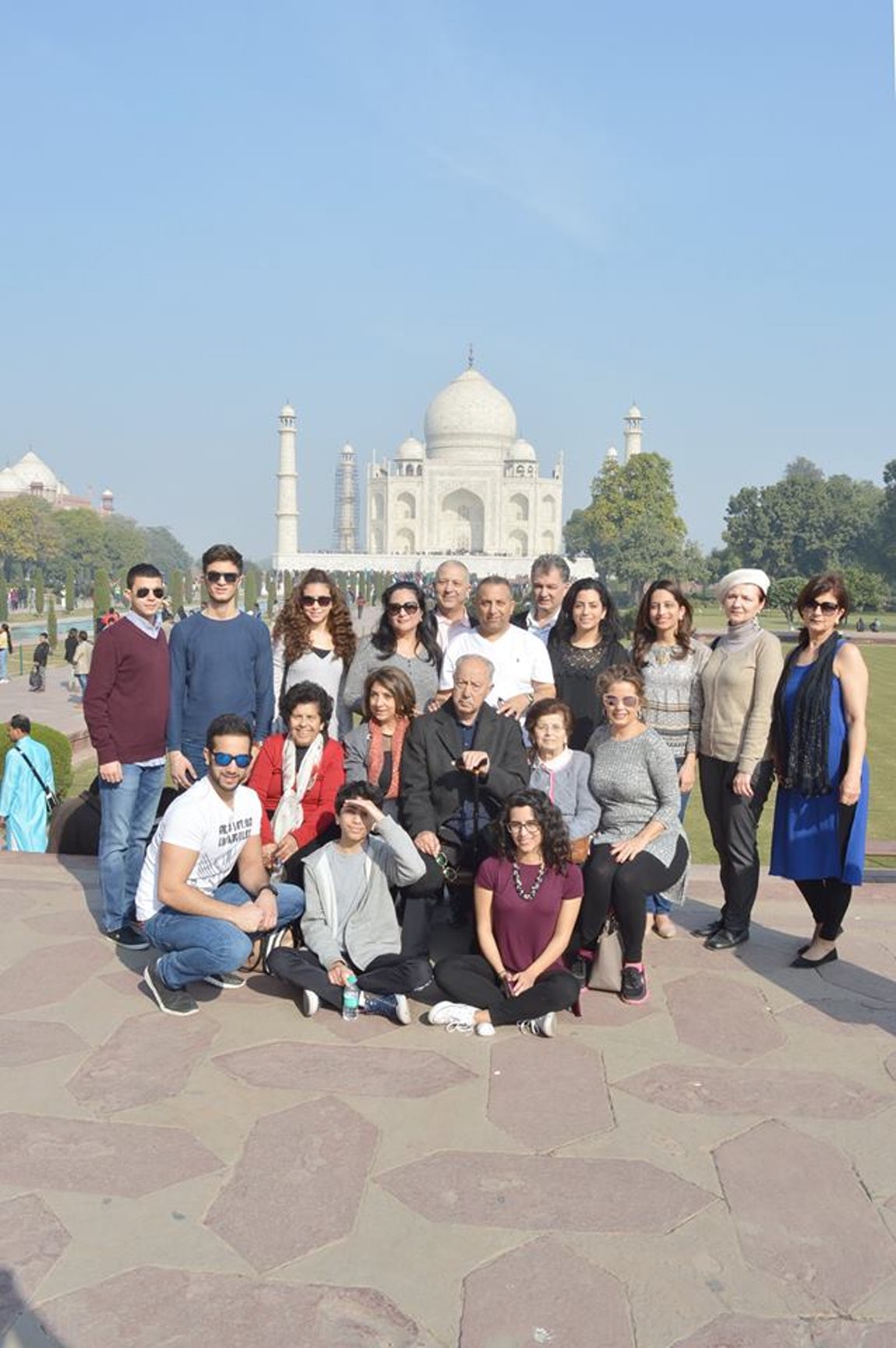
The Ansaris on a visit to India. (Photo Courtesy: Facebook/The Indian Hospice)
The Ansari family has been a steady presence in Jerusalem ever since and they all still carry Indian passports.
source: http://www.thequint.com / The Quint / Home> News Videos / by Kirti Phadtatre Pandey / July o4th,2017
Sir Syed Ahmad Khan dedicated his life for the Hindu-Muslim unity in the country and worked all his life for the educational upliftment of the community and for the strengthening of a pluralistic society of a modern India. He stressed on making education a medium to transform people into good human beings.
The Aligarh Muslim University (AMU) represents the secular Ganga-Jamuna culture and the AMU community is committed to preserve this identity of this great seat of learning. Sir Syed avoided too much emphasis on religious subjects in his writings, focusing instead on promoting modern education.
As we know, the AMU is an academic institution of international importance offering more than 300 courses in both traditional and modern branches of education. Academic excellence and cultural ethos of AMU needs to be projected and propagated worldwide more effectively in a positive way. In the fast changing technological world, the role of media has become very important in disseminating the information to have a maximum reach.The supreme interest of Sir Syed’s life was education in its widest sense. He wanted to create a scientific temperament among the Muslims and to make the modern knowledge of science available to them. He championed the cause of modern education at a time when all the Indians in general and Indian Muslims in particular considered it a sin to get modern education and that too through English language. He began establishing schools, at Muradabad in 1858 and Ghazipur in 1863.
A more ambitious undertaking was the foundation of the Scientific Society, which published translations of many educational texts and issued a bilingual journal in Urdu and English. It was for the use of all citizens; they were jointly operated by the Hindus and Muslims. In the late 1860s, there occurred some developments that were challenges to his activities.
In 1867, he was transferred to Varanasi, a city on the Ganga with great religious significance for Hindus. At about the same time, a movement started in the city to replace Urdu, the language spoken by the Muslims, with Hindi. This movement and the attempts to substitute Hindi for Urdu publications of the Scientific Society convinced Syed that he should do something.
Thus during a visit to England (1869-70), he prepared plans for a great educational institution — a “Muslim Cambridge.” On his return, he set up a committee for the purpose and also started an influential journal, Tahzib al-Akhlaq (Social Reform), for the uplift and reforms of the Muslims. A Muslim school was established at Aligarh in May 1875, and after his retirement in 1876, Sir Syed dedicated himself to make it a college.
To carry the legacy of the great reformer, the AMU has got a dynamic and intellectual person as vice chancellor in the form of Prof Tariq Mansoor, who had been associated with the university for more than three decades. Mansoor has been the principal of the J N Medical College since 2013. He had been the secretary of the University Games Committee for about seven years.
Besides being the president of the Association of Surgeons, he has been a member of the Medical Council of India (MCI) since 2015 and that of the AMU Executive Council for 12 years. Mansoor is a recipient of the senior surgical award from the Association of Surgeons of India. He is also given credit for the overall development of Jawaharlal Nehru Medical College. He served as an advisor in the Union Public Service Commission and as an assessor for the MCI.
Mansoor, in his vision, posted on the University’s website clearly stated that he will implement “Sir Syed’s vision of imparting modern education and will be focusing on “preparing students to qualify in competitive exams for central services, armed forces, IITs, IIMs and leading industries. We will also aim to produce top professionals in medicine, engineering, law, management, sciences and humanities”.
Appeal to alumniIt is unique and very positive to have a team of highly intellectual and academicians of repute to run the University. It is important for the progress of an academic institution that it should run by the academicians of high repute.
In an open letter to the AMU alumni who are holding important positions in different organisations worldwide, the vice chancellor has made an appeal to them to contribute both academically and financially.
To me, this is a very good move and initiative that will certainly help the students in getting employment in national and international market. Alumni support will also help in developing the infrastructural facilities of high standard as we have seen the contribution by Frank Islam, an AMU alumnus based in the US.The way newly appointed vice chancellor has taken the initiatives so far clearly shows his vision and plan for the betterment of the university. However, it would be more interesting to see his efforts in days to come. His biggest challenge would be maintaining the law and order situation in the campus. His long association with AMU would certainly be helpful in understanding the dynamics of the campus and in maintaining the law and order situation.
However, I would suggest that the VC should have an IPS officer on deputation basis as proctor of the University with power to handle the law and order situation independently. Another issue he may face would be regionalism and groupism in the campus but I am happy to mention that he already stated clearly in his vision that he will eliminate factionalism and groupism from the campus. It is high time for the AMU community to support the vice chancellor in making the University as one of the best in the country.
(The writer, a linguist, teaches at Washington University in St Louis, USA)
source: http://www.deccanherald.com / Deccan Herald / Home> Panorama / by M.J. Warsi / July 03rd, 2017
It’s indeed possible for sports personalities to workout, while fasting for Ramadan.
Shaik Khalid
Is it possible to stay fit, while fasting for 30 consecutive days, and train as hard as any other day, during the holy month of Ramadan?
Yes, there are people from the sports fraternity in the city who are balancing their religious sentiments and fitness with equal élan. “The month of Ramadan started as usual with me fasting with my family members. But, now that I am travelling from China to India to attend a coaching camp, I will have to see my schedule and then decide if I can fast or not. I am keeping an open mind, if I can I will or else not,” says 18-year-old Shaik Jafreen, who had represented India and won various International Deaf Tennis Championships. She is now prepping up for her next big assignment — the Deaf Olympics — to be held in Turkey in July.
Syeda Falak
Syeda Falak (popularly known as the Golden Girl of Hyderabad) who has created a name for herself in Karate globally, says, “Usually I alternate the time of training and fasting during Ramadan. Either I workout before breaking the fast, that is early morning, or after breaking the fast with a few dates. It’s not advisable to work out after eating a lot as you will fall sick for sure. So, it is better to munch on some dates and finish a light workout and then eat properly.”
Shaik Jafreen
For Syeda, a proper diet and rest is of importance, as workout sessions during Ramadan can tire people out easily. Agreeing with her is Shaik Khalid, the General Secretary of Telangana Association of Mixed Martial Arts (TAMMA) and a coach for many aspiring fighters. He says, “During these 30 days, our training schedule changes. We don’t train during the day, and instead, do it from 10 pm to midnight. But again, following a proper diet is very important in our field and to recover from the effects of fasting, we eat a lot of dates and fruits and only then train.”
source: http://www.deccanchronicle.com / Deccan Chronicle / Home> Lifestyle, Viral and Trending / by Reshmi Chakravorty, Deccan Chronicle / June 02nd, 2017
THE HAVELI of Kale Sahib is no more but the ahata (compound) still exists, and what a slum it has become since 1847 when Ghalib lived there after his release from prison for debt default! The poet quipped that after being freed by Gore (the British) he had been “imprisoned” by Kale. Kale Sahib was a highly venerated man. Whether he got this name because of his complexion is not known, but it is quite likely that the saint was not as fair as Ghalib. The Moghul emperor was among his devotees and so were Ghalib and his family. As a matter of fact, Ghalib’s sister-in-law, Bunyiadi Begum gifted the ahata to Kale Sahib and the name stuck.
Kale Sahib was a practical minded saint who refused to perform miracles just to please his devotees. He counselled them to pray fervently, pointing out at the same time that in 90 per cent cases prayers went unanswered. But there were instances when he did help people out of their difficulties. He once admonished a man from whom he had driven out an evil spirit that if he went back to his sinful ways he would again become possessed and then even miracles might not help. Apparently Kale Sahib did not have to exorcise him again.
Situated in the Ballimaran area of Delhi, Ahata Kale Sahib forms part of the locality founded by a Persian, Qasim Khan, who first settled down in Lahore about the year 1750 and was befriended by the Governor of Punjab, Moinul Mulk. When Ahmed Shah Abdali invaded Punjab, Moinul Mulk resisted him and was killed. His widow, Mughlai Begum then became the virtual ruler and made Qasim Khan her chief adviser. There were insinuations, but then which young widow is safe from wagging tongues if she befriends a man?
Qasim Khan later came to the court of Shah Alam where he was accepted as a nobleman. The place in which he lived is known to this day as Gali Qasim Jan. Qasim Khan’s son, Faizullah Beg built the ahata. But how Buniyadi Begum came to possess it is not clear.
Congested mohalla
Ahata Kale Sahib now is a congested mohalla. Few of its residents remember Kale Sahib. But the ahata is in the news generally, for whenever BSES resorts to power cuts, Ahata Kale Sahib is as much affected as distant Janakpuri. In fact one finds this link between what was once Asia’s biggest colony and one of the dirtiest amusing. After Ghalib’s joke about Gore and Kale this should surely take the cake for it would have tickled the poet too. But he is long dead and gone.. But one has the feeling that he couldn’t be resting peacefully in Nizamuddin for he was essentially a man of the walled city of Delhi whose charms began and ended within its confines.
The charms are still reflected in a slight difference in speech, the flavour of the kababs and the taste of the water from Hare Bhare Sahib. The breeze that springs from the Jamuna goes past the Red Fort, negotiates the many arches of the Jama Masjid and merges with the smell of the motia and chameli sold at the crossroads before cooling the courtyards of the houses in the narrow gullies.
Ghalib liked to move about in this area of which the Kashmere and Delhi gates were the two extremities, with the fort being the hub and centre and the mosque the cultural bastion of the city. Yes, of course, Ghalib always had a soft corner for Agra, because he was born there and passed his boyhood in Kala Mahal from which the Taj looks just like a building in the next locality.
But his heart had been won over by Shahjehanabad. From Ballimaran to Jama Masjid the walk was long enough via Chandni Chowk. Sometimes one could meet Mir Ashiq who came from the opposite direction and went back to his kucha via Ballimaran. Was the tilt of his cap different from that of the residents of Nizamuddin? People noticed such traits and developed their pet notions.
For a man of such intense likes and dislikes as Ghalib, his grave in Nizamuddin is out of the milieu in which he flourished. It is a small enclosure though beautiful in its own way where sparrows make love in the afternoon. The illiterate take it for another shrine where obeisance must be paid, and budding poets hope to imbibe some of the virtues of the great “shair”.
An old man who sometimes steals up to the mausoleum feels that even a blank page touching the “mazar” would instantly be graced with a ghazal. He has never seen it happen, nor would we surely, but such feelings are the stuff legends are made of.
R.V.SMITH
source: http://www.thehindu.com / The Hindu / Home> MetroPlus Delhi / by R V Smith / Monday – November 29th, 2004