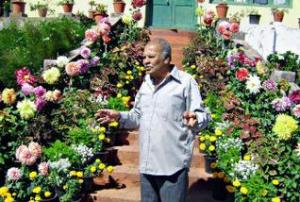
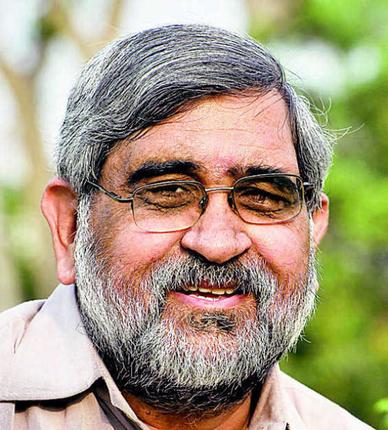
F.M. Khan (82), former Rajya Sabha member, and a controversial politician hailing from Coorg, passed away on Thursday at his Balayatrie estate near Madikeri in Kodagu.
Fiaz Mohammed Khan, popularly known as F.M. Khan, was a close associate of former Karnataka chief minister, Gundu Rao who affectionately referred to his mentor as ‘Father Mother Khan’.
Khan was part of the Sanjay Gandhi brigade during the Emergency and was allegedly involved in several unsavoury incidents. But Gundu Rao always went to his rescue.
He was the general secretary of the state Youth Congress and was a member of the Legislative Council from 1974 to 1976. Khan was elected to the Rajya Sabha twice in 1976 and 1982. He was also associated with various organisations connected with sports. He was vice-president of the Indian Olympic Association.
The former Rajya Sabha member was known for his love for gardens and won accolades for maintaining the best garden in Delhi in his MP bungalow. Back in Kodagu after his controversial political innings, Khan had been nurturing his garden and has been holding annual private flower show since 1998.
Khan was married to a Kodavathi. He leaves behind his wife and three daughters. The funeral will be held at Rasulpur in Guddehosur in Kodagu on Friday.
source: http://www.coorgnews.in / CoorgNews.in / Home> General News / July 21st, 2016
Faiz Mohammed Khan, popularly known as F.M. Khan, former Rajya Sabha member and Congress leader, died in his Balayatrie Estate in Somwarpet taluk of Kodagu on Thursday.
A close associate of the former Chief Minister R. Gundu Rao, Mr. Khan (82) leaves behind his wife and three daughters.
Family sources said Mr. Khan passed away around 11.30 a.m. on Thursday.
The funeral will be held on Friday at 10 a.m. at Rasulpur in Guddehosur in Kodagu, according his niece Gazala Khan.
Mr. Khan was involved in the anti-Hindi agitation and later joined the Congress. He became the general secretary of State Youth Congress before becoming a member of the Legislative Council in 1974.
Mr. Khan was elected to the Rajya Sabha first in 1976 and for the second time in 1982. Mr. Khan was also a former vice-president of the Indian Olympic Association. Having been away from politics for more than two decades, Mr. Khan used to hold an annual flower show at his estate.
source: http://www.thehindu.com / The Hindu / Home> Karnataka / by Special Correspondent / Mysuru – July 22nd, 2016
Former Rajya Sabha member and Congress leader Faiz Mohammed Khan, popularly known as F.M. Khan, died in his Balayatrie estate in Kodagu on Thursday. A close associate of former Chief Minister R. Gundu Rao, he leaves behind his wife and three daughters.
Family sources said Mr. Khan (82) died at around 11.30 a.m. on Thursday. The funeral will be held at 10 a.m. at Rasulpur in Guddehosur in Kodagu on Friday, according his niece, Gazala Khan.
Mr. Khan entered politics in the mid-Sixties during the anti-Hindi agitation, and then joined the Congress led by former Prime Minister Indira Gandhi. He became the General Secretary of State Youth Congress before becoming a member of the Legislative Council in 1974. Mr. Khan was a two-time Rajya Sabha MP, elected in 1976 and in 1982. He was also a former Vice-President of Indian Olympic Association (IOA).
He had been away from politics for more than two decades. He was holding an annual flower show at his Balayatri estate in Somwarpet taluk.
source: http://www.thehindu.com / The Hindu / Home> National> Karnataka / Special Correspondent / Mysuru – June 21st, 2016
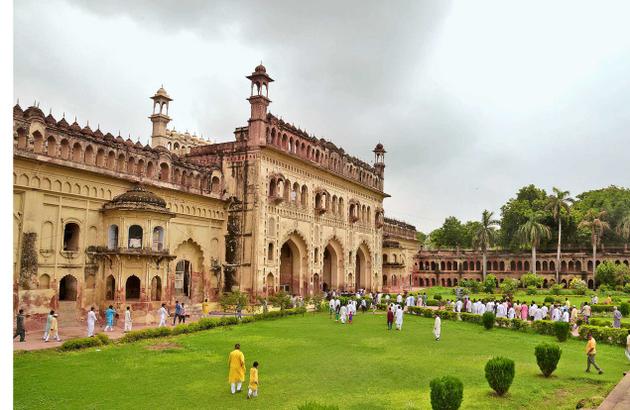
The city of etiquette -Bada Imambara complex of Lucknow / Photo: Rajeev Bhatt
“The Other Lucknow” captures the syncretic traditions of the city
Guru Dutt’s immensely popular film Chaudhvin Ka Chand opens with a Shakeel Budayuni song sung by Mohammad Rafi and composed by Ravi. The song Ye Lakhnau Ki Sarzameen sums up Lucknow and the essence of its famed cultural heritage. Perhaps, no other city in the sprawling Hindi-speaking region evokes such nostalgia, romance, devotion and attachment as Banaras and Lucknow do.
So far, for nearly a century, we used to go back to Abdul Halim Sharar’s classic “Guzishta Lakhnau” that vividly describes the city’s cultural and social life, customs, traditions and history in great detail. This was serialised in the form of articles between 1913 and 1920 in Urdu literary journal “Dilgudaz” that Sharar had launched in 1887. Later, the articles were brought out as a book with a rather longish title “Hindustan mein mashriqi tamaddun ka akhiri namoona: Lakhnau” (Lucknow: The last example of Oriental culture in India). However, the world knows it simply as “Guzishta Lakhnau” (The Lucknow of the Old). National Book Trust published a Hindi translation in 1971 titled “Purana Lakhnau” (The Old Lucknow) with a scholarly introduction written by eminent Urdu critic Mohammad Hasan.
Born in 1860, Abdul Halim went to Matiaburz when he was nine years old. Matiaburz was the place near Calcutta (now Kolkata) where the deposed Nawab of Lucknow, Wajid Ali Shah, had shifted in 1856. How close his family was with the Nawab can be gauged from the fact that his maternal grandfather had gone to London to present Wajid Ali Shah’s case before Queen Victoria.
When still in his teens, Abdul Halim started writing and adopted the nom de plume ‘Sharar’ (spark). His book is a treasure trove of information about the history and culture of Lucknow which was a truly unique city representing the famed Ganga-Jamuni culture.
Wajid Ali Shah, the last Nawab, was an accomplished poet, musician, dancer, actor and dramatist. Urdu drama owes its beginning to him and dance-dramas like “Inder Sabha”, which he commissioned, where Indra, the king of Hindu gods, would sit on a throne wearing a dress that resembled that of the Nawab himself and fairies would sing thumris in Braj bhasha while conversing in chaste Urdu. What better picture of a syncretic culture can we find elsewhere?
Sharar divided the book into three parts and devoted the first two parts to the history of Awadh and Lucknow and that of the nawabs of Awadh. The third and the last part is the one that introduces us to the way people of Lucknow dressed, talked, ate, sang and danced, set new standards of cultured behaviour and etiquette, gathered to celebrate religious and social festivals at fairs, and offered an example of harmonious communal living. It was also a great centre of the Shias.
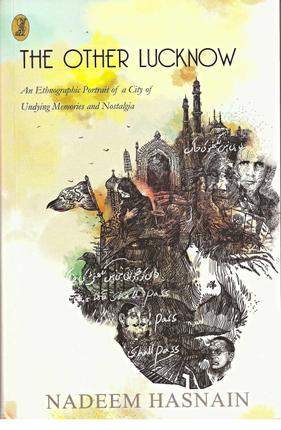
Now, Vani Prakashan, which is essentially a publishing house of Hindi books, has come out with a book on Lucknow in English in collaboration with the Ayodhya Research Institute, an autonomous organisation of the Uttar Pradesh government. Titled “The Other Lucknow: An Ethnographic Portrait of a City of Undying Memories and Nostalgia”, it is the outcome of a research project headed by social anthropologist Professor Nadeem Hasnain, who has put the book together.
The book appropriately opens with a poem that the Jnanpith award winning poet Kunwar Narain, who spent most of his creative life in the city, has written on Lucknow. It has been reproduced in Hindi which lends a special flavour to the book as the rest of it is a collection of articles, reports and analysis written in English. It is a sort of counterfoil to Sharar’s book as it brings the story of Lucknow in its fullness up to the present times.
“The Other Lucknow” is in a class of its own as it can equally serve a tourist as a guide book and an intellectual who wants to know and understand the history, culture, politics, arts and crafts, business and trade, literature, music and dance, architecture and religion – both past and present.
The book opens with a scholarly article “A Short Cultural History” by noted scholar Sandria Freitag followed by an excellent survey of the city’s social fabric underling its diversity. The survey is based on field research and informs us that Kashmiri Pandits, Bengalis, Punjabis, Sindhis, Malayalis, Oriyas, Maharashtrians and Assamese have also become an integral part of Lucknow’s population. It also offers a detailed description of the religious and caste communities residing in the city. In addition to paying close attention to the mohallas, mandis, bastis, landmarks, arts and craft, music and dance, religious places, Ram Leela, qawwalis and danstangoi, the book brings out the city’s Bollywood connection.
It concludes with an article on Dalit imaginations, laying bare the story of the mega monuments and parks created by former Chief Minister Mayawati to commemorate Dalit icons.
One is not surprised to read, as quoted by Nadeem Hasnain to begin his introduction, what William Russel, correspondent of The Times, London wrote in 1858 about Lucknow: “Not Rome, not Athens, nor Constantinople, not any city I have ever seen appears to me so striking and so beautiful as this.”
The writer is a senior literary critic
Corrections & Clarifications:
This article has been edited for a factual error.
source: http://www.thehindu.com / The Hindu / Home> Metroplus / by Kuldeep Kumar / July 09th, 2016
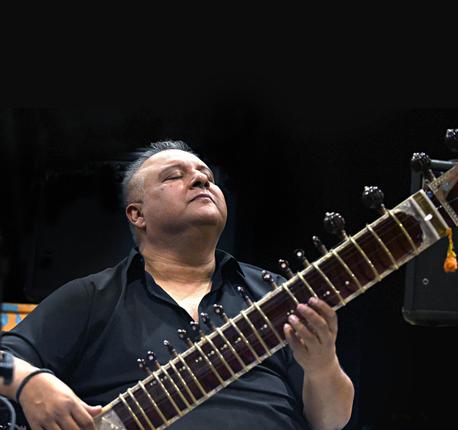
Shujaat Husain Khan. Photo: Shaju John / The Hindu
Chennai:
The sitar exponent gave lessons on music and life at a students’ workshop recently.
It is a long winding road from Chennai to Cheyyur. Suddenly in the middle of wilderness you spot a well-designed concrete patch — the Swarnabhoomi Academy of Music. As you drive past the main gate to reach the campus, shaped like a grand piano, bright morning rays light up the clear, vast skyline.
Walking past two huge murals at the entrance, you enter a darkened hall with the spotlight on Shujaat Khan, his fingers gliding over the gleaming sitar strings. Gentle notes, rich with classicism, cut through the silence. The young audience sits enthralled. After a brief sketch of a raag, the Grammy-nominated sitarist talks endearingly, in flawless English, about his experience, experiments and the trials and triumphs of being a musician.
The session, part of a two-day camp on Indian music is no sombre class. Shujaat, son of maestro Ustad Vilayat Khan, is at his wittiest best interacting with the youngsters. He encourages them to ask questions, express their opinion and even invites two of them to join him on stage.
“I was born into a family of musicians. If I didn’t do this there wouldn’t have been any option because I was bad at everything else. I loved driving but I thought I couldn’t make a living out of it. The only thing I was slightly good at was music,” he says sipping coffee. “But it’s not easy to make a career in music since there are few people who can judge between ordinary and outstanding.”
Like most celebrity children, who struggle to forge an identity of their own, it was an emotional quest for Shujaat to reach out to his famous father and try to live up to the Imdadkhani gharana legacy. “Even today it is difficult to step out of the shadow of greatness. Being the son of a legend is more pain than pleasure. The pleasure part is only music. People are not ready to forget whose son you are. The comparisons are heart-breaking. I did not come into music because I was Ustad Vilayat Khan’s son. It was because I enjoyed it. Today I have nothing to complain about though. The world has given me everything, more than what I deserve,” he says recalling the rocky road to acceptance.
Does he emulate the way his father traversed the depths of a raag, a student is keen to know. “I have no illusions of being a genius like him. But the purpose of pursuing music is the same — to feel the intensity. You should allow the different emotions to come through the swars. Every journey is difficult. I am not the kind of person who likes to focus only on the unhappy moments. It wasn’t easy to get a nod of approval from my father yet I mustered the courage to go my way.”
“Your father was a purist but at the same time rebellious. Do you see those traits in yourself,” is the next query. “The apple doesn’t fall far,” laughs Shujaat. “In fact most of you are rebels. Your parents might have wished that you become engineers, doctors or chartered accountants. But you have decided to follow your heart. If that is being a rebel, so be it. I have always let my son and daughter make their decision and take responsibility for it. If I had become a clone of Vilayat Khan nobody would have respected me. I have the genes, but I also have my own musicality.”
He says he is unaffected when people misunderstand his idiosyncrasies and outspokenness. “For instance, I am not ready to treat artists as gods. I do not want the next generation to think of me as more than human. I am not. I want them to know they too can achieve what I have. If you take away the sitar from me, I am nobody,” he smiles and then looking at the photographer clicking away, says, “Listen bhaisaab, I am not Madhuri Dixit…” Continuing the conversation, he says, “You know some musicians keep complaining about the reign of Bollywood music. Classical music is not for the mass. It is chamber music. You cannot expect every youngster to listen to it. Let us encourage those who show interest. There is nothing to be pessimistic about the future of classical arts. It will continue to thrive the way it has for centuries.”
A participant then asks him, how should one collaborate without diluting musical values? “Diluting is not the right word,” he points out. “What you need to do is to step out of your comfort zone and find a meeting point.”
Introducing the students to raag Khem, the honeyed tone of Shujaat’s sitar brings out the inherent flavours of Hamsadhwani and Yaman in it. “Never rush through a performance. Very often you hear musicians trying to create excitement right at the beginning by indulging in something dramatic. Build up the tempo slowly,” he advises.
When he is not performing, Shujaat takes off to the mountains. He loves to observe the changing hues of Nature. “My tryst with taal and raag is at a very personal level. Beyond that nothing else matters. Not even awards or titles. Love of the audience is enough. ‘Jo tammanna bur na aaye umra bhar, umra bhar uski tammanna kijiye’ (you spend the life chasing that one desire that is not fulfilled).”
source: http://www.thehindu.com / The Hindu / Home> Features> Friday Review > Music / by Chitra Swaminathan / July 14th, 2016
Jyothismathi Institute of Technology and Sciences (JITS) associate professor Vankudhotu Malsoru won accolades for his paper presentation at the 24th World Congress on Engineering-2016 organised by the International Association of Engineers in London, from June 29 to July 1.
30 countries
Mr. Malsoru presented a paper on ‘domain specific performance evaluation sequential pattern mining approaches’, and won appreciation from the gathering from over 30 countries.
JITS chairman J. Sagar Rao, principal A.R. Naseer and other faculty members accorded a warm welcome to the associate professor for bringing laurels to the college and the State on Wednesday.
source: http://www.thehindu.com / The Hindu / Home> National> Telangana / by Special Correspondent / Karimnagar – July 14th, 2016
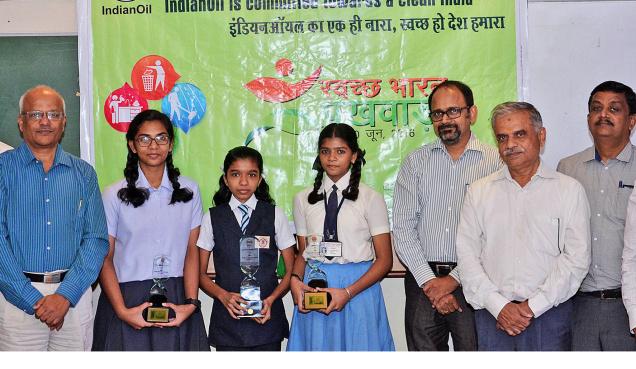
Proud moment:The winners of the essay writing competition, jointly organised by Indian Oil Corporation Limited and The Hindu in School , with P.S. Mony, General Manager, IOCL; V. Gopalakrishnan, Deputy General Manager (Retails Sales); and R. Suresh, Chief Divisional Retail Sales Manager, IOCL,in the city on Tuesday.– Photo: Thulasi Kakkat
Girls walked away with top honours in the essay writing competition organised by Indian Oil Corporation Limited in association with The Hindu in School here on Tuesday.
The event, which was organised as part of the Swachh Bharat Pakhwada of the IOCL, witnessed active participation of students from Class 6 to Class 8.
Hamina Fathima, Class 8 student from MET Public School, was adjudged the winner of the competition while Anagha P.S. of Class 7 at St. Teresa’s School, Ernakulam, and Monal Ruble V of Class 8 from Chinmaya Vidyalaya, Vaduthala, were the first and second runners-up respectively.
P.S. Mony, General Manager, IOCL, presented the prizes to the winners at a function held at the IOCL office in the city. He said the goal of cleanliness could achieve greater heights by involving children. “They can take the message of keeping our premises clean to the nook and corner of the country,” he said.
Nearly 22 entries won consolation prizes. The students who won the consolation prizes will receive certificates and gift hampers from Indian Oil Corporation and The Hindu .
The winners were selected from over 600 entries received from 23 schools. V. Gopalakrishnan, Deputy General Manager (Retails Sales) and R. Suresh, Chief Divisional Retail Sales Manager, attended.
source: http://www.thehindu.com / The Hindu / Home> News> Cities> Kochi / by Special Correspondent / Kochi – July 13th, 2016
Even as tension brews in Kashmir following the killing of Hizbul commander, a Muslim couple is defying restrictions to feed a Pandit family across river Jhelum.
Muslim couple defy curfew, walk miles to feed starving Pandit family
As Kashmir burns after the killing of Hizbul Mujahideen commander Burhan Wani, and half the state is under curfew, a lone Kashmiri woman and her husband braved a strict curfew to get some food across to her Pandit friend.
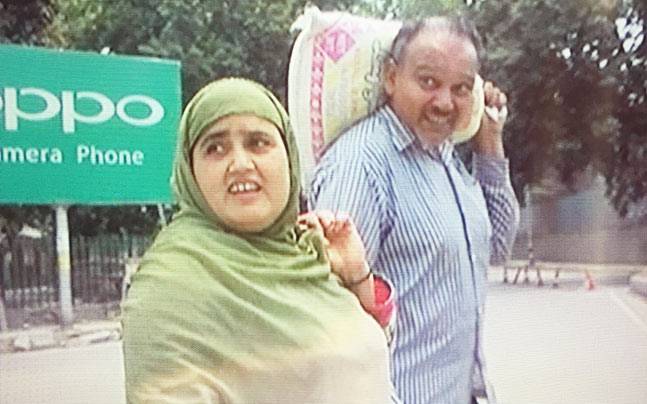
At first glance, Zubeda Begum and her husband walking on a deserted road in Srinagar with a bag of food items looked like any another desperate family trying to fend for itself in the strife-torn city. However, this couple was actually risking their lives to get some food to a friend, who had telephoned from across the river Jehlum to inform them of their plight.
“She had called me in the morning saying her family needed food supplies. They have an ailing grandmother staying with them. I am taking the food to them. It is difficult but we are trying to reach them,” Zubeda said.
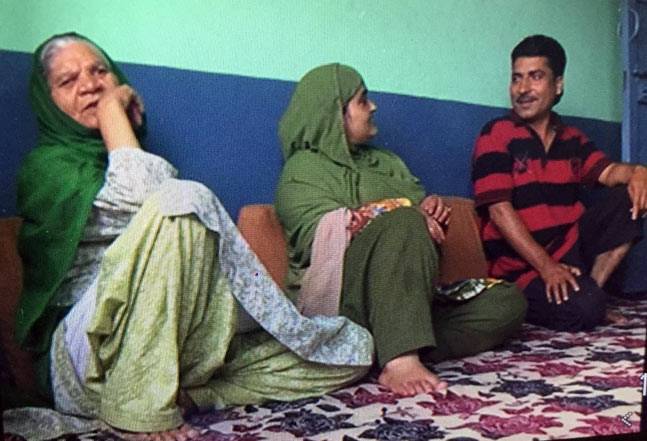
Zubeda with Diwanchand Pandit’s family
CURFEW, LACK OF TRANSPORT DID NOT DETER THE COUPLE
The shops and establishments remain shut for days and there is no means of transport on the roads. To add to their woes, police have limited movement of people.
According to the couple, the risk and effort of the long walk was compensated with the warmth they received after arriving at the doorsteps of Diwanchand’s flat in Jawahar Nagar.
“Everyone is suffering here. We are so glad that these people came here. This is where the humanity lies,” said Diwanchand Pandit.
Diwanchand and his family have been living in the Valley for many years. He works at All India Radio and his wife is a teacher in a local school where Zubeda also works.
DIWANCHAND’S FAMILY DESPERATELY SOUGHT HELP
Diwanchand and his family, including an ailing grandmother, were desperate for help as crisis mounted in the Valley.
Kashmir has been in the grip of unrest for last four days. Violent protests are being reported from many areas following the killing of Hizbul Mujahideen commander Burhan Wani.
In the midst of this violence, Zubeda’s heartwarming story is a perfect example of how humanity prevails even in times of adversity.
source: http://www.indiatoday.intoday.in / IndiaToday / Home> News> India / by Shuja-ul-Haq / posted by Bijin Jose / Srinagar, July 11th, 2016
A rider at the rally negotiates the tricky and slushy course. Photo: Vijay Bate.
Mumbai:
Team TVS Racing’s Syed Asif Ali won the 27th Sportscraft Gulf Monsoon Scooter Rally here on Sunday. Ali thus prevented Shamim Khan from winning the competition for the fifth time.
The Bengaluru-based Ali, astride a TVS Wego, won the Gulf Oil Lubricants India Limited-sponsored event with a penalty of 32.43 seconds. The second place went to TeamMahindra’s Shamim astride a Mahindra Gusto while Navi Mumbai’s Erimal Shekharan, riding a Yamaha Alpha, took third place.
The competition — Sportscraft’s 351st — turned out to be very tough and the likes of former champions Rustom Patel, Manjeet Singh Bassan and Avtar Singh did not finish among the top five. In all, 53 riders entered the event.
“This time the course was really tough. In addition to the slushy areas we had a couple of trucks coming in our way and forcing us to slow down. It was challenging,’’ said Ali.
Team CEAT’s Nidhi Shukla riding a Honda Activa turned out to be the best woman rider; she completed the race with a penalty of 45.20 seconds.
The most significant of Tipu’s memories lie at the Scottish National War Museum in the Edinburgh Castle.
Tipu Sultan, the Tiger of Mysore, whose birth anniversary celebrations became a contentious issue recently, is avidly remembered, ironically, through his countless artefacts and personal effects displayed in museums and art galleries in England and Scotland. The soldiers and commanders too fought valiantly for this great warrior king, the only monarch to have died on the battlefield fighting the British.
After Tipu was killed on May 4, 1799, Arthur Wellesley, the future Duke of Wellington, gave a free hand to the victorious army to pillage Tipu’s palace and arsenals in Srirangapatnam. The excited British soldiers indulged in such acts of loot and confiscation that there was no one in the army who did not carry multiple artefacts as souvenirs and war spoils.Most valuable ones like the swords, ivory goods, pistols, cannons and jewellery were to the turn of the high ranking officers. The remnants of war rockets, Tipu used to the bewilderment of the British, numbering 700, were shipped to England where they were subjected to reverse engineering to unravel the process of making them.The iconic 42 inch sword that Tipu held on the fateful day of his death and presented to General David Baird as war trophy, was bought by the now beleaguered liquor baron Vijay Mallya in 2003 at a Sotheby auction for Rs 1.57 crore. It is reported that Mallya also bought several other war items like carved quires, flint lock pistols, cannon and other personal items of Tipu.A finger ring with the word Ram engraved in Devanagari script, recovered from Tipu’s body, was exhibited in the British museum. It is said that the ring was later presented by Wellesley to his niece, Lady Fitzroy Somerset. The gorgeous Tipu’s throne with a gold canopy was ripped out and all its eight large diamond studded tiger heads that formed the front of the throne were shared among the generals.
One of them was presented to Edward Clive (son of Robert Clive), then governor of Madras, is now exhibited in Clive Museum at Powis Castle in Wales. A pair of Tipu’s golden slippers, his glittering tent, a camp cot, swords, walking stick with tiger head etc, are also seen here.
Of all the curious objects of Tipu, the “toy tiger” displayed in the Victoria & Albert Museum, London, is the most important. It is an awesome life-size wooden toy seen in a military uniform. This impressive toy has in its body a mechanical pipe organ hidden and by turning a handle, creates wailing shrieks and a loud roar while the victim’s hand moves up and down in despair.
The design of this toy tiger is said to have been inspired by the death of the son of the Scottish General Sir Hector Munro, a bête noire of Tipu. There are also several items of jewellery taken from Tipu’s palace which are on display in this museum.
In 1999, Edinburgh’s National Museum of Scotland, as a part of the bi-centennial celebrations of Tipu’s death, held a special exhibition in which a replica of Tipu’s toy tiger was made for the occasion. It continues to be in the museum now.
A significant legacy of Tipu was the proliferation of paintings and sketches the contemporary artists produced. Due to these paintings, the image of Tipu was entrenched in the collective memory of the British so well that in 1831 when Ram Mohan Roy visited England, he was embarrassed to face hostile booing crowds at many places. As Ram Mohan Roy’s headgear resembled Tipu’s turban, he was mistaken to be a descendant of Tipu Sultan.
Castle’s war museum
The most significant of Tipu’s memories lie at the Scottish National War Museum in the historic Edinburgh Castle. Here are preserved swords, daggers, war medals and other articles taken from the arsenals at Srirangapatnam. There are numerous ornamental swords belonging to several prominent Scottish army generals who saw action in the Mysore wars.
Swords presented to the generals as souvenirs are also on display. The names, Carnatic, Mysore and Srirangapatnam carved on stones, indicate the importance the Scots bestowed on their combats against Tipu. An armlet of Tipu, found on his body that was presented to David Baird, is also preserved here.
At the concluding ceremony of Edinburgh International Festival (EIF) held annually, a spectacular display of fireworks takes place outside of the castle in commemoration of the Mysore wars. The exquisite Amaravathi sculptures excavated from near Guntur in 1845 by Sir Walter Elliot, now exhibited at the British Museum, and the enigmatic Kohinoor diamond taken away in 1850 after the Second Sikh war and presented to Queen Victoria, form part of the crown jewels displayed now in the Tower of London. They attract millions of tourists from all over the world annually.
The indiscriminately looted Tipu’s Srirangapatna treasures, now as global exhibits, stand as quintessential reminders of the nature of the British colonial aggrandisement in India.
(The writer is retired professor of History, University of Hyderabad)
source: http://www.deccanherald.com / Deccan Herald / Home> In Perspective / by K S S Seshan / July 12th, 2016