All posts by mpositiveone@gmail.com

Compering was an art for poet Ahmad

Lucknow, UTTAR PRADESH :

Lucknow:

A poet, a novelist, a teacher and a champion of stylising compering into an art, Prof Malikzada Manzoor Ahmad breathed his last in the city on Friday. The 87-year-old, a well known face in the literary settings of the city was highly eulogised for creating a uniquely independent genre of ‘nizaamat’ (compering) for the thousands of poetry events he mastered with his spontaneous wit and humour.

Buried at night in the Fatehmi graveyard in Khurram Nagar on Friday, Ahmad, born in 1929, was a native of Faizabad. He had moved to Lucknow in the early ’60s as a lecturer in Lucknow University’s (LU) Urdu department from where he retired in 1989 after 30 years of service.

“Before him, compering a mushaira was just a sub-standard job. He transformed it into an art. His literary articulation and spontaneity, his wit and the way he weaved sarcasm and humour are unmatched to this date,” shared Prof Anis Ashfaq, former head of LU’s Urdu department who was also Ahmad’s student. Ashfaq also said that he was the one and the only person who exemplified compering and with him the golden period of the new art has gone.

A man who donned many hats, Ahmad also wrote poetry and several novels, including his biography ‘Raqs-e-Sharar’ wherein his narrative too was praised of bearing a uniquely creative style. “Even though my father was a man of the English language, Urdu was his passion and mission. He was a proponent of composite culture,” said Ahmad’s son Malikzada Javed.

Ahmad had served as the chairperson of the UP Urdu Akademi and Fakhruddin Ali Ahmad Urdu Memorial Committee. He also held a senior post in the All India Urdu Rabita Committee and was a receiver of the 2015 Ghalib Award for literary services to Urdu. He was condoled on his death by chief minister Akhilesh Yadav, Mulayam Singh Yadav and minister Azam Khan.

source: http://www.timesofindia.indiatimes.com / The Times of India /  News Home> City> Lucknow / by Yusra Husain / TNN / April 23rd, 2016

Rudra Veena exponent Ustad Asad Ali Khan passes away

Alwar, RAJASTHAN / NEW DELHI :

Rudra Veena exponent Ustad Asad Ali Khan, one of the last existing advocate of the Khandarbani dhrupad school, passed away in the wee hours here today.

He was 74.

The classical musician, who represents the 12 generation of Jaipur’s Beenkar Gharana, breathed his last at the All India Institute of Medical Science at around 2:30 am, his adopted son and disciple Ustad Ali Zaki Haidar told PTI.

“I had taken Ustad ji to hospital in the evening for a routine check-up and he was admitted around 7 pm. They conducted routine tests. Around 2:00 am while he was watching TV in his air-conditioned room, I noticed he was sweating. He passed away a little later,” Haidar said.

Ustad Khan who was unmarried is survived by his nephew Haidar whom he had adopted as his own son at a very young age and trained to become his successor, said Pawan Monga, a disciple of the Rudra Veena exponent.

The musician, who received the Padma Bhushan in 2008 underwent training under his father Ustad Sadiq Ali Khan Beenakar. His father, grandfather Ustad Musharraf Ali Khan Beenakar and great-grandfather Ustad Rajab Ali Beenakar were court musicians in the princely state of Alwar where Ustad Asad Ali Khan was born in 1937.

His father later moved to the princely court of Rampur where he undertook to teach him music. For the next 15 years he learnt to play Rudra Veena, practicing 14 hours a day.

Ustad Khan was a artiste of the All India Radio and participated in ‘sangeet samelans’ and musical performances across the country and the world. He has also performed at concerts in Afghanistan, Australia, Holland, Italy, New Zealand, the United Kingdom, the US and other countries.

Ustad Khan has also been a professor of music at Delhi University.

Rudra Veena, an instrument said to be created by Lord Shiva, has remained essentially unchanged for millennia.

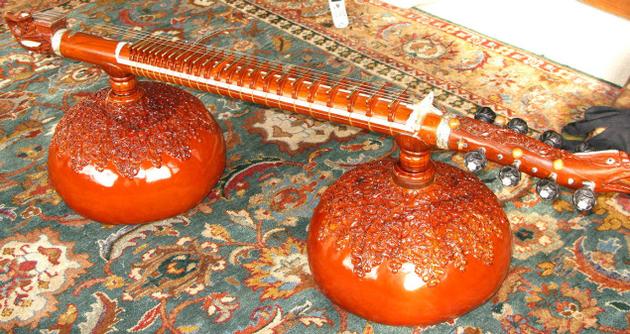
It comprises a bamboo piece mounted on two gourds and has 19-24 frets fixed with beeswax with four main and three side strings having a range of four to four and half octaves. Unlike a sitar or sarod, the rudra veena does not have resonance strings.

Ustad Khan used to play dhrupad in tile kharbandi style, which is one of the four ancient styles of Indian music. It is named after Khanda, the Rajput warrior’s traditional sharp curved sword.

source: http://www.danindia.com / DNA / Home> India / PTI / New Delhi – Tuesday, June 14th, 2011

While my veena gently weeps

Alwar, RAJASTHAN / NEW DELHI :

First impression: a small, wiry man with a gigantic string instrument.

Second impression: Once the frail man starts plucking the strings of the gigantic instrument and the melodious notes start flowing, you understand why Ustad Asad Ali Khan stands tall among today’s music maestros.

The only known living exponent of the rudra veena, Khansaab is probably one of the last of the musicians who combine traditional been techniques with an in-depth knowledge of the raagas.

“The rudra veena can execute all the subtleties of the human voice. Unlike the sitar and the sarod, it does not have tarap or resonance strings. Their absence allows the musicians to play shrutis or microtones, which are considered the ultimate in classical music. Iska awaz sabse buland hai.”

The Ustad should know. Trained by his father Ustad Sadiq Ali Khan, court musician of Alwar, Khansaab represents the legendary Jaipur beenkar gharana and traces his genius to his great grandfather Ustad Rajab Ali Khan. Being from the seventh generation of rudra veena players in the family, Ustad Asad Ali Khan’s relationship with this instrument of the gods is a passionate one. He challenges those who term the rudra veena as inflexible and a museum piece.

“These are excuses that people use to cover up their own inadequacies. Yes, it is a difficult instrument to play. But that is true of all classical music. It is not filmi music which you can learn in a few days,” he says emphatically.

Defending the rudra veena, Khan says, “The veena stands at the pinnacle of all stringed instruments. It is believed that the rudra veena was created by Lord Shiva who was inspired by Goddess Parvati. It was born out of his urge to create something that he could use to measure swaras and shrutis.”

But it is the man on this earth who has labelled this instrument “difficult”. “Isn’t the sitar difficult to play? Does not the sarod require years to master? Today’s musicians want the accolades easily without the hard work. It is they who have badmouthed the rudra veena,” he fumes.

For mastering the rudra veena you have to play by the rules, and Khan is unwilling to bend the rules. “The first requirement is to sit in the yogic vajrasana position. Unless you sit in that position, place the veena on the shoulder and use your breath as a modulator for notes, you cannot have the desired impact. The nuances of the notes will be lost if you change your posture. How many young people today can sit in that position for hours together?” he asks.

Raagas Mian ki malhar and Darbari Kanhada bring out the best from the rudra veena, feels the Ustad, who plays dhrupad in the Kandarbani style, which is one of the four ancient styles of Indian music.

Ustad Asad Ali is also against fusion music, which is seen as a way out to revive flagging interest in classical music. “Yeh hamaare shaan ki khilaaf hai. Fusion is not our job. We are not meant to compete with filmstars. In the drive to become commercially successful, we should not lose sight of our tradition and culture. Classical music and film/popular music have different positions in the world of music and that is the way to be,” he says.

Of course step-motherly treatment by the powers-that-be has also contributed to the decline of the rudra veena. “None of the five universities of music in the country teaches the rudra veena. Sadly, even I have taught the sitar in the Faculty of Music and Fine Arts in Delhi University for 17 years. The rudra veena is not taught there. Ultimately, the musician has to survive, and without a certificate, a rudra veena exponent will not get a job in any university,” he points out and laments, “Soon, we will have only foreigners playing the veena.” Currently, apart from a couple of Indian students, most of Khan’s disciples are from the West. His nephew Zaki Haider is also training under him, hoping to carry on the legacy.

“The government has to do more to preserve the fading tradition of the rudra veena. I have suggested that the recordings of Ustad Sadiq Ali Khan and other stalwarts lying with the Sangeet Natak Akademi should be marketed. I do not want any royalty, just make those recordings available before those tapes get destroyed. It may not mint millions, but millions of Indians will get to know their heritage,” he says. Carrying forward the task of telling the world about the instrument, the ustad is currently working on a book on the rudra veena, under a two-year fellowship given by the Ministry of Culture.

Unfortunately, it’s not just the rudra veena, but also the ustad who seems to have been forgotten by many. Despite being acclaimed for his musical virtuosity and for probably being the most well-known rudra veena player in the world, the country’s civilian honours have passed him by. “I do not want to lobby for such awards,” he says, but it can’t stop himself from adding that even harmonium players are feted by the public today while the rudra veena and rudra veena players are forgotten.

Gourds, frets and strings attached

SO we know that the rudra veena is rarely heard on the concert stage these days. That’s sad. But let’s get the vital statistics of this ornate instrument before it is forgotten. Musicians believe that the rudra veena is the ideal instrument for a dhrupad rendition because its sound has the same richness of overtones that the voice acquires with the practice of Nada Yoga.

This string instrument is different from the Saraswati veena in the way it is placed. The former rests against the shoulder while the latter is placed on the lap of the performer. Its basic structure is a bamboo mounted on two gourds with 19-24 frets fixed with bee’s wax. Additionally, there are four main and three side strings having a range of four to four and a half octaves. The gigantic dimensions also make it one of the heaviest instruments. At 10 kg, you can at best hope to balance the weight while sitting in the yogic vajrasana position.

If you want to be the proud owner of a rudra veena, you are going to be lighter by at least Rs 75,000. And you’ll also have to be patient. It takes at least a year to make a good rudra veena.

source: http://www.archive.financialexpress.com / The Financial Express / Home> Art & Enterainment / October 01st, 2006
Celebrating Urdu

Hyderabad, TELANGANA :
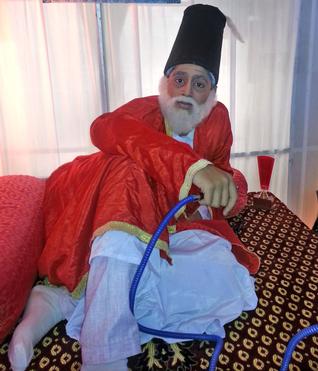
A student posing as Mirza Ghalib

It was an expo with a difference. No, it was not an art, fashion or product fair. It was all about language, something unheard of till then. The city of domes and minarets was witness to a unique celebration of Urdu. And it took school children to bring out the sweetness and magical lyricism of the Urdu language.

Titled after Daagh Dehlvi’s famous couplet ‘Urdu hai jiska naam …’, the exhibition hosted by students and teachers of Central Public High School, Khilwath, recently at the Mehboob Husain Jigar hall in Siasat daily was a runaway success. Students of different schools in the city and lovers of Urdu flocked the show necessitating extension of the expo.

Language is the road map of a culture. It tells you where its people come from and where they are headed. The expo did just that.

It not only traced the history of Urdu but gave visitors something to remember long after they left the premises. Some of the finest Urdu couplets and ‘nazms’ were on display.

What added to the appeal was the way students donned the attire and looks of the famous poets of yore. One could see the poet of East, Allama Iqbal, reclining in his trademark black suit and Mirza Ghalib with his typical cone cap and snowy beard, holding a hookah. There was also Wali Deccani, Mohd Quli Qutb Shah, Mir Taqi Mir, Hazrath Amir Khusro besides writers like Ibne Safi, Premchander.

Students waxed eloquent about the works of the poets apart from reciting their verses. Presentation of ‘Shikwa’ and ‘Jawab-e-Shikwa’, the epic poems of Allama Iqbal by students was the high point of the expo.

“We decided to present the language in all its glory as these days everyone is talking about the decline of Urdu,” said Mohd Zafarullah Faheem, Director, Central Public High School.

The limits of one’s language are the limits of one’s world. But there was no limit to the poetical appeal of the expo. Wherever one glanced one was greeted by ‘shayeri’.

Talk to a man in a language he understands, that goes to this head. And if you talk to him in his language, that goes to his heart. That’s what the Urdu expo did — it went straight to the heart.

source: http://ww.thehindu.com / The Hindu / Home> Features> MetroPlus / by J.S.Ifthekhar / Hyderabad – November 26th, 2015

Ustad Asad Ali Khan – Raga Multani – Rudra Veena – Rudra Vina – Dhrupad

Alwar, RAJASTHAN / NEW DELHI :

Ustad Asad Ali Khan – Raga Multani – Rudra Veena – Rudra Vina – Dhrupad, Amsterdam 27th April 2003

Published on Apr 3, 2013 /  by Carsten Wicke 

Dear Friends, Music Lovers & Musicians,
we continue with an afternoon concert – played just two days after the Marwa in Utrecht at the Royal Tropical Institute (KIT) in Amsterdam o

source://www.youtube.com

Mastering the king of instruments


Jyoti Hegde. Photo Special Arrangement

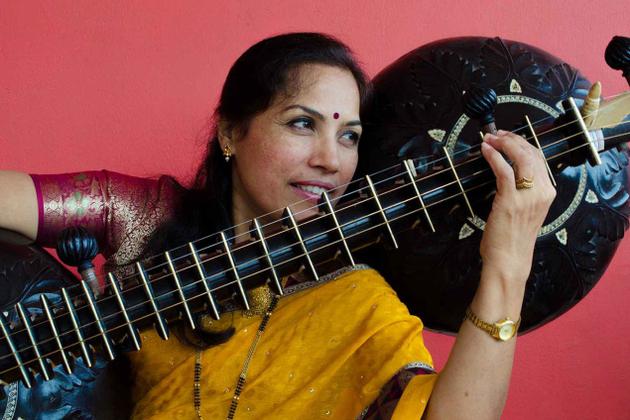
Jyoti Hegde, India’s only woman rudraveena artist, talks to Sowjanya Peddi about conquering the unconventional rudraveena and storming a male bastion

On a quiet farm away from the glitz of the urban art world, in a village near Sirsi about 125 km from Dharwad in Northern Karnataka, lives a young woman with her husband. Her name is Jyoti Hegde and she might not be splashed on newspapers but she is the first woman performing artist of the rudraveena in India. Rudraveena is a world heritage instrument, protected and promoted by the UNESCO. Jyoti follows the Khandarbani school of Dhrupad and her guru is the illustrious Ustad Asad Ali Khan.

Jyoti Hegde with Ustad Asad Ali Khan. Photo: Special Arrangement

In the rustic peace and unpretentious but generous hospitality of her home, she talks about her life and her views on Dhrupad and the rudraveena with Sowjanya Peddi. Here are the translated excerpts.

I was born in Dharwad, Karnataka, where my father was a range forest officer. I grew up in Belgaum and Sirsi. I liked dance and was particularly talented in drawing. I might have become a painter if a chance encounter with the rudraveena had not transformed my life. I was learning the sitar from my first guru Dr. Bindu Madhav Pathak and in a lec-dem one day, he played the rudraveena. The sound of the instrument haunted me. The gambhirta (sonorous resonant sound) of its tones was very different from the chanchalata (playfulness) of the sitar. I requested Pathakji to teach me, but he refused, saying it is not a woman’s domain. I persisted. I told my father about my wish. Initially, Pathakji refused my father too, but later he relented and said that “playing the rudraveena is not a woman’s forte but since she is so insistent, let us give her an old rudraveena that is lying at my house. Once she plays it for a while, she will give up the idea of her own accord”. This was like a secret pact between my father and him, unknown to me. But when Pathakji saw my commitment and determination, he eventually advised my father to get me a new rudraveena, at the age of 16, which I continue to play even today. I would go to Pathakji’s house by 7 a.m so that he could set me an exercise for the day.

He would return at 5.30 p.m. The entire day I would practise the single phrase he had taught me that morningI was so focussed that he once said I had gained the expertise of 10 years within a year. Within a year I won the first prize for rudraveena in the Akhil Bharatiya Akashvani Sangeeth Spardha in 1981-82. I was also enrolled as a regular artist at All India Radio. I also won the first prize in the Karnataka Youth Festival for three consecutive years from 1981 to 1983.

My gurus chronicle my journey from Khayal to Dhrupad. I learnt from Pathakji in the Khayal tradition. He used to compliment me, saying “she knows how to get knowledge from me”. Now after many years of teaching, I understand this was the biggest compliment. An early review commented that “the artist did not spare enough time for bandish rendition with sat sangat (jointly) on pakhawaj”. I felt the most prominent attribute of the rudraveena is its capability for nadopasana through alap. Playing with the accompanist is less important. I understood then that this instrument is not best supported by the Khayal. I discovered a book on Dhrupad by Thomas Marcotti titled The Way-Music: How to conjure with sounds? The book had a 90-minute music cassette attached to it. I was transfixed by the depth and richness of the notes and its emphasis on slow measured movement. I was drawn to Dhrupad from then on. Whenever an artist performs in the Dhrupad ang, whether sitar, surbahar or rudraveena, it will entail more emphasis on alap than on bandish.

I studied with Pt. Indudhar Nirodi for three years, who gave me a deeper understanding of Dhrupad through vocal training and taught me the subtleties of Dhrupad. After he left Dharwad, I approached Ustad Asad Ali Khan where I learnt for five years.

RurdraveenaBF26nov2015

Rudraveena is known as the king of instruments. All string instruments are shaped after it. According to Hindu mythology, Shiva is said to have taken inspiration from Parvati’s form and created this instrument. Shiva was the first to play this instrument and he taught it to Parvati who in turn taught it to Saraswati. It was restricted initially to the dev loka and was used for aradhana (devotion) alone. Later, Narad learnt it from Saraswati and brought it down to earth. In earlier times, it was used as accompaniment for veda mantra pathan (vedic recital) and with the yaga yagna (vedic rituals) of the rishi munis (sages). It held a place of reverence equivalent to that of the shank (conch) or jagate (circular plate/gong used in temples) that produce sounds during worship rituals but are not specifically used for producing music. It was treated with the same sanctity accorded to the sacred idol. Only select people were allowed to touch it and that only after purifying themselves.

Rudraveena is considered a measure to weigh the principles and grammar of the Dhrupad style of music. As Dhrupad evolved out of Sama veda chanting, the rudraveena also came to be considered the instrument to accompany Dhrupad. The shift must have been sharp and swift, as the music left temples and entered the Mughal courts. This brought a change in lyrics, tempo and style of playing. Dhrupad lyrics were chiefly based on the varnanas (description) of deities following the earlier devotional context. In the new context, more preference was given to prakriti varnana (nature description), shringar ras (romantic feelings) and songs praising the emperor/royalty. Both the rudraveena and Dhrupad rose to popularity from the 8th to the 15th and 16th centuries. This is the golden period for rudraveena, which produced artists such as Swami Haridas, Miya Tansen, Baiju Bawra, Gopal Nayak, Nayak Bakshu and Nayak Charju among others.

In Akbar’s times the instrument was very popular and prevalent. The rise of Khayal can be seen as a development of the above context. With Khayal, the sitar emerged as a more apt accompanying instrument its playful and rapid explorations. The rudraveena receded from the scene.

The rudraveena is a large and heavy instrument. Its strings are thick and plucking them requires strength. In addition, the original posture requires keeping the instrument on the body, which means carrying 3.5 kg to 5 kg for two or three hours in one sitting. Also, the sacred context of the instrument conventionally permitted only select classes of men to play or even touch it. It was a superstition that if women played it they will not be able to conceive children. One reason could be that the Vajrasan posture might have been considered harmful for the uterus. When my mother heard this she asked me to stop playing, but I was already so much in love with it that I could not think of leaving it. Eventually I got married and conceived a son. But some controversies persist. I could not play in the Vajrasan posture during my pregnancy and adopted the Sukhasan posture. After delivery, I continue to play in Sukhasan. I don’t believe earlier restrictions on women are valid in present times. The measure of what is sacred and pure is redefined in every era. We should interpret cultural norms and injunctions as indicative of demanding inner purity from the artist.

We live a quiet life on our farm. I get much support from my husband, son and daughter- in-law who help me with modern technology to take my art forward. I relish the peace and rhythm of farm life; it brings depth and anubhav (experience) to my music.

Dhrupad is the foundation for Hindustani classical music. Unless young people take it up, it will be lost to us. The rudraveena is also disappearing because no new generation is passionate enough to learn this demanding skill. They find it difficult to support themselves [financially]…. they look for quick fame. But the foundation of our newness should be based on our own culture. If we just rush into modernity that is not our own, it will be meaningless.

The instrument

The rudraveena cannot be bought off the shelf. Its making is unique, as it is connected to the player’s body. For instance, its length should be 11 times the hand span of the player. The tuning can be completed only after it is placed on the body. The playing is connected to the player’s breathing rhythm. Traditionally, it was played only in the vajrasan pose.

One tumba (gourd) is kept on the right thigh and one on the shoulder, the right hand plucks the strings going over the right tumba and the left holds the strings with the left ear touching the left tumba. Khanji used to associate this posture with the sacred Swastika.

The instrument’s centre falls between the navel and the heart. The vibrations circulate in our inner body with the sound of ‘om’ entering the left ear from the left tumba. The right tumba’s vibrations go through the lower body through the right thigh. These vibrations produce inner well-being and tune us to the universal nada (sound). The instrument is itself a tool of pranayam and yoga. For those who have not mastered breathing, it is a difficult instrument to learn.

source: http://www.thehindu.com / The Hindu / Home> Features> Friday Review> Music / Sowjanya Peddi / November 26th, 2015

Students devise ways to conserve energy

Thiruvananthapura, KERALA :

ConserveEnergyKERALA22apr2016

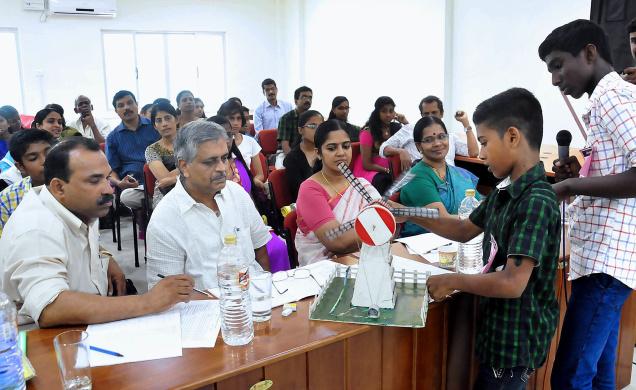
Innovative ideas developed by students for energy conservation were on display at the Kerala State Student Energy Congress 2016.

Thirty-seven teams from various districts participated in the event organised as part of the ‘Smart Energy Programme’ of the Energy Management Centre (EMC) on the centre’s premises. Hundred-odd upper primary and high school students from all over the State attended the one-day congress held as part of the EMC’s energy conservation programme.

Aparna V.S. and Kavitha K.M., students of Holy Angels School, Thiruvananthapuram, came up with an idea of converting mechanical energy into electrical energy at a low cost.

They turned a bicycle into an exercise bike which can pump water and generate electricity. Arathy Ramesh and Sreekutty Udayakumar from the Aluva educational district bagged the first prize in high school section. Ayisha and Alsa Bin Shahul Hameed from Kozhikode got the first prize in upper primary section.

S. Somanath, Director, Liquid Propulsion System Centre, gave away the prizes at a function presided over by K.M. Dharesan Unnithan, Director of EMC.

source: http://www.thehindu.com / The Hindu / Home> News> Cities> Thiruvananthapuram / A Correspondent / Thiruvananthapuram – April 21st, 2016

Six historical buildings awarded

Hyderabad, TELANGANA :

IntachHydMPOs22apr2016

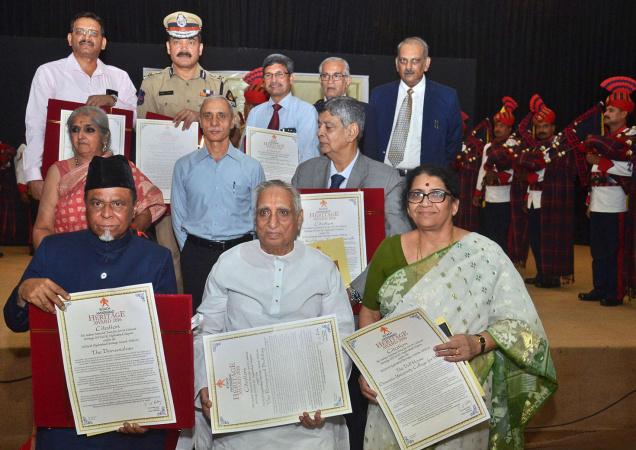
The Indian National Trust for Art and Cultural Heritage (INTACH) on Monday awarded six historic buildings and their managements for efforts to conserve them.

“For its associational value as the birthplace of Hyderabad’s very own magic potion and as memorial to the legacy of Hakeem Farooqui, the Karkhana Zinda Tilismath is acknowledged,” reads the citation of the award given to the historic structure in Amberpet. Five other structures – the St. Francis Xavier church in Yapral, Ramgopal building on M.G. Road, Heritage Artillery Collection and Ranbir Hall at Artillery Centre in Golconda, Equestrian Centre Hyderabad Mounted Police in Saifabad, and the headquarters of AIMIM in Darussalam – were given awards.

A special citation was made for Doll House, a replica of the Residency Building that is now the Koti’s Women College.

The award to Equestrian Centre was in consonance with this year’s World Heritage Day celebrations themed by UNESCO to recognise sports heritage. In this context, the INTACH’s representatives recounted the contributions of noted sports personalities S.A. Rahim, the coach of India’s football team who led the country in Melbourne Olympics in 1956, and tennis player Ghouse Mohammed Khan.

Arjuna awardee Mir Khasim Ali was the event’s chief guest.

INTACH recognised the structures for their restoration and re-use while keeping intact their historic value. Reciting couplets of legendry poet Amir Khusro and Mirza Ghalib to describe importance of history and heritage structures, Air Commodore Suresh Badyal, the guest of honor at the event, said the armed forces have contributed to conservation of heritage structures and that organisations like INTACH should continue to conserve more structures.

INTACH convenor Sajjad Shahid recounted threats perceived to heritage, including the development of Metro Rail opposite the State Assembly and through Sultan Bazaar, while decrying G.O. 183 that allegedly robbed 160 heritage structures, rock formations and other historic precincts of legal protection that was accorded to them. Mr. Shahid informed the gathering that the High Court has stayed the order.

source: http://www.thehindu.com / The Hindu / Home> News> Cities> Hyderabad / by Staff Reporter / Hyderabad – April 19th, 2016

AITA Natl. Championship

Mysuru, KARNATAKA :

Series Tennis: City’s Zeba emerges winner

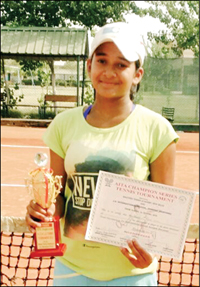
Zeba of Mysore representing Karnataka winner of the U-16 girls singles title in the AITA National Championship Series tennis tournament at Sonepat seen with the trophy.

Sonepat (Haryana) :

City’s upcoming tennis player in the under-16 girls section, Zeba, a 10th standard student of Delhi Public School, Mysore, taking part in the AITA National U-16 tennis tournament which concluded at Sonepat, on Monday won the girls under-16 singles title.

In the final, Zeba beat Rupal Kharab of Haryana 6-3, 6-4 to clinch the title. This upcoming tennis player coached by former National player Raghuveer beat Avani 4-0, 4-1 in the semi-finals and in the quarter-finals beat Khusvi of Haryana 9-0.

source: http://www.starofmysore.com / Star of Mysore / Home> Sports News / Thursday – April 21st, 2016

Netaji’s driver becomes oldest human alive at 116 years

Azamgarh, UTTAR PRADESH :

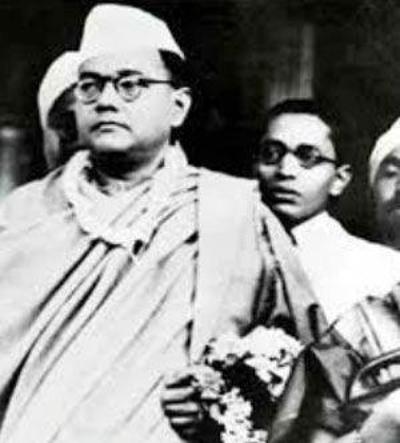
File photo of Netaji Subhash Chandra Bose.

Azamgarh :

With rumors amuck of late freedom fighter Subhash Chandra Bose making an appearance as the mysterious godman Gumnami Baba, Netaji’s driver Colonel Nizamuddin is now set to make headlines by opening a bank account at the ripe old age of 116-years.

According to Colonel Nizamuddin alias Saifuddin’s voter identity card and passport, which he produced as proof of identity before the State bank of India for opening the account, he was born in 1900.

In February this year, a Japanese man, who was believed to be the oldest man alive, passed away at the age of 114.

That way, Colonel Nizamuddin is the oldest human being alive on the planet right now as he completes 116-years 3 months and 14 days on Sunday.

Another startling aspect is that Colonel Nizamuddin’s wife, Ajbunisha, is 107 years old and the couple have opened a joint account with SBI.

Locals and the district administration were delighted to know about Colonel Nizamuddin amazing feat of being the oldest man alive. They are, infact, proud of the fact that such an elderly person is part of their neighbourhood.

source:  http://www.timesofindia.indiatimes.com / The Times of India / News Home> India / ANI / April 17th, 2016