Category Archives: Amazing Feats

Shivaji’s army had 60K Muslim soldiers; calling him a Hindu ruler is distortion of his image

INDIA:

Chhatarpati Shivaji Maharaj

Chhatrapati Shivaji Maharaj’s name is taken with great pride and respect in Maharashtra. Every year on February 19, Shivaji Jayanti is celebrated with great pomp across the state. The coronation day of Shivaji Maharaj is also celebrated on June 6, 1674. About 350 years ago, Shivaji Maharaj was coronated at Raigad Fort in the presence of thousands of people.

There have been many kings but people remember only those who worked for the good of the people. Chhatrapati Shivaji Maharaj is one of them as he established Swaraj based on the values of equality, brotherhood, and justice. During his rule, he worked for public welfare without any discrimination. 

These days, Shivaji Maharaj is portrayed as a Hindu ruler by vested interests like political parties and organizations. Is it fair to see a great personality like Shivaji Maharaj only in the frame of religion? To see Shivaji Maharaj only as a protector of religion amounts to diminishing his stature. Shivaji’s life was spent following high ideals.

He respected Saints, Peer Auliyas, and all religions. For this reason, when he established Swaraj, along with the local Marathas, a large number of Muslims also supported him. At that time the Marathas who were in his army were called Mawle of Shivaji. Thousands of Muslims participated in the battles he fought; his administration also had Mawle. That is why even today Muslims of Kolhapur, Satara take part in Shivaji Jayanti processions with great fanfare. 

During the rule of Shivaji Maharaj, public welfare, justice, and brotherhood were given priority. That’s why he and his regime are remembered even today.

Shivaji Maharaj’s family respected Sufi saints a lot. His grandfather had named his two sons Shahji and Sharifji after the Muslim Pir Baba Shah Sharif. Shivaji Maharaj had great respect for Sufi Saint Baba Yakut. Before leaving for the war front he visited Baba to seek his blessings. He also had oil lamps lit on various dargahs, the resting place of the Sufis.

Women were respected during Shivaji’s reign. Even during the war touching a woman was prohibited. It seems that after the governor of Kalyan was defeated at the hands of Shivaji’s forces, his beautiful daughter-in-law was presented to Shivaji. He was ashamed of his General’s act of using a woman as a booty. He apologized to the Muslim woman and told her she is like his mother and returned her to her homeland with full state honour.

Shivaji Maharaj had unwavering faith in his Muslim soldiers. There were more than 60 thousand Muslim soldiers in his army. He had also established a strong Navy and its command was in the hands of Muslim soldiers. Even the management of sea forts was entrusted to experienced Muslim governors like Darya Sarang, Daulat Khan, Ibrahim Khan, Siddi Mistry. Many Muslim warlords like Rustamozman, Hussain Khan, Qasim Khan left the princely state of Bijapur and joined the army of Shivaji Maharaj along with 700 Pathan soldiers. Siddi Hilal was one of the closest Sardars of Shivaji Maharaj. His acts of bravery in the war are famous.

https://www.hindi.awazthevoice.in/upload/news/167671485301_Shivaji_Maharaj_and_Muslim_Society_7.jpg

Most of the cannons used in Shivaji’s army were manned by Muslim soldiers. Ibrahim Khan was the chief gunner; Shama Khan and Ibrahim Khan were the head of the Cavalry squad. Siddi Ibrahim was one of Shivaji’s bodyguards. In the encounter with Afzal Khan, Siddi Ibrahim saved Shivaji Maharaj by risking his life. Later, Shivaji Maharaj appointed him as the head of the Fonda fort. All the facts bear testimony to a close bond between Shivaji and his Muslim associates.

When Shivaji was under arrest in Agra Fort, a Muslim man named Madari Mehtar played the most important role in his escape. While Shivaji escaped from the fort, Mehtar masqueraded as him.

With his secular ways, Shivaji Maharaj won the hearts of his colleagues and they were ever ready to make sacrifices for their king.

Qazi Haider, a scholar of the Persian language was Shivaji’s Chief Law officer. He had a major role in the administration’s correspondence and agreements and secret plans. Once a Hindu Sardar expressed doubts about Qazi Haider and advised Shivaji against trusting him. Shivaji told him rather curtly: “Honesty is not tested by looking at someone’s caste (religion), it depends on that person’s deeds”.

The preparations for the coronation of Shivaji Maharaj had started long back. New buildings including temples were being constructed when Shivaji Maharaj reached Raigad to review the work. On his return to his palace, he asked his Sardars while they have built magnificent temples why no mosque for Muslim subjects has been built. Immediately, a mosque was built right in front of the palace and it stands there even today.

Today the rivalry between Shivaji and Afzal Khan is presented as a story of Hindu-Muslim tension. The truth is after Afzal Khan died, Shivaji Maharaj ordered that his body be buried with Islamic rites. A concrete grave was built for Afzal Khan; his sons were pardoned

Such behaviour of a ruler against his enemy is rarely found in history.

All these incidents of history prove that the war between Shivaji Maharaj and the Mughals was of mutual conflicts between the kings for political interests and not for religious supremacy.

source: http://www.awazthevoice.in / Awaz, The Voice / Home> Story / by Mukhtar Khan, ATV / posted by Aasha Khosa / February 22nd, 2023

Save the date! Dr Foodie to host ‘Hyderabadi Shaadi Ki Dawat’

Hyderabad, TELANGANA:

‘Hyderabadi Shaadi Ki Dawat’ is going to be a unique event to experience the food, culture, and hospitality that Hyderabad is known for, all in one place.

 Dr Ahmed Ashfaq aka Dr Foodie gears up to host the first ever edition of ‘Hyderabadi Shaadi Ki Dawat’ (Instagram)

If you’ve ever attended a Hyderabadi wedding, you’ll know that it’s a celebration unlike any other. From the colourful outfits, the lip-smacking food to of course the ‘marfa’, it’s a feast for the senses. Agree?

Are you eagerly waiting to attend a Hyderabadi Shaadi and indulge in the rich, flavorful cuisine that our sheher is famous for? If yes, mark your calendars for March 5th, 2023 because a unique event is going to happen in the city that promises to satisfy your craving for Hyderabadi Shaadi ka Khana. But there’s a twist – it’s not an actual wedding!

Idea behind hosting ‘Hyderabadi Shaadi Ki Dawat’

Organized by Hyderabad’s popular food blogger Dr Foodie aka Dr Ahmed Ashfaq, ‘Hyderabadi Shaadi Ki Daawat’ is going to be a unique event to experience the food, culture, and hospitality that Hyderabad is known for, all in one place. And the best part? Nobody gets married here, so you can just enjoy all the festivities without any of the pressure or stress that comes with attending an actual wedding. You will be able to enjoy the shadi without fear of judgement from your ‘phuppu or ‘chachi. The event is powered by Zetch Digital Solutions (Ayesha Sultana & Hasnain Ul Haq).

Speaking to Siasat.com, Dr Foodie spilled beans on the main idea behind the ‘one-of-a-kind’ concept and said, “Whenever I was posting reels about Hyderabadi wedding food, I noticed a lot of interest from people in Hyderabad and across India who were curious about where they could find this cuisine. This got me thinking about how I could provide this delicious food to others.”

He further added, “With the demand for this cuisine being high, I came up with the idea of hosting a shaadi ka event, where people could experience the authentic Hyderabadi wedding food without actually attending a wedding ceremony. It’s a great opportunity for people to savor the flavors and experience the culture of this cuisine.”

Timings: 7pm to 12am
Venue: King’s Palace, Gudi Malkapur, Hyderabad.

What’s in the menu?

From the aromatic Biryani (The Star Of The Daawat) to the succulent kebabs, the mouth-watering haleem and many desserts, you’ll have the opportunity to savor a lengthy spread of delicious dishes that will leave your taste buds tingling. Lip-smacking vegetarian food items will also be there.

Bhulo Nakko, Dabake Khao!

Check out the menu below:

Beyond the Food!

Hyderabadi Shaadi Ki Daawat is not just about the food.

The event promises to be a cultural extravaganza, featuring music, interactions with your favourite influencers and the ‘vibe’ that is sure to transport you to the heart of Hyderabad.

Entrepreneur, vlogger, and ace tennis player Sania Mirza‘s sister Anam Mirza, popular YouTubers Amer Bin Ishaq and Shahbaaz Khan are among special guests who will be gracing the event.

“We will be creating a mock setup of a stage where attendees can take pictures or even pose as a bride and groom for a fun and memorable experience. In addition, we will have live mehendi stations, so guests can get their henna designs applied by skilled artists,” Dr Foodie said.

He also added, “We also have other surprise stalls planned, but we’ll keep the details under wraps for now to add an element of excitement and anticipation for our guests”.

So, prepare your best attire to glam up, look your best as you join Dr Foodie and his team for a celebration of all things Hyderabadi, and experience the best of the city’s rich culinary heritage.

Tickets For Hyderabadi Shaadi Ki Dawat

If you want to be a part of this unforgettable evening of food, fun, and cultural immersion, click here to book tickets and block your seats!

source: http://www.siasat.com / The Siasat Daily / Home> Lifestyle / by Rasti Amena / February 21st, 2023

Mangaluru boy Shaikh Uzayr Mohammed bags Bronze Medal at International Mathematics Championship

Kankanady (Mangaluru), KARNATAKA / Doha, QATAR :

A Mangaluru student, Shaikh Uzayr Mohammed, studying in Qatar has won Bronze Medal at the International Mathematics Championship 2022.

Uzayr is a grade 3 student of MES School, studying in Qatar. He hails from Kankanady in Mangaluru.

The championship was held in December 2022 and the results were announced on Monday, February 20, 2023.

A total of 2288 students from over 20 countries had participated in the championship organised by Champ Yellow, wherein Uzayr secured a place in top 40%, thereby securing a rank in Bronze Medal category.

source: http://www.english.varthabharati.in / Vartha Bharati / Home> Karavali / by Vartha Bharati / February 20th, 2023

Dr Sarfaraz and family quietly changing lives of poor in Noida

Noida, UTTAR PRADESH:

Dr. Sarfaraz serving the people

It is not rare to find Muslims doing social work silently, unwilling to promote themselves. One such person is Dr. Sarfarazuddin, a homeopath who lives in sector 105, Noida, Uttar Pradesh.

He has been feeding 100 deprived people every day for the past five years and teaches students free. He brings ill and unknown covid-dead patients home bathes and buries them, all by himself, and even marries off daughters of destitute families.

Dr. Sarfaraz, as he is popularly known, does good work at various levels. He has been feeding one meal (lunch) to 100 deprived daily for the last five years. He made that arrangement in a school he had opened in 2009 for the underprivileged children in a village nearby called Gejha, with his own money.

The school has 20 rooms on two floors. The students, who have lost either of their parents or are orphans, bright and have more siblings, children of domestic helpers, daily wagers, guards, gardeners, sweepers, etc., study free of charge here.

Others pay a nominal fee. Out of a total of 400 students, most are non-Muslims while some 40 of them are from nearby madrasas. He has recently gathered these students of madrasas of Gejha who had no modern education, to his school, taught them the basics of modern education, computer trained them, and brought them to par with students of 8th standard in his MM School (UP Board) so that they can take board exams and choose competitive subjects later; engineering, medicine to administrative.

dr.sarfaraz
Dr.Sarfaraz with his patients 

Additionally, he has also started coaching students who want to play volleyball. It keeps them fit and if some of them play well, he says, they would be sent to state and national level competitions.

These children are both from the madrasas and nearby government schools which have no space or free coaches. 100 such students take coaching in different sessions, most of them, non-Muslim. Dr Sarfaraz distributes food to the underprivileged A beneficiary and volleyball coach,20-year-old Vishal swears by the good work Sarfaraz does.

He says, “My father is a daily wager and mother, a domestic help. I needed money to keep my studies and training going. So I offered to coach the students at his school and he readily agreed. Now I coach 100 students who don’t pay any fee, but I get a good payment from Sarfaraz Sir. I have played at the state and national levels. I would be sponsored by him separately if I could play more.”

He also says that Sarfaraz never charges him for medicines he takes for his mother, siblings, and extended family quite often. Sarfaraz also treats the disadvantaged of the area free of cost at his clinic in Gejha on alternate Saturdays and Sundays. He also gives them free medicines. Additionally, he has been regularly holding medical camps for underprivileged patients. During the Covid and lockdown period, he used to get some 200 to 250. The camp had to be stopped “for lack of funds for a few months”. It is difficult to make this man of few words speak about himself. But with an assurance that it might inspire more people, he got ready to share why and how he wishes to give his “entire life for khidmat-e-khalq” (serving people).

“I was always interested in social service as I used to observe my father, principal of a government school in UP, doing social work passionately. So it is integrated into my system. I started serving alongside my father by shifting my clinic from Bhangel to Gejha.”

On how he manages funds, he says, “I do it despite being in deficit. We get things on credit and clear the older dues and take new ones on credit again. Apart from spending from my pocket, I have a small circle of friends who support me on a regular or irregular basis. Some help comes from unknown sources at times.” Of late, apart from his homoeopathy clinic, he has also been running a small medical centre which takes care of some of the expenses for the good work.

Sarfaraz shares why he multiplied his charity work after he saw migrant labourers walking home barefoot, hungry and sick from Noida Expressway during the lockdown. “It was painful to see them. I bought whatever I saw on the road – the entire the of bananas, other fruits, biscuits, called some maulanas from nearby madrasas, and other people and we all stood on the road to feed these labourers day and night for several days. This made me think that I was still not doing enough for the underprivileged.”

Rajesh Yadav, a beneficiary, vouches for the help he has had from Sarfaraz. He says, “I live in sector 45 which is far from here. During the entire covenant lockdown period, my whole family could survive because he used to distribute food twice daily. I have seen him running behind buses and trucks full of labourers etc., to distribute food. He also offered me to make food for his beneficiaries because I am a halwai (sweet maker) by profession. During covid period and lockdown for two years, all the shutters were down, and only my work was sustained all thanks to him. He also never stopped my payment and helped me financially whenever I asked. He never treats me differently because I am a non-Muslim. Now I understand how political leaders divide us,” he gets emotionally charged.

After having felt that he was doing too little during covid, he alternatively kept on helping deprived families marry off their daughters. He even brought home several patients who died in covid when their families had either refused to take their bodies, were far off or they had no one left in the family. He gave them ghusl (bathed) and buried them in a nearby graveyard with his own hands without ever asking for their names, or contact details or expecting anything in return.

Mohammad Shahid, a transporter by profession, vouches for the work he does. He shares, “I shifted to Noida in 2008. Since then I am witnessing Sarfarazbhai working relentlessly for the poor. In my view, the two biggest things he has done are, bringing the dead from several societies nearby to his home (in case they have no one to perform the last rituals), getting them ghusl, and having them buried with respect. He did it during covid and is still doing it. Also, this deserted area had no graveyard for the Muslims. This was a great problem as other graveyards wouldn’t let us bury our dead due to overcrowding.

sarfaraz
Coach Vishal with his students

Coach Vishal Yadav with students he coaches in Volleyball Dr sahib fought tooth and nail with a known builder who tried capturing the graveyard land for erecting a skyscraper in consonance with some greedy Muslims of the area and finally was able to retain around 2 acres of the graveyard. Dr Sarfaraz has helped the Muslims in and around Noida Expressway a great deal by building the only graveyard. I am also aware of his other charity work and can vouch for the fact that not even established NGOs with tonnes of money, don’t do the kind of work I have seen him doing.”

Sarfaraz’s family, consisting of a spouse and three children, he says, “often get anxious for it keeps him overtly busy, but they keep on supporting. Knowing this will never change, it is becoming a part of their system too,” he smiles. Agrees his wife Shaheen, however, adding that khidmat e khalq has been a part of her upbringing too.

“My father a school teacher who also has a family business of transport would always make sure that at least 20 deprived people ate at our home every day, at AaliGaon near Badapur Delhi, where we lived. I remember all the humble families used to have tea and breakfast at our home daily. After marriage, I found that Dr.Sarfaraz seemed to have gone a step further. Even while we were all suffering from covid, he used to leave home to help those in need in the wee hours of the morning.

She adds laughing, “the excuse he would give us was, I don’t see you guys offering fajr (morning) prayer. It depresses me so I go to the mosque nearby to offer mine.” Shaheen also adds that their children have imbibed this habit naturally.

Her young daughters, Sana and Saba, textile and product designers respectively, have started keeping 2.5 percent separate as zakat from their little earnings or pocket money. She also recalls a recent incident about her son, 14-year-old Asad, who wanted to eat delicious biryani sold every Friday near Gejha mosque.

“He asked for money but he came back empty-handed and hungry. I asked him why he didn’t eat biryani. He replied, as he started from home, two old women asked for some money. He gave them all and came back. He remained hungry to feed them. So, it runs in the family,” she says with a contented smile. Did anyone say, charity begins at home?

source: http://www.awazthevoice.in / Awaz, The Voice / Home> Story / by Rana Siddiqui Zaman / posted by Shaista Fatima / February 17th, 2023

Baltis in India celebrate their distinct culture, map migration at Dehradun meet

Ladakh / Uttarakhand / Himachal Pradesh, INDIA:

Scene from the Confluence of Balti community in India at Dehradun

Dehradun:

If you thought Balti people live only in Baltistan of the Pakistan-occupied Kashmir you are wrong. The people with a distinct Himalayan culture, language and traditions also live in the Ladakh, Uttarakhand and Himachal Pradesh in India.

Recently, the community’s organized its congregation at Dehradun, Uttarakhand called the “Confluence of Balti community in India,’with the collaboration of the Himalayan Cultural Heritage Foundation and the Balti Welfare Association of Uttarakhand.

Prominent Balti community members and renowned folk singers discussed the Balti culture and history of migration of the Balti community in Uttarakhand and Himachal Pradesh and their connection with Ladakh and Baltistan.

Speakers reading papers on Balti people’s migration in India at the Dehradun conference

Leading academics, community leaders, and Baltis living in and around Uttarakhand attended the confluence.

The Speakers from Turtuk, Kargil, Jammu, Kashmir, and Uttarakhand presented papers on the topic ‘Balti culture and history of migration of Balti community in Uttarakhand and Himachal Pradesh and their connection with Ladakh and Baltistan’.

Speaking on the occasion founder, of HCHF Dr Sonam Wangchok has urged the entire Balti community to work through various initiatives to preserve and promote the rich Balti language, literature, tradition, and culture as the legacy of mountain people in Ladakh, Baltistan, Uttarakhand, J&K, and other regions and countries.

He highlighted the importance of the preservation and promotion of Balti culture as it is the source of many other cultures and traditions that support social coexistence and communal harmony.

A cultural program was also organized and renowned Folk singers of Ladakh Dorjay Stakmo and Dechen Chuskit sang Balti folk songs and Gazal.

Eminent Balti people being honoured at the Dehradun Conference

Notable Personalities Ferooz khan, Safdar Ali Balti, Iftikhar Hussain Maqpoon, Abdul Karim (Turtuk), Mohd Ali Ashoor (Kargil), Shujaat Husain, Gulzar Hussain Zubdavi, Agga Mehboob (Kabi Haripur), Shujat Ali Shah and Mohd Sadiq Hardassi read papers on the occasion.

On the second day, a round table discussion was held and a resolution was passed highlighting the importance of Balti culture and its preservation through different initiatives.

Meanwhile, on this occasion, All India Balti Association was also formed and Kacho Shujat Ali Shah was appointed as the 1st president of the association.

source: http://www.awazthevoice.in / Awaz, The Voice / Home> Stories / by Sabir Hussain / February 17th, 2023

India-born Saleha Jabeen becomes US military’s first female Muslim chaplain

INDIA / Greater Chicago, U.S.A:

First Lt. Saleha Jabeen

Jabeen wants to show US military has a place for anyone who wants to serve.

India born Saleha Jabeen, who has become the US military’s first female Muslim chaplain, says she has to set an example and show that there is a place in the military for anyone who wants to serve.

“I did not have to compromise on any of my religious beliefs or convictions,” said First Lt. Jabeen, who graduated from Air Force Basic Chaplain Course Feb. 5 at Maxwell Air Force Base, Alabama.

“The graduation ceremony for BCC Class 21A was a historic event as the Air Force aims to foster a more diverse and inclusive service,” according to a USAF release.

“I am surrounded with people who respect me and are willing to receive what I bring to the table as a woman, a faith leader, and an immigrant,” said Jabeen.

“I am provided with numerous opportunities to learn and develop skills that best equip me to be a successful officer and a chaplain in a pluralistic environment.”

“I get to provide spiritual care to all service members, Guardians and families and advise the commanders on religious and moral matters regardless of my faith, ethnicity or gender.”

“Like our boss says, it has never been a better time to serve as a chaplain in the US Air Force Chaplain Corps,” said Jabeen.

Jabeen says she is passionate about her role as a chaplain and takes her duty as a spiritual mentor very seriously.

“We all have a purpose that is specifically meant for us to fulfill,” Jabeen said.

“We must listen to our heart and follow our conviction. It is important to have people in our lives who model that for us. Choose that kind of mentorship and choose good companionship.”

“I just want people to remember that God, or higher power or the values that people uphold, remind us that we all are created with a plan: to become the best versions of ourselves,” Jabeen said.

“There is a ‘why’ for our existence and ultimately it is meant for us to be the best versions of ourselves. Commit to it, accomplish it and uplift others to do the same.”

“Do all that needs to be done with kindness, generosity, resilience and the grit to never quit,” she said.

All BCC students have advanced degrees and many arrive at the Chaplain Corps College with years of experience as members of the clergy as civilians, the USAF release said.

Throughout the course, Jabeen and her classmates are instructed how to apply their prior experience within the Air Force, it said.

“My goal is to create chaplains who are ready to provide front-line ministry upon graduation,” said Capt. John Richardson, Air Force Chaplain Corps College staff chaplain.

Capt. Mara Title, Air Force Chaplain Corps College staff chaplain, said Jabeen’s addition to the chaplain corps will be of great benefit to everyone.

“The Air Force Chaplain Corps endeavors to promote diversity in all respects,” Title said. “Chaplain Saleha Jabeen’s presence enables an even broader scope of spiritual care for our Airmen, and for this we are very grateful.”

“She is as determined to take on the role of chaplain as she is kind, caring and compassionate. We are thrilled to have had the opportunity for her to graduate with the class of BCC 21A.”

Jabeen, who came to the US 14 years ago as an international student, was commissioned in December as a Second Lieutenant at the Catholic Theological Union in Chicago.

According to her LinkedIn profile, Jabeen completed her BA in Business and Economics at North Park University, followed by an MA in Theology–Inter-religious Dialogue from Catholic Theological Union and course in counseling psychology from Trinity Christian College.

source: http://www.americanbazaaronline.com / The American Bazaar / Home> Religion / by Arun Kumar / February 18th, 2021

Zohaib ‘Zo’ Qadri becomes first Muslim elected to Austin City Council

INDIA / Austin (Texas), U.S.A.:

Indian American Zohaib “Zo” Qadri has become the first Muslim elected to the Austin City Council in Texas after winning 51% of the vote in last week’s runoff election against Linda Guerrero.

He will replace Council Member Kathie Tovo, who reached a term limit. Qadri is scheduled to be sworn in on Jan 6.

“Representation matters,” said Qadri, who will represent District 9 which includes downtown Austin, the UT Austin campus area, and portions of Central and South Austin, on the council.

“When I saw folks who looked like me — whether it be in the media or on the news — it was always in a negative light … a villain or the butt of a joke,” he was quoted as saying by KUT, Austin’s NPR station.

During the campaign season, Qadri gained a lot of support among students, and election results showed he polled well in and around UT’s campus.

“We wanted to make sure that every precinct, every neighborhood, every constituency was reached out to,” he said after winning the election on Dec 13. “Whether it be longtime Austinites or young folks who have just moved to the city, I believe everyone deserves to have a voice in City Hall.”

Housing has been at the forefront of every City Council race on Austin’s ballot this go-round — particularly in Central Austin’s District 9.


Qadri said he wants to accurately represent the majority-renter city, and tackle issues including the climate crisis, housing affordability, and public health and safety.

The first-born child of immigrants, Qadri moved to Texas at the age of 12 with his parents and two younger sisters, his website says. After deciding to follow in the footsteps of his mother who worked in a pathology lab and his father who was then an oncologist, Qadri began to pursue an education in science at the University of Texas at Austin.

He switched paths midway to study the structures of political decision-making. He received a Master of Public Administration degree from Texas State and a second graduate degree from Rice in Global Affairs.

Qadri worked on the political campaigns of Beto O’Rourke and Sen. Elizabeth Warren. A local activist and volunteer, he has worked with the Texas Homeless Network, Austin Latino Coalition, and No On Prop B. He also serves on the advisory committee for the Travis County Democratic Party.

source: http://www.americanbazaaronline.com / The American Bazaar / Home> Politics / by Arun Kumar / December 22nd, 2022

Sahebaan UAE grand family get-together held in Dubai

DK & UDUPI (Karnataka) / U.A.E & GCC :

Dubai:

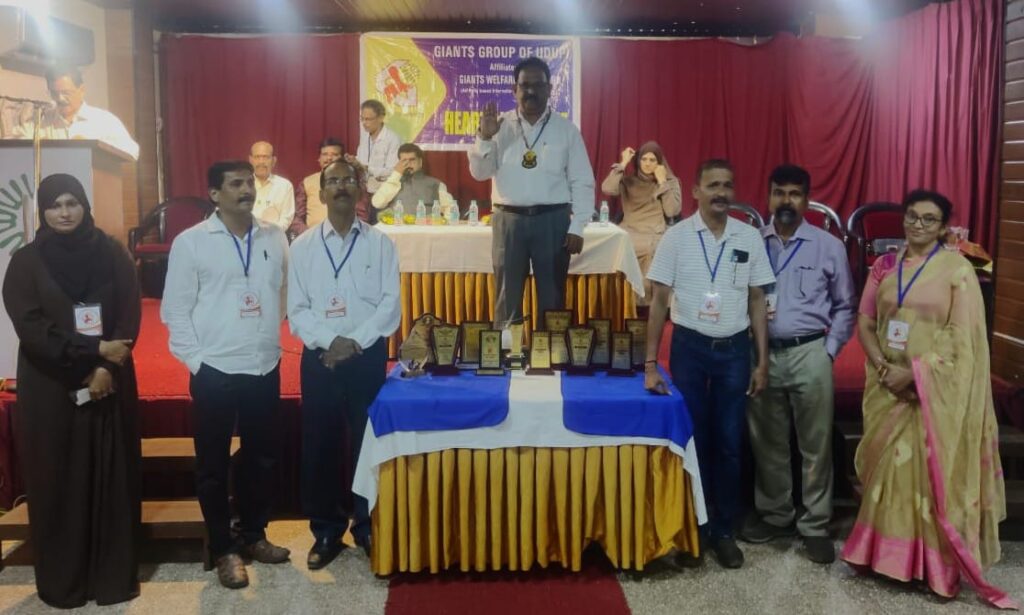
Sahebaan UAE, a premier organization for the Urdu-speaking Muslim Community hailing from the twin districts of DK & Udupi, hosted a grand social family get-together followed by gala dinner at Al Jumairah Ballroom, Crowne Plaza Hotel, Sheikh Zayed Road, Dubai, on 4th February 2023 from 5.30 PM onwards.

The event, sponsored by the Sahebaan Business Community UAE, was a grand success attended by more than 800 community members from all over UAE, neighboring GCC countries and India. Eminent personalities from the Sahebaan Community graced the occasion.

The event commenced with the recitation of verses from Holy Quran by Master Fazil Raheel Ali. Althaf M.S Coordinator, Sahebaan UAE welcomed the gathering and stated that Sahebaan UAE has been providing a platform for the community members to come together, connect and strengthen the brotherly bond.

The patrons of the Sahebaan community Janab Hidayathullah Abbas, K.S. Nissar Ahmed and Afroz Assadi were honoured in recognition of their outstanding business achievements and contribution to the local economy, commendable humanitarian service, charity work and unstinted support to Sahebaan UAE and its activities. Janab Syed Siraj Ahmed, Suhail Kudroli, and Althaf Khalife initiated the honoring proceedings.

On behalf of the patrons, Janab Hidayathullah Abbas thanked the organisers and the gathering for the honor bestowed on them. He urged the Community to strive hard for success, prioritize family, help the Community, and give back to society, thus earning goodwill for Sahebaan.

The Chief guest of the evening Janab Kassim Ahmed H.K., founder of Hidaya Foundation Mangalore, while addressing the gathering called for the upliftmemt of the poor and the deprived.

Janab Mohd. Akram, Mohammed Asif, Althaf Khateeb and Irshad Moodbidri conducted the felicitation of Sponsors. Dr. Abdul Rahiman Beig, Professor at Khalifa University, Abu Dhabi & recognised as a top rated scientist by Stanford University and Mrs.Yasmeen Irfan, winner of Foodshala UAE 2022 were honoured on the occasion.

Janab Afroz Assadi Patron and Convenor of Sahebaan UAE presented awards to the talented Sahebaan Youth, namely, Sham Akbar Sheik, Safa Tamadur, Rafa Riyaz Khalife, Daniyal Danish Iqbal, Rafhan Balanthi Baig, Mohd. Rafan, Sheikh Saahir Akbar, Mehek Sheikh, Nuha Riyaz Khalife for excellence in academics.

Anbar Althaf and Saqib Baji for Sports achievement and Anam Aslam for performing arts.

Faizaan Khateeb, Mohd. Samiullaha, Mohd Sufiyan and Abdul Ahad presented a photo journey of Sahebaan UAE through the years.

Well-known bollywood stand-up comedian and mimicry artist Jayvijay Sachan entertained all with his mimicry & comedy. A Sufiana troupe from mumbai mesmerized the crowd throughout the evening with their melodious rendering.

Sahil Zaheer, a fellow Sahebaan and a hugely popular stage & radio artist from Mangalore, compered the program and entertained the crowd with his wit and humor.

Sahebaan Ladies Wing members Sahara Asif, Reena Althaf, Mehek Sheik and Riza Mustafa managed the children’s Program.

The function was sponsored by Hidayath Group, NASH Engineering FZCO, Northern Insurance brokers LLC, Prestige Engineering LLC, Petrosolutions FZCO, Creative House Scaffolding, Advanced Creative Techncial Services, Al Sitara Gulf Contracting, Multiline Technical Co. LLC, Progressive Technology & Services LLC, Sumtech Multiline Trading, Right Choice Trading, Al Bustan Trading, Vertex Engineering, Izza Gold & Diamonds Dubai, Cell Town, Invension Medical Requisities, Core Elements Interior Decoration LLC and Hasmai Mangalore.

The function concluded with a raffle draw and vote of thanks by Syed Mohd. Ajmal.

source: http://www.english.varthabharati.in / Vartha Bharati / Home> Gulf / by Vartha Bharati / February 13th, 2023

The incredible story of how East African culture shaped the music of a state in India

KARNATAKA / GUJARAT / INDIA:

The incredible story of how East African culture shaped the music of a state  in India
Siddi children performing Dance Dhamaal in Ahmedabad in Gujarat, India. Courtesy Sayan Dey, CC BY-SA

The term Siddi refers to Afro-Indians – Africans who mixed with Indians through marriage and relationships. Africans crossed the Indian Ocean and arrived in India during the 1200s, 1300s and 1400s. They were transported by Islamic invaders and Portuguese colonisers as enslaved people, palace guards, army chiefs, harem keepers, spiritual leaders, Sufi singers singers, dancers and treasurers.

Today, the majority of Siddis are found in the west and south-west of India, in Gujarat, Maharashtra, Karnataka and Telangana states. As they settled, they preserved and practised their African ancestral sociocultural traditions – and also adopted local Indian traditions.

This interweaving of African and Indian cultural values gave birth to various creolised (mixed) food, music and spiritual practices.

As a diversity studies scholar, I have been researching Siddi culture for some time. Working within this community in Gujarat and Karnataka, I found that their creolised cultural practices emerged as a resistance to colonisation, racialisation and victimisation in postcolonial India.

My most recent research – which can also be seen in a new documentary – has focused on the music and dance performances of the Siddi community in Gujarat, called Dhamaals.

The story of Dhamaal performance traditions reveals the rich and complex mixing of cultures in a world shaped by human movement and history.

What are Dhamaals?

Dhamaal is a mix of Sufi and African (mostly East African) musical and dance traditions. It refers particularly to the spiritual practices of the Siddis of Gujarat.

The Siddis begin almost every Dhamaal song by blowing into a conch shell. This is often followed by the slow playing of East African percussion instruments like the musindo and the slow thumping of feet that marks the onset of the singing and dancing Dhamaals. The ritual of foot thumping is a crucial part of spiritual East African dance and musical traditions.

The Siddis are followers of Islam and arrived in India from Muslim communities in East and Central Africa. Dhamaals are performed in memory of their spiritual leaders, among them Bava Gor, Mai Misra, Baba Habash and Sidi Nabi Sultan. According to Siddi folklore they arrived from Ethiopia through the Nubian Valley, Syria and the Indian Ocean to the coast of Kuda in the Bhavnagar district of Gujarat.

Shipping line Shipping ports Railway line
Map: Usifo Omozokpea  Source: Sayan Dey  Created with Datawrapper

Usually, Dhamaal songs and dances are performed to celebrate the anniversary of the birth and death of spiritual leaders. They are performed in two ways – Dance Dhamaal and Baithaaki Dhamaal. The Baithaaki Dhamaal is performed in the sitting position and the Dance Dhamaal is performed in both sitting and dance positions.

During the performance of Baithaaki Dhamaal the focus is more on the lyrics and less on the musical instruments. During Dance Dhamaal the focus is more on the sounds of the instruments. These are often played in a frenzied manner and accompanied by frenzied dance movements. The spiritual songs that are sung during the Dhamaals are known as zikrs.

A mixing of cultures

The creole cultural aspects of Dhamaals are broadly reflected through the Swahili Creole language used to sing the zikrs, the Indian and African musical instruments used to perform them and the Afro-Indian body movements of Dance Dhamaals.

Historically, the Swahili Creole language in India emerged among the Siddis through the mixing of Kiswahili from East Africa with Gujarati, Hindi and Urdu languages from India. As an example, these are the lyrics of one zikr:

Ya bolo sabaya hua wey

Ya bolo sabaya hua wey

Hu sabaya

Salwale Nabi Sultan

This zikr is sung in the praise of Siddi spiritual leader Nabi Sultan, believed to have arrived in Gujarat from the Nubian Valley. The Swahili words that have been used are “hu” (a common expression of consent) and “sabaya” (meaning that everything is alright). The zikr means that with the blessings of Nabi Sultan no evil can befall the Siddis of Gujarat.

The incredible story of how East African culture shaped the music of a state  in India
Siddis performing Baithaaki (sitting) Dhamaal in a shrine in Gujarat. Courtesy Sayan Dey, CC BY

The musical instruments used to perform the zikrs are East African percussion instruments. The musindo, for example, is a cylinder-shaped, two-sided drum from Kenya. The misr kanga is a small, funnel-shaped instrument from Ethiopia, containing small stones. The mugarman is a large, cylinder-shaped, one-sided drum from Tanzania. These are played along with traditional Indian musical instruments. These include the harmonium (a keyboard instrument) and the dholak (a two-headed hand drum). The intermingling of Indian and African musical instruments generates creole rhythmscapes which are traditionally African and Indian at the same time.

During the Dance Dhamaal, the hand and the body movements of the Dhamaal dancers in Gujarat are very similar to the Ngoma dancers of East Africa. The Ngoma dancers thump their feet and swing their arms sideways to the rhythm of drums. The Dhamaal dancers also swing their arms sideways, but the thumping of feet depends on the context of their dance. During religious occasions, for example, the foot thumping is slow. This is because the Siddis follow many spiritual aspects of the Sufi tradition. For Sufis, heavy and frenzied feet thumping is prohibited when worshipping spiritual leaders.

Transoceanic roots

These creolised musical and dance performances allow the Siddis in Gujarat to maintain their African ancestral practices. They do so in collaboration with Indian practices so that they do not forget their historical roots yet can respect local traditions at the same time.

Siddis performing Baithaaki (sitting) Dhamaal in a shrine in Gujarat. Courtesy Sayan Dey, CC BY

These creole practices have allowed the community to build a transoceanic identity (one which crosses the oceans). This is done in a collaborative, reciprocal and diverse way.

The Dhamaal tradition of the Siddis has socially, culturally and economically empowered the community as well. Several community members, through the assistance of government and private organisations, travel across India and the world to perform at cultural festivals. This encourages the Siddis to share their creolised cultural values across the globe.

This in turn invites audiences to consider history through an interracial and intercultural lens.

source: http://www.theconversation.com / The Conversation / Home> Global / by Sayan Dey, University of Witwatersrand / February 03rd, 2023

Haryana boys led first mutiny of World War I

HARYANA:

Chandigarh :

The first mutiny of World War I was led mostly by young men from villages of Hisar, Rohtak, Meham and Gurgaon districts of Haryana. The Singapore Mutiny, which is known as the first mutiny of WW-I and left an indelible  mark on India’s freedom struggle, started on February 15, 1915. It was led by Muslim soldiers who belonged to British army’s 5th Light Infantry Brigade.

Even as the world observes the centenary of the Great War, the sacrifice of these soldiers has been all but forgotten as most of the soldiers and their descendants migrated to Pakistan after Partition.

The brigade mainly comprised Rajput Muslims and Pathans and had been sent from Madras to replace the Yorkshire Light Infantry in Singapore. They reached there in October 1914 and were to leave for Hong Kong in February. On the day of embarkment, a rumour spread that they were actually being sent to Turkey and would have to fight Muslims there.

Singapore Mutiny shook the foundation of British rule in Asia

A rumoured triggered the Singapore revolt. The sepoys killed British officers and seized ammunition. The mutiny went on for 5 days. Eight hundred Indian sepoys of the British army killed 47 British nationals; 200 sepoys faced court martial;  73 were given a range of punishments.

As many as 41 sepoys were shot by a firing squad in front of 15,000 spectators at Outram Prison in Singapore.

In his book “The Mutiny in Singapore”, author Sho Kuwajima has argued that the mutiny not only caught the British off-guard but also shook the foundation of British rule in Singapore and forced the British to reconsider their strategy in Asia.

“The mutiny had a great impact on India’s freedom struggle. Freedom fighters, including Ghadarites were vindicated when finally in 1946, the British decided to leave following the naval revolt of February 19, 1946 when they felt that their protective shield, the armed forces, had itself turned against them,” said historian Malwinder Jit Singh Waraich, who has penned a number of books on the freedom struggle.

Four of those executed in public were from Jamalpur (Hisar), three from Jatusana (Gurgaon) and two from Balyali (Hisar).  According to Phul Chand Jain’s Swatantarta Sainik Granth Mala, most of these people belonged to Jamalpur, Paten, Balyali, Kirawad and Balliya Ali in Hisar; Jatusana, Karmpur and Kheri Nangal in Gurgaon; Garhi, Kani and Kahnaur in Rohtak. One sepoy each was from Muzaffarnagar in Uttar Pradesh, Karnal and Nabha in Punjab.

“These villages were gripped by violence of Partition, so, there is not much trace of their memories now,” says documentary filmmaker Daljit Ami, who is making a film on the Singapore Mutiny and has visited these villages a number of times. In the course of his research, he came across just one man who had heard about these heroes and their Haryana connection.

According to historians, the Singapore Mutiny was followed by the Russian soldiers’ mutiny in 1917 and a series of mutinies in the French armies.

source: http://www.timesofindia.indiatimes.com / The Times of India / Home> News> India News / by Sarika Sharma / TNN / July 05th, 2014