Category Archives: Amazing Feats

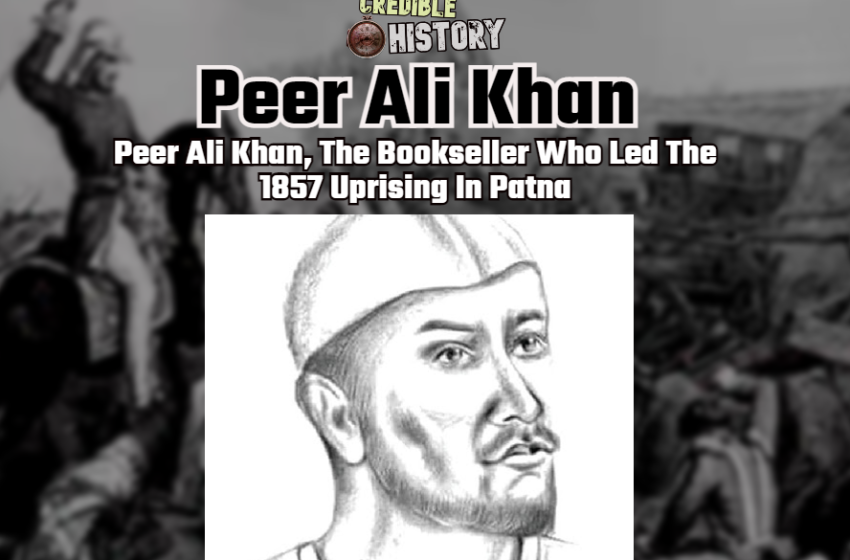
Peer Ali Khan, The Bookseller Who Led The 1857 Uprising In Patna : Kanupriya

Patna, BIHAR :

#जिन्होंनेमाफ़ीनहींमांगी 

The revolt of 1857-58 is largely considered and is widely seen as a ‘Popular Uprising’. The uprising had centres spread across North India as well as Central and Western India. The uprising in different centres had its own leaders. The most important names associated with the uprising that comes in one’s mind are those of the Indian soldier Mangal Pandey at Barrackpore, Rani Laxmibai at Jhansi, Veer Kunwar Singh at Arrah, Maulvi Ahmad Shah at Faizabad, Tantia Tope at Kanpur, Begum Hazrat Mahal at Lucknow.

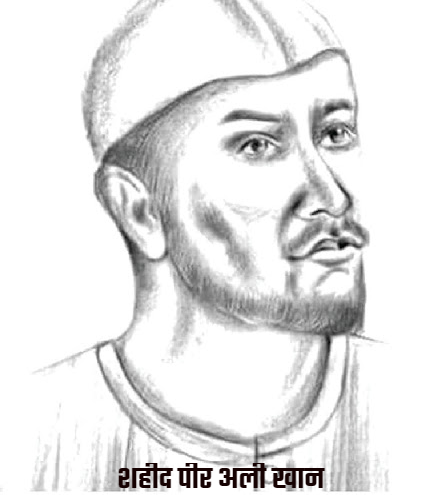
Peer Ali Khan

At the same time, there are many heroes who are largely unheard of or are often forgotten. One such name is that of Peer Ali Khan, a bookseller who led the uprising in Patna. Peer Ali Khan has been described as the “Chief Rebel of the city”[1] by William Tayler who was the Commissioner of Patna between 1855 and 1859.

Peer Ali Khan was born in Muhammadpur in Azamgarh district of Uttar Pradesh. Around the age of seven he ran away and arrived in Patna. In Patna he was provided shelter and refuge by a zamindar who brought him up along with his son and educated him.[2]Peer Ali Khan owned a bookshop in Patna. The bookshop became the meeting point for rebels and also a contact point for rebels and the disenchanted Indian soldiers in the British Army.

According to William Tayler:

“Peer Ali was a native of Lucknow, but had resided for many years at Patna; he was by trade, a Book-seller, and I strongly suspect that he may have originally established himself here, for the express purpose of carrying on the intrigues which issued in this abortive out-break.”[3]

Peer Ali secretly distributed important leaflets, pamphlets and coded messages to the rebels.

He regularly organised campaigns against the British, and became the leader of the July 1857 upsurge in Patna.

William Tayler in his narration of the events of 1857 in Patna says:

Two days before the emeute at Patna, which will be described in a subsequent chapter, Ahmed Oollah’s father, Illahee Buksh, the blind man, whom I have above mentioned, sent a message to apprise me, that the leader of the RebelsPeer Ali Khan, was collecting arms and men”.[4]

Uprising in Patna

The uprising in Patna took place on the 3rd of July 1857 and it was carried out by Peer Ali and the other rebels.

The rebels led by Peer Ali first attacked the house of a Roman Catholic priest in the heart of the city but the priest escaped. They then shot and killed Dr Lyell who was the principal assistant to an opium agent. When a reinforcement of British soldiers was sent to the scene of attack some of the rebels were shot and killed whereas others fled.

The History of the Indian Revolt, and the Expeditions to Persia, China, and Japan,1856-7-8 published by W.U.R. Chambers in 1859 describes the 3rd July, 1857 uprising as follows:

“The most serious affair at Patna, however, occurred about the close of the period to which this chapter more particularly relates. At about eight o’clock in the evening of the 3d of July, a body of Mohammedans, variously estimated from eighty to two hundred, assembled at the house of one of their number, one Peer Ali Khan, a book-seller, and proceeded thence to the Roman Catholic Church and mission-house in Patna, with two large green flags, a drum beating, and cries of ‘Ali! Ali!’ The priest, whom they probably intended to murder, fortunately escaped. They emerged into the street, reiterated their cries, and called on the populace to join them. Dr Lyell, principal assistant to the opium agent, immediately went to the spot, accompanied by nine Sikhs. He rode ahead of his support, was shot down by the rioters, and his body mangled and mutilated before the Sikhs could come up. A force of Sikhs and nujeebs speedily recovered the unfortunate gentleman’s body, killed some of the insurgents, and put the rest to flight.”[5]

In the aftermath of the attack, Peer Ali’s house was searched by the British, where they found and seized arms and a number of letters. He was designated as the leader of the upsurge by William Tayler.

William Tayler describes it as follows:

“Somewhat later in the day, the deputy Magistrate, Moula Buksh to whom the Magistrate had entrusted the investigation of the case, came to me in great triumph with some murderous looking arms and implements (among which was an English fencing mask) and a large packet of letters, all of which had been found in the house of Peer Ali Khan, the leader of the outbreak and Captain of the rebels;”[6]

“The letters discovered in his house serve to show, that, for several years past, he had been in correspondence with different parties, principally with one “Musee” ool “zuman”, a Lucknow man, who followed the same trade, and that he had, in communication with these parties, deliberately discussed and matured seditious plans against the British Government.”[7]

Thereafter, Peer Ali Khan and the other rebels were arrested and tried. Most of the rebels were hanged within hours of sentencing. Peer Ali who was believed to be the murderer of Dr Lyell was also handed death sentence for his overall role as the leader in the uprising of 3rd July 1857.

According to William Tayler:

“….. numerous accomplices were seized during the next few days, and among them, after a short resistance, in which he was wounded, Peer Ali himself; ample evidence was, by the exertions of Moula Buksh, obtained, convicting these men of active participation in the outrage, 21 were hanged, 23 imprisoned.”[8]

He refused amnesty

After being sentenced to death, Peer Ali was offered amnesty in lieu of providing more evidence and information regarding the nature of the uprising, but nothing could break him. History therefore stands witness to the fact that this ordinary bookseller did not concede to the demands of the British and refused the amnesty. He accepted the gallows rather than a life of disgrace.

William Tayler goes on to note:

“After capital punishment had been pronounced upon him, I sent for him (as I generally did with such criminals) and questioned him in my private room, in hopes of eliciting some further information regarding the plot.

Heavily fettered, his soiled garments stained deeply with blood from a wound in his side, confronted with myself and several other English gentlemen, the last hope of life departed, not for a moment did he betray agitation, despondency, or fear.”[9]

Declining the pardon being offered, Peer Ali proclaimed:

“On being asked whether he could do anything to make it worth while to spare his life, he answered with supreme coolness and some contempt: “There are some cases in which it is good to save life, others in which it is better to lose it”. He then taunted me with the oppression I had exercised, and concluded his speech by saying, “You may hang me, or such as me, every day, but thousand will rise in my place, and your object will never be gained.”[10]

William Tayler seems to be in awe of Peer Ali and says:

“….. men, whose unconquerable fanaticism renders them dangerous enemies, and whose stern resolution entitles them, in some measure, to admiration and respect”.[11]

The Hanging
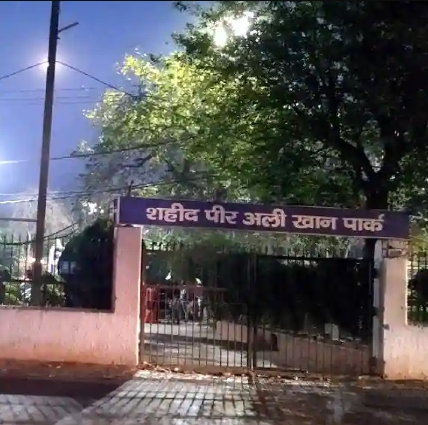
On 7th July 1857, Peer Ali was hanged in full public view in Patna. In present day Patna a children’s park opposite the DM’s office near Gandhi Maidan has been named the Shaheed Peer Ali Khan Park by the Govt. of Bihar to commemorate the sacrifice of this ordinary bookseller whose deeds made him extraordinary and memorable. The park is considered to be the place where Peer Ali was hanged in 1857.

Naming a park after a forgotten hero of the 1857 uprising goes a long way in making him and his contribution known to the people. Moreover, reading and writing about Peer Ali khan made me realize once again and ever more that our freedom is very hard earned. We cannot take it for granted. I and we all need to cherish it, nourish it and strengthen it.


Sources

  1. William Tayler – Our Crisis Or Three Months at Patna during the Insurrection of 1857, Khuda Bakhsh Oriental Public Library, Patna, 2007 Reprint.
  2. The History of the Indian Revolt, and of the Expeditions to Persia, China, and Japan, 1856-7-8, W.U.R. Chambers, 1859 (Google Ebook).
  3. The Story of the Indian Mutiny (1857-58), W.P. Nimmo, Hay & Mitchell, 1885 (Google Ebook).
  4. Unsung heroes of freedom struggle, The Hindu, 10 August 2017.

References

  • [1] William Tayler, Our Crisis Or Three Months at Patna during the Insurrection of 1857, (2007 Reprint), Khuda Bakhsh Oriental Public Library, Patna, p.4
  • [2] https://www.thehindu.com/children/unsung-heroes/article19464112.ece, 10 August 2017
  • [3] William Tayler, Our Crisis Or Three Months at Patna during the Insurrection of 1857, (2007Reprint), Khuda Bakhsh Oriental Public Library, Patna, p.45
  • [4] William Tayler, Our Crisis Or Three Months at Patna during the Insurrection of 1857, (2007 Reprint), Khuda Bakhsh Oriental Public Library, Patna, p.30
  • [5]The History of the Indian Revolt, and of the Expeditions to Persia, China, and Japan, 1856-7-8, W.U.R. Chambers, 1859, p.153,  https://books.google.co.in/books?id=P-hCAAAAcAAJ&q=Peer+Ali+Khan&pg=PA153&redir_esc=y#v=snippet&q=Peer%20Ali%20Khan&f=false
  • [6]William Tayler, Our Crisis Or Three Months at Patna during the Insurrection of 1857, (2007 Reprint), Khuda Bakhsh Oriental Public Library, Patna, p.44
  • 7William Tayler, Our Crisis Or Three Months at Patna during the Insurrection of 1857, (2007 Reprint), Khuda Bakhsh Oriental Public Library, Patna, p.45-46
  • 8William Tayler, Our Crisis Or Three Months at Patna during the Insurrection of 1857, (2007 Reprint), Khuda Bakhsh Oriental Public Library, Patna, p.44
  • [9] William Tayler, Our Crisis Or Three Months at Patna during the Insurrection of 1857, (2007 Reprint), Khuda Bakhsh Oriental Public Library, Patna, p. 44
  • [10] William Tayler, Our Crisis Or Three Months at Patna during the Insurrection of 1857, (2007 Reprint), Khuda Bakhsh Oriental Public Library, Patna, p.44-45
  • [11] William Tayler, Our Crisis Or Three Months at Patna during the Insurrection of 1857, (2007 Reprint), Khuda Bakhsh Oriental Public Library, Patna, p. 45

source: http://www.thecrediblehistory.com / Credible History / Home> English> Freedom Movement> Others / by Kanupriya Gautam / October 20th, 2021

__________________

Kanupriya Gautam :
Kanupriya has done her Master’s in Modern Indian History from University of Delhi and has deep Interest in History, Politics and Literature.

source: http://www.thecrediblehistory.com / Credible History / Home> English> Freedom Movement / by Kanupriya Gautam / October 20th, 2021
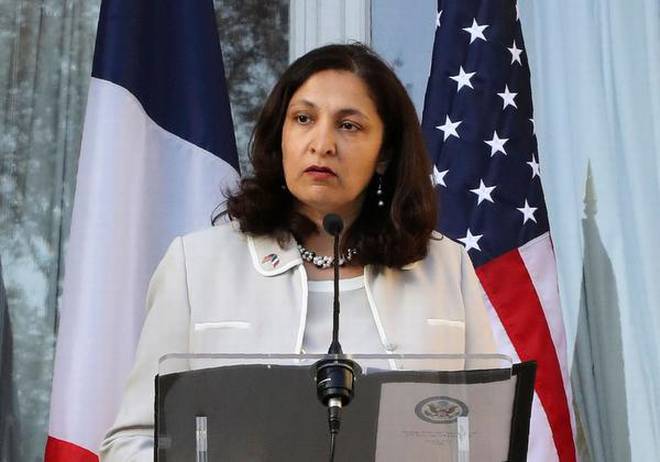

Uzra Zeya appointed U.S. Special Coordinator for Tibet

Bihar,INDIA / North Carolina / Washington, U.S.A. :

File photo of Uzra Zeya.   | Photo Credit: AFP

The coordinator’s role involves promoting “substantive dialogue” between the Chinese government and the Dalai Lama.

U.S. official Uzra Zeya has been appointed the country’s new Special Coordinator for Tibetan Issues. She will hold the position concurrently with her current role as Under Secretary for Civilian Security, Democracy, and Human Rights, Secretary of State Antony Blinken said via a statement.

The coordinator’s role involves promoting “substantive dialogue” between the Chinese government and the Dalai Lama. The coordinator is also supposed to promote the unique identity of Tibet, safeguards human rights of Tibetans and coordinates U.S. policy on Tibet.

“Specifically, she [ Ms. Zeya] will promote substantive dialogue, without preconditions, between the Government of the People’s Republic of China (PRC) and the Dalai Lama, his representatives, or democratically elected Tibetan leaders in support of a negotiated agreement on Tibet,” Mr Blinken said in a statement, as part of a list of activities Ms Zeya would undertake in her new role.

In addition to her responsibilities around promoting human rights and preserving the distinct heritage of Tibetans, Ms. Zeya “ also will promote activities to protect the environment and sustainably manage the water and other natural resources of the Tibetan plateau,” Mr Blinken said.

The position, which was established by U.S.’s Tibetan Policy Act (2002), had been lying vacant for much of the Trump administration, i.e., from January 2017 to October 2020, when State Department official Robert Destro was appointed to the role.

Ms. Zeya was born in North Carolina to parents who emigrated from India. She quit the State Department during the Trump administration (2018), speaking and writing, after her departure, of the decline in diversity at the top levels of the administration.

Ms. Zeya has worked at the U.S. Embassy in New Delhi as a  politicial-minister counselor, in addition to deputy chief of mission and charge d’affaires in Paris and postings in West Asia and North Africa.

source: http://www.thehindu.com / The Hindu / Home> News> World / by Srriram Lakshman / December 20th, 2021

Azim Premji Foundation, Salesforce to launch app to accelerate Covid-19 vaccination

Bengaluru, KARNATAKA :

Chief Commissioner Gaurav Gupta flags off a Covid-19 vaccination vehicle at the BBMP head office in Bengaluru on December 15, 2021.   | Photo Credit: Sudhakara Jain

To cover 110 million people in 25 States by June 2022’

Salesforce, a customer relationship management player, and Azim Premji Foundation have entered into a collaboration to introduce VaxIT, an app to help accelerate Covid-19 vaccination in India.

The programme would use VaxIT across 25 States to cover a population of 110 million (11 crore) across over 3,500 Primary Healthcare Centres (PHCs) by June 2022.

The VaxIT app, developed on the Salesforce platform for Azim Premji Foundation and its partners, would capture the status of vaccination to help individuals plan and stay updated on their progress in the healthcare programme.

VaxIT is available on the Android app store and offers multi-lingual, and offline capabilities.

Anurag Behar, CEO, Azim Premji Foundation, said, “Throughout the Covid-19 pandemic, we have organised ourselves to provide a comprehensive response to the situation – addressing healthcare and humanitarian needs.”

Arundhati Bhattacharya, CEO, and Chairperson, Salesforce India, said, “As we race to deliver one of the largest mass vaccination campaigns in human history, we believe our collaboration with Azim Premji Foundation will help with the safe and equitable distribution of Covid-19 vaccines across India.”

source: http://www.thehindu.com / The Hindu / Home> News> Cities> Bengaluru / by Special Correspondent / Bengaluru – December 22nd, 2021

Bengaluru Man MD Ahmed Bags Guinness Record For Memorising Most Three-Digit Flash Numbers

Bengaluru, KARNATAKA :

Mohammed Ali Athar Ahmed (MD Ahmed)

Bengaluru-based author and coach Mohammed Ali Athar Ahmed, also known as MD Ahmed, entered the Guinness World Records for memorising the most number of three-digit flashcards.

Ahmed bagged the world record for recalling 32 three-digit flash numbers. The previous record was held by an Iranian (30 three-digit cards).

Ahmed is highly trained in memory techniques and also trains others to use such techniques. He decided to attempt a Guinness World Records title to help inspire others who are also interested in memorising as a skill and sport, Guinness World Records noted.

A Neuro-Linguistic-Psychology (NLP) practitioner, Ahmed is the author of the book “Hidden Secrets Of The Topper’s Mind”.

source: http://www.thecognate.com / The Cognate / Home> News / by The Cognate News Desk / December 10th, 2021

Meet Bushra Arshad from UP, who cracked civil services thrice to land her dream job of IPS officer

Saurikh Village, Kannauj, UTTAR PRADESH :

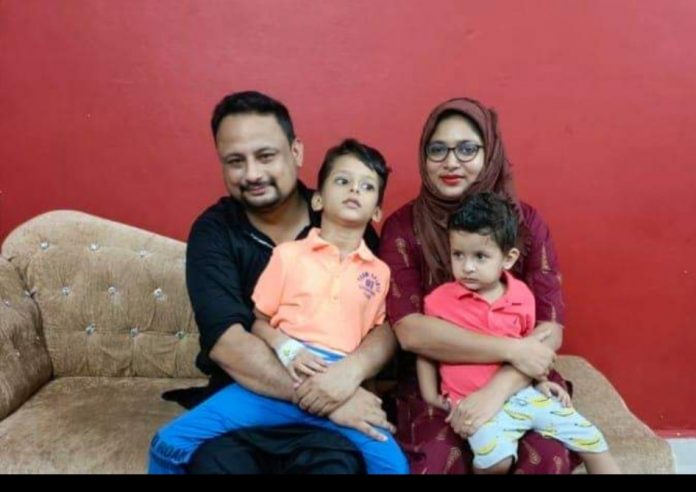
Bushra Arshad with her husband and children. | Photo by arrangement

A mother of two, Bushra Arshad Bano’s story is one of grit and determination. Cracking the civil services exams for the third time last week, Bushra has finally secured her dream job of IPS. 

Uttar Pradesh :

It is no easy feat for Bushra Arshad Bano from Kannuaj, Uttar Pradesh, a mother of two, to crack India’s toughest and prestigious civil services exam thrice. 

Currently posted as a Sub-Divisional Magistrate (SDM) Sadar in Firozabad, Bushra resumed her studies after thirteen years of marriage and cracked the civil services exam thrice and will be an Indian Police Service (IPS) officer – which has been her lifelong dream. 

Bushra told TwoCircles.net that she has undergone four major surgeries but this didn’t deter her to fulfil her dreams. Expressing joy over being allotted the IPS category, she said, “I would join IPS as it has been my aim always.”

In earlier exams, Bushra Arshad was given IRS and was a top ranker in Uttar Pradesh Public Service Commission (UPPCS) exams. 

Her achievement has been lauded by one and all. 

Bushra Arshad, who hails from Saurikh village in Kannuaj, Uttar Pradesh, was the only Muslim participant to become SDM in UPPCS-2017. When she secured 277th rank in the UPSC result in July last year, she was selected for IRS, which as per her “did not satisfy her.” She appeared again in the exams and got 234th rank and secured IPS in the current seat allotment.

Bushra said she had resolved to continue to work hard till she came on top. 

Bushra is fond of breaking the ‘myth’, proving misconceptions wrong, and breaking stereotypes.

Her family and relatives said that they always believed in her. 

Bushra’s father is a farmer, and her mother is a homemaker. She comes from an educated family – both parents are graduates, and her siblings are well educated. Bushra, however, is extraordinary. After graduating at the age of seventeen, she completed her MBA degree before turning 20. She completed her studies till class XII from Kannauj and went to Kanpur to graduate.

Bushra said that she wanted to appear in the UPSC exam back then, but she was too young and wasn’t eligible.  

According to Bushra’s mother Shama, “Bushra was admitted to 2nd standard at the age of four and a half years.” 

“Bushra had learned so much at home that she never came second. She has a habit of being a topper. She has always been on top,” her mother told TwoCircles.net. 

Bushra recalls relatives visiting her family and telling her family to make her (Bushra) a collector (considered a coveted job). Bushra has gone a step further and become a police captain. 

“Age was never a bar for me. It never occurred to me that that I cannot give the UPSC exams or the JRF exams,” she said. 

Bushra cleared the Junior Research Fellow (JRF) exam on her very first attempt and got a PhD in Distress Management from Aligarh Muslim University (AMU). It was while being at AMU that she married Asmar Hussain, an engineer. The couple went to Saudi where Asmar started teaching at a university there, and Bushra got a well-paying job in a company. 

Forsaking their jobs, the couple returned to India. 

“The only reason to return to my country was patriotism and unconditional love for the country. I often used to think that the knowledge that I have learned from the residents of my country in India, the skill generated from it should also benefit the residents of my own country. They should also get it, as it is their right,” she said. 

Her husband Asmar Hussain told TwoCircles.net that she (Bushra) got a job in Coal India while being a mother of two. “Ten years passed, but her hunger for excellence kept on,” she said. 

Talking about that period of her life, Bushra said, “I did the job honestly, and fulfilled my duty as a mother and as a wife.” 

“Bushra is a hard-working woman who accomplishes what she decides to do,” her husband said. 

Bushra’s story is a testament that nothing is impossible for this determined woman from Uttar Pradesh. 

source: http://www.twocircles.net / TwoCircles.net / Home> Lead Story / by Aas Mohammad Kaif, TwoCirlcles.net / Devember 02nd, 2021

J&K’s trailblazing doctor extends a helping hand while off-roading

Srinagar, JAMMU & KASHMIR:

J&K's trailblazing doctor extends a helping hand while off-roading -  Hindustan Times
Dr Sharmeen Mushtaq Nizami is a J&K-based philanthropist and adventure trekker who helps cancer patients, widows and orphans. (Waseem Andrabi)

Dr Sharmeen Mushtaq Nizami, a J&K-based philanthropist and adventure trekker, feels that a girl can do big things in life when her parents support her; she has set up a charity trust that helps cancer patients, widows and orphans.

Whatever life throws at Dr Sharmeen Mushtaq Nizami, she takes it as a challenge, overcomes it and moves on. She believes one’s life should be an inspiration for others.

Dr Nizami, in her early 40s, works at a Srinagar hospital and runs a trust for cancer patients besides pursuing her hobby of being an extreme mountain trail motor-sport traveller. Since childhood, she has pursued her passion whether it was studying medicine in the 1990s when militancy was at its peak in Jammu and Kashmir or her love for jeeps.

Her biggest challenge in life came when her husband was diagnosed with cancer and died in 2007 within six years of their marriage, leaving her to bring up their two children, a three-year-old son and a year-old daughter.

“It was a traumatic phase. I struggled but my parents supported me. Initially, being a single parent appeared tough but gradually I came to terms with reality,” she says.

As time went by, she decided not to remarry and moved back to her ancestral home in Srinagar from her husband’s house in Jammu.

Dr Nizami, who is now the medical officer in-charge at a Srinagar hospital and on Covid duties, says that her experience during her husband’s illness pushed her towards helping patients and the needy.

“Though we were relatively well off, we had to go outside for treatment as he was suffering from pancreatic cancer. We realised that the treatment is expensive and drains most families’ savings,” she says.

Even before her husband’s death, she would collect money from attendants using charity boxes outside OPDs. Later, friends and colleagues asked her to setup a trust with a separate account where people could donate money. “We get a lot of donations during Ramazan, which are primarily used to help cancer patients and those needing a kidney transplant. The trust also helps widows and orphans who have no source of income,” she says.

Nizami, the eldest of four siblings, says that her parents Mushtaq Nizami, a military contractor, and Shahida Parveen, a homemaker, have been her strength. “Any girl can do big things in life when her parents support her,” she says.

Ask her what got her interested in jeeps, and she says, “I have imbibed my father’s passion for driving jeeps. In 2018, I came upon some videos of the Kashmir off-road club which organises competitive events and overland expeditions, and decided to participate in a snow-race event (Frozen Rush) at Gulmarg.”

Nizami, who always wears a hijab, was the only woman to participate in the adventure sport and created quite a buzz on social media. “I hadn’t realised that I was breaking stereotypes , until I saw people’s reactions,” says Nizami, who has since participated in dangerous events like mud race and river crossing.

“Some people tried to dissuade me saying it was risky, but I remained unafraid,” says Nizami, adding that she gets a lot of messages from young girls who admire her.

She says her faith in the Almighty has never wavered despite the many challenges in her life. “Not just driving, but life in general throws a lot of challenges at us. We have to accept the challenges and move forward,” she says.

source: http://www.hindustantimes.com / Hindustan Times / Home> Cities> Others / by Ashiq Hussain, Srinagar / September 16th, 2021

Meet Wali Rahmani, whose Umeed Academy is source of inspiration for Kolkata’s underprivileged children

Kolkata, WEST BENGAL :

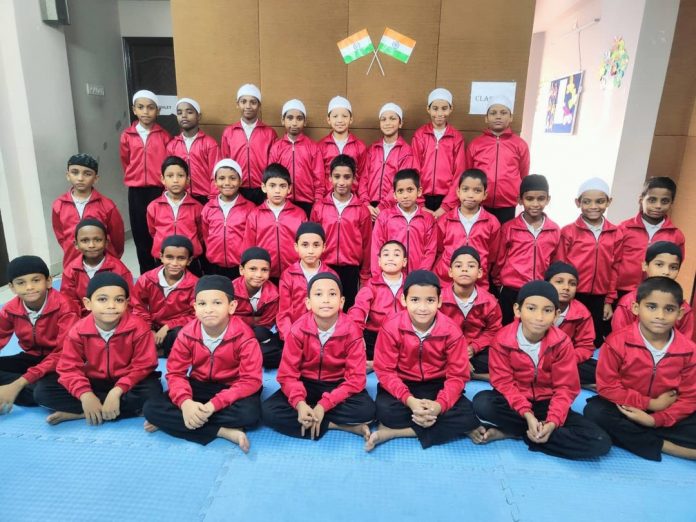
Children at Umeed Academy. | Picture by arrangement

Wali Rahmani’s work has earned him recognition and respect and people have come forward to sponsor the students in whatever way they can.

Kolkata :

Budding lawyer, human rights activist, orator, motivational speaker, social entrepreneur and a proud father to 140 children, 23-year-old Wali Rahmani hopes that one day all his children will be successful leaders and prove to be invaluable assets to the nation.

The 140 children who fondly call Wali Rahmani Abba Ji hail from different slums of Kolkata. Many of them are orphans and all of these children are from families caught in the vicious cycle of poverty.

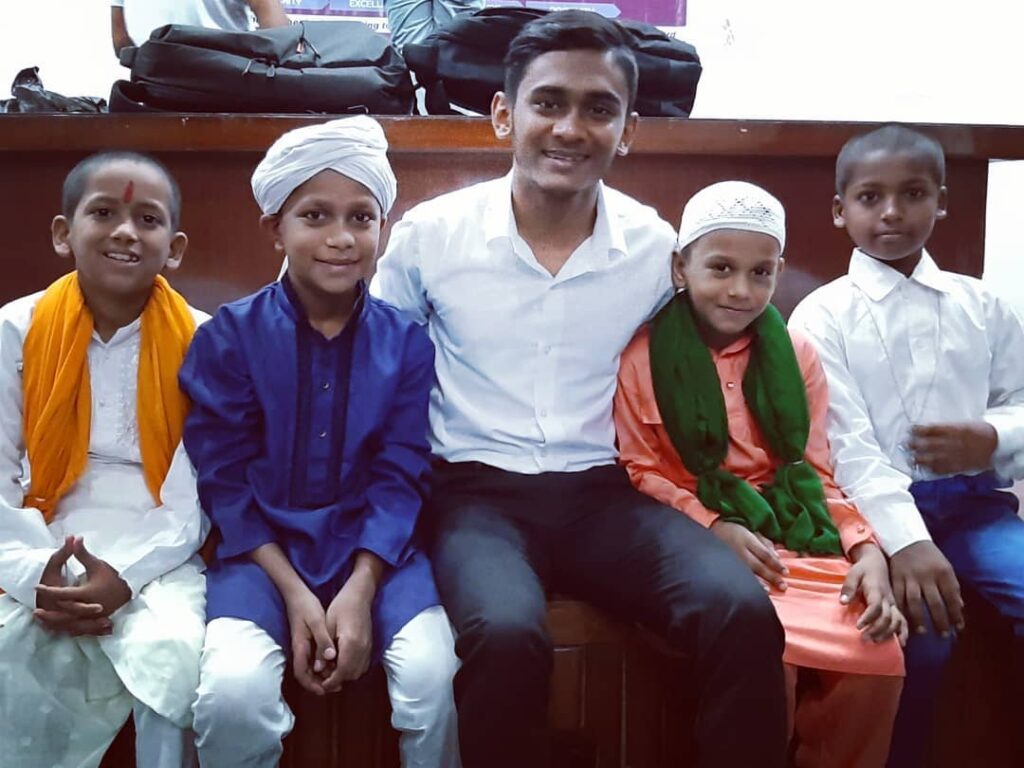
Wali with his boys dressed for a skit on harmony. | Picture by arrangement

Wali Rahmani was just 18 when he first took 3 kids from a slum under his wing. These 3 kids, around 3-4 years old, were orphans. Wali, their Abba Ji, washed the soiled clothes of the kids, bathed, cooked and fed them–playing the role of a mother, a father, a nanny and a maid. His determination did not waver. Gradually, he found more and more people joining him which encouraged him to start and register ‘Umeed’, which served both as an orphanage and an educational academy.

The journey of Umeed
When Wali Rahmani was just turning 18, many changes were taking place in the country which he said, “changed him as well.” The assembly elections of 2017 in the state of Uttar Pradesh, which brought Yogi Adityanath as the Chief Minister, became the turning point in Wali’s life and brought in its wake an energized goal and mission to work for the upliftment of the society.

Rahmani said he was “aghast that someone like Ajay Singh Bihist a.k.a Yogi Adityanath could become the CM.” He took to social media to talk about the injustices, violations of human rights and atrocities that were happening in the country. This was the beginning of Wali’s political journey. Soon, his fearless voice got him thousands of followers on Youtube, Facebook and other social media.

At one point, Wali paused to reflect that he is the only one talking against the oppression and gross injustices meted to people. Where are all the other youth leaders? Why are they not standing up against injustices? He spoke to his peers but they were keen only on pursuing their education, having fun and enjoying life. They did not want to take up these issues or even talk about them.

“I realized that my suggestions did not go down well with my peers. They did not want someone to tell them to ‘do this and do that.’ It became more of an ego thing,” Wali said, reminiscing the early days.

People who heard his talks on social media, his debates on the television channels looked up to him as the leader of the future. Wali, however, was not happy being a leader. He wanted more leaders in the community. According to him, a true leader is not someone who does not leave any legacy behind. He believes that a true leader creates more leaders and leaves behind a rich legacy. Instead of asking other youth to join him in the mission to raise their voice against the wrongs of society, he thought it is better to create new leaders. He believed that these will be small children who can be successfully molded to become strong leaders. He took a break from his studies for a year to work on this idea of creating future leaders.

“But where would I find these children whom I could train? Would any parent trust me enough to send the child to me? Then by chance, I came across a Hadith by our beloved Prophet (PBUH) wherein he mentioned the status of a Muslim who is kind to orphans. I felt that through this hadith, Allah was guiding me. So, I decided to take in children who had no parents,” Wali said.

“I had made up my mind that I want to be a father of 10 before I turn 20. And people laughed at me. They advised me to go study and asked me blunt questions related to my financial capability,” Wali said, “But I did not give up. It was the womenfolk who came forward to help me realize my dream”.

Wali said that he approached several people who had wealth and could easily help him but instead they scoffed at his idea.

“The very first person to help me was my mother. She believed in my dream. She was the first donor for Umeed,” Wali said while giving details of other donors who were also women.

He remembers the first donors fondly and with gratitude. One woman gave her gold finger ring because she was not earning and wanted to give what belonged to her. Wali likens this to the woman who donated her gold bangles to Sir Syed Ahmed when he was seeking donations for the Aligarh Muslim University.

Some girl students also promised monthly payments from their pocket money. And as they say, small drops of water make a mighty ocean, Wali Rahmani’s dream project began taking a concrete shape.

Today he runs the Umeed Academy in a rented apartment with 140 children. Some of these children are day scholars who are at the academy for at least 12 hours.

Many of these children are kids from slums whose parents are alcoholics, orphans who are homeless, kids who have parents but stay with their guardians to avoid the brutality that their parents either go through or make them go through, children with parents serving jail time. Some kids have homes not suitable to live in. The children of his academy are mostly from Muslim Ghettos.

Umeed Academy’s vision
Wali envisions creating leaders who in turn will become capable to create more leaders. Year after year, Wali hopes, Umeed will produce leaders who will carry forward the legacy of Wali and his academy Umeed.

“Each child that graduates from Umeed shall be an institution builder and a leader. They will leave their imprints in the sands of time,” he said.

Inside Umeed Academy
There are no wardens at the Umeed Academy, only house parents who take care of all the needs of the children. From the time of their enrolment to the time they pass out as students have completed their 12th standard ICSE curriculum syllabus, all their costs are borne by the academy including their residential cost, health cost, books, clothing and sports.

The focus is on the holistic development of girls and boys. For their spiritual growth, they are taught Quran and Islamic values.

The children are taught regular subjects of the school curriculum which is ICSE and apart from that, they are taught self-defence, drawing, sports, Quran, Hadith and ethics. They are encouraged to participate in many activities conducted in their academy.

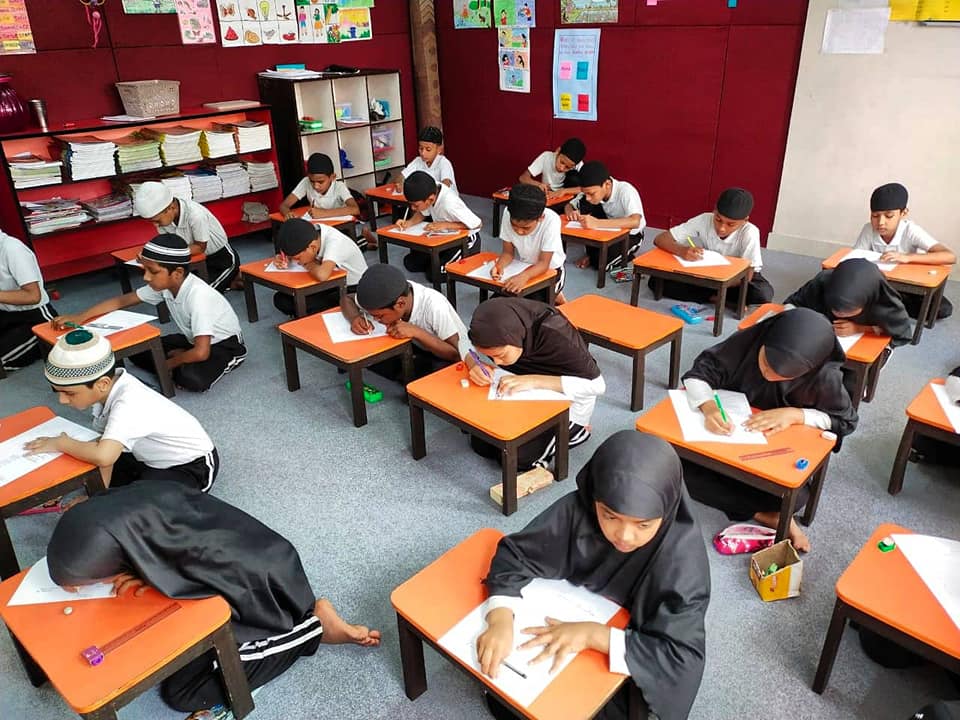
Class room in Umeed. | Picture by arrangement

“The transformation in the children is visible. They are all so disciplined and neat that despite sharing common toilets and bathrooms, they keep it all clean,” Wali says proudly, adding, “Ask them to recite the Duas (prayers) of eating, sleeping, going out, going to the toilet, or when it rains, they will recite it.”

The house parents bring up these children as they would bring up their own, insists Wali. He also does his bit by interacting with the children every day, listening to them, talking to them and thus making strong the bond they share.

The core team members, who are his well-wishers not only guide him but also help him make the right decisions.

Asma Alam, director of Umeed, Ghazala Imam and Yusuf Haque who taught Wali at school are now part of the core committee. Others who have joined his mission are an army veteran Abhishek Mukherjee, educationists Shabana Anwar, Usha Banerjee and Mufti Anwar Khan Sargiroh.

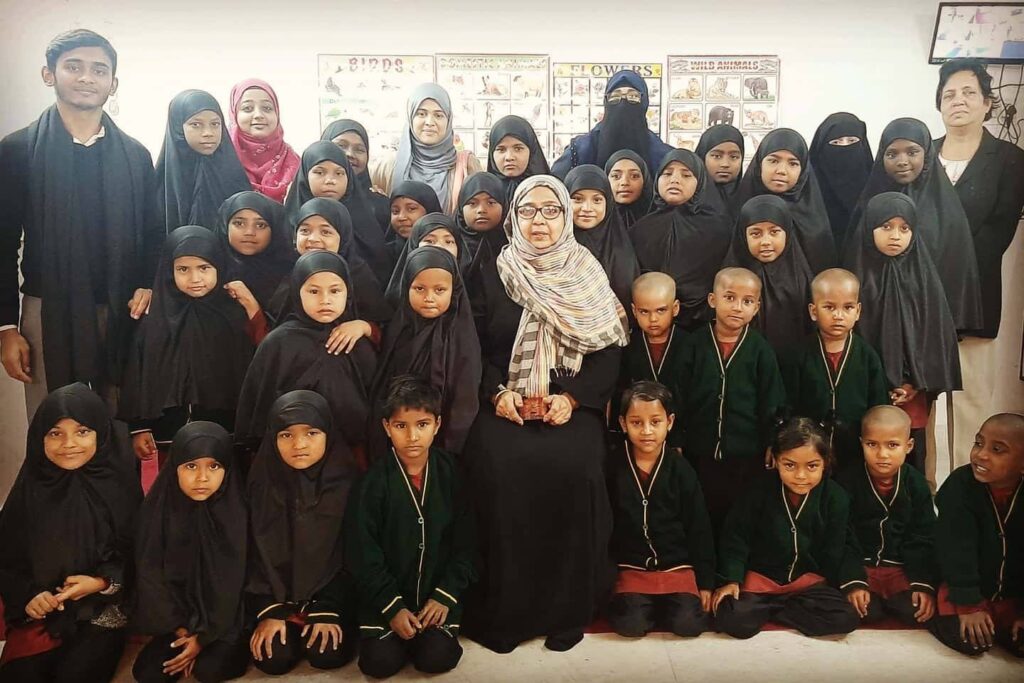
Wali Rahmani, with his staff and children of his academy. | Picture by arrangement

Awards and recognitions
Wali Rahmani has appeared in various national television debates and is perhaps the youngest Indian TV debate panellist.

He says that his work for society is not social work, but “his social duty.” He has been awarded the young social Hero award in 2019 at the South India NGO conference. He has also been featured as one of the young top 20 achievers in India under the age of 20 by Mumbai Coworking, and also received the Shan-e-Hindustan award by Youth Ekta Front, Delhi. His work has been acknowledged and featured by India Times, Brut India, and the Indian Express.

Many prestigious institutes and organisations have invited applications from Wali to apply for the awards but Wali Rahmani says “his work should speak for him,” and does not believe in applying for any award.

“The ultimate award will be when these children grow up and lead the nation and establish peace and harmony around them,” he said.

Future of Umeed
Wali Rahmani’s work has earned him recognition and respect and people have come forward to sponsor the students in whatever way they can. One generous donor has donated 2 Acre (87120 square feet) of land to Umeed Academy worth Rs 2 Crore.

Wali has plans to construct fully functional hostels on the land for students with separate dormitories for boys and girls, a housing facility for the staff members and a campus which can accommodate approximately 600-700 students at once.

The construction work has started and the cost of the entire project has been approximated at Rs 13.5 crores. Wali intends to complete this work within the next two years and requests donations for his lofty mission through donations.

To donate to Umeed Academy, click on this link.

source: http://www.twocircles.net / TwoCircles.net / Home> Lead Story / by Nikhat Fatima, TwoCircles.net / November 20t, 2021

Rahmani 30 secures 100% success in CSEET exams

Patna, BIHAR :

Patna:  

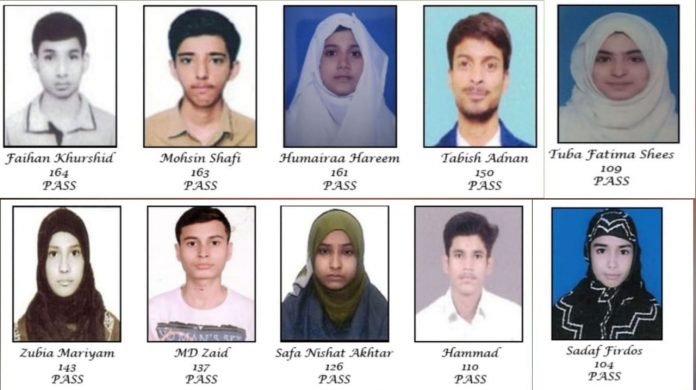
Despite facing the challenges of global pandemic of Covid-19, lockdown and extraordinary interruptions in academic activities,the students of Rahmani30 have set record success in this year’s commerce field with 100% students qualifying for CSEET (Company Secretary Executive Entrance Test), 10 qualifying CA Foundation and 4 cracking CA Intermediate Exams. The BSEB class 12th results were excellent with 100% students scoring more than 75 %( Distinction).

A Company Secretary is a senior position in a private sector company or public sector organisation. Also known as Compliance Officers, it is one of the positions that is a part of the key managerial personnel (which usually includes the CEO & CFO) of any company. Company Secretary is a statutory position as every listed company and every other company having paid up share capital of rupees 10 crores or more shall have a full time company secretary in their board as per section 203 of Companies Act 2013.

Chartered Accountancy is a challenging profession that offers practice or job opportunities in the areas of accounting, auditing, corporate finance, project evaluation, and company and other business laws, taxation and corporate governance. The multi-faceted knowledge a chartered accountant enjoys through unique academic programme blended with practical training is what the business and industry need in the advent of liberalisation, privatisation and globalisation of Indian economy. The scope for this lucrative career is bright in an economically developing nation like ours and as such the career can be termed as challenging and rewarding for competent professionals in the field. Chartered Accountancy Course is a professional course in Accounting introduced in our country in 1949, with the enactment of the Chartered Accountants Act. The Institute of Chartered Accountants of India (ICAI) was formed the same year.

The Rahmani Program of Excellence (Rahmani30), under its mentor organization, the Rahmani Foundation, is effectively turning the educational desperation of the minority community into hope and confidence, making its learning process more effective with each passing year.

Fahad Rahmani (CEO Rahmani30) said that this achievement is definitely due to the tireless efforts and efficient Academic leadership of former DGP of Bihar, Mr. Abhyanand sir and his guidance as well as the tireless hard work of the faculties, management and other team members.

Rahmani30 has emerged as one of the premier institutions for preparation of IIT, JEE, CS, CA, CLAT and NEET in recent years.

source: http://www.muslimmirror.com / Muslim Mirror / Home> Positive Story / by Special Correspondent / December 05th, 2021

AMU Scientists Invent Novel Technology to Treat Diabetic Foot Ulcers

Aligarh , UTTAR PRADESH :  

Diabetic people with foot sores, fearing limb amputations can heave a sigh of relief as a team of Aligarh Muslim University (AMU) scientists lead by Prof Asad Ullah Khan of the Interdisciplinary Biotechnology Unit has developed a novel ‘Nano-Composite based Photo-Dynamic Therapeutic Approach to treat Chronic Diabetic Foot Ulcers’.    

Their remarkable patented study, data and work accepted for publication in the peer-reviewed ‘Scientific Report’ of the Nature Publishing Group has been successful on animal models. The technology successfully treated foot ulcers in diabetic rats.

“Anatomical and physiological similarities prompted us to investigate a large range of mechanisms for assessing this new treatment therapy on animal models with no toxicity before applying it to humans. We are content to have successfully treated foot ulcers in diabetic rats which were not treated by any available antibiotics due to the multi-drug resistant strain mediated infection”, said Prof Asad.

According to him the animal models were cured in a span of 14 days through the newly developed technology.   

“Our team has been involved in proving the efficacy of the treatment for the last two years. The study is on its way for human trials”, added Prof Asad.

He pointed out: “Independent studies reveal that across the world, a limb is amputated every few minutes and this actuality becomes even more unsparing when you learn that most of these amputations are the result of diabetic foot ulcers. Therefore, it is of paramount importance to come up with a pertinent treatment for saving limbs and lives”.

“It is hoped that this novel technology will become the final finding for the pursuit of the much awaited treatment for diabetic foot ulcers. We are longing for the world to find out that there is more to the prevention of this infection than just offloading wounds, removing dead skin and tissue, applying dressings and checking blood glucose and other health issues”, said Prof Asad.

source: http://www.amu.ac.in / AMU, Aligarh Muslim University / Home> AMU News / Public Relations Office / Aligarh, December 13th, 2021

New Book on Freedom Movement Educates Young Generation About Muslims’ Sacrifices

NEW DELHI :

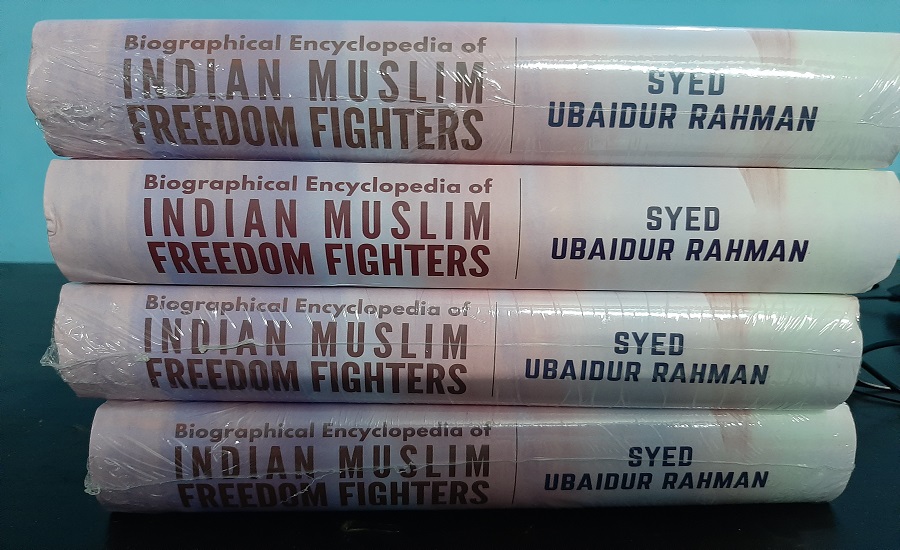
‘Biographical Encyclopedia of Indian Muslim Freedom Fighters’ is an exhaustive work that brings to the fore many unknown facets of the freedom movement beginning with Faraizi Movement to 1857 Mutiny and to later part of the freedom movement.

BE it 1857 Mutiny or the later freedom movements, Muslims have played leading role in all such efforts. British officials and historians have accused Muslims for the 1857 Ghadar. To be true, both British historians and officials have named Muslims as the most important rebels and termed the Mutiny as a sinister plot by Muslim ulema and mujahideen to reclaim their lost powerhouse in India.

Here are excerpts from a chapter on Imam Baksh Sahbai, a great scholar of his time:

Imam Bakhsh Sahbai was one of the most renowned scholars of the 19th century Mughal India. He was among the best scholars of the Persian language and had earned respect as poet and litterateur of the Persian language. At a time when Urdu had almost replaced Persian as lingua franca in much of north India, he was still one of the greatest supporters of the Persian language and spent all his resources in its propagation.

He authored more than thirty books on Persian and Urdu literature that includes three books that were part of the curriculum in the famed Delhi College. He was reportedly appointed a professor of the Persian language there. However, he had a tragic end when after the 1857 Mutiny he and his entire family, including his two sons, who were also renowned scholars in their respective fields, were hauled, taken to Yamuna and shot dead from point blank range. At least 21 members of his family were slaughtered in this most horrendous fashion.

Imam Bakhsh Sahbai was among the most respected scholars of the time and, therefore, every prince wanted to study under him. He was very close to Ghalib, Zauq, Mufti Sadruddin Azurdah, Fazle Haq Khairabadi and even the last Mughal Emperor Bahadur Shah Zafar. Many top scholars of the time were taught by him not just at Delhi College but also at his home. However, the slaughter of his family members including his two sons, and digging of his home by the British thugs had shocked the people of Delhi even during the worst phase of brutality. This digging of his house and the complete destruction of his library also destroyed much of his work. The destruction of his massive library that he had built over a period of decades must have been a huge loss for academia and scholarship.
This is the reason that not much has survived on him.

Some twenty years after his macabre killing, when a Hindu disciple of Sahbai, Munshi Deen Dayal thought of collection and publication of his he couldn’t lay his hands on anything substantial. There was not much available on his life or work. Whatever he could gather, he published it in three volumes as Kulliyat-e-Sehbai.

Sahbai was born in the year 1805 in a respected family of Delhi. His father, Maulana Muhammad Bakhsh settled in Delhi from Thanesar, Punjab. Sahbai’s elder brother Hakim Peer Bakshi was a famed physician of his time. His early education was under Maulvi Abdullah Khan. Sehbai had two sons, Muhammad Abdul Aziz and Molwi Abdul Karim Soz. Both were accomplished scholars and well-known poets. Both were killed along with their father and other relatives after 1857 Mutiny.

While in the mid-19th century the power of Mughal Empire had diminished and its influence confined to the Old Delhi quarters, the capital of the Mughal empire still boasted a huge galaxy of scholars, poets and artists of all sorts. There is no denying the fact that the biggest draw of all were the poets and intellectuals. Altaf Husain Hali said that Ghalib, Zauq, Sahbai and Azurda made the capital one of the best places for the scholars and academics. “There gathered at this time in the capital, Delhi, a band of men so talented that their meetings and assemblies recalled the days of Akbar and Shah Jahan”, wrote Hali.

Hali, who had merely heard the stories of high standards of scholarship in Delhi, its great scholars and poets and great madrasas dotting the town, escaped Panipat and came on foot to Delhi. He eventually got admitted to one of the best madrasas of the town and started frequenting the classes of great scholars of his time before his family tracked him down eventually. However, much before that happened, he had got admission in ‘very spacious and beautiful’ madrasa of Husain Bakhsh and had begun his studies there. He says that he was witness to ‘this last brilliant glow of learning in Delhi, the thought of which now makes my heart crack with regret’.

William Dalrymple while describing the destruction and killing in Delhi in the aftermath of Mutiny says:

Worse still was the slaughter in Kucha Chelan, where an estimated 1,400 Delhiwallahs were cut down. Here Nawab Muhammad Ali Khan had attempted to resist the plundering and had shot dead three British soldiers who had climbed over his haveli wall and entered his zenana. Their companions went back to get the rest of their regiment, and returned with a field gun with which they blew the haveli apart.

Sahbai was respected by fellow scholars including Mughal Emperor Bahadur Shah Zafar, who himself was a top of the line poet and whose respect for scholars and poets was legendary. While Sahbai is not known to have directly fought in the 1857 Mutiny, however, what is known is that he was with Bahadur Shah Zafar and supported his revolt. This was the reason that the rampaging British forces, full of feeling of retribution and revenge were led to his home and the homes of other supporters of Mutiny. These spies were paid Rs 2 for every such input.

When after relentless killing and rapine the British and their allies got tired of killing and bayoneting the inhabitants, they marched forty survivors out to the river Yamuna, lined them up below the walls of the Fort, and shot them. Among the dead were some of top of the line scholars who would have been the pride of the place for any world class capital. While writing about this ghastly massacre Mirza Zahir Dehlavi says, “They were well-known and well-off people, men who were the pride of Delhi…They had had no parallels in their own day, nor will we ever see their like again.’

Mirza Zahir Dehlavi in his Dastan-e-Ghadar writes:

“For example, there was Miyan Amir Panja-kash, the great calligrapher, who had no one comparable to him on this earth. Then there was one of our greatest poets, Maulvi Imam Bakhsh Sahbai and his two sons, and Mir Niyaz Ali, the celebrated story teller of Kucha Chelan. About fourteen hundred people of that Muhalla were killed. Some were arrested and taken through the Rajghat gate to the river side and there they were shot. The bodies were all thrown into the river. Meanwhile, many of their women were so disturbed by what they saw that they left their homes with their children and jumped into the wells. For months afterwards, all the wells of Kucha Chelan were stacked with dead bodies. My pen refuses to describe this further.

“One of the survivors of Sahbai’s family was his nephew Qadir Ali who apparently lived with him in Delhi. He is reported to have told his escape to the Delhi historian Rashid ul-Khairi. “Delhi resembled a place of Judgment. A huge number of prisoners were being shot as hanging them was ‘tiresome’ for their killers.

As the soldiers readied their guns a Muslim officer came forward and told us that ‘your death is imminent. You will be shot to death immediately, so those people who know swimming should immediately jump in the river to survive.’ I knew swimming and was good at it, but Mamun Sahib [Sahbai] and his son, Maulana Soz, didn’t know how to swim. I was not ready to abandon Mamun Sahib and my cousins but he forced me to do so. Ultimately, I jumped in the river and swam away. I kept looking back, and after I had gone fifty or sixty yards, I heard the gunshots and saw the line of people falling dead”.

_______

Excerpted from: Biographical Encyclopedia of Indian Muslim Freedom Fighters by Syed Ubaidur Rahman; ISBN: 81-88869-51-1, PP 626 (Hard Bound), Price Rs 1195, Publisher: Global Media Publications, Tel: 9818327757

__________

source: http://www.clarionindia.net / Clarion India / Home> Books / by Syed Ubaidur Rahman / December 13th, 2021