Colonial historians and scholars often claim that the Indian Freedom Movement was a disjointed movement with no nationalistic feeling among the people participating in it. This belief, that Indians fought against the British for local communal reasons without any coherence, has been further propagated by the Indian historians as well, after the independence. Often, we are made to believe that Muslims fought to secure their religion or Caliphate while Hindus to protect regressive social institutions. Similarly, urban elite, peasantry, tribal, and others have their own narrow interests in fighting against the British.The idea may be true and open to debate, but the fact that there was a coherence among different groups within India while fighting against the British is an undeniable fact.
During the early 19th century, the British decided to partition Bengal. Hindus and Muslims, together, rose up against the decision which based itself upon religious segregation. India in general, and Bengal in particular, adopted the Swadeshi campaign to oppose this decision. In 1905 Bengal got divided, agitating the youth. It must be noted that the present Bihar was part of Bengal at the time. The youth, led by people like Barin Ghosh, started adopting militant methods to oppose the British.
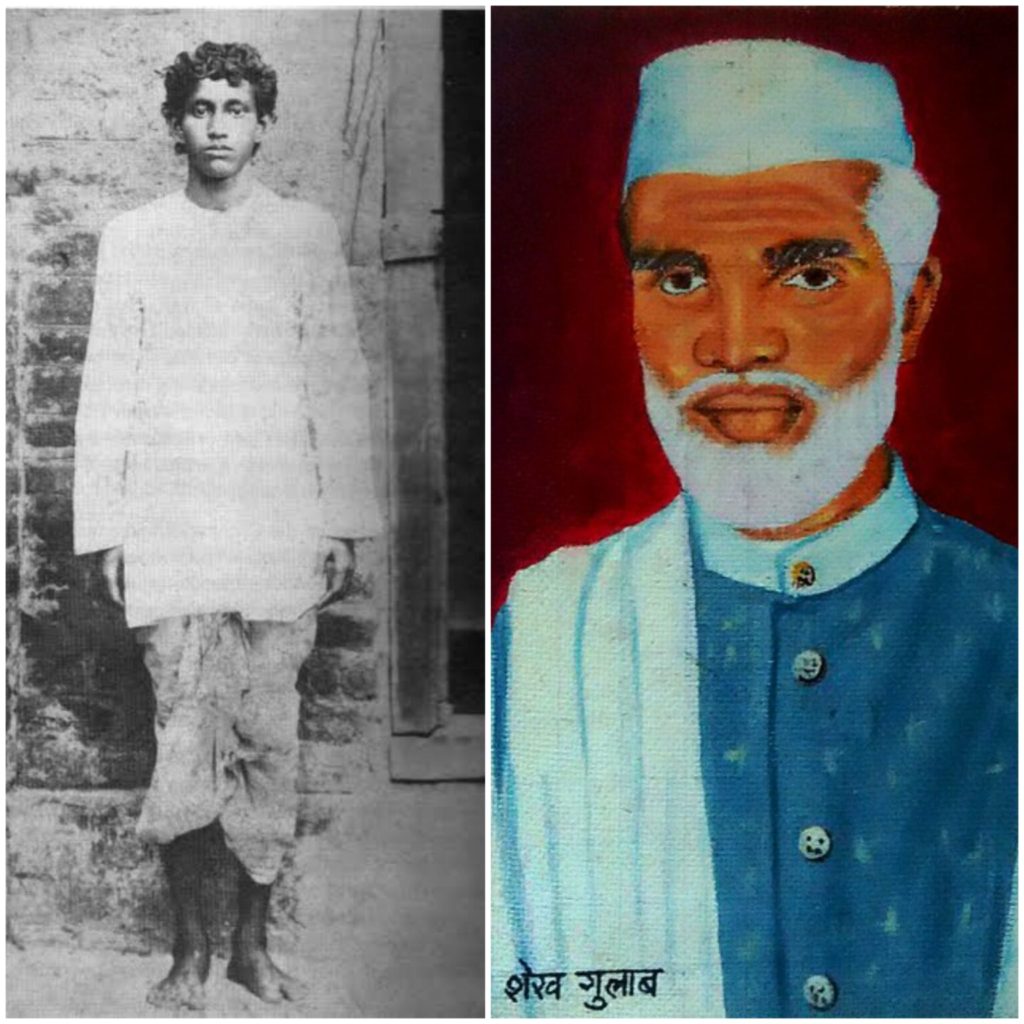
At the same time, in Champaran of Bengal (now, in Bihar) indigo planters led by Sheikh Gulab started a non-cooperation agitation against the British indigo planters. Gulab defied the tinkathia system, where indigo had to be planted on the best portions of land, on his 60 bigha land which was near Sathi factory in Champaran. It was 1907 & Champaran was part of Muzaffarpur commissionerate.
More and more peasants joined Gulab in his movement and another Sital Ray rose as another prominent leader. Planter’s Association had their own army called Bihar Light Horse, famous for its cruelties over peasants. In 1907, the government passed an order appointing Gulab and his comrades as the special constables in police. Gulab defied this appointment and did not join. Police arrested him under the Special Police Act, 1861.
Sentence of Gulab was reversed later by Kolkata Court in March, 1908.
Next month, in Muzaffarpur a judge, Kingsford, was transferred from Kolkata. Champaran lied under his jurisdiction. Indians were already angry with the judge for his anti Indian attitude and there was this apprehension that he had been brought to crush the anti British peasant movement. British reports were already pointing towards a collaboration between Kolkata based Bengali revolutionaries and the peasant movement of Champaran.
The arrest of Sheikh Gulab had stirred the local emotions and this transfer of Kingsford acted as a catalyst.
Within a few days, Khudiram Bose, a young boy of 17, and Prafulla Chaki, both of them Bengali tried to assassinate Kingsford with a bomb. Accidentally, they killed two English women.
Khudiram Bose was hanged till death in August, 1908.
Khudiram’s martyrdom instilled a new spirit in Sheikh Gulab. In September, 1908, he organized more peasants at Vijayadashami Mela in Bettiah, Champaran. Now, peasants were openly defying the planters and attacking them. On 16 October, 1908, peasants attacked the Parsa Indigo factory. Government reacted brutally. Sital Ray was arrested along with more than two hundred peasants.
In the Legislative Assembly of Calcutta, it was argued that Bengali and Bihari have worked in unison against the British in Champaran during 1907 – 1908. Further reports that a Burkha clad Muslim woman provided shelter and help to Khudiram Bose during his attempt on Kingsford’s life also point towards an association between Sheikh Gulab’s movement and Bengal revolutionaries. P.C Roy, implicitly, contends that the arrest and case against Sheikh Gulab may be one of the reasons that Khudiram Bose attacked Kingsford in Muzaffarpur.
(Writer is a well known historian)
source: http://www.heritagetimes.in / Heritage Times / Home> Bihar> Freedom Fighters / by Saquib Salim / July 17th, 2020
The tomb stands within an ensemble of 16th century medieval monuments in the Nizamuddin area of the national capital
New Delhi:
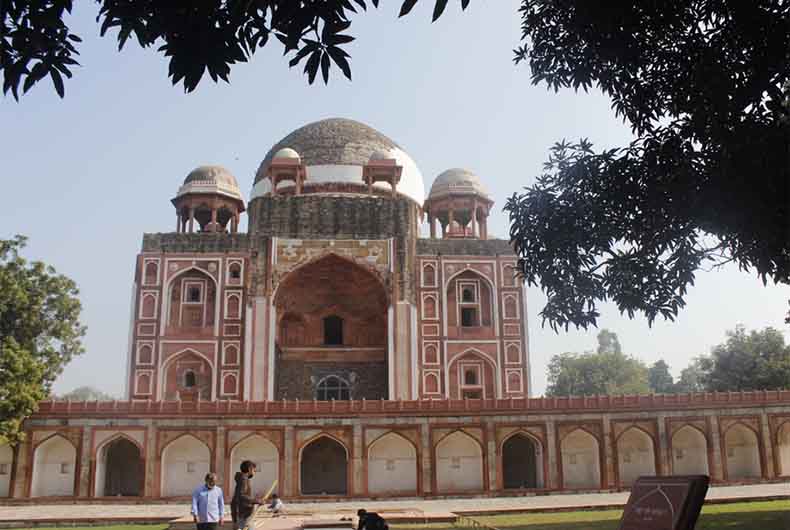
The tomb of Abdur Rahim Khan-I-Khana (1556-1627), popularly known as ‘Rahim — one of Akbars navratnas and a military leader — will open for visitors from December 17 here after completion of restoration work by Aga Khan Trust for Culture (AKTC) and InterGlobe Foundation.
The tomb stands within an ensemble of 16th century medieval monuments in the Nizamuddin area of the national capital.
The conservation project started in 2014, and included a cultural revival of Rahim’s legacy and poetry.
The Union Minister of State for Tourism and Culture Prahlad Singh Patel is scheduled to preside over the completion ceremony of Rahim’s Tomb on December 17, Rahim’s birth anniversary.
An expression of Mughal architecture, Rahim’s tomb informed the design for the Taj Mahal. Clad in red sandstone and marble, the interiors of the mausoleum are decorated with ornamental incised plasterwork, and decorative motifs such as the six-sided star and lotus medallions.
It stands at the edge of the buffer zone of the Humayun’s Tomb World Heritage Site, within an area of high archaeological significance.
Archeological Survey of India (ASI) is the custodian of the monument of note.
According to the organisations involved in the conservation effort, the physical revival of the tomb included repairs to the major damaged structures on the interior and exterior of the mausoleum dalans, canopies (chattris), dome, facade and landscape, along with the wall and ceiling surfaces.
The landscape around Rahim’s tomb has been restored to original slopes and height. The conservation of the dome has been completed with a symbolic addition of marble cladding.
“Conservation at Rahim’s tomb has been possible with a public-private partnership. Not only has a significant monument been conserved for posterity but dignity has been restored to the resting place of the cultural icon, Rahim. Conservation in the Indian context can benefit from thousands of years of building craft traditions and recourse to an interdisciplinary scientific approach. 175,000 craft days of work has helped restore this grandeur,” Ratish Nanda, CEO, Aga Khan Trust for Culture said.
The cultural revival efforts also witnessed compilation of Rahim’s literary works and archival research on his life and works by scholars, culminating in an English publication titled ‘Celebrating Rahim’.
A three-day music festival was also held in 2017 to disseminate Rahim’s literary works that saw a confluence of musical renditions, scholarly discussions on the multifaceted personality of Rahim and an informative exhibition.
The tomb was originally built by Rahim for his wife, making it the first ever Mughal tomb to be built for a woman, with the more celebrated Taj having been built later. As with other tombs in Nizamuddin, Rahim was buried here due the close proximity to the shrine of Hazrat Nizamuddin Auliya, as it was considered auspicious to be buried near a saint, said AKTC.
source: http://www.ummid.com / Ummid.com / Home> India / by IANS / December 16th, 2020
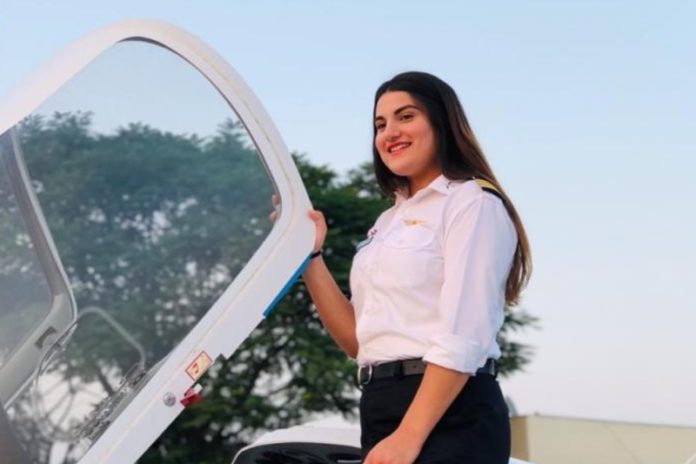
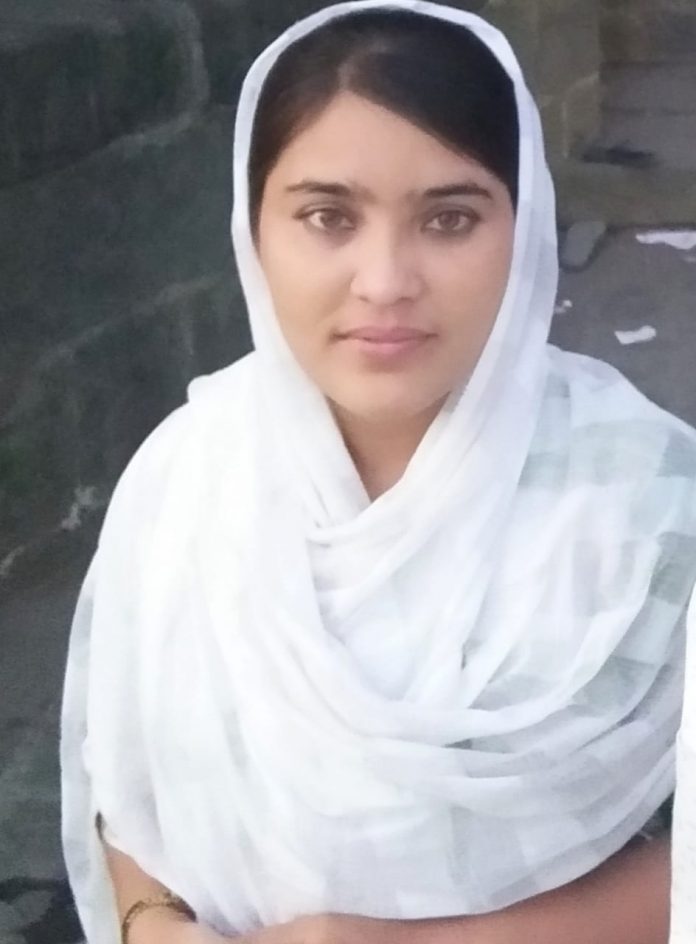
On Wednesday, headlines in an English newspaper read: ‘Kashmir Girl, 20, Adds Wings to Her Dreams, Bags Commercial Pilot’s License.’ The report in Greater Kashmir newspaper was about Neha Fida Wani, who became the second girl from Kashmir to achieve this feat at such a young age.
Commercial Pilots License
Neha Fida Wani, has become the second girl from Kashmir after Ayesha Aziz. Ayesha had become the youngest student pilot in India in 2011 at the age of 16 years, the report said.
Neha, who hails from K.P Road area, did her schooling from south Kashmir’s Anantnag district, and later moved to Chandigarh for higher studies. “After finishing 12th class in September 2018, I joined Chimes Aviation Academy in Madhya Pradesh,” Neha told Greater Kashmir.
She said the thing that fascinated her to become a pilot was the thought of flying an airplane. “I was clueless about this profession and would always spend hours surfing the Internet to know how to pursue this career. I have been fascinated by the pilots too,” said Neha.
Neha said she remembers flying the Cessna 172 aircraft for the first time in her life after getting a commercial license. “I was absolutely thrilled when I flew the aircraft for the first time. The whole journey through attaining my commercial pilot’s license (CPL) was surreal. I flew in all kinds of weather situations,” she said.
Neha has completed 200 hours
“I completed 200 hours of flying training, of which 185 hours were on Cessna 172 and 15 hours on DA42 aircraft. As a child I used to think whether one day I will be able to do that or not. I am glad that I am a pilot now. My dream is gradually becoming a reality,” she said, beaming with pride.
Revealing her future plans, Neha told the newspaper that said that she wants to work with Indigo airlines airlines. “It’s my dream,” she said.
2nd Kashmiri Girl Pilot
Neha has been very lucky as she has enjoyed the support of her family in pursuing her dream. “They (parents) have always been very supportive both financially and emotionally throughout the journey,” she said.
Her father, Fida Wani, who owns a business, said that they kept supporting Neha despite many people talking bad about them. “Sometimes it was getting very difficult for us but we never backed down. It did hurt us but it didn’t demotivate us. We are all very proud of her,” he said.
Neha said that everybody has a potential to do something out of the box, especially young Kashmiri youth. “All we need to do is to know our goals and work hard to achieve them,” she said.
source: http://www.aviatorsbuzz.com / Aviators Buzz / Home> News / by AB Editorial Team / December 10th, 2020
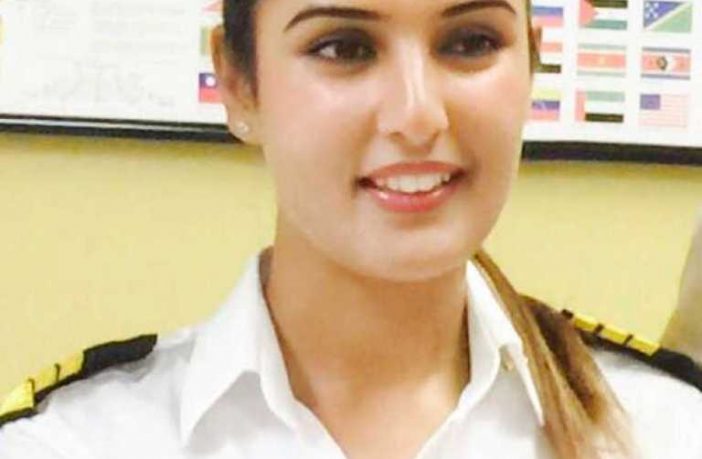
A 30-year-old Iram Habib, a resident of Srinagar, won the first Kashmiri woman being a commercial pilot.
According to the report of the Indian newspaper, The Tribune, Iram Habib crossed several obstacles to fulfill his will, when he expressed his desire to become a pilot, she was told that a Kashmiri girl could never become a pilot. she had a 6-year period in pleasing his parents for acquiring because of his parents, in the field of disputes, did not make the women staying in Kashmir.
Iram Habib graduated from the University of Dera Dune and graduated from the University of Kashmir to agricultural science and technology. She said that during the time, the dream of blowing up the education ship was always with them. She trained the United States to blow up the ship, which in 2016 she returned to India to get a commercial pilot license.
In the United States, Iram Habib passed the air test after a hard work and received a 260 hour flight experience required for the license.
source: http://www.todayheadings.com / Today Headings / Home> India / August 31st, 2018
Noted NASA scientist Dr Hashima Hasan, who is the Program Scientist for NuSTAR, has thanked the Aligarh Muslim University (AMU) helping her materialise her dream. According to an official AMU press statement, she thanked the university during the interview to NASA STEM Stars.
“The student life at AMU from 1968 to 1973 and the academic credentials gained there helped me attain a prestigious scholarship to further pursue higher studies in Nuclear Science at the University of Oxford,” Hashima said.
“I worked hard and gave this land all I had, and this great nation paid me back in spades, but it all started at AMU,” she added.
“I was a little girl back then, but the spectacular satellite launch made me eager to follow every success and failure in the newspaper. I clearly remember the day man landed on the moon,” she said. The work at NASA is dynamic, challenging and energizing and my journey to become a space scientist began after a post-graduate degree in Nuclear Physics at the Aligarh Muslim University, reminisced Dr Hashima.
She attended Tata Institute of Fundamental Research, Mumbai for a postdoc and worked at the Bhabha Atomic Research Centre in Mumbai before reaching the United States on a US Council Fellowship.
“Later in life, I worked at the Space Telescope Science Institute, Baltimore, writing the simulation software for the optics of the Hubble Space Telescope and its science instruments, using it to analyse the optical error of Hubble after launch,” she shared in the interview.
Dr Hashima recalled that as the Optical Telescope Assembly Scientist, it was her job to keep the telescope in the best focus until a fix could be installed.
“Then I was ready to achieve my dream of working directly for NASA. An opportunity arose in 1994 when a job for a Visiting Senior Scientist was advertised. Although it was a two-year job, I found working at NASA Headquarters so exhilarating and rewarding that I stayed on,” she said adding that NASA’s space science program gives her the opportunity to lead cutting edge science, work with world-class scientists and write research papers on astronomy.
source: http://www.thesite.in / The Site / Home> Inspiration / by The Site Reporter / December 12th, 2020
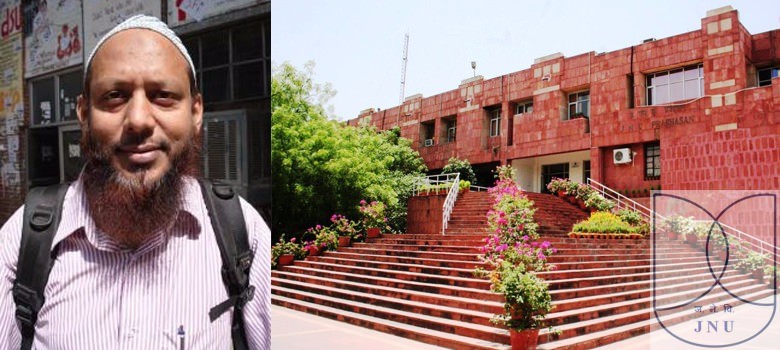
According to Dr Khurshid Imam, understanding Judaism is essential to fully comprehend the Quran.
Navras Jaat Aafreedi/jnu.ac.in
The only Hebrew language teacher who holds a position in Indian academia is Dr Khurshid Imam, Assistant Professor at the School of Language, Literature and Culture Studies in Jawaharlal Nehru University. In this conversation with Dr Navras Jaat Aafreedi, he reveals the secret of a Ben Gurion “mosque” and tells us about a hadīth in which Prophet Muhammad encouraged Muslims to learn Hebrew.
Please correct me if I am wrong in understanding that you are the only person teaching Hebrew at any Indian university?
Not only am I the only person teaching Hebrew at any Indian university, but I was also instrumental in getting Hebrew introduced at the Jawaharlal Nehru University. Although officially speaking it was introduced at the university only as a result of a bilateral agreement between India and Israel, yet had I not made efforts for it, I doubt if this would have happened when it happened. (This interview was conducted in 2011. Since then, Dr Imam has been joined by Achia Anzi in teaching Hebrew at JNU, but Anzi teaches on a contractual basis. Hence, Imam still remains the only Hebrew teacher to hold a tenure track position in Indian academia.)
There are two divisions in any religious community, one of the observant followers and the other of the non-observant ones. You clearly belong to the observant section of Muslims. Considering this and given the tensions between Jews and Muslims today, it is surprising to come across you, an observant Muslim, as the only Hebrew teacher in India. Although Islam does not forbid learning any language, it is hard to find somebody like you.
It is only because of the stereotyping of Muslims that people are surprised when they find me teaching Hebrew. Stereotyping can have very dangerous ramifications as witnessed in the post-9/11 fatal attacks on Sikhs in the US when they were mistaken for Muslims because of their beards and turbans. Also, generally Muslims know their religion not as a result of self-study but as a consequence of how it is interpreted to them by the clerics, which shapes their understanding of how a Muslim should conduct himself. Hence, they are often suspicious of those among them who study the Torah or have Jewish friends.
Similarly, instead of appreciating a Muslim studying the Hebrew language in which one of the most important sacred texts, the Torah, was received, it is seen with suspicion and even condemned. There was a time when the Indian Muslims had a similar attitude towards English, then seen by them as a language of the imperialists and enemies of Islam which would distance the Muslims from their religion, Islam. But today not only is English taught even in the Islamic seminaries, its importance is realised by one and all across the Indian Muslim community.
My family, friends and wider community were all surprised when I decided to learn Hebrew. Even in Israel, everybody seemed to be surprised to find a visibly observant Muslim like me with a beard and Islamic skull cap desirous of learning Hebrew. For the Israelis, it was their first ever interaction with a non-Arab Muslim, and that too an observant one and on top of that interested in learning their language, which took them by surprise. So, among both, Muslims as well as Jews, there were people who felt I had gone crazy. And I was met with this response only because of the stereotype of a Muslim that these people had. As for me, my interest in Hebrew was driven by my desire to learn about the Jewish version of the Middle East conflict, as my Jewish brethren expressed it in their language Hebrew. I could already access the Arab version in their language because of my knowledge of Arabic. I did not want to know about the conflict between the Jew and the Muslim through a third person.
During the time you spent in Israel for your studies, the consciousness that the people there would form their perception of Indian Muslims on the basis of their impression of you must have put some pressure on you?
It was after my MPhil at the Jawaharlal Nehru University that I went to the Hebrew University of Jerusalem for some time for specialising in the Modern Middle East. Initially I went to Israel on a Government of Israel Scholarship, but after that I was supported by Golda Meir scholarship to continue my studies there. The various courses that I took under these two scholarships were cumulatively considered at par with MA.
Although lessons in Hebrew language are not a part of MA in Middle Eastern Studies, yet knowledge of Hebrew is considered mandatory for it. Hence, I learnt Hebrew along with my MA and attained knowledge equivalent to seven levels. I was in Israel from 1998 to 2000. I registered for PhD in 2002 and was awarded the degree of PhD in 2009. I was the first non-Arab Muslim that the Israelis had any interaction with. And they started trusting me so much that some of my Jewish friends even visited the Palestinian Authority-administered Bethlehem with me for the first time in spite of all apprehensions. I got invited to their homes on Jewish festivals just as I was invited by my Palestinian friends on Muslim festivals. My having relations with both parties sometimes made people suspicious of me. Palestinians would think of me as a Yemenite Jew while the Ashkenazim would consider me an Arab. Hence, I was under threat from both sides. In this respect, mere glares would say a lot to me even if the people did not utter a word.
When I tread on areas beyond the university neighbourhood, people would look at me with suspicion. Muslims would look at me in the same manner if I visited a mosque not accompanied by any local Arab Muslim friend. The very atmosphere is such that people get easily suspicious of strangers and fear them to be suicide bombers or fanatic attackers. Later, I started empathising with them. I used to offer namāz (Islamic prayers) in the balcony of my flat in Israel. The door to the balcony had a picture of [Israel’s first prime minister] Davd Ben Gurion. I never thought of removing the picture, and as a result my flatmates started calling it Ben Gurion mosque.
Without exaggeration, at least 20-25 Jews wept when I left Israel. Relations are still such that whenever anybody from this university goes to Israel, he is asked about my well-being. I see it as an achievement that I left behind weeping Jewish friends when I returned to India, given the fact that I had gone to Israel all alone, despite discouragement from family and friends and their warnings that according to them, I, a devout Muslim, was risking my safety by heading to an enemy country. Later, Israeli TV channel, Channel 8 Avutz Shimoni, invited me to Israel for two weeks for an interview for a six or seven episode documentary series on identity.
How and when did you develop an interest in the Hebrew language?
Conscious as I was that there was more to the animosity and the tensions between Jews and Muslims than just the Arab-Israel conflict, I decided to interact with Jews in their own language to get to the very root of the problem. It was an attempt on my part to understand their outlook, their point of view, right from the horse’s mouth, instead of being informed through the press, predominantly by the third party, which is neither Jewish nor Muslim.
Secondly,there is a hadith according to which Prophet Muhammad asked his followers to learn Hebrew. It is said that two of the sahābā attained command of Hebrew, one in thirteen days and the other in fifteen days. Hebrew of those times was very close to Arabic. By learning Hebrew, I also followed a sunnat, according to which one should learn as much as possible. My knowledge of Hebrew has also enabled me to bridge the communication gap between me as a Muslim and Jews. I also felt that with the increasing strengthening of relations between India and Israel, knowledge of Hebrew would brighten my career prospects. The first organisation to employ me upon my return to India was the Indian Defence School where I taught Hebrew. Even today, when I do not teach there any more I am still requested to come from time to time whenever there is anything involving the Indo-Israel defence deals. Hence, I have served my religion as well as my country by learning the Hebrew language.
What did you propose to study when you applied for the Government of Israel Scholarship?
I proposed to research the Role of Extremist Writers in the Peace Process.
After your return from Israel on the completion of your studies, did you face any opposition or resistance to your academic endeavours in India?
I am often called a Mossad agent who has been planted among Indian Muslims. Jawaharlal Nehru University is politically a very sensitive place given the dominance of the Left at the campus. It is the Left which is considered secular and it is anti-Israel. Hence, I could not expect any support from them. And as far as the Right is considered, even if they were sympathetic towards the cause of Hebrew, they were suspicious of me because of my religious Islamic demeanour. Therefore, of the two main political factions active at the university campus, I could not get support from either.
In this situation, it was not easy to introduce and promote Hebrew in the university and all I could do was to keep a low profile. Conscious of the fact that Muslims and Jews are seen as political adversaries, I urged the people to see my attempt to introduce Hebrew as a purely academic act, rather than driven by any political agenda. JNU is particularly known for the study of modern foreign languages. I tried to draw attention to the need for the introduction of classical languages and projected Hebrew as one. Introducing Hebrew in the garb of a classical language was the only strategy I could think of for countering the forces resisting it.
What I teach today is actually Modern Hebrew. I neither find myself qualified to teach the classical form nor is there any demand for it as the students are largely market-oriented and not research oriented. It is the knowledge of Modern Hebrew which would serve them better.
Could you, please, narrate a few interesting anecdotes or experiences of Israel.
When I got off the taxi at the Hebrew University in Jerusalem after my arrival in Israel, a heavy suitcase of mine, which did not even have wheels, was lifted for me for a long distance, until I reached my destination, by a stranger. It is interesting to note here that I had been cautioned against going to Israel by friends and family, and now my very first experience there was so pleasant.
Once a bomb explosion took place in the university library and the old librarian got injured. I also happened to be there. The librarian was so impressed with my gesture of immediately getting him water to drink and also with my washing his wounds, that after that incident he always introduced me to the people as the gentleman who came to his rescue immediately after the explosion. As a result of this and many other incidents, I got the happy feeling that I was positively contributing to Jewish-Muslim relations by leaving behind a positive image of Muslims, unlike the one the Jews had before. There were even articles on me in the Israeli press after this incident.
Before I went to Israel, I did not use to allow anyone to take pictures of me, but in Israel I was photographed so much that I stopped resisting.
One day, I was on my way to see a filmmaker who had interviewed me for a documentary he was making on Jihad. I had with me a book for him, titled Killing in the Name of God. Just when the bus arrived at the stop a police car stopped right in front of it after overtaking it and the policemen signalled to the driver not to open the door. With the pistols pointed at me, I was asked to raise my hands. After which I was asked to lift my shirt and then to open the bag. Upon my opening the bag came out that book, which made them all the more suspicious. However, I was let off when I showed them my University Identity Card. They explained that they did so because they had some input about a suicide bomber.
I would admit that I did have the same perception of Jews as common among the common Muslims, that they are a people guilty of the falsification of religious texts. It was after going there that I realised that the Jews were not any different and were regular, ordinary people like us, with good as well as bad among them. The Indian Muslims do not seem to be prepared as yet for greater interaction with Jews, for many among them have cancelled their visits to Israel out of fear of being ostracised by their community or instead of going there directly have gone there secretly via some other country.
The Urdu press does play a negative role in shaping the Muslim perceptions of Jews and Israel. I do not know where this misconception came from that the Muslims are not free to pray in the Al Aqsa mosque, but it is very widespread among them. It is silly of the Muslim countries to not grant visas to those who have been to Israel. Just as we Muslims resent being stereotyped, the same way, we Muslims too, should not stereotype the other communities.The Hebrew University of Jerusalem has a Department devoted to Islamic Studies. When the Jews can study about Islam and its history why cannot the Muslims study about Jewish theology and history and culture. It is necessary to understand the Jews in order to understand the Quran, which is full of references to Abraham, Moses, David and Solomon.
Dr Navras Jaat Aafreedi is an Indo-Judaic studies scholar and a Muslim-Jewish relations activist, employed as Assistant Professor in the Department of History & Civilization, School of Humanities & Social Sciences, Gautam Buddha University, Greater Noida.
At age 24, this college dropout helps companies like Airtel, Truecaller and Justdial protect their users’ personal data. Incredibly, however, he learnt all the necessary skills not through formal courses, but research on Google!
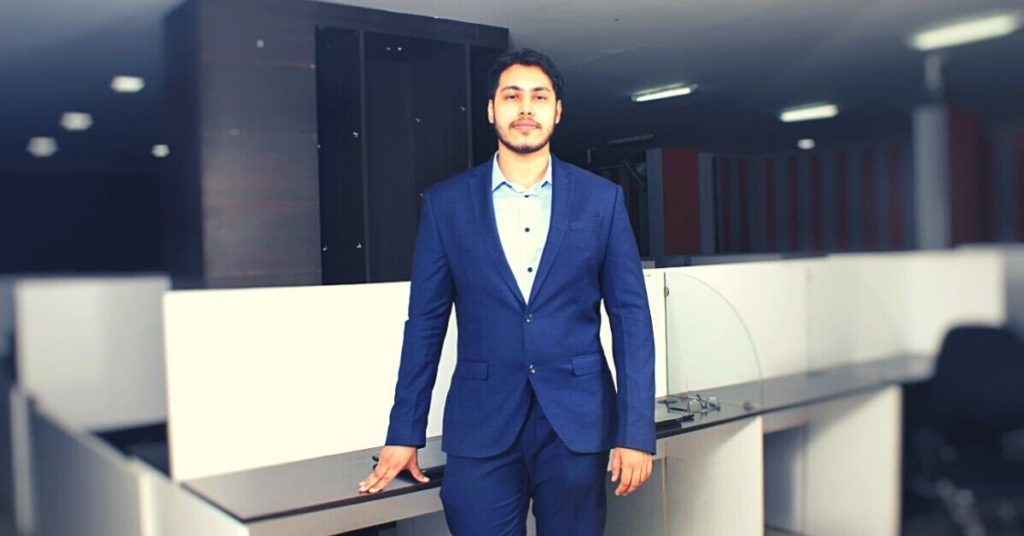
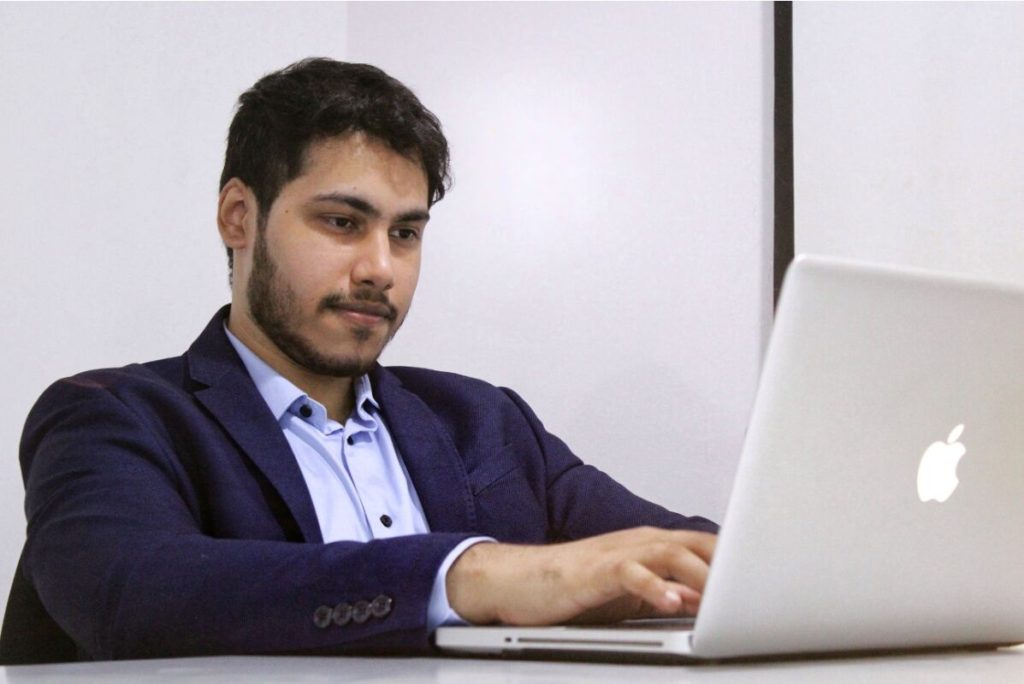
Meet Ehraz Ahmed, a 24-year-old, independent data security researcher from Mysuru, Karnataka, who since last year has protected the data of 700 million users by helping companies like Airtel, Justdial and Truecaller detect major flaws in their data security architecture. Simultaneously, he runs a fintech and a web security company.
What’s particularly remarkable about this first-year engineering college dropout is that he learnt all the necessary skills not through formal courses, but research on Google. A real online prodigy, Ehraz is looking to protect the data of 1 billion users by the end of this year. So, how did this ethical hacker and serial entrepreneur get to where he is today?
Early Days
“I began using computers when I was just 10. I remember accompanying my brother to the local cyber cafe paying Rs 30 an hour and playing games like Counter Strike or browsing the internet. Besides playing games, I was exploring different facets of the online world from social media sites like Orkut to finding ways of building a website because my elder brother was a web developer. I would peek into the source code of the websites he built and try to learn things independently through Google. Whatever I have learnt about computers, web security and the online world is through Google,” Ehraz tells The Better India.
It was while playing Counter Strike with his friends when Ehraz found his first opportunity at entrepreneurship. Understanding the craze for the game amongst his friends, at age 14 Ehraz started a game server hosting venture. However, besides providing online gaming servers for players to connect and play the game for just Rs 200 per player, his venture also began offering web hosting services to different websites.
The reason he ventured into the world of entrepreneurship this early was because of a few tragedies in his life. As an 8th grader, he recalls witnessing his brother meet with a serious road accident. Two years later, his father suffered a heart attack.
“My interest in my venture had dimmed after my father’s heart attack. I lost interest in my studies as well. That’s when I put everything on hold to make a fresh start. I wanted to stand on my own feet by doing something better and more significant than what I was doing. These incidents made me realise the value of time and money. Life is short and there is so much left to do not just for yourself but others as well. Nonetheless, by this time, I had grown into a competent web developer, picked up real-life entrepreneurial skills and began understanding some of the basic nuances of data security,” he recalls.
Meanwhile, by the early 2010s, discussions surrounding data security in the online world had begun to take off in India. One day during high school, he read a post on Facebook by a security researcher who was listed in Google’s Hall of Fame for finding a flaw. This researcher was even paid for it. This inspired him to learn how he could do the same.
That’s when he began targeting companies that offered bug bounties to hackers who would help them find flaws in their data security architecture. By the age of 16, Ehraz got listed in 50 Security Researcher’s Hall of Fame for finding security breaches in companies like Facebook, Microsoft, Apple, Adobe, Blackberry, Soundcloud, and EBay. These Halls of Fame are listings compiled by major tech companies of online security researchers who helped find these flaws.
Besides recognition and a certificate, there was monetary compensation involved which depended on the magnitude of the flaw found. In India, however, he observes that the concept of bug bounties are still very new and not many companies operating here have that facility for freelance security researchers.
His first hall of fame listing was on Facebook, where he discovered a cross-site scripting vulnerability that could have allowed attackers to steal a user’s browser cookies. With this, any hacker could log in to a user’s account without a password and users are vulnerable to extortion and blackmail.
Ehraz Ahmed: The ethical hacker who has helped companies like Airtel address their user data vulnerabilities.
Serial Entrepreneur
“Although I was good at finding security flaws, I was not making enough money from it. Not all companies offer bug bounty programs, while only a few provide monetary rewards. But most of them do acknowledge your efforts in finding that flaw,” he says.
Looking for ways to make money, one day he found someone trading in the financial markets talking about making money in a Facebook post. It piqued his interest and he began exploring this field. Ehraz admits that it took him a while to figure out how it all works because he was sifting through hundreds of blogs.
“It wasn’t the most efficient way of learning, but I wasn’t interested in studying courses. My interest lay in obtaining that raw information about how to navigate this world. In the initial years, I lost a lot of money trading from my brother’s account. Since I was still under 18 during my PUC days, I couldn’t really open my own trading account,” he recalls.
By the time he enrolled into an engineering college at the age of 20, in Mandya, to pursue a course in computer science engineering, he started a fintech company called Voxy Wealth Management that engaged in offering financial advice and analytic services to traders and other consumers who wanted to manage their stock portfolios.
But travelling 80 km up and down from Mysuru to Mandya everyday, attending classes and running a fintech company was becoming very stressful. Although he finished his first semester with good marks, when the time came to enroll for the second semester, he began questioning why he was studying these heavy theoretical courses.
“What am I learning all this for? Completing these courses felt like climbing a mountain, reaching the top and then seeing nothing. I had already begun earning money through my company. Meanwhile, I was already getting job offers because of the work I had done detecting security flaws across different websites. I eventually figured out engineering college wasn’t meant for me and before the second semester in 2017, I decided to drop out to start a web security company as well,” says Ehraz.
After launching Voxy Wealth Management, he started Aspirehive—a web security company that offers solutions for small and medium-sized companies—in December 2017.
Unfortunately, as he was making his way simultaneously in the world of financial markets and web security, another tragedy struck home.
In April 2018, his elder brother met with another road accident. He suffered an injury and upon recovery, his brother expressed a desire to start a company together. Following this conversation, he began work on launching a new company called StackNexo.
The premise for StackNexo is to offer all web services and solutions on a single platform. He describes it like an Amazon for users wanting to start their own website.
“We seek to provide all necessary services for starting your own website on one platform instead of compelling you to visit different websites for domain services, hosting services, etc. This is for entrepreneurs or users looking to start their own website without the necessary IT expertise. I have partnered with 20 companies like Stackpath, Cloudflare and Google to integrate their services on our web platform. I have spent over a year developing this platform and our plan is to launch the company in two months,” he says.
Protecting people’s data
While working on all these companies, Ehraz also began reading news of major data breaches in Indian companies last year. Using his expertise, he decided to help.
His work commenced in August 2019, and by December he had safeguarded user data of over 700 million users. In Airtel, for example, which is India’s second-largest telecom network, Ehraz had found a security flaw that could have allowed hackers to steal sensitive data of 320 million users. By December, he had discovered and reported data breaches to 10 companies, including Truecaller, Justdial and Nykaa.
By the end of this year, his objective is to protect the data security of 1 billion users. His work in this regard hasn’t stopped. Most recently, he detected and reported a major security flaw in a company called Thrillophilia that risked sensitive data of 2 million users.
“We don’t fix data breaches, but find them, report and notify the said company via email. With Airtel, for example, I began scanning their My Airtel app. I found a very simple flaw in the their application programming interface (API), which hackers could exploit to gain access into users’ personal data (address, location, IMEI, sex) through their mobile number. It took me just 15 minutes to find this flaw and access all this confidential data. Honestly, I was shocked to find such a basic flaw. Moreover, I am an Airtel user and it scared me how vulnerable their data was to this breach. With a user’s IMEI number, hackers can organise spear phishing attacks into your system using just a simple SMS,” he says.
With Truecaller, he had found a vulnerability on the app’s backend attached to the user’s profile picture. With this breach, if a user is trying to find out about who’s calling from an unknown number, a hacker could mine their location, figure out their IP address and their identity. As a result of this breach, nearly 150 million users were at risk here. Another major Indian company he assisted was Justdial, which has over 165 million users.
Through the breach he detected, hackers could log into a user’s Justdial account, access their JD pay (their payment gateway) and divert payments away from a particular merchant into another account. He approached the company and got this major flaw fixed.
Most small companies/startups, he believes, don’t focus on data security, and instead look towards getting the venture off the ground and earning all the money back that was invested. But these breaches are not restricted to small startups.
Just a couple of weeks ago, Big Basket suffered a major data breach.
“Government must make data security auditing mandatory. Secondly, we don’t have the legal architecture in place for independent security researchers like me to disclose to companies about major flaws in their data security. Indian companies, particularly the major ones, don’t have a responsible disclosure policy in place. Without such a policy, companies get intimidated when we find flaws and begin questioning us even though our intentions are good. There are no laws to govern and protect security researchers like us. International companies, meanwhile, are a lot more accessible and we can easily help them find flaws without any threat of a blowback. Indian companies have to start promoting bug bounty programs so that independent researchers can help them find flaws,” he says.
After all, there isn’t a bigger commodity out there than user data.
(Edited by Yoshita Rao)
source: http://www.thebetterindia.com / The Better India / Home> The Better Home / by Rinchen Norbu Wangchuk / November 30th, 2020
Joshi Sanghvi Village, Loha Taluka (Nanded District),MAHARASHTRA :
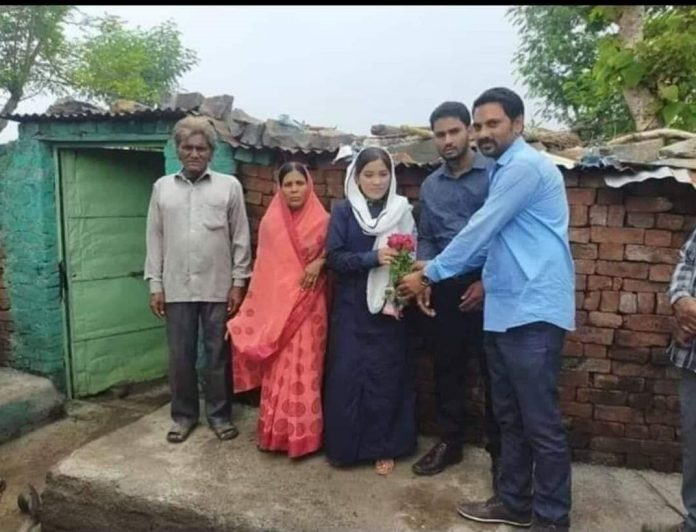
Waseema with her parents
Born and brought up in a small village called Joshi Sanghvi in Loha Taluka of Nanded District of Maharashtra, Waseema Shaikh struggled at every step and braved the odds to be where she is today.
In the recently announced results for the Maharashtra Public Service Commission (MPSC) exam, Waseema secured 3rd rank. She is now undertaking training for the post of Deputy Collector.
Joshi Sanghvi is a small village with a population of about 3000 people and there are no opportunities for girls to study because they are married off as soon as they reach puberty. After class 7, the girls are forced to drop out of school. The maximum a girl can study in Joshi Sanghvi is till class 10. There is no college in the village, just a Zilla Parishad school in Marathi medium.
Waseema, the 4th child of her parents who are poor farm labourers, was passionate about studies. Despite having no electricity in their hut, she topped in the SSC board in her Taluka in 2012. And for college, she had to walk at least 6 kilometres every day as there was no transport available. However, when the exams for XII of junior college approached, she stayed at a relatives’ house and wrote the exams.
But graduation was again an uphill task as she would have to move away from home and stay in a hostel which her family could not afford.
She opted to study from an Open University and thus pursued her graduation from Yashwantrao Chavan Maharashtra Open University again in Marathi medium. Though her mother tongue is Urdu, Waseema is comfortable studying Marathi. She became the first graduate in her family of 6 siblings.
Her parents are both farm labourers and after her father fell sick, affecting his mental capabilities, the burden fell on the shoulders of her mother.
Her mother and elder brothers encouraged her to study despite the situation in the village where relatives kept advising them to get Waseema married off like her elder sister.
Waseema appeared for the MPSC exams for which she prepared through self-study as she could not afford coaching classes. She passed the exams, but her ranking was just good for a Class II post and she was appointed as a sales tax officer for the Maharashtra Sales Tax Office in Nagpur.
However, it was payback time for Waseema. She put her brother back in college to pursue his B.Sc degree and then appeared for the MPSC exams as was his ambition. She is also taking care of her younger 2 sisters’ education, who like her want to appear for the state civil services.
But evidently, a class II job was not enough for her so she appeared again for the MPSC and ranked among the top 5, scaling her position to that of Deputy Collector.
Waseema with her siblings
“The situation in my village where girls are not encouraged to study and forced into marriage, violence against women, poverty and poor infrastructure in the village often set me thinking what I can do to change this situation? Besides, my friend who was very good at studies and wanted to study further was married off when we were in class 9. This upset me a lot,” Waseema told TwoCircles.net.
It was this desire to empower girls and women which motivated her to appear for the MPSC exams.
Sanghvi Joshi village has a sizable Muslim population as it was in the erstwhile Nizam state of Hyderabad and now acceded with the Marathwada region.
Today the village is proud of their daughter who is the first person from their village to reach that level. She has become the idol for many young girls who are in school.
“Many girls used to come up to me to talk about their concerns when their parents wanted them to stop their studies or when their parents were looking for matches. I used to give counselling to the parents and persuade them to let their daughters study,” Waseema said.
She said she was pained that girls’ education is never a priority for parents.
Waseema said that parents of girls should become aggressive about the educational rights of their daughters. “The percentage of women in civil services is very less and I think to increase this we should have reservations, free coaching, scholarships exclusively for women so girls will be encouraged to aspire for civil services,” she said, and added, “Proper guidance, hard work, consistency in study hours, the best utilisation of resources available are equally important.”
“But I am fortunate that my mother and my brother encouraged me and I am so grateful to my brother who sacrificed his education for me when anyone else in his place would think it futile to educate a girl,” Waseema said.
It was her brilliant academic performances year after year that gave confidence to her mother and brother to let her pursue her dreams.
Waseema wishes to be posted in a rural backward place like her village so she can work for their betterment. “I want to develop the villages and help the people come out of their poverty. I have known what it is to be poor and experienced the hardships so I can empathise with the people”, Waseema said.
Waseema got married on June 8, a few days before her MPSC result, to Shaikh Haider who is also a Maharashtra Public State Services (MPSC) aspirant. “Yet again Allah has been kind to me, my spouse and my in-laws are supportive of my career and are proud of me,” she said.
waseema and Haidar
source: http://www.twocircles.net / TwoCircles.net / Home> Indian Muslim / by Nikhat Fatima, TwoCircles.net / July 01st, 2020
Nurul Islam, general secretary of Al-Ameen Mission (right), with a successful student and his parents.
SPECIAL REPORT
With 63 residential campuses in 20 of the 23 districts of West Bengal, Al-Ameen Mission is mentoring 17,000 students; so far it has produced 3,000 doctors, 2,800 engineers and hosts of civil servants, professors and lawyers.
A SILENT revolution in education is taking place in West Bengal which the rest of India may not be aware of. What is significant about this revolution is that it is happening in the marginalised section of Muslims.
The Al-Ameen Mission, a Howrah-based charitable organisation, has been spearheading a movement for over three decades to educate those who can’t afford quality education. Its success graph is increasing each year. This year, 378 students mentored by Al-Ameen have been selected for medical education (310 for MBBS and 68 for BDS).
This figure is after the first round of counselling held on July 16, 2020, when Clarion India interviewed Nurul Islam, the founder general secretary of the organisation. He is expecting another 100 students to be selected in subsequent rounds of counselling.
A total of 516 students of Al-Ameen have cleared NEET, an all-India written test for admission to medical colleges. Out of that, 378 have already been selected. This is no mean achievement considering the fact that two-thirds of them come from a background where becoming a medical doctor is just unthinkable.
Al-Ameen has been achieving this success year after year. In 2019, its 407 students secured admission in medical colleges for MBBS and BDS education. As many as 370 students were successful in 2018; 115 in 2017; 393 in 2016; 223 in 2015; and 212 in 2014.
Al-Ameen mentors both boys and girls. Thirty per cent of its students come from families who are very poor and categorised by the government as below poverty line. Forty percent are from lower middle income groups. The rest belong to the middle and upper middle income group. That means 70 per cent students enrolled here come from poor families.
Al-Ameen’s journey started in 1986-87 with only seven students. The aim was to give modern education with moral values in a full residential system where students from all strata of society, irrespective of their economic conditions, would stay and learn together. Students coming from the poorest sections of society were given free education. Donations and zakat were collected to meet up with the expenses. Gradually, the name of the mission spread far and wide and people came along and a movement started.
Nurul Islam says that in the 80s when he started his mission, the percentage of Muslim students in medical and engineering colleges of West Bengal was hardly two to three per cent. “But because of Al-Ameen’s efforts that percentage is today between 20 and 30 percent,” he claims.
Admission criteria
The current strength of Al-Ameen is 17,000 students. It admits students from Class V to XII. Those preparing for competitive exams also stay here beyond 12th. Merit is given top priority for admission. A common admission test is conducted for all its branches at 63 residential campuses in 20 of the 23 districts of West Bengal. Those who qualify are called for an objective test followed by interviews of their guardians.
A substantial number of seats are reserved for orphans and meritorious students of very poor families. They are also given special financial aid. In 2019, about 32,000 students appeared for admission tests to classes V to XII. Nurul Islam says his institution is able to accommodate only up to 20 per cent applicants.
Residential facility
Al-Ameen is essentially a residential institution. Those selected are required to stay in one of the 63 campuses that it runs throughout West Bengal. They are taken care of by everything: from education to food to accommodation. A strict discipline is followed by everyone alike from students to teachers to general staff.
Howrah, where it is headquartered, has four campuses in which 3,000 students are living. Al-Ameen also has campuses outside West Bengal: One in Patna, one in Ranchi and one in Tripura. There is one more in Assam which temporarily is not functional.
Scholarship scheme
Fees of the students are determined as per financial capacities of their families. Being a charitable organisation, Al-Ameen gives 100 per cent subsidy in the fees and even takes other responsibilities of education and upbringing of a deserving student if deemed fit. At present, Al-Ameen’s fee structure is divided into three categories:
25 per cent students pay zero to 25 per cent fee. Their subsidy is funded by zakat from across the country;
40 per cent pay fee ranging from 26 percent to 60 per cent. This subsidy is funded through general donations of the public;
35 per cent pay between 61 per cent and 100 per cent.
Focus on school education
Besides preparing students for medical and engineering, Al-Ameen is also focused on basic education of students under its guardianship. This year, 2,223 of its male and female students appeared for Class XII exams of states as well as Central boards. Not only all succeeded, 81 of them even occupied their positions within the rank of 20.
The background of all the successful candidates is noticeable: 605, or 27 per cent, are from poor and BPL families; 775, or 35 percent, from lower middle income groups; and 843, or 38 per cent from middle and upper middle income groups.
Similarly, 1,777 boys and girls took exams for Class 10. Fifteen of them occupied their positions within the rank of 20. Their background: 627, or 35 per cent, come from poor and BPL families; 680, 38 percent, from lower middle income groups; and 470, or 27 per cent, from middle and upper middle income groups.
23,000 Alumni
During the last 34 years of its existence, Al-Ameen has developed a strong base of alumni. They number 23,000, according to Nurul Islam. Out of that, 3,000 are doctors and 2,800 engineers. The rest are in various other fields such as civil services, academia, law and media.
The boys and girls hailing from the most backward areas and lowest strata of society, he says, are now dreaming to become doctors, engineers, civil servants, teachers, professors, researchers, lawyers or journalists.
Nurul Islam calls it a “Silent revolution”.
“Silently, a revolution is taking place. Al-Ameen has become the conduit in this whole churning of transformation which may be defined as a silent revolution,” he says.
A look at the list of Al-Ameen alumni bears testimony to what Nurul Islam is claiming. The list includes successful professionals and academicians in prestigious institutions. What is heartening is their background. Most of them belong to economically poor sections of society. But for this educational movement, they would have remained poor and uneducated. But today, they are respectable members of society and source of inspiration for others.
Some of the notable alumni are listed below:
Md Arif Shaikh, Senior Research Fellow at Harish Chandra Research Institute, Prayagraj, UP.
Dr Safina Begum, MS, Senior Resident at Fort Gloster State General Hospital, Howrah, West Bengal.
Dr Nargis Molla, MS, Specialist Medical Officer (Gynaecology), Dhaniakhali Rural Hospital, West Bengal.
Magfura Parvin, Senior Research Fellow, Vidyasagar University, Midnapur, West Bengal.
Dr Sk Altaf Hossien, MD, DNB Post-Doctoral Fellow, National Institute of Mental Health and Neurosciences (NIMHANS), Bangalore.
Dr Khandekar Fariduddin, MS, Assistant Professor, Malda Medical College and Hospital, Malda, West Bengal.
Dr Hibjul Ali Khan, MS, Assistant Professor, College of Medicine & Sagore Dutta Hospital.
Dr Md Hadiuzzaman, MS, MCH Senior Resident, SSKM Hospital.
Akram Hoque, MBA, Founder Editor, The Policy Times.
Ali Ahmed Alamgir, WBCS, Assistant Labour Commissioner.
Jahangir Mollick, WBCS (Exe), Deputy Magistrate and Deputy Collector, West Bengal.
Shayan Ahmad, WBPS, Deputy Superintendent of Police, West Bengal.
Sk Samsuddin, WBPS, Deputy Superintendent of Police, West Bengal
Ramjan Ali, WBCS, Assistant Commissioner of Revenue, West Bengal.
Dr Kader Ali Sarkar, Assistant Professor, Visva-Bharati University, Santiniketan, West Bengal.
Dr Mukandar Sekh, Assistant Professor, Aliah University, Kolkata.
Md Golam Mortoza, Chartered Accountant, Senior Executive (Finance), Management Development Institute, Murshidabad, West Bengal.
Dr Md Samim Reja, MVSc, Veterinary Officer, Domjur Block, Howrah, West Bengal.
Healthcare unit in Khalatpur
Recently, Al-Ameen has opened a healthcare facility at its main campus of Khalatpur in Howrah district. It is run mainly by its alumni, some of whom are today established medical practitioners. They regularly visit the healthcare unit and give their services to poor and needy people of the locality.
source: http://www.clarionindia.net / Clarion India / Home> Big Story – Special Report / by Shaheen Nazar – Clarion India / November 23rd, 2020
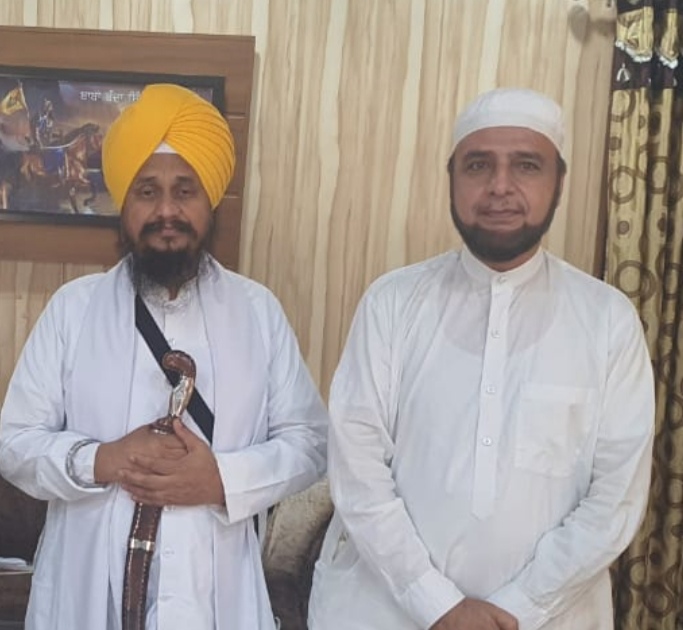
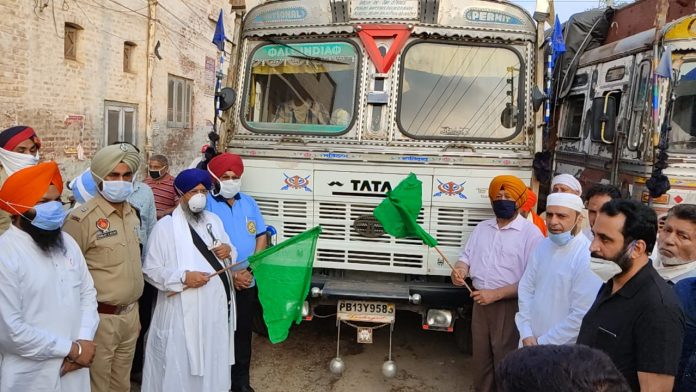
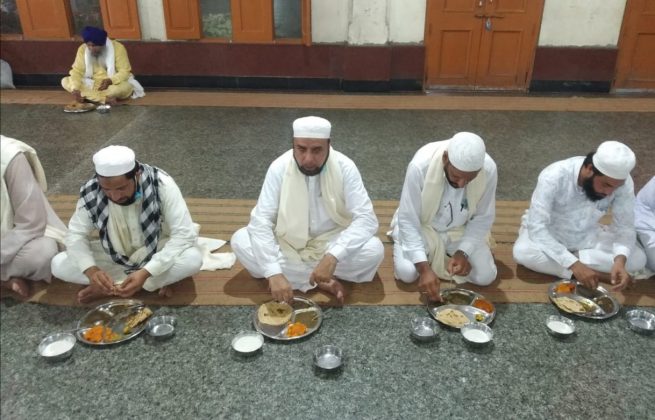
The news about Muslims donating 33 tonns of grain to Golden Temple Langar was widely reported. This initiative of Malerkotla Muslim was highly appreciated by the Sikh Community around the world. The Muslim group reached Golden Temple and did Kar Seva while handing over grains’ trucks to the Golden Temple authorities.
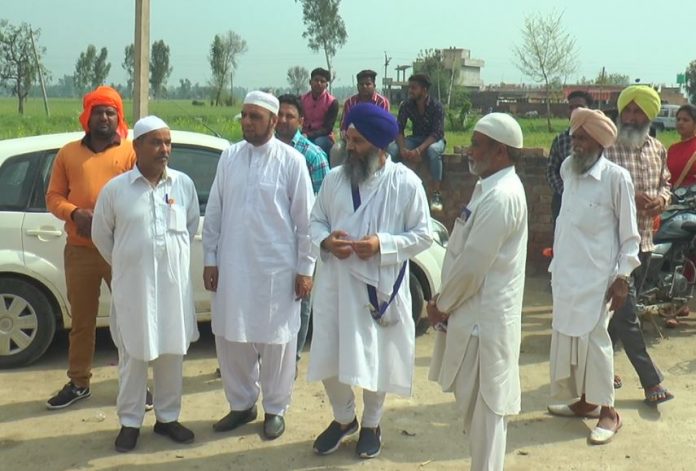
Malerkotla is one of the Muslim majority areas of Punjab. This good Samaritan group was led by Dr Nasir Akhtar who has been working for the Sikh Muslim Unity for the last 15 years.
Dr Nasir Akhtar is running a foundation for Sikh Muslim cooperation in Punjab and is well known for his devotion to Sikh Muslim Unity.
TwoCircles.net’s senior correspondent Aas Mohammad Kaif spoke to Nasir Akhtar of Malerkotla. These are excerpts from the interview.
TCN: How did the idea to collect grains and send them to the Golden Temple come to your mind?
Nasir Akhtar: During the coronavirus lockdown, Golden Temple had issued an appeal for grains. Sikhs were running a campaign to collect food grains for Golden Temple Langar.
Golden Temple runs a huge Langar (Free Kitchen) where food is being served to everyone irrespective of their religion. I felt that we should also contribute to this charitable work. I consulted the people around me. Everyone readily agreed to cooperate in this noble task.
Though we could collect huge donations from a few wealthy people of the area, I thought we must collect 5 kgs of grains from every household in the Muslim majority villages. Such an initiative will give a positive message to further Sikh Muslim fraternity. We worked for 35 days and got a tremendous response.
People cooperated eagerly which became the talk of the town in the surrounding areas. The word spread amongst the Sikh community that Muslims are also collecting grains for the Golden Temple Langar which increased brotherly spirit between these two communities.
TCN: How was your experience meeting the Sikh community?
Nasir Akhtar: It was wonderful. Whenever we reached a village where Sikhs and Muslims live together, Sikh women cried as they couldn’t control their emotions and prayed for us. They offered us cold water and requested us to have meals in their households. The male Sikh elders were honouring us wherever we went. This noble task had an overreach beyond a mere collection of grains.
This initiative has become a symbol of Sikh Muslim amity. Quite often we and our Sikh brother’s team reached a village simultaneously to collect the grains.
They were collecting food grains in their community and we were doing the same in ours. If four or five wealthy people have contributed to arranging grains, this spirit of brotherhood would not have been created. Through this initiative, everyone is participating in this good Samaritan cause.
TCN: What kind of response did you get from Gold Temple authorities when you arrived there?
Nasir Akhtar: Before arriving at Golden Temple, we were felicitated by the eminent Sikhs of Sangrur (District Malerkotla). When they came to know that we have collected 35 tonns of grains, they had requested local Gurudwara authorities to help us in delivering the grains to Golden Temple Langer. The local Sikhs and Muslims were highly impressed with this initiative.
When our group of about 8-10 reached Golden Temple, we were received warmly by Sardar Harpreet Singhji, Incharge of Akal Takht. Such a warm welcome in itself was a great honour for us.
Though Muslims of Punjab do Kar Seva in Langar of Golden Temple, this act of going village to village to collect grains had made a huge impact and created a lot of goodwill. The Langar authorities served us food with great hospitality and we too participated in their Langar service.
TCN: You have been working for the Sikh Muslim unity in Punjab since long. Can you talk about this experience?
Nasir Akhtar: 15 years ago I used to run my clinic. I realized that there are many misconceptions between Sikhs and Muslims. Among them, there are things like enclosing children of Guru Gobind Singh Ji within a narrow chamber. My heart was not accepting it. I first researched myself, left the clinic, did my major in Punjabi, and studied Punjabi books. When I read the books written by Sikhs 300 years ago, I realized that Sikhism is very close to Islam. I understood that they both have the same message. I started speaking about the closeness of both religions in many aspects and for this I referred to Punjabi books. The verses of the Quran were explained in Punjabi and told that the beliefs of the two are quite similar. For this, I wrote books in Punjabi.
TCN: What was the response to your initiative of working for Muslim-Sikh unity?
Nasir Akhtar: There are too many misconceptions. The wounds of 1947 are very deep. After the riots, Sikhs and Muslims came closer. But even today some people keep harping about past mistakes. Malerkotla is a Muslim populated area in Punjab. The local MLA Razia Sultana is a minister in the Punjab cabinet. The Muslims of Malerkotla are quite well off in comparison to other places.
Muslims here work with Sikhs shoulder to shoulder and Sikhs do the same with Muslims where they are in the minority. This is a fine example of brotherhood between two communities. Good work always has good results. People on both sides understand the value of peaceful co-existence. Nowadays, since the news spreads fast, people here expressed appreciation when Muslims gave Mosque land in Saharanpur for Gurudwara. Langar running in Shaheen Bagh by Sikhs was also highly appreciated in Malerkotla.
TCN: What is the goal of your Sikh Muslim affinity Foundation?
Nasir Akhtar: This is an organization under whose banner we are doing this work. I formed this organization 15 years ago. We do all the programs of Sikh Muslim unity under the banner of this institution. The grain collection campaign was also run under the banner of this institution. Promoting brotherhood between Sikhs and Muslims is the only goal of my life and for this reason, I did not marry and left my clinic too. I want to work for this noble cause till my last breath.
TCN: Do you feel in the last few years, there is a growing misunderstanding between Hindus and Muslims in the country. Do you think there is a need to run such a campaign among these two communities?
Nasir Akhtar: I told you that to explain my point of view to Sikhs, I searched and read their 300 years old books, did my Major in Punjabi, and spoke to Sikhs in Punjabi. I refer to their books. I freely quote the inspirational words of their gurus and then talk about my religion in their tongue. It makes a good impact on them.
Hindu and Muslims of India have diminished their understanding of each other. They do not conduct healthy discussions. The idle debates between them have created a lot of misunderstanding between them. Brotherly talk between these two communities should be encouraged. TV can play a big role to promote affinity in these communities. We are first humans, then Hindus, Muslims, Sikhs or others afterwards.
(Translated from Hindi by Mohammed Hussain)
source: http://www.twocircles.net / TwoCircles.net / Home> Lead Story> Sikhs> TCN Positive / by Aas Mohammed Kaif, TwoCircles.net / July 31st, 2020