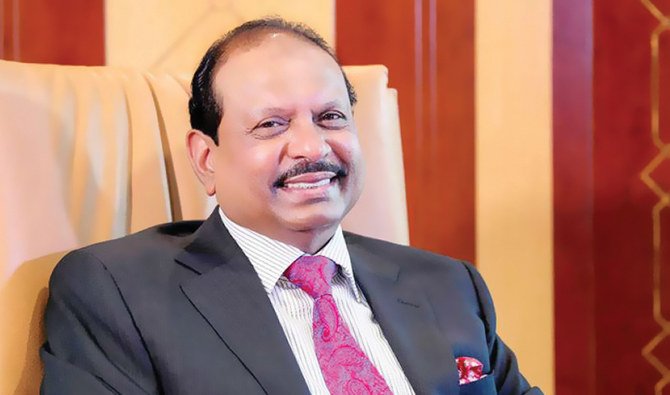
Yusuff Ali M.A: “This is obviously a very proud and humbling moment in my life,”
Jeddah :
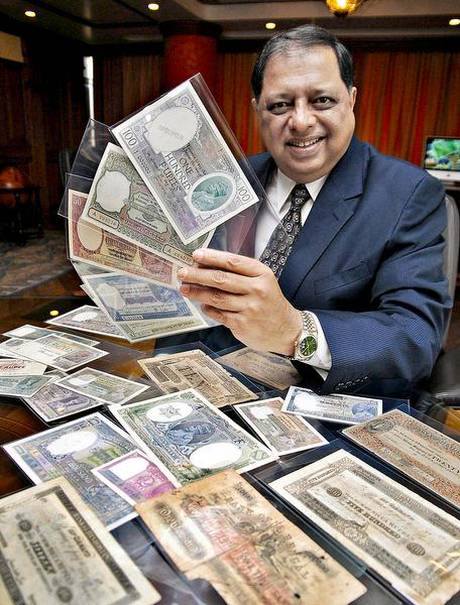
Abu Dhabi-based retail tycoon Yusuff Ali M.A. on Monday became the first Indian citizen to obtain Saudi Arabia’s coveted Premium Residency, widely known as the Saudi “green card.”
“This is obviously a very proud and humbling moment in my life,” the chairman and managing director of the group that owns the LuLu chain of hypermarkets told Arab News.
“It is a great honor, not only for me but also for the entire Indian expat community, and I sincerely thank King Salman, Crown Prince Mohammed bin Salman and the government of Saudi Arabia.
“I am sure this new permanent residency initiative will further boost Saudi Arabia’s image as one of the key investment and business hubs in the region in addition to attracting and retaining new investors here.”
Premium Residency is a special residence permit that gives expatriates who meet its conditions the right to live, work, and own business and property in the Kingdom without a sponsor. It is a key part of the crown prince’s Vision 2030 reform plan to diversify the Saudi economy.
The Kingdom had become an attractive investment destination because of the remarkable growth of its economy, Yusuff Ali said. “Investors can now come here and invest freely; they can buy property and feel at home, secure and safe.
“What does an investor need? He needs security such as premium residency. The economy of this great country is booming so this is the best time for international investors to come, invest and take advantage of Saudi Vision 2030.”
The tycoon said international investors and businessmen were looking to Saudi Arabia because of how the country had been transformed. “We want to export agricultural products from Saudi Arabia and use the innovations and transformations in the business sector,” he said.
source: http://www.arabnews.com / Arab News / Home> News> Business & Economy / March 04th, 2020
(This story was first published on 10 November 2017. It has been republished from The Quint’sarchives to mark Maulana Azad’s death anniversary.)
“I am an essential element, which has gone into building India. I can never surrender this claim.”
These were the famous words uttered by Maulana Abul Kalam Azad, when he stared at the daunting prospect of Partition. On his birth anniversary, we remember his contribution to the country.
source: http://www.youtube.com / The Quint
Azad was among the many Muslim leaders in India who opposed the Partition of Unified India into Pakistan and Hindustan. As the leader of the All India Congress Committee in 1946, he put forth a Cabinet Mission proposal that advocated a federal structure of government, with autonomy for states. Though the proposal did face a great deal of skepticism, the Working Committee passed it, with even Jinnah agreeing to it for ‘the greater good of Indian Muslims’.
This proposal was certainly considered a breakthrough, as Jinnah and Azad had never enjoyed very good relations, predominantly owing to their opposing stances on Partition. Where one batted for Hindu-Muslim unity under a larger India, the other was vehement on the creation of two separate states. But their souring relations never stopped Azad from attempting to convince Jinnah to consider a ‘unified India’.
For instance, when Jinnah’s clamour for Pakistan grew louder, Azad is known to have sent a telegram insisting on the perils of a two-state ideology. Jinnah is said to have insulted Azad in his response, calling him Congress’ ‘show boy President’.
Don’t you feel that the Congress has made you a show boy President to hoodwink non-Congress parties and other countries of the world? You represent neither Muslims nor Hindus.
Having failed at getting Jinnah to reconsider, Azad then unsuccessfully tried to convince the Congress leaders to wait till a solution could be found. But even Patel, who earlier backed Azad’s proposal, was now vehemently pro-partition. Azad in his autobiography later writes that the party agreed to the Partition as “blindness of Congress leaders to facts, and their anger and frustration clouded their vision.”
According to Azad, as he writes in his autobiography, Nehru too contributed to angering the Muslims, by committing two mistakes which ultimately drove Jinnah to lose faith in the proposal and go through with partition.
The first was when Nehru refused to take two Muslim League leaders as Cabinet Ministers in the UP elections of 1937. The second mistake was when after taking over as the President of the Congress in 1946, he indicated that the earlier Cabinet Mission proposal could be changed, which culminated in Jinnah insisting on the formation of Pakistan.
Maulana had not only opposed Partition as an Indian leader, but also as a Muslim. He was, in fact, of the opinion, that the two-state policy will only “create more problems than solve”.
And true to his word, even today the relations between the two countries are strained at best, despite their shared history.
source: http://www.thequint.com / The Quint / Home> News Videos / November 10th, 2017 / and February 22nd, 2020
Ayyub was previously an editor with the investigative magazine Tehelka
New Delhi :
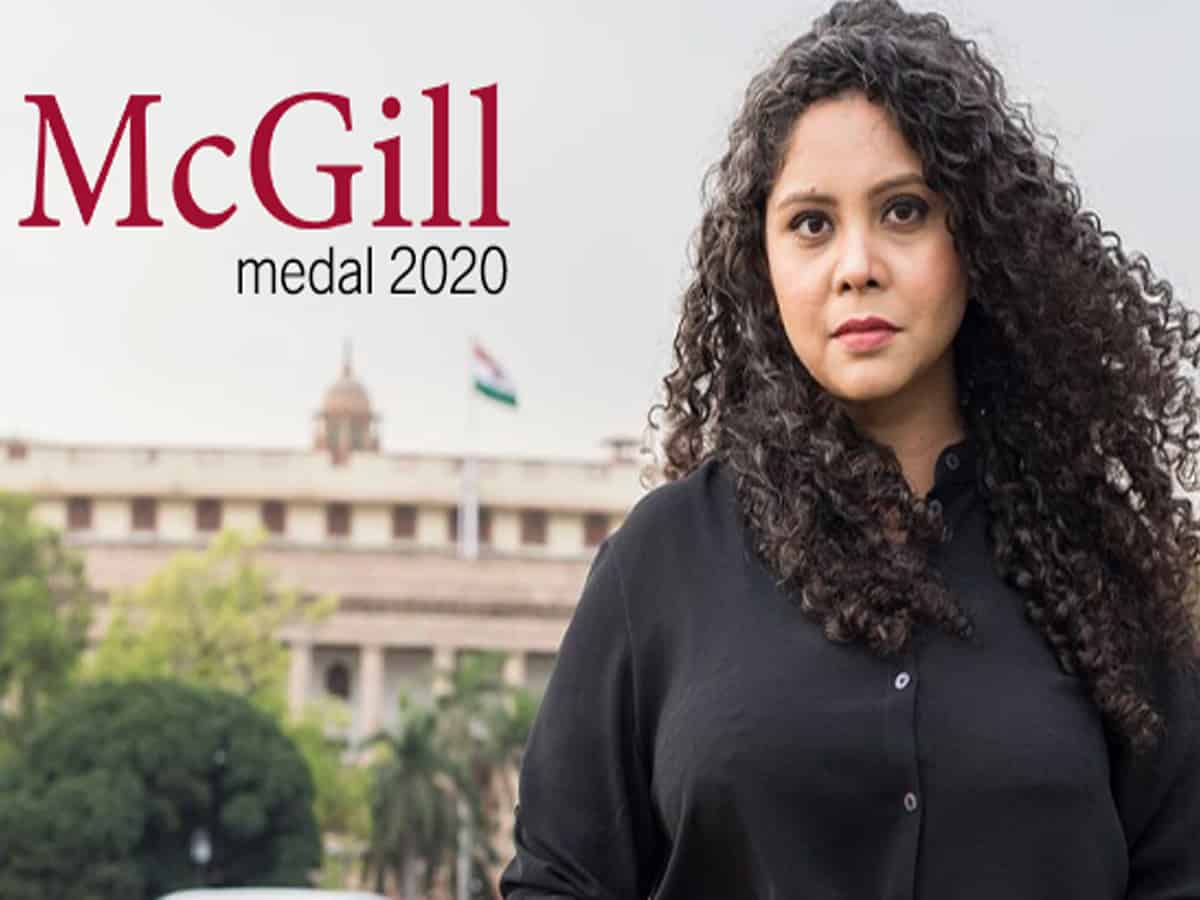
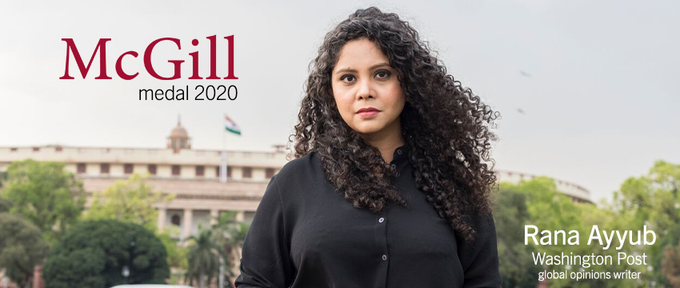
Global Opinions Writer at Washington Post and an author Rana Ayyub on Monday won the 2020 McGill Medal for journalistic courage.
“Ayyub is committed to telling the stories of people who can’t do it on her own, making her an ideal McGill medal recipient,” Sofia Gratas, the McGill Fellow responsible for researching the nomination said.
Ayyub , after winning the award said it was a huge honour for her.”I accept this award on behalf of all journalists who are fighting an unpopular battle to speak the truth,” she tweeted.
The Mumbai-based journalist Ayyub will collect the award at The Grady College Of Journalism and Mass Communication, University of Georgia on 22 April.
Ayyub was previously an editor with the investigative magazine Tehelka.
‘Gujarat Files‘
She also authored an international bestseller titled of “Gujarat Files : Anatomy of a Cover-Up”, an undercover investigation which exposes the complicity of the PM Modi and Union Home Minister Amit Shah in state-sponsored genocide in the 2002 Gujarat riots .
She has often been the target of the vitriolic abuse that is hurled on her on social media platforms from Hindutva activists.
In 2019, Ayyub was named by Time magazine among ten global journalists who face the maximum threat to their lives.
McGill Medal
The McGill program is named for Ralph McGill, the late editor and publisher of the Atlanta Constitution. McGill was regarded by many as “the conscience of the South” for his editorials challenging racial segregation in the 1950s and 1960s.
The McGill Medal, now in its twelfth year, is part of the McGill Program for Journalistic Courage at UGA’s Grady College.
source: http://www.siasat.com / The Siasat Daily / Home> News> India / posted by Safoora / February 25th, 2020
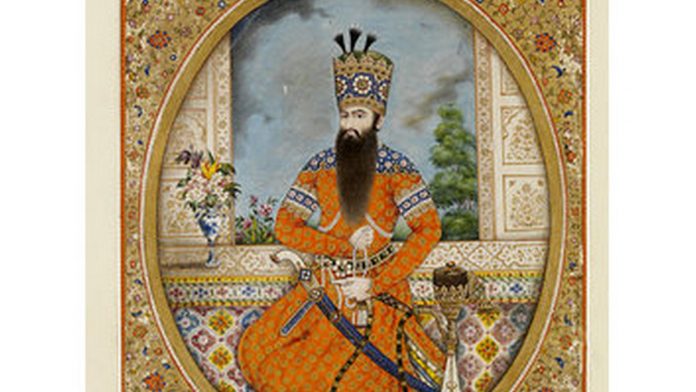
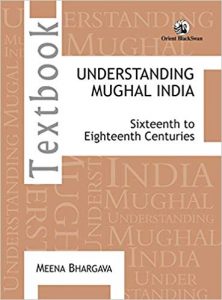
In ‘Understanding Mughal India’, Meena Bhargava writes about how Aurangzeb patronised several Hindu institutions & was supported in the war of succession by Rajputs.
A portrait of Mughal ruler Aurangzeb | Photo: collections.vam.ac.uk/
That Aurangzeb’s orthodoxy and his dedication to his beliefs was personal rather than a matter for political interference is evident in his reactions and responses during the war of succession of 1658, a quadrangular conflict between Dara, Shuja, Aurangzeb, and Murad. Throughout the struggle, Aurangzeb was concerned about Dara’s political manoeuvres. Their individual feelings and religious outlook—which stood in sharp contrast—remained confined to the personal level. Aurangzeb referred to Dara as mushrik (heretic) while Dara called Aurangzeb kotah pyjama (narrow pants), a symbolic attribute of orthodoxy. Both attempted to rally public opinion, but never on religious grounds. In fact, the support that largely came for Aurangzeb was from the Rajputs, notably Rana Raj Singh of Mewar, Raja Jai Singh Kachwaha of Amber, and later, Maharaja Jaswant Singh of Marwar. In this context may be related an interesting nishan that Aurangzeb sent to Rana Raj Singh of Mewar, condemning such kings who practised intolerance that could become the cause of dispute, conflict, and harm to the people, and could ‘devastate the prosperous creations of God and destroy the foundations of the God-created fabric’. Such attitudes of kings, Aurangzeb ordained, deserve ‘to be rejected and cast off’. This document from the Udaipur records is a clear revelation of what Aurangzeb intended as his public policy. It further confirmed that Aurangzeb, in the struggle for succession, did not raise the cry of jihad or Islam in danger, nor did he promulgate a new religious policy contrary to that of his predecessors; neither did Dara claim to be the champion of liberal forces. The issue was not religious or ideological, or whether orthodoxy would triumph or liberalism. It was a question of personal vested interest, political in nature but free from religious connotations, that is: Who would be the emperor of India, Dara or Aurangzeb? It is in such a context that Aurangzeb deserves to be assessed.
Debating Aurangzeb’s leanings—religious orthodoxy or political pragmatism—one needs to ask: Did Aurangzeb really intend, as Jadunath Sarkar suggested, the establishment of dar-ul-Islam or a truly Islamic State in India, the conversion of the entire population to Islam, and the annihilation of dissenters? Or, as Ishtiyaq Husain Qureshi argued, was it rigid adherence to the shari’a and undoing the damage caused by Akbar; or the triumph of Muslim theology, as Shri Ram Sharma asserted? If this was really the case, then the emperor’s personal valour, military skills, and single-minded commitment to achieving territorial expansion and consolidation would stand negated. The biased ideological portrayal of the emperor, regardless of historical accuracy, makes it difficult to explain the increase in the number of Rajput mansabdars in Aurangzeb’s administration as compared to Akbar’s period, and their rise from 24 per cent under Shahjahan to 33 per cent in 1689. Nor can Raghunath Ray Kayastha’s dominance as diwan-i kul be understood rationally. Raghunath Ray not only supported Aurangzeb but also participated in several expeditions of the period. Aurangzeb honoured him with the title of Raja and when Raghunath Ray died in 1664, the emperor, in his obituary written in Ruqa’at-i Alamgiri, remembered him as the greatest administrator he had ever known.
There are well-documented evidences of Aurangzeb’s patronage of various Hindu religious institutions, namely temples, maths, grants to Brahmins and pujaris:
Land grants were renewed to the temples at Mathura, Banaras, Gaya, Gauhati, and others, while the emperor is known to have donated ghee for the navadeep in a few temples, including the Mahabateshwar temple at Agra;
Gifts were offered to the Sikh gurudwara at Dehradun;
Madad-i ma’ash grants, as listed in the Rajasthan documents, were continued to a math of Nathpanthi yogis in pargana Didwana, sarkar Nagor;
Grants were also made to Ganesh Bharti faqir and his successors in pargana Siwana with the instructions that the faqir should not be disturbed so he could ‘pray for this sultanat’.
The Vrindavan document of 1704 referred to a parwana which sanctioned the rights of Chaitanya gosains who had founded Vrindavan and established pilgrimages in Braj Bhumi, and recognised the right of Brajanand Gosain to receive a fee from the followers of the sect on account of kharj sadir o warid, that is, expenses on guests and travellers from each village. In effect, it was a government levy for the benefit of Brajanand Gosain and his Vaishnavite followers.
From the above description, Aurangzeb’s patronage to temples appears without doubt. And yet some temples were attacked, while others were spared. This aberration in the emperor’s attitude can be explained by only one rationale: it was not iconoclasm, but reprisal for rebellion or political misconduct or disloyalty to the emperor. This exposition can be applied to understand the attack on the Vishwanath temple at Kashi, the Keshav Dev temple at Mathura, and several prominent temples in Rajasthan. In 1669, during a zamindar revolt in Banaras, it was suspected that some of them had assisted Shivaji in his escape from imperial detention. It was also believed that Shivaji’s escape was initially facilitated by Jai Singh, the great-grandson of Raja Man Singh, who had built the Vishwanath temple. It was against this background that Aurangzeb ordered the destruction of that temple in September 1669.
Around the same time, in a Jat rebellion that had erupted in the neighbouring regions of Mathura, a patron of the local congregational mosque was killed, leading to Aurangzeb’s order in 1670 to attack the Keshav Dev temple at Mathura. Temples in Marwar and Mewar were also attacked following the death of Maharaja Jaswant Singh to reprimand and crush the Rathor rebellion and the development of a Sisodia– Rathor alliance. These included temples in Khandela patronised by rebel chieftains; temples in Jodhpur maintained by a former supporter of Dara Shukoh; and the royal temples in Udaipur and Chittor patronised by Rana Raj Singh after the Rana entered into an alliance with the Rathors that signalled the withdrawal of loyalty to the Mughal State. It may be observed that the Rathor rebellion was not a reaction or a protest against the re-imposition of jizya. Instead, this re-imposition, as Abu’l Fazl Ma’muri observed in the context of the suppression of the Satnami revolt and prior to the emperor’s expedition to Ajmer, was meant for ‘the affliction of the rebellious unbelievers’.
This excerpt from Understanding Mughal India: Sixteenth to Eighteenth Centuries by Meena Bhargava has been published with permission from Orient BlackSwan.
source: http://www.theprint.in / The Print / Home> Page Turner> Book Excerpts / by Meena Bhargava / February 19th, 2020
Mohammed Minhajuddin had just submitted his paper when Delhi Police lathi-charged students in the Jamia library on 15 December. He lost his left eye in the incident.
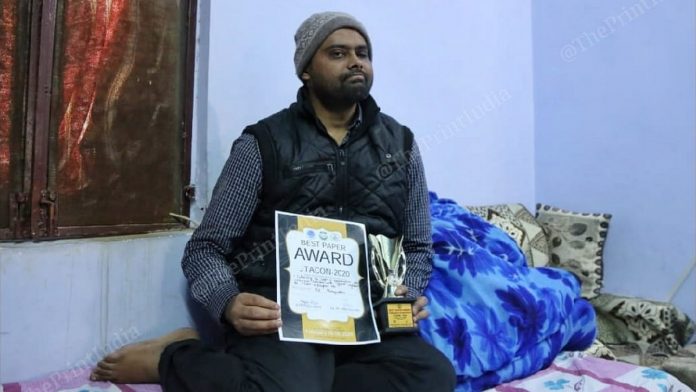
Jamia Millia Islamia law student Mohammed Minhajuddin with the best paper award he won Tuesday | Photo: Manisha Mondal | ThePrint
New Delhi:
Mohammed Minhajuddin, 26, was writing a paper on the theme of human rights and development on 15 December 2019 in the Jamia Millia Islamia library when the Delhi Police barged in and lathi-charged the students. A lathi blow cost law student Minhaj vision in his left eye; doctors say it will never come back.
On Tuesday, over two months after the incident, Minhaj’s paper was named the best paper in its category at the Jamia Teachers’ Association award. The paper, titled ‘Enhancing the scope of opportunities for religious scholars with special reference to Islam’ deals with the intersection of human rights and religion. The deadline for submission was 15 December, and Minhaj had submitted it just minutes before the police lathi-charge.
Since then, life has been a struggle for Minhaj, but he hasn’t lost his resolve to make the best of a bad situation.
“After losing my eyesight, I struggled a lot to prepare for the presentation. I had to work with just one eye, my head constantly aching. It was tough to even concentrate,” Minhaj told ThePrint.
Feeling vindicated
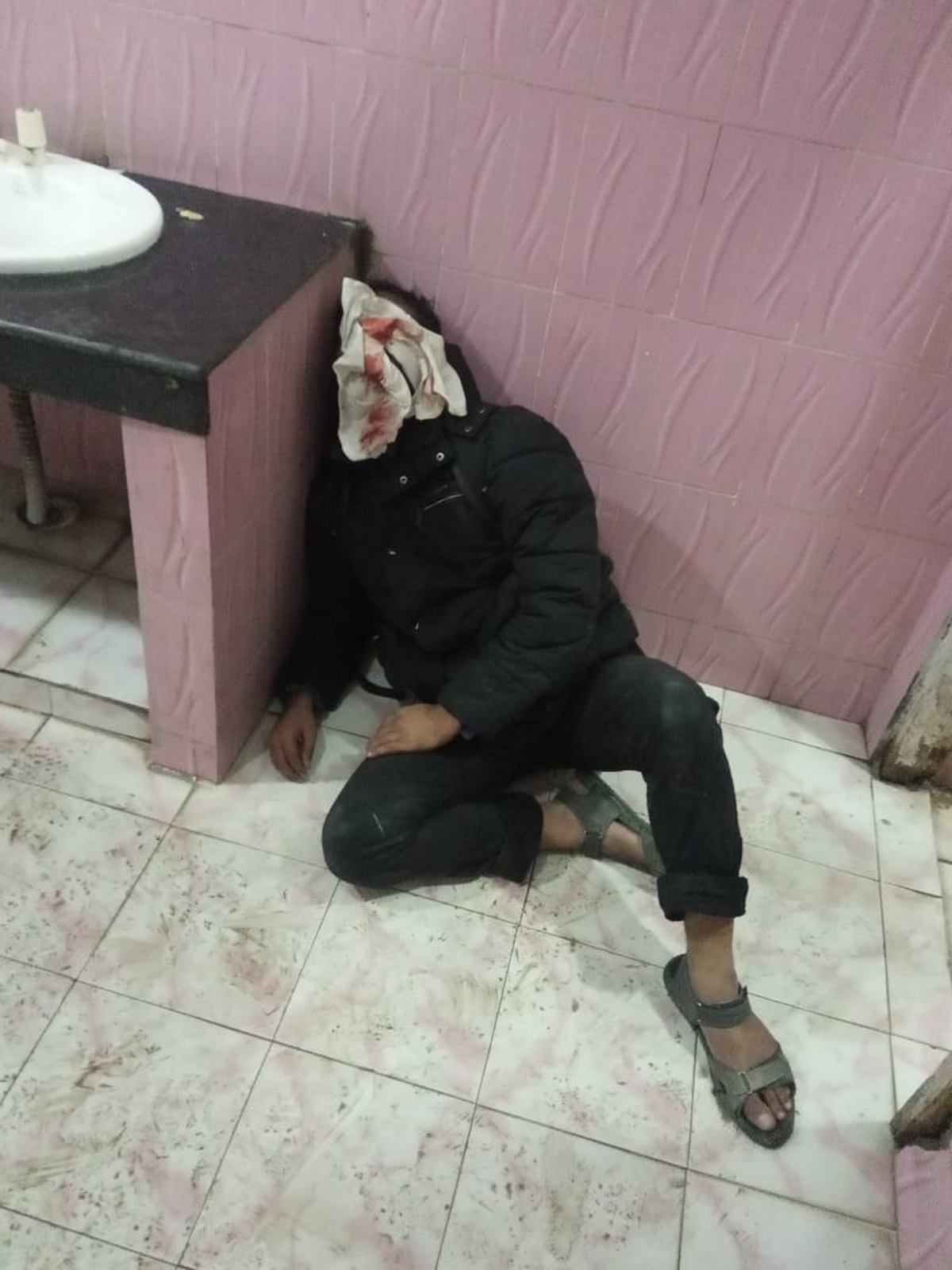
On 15 December, the Delhi Police had entered the Jamia campus amid protests against the Citizenship Amendment Act . A picture of Minhaj lying in a university washroom bleeding from his eye was widely shared on social media, and several students, including him, had alleged that the police lathi-charged students in the library, a claim the police had vociferously denied .
This picture of Minhaj with his face covered by a blood-stained handkerchief was widely circulated on social media after the Delhi Police entered the Jamia Millia Islamia campus on 15 December
However, multiple videos have surfaced since 16 February, showing policemen beating the students in the library with batons. Today, Minhaj feels vindicated.
“It wasn’t just me. Several students had given testimonies highlighting police brutality in the library. But with these videos out now, there is no scope of lies anymore. The truth is out in the open,” he said, adding that he was offered Rs 5 lakh compensation and some words of sympathy by the Aam Aadmi Party MLA from Okhla, Amanatullah Khan.
After the video showing police beating the students triggered a storm, the Delhi Police too released footage showing alleged ‘rioters’ entering the library. But Minhaj says the library he was in — the old reading room in the MPhil department — didn’t have any protesters.
“Everyone in this library was a student who had just been studying here. The protesters may have entered another library, not this one,” he said, adding that those who can be seen wearing handkerchiefs on their faces in the video were merely protecting themselves from the tear gas shells fired by the police.
Minhaj is hopeful that with the videos out, policemen will be taken to task.
Not willing to give up on dreams
Minhaj came to Delhi from Bihar’s Samastipur two years ago aspiring to practise law in the capital, and that’s a dream he is not willing to give up on.
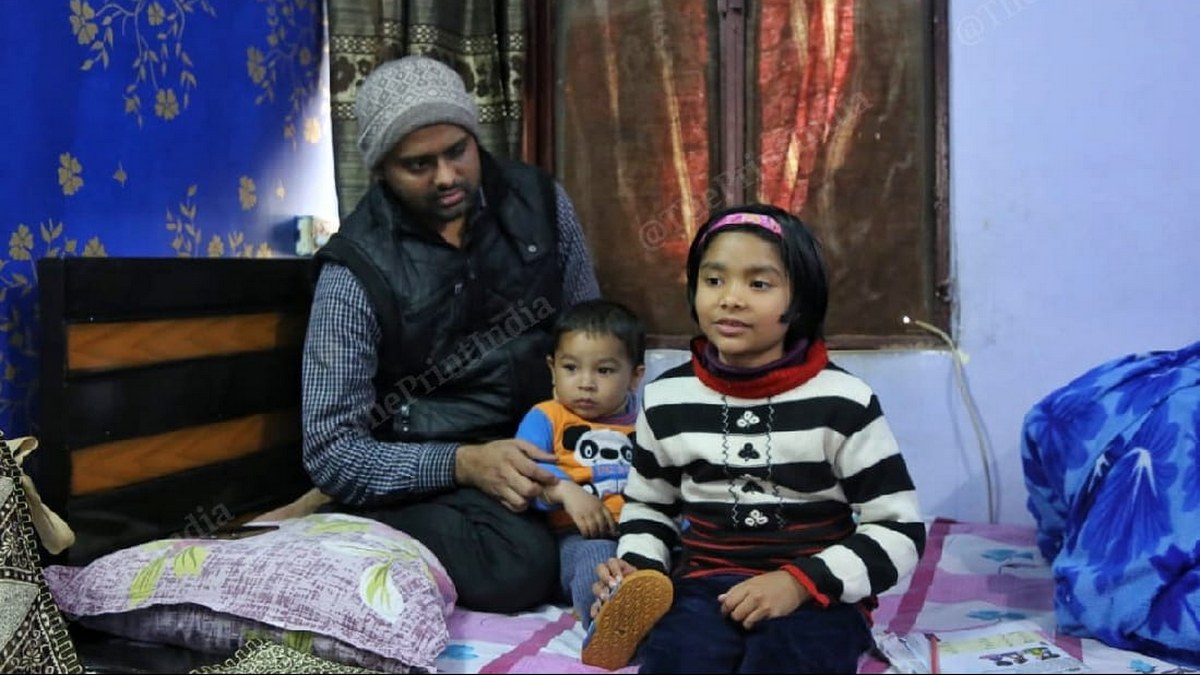
“I know life will be a challenge now. But I can’t give up or fall into despair. I have to keep studying and working towards a better life,” Minhaj said, while playing with his nephew and niece at his sister’s home in Jamia Nagar, where he has been staying since the incident.
Jamia Millia Islamia student Mohammed Minhajuddin with his nephew and niece at his sister’s home in New Delhi | Photo: Manisha Mondal | ThePrint
Minhaj’s father, who is a school teacher at a government school in Samastipur, keeps asking him to come back.
“They (parents) are scared, which I understand. But I can’t leave until I complete my final semester,” said Minhaj, who completed his LLB from Aligarh Muslim University (AMU).
No help from university
Two months on from the life-altering incident, Minhaj isn’t resentful or angry, but disappointed at Jamia Millia Islamia.
“It is the university’s duty and responsibility to keep its students safe. It failed to do so,” he said, adding that Jamia vice-chancellor Najma Akhtar met him once after the incident.
“She said I can submit my treatment bills to the university and they will reimburse it. But my friends say that just reimbursement isn’t enough — I should be given compensation for the physical loss and mental trauma,” he said.
Minhaj has managed to keep his calm through this entire period, but he said his friends are still angry.
“It is my batchmates who took me to the hospital that day. No one from the university administration helped. My friends took me from one hospital to another, as all doctors refused to check on me,” Minhaj said.
Finally, Minhaj got treated at AIIMS, and he has to visit the doctor every two weeks to check on his eye.
“I need to keep going for a check-up to ensure the infection doesn’t spread to the other eye.” he said.
source: http://www.theprint.in / The Print / Home> India / by Fatima Khan / February 28th, 2020
India’s history in currency is the subject of Rezwan Razack’s Museum of Indian Paper Money
Back in timeThe concept of money has existed since almost the beginning of civilization, says Razack / bhagyaprakash k
India’s history in currency is the subject of Rezwan Razack’s Museum of Indian Paper Money
Hailed as the largest collector of Indian currency, Rezwan Razack has opened South India’s first currency museum in Bengaluru. “I am so happy that the former Governor of the Reserve Bank of India, C. Rangarajan inaugurated the museum,” says Razack.
Razack, co-founder and joint MD of Prestige Group, is the Chairman of the International Bank Note Society, India Banknote Collectors’ Chapter, and is recognised for his contribution to the advancement of numismatic knowledge. Razack, who built his collection over 50 years with exhaustive research, enjoys sharing his knowledge with students and encourages budding collectors to promote numismatics as a hobby.
He has co-authored The Revised Standard Reference Guide to Indian Paper Money in 2012, and in 2017 wrote One Rupee One Hundred Years 1917-2017 to mark the centenary of the issuance of the one rupee note. “Rezwan Razack’s Museum of Indian Paper Money will not only be the first of its kind in India, but also the world,” says Razack.
The museum at Prestige Falcon Towers on Bruntun Road, has trained guides to take visitors through the history of currency in India. “The story of money is woven into our very being, uniting us, dividing us, giving us a sense of identity and mapping people or the nation’s power, crises and triumphs. I consider it a comprehensive restoration and preservation of an important national heritage. It is also something that numismatists worldwide will benefit from.”
The initiative, he says, is to help educate, inform and entertain. “The rupee is one thing that is ever present in our lives but never seen as a source of history, information and national pride. I hope visitors understand, enjoy and value this museum of our collective economic heritage.”
The museum displays a diverse collection of Indian paper money and the related material drawn from the Indian subcontinent. “While the concept of money has existed since almost the beginning of civilization, the invention of paper currency is more recent,” says Razack. From the early barter systems and the use of coins as currency, the museum introduces the visitor to paper currency, its origins and its use.
Apart from its selection of banknotes dating back to the early 1800s, an auxiliary collection has also been put together to explain the inspirations and techniques of making paper currency. While original hand-painted essays, patterns, proofs, trials, specimen notes, autographed notes and a rare Star of India Medal demonstrate fascinating aspects of money, meticulously sourced cheques, stamp papers relating to Indian paper money, booklets and banknotes help decode the world of money.
“This museum has been planned meticulously over three years to conform to international standards of lighting and climate control,” says Razack, adding that people don’t often retain paper money “ My visits to cut-note dealers in Chickpet and in Fort Bombay gradually increased my collection,” he says, acknowledging that his persistence paid off.
Razack says his collection includes the oldest surviving note from 1812 of Bank of Bengal right up to the notes of 2017 of all denominations. The rare ones are the early Presidency Banknotes of Bank of Hindostan, Bank of Bengal, Commercial Bank, Calcutta Bank, Bank of Bombay, Bank of Western India, Asiatic Bank and Bank of Madras; British India’s Portrait Notes of Queen Victoria, Portrait Notes of King George V and King George VI; and Indian Notes used in Burma and Pakistan; Notes of Indo-Portuguese and Indo-French Territories and Indian Notes since Independence, also used by Haj Pilgrims and in Persian Gulf States.
There is also a lot of importance behind his book dedicated to the One Rupee note. The first One Rupee Note in India was issued on November 30, 1917. “To celebrate 100 years of the one rupee note in India, my book focusses on the origin and journey of the smallest existing denomination through the century, while examining its genesis. As the general population in India were unacquainted with paper notes until 1917, one of the methods adopted to increase the popularity of the one rupee note was to print a picture of the silver one rupee coin on both sides of the note.”
At Prestige Falcon Towers, 19 Brunton Road, Bengaluru; 10-30 a.m. to 5-30 p.m.; closed on Mondays and public holidays;entry Rs. 100
While the concept of money has existed since almost the beginnings of civilization, the invention of paper currency is more recent
source: http://www.thehindu.com / The Hindu / Home> Features> MetroPlus / by Ranjani Govind / February 17th, 2020
Niket Dalal is first wholly visually-challenged man to finish event.
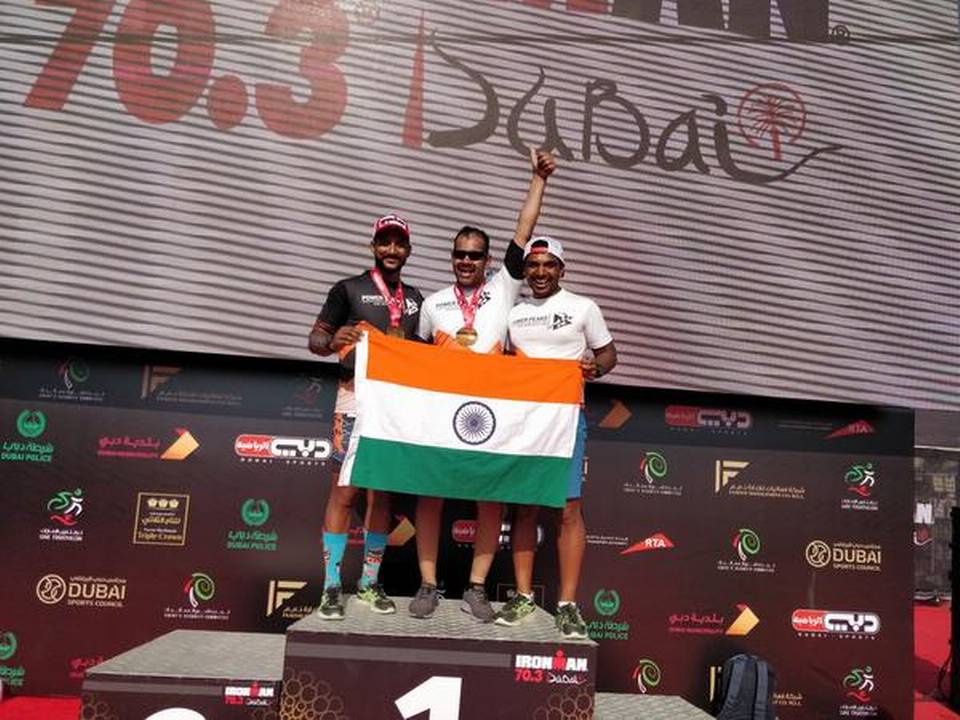
Niket Dalal, a 38-year-old from Aurangabad, created history on February 7 by becoming the first completely visually-challenged athlete to finish an Ironman triathlon.
Associated with Adventures Beyond Barriers Foundation (ABBF), Mr. Dalal completed the gruelling Ironman 70.3 — consisting of a 1.9 km swim, a 90 km bicycle ride and a 21.1 km run — with assistance from his sighted companion, Arham Shaikh.
Mr. Shaikh is the youngest Indian to finish the 5000 km coast-to-coast cross-country race in the U.S.
“The first Indian achieved an Ironman finish in 2005. Till 2020, we had no disabled athlete to have completed the race. I believe if we have to work towards complete inclusivity, this huge gap of 15 years needs to be bridged and this is one of the major reasons why I did this,” Mr. Dalal said.
Mr. Dalal and Mr. Shaikh completed the race in seven hours and 44 minutes, with 46 mins to spare. They stood second in their category of physically disabled athletes, and were the first Indian team to finish a Ironman 70.3 triathlon.
Mr. Dalal, a professional speech therapist, participated as part of a team from the Pune-based PowerPeaks Athlete Lab, which is founded by coach and pro-athlete Chaitanya Velhal. Mr. Velhal has been racing as well as training participants for triathlons, cycling races and marathons for the last five years.
Rigorous training
“It took a lot of detailed training, endurance and fitness assessments and diet planning to bring Niket up to the training required. The first leg of the race required Niket and Arham to complete the entire swim course while being tethered together. Swimming together for 1.9 km in the open sea with hundreds of other athletes, while trying to keep to the course was extremely challenging,” Mr. Velhal said.
“This was followed by a quick transition to the 90 km bike ride, where the riders faced heavy winds and dehydration but there were special aid stations set up. The most exhausting segment was the 21.1 km run. The temperatures were soaring and the landscape was difficult, but they conquered with strength and flair,” the coach said.
Mr. Shaikh added, “Both of us trained hard under Mr. Velhal for the last four months, continuously refining and improving upon our skill-set for the huge task facing us.”
Always having had a passion for sports, Mr. Dalal has been a State-level swimmer and has participated in and won many sea swimming competitions. He took up cycling as a sport last year and completed the grueling Manali to Khardungala cycling expedition in August 2019.
source: http://www.thehindu.com / The Hindu / Home> Sport> Athletics / by Jhelum Bhattacharya / Mumbai – February 09th, 2020
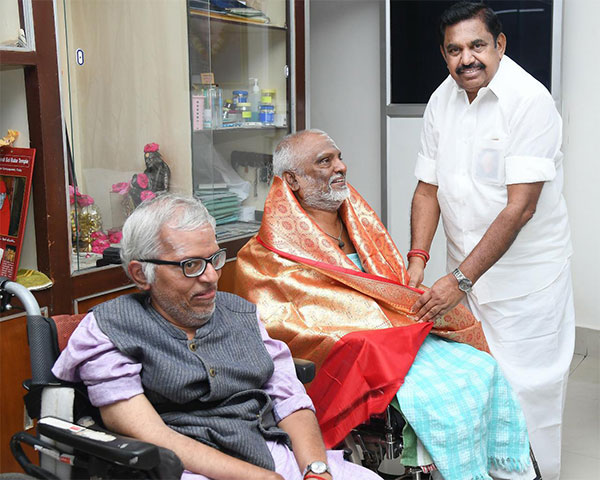
The government’s move to recognise Javed Ahmed Tak, the well-known social worker from Jammu and Kashmir, and S Ramakrishnan, founder of Amar Seva Sangam in Tamil Nadu with Padma Shri awards has been welcomed by the disabled community. These are rare instance when disabled people outside the realm of sports have been acknowledged for their efforts in the space of social work and activism.
It was after he was disabled by a bullet in the spine in 1996 that Javed Ahmed Tak realised the struggles faced by wheelchair users in India. He also discovered how much one can do with a disability and he decided to dedicate his life to the welfare of people with disabilities.
Javed fights for rights of disabled in tough circumstances
Be it fighting for the rights of people with leprosy, helping physically disabled students at Kashmir University form a union or ensuring that ramps were built at entrances of all buildings in the state, Javed has reached out to different groups. It was his PIL that led to the implementation of the Disability Act in Jammu and Kashmir.
Javed works in such a difficult environment and in such hard circumstances. It is admirable how much he has done and the Padma Shri is well deserved. J&K is in the news for all the wrong reasons and when something like disability is recognised, it is quite special. This shows that people with disabilities are leading from the front. – Arman Ali, Executive Director, National Centre for Promotion of Employment for Disabled People
Since 1999 Javed has been running the Humanity Welfare Organisation Helpline and a school for children with disabilities. “I decided to see my life as a challenge. I tried to forget my accident and make the most of my present situation”, said Javed in an earlier interview to the magazine Civil Society Online. “I realised that society, especially my community was accepting me and needed me despite my physical inability”.
Javed is well known across India for its efforts to empower the disabled community. “Though many disabled people get the Padma awards as sportsperson or artists, they are usually not social activists”, says disability rights advocate Dr Satendra Singh. “To bring change we need to acknowledge the work of activists bringing social justice. I applaud his work in behalf of disability sector”
Ramakrishnan was paralysed neck down after injury
In social activist S Ramakrishnan‘s case too, it was personal experience coping with a disability that him to start working for disabled people. He was 20 years old and studying engineering when he was disabled. He was asked to leap 15 feet from a tree as part of a series of obstacle tests to join the Indian Navy. The jump fractured his spine.
Ramakrishnan started the Amar Seva Sangam (ASSA) in Tirunelveli, Tamil Nadu with the goal of reaching out to disabled people in rural areas. Ramakrishnan is paralysed from neck down and uses a wheelchair.
“Once I realised there was no denying my condition, I was keen to know what was in store for me. I wanted to continue living life to the fullest,” he told The Hindu in an interview some years ago. ASSA is well known for its social outreach work. This includes conducting polio camps in villages, and integrated schools where disabled and non-disabled kids study together.
Well deserved honour says community
Describing them as a determined change maker, Chennai-based disability rights activist Smitha Sadashivan said Ramakrishnan is a “very quiet yet scintillating personality, spreading love for everyone around”. The honours will bring disability into mainstream discourse, believes Arman. “This shows that disability cuts across everything else and that disabled people can be a part of nation-building. This will open the discourse on political participation of people with disabilities and non-discrimination”.
source: http://www.newzhook.com / Newz Hook / Home> Get Hooked / January 2020
Deoband, UTTAR PRADESH / KENYA / Croydon (South London). UNITED KINGDOM :
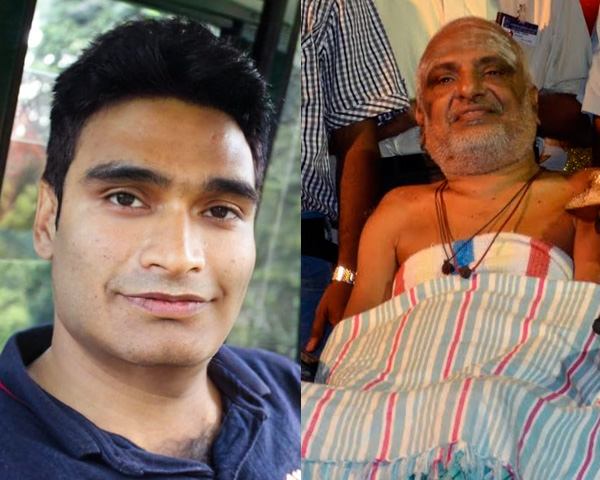
With 2019 saying goodbye, Maulana Izhar Ahmad Qasmi, an embodiment great scholarship, piety, humility, patience and perseverance, also said adieu to this mortal world.
Maulana Izhar Ahmad Qasmi, 74, was born in Deoband, India, and breathed his last on 30 December, leaving his family and admirers in tears.
He belonged to a very rare breed of ulema who had dedicated themselves to the service of Islam. His funeral prayer and burial was attended by thousands of his admirers from all over UK.
A widely respected and admired person, Maulana Izhar worked tirelessly to propagate the message of Qur’an without indulging in controversial issues.
In 1970 when Indian Muslims living in Kenya approached the great scholar and rector of Darul Uloom Deoband, late Maulana Qari Tayyab, and requested him to send a scholar to Kenya for their religious guidance, his choice fell on Maulana Izhar, a man Allah SWT had blessed with a spiritual attraction, humility, politeness and deep knowledge of Deen. He convinced Maulana Izhar to accept this responsibility.
From 1970 – 1983, Maulana Izhar served as the Imam in Pangani Mosque of Kenya. Following political unrest in the country, like several other Asians, Maulana Izhar had to migrate to Britain with his family.
In Britain he established the first mosque in Croydon, a town in South London, and served as an Imam for 15 years until he was diagnosed with a brain tumour and had to undergo a delicate surgery in the 90s.
As an Imam Maulana Izhar earned admirable love and respect of the local community. His knowledge of Qur’an and deep love to spread its message earned him wide respect all over Britain.
After his surgery, doctors said that his days were numbered and that he would not be able to survive more than a few days. But Allah SWT’s plans and works in strange and mysterious ways. When He chooses someone for the service of His Deen, He does it in ways that are beyond human comprehension. Not only did Maulana Izhar lived for at least 21 years but also completed his seminal translation and interpretation of Qur’an, titled, Izharul Qur’an in ten volumes, and continued his Qur’anic lectures even after suffering from stroke after his brain surgery and becoming partially paralysed. Gradually he became bedridden and spent the last few years in this condition. Strangely until it was possible for him to sit in a chair he continued his Qur’anic lectures on Iqra TV without letting the viewers feel that his body was paralysed and that he was bedridden.
A comment on my Facebook from Dr Atif Suhail Siddiqui, University of Yale, says it all about Maulana’s resolve. He writes, ‘You did not mention one of the most important qualities of Maulana: He performed 42 Hajjs. After every Hajj he used to travel to Deoband to see his parents. In Deoband, my house is next door to his. So whenever he came to India, I used to visit him. When his [extended] family members noticed his swollen shoulder, they were shocked. I am a witness to it myself. They immediately called for a doctor who advised them to take him to an orthopaedist. His x-ray showed a fracture in his shoulder. It was then that it was found out that during Hajj he got pushed during tawaf and fell down. Due to the stroke one side of his boy had become so insensitive that he did not feel any pain and did not realise that his shoulder had been fractured. He performed all the arkans of Hajj in this condition and even travelled to Deoband. May Allah SWT shower His mercy on him.’
Despite such severe condition Maulana did not like to take anybody’s help. Another Facebook friend, Chicago based alim, social media activist, blogger and YouTuber, Mufti Yasir Nadeem al-Wajidi, said that he had seen Maulana performing Tawaf and SaI during Umrah without anybody’s assistance or a wheelchair despite the fact that ‘He was virtually dragging himself.’ He added, ‘On one occasion Maulana said that his ailment and his bedridden condition had become a blessing for him because it allowed him to finish one Qur’an every day. Seeing this [and his contentment] one of his Christian doctors had embraced Islam.’
Among Maulana’s survivors is the renowned Alim of Britain, Mualana Qasim Rasheed, who himself is an institutions-maker. Lest this be confused with merely establishing mosques and madarsas, let me make it clear that he is the founder and chairman of one of the major charity organisations, Al-Khair Foundation , that does not only send food and other temporary aid to the displaced people in war-torn and hit by natural-disaster-hit regions of Africa, Middle East, Bangladesh and Pakistan but has also built schools and health clinics for them. He has also established two secondary schools and two TV channels in Britain. However, most important of all these is a full-fledged hospital in Gaza . I have mentioned it only to reflect on the impact of tarbiyah on one’s children.
May Allah SWT bless Maulana Izhar saheb with huge rewards for his services and bless Imam Qasim Saheb and all the survivors with patience and perseverance to tolerate this loss.
source: http://www.milligazette.com / The Milli Gazette / Home> Online News> Community News / by M Ghazali Khan , The Milli Gazette Online / January 04th, 2020
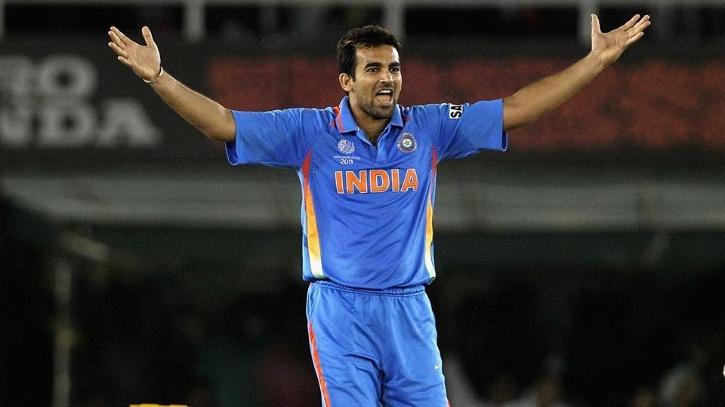
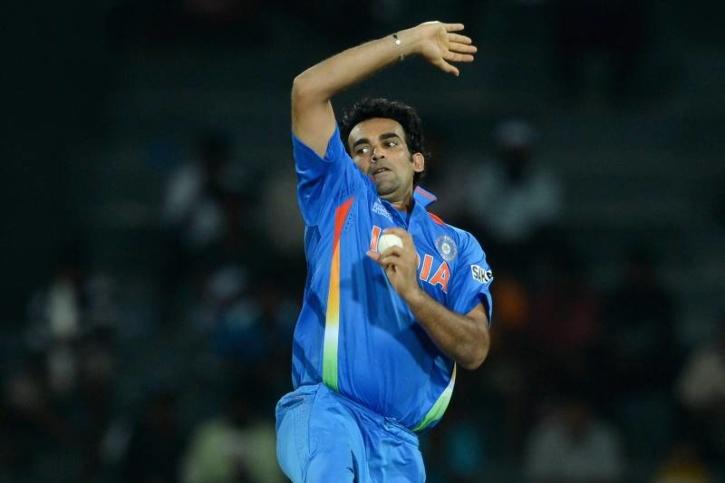
Zaheer Khan enjoyed one of the most illustrious careers for Indian pacers. His ability to swing the ball at pace was a sparkling feature in his armoury.
For someone who was India’s talisman in bowling department for years, his contributions on pitch have always been less appreciated. Whenever Zaheer stepped out on the pitch to represent India, he wore his heart on the sleeve.
But his significant service to Indian cricket have finally been honoured with Padma Shri, country’s fourth highest civilian honour. It is a rich deserved recognition for the former Indian pacer.
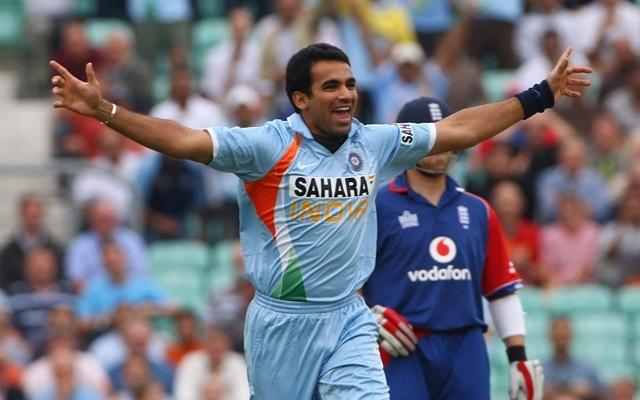
The left-armer, who has a winners’ medal from the 2011 World Cup , is India’s joint leading wicket-taker in World Cups. With 311 wickets, he’s only behind Kapil Dev for most wickets by an Indian seamer in Tests, while also boasting of 282 wickets in ODIs – the fourth-highest for an Indian.
Zaheer made his debut for India in 2000, and – for the most part of his 13-year career – remained a vital cog in the team in the Test and one-day formats.
For such illustrious career, it feels though Zaheer wasn’t given enough credit during his playing days. His major contribution to his country came at the biggest stage of it all – World Cup. He was India’s go-to man in critical situations.
His 21 scalps were the joint-most with Shahid Afridi at the 2011 World Cup, and he was key in giving India those breakthroughs at right junctions. He has finally seen his services rewarded in the best way possible – Padma Shri awardee now, he can be proud of his career.
source: http://www.indiatimes.com / India Times / Home> Sports / by Basit Aijaz / January 26th, 2020