Category Archives: Amazing Feats

Zarina’s charity flows freely, in Mumbai slum

 Mumbai, MAHARASHTRA :
Zarina and her children along with two mentally challenged boys in Mumbai. Photo: Arunangsu Roy Chowdhury
The water mafia controls the area, but the woman of modest means is undeterred

She is an unlikely saviour for the struggling, water-starved masses in Mumbai slums. But save them she does, and without any cash reward. Zarina, mother of ten and of low means herself, provides water free to her neighbours in Indira Nagar, Mankhurd.

The entire slum here is in crisis. With no supply system in place, the residents buy drinking water as well as salt water (khara paani) from the ‘water mafia’. Khara Paani comes from numerous illegal bawries, wells dug and controlled by the toughs. This is used for washing clothes and utensils, bathing or for toilets.

Age-old bawri

Zarina has an age-old bawri with salt water at home but she doesn’t sell the blue gold. “Kyse paani beche saab? Jab Khuda ne jindegi ko mara, paani bechkar kya jina.” [How can I sell water? When almighty has taught enough lessons in life, how could I sell the water].

The woman struggles with her ten children, including the two who are mentally retarded.

Her husband has left it to her to bring up the children and the family has no means. “We do zari work at home, which brings Rs. 1,500 to Rs. 2,000 a month,” she says.

Her adolescent daughter Rukshana emerges from a room, and shows a piece of cloth on which she is doing zari embroidery. They get job work from a local ostagar (tailor), for a weekly payment based on the volume.

Zarina says her family never faces a summer water crisis since she has a well. They manage to get drinking water from outside. People living in her lane in Indira Nagar draw water during the crisis, and sometimes people from other lanes also come.

Painful grind

The water lady cannot afford to send her children to school. “What can I do, Sir? I know they are growing up without education. Moreover, two children are mentally retarded”, she says, wiping her tears.

For Zarina, life is a painful grind, but that does not stop her serving scarce water, free.

source: http://www.thehindu.com / The Hindu / Home> News> Cities> Mumbai /  by Arunangsu Roy Chowdhury / Mumbai – May 12th, 2016

Despite drought, this man provides water for free

Kalaburgi(Gulburga), KARNATAKA  :


Kalaburgi:

When the entire state is reeling under acute water shortage, a man from this village provides drinking water to his fellow villagers for free.

Asad Ali Ansari, in Nandur(K) village on the outskirts of Kalaburgi city is the man who has shown his richness of heart through his act.
AsadAliMPOs02may2016In the village, water sources have been drying up. Following water crisis, Asad came forward to help the villagers by providing them four tankers of water every day.

Asad’s initiative was inaugurated by the Zilla panchayat CEO Anirudh Sravan few days ago.

Sravan hailing Asad for his kindness, said that people should come forward voluntarily to share water in situations like this.

Gram panchayats too must provide work to farmers by resuming works under the Mahatma Gandhi National Rural Employment Guarantee Act. Works such as rejuvenation of water bodies, removal of silt from tanks, etc. will help recharge the groundwater table, he said.

source: http://www.newskarnataka.com / NewsKarnataka.com / Home> Cities> kalaburgi / May 02nd, 2016

Latur’s Good Samaritan: This man gives away 10,000 litres of water daily to help his neighbours

Latur (Marathwada region) , MAHARASHTRA :

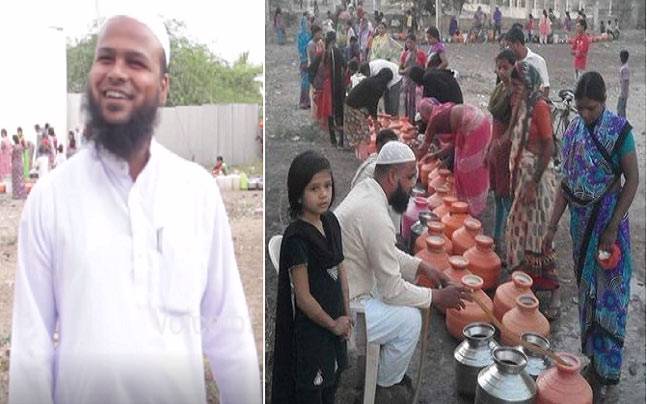
In the drought-struck land of Latur, Sheikh Mateen Musa has been distributing over 10,000 litres of water from his borewell everyday among his neighbours for the past three months. And he has been doing so free of charge.

Sheikh Mateen Musa. Source: Video screengrab

What would you do if your house was the only one with running water, while your neighbours’ taps went dry?

As you ponder over that, let us tell you the story of Latur’s Mateen Bhai.

The severe water shortage raging through Latur and elsewhere in Maharashtra has been all over the news. In this crisis, instead of locking up his borewell, Sheikh Mateen Musa has been distributing over 10,000 litres of water among his neighbours everyday.

And he has been doing that for free for the past three months.

His story was brought to light by Facebook page Voice Of Ram. In a video uploaded in this page, those witness to Mateen Bhai’s benevolent actions have no end to his praises.

“Mateen sir is not the name of a man, he is the name of action,” says one of his neighbours. ” If anyone can teach how to serve humankind, it is Mateen Bhai.”

“We ask them to take money in exchange of the water, but he sternly refuses,” says another woman about Mateen Bhai. “He tells us to take as much water as we need for free.”

A mathematics teacher in a local school, Mateen Bhai seems quite oblivious to the fame he has been garnering for his good works. In fact, he believes he has been doing nothing outstanding but just giving away what belongs to others in the first place.

“The water in my borewell may be the water others are destined to have, so they are only taking away what belongs to them,” says Mateen Bhai. “It is nothing mine to give.”

When asked what he would do if his borewell ran out of water, Mateen Bhai laughingly says, “When that happens, even I will pick up a pot and go around looking for water like others.”

https://www.facebook.com/VoiceOfRamDotOrg/videos/1274945099201465/

It is people like Mateen Bhai who remind the rest of the world that charity begins at home, and that humanity is bound by no race and religion.

source: http://www.indiatoday.intoday.in / IndiaToday.in / Home> News> FYI / by Shreya Biswas / New Delhi – April 27th, 2016

Jai Hind Safrani

Hyderabad, ANDHRA PRADESH (now TELANGANA ) :

When we talk of “Freedom Fighters”, we generally mean those people who fought for the independence of India within the country. Many Indians fought for the freedom of the country from outside India too.

Indian National Army

It was Captain Mohan Singh, an Indian officer of the British Indian Army, who first set up the Azad Hind Fouj (Indian National Army) on the defeat of the British by Japan on February 15, 1942.

AbidHasanBMPOs24apr2016

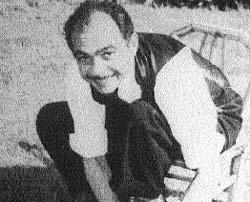
Abid Hasan

A young enthusiastic and courageous man from Hyderabad also joined this force. His name was Zain-al-Abdin Hasan. He preferred to be called Abid Hasan and later became known as Abid Hasan Safrani.

Abid Hasan’s mother Hajia Begum was anti-British, so her children were sent to Germany for higher studies. And Abid went to do a degree in engineering.

Meeting with Bose

Netaji addressed a meeting of Indian prisoners of war in Germany and asked them to join the INA. Abid met him and was inspired by the charismatic leader. He told Bose that he would join him after finishing his studies. Netaji said tauntingly that if he was caught in such small considerations, he would not be able to achieve anything big in life. Stung by that remark, Abid decided to give up his studies. He became Netaji’s secretary and interpreter.

Abid Hasan was made a major in the INA. Netaji wanted an Indian form of addressing each other. Abid first suggested “Hello” and was snubbed for that. He later suggested “Jai Hind”, which Netaji liked and adopted it as the formal manner of greeting for revolutionaries and members of INA.Later Nehru used it in his Independence Day address from the ramparts of the Red Fort.

The Indian National Army

INA provided a common kitchen for its soldiers irrespective of their religious affiliations. But there were many differences of opinion within its ranks. One of the controversial issues was the design of the national flag. TheHindus wanted a saffron flag, while the Muslims insisted on green. Later the Hindus gave up their insistence. Abid Hasan was impressed by this gesture that he decided to append “saffron” to his name. Since then, he became to be known as Safrani.

After the famous trial of the INA, all the members of the INA were released. In 1946, Safrani came to Hyderabad and joined the Congress Party. The party was riven with factionalism. Disgusted, he gave up politics and joined the Bengal Lamp Company. He was posted at Karachi. On the partition of India, he came back to Hyderabad.

Diplomatic career

In 1948, he was taken into the newly created Indian Foreign Service. On retirement in 1969, he returned to Hyderabad. Safrani passed away in 1984 at the age of 73.

source:  http://www.thehindu.com / The Hindu / Home> Features / Online Edition /  by Narendra Luther / Saturday – October 20th, 2001

How Netaji’s aide coined the slogan Jai Hind in a German POW camp

Abid Hasan’s grandnephew recounts the story behind creation of a salutation to replace religion-based greetings for Indian soldiers.

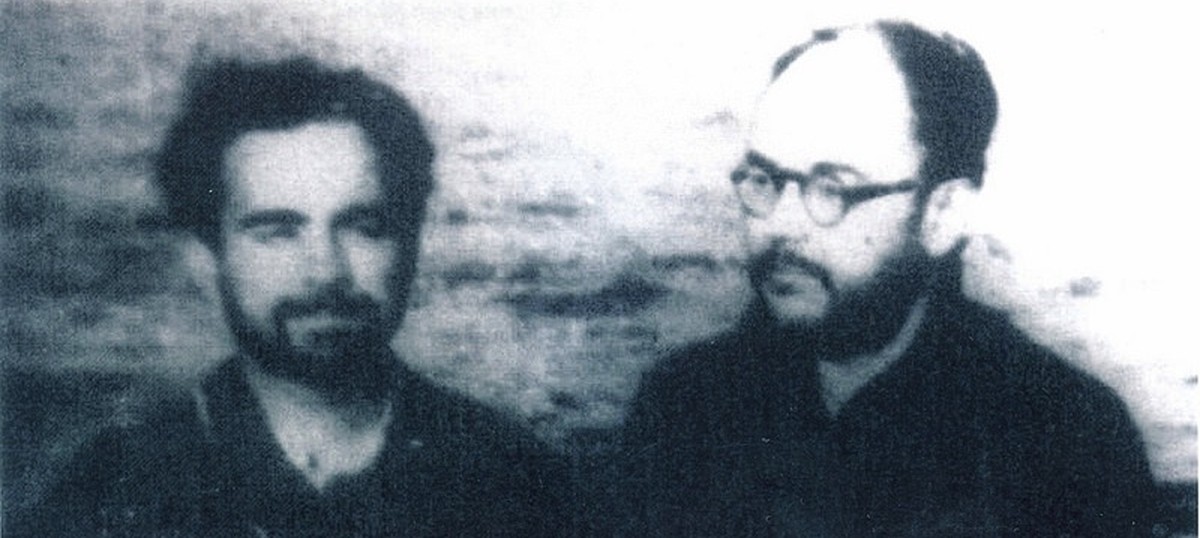
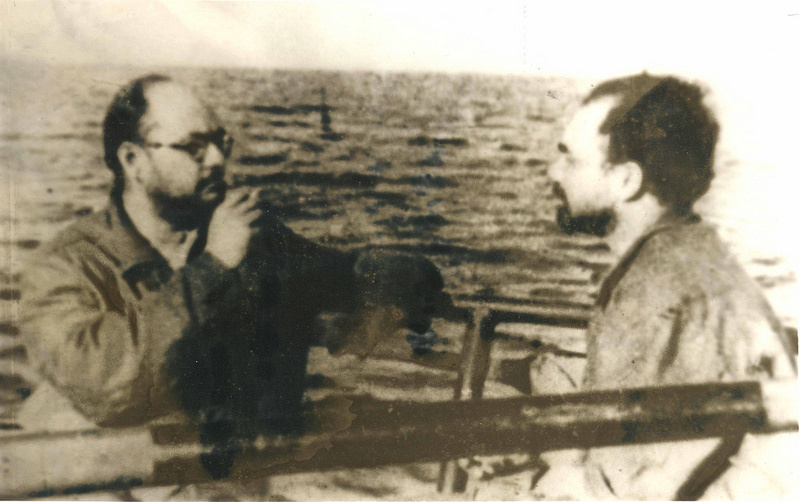
Image credit: Photo courtesy: Anvar Alikhan | Netaji Subhash Chandra Bose with his aide Abid Hasan during their journey to Japan from Germany in 1943.

Netaji Subhash Chandra Bose had a problem. It was 1941. He was in Germany, and was spending a lot of his time in the Konigsbruck prisoner-of-war camp, trying to recruit Indian soldiers captured by Rommel’s army in North Africa into his new Azad Hind Fauj.

But what troubled him was that the soldiers of the Indian Army had historically been organised into regiments based on ethnic and religious lines – the Rajputs, the Baluchis, the Sikhs, and so on. And even here, in the prisoner-of-war camps, they tended to cluster into their own little ethnic and religious groups.

Netaji, however, was very clear that his new Azad Hind Fauj would be a completely integrated army with men of every community and caste fighting shoulder-to-shoulder for an integrated India. After all, how could it be any other way?

But to integrate the soldiers was a complex issue that had to be tackled at many levels. For starters, each community greeted each other with their own salutation: the Hindu soldiers said, “Namaste” or “Ram, Ram ji”; the Muslims said, “Salaam alaikum”, and the Sikhs said, “Sat Sri Akal”. Netaji believed the first thing he had to do was to replace these religion-based greetings with a common salutation that would help bond everybody together.

And this task he entrusted to his aide, Abid Hasan.

The great rallying cry

Hasan was a Hyderabadi who’d been a disciple of Mahatma Gandhi as a teenager, and had spent time at his Sabarmati Ashram. Later, when his contemporaries all went to university in England, Hasan chose to go, instead, to Germany. And it was there that, in 1941, he met Netaji, and dropped out of engineering college to became his aide.

Now, pondering over the task Netaji had set him, Hasan was wandering around the Konigsbruck POW camp, when he overheard two Rajput soldiers greet each other with “Jai Ramji ki”. And that triggered off in his mind the idea of “Jai Hindustan ki”.

This, in turn, led to the shorter, more rousing “Jai Hind”.

Netaji was delighted with Hasan’s idea, which worked so well that “Jai Hind” soon went beyond its original brief to become a rallying cry of the Indian National Army. Later, of course, it would be adopted as the national slogan when, at the time of Independence, Jawaharlal Nehru raised it, stirringly, at the Red Fort.

It is ironic now, in the time of the Bharat Mata ki Jai controversy, to think that Jai Hind was a slogan created specifically to help unite the people of India, rather than divide them.

Later, in 1943, when Netaji was searching for an anthem for his Arzi Hukumat-e-Azad Hind, or the Provisional Government of Free India, he decided on Rabindranath Tagore’s poem, Jana Gana Mana. But to make it more accessible to the common man, Netaji wanted it translated from Tagore’s classical Bengali into simple Hindi. And for that, once again, he turned to Hasan, along with two other INA officers, Mumtaz Hussain and JR Bhonsle, while the tune itself was composed by Capt Ram Singh. Netaji’s vivid brief to them was, apparently, that when the anthem played, it should be so rousing that auditorium itself should shatter in half to reveal the sky above.

It is a mark of the kind of man Netaji was, to combine such a wide sweep of vision, with such minute attention to its details.

Chalo Dilli!

So what became of Abid Hasan?

When Netaji made his historic escape from Germany to Japan by submarine in 1943, he took Hasan along with him. It was the longest submarine voyage in history till then, beginning in the Baltic Sea in a German submarine, transferring off the coast of Madagascar into a Japanese submarine, and then sailing across the Indian Ocean to land in Sumatra, nearly four months later (a voyage that is interestingly portrayed in Shyam Benegal’s The Forgotten Hero, with Rajit Kapur playing the part of Hasan). From Sumatra the two of them were then flown in a Japanese Air Force plane to Tokyo.

Netaji Subhas Chandra Bose with his aide Abid Husain on their famous voyage from Germany to Japan in 1943. Photo courtesy: Anvar Alikhan

Hasan (by then Major Hasan) fought in the historic Battle of Imphal in 1944 – which Netaji believed would be the INA’s great breakthrough into the plains of India at the head of General Mutaguchi’s 15th Japanese Division, culminating in his dream of “Chalo Dilli!” But, unfortunately, everything went wrong.

A spy code-named Silver tipped off the Allies about the attack. The Allied defenders fought back with unexpected desperation; the monsoon broke early, and torrential rains cut off the INA’s and Japanese supply lines, while the Allies managed to supply their troops by air. The expected defection of Indian soldiers from the Allied side to the INA didn’t happen; instead, demoralised INA soldiers and officers began to surrender to the Allies. Also, significantly, the Japanese, invincible until now, were, for the first time, under real pressure on various fronts, both geographical and metaphorical. The tide of the war had imperceptibly, but decisively, turned.

The four-month-long Battle of Imphal (along with the Battle of Kohima nearby) has been voted the greatest battle fought in the history of the British Army. But what that meant for the Indian National Army was that instead of leading to an advance upon Delhi, the battle ended with the long, dejected retreat back to Rangoon, which Hasan orchestrated.

That last, fateful flight

In August 1945, Hasan was one of the key aides whom Netaji picked to accompany him on his final flight, along with SA Ayer, a minister in his Cabinet; Colonel Habeeb-ur-Rahman, his secretary; Colonel Pritam Singh; Colonel Gulzara Singh and Debnath Das. The plan was that they would fly together from Singapore to Tokyo, via Bangkok, Saigon, Taipei, and Manchuria.

But at Saigon Netaji suddenly asked Hasan to remain behind to finish some work, and meet up with him in Tokyo. Ultimately Netaji took off in a Japanese Mitsubishi Ki21 bomber, accompanied only by Rahman.

And the rest we know.

Or don’t know.

It all depends, essentially, on your point of view. (Although it is interesting to note that the top INA officials who were closest to Netaji say that he died in the crash.)

At the end of the war, Hasan was imprisoned by the British and, along with other close Netaji associates, was grilled by British Intelligence about Netaji and his plans. But like the others – including Habeeb-ur Rahman, Pritam Singh and John Thivy, founder of the Malayan Indian Congress – he refused to talk. Some of them were taken away and never seen again; nobody knew whose turn would be next.

After Independence, Hasan joined the newly-formed Indian Foreign Service, and took on the surname Safrani (after the saffron colour in the Indian flag). He would ultimately retire as Ambassador to Denmark – the coast of which he had quietly slipped past at the start of his secret submarine journey to Japan in 1943.

After Independence, Abid Hasan joined the newly-formed Indian Foreign Service, and took on the surname Safrani. Photo courtesy: Anvar Alikhan

He also happened to be (and it’s now time for a disclosure) a favourite grand-uncle of mine.

I asked him once, in an unguarded moment, what really happened to Netaji, and he said, “Arre beta, yeh sab bilkul bakwas hai.” This is all complete nonsense.

But was he telling me the truth?

Or was it just a cover-up for some secret he didn’t want to reveal?

I suppose I shall never know.

We welcome your comments at letters@scroll.in.

source: http://www.scroll.in / Scroll.in / Home> Remembering History / by Anvar AliKhan / Sunday – April 24th, 2016

While my veena gently weeps

Alwar, RAJASTHAN / NEW DELHI :

First impression: a small, wiry man with a gigantic string instrument.

Second impression: Once the frail man starts plucking the strings of the gigantic instrument and the melodious notes start flowing, you understand why Ustad Asad Ali Khan stands tall among today’s music maestros.

The only known living exponent of the rudra veena, Khansaab is probably one of the last of the musicians who combine traditional been techniques with an in-depth knowledge of the raagas.

“The rudra veena can execute all the subtleties of the human voice. Unlike the sitar and the sarod, it does not have tarap or resonance strings. Their absence allows the musicians to play shrutis or microtones, which are considered the ultimate in classical music. Iska awaz sabse buland hai.”

The Ustad should know. Trained by his father Ustad Sadiq Ali Khan, court musician of Alwar, Khansaab represents the legendary Jaipur beenkar gharana and traces his genius to his great grandfather Ustad Rajab Ali Khan. Being from the seventh generation of rudra veena players in the family, Ustad Asad Ali Khan’s relationship with this instrument of the gods is a passionate one. He challenges those who term the rudra veena as inflexible and a museum piece.

“These are excuses that people use to cover up their own inadequacies. Yes, it is a difficult instrument to play. But that is true of all classical music. It is not filmi music which you can learn in a few days,” he says emphatically.

Defending the rudra veena, Khan says, “The veena stands at the pinnacle of all stringed instruments. It is believed that the rudra veena was created by Lord Shiva who was inspired by Goddess Parvati. It was born out of his urge to create something that he could use to measure swaras and shrutis.”

But it is the man on this earth who has labelled this instrument “difficult”. “Isn’t the sitar difficult to play? Does not the sarod require years to master? Today’s musicians want the accolades easily without the hard work. It is they who have badmouthed the rudra veena,” he fumes.

For mastering the rudra veena you have to play by the rules, and Khan is unwilling to bend the rules. “The first requirement is to sit in the yogic vajrasana position. Unless you sit in that position, place the veena on the shoulder and use your breath as a modulator for notes, you cannot have the desired impact. The nuances of the notes will be lost if you change your posture. How many young people today can sit in that position for hours together?” he asks.

Raagas Mian ki malhar and Darbari Kanhada bring out the best from the rudra veena, feels the Ustad, who plays dhrupad in the Kandarbani style, which is one of the four ancient styles of Indian music.

Ustad Asad Ali is also against fusion music, which is seen as a way out to revive flagging interest in classical music. “Yeh hamaare shaan ki khilaaf hai. Fusion is not our job. We are not meant to compete with filmstars. In the drive to become commercially successful, we should not lose sight of our tradition and culture. Classical music and film/popular music have different positions in the world of music and that is the way to be,” he says.

Of course step-motherly treatment by the powers-that-be has also contributed to the decline of the rudra veena. “None of the five universities of music in the country teaches the rudra veena. Sadly, even I have taught the sitar in the Faculty of Music and Fine Arts in Delhi University for 17 years. The rudra veena is not taught there. Ultimately, the musician has to survive, and without a certificate, a rudra veena exponent will not get a job in any university,” he points out and laments, “Soon, we will have only foreigners playing the veena.” Currently, apart from a couple of Indian students, most of Khan’s disciples are from the West. His nephew Zaki Haider is also training under him, hoping to carry on the legacy.

“The government has to do more to preserve the fading tradition of the rudra veena. I have suggested that the recordings of Ustad Sadiq Ali Khan and other stalwarts lying with the Sangeet Natak Akademi should be marketed. I do not want any royalty, just make those recordings available before those tapes get destroyed. It may not mint millions, but millions of Indians will get to know their heritage,” he says. Carrying forward the task of telling the world about the instrument, the ustad is currently working on a book on the rudra veena, under a two-year fellowship given by the Ministry of Culture.

Unfortunately, it’s not just the rudra veena, but also the ustad who seems to have been forgotten by many. Despite being acclaimed for his musical virtuosity and for probably being the most well-known rudra veena player in the world, the country’s civilian honours have passed him by. “I do not want to lobby for such awards,” he says, but it can’t stop himself from adding that even harmonium players are feted by the public today while the rudra veena and rudra veena players are forgotten.

Gourds, frets and strings attached

SO we know that the rudra veena is rarely heard on the concert stage these days. That’s sad. But let’s get the vital statistics of this ornate instrument before it is forgotten. Musicians believe that the rudra veena is the ideal instrument for a dhrupad rendition because its sound has the same richness of overtones that the voice acquires with the practice of Nada Yoga.

This string instrument is different from the Saraswati veena in the way it is placed. The former rests against the shoulder while the latter is placed on the lap of the performer. Its basic structure is a bamboo mounted on two gourds with 19-24 frets fixed with bee’s wax. Additionally, there are four main and three side strings having a range of four to four and a half octaves. The gigantic dimensions also make it one of the heaviest instruments. At 10 kg, you can at best hope to balance the weight while sitting in the yogic vajrasana position.

If you want to be the proud owner of a rudra veena, you are going to be lighter by at least Rs 75,000. And you’ll also have to be patient. It takes at least a year to make a good rudra veena.

source: http://www.archive.financialexpress.com / The Financial Express / Home> Art & Enterainment / October 01st, 2006
Netaji’s driver becomes oldest human alive at 116 years

Azamgarh, UTTAR PRADESH :

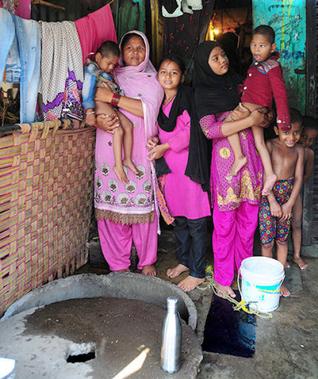
File photo of Netaji Subhash Chandra Bose.

Azamgarh :

With rumors amuck of late freedom fighter Subhash Chandra Bose making an appearance as the mysterious godman Gumnami Baba, Netaji’s driver Colonel Nizamuddin is now set to make headlines by opening a bank account at the ripe old age of 116-years.

According to Colonel Nizamuddin alias Saifuddin’s voter identity card and passport, which he produced as proof of identity before the State bank of India for opening the account, he was born in 1900.

In February this year, a Japanese man, who was believed to be the oldest man alive, passed away at the age of 114.

That way, Colonel Nizamuddin is the oldest human being alive on the planet right now as he completes 116-years 3 months and 14 days on Sunday.

Another startling aspect is that Colonel Nizamuddin’s wife, Ajbunisha, is 107 years old and the couple have opened a joint account with SBI.

Locals and the district administration were delighted to know about Colonel Nizamuddin amazing feat of being the oldest man alive. They are, infact, proud of the fact that such an elderly person is part of their neighbourhood.

source:  http://www.timesofindia.indiatimes.com / The Times of India / News Home> India / ANI / April 17th, 2016

Ranchi girl to speak on child marriage in New York

Ranchi, JHARKHAND :

TabbuMPOs17apr2016

Tabbu Afroz, the daughter of a cycle mechanic based in Ranchi district, has been invited to the Breakthrough Inspiration Awards in New York where she will deliver a speech on child marriage.

This 17-year-old girl from Jharkhand is the only participant from India to be named by the international NGO Breakthrough for the event for her efforts to stop child marriages in her hometown.

Her commendable endeavour began when Tabbu was 15. Her elder sister, who was then 17, was forced to quit school to get married.

Tabbu had heard about child marriage being an offence in various programmes organized by NGOs in her school and began convincing her parents and other family members to stop the marriage. When her pleads went unheard, she contacted an NGOs with her teacher’s help and finally was able to save her sister from child marriage.

Since then Tabbu has been working towards spreading awareness.

She has been making people of her locality realize why it is important for girls to study and choose a career, says a report in Times of India .

Tabbu has recently taken admission in a Ranchi college while her elder sister who was to be married away is now 19, and pursuing a course in computers.

Tabbu’s father, Mohammad Ramza is very happy with the success of his daughter and is thankful to her for making him stop the marriage of his elder daughter.

You can follow the Award Ceremony to be held on 7th Nov on #LetsBreakthrough on Twitter

Image Courtesy : http://breakthroughtv.tumblr.com/post/101681782472/whos-this-girl-her-name-is-tabbu-she-is-an

source: http://www.iseeindia.com / I See India / Home> News You Can See / by Megha / November 06th, 2014

Kin of 115-year-old INA veteran feel neglected

Varanasi, UTTAR PRADESH :

Varanasi :

When the chief minister Akhilesh Yadav felicitated eminent persons of different fields with Yash Bharati Award and announced a monthly pension ofRs. 50000 to the recipients in Lucknow on Monday, the kin of 115-year-old member of Subhash Chandra Bose’s Indian National Army (INA) Nizamuddin in Azamgarh district were upset over government’s apathy to recognize contribution of the centenarian war veteran.

“Not to speak of any award or pension, there is not even a ‘cheering smile’ from government side to this living legend of INA,” Nizamuddin’s son Akram Sheikh told to TOI.

“Is the service of my father, who had faced enemy’s bullet on his body to save Netaji’s life in the jungles of Burma (now Myanmar), worthless for the government machinery,” wondered Akram adding that no political leader except Prime Minister Narendra Modi appreciated his father publically. During his Lok Sabha election rally in Varanasi in May 2014 Modi had publicly greeted Nizamuddin and touched his feet.

“My father needs nothing, but only a warm call of ‘Jai Hind’ when the chief minister along with SP supremo Mulayan Singh Yadav will be at Sathiaon in Azamgarh, just about 6km away from our place, on Tuesday to attend a programme,” said Akram. He said that his father used to tell the wartime stories. Once when the INA troop was in the forests of Burma Nizamuddin spotted an enemy soldier targeting Bose. He shielded Bose and faced the bullet on his back. Laxmi Sehgal had removed three bullets from his body.

Nizamuddin, a resident of Dhakwa village in Azamgarh district, claims to be the close aide of Bose. He served as his body guard cum driver during INA tenure.

The only documentary proof to show his association with INA is the repatriation certificate issued in favour of Nizamuddin by one Swami (full name SV Swami), the chairman of Relief and Repatriation Council, Ex. Azad Hind Fauj and Allied Organisation, Rangoon. It is a certificate having information about him and a pledge for the nation with a seal of AH Fauj & Allied Organisation, Burma.

Nizamuddin is not ready to accept that Bose died in air crash in 1945, as he claimed that he had dropped his master on the banks of river Sitangpur near the Burma-Thailand border about three-four months after the said air crash. He strongly believed that Bose lived in Faizabad in the guise of Gumnami Baba, and he also claimed that the German make binocular found in the box of Gumnami Baba belonged to INA.

source: http://www.timesofindia.indiatimes.com / The Times of India / News Home> City> Varanasi / by Binay Singh / TNN / March 21st, 2016