Category Archives: Amazing Feats

School dropout’s light of learning

– SAMARITAN GIFTS POOR KIDS WHAT HE DIDN’T GET
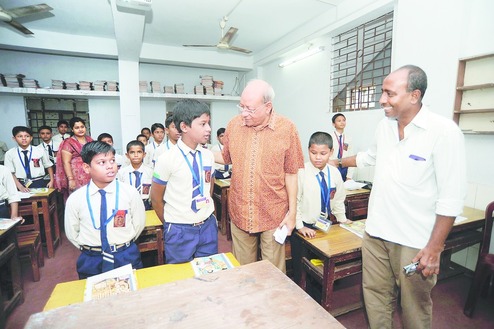
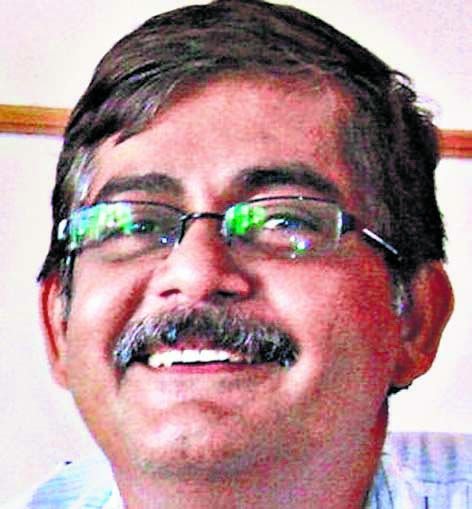
Mamoon Akhtar (right) with Emami co-founder RS Goenka during a visit to his school in Tikiapara. Picture by Sanjoy Chattopadhyaya

Mamoon Akhtar was forced to drop out of school in Class VII because his parents couldn’t afford his tuition fees. Three decades later, the 43-year-old from Howrah is the driving force behind a school in Tikiapara with 3,000 students, most of them children of unlettered parents.

Mamoon’s extraordinary journey from victim to champion of the underprivileged started the day he decided that he wouldn’t be deprived of an education just because his family couldn’t pay for his schooling.

“My father was a labour contractor. Our family fell on bad times when his business collapsed and I had to leave school. But I started giving tuitions and continued studying on my own. I would sit for examinations as a private candidate and this continued till Class XII, beyond which I couldn’t progress because my father died and our financial condition got worse,” Mamoon recalled.

Mamoon is the youngest of six siblings, including four sisters. While one of the Akhtar girls went on to get a bachelor’s degree in arts, he is the only one among the remaining siblings to study beyond Class X.

After his father died, Mamoon took up a librarian’s job in a private school in Tikiapara, supplementing his income by giving private tuitions. Life would have gone on as usual but for what was playing at the back of his mind. Try as he might, Mamoon couldn’t get over how he was forced out of school.

In 2002, Mamoon founded a school in Tikiapara with six students. “I would take in nursery-level kids and prepare them for admission to Urdu, Bengali and Hindi-medium schools the next year,” he recounted.

While the initial expenditure on books and furniture was entirely Mamoon’s, help arrived as the queue of parents wanting to put their children in his school grew longer. Caring Friends, a group of philanthropists, came forward to fund the initiative and the aptly named Samaritan Help Mission School hasn’t looked back since.

Homemaker Tara Khatun’s son and daughter study in the school and she couldn’t be happier for the opportunity. “I pay Rs 80 as the monthly tuition fees for my two children. We couldn’t have paid for an English-medium education if this school didn’t exist,” said Tara, whose husband works at a blacksmith’s shop.

Samaritan Help Mission School is in stark contrast to its surroundings – narrow, dingy lanes lined with shanties inhabited by families for whom life is a struggle every single day. The five-storey school building on a three-cottah plot has Wi-fi enabled classrooms equipped with projectors, among other facilities.

“We use projectors for the benefit of some students with impaired vision. It is easier for them to see on the screen than strain their eyes trying to make out what is on a blackboard,” Mamoon said.

The school currently takes in students from classes I to VIII. Younger students are admitted to the Rebecca Belilious English Institution, located around a kilometre away in an area that used to be a den of crime.

The land on which the second school stands had been a garbage dump for years until Howrah City Police and the Howrah Municipal Corporation got together to create a conducive atmosphere for Mamoon to expand his initiative.

“We helped them (Mamoon and his staff) build a wall, remove encroachments and start a school there. Today, many children from poor families get free education there,” police commissioner D.P. Singh said.

Sources said Singh’s predecessor Ajey Ranade played the key role in transforming the place into a site suitable for a school.

After completing Senior KG at Rebecca Belilious English Institution, most children move to Samaritan Help Mission School, which has been adding a class every year.

“We are affiliated to the West Bengal Board of Secondary Education. When the current batch of Class VIII students is ready for promotion, we will start Class IX,” a teacher said.

Both schools run on corporate funding from companies like Chevrolet, Cognizant, Emami, Edelweiss and Tata Steel. Charity organisations like Kolkata Gives and Caring Friends continue to fund several school activities.

Last Sunday, a team of industrialists and businessmen visited the two schools to see the fruition of Mamoon’s dream. R.S. Goenka, one of the founders of the Emami Group, said: “I come here because the school and the kids here inspire me. I also get to see how people are benefiting from our funding.”

The Emami Group has financed toilets and projectors on the main campus while Rebecca Belilious English Institution has an AstroTurf funded by car manufacturer Chevrolet.

Sport is integral to Mamoon’s vision of a school. Samaritan Help Mission School recently acquired a table tennis board and two of its students, Mohammad Sharik and Sonu Rajbhar, got the opportunity to visit Manchester United Club in Old Trafford earlier this month.

“A big company sponsored the trip. The duo were selected from among kids from underprivileged families who have excelled in football,” a teacher said.

Sharik is in Class IV and Sonu is a student of Class V.

For Mamoon, it’s been a tough but satisfying ride since the days when a group of college girls he had enlisted would go around Tikiapara trying to convince people to send their children to school.

“Many people suggested that I turn my school into a Bengali, Hindi or Urdu-medium institute, but I insisted on an English-medium school. Knowing English is very important in the current scenario,” the 43-year-old said.

Scores of parents are grateful that Mamoon stuck to his plan. Sending their children to any other English-medium school in the area would have been 10 times more expensive.

Mamoon’s three daughters – seven-year-old Atifa Fatema, six-year-old Adifa Fatema and four-year-old Batul Fatema – also study at Samaritan Help Mission School. When wife Shabana readies the three girls for class every morning, he can’t help but wonder what life might have been if he weren’t asked to leave school in Class VII.

What is your message for Mamoon? Tell ttmetro@abpmail.com

source: http://www.telegraphindia.com / The Telegraph, Calcutta,India / Front Page> Calcutta> Story / by Subhajoy Roy / Wednesday – September 30th, 2015
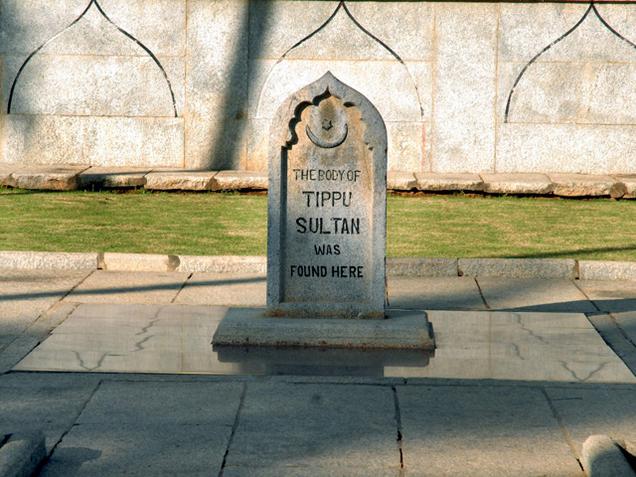
Tipu Sultan: a secular internationalist, not a bigot

Tipu Sultan cannot be reduced to a singular narrative or tradition of intolerance or bigotry as he represented multiple traditions. Photo: M.A. Sriram / The Hindu

The recent offer made by a film producer to Tamil superstar Rajinikanth to act in a movie on the ‘Tiger of Mysore’, Tipu Sultan, has yet again opened up a Pandora’s Box. The Bharatiya Janata Party (BJP) and some Hindutva groups have demanded that Rajinikanth refuse the offer. This argument is made on the grounds that Tipu, the 18th century ruler of Mysore state, was a “tyrant” who killed thousands of Hindus as they refused to convert to Islam.

This is not the first time that Tipu’s name has been dragged into a controversy. It began some years back when Sanjay Khan made a tele-serial based on Bhagwan S. Gidwani’s book, The Sword of Tipu Sultan. His name was once again dragged into a controversy when the Congress government intended to celebrate his birth anniversary in 2014. There was opposition when a proposal was made to establish a university named after him.

Tipu’s very name has become contentious for two reasons: first, his controversial steps in dealing with different communities and people who rose against him. Second, different perspectives through which history was constructed and his image built.

Colonial historians have projected Tipu as a “religious bigot”, who was instrumental in killing and converting to Islam thousands of Nayars of Kerala, Catholics of Dakshina Kannada and Coorgis of Kodagu. Even Kannada chauvinists have projected him as anti-Kannadiga as he was instrumental in changing the local names of places and introducing Persian vocabulary into administration. Marxist historians, on the other hand, have viewed him as “one of the foremost commanders of independence struggle” and a “harbinger of new productive forces”.

History is unkind to Tipu Sultan. The fact is that Tipu cannot be reduced to a singular narrative or tradition of intolerance or bigotry as he represented multiple traditions. He combined tolerant inter-religious traditions, liberal and secular traditions, anti-colonialism and internationalism. He could do this as he had strong roots in Sufism, which is not explored much by historians. He belonged to the Chisti/Bande Nawaz tradition of Sufism.

In fact, Tipu was radical in more than one sense. He was the first to ban consumption of alcohol in the entire State, not on religious grounds, but on moral and health grounds. He went to the extent of saying: “A total prohibition is very near to my heart.” He is credited with introducing missile or rocket technology in war. He was the first to introduce sericulture to the then Mysore state. He was the first to confiscate the property of upper castes, including Mutts, and distribute it among the Shudras. He is also credited with sowing the seeds of capitalist development at a time when the country was completely feudal. He thought about constructing a dam across the Cauvery in the present-day location of Krishnaraja Sagar. He completed the task of establishing a biodiversity garden named Lal Bagh.

His tolerance is reflected in his annual grants to no less than 156 temples, which included land deeds and jewellery. His army was largely composed of Shudras. When the famed Sringeri Mutt, established by Shankaracharya, was invaded by the Maratha army, he issued a firman to provide financial assistance for reinstallation of the holy idol and restoring the tradition of worship at the Mutt. His donation to the famous Srikanteshwara temple at Nanjangud; the donation of 10,000 gold coins to complete temple work at Kanchi; settling the disputes between two sects of priests at the Melkote temple; and gifts to Lakshmikanta temple at Kalale are all well-known. Interestingly, Srirangapatna, a temple town, remained his permanent capital till the end of his rule. He was also instrumental in constructing the first-ever church in Mysuru. Incidentally, well-known historian B.A. Saletore calls him “defender of Hindu Dharma”.

The allegation of forcible conversions has to be seen in the background of political exigencies — either they were with the colonialists such as in the case of Christians of Dakshina Kannada, or were waging a protracted guerrilla war as in the case of Coorg. Here, historians have distorted the facts by reducing political exigencies to the “communal ideology” of Tipu.

A ruler, who once identified himself with the American and French Revolution and Jacobinism, has remained an enigma to many. That a man who ruled for just 16 years continues to haunt Hindutva groups obviously means that Tipu continues to exist in the political discourses, political narratives as well as in the imagination of nation-building. This is where the irony of history lies — one cannot just bury Tipu in the annals of history.

 Muzaffar Assadi
Muzaffar Assadi

(The writer is chairman, department of political science at the University of Mysore. muzaffar.assadi@gmail.com.)

source: http://www.thehindu.com / The Hindu / Home> National> Karnataka / by Muzaffar Assadi / September 27th, 2015

AIR to broadcast English Feature on 1965 war hero Abdul Hamid

New Delhi  (ANI):

All India Radio will be broadcasting an English feature on 1965 war hero Company Quarter Master Abdul Hamid, Param Bir Chakra (Posthumous).

The feature titled “Lest We Forget” will be broadcast on September 25 at 10 p.m. on the Rajdhani Channel, AIR Delhi and AIR FM Rainbow network.

The feature can also be enjoyed through live streaming available on allindiaradio.gov.in By downloading our web applications for either for Android, iOS or Windows, one can also get to hear programmes of All India Radio.

To commemorate 50 years of 1965 Indo-Pak War, All India Radio is continuously broadcasting talks and features both in English and Hindi.

This particular national programme of features (English) intends to retell the story of one such brave son of India, soldier no239885, who played a pivotal role during a bloody encounter in Khemkaran, which was the site of a major tank battle in 1965.

The 1965 Indo-Pakistani War witnessed the largest tank battle in military history since World War II. Khemkaran is, till today, known as the graveyard of tanks, the area where Pakistani Patton tanks were crashed and burnt as they met the solid iron wall of mother India’s sons.

This was one of the first instances in modern warfare when an armoured division was beaten back by an infantry regiment. And this was the point where the tide turned towards India.

This programme will attempt to travel back in time to Khemkaran of 1965 to recreate the day when amidst blazing guns and war-cries, Company Quarter Master Havildar Abdul Hamid, PVC, of the Indian Army who made the ultimate sacrifice. (ANI)^

source: http://www.in.news.yahoo.com / Yahoo.com – News / Home> National  by ANI / Thursday – September 24th, 2015

BETWEEN WICKETS – Indian ‘braves’ who ran the Englishman Close

Excessive bravery, like genius, comes with a touch of madness

Brian Close who passed away on Sunday was, by common consent in England, the bravest man to have played cricket.

As a batsman, Close stepped out to the West Indies fast bowlers Wes Hall and Charlie Griffith, taking blows to the body. As a fielder at short leg he was renowned for getting hit. His bare upper body was the staple of photographs on sports pages — complete with deep impressions of the cricket ball. In colour pages, you could tell the black from the blue! A well-known comedian said it was always possible to know when the cricket season began in England: “by the sound of leather hitting Close.”

Every country has its tales of the bravest — or the most foolhardy. Players, who, with scant regard for personal safety simply got on with the game. Many have become legends for a single act of bravery — Rick McCosker batting with a bandaged jaw, Colin Cowdrey stepping out to bat with his arm in a sling, Hanif Mohammed making a triple century even as the skin under his eyes kept peeling off.

Iron man of Indian cricket

Indian cricket’s bravest have always been measured against their first Test captain, C.K. Nayudu. On his final tour of England, aged 41, he was struck on the under the heart by fast bowler Gubby Allen. It was just the incentive he needed to make his highest Test score, 81.

Hit on the mouth by Dattu Phadkar in a Ranji Trophy match, Nayudu waved away assistance, swept away his teeth from the pitch, and when served up a full toss next ball, berated the bowler for this. He was in his 50s then. Chandu Borde has written about how “even at the age of 58, Nayudu was the iron man of Indian cricket.”

Nayudu played his last first class match in 1963-64. By then, Tiger Pataudi was India captain. Tiger was, perhaps, the bravest man to play for India. The mere thought of taking the field with just one good eye against bowlers around the world is mind boggling. For some years between the reigns of Nayudu and Tiger, India had earned a reputation for being soft. There were even stories of players pulling out of difficult tours.

With the arrival — and success — of Tiger Pataudi, things began to change. Apart from injecting his players with self-respect, Tiger also toughened them. He hasn’t been given enough credit for this. After all, it would have been ridiculous to whine to a captain who had such a serious handicap.

Thus was born the next generation of Indian ‘braves’ — Abid Ali, Eknath Solkar, Mohinder Amarnath, Sunil Gavaskar. Abid and Solkar at short leg picked up catches off genuine sweeps by batsmen that they ought to have been ducking from.

Amarnath’s heroics against the fast bowlers in Pakistan and the West Indies make up one of the inspiring chapters of Indian batting. For a brief period he was the best in the world. For barely getting hit as an opener in a career spanning 125 Tests, Gavaskar was special. A combination of technique and heart made up his game.

During a tour, we once calculated the number of days in a year when big, strong men with a cricket ball in their hands were attempting to incapacitate him. Sometimes bravery is calculated by what you don’t do. Close ensured he got hit; Gavaskar ensured he didn’t. That was perhaps even more admirable.

Kumble’s valour

In recent years, thanks to better equipment, better protection and better pitches, batsmen and fielders have felt safer. The single bravest act on a cricket field by an Indian remains, however, Anil Kumble bowling with a broken jaw in the Antigua Test of 2002. Kumble, hit by Merv Dillon while batting, sent down 14 consecutive overs and became the first bowler to dismiss Brian Lara while bowling with his jaw strapped up. He was due to fly back to Bangalore the following day for surgery, and said, “At least I can now go home with the thought that I tried my best.”

“It was one of the bravest things I’ve seen on the field of play,” said Viv Richards later.

An Abid Ali refusing to flinch, even charging out to the fast bowlers. A Solkar keeping his eyes on the ball, placing the taking of a catch above self-preservation. A Nayudu acknowledging a fast bowler’s dental skill. All part of legend now.

Close was a brave player. He was also, as Vic Marks has pointed out in a tribute, “a wee bit mad.” Perhaps, like genius, excessive bravery comes with a touch of madness.

by Suresh Menon

Suresh Menon
Suresh Menon

 source: http://www.thehindu.com / The Hindu / Home> Sport> Cricket / by Suresh Menon / September 16th, 2015

Driving change on the ground

Crossing hurdles:Dildar Ahmed Shapo, who is on a mission from Kashmir to Kanyakumari to mobilise and inspire those on wheelchair, reached Chennai. —Photo: B. Jothi Ramalingam

From Kashmir to Kanyakumari, Dildar Ahmed Shapo’s journey is one of grit and mental strength

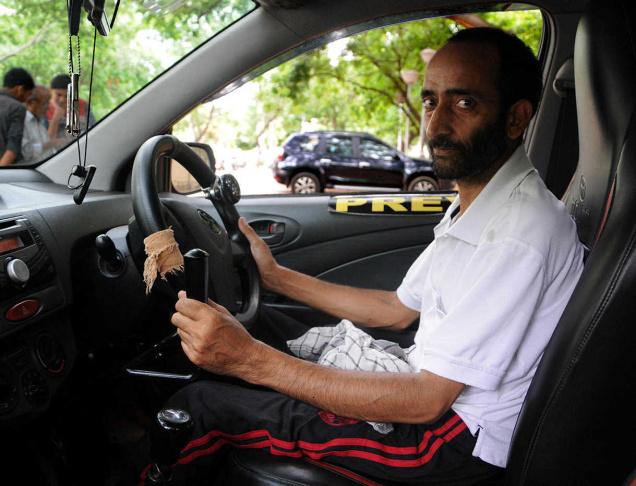
Every day, for the last 20 days or so, Dildar Ahmed Shapo has been waking up at midnight, getting dressed, having a cup of tea and a biscuit before getting into his modified car to drive 500 kilometres.

Since August 19, Mr. Shapo, a wheelchair user, has travelled to over 20 towns in 10 states to say: ‘being confined to a wheelchair does not mean it’s the end life of your life.’

“I was 18 when a freak accident put me on a wheelchair. For eight years, I waited to die,” says the 39-year-old from southern Kashmir, who was in Chennai on Sunday. He recalls: “Back then, there were no rehabilitation centres where I lived and it took me a long time to recover. It was even more painful as I was the breadwinner of the family at the time of the accident.”

Speaking to wheelchair users across the country in his travels, he says he has seen that even his own home was inaccessible, let alone public spaces. “Very few wheelchair users go to school as the space is not accessible and even fewer are financially independent. When it comes to marriage, I have seen women marrying men on wheelchairs but not the other way around,” he says.

During talks in schools and rehabilitation centres, he focuses on mental strength. “I encourage them to be tough and to focus on a destination, a goal. While looking out of a window, you do not see your wheelchair,” he elucidates.

Mr. Shapo’s aim is to bring wheelchair users and organisations that work with them together, across the country, and perhaps create a pan-India portal. He will be visiting Andhra Pradesh, Telangana, Odisha, West Bengal, the Northeast and other States before completing his trip.

While a majority of spinal injuries are caused by road accidents, there are also many caused by construction site accidents, sports injuries, surgeries gone wrong as well as congenital defects, points out S. Vaidyanathan, a volunteer at The Spinal Foundation, a self-help group for people with spinal cord injuries. On September 25, Mr. Shapo is hoping to reach Delhi, where ‘India Spinal Cord Injury Day’ is to be launched.

source: http://www.thehindu.com / The Hindu / Home> News> Cities> Chennai / by Zubeda Hamid / Chennai – September 14th, 2015

Once Expelled For Not Having Money For Fee, Now In IIT Delhi

  • The Humble background:

Father of Hanjala Shafi, a boy from Begusaray district of Bihar, used to work at a shoe shop. Often he used to think if his life would go in the struggle for daily bread and butter.

Would his children have any better future?
Although his son Hanjala was a bright student, his condition was a big hurdle in making it big.

Source : Anand Kumar
  • A ray of hope and despair:

His father admitted him to a government school but the teachers were irregular and the school got shut down. To help in the family’s finances his Bua (paternal aunt) started working in a private school. After her persistent request she got him admitted to her school. Now things went smoothly as he did not have to worry about the school fee too.
But she got married after 3-4 years, leaving the school and the situation was bad again. He was asked to submit his fees and he couldn’t . On this, the school expelled him.

  • The guardian Angel and a dream:

Luckily, a teacher named Javed noticed this bright boy and assured him of fees, stating that he need not worry. Instead he should do something for which the world would look up to him.
Hanjala was relieved and immersed himself in books.
His one room home for everybody was too crowed for study, so he used to go out and study. He cleared his 10th exams and came to Patna with his mother with the dream of becoming an engineer in his eyes. He had heard much about super-30, so he wanted to get in to it. But the time was not on his side. The innocent mother and son got fooled by a similar sounding institute which asked them for fee.
His mother Yasmin sold the only jewellery she had for the fee. Soon they realized that it was not the Super-30 they were looking for. He passed 12th but could not get into engineering.
Now the bright Hanjala wished for another chance.

  • The second chance:

One day they reached me. With tears in her eyes her mother told the entire story. His father was earning 2800 a month and that wasn’t good enough for the family, leaving no choice for Hanjala. It melted my heart to hear his story.
I looked at the boy. He was sitting there with his head down. I felt that this bright kid needed a chance. And he was in our team. He was hard working and bright, he used to solve maths questions by different methods.

  • Our bond and beautiful memories:

In my batch there were only two Muslim kids. Considering them I declared holiday on Eid, and asked them to go home and celebrate it with family. Both the boys refused and said that when they had celebrated Holi, Diwali with me, we want to celebrate Eid as well. And we made ‘Sewai’ together, and enjoyed the festival.
That was a memorable ‘Eid’.

  • And the dream comes true:

Now came the time of test the 2013 IIT entrance exam. There was a spark in Hanjala’s eyes. Everybody was assured of his success. Hajala and his mother Yasmin had high hope in their eyes. And yes the result proved them right and he got a very good rank in the exam. Yasmin’s eyes were filled with tears when she came to me this time too, but for a very different and good reason.

  • A mother’s heart :

Today Hanjala is a second year student in IIT Delhi. Yasmin sometime visits us with her husband. They talk about many things, and help students here in cooking food. This mother says one Hanjala has got his dream come true and others are studying hard for the same. Hence, she never misses to take care of kitchen on their time of meal.

source: http://www.thelogicalindian.com / The Logical Indian / Home> Story Feed> Get Inspired / Anand Kumar / September 12th, 2015

Guinness recognition awaits Hyderabadi for fastest nose-typing

Mohammed Kursheed Hussain nose-typing in Hyderabad on Monday.- Photo: By Arrangement

How fast do you think you can type?’ Before most would have gone half-way with the sentence, 24-year-old Mohammed Kursheed Hussain of Hyderabad would have finished typing, with his nose.

Mr. Hussain attempted to break a Guinness world record for fastest nose-typing here on Monday. In 43.85 seconds, he typed the 103-character long ‘Guinness world records have challenged me to type this sentence using my nose in the fastest time’. He had to best 46.30 seconds, the standing record that was set in December 2014. An official word from Guinness is awaited to confirm his Monday’s feat.

Incidentally, Mr. Hussain had set a nose-typing Guinness record in February last year when he typed the challenge sentence in 47.44 seconds.

“I was told by Guinness in January this year that the record I had set was broken. Since then I trained to break the record,” said Mr. Hussain, who is a masters student at a university in Indiana, US.

Hussain’s tryst with typing began when he turned seven. It was however not until he turned 18, did he realise the uniqueness of his skill.

“I thought nothing of my typing ability until I had gone to college. That is when my friends made me realise that I had skill that others did not have. But I never thought that I would be a Guinness record holder,” he said. In 2012, Hussain hand typed the English alphabet with spaces in record 3.43 seconds, debuting in the annals of the Guinness World Records.

“I had to beat 3.52 seconds. It seemed impossible then,” he said. That record stands unbroken for three years now. Ask how he types with his nose when keys are blurred at nose’s width away from the keyboard,

Mr. Hussain offers a plausible explanation. “I think I just have a big nose,” he chuckles.

source: http://www.thehindu.com / The Hindu / Home> News> Cities> Hyderabad / by Rohit P.S./ Hyderabad – August 18th, 2015

Ten things to know about US Open 2015 doubles champion Sania Mirza

New Delhi :

Ace tennis player Sania Mirza scripted history on Sunday by clinching the second Grand Slam of the year after she won the women’s doubles US Open title with Swiss partner Martina Hingis at Flushing Meadows in New York.

Here are the ten things to know about Sania’s illustrious career:

# Sania Mirza has title at all Grand Slams – Wimbledon (2015 – Doubles), US Open (2014 – Mixed doubles), US Open (2015 – doubles), French Open (2012 – Mixed doubles) and Australian Open (2009 – Mixed doubles).

# Sania Mirza was conferred with the prestigious Rajiv Gandhi Khel Ratna award last month. Sania became the second tennis player to receive the country’s highest sporting honour after Leander Paes.

# The pair of Sania Mirza and Martina Hingis is ranked Numero Uno in the world and they were the top seeds at the 2015 US Open. This is their second Grand Slam of the year after Wimbledon Championship.

SaniaMPOs14sept2015

# Sania Mirza had become India’s first woman player to win a Grand Slam when she won the Australian Open with compatriot Mahesh Bhupathi in 2009.

# The 28-year-old Sania Mirza won her first women’s doubles Major title 12 years after turning professional.

# It was 12 years ago, in 2003, when as a 16-year-old Sania became the first Indian girl to win a Grand Slam when she triumphed in the doubles’ event at Wimbledon, partnering Alisa Kleybanova of Russia.

# Sania Mirza has also won a total of 14 medals, including 6 golds, at three major multi-sport events, namely the Asian Games, the Commonwealth Games and the Afro-Asian Games.

# Sania Mirza is the highest ranked female player ever from India, reaching World No. 27 in singles in 2007 but a major wrist injury forced her to give up her singles career and focus on the doubles circuit.

# Sania Mirza was awarded the Arjuna award in 2004 while in 2006 she was awarded a Padma Shri, India’s fourth highest honour for her achievements as a tennis player.

# Sania Mirza is the first South Asian Woman to be appointed as a Goodwill Ambassador of UN Women, in the organization’s history, for South Asia.

source: http://www.timesofindia.indiatimes.com / The Times of India / News Home> Sports> Tennis> US Open 2015 / TNN / September 13th, 2015

Sania Mirza-Martina Hingis win US Open women’s doubles title

New York  :

India’s tennis star Sania Mirza bagged her second consecutive Grand Slam title of the season, and fifth overall, as she won the US Open women’s doubles with Swiss partner Martina Hingis on Sunday.

The top-seeded Indo-Swiss team outplayed the fourth seed team of Casey Dellacqua and Yaroslava Shvedova 6-3, 6-3 in the final, which never rose to great heights.

Sania’s win capped off a memorable US Open for Indians as Leander Paes had won the mixed doubles trophy with Hingis on Friday, in a repeat show of the Wimbledon.

Kazakshtan’s Shvedova and Australia’s Dellacqua struggled to hold serve, making it too easy for Sania and Hingis. The contest was over in just 70 minutes as the top seeds asserted themselves.

Sania’s ground-strokes from the back of the court and Hingis’ agility at the net was too good for their rivals.

It was Sania and Hingis’ second major title in a row, having won the Wimbledon championships earlier this season.

Sania now has five Grand Slam titles in her collection. She won three Mixed Doubles trophies, the last one coming at this very venue with Bruno Soares in 2014.

In an extraordinary season, Hingis has won five Grand Slam titles this season, taking her overall number to 20. She won three titles with Paes and two with Sania.

“It’s a great year for us. Already been a great year, became world number one. We were a solid team and were in with a chance in all Slams. We are happy to come through. I won mixed doubles here last year, great to come back and win this,” Sania said after her win.

An elated Hingis said, “from the start we hit it off. Our games complement each other. Sania won her first Wimbledon, for me it is bonus. I volley better than what I used to. (in her singles days)”

Shvedova committed a double fault in the second game at 30-all to give top seeds a break point and then a superb return from Sania brought another opportunity but the fourth seeds saved both chances.

The top seeds did not have to wait much for next chance as they broke Dellacqua at love to take a 3-1 lead. But the advantage slipped soon as Sania was broken in the fifth.

Shvedova, who is getting married on Tuesday, surrendered her serve one more time, letting Sania and Hingis just walk away with the set.

Shvedova was far from the player she is as she was down by three break points in the very first game of the second set. Top seeds grabbed the opportunity and consolidated lead with a solid hold.

Sania fired two stunning service winners on Dellacqua’s serve as the Australian was broken at love in the seventh game. Hingis hit an overhead volley winner on the first match point after Shvedova’s double fault at 40-all.

source: http://www.timesofindia.indiatimes.com / The Times of India / News Home> Sports> Tennis > US Open 2015 / PTI / September 13th, 2015

Here come the heroes

The winners of the Big Real Hero awards

Hyderabad’s ‘real heroes’ were honoured by 92.7 Big FM

It is not easy to initiate a change. But, the best way to bring a change is by paving a new path. While most of us complain at the way society turns a blind eye to the problems and situations, there are a few who do not complain, instead take things in their hands and set an example. To felicitate their efforts and set them as role models to society, 92.7 Big FM invited these heroes as part of their ‘Big Real Hero Awards’ campaign.

As we celebrate the 69th year of independence the change makers of our society become the real heroes to fight for various forms of independence in our independent society. These heroes are silent and are making a difference without talking about it.

As part of their campaign, Big FM in their breakfast show asked people to share the names of heroes they have seen working for society. After an overwhelming response some of them were even featured in their breakfast show ‘Salaam Telangana’ hosted by RJ Shekar and Swapna.

In an event on Friday, the channel felicitated the six heroes namely—Bal Gangadhar Tilak, Sharif, Rajeshwra Rao, Bhagya Lakshmi, Yadigiri and M. Vijay Ram Kumar. The awardees come from different walks of life and serve society in different ways and means. They, in their own right have been working for a change. Bal Gangadhar, a retired railways employee has used his pension to fill more than 1100 potholes in the city. He took the initiative when he witnessed several incidents caused by the bad state of roads. In Bal Gangadhar’s absence his brother Bhimesh Shankar was present. He established shramadaan.org

Sharif is the founder of Friends2support.org. F2S is a group founded by five friends to help people meet the emergency blood requirement for free. F2S claims to be India’s largest blood donor database. The organisation has won several national and international awards. Rajeshwar Rao is the founder of Satya Harishchandra foundation. They cremate unclaimed and unidentified dead bodies. Bhagya Lakshmi from ‘Manchi Pustakam’ is a small initiative taken to publish, encourage and promote Telugu books. Yadigiri is a chef and he donates food from his restaurant—Ulavacharu to orphans everyday and M. Vijay Ram Kumar of Emerald sweets has been working for a green society. The awards were given away by Somesh Kumar, Commissioner GHMC and actor Manchu Lakshmi.

source: http://www.thehindu.com / The Hindu / Home> Features> MetroPlus / by Prabalika M. Borah / Hyderabad – August 14th, 2015