Category Archives: Amazing Feats

KCR Greets Sania for Khel Ratna

Lawn Tennis player Sania Mirza | (File/PTI)

Hyderabad :

Chief minister K Chandrasekhar Rao on Saturday congratulated Hyderabad- based Indian lawn tennis player Sania Mirza for receiving Rajiv Gandhi Khel Ratna award.

The Chief Minister wished her all the best, expressed the hope that in future she would get many more such awards nationally and internationally, an official release from the CMO said.

source: http://www.newindianexpress.com / The New Indian Express / Home> States> Telangana / by Express News Service / August 30th, 2015

Company Quartermaster Havildar Abdul Hamid

https://www.youtube.com/watch?v=e-BA9inBikw

Published on Sep 20, 2014

Company Quartermaster Havildar Abdul Hamid, PVC (1 July 1933 – 10 September 1965) was a soldier in the 4th Battalion, The Grenadiers of the Indian Army, The Grenadiers of the Indian Army, who died in the Khem Karan sector during the Indo-Pakistani War of 1965 in the Battle of Asal Uttar, and was the

source: http://youtube.com

An Immortal Hero Brigadier Mohammad Usman

https://www.youtube.com/watch?v=jwcMoGYtw4o

Published on Sep 15, 2013

AAJ TAK “Vande Matram” Remembering An Immortal Hero , Brigadier Mohammad Usman Khunambir (M.V.C.,15 July 1912 — 3 July 1948) Symbol of” India’s “Inclusive Secularism His Mother Was Jamilun Bibi D/o Abdul Kabir Ansari Belongs to Ansari Family of Yusufpur And Father Was Mohammad Faqooq

source: http://www.youtube.com

Biryani restaurant dishes out recipe to better lives of mentally ill

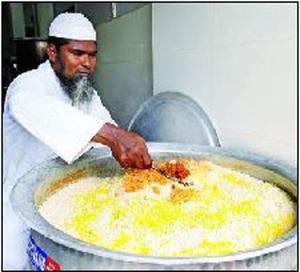
Mohammed Shabbir especialises in Biryani making.

Chennai :

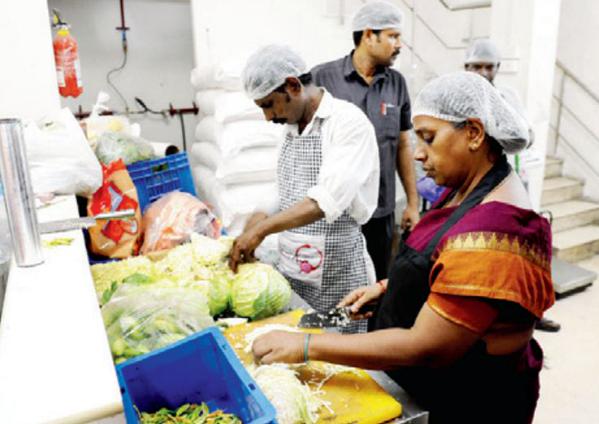
Mohammed Shabbir toils over a huge handi to conjure up his signature dish – kacchi gosht ki biryani. In the kitchen, a few men and women work quietly, cleaning vegetables, and washing vessels. Bhawarchi Shabbir on Whites Road, Royapettah, is not just another restaurant. It is a training centre which aims to help people who have battled or are battling mental illness, find gainful employment and their own space in mainstream society.

An initiative of The Banyan, a mental health NGO, and restaurateur M Mahadevan, Bhawarchi Shabbir was officially launched last Monday. “This is a training centre where about six to eight people will be trained in service – pouring water, cleaning and cutting vegetables in the kitchen, washing vessels and assisting the chef,” says Mahadevan. “At present, we have five women and two men.”

After three months of training, they will be placed in establishments run by Mahadevan, such as The Marina, Copper Chimney and Bombay Brasserie. “Once they become full-time employees they will be paid Rs 9,000 per month, plus accommodation, food on duty, medical and insurance.”

To run Bhawarchi Shabbir, Mahadevan has brought down ustad Mohammed Shabbir from Hyderabad. While customers can drop into the 30-seater place and sample Shabbir’s Dum Ka Murg Biriyani, Shabbir’s Kacchi Gosht Ki Biriyani and vegetable biriyani, along with other Hyderabadi dishes, takeaways is a major market they are targeting. The specialty, of course, are the biriyanis, which customers can order by the kilo.

All the trainees are either residents of The Banyan or former clients who have accessed services from The Banyan. “We select those who are interested in the initiative. The idea is for them to be trained and employed so that more people are inspired to come forward,” says Mrinalini Ravi, assistant director of male shelter programme of The Banyan.

Biriyani02MPOs07sept2015

“There are many people living with depression and bipolar disorder who are part of mainstream work; maybe they haven’t disclosed their status for fear of stigma and discrimination. In the case of those who are symptomatic and experience a certain level of chronicity which makes ill health more visible, discrimination seems to be rampant. Sadly maintaining social order is the norm in our society and differences are not easily embraced. Thus one gets judged and alienated if one is different or doesn’t conform,” says Vandana Gopikumar, one of the founders of The Banyan.

This initiative aims to ensure that there is promotion of self-reliance, self-worth and creativity amongst those living with a mental illness as well as positive reinforcement at the society level so that people question their own perceptions and aspire to think inclusively, she adds. “This change in mindset will encourage social mixing and build a more just, friendly and cohesive society,” says Vandana.

There are, of course, challenges. For one, Mahadevan’s staff will be sensitized to work along with the trainees. “His employees know some of the people can be symptomatic, so they have to accept it. They need to incentivize, reward and motivate them,” says Mrinalini.

For Meenakshi*, supervisor, it is a chance to have steady employment. Deserted by her husband and treated for depression, she had to discontinue working as a teacher. “After that I worked in several places,” she says. “But here I hope to get steady work and a regular salary.”

*name changed

source: http://www.timesofindia.indiatimes.com / The Times of India / News Home> City> Chennai / by Priya Menon, TNN / September 06th, 2015

Medal misplaced but glory and glow intact – CYCLING CHAMP’S JOURNEY TO SPECIAL OLYMPICS

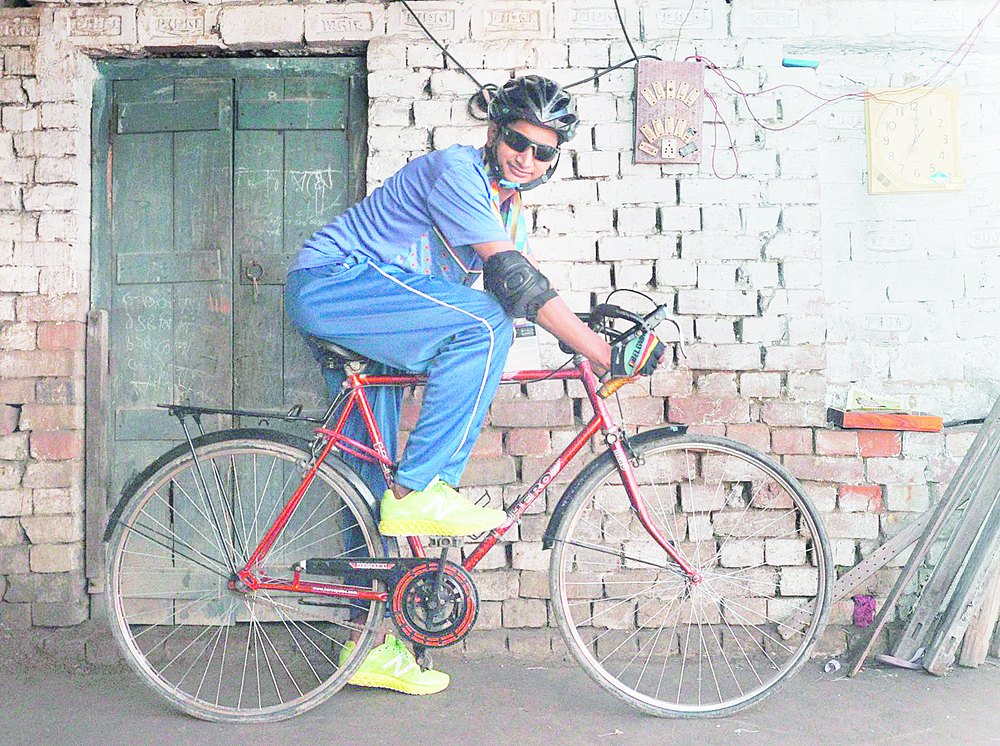
Maksud Alam Mollah outside his home in Dhulagarh, Howrah. Picture by Anup Bhattacharya

Maksud Alam Mollah won three medals in cycling at the Special Olympics in Los Angeles last month but came back with only two. The 22-year-old can’t recall where and how he misplaced the bronze that he had won in the 5km time trial event.

The only cyclist from Bengal in the Indian contingent has a condition called intellectual disability, characterised by a particularly weak memory. “He must have kept the bronze medal somewhere in the hotel or with a friend and forgotten about it,” said mother Kamruneesa.

Maksud has been taught to write down everything so that he doesn’t forget. But if there’s one thing that this young man from Dhulagarh, in Howrah, doesn’t need to be reminded of, it is how to cycle like a champion.

Maksud is convinced he would have won a fourth medal in Los Angeles with the cycle of his choice. “I had difficulty with the cycle that I was first given. It had a flat handlebar. My personal cycle has a curved handlebar. I couldn’t perform well in the first event because of this,” he recalled.

Athletes don’t take their own equipment to the Special Olympics. The Bharat chapter of the Games arranges everything.

“We changed Maksud’s cycle after we learnt that he was having difficulty riding the first one,” said Ashim Pal, the coach who had accompanied the Bengal contingent.

After that first hiccup and a new cycle, Maksud won a medal each in the three other events he competed in, including gold in the 5km road race and silver in the 10km road race.

To his parents, Maksud misplacing his third Special Olympics medal is just another footnote in his journey from Howrah to Los Angeles.

His elder brother Manzoor has the same condition and almost every day brings a new challenge for Kamruneesa and her husband Abu Sattar Mollah. “We had a zari business but couldn’t sustain it after I fell ill. My wife bought a sewing machine and started taking bulk orders for readymade pyjamas. I now run a small shop for candy and chocolates,” said Abu.

Although life is a struggle, the Mollahs are glad that Maksud has found his mission. “I feel proud of my son,” smiled Kamruneesa.

Only three years ago, the prospects weren’t so bright. Maksud had joined the National Institute for the Mentally Handicapped (NIMH) in Bonhooghly in 2012 with diminished cognitive abilities.

“He was studying in a madarsa but had fallen behind in studies. He couldn’t follow his lessons properly. We had to support and encourage him so that his performance improved. His cognition has since improved, which is why he is being able to perform better in sports as well,” said one of Maksud’s teachers at NIMH.

Help has come in other ways too. “The institute would often waive the fees for Maksud’s education. His coach hasn’t taken his fees for several months,” Kamruneesa said.

At NIMH, Maksud has trained under Tamal Chatterjee, the games teacher who also runs a sports centre called KC Memorial at Kamarhati. “I introduced Maksud to various sports. Through trial and error, I realised that cycling was his strongpoint. He went to the National Games organised by Special Olympics Bharat in Bhopal last year, where he was selected for the Special Olympics in Los Angeles,” Chatterjee said.

The selected athletes were required to attend four camps, where they were tested and trained in behaviour and independence, among other things. Maksud needed time to adjust to the fact that he would have to stay without his mother by his side for some time, Chatterjee recalled.

At KC Memorial, Maksud would practise using Chatterjee’s cycle. He got his own cycle after being selected for the Los Angeles trip.

Some residents of the neighbourhood and the panchayat pradhan of Dhulagarh, Rampada Dhonk, pooled in money for Maksud to buy his first cycle. The West Bengal chapter of Special Olympics Bharat sponsored his gear.

“The central government has announced cash awards for the winners. Gold medallists will be given Rs 5 lakh, silver medallists will receive Rs 3 lakh and bronze medal winners will get Rs 1 lakh each,” said Ashoke Chaki, the treasurer of Special Olympics Bharat, West Bengal.

For Maksud, the wheels of success and recognition have just been set in motion.

source: http://www.telegraphindia.com / The Telegraph, Calcutta,India / Front Page> Calcutta> Story / by Dalia Mukherjee / Tuesday – September 01st, 2015

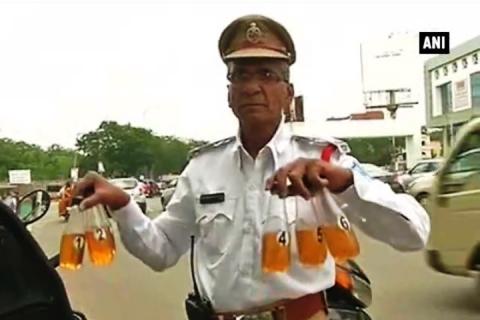
Meet the Hyderabad cop who helps riders with free petrol

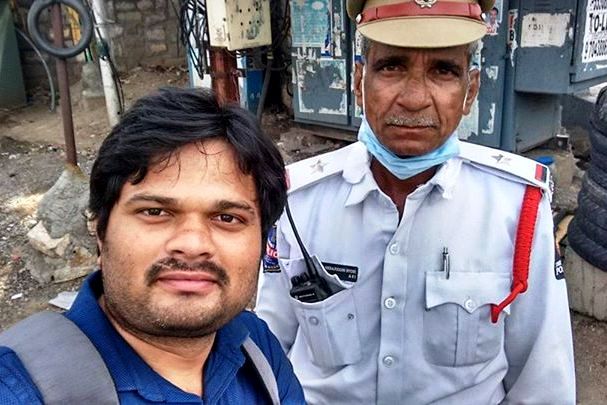
Merajuddin Syed has become a local hero over the past few weeks

Image: Facebook/Vijay Vj

Vijay, a resident of Hyderabad, was going home from work on August 26 when his bike ran out of fuel.

As he was pushing his vehicle, on the lookout for a place to refill, he was stopped by Merajuddin Syed, a traffic policeman who was on duty near the Begumpet area of the city.

“When he came to know that I had run out of petrol, he yelled at a man beside him to get a bottle of petrol from his bike. Meanwhile, he told me that he has got a hike and with the raise in his salary, he wanted to help people. Now, he helps people out who have run out of petrol, gives it to them free of cost. I was so overwhelmed by his kind and helpful nature. Hats off to you,” Vijay wrote in a Facebook post that had earlier gone viral.

Merajuddin Syed has become a local hero over the past few weeks and is always greeted with a smile as vehicles pass by.

He carries 6 bottles of petrol in his scooty and refuses to take any money for it, even if the vehicle owner insists.

MerajuddinMPOs02sept07

Syed was interviewed by ANI recently where he spoke about his inspiration to do the good deed, and how the idea came up.

He also added that he was content with what he was doing. “I like when they smile after a messy day. I want people to understand that we (police) are not here just to punish offenders or to take a bribe. We can also help them.”

https://www.facebook.com/HYDTP/videos/982309021832170/

source: http://www.thenewsminute.com / The News Minute / Home> Telangana  / by TNM Staff / Saturday – September 05th, 2015

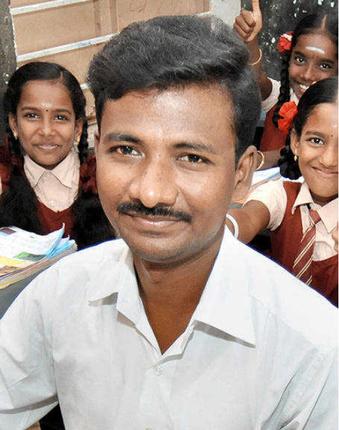
From child labourer to teacher

Inspiring stories of four persons who graduated from workers to educators

 R. Kanakaraj and others have made it as teachers after an arduous strugglein early part of their life.
R. Kanakaraj and others have made it as teachers after an arduous strugglein early part of their life.

Many teachers prefer to work in schools in their home town, but R. Kanagaraj has chosen the government school for tribals in Pilloor to start his career.

He works at the Panchayat Union Middle School in Alathivachinampalayam near Karamadai, where 90 per cent of the students are Sri Lankan Tamil refugees.

 “As a former child labourer, I know the difficulties of students with a poor family background. I like to work for them,” says Mr. Kanagaraj, son of a cobbler and a physically challenged mother, who used to work in cotton fields and reared cattle when he was a III standard student.

 When his family’s financial condition forced him to quit school and become a child labourer, he was spotted by officials of the Labour Department and his entry into a school run under National Child Labour Project became possible. This institution prepares beneficiary children to join mainstream schools.

 “In the child labour school, I acquired many skills like candle-making while pursuing education. As a teacher, I teach my students general knowledge and other subjects that will empower them,” said Mr. Kanagaraj. More than 15 former child labourers have become teachers in the State.

 E. Rajeswari, head of the Panchayat Union Primary School in R.S. Mangalam in Ramanathapuram district, worked in the match industry before she was rehabilitated by Labour department. She belongs to Thiruthangal near Sattur.

 “I had no electricity at my residence. My parents agreed to send me to school when officials promised that I would receive Rs. 100 per month and could learn tailoring and others skills,” says Ms. Rajeswari, adding whenever she narrated her life story, her students found it incredible. “But I could see my story was an inspiration,” she said.

 Nithya is happy that she has become a teacher at one of the schools for child labourers, where she was a student once. She chose it though the salary there was comparatively low.

She studied till III standard and took up work in the beedi industry as her father who faced neurological problems could not work. “My mother eked out a livelihood as a worker and education was beyond reach in a family of five sisters,” she said.

 After attending the school for child labourers, she joined the Adi Dravidar Government Higher Secondary School in Pernambut.

Even thourgh she was interested in higher education, Ms. Nithya had to take up a job to support her family. The Labour department appointed her a teacher in its school at Peranampet.

“I have to be content with what I have now,” she said.

M. Reshma  and others  have made it as teachers after an arduous strugglein early part of their life.
M. Reshma and others have made it as teachers after an arduous strugglein early part of their life.

Unlike others who were school dropouts, M. Reshma, now working as a teacher at Kalaimagal Vidyalaya Matriculation, in Peranampet never attended school till she was eight. “I could not afford to attend school because of my family circumstances,” she said.

After completing the bridge course at the school for child labourers, she joined VI standard at the Government Girls Higher Secondary School. She then graduated from M.K. Jain College for Women in Vaniyambadi in English literature. Subsequently, she completed B.Ed., and got the present job.

Unfulfilled desire

“I actually wanted to pursue post-graduation in English literature. But with three elders sisters and a brother I am left with very little option, but higher education remains a passion,” she said.

source: http://www.thehindu.com / The Hindu / Home> News> Cities> Chennai / by B. Kolappan / Chennai – September 05th, 2015

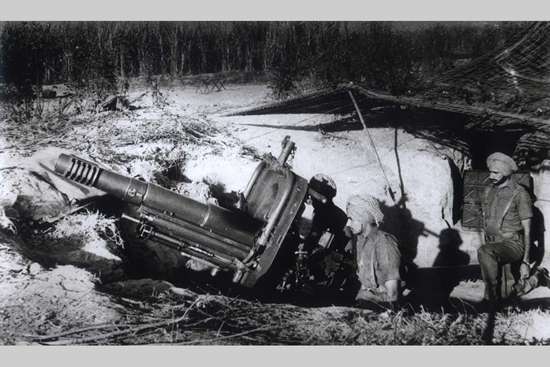
BATTLE OF KHEM KARAN – Patton Wreckers’ Day

Indian troops in action in Punjab
 Special Issue :  1965 India’s Forgotten War
Pakistan had the better tanks, but not the skill to man them well
by Nitin  A Gokhale

 In popular imagination, the original Operation Vijay in 1971 is rightly seen as India’s greatest military victory. That campaign broke up Pakistan, helped create Bangladesh and erased the painful memories of the politico-diplomatic-military debacle India had suffered against China in ’62. But before ’71 came ’65 and the 22-day war that allowed the Indian military to regain its confidence. Looking back at that confrontation 50 years on, it’s clear Pakistan saw that time as its best chance to wrest Kash­mir from India. Perhaps rightly so since India’s military was still struggling to overcome the humiliation of ’62. It was in the middle of an expansion and reorg­anisation. India itself was in transition after Jawaharlal Nehru’s death. A seemingly soft Lal Bahadur Shastri was at the helm.

The Pakistan army on the other hand was being equipped with latest American military hardware. The Patton tanks were far superior to India’s World War II vintage Shermans, Cen­tu­rions and AMX tanks. But as history shows us half a century on, superior military equipment does not necessarily translate into guaranteed military victory.

Although Pakistan’s ultimate objective was Kashmir, it launched a diversionary gambit in faraway Kutch in March ’65, then followed it up with Op Gibraltar (sending in waves of raiders into the Kashmir Valley) in August and then thr­eatened to cut off Akhnoor in September.

Facing a dire situation, Prime Minister Shastri authorised opening another front across Punjab, apparently catching Pak­is­tan by surprise. As Indian forces raced towards the Ichogil canal and were on the doorsteps of Lahore, a desperate Pakistan launched its spearhead, the 1 Armoured Division equip­ped with the latest Pattons into the war to break through Indian defences to threaten Amritsar and Jalandhar. The M-47 and M-48 Pattons were the most modern of that period. They had good sighting systems and stabilised gun platforms that had a range of 2,000 metres. Equipped with infrared sights, they could operate by night. The Indian armoured regiments on the other hand were mostly equipped with Shermans, with a range of just 800 metres and no night sights.

As the Pakistani armour reached the vital bridges across the Beas river, it seemed only a matter of time before the tanks broke through Indian defences.

Pakistan had a bold plan to reach the bridges at Harike and Beas which would give it multiple options of threatening Amritsar, Jalandhar and onward to Delhi. It is also apparent that India’s Western Command was not certain of the location of Pakistani 1 Armoured Division, which was positioned at Kasur, ready to spearhead the offensive into India’s critical bridges on the Beas.

D-day for the operation was initially September 7, 1965. Inexplicably, Pakistan delayed the offensive by 24 hours. The delay helped the Indian troops prepare defences, lay mines and undertake flooding of the fields by breaching the Rohi Nala and the distributary canals to make the open area waterlogged. This automatically imposed restrictions on the movement of the Pakistani armour. As the unsuspecting tanks of Pakistan’s 1 Armoured Division launched the offensive at 8.30 am on September 8, they were engaged by tanks of Deccan Horse. Utilising standing crops, the tanks were engaged by Deccan Horse, medium guns and tank-hunting teams. Deccan Horse managed to destroy 11 tanks while losing four of their own. Three other Pakistani tanks were damaged by medium guns and tank-hunting parties.

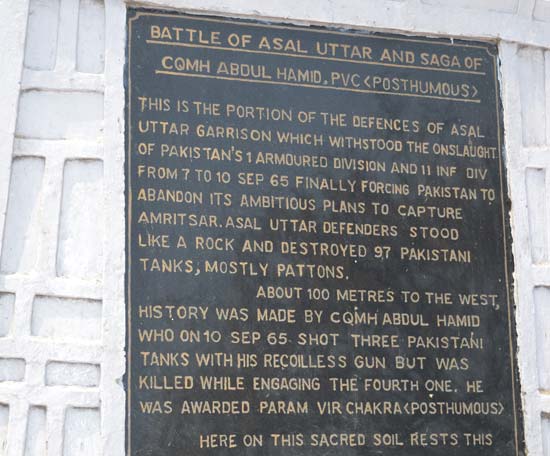
PlaqueHAMIDMPOs03sept2015

Such heavy losses compelled the Pakis­tanis to retreat. Their units launched the next attack after a considerable gap at 11.30 on September 8. The attack was led by a regiment of Pattons, a squadron of Chaffees and a motorised battalion of the Pakistani 4 Armoured Brigade. They attacked 1/9 Gorkha Rifles and 4 Grena­diers. The attack was partially successful in the 1/9 Gorkha Rifles location but unable to make headway in 4 Grenadiers. The Pakistanis again attacked 4 Grena­d­iers at 12. Despite some of their trenches being overrun, the battalion with its anti-tank gunners comprising Subedar Mool Chand and Company Quarter Master Havildar (CQMH) Abdul Hamid knocked out four tanks. The arm­our tried to outflank the divisional sector from the north but the prepositioned tanks of 3 Cavalry countered this ably. Attacks were made at dawn on September 9 too along both axes. Two tanks were blown up on the minefield and another was destroyed by the recoilless gun of 4 Grenadiers. During the afternoon, the Pakistanis made an attempt to outflank from the southeast but failed as they got bogged down in the flooded area at Valtoha and were destroyed one by one.

————————————————————————————————-

On the third day of the op, the Pakistani tanks had overrun the forward trenches. CQMH Abdul Hamid got three, not the fourth.

—————————————————————————————————

In the battle, some Pakistani tank commanders who had their heads out of the cupola were killed. By September 10, the Pakistanis were in a desperate situation. They tried to outflank the defences from the west with two regiments of Pattons and a squadron of Chaffees with a motorised battalion only to be encountered by the tanks of 3 Cavalry and 8 Cavalry that were camouflaged in the cane fie­lds. Then, 4 Grenadiers was attacked with a battalion of infantry and a few Patton tanks. The tanks managed to overrun the forward trenches. CQMH Hamid who had been shifted to the anti-tank platoon destroyed three tanks but was shot by the fourth. For this act of gallantry, he was awarded the Param Vir Chakra posthum­ously. As the attack on 4 Grenadiers failed, the Pakistani outflanking armour charged on Mahmudpura, but they were decimated by the Centurions lying in wait, crushing Pakistan’s 1 Armoured Division. The commanding officer of Pakistan’s 4 Cavalry was captured in the cane fields. Asal Uttar-Khem Karan was a great victory for the Indian army. The Pakistanis lost 97 tanks, including 72 Pattons; 32 were captured in running condition. India in contrast lost only five. India won what is now acknowledged as the biggest tank battle fought after WW-II.

It is now apparent that Pakistan had grand plans but poor execution. India on the other hand displayed keen tactical sense, resolute leadership and clever improvisation to turn the tide of the war. The battle also showed that the man behind the weapon is more important than the weapon itself. Deccan Horse and regiments of 2 Independent Armou­red Brigade were adept at handling Shermans, Centurions and AMX tanks. In assaults led by armour, the infantry must move with the armour. This prevents  tanks falling prey to anti-tank weapons, something CQMH Hamid exploited.

Demoralised with the setback at Khem Karan, Pakistan lost the heart to fight. Today, a memorial for those who fought and won in this sector boasts a board ‘Patton Wreckers’ on the general area of Assal Uttar and Khem Karan. It’s a reminder that no matter how good the weapon, the battle is won by those who wield it effectively.

(Former Outlook staffer Nitin Gokhale is a defence analyst. He is currently writing a book on the ’65 war.)

source: http://www.outlookindia.com / Outlook / Home> International – Opinion / by Nitin A. Gokhale / Magazine – May 25th, 2015

Agra’s crucial role in freedom movement not documented: Historians

Agra:

As the political capital, first of the Mughals and later the British, Agra was always a key centre of political action. The city played a crucial role in the freedom struggle but poor documentation of records has failed to highlight the contribution of the freedom fighters, say local historians.

Syed Ikhtiyar Jafri, director of the Mirza Ghalib Research Academy, who recently released a paper on the contribution of Urdu journalists, said “for whatever reasons the authentic history of Agra`s contribution to the freedom movement, to arts and literature, suffers from poor documentation of records, and therefore the contribution under-valued.”

Hardly any documented history book on the `Braj region` is available that could provide a true picture though fragmented pieces, mostly in newspapers are there for study. “Interestingly, Agra was a major centre of Hindi and Urdu journalism, and we have a long line of fighters with the pen,” says Prof Amit Mukherjea, head of the history department at St John`s College.

The first call for freedom in 1857, ignited by the visits of Nana Sahab, Azimullah Khan, Maulvi Ahmadullah Shah and dozens of other revolutionaries to the city, drew passionate support from the local youth who targeted government installations. Thousands of Hindus and Muslims, particularly in the rural hinterland, rose in revolt which forced the colonial rulers to declare Martial Law in the area.

The rebels against the imperialists were more active in the rural areas than in the city till Tantya Tope shifted base to Agra and the mohallas around Agra College and Gokulpura became the hotbeds of unrest. The heroes of the 1857 revolt, Thakur Heera Singh, Thakur Govind Singh, Chand Baba and Thakur Prithvi Singh continued to lead the mutineers with rare valour.

With the introduction of the railway and opening of the Tundla station in 1862, the city became the transit point of revolutionaries from the East. In 1857 the family of Jawaharlal Nehru migrated and settled in Agra following disturbances in Delhi. Motilal Nehru was born in Maithan mohalla in 1861.

The visits of Tilak, Lajpat Rai and the late Mahatma Gandhi in 1920 and 1929 galvanised the youth and the city came into prominent focus.

Revolutionaries like Bhagat Singh, Chandra Shekhar Azad, Raj Guru and Sukhdev stayed here for days in the Noori Darwaza area, making bombs. A series of bomb blasts and conspiracies like the Hardy Bomb case, explosions in Sheetla Gali, Moti Katra, Barah Bhai ki Gali and other parts sent shock waves in British cantonments.

On the vanguard of revolutionary activities were journalists like Pandit Sri Ram Sharma, Mahendra Jain, Devendra Sharma, Goverdhan Das, Ganpati Kela and Hari Shankar Sharma, in addition to scores of poets and litterateurs.

Ram Chandra Bismil from Mainpuri had fired the imagination of youth with his revolutionary writings. Bismil`s “Shaheedon ki chitaon par lagenge har varash mele, watan par marne walon ka yahi namo nishan hoga,” rings an echo to this day.

Hindi daily Sainik of Sri Krishna Dutt Paliwal was the first to launch a frontal attack on the British colonists. Some of the best editors of the time including Ageya served as editors of this daily. The success of Sainik gave impetus to a long line of periodicals including Hanumant Singh Raghvanshi`s Swadesh Vandhav, Laxman Singh`s Praja Hiteshi, Taja Tar, Ujala, Citizen, Punch and dozens of others.

Women played a crucial role leading protest marches and participating in dharnas. Saroj Gaurihar, Parbati Devi, Bhagwati Devi Paliwal, Sukh Devi, Damyanti Devi Chaturvedi, Satyawati, Angoori Devi Jain, Shiva Dixit, Chandra Kanta Mishra, Vidhyawati Rathod and Heera Bahen Hemraj Betai of the INA were some of the leading figures of that era.

“So many others were there and there was absolutely no gender bias or differences,” says Saroj Gaurihar recalling her activities during those years, adding that “the boycott movement against foreign goods was recognized as the most successful by Motilal Nehru in Agra” in a speech.

Two stalwarts of the freedom movement, Thakur Ram Singh, the hero of Kala Pani, and Prof Siddheswar Nath Srivastav, died recently.

Officially, Agra witnessed 110 violent incidents that resulted in the death of British officials or destruction of property. The famous Hardy Bomb case, Postal Robbery case, Chamraua and Jaunia bomb cases at railway stations are still talked about.

Contrary to popular belief, the city played a very crucial and notable part in the hundred years preceding independence in 1947, but much of the record and documentation work has been lost.

“With more than 400 leaders arrested for varying terms in jail at different times, Agra`s contribution needs to be re-assessed and recognised,” says veteran media activist and former president of the press club Rajeev Saxena.

With railway connectivity to all parts, and situated on the borders of the Deccan plateau, the Thar desert and the Doaab region, Agra was naturally the key hub of revolutionary activities, says senior citizen Surendra Sharma.

IANS

source: http://www.zeenews.india.com / Z News / Home> News> India News> States News> Uttar Pradesh / Friday – August 14th, 2015