Category Archives: Amazing Feats

A European war, fought by India

If World War I resonates in such a weak, confused, and even negative way with Europeans, it is little wonder that young Africans or Indians see even smaller stakes in this year’s centenary ceremonies. This is why it is crucial to understand the war’s global scope and the role played by the British Empire and Commonwealth

Did you know that India fought against Britain in the First World War? That, at least, is the belief of over a quarter of Indians, according to a British Council survey earlier this year. It is no consolation that the situation is little better in Europe. Two years ago, another survey showed that over half of Britons didn’t know whether India had contributed over 1,000 troops. This might be a forgivable gap in knowledge, if the real figure were not well over a million.

As Commonwealth heads of state in Glasgow commemorated the First World War centenary on Monday, many in the nations of the Commonwealth — India above all — will therefore wonder why they should care about, much less commemorate, a war fought largely in Europe, led by European politicians, commanded by European officers, and resolved to the benefit of engorged European empires.

War’s legacy

This uninterest is understandable. Even at home, in the war’s European locales, we are separated from its horrors not just by the chasm of multiple generations — the war’s last veteran, Florence Green, died in February 2012 at the age of 110 — but also a growing cultural gap. In a nation of immigrants, increasing numbers of children have grown up without the childhood visits to memorial-strewn French villages or classroom recitation of the war poets that were once ubiquitous. No surprise, then, that a survey in 2012 found that fewer than half of Britons aged 16 to 24 could identify the year that the war broke out.

The war’s legacy has also grown more complicated, as evidenced in the United Kingdom by last year’s political skirmishing among politicians and historians. The (now former) British Education Minister, Michael Gove, attacked the left-wing narrative of a cruel and futile war prosecuted by feckless generals. He argued, instead, “those who fought were not dupes but conscious believers in king and country, committed to defending the western liberal order.” Boris Johnson, the Mayor of London, agreed, insisting, “German militarism was at the root of the First World War.”

In turn, a slew of prominent historians, led by the Regius Professor of History at the University of Cambridge, Richard Evans, retorted that Britain and her allies had fought for dubious aims, against adversaries who were far from evil incarnate. As the writer Kenan Malik put it in a recent essay, “Germany had expansionist aims and a toxically racist culture. Britain, however, was not much different.” Perhaps, these sceptics implied, triumphalism ought to be avoided in the centenary commemorations.

If the war resonates in such a weak, confused, and even negative way with Europeans, it is little wonder that young Africans or Indians see even smaller stakes in this year’s ceremonies. This is why it is crucial to understand the global scope of the war, and the role — often an involuntary one — played by the Empire and Commonwealth. The war’s origins may lie in the Balkans, and it may be the European battlefields that stick in popular memory — the Somme, Ypres, and so on — but the non-European world was profoundly affected, and in turn transformed by the war.

Sourcing manpower

Remember that British forces in the Gold Coast (modern day Ghana) mobilised four days before the British declaration of war, that the first Allied shots were fired in the British and French invasion of German Togoland, and that the first Allied victory came here, not in Europe. Paris and London would later carve up that territory, like so many other spoils of war.

In addition to being a battleground, the British Empire also served as a reservoir of manpower on an astonishing scale; 1,40,000 men served in the Chinese Labour Corps, a force of which most Europeans will never have heard. The West Indies contributed 16,000 men. As John Reader explains in his magisterial history, Africa: A Biography of the Continent, by the war’s end, around two million Africans had participated in the war effort, half of them troops. Around 2,00,000 died. The French colonies alone sent just under half-a-million Africans to fight in Europe, over a tenth of these coming from Algeria. Kenya, Ghana and, above all, Nigeria which provided the lion’s share for Britain.

It is also crucial not to mince words on the nature of this participation. At first, much recruitment was, notionally, voluntary. But, as in India, local political elites were incentivised to supply manpower, and they used all means at their disposal to push villagers into service. As the historian Ranajit Guha explained to journalist Seema Sirohi, “a widespread proxy system developed in the Punjab, whereby a prosperous villager would buy a poor neighbour’s son and donate him to the recruitment centre as his own contribution.” Eventually, the French, the British, the Germans and the Belgians all used the force of law and arms to compel Africans to join their armies.

How were these troops used? Overall, 6,50,000 colonial troops were deployed to Europe. The French, in particular, sent Africans to Europe in large numbers. Senegalese battalions served with distinction at Ypres, for instance, and tens of thousands of African troops even stayed behind for the post-war occupation of the Rhineland (in Mein Kampf, Hitler complained that Jews were responsible for bringing Blacks into the Rhineland). The academic Christian Koller notes that one French general believed West Africans made good soldiers because of their “underdeveloped nervous system and their hereditary fatalism,” permitting them to sleep in trenches if necessary.

London took a different line (despite the urgings of the War Office and others, like Winston Churchill). Much as Britain refused to train African-American soldiers who had entered the war, and rejected Indian participation in the Crimean and Boer Wars, it similarly recoiled from the idea of pitting Africans against white soldiers, and — with the exception of some deployments to the Middle East — preferred to use them mostly within Africa against other Africans.

Indian contribution

The Empire’s biggest contribution was by India. This included 3.7 million tonnes of supplies, over 10,000 nurses, 1,70,000 animals, £146m of Indian revenue, and political support — including that of Gandhi, who helped recruit Indian volunteers in the face of nationalist opposition. But most important of all was the Indian Army, the largest volunteer force in the world, which provided 1.1 million troops to serve overseas, principally in the form of six expeditionary forces labelled ‘A’ to ‘F’. Over 74,000 were killed — five times more than the combined death toll from every war that India has fought since independence — and 80,000 were held prisoner. As the Conservative politician Baroness Sayeeda Warsi put it last year, “our boys weren’t just Tommies — they were Tariqs and Tajinders too.”

It would take volumes to list their achievements in full. These forces not only protected the northwest of India, but also buttressed British garrisons in Egypt, Singapore and China, as well as contributing to seminal battles of the Western Front, such as the Somme and Neuve Chapelle. At Ypres, in particular, Indian casualties were exceptionally high, compounded by the shock of German chlorine gas in April 1915.

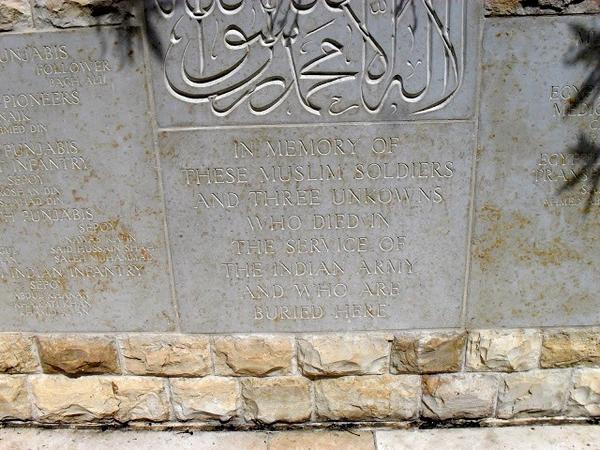
But Indian forces had their greatest impact in West Asia, with 60 per cent of all Indian troops serving in Mesopotamia (modern day Iraq), and another 10 per cent in Egypt and Palestine. As recorded in a new book by Kristian Coates Ulrichsen, The First World War in the Middle East, British and Indian troops in Mesopotamia suffered over 2,00,000 casualties from sickness alone in just one year, 1916. On Jerusalem’s capture the next year, it was Indian Muslim troops who were tasked with protecting the Dome of the Rock.

When the Viceroy laid the foundation stone for India Gate in 1921, he declared, “the stirring tales of individual heroism will live for ever in the annals of this country.” Six years later, French Marshal Ferdinand Foch told Indians gathered at Neuve Chapelle, “proclaim how your countrymen drenched with their blood the cold northern land of France and Flanders.” These words have faded. No surprise, in an age when the newly appointed head of the Indian Council of Historical Research is a man more interested in questions like, “Why are the fish and the pebbles in Ganga not attaining Moksha?” than supporting real history. For the Indians who fought for the Empire, earning a staggering 13,000 gallantry medals in the process, this legacy of ignorance is a scandal.

(Shashank Joshi is a Senior Research Fellow of the Royal United Services Institute in London, and a PhD candidate at Harvard University.)

source: http://www.thehindu.com / The Hindu / Home> Opinion> Lead / by Shashank Joshi / August 05th, 2014
A lone woman’s crusade against the sand mafia

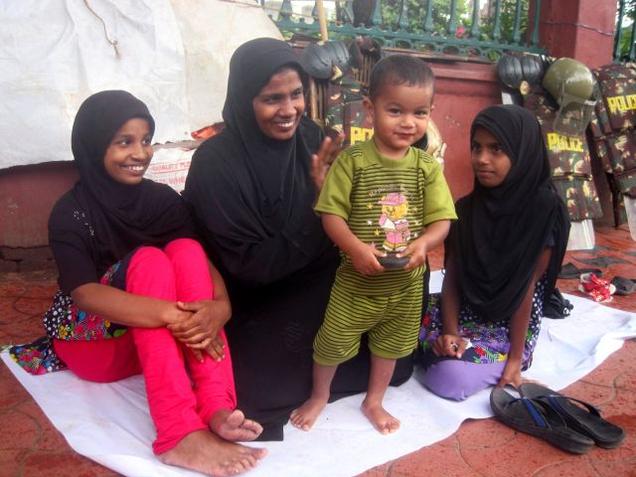
Jazeera along with her children protesting in front of the Secretariat in Thiruvananthapuram. Photo: Kaavya Pradeep Kumar / The Hindu

Jazeera is on a silent campaign, in defence of the Neerozhukkumchal beach in Kannur

The so-called sand mafia of a little taluk in Kannur rues the day Jazeera returned home. Dismissed as an insignificant voice of protest against the rampant exploitation of a stretch of shoreline near Pazhayangadi town, this woman has soon come to be known as a force to be reckoned with. All the way from the northern district of Kannur, she has brought her silent campaign to the State capital, as she sits in front of the Secretariat with her three children — protesting without loud sloganeering or politically coloured flags or leaflets.

Entering the fifth day, Jazeera’s protest has thus far been eclipsed by a far more populous Left protest.

Now that they have left, the presence of this family has become more conspicuous, leading the Chief Minister to meet them briefly on Monday afternoon on the issue of sand-mining in her hometown. For Jazeera, the cause is intensely personal, as the Neerozhukkumchal beach is the canvas all her childhood memories are painted upon.

She is an autorickshaw driver, a profession she has struggled to be part of, in a conservative society. She does not let herself to be affected by such taboos and continued working until after her marriage in 2004, when she moved to Kottayam with her husband.

She has found the new district far more accepting. It was only one and a half years ago, when she returned home during the final month of her third pregnancy, did she see to her shock the daylight robbery of a natural landscape.

Countless visits to the Kannur collectorate and police stations have proved futile.

And for the past one and a half years, her silent protest has involved a sit-in, along with her daughters Rizwana, Shifana and her son Mohammed. The two girls, aged 12 and 10, know everything about the case and have flanked their mother every step. Her husband, Abdul Salaam, is a teacher at a madrasa in Kochi.

While he has not been a visible part of Jazeera’s protest, his support, despite pressure various quarters, has been a huge boon for her.

She is clear about her objective despite the obstacles strewn before her in terms of muscle and money power. Even the police, she says, have pleaded with her to give up. “Their greed is despicable. In broad daylight they commit this heinous crime of emptying our lands, oblivious to the fact that there are so many creatures that depend on it. The sudden depth of water is dangerous as well,” she says.

She is glad to have met the Chief Minister personally and she said he assured her that he would ensure that the vehicles carting away the sand would be immediately dealt with.

She will leave once she obtains something in print promising a complete halt of the activities.

source: http://www.thehindu.com / The Hindu / Home> News> National> Kerala / by Kaavya Pradeep Kumar / Thiruvananthapuram – August 08th, 2013

Commonwealth bronze sweetens life for Sakina Khatun

Sakina khatun with the bronze medal she won at the Commonwealth Games in Glasgow. / The Hindu

Her success is all down to her hard work: coach

Life has not been kind to Sakina Khatun, who won a bronze medal at the Commonwealth Games on Saturday.

In Glasgow’s Clyde Auditorium, the 25-year-old Bangalore-based para-athlete lifted a weight of 88.2 kg to finish third in the women’s powerlifting event (Lightweight Group A). It was a success that came after prolonged hardship.

“My parents cried when I broke the news to them on the phone,” she told The Hindu from Glasgow.

Her coach and mentor Farman Basha,  who also competed at the Games, faltered in his event on account of an injury, but his delight was enormous. “She has been through a lot. So I’m very happy for her,” he said.

Sakina hails from Basirhat in West Bengal’s North 24 Parganas district. Her mother is a farm labourer while her father, ailing with a serious back condition, is unable to work. “He can’t even walk,” Sakina said. “We don’t have the money for his treatment.”

Afflicted with polio at a young age, she took up swimming on her doctor’s suggestion, learning in ponds in her village before a teacher in school noticed she had an aptitude for it. “Despite steady success at the national level, I was ignored for the 2010 Commonwealth Games team. It left me disheartened and I quit the sport,” she said.

Sakina switched over to powerlifting on the advice of one of her swimming coaches, and in 2010 was directed to Basha. “She wanted to come over to Bangalore to be trained by me,” he said. “She had no money and I couldn’t afford to spend a rupee on her.”

But Sakina found a benefactor in Dilip Majumdar, a businessman who volunteered to support her training. “I’m a girl and my parents were against my leaving home,” she recalled. “But my sponsor managed to convince them.”

“At first, she could only lift around 25 kg,” recalled Basha. “But gradually she improved. Her success is all down to her hard work.”

source: http://www.thehindu.com / The Hindu / Home> News> Citis> Bangalore / by Shreedutta Chidananda / Bangalore – August 04th, 2014

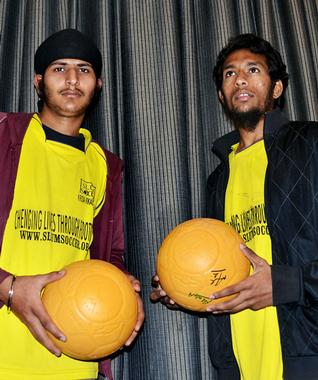
Two city boys for Homeless World Cup!

Simarpreet Singh and Tariq Ahmed from Hyderabad who have been selected to represent India in the World Cup football for Homeless to be played in Chile this October. PHOTO: V. V. Subrahmanyam / The Hindu

Soccer fever is reaching a climax in Brazil. But for two young footballers, Tariq and Simarpreet Singh from the city, it might just be the beginning of a journey to recognition. The two boys have been selected to represent India in the Homeless World Cup (for those who come from slums) in Chile in October.

“A World Cup is a World Cup. We are on cloud nine,” the delighted duo exclaimed. They are products of ‘Sports Coaching Foundation’ football camp where Hyderabad Sporting Club chief coach Mohd Saleh trains.

“This is a dream come true and we will try our best to make an impact in this event,” say the soccer duo. Nineteen-year-old Tariq is an engineering graduate from Hussaini Alam and Simarpreet is a commerce graduate from Zaranagar locality of Mehdipatnam. “This is nowhere near the real World Cup soccer but this is a sport that is played with great passion,” the duo says.

“These boys would not have made it to Chile but for the initiative of Kaarmic Education Services’ Dantu Kartik and Adithya Sanjay of Awakening Foundation who spotted talent and started grooming them. I am glad that Tariq and Simarpreet are from the SCF where they have been training under lights,” says a proud K. Sai Baba, general secretary of SCF.

SCF felicitated the duo.

source: http://www.thehindu.com / The Hindu / Home> News> Cities> Hyderabad / by V. V. Subrahmanyam / Hyderabad – July 12th, 2014

Seven, Including Five-yr-old,Selected for Bravery Awards

Abhaykrishnan, Akhil Biju, Girikrishna, Muneer Mohammed, Shalef Shaji, Subin Mathew and Yadukrishnan

Thiruvananthapuram :

Seven boys, including a five-year-old who rescued his younger sister from drowning and a sixth standard student whose presence of mind saved the life of his ten-month-old brother, have been selected for the bravery awards instituted by the Kerala State Council for Child Welfare for the year 2013.

The winners are Muneer Mohammed, 14, of Manippuzha, Kottayam; Shalef Shaji, 9, of Panambukad, Ernakulam; Akhil Biju, 9, Subin Mathew, 10, and Yadukrishnan V S, 13 of Erumeli, Kottayam; Girikrishna, 5, of Kumarakom, Kottayam; and Abhaykrishnan, 11, of Kowdiar in Thiruvananthapuram. Social Justice Minister M K Muneer announced the winners here on Thursday.

Muneer Mohammed won the award for saving the life of Immanuel aka Appu, 72, who was grievously injured in a road accident on the Sabarimala route. When motorists ignored the accident victim, Muneer had run to the middle of the road, waved down a vehicle and rushed Immanuel to hospital. This tenth standard student of St Thomas High School, Erumeli, is the son of Mohammed and Aseena of Venkurinji Keecheri Purayidom, Manippuzha.

Shalef Shaji, a fourth standard student, was selected for the award for saving the life of Alna, the four-year-old daughter of Antony, Panambukad Veliyil, who fell into the backwater while playing with her friends. Shalef had jumped in and holding on to the ropes of a stake net, swum up to Alna and rescued her.

Abhaykrishnan, Akhil Biju, Girikrishna, Muneer Mohammed, Shalef Shaji, Subin Mathew and Yadukrishnan

Shalef is a student of the St Joseph’s LP School, Panambukad.

Akhil Biju, Subin Mathew and Yadukrishnan V S saved Kalimuthu, 39, who got trapped in an eddy while bathing in the river.  Ten-year-old Akhil jumped in first, but he couldn’t get a hold on Kalimuthu. Yadu dived in next and they managed to reach the drowning man. Subin threw them a towel, and grabbing it, the boys managed a miraculous rescue. All three are sons of daily-wage labourers.

Akhil is the son of Biju and Lekha of Kannimala Puthuvelil and is a sixth standard student of St James UP School, Kannimala, Erumeli. Subin, who is his schoolmate, is the son of Mathew and Sheeba of Kattupurachakal House, Kannimala.  Yadukrishnan is the younger son of Sasidharan Nair and Sajini of Vattaparmbil House, and is a ninth standard student of St Joseph’s High School, Kannimala. He is also a recipient of the President’s award for bravery in 2013.

Girikrishna, aged 5, won the award for saving his four-year-old sister Gowri from drowning in a canal near their home. Although he could not swim, he jumped in and dragged young Gowri to the bank. Girikrishna is the son of Satheesh and Babitha of Peedikachira, Kumarakom. He is a first standard student of SKM Public School.

Abhaykrishnan of Kowdiar, Thiruvananthapuram, won the award for saving the life of his ten-month-old brother Adidev.

A huge tree had fallen on to their home in the heavy rain, and their mother, seeing the roof crashing down, tried to shield them with her body. But she collapsed, hit on the head by falling tiles and wood. Abhaykrishnan frantically dragged Adidev and sought cover under a cot.

All three were dragged out of the debris by the neighbours. Abhaykrishnan is the son of Sreenivasan, who is personal assistant to the Chief Secretary, and Sunanda. The award carries Rs 10,000 in cash, a plaque and certificate.

source: http://www.newindianexpress.com / The New Indian Express / Home> Cities> Thiruvananthapuram / by Express News Service / July 11th, 2014

Super girls show what it takes to beat the odds

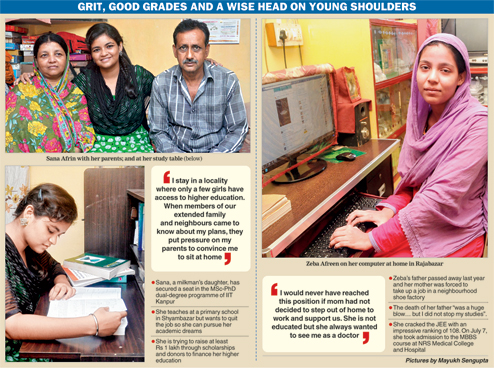
SanaAfrinBENGAL09jul2014

A milkman’s daughter made it to the IIT to pursue her dream of becoming a physicist. Sana Afrin funded her education and that of her brother’s by giving tuition and working as a primary school teacher.

Zeba Afreen, a fatherless girl whose mother works in a sweatshop to pay for her education, is set to become a doctor.

Metro meets the two inspiring girls.

SANA AFRIN

The test was tough but she secured an admirable countrywide rank of 23 to win a seat in the MSc-PhD dual-degree programme at IIT Kanpur.

The daughter of milkman Sheikh Rahi of Paikpara in north Calcutta had cracked tougher tests and hopefully overcome the one she is currently fighting: finance her education at an IIT.

Born in a financially weak and conservative family, 21-year-old Sana’s tryst with hurdles began at a young age when her father had to make a choice between daughter and son since he could afford to educate only one of the two children.

“My parents decided to support my education despite some unpleasant advice from relatives and friends. My younger brother had to wait a year to start his schooling,” said Sana at her home in Saudagar Patti, Paikpara.

Sana did not disappoint her parents, especially her hardworking father who delivers milk door to door to earn his living. She scored well in her Class X board exam and chose science for her Higher Secondary.

Just when she thought everything was on course, Sana faced her biggest hurdle. Her father didn’t have the money to pay her admission fee, leaving the daughter on the threshold of giving it all up.

To rub it in, some relatives advised her father that it was not wise to educate a girl so much. “They said I wouldn’t be able to cope with science. When I heard this, I was determined to prove that my parents’ decision to educate their daughter was right,” she said.

Loans from friends and scholarships from some NGOs helped her tide over the crisis and shut disapproving mouths.

Sana is now awaiting her BSc Part III results from Calcutta University.

She not only managed her education but also that of her younger brother, a Class XI student at an English-medium school in Dum Dum.

Sana remembers the hostile reaction when she announced her wish to go to college after Class XII. “I stay in a locality where only a few girls have access to higher education. When members of our extended family and neighbours came to know about my plans, they put pressure on my parents to convince me to sit at home.”

The gritty girl stuck to her plan: BSc with honours in physics. She filled in forms of various colleges and took admission in the first college where her name appeared on the merit list.

She knew all too well about her father’s financial situation and the people who wouldn’t let go any opportunity to scuttle her academic pursuit. Sana circumvented the situation by giving tuition, the earning taking care of her and her brother’s education to some extent.

Sana now teaches at a primary school in Shyambazar after clearing the Teacher Eligibility Test last year. Only one per cent of the several lakh candidates who appeared for the TET could get through.

In February this year, she appeared for the IIT Joint Admission Test for the MSc course. “I wasn’t well-prepared for the exam… I had just joined the school. I was also studying for my third-year final and doing private tuition,” she said.

Still she managed a ranking of 23.

She is aware that her current job will bring some financial stability to the family but her heart is with higher studies at IIT Kanpur. “I want to study and fulfil my dreams. I do not want to remain a primary school teacher.”

The new challenge is to arrange for her admission and semester fees. “I have been able to book my seat by paying a token amount of Rs 10,000. I need close to Rs 1 lakh,” she said.

When she visited a government department that apparently helps children from poor families with stipends and scholarships, she was told that she was not eligible. “They said they would have helped me had I been pursuing medical, engineering or civil services. They will not fund anybody’s education for research,” Sana said.

She never forgets to thank people who doubt her abilities. “They deserve credit. If they don’t question my ability, I will not be able to give my best,” she said.

Sana is eligible to apply for an IIT scholarship considering Sheikh Rahi’s financial situation, but she does not want to leave anything to chance.

If she manages to arrange the money, she would leave for Kanpur on July 16. The prospect of not spending Id with her parents does make her sad but she is determined to fulfil her dreams because her brother’s future is also at stake. “It will be tough but I need to do this and provide a better life to my parents and fund my brother’s higher education.”

ZEBA AFREEN

When Zeba Afreen’s father passed away last year and her mother was forced to take up a job in a neighbourhood sweatshop that manufactures footwear, she had several excuses to abandon her dreams.

But the 20-year-old did not lose sight of her goals, the immediate one being the Joint Entrance Exam. She studied 14 hours a day despite taking care of household chores and three younger siblings.

The Rajabazar girl cracked the JEE with an impressive ranking of 108. On July 7, she took admission in NRS Medical College and Hospital to its MBBS course.

Zeba did not let her father’s death influence her preparations, though “it was a huge blow… a bolt from the blue”. “But I did not stop my studies. I kept studying for the joint exam,” she said in her Rajabazar home opposite Tasvir Mahal cinema hall.

“I initially thought of quitting studies and taking up some odd job. Mother was dead against it. She wanted me to continue my studies,” she said.

Her father was a small-time envelope-seller and didn’t have any savings, forcing his wife Afsari Khatoon to work at the small shoe factory to support her children.

Zeba did not disappoint her mother.

She took help of senior teachers in her locality to prepare for the physics, chemistry and mathematics papers since she couldn’t afford classes at coaching institutions for competitive examinations.

“There was no way I could afford the expensive coaching centres. My only option was to study hard on my own,” said Zeba, who passed Higher Secondary from Shri Shikshayatan after Madhyamik in a neighbourhood school.

There was no dearth of distractions that cropped up every day to offset Zeba’s dream, the most annoying being the din on the road outside her house while she was preparing for her exams.

“I couldn’t concentrate even at night. Autorickshaws ply till late in the night… honking of vehicles. Ooph!”

This was Zeba’s second shot at the entrance exams. She came somewhere in the 2000s on the rankings last year and so decided to give appear again instead of taking up engineering in a lesser-known institution.

“I used the failure to identify areas I needed to work upon. From time management to improving my answers, I practised hard in the past one year,” she said.

“I would never have reached this position if mom had not decided to step out of home to work and support us. She is not educated but she always wanted to see me as a doctor,” Zeba said.

She now intends to focus on her two younger sisters and a brother. “I hope to guide my siblings the way my mother guided me.”

After completing her MBBS, Zeba wants to specialise in neurology and help the poor. “I owe my success to many people who came forward to help me when I was in need,” she said.

What message do you have for Sana and Zeba? Tell ttmetro@abpmail.com

source: http://www.telegraphindia.com / The Telegraph – Calcutta / Front Page> Calcutta> Story / by Zeeshan Jawed / Wednesday – July 09th, 2014

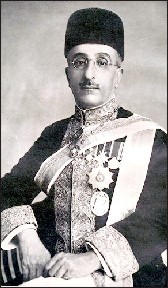
Remembering Sir Mirza Ismail

Mysore city is blessed in more ways than many other cities of South India. Its location is ideal. An imposing hill with a temple of Goddess Chamundeshwari. River Cauvery flows just 12 kms away. River Kabini is just 35 kms away. A green cover all around with a salubrious climate. Even summer is forgotten as fast as one started complaining of the heat with the monsoon setting in by May end.

If these are nature’s bounty bestowed on our city, providence too has been kind with the Wadiyar dynasty ruling the Kingdom of Mysore with this city as its capital. And blessed are the people because the Kings who ruled after 1800 AD have all been good kings with most of them being patrons of art, literature and music. And during the long reign of Krishnaraja Wadiyar IV the Kingdom became a Rama Rajya as Gandhiji called it and the King himself was a Rajarishi. Philosopher-king. It was this king who ruled the kingdom with the help of renowned Dewans [Prime Ministers]. One among them was Sir Mirza Ismail.

SirMirzaIsmailMPOs07jul2014

For some years I was a member of ‘Freemasons,’ sort of secret club known as The Grand Lodge of India, Lodge Mysore. Recently I was going through its publication known as ‘The Square and Compasses’ and was intrigued to find the name of Sir Mirza Ismail being mentioned in it in glowing terms just as his work in Mysore was much appreciated.

His name was mentioned in connection with the problems the ruler and administrators faced in the Kingdom of Jaipur, Rajasthan, from vested groups. The situation was similar to what happened during the building of the Great Temple in Jerusalem after Jews were freed from their Babylonian captivity after 70 years of exile.

It appears during the year of exile of Jews, there was no government of any kind in the country and many outlaws, murderers, debtors and others with dubious characters from neighbouring countries came and settled in the Jewish country, specially in the city of Jerusalem. These people resented the arrival of Jews, from their Babylonian exile, trying to restore law and order. There was daily strife between the two warring sides which compelled the labourers at the temple area literally to work with the ‘trowel in hand and sword by the side.’ This, of course, has become part of the traditional ritual in the Freemason ceremony.

Recalling this historic ancient incident, the report in the magazine connects it to an incident in modern times. It says, “In our own times, we have heard of Sir Mirza Ismail — Special Officer entrusted with the task of beautification of the city of Jaipur in Rajasthan. With undaunted courage and determination, he went on with pulling down dozens of houses as per his masterplan without fear or favour, even those of big and influential citizens who naturally tried to oppose his doings.”

No wonder the grateful citizens of Jaipur named a major road after Sir Mirza Ismail. Now compare this with ourselves. Is there a road named after this great Dewan of Mysore Sir Mirza Ismail? I don’t know. Is there a road named after Sir M. Visveswaraya? I do not know. Yes, someone told me there indeed is a Mirza Road but it does not run even a km length in Nazarbad. In Jaipur, I have seen Sir Mirza Ismail Road, a double road, running to a few km length in keeping with his stature. Yes, there is also one inconspicuous Circle named after Sir MV ! Could they not have a statue of Sir MV there just like the other two statues of Maharajas?

Incidentally, the message from the Grand Master Most Worshipful Brother Vasudev J. Masurekar, OSM, has the opening paragraph that takes you to 2nd century BC and then brings you to 2014 AD. It speaks of Delphic Oracle in Greece where I had been about five years back, hence my interest. The Grand Master says:

The temple of Apollo at Delphi, built in the 2nd century BC, has three phrases carved into the stone. First is, “Know thyself,” second “Nothing in excess” and the third is “Make a pledge and mischief is nigh.”

These three statements have made the Oracle of Delphi famous universally.

All the three statements are profound and impacts on every individual’s life. Because we do not try to know ourselves, we delude ourselves as someone that we are not. Buddha has taught us to follow the golden path, the middle path. Nothing in excess. Neither more nor less. The third statement is rather complex. No wonder over the centuries there have been many interpretations of these words and debates by philosophers and scholars.

However, let me venture to interpret the third statement in the light, nay in the dim light, of my own wisdom. It says, “Make a Pledge and Mischief is Nigh.” These are the days where politicians in our democratic country keep making pledges, from swearing on our Constitution, to protect and preserve it, to provide a good administration and infrastructure. But, our experience has been that they seldom keep their pledge. That is why I interpret this statement to mean, ‘when you make a pledge, you are near a mischief.’ You are upto some mischief! Read politician in the place of you. Howzzat?

e-mail: kbg@starofmysore.com

source: http://www.starofmysore.com / Star of Mysore / Home> Abracadabra….Abracadabra / by K.B. Ganapathy  / July 02nd, 2014

Over a cup of evening tea : A sentimental journey and a narrow escape

by Dr. K. Javeed Nayeem, MD

Last Sunday my wife and I went on a journey that we had wanted to undertake for the last thirteen years ever since she lost her brother who was serving in the army as an officer. Major S. M. K. Ghori, a former student of the Maharaja’s College here, laid down his life in the cause of the motherland while fighting insurgency in the forests of Baramulla District in the State of Jammu and Kashmir on 1st July 2001. Two of his most trusted men too went down fighting alongside him on that fateful evening. Four days later while we were waiting with all our grieving family members at the Bangalore Airport for his body to arrive, I told my wife that we should try and visit his unit not only to see where exactly he was serving when his end came but also as an act of homage to his sacrifice.

A trip to Kashmir somehow never materialised over the next thirteen years and finally when a chance came up last week in the form of a group tour with about a dozen doctors’ families, my wife and I felt that it was the right time for us to go there. Having finished our sight-seeing in and around Srinagar with the others members of our group we extended our stay by a further two days to accomplish what we had been looking forward to. Upon contacting the army top brass through my brother-in-law’s wife we were told that his unit was still stationed near Baramulla and arrangements would be made to allow us a visit.

Very soon a Colonel who was the chief of the unit called us up and said that he would be happy to show us around the place and also insisted that we stay back for lunch. We very politely declined this part of the invitation as we did not want to intrude on the time of officers and men who were expected to be in a state of operational readiness round-the-clock. However, we agreed to have a cup of tea with them without wasting much of their time. A friend in Srinagar who used to meet us every evening arranged for a trusted cab driver to drive us to our destination and back since he did not consider it safe for us to go there with an unknown person. As he was from the nearby town of Sopore where he had his ancestral house, he said that we should be his guests for lunch which would expose us to the traditional Kashmiri hospitality. This was a suggestion to which we readily agreed and left early in the morning. The drive from Srinagar towards the western border of the country was full of security bottlenecks with all vehicles being stopped and photographed by heavily armed men in combat readiness. The road lined on either side by tall poplar trees passed through some very fertile countryside, full of verdant apple orchards nourished by a maze of mountain streams with snow-clad hills in the not too distant background. The apparent tranquillity of the hills belied the turmoil that they have been witness to from time to time.

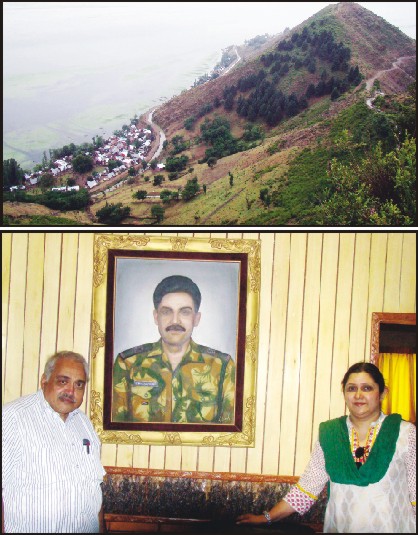
After a drive of about thirty kilometers from the town of Baramulla through some of the most remote and lonely stretches, we reached the army unit where we were welcomed with a warmth that we had never expected from men in uniform. The Colonel himself was standing with his deputy to receive us with fighting men’s iron handshakes and they escorted us to the drawing room of their barracks. It had a large life-sized portrait of my late brother-in-law on one of its walls since he was the only officer of the unit who had died in action since its inception while it had lost twenty-nine Jawans whose sacrifice was in no way less significant. Their photos too adorned another wall in a close cluster which perhaps was a reflection of the close ties they shared while they were alive.

The Colonel briefly told us about their life as soldiers and the uncertainty that comes with it. Later he himself drove us in his personal vehicle to the place from where we could see the hill across a lush valley at the base of which my brother-in-law and his men went down fighting. We stood in silence trying to visualise the final moments of their brave stand. Returning to the base we were a little surprised and even embarrassed to discover that the tea was almost a meal prepared and served by men in uniform in a manner that would have put the most talented hostess to shame.

KashmirMPOs02jul2014

We were then invited to stand alongside the painting of my brother-in-law and have a picture clicked as a keepsake of our visit which we did [see pic]. It was a very sentimental moment against which I had warned my wife well in advance and thankfully she put up a brave face.

After I signed the visitors’ book it was time once again for iron handshakes but this time to say goodbye. It was a very short drive to Sopore, a Spartan town with horse-drawn carriages and tin-roofed houses that seemed to have been frozen in a time warp like the rest of the Kashmiri countryside. The atmosphere seemed a little eerie as we found that every entry point was guarded by heavily armed soldiers alongside their armoured personnel carriers. We located our friend’s home which was tucked in a maze of narrow alleyways and were soon lost in another session of tea accompanied by some traditional Kashmiri snacks and dry fruits. The tea itself was a very distant cousin of what we drink here as it is salted instead of sugared. My host then suggested that he would take us for a traditional lunch to a resort overlooking the Wular Lake, the largest freshwater lake in Asia which was just a stone’s throw from his village. The breathtaking view from the place was something to be treasured forever in the mind’s e

ye. It is because of sights like this that Kashmir has come to be called a ‘Paradise on Earth’. After a hearty meal we parted company as it was time for us to get back to Srinagar. On the way back too we noticed unusually hectic military activity along the main road and on the outskirts of the town we even saw an ambulance and a large convoy of army vehicles parked around a house. We did not make much of it and reached Srinagar safely for a good night’s rest.

Early the next morning one of my friends who had been in our group and who had returned with the others a day earlier called me up from Mysore to tell me that Sopore had been the scene of a fierce gun-battle between security forces and insurgents the previous night. Since a civilian youth too was killed in the crossfire it appears there were widespread protests and an indefinite curfew had been imposed on the whole town with all roads completely blocked. Occurrences like these are a very common feature of life in Kashmir and the ensuing inconvenience is accepted as a normal part of living there. The whole of Monday and Tuesday, till we left Srinagar, life remained completely paralysed in the entire valley. My wife and I thanked God that we had been able to get away in the nick of time from what could have become a tricky situation blocking our exit. Our ‘Mission Kashmir’ had been accomplished at last !

e-mail: kjnmysore@rediffmail.com

source: http://www.starofmysore.com / Star of Mysore / Home> Feature Articles / Friday – June 27th, 2014

______________________________________________________________

 AN ODE TO A SOLDIER

Sir,

This refers to the letter of Brig. R.S. Rajan, vsm, (SOM dated June 30) on the need to remember the martyrdom of Maj. Ghori with mixed feelings of sadness that we forgot the sacrifice of young Indian Army Officer for his nation and a desire to undo the indifference.

I knew his Commanding Officer. He was always full of praise of Maj. Ghori, who he said was an epitome of an Officer and a gentleman. Being in army and that too a serving officer, I am not supposed to interact with media or give my opinion. We in armed forces respect the rule and follow it. However, I could not control myself on reading Brig. Rajan’s letter and hence this letter.

Ncc Group Mysore will take concrete steps to ensure that the memory of Maj. Ghori remains alive in Mysore and India. May I very humbly appeal the citizens of Mysore to respect our martyrs as they have sacrificed their today for your tomorrow, their own families lie forgotten and unattended, perhaps as our neighbours.

We as soldiers always follow the credo that ‘The country comes first always and every time … Our own honour, safety and welfare comes last, always and every time’. Maj. Ghori followed the Chetwode credo to his last breath. The need of the hour is that all Indians make a beginning towards it.

May I end my first letter to media with an epic poem on the saga of HORATIUS by Thomas Macaulay:

To every man on this earth

death comes soon or late,

How can a man die better

Than facing fearful odds

For the ashes of his Fathers

And temples of his Gods,

Maj. Ghori was a HORATIUS

for all the Indians who

breathe today and tomorrow.

—Col. Rajeshwar Singh, Shaurya Chakra, Sena Medal, Group Commander, NCC

Mysore, 1.7.2014

source: Voice of the Reader Section / source: http://www.starofmysore.com / Star of Mysore / Home> Voice of the Reader  / July 07th, 2014

This is in response to the story above.

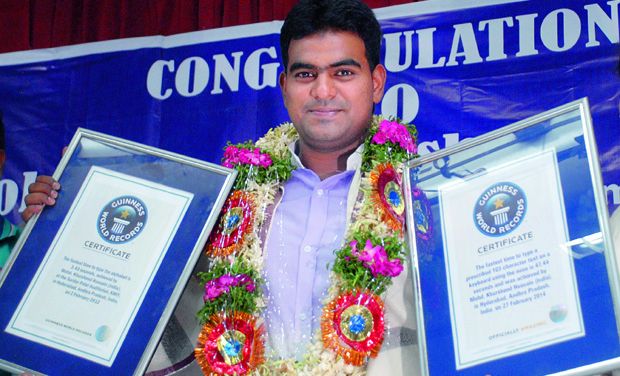
Nose typing: First Indian with 2 Guinness Records

Khursheed Hussain with his Guinness World Records certificate (Photo: DC/File)

Hyderabad:

Khursheed Hussain, a Guinness World Record holder in typing, has now set the world record in typing using his nose. The record for ‘nose-typing’ was earlier held by a girl from Dubai.

He is the first one from India to hold two Guinness World Records. “I had to struggle a lot to get this for the country. I had to undergo regular mental and fitness training. And I practised for about eight hours a day for six months,” said Mr Hussain.

source: http://www.deccanchronicle.com / Deccan Chronicle / Home> Nation> Current Affairs / DC Correspondent / June 25th, 2014