Category Archives: Amazing Feats

A tryst with history at Safardjung’s Tomb

SUMMARY

The Quest took students of Ramjas School, Pusa Road,on a visit to Safdurjung’s Tomb in New Delhi.
_________________________________________________________________________

Words are not enough to describe the feeling of utter amazement one feels as one steps into Safdurjung‘s Tomb. My first visit to this tomb – aptly described as the last flicker in the lamp of Mughal architecture — was an unforgettable and enriching experience.

The mausoleum is surrounded by lush gardens in Mughal style. The interior of the tomb with Safdurjung‘s cenotaph has a mysterious,yet serene air about it. My friend and I stood there awed by the amazing architecture,utterly captivated by its peaceful charm.

Amidst the city’s noises,there is this one place where you can be at peace. So when it was time to go,I didn’t feel like leaving. One just cannot have enough of its beauty. I look forward to going there again. I’d say it’s a must-visit place for its serenity and architectural value.

n Muskaan Sharma,XII-B

On April 9,our school organised a trip to Safdurjung’s Tomb for the students of Class XII. I was very excited about the trip as I’ve never been there. I did not know anything about Safdurjung so I thought he would be just another historic personality who would have fought many wars. When I arrived at the tomb,I was enthralled by the majestic monument with a white marble dome. It was surrounded by beautiful gardens and fountains. We were told the fountains don’t work due to water shortage in the city. While walking up the steep steps of the monument,one could see the tomb in the centre of a vast hall. One just can’t ignore the beautiful carving on the walls of the monument. We were told that Safdurjung was prime minister of Mughal Emperor Mohammad Shah. Safdurjung’s Tomb was inspired by the Taj Mahal and Humayun’s Tomb. Although the tomb was undergoing renovation, it remained open for general public. It was truly an unforgettable trip. The hard work of the architects is evident in the intricate carvings inside the tomb. This place is definitely worth a visit.

n Chetan Jajodia,XII – BCom. A

Described as ‘the last flicker in the lamp of Mughal architecture’,Safdarjung’s Tomb epitomises beauty and serenity. It was built by Shuja-ud-Daulah in memory of his father,Safdarjung,who served the Mughal Emperor Mohammed Shah as his prime minister. The garden tomb is characteristic of the Indo-Islamic architectural style. The central tomb is the main attraction of the complex. It has a huge dome which gives it an appearance of a ‘maqbara’. The walls of the tomb have fine and elaborate plaster carvings influenced by the pietra dura style. There are four water canals cutting across the garden to form a typical ‘charbagh’. Octagonal towers in the corners add more beauty to the central tomb. The garden is built in the Persian style and one can enter it through a gate with intricate Rajputana carvings on it. The whole tomb is made of red sandstone.

The way the Archaeological Survey of India has tried to preserve this monument is appreciable. But being responsible citizens of this country,we must also help protect and maintain our monuments. I am grateful to my school and The Indian Express for organising this heritage walk. It was truly an enlightening visit. This brush with history was an enriching one.

n Ananya Das,XII Sc A

Safdarjung’s Tomb — once you visit it,the mystique charm of the monument will remain with you for long. This tomb is considered the “the last flicker in the lamp of Mughal architecture in India”. It was built for Safdarjung,the powerful prime minister of Mughal Emperor Muhammad Shah. Safdarjung’s son Shuja-ud-Daulah constructed it in 1754.The fact that the monument is an amalgam of different architectural styles ignited my interest. The tomb has influences of the Humayun’s Tomb and the Red Fort in its design. As soon as I entered the monument,my eyes instinctively went up to the dome and I was mesmerised by the beautiful symmetrical designs. The dome seemed too high for someone to carry out such elaborate and perfect carvings. But the fact that it was done points to the mastery of the craftsmen in those days. The huge gardens,spacious balconies,corridors and the water canals fascinated me. The serene grave of Safdarjung reminded me of the spirit behind the construction of the monument — a son’s reverence,love and gratitude towards his father. The tomb also houses Shuja-ud-Daulah’s wife’s grave. The complex also included the three-domed mosque and three beautiful pavilions.

As we were got ready to leave,I turned again towards the tomb,wanting to get one last look of this magnificent structure. If only I could stand and stare a little longer.

n Apoorva singh,XII

“You employ stone,wood and concrete,and with these materials you build houses and places,that is construction. But when you suddenly touch my heart,you do me good and make me say ‘This is beautiful’,that is architecture.”

Life gets a fresh breath when history rises from its grave. It happened with me April 9,while we were counting our steps to Safdarjung’s Tomb. The tomb built for Safdurjung,the prime minister of Mughal Emperor Muhammad Shah. It was built in 1754 in the Mughal style and is described as “the last flicker in the lamp of Mughal architecture”. Today,it’s in a dilapidated condition,with cracks in the walls and the tomb’s walls turning yellowish grey from white. But though the tomb has lost its pristine beauty,it still gives a mystique feeling. The central tomb has a huge dome. There are four water canals leading to the four corners of the building — one has an ornately decorated gateway while the other three corners have octagonal towers. The canals are four oblong tanks,one on each side of the tomb. On the whole,the tomb has been decorated with cheap material,pointing to the economic conditions of that time. But in spite of this,I realised that the people in those times were full of life.

n Gayatri Chetal,XII Com-B

After tolerating the chaos of Delhi roads on a daily basis,one longs for some quiet time in a serene place. Safdarjung’s Tomb on Lodhi Road is one such place. It was built by Shuja-ud-Daulah after his father’s death in 1754. Safdarjung’s Tomb is a garden tomb with a marble mausoleum. It was built in 1754 in the Mughal style. Its façade is decorated with elaborate plaster carvings. There are four water canals inside the tomb leading towards one ornately decorated gateway and three pavilions with octagonal towers. I would like to thank The Indian Express for giving us the opportunity to learn about our past.

n Harshita Kakar,XII Com-B

My visit to this incredible heritage site was fascinating experience. The Safdarjung’s Tomb was constructed by Shuja-ud-Daulah for his father Safdarjung who was the prime minister of Mughal Emperor Mohammad Shah. The main entrance is a huge decorated gate with arrow silts. The tomb stands majestically surrounded by verdant lawns. The amalgamation of the Indo-Islamic and Hindu styles for the construction of the tomb is highly appreciable. It consists of chattris,minarets and cosmic signs. The way the Archeological Survey of India has tried to preserve the Safdarjung’s Tomb is commendable. I express my heartiest thanks to The Indian Express for giving me a chance to visit this historical place.

n Kashish Chaurasia,XII Com B

Safdarjung’s Tomb was built in 1754 by Nawab Siraj-Ud-Daulah,the son of Safdarjung Mirza Muqim Abul Mausum Khan,the prime minister of Mughal Emperor Mohammad Shah. Safdarjung’s Tomb is a beautiful mausoleum and is counted as a major heritage site in India. It is described as “the last flicker in the lamp of Mughal architecture “ because it reflects the last phase of Mughal architecture. The tomb is enclosed by a tall wall and can be entered through an imposing gateway. There are large pleasant gardens with elegant palm tree-lined paths surrounding it. We could see the remains of the water courses and fountains which had divided the garden up into four squares. The pavilions on the wall are run down and are now used for storage. The tomb stands on a high terrace in the centre of the enclosure. It is a solid square structure built of highly decorated red sandstone with a central marble dome. Apart from Safdarjung’s grave,there is another grave here,that of the wife of Shuja-ud-Daulah. The chambers in the room are surrounded by eight rooms. All the apartments are rectangular in shape except the corner ones that are octagonal in shape.The central chamber is beautifully carved and surrounded by rhombic compartments. The mosque,built in red sandstone on the second storey,was added later.

Safdarjung’s Tomb is a quiet haven in the middle of the city’s din. The tomb is similar to Humayun’s Tomb in its architecture. The environment around the tomb is extremely calming and to visit such a beautiful place is a refreshing experience.

n Namrata Das,XII Sc A

source: http://www.indianexpress.com / The Indian Express / Home> Cities> Delhi / by Express News Service / April 22nd, 2013
City boy’s chopper bike burns rubber

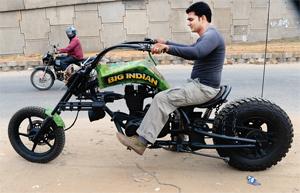
Zakir’s 10-feet long Captain America-style bikesports monster Trepador tyre; actor Upendra asked him if the bike can be used in one of his movies.

The bike sports a converted 500 cc Royal Enfield engine

If you find a monstrous 10-feet long bike zipping around the streets of Bangalore, ridden by a young lad, don’t mistake him for a ghost rider. It is actually 25-year-old interior designer Zakir Hussain Khan, who has passionately created this unique chopper bike which sports a converted 500 cc Royal Enfield engine.
Zakir Hussain, aka Zak as he’s popularly known among motorcycle enthusiasts, was inspired by the intriguing ‘Captain America’ chopper bikes in the West. Choppers are handcrafted or modified bikes. Captain America is the lead character in the counterculture 1960s movie Easy Rider, in which the two protagonists ride a chopper bike.
It took Zak three months to create this mean machine, which he calls the ‘Big Indian’. He now has Sandalwood bigwigs queuing up to feature this monster in their movies.
“Actually, I was test-riding the bike near actor Upendra’s house when his son saw the bike and called his father to check it out. He seemed quite impressed,” said Zak.
Uppi, known to wow his audience with his exuberant and larger-than-life characters, has even asked him if the bike can be used in one of his movies — this of course, after spending a few minutesinspecting the bike and its unusually big hind wheel.
The young designer, who invests most of his earnings from interior designing on modifying bikes, used the imported Maxxis Trepador tyre made by Taiwanese company Cheng Shin Rubber, doing business as Maxxis International, for the hind wheel. The tyre, made to be used on light trucks and SUVs, reportedly cost Zak a whopping Rs 60,000 to import from Germany. He thinks it gives the machine a mean look.
The bike cost him Rs 6.25 lakh to make from scratch. Another of its unique features is its silencer, which emits fire from its exhaust. This lone cost him a cool INR 1,50,000. Some of the characteristic features of this single-seater bike, now grabbing onlooker eyeballs, are its lengthened frame, extended forks, a skull for headlight, and Gatling-style (a forerunner of the modern machine gun) barrels, extending from one side of both the fork tubes.
Zak, always keen on wanting to make something different, started modifying cars and bikes since he was an 18-year-old. “I want to create another chopper bike which is 18-feet long,” said the ambitious Zak. And what is he going to do with this one? “I want to auction it after a few months,” he said.

source: http://www.bangaloremirror.com / Bangalore Mirror / Home> Bangalore> Others / by Nandini Kumar, Bangalore Mirror Bureau / March 08th, 2014

With sheer grit, Haseena moves on

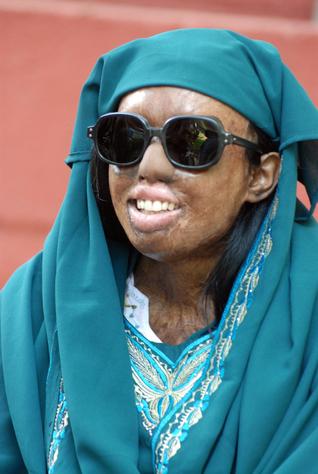
Haseena Hussain./  File photo: K.Gopinathan / The Hindu
Haseena Hussain./ File photo: K.Gopinathan / The Hindu

We want society to be humane to us: acid attack victim

Earlier this week, Laxmi, a victim of acid attack, was awarded the International Women of Courage Award by U.S.’s First Lady Michelle Obama for successfully leading the campaign against acid attacks on women in India.

The story of Haseena Hussain of Bangalore, who fought a long battle after an acid attack in 1999, is as inspiring as Laxmi’s.

Ms. Haseena was attacked with acid in 1999 by Joseph Rodriguez, her former employer, as she had not responded to the marriage proposal and had refused to stay back in his firm. Today, almost 15 years later, Ms. Haseena is the sole breadwinner of her family of four comprising her father, mother and grandmother.

Choosing not to be bogged down by 35 surgeriesand loss of vision in both eyes, besides constant “stares” and comments from relatives and acquaintances, she now works in a government office. When asked if she was offered the job by the government, an irked Ms. Haseena says: “I got this job on my own. I cleared several rounds of tests after undergoing computer training.”

Ms. Haseena hates re-living what she calls “sob story” and says that she hopes every acid attack victim is able to fight the odds and become independent. “As I was educated, I was able to secure a job. But acid victims, particularly in rural areas, may find it difficult to be independent. Most acid attack victims lose their vision. If the government provides jobs, they can remain independent.”

She adds categorically that she needs no sympathy. “We only want society to behumane to us.”

Besides the discrimination she faced in society, her family had a tough time mobilising resources for her surgeries and other medical aid. “My father had to sell our house and his entire bank balance was empty as we had to spend Rs. 15 lakh on my medical expenses.” Though the Supreme Court had directed all States to pay acid attack victims Rs. 3 lakh towards medical treatment and for after care rehabilitation, Ms. Haseena says it is inadequate.

It was nine years after the attack of Ms. Haseena that the accused was finally convicted, even as she struggled every minute of those years. “There is a need to have a fast track court for trying cases related to acid attack victims,” she says.

source: http://www.thehindu.com / The Hindu / Home> News> Cities> Bangalore / by Tanu Kulkarni / Bangalore – March 07th, 2014

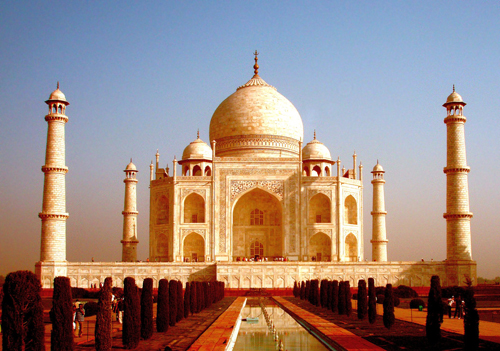
Taj Mahal gets notice board in Braille

Taj-MahalMPos10mar2014

Agra:

Blind tourists can now read the history of the Taj Mahal in the complex.

The Archaeological Survey of India (ASI) has provided a notice board in Braille script for their convenience.

Agra District Magistrate Manisha Trighatia unveiled the notice board, which some visually handicapped students and their teachers read — and expressed satisfaction.

N.K. Pathak, the superintending archaeologist of ASI’s Agra circle, said the facility will be a great relief to the sightless who had earlier to be told the history orally.

The board has been developed by Arushi, an NGO from Bhopal. It is both in Hindi and English.(IANS)

Photo Courtesy: www.wallpaperswala.com

source: http://www.tntmagazine.in/ TNT , the north east magazine / Home> Related News / March 07th,  2014

Hussain proves yet again he has a nose for the keyboard

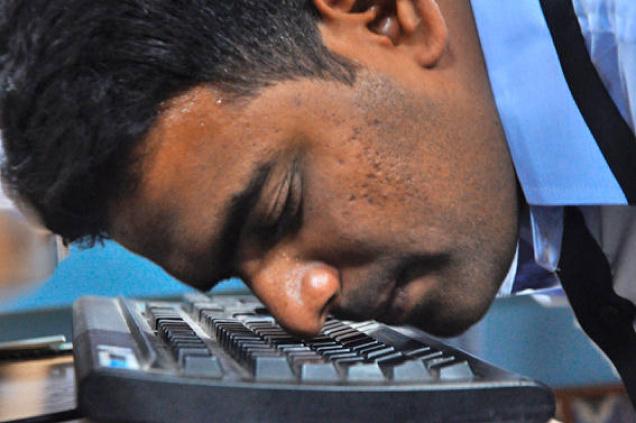
Mohammed Khurshid Hussain currently holds the world record for typing A to Z on a keyboard in 3.43 seconds. - Photo: G. Ramakrishna / The Hindu
Mohammed Khurshid Hussain currently holds the world record for typing A to Z on a keyboard in 3.43 seconds. – Photo: G. Ramakrishna / The Hindu

The youngster types a sentence using his nose in 47.44 seconds, more than half-a-minute faster than the current world record

Mohammed Khurshid Hussain, who holds the Guinness World Records for typing the English language alphabet in 3.43 seconds on a keyboard, attempted to break the record for typing a 103-word sentence in the shortest time, with his nose, here on Thursday.

It was Mr. Hussain’s second attempt to break the world record for typing the sentence ‘Guinness World Records have challenged me to type this sentence using my nose in the fastest time’ with his nose.

According to the Guinness website, the current record holder is an Indian named Neeta, who achieved the feat in one minute and 33 seconds at Guinness World Records Pavilion in Global Village, Dubai, UAE, on November 16, 2008.

Mr. Hussain’s clock stopped at 47.44 seconds when he finished typing the sentence with his nose, more than half-a-minute faster than the current world record.

“This is my second attempt to break the record. A few months ago, I typed the sentence with my nose in 54 seconds, for which I am yet to receive the certificate,” he said.

Mr. Hussain currently holds the world record for typing A to Z on a keyboard in 3.43 seconds.

The feat was achieved on February 2, 2012, according to the Guinness website. He performed the feat in the presence of S. M. Arif, Padmashree and Dronacharya awardee; Mohteshyam Ali, silver medallist at the Mr. World body building championship; Naina Jaiswal, an international table tennis player; and Iftekhar Shareef, who acted as witnesses for the record-breaking attempt.

The lone Indian doctor in Kandahar

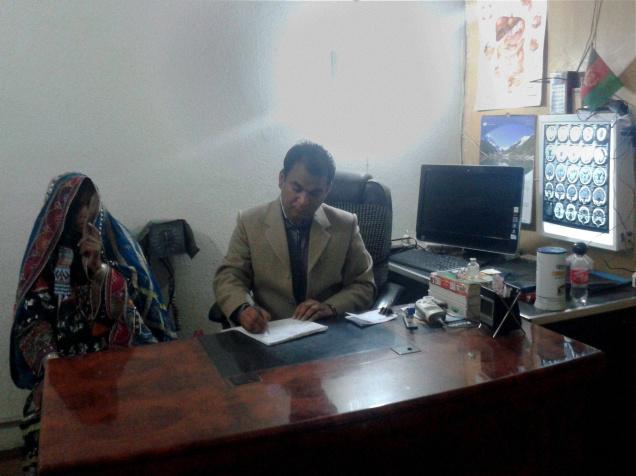
Doctor Shah Nawaz with a patient at a private hospital in Kandahar in Afghanistan.

Shah Nawaz says he is happy to serve the Afghan people

Set to complete a decade in the former power hub of the Taliban, Dr Shah Nawaz, the ‘lone Indian’ here, is happy to help the war-weary Afghan people with their medical needs.

Nawaz, 45, is a doctor working at a private hospital. Officials said Dr. Nawaz is the only Indian working in the city apart from a handful of staff at the Indian Consulate in Kandahar city.

Recalling his journey to Afghanistan, Dr. Nawaz said an Afghan businessman in the dry fruits trade had contacts with his family in India. The businessman often spoke to Dr. Nawaz of the plight of people in Kandahar and their health requirements.

“I then gave him a proposal to build a hospital. He (the businessman) was ready to invest and I expressed readiness to come to Afghanistan and serve the people,” Dr. Nawaz said.

“People here are very simple, their needs are very limited. Actually even basic treatment is not available,” said Nawaz, who hails from Maharashtra.

“I am here since August 2005. My family is not here. They are in Malaysia. I visit them twice or thrice a year and they come once a year to India,” he said. Dr. Nawaz said he was the only Indian working in the city but a number of his compatriots were employed in a huge U.S. military base in Kandahar. According to sources, Indians working at the U.S. base come through Dubai and are not registered with the Consulate.

India last week helped Afghanistan establish its first agriculture university here as part of a major capacity-building project to help the war-torn country increase farm output and attain economic independence.

The Afghan National Agricultural Sciences and Technology University (ANASTU) is coming up in the sprawling Tarnak farm in the former Taliban stronghold of Kandahar.

source: http://www.thehindu.com / The Hindu / Home> News /by PTI / Kandahar, February 24th, 2014

Javed Abidi | Disability is a developmental issue

Most of the world’s disabled live in the global south. This is why India and other Brics nations must ensure their policies are both inclusive and accessible

Abidi says companies should not equate disability with corporate social responsibility.

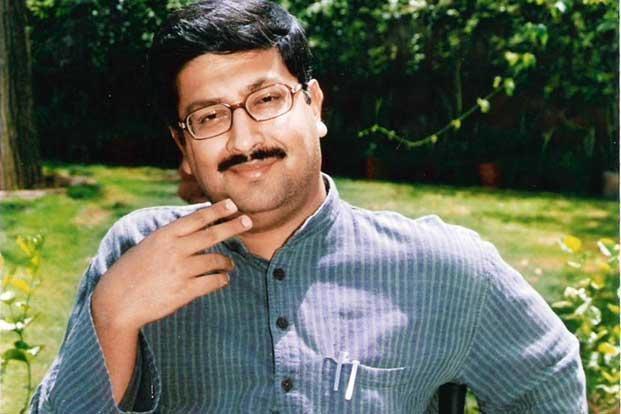
Born with congenital spina bifida, a developmental disorder, Javed Abidi has traversed the world on a wheelchair, advocating the rights of the disabled.

Considered a pioneer of the cross-disability movement in India, he was instrumental in the drafting and passage of The Persons with Disabilities (Equal Opportunities, Protection of Rights and Full Participation) Act, 1995, and in the setting up of the National Centre for Promotion of Employment for Disabled People in 1996. He has been its director since 1997. In October 2011, he was appointed world chair of Disabled People’s International (DPI), a global organization working for the rights of people living with disabilities.
In July, Abidi also took over as the vice-chair of the International Disability Alliance, a global alliance working for disability causes. In his new role, he stresses that disability movements must focus on the global south (which includes India), for this is where nearly 800 million of the world’s one billion people with disabilities live. Edited excerpts from an email interview:
As the world chair of Disabled People’s International, what are your priorities?
The dynamics of the disability rights movement are going through tremendous churning at this point. In 2011, the World Health Organization (WHO) said one billion, or 15% of the world’s population, live with a disability. Of this, as many as 80%, or 800 million, live in countries of the global south. People with disabilities also comprise 20% of the world’s poorest. Yet the leadership and the mechanisms that shape policies that affect the lives of this 80% are controlled by people from the developed world, who have absolutely no idea what it means to be a person with disability—to not even have a wheelchair, to not even have a hearing aid, to live in abject poverty, etc. My biggest priority as of now is to remind the world, again and again, of this fact.
What is the DPI’s agenda for the UN general assembly’s high-level meeting on disability and development in September in New York?
In the past decade or so, it has by and large been established that disability is a cross-cutting human rights issue. But what the DPI and other global bodies are now trying to underline is that disability is also a developmental issue. Our first endeavour is to ensure that the respective governments send the highest level of delegations to this meeting. The DPI has also raised the demand for a global forum on disability and development—a platform for all stakeholders on the sidelines of the high-level meeting, along with a strong outcome document.
Most importantly, the DPI will try for a sizeable representation from the global south—from Asia, Africa, Latin America, Caribbean—to ensure that their disability and development agenda is not hijacked by people who have very different realities from ours.
How can workplaces in India be made disabled-friendly? What are the challenges, and how can they be met?
Companies that are serious and committed to being disabled-friendly will have to look at it as a policy issue at the highest level. Inclusivity is not just employing people with disabilities. It encompasses making all your facilities and systems accessible. Most companies approach this wrong and equate disability with corporate social responsibility. They first employ people with disabilities and then make their workplaces disabled-friendly. Very soon, India will have a strong anti-discrimination law on disability. Everyone will have no choice but to fall in line. It is up to the employers to decide if they want to be a role model or be forced to comply.
Post-2015, when the world prepares for a new development framework after the UN’s Millennium Development Goals (MDGs), where do you see the disability movement going?
I think that in the past couple of years, development practitioners have become more aware of disability. The challenge is to translate this awareness into action and tangibles. Apprehensions are that disability will again be overlooked. Policymakers and decision makers do not seem to grasp the obvious connection between disability and human rights and development issues. For instance, if you talk about conflict and wars, disability has a direct and significant correlation to it. The same holds true for disability and natural disasters; disability and situations of humanitarian risks; disability and the effects of climate change, and so on.
The task at hand, especially for grass-roots organizations such as the DPI, is to ensure that we keep reminding the people who matter about us.
In what ways can India shape the global disability agenda?
If we go by the 15% theory of WHO, India would be home to more than 150 million people with disabilities, and some of these are the poorest and most vulnerable people on this planet. India’s policy on disability, hence, will have a significant impact on not only the region but also the world. With the new economic dynamics and the power balance shifting towards developing economies such as India and the other Brics nations—Brazil, Russia, China and South Africa, it is imperative that their development policies are inclusive and accessible to disabled people. India should lead here by looking at reforms to advance disability rights, raising the issue at the UN and other bilateral and multilateral platforms. The nations of the global south, especially the Brics countries, are somewhat disillusioned by the MDGs and will therefore be critical to the post-2015 process.
What are the key hurdles in India’s disability movement and how can they be met?
The biggest challenge is to get the attention of policymakers and decision makers to put disability on the agenda and to convert the attention into political will. India made a grave mistake during the formative years, because of which our schools, colleges, universities and public infrastructure continue to be inaccessible to people with disabilities. Rather than rectifying those errors, we are continuing to build more barriers. In a budget analysis done by us, we found that in the Union budgets since 2008, India spends only 0.009% of its GDP on disability! A strong anti-discrimination law with punitive measures is also needed to ensure equal participation of people with disabilities.
What difference are you going to make for the movement in South Asia, especially since you are an Indian?
The MDG Report of 2012 says that by 2015, four out every five people living on less than $1.25 (aroundRs.70) a day will be in South Asia. It is anybody’s guess as to how many of them will be people with disabilities, given the vicious cycle of poverty and disability. My immediate aim is to build a strong cross-disability network in South Asia to highlight these issues. We have already started this process and some progress has been made.
As a major development aid donor, India also needs to rethink its “no-strings attached” south-south cooperation policy. A democracy cannot possibly fund projects that violate the human rights of people with disabilities by creating barriers for them.
source: http://www.livemint.com / Live Mint & The Wall Street Journal / Home> Lounge> Business of Life> Indulge / by Pallavi Singh / Sunday – April 28th, 2013

Defiant Jazeera stays put

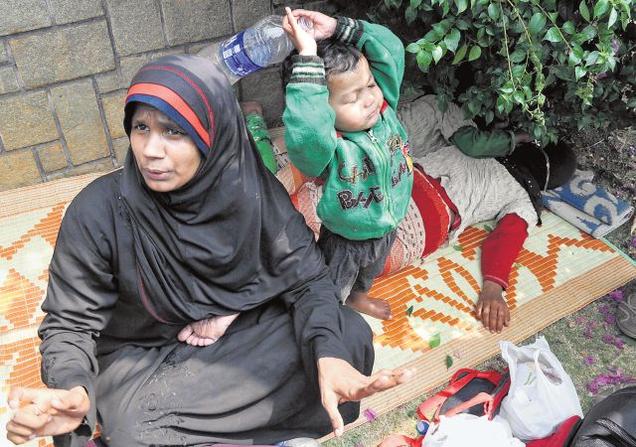
Jazeera in front of the house of businessman Kochouseph Chittilappilly in the city on Tuesday. / Photo: K.K. Mustafah / The Hindu

The stress of sleeping on the pavement in the heat and cold of the day is writ large on the face of Mohammed, who is hardly one and a half years old. His sisters, 12-year-old Rizwana and 10-year-old Shifana, recalled their experience the previous night when mosquitoes and insects disrupted their sleep and forced them to remain awake till the morning to keep their little brother out of harm’s way.

“Kochi is horrible compared with Delhi despite the freezing cold in the capital because of the attack by mosquitoes here. Even during the day time, insects and mosquitoes cause extreme discomfort to us. We are concerned about Mohammed, who is too young to withstand such a situation,” said Rizwana, daughter of 31-year-old V. Jazeera of Kannur, who began a sit-in protest in front of the house of industrialist Kochouseph Chittilappilly on Monday afternoon, seeking clarity on a cash award promised to her.

Ms. Jazeera, who drew world-wide attention through her four-month sit-in at Jantar Mantar in New Delhi against illegal sand mining in her native village in Kannur, is on a protest against Mr. Chittilappilly, who promised a cash award of Rs 5 lakh in recognition of her boldness in starting the struggle against quarrying.

Ms Jazeera, wearing soiled clothes and sitting under a tree in front of Mr Chittilappilly’s bungalow, said she had forgotten to bring along even the minimum change of dress for her children as she was not prepared for a long round of agitation. “I came here to seek clarity from Mr Chittilapilly on the promised cash award. My earlier plan was to leave by 11 am on Tuesday after getting an explanation from him. But he has now forced me to go on an indefinite strike,” she said.

A few autorickshaw drivers and local residents offered to provide fresh clothing to the mother and her three children. The locals also offered food and bathing facilities for the family.

Asked why she was putting her children to such suffering on the pavement, Ms Jazeera said she had told her two daughters go back to the native village and live with relatives. “As I am breast-feeding Mohammed, he alone can stay with me. But my daughters are fully convinced of my agitation and they stick with me during these crucial days,” she said. The two girls said they would not abandon their mother on the pavement to go back to their village.

When pointed out that the popular perception was that she was begging in front of the house of a generous man for a cash award he had announced voluntarily, Ms Jazeera said her demand was just clarity, not money. “If Mr Chittilappilly says that he will not give the promised amount, I will soon stop the agitation and return home. In fact, he and his business ventures gained undue publicity by announcing the award. It was not his commitment to my cause but the severe public criticism against giving cash award to a woman who voiced her personal concerns against a popular struggle in the State capital that prompted him to announce it,” she said.

“Sandhya, the housewife in Thiruvananthapuram, voiced her concern against all agitations. I was not ready to receive the cash award by sharing a platform with Sandhya as demanded by Mr. Chittilappilly. If I was crazy about money, I could have taken a flight from Delhi as suggested by Mr. Chittilappilly and stayed at a posh hotel to receive the amount. Mr Chittilappilly used me as a tool to gain publicity,” she said.

She had no answer to a question on the nature of assurance she received from Chief Minister Oommen Chandy on illegal sand mining. “How I can continue the strike indefinitely in New Delhi?,” she asked.

On Tuesday, the premises of Mr. Chittilappilly’s bungalow saw a number of hoardings extending solidarity to Ms. Jazeera. They included one jointly put up by the CPI(M)’s trade union wing CITU and Congress’ INTUC.

Meanwhile, Mr. Chittilappilly convened a press meet where he said the protest staged by Ms Jazeera was politically motivated. “Everybody knows who have organised the protest,” he said in an apparent reference to the CPI(M), which turned against him after he announced a cash prize of Rs 5 lakh to Sandhya. “I stand by my earlier promise. I am ready to deposit the amount in a bank account of her children,” he said.

“Why is Mr Chittilappilly overly worried about my children? I am capable of looking after them. If he is ready to give the amount, it must be directly handed over to me. I am yet to decide how the money will be utilised,” Ms Jazeera said.

source: http://www.thehindu.com / The Hindu / Home> News> Cities> Kochi / by K. A. Shaji / Kochi – February 05th, 2014

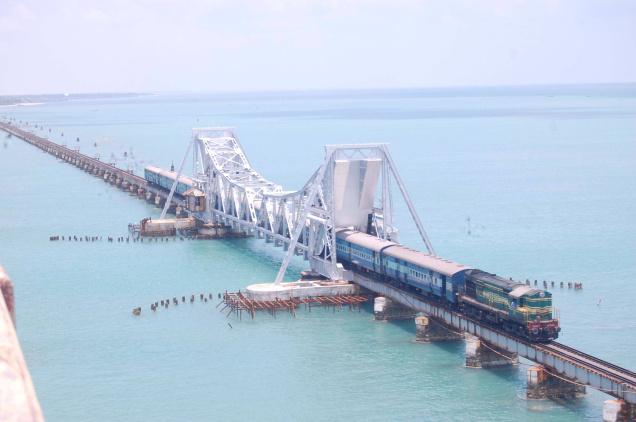
Kalam inaugurates centenary celebrations of Pamban bridge

ENGINEERING MARVEL: The special train carrying former President A.P.J. Abdul Kalam at Pamban railway bridge./  Photo: L. Balachander / The Hindu
ENGINEERING MARVEL: The special train carrying former President A.P.J. Abdul Kalam at Pamban railway bridge./ Photo: L. Balachander / The Hindu

India’s first cantilever bridge connects Rameswaram with mainland

A long-time resident of Rameswaram and former President A.P.J. Abdul Kalam inaugurated the centenary celebrations of the Pamban railway bridge — India’s first cantilever bridge, connecting the pilgrim-island of Rameswaram with the mainland. He turned nostalgic as a two-coach special train took him from Mandapam across the bridge. “Pamban bridge is part of my life,” Mr. Kalam said. As a young boy, he had travelled hundreds of times on the bridge to take newspapers to the island for distribution.

Mr. Kalam unveiled a plaque and released a book Marvels of South Indian Railway, marking the inauguration of the nearly month-long celebrations.

Southern Railway General Manager Rakesh Misra said the bridge was an engineering marvel that had withstood corrosion and a violent sea for over a century. The 65.23-metre-long rolling central lift span (the bridge is 2.06 km long), named after Scherzer, German engineer who designed and built the span, has been given a fresh coat of paint and decorated with lights. It opens up like a pair of scissors to allow vessels to pass through under the bridge.

Mr. Kalam had played a vital role in preserving the bridge. After the Railways announced its uni-gauge policy in 2006, and almost gave up gauge conversion at the bridge, he brought in IIT-Madras expertise to thrash out an engineering solution.

The bridge was put to test for the first time in December 1964, when a severe cyclonic storm hit this part of the area. All girders, both RCC and steel, were washed away. Two of the 141 piers were also damaged. But, Scherzer’s span withstood nature’s fury.

source: http://www.thehindu.com / The Hindu / Home> National / by Walter Scott / Pamban – January 29th, 2014

Delayed passport kills ragpicker’s Brazil dream

Bangalore :

If things had gone according to the script, ragpicker Mohammed Khan, 47, would have been in Brazil on Wednesday to participate in an international conference on waste management.

But red-tapism and inefficient babus servants ensured that Khan can’t pick up some finer aspects his trade there because he couldn’t get his passport in time.

Khan, a resident of Tippu Nagar in Benhalli near Kogilu Cross, off Bellary Road and 30 km from the city centre, applied for a Tatkal passport on November 2. He should have got it by mid-November but there’s no sign of it yet despite three IAS officers giving their reference letters to endorse Khan’s application.

The only ragpicker from South India chosen for the conference, Khan said: “When I was chosen, my family and friends were thrilled. I never imagined I’d get to fly. Khuda ka marzi (God’s will), I thought. But because I couldn’t get a passport, I couldn’t travel abroad.”

Khan applied for a voter’s ID card in 2009. “Though I wrote 1965 was my year of birth, clerks erroneously entered it as 1966 in my card. I gave an application for rectification. But the corrected card never came,” he narrated.

That mistake was perpetuated in his Aadhaar card. When Khan went to apply for a passport, he was asked to get his transfer certificate from the school where his year of birth was mentioned as 1965. The mismatch was enough for authorities to raise queries.

Another hurdle came up in the handwritten date and reference number in the verification letter given by Salma K Fahim, IAS, additional commissioner, BBMP.

“The letter had its reference number and date mentioned in handwriting and was rejected by passport officials. The letter was reissued as per the directions of the passport authorities. But when the authorities sent a fax to BBMP to verify its contents, there was no response from the civic body as the fax machine in its office was not working,” explained Nalini Shekar from the NGO Hasiru Dala which is working with pourakarmikas.

“We have been told that police verification is going on,” said Krupa Rani, project co ordinator with Hasiru Dala, the NGO that chose him. But an acknowledgement by the regional passport office only says, “Police verification shall be carried out post issuance of passport.”

Recycling waste on bicycle

“I am the only educated person in my family. I could not pass SSLC as I had no textbooks. After that I followed in my father’s footsteps and took to ragpicking,” Mohammed Khan said.

Khan is out at 9 every morning looking for waste on the streets. “These days public don’t give away iron scrap. I earn not more than Rs 50-Rs 100 daily. It’s much lesser than what I used to earn a couple of years ago. I also work at the dry waste collection centre at Allalasandra. Five wastepickers have started it by depositing Rs 500 each in a bank,” said Khan.

Khan pedals for about 40 kms every day, looking for valuable and recyclable waste by the roadside.

According to Nalini Shekar of Hasiru Dala NGO, Khan was chosen for the Brazil trip because of his fluent Hindi, communicating skills and experience and knowledge on pattern of urban waste. “We won’t give up for his passport. Maybe he’ll get another opportunity to fly abroad for professional reasons,” she said.

He will get passport soon: Official

KJ Srinivas, regional passport officer, sought for details of Khan’s case and spoke to officials concerned immediately.

“We had treated this as a special case and had even given him an out -of-turn appointment. But because we didn’t get a confirmation from IAS officer Salma K Fahim on her reference letter, his application was considered treated as a regular one and sent for police verification. But we’ve contacted the officer on phone. Khan will be issued a passport at the earliest and the police verification will be done after that,” Srinivas said.

“I was contacted by passport authorities once again on Tuesday evening and I’ve given my confirmation. But it’s sad that Khan missed the chance to take part in an international conference,” said Salma.

source: http://www.articles.timesofindia.indiatimes.com / The Times of India / Home> City> Bangalore / by Sunitha Rao R, TNN / November 28th, 2012