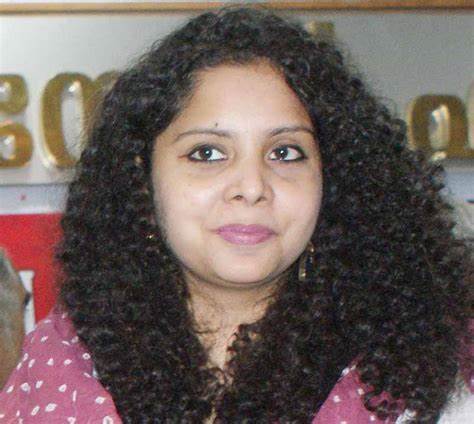
Rana Ayyub, an Indian investigative journalist and Global Opinion Writer at The Washington Post, is the recipient of one of the two coveted 2024 International Press Freedom Awards, as announced by Canadian Journalists for Free Expression (CJFE). She has been named for this award for her reporting that tenaciously upholds press freedom while holding governments accountable.
Ayyub will attend the CJFE Gala: A Night to Celebrate Courage in Journalism, where she will accept the award in Toronto on October 23.
When Ayyub went undercover in 2010 to look into the government’s role in communal violence – which is defined as violence based on race or religion – she established her reputation for fearless reporting. Since then, she has provided news and investigative reports about the persecution of minorities, state-sanctioned violence, and communal politics for a variety of Indian and international publications, such as The Washington Post, The New York Times, The Guardian, The Atlantic, and Foreign Policy. Her best-selling book, Gujarat Files: Anatomy of a Cover-up was released in 2016.
The Modi administration has reacted angrily to Ayyub’s political exposés. Ayyub is one of India’s most harassed and abused reporters, according to the International Centre for Journalists, and the UN special rapporteur has urged Indian government to stop the “relentless misogynistic and sectarian attacks” against her.
source: http://www.radiancenews.com / Radiance News / Home> Pride of the Nation> Awards / by Radiance News Bureau / October 04th, 2024
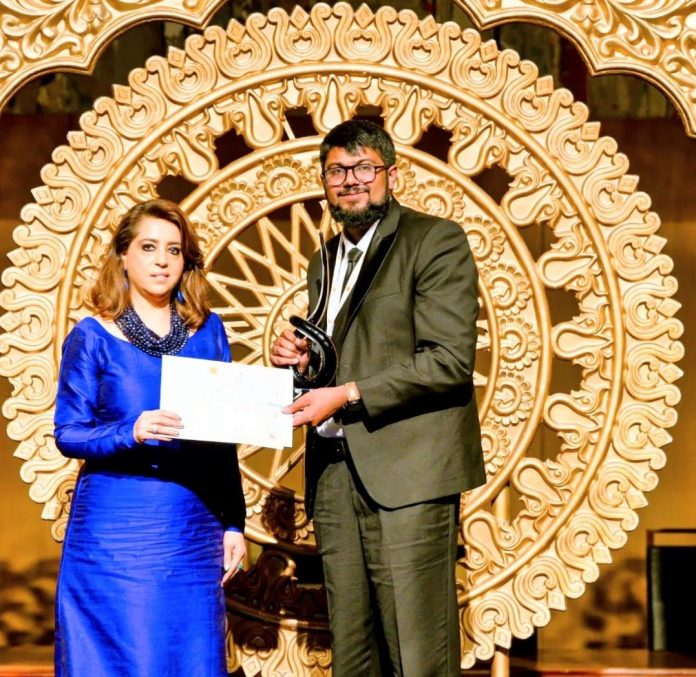
Aamir Qutub, an India-born entrepreneur and CEO of Australian IT multinational Enterprise Monkey, has been awarded the 2024 India Australia Business and Community Alliance (IABCA) Young Professional of the Year Award. The accolade recognizes his exceptional contributions to entrepreneurship and social service in Australia.
Upon receiving the award, Qutub expressed his gratitude in a conversation with Radiance from Australia. “More than a decade ago, when I left my hometown for Australia, I never imagined standing in the grand Parliament Hall, receiving an international award in the presence of the Prime Minister. I am deeply humbled and honored to have received the 2024 IABCA Young Professional of the Year Award.”
Reflecting on his journey, Aamir shared, “This recognition is not just about my individual efforts but highlights the power of community support. From my early days in India to establishing myself in Australia, the backing of people around me has been crucial. This award is for my work as a founder and CEO, where we have created jobs and contributed to the local economy. Our initiative, Angel Next Door, played a key role in helping over 100,000 Australians during the COVID-19 crisis.”
Aamir also offered advice to emerging entrepreneurs in India, encouraging them to pursue their dreams, regardless of their background.
“I come from a middle-class family in a small Tier 3 city, but I dared to dream big. The journey was not easy, but persistence, adaptability, and continuous learning made it possible. Your background does not define your future – your determination does. Every small step you take today contributes to tomorrow’s success,” he said.
Reflecting on his journey, Aamir acknowledged the many people and institutions that played a role in his success.
“From the regional city of Aligarh and the nurturing environment at AMU, where I laid my foundation, to the vibrant city of Geelong, where Deakin University provided me with a platform to grow – this journey has been shaped by countless hands and hearts,” he added.
A proud alumnus of AMU, Aamir has received numerous accolades, including being a finalist for the Australian Young Business Leader Award. He was the youngest General Manager of ICT Geelong and also served as Digital Manager for Australian Sports Tech Network. In the early stages of his career, Aamir worked as a cleaner during the day and a newspaper delivery boy at night to fund his startup. He has also demonstrated his commitment to social causes by spending a night on the streets with other CEOs to experience the life of homelessness, raising awareness for Australians without shelter.
Aamir’s professional journey began with Honda Cars India as a Production Manager before he co-founded the Stand India Foundation, a not-for-profit social venture. He holds an MBA in Information Management from Deakin University and a Bachelor’s in Mechanical Engineering from AMU, where he served as General Secretary of the AMU Students’ Union.
source: http://www.radiancenews.com / Radiance News / Home> Pride of the Nation> Award> Markers of Excellence> Latest News / by Radiance News Bureau / October 07th, 2024
This is just not another memoir of a politician happily or unhappily bounds to look back; the author, instead, talks like a grandmother narrating a story of post-independent India somewhat interlinked with the Congress.
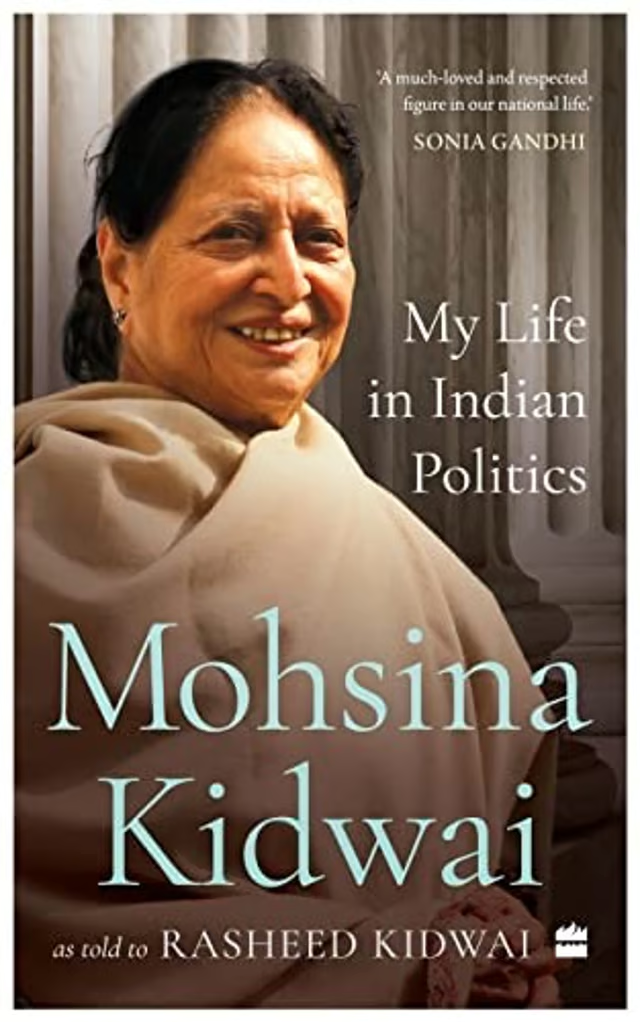
Mohsina Kidwai, author of the book ‘My Life in Indian Politics’
Book Review: Non-fiction (Memoir)/2022; My Life in Indian Politics by Mohsina Kidwai (As told to Rasheed Kidwai); HarperCollins, 300pp (Hardback)
Indian politics is a sort of ‘wonder’ and its unique existential positioning can’t be imagined without people behind its ups and downs. Reading the memoirs, especially of those who served in public life for long, is amongst the rewarding pastimes of a reader. I read Mohsina Kidwai’s memoir as a manuscript, and of course, I reread it even more carefully in its print version. Here is a candid account of a prominent political figure of India who dispels the stereotyped traditional notions that are usually expected to be self-centred and being extra boastful in the first person narrative.
Mohsina Kidwai has been in public life as a member of the Indian National Congress for over six decades. A cabinet minister in several successive central governments and a senior office-holder in the Congress, she has had a ringside view of Indian politics for almost the entire span of independent India’s existence. She has witnessed, and been a participant in, the tenures of prime ministers from Jawaharlal Nehru to Indira Gandhi and Rajiv Gandhi, and was a member of parliament until 2016, one of only twenty Muslim women to have been elected to the Lok Sabha since 1951. She has had a prolific track record that can’t be compared with her fellow women politicians, more so, from the Muslim community.
My Life in Indian Politics by Mohsina Kidwai
The book reflects well on her long and eventful life in politics and covers quite skilfully her contributions to public life, and also succeeds in providing an honest appraisal of the turn in fortunes of the political party she has remained a loyal member of over the decades. The author along with co-author and senior journalist Rasheed Kidwai, endow the readers with rare glimpses to homes, lives and hurly-burly of election campaigns from bygone era when Congress dominated the political landscape at centre and in the states.
One such memorable one was the Azamgarh bypoll in 1978, which Mohsina Kidwai won as Uttar Pradesh Congress Chief, and which signalled a revival of the Congress’s fortune after its spectacular defeat in the post-Emergency general elections of 1977. The book’s cover informs you and inside, the details and rich and beautifully presented.
We get to see little known facts about India’s Prime Ministers Pandit Jawaharlal Nehru, Lal Bahadur Shastri, Indira Gandhi, Rajiv Gandhi and P V Narsimha Rao. Similarly, she is forthright in accepting that her move to join the breakaway Tiwari Congress in 1995 was a mistake.
Here is a quick recap of a few of them:
Mohsina Kidwai talks about an incident which happened when Lal Bahadur Shastri had visited Barabanki sometime in the early 1950s. “A few years after marriage, I saw Shastriji, who had come to meet my father-in-law. Jameel ur Rahman Kidwai Saab had stood for elections and Shastriji was canvassing for him. Shastriji was a simple man. Our domestic help, who did not recognize him, asked him where he was from. Shastriji, by then already a Union minister, replied that he had come in connection with the election and wished to meet Jameel Saab.
“He will return home in the evening,” the domestic help told Shastriji and asked him to wait. Shastriji waited. The servant served him tea.
In the evening, when my father-in-law returned, he saw Shastriji waiting.
A little embarrassed, my father-in-law scolded the servant for not informing him about the guest. After that Shastriji became a member of our extended family.” Some rarest accounts on Indira Gandhi:
“Indiraji was extremely caring and attentive. I can go on talking about many instances. Sometime after the 1977 Lok Sabha polls when Indira ji was in opposition, she planned to visit Badrinath for puja. I and Narayan Dutt Tiwari and I accompanied her. It was an October month. We were told that puja starts at 4 am. Asking us to wait, she went to the temple for Puja. We were to start at 6 am on the return journey to New Delhi. At 5 am, Indiraji returned from the temple and checked whether all the vehicles of our convoy were ready. The pundit of the temple offered us breakfast. When we were having breakfast, the drivers were heating the engines of their respective vehicles. I told Indiraji, we had breakfast but poor drivers must be hungry. They have not even had tea as they were busy heating vehicle engines. I suggested we stop at the first tea shop in return for the drivers to have tea. She agreed.
Indiraji had the habit of carrying some snacks with her in a basket during travel. After a while I saw her taking out some biscuits from the basket kept beneath her seat. She tore the biscuits in four pieces and asked the driver to pick the pieces one by one from her hand while driving. She extended her hand carrying biscuit pieces and the driver did what he was told to do. Indiraji used to enjoy such affection and spontaneous display of it that it often stunned me and used to fill my heart with admiration and pride for my leader.”
“Indiraji could also sense what people around her were feeling. Once we were traveling by an overnight train to Gorakhpur and I suddenly realised I was alone with the Prime Minister in the first-class coupe. She sensed that I was a little uncomfortable and directed me to turn my face towards the wall and go off to sleep,” adds the author.
Undeniably, the book is written with honesty and simplicity, and should be better known as a work to assess an entire era in Indian politics. This is just not another memoir of a politician happily or unhappily bound to look back. She, instead, talks like a grandmother narrating a story of post-independent India somewhat interlinked with the Congress. The book is essential reading for anyone interested in knowing India, its democracy and the foundational stories of a remarkable journey.
(The author is a policy professional, columnist and writer with a special focus on South Asia. Views expressed are personal.)
source: http://www.outlook.com / Outlookindia.com / Home> Culture & Society> Book Review / by Atul K Thakur / January 07th, 2023
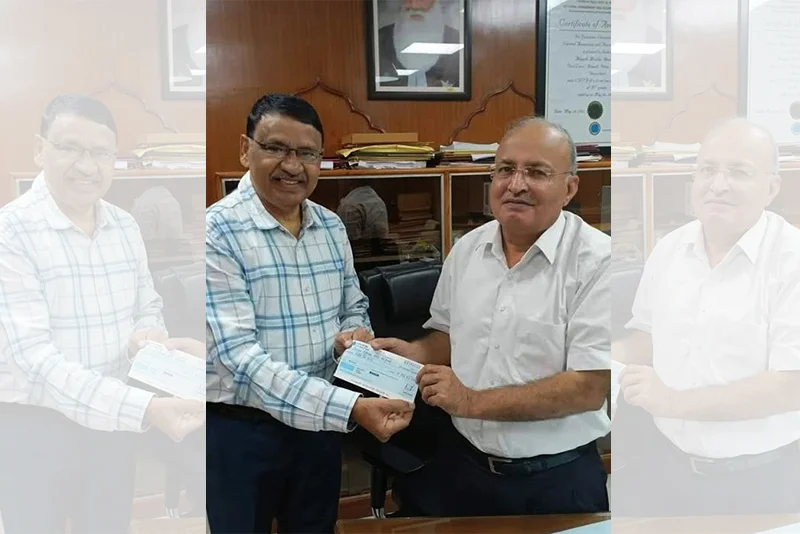
Dr Suhail Sabir, a retired Professor from the Department of Chemistry, Aligarh Muslim University (AMU), has donated Rupees 50 lakh to establish an Endowment Fund at the university.
Aligarh:
Dr Suhail Sabir, a retired Professor from the Department of Chemistry, Aligarh Muslim University (AMU), has donated Rupees 50 lakh to establish an Endowment Fund at the university.
This is one of the highest single donations made by an individual from the teaching community from his/her funds to the university, a press release from the PRO of the university said.
Prof. Suhail Sabir has been a guiding force in promoting education and uplifting the student community through his teaching career till his retirement in 2023.
His contribution to his alma mater is an example of the transformative power of education in shaping the future of students.
“The income generated from Prof. Suhail Sabir’s Endowment will be utilized to provide scholarships to deserving students through an open, interview-based selection process, helping students realize their academic aspirations and lifting the needy in the community.” the press release said.
With such a generous gesture, Prof. Suhail Sabir truly embodies the spirit of giving back to the university what he has achieved after studying and teaching at India’s prestigious Aligarh Muslim University.
Such acts of generosity signify that the true greatness lies in the willingness to give back to the institution, and what it has given to him. His generosity encourages alumni and well-wishers of the AMU to follow in his footsteps and support the alma mater in more meaningful ways.
Prof. Suhail Sabir is a role model in philanthropy and community service. His contribution will set a new benchmark for alumni engagement and support for the AMU student community.
Prof. Suhail Sabir deserves these lines of Shakespeare in praise of his philanthropy.
“His life was gentle; and the elements So mixed in him, that Nature might stand up And say to all the world, THIS WAS A MAN!”
― William Shakespeare, Julius Caesar
source: http://www.ummid.com / Ummid.com / Home> Education & Career / by Syed Ali Mujtaba (headline edited) / September 24th, 2024
_______________
[The writer, Dr Syed Ali Mujtaba, is a Journalist based in Chennai. Currently, he is a Professor at Dr. MGR University, Chennai. He has taken undergraduate and postgraduate degrees from AMU Aligarh. He lived in room no 16 Nasrullah hostel, VM Hall from 1978 to 1984. He represented the AMU senior football team from 1978 to 1982. Syed Mujtaba can be contacted at syedalimujtaba2007@gmail.com.]
Many believed that the Azad Hind Fauj or the Indian National Army led by Subhas Chandra Bose during the Second World War was made of Indian Prisoners of War captured by Japan. This is a misconception, far away from reality.
A Slice Of History
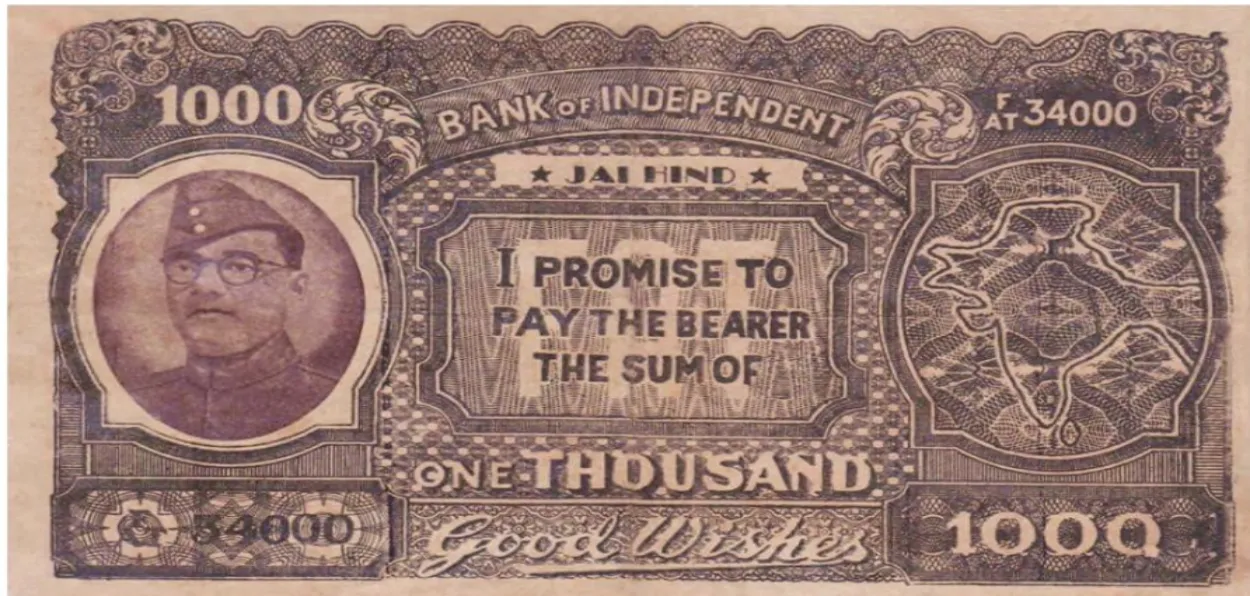
The reality is that INA was a military unit of Arzi Hukumat-i-Azad Hind (The Provisional Government of Free India). Popularly known as Azad Hind Sarkar, this government led by Subhas Chandra Bose had all the working departments of a civilian administration as health, women empowerment, research, civil services, and banks. It also has its currency. The provisional government was recognised by several countries.
Initially, the government was being run on crowdfunding from the Indian Diaspora of Malaysia, Singapore, Burma, and other Southeast Asian countries. Soon, Bose felt the need to have a central banking system and currency.
An official notification from the Azad Hind Sarkar declared, “His Excellency Netaji Subhas Chandra Bose inaugurated the National Bank of Azad Hind Ltd., on Wednesday, the 5th April, 1944. His Excellency the Finance Minister of Burma, His Excellency the Ambassador of Nippon, and other distinguished members of the Burmese Government and high ranking Officers of the Imperial Nipponese Army were also present.
“The aims and objectives of the National Bank of Azad Hind Ltd., are primarily two-fold Firstly this Bank will help to mobilise the financial resources of Indians as a part of our programme of Total Mobilisation, and secondly this Bank will serve the interests of Burma where it is now established.
“The Bank will also render service to the Provisional Government of Azad Hind by acting as its Agents.”
In April 1944, Bose was discussing plans to establish a central bank of Azad Hind Sarkar. Everyone was worried about the money. A woman officer of the INA in her book Jai Hind: Diary of a Rebel Daughter noted, “Netaji was discussing finance problems with a Muslim multi-millionaire here in Rangoon. He suggested to him that we must have our own Bank because a Government without a bank is unheard of. Again as soon as Imphal falls, our Government would be issuing its currency, and a bank would be invaluable then. Netaji asked our friend, the multi-millionaire, for his suggestions for it.
“The reply came in the form of a question “Netaji, with how much capital do you wish to make a beginning?” Subhas Babu suggested that fifty lakhs would suffice for the purpose. Prompt was the answer ‘Oh-ho, is that all you want? Then, I myself shall give 30 lakhs, and the rest of the twenty lakhs I guarantee to present to you in a week. And within a fortnight our Bank had taken legal shape and opened its doors to business.”
The man in question was Abdul Ghani. He was an Indian businessman settled in Burma, who had donated his wealth to Bose and Azad Hind Sarkar.
Lt. M. G. Mulkar of the INA later recalled, “Ghani paid more than what he said. He gave a contribution of 63 lakhs of rupees in cash and goods for the maintenance of the Indian National Army. In addition to his princely donation, he also gave an estate called the Ziawari Estate, which is worth several crores of rupees.”
S. A. Ayer was appointed Chairman of the bank while Dina Nath was one of the directors. When the war ended, the bank had 5,343,946 Dollars deposit. Apart from this, jewelry and gold worth 86,310 Dollars were also in the funds of Azad Hind Sarkar.
The bank issued its currency notes which had Subhas Chandra Bose, Mahatma Gandhi, Jawaharlal Nehru, and Lakshmi Sehgal printed over them.
source: http://www.awazthevoice.in / Awaz, The Voice / Home> Story / by Saquib Salim / October 07th, 2024
An inside view of the storied, idealistic lives in the Savitribai Phule Community Libraries network
Photo Credit: Saba Khan
Saba Khan has participated in the EduLog programme with The Third Eye for its Education Edition. The EduLog mentored 12 writers and image-makers from India, Nepal and Bangladesh to remember—in the present continuous—their experience of education from a feminist lens.
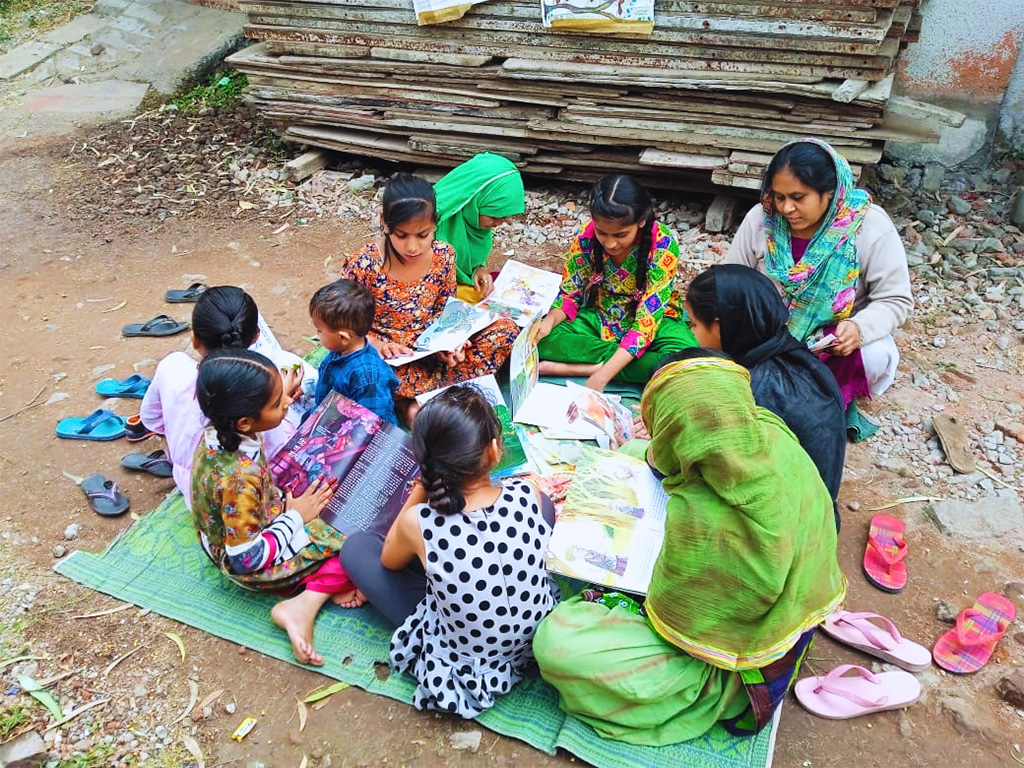
During COVID, when almost everything was closed in Bhopal, we began delivering books to children by going door-to-door. Adults in the family took to reading those books too. Some girls’ mothers flipped through the pages of the book and looked at the illustrations. When we were giving books to young Rimsha Faiza, her sisters-in-law, who were not very old, came out inquisitively and asked about the books and about Savitribai Fatima Sheikh Library. In Mother India Colony, 14-year-old Saba said, “I am not educated at all. But can you give me some books to read?” Two days later, when I went back to her neighbourhood, she asked, “Can you get me a pad too?”
My friendship with Fiza started with books. When she took her first book, she said, “Next time, please give me two books. Both Rezwan and I will read them.” They were a newly married couple. Then one day she called me and said that Rezwan had beaten her. Fiza wanted me to counsel Rezwan, or else she would kill herself, she said. Perhaps she thought that Rezwan would listen to me—the lady with the books. We connected Fiza with a government-run One Stop Centre that works on the issue of violence against women. Meanwhile, Rezwan also started coming to our library and talking to us. They both complained about each other all the time. I patiently listened to both of them.
Gul Afsha, a mother of two, is a very brave woman. She steals a little time for herself from her kids and comes to the library for a while. She mixes with the other girls in the library and reads poems with great enthusiasm.
Photo Credit: Saba Khan
At the library, Zeba, Joya Tasmian, Mahak, Muskan, and Ilma, all help keep the books. These girls have been regular readers for a long time. When I was thinking of returning to my regular job post-COVID, I consulted with them if they could manage the library without me. They enthusiastically said, ‘Yes!’ At the library, I have often seen women from the community seeking advice about their children or sharing their difficulties with the librarian, no matter how young the librarian is. Among them, 14-year-old Mansi is the youngest librarian. She often imitates the way the older librarians speak. Whenever it is her turn to manage the library, she takes them to the park, forms a circle and reads poems aloud to them. One can already see the qualities of a leader in her.
I was born in Bhopal and grew up here. In 2011, as a social worker, I worked with several government schools under a Tata Trusts programme on education. I realised that often the relationship between teachers and children in schools is one where children sit silently with their fingers on their lips. They read only when the teacher asks them to and then put the book away. I had seen this happening in my school.
When I visited schools under this programme, some of the girls said that they had spoken to their mothers about me and their mothers had invited me home. I thought that this was an opportunity to talk to the children outside of the school. When I met the children in their neighbourhoods, I thought of how much fun it would be if they could read together. And that is how Savitribai Fatima Sheikh Library started.
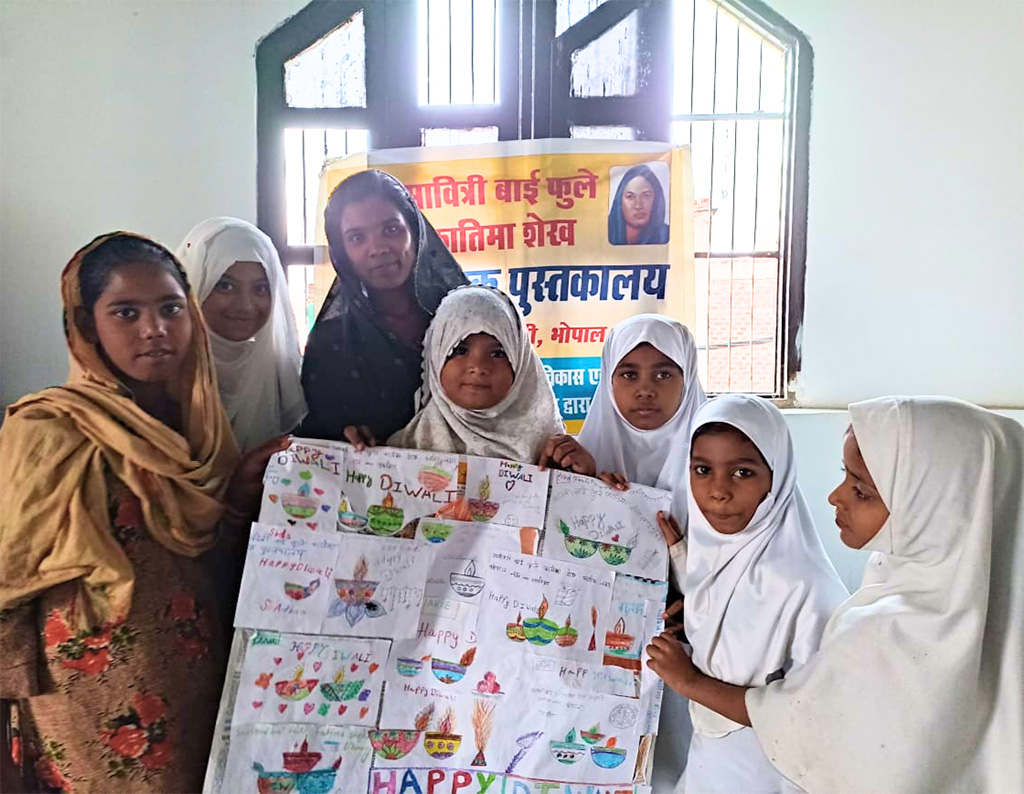
Even since I was a child, I would always look for books to read. I have always felt that children must have books to read—that they should develop an affection for books and realise that books are their means to know about science, about the world. I used to think that wherever I would go, I would cultivate the habit of reading books in children and gradually, their love for books would grow. But I never imagined that I would see so many libraries opening up and so many educators joining in. Today, we have 11 community libraries across purana Bhopal, including areas like Arif Nagar Basti, Mother India Basti, Madari Mohalla, Bhanpur, Karund Basti and more. We have registered a total of 1,000 children. Twenty educators help run these libraries.
Photo Credit: Saba Khan
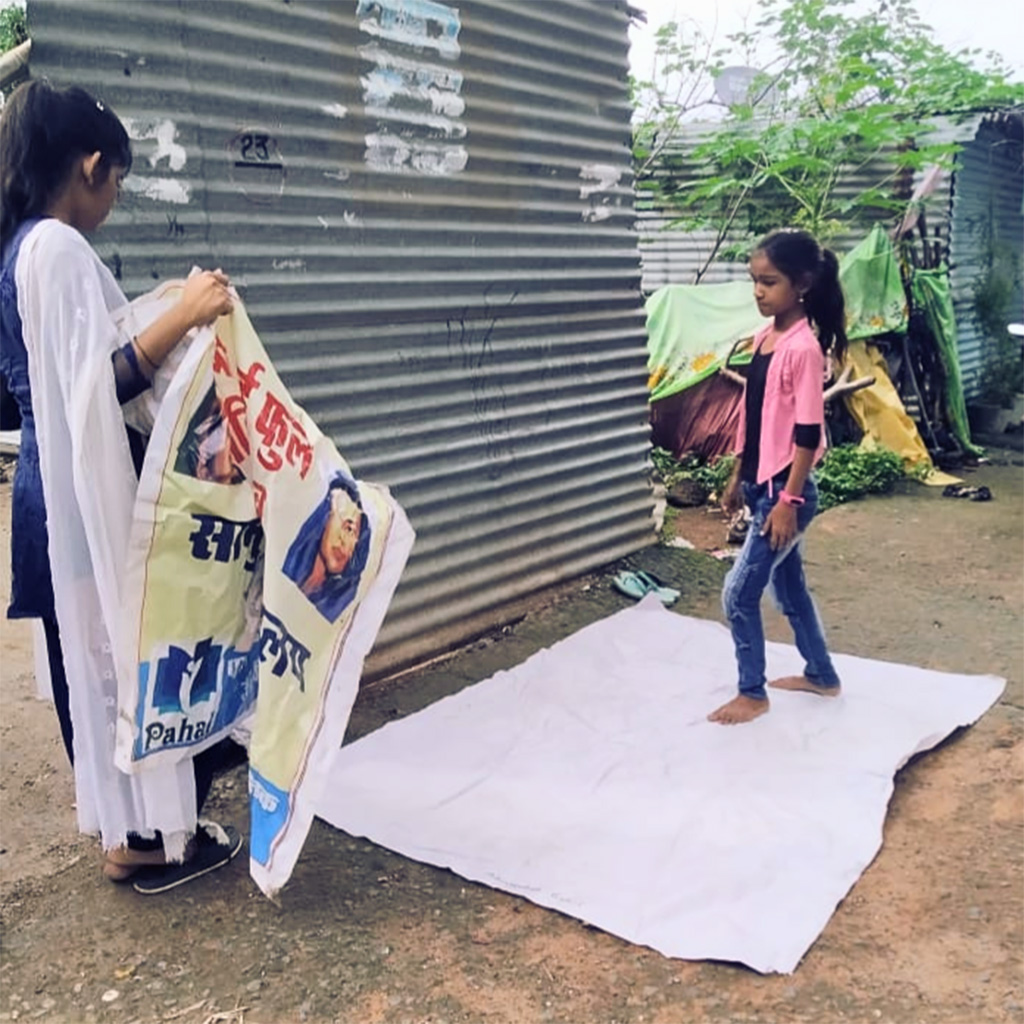
We collectively decided to name every library in the neighbourhood after Savitribai Phule and Fatima Sheikh. In a couple of neighbourhoods, boys like Chhotu, Musa and Irfan offered to help in the library. But everywhere else, it was the girls who took charge of the library, its activities and the visitors. In the beginning, we didn’t have tables, chairs, or shelves in our library. Our capital is the people of our community. They are always there to support us and be involved in the library’s future. When we had to move the library due to rain or other reasons, the women in the community created space in their homes and gently said, “Put it here.” In Mochi Mohalla, Sagar’s mother set up a library in her modest shanty where she used to cook food.
Saniya is one of our educators who sets up a library in her home every day. She lives near the Karond Mandi in the Blue Moon Colony where our oldest library used to run. Our library was located in a hamlet that was built on railway land and the place to run this library was given to us by the community. It was demolished by the Municipal Corporation in January 2022. In this situation, Saniya proposed to run the library from her home. She keeps the books and recites stories to children in her home library. She left school after the tenth grade but wants to resume her studies now. She hopes that working with children may convince her mother to somehow delay her marriage.
Jahangirabad is a largely Muslim neighbourhood where we had set up a library. Children who came to the library did not know of Ambedkar. Some called Savitribai Phule ‘Fula’, but some found it easy to pronounce Fatima Sheikh. In some schools, I noticed that they only talk about Muslim freedom fighters (as I imagine they would speak only of Hindu freedom fighters elsewhere). We need to talk about everyone so that children can know how diverse our country is.
Photo Credit: Saba Khan
We consciously try to include this diversity in our libraries. For example, two children from the Mehtar community visited our library. When it was time for them to enrol in school, a group of Muslim girls went with them to help. All the teachers at the school belonged to the upper castes. They commented, “These are Mehtar community children, they cannot study here. They won’t even wake up in the morning, how will they study? Their homes are so dirty.” Eventually, they were denied admission on these grounds. In the evening, everyone sat together in the library and we talked about the reasons behind ‘lower’ caste children being denied education. We decided to speak up as it was our right. The next day, we went to the school again and asked for the admission form. We asserted that our children would study there.
My intention in connecting children with books was also for them to learn to see the world through it. To see and understand the world means to know about the stories behind any discrimination, whether it is based on colour, caste, religion, or anything else.
When we learn about discrimination during the time of Savitribai Phule or Ambedkar, we understand our own biases too. For me, this is the meaning of loving books.
Our educator Tabassum worked continuously for three years to set up a library in Annunagar. Her father runs a madrasa at home where children learn Arabic while wearing scarves and caps. Tabassum believed that the children should learn Hindi and English alongside Arabic. They should also be able to play and move around the madrasa without wearing scarves. So, after her father’s class, she began telling the children to take off their scarves and caps if they wanted to and then she recited stories to them.
We do not keep books that attempt to demean or insult any language, race, religion, colour, caste, class, disability, group or individual. We strive to collect books related to various cultures, genders and people’s lives. Books are categorised according to the age of readers, considering the type of content, images and font size appropriate for each age group. We also have a separate category of books for new readers or those learning to read for the first time.
We have some other rules in our libraries that we tell all our educators to follow. For instance, no educator is allowed to use physical punishment or yell. If a child damages a book, we aren’t allowed to react angrily. We only explain. We do not tell the children how to sit or stand or poke at them generally.
If a child runs away with a book, we do not chase and force her to give it back. We have to trust that she will return it.
Most girls and older children get books issued and take them home. Sometimes, the books get damaged as well.
All the children and adults come together once a month to repair the books in the library. Taping torn pages or sticking them together with glue teaches children to handle the books gently in the future. It also reduces conflict.
Photo Credit: Saba Khan
All our librarians meet twice a month. It’s a treat to share our stories, experiences, happiness and excitement during those meetings. When we sit close to each other surrounded by books, it is like an entire world coalesces at a point. We recite poetry, oblivious to the surroundings or how we are sprawled, arms and legs stretched out. After chatting and singing, we choose books for the next month that can be used in various neighbourhood libraries. We identify spaces where we need each other’s help. We argue and persuade each other. These relationships are now so concrete that these librarians take care of each other’s families, eat out together, hang out during their free time and go out shopping for shoes or jewellery together, despite living in different parts of the city. Our librarians cherish their friendships and the community they have built, as much as the books.
This article is translated by Abhishek Shrivastava.
Saba lives in Bhopal, Madhya Pradesh. After completing her postgraduate studies in Child Psychology and Social Work, she has been working with different organisations on issues of girls and women for the last 13 years. Along with this, she independently manages the Savitri Bai Phule Fatima Shaikh Open Library in 11 different resettlements areas of Bhopal.
source: http://www.thethirdeyeportal.in / The Third Eye / Home> Praxis / by Saba Khan / February 14th, 2023
By Nikhil Mandalaparthy. Nikhil is a journalist, community activist, and consultant focused on religious pluralism and social justice in South Asia and North America. He is the curator of Voices of Bhakti, a digital archive that showcases translations of South Asian poetry and art on religion, caste, and gender. He recently served as Deputy Executive Director of Hindus for Human Rights and is currently conducting research as a 2024-25 Luce Scholar.
Editor’s Note: This story was supported by the Pulitzer Center for Crisis Reporting.
___________________________________
kitne pyare hai yeh badshah jis pe hum marte hain yeh haqeeqat hai tasawwur mein unka deedar karte hain unka roza hai beshaq maqaam-e-madad hum ghareeb ki taqdeer ko acche mein badal dete hain
How loving is this Badsha whom we “die” for The truth is: in our imagination, it’s him we see Without a doubt, his tomb is the destination for help; He changes our unfortunate destinies to good.
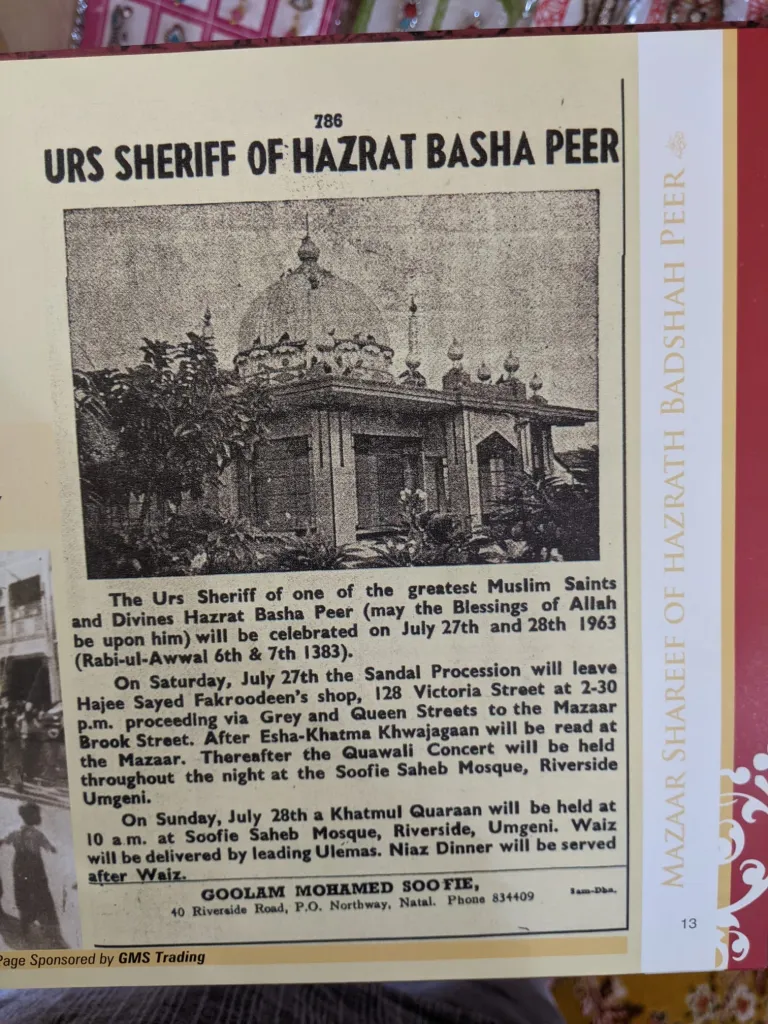
– Iqbal Sarrang (2002) (Translated by Goolam Vahed, with edits
_______________________________
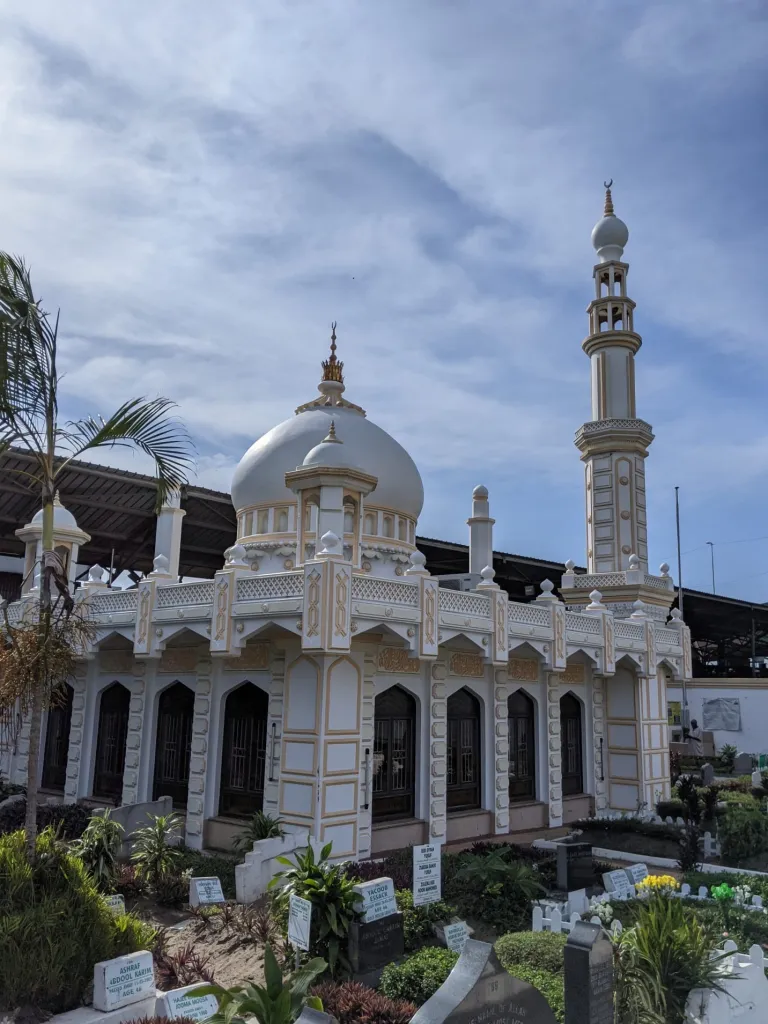
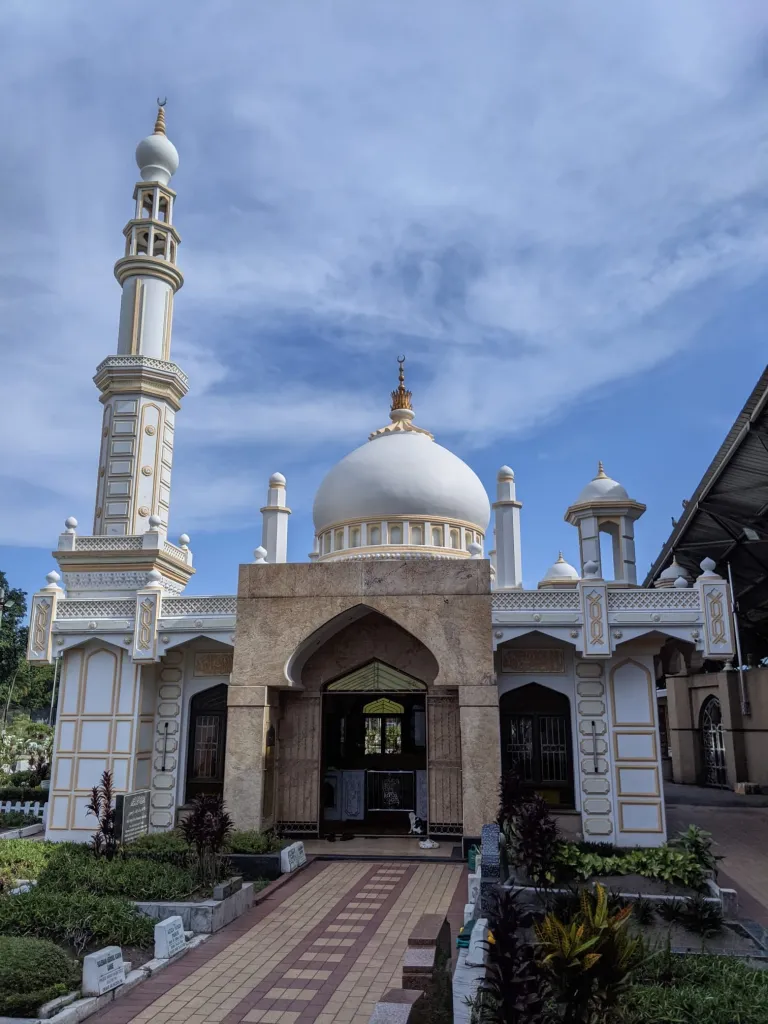
Mazaar of Badsha Peer, Durban, South Africa / Source: Author
In the historic Brook Street cemetery in Durban, South Africa, a gleaming white and gold structure towers over dozens of tombstones. This is the mazaar (tomb) of Sufi saint Badsha Peer. Thousands of miles from his birthplace in southern India, he is said to have found his final resting place here in 1894.
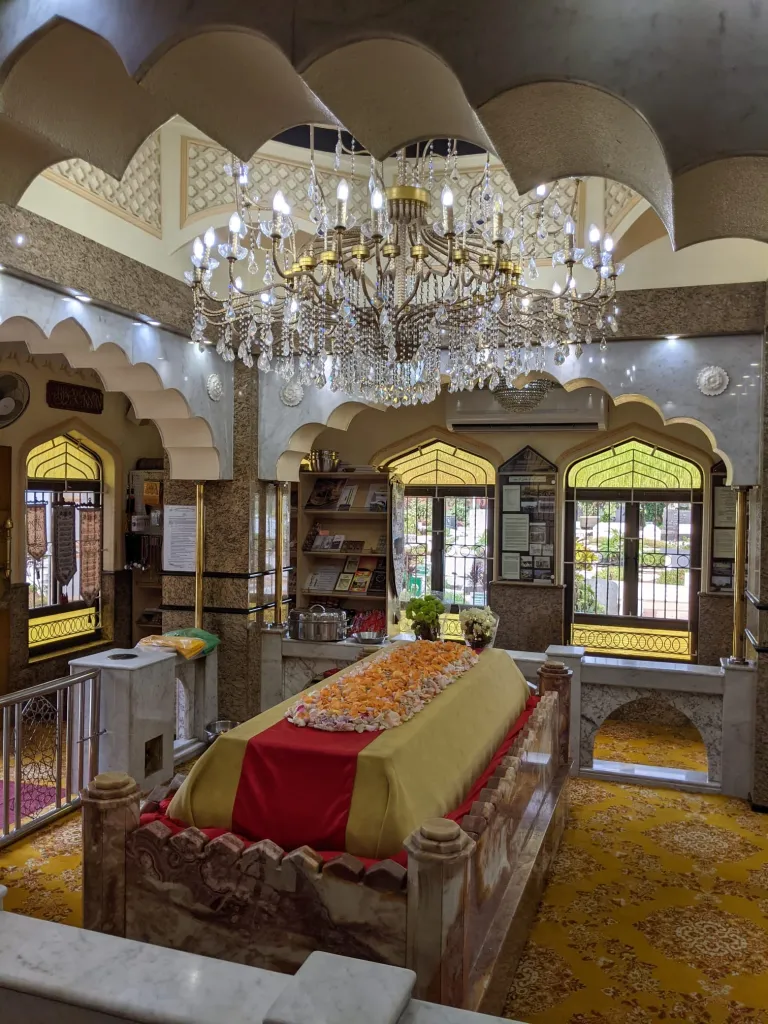
Inside the shrine, an inscription declares that this is “The MAQAAM (Resting Place) Of The King Of Africa – HAZRATH SHAYKH AHMED BADSHA PEER (RA)”.
Visiting Badsha Peer’s shrine challenged much of what I was told about South African Indian identity and history. In my conversations with South African Indians, I was told that most Muslims in the community were Gujarati or Konkani, and that most South Indians were Hindu or Christian. But here I was, at the shrine of a Muslim saint who was also South Indian. I was intrigued—and confused.
Digging deeper, I found that the story of this “King of Africa,” Badsha Peer, is a tale of multiple migrations, across the Deccan, South India, and beyond. His story involves Konkani Muslims and Hyderabadi Sufi teachers traveling to colonial Bombay, and Tamil and Telugu indentured workers making the long and treacherous journey from Madras to South Africa.
Tracing the story of Badsha Peer—and Soofie Saheb, the man who popularized his memory—shines light on how Indian religious, linguistic, and regional identities were transformed in the Deccan and South Africa, during the colonial period and through indenture and migration.
Locating Badsha Peer in History
Pinning down the historical Badsha Peer is difficult. Goolam Vahed, a scholar of South African Indian and Muslim history, describes the saint as having a “sketchy biographical profile and unclear genealogy”.
Ashwin Desai and Goolam Vahed write of a Sheikh Ahmed who arrived from Chittoor (modern-day Andhra Pradesh) or Arni in North Arcot district (modern-day Tamil Nadu) on the first ship from India, the SS Truro, which arrived on November 16, 1860. On the other hand, Nile Green, a historian of Indian Ocean Muslim networks, points to a Sheik Ahmed from Machilipatnam (modern-day Andhra Pradesh) who arrived a month later, in December 1860, on the Lord George Bentinc.
Either way, according to oral tradition and popular anecdotes, Badsha Peer is remembered as arriving with the first indentured laborers from India. A man of great spiritual power, he is popular for the miracles he performed on the colonial sugarcane plantations, such as accomplishing his tasks in the fields while simultaneously meditating all day.
According to Nile Green, South African oral traditions declare that he was “released early from his indenture due to ‘insanity’”, which was later given a Sufi interpretation as “spiritual rapture (jazb).” Following his release, he is said to have lived the rest of his life as a faqir (mendicant) around the Grey Street mosque until his death in 1894.
Muslims like Badsha Peer made up about 10 percent of the approximately 152,000 Indians who were brought to South Africa as indentured workers; over 80 percent were Hindu. Around 44 percent of indentured Muslims departed from Madras, and among these workers, over 60 percent came from four areas: Arcot (31 percent), Malabar (14 percent), Madras (11 percent), and Mysore (7 percent).
Indentured Muslims, like Hindus, largely came from marginalized castes. In his shrine, Badsha Peer’s caste is simply listed as “Muslim” and “Mohamedan”, which is how around half of indentured Muslims named their caste according to immigration records.
However, Desai and Vahed mention Badsha Peer’s caste as julaha (weaver). He may have been from the Dudekula community , a Telugu-speaking Muslim caste associated with weaving and cotton cleaning.
Soofie Saheb and His “Overpowering Influence”
Shrine of Badsha Peer, Durban, South Africa / Source: Author
The reason that Badsha Peer is remembered today is due to the efforts of a non-indentured Indian migrant. This pivotal figure is Shah Ghulam Muhammad (d. 1911), popularly remembered in South Africa as “Soofie Saheb.”
Soofie Saheb was born into a Konkani Muslim family in the town of Ibrahimpatan in Ratnagiri district. The family held a high social status on account of its claim to descend from Abu Bakr, the first caliph of Islam. After studying in Kalyan, he departed for Bombay. Nile Green situates his move within “a much larger migration of Konkani Muslims to the city that had taken place over the previous decades”.
In the early 1890s, Soofie Saheb became a disciple of Habib ‘Ali Shah (d. 1906), a Sufi teacher of the Chishti order. Habib ‘Ali Shah himself was a migrant from Hyderabad who developed a following primarily among Konkani Muslims in Bombay, particularly workers around the Mazgaon dockyard. In 1895, Soofie Saheb was instructed by his teacher to go to South Africa to spread the message of the Chishti order to the indentured Indian population.
Soon after arriving in Durban in 1895, Soofie Saheb “encountered a situation of close proximity and mixing between Muslims and the large majority of Hindu laborers,” as anthropologist Thomas Blom Hansen writes . Faced with the fact that “Muslims participated widely in Hindu rituals and festivals”, Soofie Saheb began to promote a more “proper” Islamic identity for indentured Muslims. Similar efforts would soon take place among the Hindu community as well, led by Arya Samaj missionaries like Bhai Parmanand and Swami Shankaranand.
One of the first actions of Soofie Saheb in South Africa was to build a shrine over Badsha Peer’s grave, which he is said to have identified through a dream or vision. Shortly afterwards, in April 1896, he purchased a plot of land on the banks of the Umgeni river, upon which he built a complex that included a mosque, khanqah, madrasa, and Muslim cemetery.
Interestingly, the legal documentation for this purchase was prepared by a young Gujarati lawyer who had arrived in South Africa just a few years prior: Mohandas K. Gandhi. Vahed writes that “Between 1898 and his death in 1911 Soofie Saheb built 11 mosques, madrasas and cemeteries all over Natal.”
Reimagining South Asian Languages and Religions in South Africa
A book published by Soofie Saheb’s madrasa in 1970 includes this quote by a Hindu observer: “there were many Tamil-speaking Muslims who, but for the recitals of the Koran, were by tradition and culture typically South Indian. Soofie Saheb’s mystic personality had an overpowering influence on the Muslim community widely scattered.” (emphasis mine)
This framing positions South Indian and Muslim identities as mutually exclusive, with the suggestion that shifting towards a more explicitly Muslim identity necessitated shifting away from South Indian culture. The framing also implicitly links South Indian and Hindu identities together.
What was the nature of Soofie Saheb’s “overpowering influence” among indentured Muslims in South Africa? As Nile Green has noted, Soofie Saheb promoted the Urdu language as core to Muslim identity, even though few indentured Muslims spoke the language.
Green argues that Soofie Saheb was simply following “specific currents of linguistic change in his own Konkani community in India, in which the use of Urdu spread significantly during the early twentieth century, partly as a result of migration” from the Konkan coast to Bombay. Similar developments had taken place elsewhere in the Deccan, such as the rise of Urdu in Hyderabad State in the 1880s as the prestige language of education and social status.
Soofie Saheb’s efforts made Badsha Peer the most revered Sufi saint in South Africa. At the same time, he promoted a cosmopolitan, Urdu-centric Muslim identity that likely would have been unfamiliar to Badsha Peer himself, as a Telugu- or Tamil-speaking indentured Muslim.
These shifts were perhaps aided by the fact that in decades following Soofie Saheb’s death in 1911, many South Indian associations in South Africa adopted explicitly Hindu orientations.
For example, a year after the Andhra Maha Sabha of South Africa was formed in 1931, the organization became an affiliate of the South African Hindu Maha Sabha. The Andhra Maha Sabha’s logo is a Telugu-script Om, and the organization’s headquarters in the Indian township of Chatsworth includes an elaborate Venkateswara temple, which was built in 1983.
Thus, on one side, Telugu cultural associations in South Africa defined Telugu and Hindu identities as synonymous, while Muslim leaders like Soofie Saheb consolidated an Urdu-oriented Muslim identity.
South Asian Legacies: Shared Devotion at Badsha Peer’s Shrine
Interior of the Shrine for Badsha Peer / Source: Author
Although Badsha Peer is remembered as coming from Andhra Pradesh or Tamil Nadu, Soofie Saheb’s emphasis on an Urdu-centric Muslim identity means there is little to no visible South Indian influence in the rituals and practices associated with his shrine today.
And yet, despite Soofie Saheb’s activities to consolidate a distinct Muslim identity among indentured Indians, Badsha Peer’s shrine became a site for prayer, pilgrimage, and worship for Indians across regional and religious identities. In a way, his shrine provided a conduit for older South Asian practices of multi-religious devotion, such as reverence for Sufi mazaars and dargahs.
From the earliest years of the shrine, non-Muslim devotees played a role—Goolam Vahed notes that in 1917, “A corrugated iron structure was erected by a Hindu, Bhaga, around the dome” of the shrine. In 2002, one of the qawwali groups performing at the saint’s urs (death anniversary) was led by a Hindu singer.
Community archivist Selvan Naidoo, director of the 1860 Heritage Centre, recalls that “In my early childhood days, such was the power of this place that my staunch Tamil mother would often take us there to pray at this great place of indentured reverence.”
This reverence for Badsha Peer continues to this day. Mark Naicker, an interfaith activist in Durban from a Catholic family, shared with me that “sometimes you hear Hindus also go to Badsha Peer … when people have a baby, they would go to that shrine” to seek blessings.
It has been over 160 years since Badsha Peer and the first indentured Indians set foot on South African shores. He is a unique figure in South African Indian history. Unlike most indentured Indians, he was Muslim. Unlike most Indian Muslims in South Africa, he was from southern India. And unlike nearly any other indentured Indian Muslim in South Africa, he is revered as a saint whose power is manifest even to this day.
Badsha Peer’s story, intertwined with that of Soofie Saheb, provides us with a glimpse into how Indian identities were transformed and reconfigured in South Africa. “Muslim” and “South Indian” identities took increasingly divergent paths. And yet, despite these shifts, his memory lives on, drawing devotees from across religious and regional backgrounds who seek the blessings of this “King of Africa.”
source: http://www.maidaanam.com / Maidaanam / Home / by Nikhil Mandalaparthy / June 17th, 2024
‘Patent Man of India’ Prof Shamshad Ali so far bagged seven patents for his multifarious innovations. The professor of engineering at Aligarh Muslim University’s polytechnic is differently abled and keeps underscoring the need for innovation to achieve progress.
Professor of engineering Shamshad Ali at AMU
Aligarh:
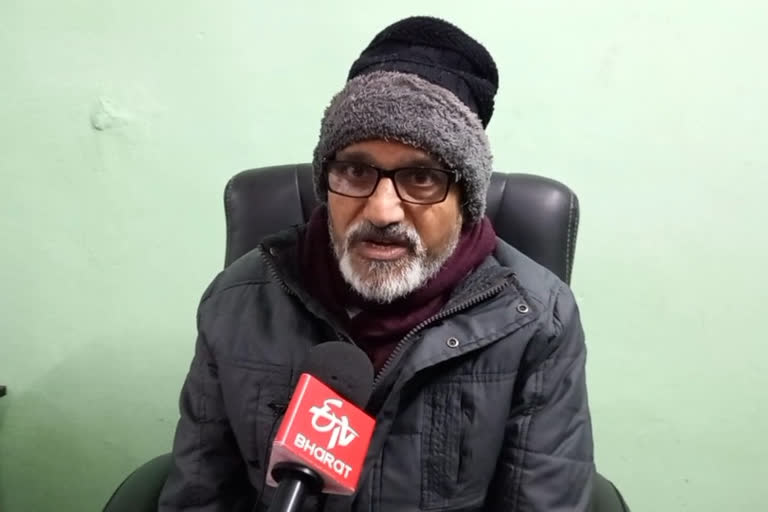
Shamshad Ali, a professor of engineering at the polytechnic college of Aligarh Muslim University (AMU) has become popularly known as Patent Man of India for his multifarious innovations. Prof Shamshad Ali, who after taking classes keeps busy with his inventions, has over seven patents to his credit till now, granted by the Patent Office, Government of India, Delhi.
This differently-abled professor never loses heart and always strives for excellence. Be it teaching students or discovering something new, this physically challenged person’s hard work has become a source of inspiration for other teachers and innovators. Prof Shamshad Ali was granted three patents in 2022 alone.
The professor underscores the need for innovation to achieve progress. In his appeal to students and teaching faculty in the AMU, he said, “Innovation plays an important role in upping the university’s ranking. Discovering new things helps teachers and students. So they should keep on doing new research. I have bagged seven patents so far and two more patents will be granted soon.”
“When someone discovers new things. Then the innovator is supposed to apply and submit application online to Delhi patent office. Thereafter an exam is conducted. If you pass the test, they will grant you patent. If not, then you will have to work on it again. It all depends upon the examiner,” said Prof Shamshad.
source: http://www.etvbharat.in / ETV Bharat / Home> ETV Bharat> Bharat / January 07th, 2023
The flight had three doctors on board and they managed to stabilise him and take him safely up to the Kolkata airport.
Doctor couple Dr MM Samim and his wife, Dr Naznin Parvin
Bengaluru :
High drama unfolded on an IndiGo flight that had taken off from Bengaluru to Kolkata on Saturday when a flyer in his 40s with preexisting health issues developed an emergency. The flight had three doctors on board and they managed to stabilise him and take him safely up to the Kolkata airport.
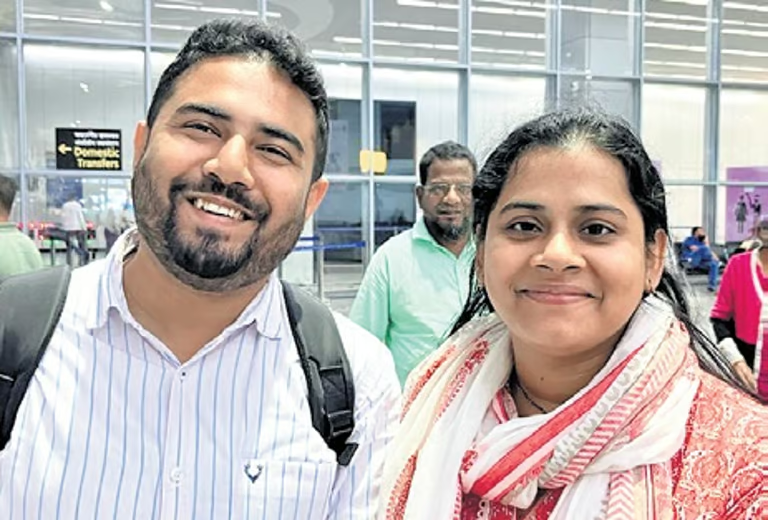
Dr MM Samim, who was conferred a gold medal just a day earlier during NIMHANS convocation, and his wife Dr Naznin Parvin, a paediatrician, along with a surgeon from MS Ramaiah Hospital saved the flyer’s life.
Man suffered from chronic liver issue
Their timely action also saved a potential diversion of the flight to Bhubaneswar airport and a disruption of weekend travel plans of 200-plus passengers.
The Flight No 6E 503 took off from Terminal 1 of Kempegowda International Airport at 10.42 am, which was late by 20 minutes. It was an hour later that the flyer, who is from West Bengal and works as a labourer in Kerala, developed breathlessness and threw up. He was travelling with his son to get himself admitted to a government hospital in Kolkata for his chronic liver condition.
Harilakshmi Ratan, a retired chartered accountant seated on 1B, told TNSE, “A flyer seated in the middle (Row no. 16) started vomiting blood. One of the cabin staff made an announcement appealing for doctors on board to assist the patient. Three of them stepped forward and saved his life.”
Dr Parvin, who works at a private hospital in Siliguri, said they rushed to the patient. “He was struggling to breathe and was vomiting blood. His BP was low. We gave him oxygen from the cylinder and also administered drips with normal saline, all of which were available on the flight. The vomiting was brought under control immediately. Soon, the oximeter too showed a stable oxygen level (95),” Dr Parvin said.
Dr Samim, who is the recipient of Best Outgoing Resident in Doctor in Medicine (DM) (Neurology) and who also works at a private hospital in Siliguri, said, “Since the patient was not in a good financial position, I decided it would be better if he reaches his hometown. We had stabilised him too.”
source: http://www.newindianexpress.com / The New Indian Express / Home> Karnataka / by S Lalitha / October 06th, 2024
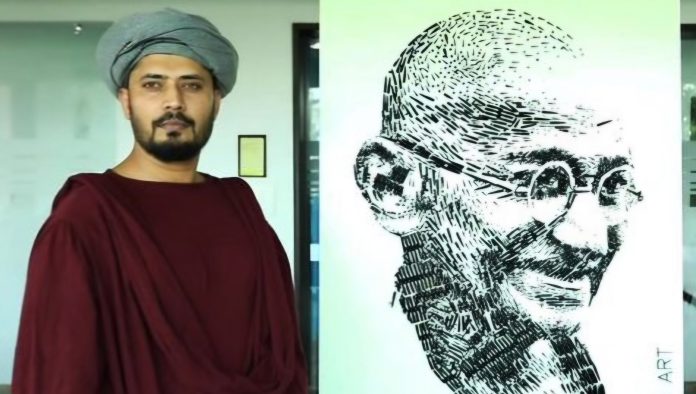
Wajid Khan Artist with the portrait of Mahatma Gandhi he made with nails.
Few artists are as passionately obsessed with Mahatma Gandhi as Wajid Khan, whose love and reverence for Gandhi manifest in extraordinary ways through his art. Wajid’s devotion to the Father of the Nation is evident not only in the subjects of his artwork but also in the innovative techniques he uses to create them. Whether by assembling nails, arranging goggles, or using other unconventional materials, Wajid Khan’s portrayal of Gandhi is a testament to his deep admiration.
Wajid Khan a multifaceted artist—a portraitist, sculptor, inventor, and patent holder—known for pushing the boundaries of traditional art. He specializes in creating intricate works of art using unconventional materials such as iron nails, bullets, metal, stones, automobile parts, medical equipment, iron rods, and more. His passion for creativity is boundless, and his art often reflects his deep emotions and thoughts about the world and the figures who have shaped it.
Among his many talents, Wajid’s ability to carve canvases using iron nails has garnered international acclaim. His work has earned him places in prestigious records such as the Guinness Book of World Records, Limca Book of Records, and Asia Book of Records. His artistic prowess is admired from Mumbai to Dubai, captivating both art connoisseurs and the general public with his exceptional nail art.
Although Wajid has made portraits of numerous iconic personalities, including Indira Gandhi, Jawaharlal Nehru, Sardar Patel, Dhirubhai Ambani, and Nelson Mandela, his fascination with Mahatma Gandhi stands out. His first portrait, fittingly, was of Gandhi—a powerful expression of his love and passion for the man who led India to independence. Wajid meticulously used thousands of iron nails to craft this portrait, each nail symbolizing the unwavering dedication and perseverance Gandhi embodied throughout his life.
Wajid’s connection to Gandhi goes beyond artistic inspiration. His admiration for Gandhi stems from the values of patience and truth that Gandhi represented. “There are many qualities in Gandhiji that impressed me deeply,” Wajid shared in an interview. “His power of patience and his commitment to truth are what stand out the most. For me, those who hold onto patience and never lie are truly great individuals.”
One of the moments that left an indelible mark on Wajid was when he visited a museum and saw letters written by Gandhi in which the leader openly admitted his mistakes. “It takes a big heart to admit one’s mistakes in public,” Wajid reflected. “I greatly admire Gandhi’s patience and steadfastness.”
Wajid’s connection to Gandhi also has personal roots. He fondly recalls stories from his grandfather, who would attend Gandhi’s meetings during the freedom movement in India. “My grandfather used to tell us about the time when he was very young and would participate in Gandhi’s meetings. Enthusiastic crowds would gather to listen to Gandhi, and when they returned, they were always calm and composed,” Wajid recounted. The calm demeanor Gandhi inspired in his followers left a profound impact on Wajid, influencing both his life and his art.
In one of his most ambitious projects, Wajid demonstrated the extent of his dedication to honoring Gandhi. He organized an event where 6,000 people were gathered in a stadium, carefully arranged in a formation that created a massive portrait of Gandhi. This live depiction showcased not only Wajid’s artistic genius but also his ability to bring people together to celebrate Gandhi’s legacy.
Wajid Khan’s artistic journey is a remarkable blend of creativity, innovation, and an unyielding devotion to Gandhi’s principles. Through his portraits, sculptures, and inventive techniques, he continues to keep the spirit of Gandhi alive, inspiring others with the same values of patience, truth, and perseverance that Gandhi embodied.
source: http://www.muslimmirror.com / Muslim Mirror / Home> Indian Muslim> Positive Story / by Syed Zubair Ahmad / October 02nd, 2024