Category Archives: Arts, Culture & Entertainment

Yunus Dehlvi was the Mirza Ghalib and Mauana Azad of Urdu magazines!

NEW DELHI :

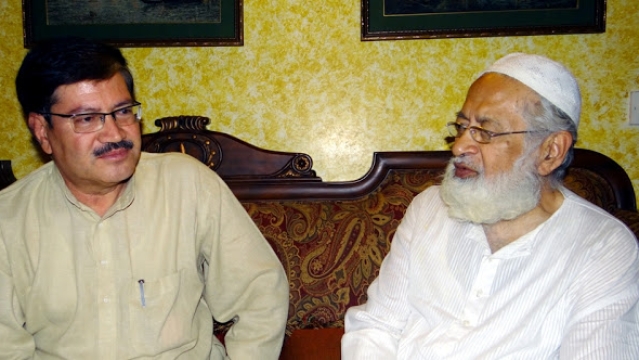
Yunus Dehlvi (right) with Firoz Bakht Ahmed

Yunus Dehlvi ran the world’s biggest chain of the Urdu magazines from 1943 till 1994 after the family fragmented and the historic era of these publications ended

We have all grown through the fragrant flairs of our childhood, one of them being our childhood mother-tongue historic magazines like, “Thakurmar Jhuli” (Bengali), “Khilauna” (Urdu), “Hans” (Marathi), “Parag” (Hindi), “Chitralekha” (Gujarati), “Chandamama” (Telugu), etc.

So have I grown reading the world famed Urdu chain of magazines including, “Khilauna”, “Shama”, Bano”, “Shama”, “Mujrim”. The doyen of these magazines, Yunus Dehlvi, father of eminent author, Sadia Dehlvi, is no more. He was the Ghalib of publications and Azad of the content.

Dehlvi’s efforts need to be hailed and made known to the world through the most widely circulated edition of yours as a true homage to a warrior for his mother-tongue. Started by his father, Haji Yusuf Dehlvi, Yunus ran the world’s biggest chain of these Urdu magazines from 1943 till 1994 after the family fragmented and the historic era of these publications got sacrificed at the altar of children and grandchildren’s egos.

I “drank” my Urdu and learnt the language not from any madrasa, school or college but from these publications only — my treasure trove!

Having known the “Shama”, “Sushma”, “Khilauna”, “Bano”, “Shabistan”, “Mujrim”, and “Doshi” publisher and the owner of once the biggest chain of Urdu magazine anywhere in the world, Yunus Dehlvi since childhood, it is the saddest blow for me that the third surviving brother after Idrees Dehlvi and Ilyas Dehlvi is no more. It is a huge loss of Urdu and the connoisseurs of the above-mentioned magazines mentioned above.

On February 7, 2019, he breathed his last in the lap of his daughter Sadia Dehlvi and grandson, Ali Dehlivi, besides almost a hundred other relatives around him. He was buried at the Qaum Punjabian cemetery at Sheedipura, Karol Bagh, Delhi, in the presence of hundreds of his lovers with eyes welled in tears. He was 89 and about two years ago, he suffered from stroke.

Dehlvi was member, Governing Council of the Audit Bureau of Circulations Ltd (ABC), besides being the President (1969-70) of Indian and Eastern Newspaper Society (IENS).

A winner of umpteen Urdu awards round the globe, he had it, including Urdu Delhi Award, Edinburgh Urdu Circle, the John Gilchrist gold medal, Sahir Award besides a list of inexhaustible felicitations.

Magazines like “Shama” and “Khilauna” used not only to sell like hot cakes but these were also sold in “black”, the moment these were sent to the vendors. Another reason for the popularity of “Shama” was its “Muamma” (literary puzzle) where words had to be filled from Urdu novels and lakhs of rupees were at stake.

I remember the times when the issue of “Shama” Urdu monthly, the most sought after, had its circulation into lakhs, in fact more than a newspaper, like, “The Times of India” or the weekly, like, “The Illustrated Weekly”, as told to me by Yunus, when I had interviewed him some two years ago just before he was struck by a stroke.

In fact, special flights were booked for transporting “Shama” and “Khilauna” to London, Karachi and New York and the three brothers — Yunus, Ilyas and Idrees — used to accompany. The duty of Yunus was on the Air India or PIA Karachi sector.

Top film actors like Dileep Kumar, Ashok Kumar, Raj Kapoor, Asha Parekh, Nutan, Nargis, Raj Kumar, Sanjeev Kumar, Mohammed Rafi, Malika Pukhraj and many more used to frequent Yunus’ mansion at Sardar Patel Marg, now bought by politician, Mayawati.

Started by his father, Haji Yusuf Dehlvi, Yunus ran the world’s biggest chain of these Urdu magazines from 1943 till 1994 after the family fragmented and the historic era of these publications got sacrificed at the altar of children and grandchildren’s egos.

To be frank, I have learnt my Urdu from the magazines mentioned above and especially, “Khilauna”. Several old fans of “Khilauna”, today in their middle or old age, rummage “raddi” (scrap) shops or old bookshops from Karachi to Delhi and Lahore to Mumbai in search of it but in vain. Even in the libraries, these are not available. Fortunately, I have some 100 copies of the magazine from 1946 till 1987.

Several old fans of “Khilauna”, today in their middle or old age, rummage “raddi” (scrap) shops or old bookshops from Karachi to Delhi and Lahore to Mumbai in search of it.

Syed Faisal Ali, the editor of the Urdu daily “Sach ki Awaz” manages from his resources to get the old issues of “Khilauna” and reads these to relieve stress, “You escape back into your childhood, when you didn’t have a care in the world.” What was once a household name in the comity of children’s Urdu monthlies has become a collector’s item post its shut down.

“The craze for ‘Khilauna’ is keener among the older bunch,” Prof Akhtarul Wasey said, adding smugly that the old magazines always sold ‘at a premium’. However, these are just extinct now.

“Khilauna”, a collection of Urdu culture and heritage, had carved its niche through stories, poems, cartoons, comic strips like — “Nanhi Munni Kahaniyan” (a column for young writers), “Hamara Akhbar” (newspaper clippings), “Suraj Ka Bahadur Beta Shamsi” (serial pictorial story), “Muskurahatein” (jokes), “Hamarey Naam” (letters from readers), “Batao To Bhala” (Readers’ Questions and Answers), and much more.

Renowned Urdu poets and writers of the time — like Khwaja Ahmed Abbas, Hafeez Jalandhari, Hasrat Jaipuri, Qateel Shifai, Ismat Chughtai, Salam Machhli Shehri, Razia Sajjad Zaheer, Krishan Chander, Raja Mehdi Ali Khan, Balwant Singh, Kanhaiya Lal Kapoor, Ram Pal, Sahir Ludhianavi, Ram Lal, Siraj Anwar, Basheshar Pradeep, Shafiuddin Naiyar, Kaif Ahmed Siddiqui, Dr Kewal Dhir, KP Saxena, Azhar Afsar, Prakash Pandit, Aadil Rasheed, MM Rajinder, Jilani Bano, Naresh Kumar Shad, Abrar Mohsin, Masooda Hayat, Ishrat Rehmani, Abrar Mohsin, Khaliq Anjum Ashrafi — besides many others used to be household names from 1940 to 1990s.

The “Shama” and its sister publications will never be forgotten as the connoisseurs of best Urdu literature won’t forget Yunus Dehlvi.

source: http://www.nationalheraldindia.com / National Herald / Home> Cafe> Counter View / February 11th, 2019
Indian-Origin Man Conferred With ‘Star of Jerusalem’ Award

Jerusalem, PALESTINE :

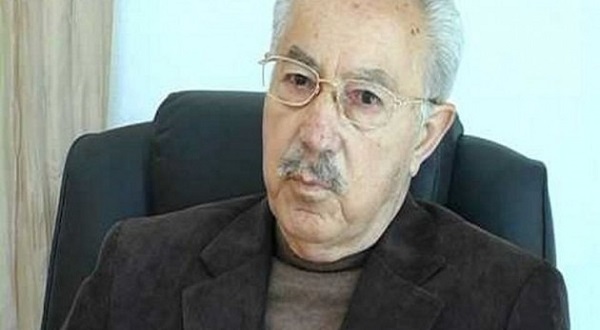
Sheikh Mohammad Munir Ansari conferred with the Star of Jerusalem medal.

Jerusalem (PTI) :

Palestinian President Mahmoud Abbas has conferred Indian-origin Sheikh Mohammad Munir Ansari with the Star of Jerusalem medal – one of the highest honours given to foreign nationals by the Palestinian Authority – for strengthening Indo-Palestine ties. At an event organised to honour 91-year-old Ansari Thursday evening, Abbas thanked him for serving Palestine and Jerusalem with distinction.  Ansari, 91, is the Director of Indian Hospice, a unique and historic monument in the heart of Jerusalem, which has become a symbol of India’s heritage and presence in the third holiest city for Muslims going back to over 800 years.

Abbas said the Ansari family’s presence in the old city of Jerusalem reflects the strong traditional ties between Indian and Palestinian people. He called upon for strengthening people-to-people contact between the two sides.

Abbas plans to send Palestinian Prime Minister Mohammad Shtayyeh to India soon to boost tourist inflows from there which can contribute to strong bonding between the two people.

A representative of India, Sunil Kumar, who was present at the event, also appreciated the role played by the Ansari family in strengthening Indo-Palestine ties.

The Indian hospice has been under the direct supervision of a representative from India since 1924. Ansari’s father, Sheikh Nazir Hassan Ansari, was appointed the first Sheikh of the Hospice from whom the mantle passed on to the incumbent who was born in Jerusalem in 1928 and has spent his whole life here.

In 2011, India honoured Ansari with the Pravasi Divas Samman, the highest honour conferred on overseas Indians.

The history of the hospice goes back to about 12th century, when famous Sufi saint from Punjab Baba Fariduddin Ganj-i-Shakar (or Baba Farid, as he is better known) visited Jerusalem on pilgrimage and prayed in seclusion for 40 days at the site.

It later became a pilgrimage site for Indian pilgrims visiting Jerusalem and was dedicated as a charitable Waqf property in trust for a pious purpose.

The place where Baba Farid is said to have prayed has become a major attraction for Indian tourists visiting Jerusalem.

Almost every prominent Indian leader who has visited the region has paid a visit to the site and the hospice continues to host Indians visiting the Holy Land. The hospice also received a grant from the Ministry of External Affairs for its renovation.

source: http://www.caravandaily.com / Caravan / Home> Indian Muslims / by June 15th, 2019

Art from the land of uncertainty

JAMMU & KASHMIR :

Five students, who won the TATA Trusts Students’ Biennale National award, now serve a month-long residency in the city and showcase a Kashmir that is so different from the stereotype.

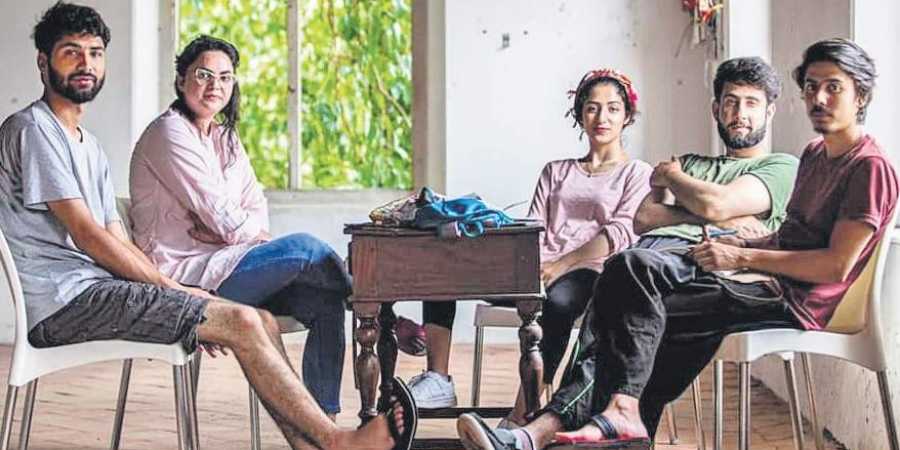
From left: Anis Rasheed, Arona Riyaz, Tabeena Nissar Wani, Muzamil Ahmad and Numair Qadri

Kochi :

What is home? For many of us, it is solid and concrete, but to belong to a place of unrelenting turmoil is to hold the idea only in memory. The struggle is to capture an image that is in constant flux. For the students of the Institute of Music and Fine Art, University of Kashmir, who were granted the TATA Trusts Students’ Biennale National award at the closing ceremony of the Kochi-Muziris Biennale, art is rooted in conflict and trauma they have witnessed all their life.

Tabeena Wani’s work at Students Biennale 2018  Kochi Biennale Foundation
Tabeena Wani’s work at
Students Biennale 2018
 Kochi Biennale Foundation

Anis Rasheed, Arona Riyaz, Muzamil Ahmad, Numair Qadri and Tabeena Nissar Wani are the first batch of 11 recipients of the award who are in Kochi for a month-long residency programme at Pepper House.

Taking off from his video installation for the Students Biennale, Anis is exploring the polar opposite perceptions of his homeland. Kashmir, as the site of breathtaking beauty, is undercut by the news of regular ferment.

The work is called Jannat-e-Benazeer (unparalleled paradise). The audience upon seeing the setting of a movie theatre (absent in Kashmir) struggles to reconcile the heaven of popular imagination with the starkly different ground reality.

Muzamil, whose work was also exhibited at the Students Biennale communicated the idea of a vanishing house by showing ashes from his ancestral home which was burned down in 1990. For the residency, he is authoring a narrative of loss by depicting 200 graves, in memory of the people who were killed during the insurgency.

Numair’s has used familiar objects like pellets, stones and bricks, which have been turned into tokens of violence and killed thousands of young Kashmiris. Their unidentified graves populate the state even as families try to find closure. The idea of building numerous nameless graves will accompany Muzamil’s art in forging a fierce metaphor.

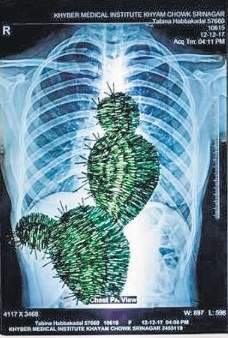
Tabeena, who had used X-rays of her own body to embroider disquieting patterns considered the practice as a temporary refuge from chaos and confusion. She will now detail recollection as an intensely private experience by exhibiting motion-blurred pictures of people declared missing. The distortion will act as a trope for hazy memory as well as an indicator of falsification of news that is propagated to the rest of the country.

Arona draws a parallel between a deeply personal struggle to the collective travails of her people. Having been in a coma for over two months following an accident, Arona is seeking to reinvestigate self-healing in correlation with the political scenario of her state.

source: http://www.newindianexpress.com / The New Indian Express / Home> Cities> Kochi / by Swetha Kadiyala / Express News Service / July 17th, 2019

My children have never shown interest in acting: Kerala actor Mamukkoya

KERALA :

The actor added he chose to enter the film field as he was interested in theatre and dramatics right from a young age.

MammukkoyaMPOs22jul2019

Kozhikode  :

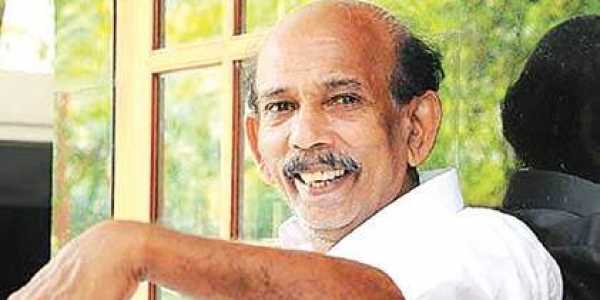
While a majority of Mollywood actors are pushing their children to enter the glamorous world of cinema and are passing down film opportunities to them, actor Mamukkoya stands apart from his peers.The senior film star says that his children have never shown interest in stepping into the film field and he has never forced them for the same.“There is no hard and fast rule that an actor’s child should also be an actor.” said Mamukkoya

“My children never insisted that they wanted to try their hand in movies and so I let them choose their own career,” he said. While the actor’s sons Muhammed Nizar and Abdul Rasheed are engaged in business in Wayanad and Kozhikode, his daughters Shahitha and Nadiya are homemakers.

The actor added he chose to enter the film field as he was interested in theatre and dramatics right from a young age. “On the other hand my sons have always shown more interest in politics,business and related activities rather than films.”

When asked why they chose to stay away from the film industry, his eldest son Muhammed Nizar replied, “Neither have we made any effort to enter the film field nor have we received any calls for acting in movies. We are satisfied with our present careers.”

source: http://www.newindianexpress.com / The New Indian Express / Home> States> Kerala / by Ambika Raja / Express News Service / February 25th, 2018

Basheer remembered at his birthplace

Thalayolaparambu (Ernakulam), KERALA :

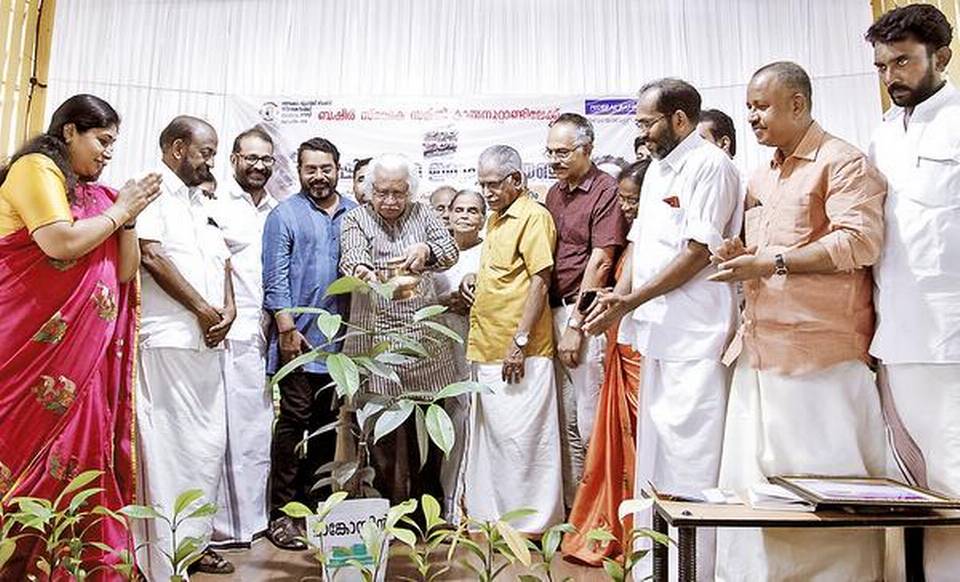
Staying forever: Filmmaker Adoor Gopalakrishnan watering a Mangosteen sapling at an event organised by the Basheer Smaraka Samiti at Thalayolaparambu on the writer’s 25th death anniversary.

Adoor lauds the writer for etching extraordinary life with ordinary characters

On the 25th death anniversary of ‘Beypore Sultan’, Vaikom Muhammad Basheer, auteur Adoor Gopalakrishnan remembered the inimitable writer as a genius who created an extraordinary world using the daily lingo and ordinary life of the common man.

“The characters he created steered clear of the western stereotypes and became a part of our conversations,” he said at a remembrance meet organised by the Basheer Smaraka Samiti at the writer’s birthplace Thalayolaparambu, some 36 km east of Ernakulam, on Friday.

Mr. Gopalakrishnan was honoured with the Balyakalasakhi Puraskaram at the event.

While several works of Basheer’s had caught the attention of critics who conducted in-depth studies on them, the umbilical connection between Basheer the man and his works had not been put to a comprehensive study by anyone. Basheer had not written an autobiography, but there were autobiographical sketches in several of his writings, Mr. Gopalakrishnan said.

A total of 25 cultural activists were honoured at the event with saplings of Mangosteen, a tree species that graced his courtyard and grew popular among readers for its association with the writer.

source: http://www.thehindu.com / The Hindu / Home> News> Cities> Kochi / by Special Correspondent / Thalayolaparumbu (Ernakulam), July 06th, 2019

A dargah in Nadia maintains the syncretistic tradition

Matiari Village (Nadia District), WEST BENGAL :

The Buro Saheber dargah has been drawing people of all faiths for centuries

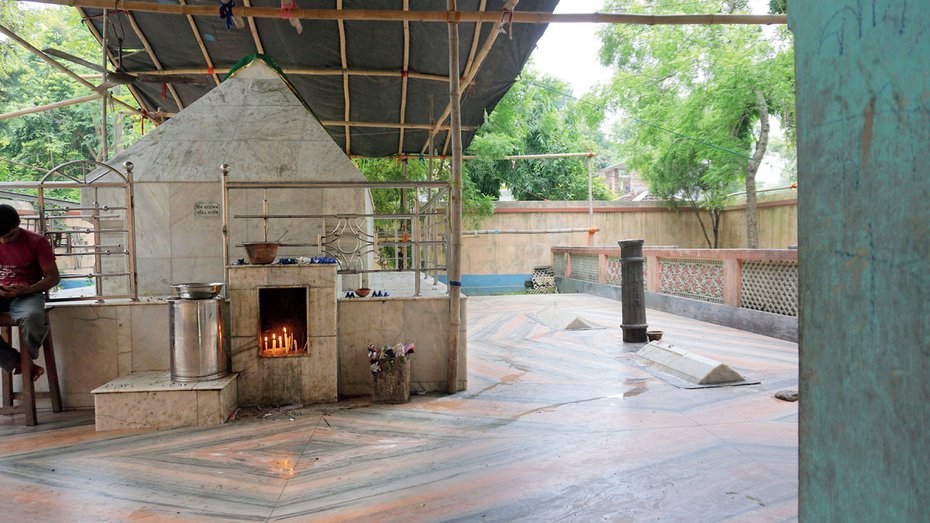
The mazaar of Pir Hazrat Shah Malek Gaus in Matiari / (Prasun Chaudhuri)
The mazaar of Pir Hazrat Shah Malek Gaus in Matiari /
(Prasun Chaudhuri)

Matiari is a village beside the Indo-Bangladesh border, 110 kilometres northeast of Calcutta in Nadia district. It is believed to be the capital of the 16th century zamindar, Bhabananda Majumder, an ancestor of the legendary king of central Bengal, Krishnachandra Roy. A walk across the village today reveals remains of the regal past — a centuries old Shiv temple, a huge water body excavated by the king, relics of the palace and so on.

In the heart of the village stands Buro Saheber Dargah, a shrine built over the grave of Pir Hazrat Shah Malek Gaus, a Sufi ascetic from erstwhile Persia. Legend has it that in the 16th century this village was hit by a severe drought followed by famine. Apparently the pir’s spiritual power brought rain and saved villagers from starvation and death. Since then, starting from the anniversary of his arrival, a month-long fair is held every year at this dargah.

The date usually falls towards the end of June and coincides with the first day of Ambubachi, a three-day-long Hindu festival of fertility. During this period, around two to three lakh people visit the shrine to pay homage. Not just Muslims, people from all faiths visit the pir’s mazaar to pay homage to his soul and pray to have their wishes (mannat) granted.

I visit the dargah on the eighth day of the annual fair on a sultry afternoon. The entry to the mazaar is blocked with lines of makeshift shops of toys, snacks, utensils and sundry items — typical of any fair in the Bengal countryside. As I weave through the crowd, the sound box plays a song — Ke jabi ay choley ei Fakir Maular dorbarey/Niya premer mala re… O come to the shrine of the holy man/ With your garland of love…

The marble frame of the mazaar is adorned with chadars. Two women light candlesticks at the altar mumbling prayers and another is found pouring a bottle of milk on the grave. At the back of the shrine, a couple ties a stone with coloured threads on to a banyan tree.

“Our dargah has been a melting pot for hundreds of thousands of people, irrespective of caste, creed or religion, for centuries. We have visitors from across the border,” says Nitaipada Roychowdhury, president of the Dargah Committee and a resident of Matiari. The committee has 21 members — 11 Hindus and 10 Muslims. Roychowdhury is a retired teacher of the Matiari Banpur High School. He consults a diary and gives me the count: 90,000 people have already visited the shrine in the first week of the annual fair.

According to Roychowdhury, the pir was born Abdullah. He belonged to an aristocratic family. Looking for spiritual enlightenment, he turned fakir, left his home and embarked on a journey all the way to Hindustan. When he reached an ashram by the banks of the Narmada river, the saints initially refused to offer him lessons in Hindu philosophy because he was a Muslim. But his sincerity and perseverance eventually made the seers change their mind and accept him as a disciple. After deep study at the ashram and subsequent enlightenment, Abdullah started his journey eastwards to spread his newfound knowledge of a syncretic God.

The nongorkhana at the dargah / (Prasun Chaudhuri)
The nongorkhana at the dargah /
(Prasun Chaudhuri)

“Buro Saheb reached our village on the first day of Ambubachi,” says Raihan Mondal, a member of the committee. “Since there had been a drought, he asked the local zamindar to organise an annasatra or community kitchen for the starving villagers. Soon after this there was heavy rain and a bumper harvest.” The impressed zamindar bestowed on him the title of Pir Hazrat Shah Malek Gaus and requested him to settle down in Matiari. Today, to commemorate the community kitchen, youths organise a nongorkhana or langarkhana where food is cooked and distributed free.

That day Noor Amin Sheikh, who has come from Ranaghat, offers a fowl at the dargah. “We had prayed for our uncle who had been suffering from a strange illness. Now that he’s cured I have come with the offering,” he says.

Sandhya Das has come from Barrackpore in North 24-Parganas to make a donation of Rs 1,001. Her sister has done well in the board exams. She says after lighting a candle at the mazaar, “If you pray sincerely, Buro Saheb always fulfils your wish.” The walls at the entrance to the dargah display a number of marble plaques commemorating past donations. There are two plaques with the name of one Abdul Hai of Jhinaidaha in Bangladesh. There is one bearing the name of Pappu Sarkar, who donated an entire month’s salary after he got a government job.

Fakir Mobarak Shah of Titagarh / (Prasun Chaudhuri)
Fakir Mobarak Shah of Titagarh /
(Prasun Chaudhuri)

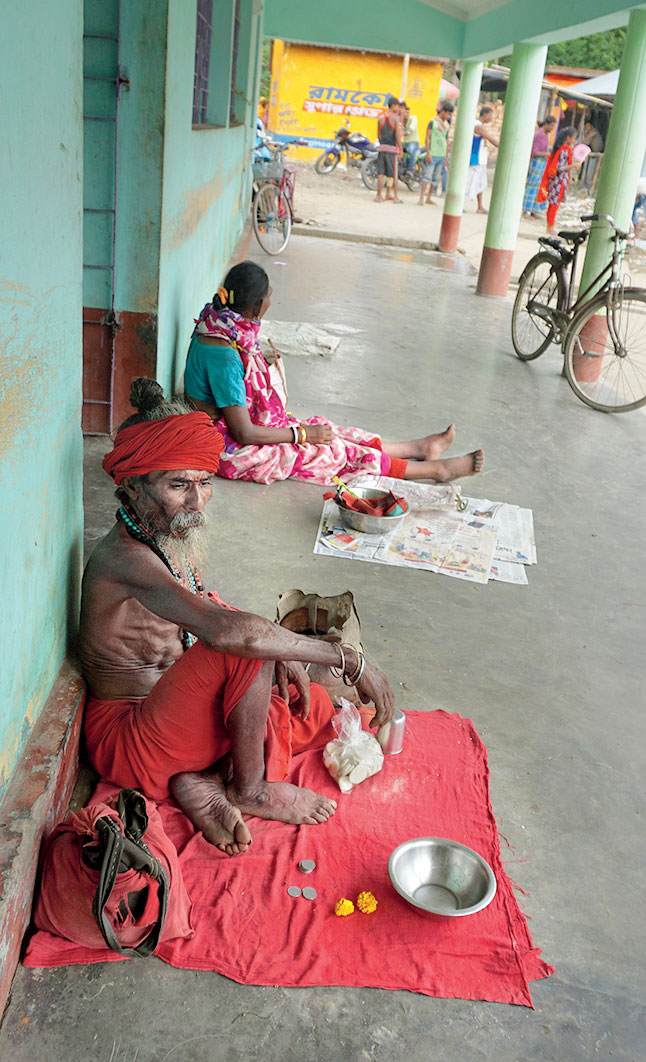
Goats, fowls, shirni, payesh, sacks of rice, batasha and cash are donated to the pir. The dargah committee organises auctions of the goats and fowls. The fund raised is deposited in a bank account along with the cash donated. Says Roychowdhury, “We spend the money for the upkeep of the dargah.” Some visitors offer food and money to the sadhus and fakirs who throng the portals of the dargah. Fakir Mobarak Shah comes from Titagarh in North 24-Parganas every year. The foodgrains and alms he collects at the fair sees him through for half a year. Amal Giri also begs for alms with dozens of other sanyasins and fakirs.

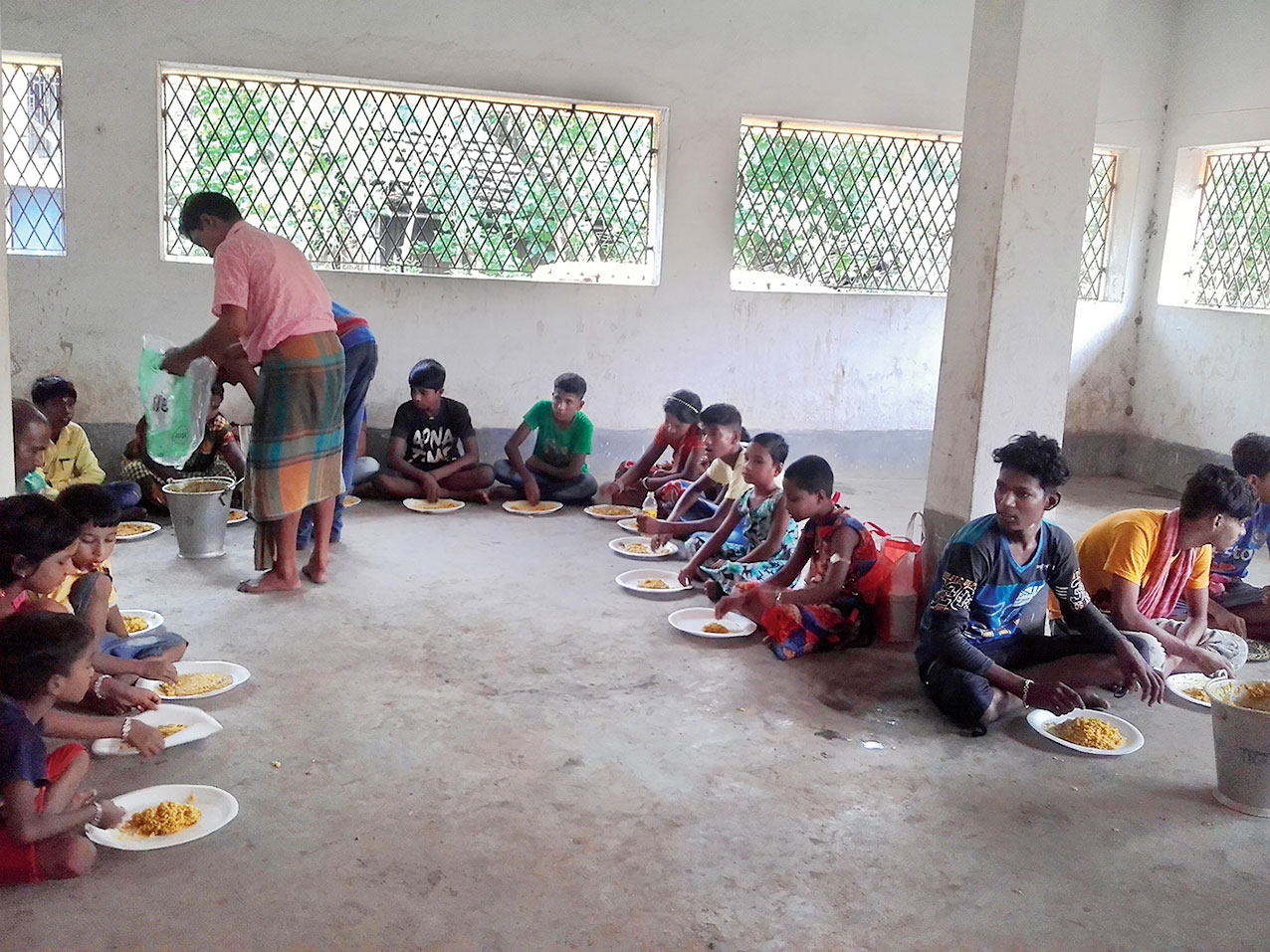
The young people who organise the nongorkhana take me to the kitchen. This is run by a separate committee constituted of Hindu and Muslim youths in equal numbers. Ajay Biswas and Abbas Mondal proudly show me how they have been cooking chicken curry and rice for hundreds of people. They invite me to lunch. Says Ajay enthusiastically, “Yesterday we had cooked khichuri and payesh.”

Roychowdhury reminds me that the dargah attracts visitors all year round. “There’s been efforts by political parties to interfere in the management of the dargah committee, but we have been able to stave them off. We are also confident of fighting all fundamentalist forces should they want to disrupt the harmony created by Buro Saheb 400 years ago.”

Instances of dargahs looked after by more than one community abound across Bengal. Amit Dey, a senior historian and professor at Calcutta University sums up the tradition. He says, “This syncretistic tradition has deep roots in the society and culture of rural Bengal.” According to him, the daily grind of an agrarian society encourages people to co-operate with neighbours and people around them. He adds, “In their struggles for existence there is little demarcation of religion, caste or creed. The dargah is a space shared by members of two communities.”

I sit down for a meal of fowl curry and rice with Abbas, Ajay and others at the nongorkhana. The sound boxes at the dargah start to play the classic song composed by the Sufi minstrel, Lalan Fakir. It goes — Sab lokey koy Lalan ki jaat songsare/Lalan bole jaater ki roop/ Dekhlam na ei nojore… People ask, “What’s Lalan’s religion/Lalan replies, For the life of me I cannot tell.”

source: http://www.telegraphindia.com / The Telegraph, online edition / Home> Heritage / by Prasun Chaudhuri / July 07th, 2019

A rare glimpse of guns, guts and glory

Hyderabad, TELANGANA :

PoliceMuseumMPOs10jul2019

Police museum houses rare collection of arms and artefacts from Nizam era

Home to rare and little known police relics from the Nizam era, the Dr. Hankins Police Museum and Discovery Centre at RBVRR Telangana State Police Academy (TSPA) here is a treasure trove for history enthusiasts.

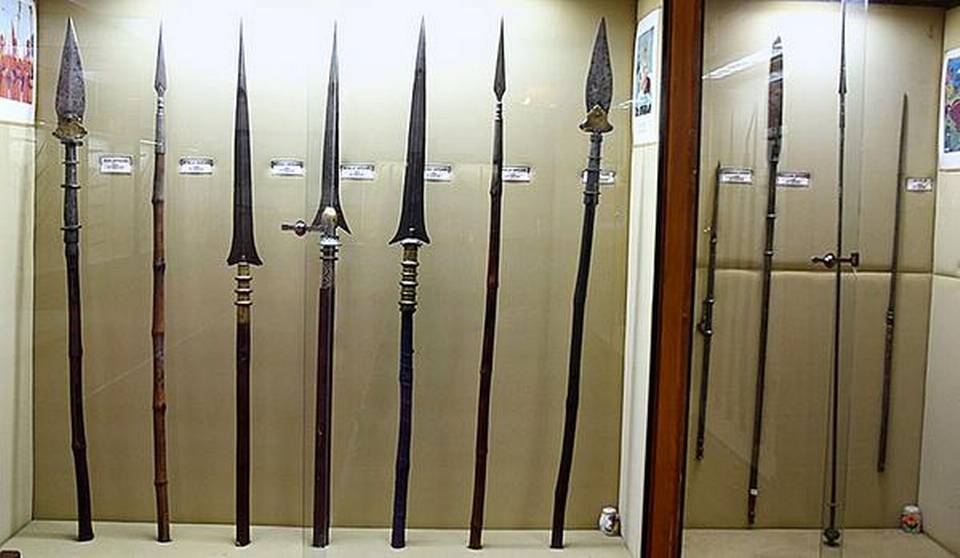
From long-out-of-use police guns to breaking-and-entering tools that burglars depended on many decades ago, the museum is filled with intriguing artefacts that one would hardly find outside its walls. “It is a one-of-its-kind museum in the country with a rich collection of arms, bronze sculptures, artefacts related to communication, forensic science and policing supported by photographs and paintings,” said TSPA director Santosh Mehra.

The museum, which is named after Dr. A.C. Hankin, a European who served as the first Inspector General of Police in Hyderabad Dominions, has an antique collection of arms from the 16th to 20th century, manufactured in Iran, Turkey, England, France, Egypt and China.

One of the major attractions at the museum includes a .2 mm repeating flint pistol with five rounds of storage capacity from the 19th century, also known as ‘Lilliput pistol’. The firearm, which is barely four inches long, was popular in the UK and other European countries.

The collection also includes Shamsheer, Patta, Yataghan, Sosun Patta, Saif, Talwar, Fencing, Adi, Dhup, Dao, Ramdao, Tegha, and Zulfiqar swords, apart from arrows, spears, daggers, tabar, axe and cannons.

A copy of FIR of the assassination of Mahatma Gandhi issued by Tughlak Road police in New Delhi on January 30, 1948, is also on display at the museum, which houses a rare photograph of Rani Lakshmibai of Jhansi.

The police gallery also houses counterfeit coins and currency notes of East India Company, Nizam Government, the British empire and Indian union. In addition, one can have a glimpse of hand-held trans-receiver, transmitters, ECIL receiver, TCS Collins receiver remote control, Webel base repeater set and desk microphone.

Set up in 2007, Dr. Hankin police museum is not open to the public. However, Mr. Mehra said school children can visit the museum to see the impressive collections of arms and communication systems to know the history of policing.

Sources in the police department said the museum is likely to be shifted to the Command Control Centre of Hyderabad police coming up on Road No.12 of Banjara Hills. It is also to be made open to the public once shifted there.

source: http://www.thehindu.com / The Hindu / Home> News> Cities> Hyderabad / by Abhinay Deshpande / Hyderabad – July 07th, 2019

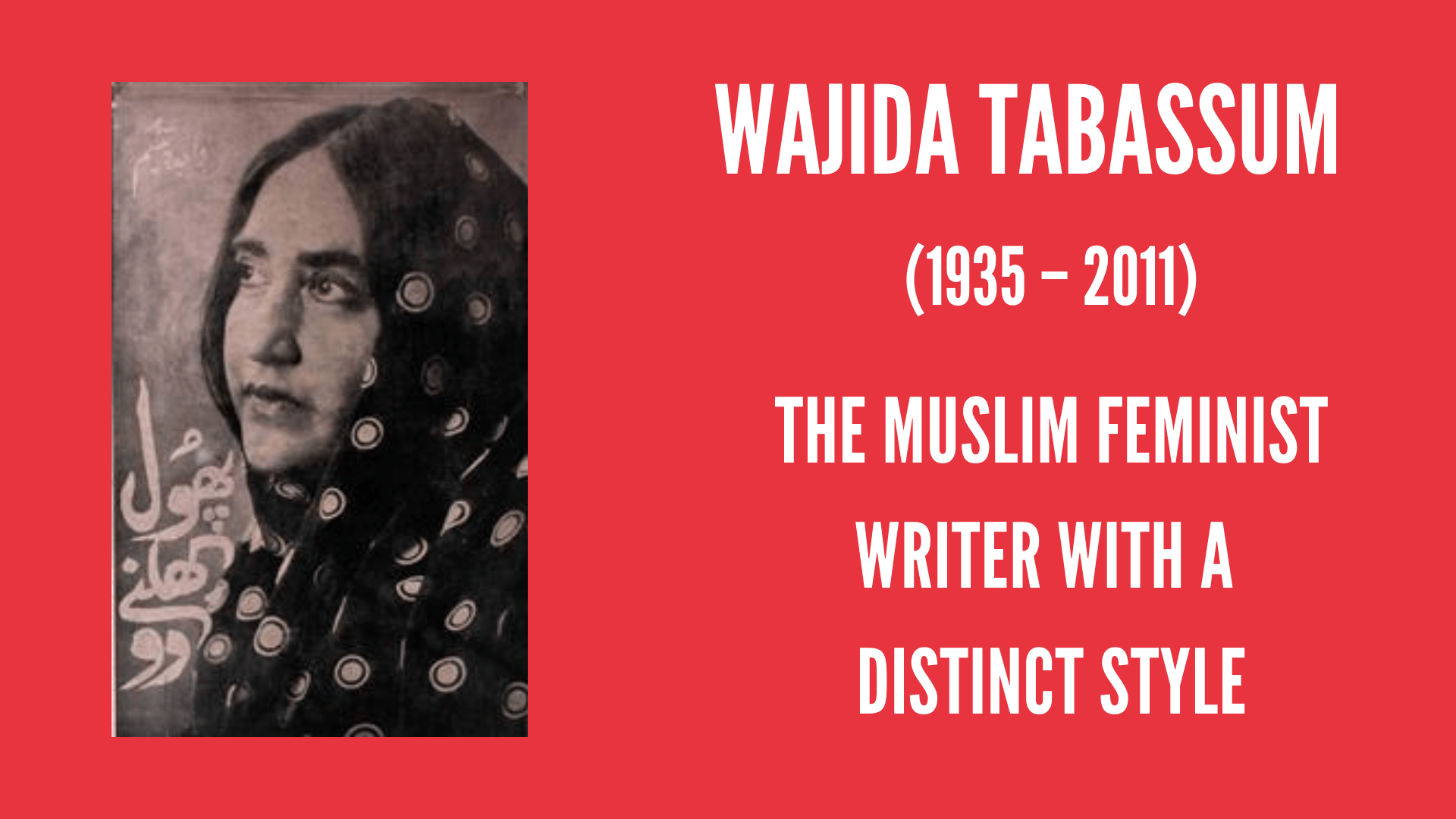
Wajida Tabassum: The Muslim Feminist Writer With A Distinct Style| #IndianWomenInHistory

Amravati, MAHARASHTRA  / Hyderabad, TELANGANA :

WajidaTabassumMPOs07jul2019

Wajida Tabassum is the first writer to be called sahib-e-asloob (a writer with a distinct style) after Ismat Chughtai. Her unique style of writing and choice of themes have been riveting and revolutionary at the same time. With a lot of opposition for her work, Tabassum managed to remain a defiant writer until her last works.

Early Life And Education 

Born in Amravati, Maharashtra in 1935, Tabassum graduated from Osmania University with a degree in Urdu. After graduation, her family moved from Amravati to Hyderabad, the influence of which is evident in her writing.

IN A SOCIETY WHERE WOMEN ARE SHUNNED, TABASSUM EXPLORES THE STRENGTH THAT UNDERLIES THE EXISTENCE OF THE WORKING CLASS INDIAN WOMAN.

Writing And Her Life After 

In 1940, she started writing stories in Urdu in the Dakhini dialect. Her writing continued as a backdrop of an aristocratic social life of Hyderabad. Her books were published by her husband, Ashfaq Ahmad, after his retirement from the Indian Railways. With four sons, and daughter they settled in Bombay.

Career 

Tabassum’s career started with her stories appearing in a monthly magazine called ‘Biswin Sadi’. She wrote erotic stories in a way that brought out the lifestyles of Hyderabadi Nawabs, which was often considered luxurious. The very first collection of her short stories, called ‘Shahr-e-Mamnu’ (‘Forbidden City’), was published in 1960.

WajidaTabassum02MPOs07jul2019

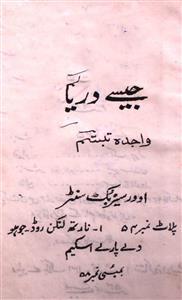
Her work wasn’t just widely acclaimed by critics, it was also popularly loved. Her story titled ‘Utran’ (‘Cast-Offs’) was made into a popular soap opera on Indian Television in 1988. During the 1960s and 1970’s, her erotic stories were published in Shama magazine which also got her a handsome payment for those times. Her books include Teh Khana, Kaise Samjhaoon, Phul Khilne Do, Utran, Zakhme-e-Dil Aur Mahak Aur Mahak and Zar, Zan, Zamin, which she had published in 1989.

WAJIDA TABASSUM IS THE FIRST STORY WRITER TO BE CALLED SAHIB-E-ASLOOB (A WRITER WITH A DISTINCT STYLE) AFTER ISMAT CHUGHTAI.

Breaking Taboos

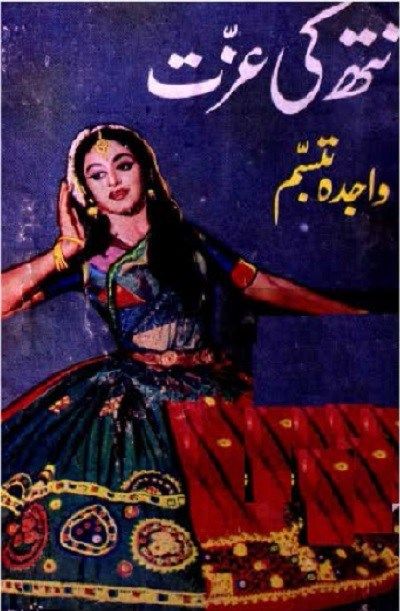
She was repetitively criticized for crossing the limits of decorum and ‘decency’.  Her stories like Nath Ka Bojh (Burden of the Nose-Ring), Haur-Upar(A Litter Higher), and Nath Utarwai(Removal of the Nose-Ring) which were more on the erotic side, were highly controversial. Tabassum’s works saw public protests in the city in lieu of her showing the community in a bad light. Her stories were not just a courageous depiction of women’s sexualities, but the reclamation of it too.

WajidaTabassum03MPOs07jul2019

In one of her stories called ‘Chutney’, the reader witnesses the sexual tension between a young Nawab and an incredibly gorgeous employed servant. Following the allegedly explicit description of the erotic aspect of the dynamic, is the climax wherein the servant gets raped. The story, like rest of her work, is a social commentary on how there is class-based exploitation in the self-proclaimed elegant lifestyle of the Nawabs as well. However, a revolution begins through the story when the servant rips her clothes and challenges the Nawab to try again on his wedding day.

The theme of women taking charge of her sexuality remains constant in Tabassum’s stories. In another story called ‘Tiya Paancha’, we witness the anger of a wife who declares her husband impotent publicly after he cheats on her. In a society where women are shunned, Tabassum explores the strength that underlies the existence of the working class Indian woman.

source: http://www.feminisminindia.com / FII – Feminism In India / Home> History / by Harshita Chhatlani / July 04th, 2019

The Wire’s Arfa Khanum Sherwani and Faiyaz Ahmad Wajeeh Win Red Ink Awards 2019

NEW DELHI :

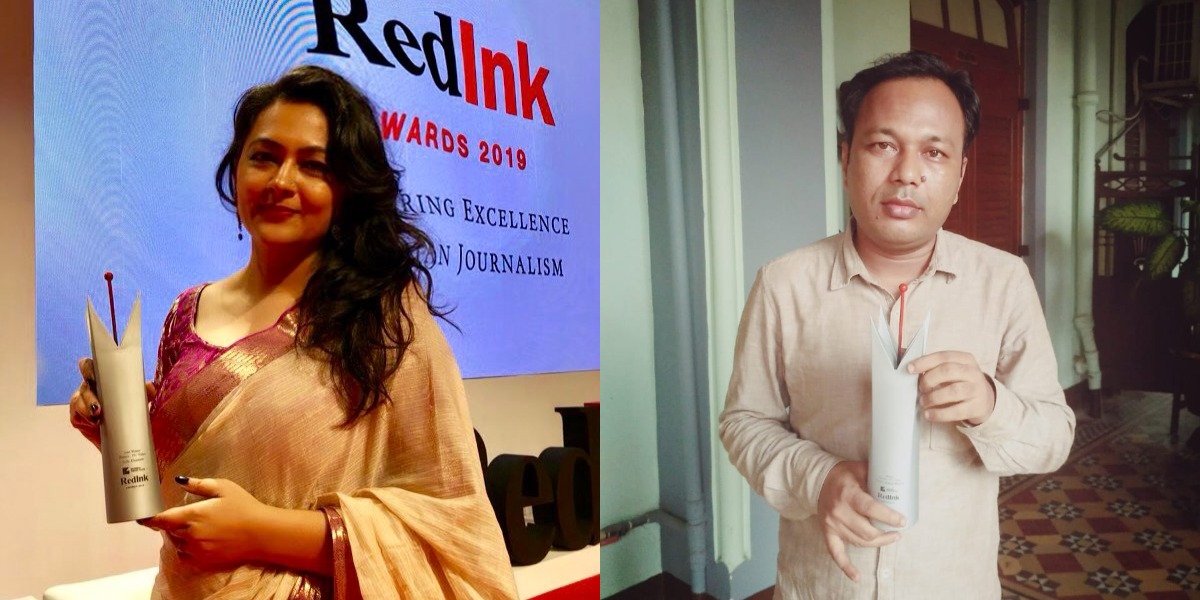
The Wire's Arfa Khanum Sherwani and Faiyaz Ahmad Wajeeh. Photo: The Wire
The Wire’s Arfa Khanum Sherwani and Faiyaz Ahmad Wajeeh. Photo: The Wire

While Sherwani won in the Politics (TV) category for her interview with Sri Sri Ravi Shankar, Wajeeh was declared winner of the Arts (TV) category for his story on a bookstore.

New Delhi:

The Wire‘s Arfa Khanum Sherwani and Faiyaz Ahmad Wajeeh bagged the prestigious Red Ink Awards on Friday. While Sherwani won in the Politics (TV) category for her interview with Sri Sri Ravi Shankar of The Art of Living foundation, Wajeeh was declared winner of the Arts (TV) category for his video on a bookstore that brought together Urdu’s literary greats.

Sherwani’s interview with Ravi Shankar was on his comments on the Ayodhya land dispute case in March 2018, when he said if the Ram mandir issue is not resolved “we will have a Syria in India”. While Sherwani pressed him on the issue, the interview was ended abruptly by members of his team. The video was produced by Akhil Kumar, while the camera was handled by Moniza Hafizee and editing by Asad Ali.

Wajeeh’s story was on 88-year old Shahid Ali Khan’s lifelong passion for Urdu literature. His journey with Maktaba Jamia, a publishing house and bookstore, took him from Delhi to Mumbai in 1957, where he befriended renowned Urdu writers and poets like Sahir Ludhianvi, Jan Nisar Akhtar, Meena Kumari and Jagan Nath Azad. He now runs the Nai Kitab publishing house in Delhi.

The video was produced by Hina Fathima, who also handled the camera. The video was narrated by Yasmeen Rashidi, while the poetry was translated by Meenakshi Tewari.

Apart from the two winners, The Wire‘s Kabir Agarwal, Jahnavi Sen and Ishita Mishra also received special mentions for their stories. Agarwal’s four-part series on Swach Bharat and its implementation in Uttar Pradesh received a special mention in the Health and Wellness category. Read the four parts here .

Jahnavi Sen’s story on the failure of the government to recognise and rehabilitate manual scavengers received a special mention in the Human Rights category. Ishita Mishra’s story on the BJP’s efforts to monitor the stories published in the media also received a special mention, in the Politics category.

The Red Ink Awards for Excellence in Journalism are announced annually by the Mumbai Press Club and recognise meritorious work in TV, print and digital formats. Awards are presented in various categories such as politics, crime, health and wellness, business, environment, human rights, photography, science and innovation, entertainment and lifestyle, and sports as well as a category called ‘Mumbai Star Reporter’. It is the only awards instituted by a professional body.

The Journalist of the Year Award went to former Tribune journalist Rachna Khaira for her expose on the functioning of the Unique Identification Authority of Indian (UIDAI) and its Aadhaar data cache. Lifetime achievement awards were given to former Maharashtra Times journalist Dinu Ranadiv and Mumbai Mirror‘s former photo editor Sebastian D’Souza.

source: http://www.thewire.in / The Wire / Home> Media / by The Wire Staff / June 29th, 2019

Two lakh Indian Muslims to perform Haj without subsidy this year: Naqvi

NEW DELHI :

MukhtarMPOs05jul2019

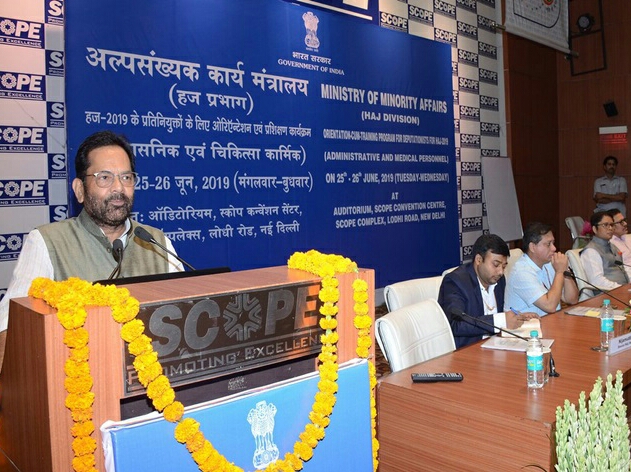
Minority Affairs Minister Mukhtar Abbas Naqvi has said that a record number of two lakh Indian Muslims will go to Haj this year without any subsidy.

Mr Naqvi said this while inaugurating a two-day ‘orientation-cum-training programme’ for Haj 2019 deputationists in New Delhi yesterday. He said, nearly 48 per cent of the pilgrims are women.

The Minister said, even after removal of Haj subsidy, there is no unnecessary financial burden on the Haj pilgrims. He said the Central Government has taken effective steps to ensure safety and better facilities of the pilgrims.

Mr Naqvi emphasised that no negligence will be tolerated in this regard. He added that a total of 620 Haj coordinators, Assistant Haj Officers, Haj Assistants, Doctors and Paramedics have been deployed in Saudi Arabia to assist the pilgrims.

The Minister also informed that the number of women Haj pilgrims going without Mehram this year is double in comparison to last year. A total of 2,340 Muslim women from India will go for Haj without Mehram this year while 1180 women had performed Haj last year without Mehram.

source: http://www.thenorthlines.com / The NorthLines / Home> Latest News / June 26th, 2019