Category Archives: Arts, Culture & Entertainment

Md Saaduddin a scrap metal artist

Hyderabad, TELANGANA :

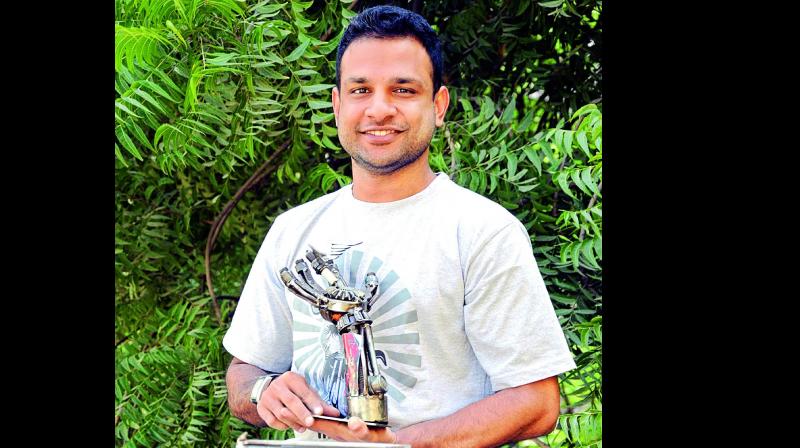
Md Saaduddin is on an artsy journey where he utilises scrap metal to construct purely artistic as well as functional sculptures.

I was always inclined towards art but I never had the nazakat that is needed to wield a paint brush. The hammer and grinder are a better fit for me. (Photo: DC)

It is quite common for a young boy to fall in love with machines. But what is not so common is translating that love into beautiful art. Although Md Saaduddin is today an artist, he does not work on canvases, but with scrap iron, steel and sometimes copper to make beautiful sculptures and functional art pieces like lamps and furniture, some set in the backdrop of interesting storylines.

With Saad’s father being a vintage car restorer, he, along with his brother Hamzauddin, grew up around machines, albeit with a unique perspective. On how he took up the hobby, the mechanical engineer and  self-made artist says, “I was always inclined towards art but I never had the nazakat that is needed to wield a paint brush. The hammer and grinder are a better fit for me. I love it also because of the physical work that is involved in creating it.” Saaduddin spends time on his artwork in the evenings, after work, and has made furniture for a couple of breweries in the city.

Explaining his style of work, he shares, “I try to incorporate a sense of movement. A bird just about to take flight, for instance! I’ve learnt the art by watching other people online and practicing. I used to help my dad in his workshop, and that’s how I got introduced to it. Just once a year, my brother and I collect all our savings and build a modified bike. We ride it around to our heart’s content and then sell it.”

He further reveals, “I’m also getting into blacksmithery now; I usually make the handles of spatulas and ladels with this. People appreciated my work and said I should get on Instagram. That’s how I started IRONic”

His brother, Md Hamzauddin is another bundle of talent, whose digital art is recognised around the world. He goes by the name ‘Hamerred’. Hamzauddin’s works have been showcased in countries like the US, Mexico and many others. In fact, he was also one of the only 13 artists from around the world to display their art at the Oil and Ink Expo, a motorcycle art show.  Hamza’s signature style features paint dripping from motorbikes.

source: http://www.deccanchronicle.com / Deccan Chronicle / Home> Lifestyle> Books and Art / by Nikhita Gowra, Deccan Chronicle / December 04th, 2017

Mohammed Hussain’s Mawa jalebi is a huge hit in the month of Ramzan

Mumbai, MAHARASHTRA :

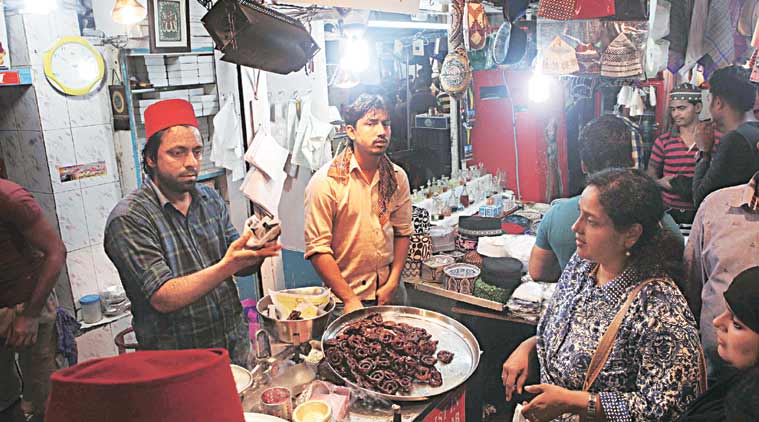
In a narrow lane, Burhanpur Mawa Jalebi is a 4×4 sq ft shop, no bigger than a kiosk.

Peak hours of business during Ramzan begin after 10 pm for Burhanpur Mawa Jalebi. (Source: Express photo by Vasant Prabhu)

Tight coils of pale yellow turn dark brown within minutes. As soon as they rise to the surface in the kadhai of hot oil, cooked to their thick core, Mohammed Hussain scoops them out with a frying ladle and deposits them in a shallow dish of thick sugar syrup. Immediately, the customers that have, until now, been watching Hussain intently, close in for the mawa jalebi.

During the month of Ramzan, Mohammed Ali Road in Mumbai wears a festive look. By 6 pm, the air is thick with a mix of aromas as all shops and stalls in the Khau Galli light up with fairy lights. Walk down the crowded lane and one notices that the jalebi is curiously missing from the scene. “That is because Mohammed Ali Road has only one jalebi shop, and not the regular variety but mawa jalebi, available at Burhanpur Mawa Jalebi,” says the cashier at Suleman Usman Mithaiwala, which sits at the Khau Galli junction.

In a narrow lane, Burhanpur Mawa Jalebi is a 4×4 sq ft shop, no bigger than a kiosk. Hussain and his brothers Mohammed Yusuf and Mohammed Hissar cater to the thickening crowd. “Mawa jalebi is a specialty from Madhya Pradesh,” says Yusuf between taking orders. “Our shop introduced Mumbai to this sweet, which is distinct,” he adds.

Made using mawa, arrowroot and milk, it is closer to gulab jamun in taste. “Its crispness comes from arrowroot, which gives the batter a better hold. Unlike the other jalebi, this doesn’t have the tinge of sour taste,” says Hussain.

Burhanpur Mawa Jalebi was started a decade ago by his uncle Nooruddin. “The recipe is original, passed on by a karigar in Mathura to our maternal grandfather,” says Hussain. This shop is a branch of the original, which has been in Burhanpur, for 45 years.

Open from 3 pm to 3 am during Ramzan and till midnight on other days, Burhanpur Mawa Jalebi prices its specialty at Rs 240 a kg. “With a hike in the rates of mawa and other ingredients, we will increase its price after Ramzan,” says Yusuf. Why not during the festive season, when they are bound to do good business? “Ramzan is a holy month; a time to reflect, cleanse self and do good. Acting greedy will bring us sin,” says Yusuf. Upon hearing the azaan at the nearby Minara Masjid, he takes a break and heads in the direction. It is time for namaaz before he breaks his fast.

source: http://www.indianexpress.com / The Indian Express / Home> Lifestyle / by Dipti Nagpaul D’Souza, Mumbai / July 09th, 2015

‘Nur Jahan is the history of India’: Historian Ruby Lal on her new book

INDIA :

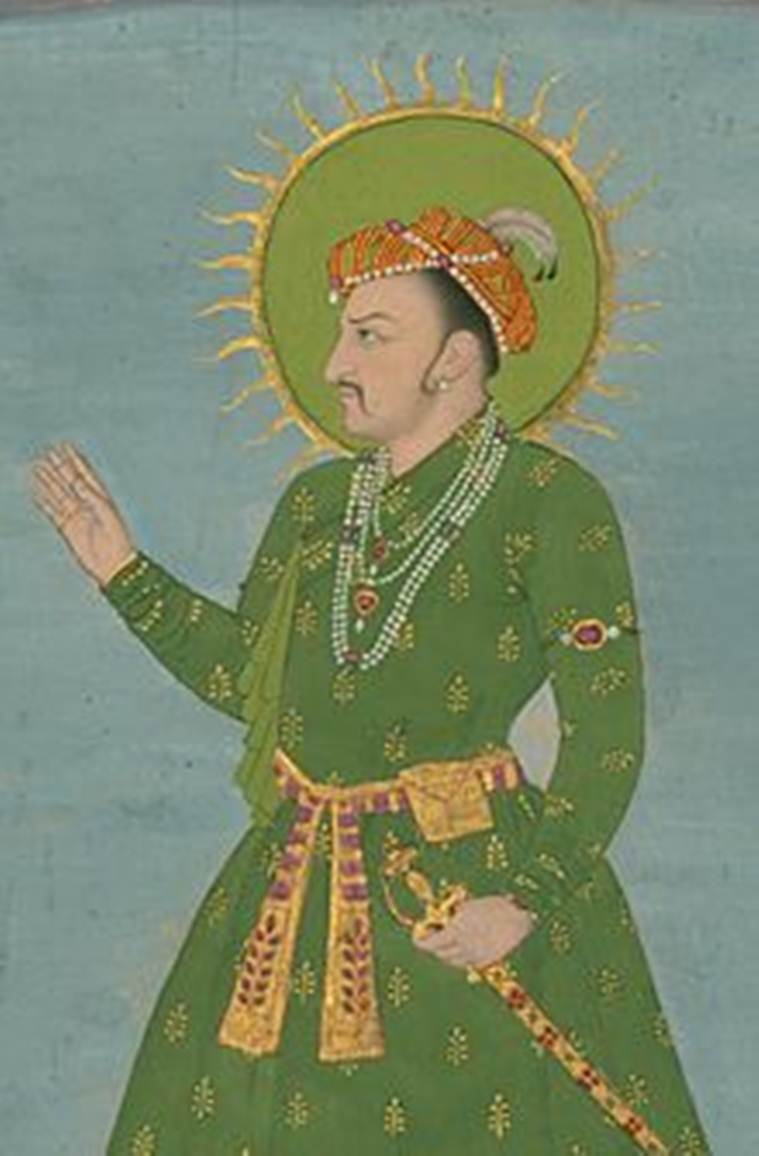
In an interview with Indianexpress.com, Lal spoke about the incredible achievements of Nur Jahan. Remnants of imperial orders issued by her, coins minted in her name, paintings that paid ode to her sovereignty and bravery are all evidence of the enormously powerful figure she was.

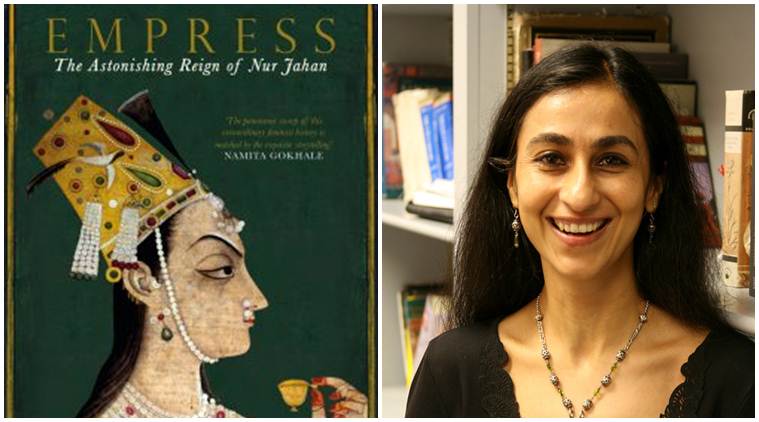
Left- Cover of the book ‘Empress: The astonishing reign of Nur Jahan’ (wwnorton.com) Right- Historian Ruby Lal (personal website of Ruby Lal)

For four centuries, from when she was at the centre of one of the largest empires of the world, Nur Jahan, the twentieth and supposedly the most loved wife of Mughal emperor Jahangir, has been a household name in the Subcontinent. Though she was not officially the ruler of Mughal India, Nur Jahan has been noted by historians to be the real power behind the throne. A politically astute and charismatic figure, she ruled Mughal India as a co-sovereign of Jahangir and is known to have been more decisive and influential than he ever was. Historian Ruby Lal in her latest book, ‘Empress: The astonishing reign of Nur Jahan’, dives deep into the intriguing world of the only woman to have helmed the Mughal empire. Tracing her life in great detail, Lal attempts to rip apart narratives of romance and exoticism that surround the image of Nur Jahan and focus upon what made a Muslim woman living in seventeenth-century India, one of the most authoritarian figures in Indian history.

In an interview with Indianexpress.com, Lal spoke about the incredible achievements of Nur Jahan. “People say she always sat right next to Jehangir in the court and that if some cases or decisions came up and if she agreed with him, she would pat him on the back and he would say yes to that decision,” says Lal who is Professor of South Asian Studies at Emory University in Atlanta. Remnants of imperial orders issued by her, coins minted in her name, paintings that paid ode to her sovereignty and bravery are all evidence of the enormously powerful figure she was. Charting the life history of Nur Jahan, and placing her in the background of the pluralistic cultural space that Mughal India was, Lal puts together an evocative biographical account of the queen.

Here are excerpts from the interview with Lal.

Popular perception of Nur Jahan is somehow constricted to the romantic relationship she shared with Jahangir. Why is that the case?

There is a very long history of the erasure of Nur Jahan’s power that I chart in the book. As she traveled through the length and breadth of the country with Jahangir – issuing imperial orders, hunting a killer tiger near Mathura, discussing the expansion of the empire- she rose to being the co-sovereign. This does not mean that in her own time people did not raise eyebrows. In 1622, her stepson and Jahangir’s son Shah Jahan had risen in revolt. The catalyst for his revolt was the moment when Nur Jahan arranged a match for her daughter from her first marriage, Ladli; she chose the youngest prince, Shahriyar for her. About that time, Shah Jahan went into rebellion against Jahangir. And its is very clear that he felt threatened; he knew about the power of Nur Jahan. In fact, Shah Jahan and Nur Jahan had been closely aligned. The year 1622 is when certain chroniclers begin to write about the chaos that Nur Jahan Begum had raked up between the father and son.

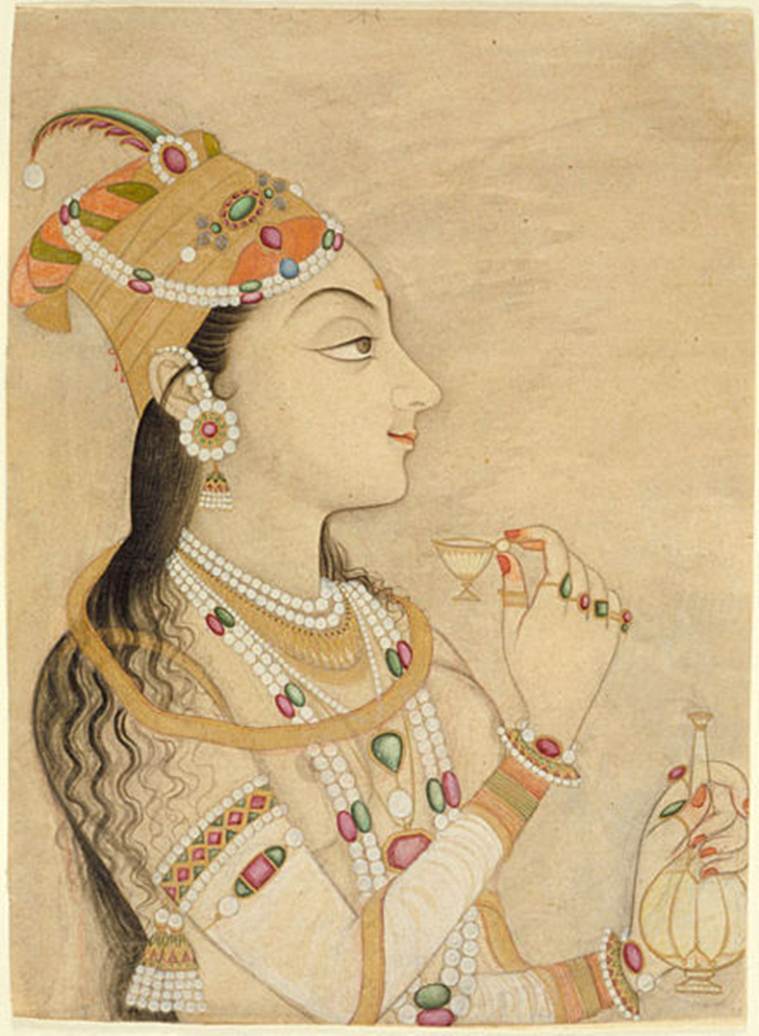
“There is a very long history of the erasure of Nur Jahan’s power that I chart in the book,” says Ruby Lal. (Wikimedia Commons)

So the early criticism appears to begin around this time. The other major moment of critique of Nur’s power was when they were on their way to Kashmir and Mahabat Khan (who went on to capture Jahangir later in 1626) goes on the journey with them to a certain distance and according to one of the chroniclers he says to Jahangir that a man who was governed by a woman is likely to suffer from unforseen results. In 1626, she, completely visible, goes to save Jahangir (sitting upon an elephant on a roaring river), commanding all men including her brother Asaf Khan. She stratergises and eventually saves the emperor. After this, we begin to come across a word called Fitna, in the records.

Fitna is a very loaded term in Islamic history. It is used for the first time during the Shia-Sunni split for civil strife. It was also used against Ayesha, Prophet Muhammad’s favourite wife, when she went on a battle against Ali who was eventually the leader of the Shias. Over time, the word came to be used against women’s visibility, their sexuality and so on. Following 1626, this is one word that is used repeatedly against nur – that is to say that her power produced chaos.

Later, in the Shahjahanama, we find that at one point that the chronicler lists her power as a “problem”: the Shahjahanama reverts to the male inheritance of power and completely undoes her co-sovereignty with Jahangir.

Then there were also visitors to India like Thomas Roe, the ambassador of James I of England who follows Nur and Jahangir through the camps in Gujarat and Malwa. He calls her the Goddess of heathen impiety.

In the 19th century orientalist renditions of the romance of Nur and Jahangir become very important in the histories of the time; later, the colonial renditions highlight and forward such stories. Nur Jahan becomes classic oriental queen. Thus, a long-standing history of the erasure of the power of an astonishing emperess. It is certain that the erasure of Nur’s power travels into modern times and we only hear about her romance with Jahangir, not about her work as co-sovereign of the empire.

Jahangir is often compared with Akbar and criticised for being an uncompetitive, flamboyant king, who spent much of his time in drinking and merrymaking. But the fact that it was during the reign of Jahangir that a woman became so powerful, what does it say about his attitude towards women?

You are right, this is how Jahangir has come to be imagined. There are a range of scholars who for sometime now have been rethinking Jahangir’s reign, his philosophical and artistic engagements. My book foregrounds the ways in which Jahangir seeks to go differently from how Akbar articulated his sovereignty. If you look at the reigns of Babur and Humayun, there was no stone harem: the kings were nomadic and forever on the move. During Akbar the Great, for the first time in Mughal history, the imperial harem is built in stone in Fatehpur Sikhri. For the first time in the Ain-e-Akbari, women are declared as ‘pardeh-giyan’ which means “the veiled ones.”

“My book foregrounds the ways in which Jahangir seeks to go differently from how Akbar articulated his sovereignty,” says Ruby Lal. (Wikimedia Commons)

But what Jahangir does is that he goes back to the ethics of Babur. He was constantly wandering, he was constantly moving. The ethics of a peripatetic life and movement, which contributed to the co-sovereignty of Nur Jahan. Nur Jahan is the biggest example of Jahangir’s attitude towards women. An 18th-century chronicler that advances the Jahangirnama to the end of Jahangir’s death had suggested that the emperor had once claimed that he had given the sovereignty to Nur Jahan Begum and that he was quite content with his wine and meat. It’s an allegorical statement: and one indicates his admiration of Nur, something that he chronicles in his own memoir

Would Nur Jahan be this powerful had she not been married to Jahangir or had she not been part of the Mughal empire?

I think, Nur Jahan, looking at her whole life history and context, would have expressed her power differently in other circumstances. Her life history shows her dynamism and boldness. Of course, as I have been saying, and detail in the book that the plural landscape of Hindustan was very important- in that that it fostered experimentation and all sorts of ways of being (alongside war other challenges of co-existence of multi-confessional identities). We should also remember that she comes from an important Persian family background, deeply invested in poetry, arts, calligraphy. Then her own initiative must be highlighted: there were other women in the harem – and indeed Nur walks in the tracks of these women’s power – but no one becomes a co-sovereign. That speaks something about her boldness, her endeavours and of course her ambition.

Islamic societies are often noted to be more regressive compared to others in their treatment of women. In your book do you try to subvert this notion?

I Am trying to suggest that Nur Jahan is the history of India. She was a Shia married to a Sunni Muslim who was also half Hindu Rajput. Further, Nur Jahan is the only woman ruler among the great Mughals of India (there are technical signs of being a sovereign and informal signs, both of which I detail in the book). That is the history of India. As far as Islam is concerned, people should know that there were incredible and powerful women in Islamic history all the way through. We have Ayesha, Raziya, we have Nur Jahan Begum, we have any number of powerful women. It is also the multicultural world. In the modern world, we tend to think in terms of fixed identities. People in early modern times were much more open. Jahangir was engaging with Siddichandra, a Jain monk. Nur Jahan used to tease him about the pleasures of the flesh.  What does this tell you? It tells you about an open engagement. It tells you about how experimental Islam is, how mixed Islam is, how vibrant Muslim women are and how Islam is so deeply attached to India.

‘Empress: The astonishing reign of Nur Jahan’ has been published by W.W.Norton in the United States earlier this month and will be published by Penguin Books in India soon.
source: http://www.indianexpress.com / The Indian Express / Home> Research / by Anrija Roychowdhury, New Delhi / July 11th, 2018

Brand dame

NEW DELHI :

ShahnazHussainMPOs15oct2018

Entrepreneur, under-the-radar philanthropist and an over-the-top personality — the relevance of Shahnaz Husain 40 years after her first formulation

Shahnaz Husain’s press kit weighs 12.3 kilos, and contains press clippings from around the world. But then everything about her is over the top, and it’s not just her red hair threaded through with gold ribbons. Of her 58 homes, one is in Delhi’s tony Greater Kailash. There is a Rolls-Royce and a Jaguar parked up front, while inside is a sort of Midas-touch shocker. There are swans, a Ganesha, cushions, high-backed chairs, window valances, all in gold. There is an MF Husain on the wall that the artist did especially for her, large urns in the corners taller than people, horses sprinting across the carpet. Curios clutter, and I imagine a dusting nightmare.

She is not short on staff though. There are at least 15 people I have counted, and I am there just for a couple of hours. They appear, to offer food, tea, more food, juice; and to take instruction each time Shahnaz rings her bell to show me something — her first husband’s photograph, a letter from romance novelist Barbara Cartland’s friend’s son whose eyesight she cured, a picture of a man she picked up off the street because he was lame. They are dismissed soon after, with a wave of Madam’s hand.

She is wearing a blue-and-leopard print cassock-like garment, and holds forth for the next couple of hours. While she knows just what to say to the media, often telling the same stories, there is a certain warmth I feel, even as she holds my hand, her 70+ years, showing only in her hands.

Cosmetic shift

She begins with the first of many stories (these are her forte, not the dates or the details): when on a course with cosmetics entrepreneur Helena Rubinstein, she had a friend whose mother would come and sit outside the class because she was blind and had no one to take care of her at home. “She’d been a sought-after model who had worked for an eye make-up company,” says Shahnaz. She had modelled a new line, complaining to the manufacturers that her eyes would feel blurred after use. “They told her to wash them and put Optrix.” The blurring continued, until she simply could not see any more.

Shahnaz was learning what she calls “chemical beauty” at the time — Arnould Taylor, London; Christine Valmy, New York; Lancome, Paris; Swarzkopf, Germany; Lean of Copenhagen, Denmark. “There was no school I hadn’t been to, until Rubenstein started to say ‘we have nothing to teach you’.” She had funded herself through her writing work. Married at 15 to Nasir Husain, who was director foreign trade in the State Trading Corporation, she was determined to study. She did, for eight years.

Back in India when she was about 24, she set up a small factory in Delhi’s Okhla (that she still has) and “employed a yurvaids . I gave them the chemical formulations and asked them to convert them”. She also recruited chemists to make products for “treatment and cures” — falling hair, acne, pigmentation, dark circles, stretch marks. She asked people who came to her home salon to test them and give her feedback, tweaking each product as she went along. They retailed out of Sahib Singh Chemists in Connaught Place, in little white bottles with green caps and handwritten labels. That is the thing, she says. It has never been about beauty, but always about Ayurveda, in the days before it became a marketing tool.

Thinking beyond business

There is no marketing, in fact. At an address at Harvard Business School in 2015, she spoke about how she created a successful business sans advertising. Two years ago she told the same school in an interview how she entered Selfridges and broke a 40-year record, selling products worth £2,700 (approximately Rs. 2,63,500) in the first two hours, even as she displaced half of the space allocated to Pierre Cardin.

Her way of entering a foreign market is often through the Indian government (as in Selfridges, where Ingrid Bergman bought 12 of her cactus cleansing creams at the Festival of India), and by liaising with the press. She says wherever in the world she goes, ambassadors are happy to organise a press conference. She will talk Ayurveda, distribute samples, and get enormous press coverage. She is clear that the future is Ayurveda, not chemicals.

In fact, even as a young girl travelling the world studying, her father, Nasirullah Beg, a chief justice of the Allahabad High Court, would write to the ambassadors in various countries so his daughter could stay with them through the duration of the course.

But it is not just running a business; she is happy to dole out products made for cancer patients free of cost, especially those with patches of alopecia, and will pick people off the street, offering them jobs, connecting them to medical specialists.

Today, the company invests in R&D, with customers from salons testing them out, though it is not clear whether they know they are part of the research. She also talks in terms of “prescriptions” and “fairness creams”, a throwback to an era where protocols, both medical and social, were not as strict.

The label life

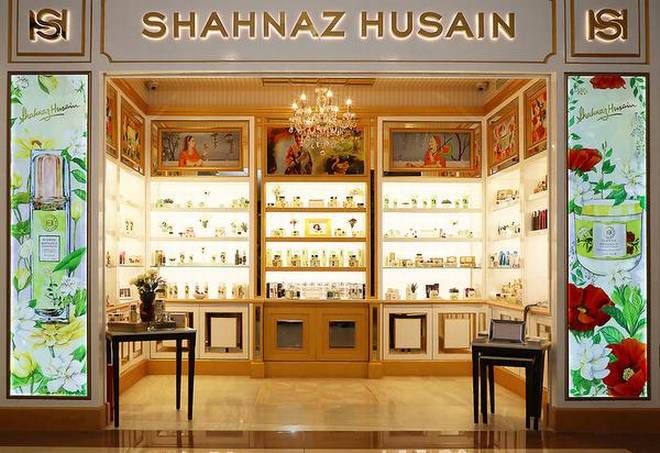
Earlier this year, the Shahnaz Husain brand was relaunched, with a new store at Delhi’s Select Citywalk, with new branding that seems rather mixed, with large pictures of flowers all over the frontage. Her face is still on some of the packaging, not retro-styled, but much like how it would have been done in the ’90s. She is not about to sell out or have anyone invest in the company. The brand is present in 40 countries today, including Iceland and Vietnam.

I dare not ask, ‘What after you?’ For Shahnaz is the brand.

As we conclude, she declares, “I think you have enough for a book now,” in her alto. Then she asks for her matching blue-and-leopard print bag, as we sit in her foyer, surrounded by a garden of plastic flowers, taking photos, with a couple of photographers jumping into the fray, seemingly from nowhere (waiting in the wings for this moment, perhaps). “Now we are best friends,” she declares, after we cut a cake, the done thing when a guest comes to her house for the first time.

She says wherever in the world she goes, ambassadors are happy to organise a press conference. She will talk Ayurveda, distribute samples, and get enormous press coverage. She is clear that the future is Ayurveda, not chemicals.

source: http://www.thehindu.com / The Hindu / Home> Features> Weekend / by Sunalini Mathew / October 13th, 2018

Shahryar — A Life in Poetry review: Dream merchant

Aonia,Bareilly / Aligarh – UTTAR PRADESH :

ShahryarMPOs14oct2018

Why a flag-bearer of modern Urdu poetry chose to be moderate

In 1936, Munshi Premchand made a seminal speech, Sahitya ka Uddeshya(‘The Aim of Literature’), to the Progressive Writers’ Association. While asserting that literature is meant to critique society, the novelist said it can never regress into propaganda. The point applies to the work of Shahryar, who was born, reportedly, in the same year. For, while being a self-avowed Marxist, he refused to be bracketed into the categories of ‘modernism’ or ‘progressivism’. Finding his voice in the post-Nehruvian period of disillusionment in the 1960s, he turned his gaze inward, into the inner struggles of an individual, while not remaining oblivious of the external environment.

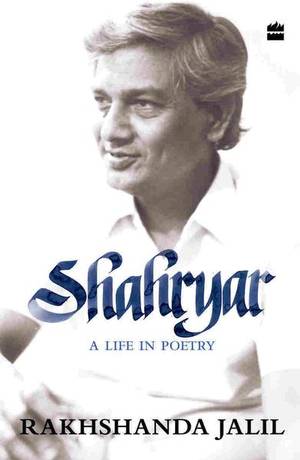
Rakhshanda Jalil stresses in Shahryar: A Life in Poetry that his tone was one of moderation. The poet, who was among the flag-bearers of the jadeed (modern) shayari, did not declaim, he whispered into the reader’s ears his thoughts on social issues. One example is Ek Siyasi Nazm (A Political Poem), where he gently chides a neighbour who has passed on his communal hatred to his children.

Some of the leitmotifs that occupied the poet’s imagination were sleep, dreams and night. His most famous collection, Khwab ke Dar Band Hain (The Doorway to Dreams is Closed), paid tribute to his favourite theme, khwab (dream). In its title nazm, he presents the night as freeing the eyes of the protagonist not only of all ‘sins’ but also of dreams, an act that he calls a punishment.

The poet, among the four Urdu writers to have been given the Jnanpith, is remembered outside Urdu literary circles, and especially among cinephiles, for his association with filmmaker Muzaffar Ali. The partnership resulted in Gaman, Umrao JaanAnjuman and the incomplete Daman and Zooni. It is when Jalil delves into this side of Shahryar that her arguments become a bit problematic, especially when she says that there exists a dichotomy between film lyrics and poetry.

Here, Sahir Ludhianvi’s write-up to his fellow poets is instructive. While Ludhianvi acknowledged that a nagma nigar (lyricist) doesn’t have the freedom of an adabi shayar (poet), as he is constrained by the film’s screenplay and characters, he added that his own attempt was to elevate film lyrics to the status of high art. It is when a film’s lyrics rise above its mere narrative that they take the form of art. What Jalil ignores is that a poetry lover would use such lyrics as a trigger to delve deeper into a poet’s corpus. An appreciation of Seene Mein Jalan won’t stop at listening to the song; it would progress to a reading of Ism-e-Azam, the collection from where the ghazal was taken.

Shahryar: A Life in Poetry; Rakhshanda Jalil, HarperCollins, ₹599.

source: http://www.thehindu.com / The Hindu / Home> Books> Reviews / by Hari Narayan / October 13th, 2018

The palace of delights

Mandu (Dhar District), MADHYA PRADESH :

ManduMPOs13oct2018

No rainy day can be better spent than roaming around Mandu’s Jahaz Mahal, with Jahangir’s words as guide

“What words of mine can describe the beauty of the grass and green flowers? They clothe each hill and dale, each slope and plain. I know of no place so pleasant in climate and so pretty in scenery as Mandu in the rainy season,” wrote Jahangir in his memoirs.

On a misty morning in July, we entered the hilly kingdom of Mandu with these words echoing in my mind.

In 1401, Dilawar Khan, the governor of Malwa who was appointed by the Delhi Sultans, took advantage of the chaos resulting from Mongol attacks and declared his independence. He shifted the capital from Dhar to Mandu (Mandav) and renamed it Shadiabad, or City of Joy. When Ghiyasuddin Shah (1469-1500 AD) came to the throne, he decided that his father, Mahmud Shah I, had expanded the kingdom enough. All he wanted to do was enjoy life. Handing over the affairs of the kingdom to his son and heir, Nasir Shah, Ghiyasuddin Shah gave himself up to a life of delights. He was a connoisseur of food, and his recipes are sealed in an illustrated book, Nimatnama, that is with the British Library and has been translated into English by Norah M. Tiley as The Sultan’s Book of Delights.

A life of pleasure

Ghiyasuddin Shah wasn’t joking when he declared that he wanted to devote himself to a life of pleasure. He filled his harem with women who were trained in various disciplines for which they had an aptitude. While some were singers, dancers, painters and chefs, others were trained to be his guards and personal soldiers. He established a madarsa and educated the women to be proficient in religious as well as secular subjects. There were Qazis, schoolmistresses, hunters, scholars, embroiderers, and accountants among them.

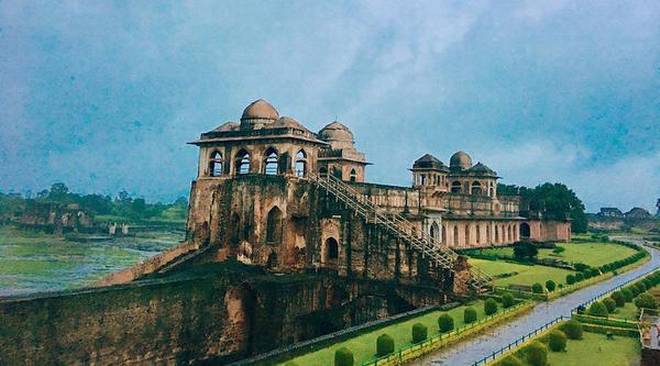
We drove straight to Jahaz Mahal, a stunning building, named as such because its shape, when it fell on the water tanks surrounding it, looked like a ship.

All the guides and stories will tell you that Ghiyasuddin Shah built it to house his harem. A probably exaggerated figure of his harem was given by Jahangir, who wrote it as 15,000. That figure is gleefully quoted by local guides, with perhaps a hint of envy on their faces.

After Dilawar Khan established the Malwa dynasty he got architects and craftsmen from Delhi. The early buildings bear a stamp of the Tughlaq and Khilji architecture of Delhi.

The Jahaz Mahal, however, is a flight of imagination and takes yours along with it. I could see girls dancing and singing in the rain on the rooftop and in the courtyards, their shadows reflecting on the Munj Talao and Kaphur Taloo surrounding it.

The strains of Megh Malhar were flooding my senses, and in my mind’s eye I could see the arcades being lit up by the lanterns and lamps that were floating on the water, glimmering and dipping along with the wind, glowing like fireflies.

I could smell the heavily laden kadhais (woks), with samosas and baras being fried. As the illustrations of the Nimatnama show, the Sultan took a keen interest in, and was perhaps supervising, the correct temperature of the oil, the salt in the filling. How golden was the result?

Who knows? All I know is that I was transported back to the 15th century as soon as I entered the long, double-storied Jahaz Mahal through its main arched, marble entrance. At the back, every arch of the continuous arcaded 360-feet building opens on to Munj Talao. I don’t know how close it was originally to Kaphur (Camphor), now called Kapoor Talao, but now this is quite a distance from it. There are manicured lawns between it.

Initially it was decorated with glazed tiles and colourful friezes. Now we have the unfortunate graffiti that people are wont to inscribe on monuments. The cool corridors and pillared compartments were made for dancing and singing.

Nur Jahan accompanied Jahangir to Mandu in 1617 and the palace complex of Mandu enchanted the royal couple.

A magical bubble

Jahangir sent Abdul Karim in an advance party to repair the buildings. He was so pleased with the result that he rewarded him with the title of Ma’mur Khan (architect Khan). Mandu is a treasure house of water harvesting. There are also bathing tanks. There are two in this palace, on both the floors, shaped like a tortoise with steps going in. Now devoid of water, one can imagine women going to the toilet there, with roses and lotus flowers floating in the perfumed waters.

The roof has a few open pavilions and kiosks on its four corners. While I was there on the wet, open terrace, the mist came and blotted out everything around. We were trapped in our very own magical bubble.

source: http://www.thehindu.com / The Hindu / Home> Opinion – Where Stones Speak / by Rana Safvi / September 03rd, 2017

Mumbaiwale: Four local Islamic landmarks to check out – each with its own colourful history

Mumbai, MAHARASHTRA :

An adult cinema turned mosque, a Muslim home turned film museum, a gorgeous blue masjid & a dargah cops love.

The one that now houses a film museum

National Museum of Indian Cinema, Pedder Road

On Pedder Road, one Muslim-owned mansion has been converted in a someday-to-be-opened museum for the movies. Gulshan Abad, the Victorian-Gothic villa, was built in the mid-1800s (a time when the main entrance itself offered a view of the Arabian sea) and was home to the Gujarati businessman Peerbhoy Khalakdina. The five-acre estate was eventually inherited by a relative Cassamally Jairazbhoy, whose third wife, Khurshid Rajabally, hosted cultural gatherings at the home in the 1920s.

Rajabally’s filming of a Haj pilgrimage makes her one of India’s earliest documentary filmmakers. Her son Nazir Ali made documentaries about Indian classical and folk music.

The home served as a hospital for WWII soldiers and in 1949 was briefly rented out to Jai Hind College before the institution found a permanent campus in Churchgate in 1952. But in 1950, the government confiscated the estate, declaring it an evacuee property after Partition.

The home, now restored, holds artefacts from India’s rich cinematic history. Alas, the launch has been tied up in bureaucratic red tape, and you can only get as far as the entrance.

The one that used to be an adult movie theatre

Deeniyat centre, Mumbai Central

The Deeniyat educational and charitable trust couldn’t be more wholesome. It aims to educate children, men and women in basic Islamic tenets and moral teachings related to the Koran and Sunnah. But the institution and mosque are housed in a building that once screened films of less salubrious taste.

In 1914, Ardeshir Irani and Abdulally Esoofally, both instrumental businessmen in early Indian cinema, bought a theatre near Nagpada junction on Bellasis Road. By 1918, they’d named it Alexandra Cinema and converted it into a movie hall, screening films from India and abroad. The single-screen movie hall screened films through the decades – silent films, new talkies, Technicolor hits, epics, Amitabh’s angry-young-man phase and blockbusters. But by the 80s, it was largely where you’d go to watch a B-grade or adult film.

In 2011, a developer bought the 15,000sqft property, turning it over to the non-profit. Deeniyat has spruced up the interiors, and even added a mosque inside. But the exterior – tiled roofs, wraparound verandahs – stays largely the same.

The one where the cops go to worship

Hazrat Makhdum Fakih Ali Mahimi dargah, Mahim

The scholar-saint who lived between 1372 and 1431, was the first commentator of the Koran in India. His books have focus on the philosophy of time and space. He was the Qazi or judge for the Muslims of Thana district.

But what makes him the patron saint of the Mumbai Police? Because he lived at a time when the Portuguese had possession of Salsette, the islands north of Mahim. A Portuguese sergeant would seek his advice and help on many cases. Many also believe that the site at which the Mahim police station stands is said to have been the saint’s home.

Until today, during the annual urs or fair held in his honour, it’s the policemen who lay the first ornamental sheet over his tomb at the dargah. On the urs days, devotees can also walk into the police station premises to pay their respects.

The blue one that catches the moonlight

Masjid-E-Iranian, Dongri

I first saw what is locally called the Mughal Masjid on a local-history tour of Bhendi Bazaar back in 2005 (Yes, I was a nerd before it was fashionable). I was lucky. It was a cool full-moon night and the blue tiles seemed to glow in the dark. For a minute, this tiny corner of Mumbai seemed like Morocco.

The mosque is 158 years old, built by a wealthy Iranian merchant, Haji Mohammad Hussain Shirazi, in 1860 and is maintained by a trust set up by his descendants. It has no dome, but two minarets, and a mosaic of blue tiles of every hue and pattern.

Inside, if you do get permission to enter is a lawn, a pond, a fountain, crystal chandeliers in the inner sanctum and Koran verses inscribed on the walls.

source: http://www.hindustantimes.com / Hindustan Times / Home> Mumbai / by Rachel Lopes, Hindustan Times / October 05th, 2018

Death no leveller in Capital cemetery

NEW DELHI :

Proud to be Punjabi. That’s the well-heeled Punjabi community of the Capital, a community with established business interests, its own way of living, its own burial ground, says  VIVEK SHUKLA….

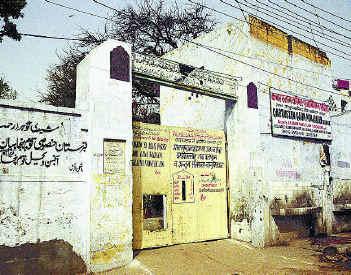
Book your place to avoid disappointment... but only if you are a Punjabi Muslim as this burial ground near Shiddipura is reserved for Punjabis. Photo: S. Subramanium.
Book your place to avoid disappointment… but only if you are a Punjabi Muslim as this burial ground near Shiddipura is reserved for Punjabis. Photo: S. Subramanium.

A MUSLIM family along with their friends and relatives recently went to a burial ground in Shiddipura near Idgah mosque known as Qabristan Qaum Punjabian for the last rites of a relative. They were, however, told by the guard of the burial ground that this place is only for Delhi’s Punjabi Muslim community.

Principal of Delhi University’s Zakir Hussain College, Prof. Riaz Umer, who is also the president of the Anjuman Vakile Qaum Punjabian of Delhi, the organisation looking after the institutions run by this community, informs that other than their own community members they only allow the burial of somebody who has made a significant contribution for their community.

This is a very unique community as Punjabi Muslims still vigorously preserve their own identity. The elders of Punjabi Muslim community came here for the first time in mid-17th Century from a place called Bhera in West Punjab, now in Pakistan. They were Khatri Hindus with surnames like Khanna, Channa, Sapra, Baluja, Saluja, Sehgal, Mehndiratta, Bahri and Sachdeva, etc., before embracing Islam.

Legend has is that a group of Punjabi Khatris from Bhera was going to Haridwar for a holy dip in Ganga. On the way, they met Sufi Shamsuddin Tabrez who asked where were they going. When he was told by the Khatris about their plan, the saint reportedly asked whether they would become Muslim if he brought the Ganga right there. The Hindu Khatris accepted his offer and the saint literally brought the Ganga there and then the awe-struck Hindus as promised converted to Islam.

S.M. Abdullah, a prominent member of Delhi’s Punjabi Muslim community, says that while it is true that their forefathers embraced Islam, nevertheless they vigorously guard their exclusive heritage. “Come, what may, Punjabi Muslims will not marry outside the community. We ensure that the bride or groom’s family is Punjabi Muslim, that too from Bhera,” says Abdullah, proudly adding that his surname is Mehndiratta.

It is said that 64 Punjabi Muslim families came to Delhi at the outset. They set up their base somewhere around the present-day Shalimar Bagh. The male members started going downtown to find work. “With the passage of time they started doing small jobs here but were rather shabbily treated by the locals as they were not sophisticated enough to communicate with the more refined and cultured Delhiwallahs,” says Nasser, another member of this dwindling community and a leading model.

According to Abdullah, the Punjabi Muslims’ big time came when the Moghul Emperor Bahadur Shah Zafar was looking for some rare herb called Bahadra. When only the Punjabi Muslims could provide the herb, the king and his courtiers were really surprised. He called important members of this community and asked them whether they wanted anything from him. The Punjabi Muslims, among other things, sought permission to do business in downtown Delhi and a separate piece of land for their burial ground. The demand for business was granted and land was allotted to them near the present-day Raj Niwas, the official bungalow of Delhi’s Lt. Governor for burials. Once the first ground was full, another burial ground was made near the historic Idgah mosque at Shiddipura. Known as Qabristan Qaum Punjabian, the burial ground can only be used by Punjabi Muslims. There is no place for any non-Punjabi here.

It is said that 75 per cent of the Walled City belongs to this community. Except for a handful of doctors, teachers, engineers and advocates, they are all into business. Once G.B. Road was almost totally owned members of Punjabi Muslims. After Partition, many of them left India and the authorities confiscated their properties.

The famous Marina Hotel is also partially owned by one Haroon Japanwala while the famous Dehalvi family of Shama Publications fame are also Punjabi Muslims.

The historic Hardinge Library is also said to be financed by one Buksh Elahi, a cigarette merchant. He also belonged to this community.

The Punjabi Muslims community also conducts its own census every 10 years. According to the latest census report, the total population of this community in Delhi is 5090. The literacy rate is over 50 per cent. It is more than the literacy rate of Muslims in the Capital.

source: http://www.thehindu.com / The Hindu / Home> Metro Plus Delhi – online edition / by Vivek Shukla / March 06th, 2003

The last of eight generations of Rogan art in Kutch

Kutch, GUJARAT :

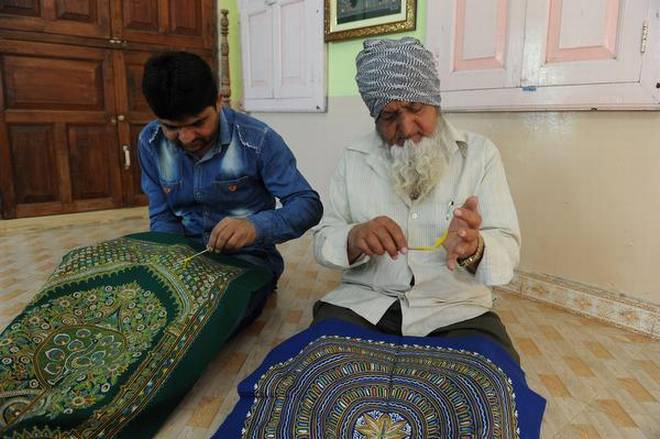
Abdul Gafur Khatri at work at his residence in Nirona village, Kutch | Photo Credit: Vijay Soneji

The Khatris have practised the art for eight generations now

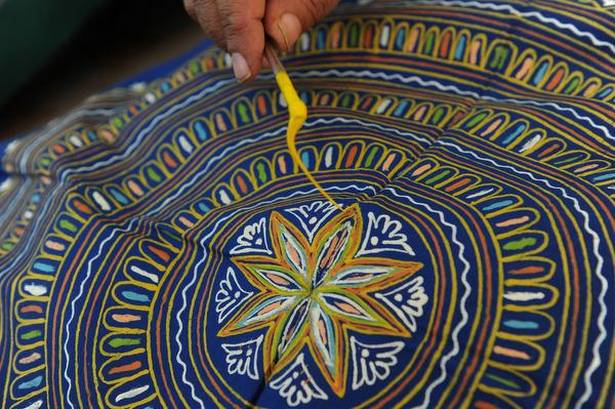
Sitting on the floor, Abdul Hamid carefully twists a thick spool of yellow paint around a metal pin. Stretched out before him is a piece of red cloth, pinned on either side to the legs of his trousers. He dabs the paint on the heel of his left palm — it’s a gummy mass and has to be worked into something more malleable. Hamid then brings the tip of the pin a few inches above the cloth, and as it hovers, an elastic strand of colour streams on to the surface. And the magic begins: an intricate pattern grows beneath the swirling pin that never touches the cloth. The floral design looks like needlework.

Hamid then folds the cloth and, just like that, a flawless mirror-image of the pattern appears and an exquisite piece of Rogan art is born.

“We have practised Rogan for eight generations now,” says Hamid. “The first six generations did not get their due for preserving the art, but now, finally it is widely recognised and we couldn’t be happier.”

‘Rogan’ in Persian means oil: the paint is made with castor oil. Rogan art is believed to have originated in Persia some 300 years ago and was traditionally used to embellish bridal trousseaus. As it crossed borders, it began fading from the collective memory of its creators. But nine members of the Khatri family in Nirona, a small village in Gujarat’s Kutch district, are the last surviving custodians of the art form.

The Khatri community once did Rogan work on the clothes of local animal herders and farming communities. But as machine-made textiles became a more affordable alternative and Khatri youth lost interest in learning the art, Rogan began to disappear. “But our family revived it in 1985,” says Hamid. In fact it is Hamid’s elder cousin, Abdul Gafur Khatri, a national award winner, who is credited with resurgence of Rogan art.

P.M.’s pick

The ‘Tree of Life’, an intricately patterned tree with hundreds of dots and dashes, is their signature painting and most in demand. A 14×17” painting can take 12 days to complete— Prime Minister Narendra Modi chose one to gift to the then U.S. President Barack Obama during his U.S. visit.

“Rogan art is 100% an artist’s imagination on a piece of cloth,” Gafur bhai, as he is better known, explains. “There is no tracing, no drawings to refer to.”

But preparing the base from castor oil is a laborious process and can take two days. The oil is heated and cooled in a (special) vessel and continuously stirred so it doesn’t burn. After two days, the residue left behind is mixed with cold water and it thickens into a sticky paste called rogan. Natural colour pigments are then added to the oil base. “Yellow, for instance, comes from a particular stone that is ground,” says Hamid. The pigments are added to the castor oil base and stored in earthen pots.

Wall pieces made by Abdul Gafur Khatri in Nirona village, Kutch | Photo Credit: Vijay Soneji

The nine artists have six national awards and six State awards between them. They proudly show me photographs of celebrities — politicians, film stars, sports stars — who have either bought their art work or felicitated them at awards functions.

Men last longer

It strikes me as odd that all nine members of the family working on the art form are men. This could perhaps do with the belief that women, once they get married, would pass on their knowledge to their husband’s families, threatening the art with dilution. But as Rogan faces extinction, Gafur bhai, has taken upon himself the task of teaching the technique to 200 girls from his village. And this has breathed fresh life into the dying art.

“We taught most of these girls for free. They can now create at least the basic designs,” Gafur bhai says, adding that 25 girls also help the family with their work. In another effort to popularise Rogan, the family conducts live demonstrations for every visitor at their doorstep. During the 30-minute demonstration, artists patiently answer questions and explain the techniques they use. On an average, the family gets 150 visitors a day. And between November and February, during the Rann Utsav — the Kutch desert festival — the numbers shoot up to 250 or 300.

No tough competition

Unlike other forms of textile art such as Ajrakh that face are under threat by factory-made products, Rogan faces no such competition, but meeting market demand has been a challenge.

“You will not find Rogan art the way you find other arts in the markets. It’s not because we don’t want it to go out to the people, it’s because we have limited resources,” says Gafur bhai. We go to five or six exhibitions around the country in a year, and rest of the time we are at home, working.”

It has been a long journey for the Khatri family: from reviving the art to creating public interest to recovering from the Bhuj earthquake setback. But today, they are only seeing a huge resurgence of interest.

The writer is an independent journalist based in Gujarat. When not researching her stories, she is busy spinning tales for her toddler.

source: http://www.thehindu.com / The Hindu / Home> Society / by Azera Parveen Rahman / January 20th, 2018

Being ‘don dapper’

Chennai, TAMIL NADU :

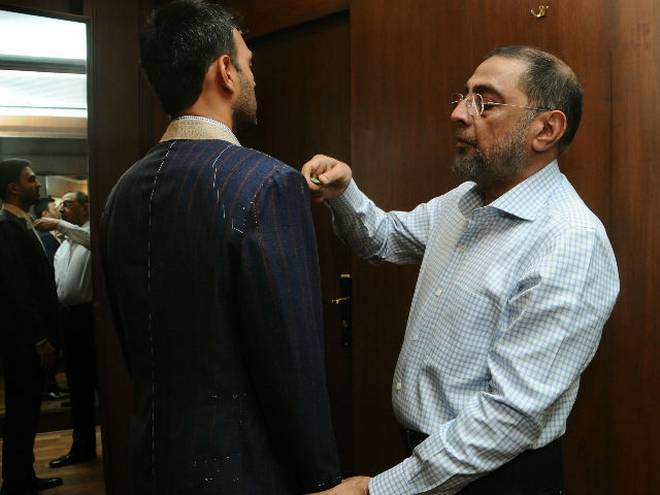
It takes at least two trial sessions before a bespoke suit is ready; a client at Syed Bawkher & Co / PHOTO: R. RAGU

Susanna Myrtle Lazarus visits establishments that offer a bespoke experience for men

You absolutely love that one shirt on display at the store; it’s even available in your size. Just to be safe, you try it on, and to your indescribable disappointment, find that it’s either too narrow at the shoulder or the collar is cutting off your airway or it doesn’t fit around your waist because it’s that dreaded slim cut. And that’s the reason why more and more men are opting to get their clothes tailored, and not just at the corner tailor store, but of the bespoke kind.

But what does bespoke mean exactly? While the dictionary definition is ‘made to order’, in the world of bespoke tailoring, it’s not as simple as that. Unaiz Ahmed of Syed Bawkher & Co in Nungambakkam, says, “It stems from the word ‘bespeak’, which means to be spoken for. It is expressly made to fit one particular man, right from the fabric and pattern to the cut. And it’s not to be confused with made-to-measure, which is derived from a standard block pattern and has superficial adjustments made to it. It won’t account for a peculiar drop of the shoulder or waist. It has limitations, while bespoke tailoring takes all this into account.”

This is one of the main reasons why men prefer to have their suits custom-made to their requirements. “Fit has become an important criteria. In the business world, it’s not very important to wear a suit now; those who do wear them want to have a unique one that showcases their personality and individuality. They also do their research and know what they’re looking for,” says Unaiz.

He knows what he’s talking about: his family has been in the bespoke business for four generations now. As he speaks about his education in London, and under the tutelage of his father, Unaiz deftly marks out a pattern on the material of a dark blue suit. “The person who measures and the person who marks and cuts the material should be the same. Two people can have the exact same measurements but completely different body types. That connection is needed to create the perfect garment,” he says.

Generally, the process of creating a bespoke suit, shirt or trousers can take two to three weeks, depending on the time of the year. First, there’s the consultation, where the client decides what he wants. Depending on the budget and occasion for which he will be wearing it, the tailors will recommend fabric, colour, style and cut. Based on this, extensive measurements are taken. About a week later, the client comes in for a trial fitting when adjustments are made as required. In another week’s time, when the garment is almost finished, there’s a second fitting. Once all the final tweaks are made, the finished product is delivered. All the garments are hand-stitched.

If it’s a wedding, a lot of men go in for tuxedos or bandhgalas. Dark, formal prints are best for lounge suits and business meetings, while lighter shades are preferred for luncheons and summer outdoor weddings. Bespoke pieces usually go by classic cuts and not by trends, and tend to focus more on what looks good for a person’s body type. For a slim and tall person, a sleek and athletic cut will work. Shorter men get a more relaxed cut, and if they are stout, pleated trousers are suggested to give a flattering look.

Prices range from Rs. 35,000 for a basic suit and can go up to Rs. 3 lakh, depending on the fabric used, with cashmeres, vicunas, super 200s and fine counts leaving your wallet considerably lighter than the 120 count fabric from Indian mills would. On an average, a suit can cost anywhere between Rs. 55,000 and Rs. 75,000 at this premium store. Behind Unaiz hangs a pale pink linen jacket. “That one is going to New York; our client wants to wear it for the summer,” he says, adding that men are more comfortable with experimenting with their clothing abroad than they are here in Chennai.

However, this is changing, feels Tushar Bansal of Mandira Bansal Studio. The label, which was founded in 2011, has recently launched its design studio in Alwarpet. He shows some examples of how customers are subtly taking their style quotient up a notch: a waistcoat with The Simpsons print lining, a Nehru jacket with a woven design on the collar and another with a translucent houndstooth fabric overlaid on a cream and pink print material. They have also created a monochrome Madras print on request from a client; it features an autorickshaw.

“We also do bespoke kurtas and sherwanis. Not only do clients want a better fit for their wedding wear, they’re not content with off-the-rack pieces. Men have become more conscious about their look; comfort and a personalised touch is what they look for. They pay attention to every minute detail, from the buttons used, to the colour of the thread and the cuffs,” says Tushar, whose clientele is largely from the North Indian community in the city.

Tushar finds that it’s not the younger crowd that does the experimenting. “The more travelled clients who are aware of fashion trends and have met people who push the envelope when it comes to personal style are the ones who are ready to play around with their ensembles,” he says.

Machine-stitched bespoke suits come in the range of Rs. 15,000 to Rs. 18,000, while the same when hand-stitched costs double — it’s labour-intensive and takes 12 days for a single suit to be finished. Sherwanis made of fine fabrics like georgette, net and pure brocade are hand-embroidered at the studio, and can cost upwards of Rs. 35,000.

At Bespoke by Lazaro on Khader Nawaz Khan Road, clients come in asking for very specific detailing on their shirts. “Those who have the confidence to carry off bold colours are the ones who go for it. Otherwise, it’s generally charcoal, greys and blues,” says Tamsil Ahmed, business partner of the firm. Shirts here cost between Rs. 1,500 and Rs. 2,500, while suits go from Rs. 11,500 to Rs. 45,000. Indian brand material on average cost Rs. 1,600 per metre, while Italian and other international brands, retail at Rs. 7,000 to Rs. 10,000 per metre,” explains Tamsil.

“There’s a noticeable difference between a tailored shirt and a bespoke one. Some of our clients are fitness freaks and they don’t get readymade shirts that fit very well. Here, we can give them a garment that shows off their physique,” he says. And when it comes to suits, Tamsil says that accessories like cufflinks, tie pins and pocket squares add an extra dimension to the look. For those particular about their footwear, this store also offers bespoke shoes, ranging from Rs. 7,000 to Rs. 12,000.

It’s not just for occasional wear that men are going in for bespoke clothing. S. Mohamed Sultan Shabeer, a 35-year-old industrialist, is a recent convert to the trend. “I used to get my shirts tailored online, but I wanted better options. A friend recommended I go in for bespoke, so I ordered a couple of shirts and a pair of trousers for trial. I could see and feel the difference immediately and a lot of people commented favourably on my appearance,” he says, adding that he immediately went in for a wardrobe overhaul, ordering 30 shirts at one go.

While Shabeer prefers Egyptian and Italian fabrics, Nawaz, director of a trading company, goes in for linens most of the time. “The fact that I have control over every step of how my clothes are made is what appeals to me. I can get exactly what I want and I don’t have to compromise on anything,” he says. “When I first tried bespoke clothes a few years ago, I did not have the patience. But now, I enjoy the interaction and the process that goes into it,” adds the 43-year-old.

“With more clients going in for bespoke, designers are also working towards giving the same personalised service at a lesser price,” says Tushar.

There’s no doubt about it; men are willing to spend some serious coin when it comes to looking dapper. Unaiz says it’s for the experience of getting something made exclusively for you, a one-of-a-kind piece that no one else in the world has.

source: http://www.thehindu.com / The Hindu / Home> Fashion / by Susanna Myrtle Lazarus / Chennai – April 24th, 2015