Category Archives: Arts, Culture & Entertainment

Akbaruddin lends a helping hand to special children in Hyderabad

Hyderabad, TELANGANA :

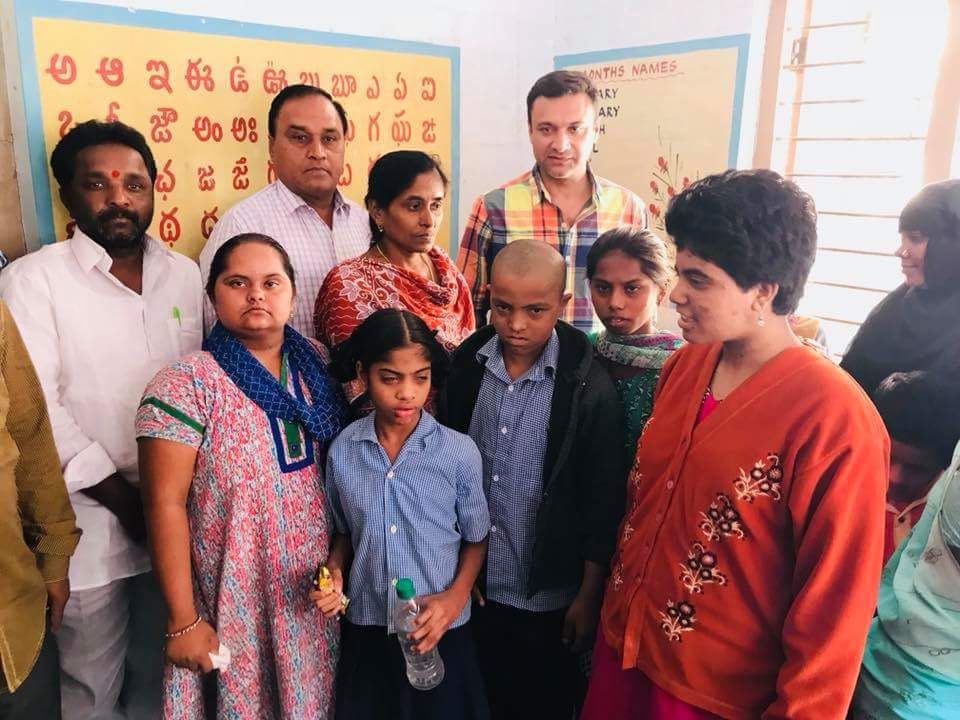
MIM leader Akbaruddin Owaisi along with the children of Bhavita.

Managed under Sarva Siksha Abhiyan (SSA), the resource centre provides facilities to 30 children with various kinds of disabilities.  During a recent visit to Bhavita, Akbaruddin was informed that the children had only one teacher and did not have access to playing and learning equipment .

Hyderabad:

As a noble gesture, MIM senior leader and MLA from Chandrayangutta, Akbaruddin Owaisi has adopted Bhavita, a resource centre for children with special needs located in Jangammet Falaknuma Government Junior College premises.

Managed under Sarva Siksha Abhiyan (SSA), the resource centre provides facilities to 30 children with various kinds of disabilities. During a recent visit to Bhavita, Akbaruddin was informed that the children had only one teacher and did not have access to playing and learning equipment.

On his direction, the Deccan College of Physiotherapy has taken Bhavita under its management and has provided learning and playing equipment worth Rs 5 lakh.

A physiotherapist and an instructor have been roped-in for the children, who will visit the centre on a daily basis, said Dr Aditya, Principal Deccan College of Physiotherapy, which is run under Owaisi Group of Hospitals.

The MIM leader has provided sports equipment and provisions for occupational therapy including an ultra sound, stimulator, bolsters, walking aids, elbow crutches, wobble board, skill games for kids and wedges which could help teachers and instructors to train the children.

Majority of the children at Bhavita suffer from cerebral palsy, muscular dystrophy, congenital deformities and intellectual disabilities. According to Dr Aditya, such children need proper care and treatment that would create an enabling atmosphere for them to grow like normal children.

Akbaruddin said he wanted the Centre to be strengthened and children to utilise the new facilities that had been made available to them.

“Whatever they need I am ready to provide from my side. I will also take up the issue of Bhavita Centre with the District Collector to provide more space for these children in the Falaknuma Campus,” he said.

Akbaruddin Owaisi has also donated Rs 50 lakh for improvement of infrastructure, establishment of labs, libraries and restoration of buildings in Falaknuma and Golconda Government Junior and Degree Colleges.

source: http://www.telanganatoday.com / Telangana Today / Home> Hyderabad / by Naseer Giyas / January 02nd, 2018

The jungle man of Coimbatore

Coimbatore, TAMIL NADU :

Jalaluddin01MPOs04jan2018

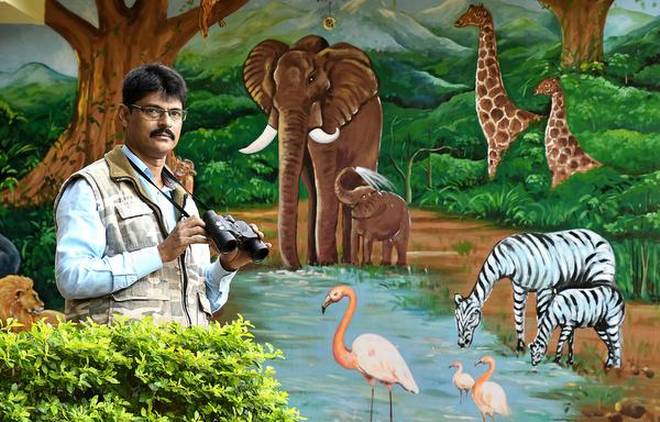
Wild life lover N.I. Jalaluddin is convinced that the way forward in conservation is through young people and he works tirelessly to sensitise them about forests, animals and birds

“My love for Nature started with birds, by observing the kaaka and kuruvi,” laughs N.I. Jalaluddin. As a school boy he was in Kollegal where his father was working. And, as he stared up at the sky, he was often beset by questions about the birds he saw flying. He wondered: ‘How do the migratory birds fly across continents and sometimes over 16,000 kms without any GPS, fuel, or driver?’.

That enthusiasm and curiosity combined with a trek to Mudumalai as a part of WWF camp fuelled his interest further. “I was a regular at BNHS Nature camps in Bandipur, Nagarhole and Masinagudi. And, I decided to talk about Nature and Wildlife among school students from then on.”

Jalaluddin02MPOs04jan2018

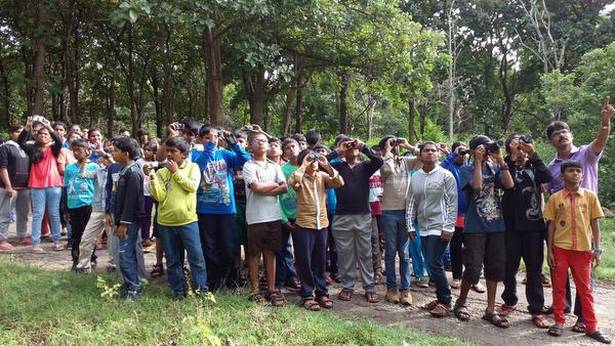
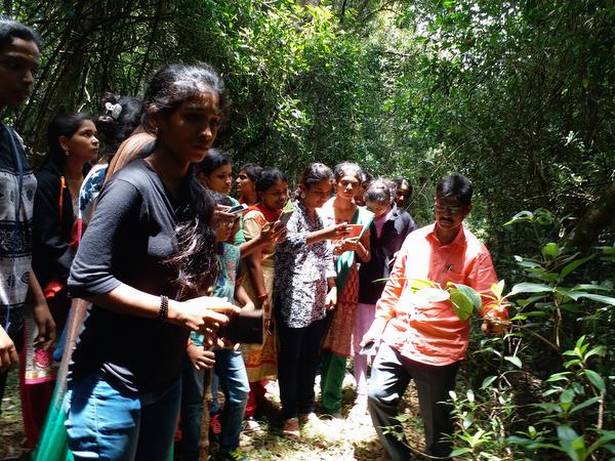
Today, his Nature Conservation Society that spreads awareness among students and the public has completed thousands of Nature camps and reached out to millions of students. Several awards have come his way with the latest one being the Best Service Award by the District Collector. “I work with eco-club students and take them on Nature walks in the Western Ghats,” he says. He educates them about the forests and the rich biodiversity it supports. Then, there is bird watching, and learning about mammals too. “I tell them how to identify pug marks, foot prints, and spoor of animals, and the importance of animal census.”

Jalaluddin talks excitedly about Project Kaliru, an initiative by Tamil Nadu Forest Department to save elephants. As a part of the project, he will cover 46 institutions, schools and colleges, and talk to them about elephants and wildlife. “The elephants lead the forests and set the terrain route for other animals. One of the prime objectives of Project Kaliru is to ensure that there is nil human -animal conflict. Did you know that the elephants as they migrate also bring a variety of plants from another region? The elephant dung has about 40 per cent of undigested food that includes seeds of a variety of fruits and vegetables.”

Awareness is the key, he stresses. “Tribals and animals have co-existed for generations. The conflict arises only in urban zones. In one year, there are over 15,000 deaths by road accidents while the death by human-animal conflict is about 30, which can be easily mitigated.” He is also making a documentary on elephant-human conflict called Wild Witness. “ It’s a dream project for me. One of my students, actor Aravind, who has attended my camps, is helping us out with the camera equipment. DFO Satish and Conservator of Forest S. Ramasubramaniam have been very helpful.” Jalaluddin is a regular at surveys of wildlife population with the forest department. He has rescued many species like snakes, birds, and animals used in illegal trade and handed them over to the forest department for release and rehabilitation. He has spoken out vociferously to save the wetlands. “When I raised my voice against cutting of trees for highway expansion, the authorities threatened to file a criminal case against me. But the Bar Association backed me and we fought it out .” He has intervened and stopped cutting of thousands of trees in the city by litigation, court stay orders, and through dialogues with higher officials. “Youngsters are the change makers, our hope. We have to start with them to care for Nature. Even awareness on banning plastics works better when you take it through them.”

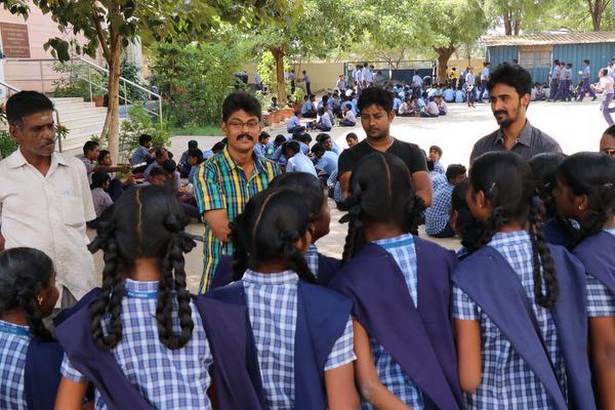
Recently, Jalaluddin took a group of 150 students from Shree Sakthi College of Engineering on a trek to Valparai. “I told them to observe the scratching of animals on trees. It is one of the ways to understand that we are in tiger territory. Engineering colleges should also inculcate nature awareness. A watch tower or a check dam involves engineering skills.”

Jalaluddin03MPOs04jan2018

He recounts some thrilling experiences. “Once, we spotted a leopard in Mudumalai. Another time, we saw a herd of 13 elephants at a very close distance while on a trek at Theppakaadu. Luckily, there was a trench in between, much to the relief of the students,” he laughs. Along with students from Chandra Matriculation School, and Ramakrishna College for Women, he has spotted tigers in Bandipur, Thengumarhada…. “It’s a pity that some schools ignore this aspect of education. We live in the Western Ghats, the hotspot of bio-diversity. When I ask the students about our State animal (Nilgiri Tahr), bird ( Emerald Dove) flower ( Senkaanthal), or tree (palm tree), most them don’t know. A lot of animals, for example wild dogs or dhols have become a rare species now. I have spotted the Emerald Dove or Panchavarna pura so many times at Siruvani foothills. That is also very rare. In Tamil Nadu, we have four Project Tiger programmes in Anaimalai, Mudumalai, Satyamangalam and Kalakkad-Mundanthurai. We have Project Elephant too in Anaimalai and Mudumalai to care for and conserve the elephants.”

People fondly call him Kaatuvaasi or man of the jungle. He brushes it off with a smile, and says, “ I keep doing my work. We have to leave something for the future generation. I feel happy even if one student out of every 10 I talk to, plants a tree. He will in turn talk to another 10 people. Then, there is no stopping. That, is an achievement.”

Jalaluddin04MPOs04jan2018

Awareness programmes

Banning plastic bags, film shooting in reserve forests

Conducting awareness drives through rallies, photo exhibitions and workshops in schools

Supporting the forest department in mitigating human-animal conflict by dialogues with affected villagers

Awarding schools and individuals who contribute to a healthy eco-system

source: http://www.thehindu.com / The Hindu / Home> Sci-Tech> Environment / by K. Jeshi / January 01st, 2018

Many facets of an activist

GUJARAT / Mumbai, MAHARASHTRA :

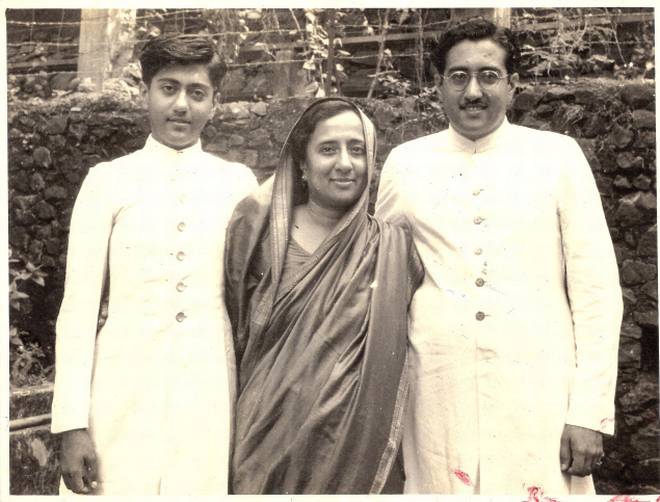
ducationist par excellence: Kulsum Sayani (Centre) with her sons, radio broadcaster Ameen Sayani (left) and Hamid Sayani. (Courtesy: Sayanis)

She was inspired by Mahatma Gandhi to unite Hindi and Urdu. Kulsum Sayani also worked tirelessly for adult literacy…

“Each one, teach one”, one of the most effective schemes to promote education today was popularised by a woman few remember, but who was a pioneer in the field of adult literacy in India.

Kulsum Sayani’s name might not ring a bell for many but her life and work are truly remarkable. Mother of the well-known radio personality Ameen Sayani, Kulsum was born in 1900. Her inspiration was none other than Mahatma Gandhi. Her father, Dr Rajabally Patel, was the personal physician to Gandhiji and Maulana Abul Kalam Azad.

During the several protest meets organised against the visit of the Prince of Wales to Bombay in 1921, the city had become volatile. The result was baton charges, arrests and martial laws. There were dozens of people wounded, and seriously injured.

Describing those trying times, Kulsum Sayani wrote, “A new Congress hospital was founded to care for the wounded. My late husband Jan Mohamed Sayani was the first physician to be put in charge of it. We had a small Saxon car with the Red Cross badge prominently showing on it. My husband would go to the hospital daily, practically on totally deserted roads lined up with policemen on both sides. I would be sitting by the phone until he called from the hospital telling me of his safe arrival.”

Sayani’s interactions with Gandhiji and the importance attached to education in her family made her realise the need to eradicate illiteracy. In 1938, with a capital of Rs. 100 she employed two teachers and made the rounds of Muslim localities to get students. Considering the conservative attitude towards female education even now, imagine the effort it must have taken on Sayani’s part to convince families about the importance of educating girls at that time. There were times people used to slam their doors on her face, exclaiming, “Why should women learn to read?”

Her tireless efforts proved that there was a tremendous need to work in the field of education, which needed a more organised set-up. Her experience made her a part of several committees, which were formed to increase literacy among adults in Bombay, now Mumbai. She was associated with the first National Planning Committee that was set up by the Congress government in Bombay in 1938. The Bombay City Social Education Committee, formed in 1939, asked Sayani to take over their 50 centres catering to Muslim women. Slowly and steadily the classes grew and reached 600 in number. Of course, her efforts were not limited to the Muslim community alone. She was also appointed the general secretary of the All India Women’s Conference in 1944 and worked for the empowerment of women.

But it was in spreading the word on education that she is best remembered. The New Delhi edition of ‘The Times of India’ (March 10, 1970) noted, “From 1939 when she (Kulsum Sayani) took charge of the Bombay City Social Education Committee five lakh adults have become literate through one of the five languages – Urdu, Hindi, Gujarati, Marathi and Telugu. Her days are a mad rush of dashing to schools to enthuse children into teaching adults and her nights are spent dreaming up new schemes of literacy.”

Dedicated

Sayani was very pragmatic and initiated several schemes to spread literacy, notably including “Each one, teach one”. She used to visit several schools and encourage young students to devote 15 minutes every day to teach one adult. Under the scheme, students were supposed to teach and read one new alphabet every day to any adult in their family, neighbourhood or domestic helpers. Highly conscious of the importance of moral values, she encouraged students to request adults to tell them a folk tale or a story from the epics.

“The lower middle-class women, who are forced to work, have no help but to abandon their children to the streets after school, while the fashionable ones have no time left for children after bridge and mah-jong parties,” she once said.

Another literacy initiative she initiated was reading out aloud. School students were encouraged to gather friends and adults and each one had to read out aloud. This, she believed, was necessary to improve the confidence and interest of neo-literates. To ensure the success of these schemes she used to visit three to four schools every week meeting and egg students on.

During the freedom struggle hundreds of political prisoners languishing in jails improved their Hindustani by reading out aloud ‘Rahber’, the newspaper she brought out. ‘Rahber’, started in 1940, was aimed at the new learners. It was published in three scripts – Nagari, Urdu and Gujarati. The language of ‘Rahber’ was Hindustani, a mixture of Hindi and Urdu. Those were the times when the Hindi supporters were using heavy Sanskrit words and the proponents of Urdu were lacing the language with Persian and Arabic in their efforts to distinguish the two languages and establish their superiority.

Support

Gandhiji was in favour of Hindustani written in the Nagari or the Urdu script. ‘Rahber’ sought to take forward Gandhiji’s idea of Hindustani. In a letter dated June 16, 1945, Gandhiji addressed Sayani as ‘Beti Kulsum’ and wrote: “I like the mission of ‘Rahber’ to unite Hindi and Urdu. May it succeed.” The newspaper was read by hundreds of political prisoners lodged in jails across the country; anyone interested in learning Gandhiji’s Hindustani picked up the paper.

When the Constituent Assembly deliberations began in the months leading to India’s Independence, the language controversy erupted again. A letter dated July 22, 1947, from Gandhiji to Sayani, shows his resolve to stick with Hindustani. He wrote: “Heaven knows what is in store for us. The old order changeth giving place to new. Nothing is settled. Whatever is decided by the C.A., Hindustani with the two scripts remains for you and me.”

Sayani also represented India at several international forums on education across the world. She attended the UNESCO conference in 1953 in Paris (France) and shared ideas and gained new perspectives after talking with representatives from several countries. Her other interest was to promote peace and increase understanding between India and Pakistan. Her well known status as an activist helped her get audiences with top leaders in both the countries. Among Pakistani politicians, she directly met Pakistani presidents, Ghulam Mohammad and Ayub Khan, among other senior leaders.

In India, her reputation as ‘Rahber’s’ editor helped her get appointments with Nehru, B.G. Kher, V.K. Krishna Menon, Rafi Ahmed Kidwai and Indira Gandhi. She received encouragement and support from politicians of all hues in India for her efforts to forge a friendship with Pakistan. However, after the passing away of Nehru and Rafi Kidwai, who shared her concerns on improving relations with Pakistan, she devoted her energies to propagating Hindustani.

Sayani’s life is an inspiration to many. Married when she was only 18, she managed her family and pursued her social interests with equal elan. Her sons, Hamid and Ameen, both radio broadcasters, created their own identity. Ameen Sayani attributes his “basic grounding in clear and credible communications in Hindustani” to his involvement in assisting his mother in bringing out ‘Rahber’.

Old age and bureaucratic red tape forced her to stop ‘Rahber’ in 1960 after she had single-handedly brought it out for 20 years. She continued to be associated with the Hindustani Prachar Sabha and organised several lectures and seminars

She never lost focus from her lifelong passion to eradicate illiteracy. She received the Padma Shri in 1960 and was also awarded the Nehru Literacy Award in 1969.

Sayani, who died in 1987, belonged to an era when people believed in giving their best to the nation without expecting anything in return.

(© Women’s Feature Service)

source: http://www.thehindu.com / The Hindu / Home> History / by Danish Khan / August 14th, 2010
The Maulana who bridged the water divide

Ludhiana, PUNJAB :

In 1929, Maulana Habib-ur-Rehman Ludhianvi forced the British government to end the system of different water pitchers for Hindus, Muslims at

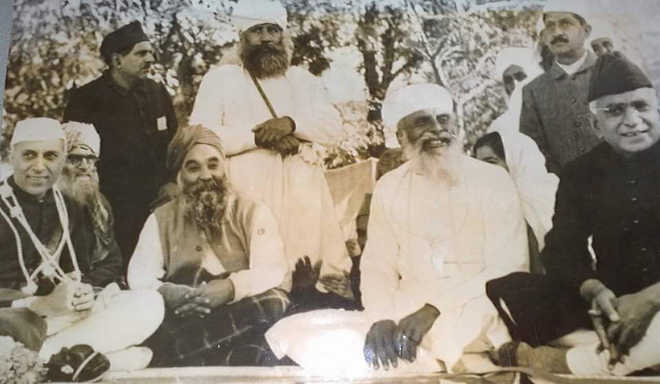
(From left) Pandit Jawaharlal Nehru, Maulana Habib-ur-Rehman Ludhianvi with Master Tara Singh, Satguru Pratap Singh and Saifuddin Kitchlu at a convention at Bhaini Sahib near Ludhiana in 1931. A file photo

When the entire nation was suffering under the Divide and Rule policy of the British, there was one man, who stood up and raised his voice.  Voices calling out Hindu paani lelo, Muslim paani lelo were common at the railway stations as there were separate pitchers of water for the Hindus and the Muslims.

But in 1929, Maulana Habib-ur-Rehman Ludhianvi raised his voice against this and protested at Ghaas Mandi Chowk and, with the help of his volunteers, broke earthen pots.As a result, the British government was forced to install one common pitcher at all railway stations across the country giving the message sabka paani ek hai. In this activity, nearly 50 volunteers were arrested and sent to jail.

“We have heard a lot about our great grandfather. He was instrumental in India’s freedom movement and the Hindu paani, Muslim paani issue was taken up by him,” said Usmaan Ludhianvi Rehmani, the great grandson of Maulana Habib-ur-Rehman Ludhianvi.

Ludhianvi hoisted the Tricolour on the banks of the Ravi to oppose the idea of partition of India and Pakistan. As many as 300 British policemen were sent to stop Ludhianvi from doing so, but he managed to hoist the flag and was arrested and sent to jail for a year.

Even Partition didn’t deter his spirit and he helped thousands of families stranded across the new border in uniting with each other.

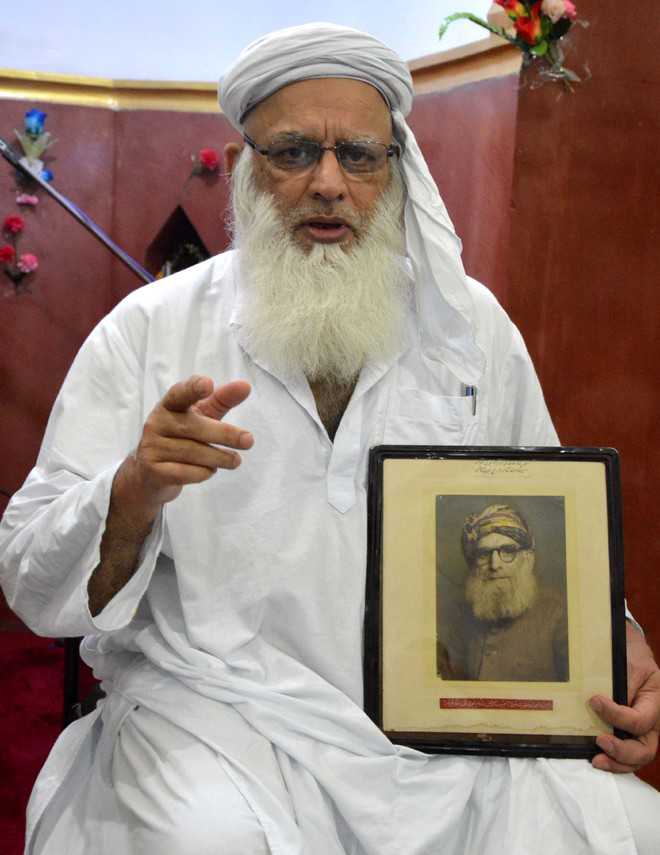
Maulana Habib-ur-Rehman Sani Ludhianvi, Shahi Imam of Punjab

Maulana’s grandfather Maulana Shah Abdul Kadir Ludhianvi in 1857 had issued a fatwa against the British rulers and the present Shahi Imam of Punjab, Maulana Habib-ur-Rehman Sani Ludhianvi, is his grandson.

The Shahi Imam of Punjab, said: “Our ancestors laid down their lives for the country. My only request to the present generation is not to waste the effort of our ancestors and be grateful to them.”Maulana, though not a poet, was well-versed in poetry and used to host poetic evening once a month.

He had spent 14 years of his life in various jails at various places, including Dharamsala, Shimla, Mianwali, Multan and Ludhiana.

source: http://www.tribuneindia.com / The Tribune / Home / Ludhiana – August 12th, 2017

Hafiz Amjad Hussain Karnataki conferred Honorary Doctorate from Gulbarga University

Shikaripur, (Shimoga District ), KARNATAKA :

DrAmjadHussainMPOs02jan2018

Gulbarga  :

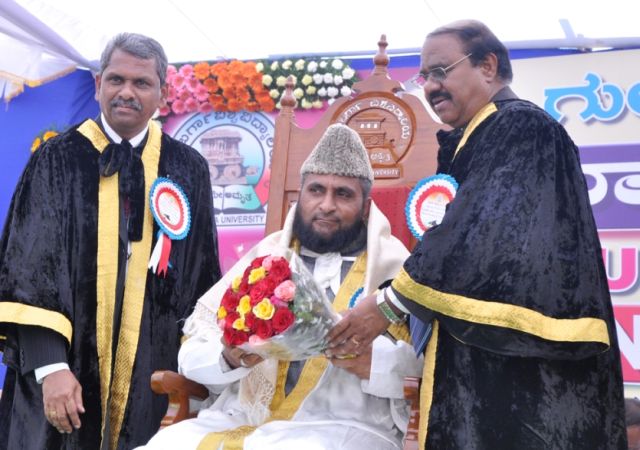
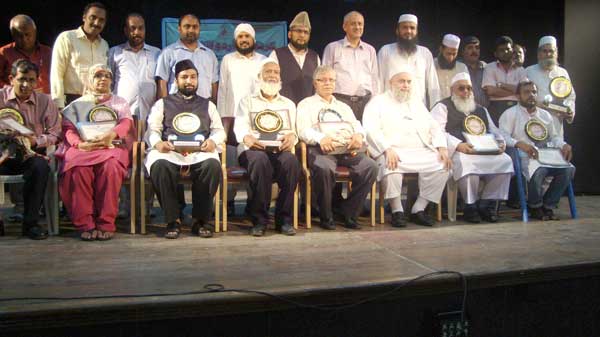
The chairman of Karnataka Urdu Academy, Janab Hafiz Amjad Hussain Karnataki conferred with Honorary Doctorate from Gulbarga University at its 31st annual convocation held on 6th March 2013 in Jnana Ganga Campus.

Mr Karnataki was chosen for this honor for his services and contribution to Urdu language.

This year the University has chosen 11 persons including Mr Karnataki for this honor.

The program was graced by former CM of Karnataka Mr N Dharam Singh, ex-minister Vaijnath Patil, Gurpad Nagmarpallli, Mahanth Shiva Acharya, Mr D J Sagar and Senior Jounalist Mr Shrinivas Sarnurkar.

Bhatkallys News Service

source: http://www.bhatkallys.com / Bhatkally.com / Home> India / March 2013

Karnataka Urdu Academy, Awards Editors of Urdu Magazines

KARNATAKA :

UrduEditorsMPOs02jan2018

Bangalore :

“At a time when every effort is made to suppress Urdu language, bringing out magazines and journals in Urdu is a symbol of great ambition and perseverance. Hence they deserve to be felicitated” said, Hafiz Amjad Husain Karnataki, Chairman, Karnataka Urdu Academy while presiding over a felicitation programme organized by the academy here on June 28.

The programme was organized to felicitate the efforts of the editors of Urdu magazines and journals in Karnataka.

Zameer Pasha, secretary, Minority Welfare Department, who was the chief guest for the programme, applauded the innovative initiatives of the academy. “At a time when every other person is seen back biting one another, the initiative of the academy to honour the editors of Urdu journals is commendable” he said.

Appreciating the editors, Asjad Nawaz, resident editor, Rashtriya Sahara said, “You should continue your struggle since you are doing jihad in today’s testing times”.

Alhaaj Baba Ji was also present on the occasion. A few of the editors were also given an opportunity to share their message. The award given to the editors included a certificate, a memento, a shawl and a bouquet.

Following are the editors felicitated:

Moulana Abdur Raheem Sayeed Rashadi, Editor, Gulshan-e-Sayeed, Bangalore; Moulana Idrees Habban Raheemi, Editor, Nuqoosh-e-Aalam, Bangalore; Laeequllah Khan Mansoori, Editor, Majallatul ULAMA, Bangalore; Moulana Ubaidullah, Editor, Zia, Kandlur, Udupi Dist.; Fareeda Rahmatullah, Editor, Zarreen Shuaaein, Bangalore; Moulana Abul Khair Hamdullah, Editor, Lam’aat-e-Qalam, Bangalore; Abdul Hameed Rahi, Editor, The Hajj News of India, Bangalore; Khaleel Fateh, Editor, Jadeed Tehrik, Bangalore; Khaleel Ahmed, Editor, Zaraafath, Bangalore; Moulana Daniyal, Editor, Irshad Murshad, Channapatna; Moulana Ilyas Nadvi, Editor, Armughan-e-Hijaz; Moulana Abdul Aleem Qasmi, Editor, Naqsh-e-Nawait, Bhatkal; Moulana Imtiyaz Haider, Editor, Misbah, Bangalore.

source: http://www.karnatakamuslims.com / Karnataka Muslims / Home> Districts> Bangalore / by Staff Reporter , KMNN / July 02nd, 2012

Portraying the life and myths of Paniyars

Kochi, KERALA :

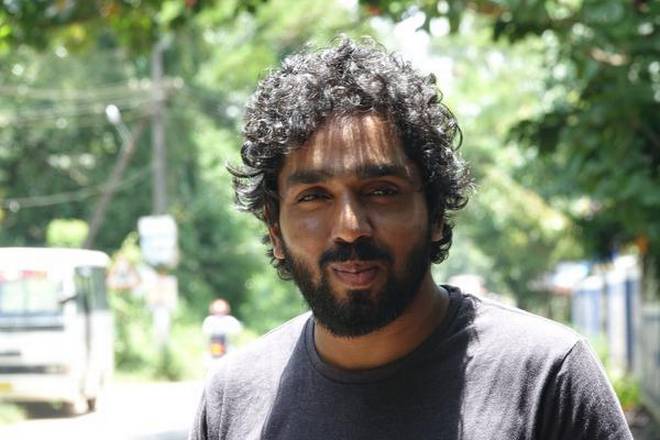
Documentary maker Aneez K. Mappila

Feature-length documentary on the Wayanad tribe’s struggle for existence

A humdrum yet clear rendition of Penappattu, the ballad of the Paniyar tribe of Wayanad with its narrative on their origin and life, soaks the Paniya household in bereavement seven days after someone’s parting.

The intoner, Athali, takes no break as he calmly retells from morning, well into the brooding night, the course of his clan’s struggle for existence from the beginning. “It’s like a swirling song of the dead – the soul of their forbears rattling out their saga,” says Aneez K. Mappila, who has authored the life and death of Paniyars in a feature-length documentary, The Slave Genesis. “The tribe, as you see in the film, is deeply and inwardly spiritual.” The Paniyars believe that long ago, a feudal landlord, Ithimala Gowda, also referred to as Ithimala Pappan, had trapped them using a hand net and engaged them for labour in the fields.

“There is no paddy field, coffee or pepper plantation in Wayanad, especially those owned by settlers, that hasn’t used their labour. The practice continues to date,” says Aneez, from Kalpetta. The film, shot single-handedly over three and a half years, has a scene in which Aneez’s grandfather Moidu Haji, who has since died, narrates the story of his grandfather Pakramar, left with no other option, migrating to Wayanad in the 1860s with three of his friends. “They bought 32 acres of land from a Gowda, who also parcelled out a few Paniyars for tilling their fields. The Paniyas were paid in kind, with a portion of rice as wages,” Haji says in the film. It was his long association with the Paniya workers that prompted Aneez to make a film on their life and after-life. The film opens with a personalised childhood recollection. “I was a single-man crew and as I went about shooting, a suicide happened in the community, which led me to their pithy Penappattu.”

From a death and the superstitions surrounding it, the film takes us through various facets of the Paniya life, all punctuated with hardship, misery and tales of exploitation. “They realise they’ve been historically exploited, as we understand from the Penappattu in which the Gowda, eager to have more of their ilk, asks Paniya siblings to stay man and woman below the waist.”

Cut to modern times, scenes of the elaborate ritual following a girl attaining menarche are followed by episodes of young men getting entangled in POCSO cases, thanks to the tribe’s practice of marrying off girls young.

A graduate in English, he worked as a journalist for sometime before taking documentaries on Wayanad’s agrobiodiversity and tribal food security.

The Slave Genesis was produced with support from DOCEDGE-Bang, crowdfunding from the Kalpetta Film Fraternity and his own Canopy Black production.

source: http://www.thehindu.com / The Hindu / Home> News> Cities> Kochi / by S. Anandan / Kochi – December 28th, 2017

The Extraordinary Life Of Educationist Begum Zaffar Ali | #IndianWomenInHistory

JAMMU & KASHMIR :

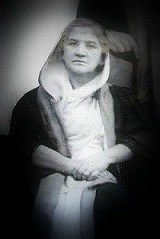
Begum Zaffar Ali. Credit: Wikipedia

In the year of 1987, Begum Zaffar Ali, the first woman matriculate of Kashmir was awarded a Padma Shri for her extraordinary perseverance in being a women’s liberation activist and working towards empowering women through education. Brought up in a conservative setting where women’s movements, ideologies and bodies were controlled by the patriarch of the family, the perseverance towards creating awareness regarding education was certainly extraordinary.

Early years

Born in 1900, Begum Zaffar Ali was an educationist, women’s liberation activist and a social workerShe was also a legislator. Her maiden name was Syyeda Fatima Hussain, she was the daughter of Khan Bahadur Aga Syed Hussain the first matriculate of Kashmir, later Governor, Judge of the First High Court of Jammu and Kashmir, and Home and Judicial Minister during Maharaja Rule. Her mother Syyeda Sakina Sadaat belonged to a Sayyid family of Sabzevar Iran, which was an affluent business family in Kashmir.

Even though the place was largely conservative and Purdah was considered an essential part of a woman’s life, her parents were mostly supportive of her natural inclination towards academics and encouraged her in her quest to be more informed and performing well in studies.

She had a Christian governess from Europe to familiarise her with formal education and there was also a separate tutor to teach Begum Zaffar Ali and her siblings religion. She was taught housekeeping, home science training, health education, society, family and childcare by her home governess.

Marriage and involvement with activism

She was married to her cousin – Agha Zaffar Ali and had three children. She managed to spare sufficient time for her education. Her husband was supportive of her endeavour and actively encouraged her to pursue academics and challenge herself.

In 1925, she was invited to join as a teacher at the girls’ school run by Miss Mallinson and Miss Bose in Fateh Kadal area of Srinagar. Despite her initial reluctance, she decided to join and started taking classes along with her children from their home tutor.

It was during this period she started her participation in social movements, and at a personal capacity started looking out for the girls she was teaching in schools. She taught them to maintain personal hygiene and inculcated good habits and etiquettes in them. Begum Zaffar Ali was not subtle about her love for education and she was suggested by the home tutor to take the matriculation exam.

Initially, she was hesitant as no woman in the Valley had passed the matriculation before, but putting her initial hesitation aside and giving precedence to her love for education, she decided to appear for the examination in 1930. She successfully passed in the second division in the exam and was celebrated for breaking the glass ceiling.

Since she was the first Kashmiri woman to achieve this feat, she was awarded a gold medal for the same.

Social Activism

She completed her graduation in 1938, immediately after which she started pursuing her post-graduation. As a credit to her qualifications, she served as Head Mistress for several different schools in the Valley. A staunch believer in women’s rights, Begum Zaffar Ali literally went door to door to raise awareness regarding girls’ education in the Valley and persevered to empower them through education. Shortly after, she was also appointed as Inspector of Schools in Kashmir, rewarding the passion she displayed as an educationist.

Begum Zaffar Ali was a fine orator, and would often indulge in public speaking to create awareness for the cause she backed. She would speak at several public events and in schools and inspired adulation among girls in the Valley for the very same reason. Her strong presence in public life and consciousness of Kashmir was further strengthened by the Teachers Club.

Teachers Club organised events and public gatherings, and Begum Zaffar Ali was instrumental in laying the foundation for it. She was a key member along with Tara Devi, the Maharani of Kashmir. The purpose of the club centred around discussion of women’s issues and their rights and she was actively involved in the conversation regarding women’s movement in India. She was the general secretary of the Ladies Club. Pre-Independence, she was also the secretary of All India Women’s Conference .

She later left the conference after a chance meeting with Muhammad Jinnah and his sister Fatima Jinnah, she directed her efforts towards the emancipation of women and their liberation.

She held several posts in the Department of Education and served in various capacities. She served as principal in several schools, she served as an education officer, she served as chief education officer as well as the chief inspector in schools of Kashmir.

As a chief inspector, she also introduced mid-day meals in school. Before her retirement, she was also appointed as the Deputy Director Education Kashmir for her relentlessness in the matter of empowerment through education. She was also a member of the Social Welfare Advisory Board, Jammu and Kashmir.

Later years

Begum Zaffar Ali also established a technical training centre for women of limited means in the Valley, in the capacity of Deputy Chairman of the advisory board. Between 1977-82, she also became a member of the Legislative Assembly and tried to bring out various reforms for education and women’s emancipation along with other social issues. The policies she endorsed were by and large progressive and directed towards the upliftment of women.

In 1987, she was the recipient of Padma Shri, India’s highest civilian award for her social work and her perseverance in working for women’s liberation and education. However, later in a televised protest in Doordarshan, she returned the award citing the then Government’s harsh and unfair policies as a reason.

Image Credit: Academy of American Poets

Death

Begum Zafar Ali died in 1999 at the age of 99 at the residence of her son Agha Shaukat Ali  in the United States of America. Her grandson Agha Shahid Ali an award-winning Kashmiri-American poet, wrote a poem in memory of her which was included in the collection The Veiled Suite : The Collected Poem 

source: http://www.feminisminindia.com / Feminism In India.com / Home> History / by Shruti Janardhanan / November 14th, 2017

Sharif Manzil’s Hakims

NEW DELHI :

Hakim02MPOs30dec2017

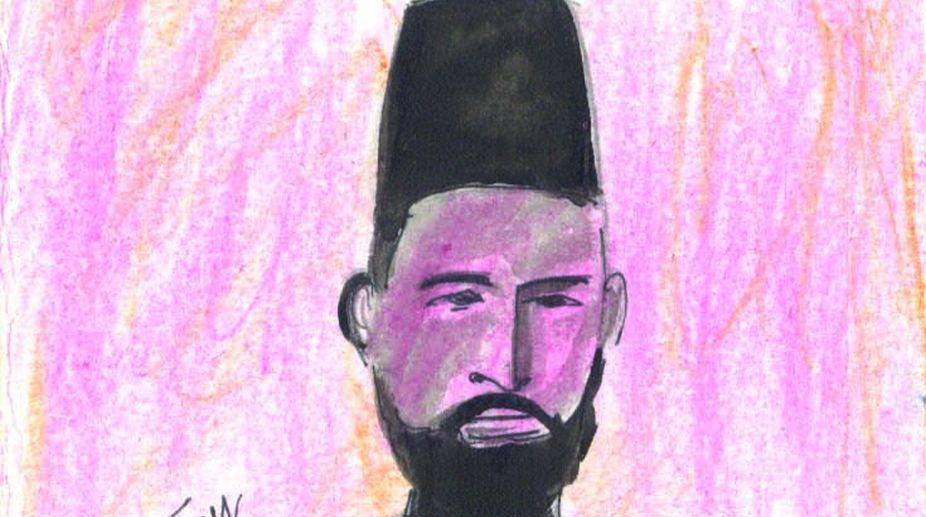
Not far from Gali Mir Qasim Jan, where Ghalib’s haveli is situated, is Sharif Manzil. Here the descendants of the famous hakim Sharif Khan live in comfort. Among the hakims of Sharif Manzil were such physicians as Mahmud Khan and his sons, of whom Hakim Ajmal Khan (in sketch) became almost a legend in his lifetime. It was he who established the Hindustani Dawakhana nearby and also the Tibbia College in Karol Bagh.

At Sharif Manzil, which had dropped the suffix haveli, came rajas and maharajas and even government officials, besides ordinary people to seek medical advice from Ajmal Khan and his two elder brothers. During the “Mutiny” of 1857, the Manzil was guarded by the troops of the Maharaja of Patiala, who patronised the hakims. Ghalib too escaped arrest and destruction of his haveli because the hakims sent some of the Patiala soldiers to guard it. When Ghalib’s younger brother died and a sort of curfew order was in force in the troubled city it was under the protection of these troopers that the dead body was taken for burial.

Lala Chunna Mal’s haveli in Chandni Chowk is a 120-room building with shops below it. The haveli is partly occupied by his descendants, while the others have locked their rooms and gone to stay in modern bungalows in the posh areas of New Delhi. Chunna Mal, who belonged to the Khatri community, was an influential banker of the Mughals and a friend of the Sharif Manzil hakims, but after the “Mutiny” he came into the good books of the British, who allowed him (on payment) to take control of some Mehrauli palaces and Fatehpuri Masjid, which was given back to the Muslims only in 1877, otherwise it was closed to the namazis.

Skinner’s haveli in Kashmere Gate area is now a ruin of its former self and occupied by transporters. It was at this haveli that Col Skinner used to hold his lavish parties in which the main attraction was his friend and British Resident at the Mughal court, William Frazer. The Christmas, New Year and Easter get-togethers here have passed into legend.

The havelis of Mirza Jahangir and fellow-royal Mirza Babar in Nizamuddin were magnificent buildings during the last days of the Mughals and still retain some of their old grandeur.

source: http://www.thestatesman.com / The Statesman / Home> Features / Statesman News Service  / December 17th, 2017

Mahmood Ali surprises the House by speaking in Telugu

Hyderabad, TELANGANA :

MahmoodAliMPOAS28dec2017

Hyderabad:

Deputy Chief Minister Mohammed Mahmood Ali surprised the Telangana Legislative Assembly by speaking in Telugu. On the question raised by Congress MLA T Sudhakar during question hour, regarding issue of pattadar pass book to farmers, Deputy Chief Minister read the answer in Telugu.

Members of the houses patted the table in appreciation of his gesture.

Deputy Chief Minister not only read the written answer in Telugu but also gave the reply to the questions in Telugu. He was donning traditional ‘sherwani’ and ‘topi.

Siasat News

source: http://www.siasat.com / The Siasat Daily / Home> Hyderabad> News / November 18th, 2017