Category Archives: Arts, Culture & Entertainment

Laurels for the bravehearted prince

Surat, GUJARAT  /  London, UNITED KINGDOM  / Mumbai, MAHARASHTRA  :

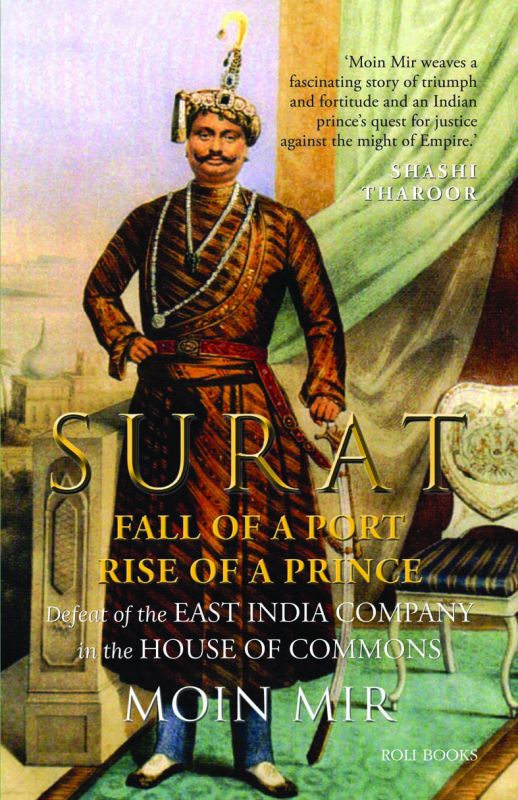
The book “Surat” by Moin Mir begins with a truth that will send a chill down anyone’s spine.

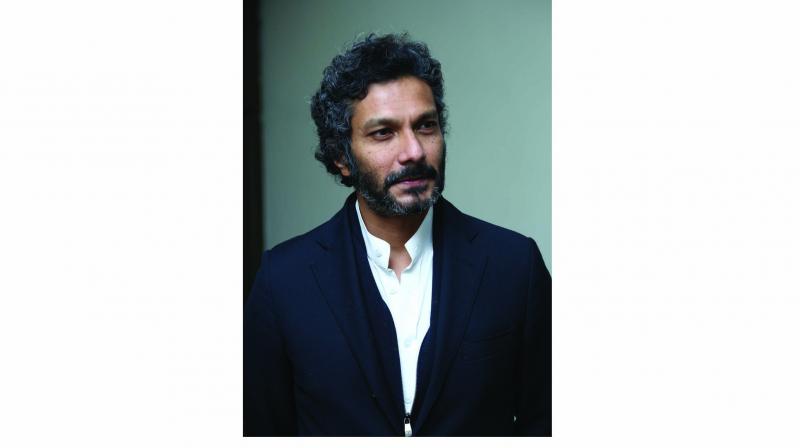
Moin Mir
Moin Mir

Breaking all the shackles and bending, actually, even defying all the ‘rules’, the prince of Surat, Meer Jafar Ali Khan fought a battle all by himself. And win he did!

The book “Surat” by Moin Mir begins with a truth that will send a chill down anyone’s spine. “It is about how the East India Company took control of the great port city, Surat. They violated a treaty with the Nawab of Surat which stated that his family would be secure from generation to generation by stopping the family’s income, usurping the palaces, estates, jewellery and all that was part of the private estates of the Nawab, leaving the infant granddaughters of the last Nawab on the brink of destitution. In a counter attack Meer Jafar Ali Khan, father of the two infant girls stood to defy an empire and expose the corrupt practices of the Company in Victorian England. Spearheading a legal offensive that would shatter the Company’s reputation, Khan’s campaign for justice generated great heat and debate in British Parliament. Fighting against all odds this prince won it all back for his daughters and found true love” says Mir.

SURAT FALL OF A PORT, RISE OF A PRINCE by Moin Mir, Roli Books, pp. 250, Rs 495

“Two things that inspired me to write this, one that the lead character was a fathr on a quest to fight for justice in 1844 by planting himself there and defying an empire on its own soil.

The second reason to write this book was the city of Surat which was an important port. I wanted people to know that how this thriving maritime port was brought down by the English East India Company,” he adds.

Wanting to release the book on Meer Jafar Ali Khan’s 200th birth anniversary, Mir thought that 2017, was the right time to release it. The message he wants to give is that it is a story of a man who believed in his cause.  “It’s a story of a city, an individual, a father and an Indian man in London in 1844. That is rare. And not just being an Indian in London but fighting the empire on their home turf. What are the chances of you winning? Zero! As the empire was at the peak of its power,” he signs off.

source: http://www.asianage.com / The Asian Age / Home> Books / by Kavi Bhandari / January 03rd, 2018

Pataudi: The Afghan connection

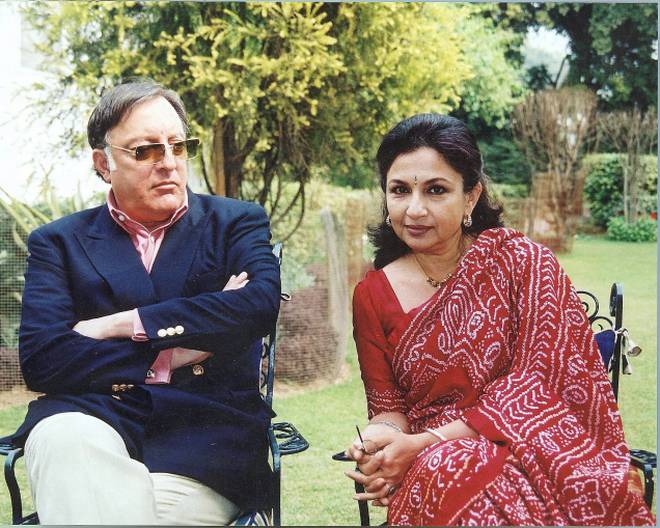
The Pataudis.... Photo: R.V. Moorthy
The Pataudis…. Photo: R.V. Moorthy

They embody the dream of gracious living and togetherness. And you realise why when you meet them, says Kausalya Santhanam, about her tete-a-tete with Sharmila Tagore and Mansur Ali Khan Pataudi.

Cricket, cinema and royalty — can there be a more potent mixture? Three decades after he headed the Indian cricket team with such distinction and his begum won the hearts of cinegoers, the spell cast by the couple continues. The Pataudis — Mansur Ali Khan and Sharmila Tagore — embody the Indian dream of gracious living and togetherness. You realise why when you meet them at their spacious bungalow in Delhi.

Though his clipped replies on the telephone make you apprehensive about the interview, he is quite forthcoming when you begin to talk to him. “I know what it is like to be at the other side for I was a reporter for the Ananda Bazaar Patrika many years ago,” he says. He listens to the questions with patience and courtesy. To be a Nawab is to be heir to a lifestyle marked by refinement in speech and behaviour.

How does it feel to be so respected three decades after leaving the game and how much has the royal aura contributed to this, you ask.

“If there is respect, it is because of a mixture of many things,” he replies. “It is also because I married into a recognised family (Sharmila is a grand niece of Rabindranath Tagore) with cultural interests and a literary background. There is a lot of curiosity (about us).

“I was not the only one in cricket from a similar background,” he says. “There were others like me — Hanumant Singh, Inderjit Singh, Fatesingh Gaekwad (who was President of the Board of Cricket Control), the Maharaja of Udaipur, the Patiala family… there were a lot of us around. The disadvantage was not because of the background but because I did not understand the undercurrents; I had not studied in India but abroad. It helped too for I did not get involved in the local politics. Regarding the royal aura, you are right in the sense we didn’t indulge in nepotism or favouritism. We played it pretty straight — not promoting someone because he was from a particular background. I played most of my cricket from the South. I still meet Chandrasekhar, Prasanna and Ramnarayan.”

What are his links now with Pataudi, the princely State in Haryana?

“Links are with the people,  not with the soil, After Independence, there was a large transfer of property. Quite a few people from Pataudi migrated to Pakistan. Many of my family members too went away, like my uncle, a former army general in Pakistan, who has written a book about the family and its history.”

Does he visit often and how much regard is there now in Pataudi for the former royal family?

“I’m a fairly private person. I don’t make an issue of going there. But for certain occasions, I do go. A large number of people came to my mother’s funeral to pay their respects. So the connection is still there, the bond is strong. I’m not into politics in Pataudi. I do some social work and am involved in running an eye hospital.”

What are his earliest memories?

“The background for me is cricket or sport. The earliest memories are of playing cricket on the lawns of our home and at the Roshanara Club at the age of nine.”

As for the story that he was upset when his father, the renowned cricketer, Ifthikar Ali Khan, stepped in and took a catch, he says, “Oh, that! I was young and father thought I would drop it.” He adds with feeling, “His was a very good presence.”

“My first coach was Sir Frank Worrell,” says the Nawab who became the youngest captain in the world at the age of 21 and acquired the appellation “Tiger” for his superb fielding skills. “My Master at Winchester College (in England where I did my school) also coached me. Winchester was an important turning point. My son Saif also went there, but perhaps,” he adds reflectively, “it is better to go abroad to study when you are a little older.”

Does he regret not playing one-day cricket as he would have been eminently suited for it?

“Yes. But I’m happy I played for my country. Nobody thought that one-day cricket would become so popular. When we played, there was not much money in the game but we enjoyed our game very much. And no, I don’t watch all the matches whether the World Cup or others. I was a commentator for AIR and Doordarshan. The main activity however had to be cricket or commentary — we had to be totally committed to the game.”

Is he disappointed his son Saif did not become a cricketer but an actor?

“Not at all, there was no compulsion for him to be one. I’m very happy that he is happy.”

Did not the commercials on television and the advertisements in print contribute to keeping the Pataudis in the public eye, projecting them in a regal way?

“If I came across well, it was because of the directors of the commercials,” he states simply.

Having been educated in England, did he not want to settle there?

“I feel very comfortable living here. My forefathers came here from Afghanistan during the time of the Lodis and established themselves after Aurangazeb died. Pataudi was set up as a principality by the English.

How difficult is to maintain the property?

“I have no palace. Palaces are like elephants around your neck. They are very difficult to maintain. Part of the Bhopal Palace has been given to a University. My cousins live in the other portions. My father sold the house in Delhi and built the palace at Pataudi for my mother when they got married in 1938. My mother was recognised as the Begum in 1968. Her elder sister migrated to Pakistan and her son, my cousin, was the manager of the Pakistan cricket team in this World Cup.”

With paternal ancestors at Pataudi and the maternal inheritance of Bhopal, life must have been interesting for him as a child…

“It was. Bhopal was a State with a great deal of protocol. There were bodyguards. When we had to meet our grandfather, we had to wear our best clothes and we were then lined up before him. He would ask: `How’s school? Which class are you in?’ We would answer, bow and come away. Pataudi was different — there were no bodyguards and life was more informal.”

Is not the present trend in the country — of religious fanaticism — disturbing?

“Extremely. But it is inevitable, a post-colonial syndrome which the country has to go through. Moderate voices won’t be heard for a lot of propaganda has been unleashed. It reflects poor thinking and vision, as there are more important things to think of — building houses and providing drinking water. There is so much of unemployment and frustration.”

What does he have to say about his foray into politics?

“I was in politics in 1992, when Rajiv (Gandhi) said `we would like you to come into it’. If he was alive, I might have still been in politics though I find it claustrophobic as it robs you of privacy.”

And how does he spend time now?

“Talking to reporters,” he deadpans.

* * *

“WHAT’S in a name?” asks Sharmila Tagore, acclaimed actress and the Begum of Pataudi, when you talk to her. “To elderly family members and friends, I am the Begum. I’m Rinku to my friends and Mrs. Khan to others. I’m better known as Sharmila Tagore. That’s what I am, what I have made of myself. I come from a middle-class literary background and I don’t have an identity crisis.”

“Belonging to a royal family is not an advantage any more in India,” adds the Begum.

“Titles are no longer respected. The tendency is to minimise their worth whereas titled people are respected in England.

“The reaction here comes from a very uninformed source and is a response to the reading of novels, which depict the royals as debauched and autocratic. The books do not highlight how the former rulers maintained law and order. Bhopal did not lose a single life in riots during Partition. The rulers provided good administration. They still have a place in the hearts of the people and are invited to grace marriages and other functions. Jealousy prompts some people to look down on them. But they can’t help but be impressed by royalty.”

Has she had to give up anything — freedom for instance — by marrying the Nawab?

“I haven’t given up anything. He is very liberal in his views. I’ve gained a lot of experience and gained another culture, cuisine, and way of dressing. I’ve benefited a lot.”

As an outstanding example of a successful Hindu-Muslim marriage, would it not be a good idea for them to make efforts to promote communal harmony?

“Pluralism is the strength of our country. History has shown us that we can co-exist peacefully. India absorbed other cultures but now we are becoming xenophobic. We are reacting 500 years after the Moghuls came. But if Tiger and I make attempts to promote harmony, I do not know how far we will succeed. People will say that I am not a Muslim and that Tiger is a Hindu fanatic.”

How do her two daughters, Saba and Soha, and son regard their lineage?

“Saif is very much into family history and all three children are conscious of their ancestry but in a nice way.”

Cricket lofted it

FIVE HUNDRED years ago, Mansur Ali Khan’s ancestors came from Afghanistan, equipped with superb skills in horsemanship, and looking for greener pastures. Salamat Khan, his forefather arrived in India in 1480 A.D. with his clan during the time of Bahlul, an Afghan of the Lodi tribe, says Tiger’s uncle in his book on the history of the family. Bahlul was governor of the Punjab and later ruled Delhi. A mass migration of Afghans to India took place during his time. Salamat Khan’s family was chosen to quell the Mevati tribe.

Bahlul’s grandson, Ibrahim Lodi, did not trust the Afghan nobles. This led to their rebellion and Babur of Kabul was invited to India resulting in the Battle of Panipat. Ibrahim Lodhi was killed and Mughal rule was established.

Salamat Khan did not actively participate in the Battle of Panipat. His great-grandson, Muhammed Pir, rose to power in Akbar’s court.

In the 18th Century, Alaf Khan of the family assisted the Mughal ruler in his battle against the Maharaja of Jaipur. He was rewarded with Kalam Mahal (which later came to be known as Pataudi House near Delhi Gate) to serve as the family residence.

The princely State of Pataudi was established in 1804 by the British when Faiz Talab Khan (who was made the first Nawab) aided them in their battle against the Marathas. In 1857, the Nawab of Jhajjhar, the Nawab of Pataudi’s cousin, joined anti-British forces and was hanged by the British. The territory was cut in half and Pataudi became a minor State. Cricket placed it on the international map with two generations of players excelling in the game.

Tiger’s mother Sajida Sultan belonged to the well-known House of Bhopal. She became the Nawab Begum of Bhopal after the death of her father, Nawab Hamidullah Khan. Flag Staff House, the residential building of the Bhopal rulers is located within the Ahmedabad palace complex which Hamidullah Khan built in the old Bhopal area. Former Prime Minister Jawaharlal Nehru and President Rajendra Prasad were State guests here.

This article was published in ‘The Hindu Sunday Magazine’ on August 3, 2003

source: http://www.thehindu.com / The Hindu / Home> Sport> Cricket / by Kausalya Santhanam / September 26th, 2011
A Hindustani tradition, right in the heart of Madras

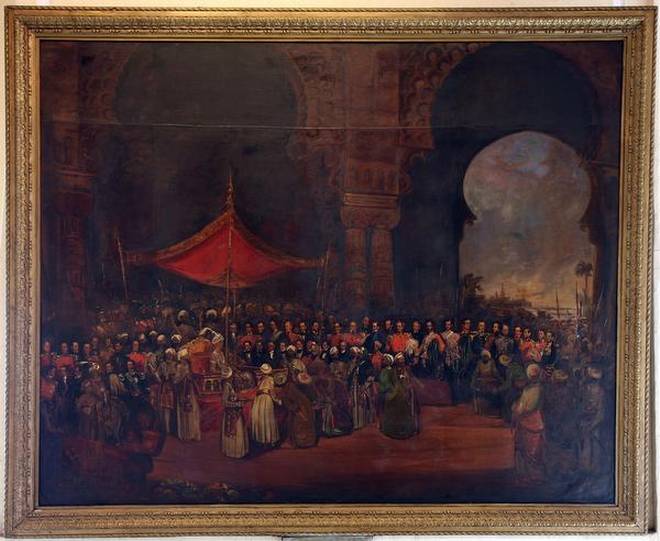
Painting with the installation of Nawab Ghouse Khan

The Kanchenwada was a thriving hub of music and dance; illustrious artistes were among the performers

It wasn’t just another royal wedding, when Nawab Ghulam Ghouse Khan, the last Nawab of Carnatic, took Jahangir Baksh as his second wife. Unlike his first wife, who hailed from a Hyderabadi noble family and chosen by the elders, Jahangir Baksh with whom the Nawab had madly fallen in love, was a dancing girl, a courtesan otherwise known as the Tawaif or Kanchen. On November 24, 1848, he married the dancing girl Jahangir Baksh and awarded her the title Azamunnisa Begum.

The tawaifs were female entertainers who excelled in the arts of poetry, music, dancing, singing, and were considered to be well-versed in etiquette or what was known as ‘Aadaab.’ Highly respected for their politeness and refinement, their entertainment was a fine balance of classical song and dance and romantic enticement.

Though the tawaifs were no strangers to the Tamil country, in Madras they were mostly known as ‘Kanchen.’

“The elite among the tawaifs in the Mughal court were usually referred to as Kanchen” says Saba Dewan, an independent documentary film maker, who had made a film on the tawaifs of Varanasi and is currently writing a book on the same theme. In the 1760s when Nawab Muhammad Ali Walajah moved his durbar from Arcot to Madras, it was only natural that the court musicians and dancers, well-versed in Hindustani, followed him to the city.

According to Sawanihat-I-Mumtaz, which chronicles the history of the Nawabs of Carnatic, “Latifa, Tanu and Sajni, known as Sona, were the dancing girls” and “Aminud Din Khan and Ram Singh Bayragi” were the musicians often invited by Nawab Umdat ul Umra to perform at the palace of his senior sister, Sultan Unnisa Begum.

Umdat ul Umra, who also wrote poetry under the pen name Mumtaz, occasionally asked the musicians to set his verses to Hindustani tunes and even chose the dancing girl to sing and dance the verse. An occasion like his father Walajah’s birthday was celebrated with Sona singing and dancing the verses of Umdat ul Umrah set to tune by Aminuddin Khan and Ram Singh.

Kanchenwada

Over a period of time, Madras became home to a number of Kanchen looking for patronage and a locality sprang up in the heart of Madras, right next to Amir Mahal at Royapettah.

Mir Bakshi Ali Street, Mohammed Hussain Street and Jani Jahan Khan Road, where interestingly the Anglo Indians also lived, became the centre of a thriving Hindustani music and dance tradition in Madras. Perhaps due to the predominant number of dancing girls and musicians at Madras, who originated from Hubli Dharwad, the two streets and the road came to be known as Kanchenwada, as wada in Marathi means a locality or a traditional complex with several mansions for different members of a family or a community.

A century after Nawab Ghulam Ghouse Khan passed away the tradition was still alive in Madras. Old timers recall that as the night wore on, the ‘Kanchenwada’ came alive to the rhythms of the tabla, harmonium, dholak, sitar and sarangi, competing with the ghungroo of the dancing girls, who sang sensuous thumris from Urdu ghazals and popular Hindi film song.

For the elite North Indian in Madras, it was at the Kanchenwada, at the mehfil, that some of the finest ghazals of Mirza Ghalib, Kaifi Azmi, Faiz Ahmed Faiz, Shahir Ludhianvi, Shakeel Badauni (UP) and many other poets could be heard. One could also listen to the likes of Ustad Bismillah Khan, ‘who at the invitation of Nayab Jan Bai played Shehnai at her house’ says Saleem, who learnt the Sitar from Ustad Ahmad Hussain. Just like their patrons, among the Kanchen there were both Hindus and Muslims.

Kamala Bai, Gulzar Bai, Radha Bai, Haseena, Mumtaz, Nazeeraa Banu, Nayab Jan Bai and Baby Bai were some of the names that the old timers remember with fondness. The Kanchen were held in such high esteem that ‘the rich used to send their children to the tawaifs to learn etiquette,’ says Rauf, a senior photographer, who spent his childhood in the Kanchenwada.

Cinema and the Kanchen

“The kanchen also sang popular songs from Hindi films such as ‘Pakeezah,’ ‘Kohinoor,’ ‘Taj Mahal,’ ‘Mughal-e-Azam’ and ‘Umrao Jaan’,” says Laiq Ahmed, who himself wrote poems for the Kanchen. Though the arrival of cinema meant new entertainment avenues for the masses, and possibly declining patronage, many Kanchen took to the medium. “Nasreen Banu had danced in Gemini studio’s Hindi film ‘Paigham’,” says Ilavenil, a Tamil writer who also happened to be her neighbour on Jani Jahan Khan Road. Baby Bai, the most popular of the Madrasi Kanchen of the 1950s made a guest appearance in ‘Gharana’ as a nurse, says Laiq Ahmed. She also made a film, which of course bombed, recollected Abdur Razaaq, who met Baby first as a patron and ended up marrying her in 1960.

Like the dancing girls, the Hindustani musicians too found place in the Tamil film industry. Ustad Ahmad Hussain Khan from ‘Achpal Gharana’ in Pune, moved to Madras at the young age of 14. He subsequently became the Choudhry (caretaker) of the Kanchenwada at Royapettah. “He played Sitar for Tamil film Music composers, mostly for K.V. Mahadevan,” says Saleem, his disciple. “The close-up shot of the fingers playing the sitar in the famous song, ‘Sonnathu Neethaana’ of Nenjil Oru Aalayam are not Devika’s but that of the Ustad Ahmad Hussain” reveals Makbhool Hussain, who used to accompany the Ustad for recording to various studios in Madras. Incidentally, the Ustad also taught music at Bharatiya Vidya Bhavan. The Hindustani musicians found patronage in some of the city’s prominent hotels, while the Kanchen were invited to perform at weddings.

Most of the Kanchen had rich patrons. “Every Kanchen who lived on Jani Jahan Khan Road used to entertain at least five customers. There was a plate kept in front of the musicians. The dancer used to drop the money collected from the evening into the plate. After the performance it was split between the musicians and the dancers,’ says Makbhool Hussain, who played the tabla for many of them. There were occasions when a happy patron would shower more than just money. Ilavenil, the Tamil journalist, remembers the instance of a patron throwing a house document at Nazeera Banu (obviously he had registered it in her name), a Kanchen who had migrated post- Partition from a riot torn Delhi to the relative safety of Madras.

Though the Kanchen were entertainers and inhabited a world that bordered on the ‘sinful,’ they were also religious. Rauf, a senior photographer who lived in Mir Bakshi Ali Street observes, “They would not perform during the month of Ramzan or during Muharram. They also celebrated all festivals including Diwali,” he says.

Horse Racing

“Interestingly, the tawaifs from other cities, including Benares, Lucknow, Bombay, Nagpur, Hyderabad, Hubli and Khanpur, descended on the city when horse racing was on,’ says Makbhool Hussain. They probably followed their wealthy clientele, rented houses and camped in the city till the races were over.

However, cinema and the changing social mores were having an impact on the Kanchenwada and trouble was brewing. The anti-Nautch movement that brought a traumatic end to the Devadasi system, was having its impact on the tawaifs too. Cases were filed to stop their practice and Kamala Bai, a Kanchen, engaged M.A. Ghatala, a High Court lawyer, to fight the case. Around 1958, the Madras High court ruled in the Kanchens’ favour. “The kanchen celebrated the win with a big party for my father, at a house near the Music Academy and the Tamil film actor and great comedian Chandrababu was one among the guests,” recollects Javed Ghatala.

However, the times were changing. What the judiciary rightfully refused to stop was brought to an end by a marriage. Abdur Razaq married Baby in 1960 and moved with her to the upcoming T. Nagar in 1962. With Baby Bai, the star performer moving out to lead a family life, the Kanchenwada lost its lustre and many other Kanchen followed in Baby’s footsteps, seeking a future for themselves in the institution of marriage. By the 1970s, a little more than a 250-year old tradition in Madras came to an end, leaving almost no trace of its splendorous past. As Nazeer Akbarabadi, the people’s poet of 18th century laments:

Kya tamashe inqelab-e-charkh ke kahiye Nazeer

Dum mein wo raunaq thi aur ek dum mein yeh be-raunaqi

(What to say of the lustre of revolving time, O Nazeer. In an instant there was such splendour and in another, this dullness)

(Second part: The Thanjavur Quartet connect)

source: http://www.thehindu.com / The Hindu / Home> Society> History & Culture / by Kombai S. Anwar / January 04th, 2018

Muslim sarpanch initiates daily singing of anthem

Kolanur Village (Konaraopeta Mandal) , ANDHRA PRADESH  :

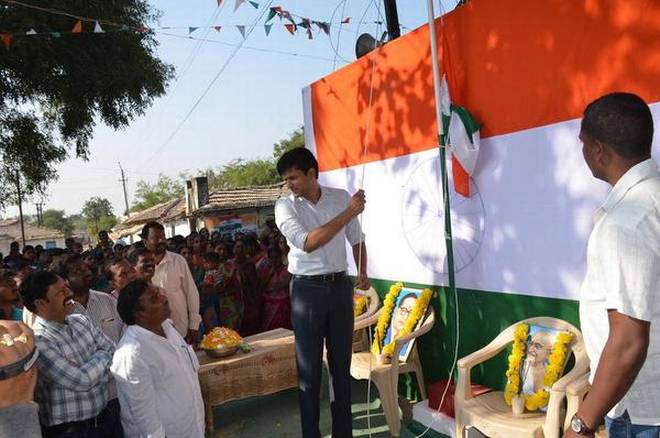
Collector D. Krishna Bhaskar hoisting the National Flag to launch the reciting of national anthem everyday in the interior Kolanur village of Konaraopeta mandal on Monday. Photo: By arrangement | Photo Credit: Byarrangement

It’s also a move to pay tributes to soldiers who lost their lives while discharging duties, says Abdul Rasheed

In order to inculcate the values of patriotism, a village sarpanch belonging to the Muslim community launched a novel campaign of singing the national anthem everyday in the interior Kolanur village of Konaraopeta mandal on Monday.

Buoyed over the successful singing of national anthem in Jammikunta town of Karimnagar district since last Independence Day, village sarpanch Abdul Rasheed has decided to implement the singing of Jana Gana Mana in the village everyday from the New Year, at 8 a.m.

Collector D. Krishna Bhaskar formally launched the programme in Kolanur village on Monday by hoisting the national flag at the gram panchayat office. All the villagers — including children, women and elders, participated in the programme and recited the anthem by saluting the national flag.

Mr. Bhaskar lauded the villagers and sarpanch for taking up the programme. Taking a cue from Kolanur villagers, the Collector wanted other villages to take up the patriotic programme.

Village Sarpanch Abdul Rasheed said that he had taken up the programme to educate villagers on the importance of freedom struggle and supreme sacrifices made by freedom fighters.

“The daily singing of the national anthem is also a way to pay respect and tribute to the soldiers who lost their lives while discharging duties on the borders,” he maintained.

DPRO Mamidla Dasaratham, District Grandhalaya Samstha chairman Akunuri Shankaraiah, DRO Shyam Prasad Lal, MPP Laxmi and others were also present.

Korutla joins the initiative

Meanwhile, now it is the turn of the Korutla Kirana Merchants association members to hoist the national flag and sing the anthem daily in the Korutla town of Jagtial district from Monday.

The association members installed 33 public address systems in the town to ensure that the anthem is audible to all people in the town at 9 a.m.

The town entered the Telugu book of records for hoisting 101 national flags to launch the programme. Korutla legislator K Vidyasagar Rao, Municipal chairman S. Venugopal, DSP Malla Reddy, public representatives and philanthropists hoisted the flags along the National Highway. Telugu book of records founder Chintapatla Venkatachary handed over the certificate to Korutla Kirana Merchants association president Chidrala Ashok on the occasion.

Meanwhile, inspired by patriotic zeal of Kolanur villagers, two other villages in the Konaraopeta mandal have come forward to launch the daily singing of the national anthem in Marthanpeta and Suddala villages.

source: http://www.thehindu.com / The Hindu / Home> News> States> Telangana / by K.M. Dayashankar / Rajanna-Sircilla – January 02nd, 2018

Fort museum opened in Bidar

Bidar, KARNATAKA :

An amazing collection of artefacts, inscriptions and photographs are on display at the refurbished tourist information centre and museum opened by the Archaeological Survey of India on the fort premises here on Wednesday.

The museum had been closed for two years for restoration.

The old museum housed in the Royal Bath room inside the Turkash Mahal complex has been moved to the Awwal Talukdar office near the front gate, opposite Rangeen Mahal.

It has tools used by hunters in Neolithic times that were found in 11 archaeological sites in Bidar district. Stone tablets dating from the 1st century; inscriptions that speak of the genealogy of Hassan Gangu Behman, the founder of the Bahmani dynasty; and a space saving tablet that has an inscription on one side and a design on the other, are among the exhibits.

The weapons section is full of guns of various shapes and sizes, cannon balls and thorns and grenades. Metal armour, swords, and khanjars are on display.

Of special interest are implements used by doctors in the 14th century, ornaments made from sea shells, terracotta tiles and painted wall hangings.

It also has artefacts found in neighbouring sites of Sannati, Maski, Kalaburagi, Vijayapura and Basavakalyan.

Archaeologist Prasanna Kumar took visitors and students around the museum and explained the significance of the artefacts. He spoke of sculptors used soap stone to carve female figurines to symbolise that beauty fade away over time, like the rock it was carved on. Abdul Samad Bharati read Persian and Arabic inscriptions to the delight of young visitors.

A.M.V Subrahmanya, Superintending Archaeologist, ASI, pointed out that some Madanika busts found in Basavakalyan and other sites in Bidar district were older than those found in Belur and Halebid.

A 30-minute audio guide about Bidar would be prepared to help tourists, he said. He also said work would start on an interpretation centre and sound and light show in Bidar fort.

The ASI is working with various government departments to draft a proposal to be sent to the UNESCO seeking heritage city status to Bidar- Kalaburagi and Vijayapura, he said.

Hanchate Sanjiv Kumar inaugurated the museum and asked youth to take pride in their history. Prakash Nikam, Superintendent of police, asked youth to desist from defacing monuments. “If we don’t etch on the walls at home, why should we do so on the walls of monuments that are national treasures?” he said

source: http://www.thehindu.com/ The Hindu / Home> News> States> Karnataka / by Rishikesh Bahadur Desai / Bidar – February 05th, 2016

Inscription traces genealogy of Bahmani Kingdom founder

Bidar, KARNATAKA :

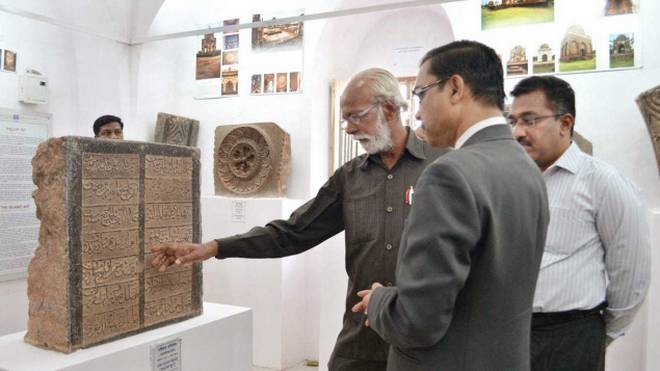
Historian Abdul Samad Bharati showing the stone inscription to visitors in the Bidar ASI museum.— File Photo: T. Gopichand

History textbooks in the State say that Allauddin Hasan Gangu, founder of the Bahmani dynasty, began his life as the slave of a Brahmin in New Delhi. However, other versions of history strongly claim that he hailed from Iran and served in the army of the medieval Delhi kings.

The latest evidence that argues against the slave-to-king theory is a stone inscription unveiled at the Archaeological Survey of India museum in Bidar that opened last month.

The inscription of two sets of seven lines, with neatly carved rectangular borders, starts with hailing King Ahmed Shah Bahmani and how his rule brought prosperity to the region. It speaks of how he was the ninth king of the Bahmani Sultanate founded by Allauddin Hasan Gangu Bahmani . It identifies Hasan Gangu as a descendant of the legendary warrior Esfandiyar Goshtap. It describes him as a proud son of a Bahmani village in Iran. “Experts have dated this tablet between 1350 and 1550,” said Prasanna Kumar, archaeologist with the Bidar ASI office.

“For long, scholars have argued with evidence that Allauddin was a general in Mohammad Bin Tughlaq’s army. He founded the Bahmani Kingdom in Kalaburagi, after rebelling against the Delhi kings in 1347. But, we continue to teach the legend that Allauddin was a slave who became a king by chance. This is unfortunate,” said Abdul Samad Bharati, historian and author of the book ‘Historic monuments of Bidar’. He hoped the Bidar inscription would help change the minds of history writers. “There are two other documents that refute the theory about Allauddin’s humble beginnings, a book published by University of Dhaka that speaks of the life and contribution of the hero and medieval era historian Abdul Mallik Esami, who said Allauddin was an Iranian, who joined the Delhi army,” he said.

International scholars also feel the same. “The whole story of Hasan Gangu being a slave to Gangadhar Shastri is a legend that is not supported by any primary source,” said Sara Mondini, art history scholar from Ca’ Foscari University of Venice, who is on a tour of Ashtur near Bidar. Helen Philon, historian of the Deccan Heritage Foundation, says history books need to accommodate changes over the years. “Farishta, a court historian of the Bijapur Adilshahis accorded legitimacy to such legends and hearsay in the 17 th century. Most historians and writers seemed to have believed Farishta, without considering theories that offered alternative explanations,” she said.

Ashwath Narayana, professor of history in Bangalore University, and a member of the Karnataka state textbook review committee, said history textbooks should change with the emergence of new sources. “If history is an attempt at truth-telling, new research should prompt us to change the way it is written. We will study this inscription and make suitable changes to the history of the Deccan, if need be,” he said.

A stone inscription unveiled at the ASI museum in Bidar is evidence that negates the slave-to-king theory in history textbooks.

source: http://www.thehindu.com/ The Hindu / Home> News> States> Karnataka / by Rishikesh Bahadur Desai / Bidar – April 04th, 2016

Lucknow, recovered

Lucknow, UTTAR PRADESH :

Lessons in conservation at the Sibtainabad Imambara

As a young girl, when I was studying in Lucknow, I would often go to Hazratganj to buy storybooks. Browsing through the collection in the market and buying a book would be the highlight of every week. I only had my eyes on the bookshops and never on the name of the market or the dilapidated gateway, which had once been impressive but now looked the worse for wear.

Even on subsequent trips as an adult, I never bothered to think about it till the day a Lucknow-based heritage activist and lawyer, Syed Mohammad Haider Rizvi, invited me to speak at an inter-faith assembly in Sibtainabad Imambara.

As a devout follower of Imam Hussain, I had visited almost every Imambara in Lucknow for the majlis, or assemblies, to commemorate his sacrifice, but never this one. I wondered why I hadn’t even know it existed. I soon found out.

Origin of the Imambara

Amjad Ali Shah was the fourth Nawab of Awadh and ruled from 1842 to 1847. Since he had a religious bent of mind, as a child he learnt Islamic values of faith and piety. His piety as a ruler earned him the sobriquet of Hazrat. The famous Hazratganj of Lucknow is named after him and that’s the area where he chose to build an Imambara which would also house his mausoleum.

It was started in 1847 and completed after his death by his son Nawab Wajid Ali Shah. It was named Sibtainabad as the two Shia imams Hasan and Hussain (grandsons of the Prophet) are known collectively as Sibtain.

When I entered, I found myself inside a huge open area from where I could see a compound with a beautiful Imambara, a congregation hall for assemblies where Imam Hussain is mourned.

The Imambara architecture comprises a main hall (with additional halls depending on the size) where the mourners gather, a raised shahnasheen (platform) where the taziyas and alams (replicas of the shrine of Imam Hussain and his standard) are kept. A pulpit would be kept on one side for the speakers who would speak of the tragedy of Karbala.

The reason I had never been to this Imambara when I was living in Lucknow soon became clear. Once a beautiful Imambara covered with fine carpets, silk curtains, priceless art treasures and exquisite chandeliers, it was vandalised in 1857 during the First War of Independence. Nawab Amjad Ali Khan lay buried here in a vault under the central hall, forgotten by all.

It was even used as a church by the British officers till 1860, while the Christ Church was being built, and Lord Canning attended a service in the building.

In 1919, it was declared a protected monument by the Archaeological Survey of India (ASI). Despite this, it was sold by one Sultan Bahadur in 1921, who claimed to be a descendant of Nawab Amjad Ali Khan, to the Lucknow Improvement Trust (LIT). The LIT, in turn, allotted the surrounding land for residential purposes. The Imambara fell into disuse and disrepair.

The main Imambara post-1947 was used as a workshop and storehouse for furniture as well as by the government census office. A motor workshop had sprung up outside.

In 2008, Rizvi was appointed the joint mutawalli by the Shia Waqf Board and he started the long fight to free it from encroachment and illegal occupation. He took recourse to judicial avenues and slowly, with the help of Right to Information applications and public interest litigations, he succeeded. Then came the task of restoration, which was undertaken by the ASI.

The splendour inside

The approach to the Imambara is through the gateway and into an open space which gives way to an enclosed court. The Imambara stands on a high platform and its arched façade looks very impressive, with its delicate floral stucco and stained glass doors. The inner walls, which had got blackened with neglect and abuse, have been lovingly restored, and its green and white paintings and stucco work are exquisite. The roof and “its beams, which formed a vault over the grave of the late king, had collapsed in a heap of rubble,” according to a 1945 report. It once again supports beautiful glass chandeliers.

A recurring motif on the archways inside the halls is a painting of the Prophet’s celestial steed, the ‘buraq’, that carried him to heaven on the night of ascension. The master mason, Ansaruddin, traced out the designs and restored the paintings and stucco work very carefully.

Preservation of our heritage is our fundamental duty as it is an important source of history of the era in which these buildings were built. If other ‘lost monuments’ received such dedicated and methodical renovation, they could also be rehabilitated and restored to us.

source: http://www.thehindu.com / The Hindu / Home> Opinion> Columns / by Rana Safvi / November 26th, 2017

Learn photography online in nine Indian languages

Lovedale, Nilgiris (Ooty) , TAMIL NADU :

IqbalMohamed01MPOs07jan2018

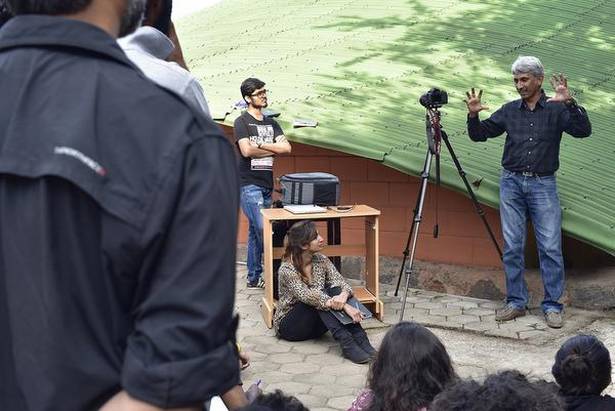
Language is no barrier to learning the nuances of photography at the Light and Life Academy

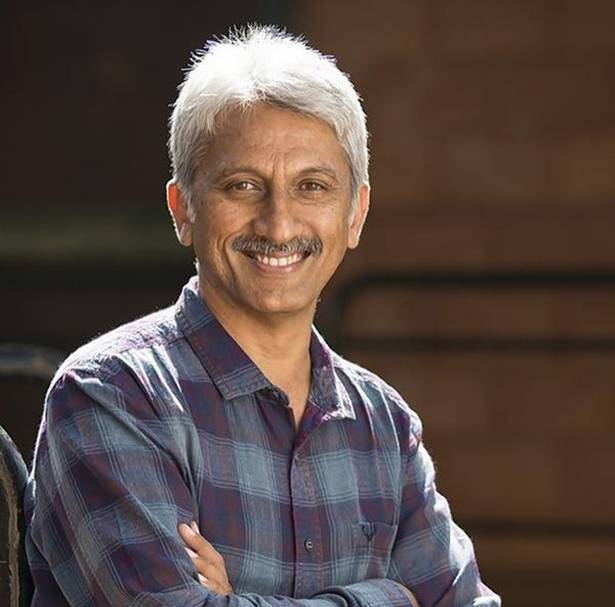
It is 6 am, and I watch Iqbal Mohamed quietly set up his camera in front of the big glass windows in his living room and wait for the sun to rise. We are at the Light and Life Academy (LLA) in Lovedale in the Nilgiris, and I learn that he does this every morning. “No two sunrise is the same,” he offers by way of explanation. Mohamed doesn’t say very much. He prefers to let his photographs do the talking, laughs his more vocal wife Anuradha.

The photographer founded LLA in 2001 as a full-facility photography institute. The inspiration was his alma mater, the Brooks Institute California. He worked in Hollywood with some of the biggest names in photography, and in India, winning considerable acclaim, before setting up his school. LLA, which maintains high standards of professionalism and excellence, has added immensely to the pool of talented photographers in the country. And the alumni have now helped him realise another dream — to set up an online course called ‘Get Creative with Photography’.

Seamless lessons

IqbalMohamed02MPOs07jan2018

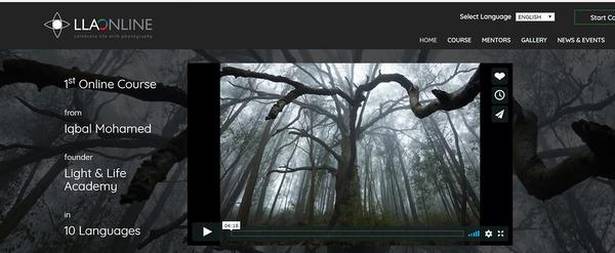
They want to reach out to more people who take pictures as a serious hobby, says Anuradha. “But we did not want it to become just another random photography course. Mohamed’s book, Portrait & Function Photography, in eight Indian languages, was enthusiastically received, and that made us think of an online programme that was serious, structured and professional,” she adds. LLA online was born after three long years of hard work. The programme is available in English and nine Indian languages (Tamil, Telugu, Malayalam, Kannada, Hindi, Marathi, Gujarati, Oriya and Bengali). “Prahlad Kakar advised us on how to create the video tutorials, all shot in campus, and make them not just informative, but also entertaining,” she says.

I click on the online programme to see how it looks, and the screen fills up with a haunting photograph of trees. Even to my unprofessional eye it is a stunning image. It is one of Mohamed’s photographs.

Nattily dressed LLA alumni present the lessons. Each one is an acclaimed photographer, says Anuradha, with considerable pride. “Without them, this course would not have been possible.” These include Shaheen Thaha (celebrity, fashion and architecture), Mihir Hardikar (food and beverages), Ajit SN (automobile and underwater), Punya Arora (editorial and underwater fashion), Satish Kumar (automobile) and Ankit Gupta (architecture and travel).

Getting into the details

IqbalMohamed03MPOs07jan2018

The online tutorial begins with clear, concise and simply-worded instructions. Then comes the fun part. I ask Anuradha if can see/hear the lesson in Bengali. I follow it up with a class in Tamil, Hindi and Kannada! The dubbing is perfect and as someone who has only taken pictures on her mobile phone, even I can understand everything. ‘Getting Ready & Exposure’ is the first lesson, followed by ‘Shutter’, and two sessions each on ‘Lenses and Apertures’, four sessions on ‘Light’, a lesson on ‘Colour’, and finally one on ‘Composition’.

Each of the modules explains the concepts and is supported by images. At the end of each class, an assignment is given that the students have to complete and upload in a week. Their homework is critiqued by mentors and peers, and only then can they proceed to the next class. If required, they are allowed to re-shoot. “This way they share ideas and learn from each others’ mistakes,” explains Anuradha, who emphasises that a strict protocol and system is followed and those signing up for the course have to be committed. There is no skipping lessons.

Offline vs online

IqbalMohamed04MPOs07jan2018

Online students have access to more than 500 stunning photographs by over 90 LLA alumni to give them an idea of what they can do with their cameras. Mohamed oversees their work and comments when necessary. The first set of students have already completed two assignments and the results have been promising, says Anuradha. Once they get feedback, they will launch other programmes, she adds.

Prahalad Muralidharan, CEO of LLA Online, explains that it was challenging to replicate the successful methods of their full-time courses on to the online platform. “After brainstorming and countless revisions, we finally found a way to do it. With peer-group interaction, an online forum and professional feedback, LLA Online is as close as it gets to LLA in terms of learning on an online platform!” he says.

The course includes 10 sessions over 10 weeks. The fee is ₹10,000. The full time courses at LLA can go up to ₹6,65,000. Details: llaonline.in or call: 97511-51999

source: http://www.thehindu.com / The Hindu / Home> Life & Style / by Pankiaja Srinivasan / January 05th, 2018

‘Baghi Banjara’ traces life, works of Barkatullah Bhopali

Bhopal, MADHYA PRADESH :

Bhopal :

Centered on the life of freedom fighter Maulana Barkatullah Bhopali, a play ‘Baghi Banjara’ was staged at Shaheed Bhawan on Friday. Scripted and directed by Waseem Khan, the play was staged for the first time in the country.

Abdul Hafiz Mohamed Barakatullah, known with his honorific Maulana Barkatullah (7 July, 1854-20 September 1927), was an anti-British Indian revolutionary with sympathy for the Pan-Islamic movement.

The whole journey from birth to death of the great freedom fighter was beautifully shown in the one-hour-twenty-minute-long play.   Barkatullah was born on 7 July 1854 at Itwara in Bhopal.

He fought from outside India, with fiery speeches and revolutionary writings in leading newspapers, for the independence of India. In 1988, Bhopal University was renamed Barkatullah University in his honour. He was educated from primary to college level at Bhopal.

Later he went to Bombay and London for his higher education.  He was a meritorious scholar and mastered seven languages: Arabic, Persian, Urdu, Turkish, English, German, and Japanese. Despite a poor background he topped the list of successful candidates in most of the examinations for which he appeared, both in India and England. He became the Quondam Professor of Urdu at the Tokyo University Japan.

He was one of the founders of the “Ghadar” (Rebellion) Party in 1913 at San Francisco. Later he became the prime minister of the Provisional Government of India established on 1 December 1915 in Kabul with Raja Mahendra Pratap as its president.  He died in 1927 at San Francisco.

The play was presented by mainly young cast of Swabhiman Shikshan Samiti. Suggestive sets, costumes and lights were used.

A patriotic song ‘rang de basanti chola…,’ of movie ‘Shaheed’ (1965) was used in the play. Gaurav Jaat as Maulana Barkatullah, Badra Wasti as Tarik Nigar, Shakeel Chand as Kadar and others  were in lead role.

“For the first time, the play centered on the great freedom fighter is being staged for the first time in India. I don’t know why no play was staged on the tenacious fighter. I wrote the play at the instance of Shriram Tiwari, former director of culture. The writing took one year and the rehearsals lasted for one-and-a-half- months,” said Waseem Khan.

source: http://www.freepressjournal.in / The Free Press Journal / Home> Bhopal / by A Staff Reporter / January 28th, 2017

Save a knight’s remains – Kin of Sir Ali Imam renew demand for heritage tag for neglected 1932 mausoleum

Dipatoli (Ranchi), JHARKHAND :

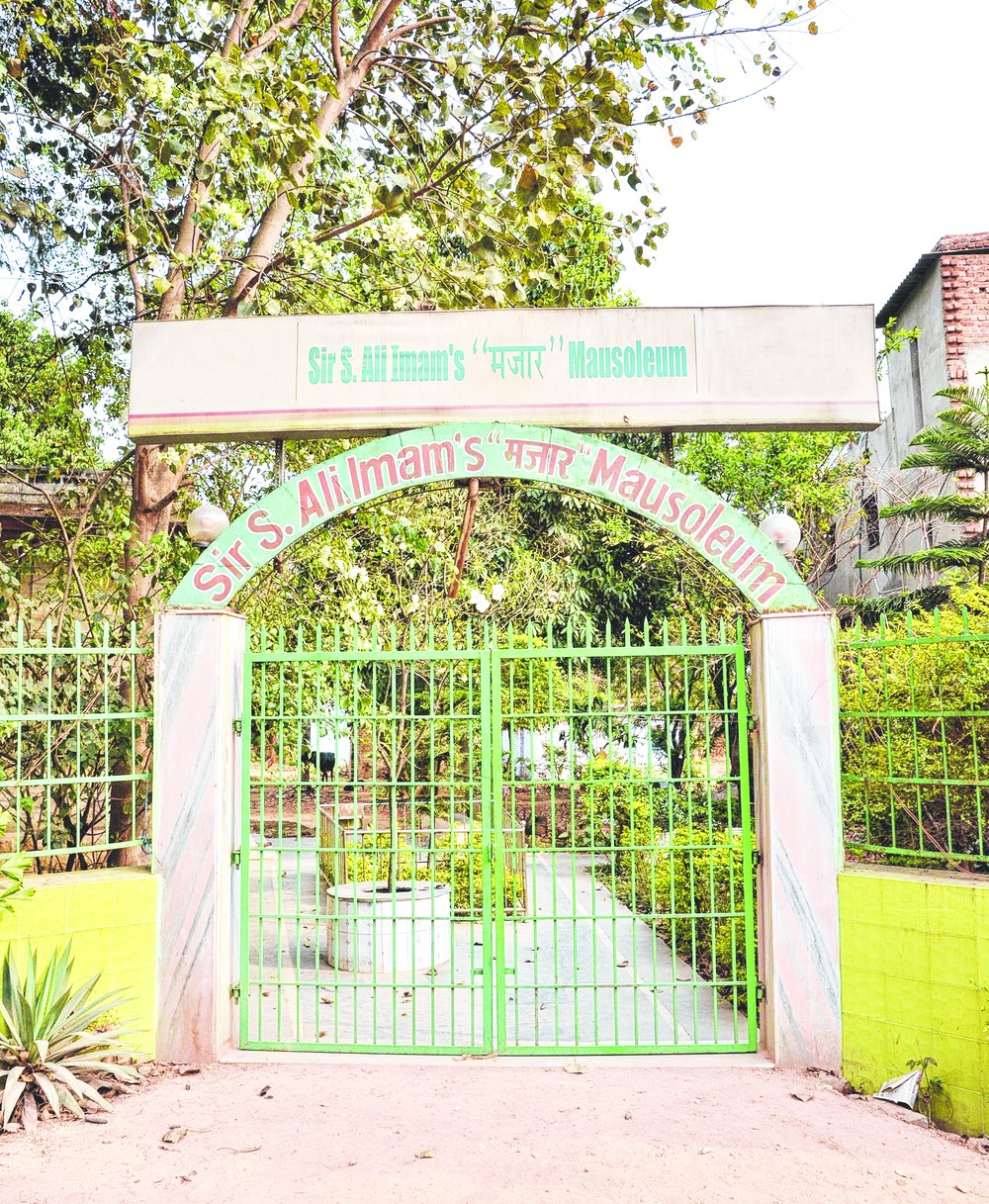
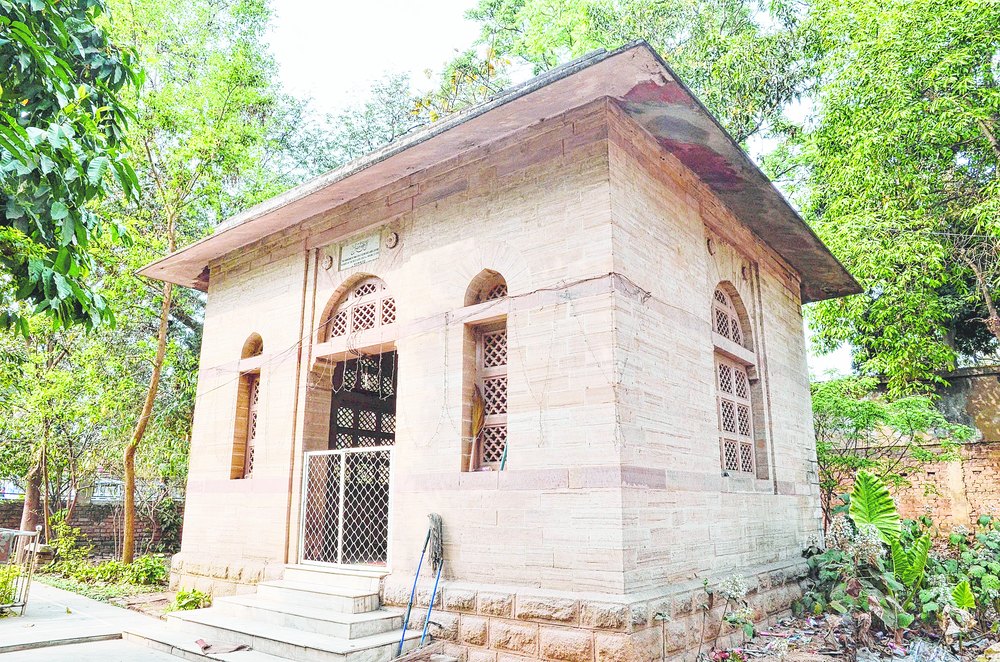
The mausoleum of Bihar's architect Sir Ali Imam on NH-33 near Dipatoli in Ranchi. (Prashant Mitra)
The mausoleum of Bihar’s architect Sir Ali Imam on NH-33 near Dipatoli in Ranchi. (Prashant Mitra)

Jharkhand’s “stepmotherly attitude” towards the mausoleum of Sir Ali Imam, one of Bihar’s prime architects, has prompted the knight’s grandson to resurrect his decade-old heritage status demand for the site that rightly deserves conservation.

In 2005, a memorandum had been signed between the Indian National Trust for Art and Cultural Heritage (Intach) and Birla Institute of Technology (BIT), Mesra, to develop the mausoleum on NH-33 near Dipatoli, Ranchi, into an art and culture centre. But, like most other projects in the state, it sank into oblivion.

In 2012-13, the Archaeological Survey of India (ASI) listed some monuments for protection, including the Jami Masjid and Baradwari Masjid in Rajmahal, Khekparta temple in Lohardaga and Buddhist ruins in Benisagar, West Singhbhum, but the mausoleum was again given the pass.

Such “monumental neglect” has now prompted Askari Imam, the grandson of Sir Ali Imam, and other members of the Sir Ali Imam Trust like grandnephew Bullu Imam to request the Raghubar Das government for a heritage tag.

Justin Imam, the great grandson of the knight, said they were pursuing the matter with the department of art and culture (archaeology) so that a pending report advocating conservation rights for the mausoleum was given active consideration. “A year ago, we had submitted the report to the department. It is obvious no one took interest. We will push the matter again tomorrow (Tuesday),” Justin said.

Former state convener of Intach Shree Deo Singh conceded that Askari Imam had approached him with a conservation request five years ago. “The Trust was then formed for its maintenance. However, after my term as convener ended, the tomb was subjected to utter neglect,” Singh said.

Bullu Imam pointed out that the monument existed in a capital city and yet most people of Jharkhand were unaware of it. “This is so unfortunate,” he said.

MausoleumMPOs06jan2018

“Once the mausoleum is declared a protected site, it will attract tourists from the state and outside,” added voluntary caretaker Chetan who also runs a shop nearby.

State art and culture secretary Vandana Dadel said members of Sir Ali Imam Trust had met her last week and she had assured them that she would look into the matter. “I will send a team to the site so that we can initiate talks with the ASI,” she promised.

Ali Imam, a judge at Patna High Court in 1917, was a law member of the British Imperial Council and was conferred knighthood by the British government. Sir Ali Imam, who played an important part in the constitution of Bihar, died in 1932 after which the mausoleum was built.

_____________________________________________

Correction:

I would like you to make amendment in one of the paragraph. Where you mentioned that Justin Imam the great grandson to Sir Syed Ali Imam. In fact Justin Imam is the great grandson to Sir Hasan Imam who was the younger brother to Sir Syed Ali Imam Saheb.
Sir Ali Imam Saheb great grandchildren are from Late Justice Jafer Imam, Reza Imam and Naqi. Kindly amend the paragraph in your article.

Many thanks
Amina Imam Ahmad / 05th April 2018

__________________________________________

source: http://www.telegraphindia.com / The Telegraph,  Calcutta,India / Front Page> Jharkhand> Story / by Arti  S. Sahuliyar / March 10th, 2015