Category Archives: Arts, Culture & Entertainment

Qutb and Mehrauli: The Past and Present of an Iconic Site

Minnesota, USA / NEW DELHI :

In Delhi’s Qutb Complex, Catherine B. Asher goes beyond Mehrauli and Delhi to look at the afterlife of the iconic tower that is the Qutb Minar.
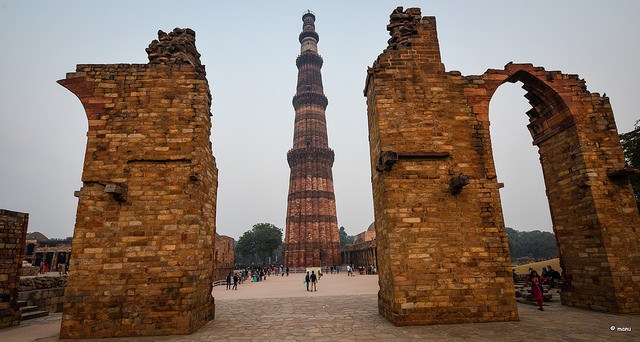
Qutb Minar. Credit: lensnmatter/Flickr (CC BY 2.0)

Mehrauli is truly a magical place. The average visitor skims but the surface, marvelling at the towering Qutb Minar and taking a cursory stroll through the other buildings that lie within the popular UNESCO World Heritage Site known as the Qutb complex. Those who go beyond, into the neighbouring village, may visit the shrine of the Sufi saint Qutbuddin Bakhtiyar Kaki, or a restaurant. There is now, of course, a smaller group of more adventurous explorers who are discovering the treasures of Mehrauli – particularly in the village and the Mehrauli Archaeological Park, mainly through the medium of increasingly popular ‘heritage walks’.

But though one may visit these monuments and learn the stories that lie in this locality’s long and eventful history, there are many layers that lie awaiting a more rigorous and meaningful analysis. A scholarly study by a leading art historian is, therefore, a very valuable addition to what is admittedly the rather sparse literature on the subject.
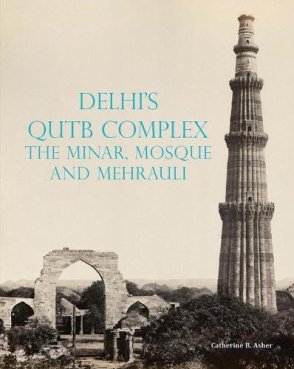
Catherine B. Asher Delhi’s Qutb Complex: the Minaret, Mosque and Mehrauli Marg Publications, 2017
Catherine B. Asher
Delhi’s Qutb Complex: the Minaret, Mosque and Mehrauli
Marg Publications, 2017

Catherine B. Asher’s Delhi’s Qutb Complex: The Minar, Mosque and Mehrauli starts by setting the monuments of the Qutb Complex within the physical space and history of Mehrauli, and in the context of its many historic structures. Construction on the oldest congregational mosque of Delhi and its attached monumental tower began in the late 12th century, and was commissioned by a newly-arrived political power, the Turks – under Muizzuddin Muhammad bin Sam, also known as Muhammad Ghori – as part of a capital complex that comprised fortifications, palaces and water works. Many structures had of course already been standing there, the legacy of the earlier regimes – those of the Chauhan and Tomar rulers.

Some of these relics of the earlier period were appropriated and modified, such as the city wall. Others were cleared away and their materials reused. Notable here are a number of temples, destroyed during the conquest, whose stones were used to build the congregational mosque. Asher relies on recent research to analyse the complex nature of this appropriation and reuse, and its cultural ramifications. The systematic way in which the various elements were placed in the newly constructed mosque suggests that they were not treated as random spolia. For instance, the largest and most elaborately carved pillars were used in the western arcade, the part of the mosque closest to Mecca, and therefore the direction in which the congregation faced.

While the tower, the mosque, royal tombs and some waterworks were commissioned by the rulers, significant construction in Mehrauli in that period is attributable to the many other inhabitants of the capital city. Important remnants include mosques, tombs and shrines of Sufi saints, which added a layer of Islamic sacred spaces, in addition to the pre-existing Yogmaya Temple, an ancient site dedicated to a revered goddess, and the 11th century Dadabari Jain temple.

Over the succeeding centuries, as the centre of power shifted and the capital moved to newer sites in Delhi, the character of Mehrauli shifted in favour of its spiritual significance, as the site of important shrines. The book describes many of the religious structures – dargahs, tombs, mosques, temples, a church and a Buddhist centre, that have been constructed here right up to modern times. It also details the many secular structures that were built as Mehrauli became a popular resort for those fleeing the crowded conditions of urban life in the capital city. These structures included mansions, gardens, the 19th-century palace of the last two Mughal emperors, and British ornamental ‘follies’. The overwhelming impression is one of the continuing importance of the site. This importance was reinforced through longstanding traditions, not only of religious observances such as the Urs of the Sufi saint, but of festivals like the Phool Walon ki Sair. The latter was instituted by the later Mughals in the early 19th century, and involved veneration of both the dargah of Qutbuddin Bakhtiar Kaki and the Yogmaya Temple.
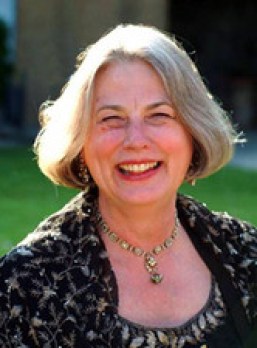
Catherine B. Asher. Credit: University of Minnesota website

Asher has gone beyond Mehrauli and Delhi to look at the afterlife of the iconic tower that is the Qutb Minar. She shows us how strong its impact was on later structures, which mimicked its form in miniature, either as freestanding towers or engaged columns. Examples of such appropriation range from structures as far flung as the Qutbuddin Mubarak Khalji’s mosque in Daultabad, to several in Delhi itself, for instance the 16th century mosque in Lodi Garden.

And yet the meaning of the original tower and its attached mosque is not uncontested. There have been suggestions, expressed first by Sir Syed Ahmad Khan, that the Qutb Minar was built by the Chauhans. While this is an opinion that is not generally espoused, at least by an educated readership, more common is the interpretation of both mosque and tower primarily as signifying the triumphalism of Islam. This is done on the one hand through an emphasis on the temple destruction associated with the site. On the other, it is fostered by the ASI signage and publications calling the mosque Quwwat al-Islam, literally, ‘strength of Islam’. This name, in fact, was not used for the mosque before the 19th century.

Asher questions many of these popular ideas, which often have their roots in colonial scholarship. She follows recent scholars such as Finbarr Flood, whom she refers to several times, in asking for a more nuanced reading of the site and what it signified in the past. Yet she does not break free of some of the more well-entrenched notions. Dichotomous ‘Islamic’ and ‘Indic’ traditions are treated as a given, without going into details of the motifs that are seen on the early Sultanate architecture to analyse their roots. The problem of the discipline of history becomes very apparent in such cases. A scholar of ‘Islamic’ art and architecture is trained to see the Qutub complex as Islamic architecture. The author, while she makes detailed comment on the calligraphy that adorned the early Sultanate structures, has no comment on the use of motifs like the lotus and the kalash, Indian motifs which also feature in the surface decoration. These motifs, in fact, persisted as an integral part of the ornamentation of mosques and tombs in Mehrauli and elsewhere, through the centuries, till the end of the Mughals.

Moreover, while it is important to study the architectural creations of the Ghurids in Afghanistan, as Asher has done, to understand their buildings in Delhi, it may not be enough to trace the roots of Ghurid architecture in Afghanistan merely to the previous ‘Islamic’ dynasty – the Ghaznavids. There were examples of pre-Ghaznavi art and architecture that abounded in the landscape – notably the great Gandhara tradition. It is time that its significance for later developments is also studied.

On the whole, however, the book is a valuable resource and informative read on a very important archaeological site. The inclusion of a large number of contemporary photographs and also archival images, match the scholarship, and live up to the standards set by the Marg series of scholarly volumes.

Swapna Liddle wrote her PhD thesis on the cultural and intellectual history of 19th-century Delhi. She is the author of Delhi: 14 Historic Walks and Chandni Chowk: The Mughal City of Old Delhi.

source: http://www.thewire.in / The Wire / Home> Books / by Swapna Liddle / November 30th, 2017
Remembering Umrao Begum

Basti Nizamuddin, NEW DELHI  :

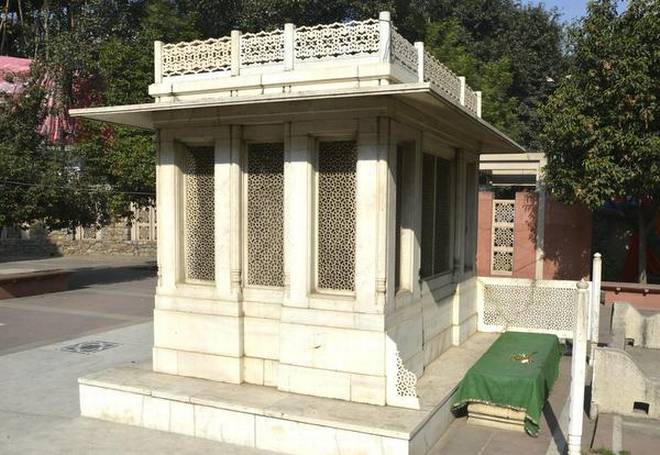
RAVE CONCERN Umrao Begum’s grave, covered in green cloth in Nizamuddin | Photo Credit: V. Sudershan

The unmarked resting place of Miza Ghalib’s wife deserves an epitaph

The grave of Mirza Ghalib’s wife, Umrao Begum, in Basti Nizamuddin, just at the side of her husband’s tomb, lacks an epitaph, probably because nobody tried to inscribe one on it in 1955 (when the poet’s memorial was built) or because she preferred anonymity as per the strictest tenets of Islam. Even so she deserves one for posterity’s sake. Umrao Begum was a pre-teenager when she married Ghalib, who himself was just 13 at that time, and the two shared conjugal bliss for nearly 57 years.

Umrao Begum was a kinswoman of the Nawab of Loharu, an erstwhile State now merged with Rajasthan, and her cousin was Bunyadi Begum, Ghalib’s sister-in-law. The begum, who was the Nawab’s sister, gave her haveli in Gali Mir Qasim Jan to Ghalib when he was in need of accommodation.

Umrao Begum bore seven children, all of whom died in infancy, leaving her and the poet heart-broken all their lives. Even the nephew, Nawab Zainul-abadin Khan Arif, whom they adopted, died young at the age of 18, though he had made his mark in Urdu poetry by then.

Strict lady

Umrao Begum was a strict Muslim lady, whereas Ghalib was not at all orthodox. After the First War of Independence of 1857, the poet was accosted by an English officer who asked him if he was a Muslim (as most members of the community were suspects in the eyes of the British). Ghalib replied “Half”. The officer sought an explanation to which Ghalib said that though he drank, he did not eat pork. The amused officer, marvelling at his wit, left him in peace.

Once Ghalib came home with a man carrying a basket full of wine bottles, bought with his first pay. Umrao Begum asked him why he had spent all the money on liquor, to which his reply was that God had promised to feed everyone but had not made any provision for drink, for which one had to make one’s own arrangements.

At another time he entered the courtyard of the house with his shoes on his head. To the Begum’s query, he replied that as she had made the whole haveli a masjid by her piety he had no other option. Umrao Begum died in 1870, a year after Ghalib, when Mahatma Gandhi was only a few months old and was buried according to her wish next to the poet.

Unfortunately, the Ghalib memorial built 85 years later became a barrier between the two graves, both of which should have come within its ambit. But it’s never too late to make amends for an oversight — if need be with Government help.

Her love for Ghalib was intense or he wouldn’t have been able to lead the carefree life he did. She was the one who took care of the house despite the poet’s love for gambling and dance girls, one of whom took undue advantage of him. Despite mischievous gossip by mohalla women, Umrao Begum was unruffled because she was convinced of her husband’s goodness of heart. Even when there was paucity of funds, she managed to see it to that Ghalib and nephew Arif got three square meals a day.

After the death of her children, she was the one who comforted her Mian Nausha so that the misfortune did not affect his mental equilibrium, without which his wit would not have continued to flow like the sparkling Thames.

Facing the music

Ghalib spent most of his time outside the haveli, except when he was writing poetry, having his meals or resting. So it was Umrao Begum who faced the creditors as she was the one who responded to the knock on the door in the absence of a regular maid. When the fat Kotwal of Delhi tried to bully Ghalib, as he disliked the poet because of their love for the same tawwaif and considered him a potential rival (as he always stole the limelight at the kotha), his wife was the one who confronted the Kotwal’s importunate minions at the haveli’s entrance and sent them away with the proverbial flea in the ear.

When Arif was grooming Alexander Heatherley “Azad” as a shair, despite his Anglo-Indian antecedents, Umrao Begum took it upon herself to see to it that they were not disturbed and had some refreshments too during the long hours of coaching. Ghalib who had earlier imbibed the love for shairi in Arif, also fawned on him and when he died an untimely death, poured out his grief in a heartfelt elegy (quoted from memory) that is among his best poems: “Jatey huey kehtey ho qayamat ko milenge kya khoob, qayamat ka goya din hai koi aur!” (While departing you say will meet on the Last Day of Judgement, what an excuse on the pretext of a reunion on a vague day in Eternity).

Reading the elegy Umrao Begum burst into tears and told Ghalib not to rub salt into her raw wounds, according to Arif’s pupil, Alexander Heatherley’s descendant, George Heatherley who died in Perth a few years ago. Umrao Begum’s grave close to Ghalib’s is testimony enough, if one were needed indeed, of the emotional link between the two. Then why deny her the courtesy of an epitaph to seal the bond for the benefit of future generations? No matter how distant may be Arif’s final place of repose.

source: http://www.thehindu.com / The Hindu / Home> Society> Down Memory Lane – History & Culture / by R.V. Smith / November 27th, 2017

Shrines of sand

Hyderabad, TELANGANA :

Tucked away in the locality of Urdu Shareef is the shrine of a sufi saint

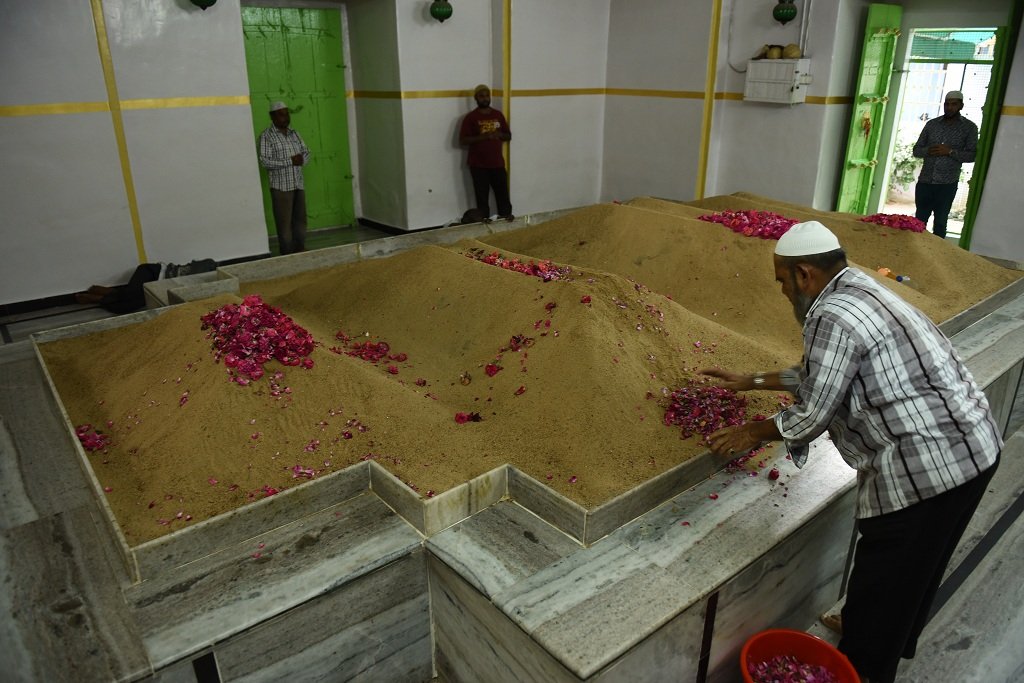
The sand graves of Hazrat Arifullah Syedna Shah Saadullah Saheb Naqshbandi and others in Urdu Shareef. Photo: Hrudayanand

The Deccan region has been blessed by the influence of many sufis, saints, gurus and spiritual leaders. It is said that 1400 paalkis (palanquins) came to Deccan, symbolising the number of sufi-saints. They spread the message of universal brotherhood, love, tolerance, peace, harmony, humanity and amiable relations between the two major communities. Many devotees and followers also embraced Islam. The entire Deccan region and the city of Hyderabad, in particular was visited by many god men, who not only commanded respect and reverence from common man, but also from nobilities and elite class of the society.

The old city of Hyderabad i.e. the southern part has shrines of many famous Sufi-saints, whose annual Urs are still celebrated with great devotion.

A little away from Pathergatti High Court road is the locality called Urdu Shareef, where the army of Mughal Prince Kaambakhsh stayed during that period. The palace of Kaambakhsh was also constructed in the vicinity.

It is in this area that you will see the shrine of Hazrat Arifullah Syedna Shah Saadullah Saheb Naqshbandi. The 175 year old shrine has a large dome with beautiful architecture housing four graves made of fine sand. It is an uncommon and unusual sight, as graves are usually made of cement, mortar, lime and stones; and rarely are covered by marble, the graves appear like sand dunes, and lie adjacent to one another. The biggest grave is that of Hazrat Saadullah Saheb.

The adjacent one on the left side is of his brother, Md Osman Saheb, the next one is of Osman’s wife, while on the far right is the grave of his favourite disciple, Mirza Ashraf Ali. The entire area of these graves is seven feet long and four feet wide. The sand is changed annually and many devotees, both Hindus and Muslims pay their respect and seek his blessings.

Hazrat Saadullah was born in the Frontier Province. He came to Deccan during the reign of Nawab Nasir-ud-daula, the fourth Nizam, and settled here. Many nobles including, Maharaja Chandu Lal, used to come to seek his blessings. A great scholar, he was an Arabic and Persian poet as well. Since he was physically disabled, he would sit on the back of a disciple when roaming around the city.

The impressive dome was constructed by one of his ardent followers, Maulvi Mohd Hussain, who was the tutor of the fifth Nizam, Mir Mahboob Ali Khan.

Just opposite the shrine is a small mosque built by Hazrat which bears similarity with Charminar. The architecture on the parapet, minarets and the ceiling is extraordinarily magnificent.

source: http://www.telanganatoday.com / Telangana Today / Home> SundayScape> Telangana Diaries / by Dr. Anand Raj Varma / October 15th, 2017

Mughals were leaders of first independence war, says NALSAR University of Law V-C

Aligarh, UTTAR PRADESH :

SirSyedMPOs22nov2017

Lucknow :

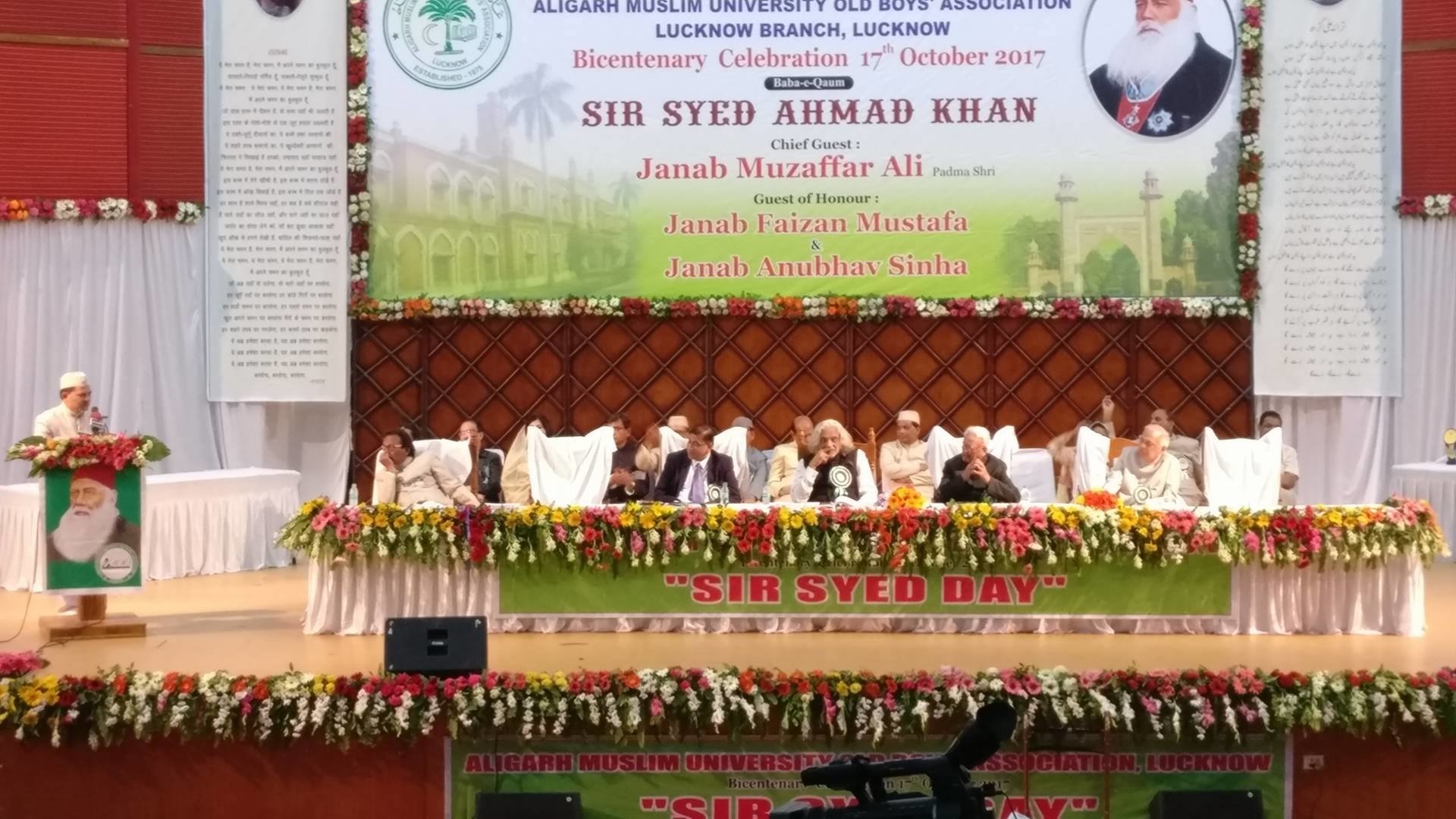
These are times of aggressive nationalism we are living in, said vice chancellor of NALSAR University of Law, Hyderabad, Faizan Mustafa, where we have started to consider Mughals not part of the country. Mustafa speaking at the grand 200th bicentenary birth anniversary celebrations of Sir Syed Ahmad Khan in Lucknow on Tuesday went ahead to say that Mughals were in fact leaders of the first war of independence of 1857 and were considered so by the likes of Tipu Sultan, Tatya Tope and others.

“Mughals were an integral part of India who could not be fragmented from its soul and now we are here in these times of aggressive nationalism where we are having doubts about them. And this nationalism has not only made us target the Mughals, but also recently there were similar talks about Rabindranath Tagore,” said Mustafa who was the guest of honour at the Sir Syed Day organised by Aligarh Muslim University’s (AMU) Old Boys’ Association. Filmmaker Muzaffar Ali was the chief guest on the day, both of whom being former pupils of the university, recounted their time spent at AMU.

Mustafa also cleared that now when criticising the government is equated to being seditious, it was in 1860 after a fatwa (decree) from clerics at Deoband against the British that the law of sedition as a charge was enacted. Mustafa also exhorted his fellow Aligs (as past pupils of AMU are popularly known) that the dream of Sir Syed has not yet been realised with Muslims lagging in both modern education and securing government jobs.

In his brief speech, Mustafa also touched upon the controversy around AMU’s minority status and said, “People say that the minority status was for the college and with AMU a university, it does not stand now. I researched for this when I had to submit in Allahabad high court as AMU’s stand on the case and I found that when Sir Syed laid the foundation of the madrasa it was the university he had in mind and when he gave his first speech in 1877 when the school was raised to the college level, in front of Lord Lytton he said that one day the college would be a university.

Mustafa also said that blaming Sir Syed for the two nation theory was not just wrong but also absurd. “In several of his recorded speeches, he has identified and defined both Hindus and Muslims as not separate identities but one qaum (community) and one nation. Mustafa considered an authority on law also said that reforms in Muslim personal laws were needed and could only be possible through the ideas of Sir Syed Ahmad Khan.

ON the day, the AMU Old Boys’ Association and its members that had gathered in the city from different parts of the state passed the resolution to raise demand of Bharat Ratna for Sir Syed and to generate funds for a Sir Syed House in Lucknow to carry on his Aligarh movement of education.

source: http://www.timesofindia.indiatimes.com / The Times of India / News> City News> Lucknow News / by Yusra Hussain / TNN / October 18th, 2017

Jamia Milia Islamia alumni meet evokes nostalgic memories

NEW DELHI :

The ex-Jamia students came all the way from India, Oman, Saudi Arabia and the UK for the meet

The meet not only fostered the alumni bond, but also extended a helping hand to fresh graduates

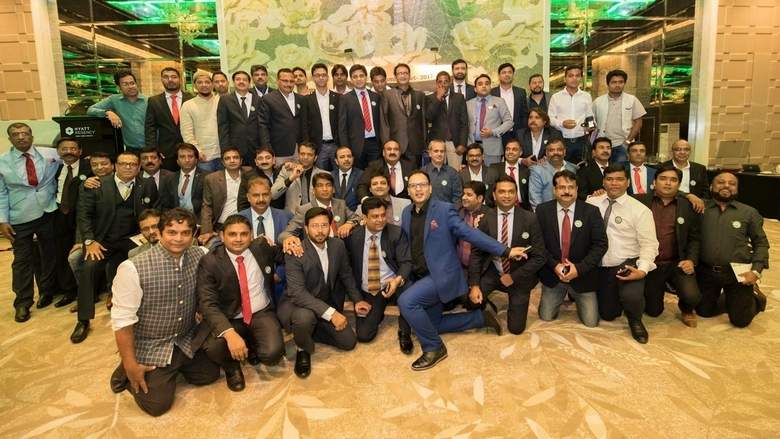
It was an evening steeped in nostalgia, as over 500 alumni of New Delhi’s central university and one of India’s most famous – Jamia Millia Islamia – came from all across the world to celebrate their alma mater’s 97th birthday.

Scores of ex-Jamia students who travelled all the way from India, Oman, Saudi Arabia and the UK along with their families, attended the event at Hyatt Regency, Dubai Creek Heights.

Apart from the distinguished guest list that included Ambassador of India to UAE Navdeep Singh Suri, the university’s vice chancellor Talat Ahmed and other dignitaries, successful alumni shared nostalgic memories of their time at the school.

The programme began with a recitation from the Holy Quran, followed by the university’s anthem called sung with full enthusiasm.

Addressing the gathering, prominent alumni Parvez Akram Siddquie welcomed the guests and JMI alumni and highlighted the university’s key objectives. He spoke about starting a medical college in the university’s campus, expansion of the campus, and campus placement for students.

Talking about the role of the alumni meet, Siddquie added: “The heart of the alumni meet lies in giving back in kind to their alma mater. Such meets not only aim to bring together and foster a bond among alumni, but also are a means of extending a helping hand to fresh graduates in different aspects, from job-hunting to settling down in the UAE. Many a time, the alumni chapter has also generated funds for pressing needs like a hostel accommodation at the university.”

Dr Haji Ibrahim, co-chairman of Malabar Gold & Diamonds, announced the company’s support in building the hostel facility for students, on the Jamia campus.

JMI vice-chancellor Talat Ahmed delivered a powerful speech on the values and ideals that define the university. Stating that JMI is a confluence of modern and age-old values of brotherhood and mutual coexistence, he said: “JMI is a platform from which students embark on a journey of learning and self-discovery. It is a model of national integration where children of every religion, sect, and denomination study together,” Ahmed said.

“We recalled our college days today, as we met our batchmates and friends after so many years, even 20 years in some cases. We shared the same jokes that we cracked as students and had a great time catching up,” said Imtiyaz Ahmad, a JMI alumni and one of the meet’s organisers.

Suri assured his support in getting the Global Jamia Alumni Network (GJAN) official recognition and registration in the UAE.

Talking about the role of Indian expats in the UAE, Suri said: “I was talking to some very high officials in the UAE government, and they said we have been told to drive the India-UAE relationship because our leaders believe that Indians are the people we trust. Why? ‘Because, at home, we leave our children in the care of Indians, in hospitals we put our lives in the hands of Indian doctors, and in banks, we put our money in the hands of Indian bankers’ he said. There is a lot of goodwill earned by the Indian community.”

The show concluded with the vote of thanks by one of the main organisers and JMI alumni Nadeem Hasan. Others key alumni members who helped in organising the event were Imtiyaz Ahmad Ansari, Eqbal Ahmad, Abdul Khaliq, Abbad Khan, Ahmad Khan, Riyaz Khan, Shams Khan, Jalal Ahmad, Rizwan Ahmad, Salauddine Ansari and Amjad Khan has been appreciated to make this event successful and Syed Nadeem Zaidi.

saman@khaleejtimes.com

source: http://www.khaleejtimes.com / Khaleej Times / Home> Nation / October 24th, 2017

Novel project to promote reading habit in children

Vijayawada, ANDHRA PRADESH / Hyderabad, TELANGANA :

Sadiq Ali has been on a mission to promote book-reading through a mobile library.A.V.G. Prasad

Cart loaded with books set to reach schools in State

To inculcate the love of reading in children, former journalist and Hyderabad-based businessman Sheik Sadiq Ali has embarked on a unique mission. He operates a mobile library by stacking books on a pushcart that moves around remote villages and distributes books to young children who do not have access to them.

The collection of books has all genres that cater to different tastes. “Books stimulate our imagination, curiosity and creativity, thereby enriching our lives. Realising the need to make books accessible to people at the grassroots level, I decided to take up this task,” he explains.

Why use push cart when he can afford a car or other comfortable mode of transport? “Most of my friends suggested that I fix motors to the cart or at least hire workers to push it. But I refused and chose to do it myself because I wanted to create interest among people who usually see vegetables, toys or other things sold on such four-wheeled carts. I was sure that it would raise the curiosity of kids, my target group,” he explains.

Mr. Sadiq, popular as Thopudu Bandi Sadiq, has done his Masters in Telugu from the Osmania University and his wife Usha is Joint Director in Agriculture Department. He invests in real estate and also runs an online matrimonial website and the money generated there is spent on purchase of books in bulk from publishers, most of who are generous with subsidies.

His pushcart first hit the road on February 22 at the People’s Plaza on the Necklace Road in Hyderabad in 2015, covering 350 km in the twin cities. The next year in January, the vehicle loaded with books set out with a slogan of Palle ku prematho thopudu bandi, covering about 1,000 km in 100 days across villages in Hyderabad, Ranga Reddy, Nalgonda, Medak and Warangal districts. This was followed by Vooroora Grandhalayam (library in every village) wherein he started libraries in 130 villages.

If his badi-badi ki thopudu bandi catered to the need of books in village schools, his Basthi lo pustakala panduga is aimed at taking books to children in summer holidays. His next programme Adavi thalli ki akshara thoranam targets Girijan thandas in the Bhupalapalli district of Telangana, from November 27.

Foray in AP

In collaboration with the Andhra Pradesh Library Association (APLA), Mr. Sadiq Ali now plans to expand his library facilities to children in Andhra Pradesh as well.

“Based on the route map given by the APLA, I’ll start books distribution from February 1, from Thiruvuru,” he says.

He intends to set up two godowns at Kallur which borders Thiruvuru and at Mylavaram and each of them will have stocks of books sufficient for 15-20 libraries.

“The APLA will give all possible support to him,” said Sarada Raavi, general secretary of the Association.

source: http://www.thehindu.com / The Hindu / Home> National> Andhra Pradesh /  by P. Sujatha Varma / Vijayawada – November 20th, 2017

‘Books important for knowledge society’

Vijayawada, ANDHRA PRADESH :

Books play key role in creation of a knowledge society, said Krishna district Collector B. Lakshmikantham, on Sunday.

Addressing a meeting organised by Andhra Pradesh Library Association at Sarvotham Bhavan near Benz Circle as part of 50th National Library Week celebration, Mr. Lakshmikantham said the library movement has great significance in Andhra Pradesh State as people who spearheaded the library movement also were important part of the freedom struggle.

The Collector said every individual must take to book-reading as books never let down anybody. He said knowledge was essential for all-round development of a society and pointed to the fact that Andhra Pradesh State was in the forefront in implementation of many good people-centric programmes.

Former MP Chennupati Vidya was honoured with this year’s Gadicherla Foundation Award, named after freedom fighter and champion of library movement Gadicherla Harisarvottama Rao. Sheik Sadiq Ali, a former journalist who is working relentlessly to promote reading habit among children in villages, was presented with the Paturi Nagabhushanam Grandhalayam Puraskaram on the occasion.

source: http://www.thehindu.com / The Hindu / Home> National> Andhra Pradesh / by Special Correspondent / Vijayawada – November 20th, 2017

As Urdu gets a fillip from Telangana govt, khatibs see a glimmer of hope

Hyderabad, TELANGANA :

UrduMPOs20nov2017

As he sits in the quiet, nondescript lane of Chatta Bazaar, surrounded by stacks of paper and the smell of fresh ink of screen-printing, one could easily mistake Mohammed Ghouseuddin Azeem for just another vendor taking orders for wedding cards. wading through the rickety scooters that dangerously lean onto each other, we reach Azeem, who eyes us rather suspiciously when we ask: “Kya aap khatib hai?”
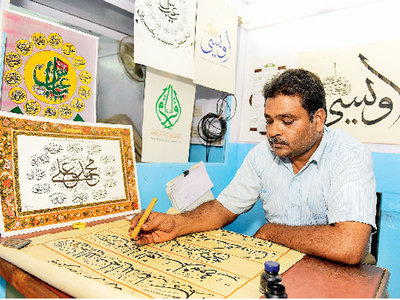
A khatib, (which roughly translates to calligrapher), is the name for artists who master the age-old art of designing alphabets and words in Urdu using a specialised pen and Indian ink. But for Azeem, khushnawees or khushkhat (calligraphy) is more ‘grammar’ than art. “It may seem like we are writing it anyway we want, but if I draw the alphabet ‘ba’ in font size 12 and font size 60, the distance between the first part of the letter to the end part will be same across the two sizes,” explains Azeem who has been a khatib for over 26 years.
Chatta Bazaar, where his simple workshop is situated, was once the hub of khatibs. But today, only seven-eight are left, rues Azeem, who admits khushnawees is a dying art.
“In the 1990s, the computers came and soon, the Urdu font followed. suddenly khatibs were no more in demand,” recollects Azeem. The first blow came from Urdu newspapers, which once mass-recruited khatibs for chronicling the city’s daily life. But once the print industry moved onto the faster, cost-effective digital medium the art of khushkhat was restricted merely to ornate cards and banners. “I won’t say khushnaweesi has lost its demand completely. The advent of the digital era just made it more precious and rare — something to be cherished,” says Azeem, wistfully.
For Chatta Bazar’s seven-odd khatibs, who run Urdu printing shops parallely, the recent announcement that the government has declared Urdu the second official language of Telangana, serves as a small glimmer of hope to do all they can to preserve their art. “we are the only few remaining who know this art. We have to do this, we have to keep at it, so we ensure this stands the test of time,” says Azhar Hashmi, another khatib.
But passion alone doesn’t fill stomachs and that is precisely why one of them only has his father’s calligraphy collection to show in reminiscence of old times. “I left khushnawees long time back. I used to write for Urdu dailies, but when they stopped, I lost my speed completely so I set up a printing shop,” says 51-year-old Afzal Mohammed Khan. He pulls out his father’s blue scrapbook from under his desk, and shows it to us, with a hint of nostalgia and pride lighting up his face. “My father, Ghouse Mohammed Khan was the best khatib in town in the 60s and 70s. He made all these,” says Afzal, as he turns the 50-odd pages of the book to show off his father’s artistry. One of them shows the drawing of Rajeev Gandhi, with words in Urdu reading, ‘Humara Maseeha’. Another shows the masthead of the daily, Rehnumaye Deccan, another shows the masthead of a paper Munsif. “This was a pandra-roza, or fortnightly,” he says, pointing to the cut out of the masthead his father designed. An old picture falls off the leaf — that of Ghouse, with some dignitaries. Afzal turns over the photo to read the lines written: “This was clicked over 35 years ago with the Education Minister Muddu Krishnama Naidu.”
The male-dominated Chatta Bazar has no sight of women, even as customers. So looking for a woman khatib is like trying to find a needle in a haystack. “Women used to write for the fortnightly or weekly papers. But once the computers came, they too were pushed back into the homes. Now they do write, but as a hobby, not commercially,” explains Afzal. He shows another photograph of his father with a bunch of students at the Marqaz Kushnawwezi in Nampally, where he taught young women calligraphy.
Clearly, things today are a far cry from back then when Urdu got its due. Even as attempts are being made to revive the lost glory of the language, the khatibs lament that outside Old City, their art has barely any takers. “Our market will always be the same — Old City dwellers who want wedding cards and other special correspondence written. The wedding card demand is also there only because the religious heads have mandated the use of Urdu. else everyone would have switched to English,” says Mohammed Abdula, a khatib, adding, “Jab tak Urdu ko tawajjon nahi milega, khatib ka haal aisa hi rahega.”

An evolving art
With changing times, the art too had to evolve and adapt. While the computerised fonts of Urdu run in thousands, there are just seven fonts used for Khatib — Nastaleeq, Riqa, Diwani, Suls, Nasq, Kufi and Diwani Jali. Each of these fonts are unique not just in the way they are recreated on paper, but also unique in terms of their usage and significance. while a Suls is preferred for headings, a Kufi finds its place on the walls of a Masjid and Riqa decorates the Quran. The khatibs uses a pen with nibs of varying sizes, ranging from 1mm to a 3cm. These are entirely made with bamboo. Pens with metallic nibs are called ‘Baru ka Kalam’ by some. “Calligraphy as done before is hardly seen anymore. We use any water based ink now. earlier we used to go to a colour shop in Gulzar House were a special color called Kala Kankar was available. We would heat it in decoction to make ink,” recollects Mohammed Abdula. Now the color shop has gone, Gulzar house has changed and so has the khatib’s precious artform.

 
Will the newfound recognition that’s coming Urdu’s way from the Telangana government rewrite the khatib’s tale and change his fortune? Only time will tell.

Urdu was born here, it grew here, it’s our language
The beauty of the language is that it is linguistically much richer. We say ‘I love my dog and love my son’ with no difference between the two kinds of love in English. But in Urdu, we say ‘Main apne kutte se pyaar karti hoon aur apne bete se Mohabbat karti hoon’. that impact is what Urdu gives to expression. That difference between ‘mohabbat’ and ‘pyaar’ is where Urdu’s beauty lies.
Iqbal Patni, poet

I’m happy that urdu is getting its due finally
The move to make Urdu the second official language of the state is a good one. Now, the government must employ translators at all offices from Mandal to Secretariat level to ensure that those who learn Urdu will get employment as well because the perception that it is only spoken by minorities is plaguing its growth.
Prof Naseemuddin Farees, MANUU

Urdu is India’s awaam ki boli

I can’t explain how happy I am that Urdu, my mother tongue, has become the second official language of Telangana — this news made my day. Trust me, I’ve been asking Mahmood Ali (deputy CM of Telangana) for years now, why we don’t have names of roads in Urdu. That’s the only way people will see it and get familiar with it. Though my father lived in England for a while and I studied in an English medium school, at home we never spoke in English; it was always Urdu. When we were kids, an Urdu master would come home to teach us. It was that important.

Laxmi Devi Raj, textile revivalist 

Urdu is a language of poetry, music and culture. All kinds of books were translated into Urdu for the general populace to read, including the religious books. But in the 70s the state saw an influx of migrant population, that was alien to Urdu and knew little about it. My parents could read and write in Urdu, but I could only speak. So people are losing touch with the language. We are losing out on our culture and manuscripts chronicled in Urdu. the state recognition is a step to achieve the multi-lingualism which Hyderabad was once famous for.

Anuradha Reddy, historian

Humare liye sona khana peena uthna baithna odhna bichana — everything is Urdu. I think Urdu is the zabaan of a whole lot of Indians. from Lucknow to Bhopal, Punjab to erstwhile Deccan provinces, the language on the street is Urdu. Strangely, it’s ‘called’ Hindi. Urdu was largely the awaam ki boli. At a time when Farsi, persian et al were court languages, Urdu was made for the common man to speak. After independence, Hindi became the official languages. Now that the Telangana government has taken a step in the right direction, they should not simply announce it and forget about it. We should work towards making Urdu a part of everyday life. mushairas should be held again, government offices should allow public to submit requests / applications in Urdu, apart from Telugu and English, sign boards should feature Urdu prominently. Only then will this move make any real impact.

Fawad Tamkant, artist

source: http://www.timesofindia.indiatimes.com / The Times of India / News> City News> Hyderabad News / November 19th, 2017

Mukhtar Abbas Naqvi to inaugurate 4th ‘Hunar Haat’ today

UTTAR PRADESH / NEW DELHI :

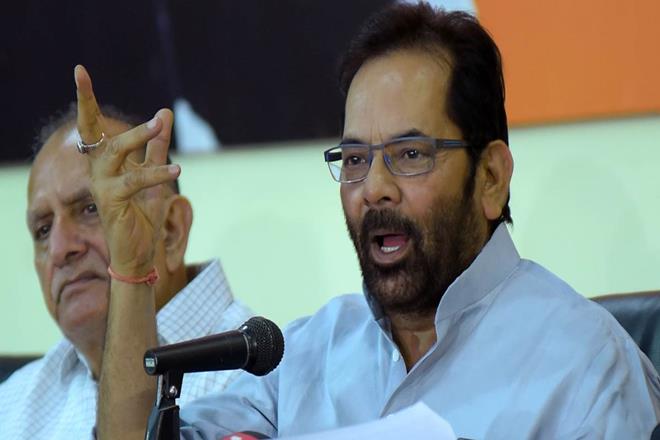
Union Minister of Minority Affairs Mukhtar Abbas Naqvi will today inaugurate the fourth edition of the Centre’s ‘Hunar Haat’ at New Delhi’s Pragati Maidan, where works of artisans belonging to minority communities and Tihar Jail inmates will be on display.

Union Minister of Minority Affairs Mukhtar Abbas Naqvi will today inaugurate the fourth edition of the Centre’s ‘Hunar Haat’ at New Delhi’s Pragati Maidan, where works of artisans belonging to minority communities and Tihar Jail inmates will be on display. (Image: IE)

Union Minister of Minority Affairs Mukhtar Abbas Naqvi will today inaugurate the fourth edition of the Centre’s ‘Hunar Haat’ at New Delhi’s Pragati Maidan, where works of artisans belonging to minority communities and Tihar Jail inmates will be on display.

Speaking at a press conference, the Union Minister said that the fourth edition will continue till November 27 and will exhibit the country’s rich heritage and skills. “This Hunar Haat is unique from earlier exhibitions as for the first time products made by inmates of Delhi’s Tihar Jail are also available. These products include furniture, handlooms, handicrafts, bakery items, hand-prepared oil, organic spices and grain,” Naqvi said.

He added that the artisans’ exquisite pieces of handicraft and handloom works such as cane, bamboo and jute products of Assam; Tussar, Geeja and Matka silk of Bhagalpur (Bihar) and traditional jewellery from Rajasthan and Telangana will be on display at the Haat. “New products to be displayed include baskets made from natural grass by artisans from Puducherry and Uttar Pradesh, Gotapatti work from Rajasthan and mural paintings from Gujarat,” the Union Minister said.

He added that the ministry had earlier organised the Haat for the first time at Pragati Maidan last year.

“The second and third editions were organised in the national capital and Puducherry, which received huge response. ‘Hunar Haat’ will also be organised in Mumbai, Kolkata, Lucknow, Bhopal and other cities in the coming days,” the minister said. He further said that the Ministry is working to establish a Hunar Hub in all states of the country where artisans will be provided training as per present requirement.

‘Hunar (skill) Haat’ is a platform created by the Minority Affairs Ministry to offer employment and market opportunities to artisans and craftsmen from minority communities.

source: http://www.financialexpress.com / Financial Express / Home> India News / by ANI / November 15th, 2017

A Nikah with a difference!

Deoband, UTTAR PRADESH :

Mohammed Qasim lived in a small town in north India. One afternoon he came home and sat on the ‘palang’ placed in the courtyard. While serving the lunch, his wife said, ‘What have you planned about the marriage of our daughter?’ Sitting on the chabutra of the kitchen, the daughter was washing the lentils, at a short distance. Mohammed Qasim glanced at his daughter. He got down from the ‘palang’, wore slippers and went into the ‘baithak’. His wife shouted from behind ‘at least have lunch!’

Mohammed Qasim asked a person to call Maulvi Abdullah. Abdullah was his nephew and was still studying in a madrasa. He lived in a room nearby. He rushed to the call of his uncle. His dress would be always clean but the trouser had a tear and the shirt had a stain of ink.

Mohammed Qasim asked his nephew. ‘Son! Do you have any plans about your marriage?’

Abdullah was a little embarrassed by the question. He said ‘how can I think of my marriage in the presence of my elders?’

What do you say about ‘Ikraman’? If you agree Nikah would be solemnised’.

Abdullah thought for a while, and said ‘Uncle whatever decision you and father will take, I won’t dare to reject.’

Mohammed Qasim’s brother-in-law lived in Gwalior. He had told Qasim to marry Abdullah if he finds any suitable proposal. Listening to the reply of Abdullah, Qasim asked him to stay there itself, went inside the house and told his wife. ‘what do you say about Abdullah for our ‘Ikraman’? He is our relative; there is nothing to enquire about him. If you agree let us solemnize their Nikah.’

Qasim’s wife also found the proposal suitable. Both agreed Mohammed Qasim came to his daughter. She was still busy washing lentils. He sat beside his daughter and said ‘Daughter! We have decided to solemnized your Nikah with Maulvi Abdullah. First let us have your consent?’

Ikraman buried her face between her knees in shame.

Qasim’s wife told him, ‘How can you talk of her marriage with a girl? Qasim said’ what’s wrong in that. It’s about shariah. It is necessary to have girl’s consent. There’s no place of shame in the matter of shariah. If Ikraman doesn’t agree, we will find another match. But it is necessary to have her consent.’

Qasim’s wife said ‘modest girls don’t show their consent openly. Had she to refuse the proposal she would have looked at me or would have left the room. This way I would have understood her wish. In such matters girls’ silence is their consent.

After listening to his wife Mohammed Qasim stood up and went outside. Abdullah was still waiting for his uncle in the ‘baithak’. Two or three other persons were also present. Mohammed Qasim called them and said. ‘I am giving the hand of my daughter Amtul Ikram in the hands of Maulvi Abdullah for Nikah.’

He gave 2 paise to a man and asked him to bring dried dates from the shop at the corner of the street. The persons present there became witnesses, and the Nikah was solemnized in few moments. Then Mohammed Qasim asked the groom bring a Doli (palanquin) and take away his bride. When the doli arrived Mohammed Qasim came into the house and sat beside his daughter who was on the prayer mat to offer Zohr prayer and said, ‘Daughter! By the grace of Allah I’ve solemnized your Nikah. Maulvi Abdullah is waiting for you outside, now you go to your house with him.’

Mother was also surprised, she said ‘you should have given me some time. I would have made some good dresses for our daughter. At least I would have changed her dress at the time of Nikah.’

‘Why what’s wrong in this dress? Can’t she offer Namaz in this dress? When her dress is good for namaz why not for Nikah’ asked Qasim.

Meanwhile Ikraman wore burqa. Mother prayed for her, father patted her and took her to the doli. On their way he gave her sound advices about rights of husband and domestic responsibilities.

The next day Qasim invited daughter and son-in-law at his house. Served whatever food was available in the house to the people present in the ‘baithak’ and told them that it was the valima of Maulvi Abdullah.

The story is of Deoband. Mohammed Qasim was later popularly known as Maulana Mohammed Qasim Nanotvi, the founder of Darul-uloom Deoband. His nephew Maulvi Abdullah used to study in Darul Uloom Deoband itself. After passing out from there he went to Aligarh. He was counted among close friends of Sir Syed Ahmed Khan and became the first Nazim-e-Deeniyath of Aligarh college.

Narrated by Mohammed Tariq Ghazi, grandson of Maulana Abdullah Ansari

source: http://www.siasat.com / The Siasat Daily / Home> Islamic Hub / November 16th, 2017