Category Archives: Arts, Culture & Entertainment

Chowmahalla wins National Tourism Award

Hyderabad, TELANGANA :

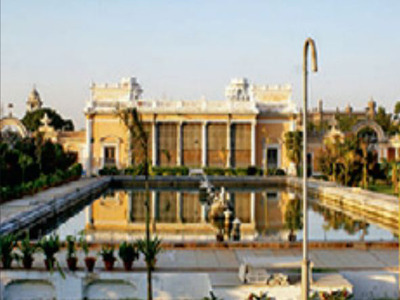
The majestic Chowmahalla Palace

Hyderabad :

The city’s magnificent Chowmahalla Palace has added another feather to its cap, bagging the National Tourism Award for being the best maintained monument. The award was among other honours presented by the Government of India, on the occasion of World Tourism Day observed on September 27.Speaking about the recognition, G Kishan Rao, director of the palace said: “It is a matter of great pride. Earlier in 2012, Chowmahalla received the award of merit from UNESCO.”

Pointing out how the palace is among the most sought-after tourist destinations in the city, Rao said the heritage structure is equipped with all the necessary facilities for visitors, including those who are differently-abled.

On an average 800 to 1,000 tourists visit the 250-year-old Chowmahalla Palace in Khilwat every day . Its construction, ordered during the reign of the third Nizam, was completed during the time of his successor. Since, it was used primarily to hold official functions. Over time, the ex panse of the heritage property, once spread over 45 acres complete with 16 palaces, shrunk to a meagre 12 acres. Yet, the impressive collection of artefacts, including crockery, garments, cars and rare photographs from the Nizam’s era – housed within, are in impeccable condition.

“After the death of seventh Nizam of Hyderabad, the palace was in a deplorable state. It was in 2001 when Princess Esra (first wife of Mukarram Jah) took it upon herself to restore it that things changed for the better. In 2006, we opened the place up for public. Today , the palace is also a central place for mega cultural events in the city,” said Rao, sharing how the paraphernalia on display also comprise items brought in from the King Kothi Palace, where they were in the cellar.

source: http://www.timesofindia.indiatimes.com / The Times of India / News> City News> Hyderabad News / TNN / September 29th, 2017

I enjoy literature and he enjoys a bit of nonsense

Lucknow, UTTAR PRADESH / Mumbai, MAHARASHTRA :
ShaadAliMPOs29sept2017

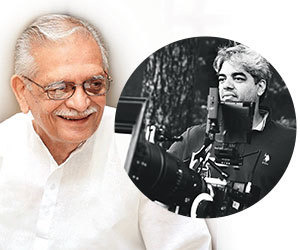
Shaad Ali hadn’t even heard of field hockey player, former India captain and Arjuna awardee Sandeep Singh, when Sneha Rajani and Chitrangda Singh approached him last year to make a film on his life. “I was shocked and embarrassed and instantly realised that I needed to make this film so everyone gets to know his story,” the filmmaker informs, adding that he started prep exactly a year ago.

By his own admission, it is the strongest, toughest and the best story he has worked on so far. “There is also an additional responsibility as it’s based on a real person who has been on a national duty all his life. But all of it also makes it an exciting challenge to dive into,” Shaad says, adding that he wanted his actors, Diljit Dosanjh in the titular role and Taapsee Pannu as another hockey player and his love interest, to be as true as the characters they took on. “It was important to have a real Sardar and Sardarni. In fact, they have just come back into my lives as Judwaa 2 is releasing and Diljit has finished shooting for a film.

We will now begin prep with hockey trainings, readings and workshops before shooting kicks off in the last week of October.” Besides marking a departure from love stories, the biopic will also be a reunion for the filmmaker with veteran lyricist Gulzar, who has penned lyrics for all his five directorials —from Saathiya to OK Jaanu. “I went for a narration without an appointment and he was moved to tears. It’s not a song-and-dance film so the music had to be woven into it in a certain way. The film belongs to hockey and Punjab.

There is also a love story thrown in, patriotism, pain, so it was important to invent a new language, which is not pure Punjabi or Urdu. We took some time to create that flavour. It will give the songs a universal feel but at the same time is rooted in Punjab,” Shaad explains. The filmmaker vividly remembers his first meeting with Gulzar, which was at the legendary poetlyricist’s Pali Hill office. He had gone there to narrate Mani Ratnam’s Manisha Koirala and Shah Rukh Khan-starrer 1998 film, Dil Se, on which he was an assistant director.

“Gulzar saab was dressed in his signature crisp white kurta pyjama and was very warm to all of us. I remember that he connected with the story more when he learnt that Manisha Koirala’s character had the same name as his daughter, Meghna,” Shaad recalls, adding that he met the veteran for a second time when he took AR Rahman along to meet him. “It led to the creation of “Chaiyya Chaiyya”.” The duo lost touch after that, reconnecting only when Shaad approached Gulzar again, requesting him to write dialogues for his directorial debut, the Rani Mukerji and Vivek Oberoi-starrer 2002 romantic-drama, Saathiya.

“At the time, he wasn’t writing for anybody else but made an exception for me. I have had an unconditional relationship with him ever since,” he says, adding that it’s more like a fatherson equation. “Also, we have a similar sense of humour. He knows that I appreciate language and a little bit of literature, while I know that he appreciates a little bit of nonsense. Toh thodi non-sense baton pe humari bonding ho jaati hai,” he says as he chuckles at the memory of their shared comfort zone. “We also fight but not as much as we used to earlier. He understands me more and knows where I am coming from.

Now, we might fight on nitty-gritty’s but fundamentally we are on the same page. Woh kehte hain ki laadla hai toh mere se jhagdega aur thappad bhi khayega,” says Shaad. On the matter of another reunion, with composer trio Shankar, Ehsaan and Loy for the fourth time after Bunty Aur Babli, Jhoom Barabar Jhoom and Kill Dil, he opines, “They are the Amar Akbar Anthony of my life. Woh toh anhoni ko honi aur honi ko anahoni karne wale log hain,” he signs off on that optimistic note.

source:  http://www.ahmedabadmirror.indiatimes.com / Ahmedabad Mirror / Home> Entertainment> Bollywood / by Avinash Lohana / September 29th, 2017

Acclaimed Assamese film, theatre personality Abdul Majid dead

Guwahati, ASSAM :

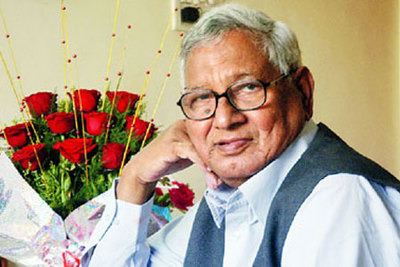
Veteran Assamese film and theatre personality Abdul Majid died here on Sunday following protracted illness, his family said.

Majid (86) is survived by his wife and three sons. He was admitted to a local hospital on September 15 due to age-related ailments, where he breathed his last this morning, the family said.

Assam Chief Minister Sarbananda Sonowal condoled Majid’s death, saying he gave a new dimension to Assamese cinema, along with showing his sense of social responsibility. “His death is an irreparable loss to the cultural field of Assam,” Mr. Sonowal added. Former Chief Minister Tarun Gogoi visited the filmmaker’s house to offer his condolences to the bereaved family.

Born at Jorhat in 1931, Majid made his film debut with Ronga Police in 1957 and went on to make the National award winning Chameli Memsahab, for which Bhupen Hazarika also won the best music composer’s award.

Other prominent films that Majid directed include Morom Trishna, Bonohansha, Bonjui, Punakon and Uttarkal. He also acted in several films.

Majid, a theatre director of equal repute, helmed popular plays like Banchit, Dhulimakoti, Sor, Xihat, Ahise and Sur. Majid also acted in several Assamese television serials, and directed the highly-acclaimed serial Namghoria.

Assam government had honoured him with the prestigious ‘Bishnu Prasad Rabha’ award, while several organisations have conferred him with lifetime achievement awards.

source:  http://www.thehindu.com / The Hindu / Home> Entertainment> Movies / by PTI / Guwahati / September 24th, 2017

18-year-old ragpicker Bilal becomes example for Kashmiri boys

Laharwarpora (Bandipora District)  , KASHMIR :

Srinagar :

It was a day of 18 year old Bilal Dar alias Billa of Laharwarpora of Bandipora district on Sunday when Prime Minister Narendra Modi mentioned his name in Mann Ki Baat on radio address.

BilalMPOs25sept2017

Bilal Dar was 14 year old when he started earning his living by picking up waste from the Wular Lake in Bandipora district of north Kashmir in 2013.

Bilal’s father Mohammad Ramzan Dar, who also a Ragpicker, died in 2003 due to cancer and he took to collecting plastic trash and other waste material from the Wular lake which would fetch him Rs 150-200 per day, which helped him financially support his mother Mughali Appa and two sisters.

According to Srinagar Municipal commissioner Dr. Shafkat Khan , Bilal used to collect over 12,000 kg trash annually till this day from the Lake which besides offered him livelihood, helped Lake to get rid of pollution caused due to garbage thrown in the lake by the residents living near the Wular Lake, he added.

“I used to take somebody’s boat in the wee hours of every morning and collect the rags from the Lake and which would fetch me some money after selling the same to trash dealers in the market,” Bilal Dar told TOI.

It was basically documentary produced by one Kashmiri film maker Jalal-u-Din Baba which depicted the life of Bilal Dar . The documentary won several awards in Mumbai and in the US at film festivals, according to producer Baba.

“Now we have appointed Dar as brand ambassador of the Srinagar Municipal Corporation. He will be given a special uniform and a vehicle to go and meet people in srinagar’s commercial and residential areas, to tell people the story of his work in Wular. This will help sensitise urban residents to understand value of environmental issues, cleanliness and garbage disposal,” Dr Shafkat Khan said.

Bilal Dar said, “I am very happy today that my work even acknowledged by the no less than the prime minister of India Modi.”

While Tassaduq Mufti, brother CM mehbooba Mufti gave me a boat for collection of garbage from the lake, state government gave Rs.50,000 for construction of house. Though this is meagre amount to build a house yet I am satisfied with whatever, help the government provided me, Bilal Dar said.

The world famous wular lake is on the verge of dying due to dumping of toxic debris, plastic, carcasses and much more.The Lake has reduced from 273 km to just 72 km of water expanse.

Ironically, the present state BJP minister for Forest and environment ministry Lal Singh has stopped the funds allocated by the GOI for its conservation, the forest officials disclosed.

Soon after his father’s death in 2003 Bilal had worked as a mechanic at an auto-repair shop and then as a helping hand at a tea shop but continued unrest in Kashmir valley forced him to take to the job of Rag picking inside the Wullar, Bilal recalled.

Bilal features in a documentary ‘Saving The Savior – Story Of A Kid And Wular Lake’ produced and directed by Jalal-u-Din Baba.

Bilal Dar thanked Prime Minister , who mentioned his name in his Mann ki Baat on Radio.

Dar however, a appealed to PM Modi to provide him a job as his family did not have any regular source of income.

PM Modi on Sunday addressed the nation on the third anniversary of his Mann ki Baat radio programme, saying an ideological movement is needed to make cleanliness a norm across the country. This was the 36th episode of Mann Ki Baat.

During the address, PM also lauded Kashmiri youth Dar’s effort for cleaning up Wular lake in Bandipora district of north Kashmir.

source:  http://www.timesofindia.indiatimes.com / The Times of India / News> India / by M. Saleem Pandit / TNN / September 24th, 2017

Bollywood actress Shakila passes away

Mumbai, MAHARASHTRA :

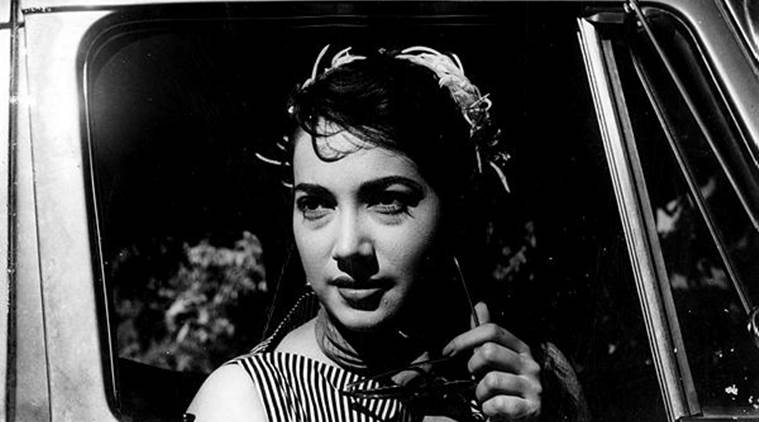
Actress Shakila passed away on Wednesday evening after a heart attack at the age of 82. The funeral was held on Thursday morning at the Mahim cemetery in Mumbai.

Actress Shakila passes away at the age of 82. (Photo: Express Archive)

Yesteryear Bollywood actress Shakila, best known for her roles in ‘Aar Par’ and ‘CID’, passed away on Wednesday evening after a massive heart attack. She was 82.

Shakila’s nephew Nasirr Khan took to Facebook to share the sad news. He wrote, “With a heavy heart I have to inform you all that my maternal aunt (my moms older sister) Shakila Aunty has passed away. She was a star in her own right in the 50s and 60s. Babuji dheere chalna, pyaar mein zara samhalna. Please keep her in your prayers. May Allah grant her Jannat. Aameen.”

Talking to indianexpress.com, Nasirr, who is veteran actor Johnny Walker’s son, said, “Because of her age, she had kidney problems. She was diabetic. Recently, she had some cardiac problems also. All these things led to her demise. She passed away last night. As we can’t wait too long for funeral in Islam, the burial happened today early in the morning.”

He also added, “She was a very jovial person, and because she and my dad worked together in Aar Par, they would talk a lot about cinema. On the film’s set my dad met her younger sister Noorjahan, and the two got married. Shakila aunty was very happy with the work she did, and was a content person. We will miss her much.”

The funeral was held on Thursday morning at the Mahim cemetery in Mumbai.

Some of Shakila’s other popular films include ‘Shriman Satyawadi’, ‘China Town’, ‘Post Box 999’, ‘Dastaan’, ‘Sindbad the Sailor’, ‘Rajrani Damyanti’, ‘Aagosh’, ‘Shahenshah’, ‘Raj Mahal’, ‘Armaan’, ‘Alibaba Aur Chaalis Chor’, ‘Lalpari’, ‘Roop Kumari’, ‘Hatim Tai’ and ‘Al-Hilal’.

She was last seen in 1963 film ‘Ustadon Ke Ustad’.

She is also fondly remembered for performance in hit songs like “Babuji Dheere Chalna”, “Neend Na Mujhko Aaye” and “Ae Mere Dil Hai Nadaan”.

source:  http://www.indianexpress.com / The Indian Express / Home> Entertainment> Bollywood / by Express Web Desk / New Delhi / September 21st, 2017

Umrao Jaan lyricist no more

Aligarh, UTTAR PRADESH :

Shahryar
Shahryar

Acclaimed lyricist Shahryar of Umraao Jaan fame, 75, died of  lung cancer last night at Aligarh in Uttar Pradesh.

Born at Aonla Bareilly, Uttar Pradesh, he belonged to a Muslim Rajput family. Shahryar retired as chairman of the Urdu Department at the Aligarh Muslim University. Later, he used to co-edit the literary magazine Sher-o-Hikmat.

Originally christened Akhlaq Mohammed Khan, he was recognised for his lyrics in Muzaffar Ali’s films like Gaman (1978), Umrao Jaan (1981) and Anjuman (1986).

His last lyrics were for Mira Nair’s critically acclaimed The Namesake (2006). In 1987, he was rewarded with the Sahitya Akademi Award in Urdu for Khwab Ka Dar Band Hai (1987). He was the fourth Urdu writer to win the Jnanpith Award in 2008.
In memoriam
I knew him since 1966. He was family to me. The news of his death came as a great shock to me. He was one of the greatest modern poets. He was my inspiration. I used his poetry in all my films. I met him last when he received the Jnanpith Award. It was two and a half months back. He was undergoing chemotherapy at that time. Actually, I was planning to go to Aligarh to meet him. However, it never materialised.

Shahryar’s death is not only a loss to me but to the world of poetry. He was an extremely well mannered person, particularly sensitive to social issues. As for his work, his maximum contribution was in Umraao Jaan. But you cannot rule out the value that he added to Anjuman and Gaman. It’s an irreparable loss. I will miss him.

I was shocked at the news. Shahryar had done some great work and wrote some outstanding songs in his film career, especially in Umrao Jaan. The songs were immortal. He understood the soul of the movies. Ek se ek gaane likhe the. He received an honorary doctorate, few years back. He also got the Jnanpith award and he deserved these awards. Bahut bade shayar hai hamare mulukh ke.

source:  http://www.timesofindia.indiatimes.com / The Times of India / News> Entertainment> Hindu> Bollywood News / Mumbai Mirror / February 14th, 2012

An interview with Sahar, founder of “Chamak Patti”

NEW DELHI :

SaharMPOs07sept2017

Hi Sahar, thanks for taking the time to chat with SIW. Tell us a little bit about yourself and your work.

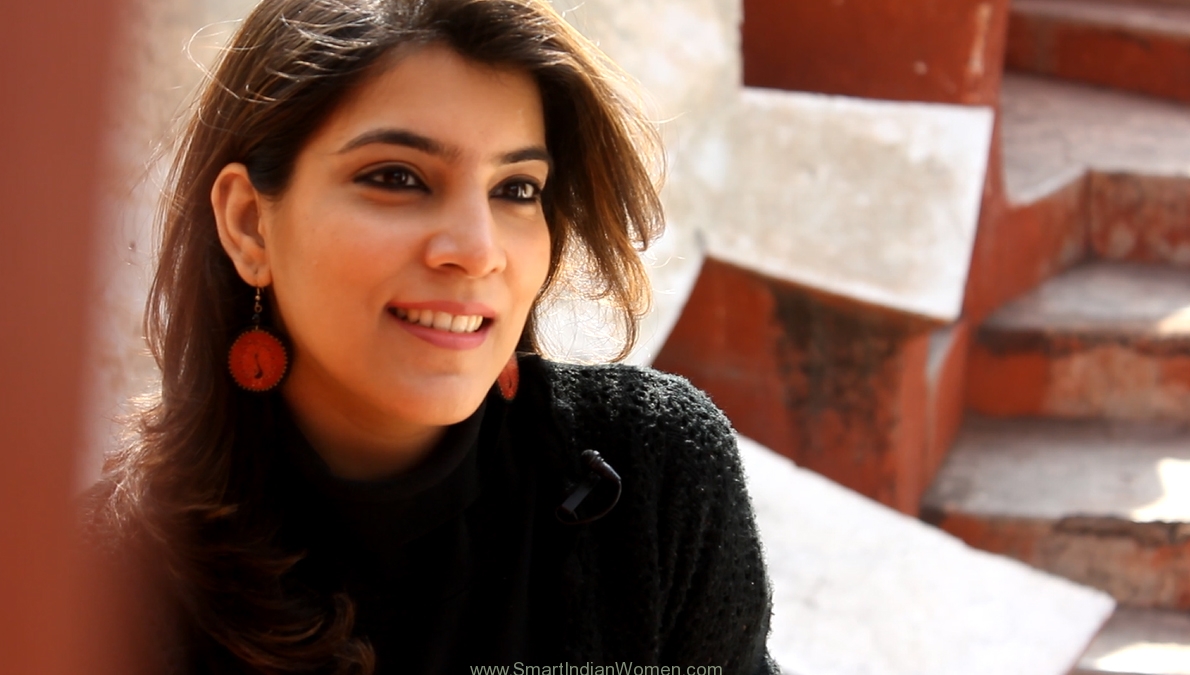
Sahar : I’ve been in business of television news for almost 15 years. Having done everything from reporting, writing and producing shows, I have settled into being a news anchor for mainstream political news and specializing in arts journalism. I am currently the Afternoon News face for News X. Apart from that, I have launched by own design brand for home decor and jewelry called Chamak Patti. This includes furniture, home ware and jewelry. More recently, I launched Asia’s first web channel on the arts, called Hunar TV. This includes catchy, peppy yet in-depth dialogues with artists from visual arts, music, theatre, dance, writing, etc. I have been invited by LimeRoad to be part of their style council to help create new looks for their customers.

What inspired you to get into this profession?

Sahar : In both the businesses that I run, the biggest inspiration has been the world of art. In Chamak Patti, I myself design and make the products. But these products are works of art. Since they’re personally executed, each piece is unique, like a collector’s item, not repeated for any second client. For Hunar TV, the main thrust for creating video capsules is to ensure people from outside the art world are introduced to this magnificent world of artists’ studio and their thought process.

What is your USP?

Sahar : In both my businesses, it is my twin understanding of news and art. I am aware how the real relates to the transcendent. It is this very understanding that helps me figure how design and art fits into our needs, our lives.

How someone can start the same business as yours in terms of investment, material procurement, production, and marketing etc?

Sahar : For Chamak Patti, I started on a very small scale and invested my own money. Today the sale of products takes care of more investment. From my personal experience, the simpler the formula, the less complicated the business. Material procurement has to be done after a lot of research on what your raw product is and where to get it best from. Marketing is relatively easier today. I trust social media and my own large data base of contacts.

For Hunar TV, investment was larger because there was expensive equipment to be bought and a team of experts to maintain. I strongly depend on sponsorship funds for each of the video capsules we create.  Marketing has been strong on social media and by strategic partnerships with well established names.

Any challenge you are facing in your profession and how you overcome that?

Sahar : The biggest challenge has always been to ensure that funds keep coming in for the next big step to be taken. You gradually learn how to overcome it. There’s never one single formula on how to overcome a challenge. Every formula that you can think of is put to test and you eventually realize which formula works when and how! But in your mind, it’s more important to ensure you take all the criticism and warnings in your stride, it’s important to willingly take the plunge and have the grit to make it happen.

What are your plans for the future?

Sahar : Team expansion for both my businesses is the future plan. Having Chamak Patti products available outside India by logistically making the current structure stronger. For Hunar TV, I would like to create more interesting video capsules on a daily basis and have it shared more frequently.

How you manage your personal and professional life?

Sahar : More than time management, what works better for me is task management. I am a brilliant multi-tasker and manage to slip in and out of my professional and personal engagements with great ease. I often take my toddler to client meetings and shoots. And I often have important con-calls while taking care of my child at home. But most importantly, it’s impossible to balance this without a helpful mother and a supportive husband. My family is my pillar of support. I would achieve very little without them.

What are your favorite books that you would recommend SIW family?

Sahar : I’m afraid I get very little time to read!! I will soon be recommending a self-authored book to be read! Ha!!

What advice would you give to young women readers of SIW who want to follow a similar career path as you?

Sahar : Believe in yourself because only you know yourself best. There are plenty voices out there to scare you from taking a bold step that could be different or experimental. It’s important to take the plunge for a career you believe in. And it also helps to have your family understand why you need to do what you want to do! If not, go ahead nevertheless…

All images are property of “Chamak Patti” and required permissions have been taken to publish it on www.smartindianwomen.com website.

source: http://www.smartindianwomen.com / 2015

Restoration of Humayun Mahal to begin soon

Chennai, TAMIL NADU :

HumayunMahalMPOs31aug2017

Estimate to be presented in 2 weeks

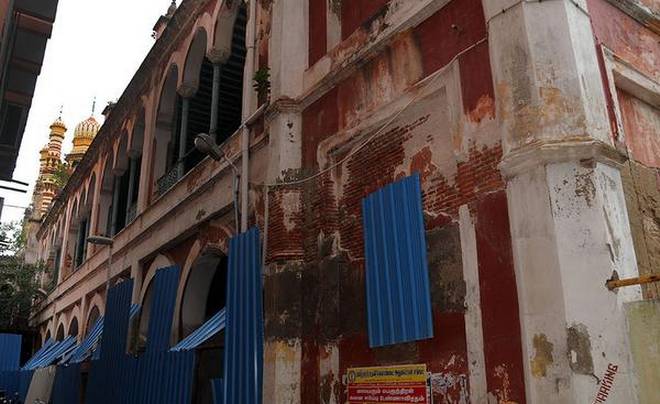
The Public Works Department (PWD) has set the ball rolling for the restoration of the historic Humayun Mahal on the Chepauk palace complex. It is set to submit a detailed estimate of the work necessary to renovate the structure in a fortnight.

After the successful restoration of Kalas Mahal, which will house the National Green Tribunal, Southern bench, from September 2, the PWD is now focussing on renovating the structure located next to it. This is the first structure that the new Building Centre and Conservation Division, formed by the PWD, will restore.

Constructed in 1770, the single-storey structure was once the residence of the Nawab of Arcot. Spread over 66,000 sq. ft., the building also has a connecting corridor to Kalas Mahal. Officials said nearly 50% of the roof has collapsed and needs to be rebuilt. “The estimate we will present will have details on the type of special materials needed, their availability and the special rates for renovating heritage structures,” an official said.

Unlike the other buildings, separate rates have to be arrived at for sourcing special construction material, such as limestone and flooring tiles. “We also need to collate data on places, such as Karaikudi and Virudhunagar, where these materials would be available. Once the estimate is prepared, we will be able to arrive at a uniform rate for the restoration of heritage structures,” the official said.

Based on the work taken up in Kalas Mahal four years ago, the renovation of Humayun Mahal is likely to cost at least ₹35 crore. The dilapidated structure once hosted various government offices, including those of the Agriculture Department, Social Welfare Department and the Directorate of Tamil Development.

Removing rubble

One of the main challenges is to remove the heaps of paper and rubble inside. Besides suffering the impact of the fire that ravaged Kalas Mahal in 2012, a portion of Humayun Mahal was affected due to a roof collapse and a minor fire in 2014. The search for funding is also delaying the project. Once the tie-up for funds is finalised, restoration work can begin in two months, the official added.

Meanwhile, the PWD is coordinating with various government departments to collate data on heritage buildings across the State.

source:  http://www.thehindu.com / The Hindu / Home> News> Cities> Chennai / bu K. Lakshmi / Chennai – August 30th, 2017

A souvenir from Bidar for the Prime Minister

Bidar, KARNATAKA :

The souvenir that Prime Minister Narendra Modi carried back from Belagavi on Sunday was a statuette of valiant queen Channamma of Kittur made by the Bidri artisans of Bidar.

The queen who fought the British in 1824, 33 years before the first war of Indian independence, was born in a village in Belagavi district. But her stunning image in silver inlay on a black surface, was made using the soil of Bidar fort, 500 km away.

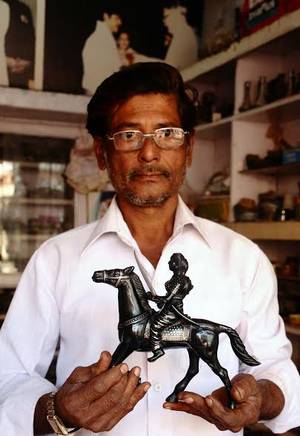
M.A. Rauf with the statuette of Kittur Channamma , one of which was presented to the PM Narendra Modi in Belgavai on Sunday. Photo: Gopichand T.

A team of six artisans led by Mohammad Abdul Rauf, national award winning craftsman, have been chiseling out 140 images of the queen for nearly 100 days now. They have spent hours working in the 100 square feet work shed doing jobs like starting from melting copper and zinc to form an alloy, create a master shield, prepare its copies, etch drawings on them, hammer silver into the slits and treat it with the soil from the Bidar fort, to give it a permanent black colour.

Though the artisans work in an assembly line method, each statuette takes three to four days to be completed. Mr. Rauf has sold the images to a Bengaluru-based jeweler for around Rs. 3,000 a piece. He does not know at what cost the souvenirs have been supplied to the KLE society whose centenary celebrations Mr. Modi attended.

Sadly, Mr. Rauf did not know that one of the souvenirs was meant to be given to the Prime Minister, till some one told him in the morning.

The artisan, who can read Urdu, said that the newspapers he read had not covered the event. “My friend told me a Kannada paper had carried the picture of the PM receiving the souvenir and since he had seen me working on it, he identified it. We are very happy that the Bidri artifact will find a place in the Prime Minister’s office,” he said.

“When Mr. Modi addressed a campaign meeting in Bidar in 2014, he had said he would address the problems of Bidri artisans if elected to power. We hope he remembers his promise,” Ashok Ram, another Bidri artisan who works with Mr. Rauf, said.

source: http://www.thehindu.com / The Hindu / Home> News> States> Karnataka / by Special Correspondent / Bidar – November 14th, 2016

Director Sabbir Khan talks about the influence that superstar Vinod Khanna had on his life

Mumbai, MAHARASHTRA :

SabbirKhanMPOs26aug2017

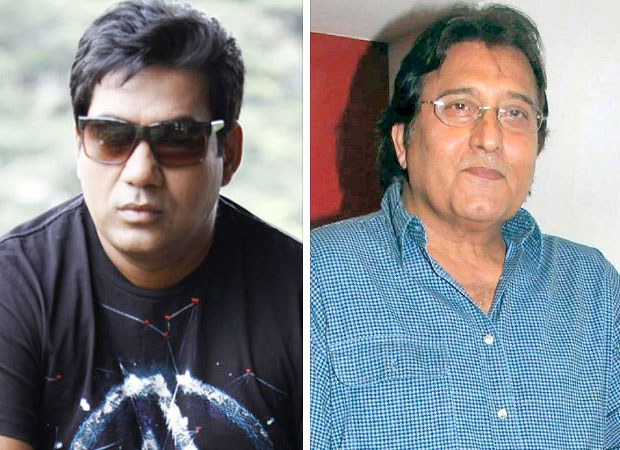
The recent untimely death of the legendary actor Vinod Khanna left everyone speechless. The late actor had a major influence of many lives. One such person on whom the late actor Vinod Khanna had left an everlasting impact was the film maker Sabbir Khan. In a heartfelt tribute to the late Vinod Khanna, Sabbir Khan opens up like never before to speak about the eternal influence which he had on his life. Read on in his own words:

“I must’ve been six or seven when I first realised that Vinod Khanna was an important part of my life. During my boarding school vacations, when I used to come back to Mumbai, my father (lyricist Noor Dewasi who wrote ‘Aao Huzoor Tumko’ from Kismat) would take me to film shoots where he always made sure I met Vinod Uncle. I call him that because that’s what my father asked me to address him as and that’s what I’ve called him in all the time I knew him.

By the time, I was around eight or nine, I began to understand everything. Vinod Uncle was this huge superstar and you understood that in the way people would stare at him in awe and in the way they treat him. Even at that young age, I realised that he had this aura, a strong glow around him and yet, I observed how polite and courteous he was to everyone.

This big superstar was always making me feel special whenever I visited him. I always had a front row seat watching him shoot and production hands fussed around me offering me soft drinks and chocolates. Lunch breaks were these big spreads in his room and as I nibbled through my food, I recognised other actors and filmmakers who came to meet him.

Vinod uncle always asked me about school and if I was happy. He was soft-spoken, and I was extremely shy, given the time I spent on a movie set with a superstar. It was only after constant prodding by my father to reply that I managed to mumble a few sentences like ‘school is good but the food is bad’. He would laugh and then give me some pointers on how I could make it interesting.

These memories and experiences were the foundations of my wanting to be a filmmaker later on in life. I am one today and there is no joy bigger than being on set writing for, shooting and creating films. But all of this could only be possible because of Vinod Uncle… I am who I am because of him.

I am unsure of how it all started… I have faint memories of my father’s conversations, but I believe it all began during a film shoot, where my father wrote songs for a film Vinod Uncle was starring in, where they became friends.

It was an unusual friendship between a superstar and a struggling songwriter, but I recall that Vinod Uncle was extremely fond of Urdu poetry and my father often mentioned that he was a far more profound man than his image revealed. Vinod Uncle insisted my father accompany him on outdoors and shoots, which he wasn’t part of and somewhere there, the friendship grew stronger.

Dad had no clue how he would handle a child alone. For months, he struggled to cope until he met Vinod Uncle, who he shared his troubles with. I was told that Uncle made one trunk call to someone in Deolali and said, ‘I am sending this boy. Make sure he gets into Barnes.’ Barnes High School is British-era boarding school in Deolali. It’s the same school Vinod Uncle went to. He reassured my father not to worry about my education and to get his life back on track. My father voiced nervously that he could never afford all this. Vinod Uncle just smiled and said, ‘You leave all that to me.’ I was packed off to boarding school and that became my life for 11 years from kindergarten to the 10th grade. It was an extremely expensive school, but every single thing about it was taken care of, by Vinod Uncle.

And then, one fine day, I came home from my vacations, looking forward to meeting Vinod Uncle, and dad said he was gone! Gone where, when, why? I was as confused as the rest of the country was. My father tried explaining it. All I remember was that he had left everything and gone off to America. My father taught me to be thankful for whatever he had done for us and was making arrangements to pull me out of school. I was devastated as I had just started fitting in, and coming to terms with boarding life and forming a community.

Then Pramod Khanna, Vinod Uncle’s brother called my father to see him. We made our way to his house somewhere near Gowalia Tank, I think. My father assumed it would be a kind request to wind up given the situation, but my father was really surprised when he was told that Vinod Uncle had given specific instructions before he left that no matter what, I had to be in school and finish my education and how everything I needed was to be taken care of.

I remember the ride back home from Pramod Uncle’s house, my dad was crying. He kept saying I was probably destiny’s child and that I must take life seriously and make something of it, that people don’t get these opportunities in life. I went through the remaining years of my school like any other kid, but secretly there was a void, a vacuum that I could not understand. So many questions plagued me like so they did others. ‘Where did Vinod Uncle go and why? How could a superstar who had everything just disappear and disconnect from it all? I went through the rest of my years at school wondering where Vinod Uncle went. I always hoped that when the vacations came around, dad would give me a surprise that he’s back but that never happened.

A couple of years turned to five and that was a really long time. Everyone lost hope. From the film magazines I managed to read, even the industry had moved on. Not me.

Vinod Uncle became a permanent part of my prayers and I am now certain knowing the man and his good deeds, that he was a part of many people’s prayers. It was now almost seven years… I was keeping track. I had entered the 10th grade feeling all grown up and had come down for my summer vacations when dad said Vinod Uncle was back, I couldn’t believe it and couldn’t stop grinning. I was so happy, but I sensed dad was nervous.

Within minutes of meeting him, everything seemed normal. Of course, my father was in tears, but Vinod Uncle hugged him and laughed. He hugged me and like he had never gone anywhere began inquiring about school and stuff. I couldn’t believe I was actually seeing him. He laughed when my father complained about silly things like I was being distracted by girls. “What did you expect?” he laughed. There were hordes of people wanting to meet him, wanting to make films with him and I could sense Vinod Uncle was swamped, but he still made it a point to spend enough time with me and walk me to the door. He whispered to me by the elevator, ‘Listen, pay a little attention. It’s your final year’.

I passed with good numbers, but I had no clue what I wanted to do post-school, this happens a lot with boarding school students but my father had made up his mind that my further education would not be with any help from Vinod Uncle. I remember very clearly two friends having an argument about my further education, Vinod Uncle insisting that he wanted to continue with whatever I needed while dad said he was good enough to do it now and that he felt extremely indebted to him. I remember the conversation ended with a happy drink.

I enrolled in National College Bandra. I was so naïve, I took Arts in college because I wanted to be an artiste. I wanted to write books, wanted to paint, do anything that would make me an artiste. What I was secretly suppressing was that I wanted to be a filmmaker. Being a single parent, my father had taken me to almost every recording studio and movie set during my vacations. Laxmikant Pyarelal, Anand Bakshi, Raj Khosla, Mahesh Bhatt had left lasting impressions on my mind. I was in complete awe of the movie industry, especially the man who stood behind the camera and told everyone what to do. Seven cinema halls surrounded me and I was always at the movies instead of being at college. Films filled up my entire system. I was living and breathing films.

“Heated arguments ended with he taking me to Vinod Uncle to put some sense in me. I dreaded this meeting, I was so scared that if Vinod Uncle didn’t understand me or side me I was done because I knew I had to listen to him. My dad laid out the entire conversation. All mention of film was as if talking about a leper. ‘Can you imagine? After all this education he wants to become a filmmaker. Why don’t you put some sense in him?’ Vinod Uncle took me away to another room, and we had a heart-to-heart. He very gently explained how tough the industry was, how some make it and some don’t (like my father). How my father was right in thinking the way he did. I think I said something like, ‘I cannot do anything else in life’. Vinod Uncle came out and told dad let him do what he wants and if it’s a mistake let him make his own mistakes and learn. Dad was a little confused but Vinod Uncle put his huge arms around him and made some joke to lighten things up. I swear I wanted to do cartwheels. While leaving, Uncle asked me if he wanted me to speak to some director and I said cockily, ‘No, I got this’.

My days as an assistant director spanned eight years and that is a long story. We had to give up our home. The place we lived in, went in for redevelopment, Dad wasn’t keeping well and was advised bed-rest. I was shuttling between all this and my passion on set.

Things changed after my father passed away in 2000. My meetings with Uncle withered away as dad was the glue that bound us together. I was all alone, no family, no house. I could have easily cracked, but I didn’t. I felt extremely confident and I think it was because of my education and my passion for cinema. I thought I understood cinema and how to make films. From the outside, it looked like rocket science, but I thought I’d cracked it.

I had a few stray meetings with Vinod Uncle and they were few and far between. He was once again a-sought-after star while I was a struggling assistant director but it was sheer joy to know Uncle was shooting in the same studio as me and I’d go to meet him and we would have our little talks. I would always tell him things I was discovering in cinema in awe and he would laugh.

I remember he was shooting for Wanted and I was in the same studio looking for a location to do the photo-shoot for my first film as a director. The news wasn’t out yet. It was all hush-hush. I got to know he was there and I went to meet him to give him the news. He hugged me and it was the longest, sweetest hug. He made me feel I’d made him proud. For me, that hug meant everything.

My becoming a filmmaker is a long story, I was completely consumed by it, and I was going through its highs and lows, simultaneously starting my own family. Vinod Uncle had joined politics and spent a lot of time in Gurdaspur. There was a drift, a disconnect. And then, out of the blue, I was shooting and a picture of his from the hospital came out.

I was shocked, I felt like someone had punched me in the gut. I didn’t believe it, I thought it was morphed, a dirty joke. Clarifications followed from the family and I was relieved. Of course, he was fine. How could anything happen to him? In my eyes, he was no less than Superman.

I just wanted to finish my shoot and go see him. Unfortunately, that could never happen, Vinod Uncle passed away. I don’t want to believe it. I can’t come to terms with it. But in my heart I know its true.

I don’t know how I feel exactly, there’s a sense of loss I cannot explain. It feels like I lost my father. My angel. Trying to thank him for everything would mean so little.

What could it actually mean? A man going out of his way to do something for his friend and child… that’s so selfless. But it’s very important that I let as many people know what a great human being Vinod Uncle was. Whatever I am, whoever I am today, is because of him. I owe him everything. And even though the line is from a movie, Vinod Uncle makes me want to be a better person.”

source: http://www.bollywoodhungamma.com / Bollywood Hungama / Home> Bollywood Hungama News Network / May 10th, 2017