Category Archives: Arts, Culture & Entertainment

Good Samaritans with an abiding passion for books

Kochi, KERALA :

Two teachers set precedent by promoting reading habit among students

Kochi :

The tale of Totto-Chan, a girl who has come to symbolise unorthodox learning, is among the best-selling books published by NBT in Malayalam. Translated by poet and film-maker Anwar Ali, the book has been flying off the shelves like no other.

But besides the big purchasers, there are dedicated souls like Ramanunni, a retired teacher from Palakkad who set up a non-profit book selling venture. He has also played a key role in popularising books among school students and teachers.

T.N. Gopalakrishnan Nair

Another compulsive book promoter is T.N. Gopalakrishnan Nair, a resident of Kallara near Koothattukulam, who retired as a government high school Malayalam teacher in 1994. “He comes with an autorickshaw to ship books for sales exhibitions,” says NBT assistant editor Rubin D’Cruz. “Considering that NBT books are heavily subsidised, leave alone profit, he ends up spending money from his own pocket in popularising these books.” Sure enough, Mr. Nair’s tryst with books began back in the 1980s during his association with the Kerala Sastra Sahitya Parishad. He saw before his eyes his son becoming a bookworm and excelling in studies and co-curricular activities alike. “This brought me closer to books big time. Subsequently, I found myself sourcing rare volumes for parents and teachers alike and began to extensively travel between Thiruvananthapuram and Kozhikode for books which were in short supply those days,” he says. Over time, Mr. Nair carved a niche for himself by single-handedly organising book exhibitions, which grew in scale with publishers, NGOs, schools, and like-minded individuals coming on board.

Recuperating from a medical condition, Mr. Nair is concerned about not being able to host a few exhibitions he had promised at schools in Kottayam this month.

“I should be active, hopefully from the second week of August, and I have committed book exhibitions at three spaces already. I have enough books with me now to hold five such. Fortunately, there is an auto driver who helps me out in transporting books,” says Mr. Nair.

source: http://www.thehindu.com / The Hindu / Home> News> Cities> Kochi / by Special Correspondent / July 09th, 2017

Palmyra of the Deccan

Vijayapura (formerly BIJAPUR ) , KARNATAKA :

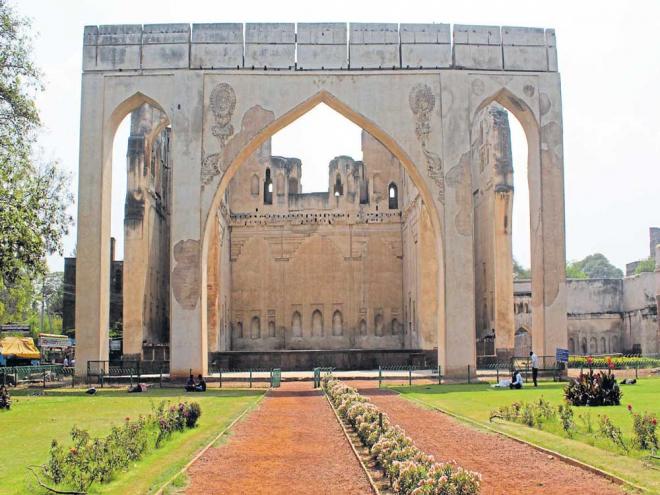
A view of Gagan Mahal in Vijayapura.

The Adil Shahis made Bijapur (now Vijayapura) a city ahead of its time in terms of infrastructure development and security. This well-planned city had two fortifications, one around the principal Adil Shahi administrative and residential buildings, and a larger one around the rest of the city. Both were roughly circular and had moats and several gateways. To further strengthen the defence of the city walls, the Adil Shahis built many bastions and about 96 gigantic cannons were placed on them. Only a dozen of these canons exist today. Most of them are placed in the Archaeological Survey of India (ASI) museum housed in the Nagaad Khana in front of Gol Gumbaz and some of them still sit atop the surviving bastions.

First line of defence

The fortifications have crumbled due to neglect and the moats are overgrown with thorny shrubs and in some places, they are filled with sewage and garbage. The only gateway that the citadel still has is on the south. This was the principal gateway into the citadel but now wears an abandoned look. Just inside this once splendid gateway are the remains of guardrooms constructed entirely of pillars from Hindu temples mostly belonging to the Vijayanagara period.

One of the surviving bastions is the Sharza Burj or Lion Bastion which is also the largest bastion in the city. It is famous for housing the cannon Malik-i-Maidan or Lord of the Plains, which was a war trophy won after the defeat of the Vijayanagara Empire at the Battle of Talikota. The cannon is made from a special alloy and can fire not only cannon balls but also metal slugs and copper coins.

Nearby is Haidar Burj which is the highest gun platform in Vijayapura and is a very conspicuous solitary structure.

It is also called the Upri or Upli Burj by the locals. It was built in 1583 by Haidar Khan, a general during the reigns of Ali Adil Shah I and Ibrahim Adil Shah II. A spiral stairway leads to the top which houses two long cannons. The tower was most probably customised for the guns which needed to be fired from a height so that they can have a long range.

The Adil Shahis wanted to transform their capital city to match the Mughal cities in the North by building imposing courtly structures, gardens, wells, waterways and granaries. While most of the structures have fallen to ruin, some have been converted to government offices and only a handful are open to tourists. The Gagan Mahal was built by Ali Adil Shah I as a palace and an audience hall. Only its structural skeleton remains today. A short walk from the Gagan Mahal is the Sath Manzil (Seven Pavillions) or Haft Manzil built by Ibrahim II as a pleasure pavilion. Only a few storeys survive now and there is no way to go inside. Just opposite this is Jal Mahal or Water Pavilion that has been decorated exquisitely and is crowned by a dome. It is set in the middle of a square pool which is now dry and filled with garbage. Again, there is no way to go inside.

Reservoirs & stepwells

Water was and is a precious resource for Vijayapura and the Adil Shahis built a complex hydraulic system to bring water from distant sources into the city and supplemented this with reservoirs and stepwells. Only a few stepwells and reservoirs survive today and the system of aqueducts and horizontal wells are lost. The Taj Baoli is the biggest stepwell in Vijayapura and was built by Malik Sandal, a Persian architect, in honour of Taj Sultana, the wife of Ibrahim Adil Shah II. Sadly the well, its gateway and the gallery around it are in a very bad state. It won’t survive for long if no action is taken immediately.

Another well-known stepwell present here is the Chand Baoli. The stepwell was built by Ali Adil Shah I in honour of his wife Chand Bibi and it served as the model for Taj Baoli. Chand Bibi is best known for courageously defending Ahmednagar and Bijapur against the attacks of the Mughal Emperor Akbar. She was the regent of both Ahmednagar and Bijapur and was known to be a good warrior, musician, linguist and artist. The structure is now completely cordoned off from the public. One can only see it through the grill gate.

Present-day Vijayapura would have benefited if the administration had preserved the hydraulic system of the Adil Shahis and used the many stepwells and reservoirs instead of letting them turn into garbage dumps. Waking up to this, the Minister for Water Resources, M B Patil announced in April that starting with Taj Baoli, around 20 wells in Vijayapura will be rejuvenated at the cost of Rs 4.25 crore. As a part of the rejuvenation process, the dirty water present in the wells is being pumped out, the garbage is being removed, and the well is being desilted. Additionally, there are plans to repair the structures around them. When fresh water accumulates, it will be pumped and stored in tanks, from which people can collect water for domestic purposes apart from drinking. This will ease the water scarcity the city is facing to a certain extent.

Unless people surrounding these monuments understand their historical importance and realise that a clean baoli can help face water scarcity, all efforts to revive the heritage structures will be futile.

source: http://www.deccanherald.com / Deccan Herald / Home> Supplements> Spectrum / by Rijutha Jagannathan / July 04th, 2017

An 800-Year-Old Piece of Indian Heritage in Jerusalem

JERUSALEM :

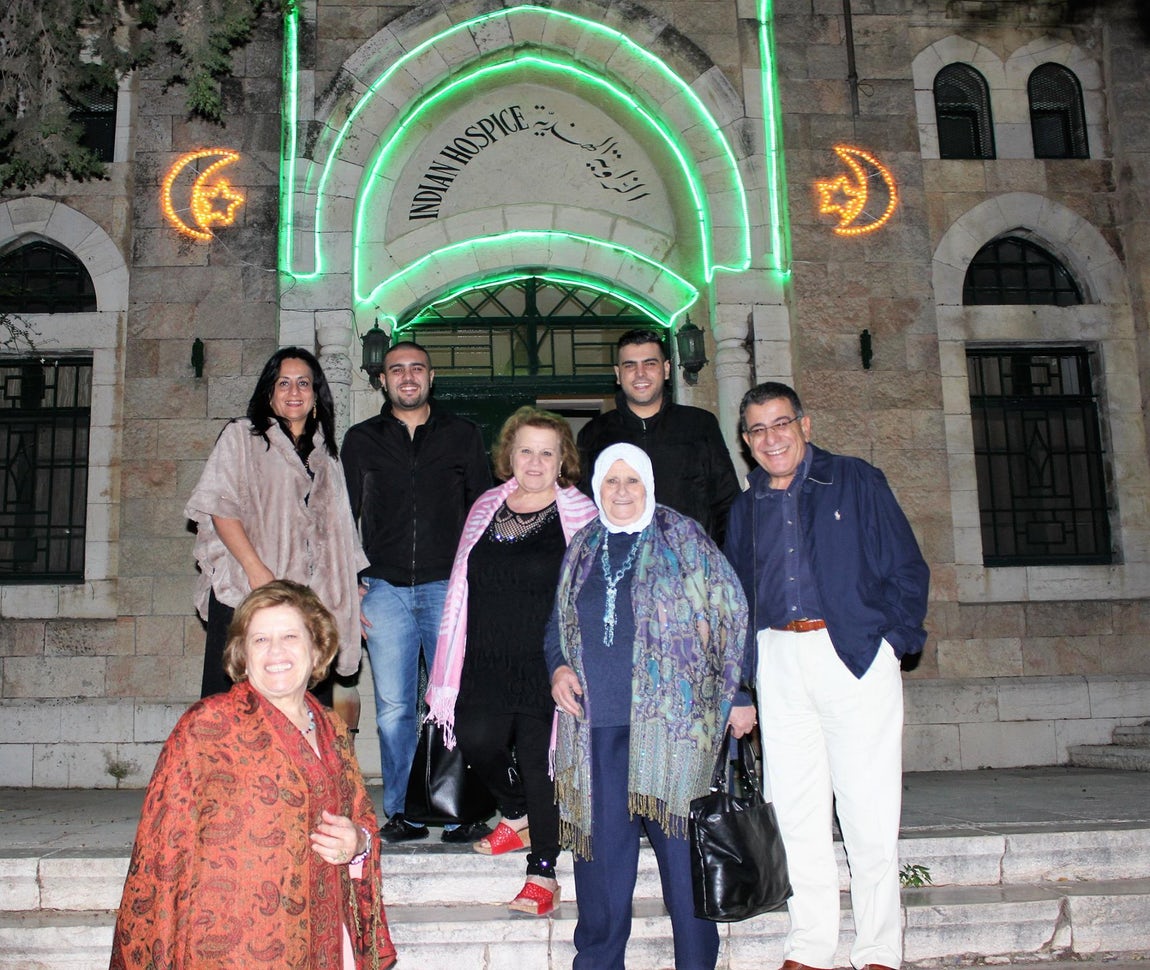
The Ansari family in front of their house in Jerusalem. (Photo Courtesy: Facebook/The Indian Hospice)


Did you know that there is a corner of Jerusalem that has a distinct Indian stamp to it and its various residents wear their Indian origin like a medal?

Next to the Al-Aqsa mosque in the city there is the Indian Hospice in Jerusalem. The hospice is managed by the Ansari family and has a centuries-old connect to India.

The Indian Hospice in Jerusalem. (Photo Courtesy: Facebook/The Indian Hospice)

Indian pilgrims to the “holy city” of Jerusalem, can stay at the ‘Indian Hospice’ and pay homage to the Indian Sufi saint Baba Faridudding of Shakar Ganj, who visited the place 800 years ago.

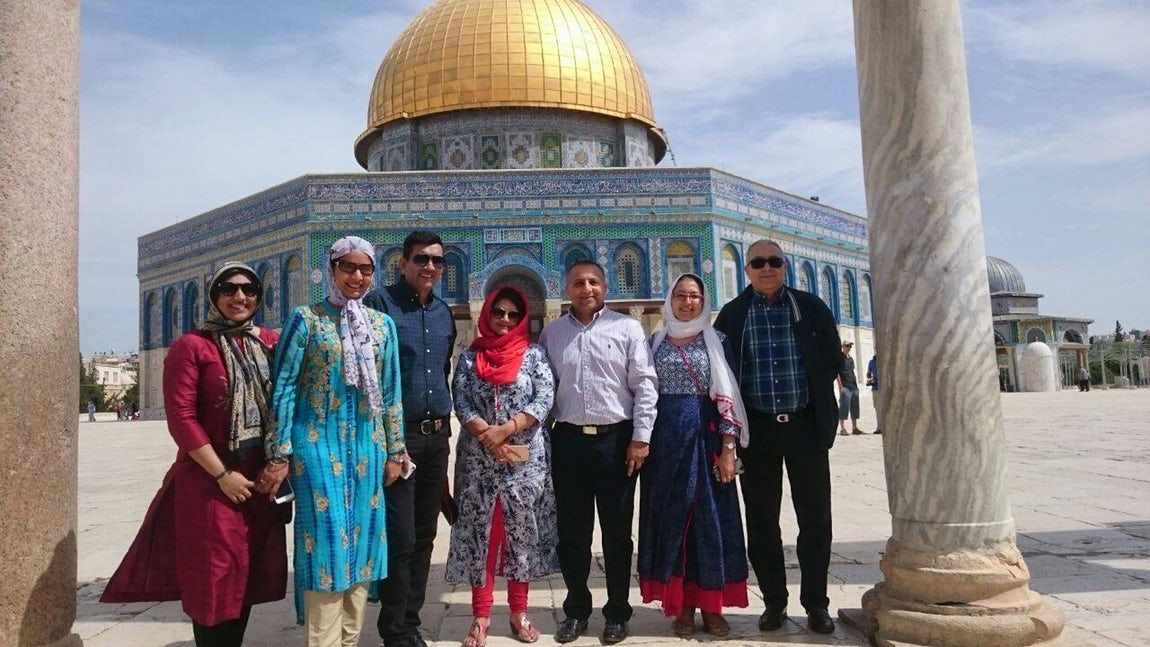
Seen here, celebrated Indian chef Samjeev Kapoor at the Al-Aqsa mosque in Jerusalem. (Photo Courtesy: Facebook/The Indian Hospice)

The Indian Connection Through Baba Farid

The year is 1200, a little over a decade after the armies of Saladin had forced the Christian Crusaders out of Jerusalem. And an Indian Sufi saint from Punjab named Baba Fariduddin of Shakar Ganj travels to the war torn city.

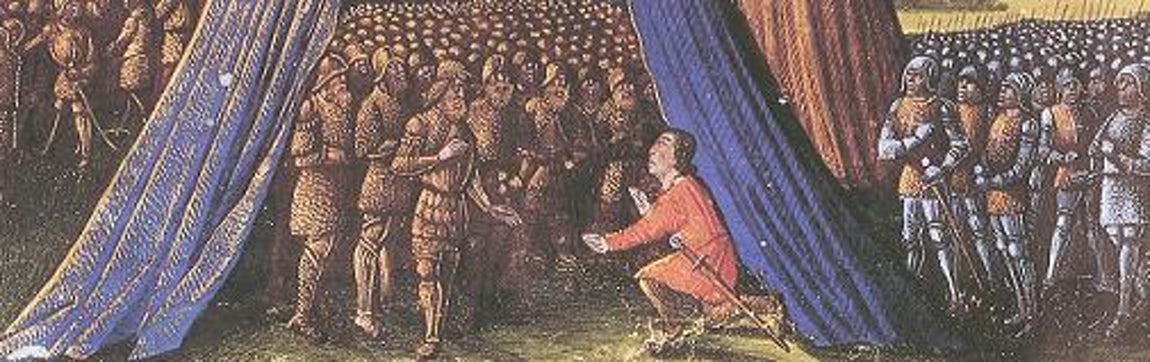
The victory of Saladin against the Crusaders. Balian of Ibelin surrendering the city of Jerusalem to Saladin, from Les Passages faits Outremer par les Français contre les Turcs et autres Sarrasins et Maures outremarins, c. 1490. (Photo Courtesy: Wikipedia)


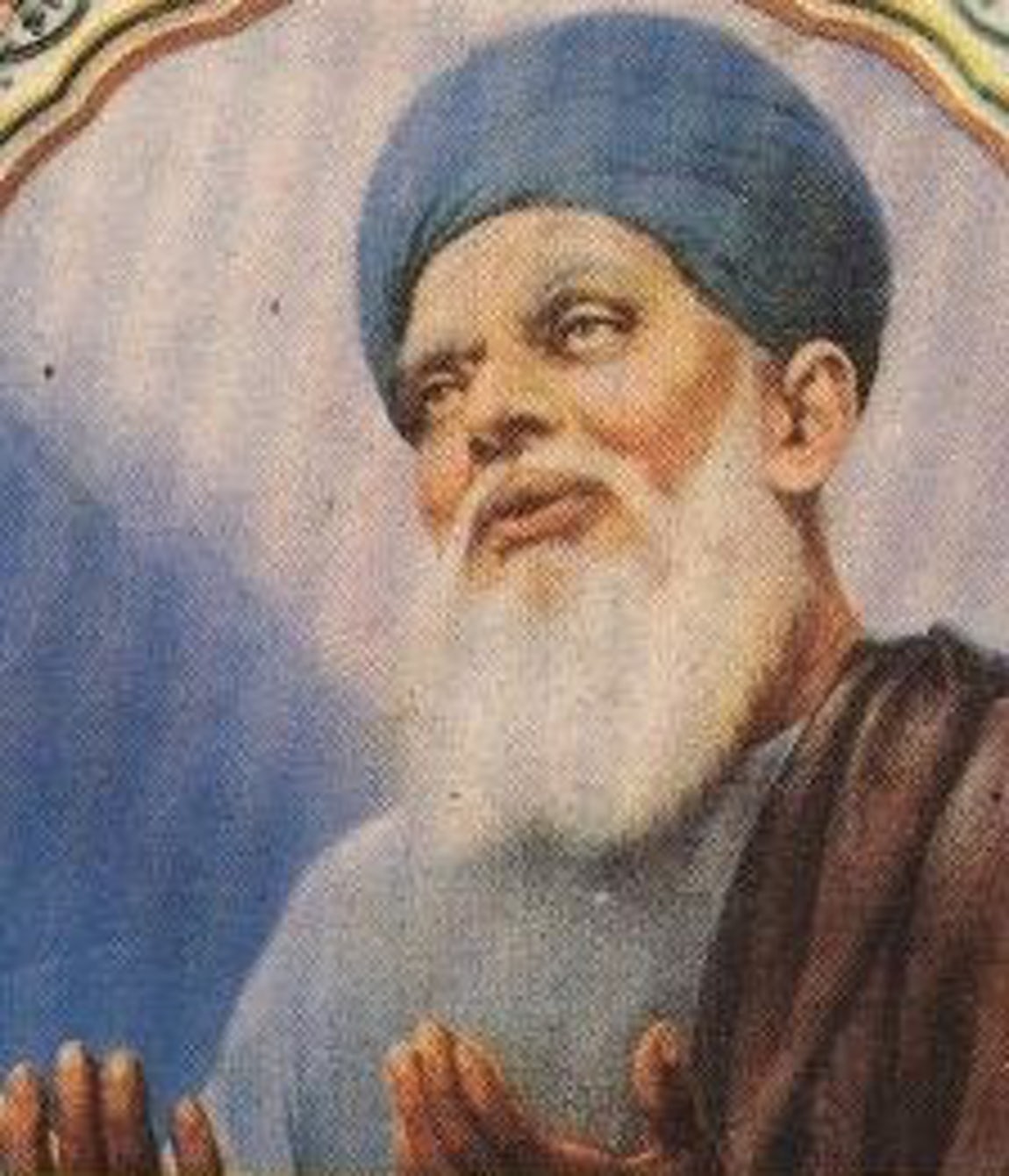
Sufi saint Baba Farid (Photo Courtesy: Seeker of Sacred Knowledge)

It is said that Baba Farid swept the stone floors around al-Aqsa mosque as a mark of devotion. He is also known to have taken up fasting in the silence of a cave nearby.

Long after he went back to India, Muslims from the sub-continent who passed Jerusalem on their way to Mecca stopped at this spot in memory of Baba Farid. It became a sort of temporary residence for the pilgrims.

Ansaris Deputed To Care For Baba Farid’s Legacy

In early 1920s, Jerusalem’s Supreme Muslim Council requested the leaders of the Khilafat Movement of British-ruled India to nominate someone to care for the hospice. The Khilafat leaders honoured the request of the Supreme Council then headed by Arab nationalist Mohammed Amin Al-Husseini. That is how in 1924 Sheikh Nazir Hasan Ansari – who was also part of the Khilafat Movement – was chosen to go to Jerusalem to take charge of the hospice.

Sheikh Nazir Hasan Ansari (Photo Courtesy: Facebook/The Indian Hospice)


Sheikh Munir Ansari who now heads the place, seen here as a boy. (Photo Courtesy: Facebook/The Indian Hospice)

His son Sheikh Munir Ansari now heads the place. The two have during their respective years as administrator of the hospice, persuaded the rulers of several Indian Muslim states, including Hyderabad, to make contributions for the upkeep of the hospice. Munir’s son Nazeer proudly explains the glorious history of the place.

Not only pilgrims, but Indians from all walks of life who visit Israel like to meet the Ansaris. They are amazed by the way the Ansaris care for that piece of India in the land of Arab-Jewish confluence. Past visitors include famous journalists, presidents, Indian politicians, celebrities and commoners.

The Ansaris have been gracious hosts to many Indian journalists. Seen in this picture, among other journalists is Suhasini Haider of The Hindu. (Photo Courtesy: Facebook/The Indian Hospice)


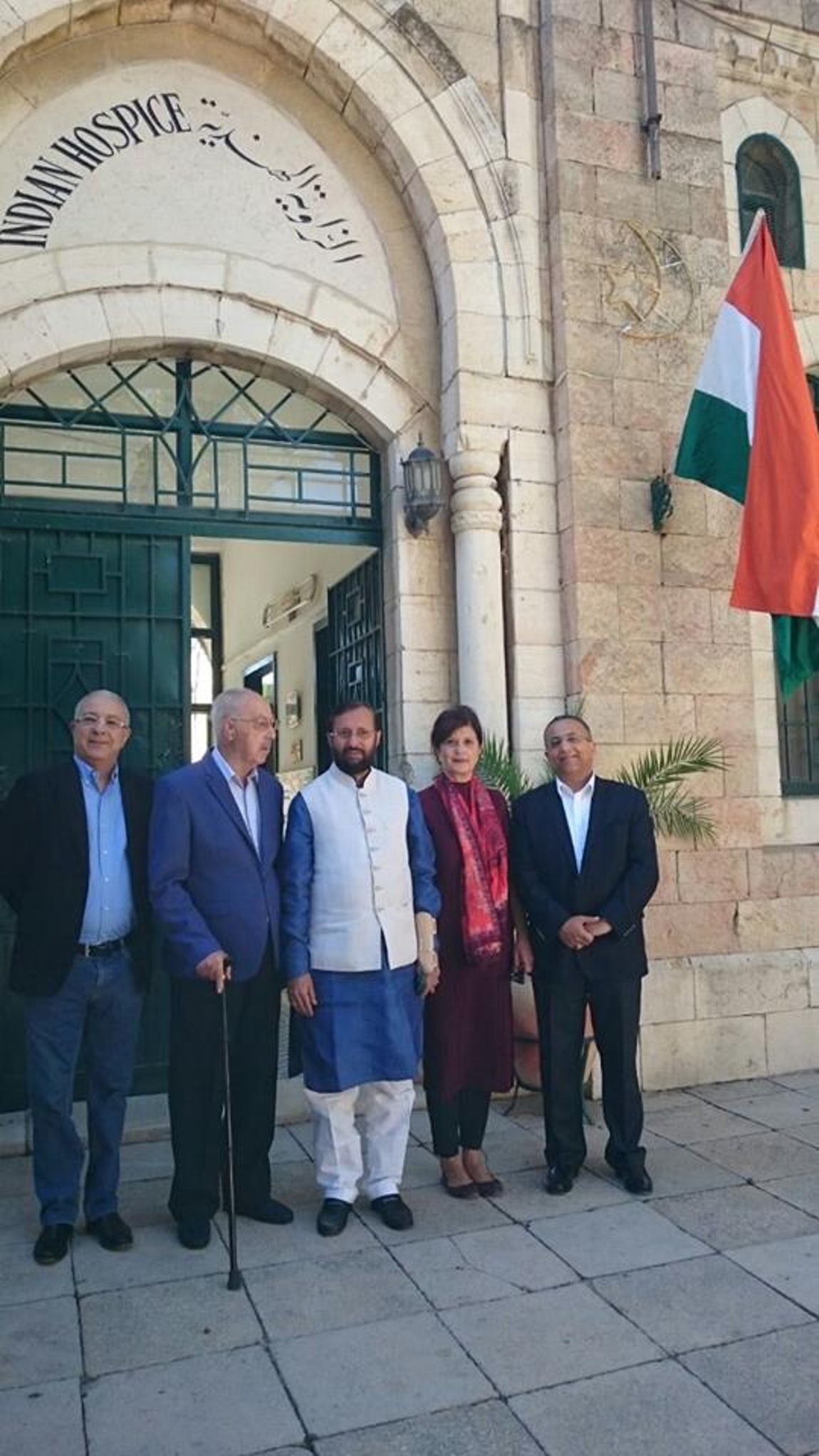
Union HRD Minister Prakash Javadekar at The Indian Hospice. (Photo Courtesy: Facebook/The Indian Hospice)


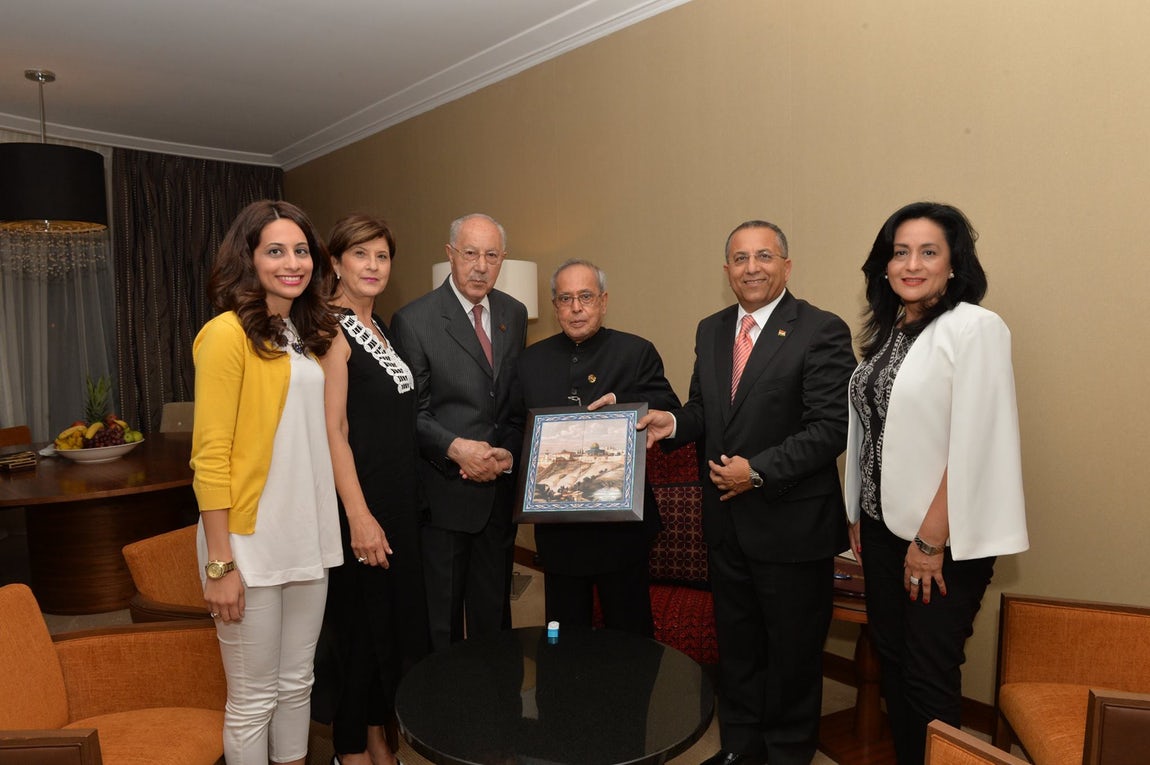
President Pranab Mukherjee too visited The Indian Hospice in Jerusalem. (Photo Courtesy: Facebook/The Indian Hospice)

The Ansaris value the responsibility that comes with the inheritance of the heritage. Their FB page says:

Maintaining and protecting an Indian institution in Jerusalem’s old city is no easy task. But Sheikh Munir has accomplished the impossible with delicate diplomacy and extreme tact.

The Indian Hospice

The Ansaris on a visit to India. (Photo Courtesy: Facebook/The Indian Hospice)

The Ansari family has been a steady presence in Jerusalem ever since and they all still carry Indian passports.

source: http://www.thequint.com / The Quint / Home> News Videos / by Kirti Phadtatre Pandey / July o4th,2017


Balancing the act

Hyderabad, TELANGANA :

It’s indeed possible for sports personalities to workout, while fasting for Ramadan.

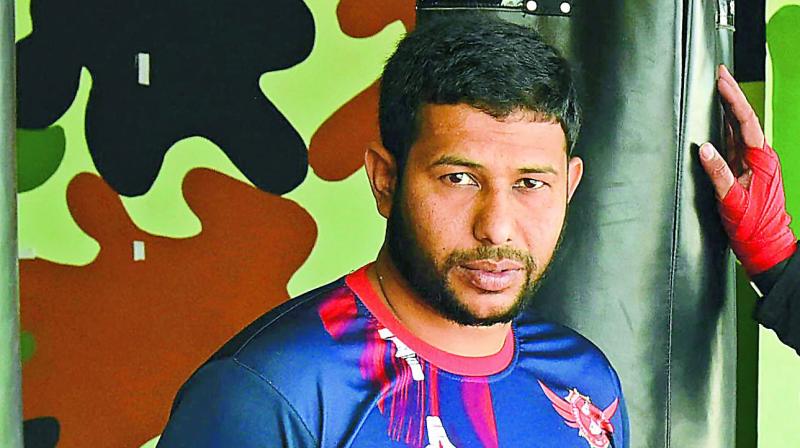
Shaik Khalid
Shaik Khalid

Is it possible to stay fit, while fasting for 30 consecutive days, and train as hard as any other day, during the holy month of Ramadan?

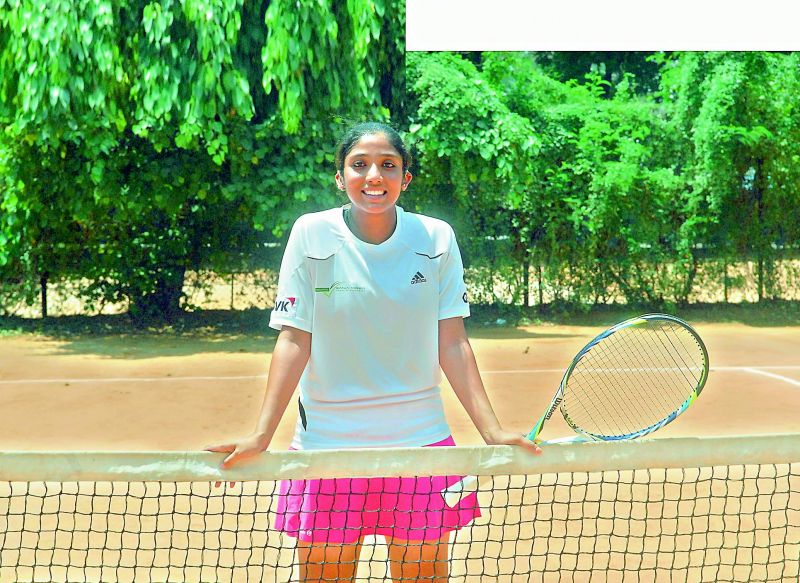
Yes, there are people from the sports fraternity in the city who are balancing their religious sentiments and fitness with equal élan. “The month of Ramadan started as usual with me fasting with my family members. But, now that I am travelling from China to India to attend a coaching camp, I will have to see my schedule and then decide if I can fast or not. I am keeping an open mind, if I can I will or else not,” says 18-year-old Shaik Jafreen, who had represented India and won various International Deaf Tennis Championships. She is now prepping up for her next big assignment — the Deaf Olympics — to be held in Turkey in July.

Syeda Falak
Syeda Falak

Syeda Falak (popularly known as the Golden Girl of Hyderabad) who has created a name for herself in Karate globally, says, “Usually I alternate the time of training and fasting during Ramadan. Either I workout before breaking the fast, that is early morning, or after breaking the fast with a few dates. It’s not advisable to work out after eating a lot as you will fall sick for sure. So, it is better to munch on some dates and finish a light workout and then eat properly.”

Shaik Jafreen
Shaik Jafreen

For Syeda, a proper diet and rest is of importance, as workout sessions during Ramadan can tire people out easily. Agreeing with her is Shaik Khalid, the General Secretary of Telangana Association of Mixed Martial Arts (TAMMA) and a coach for many aspiring fighters.  He says, “During these 30 days, our training schedule changes. We don’t train during the day, and instead, do it from 10 pm to midnight. But again, following a proper diet is very important in our field and to recover from the effects of fasting, we eat a lot of dates and fruits and only then train.”

source: http://www.deccanchronicle.com / Deccan Chronicle / Home> Lifestyle, Viral and Trending / by Reshmi Chakravorty, Deccan Chronicle / June 02nd, 2017

Gore, Kale and Ghalib

NEW DELHI :

GhalibMPOs01jul2017

THE HAVELI of Kale Sahib is no more but the ahata (compound) still exists, and what a slum it has become since 1847 when Ghalib lived there after his release from prison for debt default! The poet quipped that after being freed by Gore (the British) he had been “imprisoned” by Kale. Kale Sahib was a highly venerated man. Whether he got this name because of his complexion is not known, but it is quite likely that the saint was not as fair as Ghalib. The Moghul emperor was among his devotees and so were Ghalib and his family. As a matter of fact, Ghalib’s sister-in-law, Bunyiadi Begum gifted the ahata to Kale Sahib and the name stuck.

Kale Sahib was a practical minded saint who refused to perform miracles just to please his devotees. He counselled them to pray fervently, pointing out at the same time that in 90 per cent cases prayers went unanswered. But there were instances when he did help people out of their difficulties. He once admonished a man from whom he had driven out an evil spirit that if he went back to his sinful ways he would again become possessed and then even miracles might not help. Apparently Kale Sahib did not have to exorcise him again.

Situated in the Ballimaran area of Delhi, Ahata Kale Sahib forms part of the locality founded by a Persian, Qasim Khan, who first settled down in Lahore about the year 1750 and was befriended by the Governor of Punjab, Moinul Mulk. When Ahmed Shah Abdali invaded Punjab, Moinul Mulk resisted him and was killed. His widow, Mughlai Begum then became the virtual ruler and made Qasim Khan her chief adviser. There were insinuations, but then which young widow is safe from wagging tongues if she befriends a man?

Qasim Khan later came to the court of Shah Alam where he was accepted as a nobleman. The place in which he lived is known to this day as Gali Qasim Jan. Qasim Khan’s son, Faizullah Beg built the ahata. But how Buniyadi Begum came to possess it is not clear.

Congested mohalla

Ahata Kale Sahib now is a congested mohalla. Few of its residents remember Kale Sahib. But the ahata is in the news generally, for whenever BSES resorts to power cuts, Ahata Kale Sahib is as much affected as distant Janakpuri. In fact one finds this link between what was once Asia’s biggest colony and one of the dirtiest amusing. After Ghalib’s joke about Gore and Kale this should surely take the cake for it would have tickled the poet too. But he is long dead and gone.. But one has the feeling that he couldn’t be resting peacefully in Nizamuddin for he was essentially a man of the walled city of Delhi whose charms began and ended within its confines.

The charms are still reflected in a slight difference in speech, the flavour of the kababs and the taste of the water from Hare Bhare Sahib. The breeze that springs from the Jamuna goes past the Red Fort, negotiates the many arches of the Jama Masjid and merges with the smell of the motia and chameli sold at the crossroads before cooling the courtyards of the houses in the narrow gullies.

Ghalib liked to move about in this area of which the Kashmere and Delhi gates were the two extremities, with the fort being the hub and centre and the mosque the cultural bastion of the city. Yes, of course, Ghalib always had a soft corner for Agra, because he was born there and passed his boyhood in Kala Mahal from which the Taj looks just like a building in the next locality.

But his heart had been won over by Shahjehanabad. From Ballimaran to Jama Masjid the walk was long enough via Chandni Chowk. Sometimes one could meet Mir Ashiq who came from the opposite direction and went back to his kucha via Ballimaran. Was the tilt of his cap different from that of the residents of Nizamuddin? People noticed such traits and developed their pet notions.

For a man of such intense likes and dislikes as Ghalib, his grave in Nizamuddin is out of the milieu in which he flourished. It is a small enclosure though beautiful in its own way where sparrows make love in the afternoon. The illiterate take it for another shrine where obeisance must be paid, and budding poets hope to imbibe some of the virtues of the great “shair”.

An old man who sometimes steals up to the mausoleum feels that even a blank page touching the “mazar” would instantly be graced with a ghazal. He has never seen it happen, nor would we surely, but such feelings are the stuff legends are made of.

R.V.SMITH

source: http://www.thehindu.com / The Hindu / Home> MetroPlus Delhi / by R V Smith / Monday – November 29th, 2004

Sadia’s brother to join her in TV show

Mumbai, MAHARASHTRA :

SaadiaSiddiquiMPOs30Jun2017

Actress Sadia Siddiqui can’t stop beaming. Why? The actress, who plays Priyanka in ‘Satrangi Sasural’, will have her brother Farhaan join the show soon.

The Siddiqui siblings will be seen together for the first time on the screen.

Farhaan, who has dabbled in theatre, films and serials, will be paired opposite actress Resham Tipnis. His character, Raunak Punjabi will be younger to Resham in the  show.

Says the actor, “Sadia is one of the main reasons I took up the offer. It’s going to be exciting shooting with her. I look up to her. We never got the opportunity to work together as I was doing my things — theatre and travelling. Besides, I was sceptical of TV because of its erratic schedule and unpredictable nature. But she felt that I was apt for the role that was offered to me, and I took it up.”

The actor says that Sadia is a protective sister and likes to cocoon him. He says, “She treats me like a baby brother and often starts mothering me, which can get a little annoying (laughs). But I learn a lot from her.”

While he hasn’t worked with his sister before, the actor has featured with Resham in the play. Coincidentally, the two played spouses and he, the younger husband in it. “Fortunately, we will not have to work hard on our chemistry as we are comfortable with each other,” says he.

source: http://www.timesofindia.indiatimes.com / The Times of India / News Home> TV> News / by Neha Maheshwri / TNN / May 30th, 2015

The voices behind Radio Active

Nayandahalli (Bengaluru), KARNATAKA :

Akshay, the youngest jockey, with his aunt Manjula | Photo Credit: G.P. Sampath Kumar

From waste pickers to transgender rights activists and slum children, know the RJs of Bengaluru’s first community radio station

Sunday morning saw an eclectic gathering of radio jockeys — transgenders, people living with HIV, auto drivers, the differently-abled, domestic help, waste pickers, and animal welfare activists — come together to celebrate a decade of Radio Active CR 90.4 Mhz, Bengaluru’s first community radio station.

For this diverse group of citizens, who are often marginalised, the community radio has given them a platform to air their views. Most significantly, it has given them the confidence to live with dignity and demand for equal rights.

Salma and Siddique Pasha, waste pickers from Nayandahalli, host two shows – the daily show, Kasa Shramika Parisara Rakshaka, and a weekly Dastaan-e-Nayandahalli, documenting the stories of recyclers in the area. “The shows have given us a platform to connect with others in the community. To reach out to listeners in various slums we do shows in multiple languages — Kannada, Urdu, Tamil, and Bengali,” said Mr. Pasha.

Senior solid waste management expert N.S. Ramakanth has begun a new show called Trash Talk in English and Kannada.

Shiv Kumar, an auto driver, was first interviewed by the radio station for being awarded by the city police for his honesty in 2010. But soon he became an RJ and has since hosted multiple shows for auto drivers. He also has a show where he interviews unknown achievers and unsung heroes.

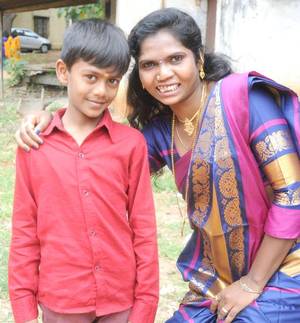
Akshay, 11, the youngest jockey, also sees a big draw with his show Chinnara Chilipili where he has been documenting traditional games along with storytelling sessions by other children. When asked how he greets his listeners, Akshay went into the RJ mode and said, “Welcome to the city’s first community radio Radio Active 90.4. We will now play games that our grandparents and parents used to play.” He produces the show with the help of his aunt Manjula along with 40 other children in the slums of Dasarahalli.

The channel has a strong programming on transgender rights with five shows, all hosted by members of the community. One popular show is Jeeva Diary, hosted by Uma which is presented as a diary of her life and its travails. “We get a good response and have got several calls from listeners who are shocked to listen to the discrimination and humiliation we face as young people in schools and at work,” she said.

Radio Active has also turned out to be a platform for the northeast community in the city to organise and voice themselves. Urmila Chanam, from Mizoram, who now hosts the show North East ki Awaz, said that the 2012 exodus of northeast community from the city set them into legal aid activism in the community.

“But the attacks on the community members never came down. So we have now started the radio show to have our voice heard. While we started featuring northeast food, fashion shows, and festivals, the show has also helped us intervene on behalf of a few victims of sexual abuse from the community,” he said.

source: http://www.thehindu.com / The Hindu / Home> News> Cities> Bengaluru / June 26th, 2017

Nahid Afrin shines in reality show

ASSAM :

NahidAfrinMPOs30jun2017

Biswanath Chariali :

Nahid Afrin, a Borgeet student of Nrityanjali Kala Niketan, here has brought glory to the State by entering the Top Nine in the ongoing reality show programme ‘Indian Idol Junior’ telecast by Sony TV.

The elder daughter of Fatema Ansari and Anowar Ansari of Biswanath Chariali, she has already earned accolades with her melodious voice in the stages at different places of the State and can sing in different languages including Assamese, Hindi and Bengali with the same fervour.

Dr Lohit Sharma, managing director, Nrityanjali Kala Niketan informed this correspondent that Nahid had been exhibiting good performances in music since her childhood and she possesses a bright future.

Nahid, a Visharad Part 2 student in classical music under Bhatkhande Kala Kendra has been able to draw the attraction of the judges in the reality show and even Bollywood superstar Salman Khan had showered her blessings and good wishes upon her in the programme recently.

Now all she wants from the people of Assam is good wishes and votes in her favour.

source: http://www.assamtribune.com / The Assam Tribune / Home / by Hiranya Borthakur / Guwahati – July 24th, 2015

Muslim farmers donate land for hospital

Beswa Village, Fatehpur Tehsil (Sikar District), RAJASTHAN :

muslimfarmersMPOs30jun2017

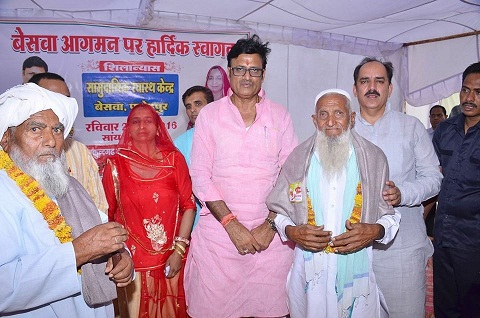
In a rare humanitarian gesture, two Muslims farmers of Rajasthan have donated their land for the building a government hospital in their area. The hospital will come up in Beswa village, in the Shekhawati region of Sikar in the state.

Recognizing the contribution of the two farmers — Asghar Khan and Hakim Ali — State Medical and Health Minister Rajendra Rathore visited the Beswa village on Sunday and laid the foundation stone for the Community Health Centre. He sanctioned Rs. 3 crore on the spot from his department’s budget for the CHC.

Villagers were all praise for the two farmer-brothers, who have donated their land measuring eight bighas, situated at a prime location on Mukundgarh Road. Beswa Sarpanch Zarina Bano said the hospital would have a minor operation theatre and a labour room in addition to regular treatment facilities.

Asghar Khan, 68, who has been tilling the land since his youth, told media that he could not see the difficulties of people in the rural area who had to traverse long distances during medical emergencies.

source: http://www.theindianawaaz.com / The Indian Awaaz.com / Home / by Ashfaq Kayamkhani / May 31st, 2016

Saying it with science

NEW DELHI / Hyderabad , TELANGANA  :

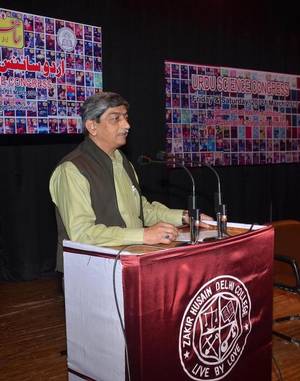
Mohammad Parvaiz at the first Urdu Science Congress in New Delhi in March 2015. Photo: Special Arrangement

A 23-year-old Urdu science magazine uses popular science to inspire progressive thought

Mohammad Aslam Parvaiz likes to describe a process that is a combination of four of his passions — botany, education, philosophy and religion. “The roots imbibe water and nutrients from the soil. The leaf photosynthesises, produces food, retains just enough for its own sustenance and sends the rest to the parts of the tree that need that food. This is the natural world’s law of diffusion — movement happens from the region of high concentration to the region of low concentration. If we see the tree as our community, that is how resources should flow too,” says Dr. Parvaiz, publisher of the magazine Urdu Science.

The first issue was launched at the World Book Fair in New Delhi in 1994. It dealt with AIDS and the myths surrounding condoms. In the last 22 years, the magazine has covered a gamut of subjects including water conservation and the need for a National Water Policy, common ailments and how to prevent them, sex determination, balding, sleep, life on Mars, and animation.

“Science is very effective in feeding the intellectual hunger of young people.Only with knowledge can they think for themselves and learn to analyse the religious scripts that they memorise. Most often it is the children of the poorest Muslims who attend madrasas. With only religious texts to lead them, and if they can read only in one language, how can you expect them to develop their personality and prosper in society?” asks the mild-mannered crusader, at present the Vice-Chancellor of Maulana Azad National Urdu University (MANUU) in Hyderabad.

In the campus, boulders display signages with scientific information and many trees carry their botanical names. “A person will absorb anything that is part of his environment,” he said to the graduate, post-graduate and doctoral students at the inauguration of an Urdu writers’ workshop. As an Urdu-medium student in a madrasa in Delhi, young Parvaiz hardly found any books or magazines in Urdu that could satiate his curiosity. In the Sunday markets of old Daryagunj, he used to find Russian books translated into Urdu, and that is how he discovered Benjamin Franklin. As a high-school student, he set up a science lab in his house. Years later, when he became the principal of Zakir Hussain College, he started a new venture in another corner of his house — Urdu Science.

“Survival depends as much on physical health as on intellectual growth, and sadly, the low potential for growth for poor students in madrasas is a problem across our subcontinent,” he says. An active member of the Modernization of Madrasa Education Project, he says that it is “ironic and tragic that clerics who lead our prayers and teach us about religion and the Koran do not have the means or the knowledge to impart a broad and progressive education. They accept that religious education is not enough, and many of them are now waiting for progressive teachers and educators to come forward and teach at madrasas.”

Having completed a PhD in botany, Dr. Parvaiz started writing in Urdu for Quami Awaz, then edited by Mohan Chirag. Noticing that most Urdu-medium students opted for the humanities, he wanted to popularise science. As a first step, he started a society called the Anjuman Farogh-e-Science, with patrons like Nobel Laureate Prof. Abdus Salam, Jamia Hamdard founder Hakeem Abdul Hameed, and Jamia Hamdard Chancellor Saiyid Hamid. The not-for-profit organisation held its first Urdu Science Congress in New Delhi in March 2015 and the second in Aligarh, this February.

“Urdu was a language of poetry and literature. People of different faiths patronised Urdu. But in those days, and even today, information in the language was very limited. And that is why I started this organisation and this magazine. My wife Shaheen helps me with proof-reading. And now I also have assistance from my colleague Dr. Tariq Nadwi.” Dr. Parvaiz is proud that the magazine has attracted enough Urdu science writers to contribute, and the magazine has so far never had to translate an article from another language. Issues from 2005 are available on the Academia.edu website.

Translation is an important key to dissemination of knowledge, agrees Parvaiz. He is on a personal mission to compile a glossary of scientific words in English, with meanings explained in Urdu. Sharing a slice of history, he says, “Delhi College was started as a madrasa by Ghaziuddin Khan. Here, mathematician Master Ramchandra and Maulvi Zakaullah translated many of the Western scientific texts into Urdu through the Vernacular Translation Society. It was there that I studied and later became the principal. I started Urdu Science when I was there. And I feel very humble that I now head MANUU, the university aiming to promote Urdu.”

A voracious reader of both religious texts and international science, Parvaiz says, “Science helps us interpret the Koran in many ways. And that is as relevant today as it was when the first issue of Urdu Science was launched.”

Mala Kumar is a children’s author, editor and freelance journalist.

source: http://www.thehindu.com / The Hindu / Home> Literary Review / October 15th, 2016