Dastaan-E-Rafi looks at the phenomenal Hindi playback singer through the eyes of the film fraternity, but as a human being
‘Do you know about the Sanjay Gandhi- Kishore Kumar incident? And how Rafi came to Kishore’s recuse?’ These are the kind of leading questions and anecdotes that we Bollywood-crazy people thrive on.
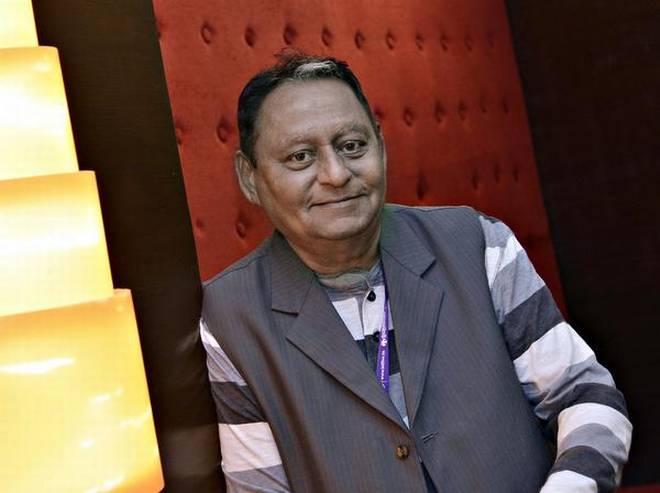
And it is this sort of personal journey that Rajni Acharya promises with his film on one of Bollywood’s most charismatic and versatile singers, Mohammed Rafi, titled Dastaan-e-Rafi.
“Mohammed Rafi was a very different kind of a singer. He was well trained in classical music. But he was not padha-likha …his attitude inspired me,” says co-director and producer of what he calls a “lifeOgraphy” of Rafi.
India is a music-loving country, he observes. “We all begin our day listening to music,” he smiles, speaking at the 9th Bengaluru International Film Festival (Biffes). And, what more can interest people than the life story of a musician, he argues. “Rafi was also a great actor. He could be Dilip Kumar when he sang for him. He could be Shammi Kapoor, or he could be Johnny Walker… that quality is so rare in a singer,” he adds. We all have our personal favourite list of Rafi songs.
Rajni, an industry insider of over 25 years with his own media production house, who admits he had reasonable access to information and people, also recounts the other side of the making of this two-hour saga – he slogged on it for five years, starting with research, and spent 55 lakhs on it!
Many studios and production houses refused to part with footage of songs for a commercial venture like his. Acquiring music tracks alone was proving too expensive. “Some of the actors, singers and music directors we approached for interviews demanded money! We have stood outside their homes for hours to get some of these interviews. I shot for over 120 days to complete this film.”
He shot parts of the film in Pakistan, in Kotla Sultan Singh in the Punjab area, speaking to Rafi’s brother, son, friends. He interviewed Shamshad Begum, Ghulam Ali, Lata Mangeshkar, the entire Kapoor khandaan across generations, including a total of 60 people — co-singers, actors, music directors, his daughters who’ve given interviews before, interspersed with 60 of his songs.
The film also traces the famous singer’s career graph. “He is one of the very few in the industry who was able to rise once again, after a downward career spiral,” opines Rajni, who got close to Rafi’s family.
When the media was busy writing off Rafi’s career, it was Kishore Kumar who called a press conference and told them not to write about him negatively, says Rajni. When Sanjay Gandhi approached Kishore to do concerts to raise party funds, Kishore demanded his fee. “So Kishore was banned on radio. Producers stopped giving him work. People came and told Rafi this is a great opportunity for you. But Rafi instead approach Sanjay Gandhi and offered to sing for free, asking for the ban on Kishore to be lifted.” His film, says Rajni, looks at Rafi not just as a singer, but as a great human being. “Every single person we spoke to agreed he is a gentleman.”
The film has been telecast on Zee already, and will soon be out on DVD.
source: http://www.thehindu.com / The Hindu / Home> Entertainment / by Bhumika K / Februar 08th, 2017
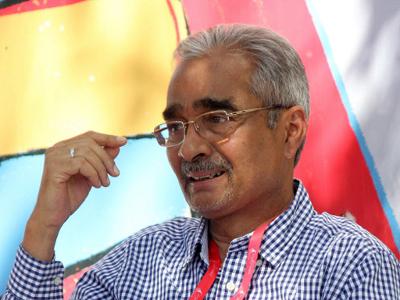
Bolwar Mahamad Kunhi during a session in the 2nd day of the Times Litfest held at Jayamahal Palace in Bengaluru on Sunday (TOI Photo)
Bengaluru :
Award winning Kannada novelist Bolwar Mahamad Kunhi wants to write a novel on Prophet Muhammad’s young wife Aisha, who was among eleven wives of the prophet who married him at the age of eight.
Kuhni, who recently won Kendra Sahitya Academy Award for his novel Swathantrada Ota, was in conversation with critic M S Ashadevi at a session on ‘the return of the novel to Kannada literature’ at Times Literature Festival on Sunday. The discussion was moderated by writer Vikram Hatwar.
He said writing about Sita was easier than Aisha since the character of Sita and sacrifice she made was known to people whereas. “It is difficult to write about someone like Aisha and it is going to be demystifying myths about her,” said Kunhi. “It takes some more time before writing the novel. I am yet to get authentic data about her, and I am still researching,” he added.
Commenting on the politics over Ayodhya, the novelist said an issue was made out of Ram temple for a particular reason and Ayodhya was never been a pilgrimage centre unlike Kashi. “I find it odd when people go on pilgrimage to Ayodhya and Ram idol has been relegated to a corner there,” he said.
The issue of Ram temple came up in the discussion in the context that Kunhi has used Ramayana and the character of Ram as parallel to the main characters in his 1,100-page mega novel Swanthanthrada Ota.
Swathanthrada Ota was originally was a short story about two children coming to India from Pakistan during the Partition and Kunhi elaborated into a novel as he wanted to tell the saga of Partition that is relevant for many more years to come.
On the recent tendency of Kannada short story writers migrating to the novel genre, Asha Devi said the development has an historic significance and the tendency was being seen even in all other Indian languages. “It is not an accidental phenomenon. There is a historic significance to it. The writers have affinity to short story genre and gravitating towards novel. And it signifies the longing for returning to the roots and also quest for the remedy of social decadence,” she said.
Asha Devi observed that the short story genre is giving way to novel at a time when the writers are returning to find Mahatma Gandhi as their subject. She gave the instance of the novel Gandhi Banda by H Nagavni, while Kunhi’s Swathanthrada Ota revolves round Gandhi in the backdrop of the Partition.
source: http://www.timesofindia.indiatimes.com / The Times of India / News> City News> Bangalore News / by B V Shiva Shankar / TNN / February 12th, 2017
‘Mysooru Mithra’ Sub-Editor A.C. Prabhakar among 15 awardees
Prabhakar, Shantala, Chandru & Rajeev
Mysuru :
‘Mysooru Mithra’ Sub-Editor A.C. Prabhakar and photo journalist K.H. Chandru of Mysuru are among the 15 journalists who have been selected for Karnataka Media Academy awards (2016).
Other awardees are senior journalist H.R. Sreesha of Bengaluru, Shantala Dharmaraj of Samyukta Karnataka, Mysuru, G. Veeranna of Vijayavani, Ballari, Siddiqui, Alduri ofChikkamagaluru, Ronald Fernandes of Deccan Herald, Mangaluru, Chini Purushotham of Tumakuru, Ujjini Rudrappa of Koppal, Hemanth Kumar of Bengaluru, Ramaswamy of Ramanagaram, Shankarappa Chalavadi of Bagalkot, Nagaraj Sunagar of Dharwad, Anil Kumar Hosamani of Vijayapura and Malatesh Angur of Haveri.
The award carries a purse of Rs. 20,000 and a citation.
Shivamogga Times has bagged the ‘Andolana’ award, while Chandrashekar More of Udayavani has bagged ‘Abhimani’ award, C.J. Ravi of Vijaya Karnataka has bagged ‘Mysuru Digantha’ award, Cinema Journalist Snehapriya Nagaraj has bagged ‘Aragini’ award and senior journalist Dr. Nataraj Huliyar has bagged ‘Dr. B.R. Ambedkar Mookanayaka’ award.
source: http://www.starofmysore.com / Star of Mysore / Home> General News / February 04th, 2017
On his sixth daughter’s wedding, this Mangaluru businessman will finance the wedding of six other girls
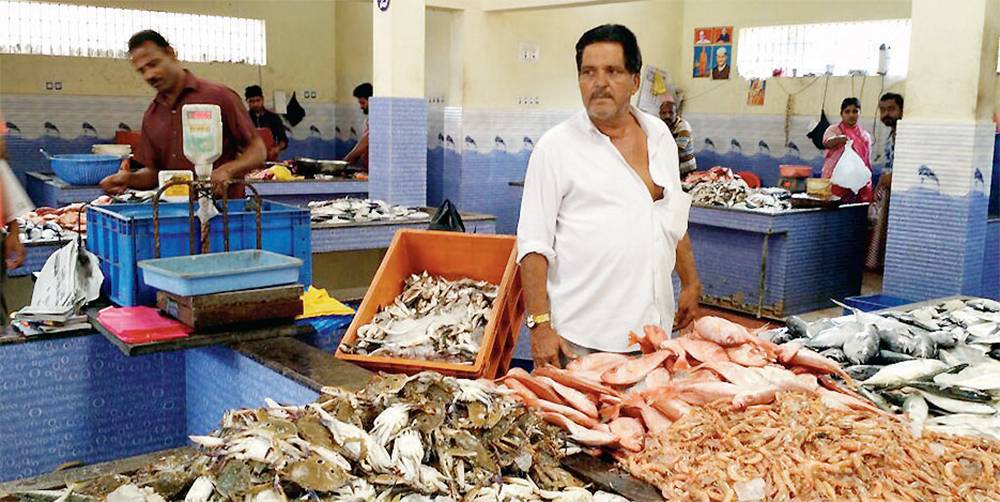
Ibrahim Haji, a fish vendor, has 10 children, of whom seven are girls and three are boys
Extravagant weddings have become the norm for the rich in recent years, where tycoons don’t hesitate to spend crores of rupees on celebrations that last almost a week.
Then we have seen other wealthy people who lead by example. Recently, a businessman from Aurangabad celebrated his daughter’s wedding by gifting 90 houses to the homeless poor.
Now it is the turn of G Ibrahim Haji, a fish vendor from Gundyadka in Sullia, about 86 kilometers from Mangaluru .
On the occasion of the marriage of his sixth daughter on Feb 5, he has decided to get six other poor girls married. Ibrahim Haji has 10 children, of whom seven are girls and three boys. Five of his daughters are married and he decided to celebrate the wedding of his sixth daughter Aasma B in a special way. She will be marrying Shahul, a businessman.
Speaking to Bangalore Mirror, Nasiruddin, also a businessman who is married to Ibrahim’s second daughter Fauzia, said, “This is not the first time that my father-in-law has decided to help the poor. He came up in life the most difficult way and now he feels that he should help those who are in need.”
Ibrahim Haji started out in life as an ice candy vendor. After working for some time, he bought a secondhand Ambassador car for Rs 3,500 and was running service trips for some time. He then went to Dubai hoping for better prospects, but returned within months. On his return to Sullia, he ventured into the fish business. He would buy fish from Mangaluru and sell in Sullia. Gradually, his business grew and today he has about 20 mobile vehicles that sell fish on the Sullia-Madikeri and Puttur route and nearly 30 employees, said Nasiruddin.
He said Ibrahim Haji has undertaken lot of charity. “When he was the president of the Mogarpane Jumma Masjid, he built a 20-room building, so that the masjid earns revenue. Even in the past, he has helped poor girls in their marriage. To make his daughter’s wedding special, he has decided to conduct the marriage of six other poor girls. He will be offering about 10 sovereigns gold, wedding dress and lunch and look after other wedding expenses. The Nikah will take place in turns and is expected to begin at around 11.30 and go on till 2 pm. Food for nearly 6,000 people will be arranged. The wedding will take place at a ground near his house. The beneficiaries have been identified after we personally visited them. They belong to Belthangady, Puttur and Sullia area. Each of their families has a sad story to narrate. When a few among them are orphans and looked after by their relatives, a girl’s father is bedridden and another girl’s marriage was getting postponed repeatedly because the family had no money,” he said.
Ibrahim has helped poor in other ways too, like in getting a house constructed in time. “Even today, he works at his stall in the market and is very down-to-earth and hopes to continue his charity work in the future too,” said Nasiruddin.
Ibrahim Haji said, “God has blessed me and I want to continue helping people in need. I started my business from zero and today would like spend a part of my income on the needy.”
source: http://www.bangaloremirror.com / Bangalore Mirror / Home> News> State / by Bangalore Mirror Bureau / February 01st, 2017
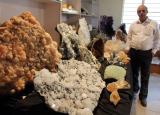
Makki has rare collection of stones: Makki owns over 1,000 exhibits worth several crores
Huge claws of a T-Rex dinosaur that would take you to the world of Steven Spielberg’s Jurassic Park, massive amethyst crystals and a meteorite that fell in Siberia in Russia that remind of Carl Sagan’s Cosmos are part of his collection. Besides them, he owns hundreds of small precious stones, which would hold visitors in awe and expose them to a new world of stones.
Interestingly, all these are held by one man and he answers to the name of Makki. He is virtually a mobile museum. Whether it is something extra-terrestrial or buried in mounds or deep inside the earth, he has almost everything. He has ruby, agate, amethyst and many more.
“You need to touch them, feel them and experience them,” says 68-year-old Muhammad Fasihuddin Makki about his exhibits. He is not touchy about anyone touching specimens and insists that students need to be brought closer to them to change their perspective about stones.
Collecting and selling stones are his hobby as well as profession. “It’s my passion and I love it… my bread and butter are minerals,” he said. “I am taking stones to the doorstep of people for them to develop love for them,” said Makki, who has no formal training in geology. In fact, Makki is a Master’s in English and calls himself a “pujari of Laxmi and Saraswati”.
The Pune-based Makki is the founder of Matrix India and also runs a touring museum. His personal collection is displayed in exhibitions across India. He has participated in several exhibitions, conferences and auctions abroad. He has been supplying rocks and minerals to schools and colleges. He also runs one of the biggest agencies in the world involved in exporting and importing rocks and minerals.
“We offer a variety of minerals from spectacular specimens for collectors to large stock of supplies to wholesale buyers. We have a ready stock of different rough materials from India and we regularly add to our inventory freshly mined new specimens from the Deccan Traps,” said Makki. They also supply boulders and large colourful rocks for landscaping and interior decoration.
Makki is a member of various associations, including Minerological Society of India, Minerological Society of America, Collectors Society of India, Volcanological Society of India, Euromineral France and Mineralientage Germany.
The family of Makki hails from Karnataka and his father was into collecting minerals. “I picked it up from him,” he said. It has been close to five decades into this profession and hobby. “I love this and it keeps me going,” he said. He takes over 1,000 specimens for exhibitions and their value will be several crores.
“I do not charge any money or take remuneration.The institutions where I arrange these mineral and fossil exhibitions arrange for my accommodation and for my two or three assistants. The organisers bear the cost of transporting exhibits like stones from Pune. Some of the exhibits are quite heavy and many of them weigh more than 100 kg,” he said.
His son Sami has started helping him in the business and in arranging these educational earth science exhibitions.
The most precious among the specimens in his collection is a meteorite. It looks small but it is over 8 kg, he smiles. “It fell in 1947 in Sikhote-Alin in Siberia. In 1994, I visited an exhibition in the United States, where this was auctioned…. I did not hesitate, bid for it and bought it… it was quite a sum, but it is a rare collection,” he says.
He recently held “Exhibition of Rocks, Minerals & Archaeological Antiques” and it was hosted by the Centre for Extra-Mural Studies (CEMS) of the University of Mumbai in collaboration with the INSTUCEN (India Study Centre) Trust, and the Deccan College of Pune. “I want people to touch them, photograph them… it is a kind of a bond…it is a rock. Minerals do not have life, but once you touch and feel it, you are in a totally different world,” he says passionately.
He said, “The trilobites are over 400 million years old. These are the oldest fossils with me. Dinosaurs became extinct 60 million years ago. I have dinosaur fossils with me and in fact children love to see them. They often want to touch and see and I do not object. Today one can see dinosaurs in films or on television. When children see a live claw or egg or remains they get excited,” points out Makki.
Explaining how he goes about his collection, he said: “I do mining and collection from all parts of India. I have set aside a lot of large exotic colourful mineral specimens as my personal collection and in addition to that I also acquire many different kinds of colourful and interesting mineral specimens found in other countries. I buy from other dealers or exchange with my specimens and in this way over the years I have accumulated a huge collection of colourful crystalline mineral specimens from all over the world.”
India, he says, is a treasure house of minerals and the Geological Society of India and Geological Survey of India have been doing a great job. “Collection and exhibition of rocks and minerals offer good careers,” he claims.
source: http://www.deccanherald.com / Deccan Herald / Home> Special Features / by Mrityunjay Bose in Mumbai / DHNS – January 29th, 2017
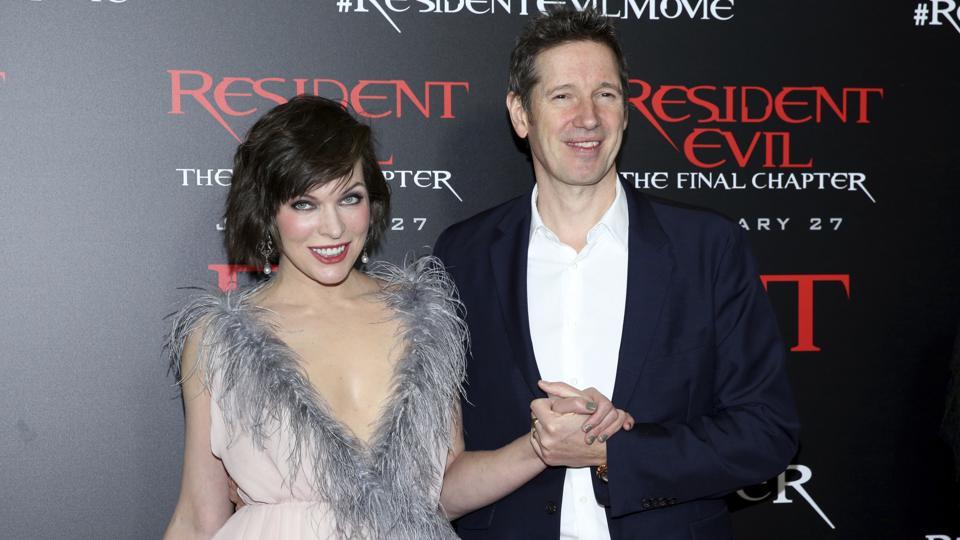
Actor Milla Jovovich and her husband, filmmaker Paul W.S Anderson say Salman Khan has more fans in Germany than them.(Rich Fury/Invision/AP)
A Bollywood A-lister’s stardom can leave even Hollywood celebrities behind. That’s exactly what filmmaker Paul WS Anderson and his wife, actor Milla Jovovich witnessed when they ran into Salman Khan in Germany in 2011.
“We were staying at the same hotel and I was shocked because there was this huge crowd of fans inside the hotel. First immediately I thought they were my fans and I walked out all ah… No one is paying attention to me at all and what’s going on,” says Milla who will soon be seen in the sixth instalment of the Resident Evil film franchise.
She adds, “Suddenly this guy (Salman Khan) walks by and everyone is like Oh My God!! I see all of this happen and ask myself ‘Jesus Christ who is this guy?’ And then we get to know he’s the biggest Indian Bollywood star and he’s a huge deal.”
The 41-year-old actor says she was quite embarrassed with the incident. “That incident was quite interesting yet humiliating. We were all prepared to sign autographs and no one was interested and it was funny. We would turn up, pull-up at the hotel and literally more than 100 fans gathered outside the hotel. When we pulled up and got out of the car, no one was interested in us and it was so funny,” she adds.
Her husband, Paul Anderson feels Indian films are big in other countries. “Bollywood movies aren’t considered harmful in anyway. They are not pushing any western values. So Indian stars are huge in Germany,” says Anderson.
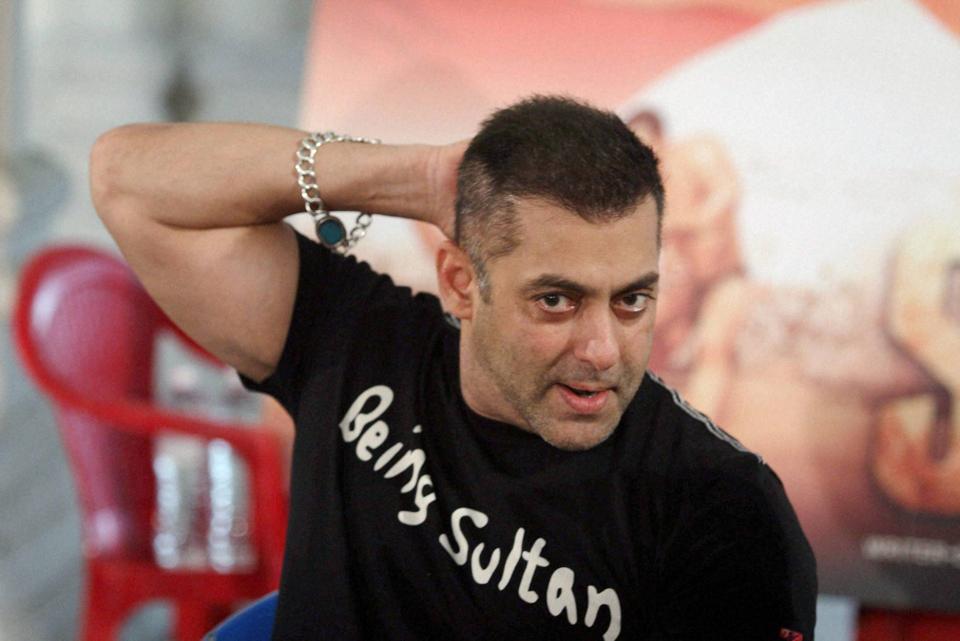
Actor Salman Khan’s stardom in Germany floored actor Milla Jovovich and her husband, filmmaker Paul W.S Anderson. (PTI)
Following the incident, Milla now wants to work with Salman and says, “I would love that. I don’t know about the singing and the dancing bit. Though I’d have to …it will be my next training.”
source: http://www.hindustantimes.com / Hindustan Times / Home> Bollywood / by Samarth Goyal, HT / January 26th, 2017
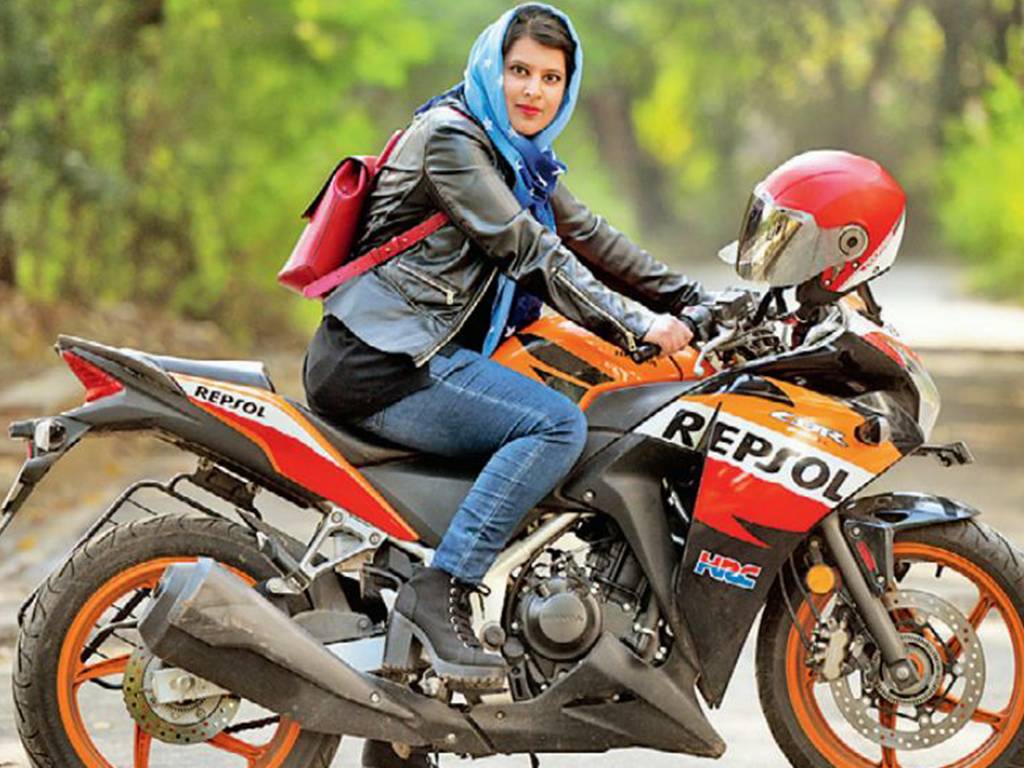
Roshni Misbah is pursuing an MA in Arabic & Culture Studies at Jamia. Photo Piyal Bhattacharjee
New Delhi :
She oozes attitude in her black leather jacket, jeans and high-heeled boots, her head covered in a hijab. But that is not why Roshni Misbah makes heads turn in Jamia Millia Islamia. What does is the way she moves — on a mean orange-red-and-black motorbike that leaves behind a trail of throaty retorts when she zooms by.
People unaccustomed to such derring-do on a tradition-bound campus are slowly coming to terms with the phenomenon of Misbah, a 22-year-old who is pursuing an MA degree in Arabic and Culture Studies at the university. She is also an online sensation. For those who think a woman should, at most, aspire to a scooter, she is a slap in the face.
“I am a member of groups like the Windchasers and Delhi Royal Enfield Riders, and was part of the Bajaj Avengers Club at the time I owned an Avenger bike,” said the girl from Ghaziabad. She also believes that she is one of the youngest members of Bikerni, an all-woman biker group in Delhi that aims at gender empowerment through female motorcyclists.
These days, she flashes by on a Rs 2-lakh, 250 cc Honda CBR Repsol. It has been a longish journey since the time her father, himself a lover of motorcycles and owner of, among others, a monstrous Suzuki Intruder 1800, said he would get her a Vespa when she declared pillion rides with him had whetted her keenness to become a biker.
She was in Class IX at Cambridge School when her wish was fulfilled. She learnt to ride a bike by herself and later managed to buy the Avenger, on which she perfected her skills. Her embracing of an unusual pursuit made her an immediate heroine for her two younger siblings and their friends.
Misbah knew she was doing something different, especially for a girl from a conservative community. But everyone around her — from family to friends and teachers — rallied around her. “My teachers even gave me a special parking slot near the Indo-Arab Centre on the campus,” she said. Her teacher, Jawed Khan, director, Centre for West Asian Studies, described her as a sincere student who remained attached to her culture despite being passionate about bikes. A friend, Fareed Farooqui, who too is a superbike rider, felt that “other girls should do whatever they wish to, like Roshni”.
Thankful to the vast majority who have endorsed her passion, Misbah also recalled that there were a few who criticised her for not conforming to the accepted image of a woman. The confident super biker believes that she is doing her bit to break down such stereotypes and hopes instead “to inspire more and more girls to follow their desires”.
source: http://www.timesofindia.indiatimes.com / The Times of India / News> City News> Delhi News / by Mohammad Ibrar, TNN / January 28th, 2017
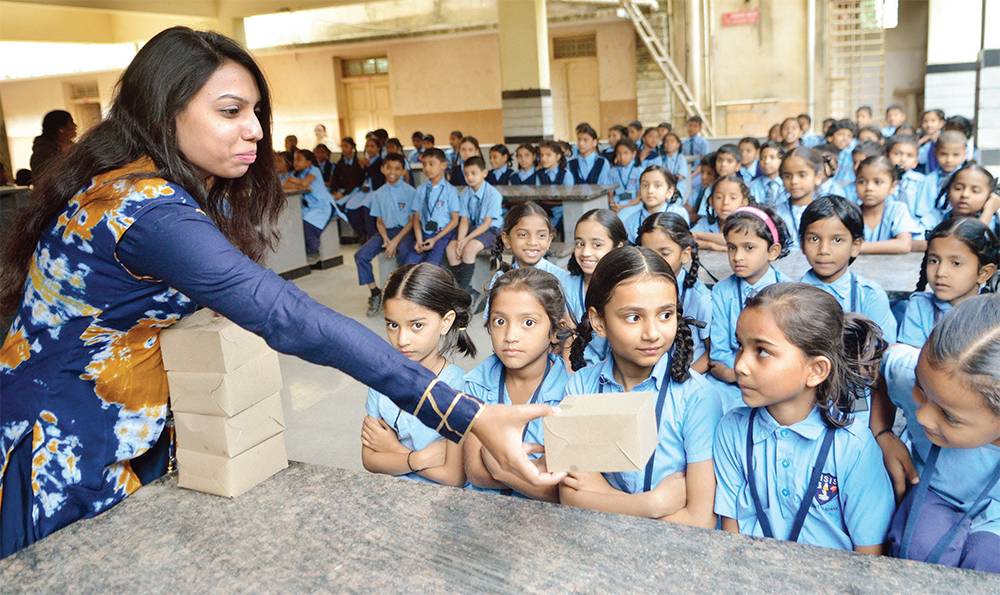
Cakes, chips and fruit juice… 25-yr-old entrepreneur distributes snack boxes in Fraser Town school to spread smiles among underprivileged kids; next, she plans to start an NGO to teach English to students of Urdu- & Kannada-medium schools
FOOD FOR THOUGHT: Students at this govt school in Fraser Town can barely conceal their excitement as Ameena hands out snack boxes
In this greed-filled world, a 25-year-old entrepreneur has set a shining example of how sharing can spread joy; and her efforts are already spreading smiles among children of a local government school in Fraser Town.
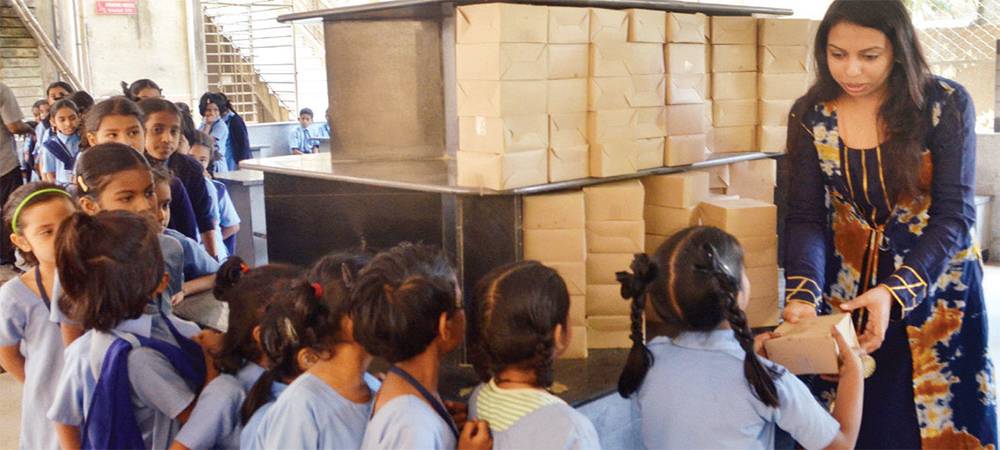
This young entrepreneur, Ameena Shaikh, running an event management company, keeps aside a part of her income every month, which goes into buying snack boxes filled with goodies for 210 schoolchildren studying in class 1-5. The boxes contain a piece of cake, potato chips, and a fruit juice.
Last week, when she distributed the boxes, the twinkle in the eyes of the children — all from underprivileged background — said it all. Inspired by her grandfather, Ameena has ensured that not a single month has gone without her separating a part of her income for charity.
“My grandfather is my inspiration. He gave away two acres of land in our native place (Tiptur) so that the poor could build their homes there. As for me, I began my event management company when I was in the second year of my degree. Right from my first income, I have always given a part of it for charity,” she says.
In the beginning, it was small things like packets of biscuits for kids, and even books and uniforms. “However, these are little kids, they find happiness in such goodies and cakes and all I wanted is to spread smiles. For these kids, a cake is a big thing, and I plan to bring all these pieces of happiness for them. As my income grew, my charity has also expanded,” she says.
Although the beginnings have been humble and Ameena works single-handed with no outside donations or help, she has bigger plans.
With her soon-to-begin NGO, Al-Maysan Trust (which means ‘the shining star’), she plans to bring volunteers on board and also accept donations.
In the coming months, Ameena and her NGO plan to take charity to the next level by educating the underprivileged.
“This NGO will begin working by next month. For now, I have 2-3 volunteers who only assist me in the distributions, but in future I do not want to constrict to distributing but will start English classes across Bengaluru for both Urdu and Kannada medium schools. I plan to go to city colleges to gather volunteers. I am sure there will be students who want to do some good work for the society. Also, with the NGO in place, we can take the charity work to a bigger level by donations as well,” she says of her plans.
Although she doesn’t believe in publicity,Ameena feels this would inspire people to do more and also join her as in her efforts. For her, helping people in need is more of a soul-purifying exercise and spreading smiles is what she calls ‘her calling’: “My trust is open for any number of volunteers who want to make a positive change. For me, charity means happiness. I cannot simply put it in words, but the moment I see smiles on these cute faces of children, or when I see someone is doing much better and is happier, I feel a whole lot of peace/calmness.”
source: http://www.bangaloremirror.indiatimes.com / Bangalore Mirror / Home> Bangalore> Cover Story / by Farheen Hussain, Bangalore Mirror Bureau / January 26th, 2017
Kendra Sahitya Academy awardee Bolwar Mohammed Kunhi, who was felicitated at a programme jointly organised by Mysuru Zilla Sahitya Parishat and Bearys Welfare Association at the Institution of Engineers-India (IEI) on JLB Road here on Saturday, is seen with Kannada Sahitya Parishat Mysuru President Dr. Y.D. Rajanna, Treasurer Rajashekar Kadamba and others.
Mysuru :
Expressing concern over some persons making controversial remarks on holy books, Kendra Sahitya Academy awardee Bolwar Mohammed Kunhi has said that knowledgeable persons won’t make comments that divide the society and hurt religious sentiments.
He was speaking after receiving felicitation at a programme jointly organised by Mysuru Zilla Sahitya Parishat and Bearys Welfare Association at the Institution of Engineers-India (IEI) on JLB Road here on Saturday.
Taking objection to recent statements of some that Hindu women used to jump into the pyre of their husbands (Sati system) in order to protect themselves from Muslim men, he said that Madri jumped into the pyre of her husband King Pandu in Mahabharata. But as per his knowledge, Muslims came to India about 700 years ago and Mahabharata was written thousands of years ago, he pointed out.
He also said that one must not make any insulting remarks on sacred and holy books as it is bound to create tensions in the society.
Referring to Pejawar Mutt Seer, he said that Sri Vishveswara Teertha Swamiji used to treat him as his son. Blaming the media for seeking the opinion of the Seer on almost every issue, Mohammed Kunhi said that the Seer cannot alone bring about changes in the society. He further said that the Swamiji must be left alone to carry out his rituals and not to draw him (Seer) into controversies.
Retired Professor Dr. H.M. Krishnaswamy spoke about Kunhi’s work ‘Swatantrada Ota,’ which earned the veteran writer (Kunhi) the Kendra Sahitya Academy award.
Journalist B.M. Haneef, Bearys Welfare Association President N. Mohammad Haji, Kannada Sahitya Parishat Mysuru President Dr. Y.D. Rajanna, Treasurer Rajashekar Kadamba and others were present.
source: http://www.starofmysore.com / Star of Mysore / Home> General News / January 23rd, 2017
Mirza Miyani Jani, 60, offers prayers in front of one of Alinaqipalem’s two mosques, holding on firmly to his tools of trade. Photo: Ch. Vijaya Bhaskar | Photo Credit: Ch. Vijaya Bhaskar
A village in Andhra Pradesh where every family is Shia and everyone is a mason
Every day before the sun rises, almost all the villagers of Alinaqipalem in Andhra Pradesh’s Krishna district set off for work with their lunch boxes and tool kits. Work could take them to Vijayawada, Challapalli or Machilipatnam, where they will lay stone and cement for homes and buildings all day and return home by sundown. They have been doing this for generations now, for Alinaqipalem is a mason’s village, with almost all the 450-odd families here involved in construction work. In fact, till a few years ago they were all masons without exception, but slowly they are beginning to take up other professions.
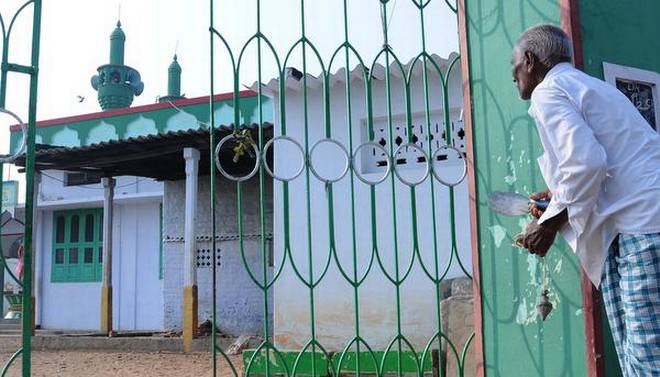
The remote and idyllic Alinaqipalem has another distinction — the village has only Shia families. Surrounding villages call it ‘Turakapalem’ or the village of Muslims.
According to oral history, Abul Hasan Qutb Shah or Tani Shah, ruler of Golconda and the last of the Qutb Shahi dynasty, invited Mullah Mohammed Ali from Isfahan in Iran to come to India to teach his children. This was some 330 years ago. The mullah’s eldest son Haider Ali Naqi Isfahani and two families later settled down in this part of Krishna. They were soon followed by more families and a small hub of Shias emerged gradually. The village derives its name from the first settler and is called Alinaqipalem or Ali Naqi’s village.
Over the years, the villagers married local people, lost their Iranian features and forgot their mother tongue. Today, no one understands or speaks Persian or Arabic, except the two imams who offer prayers at the village’s two masjids. Both men are in their mid-40s and they went to Isfahan and Najafi, respectively, for their training.
The villagers speak Urdu, liberally laced with Telugu. Nothing of Iran remains, either architecturally or culturally: they have neither the multi-storeyed buildings made of red clay as in Iran’s Abyaneh village nor the yellow clay-coated buildings of Masouleh. The only thing remotely Iranian are the occasional posters of Ayatollah Khomeini that I came across every now and then on the walls. “Khomeini is our religious leader. So the photographs,” said Mirza Mohammed Ali, 69, a village politician.
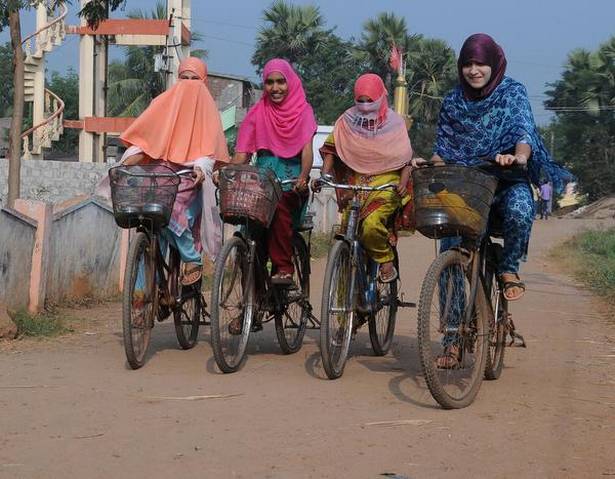
Girls cycle to school wearing colourful hijabs in Alinaqipalem. Photo: Ch.Vijaya Bhaskar | Photo Credit: Photo: Ch.Vijaya Bhaskar
Most of the villagers I spoke to didn’t remember how and when masonry became the village’s chief occupation. And then I found 57-year-old Mirza Javad Hussain, headmaster of the local school. We sat in the balcony of his neat, double-storied building covered with printed tiles and he told me the story of how some 120 years ago, one Azgar Ali from Pedana village, not so far away, introduced masonry work here.
“Until then,” said the bespectacled and bearded Hussain, “the villagers here worked as carpenters and ironsmiths.” Hussain is one of the few villagers with a modern connection to the Middle East — he was one of five persons from India to go to Baghdad in 2013 to participate in Jashn-e-Sabr-o-Wafa, the birthday celebrations of Imam Hussain, the grandson of the Prophet.
Mohammed Abbas is 22 and a mason. He dropped out of school as a teen. Ali Haider, who taught him in school, remembers him as “enthusiastic and eager to learn new things.” But Abbas is happy with his lot. “My grandfather used to be taapi maestri (mason). So was my father and now I am one too,” he said with a laugh. Others have been more ambitious. About 60 to 70 of his peers have gone off to West Asia to work on building sites.
***
According to revenue records, Alinaqipalem is really only a hamlet within Choragudi village. The families here don’t own any land and don’t farm. A couple of small shops stock all their needs. Mantada, 15 km away, is their closest transit hub. They take a share auto or bus from the Alinaqipalem junction to get there. The roads are not great and the bus services infrequent.
The nearest government health centre is at Veerankilakulu, 7 km away, and pregnant women are rushed to Uyyur, 22 km away, for an obstetrician. For everyday illnesses, there’s a registered medical practitioner who visits every day.
Sarpanch Ali Akbar says Alinaqipalem has been neglected. “We are trying to develop the village with available funds.” He complained about wanting a Shia qazi and is proud that the mosques were not handed to the Wakf Board but are managed by the villagers.
Alinaqipalem looks reasonably prosperous. Almost all the houses are brick and mortar (with cement bags as window curtains!) and there are only a handful of thatched roofs in sight. Those who can afford it, engrave their doors with quotes from the Koran. Every home has a television while some also have air-conditioners and two-wheelers. The headmaster has a car, and many homes have grapevines and flowering shrubs. The two mosques are well maintained, each with a pond stocked with fish. Each year, fishing rights are auctioned and the funds go to the mosque. Every villager pays Rs. 200 for the imams’ upkeep.
The newer mosque is shaped like an old three-paisa coin, a hexagon that fits the dimensions of the land available. Indeed, villagers now call it the ‘three-paisa mosque’. “The design was approved as the Qibla is the direction that should be faced during Salah prayers,” said Ali.
The Islam preached here is moderate and modern. The imams ban neither Western dress nor television. “Without television and knowledge of the outside world, they will remain ignorant,” said the imam, Mirza Ibrahim Ali Isfehani, “But I ask them to avoid serials and focus on the news.”
Elderly men wear dhotis and a local adaptation of the kurta, but the younger generation is in jeans or trousers. Women wear saris and don headscarves when they venture outdoors and cross the road when men walk by.
Ali Isfehani himself is resplendent in a long, white thobe flowing from shoulders to ankles, an imamah or white turban wrapped flat on his head, and the aba, a black, sleeveless, open cloak that is mandatory for an imam. As he spoke to us, couplets or noha in praise of Imam Hussain wafted from his tape recorder. Two steel cupboards were lined with religious texts, a few rosaries and phials of ittar.
Even though most of the villagers are school dropouts, they appear to have imbibed some progressive thinking from the mosques. “We are even advised informally to practise family planning,” said Ali. And long before the government came up with the Dulhan scheme, the villagers had drawn up their own plan. Elders and religious heads convene a meeting when a marriage is arranged in the village and everyone makes a contribution to the girl’s family towards wedding costs. In fact, in recent years, girls have completed schooling and a few are employed as teachers in neighbouring villages.
Alinaqipalem is a tiny bit of Iran that has now become completely Indian, whether in clothes, customs or even the villagers’ facial features. Sadly, not a trace remains of Iranian cuisine, with the only giveaway being the rotis the villagers eat a couple of times a week.
Soon, it might cease to be a mason’s village too. Already, a few of the younger men have studied engineering and medicine and are working in countries like Canada. Some have become teachers, some have joined the police. For the time being, however, masonry remains their mainstay. I asked Abbas if, given a chance, he would resume studies. He smiled shyly and said, “I get Rs. 400 to Rs. 500 a day now. What job will fetch me this kind of money?”
subbarao.gavaravarapu @thehindu.co.in
source: http://www.thehindu.com / The Hindu / Home> Society> Cover Society / by G.V. Subba Rao / January 20th, 2017