Category Archives: Arts, Culture & Entertainment

Suleiman, After Vanvas

Mehmoodabad (Sitapur District), UTTAR PRADESH :

Awadh. Princes always return to reclaim lost kingdoms here. Epic repeats itself—it’s a long-fought victory in Mahmudabad.
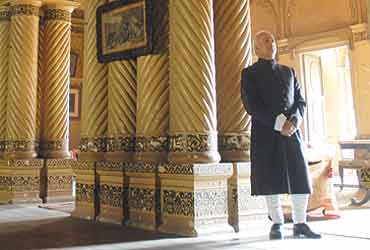
RajaMehmoodabadMPOs30mar2017

The modern age is replete with tales of kingdoms and empires lost. So when the erstwhile ruler of a state in Awadh suddenly regains the splendid accoutrements of his princely past, it’s a tale with a deliciously ironic twist. But since this is a modern fairy tale, it was a judicial decision—and not a magic wand—that restored to the Raja of Mahmudabad his vast properties and land holdings in Uttar Pradesh.

The Mahmudabad properties were confiscated as “enemy property” under the Defence of India Rules in 1962, when the then raja migrated to Pakistan, leaving his wife and young son behind in India.

After the old raja’s death in 1974, his son, the present raja, launched a long struggle to reclaim his inheritance.
He petitioned prime ministers from Indira Gandhi to Rajiv Gandhi, and fought a series of court battles that finally ended in late September 2005 with a Supreme Court judgement. In its landmark decision in a case called Union of India and Another versus Raja Mohammad Amir Khan, the court gave directions to release the properties to the only living heir of the late raja. In the months since then, the raja has been busy trying to get back possession of his properties, many of which have been occupied by the government all these years.
The Mahmudabad assets make an impressive list.
There’s the Metropole Hotel, occupying 11 acres of prime flat land in Nainital, built by the British in 1880, and purchased by the current raja’s grandfather in the 1920s. It’s now back in possession of the family.
Another jewel in the Mahmudabad crown is a Lucknow landmark and architectural gem built by his grandfather in 1919—the Butler Palace, which includes a lake. The raja now plans to turn it into a heritage hotel and reveals that top hoteliers, including those who restored the Neemrana properties, have shown a great interest. “But I may do it on my own,” he says.
Valuable real estate of which the raja has yet to get possession include the Lawrie Building and the Mahmudabad Mansions in Hazratganj—Lucknow’s main shopping hub.
Then there are sprawling acres scattered across what was once the kingdom of Awadh. In his family’s ancestral seat, Mahmudabad, the raja now owns a sugar mill on 80 acres of land, a textile mill on 30 acres, the Jawaharlal Nehru Polytechnic on 50 acres and five lakes.
In the town of Sitapur, he now becomes the legal owner of the district magistrate’s residence on 17 acres, the superintendent of police’s residence on seven acres, the chief medical officer’s bungalow on 13 acres, in addition to a huge chunk of the town’s civil lines and 70 acres of urban and rural land.
In Lakhimpur district, he gets around 60 acres of urban and agricultural land, including the SP’s bungalow. In Barabanki district, there are 40 acres encompassing a degree college.
What is the combined worth of the assets? “Value is a relative thing,” replies the raja, revealing the typical disdain of his class for commercial calculations. “God knows the value. These are all encumbered assets. And how do you value a history, a past?” Property dealers, however, give estimates upwards of Rs 200 crore.
Yet the tale of the House of Mahmudabad is more than the value of their miraculously restored assets, a tale that cannot be reduced to real estate figures and property prices. It is a tale that reveals those old wounds, some self-inflicted, which North Indian Muslims still bear—a tale of divided family, of a search for a Land of the Pure that would remain elusive.
It is about the fast-fading elite nawabi culture of Lucknow, now swamped by mercantilism and the competing forces of caste and communal politics. It is about the loss of a way of life, of manners, language, a people and a culture. It is the saga of a family whose history is closely intertwined with that of India’s march to freedom and Partition. The props in this story are a magnificent but decaying fort, an ancient library filled with small treasures, a fading old palace with labyrinthine corridors in Lucknow’s Kaiserbagh; and now, suddenly, fabulous riches.
Raja Mohammad Amir Khan, known as Suleiman bhai, is a diminutive, elegant figure who has long been a fixture in Lucknow society. He has been seen as the epitome of high Shia culture in a city now known for breeding political mediocrity. With his elaborate courtesies or adabs, the purity of speech, be it in Persian, Arabic or Urdu, the impeccable Oxbridge English, he is the last of a fading breed of Lakhnavis, known for their tameez (manners) and tehzeeb (culture).
The uninitiated may see him as a caricature of Lakhnavi culture; the old residents of the city see him as a repository of Awadh Shia traditions. He is not a polo-playing raja, with an English nickname and a stiff upper lip. His family is known for its scholarship and establishment of several institutions of learning.
But equally, old residents and modern Indian historians know the Mahmudabad family for its dramatic history. Taluqdars settled in the region of Mahmudabad—now in Sitapur district—and were given the hereditary title of ‘Nawab’ by the Mughal emperor Akbar.
During the great rising of 1857, the forces of Mahmudabad fought with Begum Hazrat Mahal against the British, and were defeated just as the last Nawab of Awadh, Wajid Ali Shah, was exiled to Calcutta.
In order to demonstrate the “magnanimity and compassion of the British towards their defeated enemies”, the family was settled in an old palace built by Wajid Ali Shah in Lucknow’s Kaiserbagh, now known as Mahmudabad House.
The family continued to prosper and build institutions such as the Amir-ud-Daula College in Lucknow (1888), the Amir-ud-Daula Library, Lucknow, and Colvin College in Mahmudabad, besides being one of the founders of Lucknow University and King George’s Medical College.
As one of the most prominent families of the region, they were inevitably associated with the Nehru family from nearby Allahabad and the Indian National Congress. The 1916 Lucknow Pact was signed in Mahmudabad House, Kaiserbagh.
But it was the current raja’s father, the late Mohammad Amir Ahmad Khan, who would change the family’s trajectory. “(Mohammed Ali) Jinnah was a close friend of my grandfather and took my father under his tutelage,” says Suleiman bhai. His father would eventually become one of Jinnah’s most ardent supporters, and treasurer of the Muslim League.
The son recalls: “Yet he first chose to remain an Indian after Independence. Instead of Pakistan, he headed to the shrine of Imam Hussain in Karbala, Iraq.” Having witnessed the horrors of Partition, the raja sought a religious sanctuary. Ten years later, the old raja acquired Pakistani citizenship while his wife and only son remained in India.
Subsequently, the raja became something of a wanderer. He lasted in Pakistan only four years and, towards the end of his life, chose to live in London. There he worked for nine years as paid director of the Islamic Centre before his death in 1974.
Meanwhile, the great properties of Mahmudabad were seized by the Custodian of Enemy Property in India. It was after his father’s death that Suleiman bhai took up his legal battle. Decades later, the central question that must haunt him is: why did his father choose Pakistan? Was it merely because it was known that the zamindari system would be abolished in India and preserved by Pakistan, which some see as a state created by reactionary feudal forces? Replies the raja: “Material goods did not interest him greatly, else he would never have abandoned so much in India. In fact, he wrote critically of the feudal classes.”
The raja sees his father as symbolising dialectical tension in a man. “There was a sense that the British had deprived Muslims of political power that may explain his early enchantment with the idea of Pakistan. Yet he was a tormented soul, restless, unhappy and always disappointed.”
The family’s tortured history has been a magnet for writers, and Suleiman bhai has played host to the best and the brightest—V.S. Naipaul, Vikram Seth and William Dalrymple.
Naipaul writes in India: A Million Mutinies Now, “Amir (the current raja) was born in 1943.
When he was two years old his ears were pierced. It was the custom in Muslim countries for slaves’ ears to be pierced: the piercing of Amir’s ears meant he had been sold to the Imam: the child had been pledged to the service of the Shia faith.”
Later, of the journey to Iraq in 1948, as the subcontinent was being partitioned, Naipaul writes: “They went, in Iraq, still with Indian passports, to Karbala…sacred ground to Shias. On this sacred ground there arose in the father’s mind some idea of having his son become an ayatollah, a Shia divine.” But the raja would change his mind and give his son a secular education after all. La Martiniere in Lucknow, it was (later he would attend university at Cambridge). “Culture upon culture,” writes Naipaul.
Vikram Seth too had been a guest for two weeks at Mahmudabad House. The powerful character of the Nawab Sahib of Baitar House in A Suitable Boy is clearly based on the Mahmudabad clan. In the build-up to a scene, where the custodian of evacuee property arrives with a notice, Seth writes: “With Partition things had changed. The house had become lonely. Uncles and cousins had dispersed to Karachi or Lahore…. The gentle Nawab sahib remained. He spent more and more time in his library reading Roman history or Persian poetry or whatever he felt inclined to on any particular day.”
For all the new possessions Suleiman bhai will now reclaim, the greatest wealth of the family is still stored in the Qila (fort) at Mahmudabad, a two-hour drive from Lucknow. In mid-February, the Qila briefly regained vestiges of its lost grandeur when it was all lit up for a Bollywood crew—Aishwarya Rai and Abhishek Bachchan had arrived there, to shoot for J.P. Dutta’s Umrao Jaan.
We had gone there a few days earlier. The raja escorted us through a great gate into a vast courtyard, then through huge halls that have clearly seen better days. William Dalrymple described the Qila’s air of decaying splendour in The Age of Kali: “It was magnificent but the same neglect which had embraced so many buildings in Lucknow had taken hold of the Mahmudabad Qila. Dust lay thick underfoot, as if the qila was some lost castle in a child’s fairy tale.” As the raja took us up a winding staircase, he explained: “We sold and lived. What could one do but sell one’s treasures—chandeliers, paintings and artifacts?”
We reach the top floor of the tower. Like the library in Umberto Eco’s The Name of the Rose, one is walking through corridors of ancient volumes and manuscripts. Blow off the dust and discover treasures—a 150-year-old volume of Shakespeare, all the old editions of Punch carefully bound, every Indian district gazetteer, an entire wing devoted to Persian and Urdu literature. The library was started in 1868. “Now I can preserve these books which are my biggest inheritance,” says Suleiman bhai.
It is Moharram, the long period of mourning for Shias, and the raja must address a majlis at his Qila. Minutes before, he is recounting to Outlook his long legal and political battle. “I petitioned everyone, saying my mother and I are Indians, not ‘enemies’. I have been a Congress MLA. Yet the battle dragged on.” He accepts that the land ceiling act and related laws will come into effect on some agricultural lands. “I am not a strongman who is forcing tenants to vacate after so many years. I’m looking for an honourable renegotiation of terms,” he says with deliberate vagueness. “I am perhaps not as practical as I should be. I hope I don’t make a mess of it.”
The raja then dons his black robes, sits gracefully on the pulpit and recites a marsia, epic poems written in memory of the heroes of Karbala, composed by his father: “Himmat ke sile ko aam karna hai hamein (We have to make tales of heroism commonplace)<>i/Maidan-e-waghah mein naam karna hai hamein (We have to make a great name in the battlefield)/Rona hi nahin hai asl maqsad (To shed tears is not our purpose)/Kuch isse bhi badh kar kaam karna hai hamein (We have to achieve tasks greater than these). As the majlis proceeds, tears roll down the raja’s cheeks.
source: http://www.outlookindia.com / Outlook Magazine / Home / by Saba Naqvi / March 13th, 2006
From Little Champs North East to Indian Idol Junior, Nahid Afrin’s musical journey has been fascinating

 Indian Idol Junior runner-up Nahid Afrin is unstoppable at 16.

ASSAM :

Nahid Afrin, the teenage sensation, who shot to fame with Indian Idol Junior, is in news after an alleged fatwa was issues against her by muslim clerics, asking her to stop singing (as it was against the Sharia). The 16-year-old who hails from Tejpur, Assam is unfazed though after getting support from Assam’s chief minister and other singers from the industry. “I won’t quit singing till I die,” she said.

With long hair, dusky complexion, beautiful eyes and a soulful voice, Nahid also has an admirable courage for her age. She is also honest enough to admit that she thought of giving up singing for a moment after receiving the so-called fatwa, but is now sure about her decision.

As for Nahid, she is already an achiever at 16. After wining various competitions back home, and becoming the Little Champs North-East grand finalist, the talented singer became the runner-up of Indian Idol Junior, and a popular name.

Here are few things that you must know about her:

  1. The eldest daughter of Fatema Ansari and Anowar Ansari, Nahid earned a lot of accolades performing at various singing competitions in Assam. She can sing in as many as three languages–Assamese, Hindi and Bengali.
  2. Nahid studied music at Bhatkhande Kala Kendra in Assam.
  3. A student of Little Star High School, Nahid Afrin was born in Tejpur Assam; her hometown is Biswanath Chariali.
  4. Nahid comes from a modest background as her father works in DRDA as a Junior Engineer. She has a younger brother called Faiz Anwer (Golu).
  5. Tarun Gogoi, the chief minister of Assam is said to be her fan.
  6. Nahid made her Bollywood singing debut with Sonakshi Sinha’s Akira.

source: http://www.indiatoday.intoday.in / IndiaToday.in / Home> News> Television> Top Stories / by Parmita Uniyal / March 16th, 2017

Matchless magic lingers

Kotla Sultan Singh (Amritsar District) , PUNJAB / Mumbai, MAHARASHTRA :

MohdRafiMPOs22mar2017

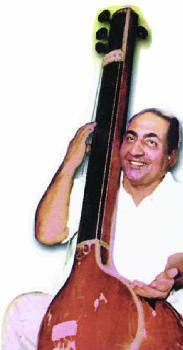
Mohammed Rafi imprinted his name on the musical firmament with his mesmeric voice. Although he is no more, he is still fondly remembered for his captivating songs in Hindi films. A tribute to the singer whose death anniversary falls today.

STRANGE, BUT one of the earliest memories of Mohammed Rafi are of his funeral procession. It was July 31, 1980. One of the greatest singers of independent India had passed away and sub-editors of various newspapers across the country were struggling to find appropriate words for the following day’s headline. It had to be precise, yet do justice to the man who sang nearly 26,000 songs. The headline had to say something about the man who was too shy to propose to his would-be wife, about the man who wanted to be an actor yet asked his directors not to show him on the screen and merely use his voice! The few words in bold print had to be all about the man who was, what one would in modern parlance call, a method singer, the man who would brook no banter when in the studios – something quite opposite to what his contemporary Kishore Kumar used to do. The headlines had to say something about the dedication of the man who recorded his last song, Tu kahin aas paas hai dost… for music directors Lakshmikant-Pyarelal a couple of days before he breathed his last. The film was Dharmendra-Hema Malini-starrer, Aas Paas. It bombed at the box office but the cine-goers could not help humming Tu kahin aas paas hai dost in memory of the singer whose voice had an innate sense of life.

Years have rolled by; singers have come and gone. But the matchless Rafi magic lingers. Just the other day one happened to be in Bhopal. Talking of some interesting sidelights about the city, a Bhopal veteran took yours truly to the house of Kaif Bhopali, a well-known poet in the Urdu mushaira circles who did not quite get his due in Bollywood. Fine but why are we talking of Kaif at this time? Well, simply because Kaif’s main claim to fame in the Hindi film world was provided by Mohammed Rafi. The song was the timeless Chalo dildar chalo, chand ke paar chalo, the film Pakeezah with Naushad and Ghulam Mohammed as music directors. The song had a haunting quality which brought to mind the picture of two lovers quietly moving into the sunset, hand in hand, far from the maddening crowd. Rafi’s voice had enough zing to match the lilt of the music and vivacity of his co-singer Lata Mangeshkar. Between them they gave Kaif his passport to an acquaintance with posterity.

Yes, that is what Rafi did to countless other artistes – Shammi Kapoor and Rajendra Kumar would have vouched for it. Remember Rafi’s Yahoo! Chahe koi mujhe jungli kahe which gave Shammi Kapoor his identity. And Baharon phool barsao or Mere mehboob tujhe meri mohabbat ki qasam which sent Rajendra Kumar’s career on the highway to success and many a young, dainty heart aflutter. Yet he did it all and more. Interestingly he managed the almost impossible. When he sang for a star, the image which the music-lovers nurtured in their mind was of the star, not the singer. Yet while doing so he managed to carve out his own niche, his own identity; some thing the common man could identify with. He came to be associated with songs that had life written over them, that could get the romantically-inclined humming and the youngsters swaying. Though he probably did not have the melancholy of Talat Mahmood’s voice or the sadness of Mukesh, he still managed to pull off many a tragic number with the least fuss. Remember Teri zulfon se judai to nahin maangi thi… .? Or even Aye duniya ke rakhwale…where he teamed up with Shakeel Badayuni and Naushad to come up with a lasting testimony of India’s pluralist culture?

Born on December 24, 1924 in a small village near Amritsar, Rafi trained under Ghulam Ali Khan and recorded his first song in 1944 for a Punjabi film Gul Baloch with Shyam Sunder. He even acted in a couple of films – Laila Majnu in 1945 and Jugnu in 1947. It was Feroze Nizami who gave him his first major hit with Yahan badla wafa ka bewafai in Amar Raj. From there to Kya hua tera vada in Hum Kisise Kum Nahin, Rafi was always on song. And when Rafi sang, he was worth going miles to listen to. Pity he is no more.

ZIYA US SALAM.

source: http://www.thehindu.com / The Hindu / Home> MetroPlus Hyderabad / Wednesday – July 31st, 2002

Remembering Syed Shahabuddin – Muslim Heart, Indian Mind

Ranchi (JHARKHAND) formerly BIHAR /  NEW DELHI :

His arrival on the political scene as an articulate Muslim leader was no ordinary event in the journey of the Indian republic.

Syed Shahabuddin, 1935-2017. Credit: Youtube

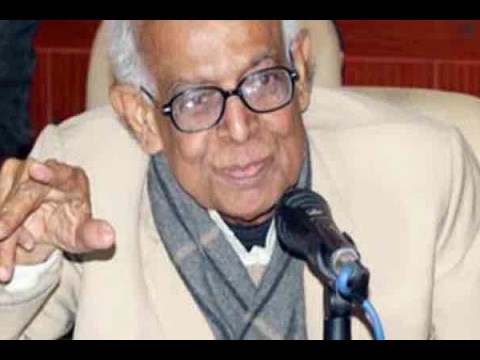
Writing an obituary of the writer, diplomat and politician Syed Shahabuddin is actually an exercise in writing of the journey of Muslims in the Indian republic. The much maligned gentleman was somebody who could never be ignored. As a very bright student of physics in the academically brighter phase of Patna University in the first decade of India’s independence, he drew the attention of his teachers. The memoirs of his professors, Mohsin and Kalimuddin Ahmad, describe Shahabuddin’s promise in glowing terms. Soon thereafter, he became known for the leadership he provided to a student movement in 1955, including leading a 20,000-person march to wave black flags against Jawaharlal Nehru when he visited Patna – in protest against police firing on students.

He managed to get a job as a lecturer at the same time as qualifying for the civil services in 1957. He ranked second among all the aspirants, with a particularly high score in the interview section, and joined the Indian Foreign Service. Many delicious legends were fabricated around the kind of questions he was asked and his witty responses. His success not only inspired many students, but also helped overcome the trepidation among Muslims about their place in India after Partition.

While a section of Hindus looked upon Muslims as potential fifth columnists, a section of Muslims was also not very confident of the inclusionary-pluralist democracy that was being built up under Nehru. Notably, even as a student, Shahabuddin too was contributing towards this task of nation-building. With some ‘socialist’ leanings, though not formally with any party, his activism allowed certain critiques of the Nehruvian consensus to be heard.

He paid a price for this activism, though a minor one. Owing to Shahabuddin’s involvement in the student agitation of 1955, he had to wait for police/intelligence clearance and therefore could join the services a little later than his other batchmates. Legend has it that Nehru himself finally cleared the file.

In the late 1970s, the hegemony of the ruling Congress came be challenged by the socialists, Shahabuddin became restless within the confines of bureaucracy. He decided to quit government service and join politics.

Until then, Indian politics lacked a pan-Indian Muslim leader with well informed and articulate views. Although Maulana Azad had occupied an important position, he was part of the Nehruvian consensus and did not challenge it. Nor were academics looking at the worrying economic and educational locations of Muslim communities and their disproportionately inadequate share in the structures and processes of power. A few exceptions existed, such as the volume on castes among Muslims edited by Imtiaz Ahmad in the late 1960s and the works of Uma Kaura and Mushirul Hasan looking at the marginalisation of Muslims by the Congress under majoritarian pressures in 1970s, but these were rare.

None of the important dissenting voices in Indian democracy, whether Ram Manohar Lohia (1910-67), the defender of the lower castes, Jai Prakash Narayan (1902-79) nor the Left were paying attention to this issue.

Shahabuddin saw this vacuum in Indian politics and adventurously jumped in to fill it. His arrival on the scene as an articulate Muslim politician was no ordinary event in the journey of the Indian republic. As he stormed in, with his enviable articulation and abilities invoking constitutional values and spirit, he was almost matchless. He could not be dismissed, but he could be maligned as a sectarian, conservative and even communal reactionary. Often, he gave his critics grounds to do so. His stand on the gender issue in the Shah Bano case, where he stood on the side of the clerics, and on free speech, by asking for Salman Rushdie’s Satanic Verses to be banned are particularly problematic as the repercussions continue to play out today. On the issue of caste among India’s Muslims too, he was dismissive of pasmanda activists, although unlike many ‘reactionary’ Ashraaf, he never denied the reality of caste-based oppression and discrimination in Indian Islam.

His critics had little time for complexities and he was frequently clubbed with people like Maulana Bukhari, the Shahi Imam of Jama Masjid in Delhi, despite there being little to compare the two in either democratic legitimacy or point of view.

Throughout the 1980s and ’90s, Shahabuddin, through his English monthly, Muslim India, a journal of “Research, Reference and Documentation”, kept articulating and disseminating the concrete (as well as emotive) issues of concern to Indian Muslims, besides contributing  extremely powerful, informed and passionate editorials. Putting together news reports and views from across periodicals, the magazine also carried parliamentary speeches, interventions, government reports, book reviews, personality profiles and statistical data demonstrating the under-representation of Muslims in various sectors of the economy and employment, and many other crucial areas. This was done with candid, coherent, persuasive prose, laced with facts and figures, and at times beautified with apt Urdu couplets.

The title of the monthly he had chosen turned out to be provocative, as this expression is said to have been used in certain documents of the Muslim League in late colonial India. But the sharp (and cunning, if I may say) mind of Shahabuddin had a very strong defence in the English grammar. He explained that in the expression ‘Muslim India’, the former is  an adjective and the latter a noun. Thus, ‘Muslim India’ would grammatically put emphasis on the Indian identity of someone just happening to be Muslim. It was more patriotic than the expression ‘Indian Muslims’, wherein more emphasis was on Muslim (who happened to be Indian). Hence, he preferred ‘Muslim Indian’ to ‘Indian Muslim’.

Besides making interventions in a range of journalistic and academic periodicals, including even the ‘provocative’ English monthly, Debonair, Shahabuddin’s Muslim India carried very powerful editorials on almost every issue which touched the Muslim segment of Indian democracy. Nobody before and after him could muster that much of courage, conviction, energy and determination to do all these, that too all alone. Yet, he found enough time to reply to all the letters he received. He religiously wrote and dispatched letters.

The editorials that had particular impact are worth recalling. In July 1994, he wrote on Lalu Prasad Yadav’s brazen Yadavisation in Bihar at the expense of his core and unflinching support base – Muslims. The argument was well made, even by the standards of Shahabuddin’s characteristic articulation, with so much data damning the Lalu regime on almost every aspect of governance. Predictably, soon after, he left the Janata Dal. In July 2000, he published another editorial on the problems of governance at the Aligarh Muslim University (AMU) and their possible remedies. This was meant as advice from a senior IFS officer to a junior one, Hamid Ansari, who had joined as the vice chancellor of AMU. Yet another important editorial was on the 1988 Act making Jamia Millia Islamia (JMI) a central university. He called the Act a “swansong” for JMI. He later expanded this editorial and wrote a long essay,  ‘How to revive the spirit of Jamia Millia ‘,  in the Milli Gazette in 2010. Focussing on the AMU Act 1981, the lawyer in him kept arguing that the legislated Act did not provide AMU with minority status, though it did have minority character.

In the final years of his life, many of his projects remained unfinished. The tragic and mysterious murder of his only son Parwez (an IIT alumnus and a promising scientist) in the US in 2005 had perhaps broken him from within, even though he did carry on with his life as bravely as ever. He never got around to finishing it but the title he chose for his autobiography was Muslim Heart, Indian Mind. Perhaps that is the best way to remember him by.

Mohammad Sajjad is an associate professor at the Centre of Advanced Study in History at Aligarh Muslim University and the author of Muslim Politics in Bihar: Changing Contours.

source:  http://www.thewire.in / The Wire / Home> Politics / by Mohammad Sajjad / March 09th, 2017

After years of neglect, glass top to complete Satkhanda.

Lucknow, UTTAR PRADESH :

Wikimedia Commons
Wikimedia Commons

Lucknow :

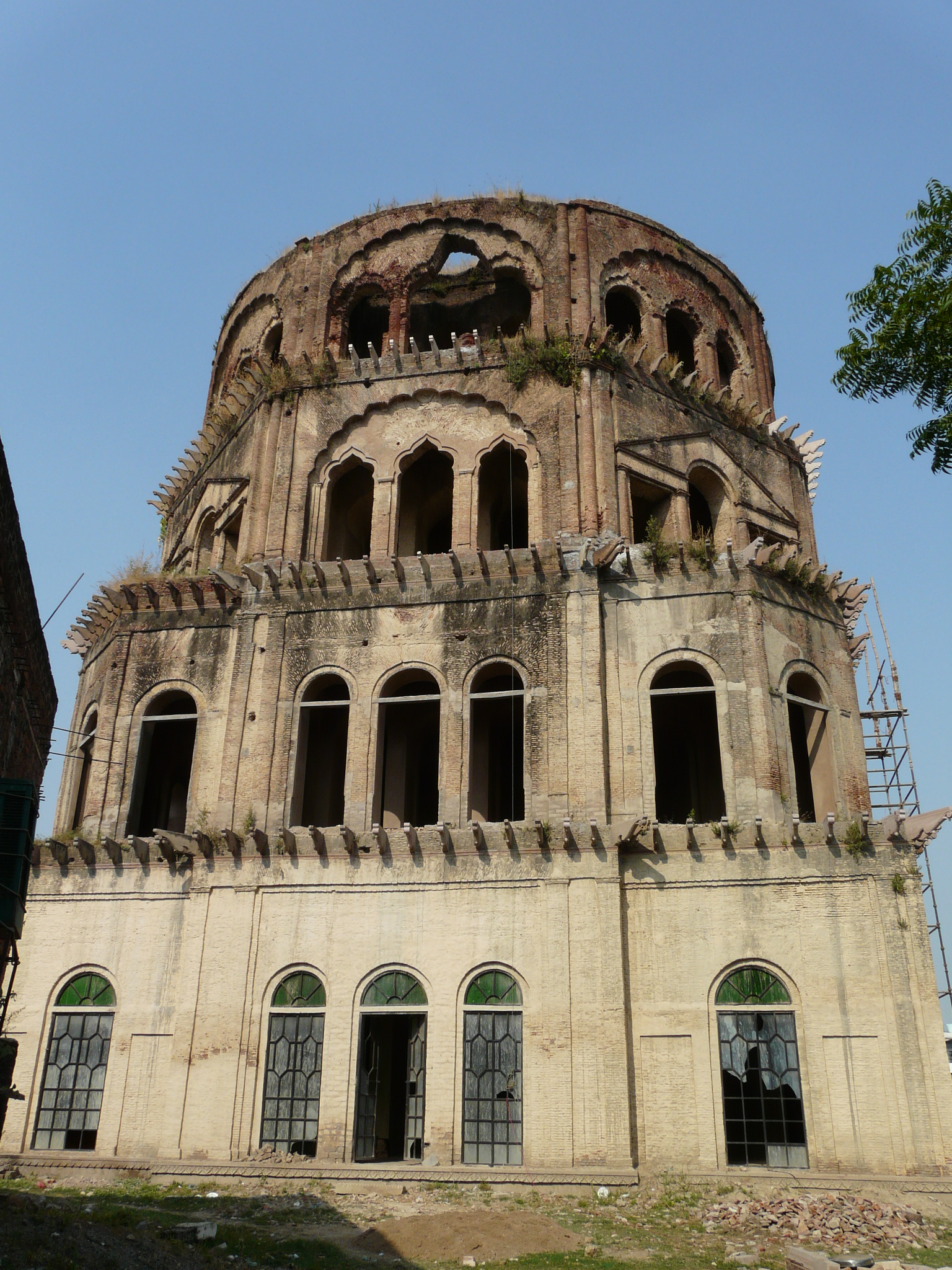
The 177-year-old iconic Satkhanda in Husainabad area of old Lucknow is finally going to live up to its name, of ‘seven storeys’, with the proposed glass roof to the monument taking shape, completing the unfinished Nawabi era structure. The iron storeys which will hold the glass have already come up. Part of the Husainabad beautification project, it is likely to be completed in six months.

Conserving the interiors of the monument along with keeping its circular staircase intact, the building will now provide people with an aerial view of the beautified area through the 360-degree glass facade. With a roof on top now, the monument won’t be subjected to rain water either.

“The plan is to conserve the monument and let people experience the building in its original form. Even though the glass roof covering will be on the uppermost storey, it will give the viewer the experience of being on the seventh floor because of the elevated height. The roof on top of this will be flat,” said Tracy, who is part of the Noida-based architecture firm working on the plan.

The Satkhanda, originally meant to be seven-storey-high was built in 1837 by Mohammad Ali Shah, the third King of Awadh, for moon-sighting by clerics. However, with his death, the monument was left incomplete at just four storeys. Considering it a bad omen, no other ruler bothered to complete it.

In the initial phase of the beautification work in 2014, only the park around then dilapidated monument was part of the plan. Converting the empty ground into a park with light fixtures, fountains, swings and a bridge was completed around November, 2014. Between 2011-13, restoration work on Satkhanda started. An approximate Rs 50 lakh was spent on the initial restoration that included getting rid of encroachment, grouting cracks, restoring parapet brackets, construction of a new roof and a Chhota Imambara-inspired dome. However, apart from removal of encroachment, nothing else was done then.

source: http://www.timesofindia.indiatimes.com / The Times of India / News> City News> Lucknow news / TNN / February 28th, 2017

They have played their cards right

Chennai, TAMIL NADU :

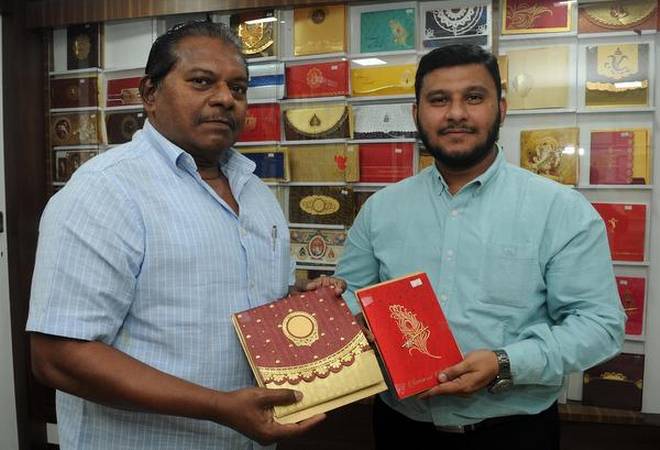
H. Noor Mohamed (left) and his son Mohamed Faizal. Photo: K. Pichumani | Photo Credit: K_Pichumani

When the wedding cards business was at a nascent stage, N.M. Habibullah sensed an opportunity and started Olympic Cards Ltd. Later, his son H. Noor Mohamed went on an ambitious expansion spree, making it a pan-Chennai enterprise

In 1962, N.M. Habibullah, a resident of Parrys, started a stationery store on Anderson Road under the name Olympic Papers and Stationery. With Habibullah’s work, the business flourished. Five years later, during a pensive moment at the store, when he was turning over in his mind various strategies to expand his business, two stores for wedding cards caught his attention.

In 1967, Habibullah switched to selling wedding cards. It turned out to be the right move. In 1974, his son, H. Noor Mohamed joined him and took the company to the next level.

“Until the mid-1960s, there were only two shops in Madras for wedding cards, Ramakrishna and MN Swami; and both wound up their businesses in a few years. Even in the 1970s, there weren’t too many stores for wedding cards. Sensing an opportunity, my father started this new business. As the basic raw material was paper, which is what he was selling in the stationery business, it took him only 15 to 20 days to set up a wedding card store,” says Noor, the current managing director of Olympic Cards Ltd.

Olympic Cards Limited was first set up on Anderson Road. In 1982, Noor and his brother Saladin Babu established a second store at No. 194 (now 195), N.S.C. Bose Road, and this went on to become the main office.

“The five-storey building, which originally belonged to the East Indian Company, was demolished and reconstructed to accommodate the showroom and the office,” says Noor.

Soon, Noor’s sons N. Mohamed Faizal and N. Mohamed Iqbal joined the business as the executive director and production head of the factory respectively.

Quickly, Olympic Cards Ltd. spread to other parts of the city: Kodambakkam, T. Nagar, Anna Nagar, Peravallur in Agaram, Velachery and Thiruvanmayur.

“Wedding preparations involve considerable stress for families. So, they would gravitate towards a wedding card store that is located in or close to their neighbourhood, sparing them a long trip. With this thinking, we began to take our collection to different localities,” explains Noor.

Besides wedding cards, they sell office envelopes, calendars, diaries, notebooks, account books, business cards, letterheads, files and folders, scribbling pads and greeting cards. They also have provisions for instant digital printing, design creation and proofreading at the outlets.

In addition to an outlet in Coimbatore, they have 25 franchise stores in Chennai, Puducherry and Kerala. There are plans to expand their franchising operation across Tamil Nadu, Andhra Pradesh, Kerala and Karnataka in the near future.

On how difficult it is to manage several branches, Mohamed Faizal says that besides training the staff, the heavy stock has to be managed and their timely delivery ensured every day.

“We cannot maintain all stock at all the outlets. Therefore, we keep all our stocks in Parrys. Whenever there is a requirement, we send it to the respective outlets,” he explains.

The waning demand for greeting cards too keeps the team on their toes. “We not only cater to direct customers but retailers as well; the latter look for variety. Creating designs that are different from previous year’s can be challenging. We create 20 to 30 designs once in three months. If these don’t sell out in three months, we incur a huge manufacturing loss,” says Mohamed.

Despite all these challenges, the business is growing, as is evident from the size of its manufacturing unit.

From a 13,000 sq.ft factory at the Vyasarpadi Cooperative Industrial Estate, the company now handles the production from a two lakh sq.ft factory near Periyapalayam. The factory is well-equipped with advanced machinery.

“Contributing to the creation of a healthy environment, we have installed 0.5MW solar power production facility at the unit. This way, we ensure all our products are manufactured in an eco-friendly manner,” says Noor.

Olympic Cards Ltd. will soon test the waters in the others areas of the print industry such as packaging and pharma-printing and luxury packaging.

“We have taken baby steps by way of outsourcing packaging jobs and associating with their print partners. We hope to get into mainstream packaging shortly,” adds Noor.

Name and fame

Olympic Cards Ltd was first incorporated as Olympic Business Credits (Madras) Private Limited, in April 1992 under the Companies Act, 1956. Subsequently, in October 1996, it became a public limited company and the name was changed to ‘Olympic Business Credits (Madras) Limited’. In 1998, it was renamed Olympic Cards Limited, in 1998. In 2013, the company offered IPO and successfully subscribed and listed in BSE.

A ringside view

*H. Noor Mohamed: “In India, the wedding card market is booming, despite the advent of e-cards and Whatsapp. So, any aspiring entrepreneur can enter this industry confidently.”

*Mohamed Faizal: “My father has cultivated a habit that has contributed immensely to his success. Every morning, he jots down the details of his tasks for the day, this is a habit he picked up from his father. This practice has made him so self-disciplined that he never forgets to take his pen, cellphone or wallet with him. It has helped him considerably in his business.”

source: http://www.thehindu.com / The Hindu / Home> News> Cities> Chennai / by Shiba Kurian / February 24th, 2017

Duo overcome hurdles, succeed

Lucknow, UTTAR PRADESH :

DrSharmeenMPOs20feb2017

One is a doctor and the other is a counsellor and their team has achieved, what many others could not even with an army of workers.

Dr Sharmeen Ahmed and Anita Shukla are a team which has changed the family planning scene in Uttar Pradesh’s Allahabad district, about 200 km from Lucknow. They have been working relentlessly for the past seven years overcoming barriers of religious beliefs and misconceptions surrounding planning of families in the district. “I was the junior most doctor at the District Zanana (women) Hospital when I joined in 2010-11 and was sent for training for implanting Postpartum Intrauterine Contraceptive Device (PPIUCD) to roll out a pilot project in Allahabad,” says Ahmed.
“It was an important programme and I knew that its success would go a long way in achieving the objectives. I personally liked the programme very much,’’ Ahmed says. Fortunately, she has got an able companion in Anita Shukla, who is not only a counsellor but also a hard working professional. No wonder the two were able to form a formidable team.

Anita said that record keeping and monitoring had not been very effective then and even the government did not prioritise the PPIUCD programme. She, however, firmly believed that it would be very helpful for the beneficiaries and took immediate steps to complete the work.

They have been serving the people since then, particularly the lower-most strata of society, who needed counselling and services. Ahmed has been awarded by the state government for the highest number of insertions. Her average insertions have been around 390 annually.

But her work was never an easy one. With so many myths and misconceptions surrounding the family planning programme, it was really challenging if not impossible task to persuade people and achieve the goal, she says.

What makes it difficult are religious beliefs and illiteracy, she says. “The biggest problem with the people is illiteracy. Their religious beliefs also sometimes turn out to be an impediment,” she said.

“Most people have not read the Holy Koran because they are not literate and depend on others for interpretations. These interpretations by others may not always be correct. so when I counsel them, I cite Koran and interpret it for them which works most of the times,” Ahmed explains.

There were other problems also which she had to face while doing her job. Persuading husbands and mothers-in-law is even more difficult. “I had to face opposition from the beneficiaries’ husbands and mothers-in-law. They at times got very angry at the mere mention of the family planning. After agreeing to the family planning, sometimes the beneficiaries back out at the last moment,” she said.

Ahmed said that there were very few women in the community, who would take decisions on their own. On majority of occasions it is the husband, mother-in-law and rest of the family who decide, she adds.

Ahmed has trained counsellor Anita Shukla. “I have taught Anita how to counsel and what are the possible set of questions that a lady would come with which need to be answered with logic and even religious overtones but without any coercion because fertility and the number of children is the right of a woman which cannot be violated,’’ she explains.

Now, the situation is that she is the most sought-after family planning specialist in the district with women coming to seek Ahmed’s advice after hearing from others particularly from her own community which, she feels, is an achievement for her.

Counsellor Anita Shukla says 80% service seekers are victims of myths and misconceptions around planning families while 5% are just stubborn. “These myths and misconceptions must be removed if we want to make family planning programme a success,” she said.

Incidentally, Anita has also been awarded by the state government and was asked to share her experiences at a high-level meeting of officials. “We have to think of newer ways to convince people that family planning and contraception use are not against religious norms. We receive complaints like the woman does not like doing household work after insertion!

There are times we have to deal with really difficult people and there are some women who come and get it removed also. One day a woman said her neighbour had told her that the IUCD moves around in the body. I had to tell her then that the uterus was like an earthen pot with just one opening. We have no choice but to respect their decision,” Anita explains with a hearty laugh.

Though Anita and Ahmed did achieve what many others could not, they also realise very well that their task was far from over.

“We have miles to go before we sleep. Family planning is the need of the hour for a country like India and without the cooperation of the people it can not succeed. We need to work in as a team and make persuasive efforts keeping in mind the sensitivity of the people. The same religious beliefs that are often cited as obstacles can be used by us to achieve our goals,” Anita added.

source: http://www.deccanherald.com / Deccan Herald / Home>  Special Features / by Sanjay Pandey in Lucknow / February 19th, 2017

History repeats itself

Chennai, TAMIL NADU :

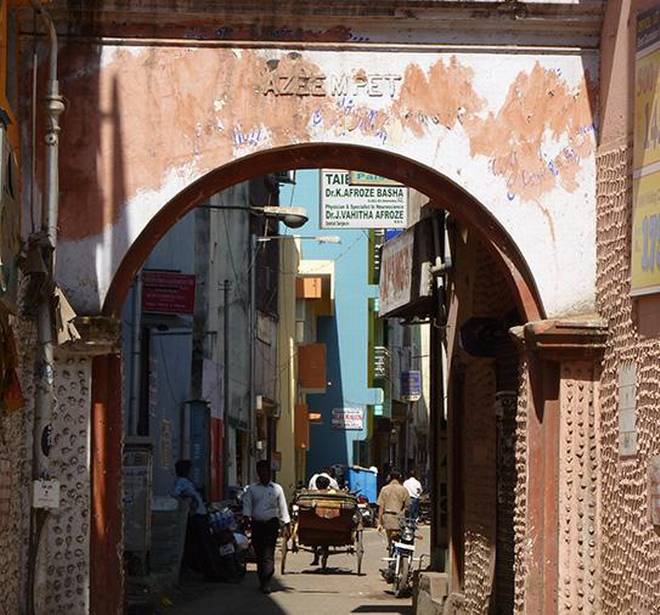
Kaman Darwaza in Chennai | Photo Credit: Kombai Anwar

Madras was in the eye of a power storm, 200 years ago

An ailing or aged ruler triggering a political crisis is not something new in Indian history, but what is interesting about the recent drama that unfolded in Chennai has its parallels to a power struggle that Madras was witness to a little more than 200 years ago. The drama then too had an ailing ruler, various aspirants including a ‘sister’ scheming to take over power upon his death, and a Governor keenly assessing the situation.

The only visible token of the dramatic events that unfolded in 1801 when Umdatu’l-Umara, the Nawab of Arcot, died, is a nondescript arch with the name ‘Azeempet’ chiselled on it, that still stands on Chennai’s Triplicane High Road, a few yards away from the Walajah Mosque. It is a reminder of sibling love that turned bitter and ultimately led to the dramatic fall of the House of Arcot, paving the way for the East India Company to establish itself firmly in the saddle and change the course of Indian history. Old timers remember this arch as the gateway, ‘Kaman-Darwaza,’ to the palace of Sultanu’n-nisa Begam, the daughter of Nawab Muhammad Ali Walajah and sister to Nawab Umdatu’l-Umara.

Nawab Umdatu’l-Umara, who succeeded Muhammad Ali Walajah upon the latter’s death in 1795, was very fond of his sisters, especially his senior sister (meaning the eldest of his younger sisters) Sultanun’n-nisa, also known as Buddi Begum. Sultanu’n-nisa was equally fond of her brother so much so that, out of concern for his safety, and to ward off evil, she used to send everyday a rupee coin to the Nawab, which he would dutifully tie it on his upper arm.The Nawab very often spent his evenings at the palace of his senior sister, listening to musicians, watching a dance recital or just having dinner. He had a room in her house, where the Nawab met with his officers and others. It was widely believed that Sultanu’n-nisa was the actual power behind the throne. Somewhere down the line, Sultanu’n-nisa had assumed that her son Raisul Umara would succeed her brother to the throne. But she was not the only one eyeing the throne, as the Nawab himself would lament – “I intend my son for the throne; Sayful Mulk (the Nawab’s younger brother) intends that the throne is for him; my senior sister has in mind that her son is meant for the throne after me; and the firangs (foreigners – the East India Company) are waiting for their opportunity. But it shall be as the Supreme Ruler wills.” The Nawab wrote a will on his deathbed, making his son Tajul Umara his successor, a move that enraged his sister, who felt betrayed. It was an opportunity too good to miss for the firangs, who were looking for an excuse to take over the Carnatic entirely.The English used the simmering anger of Sultanu’n-nisa and spread the rumour that a coup against the Nawab was in the offing. With the connivance of Nawab’s Diwan, Col. Barret, they surrounded the ailing Nawab with the Company’s troops.

When Nawab Umdatu’l-Umara died in 1801, a bitter Sultanu’n-nisa would not forgive her brother. She refused to let the coffin pass through the Kaman-Darwaza. It had to be left the whole night with guards in a hall opposite the arch. After failing to persuade his aunt to let the coffin through, Tajul Umara, son of the deceased Nawab, decided to break the wall behind Nusrat-mahall and send the coffin to Trichy, to be buried next to the tomb of his grandfather Nawab Walajah.

This power struggle enabled Governor Edward Clive to make a man of Company’s choice as the next Nawab, a man who was willing to sign away the Kingdom, which the young Tajul Umara, the rightful successor, refused to do. Umara’s cousin Azim-Ud-Daula was anointed as the next Nawab. Tajul Umara died within a few months. Sultanu’n-nisa and her son left for a Hajj pilgrimage and chose to settle down in the holy city of Karbala in Iraq, where she eventually died.

Two hundred years later, the arch still stands, a mute witness to the bitter power struggle that not just led to the tragic fall of the House of Arcot .

Kombai Anwar is a writer, photographer and film maker.

source: http://www.thehindu.com // Th Hindu / Home> Society> History & Culture / by Kombai S. Anwar / February 17th, 2017

Dance ballet to help Lucknow find connect with Wajid Ali Shah

Lucknow, UTTAR PRADESH :

Lucknow :

A tribute to Nawab Wajid Ali Shah, a patron of classical dance and music, is set to come in the form of a dance ballet with the city witnessing its first Kathak on sufi qawwali. ‘Rang’, the hour-long dance ballet is directed by Muzaffar Ali and would feature at the fourth edition of the Annual Nawab Wajid Ali Shah Festival to be performed at Dilkusha Garden on February 14.

This year’s edition of the festival that is organised by the Rumi Foundation and supported by UP tourism department happens to fall on UP Tourism Day too. The ballet would be performed by Anuj Mishra of the Lucknow gharaana. It would depict the Nawab’s emotional conflict while he left his motherland for Matiaburj along with ten thousand followers.

The dance ballet is inspired by the compositions of the nawab. Other attractions of the evening would be Kathak performances from the Lucknow and Delhi gharanaas and Oddissi on sufi qawwali.

Speaking about the event, Ali said, “Wajid Ali Shah was perhaps the only Avadh ruler who promoted Lakhnawi culture. He was a learned man himself and was well versed in dance and poetry. Thus, this event is a tribute to the Nawab. It’s just a small effort to showcase the talent of the person. And also to make people aware of their rich heritage and carry the legacy forward through the festival.

“The youth today believes in taking life easy. They believe in instant gratification. Unko azaadi ki pehli jung aur Wajid Ali Shah ki baatein kahaaniyan lagti hain. So, the focus of the youth has to be put in the right place first,” said a member of the Young Rumi Forum.

source: http://www.timesofindia.indiatimes.com / The Times of India / News> City News> Lucknow News / TNN / February 12th, 2017

Watch ‘Dastaan-e-Rafi’, a Special Feature exploring the life of Mohammed Rafi

Mumbai, MAHARASHTRA :

https://www.youtube.com/watch?v=GaOJMv_C8ko

On the occasion on his 92nd birth anniversary watch Dastaan-e-Rafi, a special feature paying tribute to the legendary Mohammed Rafi on 24th December at 10 AM .

The special feature  sheds light on every aspect of the legend’s life. With over 5 years’ worth of research and close to 60 interviews, this is  a detailed account of his personal life and professional relationships. Catch a glimpse of his  childhood brother, Siddique Rafi, who lives in Lahore, Pakistan. Take  a look at the insights  that would shape Mohammed Rafi into the Legend he became .

Watch his illustrious colleagues  Shammi Kapoor,Manoj Kumar amongst others  reminisce about him. Other greats like Jeetendra, Randhir Kapoor, Rishi Kapoor ,and the younger generation  of Sonu Nigam, Javed Ali express  their gratitude for him.

http://www.zeeclassic.com/promos/watch-dastaan-e-rafi-special-feature-exploring-the-life-mohammed-rafi

source: www.youtube.com