Category Archives: Arts, Culture & Entertainment

Mangaluru: Photojournalist Ahmed Anwar passes away at 55

Mangalore , KARNATAKA :

Mangaluru :

City’s acclaimed photojournalist Ahmed Anwar passed away on Sunday December 11 at his residence in Balmatta here. He was 55.

Besides being an excellent photojournalist, Anwar was also a poet and short story writer.

Anwar, who was in the garment industry, became a photojournalist due to his interest in photography. Over the years, he held several photography exhibitions to showcase his works. In February 2015, ‘Street Life’, an exhbition of his photographs in monochrome was held in the city.

Anwar, who was battling cancer, won several awards for his photographic and literary works, including Attimabbe Literary Award for his anthology ‘Bevu Bella’, Pejawar Sadashiv Rao Memorial Award conferred by Mumbai Karnataka Sangha, Muslim Literary Award by Muslim Writers’ Association, Mangaluru and Sneha Setu Award conferred by Sneha Setu Literary Organization. His other works include ‘Bharata Geeta’, ‘Gul Mohar’, and ‘Nanna Kanasina Bharata’.

‘Payanigala Padyagalu’, a book of his poems brought out by his friends, was scheduled for release on December 23.

source: http://www.daijiworld.com / DaijiWorld.com / Home> Top Stories / DaijiWorld Media Network / Sunday – December 11th, 2016

Nature-inspired

Silchar – ASSAM / PUDUCHERRY :

Healing works
akmalhussainmpos08dec2016

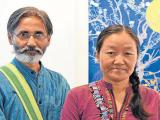
Interpreting nature can be tricky. So is painting it. As an artist, one can try to focus on its essence, but lose out on its detail and form. Otherwise, one can try to get a grip on the instantaneous, but miss out on its fluid dynamics. Rare is the work of art that manages to portray all of this together. Both Akmal Husain and Keiko Mima manage to do exactly this, in their own unique ways.

This hugely talented and successful artist-couple are enigmatic in more ways than one. Husain is from rural Assam, Mima from Japan, and they have now made Puducherry their home, where they live with their three young daughters. The works of both Husain, who had his art education at Shantiniketan, and Mima, who studied art at Kyoto Seika University, Japan, are much sought after.

Mima and Husain are both drawn to nature but interpret it in their own way. Husain’s visualisation of nature is unique and in a sense, simplistic. It radiates positivity, bliss and beauty. His paintings reflect an oasis of tranquility in this chaotic life, taking you into the beautiful village life that once existed everywhere. Mima’s paintings, on the other hand, radiate etherealness, fragility, transience and the timelessness of nature — in a sense, alluding to the spiritual concept of ‘Maya’.


Journey decoded

Mima has been painting since she was a child. “My mother is an artist too and teaches painting to children at our home in Japan. When I was young, I was her student too. She always made us paint flowers and fruits with watercolours, which I tried to render as realistically as I could,” she says.

We learn that she began studying painting more seriously in high school. It was there that she learnt charcoal drawing and oil painting. After that, she studied oil painting in an art college, where she tried experimenting with various new materials also. Then, she was using mixed mediums to make several abstract images. The mediums she now favours are pencil and watercolours. She has a fascination for traditional Indian mural art, which she hopes to learn some day.

“When I started painting with watercolours again in India in 1997, there had been a large gap of about 20 years since I had last painted flowers. When I started to observe and study flowers more deeply, I was fascinated. Their beauty is not limited to their form and colour, but they have feelings like human beings, or one might even say that they are more sensitive,” she explains.

Husain lets us in on his entry into the fascinating world of art. “I started painting with oil paints only in my third year at Kalabhavan. It took me a year to understand the medium. I discovered that it allowed me to erase and repaint portions unlike watercolours. I was fascinated by the rural settings around Kalabhavan, especially the atmosphere created by the light of the setting sun, or dawn. I sketched whatever I could, and the rest I absorbed. I was not very skilled at drawing, so when I returned to the studio, I painted, erased and painted again, trying to bring out what I had absorbed,” he shares.

It was during his fourth year at Shantiniketan, in the Kolkata Book Fair, that he discovered a book called Modern Primitive Painting, which gave him a lot of confidence to draw. “Over a period of six months, I made two large oil paintings. And one more by the end of my final year, which took me almost six months to complete with all the erasing and repainting. That painting won me the National Academy Award by Lalit Kala Academy in 1985. Eventually, erasing and reworking became my personal technique,” Husain beams.

In 2015, he started a series of experimental watercolours based on the theme of leaves. “An oil painting takes me two to three months to complete. While at it, I see around me the changing nature. Simply fallen leaves of various kinds, and their many colours, sometimes wet, at others dry, have inspired me. That is how I began my experiments with composing layers of semi-abstract watercolours.” Husain’s many awards include the Sovana Banik Memorial Scholarship and the National Academy Award of Lalit Kala Academy.

Since the medium of inspiration and the mode of work is the same, do Husain and Mima discuss their ideas with each other? Husain explains, “It is true that both of us paint from nature, but we see it with different eyes. Hence, our techniques are different. It is in my nature to discuss my work with her before, during and after creating it. She is the opposite; she likes to work but does not like to talk about it very much. Her discipline inspires me very much.” Mima adds, “There is an exchange, and his techniques are sometimes helpful in my work.”

In 2003, they moved to Puducherry for the education of their eldest daughter. Now, all their daughters are studying there. Talking about the transition of the town, Mima says, “The first time I visited Puducherry was in 2000. It wasn’t crowded then and the atmosphere was more peaceful, even spiritual, and the people were very good-natured.” But she hastens to add that they do enjoy the town’s coastal scenery and sea breeze, and find Puducherry’s ayurveda and homeopathy very useful.

Influenced by their lands

Nevertheless, the lands that spawned them rules large in their hearts. For instance, Husain shares that whenever he does oil paintings, he subconsciously draws inspiration from his early childhood and Shantiniketan days. Born in Silchar in Assam, Husain grew up surrounded by nature. “My home was at a little distance away from the main town and our home was surrounded by greenery. My father was very fond of gardens, and my mother had a passion for betel nut trees and vegetable plants. I used to accompany her to the garden to plant betel nut trees, vegetable seeds, etc. There was always a milch cow at home, which remains to be one of my favourite subjects,” he says. This trend continued even when he went to Shantiniketan to learn painting.

It’s the same case with Mima. She carries Japan in her soul. “I do not miss the nature or colours of Japan since they are within me,” she says. She mentions that while she is not directly inspired by traditional Japanese art, it has shaped her in a way because her sense of beauty was cultivated in Japan. She says, “I mostly draw flowers and landscapes in situ. But influences from my early experiences of nature in Japan are at work too, in the background. I continue to draw and paint from nature and I hope to heal people’s hearts through my work.

source: http://www.deccanherald.com / Deccan Herald / Home> Supplements> Sunday Herald – Arts & Culture / by Hema Vijay / November 27th, 2016
Baikal Utsahi , Poet, Writer and Politician, is no more

Balrampur – Lucknow, UTTAR PRADESH  / NEW DELHI  :


Photo: rekhta.org
Photo: rekhta.org

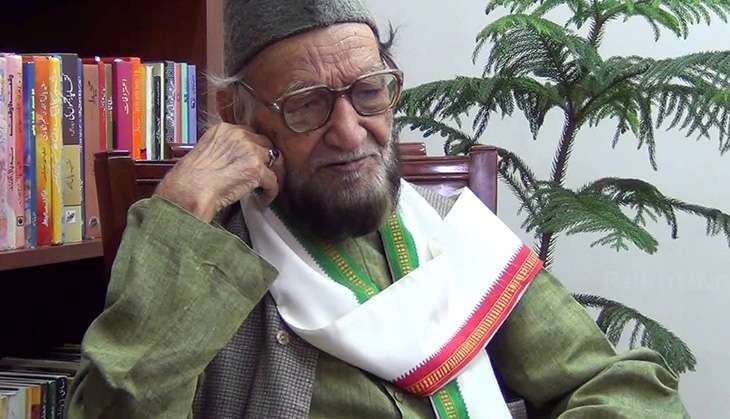
Well-known poet and former Rajya Sabha MP Bekal Utsahi passed away at New Delhi’s Ram Manohar Lohia Hospital on Saturday.

The 88-year-old poet was admitted to the hospital on 1 December after a fall in the bathroom at his South Avenue residence in Delhi.

According to Utsahi’s daughter Sophia, he suffered a brain haemorrhage following the accident.

Utsahi was nominated to the upper house of Parliament during Rajiv Gandhi’s tenure as Prime Minister.

An Enthusiastic Poet

Utsahi was born on 1 June 1928 in Uttar Pradesh’s Balrampur (formerly Gonda) district. His father was Lodhi Mohammad Zafar Khan.

Utsahi’s family named him Mohammad Shafi Khan. He changed his name to ‘Bekal Varsi’ in 1945 after a visit to the mazaar of Hazrat Vaaris Ali Shah of Devan Sharif, at which time Shah Hafiz Pyari Miyan said: “Bedam gaya, Bekal aaya (Bedam went, Bekal came).”

During an election meeting in 1952, Jawaharlal Nehru was impressed with Bekal’s poetry, and said: “Yeh humara utsahi shayar hai (He is our enthusiastic poet).”

This added the sobriquet ‘Utsahi’ to the poet’s name.

Utsahi was known for his poetry in Awadhi. He also hosted several programmes for Doordarshan, including ‘Bazm‘, a show dedicated to Urdu poetry.

Utsahi participated in several poetry symposiums across the globe. In 1976, he was awarded the Padma Shri for his contribution to the world of literature.

Edited by Shreyas Sharma

source: http://www.catchnews.com / Catch News / Home / by Catch Team / December 03rd, 2016

Double Delight

KARNATAKA :

shafiquekhanmpos03dec2016

by Dr. Padmavathi Narasimhan

All India Radio (AIR) has been playing a pivotal role in the preservation and propagation of the two streams of Indian Classical Music — Hindustani and Karnatak Music. AIR – Mysuru celebrated Karnataka Rajyotsava on Nov. 18 in collaboration with the Department of Kannada and Culture.

The programme included prize distribution to the winners of various events held at Akashavani for its staff, rendition of Kannada songs in and about Kannada and to crown it all, a grand sitar-violin jugalbandi concert.

Akashavani is always known for its timing. The programme began as per schedule at 6 pm on the dot. But the stage formalities were too prolonged, which reflected on the main attraction of the evening — the jugalbandi concert by Mysore Nagaraj and Ustad Shafique Khan.

Perhaps the distribution of the prizes and the felicitations could have been organised in a separate function exclusively for the staff, which would avoid monotony to the mute audience.

The rendition of Kannada songs by G. Pushpalata, her son Alap and Nitin Rajaram Shastri was impressive with clarity in lyrics and Nitin’s admirable harmonium playing. Thanks to AIR, there were no electronic instruments accompanying the artistes.

Tumkur Ravishankar and Nitin said (did) it all.

The first of the series was Anuradha P. Samaga’s ‘Modalige Eraguve Amma Ninnadige’ sung by Nitin. Alap has a soft, resonant voice and a natural instinct for singing with feeling. Nitin and he together sang H.S. Venkatesh Murty’s ‘Kannada Naadina Makkalu Naavu,’ for which Praveen Godkhindi has directed the music.

The other numbers were ‘Kannadiga Tanemba Satyavanu Aritavage’ by Siddiah Puranik (music composed by G. Pushpalata) and ‘Banagala Haradide Kannadada Garime’ sung with high patriotic spirit.

The main event of the evening was the concert much-looked-forward-to by Mysore Nagaraj and Shafique Khan. Working now as a top grade artiste at AIR, Dharwad, Shafique Kahan’s style blends both Gayaki style and the Instrumental style (Tantrakari ang). The pair treated the listeners to an evening of melody and expressive music.

Both are from established families of music. Charukeshi allows space for a variety of moods.

Shafique Khan’s alap of Charukeshi evoked inexplicable emotions. A composition followed. Here the duo alternated in taking a leading and supporting role. In Pantuvarali (Puriya Dhanashri), Nagaraj led with a meditative mood and in an amazing time span of 20 minutes, the two gave a commendable version of Pantuvarali.

Ravishankar and Uday Raj Karpoor chose to provide accompaniment by bringing the soft but lively touch to their instruments.

Nagaraj and Shafique Khan concluded the concert with the popular Bhajan of Sachchidananda Swamiji of Sri Ganapathy Ashrama, Mysuru — ‘Pahi Pahi gajanana’ in Sindhubhairavi.

source: http://www.starofmysore.com / Star of Mysore / Home> Feature Articles / November 27th, 2016

Anjuman-E-Hadeqathul Adab Hosts : 12th Eid Milan Programme

Mysuru, KARNATAKA :

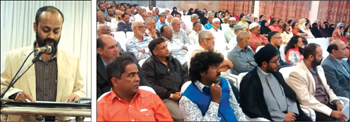
Viqar Ahmed Sayeed, Asst. Editor, Frontline Magazine, delivering the keynote address at Eid Milan prog. yesterday. Picture right shows a section of audience.

Mysuru :

Anjuman-e-Hadeqathul Adab, Mysuru, had organised its 12th Eid Milan programme at Abids Convention Hall in Bannimantap, here yesterday.

The programme started with the recitation of the verses of the Holy Quran by the Anjuman Treasurer M. Noor Ulla Shariff which were translated into English by Ajuman member Muazzam Ahmed Khan Tanveer.

Anjuman member Anees Ghori welcomed the guest and invitees.

Syed Shafi Ahmed, President of the Anjuman, presented a report on the activities and the aims and objectives of Anjuman and paid rich tributes to the founders who established this Anjuman to promote brotherhood and communal harmony in the city of Mysuru. He also lauded the work of the past office-bearers and members.

Speaking on the occasion, Dr. K. Javeed Nayeem, former President of the Anjuman, said that only when we are concerned about our neighbour’s pain and problems and embrace one another forgetting that we are from different religions that we become the true followers of our religion.

He cited the example of how in Chhattisgarh, a Muslim by name Razak Khan perform the last rites of Santosh Singh, his neighbour, according to the traditions and customs of Santosh Singh’s religion and one more instance of how in Colaba during Ganesh Chaturthi festival, on a Friday when Hindus saw their Muslim Brethren performing Juma Prayer in a open space outside the Masjid under the scorching sun, they invited them to offer their Namaz in a pendal erected in front of the Temple.

Anjuman member Dr. Irfan Ahmed Riazi presented some Urdu couplets on the present scenario in society.

Viqar Ahmed Sayeed, Assistant Editor, Frontline Magazine, in his keynote address, stressed on the need for establishing communal harmony in society and fostering good relations between members of different communities.

Hazrath Moulana S.M. Abbas Sajjadi, speaking on the occasion, requested Muslims to spread the message of love, brotherhood and communal harmony not just amongst themselves but also across other communities respecting all other religions.

The Moulana lauded the services of the Anjuman in spreading the message of communal harmony which is need of the hour.

Srihari, a member of the Alert Citizens Trust (ACT), speaking on the occasion, stressed on the need to not only protect communal harmony but also the need to make our environment greener by planting more trees. He urged each family to plant at least five saplings and nurture them.

Zee TV Kannada Comedy Khiladi-2008 winner and International Mimicry Artiste Ramesh Babu entertained the audience with his mimicry and jokes and greeted the members of the Anjuman for their efforts to spread the message of peace, brotherhood and harmony.

Anjuman Vice-President S. Moinuddin Pasha proposed a vote of thanks.

source: http://www.starofmysore.com / Star of Mysore / Home> General News / November 28th, 2016

A Look At the ‘Life and Times of a Nationalist Muslim’

Aligarh, UTTAR PRADESH :

M. Hashim Kidwai’s memoir recollects the student movements at Lucknow University, the role of Muslims in resisting Partition, and their participation in politics and academics after Independence.

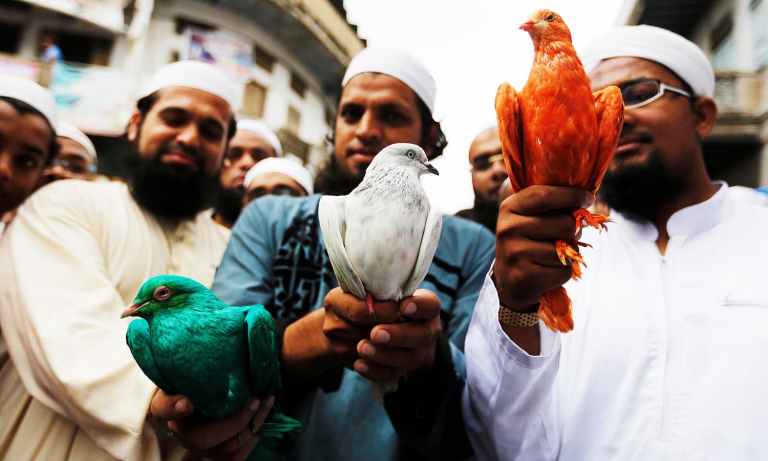
Muslims hold pigeons during a march to celebrate India’s Independence Day in Ahmedabad, India, August 15, 2016. REUTERS/Amit Dave

There is a remarkable similarity in the rise and ascension of religious reactionaries between the majority and minority communities in the decade before Independence. During the period of 1938-47, the Muslim League’s communal separatism was in fierce contest with the majoritarian assertion of the Hindu Mahasabha and the RSS, while at the same time it also benefitted from the extremism of the other party. The colonial state abetted such reactionary forces.

Other than the presence of the colonial state during that era, the Congress was the most powerful political force in the country, and was led by the likes of Mahatma Gandhi, Jawaharlal Nehru and Maulana Azad, even though the ideologies of many members of the provincial and district Congress leadership overlapped considerably with the Hindu Mahasabha.

Another reassuring difference is that today we do not have a Muslim political force comparable with Jinnah’s Muslim League, even though we do have the likes of Asaduddin Owaisi, Azam Khan and the sympathisers of the illiberal, non-plural, exclusionary traditions among Muslims and Hindus. If one may add, at the global scale as well, such forces seem to be on the rise today.

Born in 1921, Muhammad Hashim Kidwai saw all of this from close proximity. In his diary, he recollects the days of the late colonial India while living in today’s era. The title of the book itself is interesting. He describes himself as a ‘nationalist Muslim’.

In the late colonial period, the likes of Maulana Azad and Rafi Kidwai were banking upon the nationalist Muslims against the onslaught of the Muslim nationalists (or the votaries of the separate nationhood), just as the likes of Gandhi and Nehru were fighting with the Hindu nationalists, the rabid majoritarian reactionaries.

One should read the first volume of Kidwai’s reminiscence in the backdrop of these events. His account is rich in details pertaining to politics up to the Nehru era. His presence in Lucknow as a student till his late 20s and then his role as a teacher of political science at the Aligarh Muslim University (AMU) immediately after Independence and Partition enabled him to articulate significant narratives.

The fact that he was also an activist – both as a student and as a teacher – adds to the sharpness of his observations and insights. His long chapter on the student movement in Lucknow University provides vivid details of various little and big political organisations and fronts, literary associations and journalistic initiatives. The details captured in that chapter provide a valuable account of the political evolution of the Lucknow youth in the popular phase of the national movement.

In terms of academic explorations in India, we have an inadequate understanding of student movements as well the role of Muslims in resisting partition. This chapter invites us to make attempts towards filling the gap. The subsequent brief chapter on the consequences of Partition reflects on how Muslims adjusted thereafter.

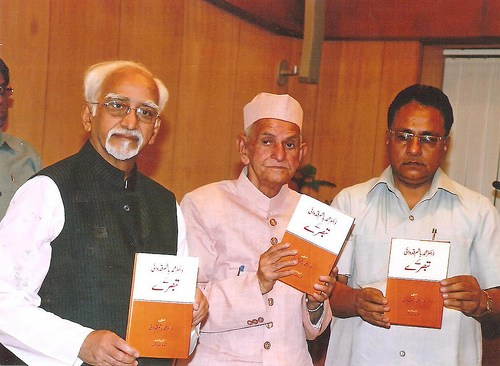
Vice President Muhammad Hamid Ansari with Hashim Kidwai (C) at the launch of his book Life and Times of a Nationalist Muslim. Credit: Aligarh Movement

It also hints at the relatively greater communalisation of the regional politics of Uttar Pradesh, which pushed Rafi Kidwai out of UP politics and then led to Nehru accommodating him in national politics.

There are a number of Urdu memoirs about the socio-political life on the huge AMU campus, but rather than offering informed criticism and reflections, most are essentially exaggerated eulogies. Kidwai’s memoir is not very critical either, but it does stand out for being able to relate campus life to the world outside. To him, the AMU campus was neither politically insulated nor did it suffer from an ‘isolation syndrome.’

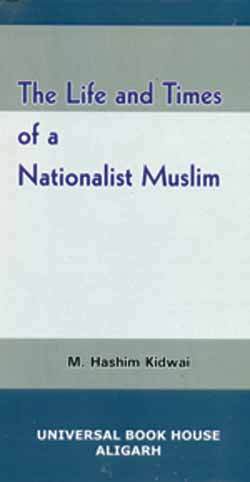
Life and Times of a Nationalist Muslim M. Hashim Kidwai Universal Book House Aligarh, 2015
Life and Times of a Nationalist Muslim
M. Hashim Kidwai
Universal Book House Aligarh, 2015

Being a quintessential Congressman, his narrative about the stealth placing of an idol in the Babri Masjid in December 1949 is focussed more against socialists like Ram Manohar Lohia and Acharya Narendra Dev, who according to him, remained silent to this injustice. Kidwai, however, does show his reservations against G.B. Pant, the then chief minister of UP. He complains, “Both Pandit Nehru and Sardar Patel urged Pandit Pant, the UP premier, to take strong action… But for reasons best known to him, Pantji did not take any action… Pantji’s policy of leaving everything to the district authorities was very much condemned and resented by a large number of Congressmen.”

Progressing strictly in chronological sequence and living up to its name as a diary, almost half of the memoir is devoted to AMU. Kidwai served there not only as a teacher but also as a writer of textbooks, a teacher activist and also contributed in academic governance.

In a huge residential university like AMU, which houses more than 30,000 students, “policing” students is a challenging task. Kidwai describes his roles as that of a provost of a residential hall as well as a proctor. While describing the role of the various vice chancellors, he, unfortunately, neglects their impact on establishing or encouraging academic rigour.

Kidwai is almost solely concerned with the socio-political life on the campus and the narrative gives the impression that the Youth Congress dominated the campus. Other accounts of post-Independence AMU inform us that Left activism had gained a significant presence at the university in the 1960s. Kidwai’s account ignores this and also does not dwell on the composition of the student body, that is, the regions the students came from or their socio-economic status.

The volume concludes with the death of Nehru in 1964.

A close reading of India’s comparative history that draws few parallels between the elections of 1946 and of 2014, and the consequences thereof, is still awaited. One hopes that the sequel volume of Kidwai’s memoir will delve deeper into such issues.

By his own admission in the preface, Kidwai, as a parliamentarian, stood behind the clergy, jarringly conservative on gender issues. He was also one of those that ill-advisedly encouraged Rajiv Gandhi to legislate against the Supreme Court verdict on the Shah Bano issue. Therefore, this first volume really sets up expectations for the next and about how he will recollect the days of 1985-86, especially at a time when the same gender issues have once again acquired significant political saliency. Equally important will be to read his views on the decline of the Congress post-1980s.

This is an important book, one which will become a resource for scholars interested in the participation of Muslims in both politics and in academics after Independence.


source:  http://www.thewire.in / The Wire / Home> Books / by Mohammad Sajjad / November 04th, 2016

Kasargod: Well-known Sunni scholar Posot Tangal no more

Kasargod, KERALA :

Kasargod :

Well-known Sunni scholar, Qazi of several Mohallas, Sayyid Mohammed Umarul Faruk Al Bukhari, popularly known as Posot Tangal, passed away in the early hours of Saturday, September 26.

The-53-year-old Thangal was admitted in a private hospital in Kozhikode where he breathed his last.

He was born as the eldest son of Sayyid Ahmed Bhukhari at Kadalundi in Kozhikode (Calicut) in 1961.

After studying religion at a young age, he was under the tutelage of Sufi Beeran Koya Musliyar. After securing Bakhavi degree from Bakhiyatuswalihath, he started teaching near Akkod in a Madrasa near his home town.

He later arrived as Mudarris at Posot in Kasargod district as per suggestion from Tajul Ulama Sayyid Abdurrahman. He involved himself in community education till his death.

He had decorated the positions of Qazi in several Mohallas in Kasargod and Dakshina Kannada districts. He was also a member of Kerala Jamiyyathul Ulama Mushavara, Kerala SYS state treasurer, and founder of Manjeshwar Malhar Institute.

His mortal remains were brought to Kasargod after funeral prayers at his home own Kadalundi and buried in the premises of Malhar Institute.

Karnataka Sunni Ulama Okkoota state president Qazi P M Ibrahim Musliyar Bekal, Darul Irshad Sarathi Abbas Musliyar, Ullal Qazi Sayyid Fazal Koyamma Al Bukhari Tangal Koora, SJM state president Atooru Sayyid Musliyar, SMA president B M Mumtaz Ali, KCF International president S P Hamza Sakhafi Bantwala, chief secretary Haji Shaikh Bava, SYS state president K C Road Hussain Saadi, chief secretary G M Kamil Sakhafi, SSF state president, Karnataka state Wakf board member N K Mohammed Shafi Sa’adi Bengaluru, KMJC Dakshina Kannada president Haider Parthipadi, Dakshina Kannada Wakf board president Haji S M Rashid, SSF national leader MSM Abdurrashid Zaini Al Kamil, Ishara editor Abdul Hamid Bajpe, Karnataka state Wakf board Ulama council member K H Ismail Saadi Kinya and others have expressed condolences on the demise of Posot Tangal.

source: http://www.daijiworld.com / DaijiWorld.com / Home> Top Stories / Media Release / Saturday – September 26th, 2015

Pt. Yavagal chosen for Ustad Balekhan Award

KARNATAKA :

pandityavagalbf28nov2016

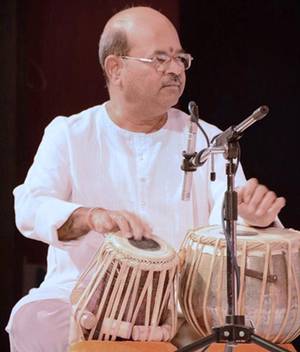
Tabla player Pandit Ravindra Yavagal has been chosen for the first ever Sitar Nawaz Ustad Balekhan Memorial Accompanist Award, instituted by Sitar Nawaz Ustad Balekhan Memorial Foundation Trust, Bengaluru.

The foundation has instituted the award in a bid to accord accord recognition to accompanying artistes, who always remain in the background.

In a release issued on behalf of the trust, chairman Ustad Hafiz Balekhan has said: “Team spirit and regard for the main artiste is of utmost importance during accompaniment. A tabla player can be termed as an able accompanist only if he or she is capable of anticipating the effect that the main artiste wishes to create and accompanies in a manner that enhances the intended effect. Pt. Yavagal is a perfect example of an able accompanying table artiste”.

The award will be conferred on Pt. Yavagal during the ninth death anniversary of Ustad Balekhan on Sunday at ‘Srijana’, Dr Annaji Rao, Sirur auditorium on the campus of Karnatak College in Dharwad at 6.15 p.m.

The former MLA Chandrakanth Bellad will confer the award.

A native of Hubballi, Pt. Yavagal had his initial training under his father Ramachandra Yavagal and subsequently under Veeranna Kamkar and Pt. Sheshagiri Hangal.

He also studied under Pandit Lalji Gokhale, guru of Pandit Hangal and student of Ustad Ahmed Jan Thirakwa.

Pt. Yavagal has also accompanied many master musicians globally. He is a grade one staff tabla artiste of All India Radio, Bengaluru.

A Hindustani classical jugalbandhi by Kolkata artistes Pandit Debashish Bhattacharya (slide guitar) and Pandit Sugato Nag (Sitar) will follow the award ceremony. Pt. Yavagal will accompany them on the tabla.

source:  http://www.thehindu.com / The Hindu / Home> News> States> Karnataka / by Special Correspondent / Dharwad – November 27th, 2016

APs Kashmir Lenseman Bags Prestigious Award

JAMMU  & KASHMIR  :

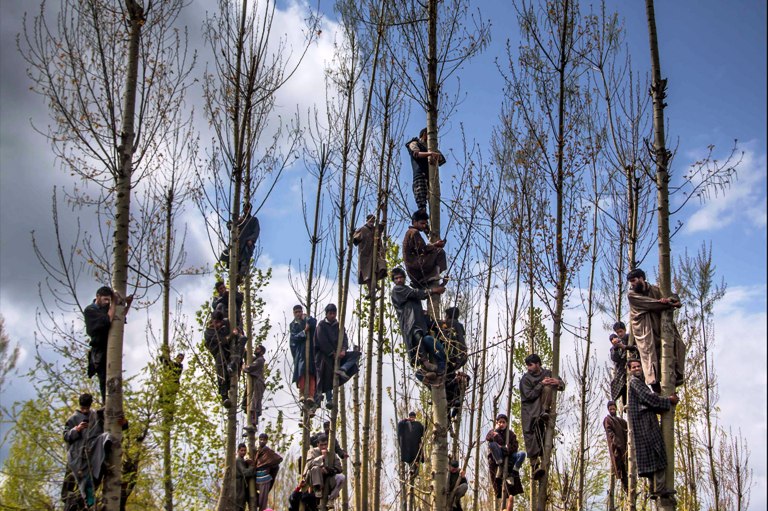
Dar Yasin’s April 7, 2016 photograph of a militan’s funeral bagged it second position in Atlanta Photojournalism Seminar

KL NEWS NETWORK

Srinagar :

Photojournalist Dar Yasin, working for American news agency, Associated Press (AP), has bagged the prestigious Atlanta Photojournalism Seminar award.

Dar Yasin (AP)
Dar Yasin (AP)

His photograph was adjudged as the second best in the general news category.

The click that bagged the award is a photograph showing Kashmiri Muslims climbed on trees to watch the funeral procession of Waseem Malla, a suspected militant of Hizb ul Mujahideen, in Pehlipora. Clicked on Thursday, April 7, 2016 photo, the village where the funeral took place is more than 65 kms south of Srinagar.

Dar is a decorated photo-journalist whose clicks earlier have also brought him many laurels. He has been covering Kashmir for the AP for more than a decade now.

The Atlanta Photojournalism Seminar, America’s longest continuously operating photojournalism conference, started in 1973.  Its 2016 edition took place on November 11-12, 2016 at the Hilton Atlanta Northeast.

source: http://www.kashmirlife.net / Kashmir Life / Home> Latest News /  KL News Network / Sunday – November 13th, 2016

Kuchipudi dancer Haleem hopes to make it big in films

Ongole, ANDHRA PRADESH / Hyderabad , TELANGANA :

Haleem Khan, Kuchipudi dancer-turned actor .

More than 800 dance performances earned him a place in tinsel world

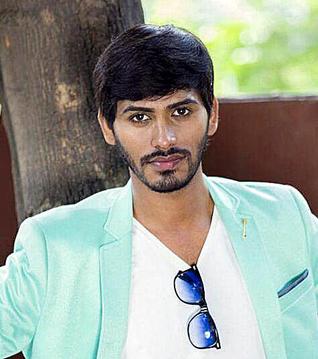
Haleem Khan hailing from a traditional Muslim family developed fascination for Kuchipudi classical dance form with Krishna-oriented Vaishnavite tradition.

Changing his stage name to Hari, he learnt the Hindu traditional peforming art under Natyacharya Kaja Venkata Subrahmanyam without the knowledge of his family and went on to carve a niche for himself in the traditional dance ballet by specialising in the Rupanurupam tradition (woman impersonation) by playing the role of Satya Bhama, consort of Lord Krishna. Brahmin women from Kuchipudi village in the past had shied away from giving stage performances.

“This helped me foray into the Telugu tinsel world with Usha Kiron Movies spotting my talents and giving me a gay role of Shailu in the 2011 romantic film Nuvvila ,” recalls the dancer-turned-actor in a conversation with The Hinduhere.

New film

Haleem Khan, who has given over 800 Kuchipudi dance performances within the country and abroad, was here to promote his new film Ame Atadaite set for release on November 12.

One among the thespians who can don the female role with ease, Haleem, with screen name Haneesh, performs the lead role opposite Kannada actress Chira Shree in the film. Chevalier awardee Kamal Haasan is my inspiration as also Bhanupriya, who has made a mark as a dancer. He was floored by Kamal Haasan’s performance in Bhamane Sathya Bhamane .

Chitram Bhalare Vichitram and Madam were also his reference points, he adds showering praises on Naresh and Rajendra Prasad who sent the audience to peals of laughter by impersonating as women. “Presently, I am acting in a Telugu film as villan,” he adds.

Les Johnson from Germany has written a book on him, capturing the trials and tribulations he underwent before maturing into a Kuchipudi dancer and then an actor. “Efforts are on to make it into a movie,” he adds.

The actor-cum-dancer has come out with an instructional DVD to kindle interest among the members of GenX in Kuchipudi.

source: http://www.thehindu.com / The Hindu / Home> National> Andhra Pradesh / S. Murali / Ongole – November 11th, 2016