Category Archives: Arts, Culture & Entertainment

A Look At the ‘Life and Times of a Nationalist Muslim’

Aligarh, UTTAR PRADESH :

M. Hashim Kidwai’s memoir recollects the student movements at Lucknow University, the role of Muslims in resisting Partition, and their participation in politics and academics after Independence.
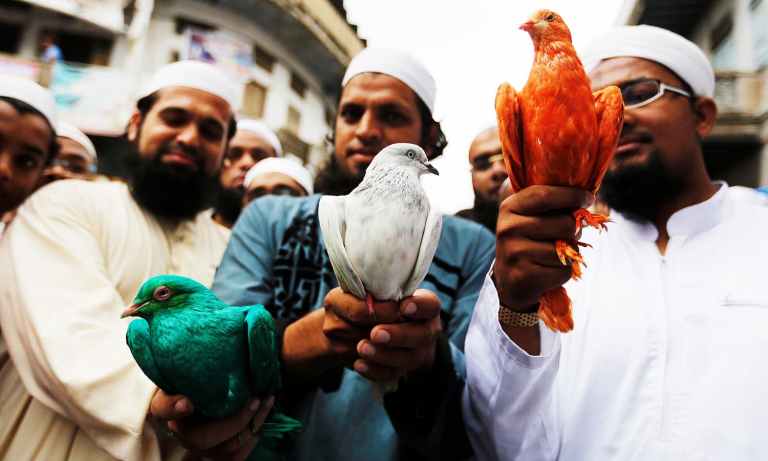
Muslims hold pigeons during a march to celebrate India’s Independence Day in Ahmedabad, India, August 15, 2016. REUTERS/Amit Dave

There is a remarkable similarity in the rise and ascension of religious reactionaries between the majority and minority communities in the decade before Independence. During the period of 1938-47, the Muslim League’s communal separatism was in fierce contest with the majoritarian assertion of the Hindu Mahasabha and the RSS, while at the same time it also benefitted from the extremism of the other party. The colonial state abetted such reactionary forces.

Other than the presence of the colonial state during that era, the Congress was the most powerful political force in the country, and was led by the likes of Mahatma Gandhi, Jawaharlal Nehru and Maulana Azad, even though the ideologies of many members of the provincial and district Congress leadership overlapped considerably with the Hindu Mahasabha.

Another reassuring difference is that today we do not have a Muslim political force comparable with Jinnah’s Muslim League, even though we do have the likes of Asaduddin Owaisi, Azam Khan and the sympathisers of the illiberal, non-plural, exclusionary traditions among Muslims and Hindus. If one may add, at the global scale as well, such forces seem to be on the rise today.

Born in 1921, Muhammad Hashim Kidwai saw all of this from close proximity. In his diary, he recollects the days of the late colonial India while living in today’s era. The title of the book itself is interesting. He describes himself as a ‘nationalist Muslim’.

In the late colonial period, the likes of Maulana Azad and Rafi Kidwai were banking upon the nationalist Muslims against the onslaught of the Muslim nationalists (or the votaries of the separate nationhood), just as the likes of Gandhi and Nehru were fighting with the Hindu nationalists, the rabid majoritarian reactionaries.

One should read the first volume of Kidwai’s reminiscence in the backdrop of these events. His account is rich in details pertaining to politics up to the Nehru era. His presence in Lucknow as a student till his late 20s and then his role as a teacher of political science at the Aligarh Muslim University (AMU) immediately after Independence and Partition enabled him to articulate significant narratives.

The fact that he was also an activist – both as a student and as a teacher – adds to the sharpness of his observations and insights. His long chapter on the student movement in Lucknow University provides vivid details of various little and big political organisations and fronts, literary associations and journalistic initiatives. The details captured in that chapter provide a valuable account of the political evolution of the Lucknow youth in the popular phase of the national movement.

In terms of academic explorations in India, we have an inadequate understanding of student movements as well the role of Muslims in resisting partition. This chapter invites us to make attempts towards filling the gap. The subsequent brief chapter on the consequences of Partition reflects on how Muslims adjusted thereafter.
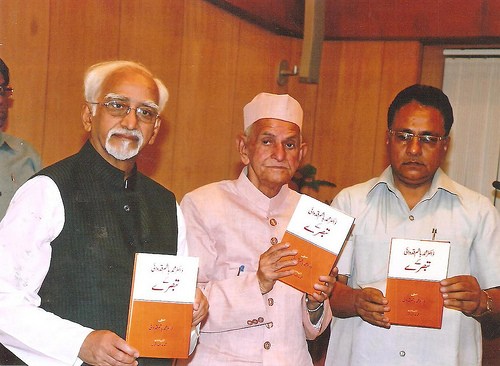
Vice President Muhammad Hamid Ansari with Hashim Kidwai (C) at the launch of his book Life and Times of a Nationalist Muslim. Credit: Aligarh Movement

It also hints at the relatively greater communalisation of the regional politics of Uttar Pradesh, which pushed Rafi Kidwai out of UP politics and then led to Nehru accommodating him in national politics.

There are a number of Urdu memoirs about the socio-political life on the huge AMU campus, but rather than offering informed criticism and reflections, most are essentially exaggerated eulogies. Kidwai’s memoir is not very critical either, but it does stand out for being able to relate campus life to the world outside. To him, the AMU campus was neither politically insulated nor did it suffer from an ‘isolation syndrome.’
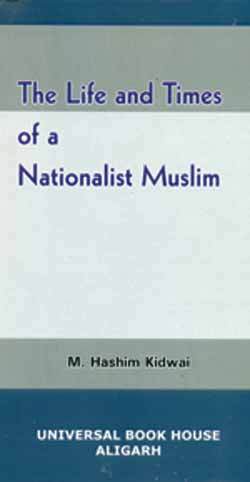
Life and Times of a Nationalist Muslim M. Hashim Kidwai Universal Book House Aligarh, 2015
Life and Times of a Nationalist Muslim
M. Hashim Kidwai
Universal Book House Aligarh, 2015

Being a quintessential Congressman, his narrative about the stealth placing of an idol in the Babri Masjid in December 1949 is focussed more against socialists like Ram Manohar Lohia and Acharya Narendra Dev, who according to him, remained silent to this injustice. Kidwai, however, does show his reservations against G.B. Pant, the then chief minister of UP. He complains, “Both Pandit Nehru and Sardar Patel urged Pandit Pant, the UP premier, to take strong action… But for reasons best known to him, Pantji did not take any action… Pantji’s policy of leaving everything to the district authorities was very much condemned and resented by a large number of Congressmen.”

Progressing strictly in chronological sequence and living up to its name as a diary, almost half of the memoir is devoted to AMU. Kidwai served there not only as a teacher but also as a writer of textbooks, a teacher activist and also contributed in academic governance.

In a huge residential university like AMU, which houses more than 30,000 students, “policing” students is a challenging task. Kidwai describes his roles as that of a provost of a residential hall as well as a proctor. While describing the role of the various vice chancellors, he, unfortunately, neglects their impact on establishing or encouraging academic rigour.

Kidwai is almost solely concerned with the socio-political life on the campus and the narrative gives the impression that the Youth Congress dominated the campus. Other accounts of post-Independence AMU inform us that Left activism had gained a significant presence at the university in the 1960s. Kidwai’s account ignores this and also does not dwell on the composition of the student body, that is, the regions the students came from or their socio-economic status.

The volume concludes with the death of Nehru in 1964.

A close reading of India’s comparative history that draws few parallels between the elections of 1946 and of 2014, and the consequences thereof, is still awaited. One hopes that the sequel volume of Kidwai’s memoir will delve deeper into such issues.

By his own admission in the preface, Kidwai, as a parliamentarian, stood behind the clergy, jarringly conservative on gender issues. He was also one of those that ill-advisedly encouraged Rajiv Gandhi to legislate against the Supreme Court verdict on the Shah Bano issue. Therefore, this first volume really sets up expectations for the next and about how he will recollect the days of 1985-86, especially at a time when the same gender issues have once again acquired significant political saliency. Equally important will be to read his views on the decline of the Congress post-1980s.

This is an important book, one which will become a resource for scholars interested in the participation of Muslims in both politics and in academics after Independence.


source:  http://www.thewire.in / The Wire / Home> Books / by Mohammad Sajjad / November 04th, 2016
Kasargod: Well-known Sunni scholar Posot Tangal no more

Kasargod, KERALA :

Kasargod :

Well-known Sunni scholar, Qazi of several Mohallas, Sayyid Mohammed Umarul Faruk Al Bukhari, popularly known as Posot Tangal, passed away in the early hours of Saturday, September 26.

The-53-year-old Thangal was admitted in a private hospital in Kozhikode where he breathed his last.

He was born as the eldest son of Sayyid Ahmed Bhukhari at Kadalundi in Kozhikode (Calicut) in 1961.

After studying religion at a young age, he was under the tutelage of Sufi Beeran Koya Musliyar. After securing Bakhavi degree from Bakhiyatuswalihath, he started teaching near Akkod in a Madrasa near his home town.

He later arrived as Mudarris at Posot in Kasargod district as per suggestion from Tajul Ulama Sayyid Abdurrahman. He involved himself in community education till his death.

He had decorated the positions of Qazi in several Mohallas in Kasargod and Dakshina Kannada districts. He was also a member of Kerala Jamiyyathul Ulama Mushavara, Kerala SYS state treasurer, and founder of Manjeshwar Malhar Institute.

His mortal remains were brought to Kasargod after funeral prayers at his home own Kadalundi and buried in the premises of Malhar Institute.

Karnataka Sunni Ulama Okkoota state president Qazi P M Ibrahim Musliyar Bekal, Darul Irshad Sarathi Abbas Musliyar, Ullal Qazi Sayyid Fazal Koyamma Al Bukhari Tangal Koora, SJM state president Atooru Sayyid Musliyar, SMA president B M Mumtaz Ali, KCF International president S P Hamza Sakhafi Bantwala, chief secretary Haji Shaikh Bava, SYS state president K C Road Hussain Saadi, chief secretary G M Kamil Sakhafi, SSF state president, Karnataka state Wakf board member N K Mohammed Shafi Sa’adi Bengaluru, KMJC Dakshina Kannada president Haider Parthipadi, Dakshina Kannada Wakf board president Haji S M Rashid, SSF national leader MSM Abdurrashid Zaini Al Kamil, Ishara editor Abdul Hamid Bajpe, Karnataka state Wakf board Ulama council member K H Ismail Saadi Kinya and others have expressed condolences on the demise of Posot Tangal.

source: http://www.daijiworld.com / DaijiWorld.com / Home> Top Stories / Media Release / Saturday – September 26th, 2015

Pt. Yavagal chosen for Ustad Balekhan Award

KARNATAKA :

pandityavagalbf28nov2016

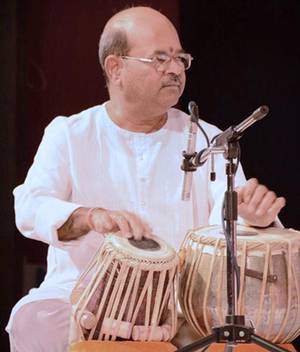
Tabla player Pandit Ravindra Yavagal has been chosen for the first ever Sitar Nawaz Ustad Balekhan Memorial Accompanist Award, instituted by Sitar Nawaz Ustad Balekhan Memorial Foundation Trust, Bengaluru.

The foundation has instituted the award in a bid to accord accord recognition to accompanying artistes, who always remain in the background.

In a release issued on behalf of the trust, chairman Ustad Hafiz Balekhan has said: “Team spirit and regard for the main artiste is of utmost importance during accompaniment. A tabla player can be termed as an able accompanist only if he or she is capable of anticipating the effect that the main artiste wishes to create and accompanies in a manner that enhances the intended effect. Pt. Yavagal is a perfect example of an able accompanying table artiste”.

The award will be conferred on Pt. Yavagal during the ninth death anniversary of Ustad Balekhan on Sunday at ‘Srijana’, Dr Annaji Rao, Sirur auditorium on the campus of Karnatak College in Dharwad at 6.15 p.m.

The former MLA Chandrakanth Bellad will confer the award.

A native of Hubballi, Pt. Yavagal had his initial training under his father Ramachandra Yavagal and subsequently under Veeranna Kamkar and Pt. Sheshagiri Hangal.

He also studied under Pandit Lalji Gokhale, guru of Pandit Hangal and student of Ustad Ahmed Jan Thirakwa.

Pt. Yavagal has also accompanied many master musicians globally. He is a grade one staff tabla artiste of All India Radio, Bengaluru.

A Hindustani classical jugalbandhi by Kolkata artistes Pandit Debashish Bhattacharya (slide guitar) and Pandit Sugato Nag (Sitar) will follow the award ceremony. Pt. Yavagal will accompany them on the tabla.

source:  http://www.thehindu.com / The Hindu / Home> News> States> Karnataka / by Special Correspondent / Dharwad – November 27th, 2016

APs Kashmir Lenseman Bags Prestigious Award

JAMMU  & KASHMIR  :

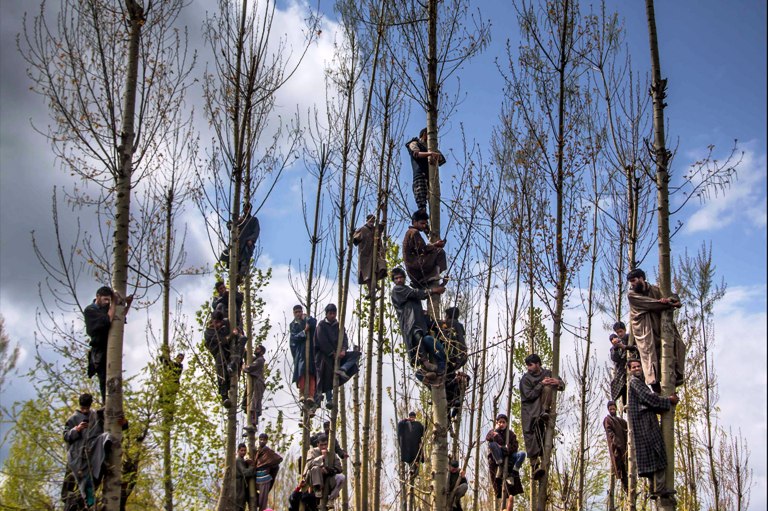
Dar Yasin’s April 7, 2016 photograph of a militan’s funeral bagged it second position in Atlanta Photojournalism Seminar

KL NEWS NETWORK

Srinagar :

Photojournalist Dar Yasin, working for American news agency, Associated Press (AP), has bagged the prestigious Atlanta Photojournalism Seminar award.

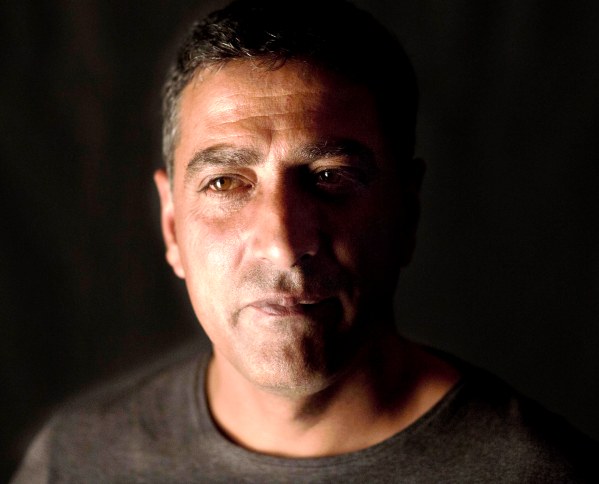
Dar Yasin (AP)
Dar Yasin (AP)

His photograph was adjudged as the second best in the general news category.

The click that bagged the award is a photograph showing Kashmiri Muslims climbed on trees to watch the funeral procession of Waseem Malla, a suspected militant of Hizb ul Mujahideen, in Pehlipora. Clicked on Thursday, April 7, 2016 photo, the village where the funeral took place is more than 65 kms south of Srinagar.

Dar is a decorated photo-journalist whose clicks earlier have also brought him many laurels. He has been covering Kashmir for the AP for more than a decade now.

The Atlanta Photojournalism Seminar, America’s longest continuously operating photojournalism conference, started in 1973.  Its 2016 edition took place on November 11-12, 2016 at the Hilton Atlanta Northeast.

source: http://www.kashmirlife.net / Kashmir Life / Home> Latest News /  KL News Network / Sunday – November 13th, 2016

Kuchipudi dancer Haleem hopes to make it big in films

Ongole, ANDHRA PRADESH / Hyderabad , TELANGANA :

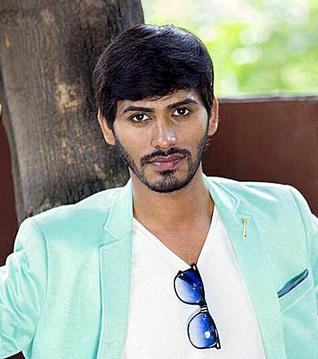
Haleem Khan, Kuchipudi dancer-turned actor .

More than 800 dance performances earned him a place in tinsel world

Haleem Khan hailing from a traditional Muslim family developed fascination for Kuchipudi classical dance form with Krishna-oriented Vaishnavite tradition.

Changing his stage name to Hari, he learnt the Hindu traditional peforming art under Natyacharya Kaja Venkata Subrahmanyam without the knowledge of his family and went on to carve a niche for himself in the traditional dance ballet by specialising in the Rupanurupam tradition (woman impersonation) by playing the role of Satya Bhama, consort of Lord Krishna. Brahmin women from Kuchipudi village in the past had shied away from giving stage performances.

“This helped me foray into the Telugu tinsel world with Usha Kiron Movies spotting my talents and giving me a gay role of Shailu in the 2011 romantic film Nuvvila ,” recalls the dancer-turned-actor in a conversation with The Hinduhere.

New film

Haleem Khan, who has given over 800 Kuchipudi dance performances within the country and abroad, was here to promote his new film Ame Atadaite set for release on November 12.

One among the thespians who can don the female role with ease, Haleem, with screen name Haneesh, performs the lead role opposite Kannada actress Chira Shree in the film. Chevalier awardee Kamal Haasan is my inspiration as also Bhanupriya, who has made a mark as a dancer. He was floored by Kamal Haasan’s performance in Bhamane Sathya Bhamane .

Chitram Bhalare Vichitram and Madam were also his reference points, he adds showering praises on Naresh and Rajendra Prasad who sent the audience to peals of laughter by impersonating as women. “Presently, I am acting in a Telugu film as villan,” he adds.

Les Johnson from Germany has written a book on him, capturing the trials and tribulations he underwent before maturing into a Kuchipudi dancer and then an actor. “Efforts are on to make it into a movie,” he adds.

The actor-cum-dancer has come out with an instructional DVD to kindle interest among the members of GenX in Kuchipudi.

source: http://www.thehindu.com / The Hindu / Home> National> Andhra Pradesh / S. Murali / Ongole – November 11th, 2016

Tree Facts : Floral Splendour

Mysuru, KARNATAKA :

treefactsbf12nov2016

Ornamental garden is the dream of plant-loving urban dwellers. Plants, foliage and flowering of different hues in various combination can express the beauty of nature around the living area. It is not the size that matters as one can landscape even a small home ground in the same way as done for larger estates or public parks. When done in the best form it is the pride of the house.

An ‘ornamental garden’ developed by a woman falls into this category. The owner, gardener and executor is none other than the winner of the first prize in the Annual Dasara Flower Show under ornamental garden category: Ms. Hashmath Fathima. It is an artistic outdoor garden developed around her little dwelling place in a plot of land in Kalyanagiri, all on her own. The garden has all the ingredients of a modern ornamental garden with display of choicest flowering and foliage plants in the form of annuals and perennials (herbs, shrubs, climbers, trees, ornamental grasses, bulbs etc.) embellished with various design elements.

The special feature is most part of the garden is developed using containers of various size, shape and hues. The entrance gate opens up into a path leading to the garage, beautifully paved with lawn grass in the crevices which makes up for the absence of a lawn (due to lack of space). On entry into the garden you can notice the potted plants stacked up in multiple rows in various colour combination of foliage and flowers & height along side the wooden wall. The half wall of the verandah has been decked up with colourful overhanging Lantanas, besides the hanging pots at the entrance of the house.

For embellishment valuable objects of artefacts in the form of figurines of various objects, birds nests etc., are placed at vantage points. The northern wall of the house is fully green, a breathing wall completely covered with creeping fig (Ficus repens). The perennial climbers (Allamanda, Quisqualis, Bougainvillea etc.) with their foothold on the northern edge ramble on the wooden barricade. The garlic vine (Mansoa alliacea) overarching the garage makes spectacular display with purple coloured blooms and attracts the onlookers. A small pond is also designed in the backyard with water lily (Nymphae sps) in it. In addition to being pleasant to look at, this ornamental garden is also enjoyable to use with a recreation area to sit and enjoy reading etc., in the form of a bench decorated with an arch covered with a climber in the front yard and an aviary with plenty of beautiful birds in the backyard.

Another eye-catching addition is the bottle garden (hanging) created using soft drink bottles planted with variegated Alternantheras. This impressed me a lot. In general the display of plants is such that as soon as one enters one can experience the burst of flowers of all hues amidst the colourful foliage. Above all, with innumerable flowering and foliage plants (Acalypha, Althea rosea, Asparagus, Aglonema, Alternanthera, Anthuriums, Asters, Coleus, Catharanthus, Chrysanthemums, Cocks comb, Begonias, Cosmos, Calendulas, Chlorophytum, Duranta, Euphorbia milii, Gamphrena, Gazania, Gerberas, Day lily, Ferns, Marigolds, Pentas, Petunias, Zinnias etc., etc.) this little paradise looked like a “mini flower show.”

Ms. Hashmath is into gardening for more than a decade and has won several first prizes in the past too. I understand that she herself carries out most of her gardening work and uses only organic manure. Most of her earnings are spent on maintaining the garden. A dress designer by profession, she has put her heart and soul in designing the beautiful and attractive garden as well! Furthermore, she has shown the ability and imagination of the gardener in her in the best form besides the woman power.

Text & photographs by Dr. Mahadeswara Swamy, Scientist, Mob: 97429-91057, e-mail: swamy_clri@hotmail.com

source: http://www.starofmysore.com / Star of Mysore / Home> Feature Articles / November 06th, 2016

Kerala History Congress set to begin tomorrow

Mallapuram, KERALA :

VC to open meet on Calicut University campus

The fourth International Kerala History Congress will begin at Calicut University on Friday. Calicut University Vice Chancellor K. Mohammed Basheer will inaugurate the meet. Jean-Baptiste Prashant More, a Tamil-born French historian, will deliver the keynote address.

M.G.S. Narayanan, chairman of the Kerala History Conference, will preside over the inaugural function. Prof. Narayanan, M.R. Raghava Varier, and Kesavan Veluthat will make presentations under the ‘doyens of Kerala historiography lecture’ series.

Exhibition of archives

An exhibition of archives and historical documents began on Wednesday as part of the History Congress. Syndicate member K. Fatimat Zuhra inaugurated the exhibition. Syndicate member and head of the Department of History P. Sivadasan presided. The exhibition will be free for the public until Sunday.

The exhibition is arranged jointly by the State Archives Department, the Calicut University Department of History, and Zamorin’s Guruvayurappan College, Kozhikode. The exhibition has a large number of historical documents from different periods, including stone age and middle ages.

source: http://www.thehindu.com / The Hindu / Home> National> Kerala / by Staff Reporter / Malappuram – November 10th, 2016

“ Throw open Mosques for Social and Educational causes ”

Mysuru, KARNATAKA :

Dr. Mohammed Haziq Nadvi, Director of Darul Umoor and Research Centre, Srirangapatna, offers to donate blood to needy

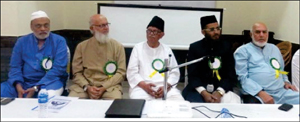
Sitting from left: Abdul Khader Sait, President, MESCO & Managing Director, AANCO Industries; Khaleel Ur Rahman Waseem, Jamath-e-Islami Hind; Dr. B. Sheik Ali, former Vice- Chancellor, Mangalore and Goa Universities; Dr. Mohammed Haziq Nadvi, Director of Darul Umoor and Research Centre, Srirangapatna and Prof. Noor Ahmed Khan of Universal Guidance Centre for Education, seen during the Lecture Series at MESCO Education Complex in N.R.Mohalla on Friday last.

Mysuru :

(Afsar Pasha)- Dr. Mohammed Haziq Nadvi, Director of Darul Umoor and Research Centre, Srirangapatna, has called upon managements of Mosques to throw open their doors for social and educational causes including starting of blood banks and study centres.

Speaking at the inaugural function of the Lecture Series on “Islamic history, thoughts and its impact on the world” organised by Universal Guidance Centre for Education and MESCO, Mysuru, on Friday last at MESCO Education Complex in Subashnagar, N.R.Mohalla, Dr. Nadvi said Mosques, which are generally restricted to Muslims offering prayers, can endear themselves to the general public in a pluralistic society by taking up social and educational causes.

He even declared his blood group and offered to be available for donating blood to the needy.

Similarly, he said Mosques should promote education by offering free coaching classes to the needy students without religious discrimination. These efforts will go a long way in promoting amity among different communities in a climate of hostility.

Dr. Nadvi regretted that Islamic history had been distorted and Islamic culture had been misinterpreted, leading to a wrong impression of Islam in the eyes of the world.

With passage of time, Muslims have moved away from the basic Islamic doctrines that had won the world’s adulation centuries ago. There is a dire need for Muslims to correct their course by pursuing the way of life as shown by Islam and undo the harm that time has inflicted upon it.

He emphasised the need for fresh efforts in the direction like the Lecture Series so that the coming generations abandon the false legacy and pursue Islam in the true sense.

Noted historian and former Vice-Chancellor of Goa and Mangalore Universities Prof. B. Sheikh Ali focussed on the Almighty’s creations and the path upon which the humanity should follow.

Secretary of the Universal Guidance Centre for Education Prof. Noor Ahmed Khan said the Centre took the initiative to hold such Lecture Series as it felt necessary to guide the youth and connect them to their roots so that they can take the right course.

Former Vice-Chancellor of Yenepoya University Prof. Syed Akheel Ahmed, who was also present on the occasion, welcomed the initiative to hold the lectures.

The Universal Guidance Centre for Education will hold lectures on “Islamic history, thoughts and its impact” by Dr. Nadvi on the first and third Friday of every month at the Lecture Hall at MESCO Mosque.

source: http://www.starofmysore.com / Star of Mysore / Home> General News / November 04th, 2016

These Hyderabadis are new YouTube sensation

Hyderabad, TELANGANA  :

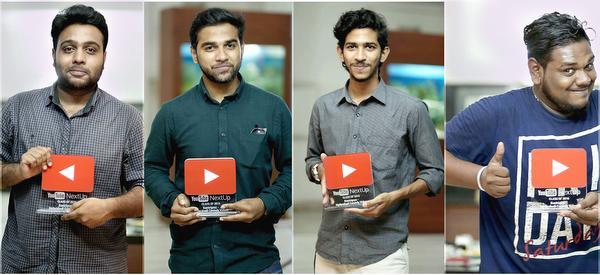
Viral guys:Syed Viquaruddin, Mohd Abdul Samad, Mizbahuddin and Syed Atif teamed up as Kantriguyz and started making videos in 2013.-Photo: By arrangement

They are now recognised in public places

A few random concepts and some funny videos later, these content creators from twin cities are now the brand ambassadors of YouTube. Life has changed all of a sudden for these Hyderabadis who are now recognised in public places and pressured to come up with better videos. Jahnavi Dasetty, who runs her own channel ‘Mahathalli’ and Syed Viquar Mohiuddin of ‘Kantriguyz’ were speakers at the YouTube ‘Happy Hour’ event organised in the city recently.

Less than a year after she uploaded her first video, Jahnavi has now more than one lakh subscribers to her credit. Till date, she has made close to 30 videos in which she essays different characters. “I play simple characters which everyone relates to. I think that clicked well with the viewers,” says Jahnavi who played a middle-class youngster troubled by her mother to get married. Jahnavi, who is interested direction as well, also landed up a role in a Telugu movie after her videos went viral. She also went on to collaborate with other popular creators like Chicago Subbarao.

With their signature Hyderabadi lingo and style, four youngsters, Syed Viquaruddin, Mohd Abdul Samad, Mizbahuddin and Syed Atif teamed up as Kantriguyz and started making videos in 2013.

“There was only one content provider making funny videos in the language that Hyderabadis speak but they were not our inspiration. We followed The Viral Fever channel closely and made Hyderabadi version of a spoof which went viral,” said Mr. Mohiuddin, who is pursuing BBA degree. “We are recognised wherever we go. We are asked by people to make more videos because of which we plan to upload at least three videos a month.”

Their channel has more than 20,000 subscribers.

The youngster has set himself a target too. “If my channel gets more than one lakh subscribers within two years, I will pursue a career in this field.” David Powell, Online Partner Operations efforts across Asia-Pacific, YouTube said that the traditional media content uploaded in India is increasing by 75% every year. He said that a number of events are being conducted by them across the country to encourage regional content providers and provide a platform for them to network and collaborate.

source: http://www.thehindu.com / The Hindu / Home> News> Cities> Hyderabad / by Rahul Devulapalli / Hyderabad – November 02nd, 2016

Tipu Sultan, a Product of His Times

Mysuru, KARNATAKA :

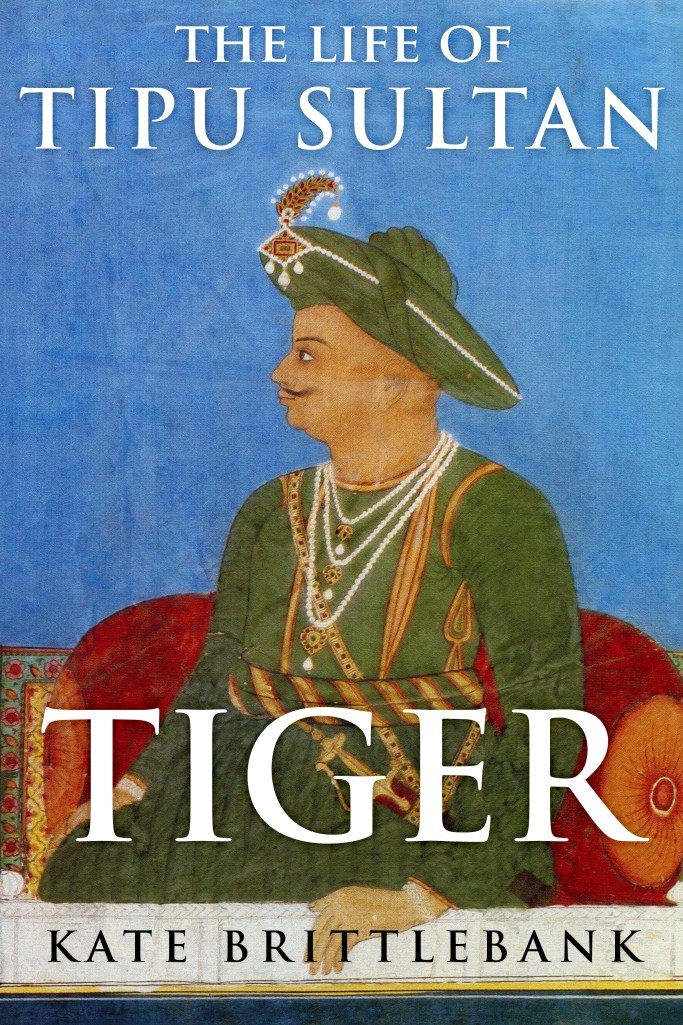
An extract from Kate Brittlebank’s Tiger: The Life of Tipu Sultan.


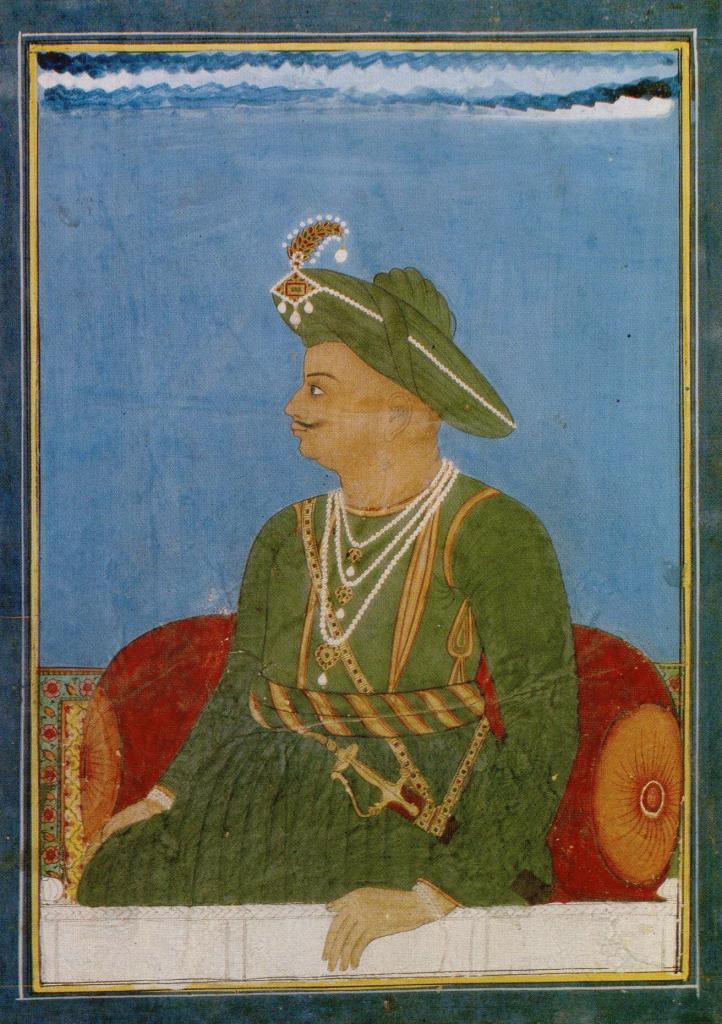
Tipu Sultan. Credit: Wikimedia Commons

The Karnataka government’s decision to celebrate the birth anniversary of Tipu Sultan has once against created a controversy, with the BJP and the RSS as well as local groups in Kodagu district opposing the move.  A rally against the proposed celebration is planned in Bangalore on Tuesday. Last year, the government’s decision led to large-scale violence; this year, a case was filed against the move, but the court’s declined to interfere, calling it a policy decision. At the same time, the judges asked what the rationale was to hold such a celebration.

Was Tipu Sultan (1750-1799) a hero or a villain and was he, as is claimed, against Hindus? Some scholars have contested these views. In this excerpt from her book Tiger: The Life of Tipu Sultan, historian Kate Brittlebank gives a more nuanced and holistic view of the man and the monarch, who, she says, was a product of his times.


Kate Brittlebank Tiger: The Life of Tipu Sultan Juggernaut, 2016
Kate Brittlebank
Tiger: The Life of Tipu Sultan
Juggernaut, 2016

It was also important, if Tipu were to retain power, that he tap into the south’s shared sacred landscape, and it is in this light that we should read his patronage of religious institutions, which was widespread. For centuries, kings had associated themselves with the sacred sites of the region, the most significant being the river Kaveri, the Ganges of the south. Rising in the hills of Kodagu, the river wends its way across the Mysore plateau and down onto the plains of Tamil Nadu. Its entire length is dotted with religious landmarks, small and large. For south Indian kings the Kaveri was not only the source of life-giving water but also of divine power. Along the river are three islands, formed where the water divides: from east to west, they are Srirangam, Sivasamudram and Srirangapattana. These are the places where Vishnu sleeps upon the great serpent Sesha, when he is known as Sri Ranganatha, and on the islands are temples dedicated to the deity. The most magnificent is at Srirangam but all were recipients of past royal patronage; in 1610, Raja Wodeyar transferred his capital to Srirangapattana from Mysore after seizing the island from the Vijayanagara viceroy, Tirumala.

Given that the island of Srirangapattana was such a significant repository of divine power, Tipu would have been foolhardy to transfer his capital elsewhere. He continued the Wodeyars’ patronage of the Sri Ranganatha temple, alongside which stood his main palace, and erected a Friday mosque. Haidar’s tomb stood at the other end of the island, near the sangam, next to which Tipu built another, smaller mosque. Put simply, lordly benefaction, one of the defining characteristics of Indian kingship, was pragmatic in purpose. Along with their magnificent displays of power and wealth, kings were expected to be conspicuously pious. They made land grants, donated precious artefacts and mediated in religious disputes. In return, they could expect support for the legitimacy of their rule and prayers for the security and prosperity of the realm. Tipu behaved no differently: his generosity to temples, Sufi dargahs and mosques, as well as the great Math at Sringeri, are well documented, primarily through inscriptions and institutional records.

An idea of the number of Tipu’s religious endowments across his realm can be gained by looking at in‘am registers held in the Kozhikode Archives in Kerala. The records show that Tipu authorised sixty-seven grants of rent-free land, primarily to temples and mosques, solely for the taluks of Calicut, Ernad, Bettathnad and Chowghat. If we extrapolate that figure across the entire realm, it is clear that his patronage of such institutions was extensive. We know of several temples that hold objects donated by Tipu – the Sri Ranganatha temple at the capital received silver vessels, the Nanjundeshwara temple at Nanjangud has a jadeite linga said to have been installed on Tipu’s orders, and inscriptions record that he gave elephants and silver vessels to the Narayanaswami temple in Melukote.

The Sringeri Math, with which Tipu maintained a close relationship, received gifts of valuable cloths and shawls, a silver palanquin and a pair of silver fly whisks. The importance of the Math to south Indian and Deccani rulers – both Hindu and Muslim – since its foundation in the eighth century, is demonstrated by the fact that it holds more than 200 copperplate grants and sanads, the earliest dating from the Ganga dynasty (c. 250–1000 ce). Tipu referred to the Math’s Swami as the Jagadguru and, after the Marathas had raided the Math in 1792, he wrote in a letter that the culprits would ‘suffer the consequences of their misdeeds at no distant date in the Kali age’, concluding that ‘treachery to gurus will undoubtedly result in the destruction of the line of descent’.

The political nature of religious patronage was also the rationale behind acts of destruction. All across India, whenever a king conquered another, he signalled his victory by either seizing or destroying the religious sites with close ties to his victim – and it made no difference if conqueror and conquered were co-religionists. Just as Shaivite and Vaishnava dynasties in south India patronised mosques, dargahs and churches, they did not hesitate to capture the temples of their enemies and seize or destroy the images. The Cholas seized temple images from the Calukyas; and Vijayanagara’s Krishnadevaraya, to celebrate his defeat of the Gajapati king, removed an image of Balakrishna from Udayagiri to the capital. We can see this process in operation with Tipu’s demolition of the Varahaswami temple at Srirangapattana; after his death, the Wodeyars, in a statement of their own ‘victory’, relocated the ruined temple’s image to Mysore town, which once again was serving as their capital. If Tipu’s actions had been driven by religious rather than political motivation, he would not have allowed the Sri Ranganatha temple to continue to flourish within sight of his palace. It was the Wodeyars’ direct association with Vishnu’s boar incarnation that led to Tipu’s demolition of the Varaha temple. Nor were Christians exempt from such treatment – the Venkataramana temple in Nagar (formerly Haidarnagar/Bednur) possesses a bell cast in Amsterdam in 1713. The presence of this oddity in a Hindu place of worship is due to Tipu’s removal of it from a church in Malabar.

Similarly, Tipu did not discriminate against particular religious groups on the basis of their faith – indeed, his diwan or chief minister, Purnaiya, was a Hindu. As we have already seen, Tipu suspected the Kanara Christians of treachery and being in league with the British; the Nairs and the Kodavas, too, were punished for intriguing against him. And if there should be any doubt about what lay behind the treatment of such groups, the expulsion of the Mahdevis from Mysore in 1794 confirms the political character of such acts. This tight-knit Muslim community of several thousand mainly served in Tipu’s army as horse soldiers, under the command of their own officers. That Tipu was in no way prejudiced against this sect is demonstrated by the fact that one of his four vakils to Istanbul, Ja‘far Khan, was a Mahdevi; even so, he too was expelled in 1794. The stated reason for the community’s expulsion was their refusal to obey Tipu’s command to keep certain celebrations low-key – they were prone to noisy bouts of praying – as the festivities that year coincided with the return of the hostage princes from Madras. The more likely reason, however, was that Tipu suspected the Mahdevis of treason, with their festival disobedience merely the trigger for the order that they leave the kingdom. Interestingly, during the Fourth Anglo-Mysore War, many of them served under Arthur Wellesley as irregular horse, although it is not clear if this was a consequence of Tipu’s treatment of them, or if Tipu had been correct in his original assumption of their disloyalty.


Excerpted with the permission of Juggernaut Books from Tiger: The Life of Tipu Sultan by Kate Brittlebank, available in bookstores and on the Juggernaut app

___________________________________________________________________________

source: http://www.thewire.in / The Wire / Home> Books / by Kate Brittlebank / November 07th, 2016