Category Archives: Arts, Culture & Entertainment

Experts make ‘Gaadhis’, ‘Namdhas’ for Dasara Elephants to look Majestic

Mysuru, KARNATAKA :

gaadhasmpos27sept2016

by M.T. Yogesh Kumar

As the city is being spruced up for it to sport a bridal look, inside the Palace too, hectic activities have begun to get the elephants ready for the Vijayadashami grand finale. The main attractions on the last day of the festival are the 12 elephants with Arjuna, carrying the Golden Howdah (Ambari), being the cynosure of all eyes.

Special care is taken by the team of Forest Department officials, mahouts and kavadis to ensure that the elephants are fed well and trained so that they can gain enough weight enabling them to stay composed amidst the cheering crowd at the Jumboo Savari. Care is also taken to decorate them with specially designed robes. Their trunks are painted and metal ornaments with hangings are fixed into their tusks.

Among the specialised team is Pasha and Zakaulla, the two mahouts who have retired from service and who are experts in creating the ‘Gaadhi’ or the cushion and ‘Namdha’ or ‘Gouse’, a robe for the elephants. While the ‘Gaadhi’ is tied to the elephant’s back, a ‘Namdha’ covers the elephant skin and looks like a jacket. The ‘Gaadhi’ and ‘Namdha’ are newly made every year.

Explaining the ‘Gaadhi’, Pasha and Zakaulla say that it makes the uneven surface of the elephant plain and look good when the “Namdha” is spread on the elephant. Each ‘Gaadhi’ has a girth of 1.5 ft and the length depends on the size of the elephant.

While Arjuna, the Howdah Elephant’s ‘Gaadhi’ will weigh 500 to 800 kilograms, the ‘Gaadhi’ made for other elephants weigh 250 to 300 kgs. This is because Arjuna has to carry the 750-kg Golden Howdah with the idol of Goddess Chamundeshwari placed inside. The combined weight of the ‘Gaadhi’ and Ambari is around 1,100 to 1,200 kgs.

A special grass that is grown abundantly on lake and river side is used to make the ‘Gaadhi.’ Locally the grass is called ‘Odake Hullu’ that turns soft when dry. The grass is bundled and filled into a soft but sturdy square shaped cloth specially stitched for the purpose. Along with this grass, dry paddy grass is also used to fill the edges.

“The proportion is important to give a soft and sturdy feel,” say the mahouts. Once the grass is filled, the ‘Gaadhi’ is stitched after covering it with jute gunny bags.

“When I was the mahout before 2006, I used to observe people making the ‘Gaadhis’ and ‘Namdhas’ and slowly I learnt the tricks of the trade. I retired in 2006 and since then I am doing this job every year,” says Pasha.

Pasha and Zakaulla have been a part of the festival and have stitched many ‘Gaadhis’ and ‘Namdhas’ for many elephants in the past. The Forest Department officials too have reposed their trust in their skills and summon them every year for the job. While Pasha is the resident of Gandhinagar in Mysuru, Zakaulla is from Gundlupet.

“I have been the mahout for elephants including Radhika, Jayaprakash, Ramani and Chandrika. I retired 10 years ago and I am happy to serve the Naada Habba. I am willing to teach other mahouts on the making of these specialised equipment,” says Zakaulla.

source: http://www.starofmysore.com / Star of Mysore / Home> Feature Articles / September 26th, 2016

Who’s That – Sameer Uddin: Hyperactive

NEW DELHI / Mumbai (MAHARASHTRA) :
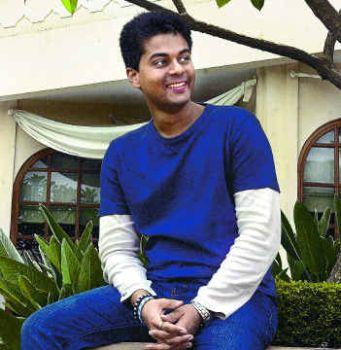
Born into a musically-inclined family in Delhi (his mother is a classical performer and father, a theatre artist), Sameer was exposed to melodies and composition from a young age
SameerUddinMPOs27sept2016

Born into a musically-inclined family in Delhi (his mother is a classical performer and father, a theatre artist), Sameer was exposed to melodies and composition from a young age. But it was his uncle who realised that Sameer had a knack for music when, still a tween, he played a tune on the tabla after hearing it just once. This led to tabla lessons.

In college, Sameer swapped the tabla for a guitar “because that was cooler then, and I didn’t want to be called a ‘tabalchi’,” he laughs. Sameer went on to play the bass guitar in a heavy metal band (Every Mother’s Nightmare), playing covers from bands like Metallica, Megadeth and others. His first creation outside his band, though non-commercial, was for a cookery show on Home TV. In August 1999, he got his first taste of composing for ads when Jeevan Singh of the films department at O&M asked him to create a tune for a Duracell ad, the agency was working on.

But Sameer believes that his first big break in ad films was when he composed the score for a Honda City commercial being produced by Kaveri Productions. The production house managed to convince the client to let a fairly new composer work on the ad. “It was something the Japanese don’t do often,” points out Sameer. Kaveri Productions is where he met some of his closest friends and Neha, who would become his wife. Some of his close friends and mentors include Binoy Mitra of Kaveri Productions, Shoojit Sircar and Vinod P Vijay of Red Ice Films, Harsh Dave of Film Farm, Amit Sharma of Chrome Pictures, Ayyappa of Footcandles.

A few years later, he moved to Mumbai with his wife (his brother runs a school in Himachal in memory of their brother Captain Hanif who lost his life in the 1999 Kargil War) and jumped headlong into work. The ad projects he’s enjoyed most include the latest Parle Lite ad with the floating Sumo wrestlers and the ballerina, the Honda City ad and one for Sri Lanka Tourism, where he spent time in the country understanding their music style and applying it to the ad.

Movies weren’t far away. He worked on creating background scores for films like Yahaan, Ek Khiladi Ek Hasina, Bluffmaster, Pyaar ke Side Effects and Aloo Chaat. However, ad films are his first love. Ask him why and he says, “It’s my sanctuary really for many reasons. Firstly, my mind is always in hyper drive, I love doing many things, so ads let me move from one genre of music to another. One day I might be working on an Indian tune, another day a thrash metal sound like one we created for Titan Octane to a medley tune like Parle Lite’s.”

source: http://www.afaqs.com / afaqs! / by Surina Sayal , afaqs! – Mumbai / Home> In Advertising / September 14th, 2009

Padma award: Ex-Jamia Prof who guided L-G Jung master Deewan-E-Ghalib recommended

NEW DELHI :

Eight names have been submitted online for the Padma awards by the Delhi Government.

Of them, according to an Indian Express report seven names have been recommended for Padma Shri, one for Padma Bhushan.

The report claimed that seven names have come from Lieutenant Governor (LG) Najeeb Jung and one has been sent by a committee under the chairmanship of the chief secretary of Delhi. OKHLATIMES.COM independently could not authenticate the claim.

Of the eight names recommended, on the list is Dr Khalid Mahmood, former Jamia Millia Islamia’s Department of Urdu, in the field of Literature and Education. Sources said LG Jung, when he was vice chancellor of Jamia Millia Islamia, used to regularly take classes in Deewan-E-Ghalib.

Dr Mahmood, who even today visits the L-G’s residence once in a week to discuss Deewan-E-Ghalib, told OKHLATIMES.COM that he is not aware of the development. Born in Saronj-Madhya Pradesh on 15th January 1948, Dr Mahmood is a noted Urdu writer and has won several awards for his literary work.

OKHLATIMES.COM had earlier reported quoting Dr Mahmood that Jung is head over heels in love with Ghalib and has a good grasping power. It is my pleasure to discuss the subject with him, he had said then,

It is understood that Jung as an eight-year-old student used to recite ghazals written by Ghalib whenever Maulana Abul Kalam Azad, India’s first Education Minister, used to visit his swanky Daryaganj house in Old Delhi. Grandson of Moulvi Samiullah, a close associate of Syed Ahmed Khan, young Jung, in his later days lost touch with Ghalib. But after coming to Jamia he had renewed his interest in the great poet and writer.

Dr Mahmood used to interact with Jung four days a week for one hour after 5.30 pm.

Jung, son-in-law of Dr Abdul Jalil Faridi, wants to contribute to the development of Urdu in India and Maktaba JMI, Dr Mahmood had claimed then.

source: http://www.okhlatimes.com / Okhla Times / Home> JMI Campus / September 20th, 2016

My musical journey, Sameeruddin

NEW DELHI / Mumbai (MAHARASHTRA) :

His recent single release – Tera Mera – with singer Neha Bhasin, crossed 2 Lac plus views on YouTube in just a few days!

He is also a winner of two Abby awards for his advertising work. He has scored the background music for films like Yahaan, Bluffmaster and more.

Meet Sameer Uddin. And re-live his journey from Delhi to Mumbai. Don’t miss our special music software and hardware discounts from Sudeep Audio.

Follow us on: http://www.twitter.com/SudeepAudio http://www.facebook.com/SudeepAudio

source: http://www.youtube.com / Published by Sudeep Audio / August 12th, 2012

Carry Me Home: A look at the Muslim palanquin-bearers at the shrine of Vaishno Devi in Katra valley

JAMMU & KASHMIR :

The ongoing curfew in Kashmir has seen a sharp drop in tourists.

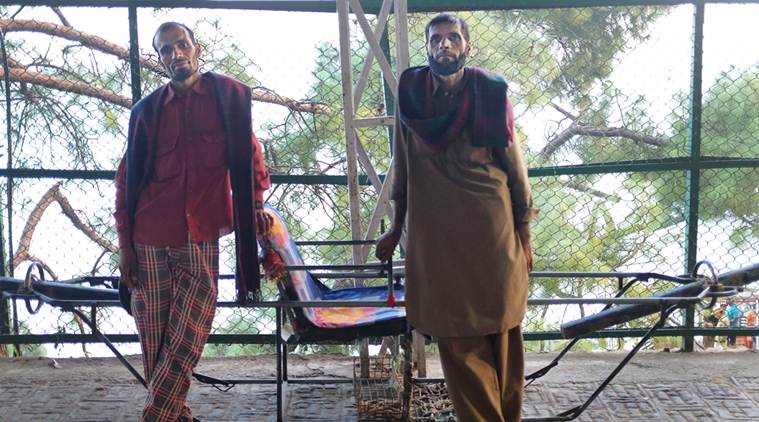
Mohammad Qasim (right), 55, and Khushi Mohammad, 35, have been working as palanquin bearers at Vaishno Devi for decades. They confirm that they have never faced any religious biasness here.

Located at a staggering altitude of 5,200 ft above sea level in the Katra valley in Jammu and Kashmir , is the lofty abode of goddess Vaishno Devi. The 13.5 km stretch to the main bhawan (temple housing the holy shrine) is accessible via various modes of transportation, including ponies, electric vehicles, helicopters and, most popularly, its paalkhis (palanquins), operated by two or four bearers a time.

There are over 5,000 palanquin bearers in the area, out of which around 3,500 are Muslims, often seen chanting “jai mata di” on top of their voices during their steep trek to-and-fro the shrine. “I’ve worked all my life here and have never faced any problem,” says 55-year-old Mohammad Qasim, who has been a palanquin-bearer for the last 32 years. “So what if I’m a Muslim, the goddess protects everybody. I get my food from here, so, this place is my home,” he adds.

The famous Katra market wears a grim, desolate look these days, given the conflict in Kashmir that has brought to halt all forms of functionality. The ongoing curfew in Kashmir has seen a sharp drop in tourists. The shopkeepers and locals depend on the pilgrimage, which sees outsiders in throngs, for their daily livelihood. The last two months have been severe, say some of the locals, pointing at the empty roads. But the palanquin-bearers appear strikingly unperturbed.

Khushi Mohammad, 35, smiles as he recalls the last 20 years of his service at the shrine, facing neither any troubles from his own community for visiting a Hindu pilgrimage, nor from the devotees for being a Muslim at the shrine. “We trek even during our Ramadan fast. People are so nice to us, they wait while we read the namaz during our working hours,” he says.

source: http://www.indianexpress.com / The Indian Express / Home> Lifestyle> Life-Style / by Cheena Kapoor / September 18th, 2016

Expat gets creative with his Rolls-Royce for National Day

Kasargod District, KERALA / UNITED ARAB EMIRATES :

Indian expatriate, Iqbal Abdul Hameed, with his car decorated with Shaikh Hamdan's photos. - Supplied photo
Indian expatriate, Iqbal Abdul Hameed, with his car decorated with Shaikh Hamdan’s photos. – Supplied photo

Dubai :

A regular face at car parades, Hameed chooses Dubai Crown Prince’s photos to decorate his car this time.

His craze for displaying distinctive car decorations during UAE National Day celebrations has been hitting headlines for many years. Indian expatriate Iqbal Abdul Hameed has done it once again.

This time, the young businessman came up with a special design dedicated to Shaikh Hamdan bin Mohammed bin Rashid Al Maktoum, Crown Prince of Dubai, on his Rolls-Royce car that caught all the eyes at the National Day parades organised by major police stations in Dubai.

An ardent fan of the Crown Prince, Iqbal chose special photos of Shaikh Hamdan from his childhood till date to decorate his car.

Married to an Emirati, Iqbal said his wife helped him select Shaikh Hamdan’s pictures.

“We have selected memorable pictures of Shaikh Hamdan’s life, especially the ones that show his adventurous nature and love for sports,” he told Khaleej Times.

“I decided to get his photos designed in the shape of UAE postal stamps for this year’s car decoration.It took a couple of months’ preparations to get the car ready with this design,” said Iqbal who has won accolades for his car decorations for the past seven years.

While the luxury cars’ both sides have been splashed with the young prince’s pictures this time, the car’s bonnet features the portraits of the UAE President His Highness Shaikh Khalifa bin Zayed Al Nahyan; His Highness Shaikh Mohammed bin Rashid Al Maktoum, the Vice-President and Prime Minister of the UAE and Ruler of Dubai, as well as His Highness Shaikh Mohammed bin Zayed Al Nahyan, Crown Prince of Abu Dhabi and Deputy Supreme Commander of the UAE Armed Forces.

Images of the UAE flag, Martyr’s Day’s emblem and emblem for the Spirit of the Union on the 44th National Day have also been used. A regular invitee at the car parades of Dubai Police, Iqbal won appreciation at the parades organised by four police stations this week. The photos of his car have also gone viral on social media.

“I am so glad and proud that the Emiratis and expatriates appreciate my efforts in this. This is just a small gesture from my side to show how much I love and feel indebted to this country that has given me everything including my life partner,” he said.

“I have travelled to many countries in the world. But I have not seen any other country that has embraced so many nationalities and cultures with both hands like the UAE has done.”

Chairman of Alia Al Hathboor Group, Iqbal has been seen as a cultural ambassador among Emiratis and Indians here.

Hailing from Kasaragod district in south Indian state of Kerala, the entrepreneur has been known for his charitable activities as well.

sajila@khaleejtimes.com

source:  http://www.khaleejtimes.com / Khaleej Times / Home> National Day 2016 / sajila@khaleejtimes.com / December 02nd, 2015

Bantwal: Author Bolwar Mohammed Kunhi Bags Vishukumar Award

Bantwal (Mangalore), KARNATAKA :

Bantwal:

Noted author and story-writer Bolwar Mohammed Kunhi has been selected to receive the annual Vishukumar award instituted by Yuva Vahini Kendra Samiti.

Kunhi holds the credit of introducing the lesser-known facets of Muslim way of life to the field of Kannada prose. He has written over 250 short stories in Kannada. Atta itta sutta mutta, DevarugaLa rajyadalli, Anka, Akashakke neeli paradey, Ondu tunDu goDe, Ruqia and RoTTi Patumma are some of his best-remembered works.

Author Upadhya will confer the award on him at a function to be held in the Birwa auditorium at Melkar next week. The award comprises Rs 10,000 in cash, a memento and a citation.

source: http://www.mangalorean.com / Mangalorean / Home> Agency News> Regional / by Jyothi, Team Mangalore / August 03rd, 2015

Melody manzil

NEW DELHI :

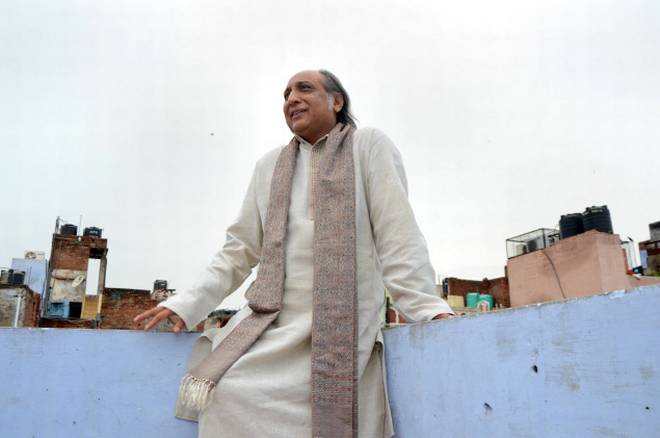
Family harmony: Ustad Iqbal Ahmed Khan on the terrace of his home, Mosiqui Manzil. Photo: Monica Tiwari


RAJAN about the hoary tradition of the Dilli gharana of which he is the torchbearer

A family that sings together stays together. Ustad Iqbal Ahmed Khan and his clan — that spreads itself genially through the rooms, nooks and surprise terraces of “Mosiqui Manzil” in Delhi’s Darya Ganj — exemplify this adapted adage. It takes some perseverance to reach the ustad, the khalifa or senior most exponent of the Dilli gharana of Hindustani music. Leaving the main road, automobiles and ‘Delhi now’ behind, we proceed deeper and deeper into the bylanes behind Golcha cinema. The helpfulness of the bystanders and shopkeepers is inversely proportional to the width of the streets. As the lanes get progressively slimmer, there is less and less need to ask for directions by house number. ‘Iqbal Bhai’ is well known to his neighbours. As he is, indeed to India and much of the world.

The 200-year-old house does not get its name from a passing flight of fancy. For generations, it has been the seat of the stalwarts of the Dilli gharana. As the ustad reels off a battery of eminent names, one can just catch those of the past few generations: “Ustad Sangi Khan, father of Ustad Mamman Khan, then Ustad Chand Khan, then my father Zahoor Ahmed Khan, then me, my sons, and by God’s grace my grandson Aalif.” That makes seven generations, though the musical family tree goes back much further, to Miyan Achpal, a musician at the Delhi Sultanate.

He names many a celebrated vocalist who has been a student at Mosiqui Manzil, learning from his great grandfather, grandfather and granduncles: “Mallika Pukhraj, Siddheshwari Devi, her sister Kamleshwari, K.L. Saigal, Madhubala, Mumtaz…they all learnt here. Others too, like Vidushi Krishna Bisht, my guru-behen,” he says, adding, “And I too learnt in this very room.”

He notes fondly, “I was born in this house. Nafeesa Begum, my mother, is Ustad Chand Khan’s daughter.” Thus, he has been gifted both his music and his house as a precious inheritance.

Soon to complete 60 years, he has already performed for 50 of them, and the golden jubilee of his career was celebrated not long ago by Sursagar Society of Delhi Gharana. When he was eight, he performed under the auspices of Gandharva Mahavidyalya, and last week he was there again, singing at the Vidyalaya’s annual Vishnu Digambar Jayanti Samaroh.

As a baby, Iqbal Ahmed was virtually adopted by his maternal grandfather and guru. “I was three months old. My mother tells me she used to take me only to feed me. I can’t remember those days, but she tells me that when I was two, he would hold me to him and pat out talas on my back. When I was three, he started teaching me a bit, and by the time I was four I had started formally training. He always kept me by his side.”

He points out an old newspaper clipping where he is seen as a tiny tot sitting beside his grandfather-guru. The paper is dated 1957, and, ironically, the article heading shows that preserving the tradition was a significant concern even then.

Mehfils and impromptu concerts were common occurrences, he recalls. “Any musician coming to Delhi visited our house. It was the focal point.” They would stay at hotels like the Haji Hotel nearby, but meals were at Mosiqui Manzil. The concerts would be held on the ground floor of the house in a portion that is no longer free, since with the expansion of the family, many new rooms have been built and partitioned off.

The memories come out like landmarks in Hindustani musical lore. Ustad Amir Khan came when the film with which he was associated, Baiju Bawra, was released. “ Kya buzurg, kya kalakaar (Such revered elders, such artistes)! Bade Ghulam Ali Khan, Bhai Lalji Lahorewale, Ravi Shankar, Vinayakrao Patwardhan, Vilayat Khan Saheb Agrawale, Rahimuddin Khan Saheb Dagar, Shiv Kumar Sharma’s father…you name them, and they came. My grandfather loved to invite them and arrange feasts and concerts for them.”

Surrounded as he was by loving gurus, friends and family, there was one special cousin, Zohra, who became his wife. “She has been the support I needed to accomplish anything in life,” he says affectionately. The ustad, a graduate of Dayal Singh College, also informs us, “My wife is the first woman graduate in our khandaan. She went to Mata Sundari College. That is why our children too have studied well.”

Life is different today. The city around him has changed beyond recognition, and, despite his protective zeal in preserving the layout of the room in which he and his forefathers practised music, life in Mosiqui Manzil too has changed. The ustad weeps freely when he remembers the various festivals when the gurus and shishyas got together to sing bhajans in praise of the relevant deity or genres of the season. “On Holi we would sing horis one after the other, during Bahar, we would sing Bahar ke prakaar (varieties of raga Bahar). On Durga Puja we would have mehfils till midnight, then make a round of the temples. All that is over. I feel very alone when I remember those days,” he sighs.

But on a more cheerful note, he sings a bhajan composition in a silky-sandy voice. “ Kripa samudram sumukham trinetram…I have composed hundreds of bhajans,” he recounts with relish. He also likes to compose music for classical dancers and promptly comes out with a Sanskrit shloka to Shiva, the lord of dance, “ Angikam bhuvanam yasya…”

The ustad spends a few months of the year in the U.S. where he has a number of disciples. “It is because of them that I go,” he says. “I do my bit to propagate art and culture.”

What brought him back from a three-month stint there this summer was the pull of his grandson. As he takes him in his lap and starts to sing, the five-month-old needs no patting, no soothing. He is all alertness. The parivar parampara, it is obvious, is in full flow.

Changing tunes, one raga

One can imagine that Mosiqui Manzil used to be a sprawling mansion when Ustad Iqbal Ahmed Khan was a child. Dividing it up between family members, adding rooms and floors, has changed the structure substantially. “The house number was once 1071, then it became 1593, then 1594,” he says. Now his portion is number 1595. But then the city is no longer an expansive place either. From the terrace of his house, the ustad says, the Qutub Minar was once clearly visible. Later, only Jama Masjid, being closer by, could be seen. But now, all around Mosiqui Manzil are buildings and more buildings, rising in crooked verticals to a smoggy sky. A few intrepid young residents fly kites from precarious perches. The ustad waves to a neighbour looking over from his terrace. “We have grown up together,” he says with a contented smile. There’s always room for harmony.

source: http://www.thehindu.com / The Hindu / Home> Music / by Anjana Rajan / New Delhi – August 23rd, 2013


Suhana Zafar

Mumbai, MAHARASHTRA :

Zafar Karachiwalla talks of his career on stage, television and film with MINI ANTHIKAD-CHHIBBER

Sitting pretty Zafar Karachiwalla believes theatre is the purest form of performance / Photo: D. Gopalakrishnan
Sitting pretty Zafar Karachiwalla believes theatre is the purest form of performance
/ Photo: D. Gopalakrishnan

From the idealistic bureaucrat (Chai Pani etc) to a paan chewing nawab (Womanly Voices), from the slightly stuffy manager (Manasarovar) to the besotted lover (Romeo and Juliet), Zafar Karachiwalla has done them all and is looking for fresh peaks to conquer.

A born and bred Mumbaiite, Zafar went to a Jesuit school and studied commerce in college. “I was a regular college guy you know totally lukha, bunking classes and all. The first play I did was in French that was because I was studying in Alliance Francaise. And that is when I realised that theatre is a fun thing. I started off with Shakespeare and contemporary Indian writing and kind of worked my into professional theatre.”

Theatre for Zafar is not a stepping-stone to films. “No way! I know it is difficult to make a living out of theatre but last year I did 150 shows in 365 days. I earned enough but it is difficult to sustain that kind of momentum.”

Theatre for Zafar is the “purest form of performance. You have to hone your craft to the nth degree, as there can be no goof ups. Theatre gives an instant feedback. You know it is like a drug. Once you do it you keep coming back for more and more. I believe film is a director and cinematographer’s medium, television is a writer’s medium and theatre is an actor’s medium.”

Zafar feels “theatre in India is changing. We are finding our own voice. College kids come in droves to watch a play. The culture is changing and that is heartening.”

Zafar has done a fair amount of television including the hugely popular Hip Hip Hurray and Neena Gupta’s Pal Chhin apart from the mega budget Sansar. Zafar is not taking up any telly assignments now, as he cannot “give that kind of time commitment.”

His filmi foray started with Mahesh Bhatt’s Zakhm. “Working with Bhatt saab was a wonderful experience.” Now there is “Anup Kurien’s Manasarovar, Anand Sivakumaran’s Detour and Karan Kandari’s Bye Bye Miss Goodnight. I am also doing a bilingual for a Los Angeles based director.

“I need to be doing something all the time. I make sure the whole day is choc-a-bloc with things to do. It is good to get home with a nice fatigue.” And work apart from theatre and film includes running the family business of material handling equipment.

With such a packed schedule, chilling out earlier meant, “hitting the discs and clubbing. Now it is more about getting together at a friend’s place and just chilling or catching a movie or something.” A self-confessed Star Wars freak, Zafar watched the latest, Revenge of the Sith. “I know nothing can match the original three but here you have Yoda fighting which is mind-blowing.”

Zafar is all set to direct his own play. “It is an adaptation of this anonymous work called Timely Manoeuvre and I am not going to act in it because unless you are bloody good or Clint Eastwood, it would be better to stick to one thing.”

Zafar’s formula for acting is “first think stupid. I cannot think of anyone more stupid than Romeo and Juliet,” he says categorically of the bard’s star-crossed lovers. So has he been crossed in love? “I was in a relationship for a long time now I am enjoying being single and when the right girl comes along, it will happen I guess.”

So all ye girls looking for a hyperactive, super talented Virgo, your search ends here.

source: http://www.thehindu.com / The Hindu / Home> Metro Plus Hyderabad / Home> Features / Wednesday – June 01st, 2005

Amjad Khan, the Gabbar of Sholay, died 23 years ago on this day: Some facts you should not miss about the Sholay actor

On Amjad Khan a.k.a Gabbar’s 23rd death anniversary, read on to know more about him.

Mumbai, MAHARASHTRA :

Amjad Khan in Sholay

Amjad Khan portrayed the character of Gabbar in the movie Sholay and immortalised him as the scariest villain in the Indian cinema. He played the role so perfectly that the laughter of the scariest robber, Gabbar, can still give you chills on the back of your neck. He was only 11 years-old when he was offered his first role for the movie Nazneen.

He died on July 27, 1992. On his 23rd death anniversary, read on to know some facts about him:

  • Amjad Khan was born as Amjad Zakaria Khan. He was born to the actor Jayant in a small village of Peshawar, British India
  • Khan was educated at St. Andrew’s High School in Bandra. Later, he attended R. D. National College
  • In college, he was the general secretary which is considered to be the highest student body representative
  • Before entering films, Khan used to be a theatre actor
  • Khan was only 11 years old when he got his first role in the film Nazneen. He got his next role at the age of 17
  • Amjad Khan was not the first choice for the character of Gabbar. It is believed that Javed Akhtar initially thought that his voice was too weak for the role
  • He was a post-graduate in Philosophy
  • Amjad Khan had command over English, Persian and Urdu
  • To prepare for the role of Gabbar, he read Abhishapta Chambal which is a book on Chambal dacoits. The book is written by Jaya Bachchan’s father, Taroon Kumar Bhaduri
  • It is said that Amjad Khan took 40 retakes to perfect his dialogue “Kitne Aadmi The?”
  • Khan continued to play negative roles in many Hindi films from 1970s to early 1990s, after the success of Sholay
  • He also ventured into directing in 1983 . He directed and also starred in the movie Chor Police
  • Amjad was the president of the Actors Guild Association
  • In 1986, Khan met with an accident. The drugs caused him a serious weight problem for the rest of his life. As a result, he died in 1992 from a heart failure.

source: http://www.indiatoday.intoday.in / IndiaToday.in / Home> GK & Current Affairs> Listicles> Microfacts> Story / New Delhi – July 27th, 2015