Category Archives: Arts, Culture & Entertainment

Bigg Boss: Imam Siddiqui says he’s laughing his way to the bank

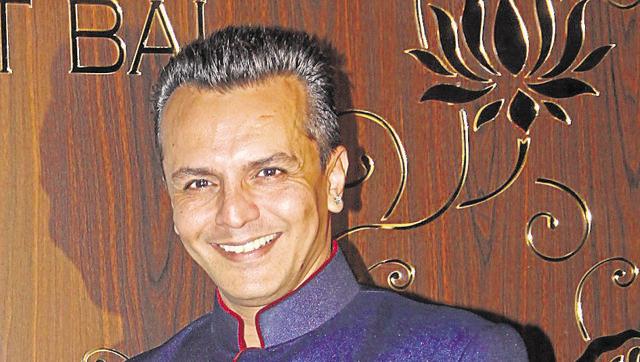
Imam Siddiqui at Rohit Bal’s fashion soirée.

Banswara, RAJASTHAN / Mumbai, MAHARASHTRA  :

Fashion stylist Imam Siddiqui has always been vocal about his thoughts and when it comes to the popularity he got post participation in the sixth season of Bigg Boss, he is more than happy to talk about it.

“The kind of popularity I got post the reality show has been enormous. I am already signing Hindi films left, right and centre. My film will release in April, in which I play a double role. For heaven’s sake, I am laughing my way to the bank now!!,” says Siddiqui and adds, “My life has changed 180 degrees.”

Siddiqui, who recently participated in the reality show for a week, says the current participants don’t know the worth of the show. “The current lot needs to make better use of the opportunity. They don’t understand the importance of the platform that they have been provided with. The audience does not wish to see just aggression, they also need to give complete entertainment,” he says.

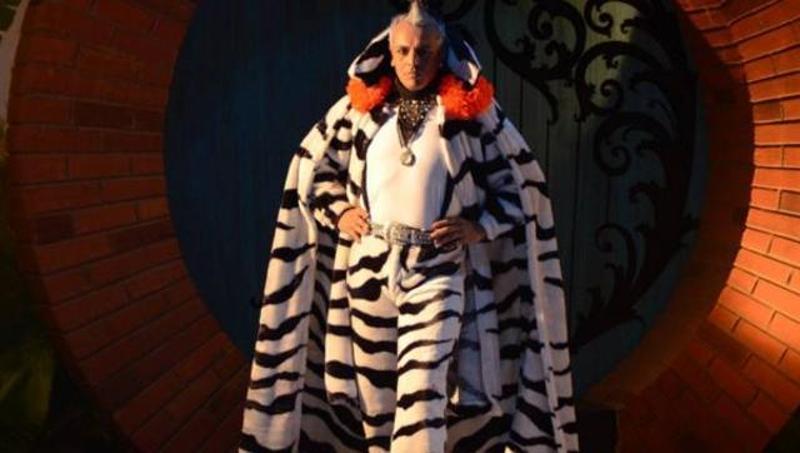
Imam Siddique enters the Bigg Boss house, and that spells trouble for all the contestants, especially Prince Narula! (COLORS)

He does have a word of advice for the participants. “This show can propel their career in the stratosphere like it has done to mine. They must try hard to keep the audience hooked on to them. Otherwise they will lose out on the chance and will regret it,” he says.

source: http://www.hindustantimes.com / Hindustan Times / by Yashika Mathur, Hindustan Times, New Delhi / January 20th, 2016

Bahuroopi National Theatre Fest concludes

Mysuru, KARNATAKA :

“Actor’s job is to make audience reflect on social issues bogging society”

Actor Irrfan Khan is seen addressing the gathering during the valedictory of Bahuroopi National Theatre Festival at Kalamandira in city yesterday. Others seen are (from left) former Rangayan Director S.I. Bhavikatti, Columnist Nataraj Huliyar, Irrfan Khan Khan's wife Sutapa Sikdar, MLA Vasu, former Minister Prof. B.K. Chandrashekar, Rangayan Director H. Janardhan, Theatrist Rameshwari Verma and Bahuroopi Convenor M.C. Krishnaprasad. Picture right shows the artistes of Manipur demonstrating sword fight as part of Bahuroopi Folk Festival yesterday.
Actor Irrfan Khan is seen addressing the gathering during the valedictory of Bahuroopi National Theatre Festival at Kalamandira in city yesterday. Others seen are (from left) former Rangayan Director S.I. Bhavikatti, Columnist Nataraj Huliyar, Irrfan Khan Khan’s wife Sutapa Sikdar, MLA Vasu, former Minister Prof. B.K. Chandrashekar, Rangayan Director H. Janardhan, Theatrist Rameshwari Verma and Bahuroopi Convenor M.C. Krishnaprasad. Picture right shows the artistes of Manipur demonstrating sword fight as part of Bahuroopi Folk Festival yesterday.

by Nandini Srinivasan

Mysore :

“Each one of us needs to find our inner voice and reflect to be able to express without fear and that’s exactly what Bahuroopi’s theme of ‘I sing as I please’ stands for’,” opined well-known theatre and film actor Irrfan Khan.

Speaking at the valedictory of the eight-day theatre repertoire Bahuroopi festival-2016 at Kalamandira, Irrfan Khan said that its only when one’s voice comes from deep within, expressions have an unmatched quality and are heard.

Speaking of his days at National School of Drama (NSD), Irrfan fondly recalled the able guidance of theatre person Prasanna who showed him to the right path to pursue in the field of acting.

Irrfan, who preferred answering questions than delivering a formal speech to express his ideas, took on questions from Journalists, theatre artiste Ramanath and Prof. S.R. Ramesh and spoke at length about films, the tolerant fabric of India and theatre.

Irrfan exuded confidence that India can still be a model for the rest of the world, as we live amidst a vast diversity and yet have no psychopaths who go on shooting sprees like in the so called developed nations!

Responding to a question on the responsibility of actors and their role in real life, Irrfan opined that an actor too is just like any other individual and the role he or she decides to play in real life is completely subjective and personal. Every human being should be responsible, not just actors he said adding that the more evolved an individual is, the lesser the chances of being manipulated.

Life itself is a huge diversity and standardisation of anything is a threat, he said adding we are all so programmed by parents, society and the education system that unless we learn to unplug and think, reflect on our own, reactions too will be standardised and as is happening, we can easily be manipulated in the name of religion, politics and caste.

Talking about the Censor Board and its regulations, Irrfan rued that it is unfortunate that rules formed eons ago are still in place and not changed to suit the current needs. The present set of rules are absolutely redundant, he said.

An actor’s job is to make the audience reflect on several social issues bogging the society, but today he is being asked not to speak and that doesn’t augur well, lamented Irrfan responding to a question on the States’ interference in every field and said Gods, Saints and Sufis are being abducted in the name of politics and even an actor is as vulnerable as others and can become a mere toy!

Black humour isn’t appreciated as much in India as in other countries, probably because the audience finds a lot of subjects very sensitive Irrfan opined referring to his movie ‘Talwar’, and said there isn’t much of a difference between the responses of theatre audience and the movie audience. Its just that in theatre shows, it’s a direct response.

Talking about the changing genre of movies in recent times, Irrfan expressed his happiness over the changing demands of the audience who have become more mature and expect tales that reflect reality and said as an actor, he strongly believes in making his audience think, rather than just entertaining them. “I have acted in roles which have been successful but have only entertained. I’m not happy with only such kind of roles,” he added.

Answering a question on maintaining communal harmony, Irrfan said that unfortunately religion hasn’t been applied rightly to society as it should have been. People have gone into a slumber and only when they are shaken up can things move smoothly.

He recalled his lines in ‘Life of Pi,’ Doubt is kind of essential in faith – When you doubt you seek, when you seek you test and when you test you conclude.

Answering a question from the audience on whether he took up the role of Pan Singh Tomar because he too was an athlete, Irrfan said he being an athlete was irrelevant and what touched him was how a talented athlete turned a dacoit. The movie was a sweet love letter to the system where talent is not being respected, where we don’t care about talent.

Irrfan expressed his happiness about the response of the audience to the festival and said just when you think there’s no hope, the love for theatre, the excitement and interest in the good things of life brings back the rays of hope that everything will be alright.

Irrfan and his wife Sutapa Sikdar were all praise for Mysuru. “Your city has a kind of rhythm and lifestyle that the so called developed cities lack. Please keep it that way,” he said.

Earlier, columnist Nataraj Huliyar, in his address, said that this year’s Bahuroopi saw a record audience of 12,000 with more than 600 artistes performing in various events.

Rameshwari Verma, a well-known theatre artiste, who was one of the chief guests, fondly recollected her connections with Rangayana ever since its inception and said, it was heartening to see the increasing number of theatre lovers thronging such festivals. The crowd which was limited to around 300 in the early years has swelled to more than 1,000 and that speaks volumes for the work Rangayana has been doing, she said.

Former Minister Prof. B.K. Chandrashekar, who also spoke, said that like the natyashastra says, drama is the fifth Veda which tells us more about life. He recalled the words of late Prof. H. Narasimhaiah who had a big question mark framed and hung behind his table and said the central purpose of any education is to question.

Rangayana Deputy Director S.I. Bhavikatte welcomed the gathering. Earlier, Folk teams from different States entertained the audience.

source: http://www.starofmysore.com / Star of Mysore / Home> General News / Thursday – January 21st, 2016

Juloos-e-Ghousia & Ghouse Azam

Mysuru, KARNATAKA :

Sarkar Mehaboob Subhani Foundation, Laskhar Mohalla, has organised Juloos-e-Ghousia (procession) and Jhasne Ghouse Azam celebration on Jan. 22 at 2.45 pm.

The procession, which starts at Masjid-e-Azam, passes through Ashoka Road and concludes at Meelad Bagh Circle.

Mass feeding will be arranged before and after procession at Masjid-e-Azam.

At 6.35 pm, Moulana Hafiz Khari Naseer Hussain Razvi, Deputy Lecturer, Darul-Uloom Sha Jamath, Hassan and other Sunny Ulmas will deliver speak on the occasion.

For details, call: 99012-70392.

source: http://www.starofmysore.com / Star of Mysore / Home> In Brief / Thursday – January 21st, 2016

City Doctors to present ‘Best of Geeth Gaatha Chal’ this Sunday

Mysuru, KARNATAKA :

DoctorsMPOs20jan2016

Mysuru :

The 15th edition of Geeth Gaatha Chal, the most-awaited Doctor’s Musical Nite, will be held on Jan.24 (Sunday) at MMC&RI Platinum Jubilee Hall in J.K.Grounds here from 5 pm onwards.

The team, led by Dr. M.S. Natashekar, will entertain the public with haunting melodies from movies of the golden old era.

The musical team includes: Dr. A.L. Hemalatha, Dr. P.A. Kushalappa, Dr. U.G. Shenoy, Dr. N. Snehashree, Dr. Seethalaxmi Somanath, Dr. Somnath Vasudev, Dr. U. Ganesh Rao, R.L. Varsha, Preethi Prabhu, Sparsha Shenoy, Arathi Rao, Madan, Apoorva Natashekhar and Kavitha Niyath.

Geeth Gaatha Chal has presented about 360 numbers during the past 14 years. The best 28 among them will be presented this year. The programme also includes two dances from students of Ganabharathi, choreographed by Nagashree Phaneendra.

Dr. Mahesh Kumar will be the chief guest. Dr. K. Javeed Nayeem will be the guest of honour.

Dr. C. Umesh Kamath of Kamakshi Hospital is the Organising Chairperson and Dr. M.S. Vishweshwara is the Programme Co-ordinator. Industrialist Dr. M. Jagannath Shenoi has sponsored the programme, which will be anchored by Syed Aftab Ahmed.

Admission is open to all.

source:  http://www.starofmysore.com / Star of Mysore / Home> General News / Wednesday – January 20th, 2016

Chennai floods: 14 heroes honoured

Chennai, TAMIL NADU :

Chennai :

They have no cutouts in cinema theatres. They have no big fan following. They led a simple life just like anybody else until the rain gods lashed their fury on Chennai in December.

They rose to the occasion. They saved lives and brought smiles to many others. “We had to make a choice. Whether to sit at home or get out there and save people,” they said. They then became real heroes.

On Monday, 14 people, who volunteered in flood relief work and did a heroic job, were honoured with awards at the Adding Smiles Ambassador Awards 2016 organised by Adding Smiles Foundation.

“We were doing our duty to help someone who is in need,” said Blue Cross general manager Dawn Williams, one of the awardees, in a video on the awardees.

All the 14 volunteers, including Peter Van Geit, Chennai Trekking Club founder and senior citizens of Anandam Homes, were presented with ‘Real Hero Awards’.

Awards were also given to celebrities, who were active during flood relief. The team ‘Mana Madras Kosam’ with Telugu film actors including Navdeep, Kajal Agarwal and Samantha , Sathyam Cinemas and Tamil actor Parthepan were presented awards.

 “I am doing whatever little I can do. I have changed myself. As you grow older, you get fearless and want to do things before you go away,” the award winning composer said.

Activist and founder of NGO Prajwala Sunitha Krishnan, team from National Award winning Tamil film Kaaka Muttai, former RBI governor C Rangarajan, national paralympic swimming champion Madhavi Latha, founder and dean of Great Lakes Institute of Management Prof Bala V Balachandran, acid attack survivor Soniya Choudhary were some of the awardees in the ‘ambassador awards’ category.

The highlight of the evening was music composer AR Rahman, who was one of the awardees in ‘Adding Smiles Ambassador Awards’ category. The category included people, who have come the hard way to live a dream and spread smiles in the life of others by way of help.

source: http://www.timesofindia.indiatimes.com / The Times of India / News Home> City> Chennai / by V. Tejonmayan, TNN / January 19th, 2016

‘Nobody criticised my work’

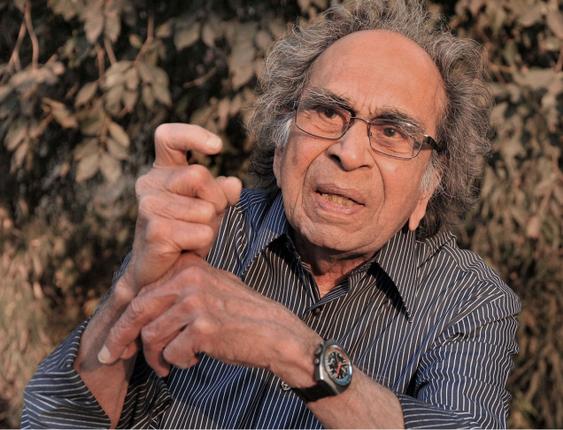
Internationally-renowned mime artist Irshad Panjatam left job at Begumpet airport to follow his dream.— Photo: G. Ramakrishna

Hyderabad, TELANGANA / Berlin, GERMANY :

When 85-year old mime artist Irshad Panjatam was about 18-years-old, he had joined the Begumpet airport as a ground apprentice engineer. Getting such a job back then was perhaps not easy, which is why many at his workplace advised him against quitting, when he took the decision a year after joining.

“I left the job because tightening nuts and bolts, was not what I wanted to do,” recalled Mr. Panjatam, who is in Hyderabad currently. Though he eventually become an artiste, it was not until 1958 that he discovered his true calling in pantomime, which then changed his life and has made him the internationally renowned mime artiste that he is.

Remembering that crucial moment, Mr. Panjatam takes a ride through memory lane during an interview to YUNUS Y. LASANIA .

Excerpts:

How did you get introduced to and develop your skills? Was the art form present in India back then?

I never knew the word pantomime. When I was working with the Hindustani Theatre in New Delhi, I was part of famous Sanskrit play. During rehearsals in the third act, the main actor was not there, so I took stage in his place. Dr. Charles Fabri, a very famous art critic, was present in the rehearsal room.

I started performing, but the musicians were not ready to support me, hence my movements were absolutely silent; without music and without song. Dr. Fabri said it was a very good pantomime act, and then he gave me a book on it. I read the introductory lines and learnt what mime was. It was 1958, and the art form was not present here. I learnt everything on my own.

What was your first performance like? How was the reception to your performances?

I started with short stories like Aesop’s Fables. I showed it to some of my good friends who were also my critics. In 1962, the Indian Arts and Crafts Society, a prestigious organisation of Delhi at that time, put me on stage for my first mime performance. The house was full, and it was well received. After that my friends told me that I was alone here (as an artiste), and that I had to go abroad and perform to know where I stood.

Your first international performance took place in the neighbouring Pakistan. How did that happen?

When I was performing in Delhi, a delegation from the Women’s College in Lahore was present. One of the girls asked me when I was coming to perform in Pakistan, and gave me her college’s address. So my journey began with Pakistan in 1963. I left with Rs.5 in my pocket on the Amritsar Express train, and performed at her college, for which I earned Rs.350 (Pakistani currency).

From there on, I travelled to Afghanistan, Iran, Iraq, Syria, Turkey, Yugoslavia (currently Bosnia and Herzegova, Croatia, Macedonia, Montenegro, Serbia and Slovenia), Germany, France, and Britain, where I had performed. It was always about luck, as I was received well and nobody had has criticised my work.

You settled in Berlin, Germany, and have also acted in German movies. Did you come to India often after you shifted from Hyderabad?

I met my wife Ingrid in Bombay. She had come to India as an Indian art student, and was doing archive work in Uttar Pradesh between 1971/72. We settled in Berlin where I started a school called the ‘Pantomime Workshop of Irshad Panjatan’. I used to visit India once in three or four years.

I closed my school in 1995 after the doctor’s advice to not perform. Later, I started my career in German films, and the one that made me famous is ‘Der Schuh des Manitu (Manitu’s Shoe), which broke all records, as it was viewed about 40 million times. I was doing about one or two movies in a year after that.

How would you describe pantomime is your words?

It is an art of telling a story, experiencing a mood or emotions without resorting to words and only with body movements. I never play with any music or dialogues – I am a pure mime. Silence has power.

My German film ‘Der Schuh des Manitu (Manitu’s Shoe) was viewed about 40 million times

source: http://www.thehindu.com / The Hindu / Home> National> Telangana / by Yunus Y. Lasania / January 05th, 2016

How well did you fare?

Mumbai, MAHARASHTRA  :

Two weeks ago, in a quiz designed by Pavan Jha, we had posed a few questions on veteran actor Dilip Kumar to The Hindu readers. As promised, here are the answers:

01. Which Dilip Kumar-starrer was an adaption of Emily Bronte’s classic novel Wuthering Heights? Certain portions of the film were supposedly directed by him without credits.

Dil Diya Dard Liya (1966). The official director was A.R. Kardar.

02. Which film initially had Jayalalithaa cast opposite Dilip Kumar, only for her to be replaced subsequently by another heroine?

B.R. Chopra’s Dastaan (1972). Jayalalithaa was replaced by Bindu.

03. A big star of the ’60s, known for idolising Dilip Kumar and aping his acting style, made his debut playing the uncredited role of Dilip saab’s friend. Who is the star and which Dilip Kumar film is it?

Rajendra Kumar in Jogan (1950).

04. We see Dilip saab shooting for a film in Hrishikesh Mukherjee’s Guddi. Which film is it?

Phir Kab Milogi (1974), which had Dilip Kumar in a guest appearance.

DilipMPOs10jan2016

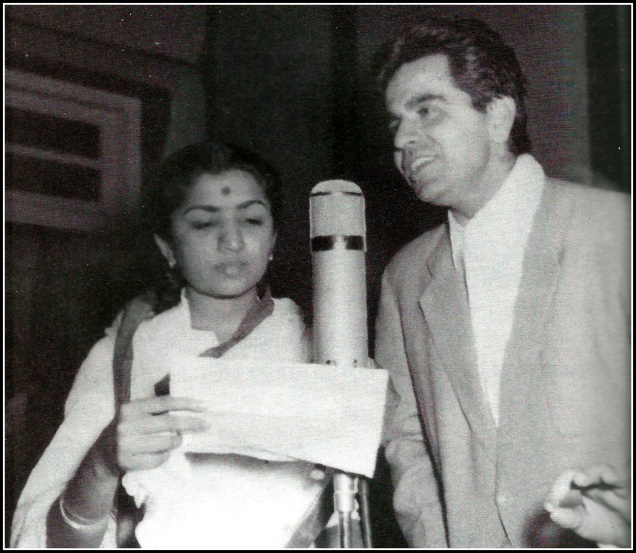
05. A remarkable moment in his career. What’s so special about the occasion? Name the film and its director.

With Lata Mangeshkar at the recording of the song Laagi nahin chhoote ram from Hrishikesh Mukherjee’s Musafir (1957). This was Dilip saab’s only full-fledged attempt at singing in a film

06. In which film produced by Madhubala was Dilip Kumar replaced by Kishore Kumar? All because their personal and professional relationship had taken an ugly turn.

Dhake Ki Malmal (1956).

Dilip02MPOs10jan2016

07. Dilip Kumar and Nutan never worked together in their prime, only later in the ’80s. However, there was one film starring them which was shelved in the ’50s. Identify the film.

Ramesh Saigal’s Shikwa (1954). In this shelved film, Dilip saab played an undertrial Army officer.

08. Dilip Kumar’s eldest brother Ayub Sarwar started a film starring him in an unusual title role but it never got completed. Which film is it?

Kala Aadmi

And the winner is…

No one! Most people mistook Gopi (1970) to be the film in which Jayalalithaa had been cast opposite Dilip Kumar. No one got all the answers right. The maximum correct responses were six out of eight and they came from: Seshagiri Row Karry (srkarry@yahoo.com), Unnikrishnan Menon (unnikrishnanmenon8@gmail.com), Sowmya Divyanathan (sowmyadivyanathan1980@gmail.com), Kumar Shashi (kushana007@gmail.com), Smitha V. (smithav1986@yahoo.com), Rajeev (rajeevmarcz@rediffmail.com), Sohrab Alam (sohrabalam15@gmail.com), Dhananjay Jha (desiringdj@gmail.com) and Rajeev Malhotra (gm.finance@mriu.edu.in). Congratulations and better luck with our next quiz.

source: http://www.thehindu.com / The Hindu / Home> Opinion> Comment / January 02nd, 2016

Two Chinese arrive in Kozhikode to find Zheng He’s grave

english.manoramaonline.com

Kozhikode, KERALA :

Kozhikode :

Two Chinese have come to the land of Zamorin to find the final resting place of the Chinese explorer who conquered seas through willpower.

The goal of these researchers is to find the grave and the trading points of Zheng He, the explorer who landed in Kozhikode seven times on ships .

They are professor Haiyun Ma, a Chinese descendant who teaches history at Frostburg State University in the US, and Dr Shaojin Chai, a senior researcher at the UAE’s culture ministry .

Zheng He is a hero in China, where students learn about his adventures. They only know that he died  in Kozhikode due to sudden illness. Chinese researchers have come to find out if there is  anything in Kozhikode that reminds of him .

A Chinese had been buried at Cheenedath mosque in Valiyangadi. Though the team visited the mosque,  they could not find anything specific. Haiyun Ma and Shaojin came to Kozhikode with the  help of Abbas Panakkal, a fellow at Griffith University, Australia.

english.manoramonline.com

The man who brought Ma Huan

Zheng He, born in 1371, began his travel at the age of 28. He landed in Kozhikode in 1430 with Chinese silk, vessels, jars and fishing nets. He was received by the Zamorin. He returned to China with spices and other goods many times. Over the period, he brought 2,800 Chinese to Kozhikode. One among them was Ma Huan, a historian.  It is said that Zheng He even took elephants and horses from here. It is not clear  whether Zheng He, a Muslim, was buried on land or at sea .

source: http://www.english.manoramaonline.com / OnManorama / Home> News> Kerala / by Lenin Chandran / Saturday – January 09th, 2015

Urdu fest to promote communal harmony

Mumbai, MAHARASHTRA :

A senior professor and his student occupy a table at Wazir Hotel, off the busy Mohammed Ali Road at crowded Bhendi Bazaar. Over endless cups of tea the professor, a sort of walking encyclopedia on people he met in the past, reminisces about Wazir Hotel’s heyday when it was a favourite haunt of poets, lyricists, musicians, singers and qawwals. Lyricists like Shakil Badayuni, Sahir Ludhianvi and Majrooh Sultanpuri chatted up the music maestro Naushad even as legendary qawwal Aziz Nazan discussed details of his delightful mehfils. And then the professor orders tea yet again but the waiter places two empty cups on the table announcing that the tea is over and the hotel is downing shutters forever. That was in 1986.

This scene from senior Urdu journalist-playwright Saeed Hameed-penned and Mujeeb Khan-directed play ‘Wazir Hotel’ after the long vanished famous eatery is part of Imambada-based Urdu Markaz’s second Bhendi Bazaar Urdu Festival (Jan 8-10). Aimed to revive that fast fading flavor of an era when shairi thrived and culture flourished, the festival celebrates a spirit which today lives in tales and memories.

Many memories will come alive when television actor Neha Sharad reads letters of Safia Akhtar (poet-lyricist Javed Akhtar’s mother) to her husband Jan Nisar Akhtar while ghazal exponent Pooja Gaitonde sings some of Jan Nisar Akhtar’s famous film songs, including the immensely romantic Main tumhi se poochhti hoon mujhe tumse pyaar kyun hai (Black Cat). “This festival dispels many myths and one of them is that Urdu belongs to Muslims alone,” explains Gaitonde.

“The idea is to tell people what Bhendi Bazaar symbolized and can still offer if earnest efforts are made,” says Zubair Azmi, director of Urdu Markaz and the festival. The festival maintains its “secular” character. So, apart from a mushaira featuring non-Muslim poets of Urdu, a discussion titled “Celebrating Urdu” will see non-Muslim intellectuals like Jnanpith Awardee novelist Bhalchandra Nemade and Sudheendra Kulkarni talk about Urdu’s contributions to our celebrated composite culture. “The festival is fast becoming a platform to showcase Bhendi Bazaar’s cultural ethos and promote communal harmony,” says local MLA Amin Patel. While admitting Patel’s “critical facilitation” to host the fest, Azmi agrees with him that the fest needs to be held on a larger scale.

It is not the old-timers alone who will get their antennae recharged through a medley of plays, soirees and singing of Sufi kalams and old Bollywood numbers, but even the young and restless can look forward to fun-filled sessions. “Workshops on drama, fiction, scriptwriting and poetry will engage college students to learning the finer points of these arts,” informs the festival’s reception committee chairman Farid Khan.

source: http://www.timesofindia.indiatimes.com / The Times of India /  News Home> City> Mumbai / by Mohammed Wajihuddin / January 03rd, 2016

Love, loss and longing: The journey of a Princess

Hyderabad, ANDHRA PRADESH (present TELANGANA) :

PrincessNilouferMPOs08jan2016

Princess Niloufer, the beloved daughter-in-law of the last Nizam of Hyderabad, may have left the city shortly after the Police Action in 1948. But even a good six decades later, she continues to be an enigma that at once intrigues and haunts Hyderabadis. On her centenary year, even as a photo exhibition by Birad Rajaram Yagnik attempts to reveal unknown vignettes of her life, and a documentary film on her is being worked on by historian Arvind Acharya, Hyderabad Times looks back at the dramatic life of the much loved princess of the city of Pearls. Surely, it was nothing short of a movie!

A fairytale set in 19th Century

When Niloufer Farhat Begum Sahiba was born in Istanbul, in January 1916, the Ottoman Empire was already fast crumbling. When she was barely a toddler, the Ottoman surrender was formalised aboard a British warship (October 1918). And by the time she was seven, the 700 year-old empire had officially fallen. In the backdrop of this downfall, the princess had to leave her fairytale life in Istanbul behind, and move to France with her mother in 1924, never to return. aged eight at that time, Niloufer would go on to lead a very ordinary life, learning to read and write French along with Urdu. Her exercise books had her learning about geography of the world. she stuck bits and pieces of the map in separate pages, oblivious to what the future held for her — a future where she would be remembered as the beloved princess of three cities. And yet, hold reign over none.

The romance with Hyderabad

Cut to 1931. In Hyderabad, Mir Osman Ali Khan, the seventh Nizam — also the world’s richest man — was looking for suitable brides for his sons. And that’s how Niloufer, just 15, found herself in Hyderabad. In a grand, royal wedding held in Nice in November 1931, Niloufer married Moazzam Jah, the Nizam’s younger son.

The Nizam had chosen Durru Shehvar (Niloufer’s first cousin) for his elder son — so the shift to a foreign land was less daunting perhaps. Another reason that made Hyderabad feel like home was that the Princess found a father figure in the Nizam. Though known to be officious and keen on protocol otherwise, the Nizam considered Niloufer his daughter. He even let her call him ‘father’. Life in the Hill Fort Palace was grand, Hyderabad was at its cultural peak, and the Princess took on many avatars — fashionista, socialite, philanthropist.

The sartorial queen

Between 1933 and 1948, Niloufer became a fashionista through whom the world got acquainted with Hyderabad. Her sarees, her choice of jewellery, her lifestyle became a talking point. Photographers, especially a crafty portrait photographer, Antony Beauchamp, loved her easy beauty. the international press adored her. Niloufer is credited with adding Parisian grace to the Indian saree. Her sarees were crafted specially for her, by Madhav Das in Mumbai. She loved chiffons and crepes, and wore them often with a broad woven Banaras brocade border. In fact, Mme. Fernande Cecithe, who was originally hired as a midwife for the princess, later created excellent designs to be embroidered on her sarees too. Her wardrobe is still studied by fashion students across the globe and her collection of sarees are now treasured at the New York Institute of Fashion Technology.

The socialite princess with a golden heart

One of the very prominent facets of Niloufer’s social life was the Lady Hydari Club, through which she also initiatied events and dos to raise funds. In 1941, Niloufer decided to organise the staging of a play Ondine (by dramatist Jean Giraudoux) to raise funds for London, which was recuperating from the damages of World War II. She was told by her father-in-law that a princess must not be seen acting in a play. So, her secretary at that time, Fatima Ghani, who would accompany her all the time and therefore even knew the dialogues, took on the princess’ role of a knight-errant Hans von Wittenstein zu Wittenstein.

But it wasn’t until 1949, that Niloufer’s biggest contribution to Hyderabad was going to emerge. When her maid, Rafath Unnisa Begum, died in childbirth, she was so shattered that she decided to ensure that no more such deaths take place. she decided to set up a maternity hospital, which stands today as Niloufer Hospital in Nampally.

The truth behind the glamourous veneer

She was one of the most beautiful women of her time. She was a much loved princess, both at home and overseas. But Niloufer had long learned that the glamour of all this was just that — an eyewash at best. At the heart of it all, there was pain and emptiness. She spent her best years in Hyderabad, craving to experience motherhood — a desire that was never fulfilled.

By this time, Niloufer had already witnessed her first cousin Durru Shehvar give birth to two sons, Prince Mukarram Jah in 1933 and Prince Muffakham Jah in 1939. Her childlessness put much strain on her marriage. In 1948, Moazzam took a second wife, Razia Begum. And by 1951, Niloufer had decided to split from her Hyderabadi commitments.

She moved back to France with her mother. Nice, back then had many members of royalty in exile, allowing Niloufer to still be socially active. As she aged gracefully, her photos from the era show her wearing the string of pearls that her mother had gifted her at birth.

However, irrespective of where she was based, Niloufer never severed her Indian ties. Her friendship with Jawharlal Nehru was one such connection. One of her letters following the assassination of Gandhi read: “Dear Pandit, You have heard and read the cry of so many millions of hearts — you have felt perhaps more than anyone else that great silence that set the void and the loneliness after he (Gandhi) was no more”. The duo continued to stay in touch, Niloufer wrote to Nehru even during the elections and Nehru who was on the road canvasing for the polls, replied, “But I want to tell you that you will always be welcome here whenever you care to come.”

Finding love again
After a good 11 years of being single, Niloufer met Edward Pope and found love once again. In February 1964, she married Pope in the presence of Nawab Ali Yawar Jung who was the Best Man.

Niloufer died in 1989 and was buried in a grave in Bobigny near Paris. The Muslims-only cemetery that is a two-hour drive from Paris not only has her mother resting there, but also all the members of her Seljuk dynasty. Surely, a life as romantic, as magnanimous, and as dramatic as Niloufer’s, deserves to be immortalised.

source: http://www.timesofindia.indiatimes.com / The Times of India / News Home> City> Hyderabad / by Samyuktha K, TNN / January 06th, 2015