Category Archives: Arts, Culture & Entertainment

GRS Junior Talent Star-2015 prize winners

A group photo of the prize winners with the guests and organisers.

Mysuru :

GRS Junior Talent Star-2015 contest, sponsored by GRS Fantasy Park, Mysuru, for the 5th year, was held at Jaganmohan Palace in city recently for students from 5th to 7th stds (both Kannada and English medium). The events included pick and speak, collage-making, handwriting and solo dance. In all, 1200 students from 94 State, CBSE and ICSE schools participated.

Subaraya Baliga, Chairman, Baliga Investments Pvt.Ltd., was the chief guest. Director Yogesh Dange welcomed. Directors Pushpalatha Baliga, Dayananda Kudava and Manjunath Nayak were present on the occasion. The event organisers were Ananda Ram, Geethalatha, Gunaranjan and Adithya of Agee’s Events.

Winners of collage-making:

P. Surya, S. Keerthi, S. Sanketh, Faiza, Rohan Lobo, Diya Crystal Menezes, Rakshita D. Shastry, D. Anushya, K. Chandra Kanth, Mir Khayum Shauddin, M. Prarthana Sharon and Syeda Ammarah.

Pick & Speak:

B. Suraj, Adil Ameen, Tejonidhi S. Dixith, U. Parvitha;

Handwriting :

V. Deeksha, V. Kusum, V. Manoj Kumar and S. Spoorthi;

Solo dance:

K.N. Naman Patel and Anan S. Gowda.

source: http://www.starofmysore.com / Star of Mysore / Home> General News / Saturday – August 29th, 2015

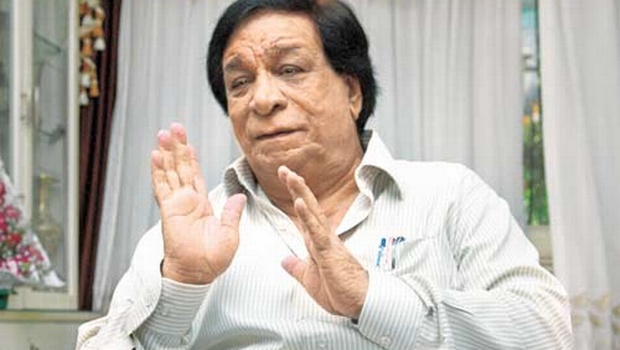
People Refused to Work With me When I Fell ill: Kader Khan

KaderKhanMPOs28aug2015

Mumbai :

Versatile actor-writer Kader Khan has said that after his illness, producers and directors were unwilling to take him in their films.

Kader Khan, who was present at the trailer launch of his upcoming comedy “Hogaya Dimaagh Ka Dahi”, was clearly having difficulty in talking and walking.

“Some people refused to keep me with them. I was a little unwell. And people refused to take me back into their films,” he told the media.

But Kader Khan is pleased with the conduct of director Fauzia Arshi.

“It is only Fauzia who took good care of me, kept on motivating me. There was freedom from Fauzia right from the first meeting. She is an outstanding director,” he said.

Om Puri, Rajpal Yadav, Sanjay Mishra also star in the film, and Kader Khan termed them ‘thespians’ and expressed delight at getting the opportunity to work with all of them together.

“When there is ‘Dimaagh Ka Dahi’ (extreme irritation), the person gets distanced from oneself. When I got distanced from my films, I got distanced from myself.”

Kader Khan was known for his work as a writer for numerous films with noted directors like Manmohan Desai and Prakash Mehra, as well as dialogues and screenplay for Amitabh Bachchan’s films.

“There has been a difference in the level of writing. As a writer, I feel that I should come back. I’ll try my best to bring the earlier ‘zubaan’ (language) back and people are definitely going to enjoy talking in that ‘zubaan’.”

Kader Khan said he wishes to remake his production “Shama” and is writing a script on his “Parchai”.

source: http://www.newindianexpress.com / The New Indian Express / Home> Entertainment> Hindi / by IANS / August 28th, 2015

Ahead of annual Urs, dargah gets new facilities

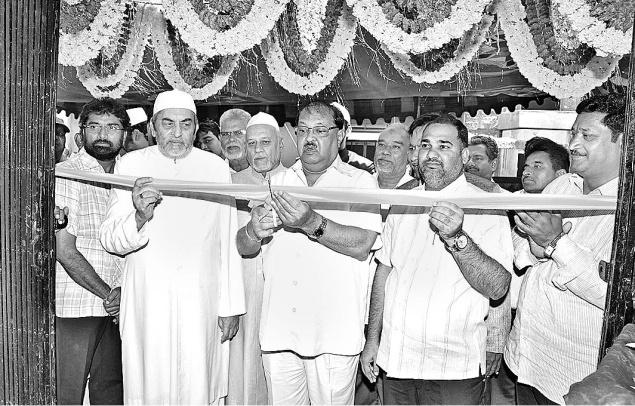
Municipal Administration Minister Qamarul Islam inaugurating the newly constructed toilet and bathroom block at the Khaja Banda Nawaz Dargahin Kalaburagi on Tuesday.— PHOTO: ARUN KULKARNI

New toilets, bathrooms will be open 24 hours for pilgrims visiting the shrine

The famous Khaja Banda Nawaz Dargah, frequented by thousands of pilgrims every day, now has a modern multi-purpose block consisting of kitchen-cum-dining hall with store room, exclusive toilets and bathrooms for the pilgrims visiting the dargah.

Up until now, the dargah had limited toilets and bathrooms which remained always overcrowded due to the heavy flow of pilgrims. At the time of the annual Urs, the situation used to become very difficult.

The new block constructed at a cost of Rs. 2.25 crore is entirely funded by the Karnataka Urban Infrastructure Development Finance Corporation-North Karnataka Urban Sector Investment Programme (KUIFDFC-NKUSIP) with the Asian Development Bank (ADB).

The multipurpose block has 125 toilets and 39 bathrooms, with exclusive bathroom and toilets for the physically challenged persons.

The kitchen facility has six cubicles, a tone room and a slaughter room also. The entire block is constructed on 1,098 square meters and this would be maintained by Sulab International. Inaugurating the new facility on the dargah premises, Municipal Administration and Minority Affairs Minister Qamarul Islam said that the long felt need of the pilgrims has been fulfilled.

Another toilet block constructed at a cost of Rs. 40 lakh has been completed and handed over to the authorities, he said.

Mr. Qamarul said that the multipurpose block would be available for the use of the general public and the pilgrims visiting the dargah for 24 hours.

The annual urs of the Khaja Banda Nawaz Dargah is scheduled to begin on August 30.

Sajjada Nasheen of the Khaja Banda Nawaz Darga Dr. Syed Shah Khusroo Hussaini, in his brief address, thanked the State government and the former Union Minister M. Mallikarjun Kharge for sanctioning the multipurpose block to the dargah.

source: http://www.thehindu.com / The Hindu / Home> National /by T.V. Sivanandan / Kalaburagi – August 26th, 2015

Relic of finesse, hub of intellect buried in neglect

Lucknow :

Famous as ‘Shahji ki Deodhi’ or ‘Saat Aangan ki Kothi’ (mansion of seven courtyards), the residence of Amritlal Nagar is now in a dreadful state. Today, the kothi with a significant history is shadowed by past and broken with time. Not just family members, artists, neighbours and culturati want the mansion restored and declared heritage building.

The mansion is facing legal problems over property rights and encroachment issues. Put up for sale, a precious piece of history is on the verge of being lost. Daughter of the writer, Dr Deeksha Nagar said, “Government can transform the mansion into a live cultural museum.” In the maze of Old Lucknow there is a subtle presence of shredded memories woven by Nagar’s writings. “The mansion can be transformed into a place where literature can be created, reworked and performed as theatre,” she added.

When TOI contacted principal secretary culture Anita Meshram, she expressed inability to talk on the issue and said, “I cannot comment on this particular problem.” On tracing the forgotten house that Nagar lived in, it found to be actually a rented part of the kothi which originally belonged to Sharf-ud-Daula. It is said to have been the place where once Shahji had given refuge to Begum Hazrat Mahal, the night before she escaped to Nepal. The part of the kothi in which Nagar lived was the mardana (men’s) area of the Kothi’s original structure.

Saat Aangan ki Kothi may be lying in neglect but has not lost the resonance of beauty. Filmmaker Muzaffar Ali remarked, “Amritlal Nagar’s residence should be protected and marked as heritage of the City of Nawabs.” Some extensions of the kothi which earlier included a Thakurdwara, wooden doors and jharokhas with flawless filigree have slowly worn out over time, added Laavi Tikkha, neighbour of Amritlal Nagar from 1964-89.

Residence of Amritlal Nagar in those times used to attract lots of personalities from the Hindi film industry. “Shashi Kapoor, Shyam Benegal, Raj Babbar and K P Saxena were among the visitors and Junoon (1978) was shot here,” recalled Manoj Kumar Mehrotra, who resided in the house opposite Amritlal Nagar’s.

Though Nagar did not own any property, the kothi used to be an evening attraction of Mirza Mandi till a couple of decades ago. “The evening of courtly entertainment of poetry was part of his life in this kothi,” his neighbour Rahul Seth told TOI. Envisaging the past of 1980’s five and eighty years old Munendra Nath Mehrotra recalls that, “Amritlal Nagar’s kothi used to be a charm of this place but now it is surrounded by buildings on all sides.”

Blended with Lucknowi Tehzeeb and Nazakat, Amritlal Nagar was one of the renowned artistes of Lucknow’s literary repertoire. Former MP of Lucknow Lalji Tandon told TOI, “We tried to restore Nagar ji’s place a few years ago but didn’t make a headway. Government spending crores of rupees on development can easily restore this invaluable piece of history.”

Standing very differently from today’s world the work of Amritlal Nagar have transcended all boundaries compelling the reader to think. Made from ‘lakhauri’ and organic paste with Mughal architecture the mansion exudes an arresting aura of uniqueness. Wild grass growing on the 400-year-old building shrouds this relic of visual and oral arts of Old Lucknow.

(Compiled by Ashutosh Agarwal)

source: http://www.timesofindia.indiatimes.com / The Times of India / News Home> City> Lucknow / TNN / August 23rd, 2015

Shaheer Khan pays tribute to well-known Urdu author Hamida Salim, who once taught at Jamia

HamidaSalimMPOs24aug2015

Eminent Urdu writer Hamida Salim passed away on Sunday, August 16th at the age of 93 at her house in Delhi. She was laid to rest at Jamia Millia Islamia graveyard on Monday. She is survived by her husband Abu Salim, son Irfan Salim who lives San Francisco Bay area, and daughter Sumbul Salim.

Born in 1922 in a Zamindar family of Rudauli in Barabanki district of Uttar Pradesh, she did her B.A. from I.T. College, Lucknow, and M.A. in Economics from the Aligarh Muslim University in 1947. She took her diploma and Masters in Economics from the University of London. She taught both in the Women’s College and Economics Department at Aligarh Muslim University in the early 1960s before moving to Delhi where she taught at Jamia Millia Islamia.

Hamida Salim’s death (Hamida Aapa as we used to call her) has come as shock toliterary world in general and Aligarh fraternity in particular.

My interactions with Hamid Apa began about 10 years ago during one of her annual summer visits to the Bay area to see her son, Irfan Salim. After our first meeting, she called me on her subsequent summer visits and left a message in her very sweet voice, “Shaheer Mian Mai Bay Area May AaGai Hun. AapSay Aur Humaira Say Mulaqat Kub Hogi”.

We tried to visit her couple of times at her son’s house, depending on her availability, on every visit. During our last meeting some 3 years ago she mentioned that she may not come back here due to their old age and poor health (hers as well as Salim Sahab). She always appreciated that her son will make sure that his parents travel in comfort by business class with a stopover in Europe for several days but still the long journey to San Francisco was too much for them at this age.

It’s hard to explain our feeling every time when we met her. Amazing human being, she was more than just Majaz’s sister. Highly sophisticated and extremely hospitable and very loving person. We enjoyed every minute of her company and always learned something new about the Aligarh, Lucknow and of course Rudauli (her home town and birth place) of her days. It was an honor to be with her. Our conversations will always includeAsrarul Haq Majaz (renowned Urdu Poet), SafiaAkhtar (Urdu litterateur, wife of Jan Nisar Akhtar and Javed Akhtar’s mother) and Ansar Harvani (veteran freedom fighter, parliamentarian and Congressman). She had an amazing memory.

Her autobiography “Shorish-e-Dauran” (Troubulent Times) published in 1995 covers her Aligarh days. Her second book “Ham Saath The”(We were Together) consists of her write-ups about her siblings, and has not received the attention it deserves as noted by Naved Masood Sahab. Several people whose opinion is respected in Urdu world feel that Hamida Apa’s article on Majaz, titles “Jaggan Bhaia” is possibility the best tribute from a sister to her brother they have seen. Majaz was known within the family as Jaggan because he would go to sleep very late. Her other two books, “Hardam Rawan Hai Zindagi” (Life is constantly on the move) and “Parchhaiyon Ke Ujale” (Lights of Shadows) are novels. I am privileged to have all four book sighed by her. She gave us the latter two as gift. According to published reports she was working on two other books ‘Ab aur Tab’ (Now and Then, collection of short stories and a few articles, will compare the times gone by with the present) and ‘Beeti Huee Yaaden’ (Remembrance of the Things Past, Memoir).

Over the years I convinced her to write articles for our Aligarh Magazine. Despite her old age and poor health she agreed to my request. At the end she will say, “Shaheer Mian Aap Ki Zid Nay Majboor Kar Dia LikhNay Kay Liye”. I also requested her to read one of her articles on Majaz, that she wrote at my request, for video recording.

She was an accomplished author in her own right, had her own identity and enjoyed her own place in Urdu literature but for us, the Aligarians, who are so passionate about ‘Tarana-e-Aligarh’ and our love for Majaz; she was our link to Majaz and source of firsthand information about his life and work. That link is broken and gone forever. We will miss you Hamida Apa.

(Shaheer Khan is founder an co-moderator of AMUNetwork, a prominent mailing list of AMU alumni.)

source: http://www.okhlatimes.com / Okhla Times / Home> JMI / by Shaheer Khan / OT – August 23rd, 2015

Shaikh Al Shareef, who belongs to family of Prophet, visits AMU

ShaikhAlSharifMPOs24aug2015

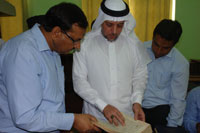
Shaikh Al Shareef Mustafa Fouad Shafaee, who belongs to the family of the Prophet of Islam, Hazrat Mohammad Mustafa (Peace Be Upon Him) recently, visited Aligarh Muslim University’s Maulana Azad Library to see the collection of rare manuscripts and books.

During his visit, he expressed happiness over the availability of the rare documents relating to the pre 18th century particularly on the history of Islam and the cities of Makkah and of Medina.

The visitor’s family has been holding the key of the Tomb of the Prophet (Peace Be Upon Him) for the last 14 centuries.

Shaikh Al Shareef belongs to the 41st generation of the Prophet and he has arrived in India to see the culture of the country. He had mentioned that he was interested to visit AMU and the Taj Mahal in Agra.

The AMU Librarian, Dr Amjad Ali accompanied Shaikh Al Shareef to the Manuscripts Division where he spent an hour consulting the documents relating to the geography, geology and history of Arab specially the cities of Makkah and Madina.

Shaikh Al Shareef had a look on Futuhat-e-Makkiah of Ibne Arabi and expressed joy over the method of scanning and preservation of the Islamic heritage. He added that he has visited libraries of some Islamic countries including Egypt and Turkey but could not see such a well-maintained rich collection, displayed for the visitors.

While praying for peace and prosperity of India, Shaikh Al Shareef added that this is the land where Hazarat Adam descended from Heaven and from where the human race spread all over the world. During his visit to the Manuscripts Division, the Shaikh added “I love India” and promised the Librarian, Dr. Amjad Ali to visit the Library again for a longer time.

Photo from AMU official

source: http://www.okhlatimes.com / Okhla Times / Home> Despatches / by OTNS – AMU / OT – August 23rd, 2015

Art From Terra Incognita

Mansoor Ali Makrani, the 37-year-old artist, recieved top CIMA award for his work – ‘Anatomy of an Unknown Chair’.

Kolkata  :

Awards don’t make a man or woman but they just may make an artist. Especially if the painter, sculptor or photographer lives beyond the metros – in villages and small towns of the country. So Kolkata’s Centre for International Modern Art, best known as CIMA, instituted nine CIMA awards for visual artists. About 2000 people competed, of which 159 were short-listed. The works are on display at four galleries across the city – at CIMA, Studio 21, Academy of Fine Arts and Ramdulari – and are drawing huge crowds.
The top CIMA award went to the ‘Anatomy of an Unknown Chair’. An old chair, taken apart, its parts put together in a random order and framed. The 37-year-old artist, Mansoor Ali Makrani, was born to a farmer-turned-truck-mechanic in Gujarat’s Wachesar village. He now lives in Delhi. “What if I ask the chair, what are the stories that you hold, what are the conversations that you have recorded? So, it was in a way animating the object. A dead object which could be animated, it could speak and unfold histories and stories in the truer forms which we don’t know of,” he said, trying to explain his work.

Tarpaulin, a work by 29-year-old Pitambar Khan’s, got the jury award. He still lives where he always has, Samudrabad, a village in Bengal’s Howrah district, about three hours by bus from Kolkata. On a piece of blue tarpaulin, he has painted a staircase and a gift-wrapped heart. For him the tarpaulin is something everyone uses at one or another point of time in one’s life.

Pitambar’s father was a carpenter and his father’s work was his first brush with art. “My father was a carpenter. When I was in school, I used to see him make wood reliefs. In a temple, once he made Hindu goddesses in wood relief based on stories. It influenced my drawing and my father encouraged me,” he said.
There is a wide range of work on display at four galleries across Kolkata, from towns including Nasik, Surat, Rajkot, Gaziabad, Mednipur to Chenganacherry. That was the idea: to give these artists a platform.
Rakhi Sarkar, director of CIMA said, “In the course of my several years of being in this art world, I felt deeply disturbed that art was being dominated by the metropolitan cities. But outside of that, somehow Indian artists never really got a platform.”
The jury included artist like Jogen Chowdhury and G Ravindra Reddy, author Amit Choudhuri, filmmaker Shoojit Sirkar, actor-collector Victor Banerjee and photographer Dayanita Singh. They are all glad to be part of an effort to give little known artists — all strapped for money and studio space – some much needed attention. Each piece of work was hotly debated. Even on the winner they agreed to disagree though the majority won.
Dayanita Singh, photographer and jury member said, “A lot of the artists have gone too far put too much over laden the work. And if one could learn from Hindustani music how to hold back or from Michael Ondachi how to restrain oneself. How to edit, I think that one word has come out clearly to me that the one word I would take back is lack of restraint.”
Jogen Chowdhury, artist and jury member added that, “It is not always necessary to be retrained. Then you cannot sometimes, some artist cannot grow. Even you see Picasso, He is not restrained at all.”
The CIMA award winner received a trophy, Rs. five lakh and a promise to hold a solo show at CIMA within two years, while the Jury Award winners received a trophy and Rs. two lakh. It was a mammoth exercise that CIMA worked on for months. So mammoth that CIMA has decided the awards will be given once in two years instead of annually. After all, art is still not instant, especially art from terra incognita.
source: http://www.ndtv.com / NDTV / Home> Kolkata>  Section / by Monideepa Banerjee / March 28th, 2015

Young in age, big in achievement

Winners of the first edition of Siddha and Camellia Group present ABP Ananda’s Sera Bangali, Kalker Sera Ajke, 2015, at GD Birla Sabhagar on Thursday

(From left) Artist Pitambar Khan, International Junior Science Olympiad winner Debaditya Pramanik, shooter Ayonika Paul, actor Riddhi Sen, writer Ritika Nath and singer Lagnajita Chakraborty. The award salutes talented young Bengalis in the field of science, art and culture. Picture by Pradip Sanyal

source: http://www.telegraphindia.com / The Telegraph, Calcutta,India / Front Page> Calcutta> Story / Friday – August 21st, 2015

Ambur and the art of biryani

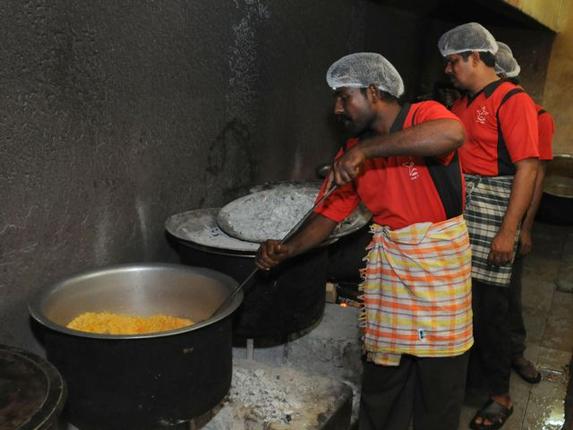
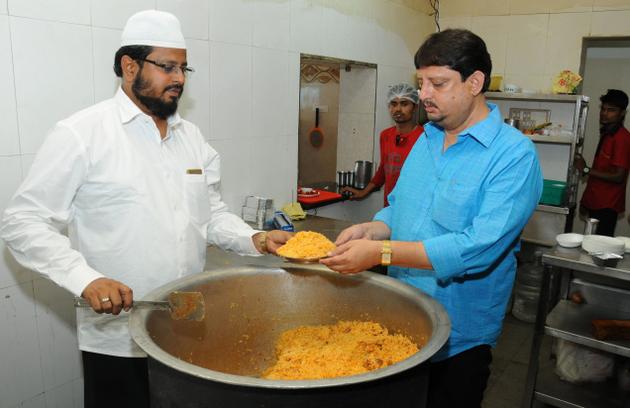
In the kitchen of Star Briyani, Ambur. Photo: R. Ragu / The HIndu

The writer spends a day tasting the town’s staple dish to find out what makes it so appealing.

There was once a man who loved biryani so much that he braved the rain to eat it under the leaky roof of an eatery. Another ate it for lunch every single day for 15 years. He continued the ritual even after he became old and toothless, except that he had it plain, without the meat. Stories of such biryani fanatics are common in Ambur, a town some 180km from Chennai. Here, people eat biryani for breakfast.

What’s so special about Ambur’s biriyani?

We walk into Star Briyani, one of the town’s well-known and oldest establishments to find out. It’s 11 a.m. and customers are already walking out after a meal. Brothers Muneer Ahmed and Anees Ahmed run the business now, that has branches across Ambur, Bangalore, and Chennai.

Brothers Anees and Muneer of Star Briyani Photo: R. Ragu / The Hindu

It all started with Hasin Baig, their great-grandfather, who is said to have cooked in the kitchens of the Arcot Nawabs. He brought what was once the food of the royals to the common man by opening a restaurant in his hometown, Ambur. Hasin’s son Khursheed then took over the business, which was then taken over by his son Nazeer Ahmed. In all, the family nurtures a 110-year-old biryani heritage. “At Khursheed Hotel that thatha ran in the 1900s, biryani was ready as early as 7 a.m.,” says Anees, who manages the Chennai wing of restaurants.

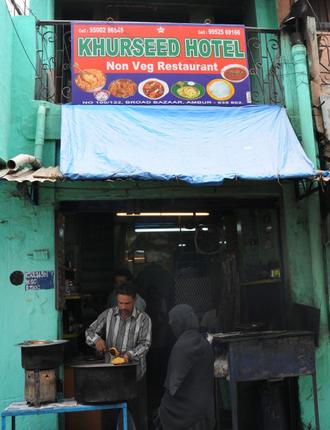
A view of Khurseed Hotel at Ambur. Photo: R. Ragu / The Hindu

He recalls how his ancestors used a short and thin rice variety called ‘surdas’ and country chicken. “We’ve replaced the rice with its closest match — seeraga samba, which we source from West Bengal,” he explains. Ambur purists will scoff at any other rice variety, even if it’s the slender basmati.

At the kitchen of Star’s branch that’s located on the Chennai-Bangalore highway, biryani masters Krishnan and Irfan are preparing mutton biryani. Cooked in gigantic containers over wood-fired stoves, the crucial aspect behind the biryani’s consistency is the ‘dum’ — a procedure where it’s removed from fire and covered with a lid over which hot coals are placed. The recipe consists of the usual ingredients that goes into biryani — onions, tomatoes, spices such as cardamom, cloves, and cinnamon, ginger and garlic paste (ground separately to incorporate each ingredient’s flavour), red chilli paste, salt, rice (par boiled) and meat.

As an over-powering aroma engulfs us, a mild whiff of sambar comes our way. “Oh, that’s our lunch,” Irfan informs us.

Khursheed is still present inside the main bazaar of the town, where it was originally started, and is now taken care of by Anees’ cousins. In a narrow lane where tring-tringing tricycles, autos, scooters, load men lugging heavy sacks on their shoulders and pedestrians jostle for space, the clang of the steelkarandi against the soot-smeared container, announces the birth of a fresh batch of biryani to the neighbourhood.

We follow the sound into Khursheed, a hole-in-the-wall eatery that can house not more than eight at a time. The biryani here is priced at Rs. 45 and is made of basmati rice unlike a typical Ambur biryani. This is probably to cut cost — the outlet mostly caters to the hard-working labourer who cannot afford the more expensive varieties. Ambur has plenty of such restaurants that serve biryani for less than Rs. 100.

Anees recalls how his grandfather’s friendly demeanour was responsible for him securing a loyal customer-base. “He would stand at the entrance and greet people he knew with ‘enna machan, rumba naala kanom?’ (long time no see?) and they would instantly step in for a plate.”

At Star’s bazaar outlet, a plate of mutton biryani costs Rs. 150. It’s peak hour at lunch time and biryani is getting sold out fresh off the wood-fired stove. The atmosphere here is rather informal — many of the diners are regulars who nod at each other as they polish off a greasy dish of pepper chicken. Back in the kitchen, Faizal is ladling a gigantic container of brinjal curry on the stove, while Kalim, the chicken 65 expert, is carrying a fresh batch of the dish that gleams like rubies, to the serving counter.

Then, our first plate of Ambur biryani is served — orangish-pink in colour, the rice is mildly spiced, the meat, a tad spicier and cooked to perfection. M. Rahman, a 75-year-old ex-councillor, a regular, sits with us to eat. “So, what…” we begin when he cuts us short. “Don’t ever talk when eating biryani. It distracts you.”

Just then, Anees’ father Nazeer comes into the restaurant, assisted to his seat by his son. Over 70 years old, he recently suffered a stroke. Although he has lost his speech, the man insists that he sit at the counter for at least two hours every day, amidst the steam of the biryani he dearly loves. It occurs to us then, the reason behind the success of Ambur biryani. True, it tastes good; but what makes it special are the people of the town. Their passion for biryani — that’s the secret ingredient.

source: http://www.thehindu.com / The Hindu / Home> Features> MetroPlus> Society / by Akila Kannadasa / Chennai – August 20th, 2015

States’ Monumental Revenue Rise as Taj Mahal Stays on Top

New Delhi  :

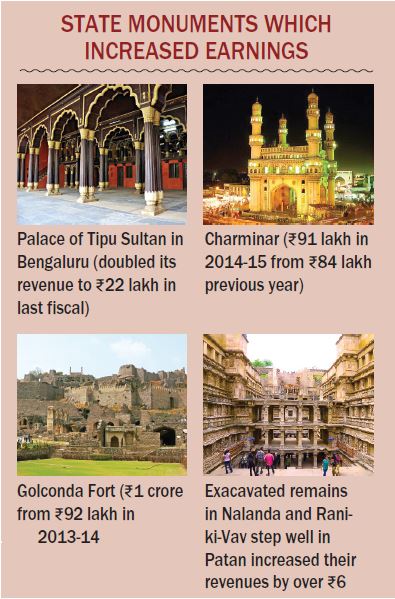
The alluring romance of famous monuments seems to be getting a little jaded with lesser-known ones tucked away in mofussil India garnering increased interest by domestic and foreign tourists. While the iconic Taj Mahal continues to maintain its top position in earnings through entry fees, smaller monuments in states witnessed a spike in revenue. The  Palace of Tipu Sultan in Bengaluru almost doubled its revenue with Rs 22 lakhs last fiscal.
StateMonumentsMPOs23aug2015

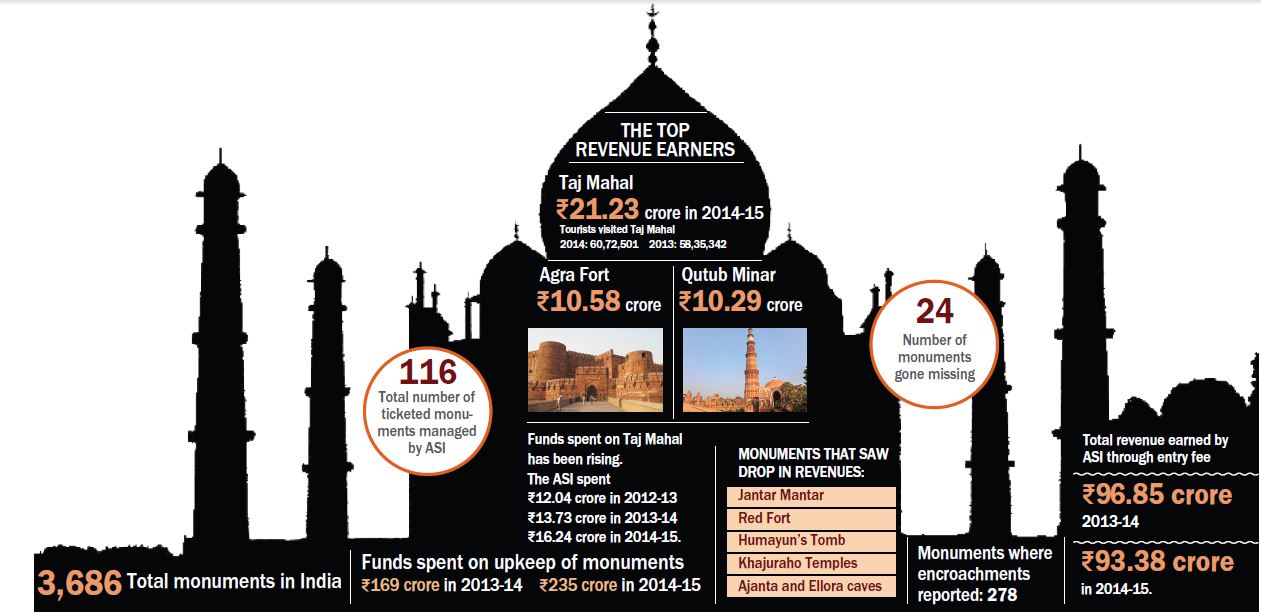
Last year, the Taj Mahal lost nearly Rs 60 lakh in revenues earned through entry tickets. In the 2014-15 fiscal, the ‘monument of love’ earned Rs 21.78 crore, while in 2012-13, its revenue was Rs 24.58 crore and Rs 22.40 crore in 2013-14.

Lesser known monuments such as, the Charminar in Hyderabad and Golconda Fort saw a surge in revenues this year; Rs 91 lakh in 2014-15 over Rs 84 lakh in 2013-14, and Rs 1 crore, up from Rs 92 lakh in the previous fiscal respectively.

Taj Mahal apart, some other big attractions showed a downward revenue trend. Revenues from UNESCO monument Red Fort dropped by Rs 10 lakh to earn Rs 5.9 crore, while the newly restored Humayun Tomb earned nearly Rs 70 lakh during 2014-15.

In Delhi, Jantar Mantar made Rs 23 lakh in the last fiscal, a drop of Rs 5 lakh. The Khajuraho Temples lost Rs 20 lakh to earn Rs 2 crore in 2014-15 and Ajanta and Ellora also saw a drop of Rs 2 lakh each.

According to the latest Ministry of Culture figures, many of the 116 ticketed monuments under the jurisdiction of the Archaeological Survey of India (ASI) were helping fill government coffers. In 2013-14, the ASI earned Rs 96.85 crore from monuments, which dropped to Rs 93.38 crore in 2014-15. Ironically, the money does not to go to the cash-starved ASI’s kitty but to the national treasury. Its battle to get the money for conservation of monuments has come to naught.

LowestEarnersMPOs23aug2015

The excavated remains in Nalanda in Bihar and Rani-ki-Vav (queen’s step well) in Patan, Gujarat, increased their revenues by over Rs 6 lakh each. Rani-ki-Vav was given a Unesco World Heritage Site status this year.

Other monuments that showed increase in revenues, though marginally, include the Rock-cut Hindu Temple at Undavalli and Buddhist Monuments at Guntuplli, both in Andhra Pradesh; Ahom Raja’s Palace at Sibsagar and Ranghar Pavilion at Bisnhudol, both in Assam;  ruins of Vikramshila, that was established by King Dharmapala (783 to 820) after a supposed decline in the quality of scholarship at Nalanda, and Sher Shah Suri’s Tomb in Bihar. On the other hand, the famed remains of Pataliputra in Patna showed a downward trend in ticket earnings.

The other significant monuments with increased entry tickets earnings are Sheikh Chilli (Haryana), Kangra Fort (Himachal Pradesh), Badami Caves and Gol Gumbaz in Karnataka, and Mandu monuments and Sanchi (Madhya Pradesh).

In Maharashtra, Ajanta and Ellora’s losses in revenue were gains for Aurangabad, Elephanta , Karla and Buddhist Kanheri Caves. In Delhi, Purana Qila, (which dates back to the days of the Mahabharata), Safdarjung Tomb and Tughlaqabad earned more this year while earnings from Red Fort and Humayun’s Tomb dipped. In Tamil Nadu, except for the Rock Cut Jain Temple in Sittannavassal, ticketed monuments like forts in Gingee and Dindigul had lesser earnings in 2014-15.

Interestingly, the Taj Mahal, Agra Fort and Qutub Minar collectively contributed over 45 per cent of the revenues through entry fee for ASI-run monuments The 17-century marble tomb with its intricate inlay work built by Mughal emperor Shah Jahan has been earning over Rs 20 crore every year through entry fees. Its revenue collections saw a drop in the last three years even though footfalls have been increasing. In 2012-13, Taj Mahal earned Rs 24.58 crore, Rs 22.40 crore in 2013-14 and Rs 21.78 crore in 2014-15.

“There has been no decrease in the number of total tourist footfalls in the past two years. In 2014, 60,72,501 domestic and foreign tourists visited Taj Mahal, against 58,35,342 in 2013,” culture minister Mahesh Sharma said.

Ironically, it isn’t just the Taj Mahal whose revenues have dropped. Revenue from the Khajuraho temples fell by Rs 20 lakh to Rs 2 crore in 2014-15, and Ajanta and Ellora also saw a drop of Rs 2 lakh each.

Indians and those from SAARC and BIMSTEC countries pay between Rs 5-10 while foreigners have to pony up between Rs 100 to Rs 500, depending on the monument.

On the other hand, funds spent on the upkeep of the Taj has been rising. The ASI spent Rs 12.04 crore in 2012-13, Rs 13.73 crore next year and Rs 16.24 crore in 2014-15.  Agra Fort, built by the Mughals in neighbourhood of the Taj earned Rs 10.58 crore in the last fiscal, while Qutub Minar grossed Rs 10.29 crore through ticket sales, a marginal increase over the previous year.
TajChartMPOs23aug2015

source: http://www.newindianexpress.com / The New Indian Express / The Sunday Standard / by Pratul Sharma  / August 02nd, 2015