Category Archives: Arts, Culture & Entertainment

A Space for Missile Man at the Country’s Oldest Mosque

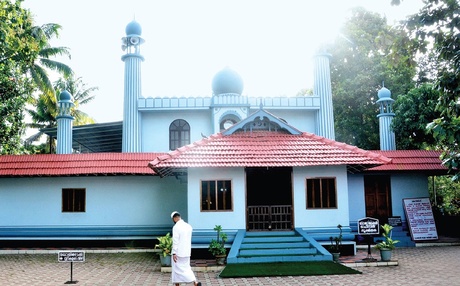
Cheraman Juma Masjid

Kochi  :

As a mark of tribute to the memory of the legendary man who took the pride of the country to the world and beyond, India’s first mosque, Cheraman Juma Masjid, will dedicate a portion of its Islamic Heritage Museum to A P J Abdul Kalam.

“The Islamic museum sheds light on the composite culture that existed in the God’s Own Country during the medieval period and showcases the relics of the rich past. In honour of the former President, it will be equipped with the digital collections of his visit to the legendary mosque and the town along with other documents,” said Faisal E B, administrative officer of the mosque. “We would also hold a meeting of various stakeholders this week to chalk out a plan to this effect,” he added.

It was hardly a decade ago when Kalam visited Cheraman Juma Masjid, considered to be the oldest mosque in the country, situated at the ancient port town of Kodungallur in Thrissur. The illustrious son of the country who visited the legendary 1400-year-old mosque on July 29 in 2005, wrote on the guest book, “I pray in the ancient mosque for the peace and prosperity of the country.”

The mosque committee is renovating the ancient monument under Muzaris Heritage Project of the state government. It is being renovated in tune with the style of Kerala architecture that existed during the times of the Cherman Perumal, the last of the Chera kings who ruled Kerala with Kodungalloor as their capital. The mosque is believed to have been constructed in 629 AD by Malik Bin Dinar, a contemporary of king Cheraman Perumal. “We would set aside a space for the former President in the renovated mosque, which already carries a plaque of his visit. The museum in the mosque would soon be expanded to include digital collection of the Muslim culture in Kerala. It will also carry the relics of the visit of the Missile Man to the mosque,” said Dr Mohammed Syed, president of the mosque committee.

The committee is already in the process of collecting audio-video footages of the Muslim culture in Kerala, which include the traditional art forms of the community, the artifacts associated with their daily life and other such memorials.

“The digitalised museum will be a top choice for global tourists and we are in the process renovating it in tune with world standards,” said a member of the mosque authority.

source: http://www.newindianexpress.com / The New Indian Express / The Sunday Standard / by Dhinesh Kallungal / August 02nd, 2015
Read Kalalm’s verse, lend a hand

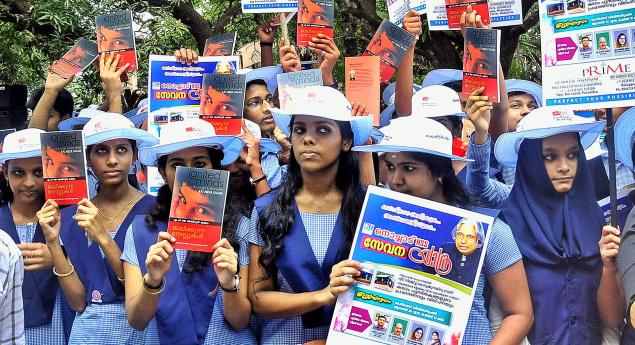
Students of Nochad HSS school plan to sell 5,000 copies of A.P.J Abdul Kalam’s books and raise money to help fellow students.— Photo: S. Ramesh Kurup

Students to sell APJ’s books to raise money for charity

A group of 150 students of the Nochad Higher Secondary School here have embarked on a journey to pay tribute to the former president of the country, A.P.J. Abdul Kalam. Flagged off by the district collector N. Prasanth at the Collectorate premises here, the group envisages selling as many as 5,000 copies of 13 select titles of Kalam in and around the city. The sum collected as donations during the trip and the profit from selling the books will be donated for building houses to deserving students from the school.

The students, who started their journey in two buses and other vehicles from the Civil Station, stopped at different points in the city and dispersed in small groups to sell the books. Receptions have been arranged under the aegis of traders’ forum and institutions at important centres such as shopping malls, hospitals and public places.

“We have already sold around 2,000 copies of the books on day 1,” said K.M. Nazeer, one of the coordinators of the journey. Agnichirakukal, Jwalikkunna Manassukal and Asadyatayile Sadhyata are the books in most demand, he said. The team that stop at different points for selling the books also performed different cultural programmes to attract the attention of the public to their charitable cause. “Some medical institutions in the city donated even Rs. 10,000 for a book considering the cause,” said Mr. Nazeer. Organisations such as the Malabar Auto Club, a collective of auto rickshaw drivers in the region also accorded a warm reception for the journey.

Many institutions and traders forum according to him provided small refreshments for the students on their way in additions to the donation. The team had been given receptions at 10 select points in the city on the first day of the journey, which will conclude at Perambra on Sunday.

source: http://www.thehindu.com / The Hindu / Home> News> Cities> Kozhikode / by Jabir Mushthar / Kozhikode – August 21st, 2015

Inspired girls make a mark at Times NIE Quizomania

Bengaluru :

“No clues, No clues,” came the fervent pleas from a crowd of 1,200 students from 200 schools, as they competed for a place in the finals of the Times NIE Quizomania 2015-16. It was held jointly with the State Bank of India at The Cathedral High School, Bengaluru, on Thursday.

The excitement and tension was palpable from the word go, as quizmaster Giri ‘Pickbrain’ Balasubramanium took them through 20 questions in the preliminary round, before 12 schools made it to the semifinals. Presidency School, RT Nagar, walked away with the winning trophy.

They also got an impromptu cash prize of Rs 10,116, from Vijaya Kumar, general manager-network II of SBI, St Mark’s Road.

From Viv Richards starting his cricketing career from K Chinnaswamy Stadium to RBI governor Raghuram Rajan starring in the Oscar-winning documentary ‘Inside Job’, to Fauntelroy being Donald Duck’s middle name, the students had answers to almost all the questions.

Chief general manager of SBI Rajni Mishra said: “Some of the questions bowled me over; the children know so much today. I am often asked where I see India going economically, and today I can say that India is going to be No 1 in the world soon. We will have brilliant scientists, entrepreneurs and leaders,” she said.

Isabella Simon, principal of The Cathedral High School, said quizzing is a fun way to learn and gather information. CEO of Greycaps India Pvt. Ltd Giri Balasubramanium said he was delighted to see so many girls taking to quizzing. “Girls opening up to a mind sport like quizzing is a fantastic new trend. The comfort level the youngsters have with all the information around them is also amazing,” he said.

The winners, Aymen Maqsood and Bavadharini Manohar attributed their success to the 40-minute quiz they have in school every day, and reading the newspaper. The prizes to the winners were sponsored by Vedantu.com. General manager-network I, YV Ramana Murthy was among those who gave away the prizes.

source: http://www.timesofindia.indiatimes.com / The Times of India / News Home> City> Bengaluru / by Santrupti Rajankar, TNN / August 21st, 2015

5,000 of Kaifi Azmi’s books now in AMU library

Aligarh : 

A group of mostly librarians went from Aligarh Muslim University to Mijwan village in Azamgarh district recently to take possession of the 5,000 books from Urdu poet Kaifi Azmi’s collection that were being donated to the university by actor Shabana Azmi, the poet’s daughter.

What the group was stumped by was the mint condition of the books. There was little work to be done, the group said, as the books were all neatly covered and stocked in an almairah. The spines of the books were sturdy, the authors and titles all neatly marked.

Kaifi Azmi was born to a landed family in Mijwan village in January 1919. By the time he died in 2002, he was renowned as a poet, communist and member of the Progressive Writers’ Movement. Donating a collection of 5,000 books from her father’s library to the university, his daughterShabana Azmi said, “People who had come to collect the books were surprised at the upkeep of his personal library. They were astounded that someone hailing from such a small place like Mijwan could have such a vast and neatly maintained collection of books.”

Maulana Azad Library at AMU has received donations from at least 50 people so far. “Kaifi sahab’s personal library was so unique, it is hard to find a personal library so well maintained,” Amjad Ali of the Maulana Azad Library.

On Wednesday, the university released a catalogue of the books acquired from the Kaifi Azmicollection. The university also held a symposium titled, ‘Life in Creative Pursuits’ organized in collaboration with the Sahitya Academy.

In the collection were books of Urdu poetry and literature, books in Persian, Urdu periodicals, accounts of history and books authored at the peak of the Progressive Writers’ Movement that could prove to have significant research value. Among the Urdu periodicals are issues of Khuda Bakhsh, Naqoosh, Nigar and Shair.

Speaking of her father, Shabana Azmi said she always remembered him as someone who marched to his own drum. She admitted to being a little ashamed of him as a child: “He didn’t go to ‘office’ or wear the normal trousers and shirt like other ‘respectable’ fathers. He wore his cotton kurta-pyjama 24 hours of the day, he spoke no English. Worse, I didn’t call him ‘Daddy’ like other children. He was ‘Abba’! I learned quickly to avoid referring to him in front of my school friends. I lied that he did ‘business’. Imagine letting my school friends know he was a poet. What on earth did that mean? A euphemism for someone who did no work?”

The renowned actress remembered that when it was time for her to seek admission to school, her parents Kaifi and Shaukat sent other people to ‘represent’ them as her parents, so she could more easily be accepted as a student in an English-medium school. It was only with media reports that her school friends realised that she was actually poet Kaifi Azmi’s daughter, the thespian recounted.

Shabana Azmi’s husband, lyricist Javed Akhtar, said, “Kaifi spoke for the masses. He fought, through his writing, against injustice. His work has never been more relevant than now, when one thinks of the hardships people experience. He wrote about the downtrodden after living with them. He wrote of women’s rights. That did not mean he had different standards for the women in his own home. That is why he had a daughter like Shabana Azmi.”

source: http://www.timesofindia.indiatimes.com / The Times of India / News Home> City> Agra / by Eram Agha, TNN / August 20th, 2015

Taj Mahal In World’s Top 5 Travel Hotspots In New List

The Taj Mahal has made it to the top five of a prestigious new list of the world’s best tourist attractions.

TajMahalMPOs21aug2015

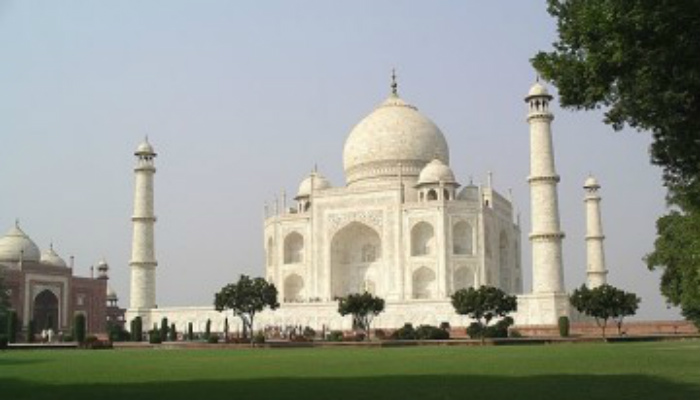
Lonely Planet’s “Ultimate Travelist” ranks the historic mausoleum built in Agra by Mughal emperor Shah Jahan as the fifth most attractive travel hotspot in the world and describes it as a “magnificent Mughal masterpiece”.

According to the list, the architectural perfection is reached beginning with “acres of shimmering white marble. Add a few thousand semi-precious stones, carved and inlaid in intricate Islamic patterns. Take a sublime setting by a sacred river, in jewel-like formal gardens. Apply a little perfect symmetry, and tie up the whole package in an outlandish story of timeless love. And there you have the Taj Mahal”.

It notes that there’s no other building in India that so perfectly encapsulates the attitudes and atmosphere of its era.

The Temples of Angkor, a UNESCO World Heritage site in northern Cambodia, tops the list as a complex of more than 1,000 temples, shrines and tombs which attracts more than 2 million visitors annually.

The Great Barrier Reef in Australia comes in at number two, the Inca city of Machu Picchu in Peru at number three, and the Great Wall of China at four.

Travel writers and Lonely Planet staff were invited to submit ideas before voting on their favourites.

Voters were asked to consider which sights enthused, inspired, and excited them the most.

The one UK entry was the British Museum, which came in 15th on the wish list.

To celebrate the release of the new book, some of the world’s finest sand sculptors will recreate five sights from around the world on Peter’s Hill near St. Paul’s Cathedral in central London later this week.

source: http://www.focusnews.com / FocusNews.com / Home> LifeStyle> Food And Travel / Press Trust of India, New Delhi / August 21st, 2015

Young, veiled and free: Meet Uber Delhi’s first woman driver

In the backdrop of security-related suspicions associated with the cab service Parveen’s large green eyes peeping out from her trendy hijab, hold promise.

“Today in the morning I dropped two young boys to Anand Vihar,” says Zamarrud Parveen, a pleasant surprise in her black-and-white hijab and bright yellow salwar kameez behind the wheel during my last Uber ride. “They started talking to me and asked where I was from. I told them I grew up in Bijnor, UP (Uttar Pradesh).” She changes gears and breaks into a proud chuckle. “They said, ‘Seriously?! We’re also from there, but we didn’t think any girl from there would ever choose this profession.’ I just laughed and asked them why. I said I loved driving! They had no idea what to say after that.”

The spirited 21-year-old says she is presently the only woman driver at Uber in Delhi and has been with the company for two months now. In the backdrop of the infamy and security-related suspicion associated with the cab service – given an incident of rape, sexual harassment and the general misbehaviour of male drivers with female passengers – Parveen’s mugshot with large green eyes peeping out from behind her trendy hijab, pops up on the app, with promise.

ZamarrudParveen01MPOs21aug2015

“I love the niqab. I’ve always worn it,” she says. “I usually wear a full burqa and niqab to college and everywhere, but while driving I only wear the niqab with ordinary clothes because it becomes difficult to drive,” adds Parveen, who is simultaneously pursuing a BA pass course from Jamia Millia Islamia and hopes to one day complete her MA and teach Islamic Studies, her favourite subject. “When I told my college friends about my job as a taxi driver, they didn’t believe me. Because of the way I am in college – always in a full burqa and niqab and all,” she says. “They only believed me when I showed them my visiting card. But they were really happy.”

Parveen grew up in a conservative mohalla in Bijnor and lived there until she graduated from the eighth grade, from Muslim Kudrat Girls Intercollege. She moved to Delhi, along with her mother and three younger sisters (Zoya, 19 and married, Shafaq, 12 and Ufaq, 10) and presently lives on rent in a one-room home where her father, a construction labourer had lived for 20 years. After graduating from school, Parveen was encouraged by her mother to learn how to drive and enrolled herself at Sakha Consulting Pvt Ltd. “My family is very supportive. My mother always wanted to learn how to drive, but couldn’t because she grew up in a conservative background… and culture. But she told me, ‘So what if I couldn’t drive? You must.'”

ZamarrudParveen02MPOs21aug2015

Parveen chose to take the job at Uber because they were offering to pay her a higher salary than her employers at Sakha. “I had a commercial licence so they were happy to take me,” she says. The country can expect more women like Parveen since Uber is working on recruiting close to 50,000 women drivers, who are presently being trained by the organisation, iCare Life. “They will be footing the bill to get them training and licences – learners’, permanent and commercial,” says Parveen, who enjoys her weekdays on the road. “This job is very convenient, if I have some personal work I can just go offline, finish my work and go back online.” She usually logs in at 7am, goes off between noon and 4pm and officially logs out for the day by around 7 or 8pm. This routine, she says, allows her to do namaz five times a day and spend time with her family.

The once shy, young girl, instructed as a child, as most girls in her neighbourhood were, never to speak to people or leave the house, felt liberated in Delhi and claims the course at Sakha helped her become exponentially more confident. “When I was young I couldn’t speak to or even stand in front of people. In Delhi, I spoke to more people, Sakha gave me training in self grooming, English classes, self defence and that really helped me open up.” The course at Sakha also had a week of law classes, in which Parveen learned different acts and “my rights out in the world and at home”.

ZamarrudParveen03MPOs21aug2015

But though Parveen has the support of her family, breaking out of an orthodox Muslim community was something her mother bravely battled. Ghazala Parveen defied all odds (and a disapproving mother-in-law) to educate herself and her three daughters. She graduated from class 10 after marrying her husband Habib-ur-Rahman and conceiving her eldest daughter Parveen. “You know what people think of women – by 18 or 19, get her married and that’s her whole life. Just chulha, chaaka, bachche, that’s it,” says Parveen. “But my mother was just completely different. The amount of turmoil she’s been through in her sasural, I don’t think anyone else would be able to. Her mother-in-law didn’t like girls at all. But my ‘abbu’ always wanted to have daughters.” Parveen’s three younger sisters all study in an English medium school near their home in Madanpur Khadar in Kalindi Kunj.

Being a lady taxi driver in a veil is not the only power statement Parveen is making. She’s also breaking the sexist stereotype associated with women behind the wheel. “During training, my sir used to say ‘jab tak gaadi thukegi nahi, seekhoge nahi (you won’t learn how to drive until you bang the car)’,” she says. “I used to say ‘aisa kisne bola hai‘. In the three years I have been driving I haven’t even touched another car with my car; no scratch, nothing.” She smirks, “Bhagaai bhi bohot hai. (I’ve driven very fast too).”

Parveen is happy with the response she’s got from passengers so far. “Most male passengers remain calm and silent. I don’t think they have anything to say,” she says. “Others are friendly and speak to me nicely. They definitely say this is the first time they’ve seen a lady driver. I love hearing that.”

The ambitious and dynamic Parveen is a powerhouse of resistance and part of a new generation of formidable women. Riding the wave of defiance her mother set in motion, Parveen is chatty and respectful, polite and witty. She is firm in her beliefs (“I have been allowed to even have a love marriage, but I’d prefer to be in an arranged marriage so my family can intervene if I have any marital trouble) and determined to achieve her goals (“I want to learn and when I become a teacher, I one day want to give other people the opportunity to learn”). At 21, her salary of Rs 15,000 per month, smacks full in the face every “how can you even educate the girl child” taunt from ladies in Bijnor. And her resilience is truly inspiring.

As she drives aggressively through the barriers of patriarchy, Parveen – who once successfully juggled her job, fasting for ramzan, an ailing mother and exams in college – says, “I love driving on the highway. It’s liberating when the car runs at 100-120km/h. I’m responsible for my own safety. And I absolutely love it.”

source: http://www.dailyo.in / Daily O / Home Page> Politics> Out of Order / by Asmita Bakshi @asmitabee / August 20th, 2015

Dailyo spots Jamia student, only woman driver at Uber in Delhi

The only woman driver at Uber in Delhi is a student from Jamia Millia Islamia, according to a report from dailyo.in. The reported pointed out that Zamarrud Parveen who grew up in Uttar Pradesh’ Bijnor has joined the company for two months now.

The hijab wearing Parveen, is also doing a BA pass course from Jamia. When asked about her future, she told the daily that one day she plans to complete her MA and teach Islamic studies, her favourite subject. “When I told my college friends about my job as a taxi driver, they didn’t believe me. Because of the way I am in college – always in a full burqa and niqab and all. They only believed me when I showed them my visiting card. But they were really happy,” she told the daily.

It was a few months ago when she moved to Delhi, along with her mother and three younger sisters (Zoya, 19 and married, Shafaq, 12 and Ufaq, 10).  The family live lives on rent in a one-room home where her father, a construction labourer has lived for 20 years, according to the report.

CAPTION: Photo of Parveen via dailyo.in

source: http://www.okhlatimes.com / Okhla Times / Home> JMI /OT Campus Reporter-JMI / OT – August 20th, 2015

Remembering Abdul Khader

Kozhikode, known for its love for art and artistes, seems to have forgotten the legendry singer, who carried the city’s name with him.

The concluding ceremony of the birth centenary celebrations of singer Kozhikode Abdul Khader struck a sore note among the music lovers who cared to attend with the glaring emptiness both on and off the dais. “There are many artistes who lived the fag end of their lives in misery. But what is truly miserable is when society forgets their contributions,” said writer M.T. Vasudevan Nair who inaugurated the programme.

The writer presented the Abdul Khader birth centenary award to playback singer G. Venugopal.

source: http://www.thehindu.com / The Hindu / Home> News> Cities> Kozhikode / by Staff Reporter / Kozhikode – August 19th, 2015

Urdu poet Kaleem dies

NisarAhmedKaleemMPOs20aug2015

Nissar Ahmed ‘Kaleem’, Urdu poet and Gandhian thinker, died in Bidar early on Wednesday. He was 83. He was the recipient of the Karnataka Urdu Academy award this year.

The retired teacher wrote under the pen name of ‘Kaleem’ and produced thousands of couplets and hundreds of songs. They were compiled in around two dozen books in Urdu and Hindi. He also served as the head of the examination committee for the Hindi Rashtra Bhasha courses for decades.

He wrote poetry on a variety of subjects, but romance remained close to his heart. “That is the one thing that keeps me young,” he would say with a smile.

“There is no way ahead for this country other than Gandhiism,” he would announce during his numerous speeches. He would speak of Gandhian ideas and practices like communal harmony and tolerance, home industries and handicrafts and simple living with a global outlook. He would always quote paragraphs from the Hindi books and letters of Gandhiji.

He was fascinated with the deeply religious outlook of Gandhiji that remained tolerant of other religions. “Gandhiji led by example and showed us that religion and secularism are not contradictory,” he said in a meeting of heads of various religions in Bidar during Ramzan this year. However, the biggest contribution of this Kannada-speaking Urdu writer was that he acted as the bridge between writers and poets of various languages.

He would attend programmes organised by the Kannada Sahitya Parishat and invite Kannada writers to the multi-lingual poetry recitals that he and his friends organised regularly in Bidar. His last rites were conducted in the old city on Wednesday.

source: http://www.thehindu.com  / The Hindu / Home> National> Karnataka / by Special Correspondent / Bidar – August 20th, 2015