Category Archives: Arts, Culture & Entertainment

Over a cup of evening tea: A golden nugget from a bygone era


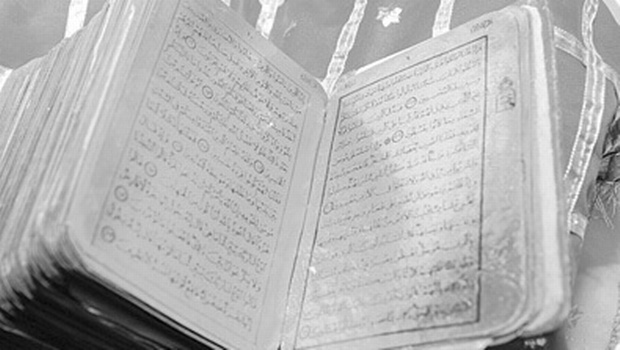
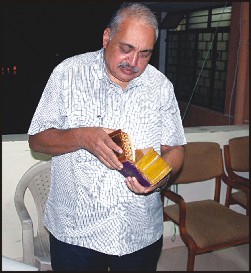
Dr. Javeed examining the Holy Quran.

By Dr. K. Javeed Nayeem, MD

Late last night I had the good fortune of holding in my hands, albeit momentarily, a gold-leaved copy of the Holy Quran from a bygone era that had been seized recently by the Mysuru district Police when attempts were being made by some persons to sell it for a sum of rupees five crores. It all started with a late night phone call from my close friend A.G. Murali, who wanted to know if I had on hand someone who could read Arabic.

When I said that I could do it myself although I could not claim to have a scholarly knowledge of the language, he asked me if I could come down to the office of the DySP of Mysuru rural district. Sensing that I was puzzled by such an unusual request at such an odd time, he explained to me that the Police officers there were examining the recently seized Quran and were keen to know a little more about the book.

Excited by the request, I hurried to the place with my cousin Adil Pasha and my camera, sensing a rare opportunity to see and photograph the rare find. Most often I go looking far and wide for a subject to write about in my column and only once in blue moon a subject comes looking for me and here was one such Godsend!

After meeting the DySP Dr. Vikram Amte, when I eagerly asked him where the book was he smiled and pointed to an almost cubical object placed on the table right before him. Because of its unusual dimensions, I could not immediately recognise it as a book which I expected would be flat and broad as most books are. It was almost as thick as it was broad because its 302 sheets were unusually thick, being gold plated and inter-leaved with butter paper to preserve them. The rich black ink stood out against the golden background, the shine of which seemed to be without the slightest loss over the centuries. Printed on both sides of each sheet, the book has 604 hand-written pages, the text of which is very readable with the naked eye. The title page has the name ‘Al Quran Al Kareem’ like most other Qurans but on the last page is an unusual inscription; ‘Buzargaane Rava’ which the noted historian, Dr. B. Sheik Ali, after examining the book, has interpreted as a dedication of the labour of love by its calligraphers to contemporary saints. He has also said that going by the date AH 1050 on it which translates to 1605AD of the Gregorian calendar the book seems to have been crafted at the time when Emperor Jahangir ascended the throne. This was a time when hand-written calligraphy was at its pinnacle in the Moghul court.

Incidentally, the Islamic lunar year is eleven days shorter than the solar year which we follow and, therefore, an Islamic century is equal to 97 solar years. The present year of the Islamic calendar is 1436 Hijri. A book on calligraphy which I have says that the word which means ‘beautiful writing’ is derived from the Arabic and Persian word ‘Qalam’ which means pen.

Although calligraphy exists in almost every other language too, it is in the Arabic script that it has almost become an art form. The present artifact which has now passed perhaps from the Moghul court to the custody of the law court will perhaps pass on to the desk of the archaeologists who will verify its authenticity. And, if it confirmed to be a genuine antique really from an era of which it bears the date, it will perhaps go down in history as the biggest catch of our district Police led by our young and dynamic SP Abhinav Khare. The team deployed by him to tactfully nab the persons trying to sell it consisted of Dr. Vikram Amte, Dy.SP, Mysuru Rural Sub-Division; Inspectors D. Ashok, Mysuru South, Siddaiah, K.R. Nagar, Gopala Krishna, DCIB, Sub-Inspectors Gangadhar, Saligrama, Poonacha, DCIB and Police constables Bhaskar, Anand, Ravi, Zahoor and Pachche Gowda.

It appears the BBC channel has been trying to contact our district Police for details of their find. While it is now only the small fry that are in the Police net the actual owner has not yet been traced although evidence points to a source somewhere in the Hyderabad region which is again a prominent seat of royalty and, therefore, a well-known source of royal antiques. If this relic had found its way to the international market, it would perhaps have gone under the hammer for a price that would perhaps have made the whopping sum of five crores it was being peddled here for seem like a mere pittance!

e-mail: kjnmysore@rediffmail.com

source: http://www.starofmysore.com / Star of Mysore / Home> Feature Articles  / Friday – August 14th, 2015

Two Indians nominated for S African of the year

Miss World Roelene Strauss. Photo: Reuters

Johannesburg:

Two South Africans of Indian origin have been pitted against current Miss World Roelene Strauss among seven candidates nominated by public vote for the title ‘South African of the Year.’

The two contenders are Imtiaz Sooliman, Chairman of Gift of the Givers Foundation and Salim Abdool Karim, Director of CAPRISA.

Imtiaz Sooliman is the founder and chairman of Gift of the Givers Foundation, a relief organisation which has received international accolades for its immediate relief assistance in 41 countries across the globe hit by war or natural disasters for the past two decades.

Professor Salim Abdool Karim is a South African clinical epidemiologist and the director of the Centre for the AIDS Program of Research in South Africa (CAPRISA).

He also serves as pro-vice-chancellor at the University of KwaZulu-Natal. The two men will come up against Roelene Strauss, Miss SA 2014 and reigning Miss World 2014.

She is the third South African woman to have won the Miss World pageant in its history and is a medical student at the University of the Free State.

The prestigious honour will be finalised early next month.

A second strong woman candidate is the current head of the African Union (AU), Nkosazana Dlamini-Zuma, who is regarded as a trailblazer in her political career in South Africa before becoming the first woman to become chairperson of the AU.

The highly successful Protea Fire campaign to build public confidence in the national cricket side by declaring that that no matter how hot the fire burns, the national flower, Protea, will always survive, through has won Cricket South Africa a nomination in the ‘Campaigns’ category.

Proteas ODI cricket team captain AB de Villiers has been nominated in the ‘Sportsperson of The Year’ category, while former Proteas ‘keeper’ Mark Boucher is nominated in the ‘Conservation’ section for his non-profit company that aims to fight Rhino poaching in South Africa.

Boucher’s career was cut short by a serious eye injury a few years ago. The only other South African Indian in the awards is Shamiel Joosub, CEO and Executive Director of the Vodacom Group in South Africa.

An accountant by profession, Joosub has previously headed up the Spanish operations of mother company Vodafone.

He is nominated in the ‘Business Person of the Year’ category.

(With agency inputs)

source: http://www.english.manoramaonline.com / OnManorama / Home> News> World / by OnManorama Staff / Thursday – August 20th, 2015

Asif Sheikh and Saumya Tandon: An unlikely pair

Asif Sheikh and Saumya Tandon
Asif Sheikh and Saumya Tandon make for a somewhat unlikely couple in Bhabhiji Ghar Par Hain. While Asif plays the lethargic Vibhuti, Saumya plays his wife Anita, a former beauty queen who is quite the go-getter. In an interview with us, Asif and Saumya discuss their on-screen comic timing and more.
Saumya, Asif, what were your first impressions of each other?
Saumya: Well, Asifji is a seasoned actor — and he’s going to kill me for saying this, but I’ve seen his work since the time I was little! [laughs]. He has done comedy for years and he is good at it. Also, some of my friends who’d worked with him earlier told me he’s a really good person. So when I met him for the first time, I was at ease. I did wonder if, like many established actors, he would be rigid about certain things. But I was happy to find that he is very easy to work with.
Asif: Initially, I had no idea who would play the role of Anita as there were various actors auditioning every day. But finally the day we had our photoshoot, Saumya came up to me and said that she had heard a lot about me from her friends.
She came across as very talkative and we got along really well. Since then, we share a great comfort level with each other.
So, who broke the ice?
Saumya: It happened gradually, there wasn’t this one moment of “breaking the ice”. The comfort level developed gradually.
Asif: I’d say Saumya was the one who ‘broke the ice’…
What do you think works for both of you as an on-screen couple?
Saumya: I think Anita and Vibhuti’s relationship is like a breath of fresh air on Indian TV. It’s not a clichéd relationship that you see in all the soaps, where the wife is the ‘sati Savitri’ and the husband is the typical chauvinist. The chemistry that we depict hasn’t been explored before, and that’s why people find it amusing and refreshing.
Asif: Also, the fact that we appreciate and complement each other’s work builds a very positive environment. We also give suggestions to each other if there is room for improvement and work together on it.
Which scene would you say has been your favourite? 
Saumya: I loved the first time Anita makes Vibhuti dress up as ‘Deepu Mastana’, the domestic help, and romances him. I love the scenes where she very sweetly, politely and lovingly entraps Vibhuti in his own game, gets him to do all the work.
Asif: I loved the scenes where Vibhuti becomes Raja Ram!
What do you like most about each other?
Saumya: Asifji is a spontaneous and an intelligent actor. I relate to him.
Asif: She is really calm and composed and always talks to the point.
Okay, any quirk/trait about your co-star that annoys you?
Saumya: Nothing really. Just that he keeps teasing me about me being the bold, brazen bhabhi I portray in the show!
Asif: There is no quirk or trait as such. We are always on the same page and hence there are never any problems between us. We enjoy working together.
Tell us something fans don’t know about your co-star.
Saumya: He gets really jittery doing naughty scenes and keeps joking that his wife and children watch the show, what will they think about him!
Asif: She is a poor eater. Even if she gets sprouts, she counts and gets 20 grains! Also she carries her food in really tiny boxes. The entire cast refers to her tiffin boxes as “matchboxes”.
How do you spend time on sets in between breaks?
Saumya: Oh my room is like a music room, I have a lovely music collection and I listen to music, and I also read. I also finish all my studio work.
Asif: With shooting and rehearsing every day, I like to catch up on my sleep. I also watch some movies on my laptop and read sometimes.
source: http://www.deccanchronicle.com / Deccan Chronicle / Home> Entertainment> TV-Music / Deccan Chronicle / by Natasha Coutinho / June 20th, 2015

The idea of India

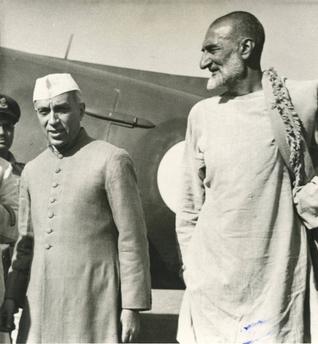
Pandit Jawaharlal Nehru with Khan Abdul Ghaffar Khan at Miranshah during his visit to the North West Frontier in October 1946. Photo: The Hindu Archives

This Independence Day let’s spare a thought for those Muslims who chose to migrate to Gandhi’s India

Taj Mohammad Khan was a young Pathan when India was carved out on communal lines in 1947. He was a Congress activist in Peshawar and was greatly influenced by Mahatama Gandhi and Frontier Gandhi (Khan Abdul Ghaffar Khan). He was a broken man when it became clear that the nation would be divided on communal lines. He was in extreme dilemma whether to stay back in Peshawar, the land of his forefathers, or move to a new place in a new country. And when communal riots broke out post Partition, he decided to leave the homeland for Muslims for secular India. He came to Delhi along with his family and couple of other friends. Today we know him as father of superstar Shah Rukh Khan.

The likes of Taj Mohammad Khan had rejected the two-nation theory with utter disdain. If not thousands, there were many Muslims who shifted to India from newly created Pakistan in 1947 when communal passions were running high.

Many years ago H.C. Shourie, who was the Rehabilitation Commissioner of refugees in Delhi, told this writer that several Muslims families from NWFP region of Pakistan came to India in 1947.They were not ready to live in Jinnah’s Pakistan. That was the region that was not much impacted due to communal violence that engulfed Punjab and Bengal. The local people were close to Gandhiji and Ghaffar Khan. That was the major reason for many Muslims to leave Pakistan and settle in secular India.

Many Hindus, Sikhs and even Muslims migrated to Afghanistan. A former Pakistani diplomat and historian, Nazar Abbas, said that there is a possibility that some Muslims had migrated to India then. “It is a fact that due to Ghaffar Khan, large number of people there were not supporting the idea of Pakistan. As he had a huge support base, I can believe that some of them had shifted to India,” noted Nazar Abbas.

Massive population exchanges occurred between the two newly-formed states in the months immediately following Partition. Once the lines were established, about 14.5 million people crossed the borders. Based on 1951 Census of displaced persons, 7,226,000 Muslims went to Pakistan from India while 7,249,000 Hindus and Sikhs moved to India from Pakistan immediately after Partition. However, the Census failed to identify those Muslims who migrated from Pakistan to India.

Returning to Taj Mohammad Khan and others like him, it goes without saying they would have taken that conscious decision after much thought. Among others, Mohammad Yunus, a close family friend of Nehru-Gandhi family, also came to Delhi with many Muslims. A close relative of Khan Abdul Ghaffar Khan, Mohammad Yunus never returned to his native place. For years together, he was heading Trade Fair Authority of India.

Delhi-based noted theatre activist Dr. Shamshul Islam’s family came from Rawalpindi to Delhi after violence broke out there. His father, grandfather and other close relatives were not ready to live in Pakistan. Islam, who teaches in the Capital’s Satyawati College, says that no member of his family has ever regretted their decision to live in Gandhi’s India.

Shah Rukh Khan has said several times that his father was a Congress activist and was totally opposed to the idea of Partition of the country on the basis of religion. He came to Delhi along with his family members. A lawyer, Taj died of cancer in 1981.

It is rather surprising that the reverse migration, albeit small, but very significant, hardly get any attention from historians. Unlike the general perception that only Hindus and Sikhs migrated to India in the wake of partition of the country in 1947, many Muslims families too decided to shift to India rather than staying in an Islamic country. It is not known whether Hindus or Sikhs too migrated to Pakistan then, but it is a fact that large number of Hindus remained there, especially in Sindh and East Bengal (now Bangladesh).

source: http://www.thehindu.com / The Hindu / Home> Features> MetroPlus / by Vivek Shukla / August 14th, 2015

Unfurl tricolour on rooftops on Independence Day, Deoband tells Muslims

Faizabad :

Leading Islamic seminary Darul Uloom, Deoband has asked Muslims to put up the national flag on their houses and other establishments on Independence Day and has also appealed to the members of Muslim community to celebrate the national day with spirit of patriotism.

Talking to TOI, the seminary spokesman Ashraf Usmani said, ulemas (religious leaders) of Darul Uloom played prominent role in the freedom struggle.

“Call for complete independence which later turned into the ‘Poorna Swaraaj’ movement, was first given by Hussain Ahmad Madani and Maulvi Ahmadulla Shah of Deoband and were among a long series of freedom fighters who laid their lives down for independence of the motherland,” said Usmani, adding, “Darul Uloom has asked Muslims across the country to unfurl the national flag on their houses and other establishment on Independence Day ”

Reacting to the appeal, seminary leader Maulana Arshad Qasmi said, “We have advised all madrassas across the country specially to host the tricolour and enlighten students about India’s freedom struggle and the country’s original spirit of unity in diversity.”

“Muslim community has always been on the target of communal forces,” said Hafiz Akhlaaq Ahmad Latifi, who runs a madrassa in Ayodhya, adding, “They always question our patriotism. In madrassas we always teach love for motherland and patriotism. In the past too, we have celebrated Independence and Republic Days, and will continue to do so.”

source: http://www.timesofindia.indiatimes.com / The Times of India / News Home> India / by Arshad Afzal Khan, TNN / August 14th, 2015

Panchala Museum plans gallery for freedom fighters

Bareilly :

With the 69th Independence Day less than a week away, authorities at Panchala Museum are planning to set up a gallery dedicated to the lives of freedom fighters from the Rohilkhand region.

Officials have started collecting pictures, letters and other memorabilia belonging to those who were a part of the freedom struggle.

Abhay Singh, a professor at MJP and the project coordinator, said, “We are requesting families of these bravehearts to provide photographs and texts related to their lives. We are working on a strategy to gather as many belongings of the freedom fighters as we can and we also plan to appeal to the public through newspapers in this connection.”

“Residents aren’t aware of the kind sacrifices freedom fighters from this region made. With the gallery we plan to highlight their glories in our museum. For instance, FR Rahman alias Chunna Miyan who was known as Gandhi of Bareilly worked for creating communal harmony in the city,” Singh added.

However, setting up of the gallery is subject to the availability of required material.

Shyam Bihari Lal, head of the department of ancient history and culture, said, “The gallery will be set up in the museum only after we receive enough material to put things up on display.”

Many people from the Rohilkhand region, including Bareilly, Shahjahanpur, Pilibhit, Rampur, Badaun, Moradabad, Bijnor and Sambhal played an active role in the freedom struggle.

Bareilly was the headquarter of the Rohilkhand region during the revolt of 1857. In fact, on May 31 that year, freedom fighters killed several British officials including the principal of Bareilly College.

The museum is located on the MJP Rohilkhand University campus. Till now, it was only accessible to varsity students but it will be opened to public from this month.

“There will be no entry fee for outsiders but there will be timings for public visits,” said Singh. He added the final touches are being given to the renovation and beautification work at the museum.

source: http://www.timesofindia.indiatimes.com / The Times of India/ News Home> City> Bareilly / by Priyangi Agarwal, TNN / August 10th, 2015

Picking the pieces of a rich heritage

KuttichiraMPos14aug2015

Efforts needed to preserve the unique socio-cultural identity of Kuttichira

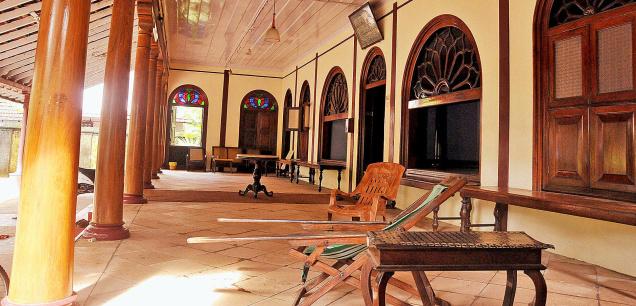
Kuttichira, a predominantly Muslim settlement in the coastal region of Kozhikode, holds testimony to the city’s trade relationship with the Arab world.

Built around centuries-old mosques, the region comprises hundreds of families who still keep its unique socio-cultural identity at different levels. The last vestiges of its physical expressions—the ancestral homes and a number of household articles—are vanishing and efforts to set up a cultural museum to preserve them failed to bear fruit.

After a few decades, no one would believe that more than 100 members of a family in a matrilineal descent system lived in a single tharavadu at a time, says Hassan Vadiyil, a veteran journalist and a member of a prominent family in Kuttichira.

Six kitchens for a single house may sound like a bit of an exaggeration. But that was what some of these colossal houses had at a time. “Some of them even had three domestic wells around them,” says Mr. Vadiyil, who had first hand experience of the entire socio-cultural practices and customs that were part of life in Kuttichira.

Ramsy Ismael, member of CIESCO, a socio-cultural organisation based at Kuttichira, had a good collection of a number of artefacts related to the cultural life of Kuttichira. They included a decorative cap used by the groom on the wedding day and even furniture used during special occasions like wedding. “But many of them have been lost,” says Mr. Ismael.

Most of the families at Kuttichira have now left their joint families migrated to the Middle East. “Members of the new generation have been completely disconnected from their glorious common past,” says Parappil Muhammed Koya, writer and historian, who has an entire title ‘ Kozhikkotte Muslimgalude Charithram,  written on the lives of people in Kuttichira. “Documenting and preserving at least the valuable remnants of this remarkable culture is a necessity,” he says.

At least one of the traditional homes in the area could be purchased or taken over on lease by the tourism department to be converted into a museum which can house whatever is available to tell the story of Kuttichira to the future generation, says Dr. Koya.

“That can also become one of the most valuable tourism attractions of the city if materialised,” he says.

source: http://www.thehindu.com / The Hindu / Home> News> Cities> Kozhikode / by Jabir Mushthari / Kozhikode – August 14th, 2015

Kalam’s Parting Gift to Children: A Sequel to Ignited Minds

KalamMPOs14aug2015

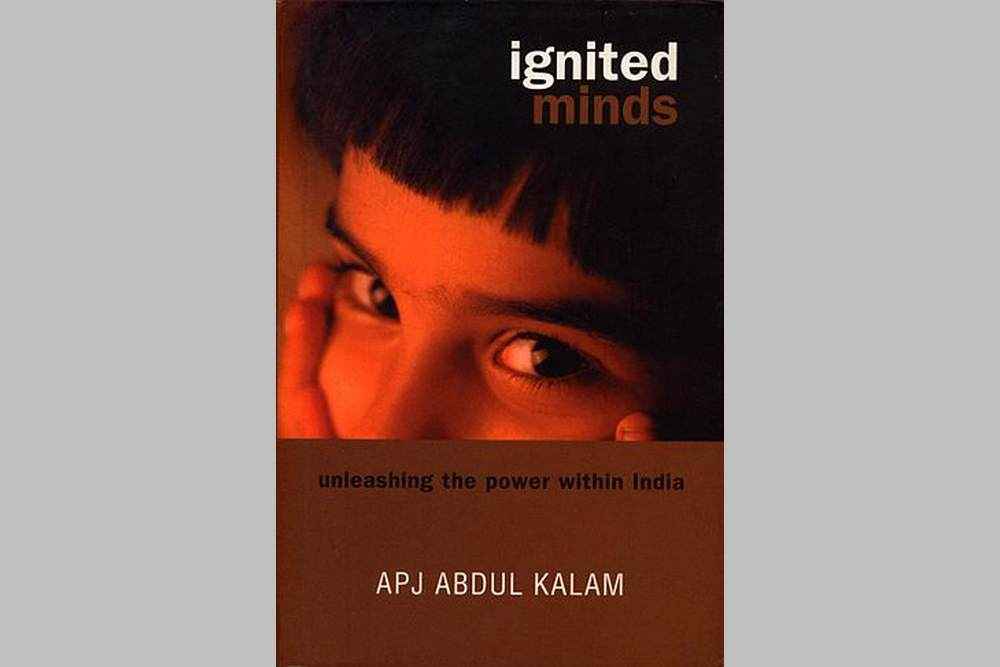
A number of new books by late A P J Abdul Kalam, including a sequel to his ever-popular Ignited Minds, are lined up for publication in the next few months.

Puffin Books will publish My India: Ideas for the Future, billed as a sequel to Ignited Minds. It will be a collection of insightful and thought-provoking speeches from Kalam’s post presidency years.

Organised into seven sections, the speeches in this collection are a roadmap for children, and adults alike, to follow their dreams and contribute to a better India, the publishers said.

Drawn from Kalam’s addresses to parliaments, schools and universities across the world, these speeches include his thoughts on nation building, poverty, failure, science and self-confidence in the 21st century.

Scheduled to be published later this year, My India: Ideas for the Future is a book that will inspire, invigorate and empower many generations to come, the publishers said.

Brought out in 2003 by Penguin, Ignited Minds: Unleashing the Power within India went on to become a bestseller. The book examines why, given all our skills, resources and talents, we, so obviously capable of being the best, settle so often for the worst.

Kalam offers no formulaic prescription in Ignited Minds. Instead, he takes up different issues and themes that struck him on his pilgrimage around the country as he met thousands of school children, teachers, scientists and saints and seers in the course of two years: the necessity for a patriotism that transcends religion and politics; for role models who point out the path to take; and for confidence in ourselves and in our strengths.

Puffin had recently published Reignited: Scientific Pathways for a Brighter Future, co-authored by Kalam and his aide Srijan Pal Singh, in which the writers worked to inspire a new generation of Indians in careers in science.

HarperCollins will also be taking through to publication one of Kalam’s last projects,Advantage India, co-authored with Singh, which draws upon some remarkable examples from his life to illustrate how India could have a winning edge.

The book will deal with subjects like Make in India, Skill Development, Digital India, Smart Cities project, rural development models and new energy policies.

Known for his visionary ideas grounded in practical experience, Kalam published numerous books including Wings of FireTarget 3 BillionLife Tree: Poems, Mission 2020Beyond 2020 and Turning Points, his highly readable account of his presidency.

Written in straight-forward, accessible language, each book shares his passion to help India and Indians dream big, and offers an action plan to help realise these goals.

The power of true spirituality, of faith that inspires good deeds and thoughts, the very special relationship between a teacher and a disciple, all of these are enshrined inTranscendence, a book that HarperCollins just published by Kalam, co authored with Arun Tiwari.

The book is about the unique spirituality-science fellowship that was formed between Kalam and Pramukh Swamiji Maharaj, who is one of the most inspiring spiritual figures of modern times and the fifth spiritual successor of Bhagwan Swaminarayan.

In The Family and the Nation (with Acharya Mahapragya), Kalam said how any task of nation building had to begin at an individual’s first training ground, the home. In A Manifesto for Change (with V Ponraj), he took up the crucial subject of how we should elect our leaders, and how those we elect should carry out their duties.

Kalam was also reportedly working on a book in Tamil with a vision for the growth of Tamil Nadu and completed seven chapters.

The book was titled Ennathil Nalamirunthal Kanavu Tamilagam Uruvagum, Puyalai Thandinal Thendral and seven chapters of it were completed after detailed discussions, co-author of the book and scientific advisor to Kalam when he was President, V Ponraj said.

Says Udayan Mitra, Associate Publisher at Penguin Random House who worked as Kalam’s editor for more than 10 years,

“Kalam managed to inspire the millions of people who met him, listened to his speeches, and read his books – and he ignited their minds.

“Having had the privilege to know Kalam personally and to have published his books for over a decade, I will miss him dearly, as I know the entire nation will. But his dream and his extraordinary personality will live on in his books, and it is in their pages that we will be able to find Kalam in our midst again, and celebrate his vision anew.”

Meanwhile, Kalam’s aide Singh is also mulling an idea of incorporating the unfinished lecture on ‘Creating a Livable Planet Earth’ at IIM-Shillong into a book.

source:  http://www.outlookindia.com / Outlook / Home> News / by Zafar Mudasser Nofil / New Delhi – July 31st, 2015

Mughal Era Quran Recovered in Mysuru

The antique Quran seized at K R Nagar town | EPS

Mysuru  :

An antique Quran dating back to the Mughal era has been seized by the police from a 10-member gang at K R Nagar town in the district. The gang claimed to have got the book from Hyderabad and was planning to sell it for Rs 5 crore, the police said.

The district police came to know about the gang a week ago when they came across a video which had details of the book. The video was made to find potential buyers. After showing the book to historian and former vice-chancellor of Goa Univeristy and Mangalore University, Prof Sheikh Ali, who confirmed its authenticity, the police followed up the case. On Monday night, the police received a tip-off about the gang’s whereabouts in K R Nagar town.

The police officers approached four members of the gang on the pretext of buying the book and arrested them. The remaining six members were arrested in Mysuru city.

The arrested are Nagaraju S (39) and A Muralikrishna (30) of Raichur district, Kanakappa (40) of Gadag district, Kallappa (40) of Kalburgi, Sanath (27), Ravindra (33) and Raghu (30) of Udupi district, Vijayendra (30) and Prasad (43) of Shivamogga district and Bhaskar (31) of Bengaluru rural district. Kallappa is an SDA in the Food and Civil Supplies Department. Prof Ali said going by the date mentioned on the last page of the 604-page book based on lunar calendar, the book belongs to the 17th century and is 398 years old. The pages are gold-coated and the calligraphy is in Arabic.

The pages have decorative borders, he added. He said the ink used in the book is not an ordinary one but a chemically treated one and hence the writings are still intact.

source: http://www.newindianexpress.com / The New Indian Express / Home> States> Karnataka / by ENS / August 12th, 2015