Category Archives: Arts, Culture & Entertainment

Seminar on Dejagow

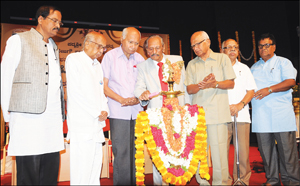
Noted writer Dr. K.S. Nisar Ahmed is seen lighting the lamp to inaugurate the Seminar on ‘Nadoja Dejagow - Baduku mattu Baraha’ at Kalamandira this morning as (from left) retired VC of Sanskrit University Prof. Mallepuram G. Venkatesh; Senior researcher Dr. Chidananda Murthy; littérateur Dr. C.P. Krishnakumar; Retired Director, Kuvempu Institute for Studies (KIKS) in Kannada Dr. D.K. Rajendra; Legal expert Dr. C.K.N. Raja and Kadamba Rangavedike president Rajashekar Kadamba look on.
Noted writer Dr. K.S. Nisar Ahmed is seen lighting the lamp to inaugurate the Seminar on ‘Nadoja Dejagow – Baduku mattu Baraha’ at Kalamandira this morning as (from left) retired VC of Sanskrit University Prof. Mallepuram G. Venkatesh; Senior researcher Dr. Chidananda Murthy; littérateur Dr. C.P. Krishnakumar; Retired Director, Kuvempu Institute for Studies (KIKS) in Kannada Dr. D.K. Rajendra; Legal expert Dr. C.K.N. Raja and Kadamba Rangavedike president Rajashekar Kadamba look on.

Mysuru :

Kalamandira on Hunsur Road in city, which was the venue for conduct of a seminar on ‘Nadoja Dejagow – Baduku mattu Baraha’ this morning, turned into a venue for hundreds of littérateurs from across the State to fall to the feet of former Vice-Chancellor of University of Mysore Nadoja Prof. Dejagow, who is on the threshold of turning a centenarian, to seek his blessings.

Inaugurating the seminar, noted writer Nadoja Dr. K.S. Nisar Ahmed described Prof. Dejagow as the best of those who studied under Kuvempu and lauded Dejagow for the simplicity in his language in his works which amount to nearly 290 and over 40 on Kuvempu alone.

Stating that Prof. Dejagow was one of the few, who fought relentlessly for Kannada even after retirement, Dr. Nisar Ahmed added that Dejagow was a fighter to the core when it came to struggle for Kannada.

Describing Prof. Dejagow, who mastered the art of writing quality works, as an encyclopedia on Kuvempu, Dr. Nisar Ahmed stressed on the need for functioning of the Centre of Excellence for Study in Classical Kannada at Manasagangotri.

Retired Director, Kuvempu Institute for Studies (KIKS) in Kannada Dr. D.K. Rajendra, presided.

Senior researcher Dr. Chidananda Murthy spoke on ‘Kannada Horatagararagi Dejagow,’ retired VC of Sanskrit University Prof. Mallepuram G. Venkatesh spoke on ‘Sahitiyagi Dejagow,’ Legal expert Dr. C.K.N. Raja spoke on ‘Shikshana Tagnaragi Dejagow’ and littérateur Dr. C.P. Krishnakumar (CPK) spoke on ‘Adalithagararagi Dejagow.’

MLAs Vasu and G.T. Devegowda, former KEA Chairman R. Raghu and hundreds of littérateurs including admirers of Prof. Dejagow were among those present.

source: http://www.starofmysore.com / Star of Mysore / Home> General News / Sunday – July 12th, 2015

NRIF Riyadh bids farewell to Dr. Aleem

DrAleemMPos16jul2015

Riyadh :

Dr. Mohammed Aleem, third Secretary, Information and Labor, Embassy of India here said that many Indian expatriates still needs to correct their legal status in the Kingdom and many of them are seeking the help of embassy to correct their status.

Officials are trying to solve these new cases visiting the embassy almost every day for rectification. He appealed the Indian expatriates to help the fellow countrymen by properly guiding them.

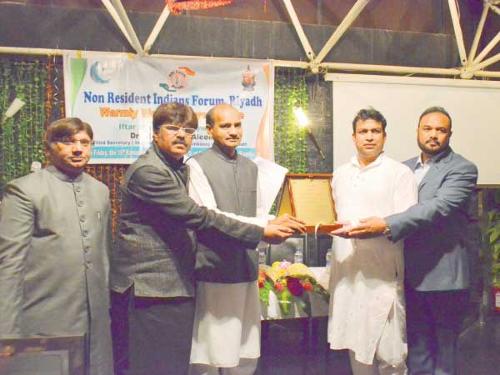
Dr. Aleem who completed his tenure in Riyadh has been transferred to Qatar and will be leaving soon. Non-resident Indians Forum, Riyadh (NRIF) organized an Iftar in his honor at a local restaurant here.

Aleem thanked the NRIF members for organizing the impressive farewell function. Dr. Hifzur Rahman, second secretary at the Embassy here, was the chief guest.

The NRIF, formed recently, organized its first function inviting more than 150 Indians for Iftar. NRIF President Syed Akram Mohiuddin said in his welcome address that there are many issues which are not being dealt by other associations and we will try our best to sort out these issues pertaining fellow Indians.

Akram appreciated Dr. Aleem for is relentless efforts and services for the Indian community in Saudi Arabia.

Dr. Sayeed Mohiuddin, vice president education,  highlighted the aims and objectives of the organization and said this organization will work in a true democratic way and the office bearers will be elected every year. Sayeed outlined the coming events of NRIF, which includes a cricket match between Riyadh and Jeddah, The Third Youm Al Watani Cup Cricket Tournament, and many other events.

The event started by the recitation from the verses of Holy Qur’an by Hafiz Zakir Hussain.

The following team has been elected: Syed Akram Mohiuddin – president; Syed Aftab Ali Nizami – vice president (cultural affairs); Dr. Sayeed Mohiuddin – vice president (education); Dr. Abdul Sattar Gayas – vice president (health and sports) and Abdus Subhan – vice president (administration), Javed Ali – general secretary; Abdul Majeed – joint secretary and Mohammed Kaleem – treasurer.

Its core committee members include Dr. Anwar Khursheed, Ghulam Mohammed Jaweed, Mohammed Salahuddin, Shakeel Mah, Nooruddin Jahangeer, Mir Hussain Ali Khan and Taquiuddin Mir. Javed Ali, general secretary, conducted the proceedings and Taqiuddin Mir proposed vote of thanks.

source: http://www.saudigazette.com.sa / Saudi Gazette / Home> Kingdom / by Mir Mohsin Ali / Tuesday – July 14th, 2015

HISTORY OF FOOD – Arab flavours from 7th century still sparkle in the Muslim cuisine in Malabar

In the northern districts of Kerala, the menu still carries legacies of the merchant traders who visited the region centuries ago.
BiriyaniMPOs11jul2015

As lakhs of Muslims break their Ramzan fast with iftaar meals across India, there’s one region where the menu is strikingly distinct from that in the rest of the country. The Muslim community in Malabar, in the northern districts of Kerala, boasts of a unique cuisine that even today shows telltale signs of Arab influence carried across time.

Ask for a Sulaymani in any tea shop in Malabar, stretching from Kozhikode to Kasargod, and you’ll get sweet black tea with lemon. The name is believed to have been lent to this simple drink by the Sulaymani Bohras (Sulaymanis), a Musta’lī Ismaili community from Saudi Arabia and Yemen.

Step into the dining room of any traditional Mappilla (Muslim) home in Malabar at meal times and chances are that you’ll be enticed by the rich and inviting aroma of mandi, a distant cousin of the biryani. Said to be the traditional dish of Hadhramaut and Sana’a areas in Yemen, the mandi among the relatively unknown delicacies found on Malabar dining tables.

A mixture of rice, spices and chicken or lamb, the mandi is made in an oven in the ground tiled with clay bricks. The rice, spices and water are cooked in this oven, while wood coals are placed on top to make sure that steam doesn’t escape. The coal is also used to add the extra smokey flavour to the meat which too is cooked in this oven. Care is taken to use the meat of a young goat, which is tenderer than regular mutton.

“This dish is little known outside Kerala but it is an extraordinarily popular item in Malabar,” said Muhammed Seedi, managing director of the Whitehouse group of restaurants, which has the dish on its menu. “It has to be cooked for at least two and a half hours for the flavours to seep in.”

Mandi is said to be a corruption of the Arabic word “nada”, which means “dew”. The name is an allusion to the tenderness of the meat.

Adapted with local ingredients

“The influence is not just limited to Yemen,” said Ammini Ramachandran, Texas-based author and food writer. “Alissa, a wheat, meat and cinnamon porridge, is similar to harisa, a recipe preserved over centuries by the people of the Middle East. Recipes for this dish are found in 10th century Baghdadi cookbooks Annals of the Caliph’s KitchenSufi Cuisine as well as in the Iraqi cookbookDelights from the Garden of Eden. In medieval Baghdad, it was called ‘hareesi’. Even today, the dish is served in Turkey, [where] it goes by the name ‘herise’, while in Lebanon it’s called ‘ hreessey’.”

She added: “The cuisine was adapted with local ingredients. Take for example ‘ari pathiri’, a thin chapati made out of rice flour. Rice being the staple grain in the region, breads and rotis were alien to the local food habits. The women innovated what they had in hand and made bread with rice powder for their Arabian paramours, who were used to a bread-based diet.”

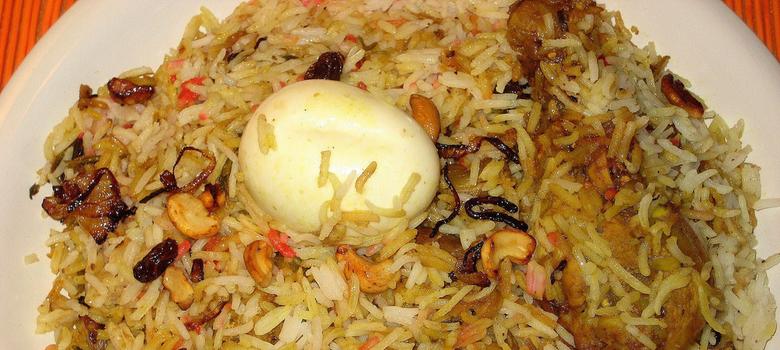
Even the Malabar biryani, one of the key stars of any iftaar table, has a distinct Arabian touch. The rice and the meat are cooked separately and then layered and cooked. “Biriyani ustads”, who specialise in making this dish, are hired to cook it for weddings, special occasions and iftaars. Other dishes, meanwhile, are rustled up by the “pandaaris”, who hold the position of executive chefs.

“The Mappilas were extremely hospitable people, and would share their food with everyone in the neighbourhood,” said Sumesh Govind, managing director of Kozhikode-based Paragon Group of Hotels. “Subsequently, Malabar biryani became a staple in Hindu Thiyya homes as well, especially in the Thalasserry area. So much so that it’s also called Thalasserry biriyani.”

Malabar or Thalasserry biriyani is served with date pickle, raita and coconut chammanthi (chutney), again a fusion of West Asia and Kerala.

Influenced over the ages

Local produce such as mussels have also found their way onto iftaar tables. Ari kadukka, or rice-coated mussels, are among the favourites.

Another iftaar speciality said to have roots in West Asia is the dessert – muttamala or necklace of eggs. Thin filaments of egg yolk are cooked in sweet sugar syrup served over Pinnanathappam, steam-cooked cardamom-scented egg white pudding.

The influence of the Arabs lingers on in this and many other Malabar Mappila dishes.

Muslims or Mappilas tended to congregate more in the Malabar region because of the patronage from the local leaders. Subsequently, Malabar Mappila culture and cuisine came to have an identity of its own.

“The area we know as Kerala today was trading with merchants from West Asia from pre- Mohammedian times,” noted Dr K Gopalankutty, retired head of the history department at the University of Calicut. “After the Roman Empire collapsed, traders from Assyria, Babylon and Egypt as well as the Phoenicians and Arabs dominated this market, some even eventually mingling and marrying into the local population.”

By the 7th century, Muslim traders visited the southern coast of Malabar and shared their culture as they sold their wares.

Well before Abu Fazl wrote about how dozens of master cooks whipped up delicacies for the imperial Mughal kitchens of Akbar in his Ain-i-Akbari, the south western coast of India was already breaking fasts with culinary delights based on recipes brought across the seas from West Asia.

Over 2,000 years after they sailed to southern India, the legacy of these peaceful traders of West Asia continues to live on in the cuisine of Malabar.

We welcome your comments at letters@scroll.in
source: http://www.scroll.in / Scroll.in / Home> History of Food / by Supriya Unni Nair / Friday – July 10th, 2015
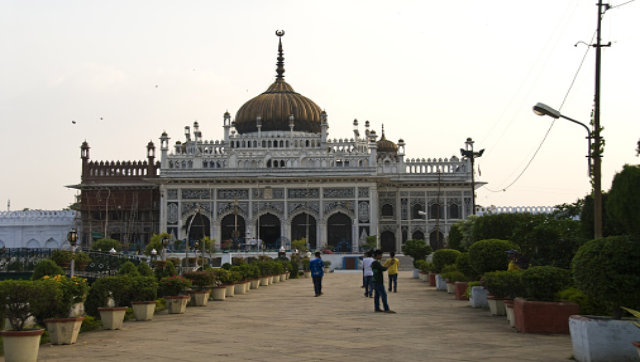
Chhota Imambada conservation work not as per norms: ASI

The Archaeological Survey of India (ASI) on Thursday raised a question mark on the authenticity of the ongoing preservation work being carried out by Hussainabad Allied Trust (HAT) at Chhota Imambada and demanded an immediate halt. (Getty image)

The Archaeological Survey of India (ASI) on Thursday raised a question mark on the authenticity of the ongoing preservation work being carried out by Hussainabad Allied Trust (HAT) at Chhota Imambada and demanded an immediate halt.

The ASI has also objected to the ongoing construction work at the Picture Gallery and has approached its headquarters to intervene. It said construction at the Picture Gallery was sheer violation of the Ancient Monument and Archaeological Sites and Remains (Amendment and Validation) Act 2010 that prohibited any construction within and near the protected monument.

The ASI’s move came after a short survey that it carried out a couple of weeks back to check the authenticity of the ongoing construction work at Chhota Imambada, and architectural marvel built by Nawab Mohammad Ali Shah in 1838.

“The officers were aghast at the way preservation work was being carried out at Chhota Imambada, as it was totally against the norms,” an ASI officer said.

Instead of using mortar, lime and surkhi, the ideal material for preservation work, the officer said the labourers were found using cement. “In those days mortar, lime and surkhi were generally used as binding material for the monuments. But using cement in place amounts to a crime and it will ruin the monument,” the officer who inspected the Imambada said.

He said technically, the same material (as used earlier in the monument) should be used for preservation work. Use of cement would ruin the entire edifice.

The style of preservation was another thing that the officers found highly objectionable and said it was totally against the preservation norms. “Old monuments like Imambada only need to be conserved. But in this case, the labourers were found breaking the plaster and applying a fresh one, using cement,” the officer said.

One had no right to spoil the originality of the structure, the officer said. Be it on the left side of Chhota Imambada or the right side of the main entrance gate, at all the places, the labourers were breaking the original plaster that bore the Quranic verses, calligraphy and aesthetic artwork, he said.  They were re-plastering with the same kind of designs. “This way there will be nothing original left. Besides, they are also minimising the scope for any future restoration work that is not at all possible after using cement,” he added.

The ASI also raised an objection over the illegal construction of toilets at the ASI-protected Picture Gallery. “It was found that the toilets were being constructed at the Picture Gallery. It is a protected monument and any construction is illegal,” said NK Pathak, superintending archaeologist, ASI.

Pathak said in this context, a letter had been written to the district magistrate and also to the ASI headquarters.

source: http://www.hindustantimes.com / Hindustan Times / Home> Cities / by Oliver Fredrick, Hindustan Times, Lucknow / June 13th, 2015

Girl group on mission to revive forgotten art forms

Lucknow :

When engineer Ashrya Srivastava sat talking art with her childhood friend Meenakshi Srivastava, an MA student at Lucknow University’s Arts College, both the 23-year-olds were shocked to find that 63 Indian art forms were on the verge of death. Determined to revive and propagate them, the two roped in friends from different fields. Dr Anitya Srivastava (24), who had just finished her MBBS and commerce graduate Naghma Parveen (21), joined the cause.

The four young girls have now formed a group called ‘San Rachna’ and are organising an Indus Valley inspired ‘galiyara’ (art aisle) on July 8, at Dr Ram Manohar Lohia Park to bring art forms other than just the popular Madhubani to the city’s notice.

“Starting with awareness, we will move on to conservation and lastly the revival of these indigenous art forms, since there are only a handful of people practicing them,” shares Anitya.

“Art forms like Kohvar and Sohrai were practiced by tribes from Chhattisgarh and focused on women issues. They are now almost defunct, since the tribe itself is slipping into extinction. The Basholi and Guler paintings, primarily from the mountains with a hint of Mughal and Rajasthani influence, are also dying. There are scores of such arts that will fade into oblivion, if people are not made aware of their existence and urged to follow them,” she says.

Ashrya recalls, “Two years ago, I was pursuing engineering in Allahabad when a foreigner at the Kumbh Mela asked me where ‘my’ indigenous Indian art form was amid all the western abstract art that had taken centre stage at the mela. He had a point, we had lost track of our cultural heritage.”

The girls have been managing all the funds themselves for the upcoming live demonstration of art and culture under ‘Ek Shaam’.

“We have done it all on our own, from designing the logo to preparing everything. We have put in all our internship stipends for this traditional galiyara setup, which will have painting, pottery, music and dance, all orchestrated by students. It has all been possible under the guidance of senior artist Asha Srivastava,” said Ashrya.

After three months of six hours of intense research daily on the history of art, the girls are now all set to revive indigenous art forms of India.

“As we sat studying our cultural heritage, we came to know why particular colours are used, what season and area they depict, and the various arts forms practiced and styles used, both in art and dress codes. It was all new and interesting information and we wish to bring out from within the yellowing pages of old books,” say the two girls.

source: http://www.timesofindia.indiatimes.com / The Times of India /Home> City> Lucknow / by Yusra Husain, TNN / July 07th, 2015

Encouraging women to become entrepreneurs

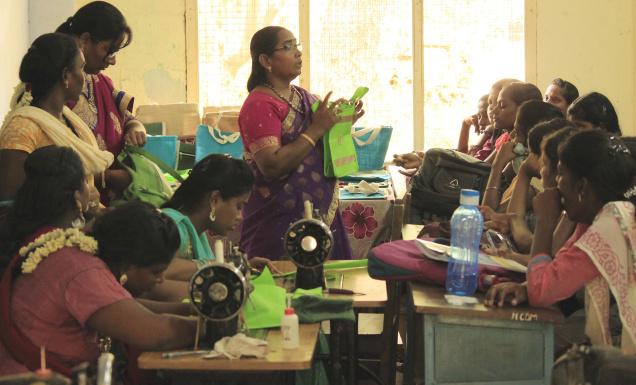
Jute making workshop at Queens Mary's College in the city. Photo: Paul Joshua
Jute making workshop at Queens Mary’s College in the city. Photo: Paul Joshua

Dhanalaxmi teaches jute-bag making and helps student start their own businesses

Over 100 students of Queen Mary’s College learnt the nuances of jute bag-making from Dhanalaxmi, who has been encouraging woman to become entrepreneurs. The owner of IVERS Bags, Dhanalaxmi has been in this business for the past 11years. Five years ago, she started helping others start their own businesses. She has been training self-help groups and NGOs in making and marketing jute bags and jewellery.

“A few years ago, when the IT scene was bad, one couple from the IT industry approached me, asking me to train them in the art. Today, they run a successful jute business,” she said.

In the session conducted at the college, students from corporate secretaryship, sociology, zoology and B.Com departments walked away with certificates presented by Akathar Begum, principal, on successful completion of the workshop.

“These are the bags we have made. Dhanalaxmi ma’am also gave us a kit box with materials to try more designs at home,” said a student showing off a table full of sling bags, pencil pouches and tambulam bags made by her.

Dhanalaxmi is ready to conduct training for groups and individuals . “This is an eco-friendly product and helps reduce the use of plastic. People should make a switch to jute product.”

Dhanalaxmi can be contacted at 92831 35238/98405 33611.

source: http://www.thehindu.com / The Hindu / Home> Features> Downtown / by Flavia Plaidus / Chennai – July 04th, 2015

Living memories and a father’s voice

MUSIC – Payel Sengupta

Pride, aristocracy and tradition: these components of Indian classical music are synonymous with a gharana known as the Agra Gharana. This gharana reached its zenith during the reign, as it were, of the illustrious maestro, Ustad Faiyaz Khan. He had an unparalleled, unique style of singing. The flow of the Agra Gharana had developed a new stream with the blending of another prestigious gharana, Atrauli (especially a gharana of Jaipur).

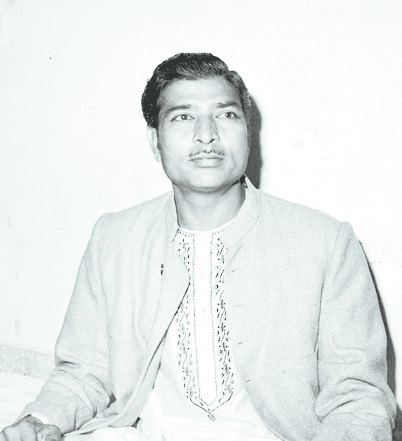
Sharafat Hussain Khan

Ustad Sharafat Hussain Khan, a practitioner of the Atrauli Gharana, was adopted by Ustad Faiyaz Khan at the tender age of eight, and was introduced to the Agra Gharana. The young Sharafat surprised the musical doyen with his voice. But he was only twenty when his mentor died. In the meantime, Sharafat started gaining a reputation as the promising vocalist. After the death of his beloved mentor, Sharafat took his training from Ustad Ata Hussain Khan of the Atrauli Gharan and Vilayat Hussain Khan of the Agra lineage.

That was the post-Independence era of Indian classical music; the arena of classical music was being dominated by names like Bade Ghulam Ali Khan, Roshan Ara Begum, Ustad Nissar Hussain Khan, Ghulam Mustafa Khan and D.V. Paluskar. But Sharafat became the busiest artist at that time for his distinctive potential. The priceless compositions ( bandishes) of the Agra Gharana found a new life in the voice of Sharafat Hussain Khan. His sudden demise was undoubtedly a blow to the glory of the Agra and the Atrauli gharanas. Probably to revive these incomplete, lost memories of Sharafat’s singing, his disciple, Vidushi Purnima Sen, organized a programme in commemoration of her guru’s death anniversary, where the principal attraction was the vocal recital by Sharafat’s son, Shaukat Hussain Khan. But before Shaukat’s performance, the programme commenced with a sitar recital by Agnibha Banerjee. He enchanted the listeners with his simple and sweet alaap, jor and jhala in Poorvi and gats in Shyam Kalyan.

Shaukat commenced his performance with the Raga Shudhha Kalyan. The Agra Gharana has a distinguished feature in which the alaap is sung in an elaborate, vast manner, with the variation of vistaars like Dhrupad and Dhamar. Maintaining this tradition, the artist presented a long alaap and overwhelmed the audience. His touches on a specific note from one octave to another without interruption were especially attractive. His smooth, generous rendition completed a circle of varied moods. The drut kheyal also became interesting for the ornamented taans and vistaars in the antara.

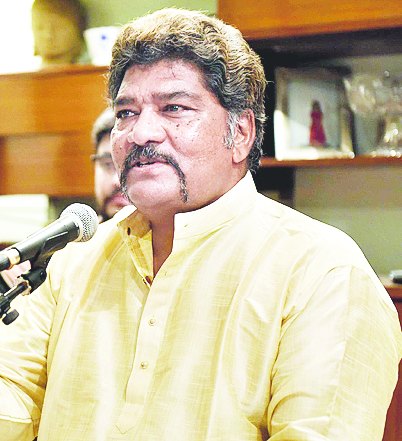
Shaukat Hussain Khan

Shaukat’s next presentation was the Raga Yogkaus. Like the previous performance, the artist again presented an elongatedalaap which brought out the soul and beauty of this particular raga. He made an exceptional utilization of pancham which increased the charm. Shaukat is blessed with a wonderful, generous voice, and has an expert dominance over every octave, which is a very special attribute of his gharana. The munificent gift of his voice brought his ancestor’s memory alive. The kheyals on Yogkaus were a typical, attractive presentation of the Agra Gharana.

Suhaag Sugrai is a very special raga of the Agra Gharana. Shaukat performed this raga with the greatest supremacy. The most enjoyable part was the briefkheyal which was embellished with small vistaars and smart, forceful taans. After a beautiful aochaar, he sang a famous bandish of his gharana, “Gha Gha Ghana Ghana” in the Raga Surmalhaar, which reminded the audience of his father. He made a proper tuning to this composition, which was followed by the Raga Megh. Shaukat’s mighty voice helped in the full bloom of the raga, and the compositions like ” Garaje Ghata Ghana Ghor” and especially the drut bandish, ” Dhume Dhame Aawe“, were able to create an atmosphere of thunderstorms on that sultry summer evening. A robust masculinity is a hidden beauty of the gayaki of the Agra Gharana, and Shaukat Hussain Khan perfectly fits this category. He skilfully shifted to a soulful ambience from the storm and started singing a prominent tappa, “Miyan Bejanewale” based on the Raga Kafi, which portrayed not only the musical prowess of the artist, but also drew up the light of nostalgia. He sang a brief kafi tarana in a cheerful manner. Shaukat concluded with a popular dadra of his ‘Ghar’, ” Banao Batiyan“, which reflected an essence of the golden period of Indian classical music. He touched every note carefully with a mellifluous style. Shaukat was perfectly accompanied by Sujit Saha on the tabla.

Shaukat shared some personal feelings with the audience which included some memories of his father. According to him, Sharafat Hussain Khan used to practise only Bhairav and Yaman, but always sang the tough and rare ragas like Patmanjari, Jhinjhoti and Dhaneshree while performing on stage. He never refused the requests of his listeners. It seemed that his son probably got the same training in the ragas, because he seemed to fulfil the wish lists of his listeners. Perhaps there could have been no better way to commemorate his father’s death anniversary.

source: http://www.telegraphindia.com / The Telegraph, Calcutta, India / Front Page> Opinion> Story / by Payel Sengupta / Saturday – May 23rd, 2015

145 yrs of Hazrat Ali taboot in Lucknow

Lucknow :

Considered the seat of azadari (practices related to mourning the death of Imam Hussain and his family), Lucknow this year completes 145 years of carrying out the taboot (coffin) of Hazrat Ali on the 21st Ramzan, falling this year on Thursday.

As per Shia belief, Ibne Muljim struck Hazrat Ali with a poisoned sword as the latter was offering morning prayers at a masjid in Iraq on 19th Ramzan. After battling for his life, Hazrat Ali succumbed to injuries on 21st Ramzan.

On this day, Shia Muslims observe martyrdom anniversary of Hazrat Ali (son-in-law of Prophet Mohammad) by holding grand majlis and mourning processions, a tradition started by Syed Hasan Mirza from his house in Moulviganj in 1870 and within a decade, it became so popular organizers had to shift to a spacious place.

The procession now starts from Najaf Rauza (Rustamnagar) and culminates at Karbala Talkatora. By the time the procession reaches Haiderganj it is broad daylight and the coffin is covered with a century-old piece of black cloth brought by Hasan Mirza when he visited Najaf (Iraq). Due to this, it is popularly known as Hasan Mirza taboot. A majlis is also organised where Maulana Meesam Qasim Jerveli recites the Hadees.

General Secretary of the anjuman (committee) that prepares the coffin and fourth generation of Hasan Mirza, Syed Mukhtar Hussain Zaidi, said, “Except for the period from 1978 to 1998, when azadari was stopped in Lucknow, the procession has been taken out every single year.”

source: http://www.timesofindia.indiatimes.com / The Times of India / Home> City> Lucknow / by Uzma Talha, TNN / July 09th, 2015

Premji gives half of his stake in Wipro for charity

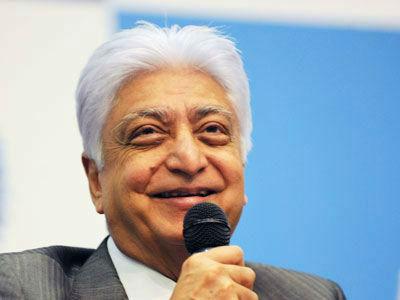
In Wipro's annual report for the year ended March 2015, Premji said he has now allocated the equivalent of 39% of the company's shares to a trust focussed on philanthropic initiatives, mainly primary education.
In Wipro’s annual report for the year ended March 2015, Premji said he has now allocated the equivalent of 39% of the company’s shares to a trust focussed on philanthropic initiatives, mainly primary education.

Bengaluru :

Wipro’s billionaire chairman Azim Premji, the first Indian to sign the Giving Pledge, has set aside more than half of his wealth for charity by allocating an additional 18% stake in the company to fund philanthropy.

Premji, who will turn 70 this month, controls a 73.39% stake in India’s third-largest software company, which is worth about Rs 99,500 crore ($15.7 billion). In Wipro’s annual report for the year ended March 2015, Premji said he has now allocated the equivalent of 39% of the company’s shares to a trust focussed on philanthropic initiatives, mainly primary education. The additional 18% stake forms the latest tranche of shares Premji has allocated for charity.

The Giving Pledge is an effort to invite the world’s wealthiest individuals and families to commit half of their wealth to philanthropic causes and charitable organisations. In his pledge in 2013, Premji said he believes that those who are privileged to have wealth should contribute significantly to try and create a better world for the millions who are far less privileged. “Over the past 15 years, I have tried to put this belief into action through my personal philanthropic work. Over these years, I have irrevocably transferred a significant part of the shareholding in WiproBSE -0.03 %, amounting to 39% of the shares of Wipro, to a trust (of which ownership of 21.14% was transferred and for the balance, the trust is entitled to the beneficial interest of dividends and sale proceeds),” Premji wrote in a letter to shareholders.

People close to Premji said he has been quietly and steadily been transferring wealth to fund philanthropy.

“Apart from the Tata Trust, nothing comes close to the commitment made by him on this front,” said a person who knows him well. “And now, he has two engines to carry on philanthropy—theAzim Premji Foundation, and the newly formed Philanthropic Initiatives formed to making grants to NGOs.”

Last year, Premji hired Amnesty India head G Anantha Padmanabhan to build an organization that will offer grants to external agencies.

“The new initiative of making grants to NGOs has just started under what we call Philanthropic Initiatives. We are continuing to look at various areas, e.g., nutrition, water — the only area that we have decided on is support to NGOs working with the most vulnerable people — eg, street children, urban homeless, teenage girls from disadvantaged communities, women at risk of violence,” said Anurag Behar, CEO of Azim Premji Foundation and vice-chancellor of Azim Premji University.

“The Foundation’s work continues to expand and deepen in helping improve public (government) school education across seven states, which have about 350,000 schools. The university that we run also continues to expand. This year, we have launched a Master’s in public policy and governance and also our undergraduate programme,” Behar added.

Philanthropy has been on the rise among the rich in India as Microsoft cofounder Bill Gates, the world’s richest person, and business magnate Warren Buffet urged the wealthy to give their fortunes to charitable causes.

According to the Hurun Research Institute, at least 50 individuals donated over Rs 10 crore to philanthropic causes in 2014.

Premji, Anil Agarwal, Shiv Nadar and Ratan Tata were the most generous givers in India, according to the Hurun India Philanthropy List 2014.

source: http://www.timesofindia.indiatimes.com / The Times of India / Home> Business> India Business / by Pankaj Mishra,  ET Bureau / July 08th, 2015

Remembering the ‘Beypore Sultan’ Vaikom Mohammed Basheer

Kozhikode:

It has been 17 years since Vaikom Muhammed Basheer left us. But that wouldn’t serve as a reason not to remember him on his 103rd birth anniversary. The ‘Beypore Sultan’ is indeed always in the minds of Malayalis. And that is precisely why literary figures and critics and even children in schools organize programmes to commemorate him every year, some even visiting his family and home at Beypore.

PhilatelyBeyporeBasheerKerala07jul2015

Basheer was born on January 21, 1908 at Thalayolaparambu in Vaikom. He studied initially in a Malayalam medium school and then went to an English medium school in Vaikom. Attracted to the teachings of Mahatma Gandhi and the Swadesi movement, he left school and joined the freedom struggle when in fifth form. As the princely states of Kochi and Travancore were not much in the freedom movement, Basheer went northwards to Malabar.

In 1930 he went to Kozhikode to take part in the Salt Satyagraha and got arrested along with several others. Basheer was sentenced to three months’ imprisonment at the Kannur jail. He, along with hundreds of other political prisoners, was later released as per the Gandhi-Irwin Pact in 1931.

Soon after his release Basheer again got involved in anti-British struggles and edited a revolutionary journal named ‘Ujjivanam’ (meaning Uprising) for which he was issued an arrest warrant. He soon left Kerala and began his long journey of seven years across the country and abroad.

Basheer wandered doing all sorts of works that helped him keep away from starvation. He worked as a cook, newspaper seller, fruit seller, watchman etc. He even spent a few years at the Himalayas and the Ganges basin with Hindu saints and Sufi mystics.

When he came back to Kerala, he again got involved in political works and got arrested. He was jailed in different places and the stories he heard from the police and fellow prisoners there later appeared in his novels and short stories.

He wrote ‘Premalekhanam’ (Love Letter) from jail in 1943 and published it on release. He wrote ‘Baalyakaalasakhi’ (Childhood Friend) also from jail, but published it only in 1944 after making revisions after his release. The novel is said to be ‘a piece torn from his life’. ‘Mathilukal’ (meaning Walls) is a famous work which tells the story of the love of a male prisoner and a female prisoner who never saw each other as they were on either sides of a wall.

Basheer left active politics after India won freedom. He married Fabi who was much younger to him in his forties. Afterwards, he settled down for a quiet life with his wife and two children Anees and Shahina at Beypore in Kozhikode, though continuing his writings. And the man, born and educated in Vaikom and settled in Beypore, became the ‘Beypore Sultan’. As common with great writers, Basheer too suffered from mental illness and had to undergo treatment in mental hospital twice. He died in Beypore on July 5, 1994.

The writer in Basheer was a strong critic of social customs and practices, as well as superstitions especially in the Muslim community of the time. And he said it all in the down-to-earth style unique to him only, which attracted him to the literary critics as well as the common people alike. Basheer wrote about the social conditions and situations in his own thought-provoking yet humorous style. Highly appreciated is his novel ‘Ntuppooppakkoranaendaarnnu’ (1951) which RE Asher (who translated most of Basheer’s work into English) translated with the title ‘Me Grandad ‘ad an Elephant!’. It deals with the mid 20th century Muslim community in Kerala, such as boasting about the past glory without doing much in the present, through the story of uneducated Kunjippaathumma and poet Nisaar Ahmed. Other notable works are Shabdangal (Voices), Paaththummaayude Aadu (Paathumma’s Goat), Bhaargavi Nilayam, Sthalathe Pradhaana Divyan, Muchcheettukalikkaarante Makal, Aanavaariyum Ponkurishum, Ettukaali Mammoonju etc.

Basheer never differentiated between the written language and the spoken one. He wrote in the language of his characters, who were mostly traditional rural Muslims, and a majority of them were uneducated. Their local dialects and natural style of talking were brought as such into his writings. Basheer gave importance to emotions and telling the story, without considering the grammar and structure of sentence.

Basheer was awarded the Padma Sri in 1982. He got the Kendra Sahitya Academy Fellowship and the Kerala Sahitya Academy Fellowship, besides the Vallathol Award and the Muttathu Varkki Award in 1993, and the Lalithambika Antharjanam Award in 1992.

source: http://www.twocircles.net / TwoCircles.net / Home / by  Najiya O, TwoCircles.net / January 21st, 2011