Category Archives: Arts, Culture & Entertainment

Filling Gaps in History

Hyderabad  :

“Konjem konjem Telugu vastundi and thoda bahut Hindi bol leta hun,” says Benjamin E Cohen with a boyish grin. An associate professor in history at the University of Utah, Benjamin was on one of his yearly visits to the city. Also a research scholar, he was here to launch his second book, ‘In the Club’.

PIC: A RAdhakrishna
PIC: A RAdhakrishna

“People at the book launch said that my books and writings are ‘history, with a twist’. I like that. That is how my work is,” he says, with a wink.

Though it may seem quite natural for a history scholar to explore the history of clubs in a diverse country like India, the idea of dedicating a book that helps understand club culture is unconventional.

Benjamin explains, “I knew there were many old clubs across India and South Asia. I investigated whether or not any scholar had taken up their history – their whole history and not just one individual club. It turns out that there was a gap. I was interested in filling that gap.” He also shares his experience, “when you ask people if they know about the Secunderabad Club, they say yes. But if you ask them to elaborate, nobody will.”

The book takes a look at clubs in India, their role in building an associational life and a civil society in colonial India.

“It also talks about their role when India was transitioning from colonial rule to independence,” he elaborates.

His first book, ‘Kingship and Colonialism in India’s Deccan: 1850-1948’ was a fresh perspective on the relationship between the rulers and the ruled. Using archival material and not hearsay and rumour, Benjamin reconstructed the societal equations without any blinkers.

Benjamin is grateful to his friends and colleagues especially here in the city who have helped him draft the book. His biggest strength is his fluency to read, write and converse in Telugu, Hindi and Urdu. “I studied my languages first as a graduate student at the University of Wisconsin in Madison. Then I had the opportunity to live and work in Hyderabad during my graduation. I took private lessons with both Telugu and Urdu teachers. I tried to keep up with the languages back in the states,” he shares and adds that his interest in the area began when he was a child. As the son of a political scientist who also specialised in South Asian studies, he first came to India in 1977.

“I lived in Vizag, Delhi and Mussourie. We spent a year in Hyderabad. My whole life, I have either come to India or grew up in a home that was steeped in either Indian or South Asian culture,” he recalls. He worked in Chicago for three years after that.

“I was tired of that life,” he admits, “What I really wanted to do was find out more about India and South Asia,” he shares. Ask him what he likes about India and he counter questions, “How can I begin to answer that question?” and adds, “India is both a very old civilisation also a very young democracy. I find that combination fascinating. India has more excitement in one block than America has in 10.”

That is why he enjoys coming to India and is glad to contribute to its rich and diverse history. He also has two interesting projects lined up.

“I am finishing a book on Nawab Mehdi Hasan Fateh Nawaz Jung who was a minister  in Hyderabad from 1883 to 93. He came here from Lucknow to work in the Nizam’s government. He had a British wife and they ran into some trouble. It was a scandal and was on the front pages of all the newspapers,” he tells us.

Another is a long history of water in Telangana from the Kakatiya rule. “I am very excited about these projects,” he exclaims.

source: http://www.newindianexpress.com / The New Indian Express / Home> Cities> Hyderabad / by Rajitha S / June 19th, 2015
The Beypore Sultan

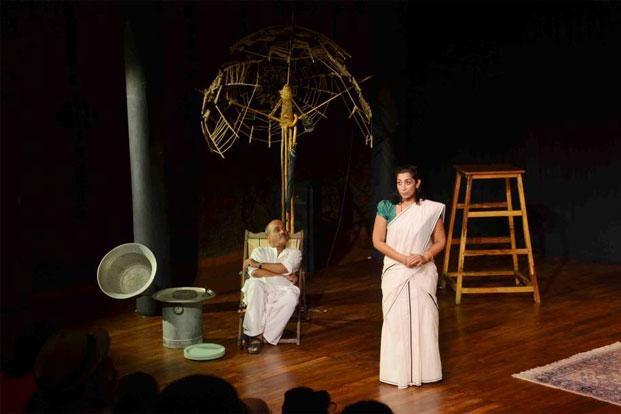
Perch Collective’s ‘Under The Mangosteen Tree’ will now play Vaikom Muhammad Basheer’s favourite music.

An earlier staging of the play, ‘Under The Mangosteen Tree’

 Malayalam writer Vaikom Muhammad Basheer was known to be an incredible storyteller. When he settled down to a quiet life at Beypore in Kozhikode, visitors would call on him every day. No one was turned away. They would just move to his favourite spot—the author in his easy chair, under the mangosteen tree in his house, and the expectant audience seated around him, waiting to hear his next story.

This is the 10th year of Chennai-based theatre group Perch Collective’s journey with the late Basheer. They opened with a play in 2004, Moonshine And Skytoffee, which was based on two of Basheer’s love stories. Perch’s play Under The Mangosteen Tree (UTMT), a tribute to the iconic writer, opened in 2008, Basheer’s birth centenary year. It weaves together six of Basheer’s short stories, and includes the character of Basheer as narrator, participant and witness.

Perch’s revised UTMT, which will be staged this weekend, has two-three changes. When it premiered, it had a cast of 11; there are seven now. Plus, the play will feature some of Basheer’s favourite musical compositions in the background—Basheer loved his records, stacked in multicoloured buckets in his house; his gramophone; and his easy chair.

“He created a new idiom in Malayalam writing by breaking away from the Sanskritized version of the language and coming up with a vocabulary that was colloquial and accessible. He invented words like badukoos which could mean anything—an idiot, a fool, or anything that you wish to make of it,” says Rajiv Krishnan, the director of the play.

While most of the play is in English, it contains a smattering of Malayalam to keep the flavour of Basheer’s language. The play, which touches upon different aspects of Basheer’s writing, is largely humorous in tone, tinged with sadness and satire.

Poovan Banana, one of the six stories, tells the story of a man who fancies himself as the local gangster but becomes a pawn in the hands of his wife after marriage. He tries to reassert his independence, in the process creating room for a considerable amount of repartee. Voices, the story of a soldier back from war, launches a philosophical enquiry into how human beings can be capable of such brutality. The World Renowned Nose is a rather contemporary story of the media and political attention showered on a man whose nose starts growing, drooping to his navel. Walls, which was made into a film by Adoor Gopalakrishnan, is said to be based on Basheer’s imprisonment by the British for seditious writing. In the story, the character of Basheer hears the voice of a woman named Narayani across the wall of his prison cell, and builds a relationship with her.

“We did a lot of research when we conducted a festival in Chennai to celebrate Basheer’s centenary in 2008. We spoke to several members of his family and friends. One of them told us that Basheer actually looked for Narayani after he was released but he couldn’t find her. Of course, that could be part myth,” says Krishnan.

Under The Mangosteen Tree will be staged on 25-26 April, 3.30pm and 7.30pm, at Edouard Michelin Auditorium, Alliance Française of Madras, 24, College Road, Nungambakkam. Tickets, Rs.200, available onin.bookmyshow.com and www.eventjini.com. For details, call 9445961425.

source: http://www.livemint.com / LiveMint> Hindustan Times / Home> Leisure / by Karthika Gopalakrishnan / Thursday – April 23rd, 2015

Engineer Feroze: Accomplished Urdu writer

FerozeMuzaffarMPOS07jul2015

Feroze Muzaffar is an engineer by profession and works with a government department in Delhi.

When he is free he dabbles into Urdu writing also. Over the years, he is known in the literary circle as an accomplished writer.

Recently, Delhi government minister Azeem Ahmad Khan released a book Shad Arfi Hayat-o-Jihat penned by Er Feroze Muzaffar at his residence.

Muzaffar, a resident of Batla House and an alumnus of Jamia Millia Islamia, shared the photo with the OKHLATIMES. 

source: http://www.okhlatimes.com / Okhla Times / Home> Local / Okhla Times Reporter – Batla House / OT – July 07th, 2015

Revisiting the Life and Works of the ‘Beypore Sultan’

Poet-activist Sugatha Kumari planting a sapling during the release of book ‘Basheer Enna Anugraham’ written by K A Beena in Thiruvananthapuram on Sunday | Mithun Vinod

Thiruvananthapuram :

The air of an informal get-together marked the meeting held at Manaveeyam Veedhi on Sunday to commemorate the 21st death anniversary of Vaikkom Muhammaded Basheer. A cloth-bound easy chair and an earthen water jug took centre stage while a ripe bunch of ‘poovanpazham’ and a goat perked up the backdrop. The setting was simple and yet richly evocative of the Basheerian cosmos. Poet Sugatha Kumari summed up the spirit of the event saying that the sapling of Mangosteen planted on the wayside was the most befitting tribute to the author who celebrated the equality of all beings in nature.

The meeting was organised by Thiruvananthapuram Women Writers’ Forum. Sugatha Kumari released the second edition of ‘Basheer Enna Anugraham’, a memoir penned by K A Beena, by handing over a copy to author Susmesh Chandroth. The book describes the author’s association with the iconic literary figure during her student days.

The simple nature of the event was thoughtfully orchestrated as it was in accordance with Basheer’s philosophy, said Geetha Nazeer, convener of the Writers’ Forum. Sugatha Kumari remembered that when she sent out letters to writers in the State asking for their support against the Silent Valley Project in the late 1970s, Basheer was the first to reply. “I had written to every writer in Malayalam asking for them to join in this battle to be lost. Basheer wrote back, saying – ‘I enlist my support for this battle to be lost’. He also pinned a 100 rupee note to the letter which had the value of some thousands back then,” she said.

She referred to the recent exhortation of Pope Francis to ‘feed the hungry’ and said that Basheer’s writings echo the same sentiments. “His heart went out to the hungry and the homeless. Nature was God to him. His boundless optimism and humour derived from the superior awareness of a mystic,” she said.

Susmesh Chandroth, who has coveted attention as an emerging voice among the younger generation of authors, spoke about the influence of Basheer on Malayalam literature. “Basheer’s novel ‘Shabdangal’ is a case study in technique and style. I would prescribe it as a must-do text for every student of literature and aspiring writer,” he said. He added that Basheer is a timeless author and is in the same league as the finest writers in world literature. “Whatever age you are, you will find a Basheer story that you will enjoy. Basheerian texts compliment the insights gained at every stage of life,” he said.

B Lakshmi, daughter of Guptan Nair, shared her thoughts about the book authored by K A Beena. In her valedictory speech, Beena recounted her prolonged correspondence with Basheer and the freedom she enjoyed in his home as a young girl. Shailaja P Ambu presented an impressive stage adaptation of Basheer’s famed short story, ‘Ente uppupak oru ana undarnnu’ under the direction of Sam  George.

source: http://www.newindianexpress.com / The New Indian Express / Home> States> Kerala / by Express News Service / July 06th, 2015

Oncologist bags Basheer award

Noted oncologist V.P. Gangadharan has been selected for the 21st Basheer award instituted by the Doha-based Pravasi Trust in memory of litterateur Vaikom Muhammed Basheer.

The award carries a cash prize of Rs.50,000, a sculpture by artist Namboothiri and a citation.

The M.N. Vijayan memorial endowment for students, of Rs.10,000, will be presented to a student for his study on the native place of the Basheer award winner.

The award will be presented at a function to be held in Kochi in September.

The winner was selected by a jury comprising writer M.T.Vasudevan Nair, also a patron of the Trust, Babu Mather and M.A. Rahman.

The award committee from Doha consists of  C.V. Rappayi,  K.K. Sudhakaran and Shamsudheen.

source: http://www.thehindu.com / The Hindu / Home> News> Cities> Kozhikode / by Staff Reporter / Kozhikode – July 06th, 2015

Victoria Memorial to display Tipu Sultan’s notebook on artillery

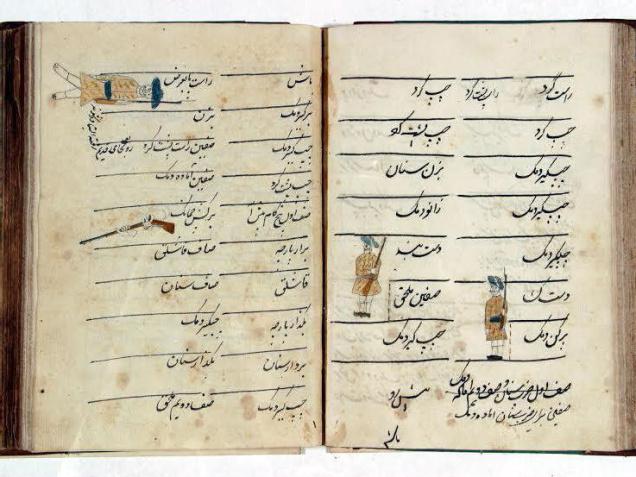
Tipu Sultan’s notebook. / Photo: Shiv Sahay Singh / The Hindu

The lovers of history and connoisseurs of artefacts are up for a treat as the Victoria Memorial Hall is going to display for the first time a notebook belonging to Tipu Sultan, the legendary ruler of Mysore.

The notebook written in Persian (Shikasta) touches on a variety of subjects but is mainly a treatise on the art of artillery. It is divided into eight chapters with introduction dealing with certain tenets of Islam and chapters dedicated to rules for horsemen and piyada (foot soldiers) of his army.

Each page of the notebook consists of nine lines of script. Some pages bear the stamp of the three royal seals while ten sketches explain the use of muskets with details on how to load and hold them.

Sahebzada Ghulam Mohammad, one of Tipu Sultan descendants, had donated the notebook to the trustees of Victoria Memorial in 1904.

“The notebook reflects his keen interest and the first hand information on the use of arms and artillery along with the fact that he was introducing modern equipment in his armoury. In fact Tipu Sultan was one of the few great kings who died fighting,” Gholam Nabi, head of VMH documentation and photography unit told The Hindu.

Mr. Nabi said the King of Mysore who wrote in Kannada, had dictated the contents of the note book to his calligrapher who wrote it in Persian. Historians believe that Tipu Sultan was one of the first kings to have made use of rockets in war as early as 1790s.

“The artefact is going to be part of an exhibition on ‘Life and Times of Tipu Sultan’ which we have been planning for quite some time. The exhibition is likely to be held at the end of this year,” Jayanta Sengupta, the secretary and curator of VMH told The Hindu.

source: http://www.thehindu.com / The Hindu / Home> National> Other States / by Shiv Sahay Singh / Kolkata – July 05th, 2015

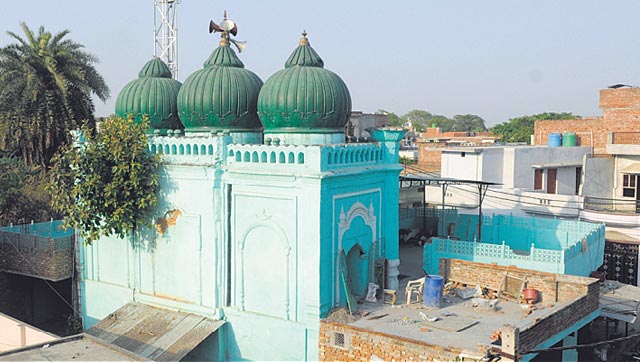
Peculiar pleas flood Lucknow’s ‘mosque of jinns’

Caretaker of the mosque says there are hardly any believers whose wishes are left unfulfilled (HT Photo)

It’s a warm, musty afternoon on Saturday when an anonymous letter arrives at the Jinnon Wali Masjid. It’s a plea from a dejected farmer, seeking help from ‘jinns’ in finding his lost buffalo and also fulfilling his needs, which include no less than a car, a grand kothi in a plush area and a buffalo herd bigger than any other dairy owner in town.

As the day wears on, more pleas arrive. One is from an Old City resident wanting his lost son back, another in pink paper lists desire for a good bride.  The tone and tenor of the letters may leave a first-timer bemused, but for the caretaker of the mosque, situated in Sarfarazganj near Musa Bagh on Hardoi road, it is hardly a matter of surprise.

“It’s the mosque of jinn, another creature by Allah, who lives here and also fulfils wishes of the faithful,” says mutwalli of the mosque, Prince Ali Hussain Mirza alias Nawab Gauhar Agha Saheb Peer Baba.

Peer Baba, caretaker of the mosque for 45 years, says there is hardly any faithful whose wishes are left unfulfilled.

Among the ‘applicants’, Peer Baba mentions the case of a Sitapur-based businessman who made a visit to the mosque last month seeking the jinn’s help in bringing him prosperity and saving him from frequent losses. “The man had suffered losses of Rs 18 lakh and was on the verge of bankruptcy. He pleaded with the jinns and got immediate relief,” Baba shares with HT.

source: http://www.hindustantimes.com / Hindustan Times / Home> Cities / by Oliver Fredrick, Hindustan Times, Lucknow / June 09th, 2015

Centenary celebrations of City Central Library from Aug. 2

CM likely to inaugurate; ‘Kuvempu Mobile Library’ to be revived

CityCentralLibraryBF04jul2015

Mysuru :

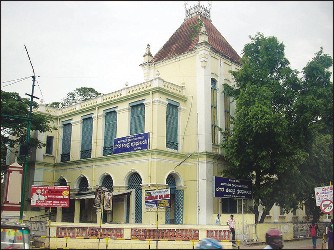
The City Central Library (CCL) on Sayyaji Rao Road, established in 1915, is a treasure house for lakhs of knowledge seekers. Now, preparations are afoot to celebrate the 100 years of CCL.

Nalwadi Krishnaraja Wadiyar, Sir M. Visvesvaraya and Sir Mirza Ismail were instrumental in the construction of CCL.  Janab M. Hussain, B. M. Shri, Rao Bahadur Ranga Iyengar, M. Venkatakrishnaiah, Rev. E. W. Thomson, N. S. Subbarao and B. G. Lakshman Rao were the other key players in establishing this library in the heart of the city.

CCL was inaugurated on October 15, 1915 by the then Mysore King Narasimharaja Wadiyar and since then lakhs of Mysureans have benefitted from the vast collection of books in the library.

Centenary celebrations

To mark 100 years of CCL, various programmes will be held from August 12, 2015 to November 14, 2015 in city, according to B. Manjunath, Deputy Director, City Central Library, Mysuru.

Chief Minister Siddharamaiah is likely to inaugurate CCL’s centenary celebrations on August 12, the National Librarians’ Day. The CCL’s Centenary Day valedictory will be held on November 14, the National Library Day.

Tenders have been invited by Public Works Department (PWD) to get the CCL building painted for the Centenary celebrations. New furniture is provided for the inner hall of the library.

An Editorial Committee has been constituted to bring out a Souvenir on the occasion. Articles written by litterateurs, members of the library and other prominent persons which have already been submitted will be featured in the Souvenir.

Mysuru District Publishers’ Association has come forward to sponsor the printing of the Souvenir.

The CCL in Mysuru was the first to introduce ‘Kuvempu Mobile Library’ in the State and due to various reasons the Mobile Library stopped functioning a few years back. Now the authorities have taken a decision to revive the Kuvempu Mobile Library.

Apart from this, it has been decided to construct a library building in People’s Park.

The CCL run by Public Library Department has 17 other libraries in city, 9 Seva Kendra Libraries, 5 Vachanalayas, one Community Children’s Centre and two affiliated centres. Around 50,476 people are registered members of CCL in city. CCL has a collection of over 55,000 rare books and it keeps adding new books every year. The library was handed over to the State Government in 1965, when the Public Library Act was passed.

source: http://www.starofmysore.com / Star of Mysore / Home> General News / Sunday – June 28th, 2015

Documentary workshop at city museum

Allahabad :

Allahabad Museum and ministry of culture have organised a one-month long documentary film making course. The course was inaugurated by director, Allahabad Museum Rajesh Purohit and HoD, department of Urdu, Allahabad University, Ali Ahmad Fatmi.

Speaking on the occasion Purohit stressed upon that the documentary workshop is an intensive hands-on course that teaches students to work individually or in a group to produce a documentary on a topic of interest and community relevance. Independently and in groups, students conduct research on their chosen topics.

They identify and conduct interviews with community leaders. Additionally, students learn basic production skills such as camera operation and audio recording. When they have completed filming, the students participate in all facets of post-production, including sound mixing, video editing, voice-overs and title cards.

The students are responsible for all decisions, academic as well as artistic, they decide how to present their material and strive to do so in the most meaningful and logical.

Purohit emphasised the technical aspects of documentary making especially how a filmmaker needs to be a good story teller.

source: http://www.timesofindia.indiatimes.com / The Times of India / Home> City> Allahabad / TNN / July 03rd, 2015

Fish haleem to make debut in Port City

Visakhapatnam :

Haleem lovers in the Port City are in for a bigger treat this Ramzan. For, a local haleem maker-cum-vendor is cooking up plans to introduce Vizagites to fish haleem on July 3, the 15th day of the holy month of Ramzan.

“So far Vizagites have sampled chicken, mutton and vegetarian haleem. But this year, we will be giving them a taste of fish haleem at our outlet,” said Sheik Zuber, proprietor, Dil Se Haleem, which is located opposite the mosque at Jagadamba Junction.

Divulging the recipe of the seafood variety of haleem, Zuber said it will be prepared using Tuna and King Fish (Konam in Telugu). “There are just one or two shops offering fish haleem in Hyderabad. In Andhra Pradesh we will be the first to introduce it. I am trying to arrange the tuna and king fish for the haleem,” he said.

He said fish haleem will be more expensive than mutton but claimed it will be healthier for people suffering from diabetes, heart diseases, cholesterol and eye sight problems though it will be made of pure ghee.

Pointing out that almost 75% of the haleem customers in the city are non-Muslims and are mainly students and corporate employees, Zuber said his stall gets a good response every year and he earns around Rs 5 lakh every Ramzan on an average just by selling chicken and mutton haleem. This year he hopes to rake in higher profits with the introduction of the fish variety.

Mastan Valli, a haleem vendor from Gajuwaka, said the city has nearly 100 haleem centres at key locations with the ones at Jagadamba Junction, RK Beach, Leela Mahal Centre, NAD Junction and Gajuwaka getting a good response from consumers. “Most of the haleem makers go to the sheep market at Hanumanthawaka Junction on National Highway-16. Healthy male healthy sheep are much in demand among haleem makers,” he added.

Mohammed Sadiq, president, Vizag Young Muslims Association, said the city has 52 mosques and nearly three lakh Muslim residents. “Muslims traditionally eat haleem while breaking their fast to get instant energy, but now the dish has become a much sought-after delicacy among Vizagites of all walks irrespective of community,” he explained.

China Rehman, a senior member of the Muslim community in the Old City area, said five years ago there were just a handful of stalls selling haleem near a mosque at Jagadamba Junction, but now the numbers have gone up manifold due to rising demand and increased publicity. “I strongly feel that Vizag will soon turn out to be another Hyderabad when it comes to the haleem business,” Rehman said.

Sources said that nearly 2,000 bowls of haleem are sold every day in the city during the month of Ramzan, generating revenues of around Rs 60 lakh. Zuber said the cost of a family pack of chicken or mutton haleem has gone up this year due to the rise in price of spices. “A bowl of chicken haleem costs Rs 50 this year and that of mutton Rs 100. A family pack of chicken haleem will now cost Rs 180 (750 grams) and that of mutton Rs 300 this year,” he said.

source: http://www.timesofindia.indiatimes.com / The Times of India / Home> City> Visakhapatnam / by V Kamalakara Rao / June 23rd, 2015