Category Archives: Arts, Culture & Entertainment

City visionaries

HajiIsmailSaitMasjidMPOs05mar2015

by Aliyeh Rizvi

The history of Bangalore is a colourful tapestry whose warp is interwoven with countless political and cultural narratives. But the equally significant weft consisted of traders and businessmen whose lives extended beyond commercial success to large acts of philanthropy. Despite these extensive contributions that benefitted the city and its people, their memories are now preserved primarily in the hearts of old Bangaloreans, personal family records and physical fragments across the city; a memorial, a building or a road. The Hajee Sir Ismail Sait Masjid was built over 100 years ago and gives Mosque Road it name. It was initially meant to accommodate about three hundred people but the largesse of its builder went far beyond its walls.

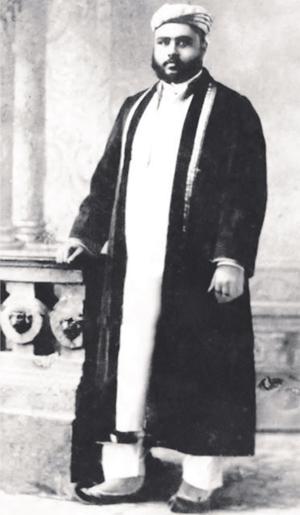
Haji Sir Ismail Sait was born on March 7th 1859 and following his father’s untimely demise, moved from Mysore to Bangalore around 1870. Being from the mercantile Cutchi Memon community, he followed suit after being educated in both Bangalore and Chennai. Arif Hussain, at the Hazrat Haider Shah Jeelani Dargah, tells me an anecdote (unverified) about his early years where he was advised by the saint, his spiritual mentor, to initially trade in goods that were white in colour (like eggs, garlic and milk) to ensure wealth and success. The young Ismail Sait evidently had a nose for business and saintly advice. His English Warehouse near St. Mark’s Road soon sold not just milk powder but every conceivable import from England. Branches were opened in Hyderabad and Chennai, where he was the first to bring in imported kerosene from America in the late 19th century through Spencer and Co.

 
The entrepreneurial streak also ran through trading in military provisions, timber and mining. He was a banker, mill owner and export-importer. Over time, he was also Chairman of Chamber of Commerce Mysore; Director in the Mysore Sandalwood Factory, Binny Mills and the Mysore Iron Works, Bhadravathi. It was a diverse portfolio but India was opening up to the world and opportunities were yours for the taking. Business was supported by memberships in several distinguished clubs including the Willingdon Sports Club, Bombay, Calcutta Club and the National Liberal Club of London. “He had great business sense and wonderful PR skills” says Zafar Sait, his great-grandson.

 
But public service was a priority. Healthcare and education were key concerns. The Gosha Hospital (1925) near Queens Road was built with personal funds for reclusive Mohammedan `purdah nashin’ ladies. It was formally opened with 20 beds. Philanthropic friends donated clocks, beds, `frigidaires’, aluminiumware and other supplies. He also built schools, mosques and rest houses in Bangalore, Whitefield and Mysore. Staggering sums of money were donated to the Mysore State University, Aligarh University and medical institutions including Victoria and Bowring Hospitals. His will made strict provisions for educating family members, `both male and female’ and providing alms to the poor.

 
In 1911, he was nominated to the Madras Legislative Council and received the title’ Fakhr-ut- Tujjar from the Mysore Maharaja in 1919. Family photographs show a dapper gentleman dressed in traditional Cutchi Memon robes, and then in European attire when he was knighted in 1923. When Hajee Sir Ismail Sait passed away in 1934, he left behind his wife Ayesha Bai, five sons, two daughters and a legacy of philanthropy that Shabbir Malik Sait, his great grandson says continues even to this day. He belonged to a time when we gave back what we received in equal measure.

The writer is a cultural documentarian and blogs at aturquoisecloud.wordpress.com

source: http://www.bangaloremirror.com / BangaloreMirror.com / Home> Bangalore> Others / by Aliyeh Rizvi, Bangalore Mirror Bureau / May 05th, 2014

A pushcart to promote poetry

Hyderabad :

Imagine poetry being ‘sold’ off the streets. Yes, you heard that right! With a noble mission to revive Telugu poetry in the two states, 50-year-old Sheik Sadiq Ali is seen pushing around his cart which doesn’t sell vegetables, but poetry!

“The declining state of Telugu poetry has always bothered me. So I decided to take it to the masses and what better way to do it than a pushcart,” Sadiq explains. While most people lecture on the need for reviving the Telugu poetry from air-conditioned auditoriums, he decided to do stay connected with lovers of literature. Though he doesn’t have shortage of resources to hold book exhibitions, the 50-year-old decided to use a push-cart for his mission. To buttress his argument for adopting this unconventional method to promote Telugu poetry, he says: “Pusharts are something that people feel comfortable with. They have been a part of our culture for ages. It will be inappropriate for a non-traditional object to promote traditional poetry”.

Sadiq now takes his pushcart around town, one area at a time, holding forth on poetry and inviting people to read books. With over 135 titles on his pushcart, Sadiq literally carries a mobile bookstore to your doorstep. “What surprises me is the kind of response I receive from people of all age groups. Those who are new to Telugu poetry spend some time reading a book and end up buying it. These are small steps towards the bigger mission,” says an earnest Sadiq.

A native of Kalluru in Khammam distruct and a postgraduate in Telugu literature from Osmania University, Sadiq has books by various Telugu poets on his cart. The cart – ‘Thopudu Bandi’ – adorns pictures of famous Telugu poets like Sri Sri, Arudra and Maqdoom Mohinuddin. “People on Facebook started seeing what I am doing and sent in their books. So if someone buys the book, the poet gets the money, which in a way encouraging poetry,” he elaborates.

Sadiq, who was a journalist with a Telugu daily, Udayam, which was shut down long ago – embarked on his his ‘literary’ journey on February 22 when he travelled from Ramnagar to People’s Plaza in the city. Ever since, he has been travelling to one part of the city everyday promoting Telugu literature in his own unique way. And he does not intend to stop until he covers all the districts in Telangana and Andhra Pradesh. “There is a lot to be done and there is not much time. All I want is to bring back the golden era of Telugu poetry,” he says with an air of determination. His initiative has reached many through social networking sites and people like Chukka Ramaiah, a well-known educationist, have heaped praise on him for this unique initiative.

But Sadiq, who left his marriage bureau business, isn’t pushing around the 200-kilo cart full of poetry for fame or money. “I have enough to make ends meet. What I am doing isn’t for a living. It is out of passion. It is for the love of Telugu poetry,” he says with a broad smile and a sense of pride.

A fifty-year-old man pushes his cart on the roads of Hyderabad. He isn’t selling vegetables or trying to earn a living with the cart, but he is a man on a mission to revive Telugu poetry in the two Telugu speaking states.

Meet Sheik Sadiq Ali, who gave up his business to revive the art of Telugu poetry in Andhra Pradesh and Telangana.

While most people talk about reviving Telugu poetry from air-conditioned auditoriums with an ‘intellectual’ audience, Sadiq decided to do exactly the opposite. “The declining state of Telugu poetry has always bothered me. So I decided to take it to the masses and what better way to do it than a pushcart,” he explains.

Despite the availability of funds, the 50-year-old decided to use a cart over an exhibition or a display truck. And the reason: “Carts are something that people feel comfortable with. Carts have been a part of our culture for ages. It will be incorrect to a non-traditional object to promote traditional poetry,” elaborates Sadiq.s

source: http://www.timesofindia.indiatimes.com / The Times of India / Home> City> Hyderabad / by Bhavneet Singh, TNN / March 03rd, 2015

21 doors & a fiery spirit

By:Aliyeh Rizvi

I was standing outside the swank automobile showrooms in India Garage the other day, watching excited owners roll out onto St Marks Road in their ribbon wrapped cars. Ironically, the petrol bunk area inside this graceful building was where around 1920, Hajee Osman Sait, an eminent Cutchi Memon businessman, struck a match and deliberately set fire to all the imported goods sold in the Cash Bazaar as it was called back then.

HajeeOsmaanSaitMPOs03mar2015

This brazen act of arson must have seemed incomprehensible to gentile customers in the Cantonment. The Cash Bazaar opposite Bowring Institute (1868) was where they bought everything from pins and provisions to ‘English vegetables’, fruits and flowers. Setting fire to goods was something a flourishing trader just did not do. The popular shopping arcade was also a family legacy. It had been built by his grandfather Yousuf Pir Mohammed who had moved to Bangalore from Kutch. Each of his seven sons received ‘three doors’ from where they managed their business. The building, therefore, had 21 doors that opened onto a wide verandah with cast iron grills.

 
But while the Cantonment speculated, the Non-cooperation Movement (1920) led by Gandhiji escalated into public meetings and protests across the country. Amongst other things, it also advocated a boycott of British goods. This civil disobedience ran in parallel with the pan-Islamic Khilafat movement (1919-1924) whose leaders, including the brothers Maulana Mohammad and Shaukat Ali, were allied with the Indian National Congress at that time.

 
Hajee Osman Sait, President, Madras and Bangalore Khilafat Committee, was deeply inspired by India’s freedom struggle. He played host to Gandhiji, Pandit Nehru and the Ali brothers at his home on St Mark’s Road (around present day Hotel Nandhini). He sold his property, donated money and apparently even publicly auctioned off his eldest son to raise funds. Ebrahim was returned respectfully and the money, donated. He opened an Indian National School (1921) on his property, Stafford House (now Bishop Cottons Girls School) and sent his own children to local schools. The Cash Bazaar bonfire was yet another contribution to the movement.

 
Masood Ali, Yousuf Sait’s son, says his grandfather was an unbelievably wealthy businessman who owned over 20 acres in the area, including several large bungalows of which four were named after his sons — Yakhoob, Ebrahim, Khader and Yousuf Villas. Four white horses drew his famous buggy. They were housed on Residency Road before the Imperial Talkies was built and then moved to stables at the Cash Bazaar which also sold hackney carriages.
The stables were later occupied by Sir Mark Cubbon’s horses and used by the Bangalore Riders Club (1934). Later on, Addison & Co. sold bicycles, cars (Peugeots and Buicks among them) and motorcycles next door. India Garage’s history of hot wheels began here long before shiny automobiles arrived in India.

 
Haji Osman Sait’s dedication to the freedom movement cost him dearly. He passed away in 1928, in a rented home around the age of fifty-six. Masood Ali says his funeral procession was over 5 kms long and extended from the Jumma Masjid off Commercial Street to the Jayamahal Palace burial ground.

 
India Garage was subsequently sold in an auction in the 1930s and then became the first showroom of the pioneering VST Group founded by V S Thiruvengadaswamy Mudaliar in1911.The building retains the original structure and some trees he planted. But its doors now open out to a free, liberalised India.

The writer is a cultural documentarian and blogs at aturquoisecloud.wordpress.com

source: http://www.bangaloremirror.com / Bangalore Mirror / Home> Bangalore> Others / by Aliyeh Rizvi, Bangalore Mirror Bureau / May 12th, 2014

Mumtaz’s Body Was Transported to Taj Six Months After Her First Burial, Claims Book

TajMahalMPOs03mar2015

Agra :

Was Mumtaz Mahal’s body mummified before her temporary burial in Burhanpur and later finally laid to rest at the Taj Mahal in Agra?

This is the subject of a book “Taj Mahal ya Mummy Mahal?” written by Afsar Ahmad, released on Sunday by the registrar of Central Hindi Institute Dr Chandra Kant Tripathi, here.

Historical records say that Mughal emperor Shah Jahan, the builder of the world heritage monument Taj Mahal, had her body transported to Agra from Burhanpur, six months after her first burial.

Her body remained buried in a ‘kachcha’ grave in the Taj Mahal complex for around 12 years and was then transferred to the main mausoleum.

How was Mumtaz Mahal’s body preserved for so long? Afsar Ahmad tries to answer this question in his book “Taj Mahal ya Mummy Mahal?”

He claims that her body was mummified.

Shah Jahan built the 17th century Taj Mahal here in memory of his beloved wife Mumtaz who died while giving birth to their 14th child in Burhanpur, a town in Madhya Pradesh.

“The real truth about Taj Mahal was suppressed. If the truth had been revealed when Taj Mahal was being built, it would have become almost impossible to construct the monument,” Ahmad said.

The journalist-turned-writer has also disclosed in the book what he claims are several unknown facts related to Mumtaz’s death.

The book has details about Mumtaz’s death and her last few days and details of the mummification of her body.

The book has been published by Evoco Networks.

A large number of scholars and heritage conservationists were present at the release of the book at a hotel here.

source: http://www.newindianexpress.com / The New Indian Express / Home> Nation / PTI / March 01st, 2015

Shadan Group of Modern Schools to provide free education to Huffaz

Hyderabad :

Mr. Mohammed Shah Aalam Rasool Khan, Chairman Shadan Educational Society announced to provide free education to students of Hifz-e-Quran, orphans, labour and children of families living below poverty line and said that he has done this for the Sawab-e-Jariya of his late father Dr. Mohammed Vizarat Rasool Khan. Mr. Shah Aalam Rasool Khan announced this while addressing the 25th annual function (Silver Jubilee) of Shadan Group of Modern Schools, Khairiatabad branch.

Mr. Shah Aalam Rasool Khan also said that morals and character building are must right from the primary education for reformation of society. He also stressed the need to pay attention on communication skills besides character building.

Siasat news

source: http://www.siasat.com / The Siasat Daily / Home> Hyderabad / Siasat News / Sunday – March 01st, 2015

Basant sheds its colours on poet Akbarabadi’s tomb

Agra will on Saturday celebrate the 275th birth anniversary of noted 18th century Urdu poet Nazeer Akbarabadi, popularly known as the “people’s poet”. This year, the anniversary falls on Basant Panchami — the first day of spring.

The modest tomb of Akbarabadi, who wrote on subjects of love and common man’s life, is located just 100 metres away from Taj Mahal. It will be in focus Saturday as his admirers will queue up to pay him homage.

For most part of the year, Nazir’s tomb in the Taj Ganj area lies in a neglected state. Only during Basant Panchami does it springs back to life as a ‘mushaira’, or poets’ conclave, is held.

The Agra Municipal Corporation and the Agra Development Authority took the initiative to provide a canopy over the tomb and spruce up the area to attract tourists who visit the Taj Mahal.

His life in Agra

It was Nazeer Akbarabadi who gave Agra a new identity through his poetry.

He wrote about things that touched the hearts of both Muslims and Hindus and these included festivals, dance and theatre, bird fights and kite-flying.

Nazir looked at the follies of royalty with disdain but sang lyrically about the antics of Lord Krishna and poked fun at the fundamentalists.

Nazir also loved the Taj Mahal ‘deeply’ and there is a story that once he decided to leave Agra for greener pastures but returned after walking some distance when he lost sight of the monument. IANS

source: http://www.thehindu.com / The Hindu / Home> News> In School / by IANS / Agra – January 24th, 2015

Rickshaw puller Jamal Baig prefers to work hard instead of begging

JamalBaigmpOS01MAR2015
Hyderabad : 

70-year-old Jamal Baig is one among those who persistently combat with poverty and destituteness since their childhood. He hails from Udgir district of Karnataka state. He had arrived Hyderabad 30-year-ago and has been residing in Jhirra Karwan since then.

Jamal Baig has been pulling Rickshaw for 20 years. He is becoming weaker day by day but is compelled to work otherwise it would be difficult to make both ends meet. He has 4 daughters and a son.

Sadly two of his daughters have become widow and he has to shoulder their responsibility too.

Unfortunately his only son is mentally ill hence his wife Amena Begum is busy all day taking care of the boy. Jamal Baig’s worries didn’t with that, he also has an 8-year-old, grandson who is diabetic. His widow daughters also work as domestic servants to support the family.

Siasat News

source : http://www.siasat.com / The Siasat Daily / Home> Hyderabad / Siasat News / Thursday – February 26th, 2015

Qutub Shahi Masjid restored after 65 years at Ghatkesar

qutubmasjidMPOs01mar205
Hyderabad :

A Qutub Shahi Masjid was uninhabited at Amarkunta village of Ghatkesar. The 450 year old Qutub Shahi masjid was uninhabited since police action. According to locals 2 years ago miscreants had tried to demolish the masjid but local Muslims foiled their nefarious plan. Only some part of the walls is remaining while the roof is almost gone. A builder named Pop Reddy was eying on the Waqf land he was doing plotting around the masjid.

According to a local elder Mohammed Yaqoob Ali Quadri it is likely that the Waqf land under the Masjid is 24 acre but plotting has been done on almost all the land and just a few sqyds are remaining. Keeping in the view the situation, local Muslims with the help of TRS leaders and police offered Friday prayers in the masjid. They pledged to reconstruct the masjid and offer 5 day prayers in it.

Siasat news

source: http://www.siasat.com / The Siasat Daily / Home> Hyderabad / Siasat News / Saturday – February 21st, 2015

Those Mughal tales, those engaging books

MughalEraMPOs28feb2015

The Mughal era books need to be preserved for posterity

The library of Dara Shikoh, near Chakkipat on the Yamuna’s right bank in Agra, is now a municipal office and its vicinity boasts an akhara. The books housed in the library or most of them, were brought to Delhi when Shah Jahan moved his capital to it and wanted the heir apparent Dara to stay by his side lest any harm befell him if he was appointed governor of some province (subha), like his brothers Aurangzab, Shuja and Murad. The library existed in the Kashmere Gate area, later becoming a polytechnic institute, another library behind the Jama Masjid, became a girls’ school. But the question is what happened to most of the books? Quite a few of them were destroyed in 1857 by the British, bent on revenge. Some others fell into private hands and were sold as “raddi” during the upheaval of 1947 by those going away as refugees to Pakistan. It’s worth noting that the books in the library of Prof Ahmed Ali, author of “Twilight in Delhi”, in Kutcha Pandit were sold one by one by a servant who had stayed behind and was reduced to penury after the professor opted to migrate to Karachi.

Some books of the Mughal era may be found in the National Library, in the British Museum Library in London and in the U.S. Congress Library. Besides some others were taken away to Pakistan by migrants. A few of those books are with the old residents of Delhi, Lucknow, Hyderabad and Agra, like the now disintegrated library of Nawab Faiyaz Khan, but 75 per cent of them are lost forever. It was something like the loss of Greek, Arabian and Persian masterpieces when the libraries in Athens and Alexandria were burnt during wars and by Mongol and Han hordes and vandalism by fiercely bigoted Arab and Turkish soldiers fired by the zeal to destroy all vestiges of the “idolatrous ages” of the Middle East. Such destruction also took place during the medieval Crusades and earlier by Attila and Hannibal. The Emathian Conqueror (Alexander) may have spread the house of Pindars but little else.

In a study on medieval libraries, written in 1970, father had this to say:

“The Sultans of Delhi and their nobles, who preceded the Mughals, had rich literary tastes and established a large number of public and private libraries. Jalaluddin Khilji founded the Imperial Library in Delhi and appointed Amir Khusrau its librarian. But it was Babar who really did augment the Delhi library.

“Humayun, inherited the legacy and added to the library seven halls, each named after a planet. He was so fond of books that he carried them to the battlefields. On one such occasion in fact he lost several rare ones. At Agra, he raised a set of magnificent buildings called Khanna-i-Tilism (house of magic), the first floor of which housed the library. Towards the end of his adventurous life he converted the pleasure house of Sher Shah in Delhi’s Purana Quila into a library.

“Akbar, although illiterate, turned out to be the greatest patron of art and translation of books, for each of which he maintained a separate cell. The biggest of his several libraries was the Imperial Library in Agra Fort. According to Abul Fazl, the library was divided into several parts. Some of the books were even kept inside the harem.

“Experienced people bring them daily and read them before His Majesty who hears (sic) every book from beginning to end,” he wrote.

Akbar had books brought from distant places and also encouraged scholars to write treatises, calligraphists to copy them and painters to illustrate them. He bought a richly illustrated version of the manuscript of Razm-Nama (the Mahabharata translated into Persian) for £40,000. “There were more than 24,000 books in the Imperial Library alone and they kept increasing. Fazl’s collection of 4,300 manuscripts was added to the library and the library of Itimad Khan was acquired after the conquest of Gujarat.”

Jahangir was a great lover of art, with an avid interest in old tomes. Shah Jahan had a godly collection of books. His son Dara, however, was more studious and collected books on poetry, Sufism and mythology, including Hindu scriptures. Aurangzeb’s books were mostly religious ones. The latter Mughals did not evince much interest in books. Bahadur Shah Zafar was however a lover of learning, being a poet himself. The disintegration of Mughal libraries took place during the First War of Independence and the upheavals of Gardi-ka-Waqt but after that English scholars made good use of them, like William Fraser.

It would be worthwhile if the Union Human Resource Ministry and Archaeology Survey of India acquire Mughal era literature from all known sources and establish a Central Mughal Library in the near-deserted Purana Quila, bigger than the partially revived one of Dara Shikoh.

source: http://www.thehindu.com / The Hindu / Home> Features> MetroPlus / February 23rd, 2015

A rare felicity

Joydeep Ghosh
Joydeep Ghosh

Sarod exponent Joydeep Ghosh tells Meena Banerjee his musical education allowed him to take uncommon ragas in his stride.

One discovered an intriguing fact from versatile musician Joydeep Ghosh, the concluding artiste of the annual soiree organised recently by Kolkata’s Ballygunge Maitreyee Music Circle, dedicated to the late Sangeetacharya Radhika Mohan Moitra (Radhubabu). On this occasion his sarod etched a rare raga, Kedari-Marwa, with admirable clarity. In this both Kedar and Marwa remained intertwined; like in a braid; without giving up their identity. Such an interpretation, replete with unexpected bends, does not allow complacency, either to the player or to his listeners. This was definitely a show by a maestro for initiated listeners only. The latter is a dwindling community even in Kolkata nowadays; but going by Ghosh’s usual selection of ragas, one was inspired to ask:

What encourages you to choose rare ragas for concerts?

I was only five when I started learning at the feet of great masters Anil Roychoudhury and Radhubabu; and later from Buddhadev Dasgupta. They all belong to the famous Senia Shahajahanpur sarod gharana and they are revered for their enviable melodic treasures. I also learnt tabla and vocal music from venerable gurus. Subsequently, I came under the wings of the erudite and versatile master Bimalendu Mukherjee, a doyen of the famous Imdadkhani gharana of sitar and surbahar. Under their priceless guidance I assimilated vocalism, instrumentalism and the style of rhythmic play along with raga elaboration.

The simple fact is that my gurus did not tell me what were common and what ‘rare’ ragas were. They all came naturally as sister ragas, with their key phrases loud and clear, during the learning process of one major raga; even the jod-ragas (blend of more than one) were taught to me without much ado; just as they did not categorise any instrument and made me learn to play sarod, surshringar and mohanveena.

Isn’t the mohanveena a newly invented instrument?

Radhubabu's mohanveena.
Radhubabu’s mohanveena.

Unfortunately, very few remember the history of the original mohanveena, conceived and invented by Radhubabu in early 1948! Once, around 1944, he played the surshringar in a jugalbandi (duet) with the famous beenkar (Rudra veena player) Ustad Sadiq Ali Khan in Lucknow. The concert inspired him to design a unique instrument in which the playable materials of both the sitar and the sarod could be appropriately exploited and the tonal quality of the Rudra veena could be equally maintained. Since he was proficient in both, having had his training from Ustad Mohammad Ameer Khan of the Shahajahanpur gharana and Ustad Inayat Khan of the Etawah gharana in the sarod and the sitar respectively, Radhubabu’s experiment succeeded.

The instrument’s majestic tonality impressed Thakur Jaidev Singh, the renowned musicologist who was then Chief Producer, All India Radio, Delhi. In 1950, Thakur Saheb named the instrument ‘mohanveena’ and also arranged an archival recording for AIR, followed by an extensive interview of Radhubabu, its inventor. Radhubabu was invited in several music festivals all over India to play the mohanveena. Some of his rare recordings for AIR archives are available in compact discs as precious documents.

So, despite the emergence of another, Hawaiian guitar-based instrument of the same name almost fifty years later, the original mohanveena exists along with its own unique excellence till date, through some of the devoted torchbearers of Radhubabu’s legacy. I am also a humble exponent of the mohanveena.