Category Archives: Arts, Culture & Entertainment

A Classical Death

Once considered its mecca, classical music festivals are struggling to stray afloat in Kolkata. Tathagata Ray Chowdhury explores the reasons for the slow demise of the once thriving live music scene in the country’s ‘culture’ capital

Kolkata :

Not too long ago, Kolkata used to be steeped in the culture of live classical music. For the connoisseur, there was a plethora of fests to attend; for practitioners, a good show here, more than any where else, meant finally gaining acceptance among peers, perhaps even a chance to reserve a place in the pantheon of the greats. Cut to the last 10 years or so, and it’s clear that the once thriving culture is on the wane, with most classical music festivals staring at an uncertain future.
Even a couple of decades back, the city used to play host to a number of prestigious classical music gatherings. Now, only a few survive. Even fewer manage to do so with aplomb. Apart from a couple of names, most classical festivals are struggling to find sponsors, or are in the throes of a slow death.
But why this decay in the country’s “culture capital”? In a nutshell, it’s to do with the nature of classical music’s patronage. To start off with, it was the prerogative of the moneyed class, supported by zamindars and rajahs who truly valued it and understood its nuances. With the abolition of the feudal system, classical music finally travelled to the masses. Ironically, it was this that sounded its death knell.
In 1856, Lucknow’s exiled nawab, Wajid Ali Shah, had brought with him to the city the rich culture of classical music and established it in this part of the subcontinent. His court musicians — most notably Ustad Basat Khan and Ustad Sadiq Ali Khan — played a key role in establishing the genre in the city and its surroundings. By mid-20th century, Kolkata became a mecca for connoisseurs of this branch of the fine arts — so much so, that a number of stalwarts began to either settle down in the city or make it their second home.
Ustad Dabir Khan, the last khalifa of the Tansen family, made Kolkata his home, and other legends of the time — Ustad Allauddin Khan, Ustad Hafiz Ali Khan, Pandit Ravi Shankar, Ustad Vilayat Khan, Ustad Ali Akbar Khan and Ustad Amjad Ali Khan — all found a second home in this city. To all of them, this was the city where the real qadar daans (connoisseurs) lived. There were the music rooms — jalsaghars — of north Kolkata aristocrats, where both budding and prodigious musicians used to come for what then used to be called their “national audition”. And it was usual practice for the honorifics “Ustad” or “Pandit” to be bestowed on performers only after they gained enough acceptance in Kolkata’s aristocratic circles.
It is a matter of concern that a festival of the pedigree of All Bengal Music Conference is struggling to stay afloat nowadays. The first edition of the conference — on December 27, 1934, at Calcutta University’s Senate Hall — marked the day classical music breached the confines of north Kolkata’s aristocratic music rooms and reached the public. It was high time the lofty walls surrounding classical music were broken down: soon, the landed aristocracy would cease to exist, the country would become independent, and the zamindars would no longer be able to patronize the art form.
Sensing all this, Rabindranath Tagore, who was presiding over the event, had said: “We will have to keep in mind that Tansen and others were able to gift a certain form of music only because the royal opulence of the Mughal Empire could help them. That surrounding is no more there.”
Seventy-five years down the line, All Bengal Music Conference had to collaborate with another organization to hold this year’s event. “All Bengal Music Conference could not host any event because of lack of patronage and sponsorship for about 52 years,” says Robin Paul, general secretary of the conference and the founding secretary of Jalsaghar, an organization that promotes classical music. “It was Pandit Ravi Shankar who asked me to do whatever possible to revive the glorious organization. Pandit Asutosh Kanan also helped me revive it. When I associated myself with it in 2004, we could host events for a few years. But it is in very bad financial shape again. It is no longer in a position to host a soiree on its own. That is why it had to collaborate with ITC Sangeet Research Academy to host the music festival this year. Now that Babulal Ghosh, the last scion of the Pathuriaghata Ghosh family, who used to look after the once-famous music festival, also passed away a few weeks ago, I do not really know what the future holds.”
While the conference is staring at a possible extinction, many other music circles have either stopped functioning long ago or are counting their days. The reason is mainly to do with finances, particularly its lack.
Dipankar Sen, of the now defunct Calcutta Music Circle, has another take on the matter. “Organizers and sponsors often promoted a particular artist or gharana at the expense of others, and that also played spoilsport,” he feels. “Many organizations often used their platform to promote only a particular artist, or artists of one gharana. Naturally, connoisseurs started losing interest, as those concerts became repetitive.”
The lack of proper musical understanding by the sponsors — considered crucial in this genre — has also been a major issue. Tabla maestro Ustad Sabir Khan, who has been conducting an annual soiree under the banner of Ustad Keramatullah Khan Memorial Music Society for the past 28 years, has experienced this problem first-hand. “People who don’t know the first thing about music are directing organizers about which artist should perform, and who the accompanist should be on the tabla. It is not true that the money is not there. Corporate houses will happily spend crores to bring a Bollywood star on stage. But when it comes to classical music, the interest is just not there,” he rues.
Pandit Satish Vyas, of Gunidas Sangeet Sammelan, agrees. “Those who have money move toward sponsoring Bollywood events, as such events draw the crowds. But classical music traditionally catered to a niche crowd. It was never quite a mass thing. There was a time when corporate houses used to consider such kind of sponsorships a part of their corporate social responsibility. But the MBA guys who run corporate houses today first think about what they’ll get in return for sponsoring an event. This has diluted things. They take complimentary passes and give those to people who are not even interested in classical music. The front rows, thus, remain vacant these days, while the real music lovers wait outside for a pass to enter the venue.”
Vyas feels the media has a big role to play in introducing the masses to the stalwarts of classical music. “There is very little coverage for classical music events in most newspapers of the country,” he complains. “Today, there are also very few people in the media who can write with authority on classical music. So, it is natural that a five-year-old boy would know a Sachin Tendulkar, but not a legendary maestro. When Ustad Ali Akbar Khan passed away, there was no news in Mumbai. It was the same when Ustad Vilayat Khan died. Can you imagine that? They were like gods in the music industry. How would today’s sponsors come to know about great masters or budding talents if the media do not come forward to introduce them?”
Robin has a similar observation. “It’s difficult to get renowned artists on stage, as there is no one to sponsor us. We are running on donations. Some newspapers only write about some particular artists. There has been a fast and steady decline of general media coverage of classical music and musicians,” he says.
Indranath Pal, joint secretary of Uttarpara Sangeet Chakra, which completed its 59th annual soiree on the outskirts this year, said they were also struggling to make ends meet. “Our music festival was once as popular in the city and the suburbs as the Dover Lane Music Conference. But we are increasingly finding it difficult to sustain ourselves in the absence of sponsorship and media coverage — the two things that helped Dover Lane survive healthily. It is all the more difficult to find a sponsor in a mofussil town such as Uttarpara,” he says. Indranath also points to another very interesting aspect of the difficulty the organizers face in getting sponsors. “Most products available in the market are meant for young consumers. But most of those who come to attend a classical music concert are aged 50 and above. It is obvious that corporate houses are not interested in sponsoring events for this age group,” he says. An event manager, who did not want to be named, says: “Gone are the days of corporate social responsibility. In today’s corporate terminology, sponsorship of an event is termed as a ‘casual, soft advertisement’. The corporate houses are just not interested spending big money on it.”
Even the organizers of Dover Lane Music Conference — counted as one of the most prestigious in the country — admit that they face difficulties in promoting young but promising artists, primarily because of sponsorship issues. “The problem we face in getting sponsors is much less compared with what others face, because we have already established Dover Lane as a brand. Still, it is difficult for even us to present on stage an artist who is a very good performer but not famous, as sponsors prefer only some big names. A quantum leap in the remuneration of artists has also had an effect. Artists now charge about 300 to 500% more than what they used to charge even about two decades back,” says Bappa Sen, organizing secretary, Dover Lane Music Conference.
Vyas, who started the annual soiree of Gunidas Sangeet Sammelan in Mumbai in 1977, also feels that it would have been very difficult to keep the organization afloat, had he been settled in Kolkata. “It would have been impossible to look for a sponsor in Kolkata. So many external factors influence things in Kolkata, such as the political situation and so on. But this is not the case with other areas.”
These “external factors” have influenced the concert circuit in Kolkata — so much so that most music festivals that were once famous are now remembered only in the pages of old souvenirs or connoisseurs’ albums. Now, there are only a handful of concerts in Kolkata that have pockets deep enough to continue even in the face of losses. While the Shastriya Sangeet Sammelan, held at Rabindra Sadan every winter, is the only such event supported by the state government, in the private sector there are perhaps only the Ramakrishna Mission and ITC which have been running shows successfully without caring much for sponsorship. The spectre of financial losses looms large on almost all other concerts.
Sutanuti Parishad of north Kolkata, which was established in the early 1990s at the insistence of then mayor Kamal Basu, has also been conducting soirees every year despite incurring heavy losses. “We survive on donations. But we don’t know how long we will able to continue like this. The future of the about a century-and-a-half-old tradition of hosting classical music concerts in the city looks bleak if the government or private companies do not come forward to support us,” Subrata Dhar, the parishad’s secretary, signs off.

source: http://www.timesofindia.indiatimes.com / The Times of India / Home> City> Kolkata / by Tathagata Ray Chowdhury, TNN / February 21st, 2015

Emmemadu Urs from Feb 27 to March 6

Mangaluru :
The annual fair of Emmemadu Dargah Sharif, popularly known as Emmemdau Makham Urs will be held in Emmemadu in Madikeri, Kodagu from February 27 to March 6

Addressing mediapersons in Mangaluru on Friday, Urs committee member C A Ismail said that The Emmemadu Dargah is  visited by the people of all religions and is a centre of religious tolerance. Mass marriage of orphan girls, mass feeding and other programmes will be held as a part of the Urs.

The Urs will be inaugurated on February 27 by Panakkad Sayyid Munavvarali Shaihab Tanjal at 2 pm. On March 3, a religious programme will be presided over by Atakkoya Tanjal at 12 pm.
Inauguration

Muthukkoya Tanjal Jifri will inaugurate. Home Minister K J George, Minister Dinesh Gundu Rao, U T Khader, Khamarul Islam, Roshan Baig, Member of the Parliament Prathap Simha, Member of the Legislative Assembly K G Bopaiah, former Member of the Legislativ Assembly MC Nanaiah, Member of the Legislative Council T John, Adaguru Vishwanath and others will attend.
Bayar Tanjal, Koora Tanjal, Maryad Hamsa Musliar will lead the religious rituals.

Valedictory programme
The valedictory programme will be presided over by Shaikhuna A P Aboobakar Musliar.
Lakhs of people will take part in the mass feeding to be held on March 2 at 4 pm.
The programme will be streamed live at www.yemmemadu.com

source: http://www.deccanherald.com / Deccan Herald / Home> District / DHNS / Mangaluru – February 21st, 2015

Ready for a Blast from the Past? Royal Collectible Goes Under the Hammer Today

Bengaluru :

A letter penned by Sri Krishnaraja Wadiyar IV of the Mysore royal family, bearing the royal coat of arms in gold glitter, will be the cynosure of all eyes in the city on Saturday as it goes on auction.

The auction is being organised by Marudhar Arts, a licensed auctioneer, as part of the ongoing National Numismatic Exhibition. The “extremely rare” collectible is pegged at a base price of `25,000. It was sent by the ‘Philosopher King’ to Maharaja Sir Bhanwar Pal Deo Bahadur of Karauli (Rajasthan) on October 14, 1917.

The letter is a response to King Bahadur’s letter, which had lauded Wadiyar for conducting the Dasara festival in an excellent manner. Wadiyar’s letter runs thus: “My dear Maharaja Saheb, I thank Your Highness most sincerely for your congratulations to me on my Dasara festival and I hope, as you do, that it may prove an augury of the complete victory of the British Arms. With all good wishes for the health of Your Highness and your family. Your Highness’s sincere friend, Krishnaraja Wadiyar.”

Wadiyar ruled the princely state of Mysore from 1894 till his death in 1940. His rule was billed as `Rama Rajya’ by Mahatma Gandhi and the state was described as the ‘Model State’ by the British.

When asked about the price the letter is expected to sell at, Archie Manu, co-director at Marudhar Arts, did not give an exact figure but expressed optimism that it would fetch a high  amount. He explained that the base price was fixed at `25,000 because it was the sum paid to the collector (name withheld) who had sold Marudhar Arts the letter. His father and co-director Rajendra Manu was more forthcoming. “We already have internet bidders showing interest (to pay) up to `40,000. I am confident of it (highest bid) crossing `1 lakh.”

The auction will be held between 5 pm and 8 pm on Saturday at The Bell Hotel and Convention Centre. The letter is likely to come up for bidding around 7.30 pm, Manu added. Three photos signed by Wadiyar too will be auctioned.

A novel aspect of this auction is the real-time audio and video bidding that will happen simultaneously on the website www.maruuction.com. “This is the first time in Asia this has been done in a numismatic auction,” Manu claimed.

Coin Fetches `6.25L

One gold and one silver coin (sold as one lot) belonging to the reign of Mubarak Shah, fetched the highest price of `6.25 lakh at the expo on Friday. It was among the 348 coins auctioned. It was bought by a North Indian bidder, said Manu. The same dye has been used on both coins and this is something very unique as usually, different dyes are used, Manu told Express. The base price quoted was `6 lakh.

The coins have a quotation from the Quran on the reverse. Another lot, of one gold and one silver coin from the Sultanate era, fetched `4.25 lakh.

“This pair is exceedingly rare and was being offered on auction for the first time ever,” said Archie Manu. The day’s auctioning was described as “good and satisfactory”.

On day two (Saturday), 579 coins will be up for bidding in two auctions.

three-day National Numismatic Exhibition Opens

The interest shown by the country’s youth in numismatics (study or collection of currency) is heartening, said Jan Lingen, regional secretary (Europe) of the Oriental Numismatic Society of London, on Friday.

Delivering the inaugural address at the three-day National Numismatic Exhibition at The Bell Hotel and Convention Centre, Lingen said every coin tells a story of its own. Lingen, who was born in the Netherlands, is known across the globe for his passion for Indian coins, and has written extensively on the subject.

Rezwan Razack, chairman of the Indian chapter of the International Bank Note Society, said the expo offers a platform for coin dealers and collectors from across the country. Overall, 76 numismatic dealers are taking part in the expo. Among the unique pieces on display are two lithographs on the city’s past, including the 1794 piece ‘The East View of Bangalore with Cypress Garden’.

Coins from the Mughal, the Hindu Medieval and the Sultanate eras, old tokens, medals and paper money are on display. The expo is open from 10 am to 6 pm and entry is free.

source: http://www.newindianexpress.com / The New Indian Express / Home> Cities> Bengaluru / by S. Lalitha / February 21st, 2015

Befitting finale

Aadirang, an ensemble of 130 tribal performers, brought the curtains down in style on the Bharat Rang Mahotsav

One of the performances

This year, the Bharat Rang Mahotsav’s logo felt especially appropriate; its burst of colours a symbol of everything the festival brought to the city. For eighteen days, Delhi became home to the different hues of theatre, invited from the different corners of the country and the world. It gathered around itself theatre lovers and practitioners, critics and veterans, newly minted fans and the usual suspects.

Quite apt, then, that on its eighteenth and final day, Bharat Rang Mahotsav ended with in a bright riot of colours. For its final performance, Aadirang, it brought together for the first time, an ensemble of 130 tribal performers from 7 Indian states. Coordinated by Laique Hussain, the performance was just the right way to culminate an event which had, across the eighteen days, been a medley of cultures, theatrical practices and experiments, languages and personalities. Aadirang too, became yet another window into the rich performance art from different corners of the country. Divided into segments, each performance highlighted the rich, distinctive flavour of the state and culture it came from.

The Ghantu dance from Sikkim, patronised by the Gurung community, told the story of its people and the land they come from, the young dancers in colourful traditional costumes. Dhollu Kunitha from Karnataka, performed by the men from the shepherd community of the Kurubas brought on the stage the resounding, rhythmic sound of powerful drums (dhollu) and breathtakingly acrobatic stunts. Bardoisikhla from Assam, a folk art form practised by the Bodo community, Rathwa dance from Gujarat, performed by the Rathwa tribe, Dappu from Andhra Pradesh, Gudum Baja of Madhya Pradesh, popular among the Dhulia tribe and Sambhalpuri & Sankh Dhwani from Odisha; each held the audience captive, spontaneous applause sweeping the galleries and punctuating a particularly difficult and impressive move.

Aadirang was a rare treat, a glimpse of what we miss in cities, the kind of performances that we do not have a chance to buy tickets for, and all those art

source: http://www.thehindu.com / The Hindu / Home> Features> MetroPlus / by Swati Daftuar / February 21st, 2015


The ustad in Zila Khan

Honest and unpretentious: Zila Khan. Photo: K. Ananthan

Zila Khan tells Parshathy J. Nath that her music is hard-earned and she will not stand for any gender inequality

“Yeh koi Zindagi hoti hain? (Can you call this life?)”, a nine-year-old Zila asked her father, Vilayat Khan. The sitar maestro was taken aback for a moment. But he could feel his daughter’s grief; how it is to grow up in a house that reverberates with music and yet not be allowed to learn the art form. Only because, the society that Zila grew up in did not encourage girls to learn classical music. But Zila was madly in love with music. She used to learn the bandishes secretly, without her father’s knowledge, while he took classes for the boys. Finally, the Ustad decided to go against all conventions, and teach her music. “Ï will teach you like how I will teach a son,” he told her.

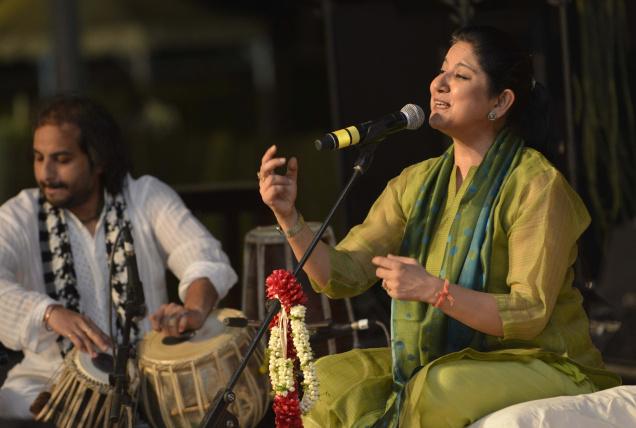
Years have passed since that morning. And, today Zila Khan is Ustad Maa Zila Khan, a well known name in Sufi music. She has come to the city to perform at Isha Yoga Centre. When I go to meet her backstage after her performance, she is enveloped by friends, fans and followers. “Your music was so spiritual.” “Can I take a photo with you?” “You are effervescent!”; praises do not stop. She responds to all with one question, “Did you sing and dance along with me?” Because, no one sits still in a Zila Khan concert. She ensures that she and her team delivers a soul stirring performance.

“I love it when the audience grooves to your music. The essential quality of Sufi music is to be expressive. Nusrat Fateh Ali Khan himself is a great example.”

Even though her concert weaves in contemporary influences and Western instruments, Zila owes her skill to the strong classical music foundation. “Classical music is little like algorithm. It is the basic for any kind of music. I am thankful for the rigorous riyaaz sessions my father put me through. I used to practise for 14 to 16 hours a day.”

About her relationship with her father, Zila says she questioned him as a daughter. “But he was a brilliant guru and strict too. If I was not in class at eight in the morning, he wouldn’t teach me! And, I was like a computer for him. He would wake me up in the middle of the night and teach me a bandish. And the next morning I had to repeat it.”

Zila feels her music is unpretentious and honest. “There are no high or low fundas. There are no trimmings to it.” And she, as a person, is equally brazen; especially when she speaks of the gender inequality in the field. “Women were not given the ustad title. Even Kishori Amonkar was not awarded it. Instead, they used to be called ‘begum’, ‘shrimathi’ and ‘kumari’, which were connected with their marital status and had nothing to do with their contributions to the field of music.”

But, Zila has broken this age old tradition. She is the first Sufi artist to be conferred with the title, Ustad. “Earlier, there was no awareness. A woman’s duty was considered just to be a wife and mother. That cannot be. One needs to find their kriya in life,” says Zila. This is not the first time that Zila has visited Isha. It keeps calling her back, she says. According to her, “it is Secular Divine”. Just like her concert, filled with poems and chants to pirs, gurus, and Shiva. “This is the real India. Actual India is secular. We have naturally learnt to live with each other, our food and culture. For instance, just look at this group. Can an outsider tell which religion each of us belongs to?” she asks.

And Hindustani music tradition itself is a great example of this co-existence, she says. “It originated from the shastras and was practised by people in the Northern belt, including the Muslims in the country. And, the Mughal rulers patronised it.”

One of her favourite musician is Akka Mahadevi, the rebel poet from the South. “Could you sing one of her poems for us?” her friend asks her. She shuts her eyes, clears her throat and mike less fills the still night with her deep throated rendition. The interview is over because my pen has stopped moving.

source: http://www.thehindu.com / The Hindu / Home> Features> MetroPlus / by Parshathy J. Nath / Coimbatore – February 19th, 2015

City sways to pristine qawwali repertoire

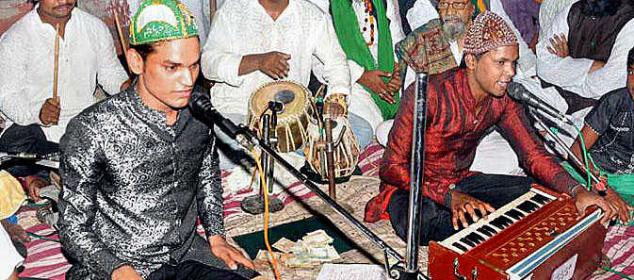
Zameer Shahsadha of Bangalore and his troupe rendering Sufi music (qawwali) in Vijayawada.

City’s Muslim brethren, for six-long-hours until the break of the dawn on Wednesday, were in for an all-new experience as they enjoyed the pristine qawwali, a traditional Sufi music, commemorating the Urs celebrations of the 400-year old Hazarat Syed Hussain Shahkhadri Dargah near Prakasam barrage.

The second day of the celebrations saw Bangalore-based popular qawwali singer Zameer Shahasadha and his troupe enthralling the devotees with his music, an expression of devotion to God. The troupe consisted of lead singer and a chorus (four men) who repeated the verses by clapping their hands. Artistes on harmonium, tabla (two), electronic pads, banjo (bulbultarang) and dholak added sheen to the qawwali repertoire rendered primarily in Urdu and Punjabi.

State Muslim Welfare Association general secretary Altaf Raza said that after deeparadhana , special prayers and poor feeding, the singers took over the proceedings churning out several devotional numbers. Several noted personalities like Muttavalli Khaza Mohiuddhin, West MLA Jaleel Khanand other community elders visited the dargah.

source: http://www.thehindu.com / The Hindu / Home> News> Cities> Vijayawada / by J. R. Shridharan / Vijayawada – February 19th, 2015

‘Ek Yaad Mukesh ke Baad ‘ on Feb.22

Part of the proceeds to be donated for treatment of kidney dialysis patients

MukhtarMPos20feb2015

Mysore:

A singer in a class of his own, his voice held a haunting, melancholic quality that could tug at your heart and move you to tears. One of the greatest playback singers in Bollywood history, Mukesh Chand Mathur made his way into the hearts of music-lovers with his song Dil Jaltha Hai To Jalne Dein from the movie Pehli Nazar (1945). Initially, though his voice seemed to imitate yet another legendary singer K.L. Saigal, Mukesh carved a niche for himself with his unique style in the film Andaz in 1949.

It’s been 39 years since Mukesh passed away but his songs remain evergreen and his fan club has never diminished. For all his fans, the Sunheri Yaadein Music Club in city is bringing back his memories with the lilting tunes.

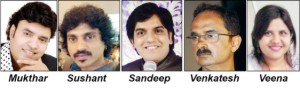
Ek Yaad Mukesh Ke Baad, to be held on Feb. 22 at the MMC Platinum Jubilee Auditorium from 6.30 pm onwards, will feature the best of Mukesh’s songs and will be rendered by Mukthar Shah from Ahmedabad, who is popularly known as the voice of Mukesh.

Mukthar, an ardent fan of Mukesh and an advocate by profession, started singing in the early 1980s and has performed all over the world. Last month he created a record by singing 130 songs non-stop for 14 hours and entered into the Limca Book of Records.

Mukthar has accompanied many celebrities including Amitabh Bachchan and Salman Khan and sung along with celebrated singers including Sonu Nigam and Shaan.

Sandeep Lokhande, a popular RJ from Mumbai, who has compered several music shows and award functions, will be the anchor.

A live 12-member orchestra ensemble from Calicut with renowned musicians will be the added attraction in the concert. Sushant from Calicut is the Orchestra Organiser.

Aiswarya Developers are the main sponsors of the concert. A part of the proceeds of the concert will be donated for the treatment of dialysis patients.

Venkatesh, the founder of the Sunheri Yaadein Music Club in 1994, who is an established singer himself, along with his singer wife Veena, has been organising concerts in city in memory of the legendary singers of Bollywood.

With a view to entertain the lovers of retro music, Venkatesh plans to hold four concerts a year in memory of all legendary singers. With a subscription to the Club, the fans will be given free passes for 3 concerts while the fourth one will be held to encourage budding talents of the member group.

For donor passes, contact Mob: 94484-74224 or 87628- 54751.

— Nandini Srinivasan

source: http://www.starofmysore.com / Star of Mysore / Home> General News / Saturday – February 14th, 2015

Mughal-era coins donated to AMU by alumnus

Aligarh:

Two alumni of the Aligarh Muslim University (AMU), SM Javed, former principal of Yasin Meo Degree College in Haryana, and his wife Imam Bano, professor at the JN Medical College in the city, have donated their personal collection of historical artifacts – which includes some rare coins dating to the times of Akbar and Jahangir — to their alma mater. The collection, which the academic couple said had been in their family for many generations, contains 58 coins and medals along with documents of the Mughal court known as parwanas. Among the pride of the collection are silver and copper coins minted during the reign of emperors Akbar, Jahangir, Aurangzeb and Shah Alam, believed to be worth a few lakh rupees.

Elaborating on the reasons behind their decision to donate these family heirlooms, Javed, who passed out of AMU in 1968, said, “We could have easily got a tidy sum if we chose to sell these coins at online auction portals. But we decided that we would rather have these priceless items exhibited at the university museum where more people can see and appreciate them.”

A particularly interesting coin in the collection is a chau gosha or four-cornered coin minted in Akbar’s reign. “Akbar was an emperor who experimented consistently with the shape of his coins. Consequently, coins during his reign came in various shapes -round, square as well as hexagonal,” said Javed. The chau gosha bears the emperor’s full name ‘Jalaluddin Akbar’ and also has the names of the four caliphs inscribed on it.

Another unique coin has the words – Zarb-Zafar Urdu inscribed on it, indicating that it was a coin minted for the use of the army during military expeditions. “Urdu was a term used to denote a lashkar or military camp during Mughal times. Imperial marching armies were like moving cities and they needed their own currency while at war,” said Javed.

The collection also includes coins from the time of Queen Victoria, East India Company, King Edward VII and King George V. Besides, there are gallantry medals of World War II. “My uncles were in the British Army during the war. The medals that they won are also a part of the collection,” said Javed.

source: http://www.timesofindia.indiatimes.com / The Times of India / Home> City> Agra / by Eram Agha, TNN / February 11th, 2015

CORRIDORS OF POWER – People queue up to see Abdul Kalam

CorridorsMPos18feb2015

When he visited his friend in Madurai, people waited patiently to cheer him and lined up on the road when he left

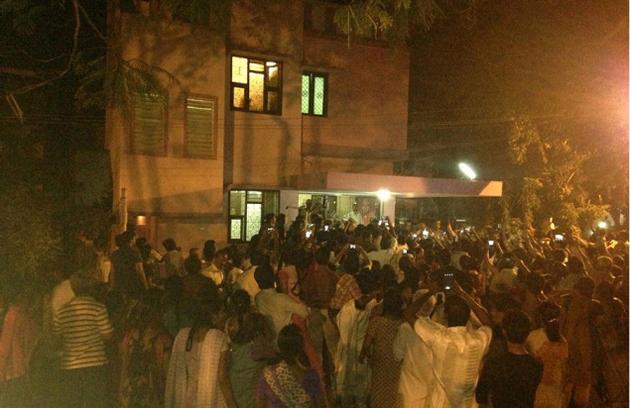
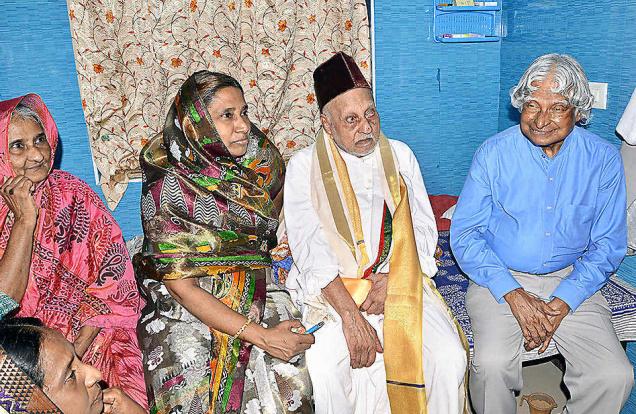
Former President A.P.J. Abdul Kalam is known for visiting Madurai with a packed schedule as he goes about attending functions at schools, colleges and hospitals in and around the district. And his two-day visit to the Temple city on Friday and Saturday was no exception. Yet, the octogenarian found time to pay a visit to his former ISRO colleague D. Narayanamoorthy’s modest house at Vishwanathapuram fourth street in the city and spent almost an hour enquiring about the health of the former’s 94-year-old father N. Devarajan, who had been suffering from age-related ailments. Though the police had cordoned off the entire locality and prevented vehicular movement, a large number of people  gathered outside the house to take a glimpse of the  former President. Mr. Kalam entered the house at around 9.20 p.m. and emerged out only at 10.15 p.m. but the crowd waited patiently to cheer him with loud roars, whistles and claps. Then the people lined up on both sides of the road as his convoy passed through with Mr. Kalam waving to the crowd enthusiastically from the brightly lit backseat of an Ambassador car. Mr. Devarajan’s other son D. Sachidanandam said that Mr. Kalam had a great regard and admiration for his father, a retired BSNL engineer. “This is his second visit to our house.  Though we did not inform anybody about the visit, people gathered up on seeing the presence of huge posse of policemen and the mobile metal detectors that were placed in our house.”

PeopleMPOs18feb2015

Media persons who had assembled for a press briefing by the Collector and District Election Officer in Tiruchi last week were surprised when V.Manoharan, who was shifted as the Returning Officer and Revenue Divisional Officer of Srirangam ahead of the by-election, walked in for a brief and informal interaction. The previous evening, the Election Commission had appointed T.G.Vinay, an IAS officer, in his place. With a disarming smile and folded hands, Mr.Manoharan told the reporters that he just wanted to thank all the reporters for their cooperation and coverage of the by-election related news. “I am moving out now, but wish to thank you all. I have no complaints,” he said, without any hint of rancour.

Sticklers for rules in the University of Madras may regret the resignation of the Head of the Department of Management Studies, a member of the university Syndicate a fortnight ago.

The professor, who turned 60 some months ago, was to retire in June as is the University norm. One of the few Syndicate members who ensured that laws and rules governing the university were followed in letter and spirit, he was respected for his knowledge of the statutes.

In the past several years he along with another senior professor questioned the University’s decisions to appoint heads of departments. With another Syndicate election coming up in a few weeks the University circles wonder if the associations will nominate persons who will take forward his legacy of checking violations.

Mohammed Imranullah S, S. Ganesan, Syed Muthahar Saqaf )

source: http://www.thehindu.com / The Hindu / Home> News> National> Tamil Nadu / February 16th, 2015

Kalam calls on brother

Family time:Former President APJ Abdul Kalam with family members at his house in Rameswaram on Friday.— Photo: L. BALACHANDAR

After a gap of about nine months, former President A. P. J. Abdul Kalam visited his family at House of Kalam, his ancestral home, here on Friday.

Mr. Kalam, who was on a day’s visit to the district, came to his house in the afternoon and had lunch with his 99-year-old brother A. P. J. M. Maraikayar and interacted with other family members.

Mr. Kalam spent about two hours, before leaving for Madurai.

He enquired about the health of his elder brother and asked him to take care, Mr. A..P..J..M..K. Sheik Saleem, grandson of Mr. Kalam, said.

As he stepped out of the house, the former President was swarmed by a large number of local students, seeking his autograph.

Sporting a smiling face, he patiently obliged the students, asking them to dream big and wishing them success.

He last visited his home on June 1after a gap of nine years and had a family re-union, with 100-odd members from Chennai, Pamban, Ramanathapuram and other places. They gathered at the House of Kalam and shared pleasantries.

source: http://www.thehindu.com / The Hindu / Home> News> National> Tamil Nadu / by Special Correspondent / Rameswaram – February 14th, 2015