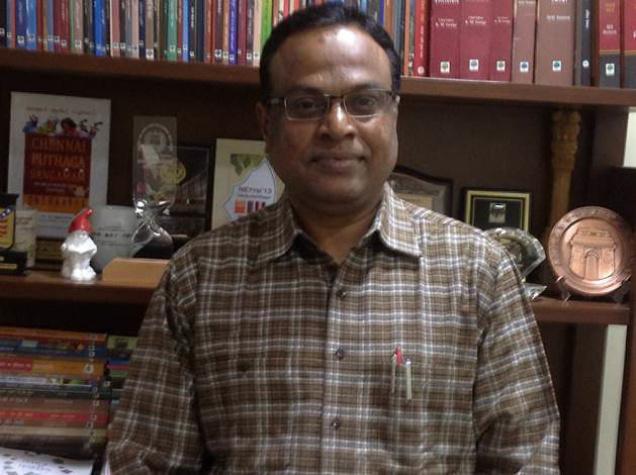
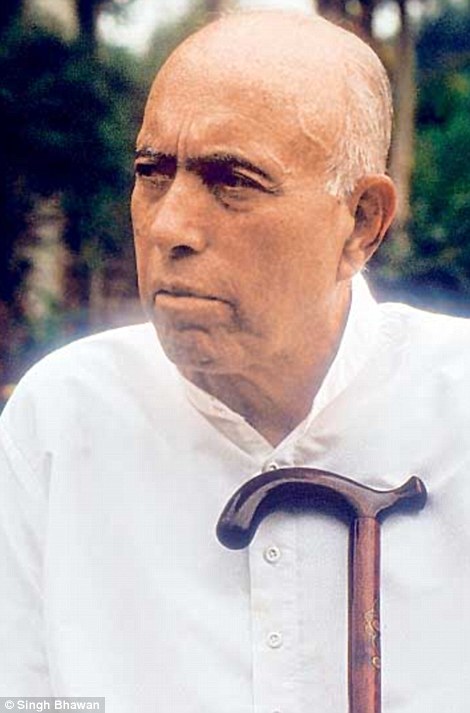
Ashraful Haque started his career with a critically acclaimed film, Behrupiya. (Photo courtesy: moviespictures.org)
Delhi Belly and Fukrey actor Ashraful Haque passed away at Sunita Hospital in Andheri East in Mumabi on Tuesday. He was 46.
Haque was suffering from bone marrow cancer and was going through intensive treatment.
His condition deteriorated recently and he was put on ventilator.
The actor, who started his career with a critically acclaimed film, Behrupiya, has performed in more than 30 Indian plays and acted in over approximately 30 films apart from his Telly Serials and Ad films.
Haque graduated from National School of Drama, New Delhi in Dramatics with specialization in Acting in 1997.
He acted in movies like Company, Jungle, Dil Kya Kare, Calcutta Mail, Deewaar, Black Friday, Delhi Belly, Paan Singh tomar.
Haque is survived by his wife and a son.
source: http://www.indiatoday.intoday.in / IndiaToday.in / Home> India> West / New Delhi – February 17th, 2015
India always fascinated foreigners who were smitten by its monuments, beauty, culture and much more
We are always curious to know what others think about us! About 118 years before President Obama came calling to Delhi, compatriot Mark Twain had observed: “So far as I am concerned India is the only foreign land I ever daydream about or deeply long to see again.” Fifty years later John Wohlfarth, after serving in India, recorded in his diary: “The world needs India intact! Tear down Roman ruins if you will, level Cyclopean walls, build bridges with stones of gothic abbeys and feudal fortresses but lay no hand on the glory and grandeur of India.” Both US visitors were among those who looked at the country without prejudice, unlike the British. Twain was fascinated by the monuments of Delhi and Wohlfarth too while sitting under the Qutub Minar, wandering in the Purana Quila and the Red Fort or while viewing the sublime beauty of the Taj Mahal. These impressions are among many recorded by Pran Nevile during research in the US Library of Congress which gave birth to the treatise, “India Through American Eyes” (Primus Books).
In 1833, while Akbar Shah-II was on the throne, American ice was introduced into the Mughal empire. It replaced mountain ice brought from the Himalayas since the time of Akbar the Great in bullock carts and stored in wells to last through the summer. In Shah Jahan’s reign there were ice-fields near Turkman Gate where ice made in winter was stored for use when the weather turned beastly hot. The credit for bringing the first ice-ships to Calcutta, Bombay and Madras goes to Frederick Tudor, who as a result became a very rich man and the ice-fields of Turkman Gate slowly disappeared.
There is a fascinating account of Elehu Yale (after whom Yale University is named) who as Governor of Madras received a female Mughal emissary (from Delhi) reported to be of “majestic form and the magnificence of whose pearls and diamonds were beyond description”. There was also a report about a nawab’s wife, published in 1743 (Mohammed Shah’s reign), whose “glittering costume, elaborate sophisticated make-up and exotic jewellery, which adorned her from head to toe”, was enchanting. The refreshments served on “gold plates, with guests being entertained to 60 dishes” were among the amazing accounts of Mughal hospitality.
Bayard Taylor, who came in 1853 (four years before the First War of Independence) as correspondent of New York Tribune, was fascinated by a ride in a palanquin. After going about in it in the Capital, he took a horse-drawn Dak buggy and travelled from Delhi to Meerut, Agra, Mussoorie, Kanpur, Lucknow, Allahabad, Benaras and Calcutta. About the Taj, he observed: “Did you ever build a castle in the air? Here is one brought down to earth… when seen from a distance, so like a fabric of mist and sunbeams.” In 1871, the Rev William Butler said “that a flute played gently in the vaults below where the remains of the Emperor and his consort repose, produces a sound, which is perhaps the finest to be heard as it were from heaven and breathed by angels”.
Gertrude Emerson, who visited Delhi, Agra and Lahore in 1923, says, “Here were lavishly scattered the great red sandstone forts and gates of Akbar, the marble palaces and pearl mosques of Jahangir, Shah Jahan and Aurangzeb and the magnificent tombs they constructed”. She goes on to say: “I sat alone for a long time once at the top of one of the four minarets surrounding the Taj Mahal. It was a night of a full November moon, and silver mists clung to the Jumna, flowing silently past the great marble platform from which the Taj rises with ineffable grace. I had had my first view of this far-famed ‘Crown of Palaces’ from the Jasmine Tower at Agra Fort, whence Shah Jahan, an old man and a prisoner, fallen upon evil days, must often have looked out mournfully at the beautiful mausoleum he had erected many years before, in honour of Mumtaz Mahal, his queen… Suddenly in the moonlight it was like the breast of a lovely woman.” According to Percy Brown, it was the magic of Indo-Persian architecture blended by rulers originally from beyond the Oxus.
As for dance and music, Lily Strickland Anderson, a prolific composer of music, writer and painter, was captivated by the performance of two nautch girls invited from Delhi to perform at a Raja’s party in Bombay. They were obviously from Chawri Bazar and akin to midsummer night fairies. Some other Americans were struck by the soulful singing in the fields and village streets “and the many sorts of (rural) work done to the lilt of a song”. All in all, an amazing saga of a medieval and emerging modern scene. Such was the milieu that produced Esther Sherman (Ragini Devi), her daughter, Indrani Rehman and granddaughter Sukanya.
source:http://www.thehindu.com / The Hindu / Home> Features> MetroPlus / by R.V. Smitha / February 15th, 2015
National Book Trust Director M.A. Sikandar on his concerns for the book fair
The New Delhi World Book Fair, to be held at Pragati Maidan from February 14 to 22, will be all about inclusiveness as for the first time lesser known literary figures from the North East of the country will be acknowledged for giving a glimpse into the cultural heritage and rich diversity of the states known as the Seven Sisters. Their books will be displayed in a special theme pavilion of the exhibition ground.
National Book Trust Director M.A. Sikandar has gone out of his way to accommodate the genuine concerns of North Easterners. As a result, the book fair’s theme programme titled “Suryodaya: Emerging Voices from Northeast India” will see books by Sanjay Hazarika, also participating in a panel discussion, and by literary figures like Sanjeeb Kakoty, Mitra Phuken and Arup Kumar Dutta at Hall No. 7.
“When I took over the reigns of NBT in 2012, we selected cinema as the theme. It was followed by tribal literature, children’s literature and now literature from the North East. There are prolific writers who have produced work in different languages. The time has come to acknowledge these writings and showcase them to an international audience. Former militant Hemanta Jamatia, now a folk singer, will be in conversation with Utpal Borpujari,” says Sikandar.
Sikandar informs us that NBT has opened two centres in Guwahati and Agartala to promote the book reading habit in the remotest regions of Assam and Tripura respectively. “Whenever book fairs are held in these States, schools shut down and children accompanied by their teachers come from far and wide. In the years to come, the North East, with a sizeable urban, educated population, would become the most literate State. There is a direct link between literature and education. Tripura has become the number one literary State.”
The NBT director feels that the decision to highlight the literature from these states would eventually help in integrating the entire North East with the rest of the country as people would be acclimatised with the rich culture, traditions and history of the region.
As for choosing South Korea as the focus country, he says, “This move would open business opportunities for Indian publishers. Or else, like other years, European publishers would have struck deals with their Korean counterparts. Now Korean publishers do not have to go to the London Book Fair and the Frankfurt Book Fair. Consequently, publishers and authors would get royalties and Korean publishers would sign translation rights.”
About 200 books, contemporary literature, comics and children’s books, authored by well known as well as new Korean authors will be available.
The WBF does not provide facilities like snack bars or cafés inside the auditoriums. Even the infrastructure at Pragati Maidan, which is fit for hosting melas rather than exhibitions, dies not match world-class book fairs held in cities like London, Frankfurt and Seoul.
“We do not know. The ITPO (Indian Trade Promotion Organisation) is planning this event and is our co-organiser. Not even a big auditorium, where the opening ceremony can be held with all invitees in attendance, exists at the moment at Pragati Maidan. Last year, the audience was sitting under the open sky and it started pouring. Due to lack of infrastructure, business generation is not on the expected lines. We are not able to attract leading foreign authors to the fair and even lose out on translations of famous English books into Indian languages.”
Sikandar says modernisation of infrastructure needs to be carried out in right earnest at Pragati Maidan. “We cannot have such a venue in Greater Noida or in the NCR.”
This time round, NBT has appointed a committee to catch hold of exhibitors, including foreign participants, who are selling the remaindered books.
As China will be the guest of honour nation next year, a five-member Chinese delegation will be discussing the next edition, to be held in January 2016, says the director.
“Since last year, I was keen to change the month, because November is the time of examination fever for school students. To strengthen our age-old storytelling traditions, puppeteers from Iran have been invited. When Chinese President Xi Jinping visited India last September, I had the good fortune of signing an MoU with the Chinese Minister to have China as guest of honour country at World Book Fair-2016.”
source: http://www.thehindu.com / The Hindu / Home> Features> MetroPlus / by Madhur Tankha / February 13th, 2015
When Prof Nyla Ali Khan, a US-based Kashmiri academic and granddaughter of Sheikh Muhammad Abdullah, writes about her grandmother Begam Akbar Jehan, she demolishes “many a myth”.
According to her, the biggest fiction being peddled as history is that Sheikh Abdullah was Akbar Jehan’s second husband, after the latter’s divorce from T.E. Lawrence, alias “The Lawrence of Arabia”.
Leftist historian Tariq Ali had written that Jehan married Lawrence in 1928, while he was on a visit to Kashmir.
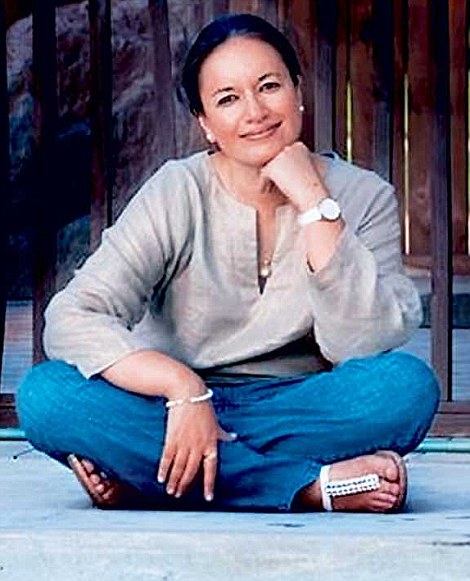
Nyla Ali Khan has written a biography of her grandmother, Begum Akbar Jehan (below), who was married to Sheikh Muhammad Abdullah
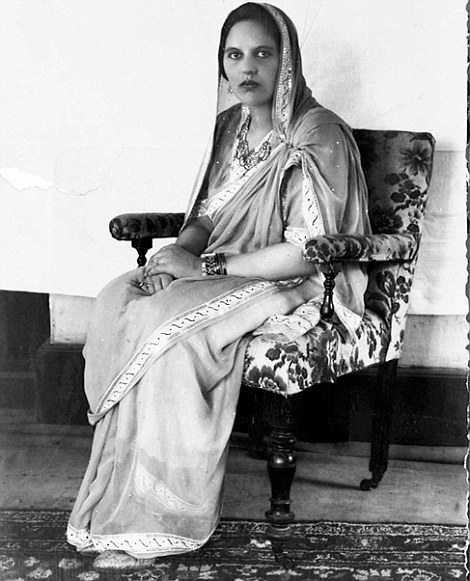
Begum Akbar Jehan who was married to Sheikh Muhammad Abdullah
Prof Khan, the niece of Farooq Abdullah, is a faculty member at the University of Oklahoma in the US and member of Scholars Strategy Network. She is the author of Fiction of Nationality in an Era of Transnationalism, Islam, Women, and Violence in Kashmir, and the editor of The Parchment of Kashmir.
In an interview with Mail Today, she said: “The biography of Jehan provides an insight into the history, politics, and society of Kashmir in the major part of the 20th century.”
While debunking the Lawrence theory, Khan said that Jehan herself had told her that “this tall tale was just another fabrication, the purpose of which was to denigrate her and to belittle her work”.
Khan quoted Stephen E. Tabachnick, a renowned Lawrence scholar, to make her point: “Tabachnick unequivocally pointed out the story of that betrothal or marriage is completely false. If it had happened, it would have been impossible to keep it a secret, considering Lawrence’s world-wide fame. And given Lawrence’s homosexual tendencies and flagellation compulsion, the odds are really against it being true.
Prof Khan says her grandmother was never married to – or divorced from – T.E. Lawrence , known to history as ‘Lawrence of Arabia’, and that this was a tale told to denigrate her. Kashmiri statesman Sheikh Abdullah (below) married her in 1933.
Prof Khan says her grandmother was never married to – or divorced from – T.E. Lawrence known to history as ‘Lawrence of Arabia’, and that this was a tale told to denigrate her. Kashmiri statesman Sheikh Abdullah (above) married her in 1933.
“He pointed out that John Mack and Jeremy Wilson have written the best Nyla Ali Khan’s (right) biography is an insight into Kashmir in the major part of the 20th century and Begum Akbar Jehan (above). biographies of Lawrence. But, neither had mentioned this apocryphal story nor do any of the other biographies that he was familiar with.”
Khan’s biography, titled The Life of a Kashmiri Woman: Dialectic of Resistance and Accommodation is published by Palgrave Macmillan, and available in North America and the United Kingdom. The book is likely to be available in India in mid-summer this year.
For Khan, Jehan had a substantive role in “public events”, and she cannot sink into the shadows or be “memorialised into the realm of abstractions”.
Jehan’s father, Michael Henry [Harry] Nedou, later Sheikh Ahmed Hussain, of Slovak and British descent, was a charming hotelier. Her mother, Rani Jee, was an indomitable Gujjar (pastoral tribe) woman, with her clan’s lineage traced to the martial, patrilineal, and traditional Rajputs of Rajasthan.
“Jehan, born with the proverbial silver spoon in her mouth, made the intransigent decision to throw in her lot with a determined and politically savvy young man, Sheikh Abdullah.”
Khan said: “The Sheikh’s fiefdom was the political battlefield; his entourage comprised the poverty-stricken, disenfranchised, dispossessed, denigrated masses; his palace was his home in Soura, on the outskirts of Srinagar.”
“During her husband, Sheikh Abdullah’s incarceration, Jehan was burdened with the arduous task of raising five children in a politically repressive environment that sought to undo her husband’s mammoth political, cultural, legal attempts to restore the faith of Kashmiri society in itself.”
Jehan’s forebears, the Nedous, had emigrated from the Croatian city of Dubrovnik to Lahore in the 1800s.
Croatia, now independent, was in the Austrian Empire from 1815 to 1918 and part of Yugoslavia from 1918 to 1991.
source: http://www.dailymail.co.uk / Mail Online India / Home>India / by Naseer Ganai / February 08th, 2015
All about Mukhtiyar Ali (India) & Mathias Duplessy (France)
Artists
Main Artists : Mukhtiyar Ali, Mathias Duplessy
Mathias Duplessy & Mukhtiyar Ali: From Asian deserts to Andalusia
Collaborations between the east and west such as Zakir and McLaughlin, Ravi Shankar and Yehudi Menuhin, have resulted in some of the finest music over the decades. Mathias Duplessy from France started working with the Sufi Indian singer Mir Mukhtiyar Ali six years ago and soon realised they had a common language in music. They evolved a style of their own, which was inspired by Rajasthani folk, flamenco, blues, reggae, African, Japanese and Mongolian music. In 2011, they recorded an album in Paris called “Jeena Jeena” and have been performing since with the great Bastien Charlery, accordion player from the Bulgarian gypsy style. The famous sarangi player Sabir Khan who works with them on film scores will also join the stage for an exceptional evening!
Mathias Duplessy
Difficult to label him, he plays dozens of instruments and loves the strings. Mathias Duplessy belongs to the generation of musicians who do not like borders; and approaches world music without any complex. From a song to a solo guitar suite or strings adagio, his music conveys the big spaces and the time passing.
Between flamenco, oriental, classical music or gypsy jazz, his style is unique and full of energy. Joyful, generous, Mathias has a lot of projects following his music encounters and composes music for films in France, Morocco and India (Peepli Live, Finding Fanny).
Mukhtiyar Ali
He comes from the semi-nomadic community called Mirasi from the Thar desert. He lives in Pugal, a village at the border of Pakistan and Rajasthan. He belongs to the 26th generation of this community which has successfully kept alive the oral tradition Sufiana Qalam.
Mukhtiyar Ali has a voice which can only be experienced. He has preserved the ideology of Sufiana music which impels divine communion with an ecstasy created in total detachment. He pervades this very essence of Sufiana Qalam with his involvement not just in the music but also in its poetry.
Today, while singing Sufi poetry all over the country with his original compositions, he’s also regularly called in to Bombay to work on film background scores and tours abroad with his Jeena Jeena team.
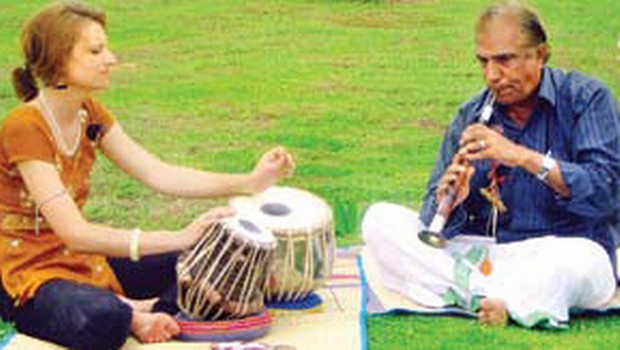
Ustad Hassan Bhai plays shehnai as Lara, a French music student, accompanies him on tabla at Bekal in this 2011 photo
Kasargod :
Around noon, Ustad Hassan Bhai returns dejected from the post office. The double-reed mouthpieces have still not arrived from Varanasi. “I am running out of reeds. Mouthpieces from other places do not produce impeccable notes,” said Hassan Bhai, one of the disciples of the legendary shehnai maestro Ustad Bismillah Khan.
At 72, he keeps the legacy of the maestro who often played at temples, intact. It was only a day ago that he performed at a Vishnu temple in Kannur district. “It was a two-and-half-hour shehnai concert and went late into the night,” he said. The music that comes out of Usthad’s shehnai, gifted by the maestro himself, is sonorous, but has hardly helped him alleviate life’s sufferings. Dependent on his meagre earnings, mostly from teaching music, are his bed-ridden wife, a son and daughter and three grand children borne of another daughter, who is no more.
The family of seven live in a rented apartment, but this status is now poised for a change. The government has agreed to provide five cents of land in Thekkil village, and Chemnad panchayat will construct a house for him. Ustad, who won this year’s Gurupuja Award, says he always played music for the love of it and never tried to make money out of it.
Poverty is a recent phenomenon in Usthad’s life. Born to a Muslim Keyi couple — Adam and Bibi — in Thalassery on August 15, 1943, Hassan Kutty had a comfortable life.
He inherited music from his mother, Adam Bibi, a trained vocalist. “Under my mother, I used have long hours of riyaaz,” says Usthad, who plays 30 wind and string instruments.
On turning 18, his mother sent him to Mysore to learn Hindustani music. After a couple of years, like most of Keyi youngsters, Hassan Bhai landed a job with a merchant ship and set to sail around the world. Once when the ship docked at Los Angeles, he found his way to a Catholic church and played piano for a Sunday mass.
“The members liked me so much that I was part of the church choir for the next three years,” says Hassan Bhai. He returned only when he got a notice from the embassy for overstaying. Back in India, he started frequenting Mumbai, then Bombay, to play tabala in an orchestra. “Bombay made Hassan Kutty, Hassan Bhai,” he says. In one such programme in 1975, he met Bismillah Khan and conveyed the desire to learn shehnai under him. “He immediately agreed and asked me to come to Banaras,” recalls Hassan Bhai.
And so started 10 long years of riyaaz on the banks of Ganga under the maestro. Hassan Bhai says he enjoyed playing raag Bhairavi on the banks of the Ganga, sitting across Kashi Vishwanath temple. “Though Kasargod has so many rivers, I never experienced the same feeling,” he says
source: http://www.newindianexpress.com / The New Indian Express / Home> States> Kerala / by George Poikayil / February 13th, 2015
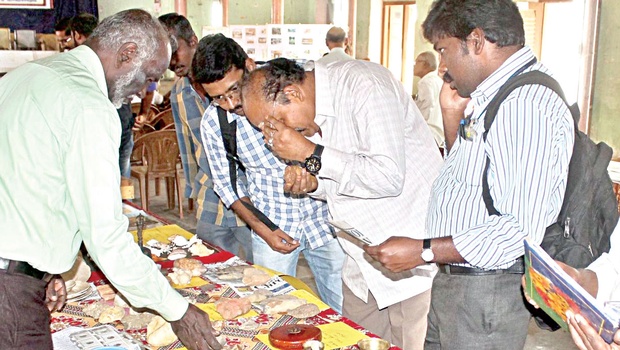
Visitors streaming through artefacts, coins and stamps at the three-day expo in Vellore on Friday | EXPRESS
Vellore :
A three-day expo on stamps and coins, organised by the Numismatic and Philately Association of Vellore Fort, has evoked good response from both the general public and school students. The expo was inaugurated at the Town hall on Friday.
“Over 20 coin and stamp collectors from across the district have displayed their collection, and around 25 stalls have been put up by vendors from various States for the sale of stamps, coins and other artefacts,” said CMA Tamilvanan, secretary of the association.
For his part, Tamilvanan has displayed a rare collection of coins released by the British Empire for the Madras Presidency during 1807 and 1808. He said the East India Company had released three different coins -kaasu, dabbu, and panam – for the Tamil, Telugu and Kannada population, which is also displayed.
Vijayakumar, who has been collecting stamps for over 18 years, has displayed over 150 stamps on Gandhi released from 1948 and a huge collection of stamps on cricket since 1973. “I spend 25 per cent of my income on collecting stamps,” he said.
Ranipet based school student S Ambai, the youngest member of the association, has displayed a good collection of commemorative coins of Republic India between 1964 and 2012. She evinced interest in this hobby from her elder sister Abhitha, who has been collecting coins and stamps for over 15 years. “I started to save money for this hobby and I learn a lot of history and knowledge from generations,’ she noted. Ashraf Ali, president of the association, who is an avid collector of artefacts, has displayed a rare sword dating back to 1917 used by British soldiers.
source: http://www.newindianexpress.com / The New Indian Express / Home> States> Tamil Nadu / by V. NarayanaMurthi / February 14th, 2015
The predicament of the Mirasi community comprising Awadhi folk singers since ages is pathetic and they are bordering on extinction. Using the cultural platform at the on-going Lucknow Literary Festival, a group of five Mirasan’s hailing from Bada Gaon of Barabanki district who were invited to perform their local folkfare moaned that the government has never taken any concrete measures to save the traditional folklore of Awadh.
The musicians who were once considered an integral part of Awadh, invited to auspicious occasions like weddings, baby-shower, as well as during the mourning period of Muharram to recite soz, salam and nauhas (dirge) find no patrons in this day and age.
At present there are only around 15 mirasans left in Uttar Pradesh who despite all odds still practice the ancestral art of singing on different occasions when invited. Like every ethnic group Mirasis are a mix of Sunni and Shia sects and have their unique characteristics and social roles. They share common values as they are interrelated through marriages.
Rafia Khatoon, part of a group including four other females, said, “Our ancestors were pampered with sufficient clothing, food, residential facilities from the royal families of Awadh so the need for a permanent house was never felt but today we are struggling for survival and expect state government to recognize our talent and make arrangements for some kind of social security.”
She added that with no fixed allowance, housing or medical insurance or any kind of support from the government the community and the art may not sustain for long.
Blaming rapid advancement of technology in the field of entertainment and music industry marring the traditional roles played by Mirasans in nearly every house of Awadh, including both Muslim and Hindu families, another mirasan Firoza said, “It is difficult to generate income from our ancestral profession as now nobody invites us and our children have no option but to switch over to different professions.”
source: http://www.timesofindia.indiatimes.com / The Times of India / Home> City> Lucknow / by Uzma Talha, TNN / February 15th, 2015
Classical singer Shubha Mudgal, Bollywood playback singers Rekha Bhardwaj and Kailash Kher, journalist Vinod Mehta, theatre artists Urmil Kumar Thapiyal, poet Khushbir Singh ‘Shaad’, kathak exponent Kum Kum Dhar, as well as actors Jimmy Shergill and Nawazuddin Siddiqui were among 56 achievers who on Monday received the Yash Bharti Award for 2013-14 & 2014-15 at a grand ceremony held at Ram Manohar Lohia Park.
The award, given by chief minister Akhilesh Yadav, carried a cash prize of Rs 11 lakh, a citation and a shawl. The Yash Bharti Award is one of the highest state-level awards conferred for excellence in literature, fine arts, classical music, folk music and sports. The awards were instituted in 1994 by Mulayam Singh Yadav to honor achievers in different fields. Addressing the awardees, Akhilesh said, “As these awards are given to generate social awareness in the society, I consider each of the recipients ‘real’ ambassadors of Uttar Pradesh, representing the state across the globe.”
Among the awardees, bhajan maestro Anoop Jalota donated his award to a city-based trust to promote Bhagwad Gita through spiritual concert ‘Ram Bhi Rahim Bhi’. Actor Nawazuddin Siddiqui said his joy of receiving the award doubled as he also got a chance to visit the city which taught him the basics of acting and theatre at Bhartendu Natya Akademi
Kathak exponent Kumkum Dhar, said, “It certainly feels great when the government and people of your own state not only recognize your work but applaud you in such a grand way.” “Besides the support of my family, it is actually the blessings of my guru Lacchhu Maharaj that helped me sail through these 40 years of my career with such ease,” she added.
Renowned poet Khushbir Singh ‘Shaad’, who is currently settled in Punjab, expressed joy over receiving the award and said, “It is certainly a matter of pride for me that Lucknow still remembers me with the same love and affection.”
The other list of awardees include classical singer Rajan Saajan Mishra and Rita Ganguly, music composer Ravindra Jain, international level judo referee Munawar Anzar, educationist Jagdish Gandhi, Abhishek Yadav for special commando training, wrestler Aka Tomar, ghazal singer Rita Ganguly, lyricist Sameer, poet Bekal Utsahi, writer Maata Prasad Tripathi and Devi Prasad Pandey.
Along with these, two bravery awards were also conferred. While Resham Fatima was awarded Maharani Ahiliyabai Holkar Award, Seema Tiwari was given the Rani Laxmi Bai award.
source: http://www.timesofindia.indiatimes.com / The Times of India / Home> City> Lucknow / TNN / February 10th, 2015
The smell lingers:N. Fakhruddin Attarwala’s shop is perhaps one of the few places in the city where you can still get perfumes in their raw form — without alcohol or gas —Photo: K. Pichumani
When you walk out of a tiny shop — where the shelves are lined with dainty glass vials — on Mannady Road, you smell like a flower bouquet.
And when the shop is run by a veteran perfumer, who loves to please his customers, the blend is unimaginable.
N. Fakhruddin Attarwala’s shop is perhaps one of the few places in the city where you can still get perfumes in their raw form — without alcohol or gas. “It is quite rare to see such perfumes being sold these days. Earlier, people would sell tiny bottles of perfumes with gold-coloured caps at fairs and marketplaces, enticing people with the aromas. They were not just sellers but perfumers who learnt the trade with great difficulty,” recalls D.V. Sainath Guptha, a perfumer himself, who prepares scents only for self consumption.
Several old areas, including Periamet, Royapettah and Triplicane, have such perfume shops but the number of patrons seems to be thinning with most people preferring branded products.
Though one connect such shops with traditional fragrances like attar , marikolundhu and javvaadhu,the variety available is surprising. Mr. Attarwala, who has created some 50 fragrances in his 45 years as a perfumer, says some fragrances require up to 200 ingredients.
“The foodie note is the in-thing now, with melons, strawberry and lime vying for favour. One fragrance can contain 40-60 ingredients and take at least two years to perfect. It is a laborious process. No doubt perfumery requires knowledge of chemistry but it should be in your heart. It is only recently chemicals are being used in perfumes. Previously, it used to be just natural oils,” says Mr. Attarwala, whose home is where he creates his magic.
Whatever perfume is made, sandalwood is the basic requirement along with ylang ylang oil and musk oil. These perfumes must be diluted with four parts of water each time they are used.
“The cost of the perfume depends on its quality and not quantity. You can get the same quantity of jasmine perfume for Rs. 30 and Rs. 500,” he explains, as his customers patiently wait their turn to let their olfactory senses decide what they shou ld buy.
Gone are the days of tiny vials of scented natural oils withgold-coloured caps
source: http://www.thehindu.com / The Hindu / Home> News> National> Tamil Nadu / by Deepa H. Ramakrishnan / February 11th, 2015