Category Archives: Arts, Culture & Entertainment

Rare Mughal-era jewels go on display at New York exhibit

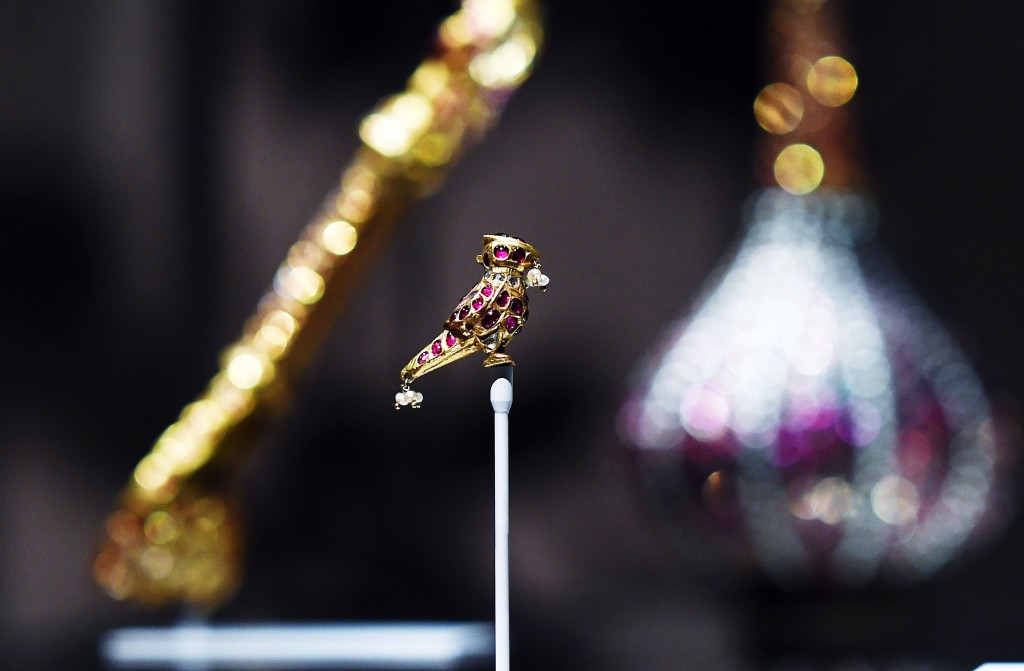
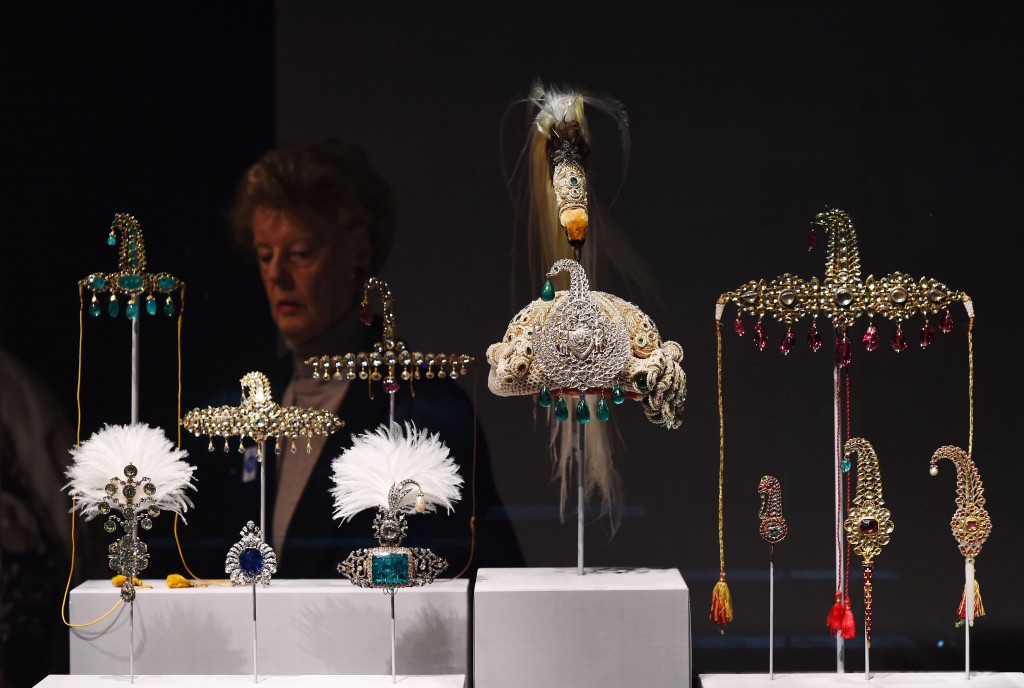
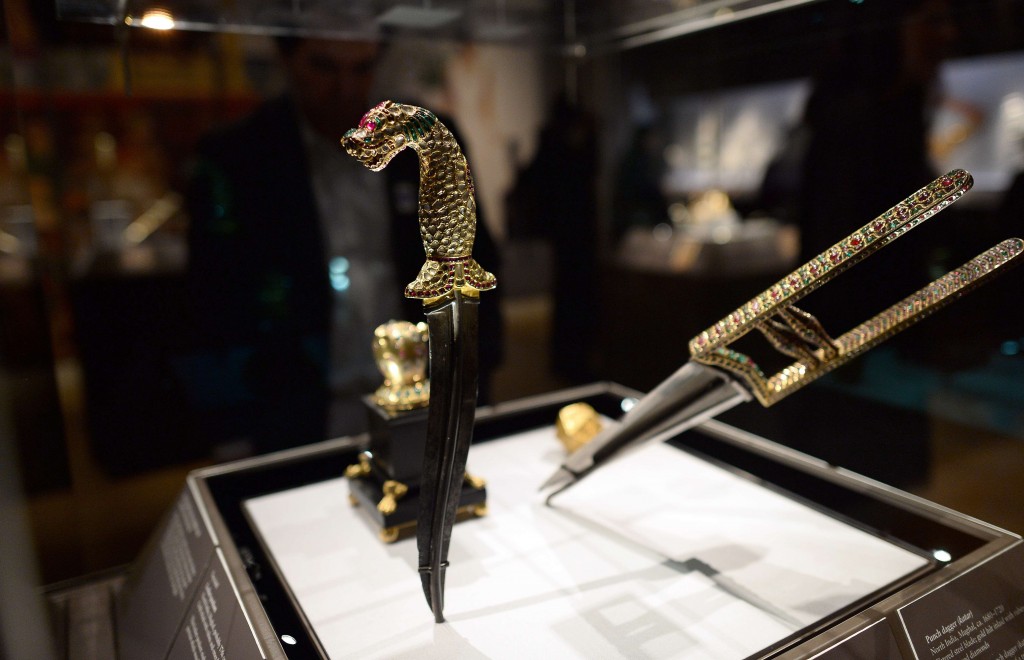
About 60 jeweled items, including a gem-set tiger head finial originally from Tipu Sultan’s throne and a jade dagger owned by Mughal emperors Jahangir and Shah Jahan, has been displayed at an exhibition at the prestigious Metropolitan Museum of Art.

Photo01MPOs17nov2014

The objects are from the private collection formed by Qatar’s Sheikh Hamad bin Abdullah Al-Thani and will be presented at the museum in the exhibition ‘Treasures from India: Jewels from the Al-Thani Collection’ opening October 28 till January 25.

Photo02MPOs17nov2014 

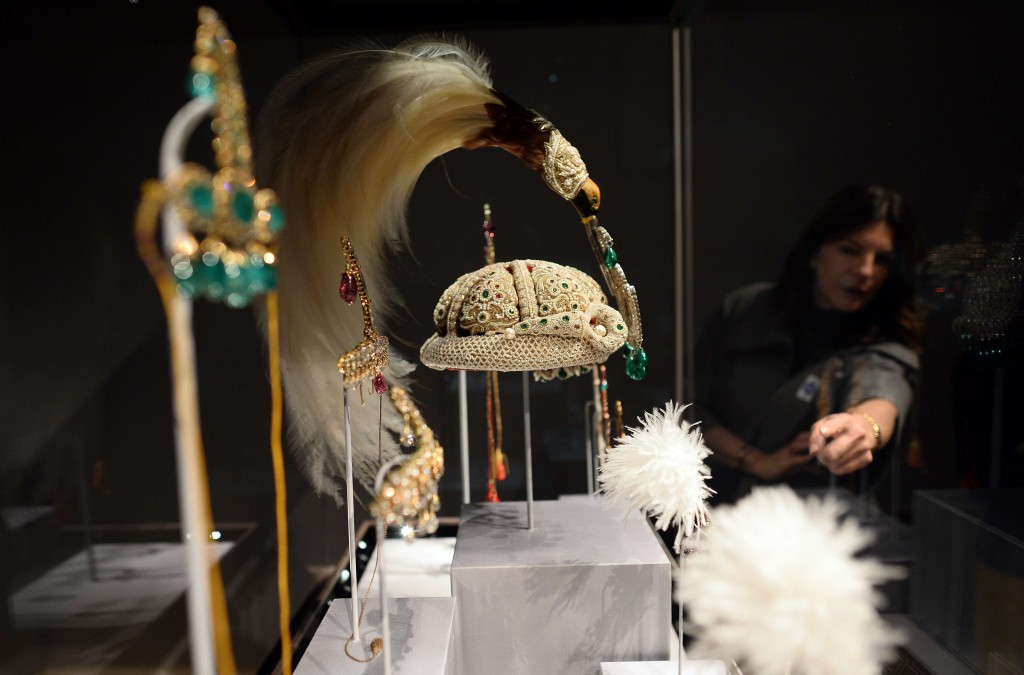
The display includes historical works from the Mughal period in the 17th century and from various courts and centres of the 18th and 19th centuries, including Hyderabad.

Photo03MPOs17nov2014

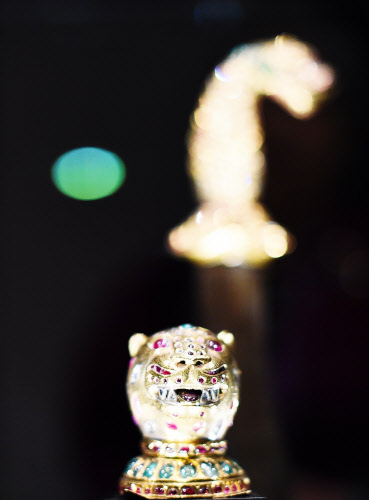
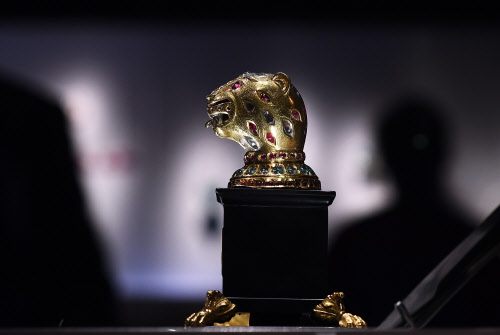
A highlight of the exhibition, made possible by iconic jewellery designer and manufacturer Cartier, would be a gem-set tiger head finial originally from the throne of Tipu Sultan that incorporated numerous cabochon diamonds, rubies and emeralds in a kundan setting.

Photo04MPOs17nov2014

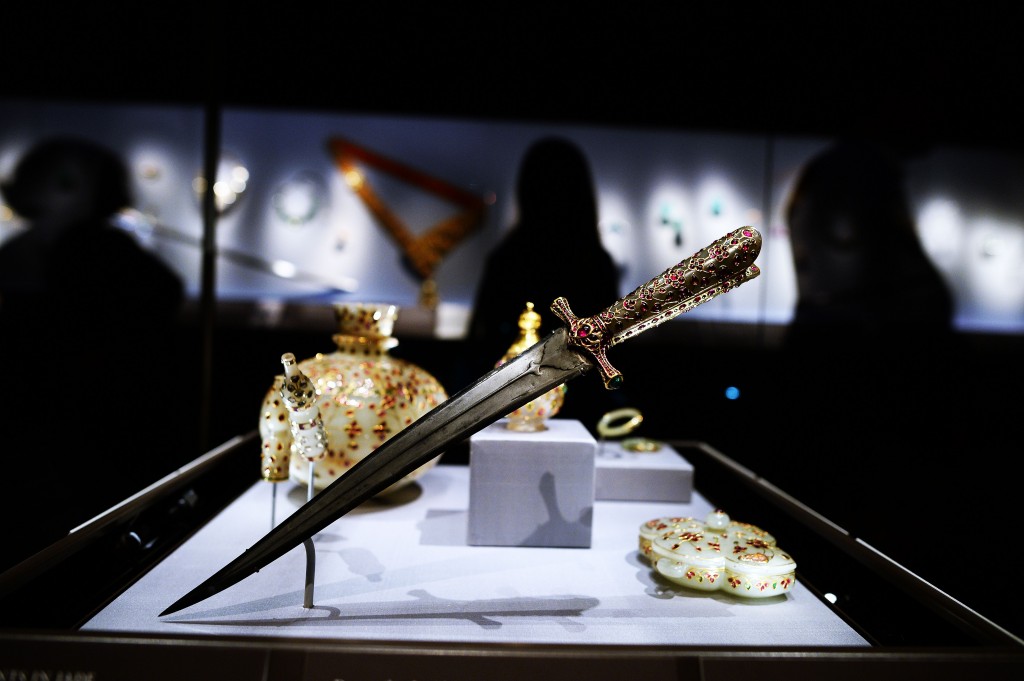
Among the Mughal works will be a jade dagger — originally owned by two emperors — the hilt was made for Jahangir and it was re-bladed for his son Shah Jahan, who built the Taj Mahal.

Photo05MPOs17nov2014

In the 19th century, the dagger was in the collection Samuel Morse, inventor of the Morse code.

Photo06MPOs17nov2014


Photo07MPOs17nov2014

(Courtesy: PTI and AFP)

DISCLAIMER : Views expressed above are the author’s own.

source: http://www.blogs.timesofindia.indiatimes.com / The Times of India / Home / Team TOI in The Photo Blog / October 28th, 2014

Cracks in Tipu’s fort

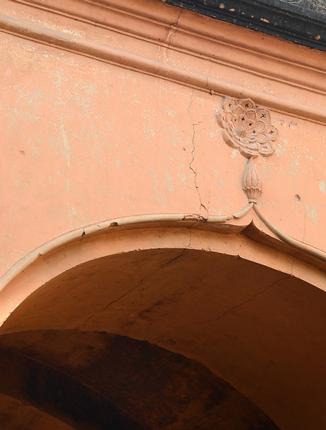
Karnataka : Bengaluru : 15/11/2014 . Crack on the wall of Tipu's fort near K R Market in Bangalore on 15th November 2014 . Photo : Bhagya Prakash K
Karnataka : Bengaluru : 15/11/2014 . Crack on the wall of Tipu’s fort near K R Market in Bangalore on 15th November 2014 . Photo : Bhagya Prakash K

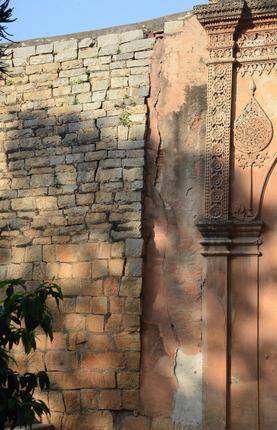
Once the nucleus of an ambitious plan to build a new city – Bengaluru – by the city’s founder Kempe Gowda, Tipu Sultan Fort or Bangalore Fort today is a far cry from its former state of glory. Visitors are now greeted by cracks that have developed in the fort walls above the temple that one sees after entering the protected monument nestled in the busy K.R. Market area.

The cracks, it is learnt, appeared recently although the fort was restored only two years back. The Archaeological Survey of India (ASI) officials blame it on the age of the monument. “Essential steps for its conservation were taken two years ago, but there are no major plans as of now,” an official said.

Karnataka : Bengaluru : 15/11/2014 . Crack on the wall of Tipu's fort near K R Market in Bangalore on 15th November 2014 . Photo : Bhagya Prakash K / The Hindu
Karnataka : Bengaluru : 15/11/2014 . Crack on the wall of Tipu’s fort near K R Market in Bangalore on 15th November 2014 . Photo : Bhagya Prakash K / The Hindu

The ASI will now to analyse the cracks to ascertain their width and depth before taking up conservation work.

Incidentally, the Namma Metro’s underground section, where blasting work had been taken up, passes beneath the fort. However, the ASI official said that the cracks in the fort walls had nothing to do with Namma Metro work.

Meera Iyer, co-convenor, Indian National Trust for Art and Cultural Heritage (INTACH), said there is a need for better maintenance. “There is not much supervision though there are security guards,” she added.

In fact, the ASI has barred access to public to the top portion of the fort, which leads to the dungeon where British prisoners were kept as the space was used for “inappropriate activities” such as gambling.

Ms. Iyer suggested that the fort should be used as public space for cultural activities, like it had been done a couple of times when a music concert and a play about Tipu Sultan were organised. To this proposal, an ASI official said with prior permission from the New Delhi head office of ASI, non-private cultural events can be held.

Historian S.K. Aruni mentioned that restoration of a wall that had collapsed due to heavy rain three years ago may have caused the cracks. “It is natural to see another part develop cracks if restoration work is undertaken,” he explained.

source: http://www.thehindu.com / The Hindu / Home> News> Cities> Bengaluru / by K.C. Deepika / Bengaluru – November 16th, 2014

First campus radio is into sixth year

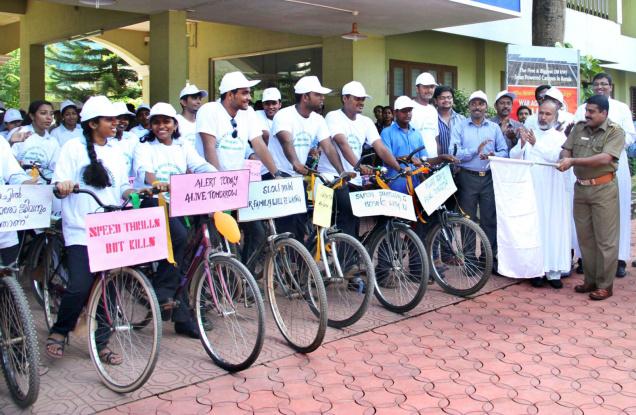
Schoolchildren taking out a road safety awareness cycle rally in connection with the fifth anniversary of Kerala’s first campus-based community radio service, ‘Radio Macfast,’ at Thiruvalla. / by Special Arrangement / The Hindu

Radio Macfast Awards to be presented tomorrow

Home Minister Ramesh Chennithala will inaugurate the fifth anniversary celebrations of the first campus-based community radio in the State, “Radio Macfast-90.4”, to be held at the St. John’s Cathedral Hall in Thiruvalla on Saturday.

According to Fr. Pradeep Vazhatharamalayil, Radio Macfast chairman, Revenue Minister Adoor Prakash will present this year’s Radio Macfast Awards to Kaviyur Sivaprasad, award-winning film maker; Roy Abraham Kallivayalil, global general secretary of the World Psychiatry Association; and Jacob Joseph, social worker who runs a charity home at Othera in Thiruvalla, on the occasion.

Metropolitan Archbishop of Thiruvalla Thomas Mar Coorilos will preside over the meeting.

To be feted

Fr. Vazhatharamalayil said 15 eminent personalities from different walks of life would also be honoured as part of the anniversary celebrations. Those to be honoured are: Kurien Oommen, renowned Chest Physician who has won World Health Organisation award for his contributions to the anti-Tuberculosis drive in the State; A.C. Rajeevkumar, Ayurvedic physician; B.G. Gokulan, Ayurvedic physician popularising traditional ophthalmology across the country; P.N. Suresh, Vice Chancellor of Kerala Kalamandalam Deemed University; Kailash, film actor; K.V. Alexander, sports personality; M.S. Sunil, social worker; C.P. Monai, writer; N. Rajeev, president of Eraviperoor grama panchayat which won the State Award; T.K. Sajeev, president of Kaviyur grama panchayat that bagged the government’s Best Panchayat Award; C.P. Robert, district coordinator of CARD Krishi Vigyan Kendra; Thomas Koshy (Lalan), social worker; Fr Thomas Payyampallil, Bodhana Social Service Society director; and Shaji Paulose, Homoeopath.

Anto Antony, MP, will inaugurate the Radio Village project and Mathew T. Thomas, MLA, will launch the new Radio Macfast Android Mobile Application on the occasion.

Delsy Sam, municipal chairperson; Blessy, filmmaker; and M. Salim, president of of Thiruvalla Merchants Association, will address the function.

source: http://www.thehindu.com / The Hindu / Home> News> National> Kerala / by Special Correspondent / Pathanamthitha – November 14th, 2014

Tipu Sultan birth anniversary

The 264th birth anniversary celebrations of Tipu Sultan has been jointly organised by the office-bearers of Mysore City (District) Congress Committee and KPCC Minority Department at Mysore City Congress Committee office,  Devaraja Market Building, Sayyaji Rao Road, tomorrow at 11 am.

DCC President C.  Dasegowda will preside.

For details, call Mob: 93417-98906.

source: http://www.starofmysore.com / Star of Mysore / Home>In Brief  / Sunday , November 09th, 2014

How Begum Hazrat Mahal got her share of fame

Lucknow  :

Begum Hazrat Mahal’s wouldn’t have been an inspiring tale of patriotism had it not been for Pandit Jawaharlal Nehru. The Royal Family of Avadh is in possession of testimony written by Begum’s descendant Prince Anjum Qader.

Great grandson of Begum Hazrat Mahal, Kaukab Qader was present at function to honour martyrs of 1857 revolution in Lucknow and was saddened that the contribution of his ancestor was second to none, yet she was ignored. He and his younger brother Anjum decided to meet Pandit Nehru. In Anjum’s own confession written two years after Pandit Nehru’s death, “I prepared a memorandum and, picking up our youngest brother Nayyer from Aligarh Muslim University, we arrived in New Delhi on August 15, 1957.”

Their claim to the 1857 legacy made news and attracted the PM’s attention. Anjum was bowled over by Nehru’s ‘disarming charm’. All praises for the Queen of Oudh, he inquired about her grave so that something to perpetuate her memory there could be done. In response, Anjum said it was government’s duty to search for it and honour the Begum’s final resting place. Jawaharlal Nehru frankly admitted the lapse and promised to do the needful.”

The 10-minute appointment lasted for an hour and ended with the family providing the PM some reference material. Two months later, Indian government informed the family that the Begum’s grave was found in Kathmandu city and Indian Embassy in Nepal was taking care of it.

On May 9, 1958, Indian government announced state recognition for 1857 Freedom Struggle leaders including Begum Hazrat Mahal. UP government too promised a memorial. “Although we are not aware of the happenings behind the scenes, Mr. Nehru’s hand could easily be felt in the changed attitude,” Anjum writes. Soon after, the famous Victoria Park in Lucknow was renamed after the nawab begum who never gave in to British. Months later, Nehru held his public meeting in the same park.

source: http://www.timesofindia.indiatimes.com / The Times of India / Home> City> Lucknow / by Shailvee Sharda, TNN / November 13th, 2014

Birding session marks birth anniversary of Salim Ali

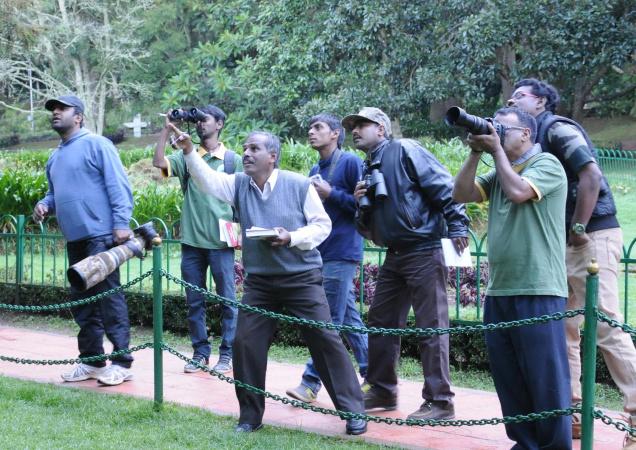
Bird watchers at the Government Botanical Garden in Udhagamandalam on Wednesday. - PHOTO: M. SATHYAMOORTHY / The Hindu
Bird watchers at the Government Botanical Garden in Udhagamandalam on Wednesday. – PHOTO: M. SATHYAMOORTHY / The Hindu

As many as 25 species spotted at Government Botanical Garden

Spread over 55 acres and dotted with hundreds of trees and flower beds apart from many ponds, the Government Botanical Garden here played host to a birding session organised by the Nilgiri Wildlife and Environment Association on Wednesday to commemorate the 118th birth anniversary of Salim Ali, the father of ornithology.

With the undulating venue and the occasion complementing each other, members of the association and students of Wildlife Biology in the Government Arts College returned with the satisfaction of having spotted birds belonging to about 25 species.

Pointing out that the most prized sighting of the day was a Kashmir Fly Catcher, the association’s executive committee member K.Vijay told The Hindu that the migratory bird from the Himalayas, which has been classified as endangered by the International Union for Conservation of Nature, could not be seen here last year.

Pointing out that its presence now signifies the commencement of the migratory season, he said that among the other birds spotted were the Grey Wag Tail, the Black and Grey Fly Catcher, the Common Hawk-Cuckoo, Pond Heron, Great Pit and the Nilgiri Blue Robbin.

Responding to a query, Mr.Vijay said that the botanical garden with its wild fruits and flowers is an ideal bird habitat.

Birding destination

Expressing the view that it can be promoted as a responsible birding destination, he said that the authorities concerned should regulate the activity and restrict it to one or two days a week. Stating that birding is a very effective stress buster, he said that it also encourages people to walk. Volunteers including students of Wildlife Biology should be engaged to create awareness among tourists about the role of birds in protecting the ecology.

source: http://www.thehindu.com / The Hindu / Home> News> Cities> Coimbatore / by D. RadhaKrishnan / Udhagamandalam – November 13th, 2014

Murshidabad to get heritage hotels

Kolkata  :

Murshidabad, 250 kilometres north of Kolkata and the erstwhile capital of undivided Bengal, offers an unparalleled treasure-trove of heritage to tourists, both domestic and international. But, thanks to years of neglect and indifference, the majestic buildings are falling apart and the art, crafts and cuisines of the past are fading into oblivion.

The Murshidabad Heritage Development Society (MHDS), which has launched the revival project for Murshidabad through conservation of buildings, running of museums of family heirlooms, exhibitions of lost arts and crafts, cuisines, handloom and textile, have now planned to initiate the next level of heritage campaigns — converting some of the palatial buildings into heritage hotelsto attract tourists and generate a tourism-centric industry.

MHDS, along with the Archaeological Survey of India (ASI), on the occasion of World Heritage Week will hold a seminar at Palladian in Kolkata on November 22 to create awareness about the rich and vibrant heritage of Bengal encompassing architecture, arts and history and build a learning bridge between our past, present and future.

But, if you think that Murshidabad is only a hub of the Nawabi heritage, you should look beyond. Along with Nawabi culture, a powerful stream of rich traders and bankers, mostly from Rajasthan, had made its mark here. More than 400 years ago, they came, settled, prospered, built mansions, places of worships and even schools and colleges. They were known as ‘Sheherwali’. “We have identified 97 such heritage buildings with fascinating architecture and historical importance,” said Sandip Nowlakha, founder secretary of MHDS.

Murshidabad cuisine in general, or ‘Sheherwali’ cuisine in particular, is one such fascinating aspect of the heritage. “The love for food, especially all things sweet, is an apt description of any ‘Sheherwali’ cuisine. Food features prominently in the community, having evolved passionately through centuries of their existence in Bengal. ‘Sheherwali’ cuisine is possibly the finest vegetarian spread one can find, even in modern times,” said Siddharth Dudhoria, the founder president of MHDS.

The symposium aims at fine-tuning the heritage-tourism model being developed by the MHDS. It would put together experts across the country and bring forth some successful models. “Heritage can be a great revenue earner. Unless we drive this point home, we cannot make younger generation understand the value of our heritage. Several heritage buildings at places like Azimgunj, Ziagunj, Lalgola, Kathgola can be heritage hotels offering finest heritage experiences. Once heritage generates revenue and employment, the care for it would reach the zenith,” said Pradeep Chopra, president of MHDS.

source: http://www.timesofindia.indiatimes.com / The Times of India / Home> City> Kolkata / TNN / November 12th, 2014

National Education day celebrated at Bearys Institute of Technology

Mangaluru :

National Education day commemorating the birth anniversary of Maulana Abul Kalam Azad was celebrated at Bearys Institute of Technology here on Tuesday.

As a part of this, BIT-Innovators club conducted an elocution competition for the students on the topic “Technical Education in India- Challenges and concerns”.

Prof Sheikh Moidin, head, Department of Information Science Engineering, gave an introductory talk. Speaking on the occasion, Principal of BIT, Dr Palakshappa K spoke in brief about the achievements of Maulana Abul Kalam Azad, the first education minister of India.

Fayiz C.K of Seventh Semester Mechanical Engineering, who won the first place in the elocution contest, said there was a time in India when education was not everyone’s cup of tea. It is the result of the dreams of a great educationist like Moulana which all are witnessing today in the form of the great edifices of higher education in India. It is the responsibility of every student to make those dreams come true, he added.

Prof S Abdurrahman, Campus Director Dr.M.Sainath and the Heads of departments, along with the faculty and students were present at the occasion.

source: http://www.timesofindia.indiatimes.com / The Times of India / Home> City> Mangaluru / by Stanley Pinto, TNN / November 11th, 2014

Mumbai’s Muslim engraver at work in Jewish cemetery

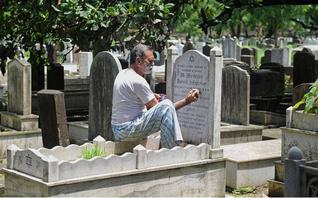
Mohammad Abdul Yaseen, 74, gives a fresh coat of paint to tombstone letterings at the Bene Israel Jewish cemetery in Mumbai.— Photo: AFP

The 74-year-old carefully chisels away at a slab of marble, engraving a passage that recounts the devout Jewish faith of the deceased.

On another tombstone he touches up a painted Hebrew inscription, undisturbed by the blare of car horns outside the central Mumbai cemetery.

Muslim engraver Mohammad Abdul Yaseen has for decades worked in this Jewish graveyard, inscribing memorials in English, the local Indian language Marathi, and Hebrew, in which he is fluent.

Mr. Yaseen serves the tiny Bene Israel or “Sons of Israel” community, whose origins in India go back about 2,000 years, as well as the Baghdadi Jews who came to do business in Mumbai in the 19th century.

While the country’s Jewish population is now dwindling, Mr. Yaseen has been in demand since he took up the trade in the 1960s after arriving in Mumbai from northern India.

He has since received numerous invitations to go to Israel, but has preferred to stay with his family in Mumbai.

“It was not really meant to be a job. But work kept coming and I stayed. In any case, I did not want to sit at home and do nothing,” he said. — AFP

source: http://www.thehindu.com / The Hindu / Home> National / AFP / Mumbai – November 12th, 2014

A memorial for Turkish martyrs

Bellary has come to acquire, in the recent years, a pleasing monument in memory of Turkish Prisoners of War (PoW) of the First World War (1914-18).

For nearly a century, hundreds of Turkish prisoners who were brought here in 1918, from the Suez Canal war zone by the British, have rested in the soil of Bellary Cantonment area. Thanks to the interest shown by the Turkish Embassy in Delhi, the
Turkish Martyrs Graveyard stands here now, commemorating their sacrifice for the nation, ten thousand miles away from their motherland.
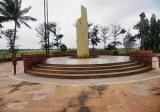
TurkishMemorialMPOs12nov2014

The memorial raised over nearly two-acre site next to the Bellary Airport, and in the vicinity of Visveswaraiah Institute of Medical Science (VIMS), has a spiral column made in stone over a rectangular platform. Flags of Turkey and India flutter over high masts near the column. The memorial has been aesthetically landscaped with a number of fountains, trees, flower-beds and grass courts, lending it great charm.

Of the two marble-dressed graves in the complex, the memorial plaque on one
of them records the name of the person buried as General Agha Pasha Abdussalam. He is said to have been a prince from the Ottoman ruling family of Turkey.

The plaque mentions his date of demise in Persian as 10th Rajab 1336, of the Islamic Hijri lunar year. It is just 100 lunar years since then as the new Islamic lunar year 1436 started on October 25, 2014. [Note: The lunar century is shorter than Gregorian century by three years.

According to the old-timers, there used to be hundreds of graves of Turkish
soldiers in the area till 1980s. But they vanished as granite slabs were pilfered away and other remains were erased during the expansion of the Bellary Aerodrome.

Haji Abdussalam, a businessman of the Cowl Bazaar, wrote to the Turkish
Embassy in Delhi about the derelict condition of the graves.

Later, former municipal councilor, Haji Adam, took up the case and supervised the construction of the memorial at the direction of the Turkish Embassy in consultation with the Bellary Deputy Commissioner who allocated the site for the memorial.

Historical records say that nearly 2,000 Turkish soldiers taken captive at the Suez Canal were brought to India and lodged at Thane in Maharashtra and the famous Allipuram Jail in Bellary. But it is a mystery as to how so many soldiers died in Bellary.

According to the management of a Muslim graveyard in Banhatti locality, 2.5 km south of the city centre, dozens of graves of Turkish soldiers could be spotted in the graveyard a decade or two ago.

But over a period, granite gravestones were stolen and since the land had to be used and reused, several of these graves have disappeared and only seven or eight of these Turkish graves could still be seen surviving with mortar pillar standing over them.

Satyanarayana Rao, a retired professor of the local Veerashaiva College, says, it is a puzzle as to how such mass graves came to be located in Bellary. According to him, in normal course, so many soldiers could not have died. He says some historical records attribute these to several prisoners being mowed down by a trigger-happy British officer (like General Dwyer in the Jallianwalla Bagh) when they went on a strike at a worksite and knelt while doing namaz. Another report, according to him, links the mass deaths to a plague but adds that the plague struck the area in 1934, while prisoners died in 1918.

Whatever may be the reason, the new Memorial is seen as a picturesque locale for the local folk who come visiting the memorial.

source: http://www.deccanherald.com / Deccan Herald / Home> Supplements> Spectrum / by M.A. Siraj / DHNS-Bangalore, November 11th, 2014