Category Archives: Arts, Culture & Entertainment

Khadi Utsav 2014 begins

KhadiMPOs27oct2014

Mysore :

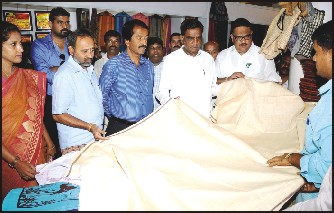
District in-Charge Minister V. Sreenivasa Prasad inaugurated Khadi Utsav-2014 organised by Department of Industry and Commerce and Karnataka State Khadi & Village Industries Board at Nanjaraja Bahadur Choultry yesterday.

A total of 62 stalls have been erected at the Khadi Utsav which will be held till Nov. 3. Apart from our State, Khadi and Village Industries Board has given opportunity to khadi organisations from other States and NGOs to participate in the Utsav. The stalls are open from 10 am to 7 pm every day.

MLAs Tanveer Sait and Vasu, ZP President Dr. B. Pushpa Amarnath, Mayor R. Lingappa, Karnataka State Khadi & Village Industries Board Development Officer K. Sampath Kumar, District Khadi & Village Industries Officer H.S. Kamathraj and others were present.

‘Don’t you have other work?’: District Minister Sreenivasa Prasad got furious over a senior citizen’s request to close the potholes on road in the city. Reacting to the request, Prasad questioned the senior citizen saying he had asked a wrong question at a wrong place.

“We have given Rs. 10 crore for closure of potholes in city. What more do you expect us to do. Don’t you have any other work to do? Wherever we go the same question is asked,” the Minister said.

source: http://www.starofmysore.com / Star of Mysore / Home> General News  / Tuesday ,  October 21st, 2014

Ghostly grandeur of Fatehpur Sikri

Fatehpur Sikri :  Revisiting Akbar’s Masterpiece
Lucy Peck , Roli Books, 2014, pp 145, Rs 795

As I flip through the pages of this handy hardcover with its lacy jharokha artwork that recalls the rosy orange sandstone elegance of its subject, my mind rewinds to my own Fatehpur Sikri experience, years back — the ghostly vacant expanse of a Mughal city, a beautiful haunting, desolate oasis of huge stables, green gardens, a musically serene marble mausoleum to a Sufi saint, as well as the high and mighty Buland Darwaza off whose walls boys jumped, for a few paise, into a baoli stepwell all the way below. So it’s been a pleasure to revisit this masterpiece from the 16th century, a period of Renaissance under the relatively benign Mughal, Akbar.

In this new book, architect, conservationist, Mughal-India specialist author Lucy Peck attempts to dispel popular myths that accompany this well-preserved piece of history, the abandoned city of Fatehpur Sikri. The very first page sports an exquisite ‘company’-style painting from 1836, depicting the marble dargah of Sheikh Salim al-Din Chisti, the saint who satisfied Emperor Akbar with the happy prediction of a long-awaited heir (PrinSalim, later to become King Jahangir), and two more to boot. Ironically, this city of victory, an enigmatic, silent, solid, spectator from the past, owes its own birth to the progeny-predicting powers of a Sufi sheikh.

The remaining 130-odd pages are equally satisfactory, glossy and replete with well-researched text, conjectures and surmises, interesting trivia, paintings, maps and excellent photographs, old and new, overall perspectives, as well as close-ups of the designs that grace lintels, awnings, and all the minutiae of mahals adorning a geometrically designed Indo-Persian city.

Peck is on sure ground as she collates information from diverse sources — the skeptical yet informative Muslim cleric Bada’uni, the official biographer Abu’l-Fazl with his Akbarnama and Ain-i-Akbari, Latin memoirist Monserrate — people who lived in Akbar’s court during his reign. Peck also quotes from a few 17th-century European travellers — like Peter Mundy and William Finch. She simultaneously reveals that many travellers’ tales and court records have not survived the centuries.

Unlike historian John Keay, who refers to Fatehpur Sikri as Akbar’s ‘wildest extravaganza and weirdest folly’, Peck is kinder to Akbar. She talks of the ‘romantic enigma’ that was Fatehpur Sikri, a city that was planned and built quickly from 1571 to 1585, and then equally promptly abandoned, as per general belief. Yet, Peck believes ‘that the fable of Fatehpur Sikri’s desertion is misleading’.

The king and his courtiers left, but some ladies of the royal family (including Akbar’s mother) lived on for decades, as did members and descendants of Sheikh Salim Chishti’s family, a few of whom became powerful members of the royal court. In subsequent years, a few became unofficial guides to gullible international travellers who furthered the spread of myths about the city. Lucy Peck attempts to deflate a commonly held myth about water shortage leading to Fatehpur Sikri’s abandonment. She points to the presence of numerous baolis (stepwells), taals and hammams (royal and common baths), as well as the historical reality of later Mughal construction continuing in and around Sikri village that strides a ridge plateau beside a lake (now farmland) formed by the Yamuna basin.
The author transports the reader through Akbar’s world and his times, delineates his character and philosophy personified in his syncretic sect, the Din-i-Ilahi, which was the very touchstone of his own and the new city’s existence. Through his years at Fatehpur Sikri, Akbar became less and less Islamic, more all-encompassing and secular, filling his court with people of diverse faiths.

The visual delight that is Fatehpur Sikri — with its unique architectural specialties like a single central-columned Diwan-i-Khas, the multi-gated three-sided wall, the lesser-known, interestingly named buildings like Samosa Mahal and Tansen’s Biradari — cannot blind one to an important truth: that this city continues to be a holistic experience, traversing the centuries, still speaking to us. And Lucy Peck’s book helps greatly in this process.

source: http://www.deccanherald.com / Deccan Herald / Home> Supplements> Sunday Herald Books / by Lalitha Subramanian / October 19th, 2014

Creators of timeless art pieces struggling with medical bills

CauveryEmporiumMPOs23oct2014

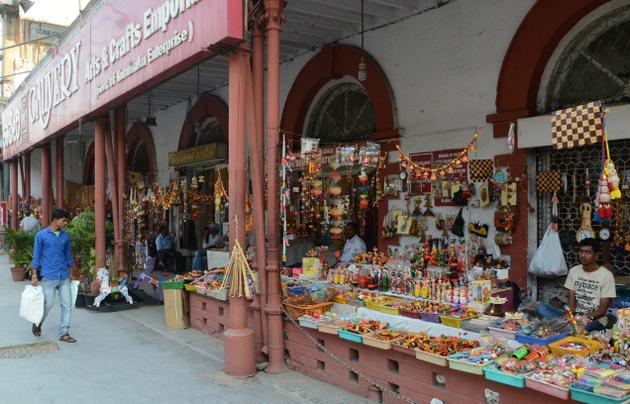
Mir Adil Hussain (55) is an expert at making agarbathi stands, walking sticks and key chains, which have all been displayed and sold at the famous Cauvery Emporium in Bangalore for over 30 years. But now his family has been running from pillar to post to make arrangements for his medical bills after he recently suffered a heart attack.

With no medical benefits or insurance provided to the artisans who toil hard to put up a display at the emporium, Mr. Hussain’s family has had to raise loans to pay for his treatment. His brother, Mir Shabbir Ali, who also worked in the emporium for 45 years, died of cancer this July.

Mir Shabbir Ali
Mir Shabbir Ali

“We spent Rs. 12 lakh on his hospital bills, but were neither reimbursed nor given compensation. A meagre Rs. 5,000 was offered as death compensation and that too two months after he died. There are no pension benefits either,” said Mir Hassan Ali, a family member.

The plight is the same for 140 artisans and their families whose works have impressed thousands of customers at the emporium managed by Karnataka State Handicrafts Development Corporation (KSHDC).

Suresh Pushpangathan, whose father worked as an artisan for 25 years, had to wait till August this year to avail Rs. 5,000 compensation. His father had passed away in November 2013.

“Many artisans’ families are dependent on their work for their bread and butter. If the artisans’ licence or ID card is transferred to another member of their family, they can continue to work there. But, the transfer process just doesn’t progress despite providing all the paperwork,” said Mr. Pushpangathan.

Purushottam L, President of the Karnataka Sandalwood Artisans Association, said that these 140 artisans are treated as individual workers and not permanent employees. “It is a government undertaking and their ID cards are issued by the Small Scale Industries Department. They can work as long as their cards are renewed every year,” he said.

“About 20 acres of land had been allotted to the artisans in 1996 near Peenya by the State government, which had promised to build about 200 houses in a five acre plot, but is yet to deliver its promise.” he said.

However, KSHDC Managing Director G.S. Kariyappa said, “The corporation is not getting grants and is only a facilitator. According to Government of India guidelines, a separate nodal agency has been appointed for the welfare of artisans.”

source: http://www.thehindu.com / The Hindu / Home> News> Cities> Bangalore / by Vinayshree Jagadeesh / Bangalore – October 19th, 2014

Mangalore: All cultural associations merge in first ever press meet

Mangalore :

The first ever joint press meet of Karnataka Tulu, Beary, Konkani, Kodava Sahitya academy and Karnataka Arebashe Sanskriti and Sahitya academy presidents was organized at Hotel Srinivas, here on Monday October 13.

All cultural associations came together and explained their mission and vision of preserving the culture and languages of the state collectively.

B A Mohammad Hanif president of Karnataka Beary Sahitya academy briefed the press regarding the activities of Sahitya academy and their importance in the present society. He said, “Karnataka government has established seven language academies and six cultural academies in the state. It is a prime responsibility of these academies to promote and save the culture and languages of the state. Tulu, Beary and Konkani Sahitya academies are centred in and around Mangalore and Kodava Sahitya academy and Karnataka Arebashe Sanskriti and Sahitya Academy are deep rooted in Madikeri”.

“District administration has included Tulu, Beary, Konkani, Karnataka Arebashe Sahitya academy in the decision making committee and asked our collaboration in Karavali Utsav which is indeed a very good news. We also request to district administration to include Kodava Sahitya academy in decision making committee?.

“We have planned to organize joint cultural Utsav and programmes in Madikeri, Sullia and Puttur regions in the coming days. Government of Karnataka has also asked our opinion in shortlisting the candidates for Rajyotsava awards, the second highest civilian honour award of the state”.

“We are also planning to have a joint ‘Convention 2015’  a cultural extravaganza next year in month of April or May in Mangalore. To mark unity and togetherness for the coming years of working together, we have organized the first ever joint press meet today”, he informed.

Roy Castelino, president of Karnataka Konkani Sahitya academy, said, “The government has allotted Rs 65 lac for Sahitya academy to organize cultural programmes. If the government raises the funds to Rs one crore, we can reach to all parts of Karnataka and effectively organize the programmes. We have also shortage of permanent staffs. We appoint many on temporary basis during the events. This is the reason why funds are not fully utilized”.

Janaki Brahmavar, president, Karnataka Tulu Sahitya academy, Biddathanda Thammaiah, president of Kodava Sahitya academy and Girish Kollya Karnataka Arebashe Sanskriti and Sahitya academy president and members of Karnataka Tulu, Beary, Konkani, Kodava Sahitya academy and members of Karnataka Arebashe Sanskriti and Sahitya academy were also present during the press meet.

source: http://www.daijiworld.com / DaijiWorld.com / Home> Karnataka / DaijiWorld Media Network – Mangalore (CLP) / Mangalore – Tuesday, October 14th, 2014

Johny Lukos bags Madhyamasree award

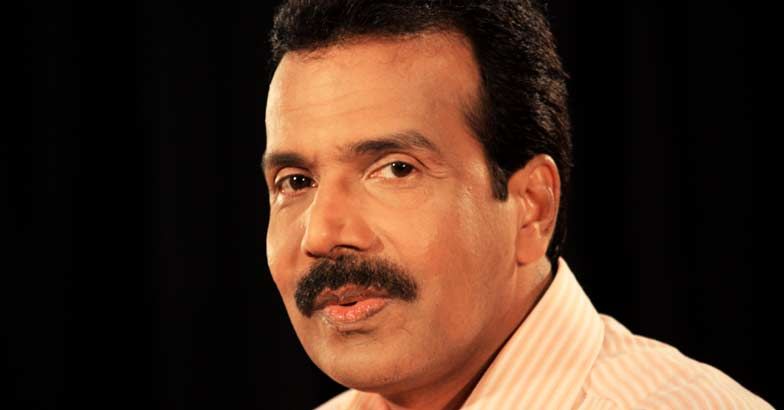
Johny Lukos, news director, Manorama News channel

New York:

Johny Lukos, news director, Manorama News channel bagged the Madhyamasree Award instituted by India Press Club of North America (IPCNA). M.G. Radhakrishnan, Editor, Asianet News has also won the award.

The award has been conferred in view of his outstanding contribution to contemporary journalism. The award will be presented on November 8 at a ceremony to be held in New York, India Press Club president Taj Mathew informed.

The awardees will share a cash prize of Rs 1.5 lakh among them. The winners were announced after the shortlisted candidates were evaluated by Malayalam film actor, Mohanlal.

source: http://www.english.manoramaonline.com / On Manorama / by The Correspondent / Saturday – October 18th, 2014

Book to renew Kolkata’s tie with Wajid Ali Shah

Kolkata :

“It’s the only book I’ve read twice. And my favourite line is ‘life can’t be divided into chapters’,” mused Shahanshah Mirza, great-great-grandson of Wajid Ali Shah, referring to ‘The Last King in India’ by Rosie Llewellyn-Jones. The British historian has made waves by compiling facts about the legendary nawab whose memory still divides opinion.

Rosie smiled: “Thanks for helping me investigate the mind of the last king. The British opposed him because they wanted to take his kingdom. Mirza nodded: “You’ve dealt with his seclusion rather well.” He thought the agony associated with the annexation of Awadh is well portrayed in the book.

Rosie begins with a chapter following this act, when the nawab’s mother travels to petition Queen Victoria for justice. Unknown to her, the Queen had no power to return Awadh. The bleak start sets the tone for the book — the British duplicity, with the king caught between forces over which he had no control.

For inputs, Rosie has watched ‘Shatranj Ke Khilari’ “several times”. “Ray did a lot of research,” said Rosie. “When Ray met my father in 1978, he was asked if it was easy getting Amjad Khan into Wajid’s skin. He had said ‘Amjad was blinking a lot. When a ruler is angry, he doesn’t blink. His eyes are wide open’,”
said Mirza.

Rosie’s Kolkata connect goes a long way — since she found Mirza on the royal family website in 2004. “I came here and we did a lot of research together,” she said. The cover is a painting of the nawab which belongs to Mirza’s relative Sultan Ali Sadiq.

Rosie pointed out: “In nearly all his pictures, the king has his left breast exposed.” Mirza explained: “I guess the poet in the nawab wanted to show that his heart was always open.”

The book will be unveiled for the third time on Sunday after a London launch in June followed by another such ceremony in the nawab’s very own Lucknow last month. “Now it is Kolkata’s turn and we had to have Shahanshah,” said Rosie. Mirza has given Rosie inputs on the king settling down in Metiabruz (or Metiaburj, which literally means a clay tower). An old watchtower had once stood there, guarding the Hooghly river bend, giving the place its name.

“The book shows that even 127 years after his death,
Wajid Ali Shah, who himself authored 117 books (Rosie found some of them at the London Library), is still a subject of interest.”

The king contributed greatly to Kolkata’s culture. Kathak and kite-flying were introduced by him. He opened a menagerie which attracted a lot of visitors. According to Rosie, the king tried, within his limited resources (he had to live off a pension given to him by the British), to recreate a miniature Lucknow in Garden Reach-Metiabruz where he lived his last 31 years. He brought with him the music, the poetry, the cuisine, the adab that had made Lucknow under him the byword of culture and etiquette.

“His Calcutta stay changed many aspects of its social life. The British failed to fathom (deliberately) the love that he enjoyed from his subjects,” said his great-great-grandson.

The British, who deposed him to Calcutta in 1856, could hardly accept a ruler who believed that his subjects singing his songs was enough guarantee that he was seen as a good ruler. “Do Queen Victoria’s subjects sing her songs?” Satyajit Ray makes Wajid ask his chief minister in ‘Shatranj Ke Khilari’, thus capturing the differing notions of kingship.

source: http://www.timesofindia.indiatimes.com / The Times of India / Home> City> Kolkata / by Ajanta Chakraborty, TNN / October 12th, 2014

I am a closed-door rebel: Irshad Kamil

Irshad Kamil, 42, is simple, sensitive with very high self-esteem. He is a man of commitment and a man who has no qualms in acknowledging the work of his contemporaries that he loves, given the highly competitive nature of the business. While he never raises his voice, he is a closed-door rebel that explains many of his lyrics, be it those of the film Rockstar or of a song like Patakha Guddi in Highway. His current song Manwa Laage Re from Happy New Year is extremely popular. His home, in one corner of Lokhandwala, has a lovely vibration and we sit down over a cup of coffee for our interview, where he talks about the childlike Pritam, his intelligent wife Tasveer and his special connection with Imtiaz Ali. Excerpts:
IrshadKamilMPOs22oct2014

Have you made friends in the industry?
Sandesh, Imtiaz Ali and Pritam are my friends. Pritam is quite like a child, who is so forgetful, so unharmful and so lovely. He is very unapologetic about every action and is a gem. Imtiaz I could now call a chaddi buddy. We know each other from the days of Socha Na Tha, when he was not the star Imtiaz Ali. He is very clear in his vision and knows what he wants. He is very concerned and sincere, very witty and sometimes unpredictable. He is very cool.

The lyricists you look upto?
Sahir Ludhianvi, as I love the way he captured slice-of-life with a tinge of philosophy. Anand Bakshi sahab for his simplicity and yet, how he managed to remain poetic, the folk of Shailendra sahab and the experimentation of languages by Majrooh Sultanpuri sahab.

Who do you love the most in the world? 
My wife Tasveer. She knows me and understands me. We have been married for 12 years. She is from Chandigarh and we did theatre together. What I like most about her is her innocence, her intelligence, her creative mind, her analytical power and her aura. She likes my honesty, my humility and the way I think and approach things in my life.

What are you like?
I am true to the core, very sincere and committed. If I have said yes to something, come what may, I will do it and will put in my 100%. I am very simple. I am extremely sensitive and may sometimes land up opening myself more than needed. My dressing sense is bad and I am a bit lazy. I am also quite stubborn, particularly with myself. I am a very closed-door rebel. But the effect of that is always positive. So if maine apne saath koi zid karli, toh aise hi hoga. So if I have to trouble myself to achieve it, I will. And while I am otherwise stubborn, when it comes to writing lyrics, I am very open. In my childhood, my mother told me one thing that stayed with me. Kids usually come back home from school to complain to their parents, ‘I wrote so well, but still my teacher has deducted my marks.’ I now understand that actually a child uses it as a defence mechanism. I must have been in Class VI when I came back home and told my mom, ‘I wrote so well, but still my teacher took out so many mistakes and has given me only 6 marks out of 10.’ Unlike what I expected, my mother said, ‘If someone points out something wrong, it means that there has to be some problem there. It can’t be smooth.’ What she said then has stayed with me till today.

So whether you are an actor or director or producer or music director, if you have found some fault in what I have written, there has to be some problem with it and before my defence comes up, I first try and understand what the problem is. And if I find that there is a problem, I will change it. But I have a lot of gussa and woh bada solid hai. If I am angry, I will let the other person know that I am very angry without raising my voice. I am very strong and I am my own emotional anchor. And while I am very emotional and sensitive, I am not an emotional fool. I am emotional with only people who value my emotion. I get hurt very easily, but can’t express myself and that is probably my raw material to write. I always say, ‘Pyaar bhi de aur pyaar ke gum bhi de Maula, hum shayar insse hi sher banate hain.’

How did you come into films?

We are Punjabi Muslims and I was born in Malerkotla in Punjab. I did my diploma in journalism from Punjab University, a post graduation in Hindi language followed by a Ph.D in contemporary Hindi poetry. My first job was as a journalist in an English newspaper in Chandigarh, where I covered education and entertainment. I interviewed many stars who came to Chandigarh, including Pooja Bhatt and Manoj Bajpayee. I then worked for a Hindi newspaper as a junior person and would often be asked to check and correct errors in articles written by others. One night, I was in office till 1.30. It was winters and I was riding back on my motorcycle when I thought to myself, ‘Did I ever think that I will do journalism when I grow up? I didn’t want to become Khushwant Singh. Then why am I doing this?’ The next morning, I went to office and resigned. My senior thought maybe I had gone through some emotional atyachaar staying alone in the University and that is why I was leaving. He tried to convince me, but I had decided. While I was doing my Ph.D, I got an offer to teach and again, I asked myself, ‘Am I born to do this? I don’t want to teach.’ And I refused the offer. It was at that time that Lekh Tandon had come to Chandigarh to shoot for TV and was looking for a writer. The joint director of Haryana Cultural Affairs department, Mr Kamal Tiwari sahab, introduced me to him. Mr Lekh Tandon got me to Mumbai and I started writing for TV.

I started getting little money and took up a place to stay on rent. This was 2001. TV involves a lot of labour and while it gives you money, there is no creativity involved. Mentally, I would feel very low and I would tell myself, ‘I didn’t come here to do this.’ I had started feeling angry with myself that whatever I do, I keep thinking, am I born to do this. I would ask myself, ‘Tum kya karne ke liye bane ho yaar?’ But right from my childhood, I wanted to be a lyricist and I would tell my friends, ‘Geet likhne jaa raha hoon.’ My friends would like my work and it became my dream to become a lyricist. After quitting TV, I met music director Sandesh who was working on Socha Na Tha and through him, I met Imtiaz Ali. We hit it off really well right from day one and he asked me to write the lyrics of Socha Na Tha. Even though I first worked on Socha Na Tha, my first film to be released was Sudhir Mishra’s Chameli. I struggled a lot till 2007 when Jab We Met happened and I got my first Filmfare award for Ajj Din Chadheya in Love Aaj Kal. I never looked back after that.

You have done all Imtiaz’s films and your best work is with him. Is there a reason for that?

Imtiaz has a lot of faith in me and when someone trusts you like that, you want to give everything to it. I can’t let him down and I have to give back the trust he has entrusted in me.

How does it feel when someone comes and tells you to write an item song?
I find it very difficult. Because when someone comes saying, ‘Please write an item song like this,’ I know that in reality, he can write the song himself what he is asking me to write. They start telling you the lines and that becomes even more difficult.

Given that you were such a rebel, was there someone in your family who understood you?
Only my mother whom I lost in 2010. I loved her too much and I have started a scholarship on her name, Begum Iqbal Bano, after she died. She was the only person with whom I could discuss anything about my life, I could fight with her, I could get annoyed with her, and could take anger of somewhere else on her. Her going away was a loss to me. You expect your mother to take it. And the beauty is that you know that you are not being fair to her, but she still does not make you feel that aap zyasti kar rahe ho. She knew me internally. I was the youngest child, but looking at me, she knew I was different and a rebel. I remember when I left my job as a journalist, I did not tell or discuss with anyone at home before or after leaving my job. I did not do anything in my life after discussing with anyone, whatever I did, I took the decision first and then told everyone. Then after a few days, someone from home had called my office and found out that I had quit the job a fortnight back. I went home by which time my entire family knew and there was a full battalion waiting to ask me questions. My mother said nothing to me. I later asked her why she had said nothing to me. And she very casually said, ‘Maine socha if you have left your job, you must have thought of something. Tu kaunsa bewakoof hai.’ It was a very innocent statement, but I know that she had a lot of confidence in me.

source: http://www.timesofindia.indiatimes.com / The Times of India / Home> Entertainment> Hindi> Music / by Priya Gupta, TNN / October 22nd, 2014
Now Sai Paranjpye’s Katha to be remade

After Chashme Buddoor, director Sai Paranjpe’s another cult film Katha is all set to be remade.

Anjum Rizvi has brought Sai Paranjpe and critic-filmmaker-author Khalid Mohamed together for the project. The film, directed by Khalid under Sai’s guidance will be moulded to suit 2015.

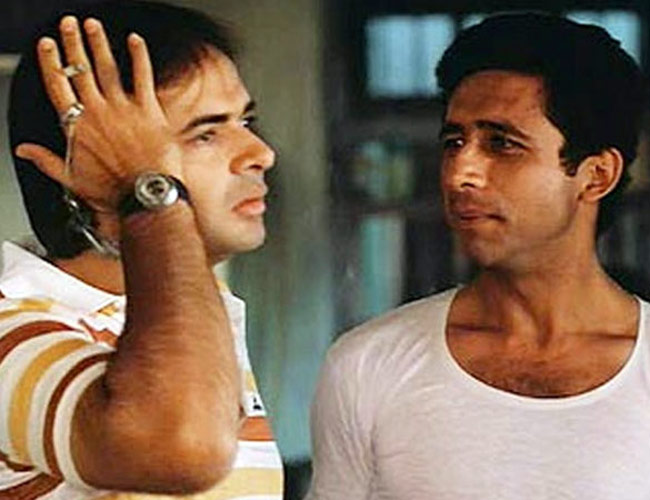
Farooq Sheikh and Naseeruddin Shah in a still from Katha

Anjum plans to stick to the essence of the original film in order to remain true to Sai’s original vision. “We don’t intend to play around with the story or commercialise it. It will be true to its tortoise and hare story line,” he told a leading newspaper.

“Sai is Khalid’s friend and when he sounded her out she was very keen, though she made it clear that she would not direct the film. The story, screenplay and dialogue are by Sai and updated by Khalid,” he added.

The film is expected to roll in December and the casting is on. The original Katha featured Naseeruddin Shah, Farooq Shaikh and Deepti Naval.

source: http: //www.indiatoday.intoday.in / IndiaToday.in / Home> Movies / October 16th, 2014

The show stops for Sania


Indian tennis player Sania Mirza walks on the ramp as she displays a creation by designer Ritu Pande during Wills Lifestyle India Fashion Week. / AP
Sania Mirza may not be fashion conscious but took time out to be at the Wills Lifestyle India Fashion Week as a showstopper

Tennis sensation Sania Mirza, who did the nation proud by winning gold in the mixed doubles in the recently concluded Asian Games in Korea, was a showstopper at the ongoing Wills Lifestyle India Fashion Week in the Capital.

This was Sania’s first ramp-walk in Delhi and fashion pundits and the movers and shakers of the city were in full strength to watch how perfectly she walked with her extravagant attire and stilettos. Last year, Sania had walked as a showstopper for designer duo Shantanu-Nikhil. This time round the designer was Ritu Pande, known for playing on textures, colours, patterns and silhouettes.

“In real life I like wearing garments which are simple and elegant. I am comfortable wearing T-shirts, jeans and jackets. The anarkali I am wearing today has been designed in a manner that I can walk in the city. Normally what you see in fashion events are outfits which you cannot wear for events or otherwise.”

The long flowy anarkali accentuated by tie dyed gold and ivory with embroidered French gold lace heavily appliquéd for the collection titled “Lady in Lace”.

Speaking about the designer, Sania said, “Ritu Pande’s work is different from her contemporaries. It is classy, elegant and has finesse. I especially loved the outfit she designed for me. It is spectacular.”

Sania did not face pangs of nervousness as showstopper. She walked till the edge of the rostrum where she posed, flashing her million dollar smile before the paparazzi.

“I guess I am used to pressure now. Once I start walking on the ramp my confidence level increases.”

Unlike models who work in the interiors of air-conditioned five star hotels, Sania works for uninterrupted hours under the glare of scorching sun.

“My schedule is such that I am outdoors for eight hours. I am used to it but yes I have to take good care of myself. I drink a lot of coconut water, which is quite beneficial.”

Speaking about her victory at Asian Games, Sania said, “Earlier, some people had expressed apprehension about the team but we proved that we could still win medals.”

The sportsperson hoped to play good tennis for some more years.

Last year, Sania opened the Sania Mirza Tennis Academy in Hyderabad, with which she is trying to harness talent, especially in rural areas, where the youth do not often get professional guidance or training.

“Yes, we have talent in the rural areas.”

Though Sania is a big Salman Khan fan and quite a few Bollywood biggies including Shahid Kapoor, she has no plans to enter the film world.

Would she like a biopic be made on her and does pugilist Mary Kom’s struggle to become a woman boxer match her journey to become India’s number one tennis player?

“I haven’t watched the film, so I cannot comment. But, yes, it is good that biopics are being made on sports personalities. I am not sure that I would like to share my personal life though.”

source: http://www.thehindu.com / The Hindu / Home> Features> MetroPlus> Fashion / by Madhur Tankha / October 12th, 2014

Mammootty’s ‘My Tree Challenge’ a Hit Abroad, Accepted by Australian Mayor

Kochi :

The ‘My Tree Challenge’ campaign, launched by actor Mammootty recently for planting trees, has crossed the oceans and reached other continents, with an Australian mayor accepting the challenge.

Stuart Slade, Mayor of the Glenorchy City Council, has planted a gumtree at the Tolosa park in the capital of Tasmania, an  island city in Australia.

The mayor, who named the tree ‘Gandhi’ as  an honour to Mahatma Gandhi, has also challenged the mayors of Melbourne, New York, Paris and London to plant trees.

Slade thanked Mammootty for the concept, while acknowledging it as a solace to the  planet that is fast becoming polluted. He also invited Mammootty to Tasmania, and urged him to pay respect to the Gandhi tree.

The Mayor, who is an enthusiast of India and the country’s development, came to know about the My Tree Challenge from Sajini Sumar, chairperson of the Multi-cultural Women’s Council of Tasmanaia.

The My Tree Challenge, a campaign involving planting of saplings and challenging others to do so, was launched by Mammootty on August 30 – inspired by the ‘Ice Bucket Challenge’. He had asked Bollywood actor Shah Rukh Khan and Tamil actors Vijay and Suriya to take up the challenge.

Mammootty had also planted a tamarind tree on the premises of Grand Hyatt Hotel, Dubai.

source: http://www.newindianexpress.com / The New Indian Express / Home> States> Kerala / by Express News Service / October 21st, 2014