Category Archives: Arts, Culture & Entertainment

MF Husain’s ‘Last’ Works

The master’s works on the Indian civilisation, commissioned by the Mittal family, goes on view at London’s V&A

Image: © Victoria and Albert Museum, London MF Husain sketching in the V&A Cast Courts in 1990
Image: © Victoria and Albert Museum, London
MF Husain sketching in the V&A Cast Courts in 1990

At 93 years of age, MF Husain could have been forgiven for calling it a day. But when he sought exile from India in 2006—on account of the vandalisation of his works and the stress of presenting himself in small-town courts all over India, where cases of obscenity had been filed to harass him for having had the temerity to paint goddesses in the nude—he sought not retirement but revalidation.

And that came easily for, arguably, India’s most popular artist. In spite of his advanced age, the royal family of Qatar commissioned him to paint an epic series on the Arabic civilisation for the Museum of Islamic Art in Doha. And in London, the Mittal family—which had gifted the city the controversial ArcelorMittal Orbit ahead of the Olympic Games—seized the opportunity to ask him to paint a tribute to Indian civilisation.

That should have been enough to keep most artists busy, but Husain, missing familiar places and faces in India, was known to have painted extempore at the homes and offices of a large number of Indian families, demanding nothing more than affection and a home-cooked meal in exchange for a hastily improvised drawing or painting. He would appear at the doughty Dorchester, where the staff invoiced him for scribbling figures on its pristine damask napkins. In Mayfair, where he had a studio, the white-haired and often barefoot artist became a familiar sight for Londoners bemused that he should carry a large paintbrush with him as an indication of his profession. At the venerable Victoria & Albert Museum, like scores of art students on any given day, he could be seen sketching on his pad at the Ironwork Gallery, unaware of the chuckles he inspired among visitors ignorant of his fame but conscious only of his age.

It is from this phase of his life, spent in Doha, Dubai and, in particular, London, that a number of ‘last’ works by the artist are gaining currency.

Most, understandably, are not for sale; they are the legacy of families who befriended him in an alien city and extended warmth and hospitality. Though Husain was wealthy—if his collection of sports cars and bikes is any indication, he was extremely rich—money was something he rarely carried on him, so his art became the currency of exchange for favours rendered. The right-wing parties that had hounded him in India enjoy the support of many non-resident Indians, but in London Husain seemed not so much offensive as vulnerable. Secretly, they clamoured for his works, so even though prices were falling back home—or, at least, they were failing to keep pace with modernists SH Raza, FN Souza, Tyeb Mehta and VS Gaitonde—his popularity never waned. Because he still had a large inventory of unsold canvases, he was not required to paint to eke out an existence, however luxurious. The sale of those works—this writer is privy to some of them—now afforded him the comfort to paint in a manner and style of his choosing.

Some of these ‘last’ works, the ones commissioned by Usha Mittal, will now go to the V&A’s gallery 38A for a viewing as ‘Master of Modern Indian Painting’ from May 28 to July 27. According to a spokesperson, even though Husain is “not very well-known” in London, “this exhibition will rectify that”. The V&A had been in conference with the Mittals about a number of projects, and it was natural that the First Family of Steel should suggest the Husain exhibits as a starting point for that venture.

Image: Courtesy of Usha Mittal © Victoria and Albert Museum, London With its unique syncretism, Husain’s ‘Indian Households’ is a comment on the coexistence of religions and faith in the country
Image: Courtesy of Usha Mittal © Victoria and Albert Museum, London
With its unique syncretism, Husain’s ‘Indian Households’ is a comment on the coexistence of religions and faith in the country

Husain wanted to paint 31 triptychs or 93 panels to express his vision of India, a country that he referred to as “a museum without walls”. Among the peers of the Progressive Artists’ Group, Husain alone, among the founding members, chose to paint a holistic view of Indian society from the vantage of the street, often portraying myths from the Ramayana and the Mahabharata, but also singers, dancers, musicians in a manner that some described as expressionistic while others dubbed it primitive impressionism. Wrongly called ‘the Picasso of India’—that sobriquet better suiting Souza—Husain was maverick, manipulative, marketable, as popular for his remarkable talent as his ability to command the media. He mocked the press, made films with popular film stars, and was quick with repartee, a one-man act that became the face and form of modern art in India from the 1950s till his death in London in 2011.

Critics and collectors claim his best works were done in the early decades, but Husain continued to reinvent and surprise himself and everyone else. Identified for his paintings of horses, he is equally well regarded for his works on Mother Teresa. He courted controversy during the Emergency, when he painted Indira Gandhi in the form of Durga riding a tiger, but was a member of the Rajya Sabha in the eighties.

An observant artist, his eye for detail livens up the Mittal canvases, even though he was at an advanced age when they were painted. Husain completed eight of the 31 triptychs before he died, each painting consisting of three 12ft x 6ft panels (or 12ft x 18ft for the triptych), and it is this unfinished collection that offers a glimpse into his thinking.

Not only did he refuse to create a linear historicity, his insistence on providing glimpses of the life and culture of India in the manner that he experienced it became the context from which he visualised the whole project. The exhibition, therefore, begins with an invocation to Ganesh, the beloved elephant-headed god who is considered a remover of obstacles, the only single panel or painting in the exhibition. The eight triptychs, which form part of his vision of India from Mohenjodaro to Mahatma Gandhi, span “mythology, architecture and popular culture”, according to Usha Mittal, who was privileged to see the artist work on the series in London.

However sure he might have been, Husain pored over books, journals and tomes to ensure that he chose the correct nuances for the triptychs.

Which other artist would have picked something as banal as Indian Households as a subject for one of those triptychs? Yet, in his hands, it becomes a comment on the co-existence of religions and faith in India with its unique syncretism. The first panel of the painting depicts a Muslim household, where the old man with the hookah could be an allegory for his grandfather, and the little boy playing under the charpoy may be autobiographical. The second panel peeps into an educated Hindu household from the south—witness the head of the family immersed in The Hindu—while the familiar image of the umbrella, another leit-motif for his grandfather, links it to the previous panel. The third panel depicts a warrior Sikh family, but not without its middle-class nuances, captured through the table clock and Singer sewing machine, voyeuristic glimpses of middle class lives in India.

It is these delightful insights that make up the rest of the triptychs. In ‘Indian Dance Forms’, the sage Bharata holds forth on the Natya Shastra, while the other two panels depict bharatnatyam and kathakali. The ‘Hindu Triad’ has, of course, Brahma, Vishnu and Shiva in their roles as protector, preserver and destroyer, while in ‘Three Dynasties’ he picks the Mauryan, the Mughal and the British Raj for their abiding influence. In ‘Tale of Three Cities’, he opts for Delhi for its historicity, Varanasi for its spirituality and Kolkata for its culture, and in ‘Indian Festivals’ he chooses Holi, Tulsi Pooja and Poornima—all Hindu festivals, the right-wingers will be glad to know—while ‘Language of Stone’ highlights the country’s—again, Hindu—sculptural tradition alongside poet-laureate Rabindranath Tagore’s poetry.

Handwritten notes describe each panel and their importance, something he discussed at length with Usha Mittal as part of a venture that, had it been completed, would have changed the visual perspective of India as well as that of its artist.

Let it be said: Husain was its most enthusiastic votary.

Image: Dave M.Benett / Getty Images Steel magnate Lakshmi Mittal with wife Usha and MF Husain
Image: Dave M.Benett / Getty Images
Steel magnate Lakshmi Mittal with wife Usha and MF Husain

The Commission

Usha Mittal was principally responsible for the patronage the family extended to MF Husain when he began work on the project in 2008 in London. In this email interview, Usha Mittal shares the shaping of the series and her interactions with the artist.

Why did you choose Husain for painting this series?
Husain Sahib had a profound understanding of Indian history and culture and was knowledgeable about many aspects of life in the subcontinent, from mythology and religious beliefs to architecture, poetry, music and the visual arts. On seeing Husain’s series on the Hindi film Mughal-e-Azam, I suggested to him that he should capture the history of the Indian civilisation on canvas. The conversation led to a major commission, which the artist started working on during the final years of his life.

Why pick on the Indian civilisation as the series theme?
The Indian civilisation is rich in culture and diversity, and spans thousands of years. Aspects of Indian civilisation have been represented in Husain’s paintings from the start, whether folk images, rural life, dance, mythology or history. With his immense understanding of India and her culture, I felt that Husain Sahib was uniquely endowed to execute such a commission.

Did he discuss the panels with you before painting them?
He was very inspired by this project. Every time I would meet him, he would talk only about the next panel, and would ask for my opinion. In fact, he was talking and dreaming about the forthcoming panels on his last day.

Which are the other Indian artists in your collection?

Apart from Husain, I very much admire the works of Ram Kumar, Tyeb Mehta and SH Raza.

Can you share incidents 
of your interactions with Husain while he was working on this series in London?
I saw him paint on several occasions.  When he painted, he was totally submerged in the paintings. He had a childlike enthusiasm, and happily painted while listening to music. He had a great sense of humour, and his knowledge of Indian culture, customs and traditions was commendable. Before he started painting the history of India, he read several books on Indian history, and spent several weeks analysing and determining what he wanted to paint and how. He decided he wanted to paint 31 triptychs, but unfortunately could complete only eight. I always admired his qualities as a painter.


Husain’s worth, or the worth of a Husain

Despite a fall from grace, he cared about his legacy

Image: Amit Verma / A Husain (left) and a Souza displayed on the same wall at the Christie’s auction in Mumbai last December
Image: Amit Verma /
A Husain (left) and a Souza displayed on the same wall at the Christie’s auction in Mumbai last December

That he was prolific has never been in doubt, and observers have speculated about the number of paintings he painted in his lifetime: Variously between 20,000 and 40,000 works, which record has a parallel with that other equally productive artist, Pablo Picasso.

Husain was always conscious of his value, using it as a benchmark of his talent as well as his popularity. Early in his career, he would sulk if Raza’s prices at an exhibition were marked higher than his, removing his own works on one such occasion. He did see Raza’s prices, as well as those of Souza’s and Tyeb Mehta’s, best his own in his lifetime, by which time he was concentrating harder on his painting, knowing that time was now against him as he raced to complete commissions that would result in a unique legacy of art.

Even so, for decades he enjoyed the distinction of being India’s most expensive artist, and the movement of Husain’s works in galleries and at auctions has always been brisk. With his most iconic works in museums and in collections that are unlikely to sell, it is only those works in the market that determine his benchmark.

For now, his top canvases do command prices in the region of Rs 2–5 crore. Since uniqueness and provenance adds value to an artist’s worth, his triptychs for the Mittals could be among the more expensive of his works, though Usha Mittal has refrained from commenting on the commission’s value, only commenting that it was “a private matter between Husain Sahib and myself”.

source: http://www.forbesindia.com / Forbes India / Home> Life/Special / by Kishore Singh / May 13th, 2014
Call of the Jungle

At Saad Bin Jung’s luxury eco-tourism lodge in Kabini, Karnataka, villagers and tribals work together to conserve the forest and the big cats that inhabit it

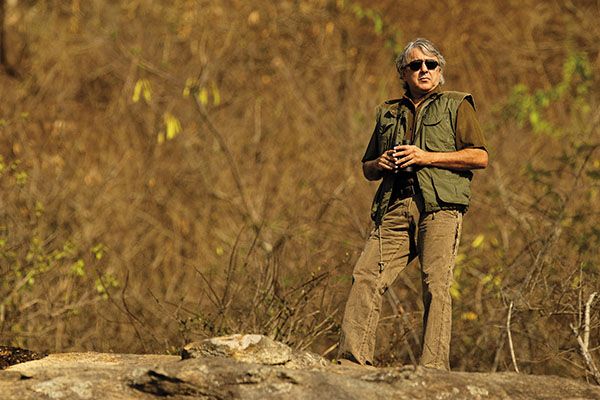
Image: Shaaz Jung A new calling: Saad Jung believes in eco-tourism that conserves more than animals
Image: Shaaz Jung
A new calling: Saad Jung believes in eco-tourism that conserves more than animals

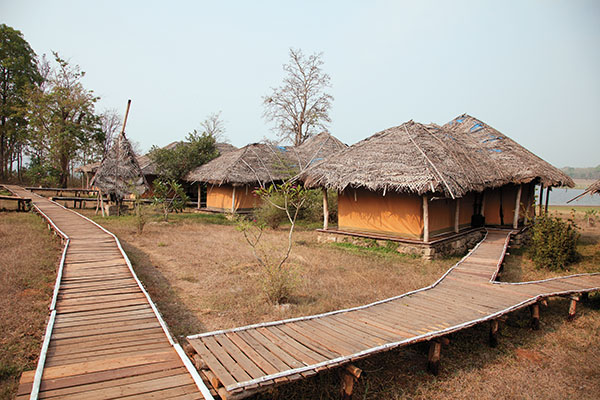
As the last rays of sunlight filter through the leaves, a shadow slinks out of the thick foliage with an unmistakable feline elegance. “There,” whispers 27-year-old Shaaz Jung from his perch atop a jeep. Immediately, seven pairs of eyes turn to the clearing ahead. Under the rapt gaze of the tourists, a male leopard emerges from the foliage. A flurry of clicks from SLR cameras breaks the silence of the waning dusk. But the leopard makes an indifferent model. He was aware of the jeep the moment the vehicle entered his territory, deep in the jungles of Karnataka. For the tourists, however, this sighting is a privilege. The shy animal deigned to make an appearance on the last of the five game drives organised by Bison Wildlife Resort near Kabini Lake, Karnataka. The resort, started by Shaaz’s father, 53-year-old Saad Bin Jung, lies between two national parks, Nagarhole and Bandipur, and is a two-hour drive from Mysore. It is also a labour of love, one in which villagers and tribals work with the Jungs to conserve and preserve this ecologically vibrant zone.

Though the eco-resort opened five years ago, it took over a decade to come to fruition. Consider its back story.

Like his uncle Mansur Ali Khan—the late nawab who is remembered by his moniker ‘Tiger’ Pataudi—Saad Jung started his career as a cricketer. A descendant of the royal Pataudi family of Bhopal and the Paigahs of Hyderabad, he acknowledges and accepts the popular portrayal of Indian nobility as hunters. “I now realise the mistakes we made while addressing wildlife conservation within the forests that belonged to our family,” says Jung. “The rulers, to a large extent, permitted community usage of forest produce. Locals were asked to manage forest land, but were banned from hunting. That was the sole prerogative of the royals. There was control, but there was also inclusion.”

Image: Prasad Gori for Forbes Life India The village: The resort maintains a rustic look and feel, although it houses luxurious facilities
Image: Prasad Gori for Forbes Life India
The village: The resort maintains a rustic look and feel, although it houses luxurious facilities

Saad began taking an active interest in conservation in 1986. He started with Bush Betta Resort at Bandipur and an angling camp on the Kaveri river soon after. In 1997, he acquired patta (registered) land outside the protected forest area and worked with locals to build a luxury resort, one that doesn’t intrude on or disturb the ecologically sensitive zone. The Bison Resort,  made up of African lodge-style stilted, elaborate tents and decks that overlook the forest and Kabini lake, is the result. Most of the building material for it was sourced locally. Rather than alienating tribals and villagers from the land, Saad brokered a symbiotic relationship between resort and village.

The Bison, which opened in 2009, has succeeded because it combines luxury with inclusive growth. Saad and Shaaz, who is the resort manager, create a rustic yet opulent experience. From sunken showers in bathrooms to bars that overlook the lake, the resort delivers a unique kind of grandeur—one that typically costs more than Rs 10,000 a night for Indians and Rs 24,240 ($400) a night for foreign nationals. Most employees are locals and their intimate knowledge of the land heightens a visitor’s experience.

source: http://www.forbesindia.com / Forbes India / Home> Forbes India/Live / by Shravan Bhat / August 16th, 2014

Kathak doyen’s abode housed in hellish neglect

Lucknow :

The house in which founder of Kathak Kendra of UP and winner President’s award Pandit Lachchhu Maharaj was born lies in a state of shocking neglect. Famous as Kalka Bindadin Maharaj ji ki Dyodi (Jhaulal ka Pul), the house where the legendary Kathak dancer and choreographer was born is in a miserable state, though the government once promised to turn it into a museum.

He hailed from an illustrious family of Kathak exponents in Lucknow (1907-1978), recipient of the prestigious President’s and Sangeet Natak Akademi award Lachhu Maharaj and also the founder director of the Kathak Kendra of Uttar Pradesh, the government of Uttar Pradesh has done absolutely nothing to keep his memories alive. Even the promise of turning his house into a museum made by the state government remains unfulfilled.

Kathak doyen’s nephew Pandit Birju Maharaj too said he had been trying hard to get the house converted into a tourist place but so far he has only received false promises from the parties in power.

“This year, I have requested the Chief Minister to consider with priority the proposal of preserving the house as a museum. I hope some positive results come out soon,” said Pandit Birju Maharaj.

Lachhu Maharaj’s first disciple in Lucknow, Kumkum Adarsh, a popular city-based Kathak dancer and the maestro’s niece Rameshwari Mishra too have been championing the cause. Speaking to TOI, Rameshwari Mishra, who lives in another portion of the same house, said “It gives me immense pain to see the pathetic condition of the house of the legendary artiste who contributed so much to the field of Awadh’s culture.”

She said around 15 years back, during its previous regime, Samajwadi Party mooted the idea of creating a museum in his name but nothing has been done so far.

“If you visit the government flat of Gulistan colony in which Lachchhu Maharaj breathed his last, you will find a rusted ‘sarkari taala’ on the door,” she added.

Kumkum Adarsh, who has been organising an award function in memory of her favorite mentor on his birth anniversary September 1 since 1998, feels her ustad has not been given the recognition he deserved in his home state.

“I am disappointed that no one has actually done anything to keep his memories alive and the pitiable state of the portion of the house he was born and lived in shows the government’s callous attitude,” she rued.

Besides his family and disciples, city-based historian Yogesh Pravin and short-story writer Aisha Siddiqui are also of the view that it is high time people came forward and took up the issue. “Even today there are hundreds of fans of Lachchhu Maharaj across the globe. I still recall how students who came from all over the country would say ‘hum maharaj ji ki dyodi ko choomna chahte hain”, said Yogesh Pravin. “The government must preserve the memories of legendary artists not only as a form of honour to the person but also so that the future generation remains attached to the city’s rich culture and heritage,” said Aisha Siddiqui.

source: http://www.timesofindia.indiatimes.com / The Times of India / Home> India / by Uzma Talha, TNN / September 01st, 2014

Women power to man this Dasara !

In these days of gender-equality, achieved after defying the much loathed gender-discrimination, our city seems to pioneer a new trend beginning this Dasara with an All-Women Team, except for some space for men too, well geared to conduct this year’s Dasara and the District administration as well. Here is how and why.—Ed

Women power will be at the helm of affairs this Dasara as they will share the responsibility of organising and monitoring the Dasara events that begins in city from Sept.25.

The officers in-charge are Deputy Commissioner C. Shikha, who is also the Dasara Special Officer, Mysore In-charge Secretary and Principal Secretary to Government, Department of Women and Child Development and Empowerment of Differently-Abled and Senior Citizens Dr. Amita Prasad, Regional Commissioner Rashmi V. Mahesh, Additional Deputy Commissioner M.S. Archana, Assistant Commissioner Syeda Ayesha, ACP (K.R. Sub-Division) B.T. Kavitha. This apart, ZP President Dr. B. Pushpa Amarnath and Mayor N.M. Rajeshwari Somu will also be an integral part of the Dasara celebrations.

DC Shikha, who has the experience of organising Dasara 2013, is expected to conduct this year’s festival with ease. Shikha was also lauded by the general public for successful conduct of 2013 Assembly Elections and 2014 General Elections in Mysore. She previously worked as Managing Director of CESC in Mysore.

Deputy Commissioner Shikha being the Special Officer for the Dasara celebrations will have the responsibility of co-ordinating with various committees and Ministers while planning this year’s festivities.

It is not only her; Shikha will have the guidance of senior IAS officer Dr. Amita Prasad, who is currently the Mysore In-charge Secretary. Having held the post for five years, Amita Prasad has been lending her valuable suggestions to the officials on conducting Dasara activities. Another officer who would be a part of Dasara festivities is Regional Commissioner Rashmi V. Mahesh. A 1996 batch IAS officer, Rashmi passed her IAS examination at the age of 22 years. She has the previous experience of working as Assistant Commissioner in Hassan, Mysore ZP CEO, Bangalore Urban Deputy Commissioner, Joint Commissioner of Excise Department, Secretary, Department of Rural Development and Panchayat Raj and also in Department of Medical Education. She has now replaced M.V. Jayanthi as the Regional Commissioner of Mysore Division.

This apart, Deputy Commissioner C. Shikha will be supported by Additional Deputy Commissioner M.S. Archana and Assistant Commissioner Syeda Ayesha, both native of Mysore. While, the officers take charge of the overall activities, ACP (K.R. Sub-Division) B.T. Kavitha, will be in-charge of monitoring the security while the Dasara events take place at various venues.

Adding to the list of women who will be at the helm of affairs this Dasara will be Mysore Zilla Panchayat President Dr. B. Pushpa Amarnath, who has been given the charge of organising Raitha Dasara and Grameena Dasara. This apart, she will also be leading the green campaign during Dasara festivities. Chief Minister Siddharamaiah considering her suggestion has banned the use of flowers and bouquets to welcome the guests during the 10-day festival. Instead, the guests would be greeted with saplings.

Mayor N.M. Rajeshwari Somu will also play a vital role in Dasara, being a member of the Dasara Reception Sub-Committee. Dasara being the festival that revolves around Goddess Chamundeshwari and women being entrusted the job of organising the 10-day extravaganza, this year’s Dasara is all set to celebrate the women in power.

source: http://www.starofmysore.com / Star of Mysore / Home> General News  / September 09th,  2014

Nazrulgeeti legend passes away

Kolkata :

Nazrulgeeti exponent Firoza Begum, who was to be honoured with ‘Banga Bibhushan’ by the state government later this month, passed away in Dhaka on Tuesday evening. The 84-year-old was suffering from heart and kidney disease.

“She breathed her last around 8.15pm,” Bangladeshi media reports said. She had been undergoing treatment at the ICU of a private hospital. She was fitted with a pacemaker on Monday.
Mamata Banerjee grieved on social media as the news reached her on Tuesday night. “I am very sad to learn that the legendary Firoza Begum has just breathed her last. Her passing away will certainly create a huge void in the world of music and culture,” she posted.

 
The CM said her government had planned to confer the state’s highest civilian honour on her. “We had decided to honour her with ‘Banga Bibhusan’. She had also agreed to come to Kolkata to receive the award. But, now it’s all over,” she mourned.
Mamata recounted her last interaction with the legend by saying: “Hardly 10 days ago, we talked to each other. To me, her passing away is indeed a great personal loss. She used to treat me as a member of her family. On the last occasion of our meeting, she told me: ‘Ar ki dekha hobe? (Will we meet again?)’ Today, these words keep ringing in my ears,” the chief minister said.

source: http://www.timesofindia.indiatimes.com / The Times of India / Home> City> Kolkata / TNN / September 10th, 2014

61 Mughal-era silver coins found in Kanpur

Representational Image RNA Research & Archives

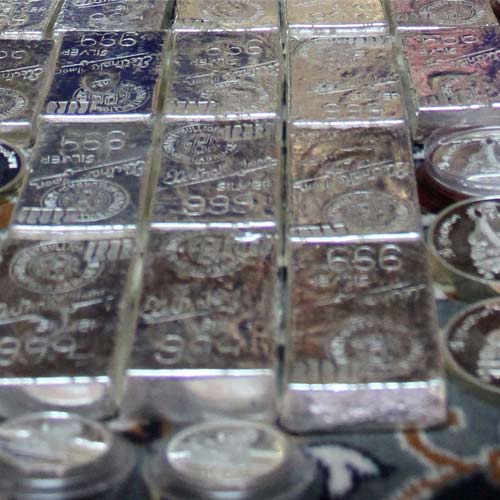
A total of sixty-one Mughal-era silver coins  with Arabic inscriptions imprinted on them have been found from an earthen pot near the bank of river Ganga in Cantonment area in Kanpur .

The coins  were found last evening when a few kids had gone to the river Ganga’s wharf in Cantonment area to take bath where they found an earthen pot filled with shining coins in it, police said.

Ram Kishan Das, a priest at the wharf, after knowing the incident, informed police and Army officials which then took the relics under its authority and has informed Archaeological Survey of India about the coins, Major CP Bhadola said.

ASI has conducted a search at the site and sent a preliminary report to their Lucknow office, an official said.

“The coins have some inscriptions on it in Arabic script, we are guessing that these might belong to the Mughal era,” ASI officer Manoj Verma said.

source: http://www.dnaindia.com / DNA / Home> News> India / Place: Kanpur, Agency: PTI / Saturday – September 13th, 2014

Reviving the dying art of Arabic calligraphy

Bhopal :

She wields her set of ‘pen of reeds’ like an inspired chef. The mixture in jars she stirs so energetically, knowing well that like Urdu language, which was once highly respected and flourishing, the art of Arabic calligraphy too faces an uncertain future. Roohy Khan, a science post graduate in her 20s, provides a rare glimpse into the dying art of Arabic calligraphy in the country.

Organized by Archaeological Survey of India (ASI), the exhibition-cum workshop on Arabic calligraphy is being held at Rani Kamlapati Palace.

Roohy’s treatise contains a fascinating description of all letters. For example, she draws Alif, which to the uninitiated is a simple line, in an angular pattern using Koofi script. Her Alif, gets circular in Sulus script, remains steadfast in more common Naksh script (easy to read much like Urdu). For the more formal documents, she uses Khat-e-deewani for shooter strokes.

This is Roohy’s fourth exhibition. “Arabic script is the prime art of Islam and it is a little misunderstood. Here, we are inviting all to come learn calligraphy, in the language of your liking. It is so Indian now and needs to be preserved,” she said.

The art of calligraphy or Khushnawisi or kitahat is said to be more than 5,500 years old. Calligraphy is profession in which handful of artistes are flooded with work, that in many cases is mediocre at best.

Her pen of reeds, made out of canewood and similar material is cut exactly 1.5 inches from the top to give its nib the desired shape. “The angle of writing is most important. The rhythm, layout and interweaving patterns come naturally,” she said. Her work cannot be read so much so as visually sensed.

source: http://www.timesofindia.indiatimes.com / The Times of India / Home> City> Bhopal / by Jamal Ayub, TNN / August 31st, 2014

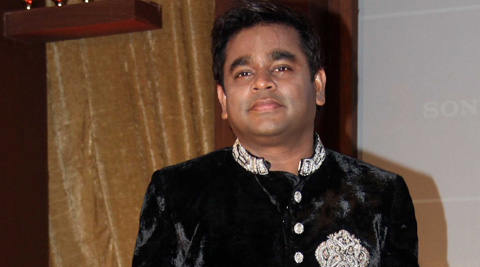
A R Rahman to receive honorary doctorate from Berklee

"I'm deeply moved to receive an honorary doctorate from such a distinguished school which has contributed so much to the world of music," said Rahman.
“I’m deeply moved to receive an honorary doctorate from such a distinguished school which has contributed so much to the world of music,” said Rahman.

In recognition of his two-decades-long musical legacy, the prestigious Berklee College of Music is all set to honour Oscar-winning composer A R Rahman with an honorary doctorate.

The honour will be conferred on Rahman, 47, best known globally for the original scores and songs in ‘Slumdog Millionaire’, ‘127 Hours’, ‘Elizabeth: The Golden Age’ and ‘Million Dollar Arm’, at an event at the Berklee College of Music on October 24, a media statement said.

“I’m deeply moved to receive an honorary doctorate from such a distinguished school which has contributed so much to the world of music,” said Rahman.

“I’m especially proud and honoured the college is graciously establishing a scholarship in my name for future generations of musicians to follow their dreams,” he added.

Berklee College of Music president Roger H Brown said, “A friend from India described A R Rahman to me as John Williams and Sting rolled into one – a leading film composer and a wildly popular, brilliant songwriter and performer.

“We welcome him to Berklee, where the college and our students look forward to paying our respects.”

At a concert celebrating his career on October 24, 2014 in Boston, students and faculty will perform songs paying tribute to his distinguished work with Rahman performing alongside them for select pieces.

In addition to the performance, Rahman will conduct a master class at the Berklee Performance Center, the college said in a statement.

In honour of Rahman’s new relationship with Berklee, the college will establish a scholarship in his name to help bring students from India to Berklee. All proceeds from the October 24 concert will go toward this scholarship fund, the statement said.

source: http://www.indianexpress.com / The Indian Express / Home> Entertainment> Music / Press Trust of India, Washington / July 18th, 2014

When glamours Gauhar visited Mysore …

A successful supermodel, a talented actress, winner of the famed Television reality show Big Boss last season and much more, Gauhar Khan is outspoken and daring — a trait not many dare to show off in tinsel town.

The damsel who is currently hosting an on-going TV music show called ‘India’s Raw Star’ was in city on Friday as the show-stopper at Mysore Fashion Week season one.

Star of Mysore caught up with the actress who set the ramp on fire with her allure as a show-stopper for city-based designer Jayanthi Ballal draped in a red hot Kancheevaram six-yard silk saree and jewellery by C. Krishniah Chetty & Sons. Excerpts…

GauharKhanMPOs12sept2014

by Venkatnag Sobers

SOM: Though a fabulous dancer and actress, you are not seen much in movies, why?

Gauhar Khan: It is not that I do not want to do movies but I don’t want to remain just a prop in the industry. I know I am a good actress as well as a dancer but I am waiting for an opportunity where someone will approach me for my talent as an actress. I did a good cameo in the movies Rocket Singh – Salesman of the year and Ishaqzaade and I am happy with my roles in them. I hope to do a lot of good movies in the future.

SOM: What do you have to say about the Mysore Fashion Week?

Gauhar: It is really fabulous that the fashion sense is spreading across the country and has also started making its impact on Mysore. This being the first season of Mysore Fashion Week, the organisers, I must say, have put up a fabulous show. The collections presented have been wonderful and the show was a visual treat. I must also say that the show is on par with other fashion shows held at various metropolitan cities in the country.

SOM: Given a chance would you visit Mysore again and what did you like the most in Mysore?

Gauhar: Yes definitely. I really wish to come back to Mysore sometime in the future. The next time I visit Mysore it will be on a holiday to see the tourist spots in and around the city. I also wish to travel towards Ooty which is one of my favourite places. Initially I was worried about driving down to Mysore from Bangalore but it was not too bad. But then once in Mysore, the awesome weather made it delight to stay here.

By the way, I loved the Mysore Pak a lot. I had tasted it when I was a child and hadn’t liked it then. But before I left my mom asked me to taste the sweet. I did earlier today and loved it. Now I am taking a Mysore Pak parcel back home for my mother.

SOM: How has Bigg Boss helped you build your personality?

Gauhar: The show really helped me a lot in building my confidence. I got to experience a new life while inside there. I also made a lot of new friends which has proved good for me.

SOM: Your fashion statement?

Gauhar: I don’t make any fashion statements. I am comfortable wearing whatever I want to. Be it jeans or paijamas or anything else, it has to suit the person and the person has to be comfortable in them. That is a statement in itself.

SOM: What was your reaction when you heard you would be wearing a saree for the show?

Gauhar: I love wearing sarees. It is our culture; the beautiful Indian traditional costume. Once I came and saw the saree, I was awestruck and I loved the blouse designed by Jayanthi Ballal. The design on the Kancheeveram saree by her is also different. I also loved the antique jewellery designed by the C. Krishniah Chetty & Sons which I wore with my attire. It was fabulous.

SOM: Having been hosting India’s Raw Stars, what do you have to say about the budding young singers?

Gauhar: There is no dearth of talented singers today. Each of them on the show is talented and good in his/her own way. The participants have been doing great. We have just completed three weeks of shooting and working with ‘Star Plus’ and Yo Yo Honey Singh has been a wonderful experience.

source: http://www.starofmysore.com / Star of Mysore / Home> Feature Articles  / September 07th,  2014

Royal Style

AkbarLUCKNOW11sept2014

Centuries before Peter Stillman the elder, the eccentric/insane professor in the first part of Paul Auster’s The New York Trilogy, had conducted a ghastly linguistic experiment on his son by locking him up in a dark, empty room from birth to find out his ‘natural’ language, a famous Indian emperor had supervised a similar research in real life. In the outskirts of Fatehpur Sikri, Akbar kept a ‘dumb house’, where babies were reared by dumb wet nurses: the emperor wanted to ascertain what language they would speak once they grew up under these laboratory conditions. Disappointingly, the experiment failed, and the children were found to have acquired no god-given or natural language when they were visited a few years later.

This incident may suggest that Akbar was a cruel man but the moral judgment would overlook his keen scientific temperament — this disposition had also led him to order the mating of a goat and a deer. The same urge to look beyond the given and to find out what happens when boundaries are crossed must have inspired him to create Din-i-Ilahi, the syncretic religion that still speaks volumes for that progressive man who could think of a faith combining elements from several existing religions in the 16th century. Akbar’s character, as analysed by Lucy Peck in FATEHPUR SIKRI: REVISITING AKBAR’S MASTERPIECE (Roli, Rs 795), is as intriguing as this palace complex built by the emperor over years and then, suddenly abandoned. Peck revisits the old mystery surrounding Akbar’s unexpected moving of court from Fatehpur Sikri, and although she doesn’t join the dots, the solution seems to lurk somewhere in the emperor’s character rather than in material causes, like the alleged shortage of water there.

Peck’s Akbar is an artist, with all the attendant symptoms and characteristics of artisthood. He seems perfectly capabale of believing six contradictory things before breakfast. However, that may well be because the Akbar about whom we read now is a construct of texts by three different people with different agendas — Abul Fazl, who is all-praise for the emperor; Badauni, who, displeased by Akbar’s religious tolerance and out of favour in the court as a result, is embittered; and the Jesuit priest, Monserrate, whose account is seemingly unbiased because it is by an outsider. Sifting through their stories, Peck presents a flamboyant Akbar whose interests range from block-printing, carpet-weaving, taming elephants, flying pigeons to settling his subjects’ disputes hands-on, debating tirelessly on religious issues, sometimes throughout the night. He is possibly an epileptic — given his frequent trances — a dyslexic and an opium eater, subject to bingeing bouts. He spends nights meditating alone on a rock, seeking answers to life’s questions. Add to this driven, excessive nature the emperor’s prerogative, and one can begin to fathom why, for instance, he ordered the dumb house experiment or built a place like Fatehpur Sikri, with its eccentric blend of varied styles, its mix of austerity and extravagance. As Peck writes of the buildings of Fatehpur: “[They] reveal themselves to be remarkably disparate. One can well imagine Akbar hearing about or seeing an unusual building and saying, ‘I’ll have one of those.’”

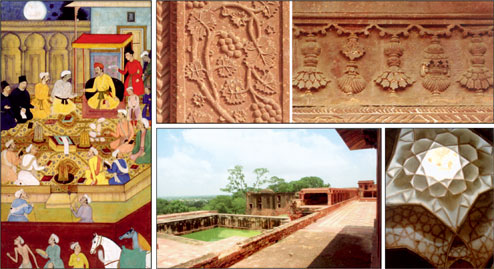
Top right is an illustration of the diverse designs that come together in Fatehpur Sikri. The grapevines look European while the pattern on the right panel resembles the stringed decorations that Hindus hang from the top of door frames on festive occasions. Left shows Akbar in the Ibadat Khana, where he held the discussions with people of other faiths that eventually resulted in Din-i-Ilahi. Bottom left is the tank on the banks of which Akbar’s courtiers had met on the emperor’s birthday in 1582 to celebrate the occasion with games of chaupar, chess and cards. Akbar had looked on with mixed feelings at such frivolities until disaster struck: a side of the tank collapsed and the water swept downhill, washing away settlements. The breathtaking ceiling of the Royal Baths is on bottom right.

source: http://www.telegraphindia.com / The Telegraph, Calcutta / Front Page> Opinion> Story / by Anusua Mukherjee / Friday – September 05th, 2014