Yesteryears’ classical music maestros, who gave new dimensions to Indian music would now hog the limelight through postage stamps. For collector’s delight, the postal department has decided to release stamps of eight legendary vocalists and instrumentalists who captivated the audience worldwide through their talents.
The release being commemorative and a one-time release has been eagerly awaited by the city philatelists here. The maestros who had ruled the music world and made their presence felt in overseas also, ranges from that of early 20th century to the past few years.They include Bharat Ratna and three time Grammy award winner Pandit Ravishankar who introduced sitar to the world, Bharat Ratna Bhimsen Joshi who ruled the music arena for over six decades with his ‘khayal’ style of singing and Padma Vibhushan, Kumar Gandharva, famous for his unique vocal style and his innovative genius.
Among the list are sitar maestro Ustad Vilayat Khan who recorded his first performance at the age of eight and gave his last concert at the age of 75 years. Similarly, Ali Akbar Khan, Pandit Mallikarjun Mansur, classical singer of the `khayal’ style and Padma Vibhushan awardee Gangubai Hangal also of the `khayal’ genre and Padma Vibhushan Awardee and DK Pattama, renowned Carnatic musician and a playback singerfor film songs would also figure in the stamps to be released soon by the postal department.
Director, postal services, KK Yadav said, “Gauging from the response the people, specially the young collectors have shown over the stamps of yesteryears’ actors, we are convinced that the collection of the stamps of the musicians which will be released in a limited number across the country will be sold out within couple of days. The stamps release is proposed on September 3.”
Harish, a registered stamp collector said they are eagerly awaiting the collection of stamps of musicians to be released in the month of September.”It will be a valuable collection for us as it would be the first of its kind stamps on Indian music in the past few years,” he added.
source: http://www.timesofindia.indiatimes.com / The Times of India / Home> City> Allahabad / by Vinod Khanal, TNN / August 23rd, 2014
In a bid to revive the glory of dying art of calligraphy, youngsters from Jaipur to Japan have assembled here to receive training of the art from Hyderabad-based artist Mohammad Nayeem Sabri. Majority of them do not are experts in Urdu, still they want to carry forward the legacy of this art.
On Friday, TOI spoke to trainees and trainer in the ongoing workshop at Allahabad Museum.
Harpeet Kaur Chabra, a Sanskrit calligrapher, came to know about the training workshop from social site, Facebook in Jaipur. She contacted Allahabad Museum and sought permission to attend the workshop.
“I am a professional dealing with Sanskrit manuscripts and not well acquainted with Urdu language so I decided to participate in the week-long training sessions,” Chabra said.
Asuka from Japan, who was researching on Urdu, joined the workshop to carry the dying art to her country.
“Calligraphy is a medium of expression practiced in English, Urdu and Arabic and others languages. Since I am researching on Urdu, I decided to join the workshop to hone my skills,” Asuka said. Hamidia Girl’s Degree College (HGDC) principal Rehana Tareeq invited her to join the diploma course in calligraphy in her college also.
HGDC student Farheen Kausar and 15 others have decided to join the workshop.
“We are from fine art background, so we decided to learn the difficult form of art. We have added innovations to it by using brush strokes in calligraphy,” Farheen added.
Calligraphist Mohammad Nayeem Sabri (86), who had dedicated his life to the art after getting relieved from 48 years of service as engineer in Hyderabad, said: “There are couple of girls who can make it big in the art of calligraphy if they practice under the guidance of experts.”
“The art is found on nearly every monument in India and even in English there is a immense scope. The calligraphy at Qutab Minar, Taj Mahal had attracted tourists worldwide. At present, this art is passing through a poor phase so I hope government will look into it.”
source: http://www.timesofindia.indiatimes.com / The Times of India / Home> City> Allahabad / by Vinod Khanal, TNN / August 23rd, 2014
Aliyeh Rizvi used to run a niche design store called Native Place many years ago. It encapsulated her love for handcrafted traditions, nostalgia and fading remnants of culture. She took to passionate blogging subsequently to revisit everything that Bangalore stands for. Native Place no longer exists as a physical space but it is now a “collaborative mind space that works to build awareness of Bangalore’s local history and culture through curated experiences, travel writing and city based collaterals. It explores ways in which information can be used to create meaning and build a deeper connect.”
In a chat with City Express, she talks about the many projects she has undertaken to keep the memory of a genteel city alive that is now being overtaken by change at every level.
Poignant memories
The best memories I have are of Bangalore’s trees and gardens, and a life lived among them. Avenues were awash with different colours all through the year, jacaranda petals fell on our shoulders as we passed. Large family picnics were organised in Cubbon Park and Lalbagh when the weather was good. I miss the beautiful bungalows that had lovely large gardens: fruits, flowers and scented plants. I miss the Queen of the Night that bloomed after sunset, scenting an entire lane with its fragrance. We made passion fruit juice and gooseberry jam from our own fruit trees and compound walls had moss! Which means it was traditionally a cold, damp climate where early morning baths were always accompanied by shivering!
A Turquoise Cloud
I blog and write offline about the Bangalore I grew up in, to save it from vanishing. The city is my home and I am rooted in it. My blog, A Turquoise Cloud, is an archive of information and stories about local culture, city people and our symbolic spaces. The city I grew up with was being knocked down rapidly and it was becoming increasingly difficult to connect with it physically. Houses I had played in were now hi-rise buildings. The local grocery store I stopped at for sweets after school had disappeared. Trees were cut down, roads had changed. Streetscapes in the city were altered forever. I felt a terrible sense of displacement in my own hometown. I could not recognise or identify with it anymore.
That’s why we old Bangaloreans spend so much time in sentimental nostalgia and B&W photographs. It’s our only way of coping with loss.
So where does one go to find this other Bangalore? I chose to recreate it online, where it can stay virtually untouched. ATC is a space where I create a context for the present through memories, images and stories of the city. I choose to focus on the present, by giving it a meaning through the past.
historical connect
One of my most memorable projects was as Curator, Centre for Public History, Srishti School of Art Design and Technology where I co-facilitated a successful Public History Project titled ‘The Tiger Comes to Town’ to commemorate the 150th anniversary of the Archaeological Survey of India. The focus was the Bangalore Fort in Bangalore’s busy Kalasipalayam area and its role in local history during the 18th Sultanate, the time of Tipu Sultan, and the Third Anglo-Mysore War of 1791.
It aimed to reconnect the public with their local heritage sites through deeper engagement, build awareness and instil pride in the same. It combined elements from oral history, design, academic enquiry and performance so students could look at multiple ways to engage with the site during the course of the project. The outcome was a true city project in more ways than one.
breakfast specials
One of my most popular posts was the Bangalore Breakfast Special, since the and the eating out-breakfast tradition is so unique to our city. I wrote that Bangaloreans love their breakfast and discuss it intensely.
Replies flooded in with suggestions to try other favourite joints, NRIs posted with intense nostalgia for iconic restaurants mentioned, more discussions about food happened, vows to visit, and even arguments over the best idlis-and dosas! Like I said, we are obsessed with our tiffin! It is always wonderful when people write in with comments and stories of their own, volunteer to share information and photographs.
We also have a page on Facebook for daily interactions and information. The blog allows you to access information by usage (eat, breathe, know) and geography (north, south, east). All posts are research intensive and constructed to provide comprehensive information, painstakingly collected, in one place.
It often takes days to track down information, locate people or join the dots, but it has to be done. In this space, I can now see the Bangalore I know and love.
Back to Native Place
Native Place is the seed of an idea which will hopefully grow into a larger organisation where people interested in the city can work together on creating new formats for city history and culture based projects- through documentation, interactions, performance and information based collateral.
Perhaps knowing a little more will build a relationship, create protectiveness and then generate the ownership we require so badly right now. Our website will be up soon and city based activities will hopefully start with the onset of the festive season.
source: http://www.newindianexpress.com / The New Indian Express / Home> Cities> Bangalore / by Express News Service / August 19th, 2014
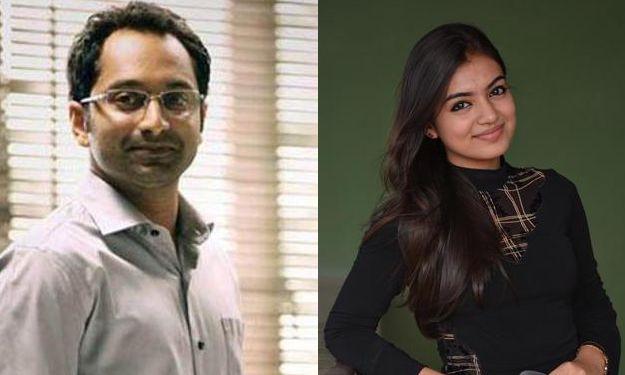
Actor Fahad Fazil, son of well-known Malayalam director Fazil, married actor Nazriya Nazim in a private ceremony on the outskirts of Thiruvananthapuram on Thursday. (file photo)
Invitation to the ‘nikah’was restricted to close relatives and family friends.
Malayalam film actors Fahad Fazil and Nazriya Nazim tied the knot on Thursday in an intimate ceremony on the outskirts of Thiruvananthapuram.
The invitation to the ‘nikah’, performed in a convention complex was limited to relatives, family friends and a few chosen bigwigs from the film industry and politics.
Fahad, son of director—producer Fazil, got engaged to Nazriya in January this year after they grew closer during the shooting of a film. Fazil is a well-known Malayalam-Tamil director of super hit films in the the laste 80s and 90s.
The parents of the couple have held that the alliance was as an arranged marriage after both the families discussed it.
Fahad made his debut in 2002 with not—so—very successful ‘Kaiyethum Doorath’, directed by his father. But after lying low for some time, he made a sensational comeback doing varied roles with great ease and originality.
The talented youngster, who displayed great versatility, bagged many awards in his second innings and won critical appreciation for a variety of roles.
Nazriya debuted as a child artist in 2006 with the Mammootty film ‘Palunku,’ directed by Blessy. She also had a striking stint as TV anchor and went on to do lead roles in movies. Nazriya has also acted in several films in Tamil in the last couple of years.
soyurce: http://www.thehindu.com / The Hindu / Home> Entertainment / PTI / Thiruvananthapuram – August 21st, 2014
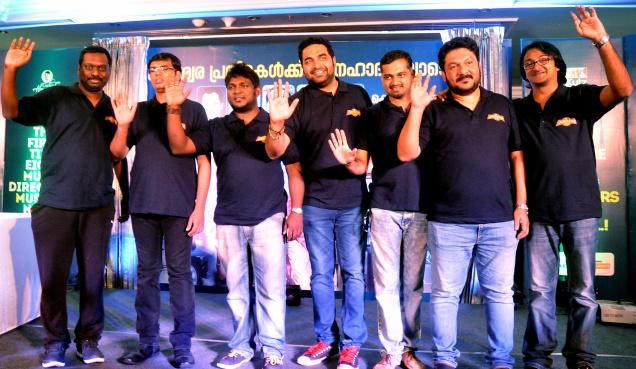
Music directors (from left) Jassie Gift, Afzal Yusuf, Rahul Raj, Gopi Sundar, Bijibal, Anil Johnson, and Mejo Joseph at a press conference in Kozhikode on Wednesday. Photo: S. Ramesh Kurup / The Hindu
They are performing to raise funds for the Cochin Haneefa Foundation, which helps struggling artists in films. Music directors raising funds for Cochin Haneefa Foundation.
Eight music directors of Malayalam cinema are coming together for high-voltage live shows.
Bijibal, Gopi Sundar, Alphonse, Jassie Gift, Rahul Raj, Afzal Yusuf, Mejo Joseph, and Anil Johnson will kick off the tour at Swapna Nagari here on September 27.
They are performing to raise funds for the Cochin Haneefa Foundation, which helps struggling artists in films. The show, titled Jamgrab, is being organised by the Film Employees Federation of Kerala, the Music Directors Union, and the D Cutz Film Company.
“We are glad that we are beginning the series of shows in Kozhikode,” Mr. Gopi Sundar told presspersons here on Wednesday. “This incidentally is my first ever live show.”
Mr. Rahul Raj said it was great teaming up with fellow composers. “It has been an opportunity for us to know each other,” he said. “I do not think that eight music directors have come together for a show in the country before.”
Leading playback singers will be performing at the show, which will have a sound of 3,00,000 watts.
Film director Shajoon Karyal will direct the show, while Vinod Vijayan and Seven Arts Mohan are the producers.
After Kozhikode, the show will travel to the UAE for a performance in Sharjah on December 19. The ticket sales were inaugurated earlier in the day in Thrissur by actor Mammootty.
source: http://www.thehindu.com / The Hindu / Home> News> Cities> Kozhikode / by Special Correspondent / Kozhikode – August 21st, 2014
To keep alive the memories of actor Cochin Haneefa, the Cochin Haneefa Foundation is organising a major cricket tournament – Cochin Haneefa Cup. The Cochin Haneefa Memorial Tournament, which will be a cinema cricket championship, will be held at TCC cricket ground, Tripunithura.
The championship which will begin on April 12 will continue till April 23. The game will be played in the Twenty20 format on a knock-out basis. About 16 teams representing various strata of the film fraternity including directors, music directors, editors, production controllers, dancers, make up artists, production boys, singers, press clubs and different media organisations are expected to take part in the tournament.
The champions will get an ever-rolling trophy along with cash award of `1,00,000 while the runners up will get trophy and `50,000. Those who become the second runners up will get `25,000 and trophy. In addition to this there are awards for Man of the Match, Man of the Series, Best Batsman, Best bowler and best catch.
Actor Mammootty will be the chief guest at the prize distribution ceremony. The inauguration on April 12 will be attended by Fefka president Sibi Malayil, Fefka directors union president Kaml, All India Film Employees Confederation general secretary B Unnikrishnan, Malayalam Cine Technicians Association (MACTA) general secretaries Siddique and G S Vijayan, writers union general secretary A K Sajan, Renji Panikar and Tambi Kannanthanam.
The Cochin Haneefa Foundation was formed by the friends and family members of the actor, as part of an attempt to keep the memories of Cochin Haneefa alive, said Foundation officials Fasil Mohammed, V C Noushad, Vinod Vijayan and Collins Leophin at a press conference in Kochi.
source: http://www.newindianexpress.com / The New Indian Express / Home> Cities> Kochi / by Express News Service – Kochi / April 07th, 2014
The aircraft lands on a narrow piece of land that leads straight to a valley. And that valley was where an ill-fated aircraft had crashed a few years ago. That is all I could think of during my descent into Mangalore. I held onto to the sides of the chair and hoped that I would live. It was a smooth landing and for once I was grateful for that sharp brake. Once out of the airport, I caught a cab and headed out to the hotel.
But I wasn’t ready for what was coming next. On steep roads, swirling down the hill was like going down a softie curl. And then my first glimpse of the glimmering city. It looked beautiful.. laid out in front of me like a carpet of twinkling lights. I passed by a group of people – a large family with adults and children. I wondered what they were doing so far from the city at 9.30 pm, and then I saw a plane in the distance. It made sense. With heads lifted and upturned faces, they watched the flight come closer and got their fix of the day.
And that got me thinking about Mangalore. In my first 30 minutes here, I had moved from extreme fear to delight to warm-fuzziness. It had a small-town quality that made me wish for more.
Historically Mangalore is grand, Tipu Sultan had been here. It has had an important place in history. But what had happened to it now? Was it just another mid-sized city, now? I didn’t associate it with the grandeur of a big city or a city that had dynasties fighting for it. I associated Mangalore with crime and communal tensions, and that was all I knew about it. But surely Mangalore is much more than that.
The next morning, with just four hours before I made my way to Kasargode, the actual destination of the holiday, plans had to be remade. Maps were scrutinised and the reception lady thoroughly grilled. The plan was finalised- the day would include Sultan Battery, the College Chapel, the Mangaladevi temple and a stop at Ideal Cafe since everyone was raving about it.
The driver of my car was not from Mangalore. He had no clue where Sultan Battery was. He tried asking local people who didn’t seem to be very clear either, but were aggravated that I did not know how to pronounce the word ‘battery.’
Then Google Maps came to the rescue. On the way, Mangalore refused to let me get surly by tempting me with vistas of green spaces and simple but beautiful houses.
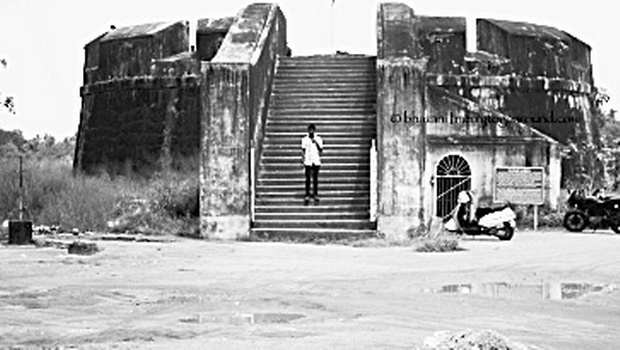
Sultan Battery is situated on a bend along a river as it snakes through to the sea. It seemed to have a very strategic position, overlooking both sides of the river. Built by Tipu Sultan, this was a watch-tower to see if anyone was crossing the river and coming over with dark intentions.
Built with black basalt rocks, with viewing holes lining the entire wall, the structure seemed almost too simple in today’s complex understanding of war and defence. But then you put on the perspective of more than 200 years ago, and it seems that the location was indeed perfect for the purpose.
With every dynasty’s uprise, there is growth and also destruction of legacies. Legend has it that the rocks used to build this watchtower could have come from places of worship though no one knows for sure.
There were a few ships next to the river and we decided to go and take a look. It was a ship-building yard. It took them three months of hard work to make just one ship and then she took off, to prove herself worthy of the toil.
I watched the imposing Vajralaxmi enter the water for the first time in awe. Though there were some other ships too that looked gorgeous. Funnily these ships looked battle weary even though they were all brand new. These were meant to serve as fishing trawlers and were not built to be gleaming and swanky.
I left Sultan Battery and made my way to the College Chapel. Again, no one knew where it was, and even Google seemed flummoxed this time.
It took me around 20 minutes to find a person who could give me directions. Important note to self: don’t call a chapel just a ‘chapel’, when it’s called ‘College Chapel’.
I got to go on a lovely personal tour courtesy the person-in-charge. The entire place is painted beautifully, and when I say entire… I mean every inch! What looks like marble at first glance is not, it’s art. What seems like a painting on a curtain and hanging on the wall, is also a painting. The illusions go on and on.
It was time for lunch and stomachs were grumbling all around. And so the next destination was Ideal Cafe! The food was okay, nothing exceptional but it was definitely the coolest restaurant in Mangalore and everyone with some time to spare seemed to be there.
The filter coffee that everyone praised was not that great. It had a rough, burnt taste with some of the coffee residue at the base. They say that’s how Turkish coffee tastes, so there might be some who like it.
But if you are someone with a sweet tooth, skip a meal to just have ice-cream at Ideal Café. It was simply fabulous.
The last stop in Mangalore was the Mangaladevi temple. This is the temple that Mangalore is named after, so it had to be seen. A large temple, it was quiet and peaceful all the more as it was shut for the afternoon. We weren’t allowed inside as the Gods were sleeping and so we were asked not to disturb them.
Mangalore was quaint. A neat and clean city that still seems enveloped in the past and happily so, given the rapidly changing face of every city in the country. I wouldn’t say it surprised me, but it didn’t disappoint. It was small, roads were relatively peaceful and the streets were still lined with houses exuding old-world charm.
source: http://www.newindianexpress.com / The New Indian Express / Home> Cities> Mangalore / by Bhavani Blogs / August 21st, 2014
Sayed Nazim, son of Abdul Basheer, resident of Ghousia Nagar in city, has been appointed as President for Narasimharaja Assembly Branch for Human Rights & Corruption Eradication Forum, HQ Delhi.
source: http://www.starofmysore.com / Star of Mysore / Home> In Brief / August 16th, 2014
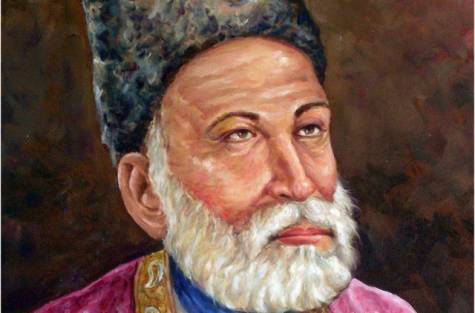
In a thrilling discovery for lovers of Urdu poetry, the original manuscript of famous poet Mirza Ghalib’s verses has miraculously survived after being reported missing and presumed destroyed almost 50 years ago.
Penned in 1821 by Mirza Asadullah Khan Ghalib, the original manuscript — Nuskha-e-Hameediya — survived after being reported missing during the 1940s’ India — Pakistan division.
Commissioned by Nawab Faujdar Mohammad Khan and penned by calligrapher Hafiz Mueenuddin, the manuscript features some of the most authentic and beautiful Urdu poetry ever written.
After years of believing that the manuscript was missing and accepting doctored and amended versions of this work as ‘authentic’, Urdu poetry lovers can finally see the genius of Ghalib as it was originally intended.
The discovery of the original manuscript has sparked celebrations in the creative community, especially the researchers on the works of Mirza Ghailb, many of whom are thrilled that the doctored and amended texts will not go down in history as the definitive poems.
The manuscript was the first of the nine known manuscripts of the ‘Divans of Ghalib’, commissioned when Ghalib was just 24 years of age. Accounts from scholars and publishers say the original manuscript contained almost 1,800 verses, nearly twice the number of verses that were published in the “authorised” version in 1941. While writing, Ghalib did not find the omitted verses fit for publication, but true poetry lovers were ever keen to read the missing text.
In 1969, Professor Hamid Ahmad Khan wrote that he examined the manuscript in 1938, but did not keep extensive notes on his thoughts regarding the omitted piece, later going on to publish a ‘corrected’ version of the poems.
By the time the corrected version of the poems had been released, the actual manuscript had disappeared, presumed missing or possibly destroyed during the India — Pakistan division back in 1947. With no original text as evidence, readers had to accept that Professor Khan’s version as authentic.
Husaini Arts online art gallery and museum takes the credit for the find.
“This is indeed an incredible find and we are extremely thrilled that we now get to read the original manuscript, which is almost 200 years old. Urdu poetry lovers everywhere will be rejoicing at this news that the original text can now be added to the canon of work Mirza Ghalib worked on. The original Nuskha-e-Hameediya is about to be brought to light, and all those who love Urdu poetry are about to see the true, authentic text that Ghalib first intended to be read by the elite in the 19th century,” a Husaini Arts spokesperson told Gulf News.
Ghalib, born Mirza Asadullah Baig Khan on December 27, 1797, was the pre-eminent Indian Urdu and Persian poet during the last years of the Mughal empire. He used pen-names of Ghalib and Asad. During his lifetime, the Mughals were eclipsed and displaced by the British and finally deposed following the defeat of the Indian rebellion of 1857, events that he wrote of.
Most notably, he wrote several ghazals during his lifetime, which have since been interpreted and sung in many different ways by different people. Ghalib, the last great poet of the Mughal era, is considered to be one of the most popular and influential poets of the Urdu language. Today Ghalib remains popular not only in India and Pakistan but also among diaspora communities around the world.
source: http://www.gulfnews.com / Gulf News / Home> News> World> India / by Karuna Madan, Correspondent / August 18th, 2014
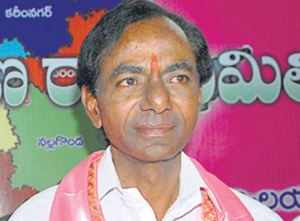
Chief Minister K Chandrashekar Rao expressed condolences on the death of veteran journalist Mohammad Vazeeruddin.
In a message, the Chief Minister described him as a senior and highly accomplished journalist. He said in his journalistic career of more than five decades, late Vazeeruddin worked for several newspapers and impressed many readers with his valuable contribution. (INN)
source: http://www.siasat.com / The Siasat Daily / Home> Hyderabad / Tuesday – August 19th, 2014