Category Archives: Arts, Culture & Entertainment

Laila Tyabji | The crafts revivalist

For 30 years, the face of Dastkar has worked with craftspeople, documenting their art and preparing them for an urban clientele
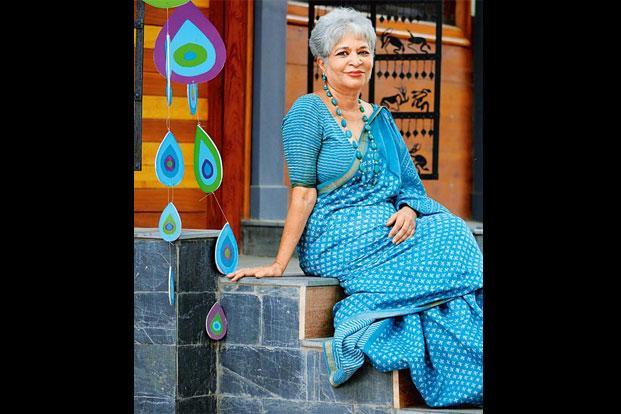
Laila Tyabji at Kisan Haat, New Delhi. Photo: Priyanka Parashar/Mint

Freedom to use skills | Laila Tyabji In 1949, a two-year-old girl came to Bombay from Belgium, where her father had served as India’s first ambassador. She was pale-skinned, cute, funny and only spoke French. “I was such a joke in India,” recalls Laila Tyabji. She promised herself that she would never be laughed at again, lost her French and became the Indian child she was. Tyabji was born a few months before the metaphorical midnight into a Sulaimani Bohra Muslim family of Delhi in 1947.

In 2012, Tyabji was honoured with the Padma Shri Award for her long and inspiring contribution to India’s crafts sector as a co-founder, and now the chairperson, of Dastkar—a society for crafts and craftspeople. Her only regret receiving it was that it was given by Pratibha Patil, who Tyabji felt was an inappropriate choice as president. “Especially as the attempt was to tell us that her appointment was a triumph for women,” she adds.

Clarity of thought and commitment to larger goals in life distinguish her from the six purposeful women who founded Dastkar in 1981. The other five founding members moved on with goals of their own, while Tyabji stayed on and became the face of Dastkar and its Nature Bazaars held all over India. Despite a large, well-delegated team, people only want to speak to Tyabji when they call the office. Even if it is just to ask for directions to Kisan Haat, now the permanent venue for the bazaars in Delhi. Tyabji spent years trying to get a permanent venue.

As a young student at the Welham Girls’ School in Dehradun who would later study art in Vadodara and go on to work with Japanese artist Toshi Yoshida in Tokyo, her perseverance has never deserted her. Spirited and outspoken, Tyabji rode motorcycles in the 1970s before feminism gained momentum in India. Tyabji remembers feminist activist Kamla Bhasin telling her many years ago that it was because she painted her toenails that she saw her as a social butterfly. That was till Bhasin saw her working assiduously in the villages of Bihar and yet fitting in perfectly in south Delhi’s drawing rooms.

In the late 1970s, Tyabji got a three-month assignment from the Gujarat State Handloom & Handicrafts Development Corporation Ltd’s Gurjari outlet, to go to Kutch as a visiting designer. Her belongings in a steel trunk, she drove through villages, documenting the work of craftspeople, finding things for Gurjari, preparing them for an urban clientele. “Three months became six. I would sit with the women to do the embroideries and the patchwork. The only way to teach is with personal intervention, that’s how you can hone skill,” she says.

Kutch became the hotbed of work and inspiration for her, its crafts evoking a lifelong quest; its craftspeople, her friends and protégés. “Beyond her image as a sophisticated and stylish woman, Laila could make and hold a bridge with craftspeople. She has been there for them through calamity and crisis; from teaching them how to price their products to valuing themselves. The respect and affection they have for her is rare,” says Archana Shah, founder of the chain of Bandhej stores and author of Shifting Sands, Kutch: Textiles, Traditions, Transformations, launched by Tyabji in New Delhi earlier this year.

___________________________________________________________________________

“I would sit with the women to do the embroideries and the patchwork. The only way to teach is with personal intervention, that’s how you can hone skill.”

___________________________________________________________________________

 After returning from Kutch, Tyabji, whose personal style then was about motorbike helmets and textiles, worked as a buyer and merchandiser for Taj Khazana, the store known for finely curated Indian arts and crafts, at New Delhi’s Taj Hotel on Man Singh Road. “A small logistics issue about the Assam state emporium not being able to supply handmade cane baskets to the city-based Taj Khazana propelled the Dastkar idea. That rural craftspeople needed new and commercially viable markets and a bridge to meet their customers and sell directly to them,” she says. The first Dastkar crafts bazaar was held at the Triveni Kala Sangam in New Delhi in 1981.

Mapping the personal and creative direction for craftspeople, forming a link between them and their city buyers, and doggedly working on design issues, pricing, sizing and policy changes for the evolution of the crafts sector as a business model could sum up Tyabji’s work at Dastkar. “They are skilled professionals and should not be treated as downtrodden or as relics as they often are,” insists Tyabji, who has also been associated with Sewa (the Self Employed Women’s Association) of Lucknow. Designer Aneeth Arora of péro, who has been following Tyabji’s work for the last 10 years, says this assimilation of crafts and textiles at Nature Bazaars helps her tremendously as a designer keen on textile exploration and use. The bazaars, feels Arora, are research centres to understand innovation and locate weavers to work with from different regions.

Tyabji’s path, though, is not always well-paved. Craftspeople are deeply conservative, averse to experimentation, nervous about newness. They don’t understand fast colours, form or financial management, she explains. “When you begin you are cocky and romantic, but craftspeople can also start misbehaving. Sometimes you put in so much work but what comes out is a mouse.”

That’s why she has always been a hands-on mentor. Till Tyabji turned 50 and decided to cut her hair short and only wear saris, thus creating the lasting image we have of her, she only wore clothes she had hand-stitched and hand-embroidered. In her closet hangs a fine collection of pherans, anarkalis and a variety of long kurtas with Lambani, Kutchi and Chikankari embroidery done by Tyabji—each piece stunning.

She still paints her toenails. And still hand-embroiders in her free time. She stopped wearing a watch 25 years ago, when she realized that being chronically punctual while working in rural India, where time was a flexible concept, was stressful. She is more nonchalantly stylish than ever before. Short, salted hair, handloom saris, Kolhapuri chappals, kohl-lined eyes, jewellery that is distinctive but never too craftsy, Tyabji cuts a tall figure on India’s “most stylish” lists.

“Laila is knowledge-oriented, decisive and endlessly patient without using her personal influence to change the tide of things,” says Shelly Jain, personnel and programme head at Dastkar and Tyabji’s colleague of 17 years. Her home mirrors her; it is modern Indian without ethnic monstrosities for artefacts. And as its mistress, the only daughter among four siblings, she cooks, bakes, knits and sews enviably.

She admits she came close to getting married a few times but “shrank back” because she was never sure how she would feel 15 years down the line. She shrugs in her characteristic way even as her god-daughter Urvashi Kumari Singh comes up to hug her amma. “She is a fair, cool and sometimes irritable mom,” says Singh.

Is there a retirement age when the trajectory of Dastkar and its chairperson might move in different directions? “I have been trying to retire for the last five years, but haven’t been successful so far,” says Tyabji. That’s when a little emotion wells up—who on earth wants her to retire anyway.

“You can’t imagine Dastkar without Laila,” as Jain says.

source: http://www.livemint.com / Live Mint & The Wall Street Journal / Home> Lounge> Business of Life> Indulge / Home – Leisure / by  Shefalee Vasudev / Saturday – Augut 09th, 2014
The Lede : Set in Stone – Mumbai’s Muslim engraver of Jewish tombstones

Mumbai’s Muslim engraver of Jewish tombstones

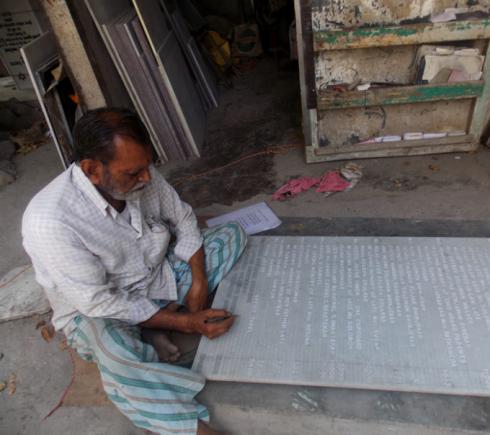
Mohammad Abdul Yaseen has engraved tombstones for Mumbai’s dwindling Jewish community for over forty years. / Photo: Sameer Khan

EARLY ON A BRIGHT FEBRUARY MORNING, under a small shed in a corner of the Jewish cemetery in Worli, Mumbai, 74-year-old Mohammad Abdul Yaseen chipped away at a grey stone slab using a large hammer and chisel. The graveyard was small and solemn, and tombstones stood in neat lines, bearing the Star of David alongside inscriptions in various combinations of Hebrew, Marathi and English. Yaseen chiselled Hebrew characters into the stone, intent on his work.

Yaseen, a devout Muslim, is the only expert engraver of Jewish tombstones in Maharashtra today. He has practiced his trade for over forty years, and is fluent in Hebrew. Beside him stood another man, who introduced himself as Daniel Bamnolkar, the cemetery’s caretaker and a member of Mumbai’s Bene Israel community. The Bene Israel are Jews who have lived along the Konkan Coast for two millennia, adopting local customs and languages while retaining a distinct cultural identity. Their population in India peaked at about twenty thousand in the late 1940s, but many subsequently emigrated, mostly to Israel. Today they number only about five thousand in Mumbai, with a couple thousand more in Pune. It is this population that Yaseen serves, alongside Mumbai’s small handful of Baghdadi Jews, who are descendedants of mid-nineteenth-century immigrants from West Asia.

Yaseen arrived in Mumbai from Uttar Pradesh in 1968 as a young man looking for work. He was introduced to Aaron Menashe, a respected Bene Israeli who made tombstones for the community, whom he started to assist. Menashe passed his skills on to Yaseen, and also taught him to read and write Hebrew. When Menashe and his family moved to Israel in 1971, Yaseen took up his mentor’s work, both in Mumbai and across Maharashtra.

Such close ties between a Muslim and a Jew were not surprising in Mumbai. For centuries, Jews have lived in peace, and built their synagogues, in the city’s Muslim neighbourhoods. For instance, the Gate of Mercy, Mumbai’s oldest remaining synagogue, was built in its present location in the predominantly Muslim area of Bhendi Bazaar, close to the Masjid commuter railway station, in 1860. Few realise that the station is actually named after the synagogue, and not a mosque; the Bene Israel call their synagogues “masjids,” and the Gate of Mercy is also known as Juni Masjid. Other Mumbai synagogues are also located in Muslim localities, such as Byculla, Madanpura and Jacob Circle.

We were soon joined by Mohammad Islam, Yaseen’s fifty-year-old son. Islam spoke fondly of “uncle Aaron Menashe,” who was the family’s “greatest pillar of strength when my father arrived in Mumbai.” Yaseen is teaching his trade to his son, but there seems little chance that the family business will survive in future generations. The job is arduous, and does not pay very well; “each tombstone takes approximately fifteen days,” Yaseen said, and the dwindling Jewish population means there are no more than two or three orders every month. Islam told me his father was “used to living within his modest means,” but that his children “had bigger ambitions.” “Both my sons are educated as engineers,” he said, “and the eldest is working in Saudi Arabia.”

Yaseen saw nothing unusual in being a Muslim working with the Jewish community. “I just adore the love and affection showered upon me,” he said. Whenever old friends who moved abroad come back to visit, Yaseen said, after paying their respects to their ancestors they make it a point to introduce their families to “Yaseen chacha”—uncle Yaseen. Many have invited him to Israel, where they say his expertise would guarantee a lucrative career. But Yaseen has declined all invitations, preferring to enjoy the twilight of his life with his family, working in the cemetery where he spent his best years, “among the Jewish people.” “I never bothered about money,” he added, “and god always blessed me with a simple, honest living.”

___________________________________________________________________________

Sameer Khan is a playwright, author and independent writer. He tweets as @samkhan999.

__________________________________________________________________________

source: http://www.caravanmagazine.in / The Caravan / Home> Reporting & Essays> The Lede / by Sameer Khan / August 01st, 2014

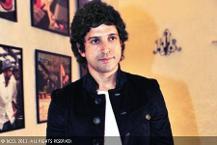
Farhan honoured in Australia

Farhan-AkhtarMPOs09aug2014

Actor-filmmaker Farhan Akhtar, who recently received the best actor award from the Dadasaheb Phalke Academy here, has been honoured at the ongoing Indian Film Festival of Melbourne (IFFM).

“Thank you to the jury and Government of Victoria, Australia for honouring me with best actor at the Indian Film Festival of Melbourne,” Farhan tweeted.

The actor bagged the best actor award for his work in “Bhaag Milkha Bhaag”.

Rajkummar Rao, who was honoured with the National Award in New Delhi for his performance in “Shahid”, was also nominated in the category.

Megastar Amitabh Bachchan was honoured with the International Screen Icon award at fest.

IFFM — the annual celebration of Indian cinema in Australia — began May 1 and will conclude May 11. The festival launched the Indian Film Festival of Melbourne Awards this year and announced the winners May 2.

source: http://www.timesofindia.indiatimes.com / The Times of India / Home> Entertainment> Hindi> Bollywood / IANS / May 05th, 2014

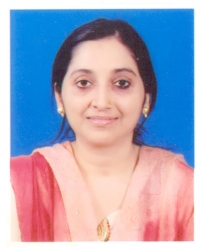
Ph.D. awarded to Shagufta Parveen

Shagufta PerveenMPOs08aug2014
Hyderabad :

According to Controller of Examination, Maulana Azad National Urdu University, Mrs. Shagufta Parveen has been awarded Ph.D. in Hindi.

She has worked on the topic “Samkaleen Geetkaroun ki ‘Hindi-Urdu’ Kritiyon ka Avalokan Rashtriya Navjagran Ke Sandarbh Mein (Bekal Utsahi aur Dushyant Kumar Ke Vishesh Sandarbh Mein)” under the Supervision of Prof. T. V. Kattimani.

Mrs. Parveen is the Hindi Officer of MANUU and she is the wife of Deputy Registrar Mr. Azhar Husain Khan.

source: http://www.siasat.com / The Siasat Daily / Home> Hyderabad / August 07th, 2014

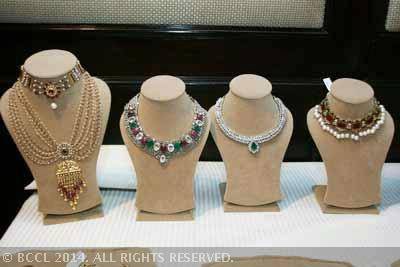
Time to get Nizam’s jewels to Hyderabad?

A decade after a strong pitch was made to shift the Nizam's jewels worth millions of dollars to Hyderabad, they are still in the custody of the National Museum, Delhi and safe in the vaults of the Reserve Bank of India.
A decade after a strong pitch was made to shift the Nizam’s jewels worth millions of dollars to Hyderabad, they are still in the custody of the National Museum, Delhi and safe in the vaults of the Reserve Bank of India.

Hyderabad :

A decade after a strong pitch was made to shift the Nizam’s jewels worth millions of dollars to Hyderabad, they are still in the custody of the National Museum, Delhi and safe in the vaults of the Reserve Bank of India.

From 12 April to 27 July 2014, some of the jewels were displayed for the first time outside the country at the State Museum of Moscow, Kremlin.

For permanent display of the jewellery in Hyderabad, the state government even offered to look at different places in the city for a decision to be taken on where the permanent museum could be located. One was a building at the public gardens, another place that was considered was said to be on Road no. 3, Banjara Hills which was, however, ruled out due to security considerations, and another proposal was to buy land behind the museum where a building could be constructed for the permanent display of the jewels.

One location that was felt appropriate was the Dewan Devdi, where the Quli Qutub Shah Urban Development Authority (QQSUDA) office is located. Sources said there was, however, one hitch. The state government wanted the centre to pay for the land and premises. The union ministry of culture outrightly dismissed the idea. Since then, the proposal, which was at least being considered, has been in a limbo.

Some of the Nizam’s jewels were displayed for the first time outside the country last month in the State Museum of Moscow, Kremlin. The centre had acquired the famed jewellery in 1995 after a protracted legal battle with the heirs of the Nizams. For the first time, the dazzling jewellery was displayed at the National Museum in 2001. The 173 set collection comprising 348 pieces was brought to Hyderabad and displayed at the Salar Jung Museum the same year. Subsequently, for the second time, the exhibition was organized from December 31, 2005 to October 2006. This exhibition was followed by another exhibition at the National Museum, Delhi.

In 1991, the entire jewellery was valued at $ 162 million by Sotheby’s. The jewellery included the third largest diamond in the world — the Jacob diamond.

When contacted, Salar Jung Museum director A Nagendar Reddy said the state government would have to take the initiative to bring the jewels to Hyderabad and talk to the centre about it. “Even if we had to organize an exhibition like we did two times in the past, it may not be possible at the Salar Jung Musem. The Eastern block where the jewellery exhibition was conducted now has many galleries where several artefacts are on display,” he said.

Chief minister K Chandrasekhar Rao who is showing interest in organizing the Independence Day celebrations at the centuries old Golconda fort may also have to think of bringing the Nizams jewels back to Hyderabad for permanent display.

source: http://www.timesofindia.indiatimes.com / The Times of India / Home> City> Hyderabad / Ch. Sushil Rao, TNN / August 06th, 2014

Sanskrit teaches you to become a good person: Kishwar Zubin Nasreen

Lucknow :

Kishwar Zubin Nasreen, the head of the department of Sanskrit at Allahabad University, on Tuesday became the first Muslim woman to receive the Uttar Pradesh Sanskrit Sansthan award for her immense contribution in the field of Sanskrit. The award, instituted in the memory of socialist leader Janeshwar Mishra, will be given annually to a Muslim woman scholar of the language.

Though Nasreen has been a professor of Sanskrit for 36 years, she has been closely associated with the language since 1963.

“Besides being a beautiful language, Sanskrit teaches you to become a good human being and also helps you learn a lot about Indian culture and moral values,” she said.

“My religion never came in my way. In fact, after I learnt Arabic, considered one of the most difficult languages, Sanskrit was a cake walk,” she said.

“The first thing I tell my students is that they should learn Sanskrit as a therapy. That gradually moulds the character of a student, making the person a good human being enriched with the right balance of moral values and patriotism,” she added.

Nasreen said besides parental support, her inspiration to learn the language were compilations of Kalidas, which strike a balance between ancient and contemporary messages.

source: http://www.timesofindia.indiatimes.com / The Times of India / Home> City> Lucknow / TNN / August 06th, 2014

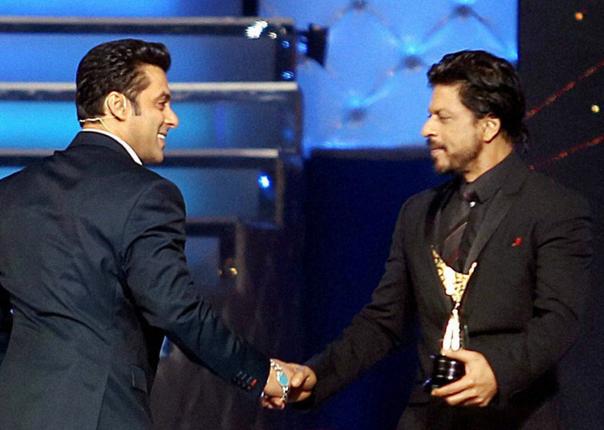
Shah Rukh is ‘king’ of Bollywood: Salman

Salman Khan and Shahrukh Khan. File photo. PTI

Superstar Salman Khan, who has been delivering hit films back-to-back, feels his arch rival Shah Rukh Khan is the ‘King of Bollywood’.

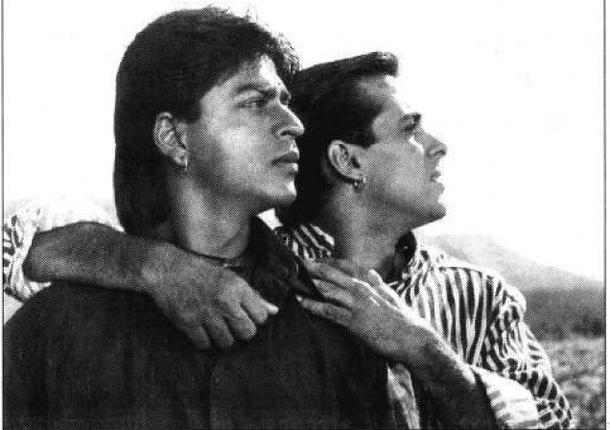
Salman Khan and Shah Rukh Khan in Karan Arjun.

Salman has become the first Bollywood actor to give seven Rs. 100 crore hit films in a row, including his recent release ‘Kick’.

“You can say whatever you want. But there is a king (hinting at Shah Rukh) anyways. You have problem with him being the King? I don’t have problem with him being the king,” Salman said on Thursday when asked if after delivering so many hit films he feels like the new king of Bollywood.

SRK and Salman’s enmity and an eventual patch up has been a fodder for gossip in Bollywood for many years but the ‘Kick’ star indicated that he no longer has a problem talking about the other Khan.

“You are talking about Shah Rukh?” the actor asked a reporter to a query on him being the king of Bollywood, to which the scribe said he was not referring to Shah Rukh.

Salman then said, “I am mentioning (him). If he is the king, he should be the king, that is the good position.”

To a query on where he places himself in the industry, he said, “I would be placing myself much behind, right now I am misplaced.”

With Salman’s recently released ‘Kick’ continuing a good run at the box office, there is a buzz that the film may cross Rs. 200 crore mark. The makers claim ‘Kick’ has already collected Rs. 147.7 crores despite bad reviews.

On the box office result of ‘Kick’, Salman said, “I don’t know about the business. Why talk about Rs. 200 crore, talk about Rs. 300 or Rs. 400 crore or Rs. 500 crore. We would be more than happy if the film does more business.”

On reports that Karan Johar is paying Rs. 150 crore each to him (Salman) and Aamir Khan for doing a film with his production house, the actor said, “Films are not making Rs. 300 crore. I wish we get that much. Films are not making that much money, they are making Rs. 200-250 crore, some not even touching that much. So how can our prices be that much… it is ridiculous.”

Johar also denied the reports on Thursday.

source: http://www.thehindu.com / The Hindu / Home> Features> Cinema Plus / PTI / Mumbai – August 01st, 2014

‘Hum Aapke Hain Koun’ crew celebrate film’s 20th anniversary

MadhuriSalmanMPOs05aug2014

The 1994 musical family drama was hugely successful and besides winning audience appreciation it also bagged many awards

Bollywood star Salman Khan and Sooraj Barjatya, who are currently shooting ‘Prem Ratan Dhan Payo’, on Tuesday celebrated 20 years of their hit blockbuster ‘Hum Aapke Hain Koun’ on the set of their upcoming film.

The 1994 musical family drama was hugely successful and besides winning audience appreciation it also won many awards. The film also starred Madhuri Dixit, Anupam Kher, Mohnish Bahl, Renuka Shahane, Reema Lagoo, Alok Nath in prominent roles.

“Salman and Sooraj are shooting for their upcoming film ‘Prem Ratan Dhan Pay’ in ND Studios in Karjat, which is also a family drama. They are celebrating the success of ‘Hum Aapke Hain Koun’ on the sets,” a statement said. Madhuri took to twitter to revive the memories of the film “Wah wah Soorajji, picture kya banayee! Rajshri aur parivaar ko badhai ho badhai #20YearsOfHAHK unforgettable memories (Soorajji what a film you have made. I congratulate Rajshri productions for it,” Madhuri tweeted along with the poster of the film.

Kher, who is also the part of director’s next venture, tweeted, “Happy 20th birthday to one of my most successful and cherished films — ‘Hum Aapke Hain Koun’ Thank you Sooraj for making this classic.”

Both Salman and Sooraj are working together after a gap of 15 years in ‘Prem Ratan Dhan Payo’ after ‘Hum Saath Saath Hain’

’Prem Ratan Dhan Payo’ stars Sonam Kapoor opposite him. The duo had worked earlier in ‘Saawariya’.

source: http://www.thehindu.com / The Hindu / Home> Entertainment / PTI / Mumbai – August 05th, 2014

The Mehedis of Aligarh – sherwani makers for presidents

Aligarh :

Mehedi Hasan of Aligarh has served as tailor to former presidents Sanjeeva Reddy, VV Giri and Fakruddin Ali Ahmed. He is reputed to have stitched 175 sherwanis for former president Zakir Hussain, who donned these in all his 17 years of political life.

Mehedi Hasan’s shop was set up in 1947, the year India became independent. These days, the renowned tailor’s sons Anwar and Akhtar Mehedi carry forward the sartorial legacy.

Vice President Hamid Ansari, Congress vice-president Rahul Gandhi, former prime minister Manmohan Singh, actors Saif Ali Khan and Raj Babbar, RLD chief Ajit Singh and Somnath Chatterjee, formerly of the CPI-M, have all donned Mehedi sherwanis. Rahul Gandhi’s body is easy to design for, the tailors say, while Satpal Maharaj is rather “complex”!

This Eid, the brothers are hard at work. Anwar, an engineer by training, pursued his father’s trade and entered into tailoring as he finds it far more creatively satisfying. “I learnt from my valid (father) the secrets of making a perfect sherwani. The art lies in getting the right cut and fitting and a graceful fall. Tailors in Delhi are also making sherwanis but they cannot get the right fit, all of them are making free-size sherwanis!” Anwar says.

In the month of Ramzan, the sherwani assumes formal importance,

“That is because of iftar parties, which are formal. Sherwanis go with the feel of the get-together, and has a regal look. We can’t wear this and go for work. It is too formal to be worn at the workplace. Even today, I stitch sherwanis for the DIG, DMs commissioners for iftar parties,” Anwar says.

This Eid, orders have been pouring in from across the country. The Mehedis are catering to demand for sherwanis from Mumbai, Pune, Madras, Odisha and Jammu & Kashmir. Orders from the USA, UK, UAE and Australia are also received, the Mehedis say.

“There is slight change in the demand. Youngsters want modern elements in the sherwani, so we give them open collars. But the demand for the traditional style is higher,” Anwar Mehedi says.

Visitors to the shop can see the register, which has letters from the secretaries of presidents praising him or his father for their sherwanis.

The Mehedis prefer working with silk wool, polywool and terrawool – these fabrics give a nice fitting, they say.

“The art lies in the details, and in observing the body type – shoulders, back, chest and arms, and the grace of the fall. Everything needs to be taken care of.” Anwar Mehedi said, adding, “Fat people think it won’t look nice on them, but the sherwanis gives their bodies shape because they are made to fit the body frame.”

As for women, he says: “I have made some five sherwanis for women, and sent them to the USA. But then, which woman will spend between Rs5,000 and Rs15,000 on a garment that is not-too-embellished or fancy?”

source: http://www.timesofindia.indiatimes.com / The Times of India / Home> City> Agra / by Eram Agha / July 29th, 2014

Muzaffar Ali to get Rajiv Gandhi National Sadbhavana Award

Renowned filmmaker Muzaffar Ali. / File photo: Shiv Kumar Pushpakar / The Hindu

Noted filmmaker Muzaffar Ali, who had directed the Bollywood classic “Umrao Jaan”, has been selected for Rajiv Gandhi National Sadbhavana Award for his outstanding contribution towards the promotion of communal harmony, peace and goodwill.

It carries a citation and cash award of Rs 5 lakh.

The decision to honour the 69-year-old film maker, social worker and sufi poet was taken at a meeting of the Advisory Committee of the Rajiv Gandhi National Sadbhavana Award yesterday.

Born in Lucknow, Ali also directed over one-and-a-half dozen movies including “Gaman” and “Khizan”. He was awarded Padma Shri in 2005.

This will be the 22nd edition of the Sadbhavana award, which will be presented at a special ceremony at Jawahar Bhavan on August 20, the birthday of late Prime Minister Rajiv Gandhi.

Congress president Sonia Gandhi has been presenting the award ever since it was constituted.

It was instituted to commemorate the contribution made by him to promote peace, communal harmony and fight against violence.

Recipients of the award include Mother Teresa, K.R. Narayanan, Ustad Bismillah Khan, Lata Mangeshkar, Sunil Dutt, Dilip Kumar, Ustad Amjad Ali Khan and Maulana Wahiduddin Khan.

Others who got it were Jagan Nath Kaul, Mohd Yunus, Hiteswar Saikia and Subhadra Joshi (jointly), Kapila Vatsyayan, Teesta Setalvad and Harsh Mander (jointly), S N Subbarao, Swami Agnivesh and Madari Moideen (jointly), Nirmala Deshpande, Hem Dutta, N Radhakrishnan, Gautam Bhai, SPIC MACAY and D R Mehta.

source: http://www.thehindu.com / The Hindu / Home> Features> CinemaPlus / PTI / New Delhi – August 01st, 2014