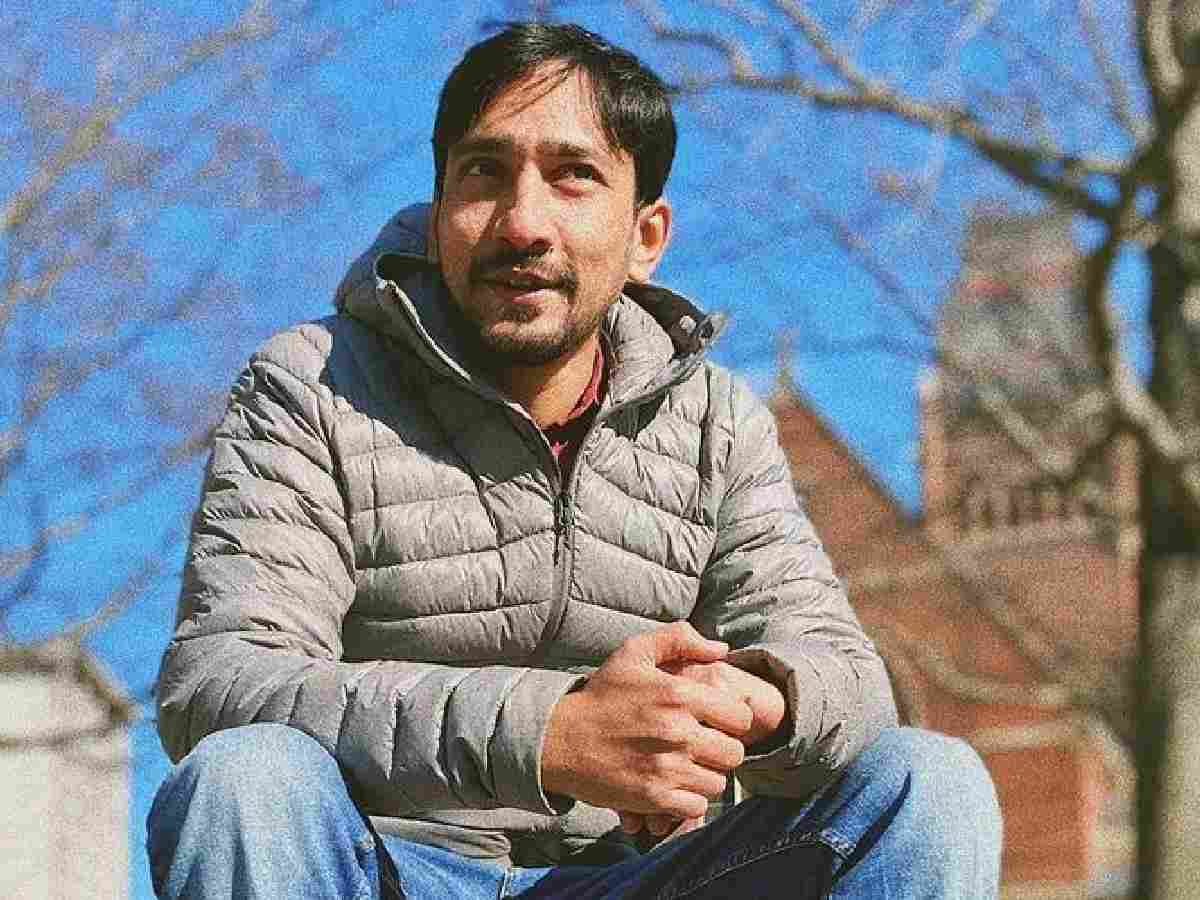
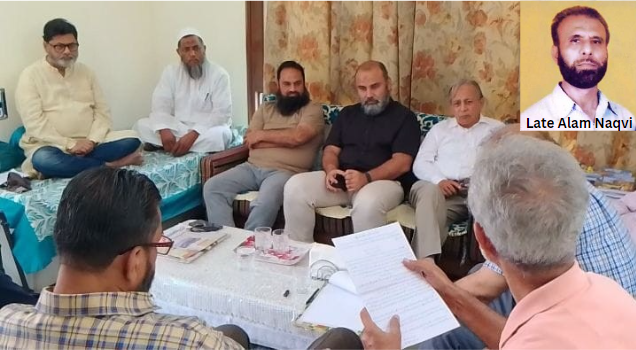
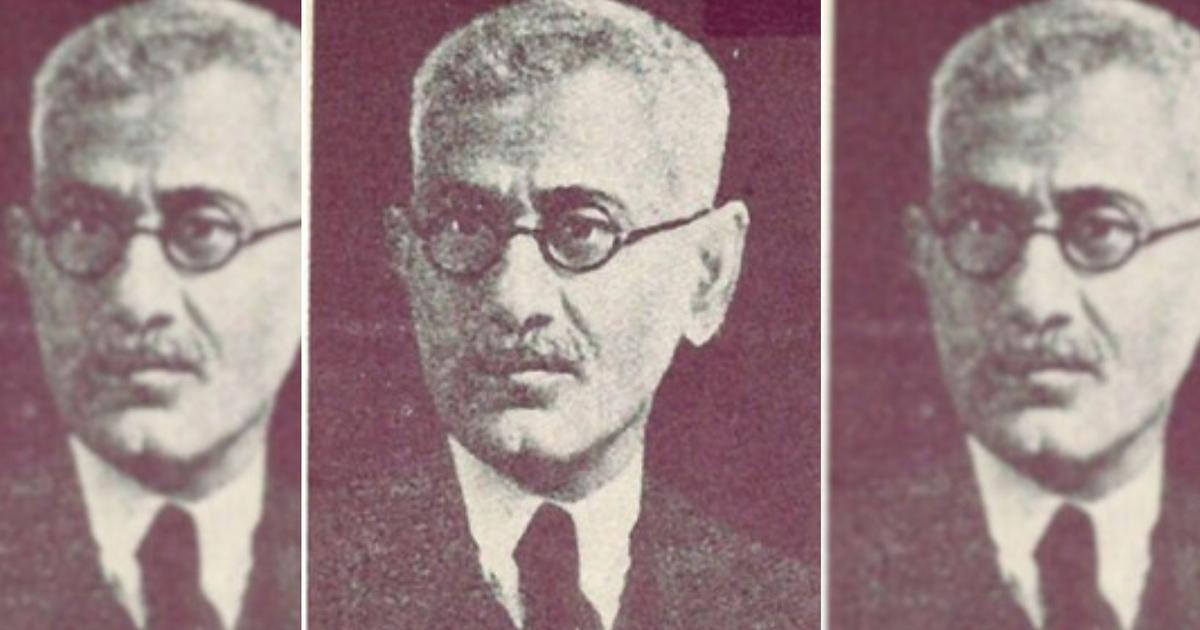
The Urdu scholar community expressed deep grief and regret on the death of the country’s famous playwright and poet Professor Ibne Kanwal and called his death a loss for the Urdu world. Condolences on the death of Professor Ibne Kanwal.
Patna:
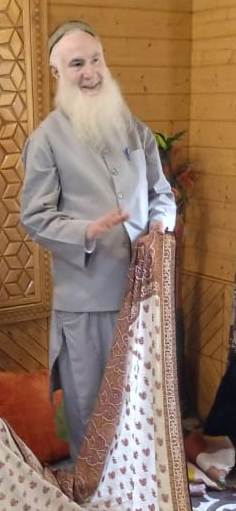
As soon as the news of the death of Prof. Ibn Kanwal (Nasir Mehmood Kamal), the former President of the Urdu Department of Delhi University, fiction writer, dramatist and poet, became public, the literary and academic circles of Dabestan Azeem mourned.
Prof. Ibn Kanwal retired from the Urdu Department a few months ago after teaching for almost 40 years in the Urdu Department of Delhi University.
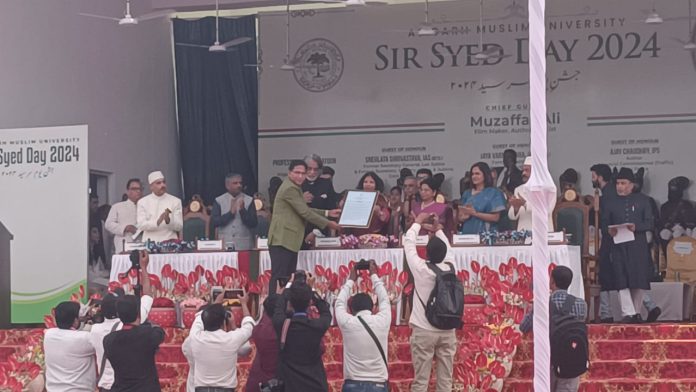
In recognition of his literary services, he has been awarded many honors at home and abroad, including the Sir Syed Award, Kunwar Mahinder Singh Awards, etc.
Prof. Ibn Kanwal’s teachers include Prof. Khurshid-ul-Islam, Prof. Qazi Abdul Sattar, Dr. Khalilur Rehman Azmi, Prof. Shahryar, Prof. Noorul Hasan Naqvi, Prof. Atiq Ahmad Siddiqui, Prof. Manzar Abbas Naqvi, Prof. Naeem Ahmed and Prof. Asghar Abbas.
More than thirty books of Professor Ibn Kanwal have been published. Among them, the people of the third world, Indian civilization in the context of Bostan Khyal, from the story to the novel, closed roads, criticism, and Hussain and Urdu fiction became famous.
Prof. Safdar Imam Qadri, president of the College of Commerce, expressed his condolences on the death of Professor Ibn Kanwal and said that the Urdu world has suffered a great loss due to the death of Ibn Kanwal.
He had made his unique identity among the contemporary fiction writers as well. He said that I had a friendly and brotherly relationship with Ibn Kanwal. He was often met at Aligarh Muslim University, he was a very creative and affable person. His disciples are spread in every corner of the country.
Renowned critic Prof. Aleemullah Hali said that the most important feature of Prof. Ibn Kanwal’s fictions was their narrative color and harmony. He saw the present era from a new angle and used to create his creations accordingly. He had a deep study of stories and stories remained his favorite subject.
Professor Shahab Zafar Azmi, President of the Urdu Department of Patna University, said that many fiction writers who wrote after the eighties wrote fiction in a narrative style, but among them, Ibn Kanwal is unique and prominent. He used to be popular in every gathering due to his good manners and serious nature. He gave many important creations to Urdu literature, by which the Urdu world recognized these abilities. He used to have deep ceremonies with the writers and poets of Azimabad. His sudden death is a great loss to the Urdu world.
source: http://www.etvbharat.in / ETV Bharat / Home> ETV Urdu / by translation from Urdu / February 12th, 2023
Rainbow Peacock Marbled Paper (source: The Whimsical Marbler)
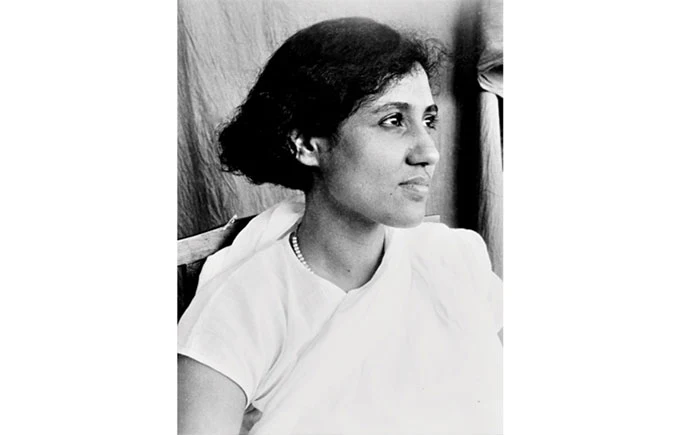
Fatima Alam Ali (1923-2020) was a writer of pen portraits (khaake) and humorous essays (tanz-o-mizah) from Hyderabad. Her work offers an untapped and intimate glimpse into the literary personalities and gatherings that flourished in mid-twentieth century Hyderabad.
Fatima Alam Ali (Source: Asma Burney)
Surprisingly, her writing has not received the proper attention it deserves. This can be attributed to the general neglect of the pen-portrait and non-fiction writing in general in the study of Urdu literature. Most scholarly work and translation has focused on poetry and fiction. However, her work is also neglected, in part due to the triple marginalization that women writers from Hyderabad face—as women, as citizens of a former princely state, and as Urdu writers from the Deccan.
Yaadash Bakhaer by Fatima Alam Ali (Source: Archive.org)
Fatima first began writing at school in Lucknow at the behest of Urdu teacher and writer Razia Sajjad Zaheer. She was later encouraged to continue by Jahanbano Naqvi, another Urdu teacher and writer, when she was at Women’s College (Osmania University) in Hyderabad in the 1940s. Nurtured by a network of women writers, Fatima published widely in newspapers, magazines, and books while also reading her work on All-India Radio and at literary gatherings. In 1989, a collection of her pen-portraits and humorous essays were compiled in a book called Yaadash Bakhaer (“May God Preserve Them”). This text is a rich storehouse of information and insight into contemporary figures living in Hyderabad as well as the reflections of a woman writer coming into her own.
Fatima was the daughter of one of the great Urdu luminaries of the mid-twentieth century, Progressive writer and journalist Qazi Abdul Ghaffar (1889-1956). He began the influential left-wing newspaper Payaam in Hyderabad. Her cheerful and lively personality notwithstanding, Fatima mentions how she felt not only gratitude but also a sense of anxiety about this connection.
Interactions with her father’s peers and members of the Progressive Writers movement were always burdened by the awareness that she was Qazi Sahab’s daughter. She believed that she was respected because of her relationship to Qazi Sahab and not the merit of her own achievements. This left Fatima’s writing dotted with self-deprecating and apologetic comments that gesture towards a certain “anxiety of authorship.” The gendered aspect of this anxiety has been explored by Sandra Gilbert and Susan Gubar in the context of Victorian Women’s writing.
One place this anxiety of authorship appears in Fatima’s work is a long disclaimer she gives about her perceived inability to write about her father. She appeals to her readers that if they do not like her pen-portrait of him, they should forgive her, and if they do like it, then they should attribute it to the “noorani faiz” (luminous grace) of her father. Such prefacing apologies are part of established convention in Urdu and Persianate prose genres (such as the biographical tazkira). However, with women writers, they can be additionally tinged with gendered anxieties stemming from durable patriarchal norms and values.
Fatima’s pen-portraits draw attention to many contemporary Hyderabadi authors. Her portraits bring to life luminaries such as the writer and scholar Agha Hyder Hasan, an old Aligarh connection and dear friend of her father’s, and the scholar Habib ur-Rehman. We also see through her eyes her childhood playmate Ainee, who met her unchanged and with the same affection after a meteoric rise in the literary firmament as Qurratulain Hyder. She remembers Razia Sajjad Zaheer – “a woman in a man’s world” – as a mesmerizing teacher, hardworking mother, talented writer, and maternal figure. Fatima, whose own mother had died soon after her birth, remembers Razia with great emotion and is unable to find the words to describe the love she had given her.
Fatima grew up being mothered by the father figures in her life, an analogy she frequently draws. She describes her unusual and lively relationships with these men, who included, besides her father, her maternal uncles, Agha (whom she called “Chacha”), Habib ur-Rehman (“Baba”), and even Makhdoom Mohiuddin. With Qazi Sahab and Agha, the teenaged Fatima had relationships that were akin to friendships, marked by banter that was strangely grown-up. This was frowned upon in a conservative society that still believed in upholding a certain image of older men as abstract figures demanding veneration and formal distance. Fatima’s banter included teasing her father about the women who would fall for his dashing good looks and jokes with Agha Chacha about her future marriage.
It is not surprising, then, to locate the sense of ease with which Fatima writes and remembers the towering male literary figures of her youth. She writes fluidly and eloquently about them and with the same comfort and affection as she does about Razia Sajjad Zaheer or Zeenath Sajida.
Of particular interest and value in this regard is a memorable essay called “Adabi Mehfil” (“Literary Gathering”) that Fatima wrote – decades later – about an all-male mushaira that was hosted at Qazi Sahab’s home when the Progressive Writers’ Conference took place in 1945. Those who attended included Agha, Makhdoom, Jigar Moradabadi, Fazlur Rehman, Sikandar Ali Wajd, Hosh Bilgrami, Kaifi Azmi, Majrooh Sultanpuri, Ali Sardar Jafri, Ghulam Rabbani Taabaan, Sahir Ludhianvi, and Srinivas Lahoti.
Qazi Sahab could not afford the arrangements that were made in aristocratic homes, so they had only a buffet table under the open night-sky. There were no huqqas, only cigarettes, and the sole accessory demonstrating any continuity from an older tradition of mushaira was the paan that was arranged carefully and offered from a khaasdaan.
Fatima Alam Ali (Source: Asma Burney)
In engaging detail, Fatima introduces us to the august personalities of poets, writers, and intellectuals, as they dine with friends and peers before the mushaira begins. It is in her astute, sympathetic observations of these quintessential performers over dinner that we see their human dimensions, somewhat stripped of the dazzle of celebrity. Indeed, small aspects of their personalities often form the most attractive and compelling features of Fatima’s writing. She explains how they spoke more than they ate, how Srinivas Lahoti took over as host and led people to the table, and how Agha Hyder Hasan, who was unaccustomed to the new culture of buffet dining, sat by himself on a chair and balanced his plate on his lap.
Yet, Fatima writes as much as a fan as the host of such a gathering. She tells us, for example, how she held her breath while Makhdoom recited, afraid to disturb even the air around him. In vivid, engrossing detail, she recreates the charged atmosphere of the mushaira, where “in the Lakhnavi style,” everyone gives way to the others until Qazi Sahab intervenes and directs one of the younger poets to begin.
The euphoria when a striking verse is skillfully recited, the enthusiastic requests for certain well-known compositions, the restlessness when a particularly fraught verse is delivered, the unspoken code of hierarchy and ceremony, and even the specific verses that were produced – all these are represented in sparkling prose and bring the mushaira alive for the reader. What adds to the immediacy and vividness of her writing is that she addresses the reader periodically, saying “just look at this!” or “did you see that?,” transporting the reader to the time of imaginative reconstruction.
At the same time, Fatima does not shrink from criticizing these great men, telling us regretfully that the gifted ghazal proponent Majrooh Sultanpuri is now but a “filmi” poet or that Sahir Ludhianvi was already full of himself before he became famous. Through her sensitive, discerning descriptions of their appearance, temperament, and individual style of recitation, we get an intimate glimpse into their personalities: Majaaz, who was always shy when sober; sleepy, languid, dishevelled Kaifi, who always had a strange glitter in his eyes at mushairas; Jigar’s jaunty self and the errant wisp of hair that peeped flirtatiously from his cap; Sulaiman Areeb, who would cadge cigarettes from an indulgent Qazi Sahab, who in turn would sway in pleasure when Makhdoom sang his best verses; Makhdoom, the people’s poet, who would ask for achaar with his qorma and later be inundated with requests for his verses; and the evergreen wit and flamboyance of Agha, the quintessential Mughal from old Delhi.
Fatima Alam Ali (Artist and Source: Asma Burney)
In engaging detail, Fatima introduces us to the august personalities of poets, writers, and intellectuals, as they dine with friends and peers before the mushaira begins. It is in her astute, sympathetic observations of these quintessential performers over dinner that we see their human dimensions, somewhat stripped of the dazzle of celebrity. Indeed, small aspects of their personalities often form the most attractive and compelling features of Fatima’s writing. She explains how they spoke more than they ate, how Srinivas Lahoti took over as host and led people to the table, and how Agha Hyder Hasan, who was unaccustomed to the new culture of buffet dining, sat by himself on a chair and balanced his plate on his lap.
Yet, Fatima writes as much as a fan as the host of such a gathering. She tells us, for example, how she held her breath while Makhdoom recited, afraid to disturb even the air around him. In vivid, engrossing detail, she recreates the charged atmosphere of the mushaira, where “in the Lakhnavi style,” everyone gives way to the others until Qazi Sahab intervenes and directs one of the younger poets to begin.
The euphoria when a striking verse is skillfully recited, the enthusiastic requests for certain well-known compositions, the restlessness when a particularly fraught verse is delivered, the unspoken code of hierarchy and ceremony, and even the specific verses that were produced – all these are represented in sparkling prose and bring the mushaira alive for the reader. What adds to the immediacy and vividness of her writing is that she addresses the reader periodically, saying “just look at this!” or “did you see that?,” transporting the reader to the time of imaginative reconstruction.
At the same time, Fatima does not shrink from criticizing these great men, telling us regretfully that the gifted ghazal proponent Majrooh Sultanpuri is now but a “filmi” poet or that Sahir Ludhianvi was already full of himself before he became famous. Through her sensitive, discerning descriptions of their appearance, temperament, and individual style of recitation, we get an intimate glimpse into their personalities: Majaaz, who was always shy when sober; sleepy, languid, dishevelled Kaifi, who always had a strange glitter in his eyes at mushairas; Jigar’s jaunty self and the errant wisp of hair that peeped flirtatiously from his cap; Sulaiman Areeb, who would cadge cigarettes from an indulgent Qazi Sahab, who in turn would sway in pleasure when Makhdoom sang his best verses; Makhdoom, the people’s poet, who would ask for achaar with his qorma and later be inundated with requests for his verses; and the evergreen wit and flamboyance of Agha, the quintessential Mughal from old Delhi.
At the same time, she comments on the unreliability and instability of memory, cautioning us that time, place, and people are likely to get mixed up in her writing. And yet, she reveals an astonishing ability to reproduce verbatim specific verses or entire ghazals or nazms that were recited at literary gatherings. This signals how our memories operate, focusing on the enduring impression that certain events and experiences make on us, rather than external or superficial contexts.
Fatima’s pen-portraits are always coloured with expressions of nostalgia and loss and an urgency to record these figures, their work, and their milieu for posterity to ensure that they are not forgotten. In the process, she creates an important “memorative” collection that provides unique information, insight, and perspective upon a particularly important period in the history of Urdu literature.
source: http://www.maidaanam.com / Maidaanam.com / Home / by Nazia Akhtar / October 11th, 2011
By Nazia Akhtar. Nazia is Assistant Professor of Literature at the International Institute of Information Technology, Gachibowli-Hyderabad. Her research interests include the literature and history of Hyderabad, Partition Studies, women’s writing, and comparative literature.
That culinary addition is attributed to Chef Manzilat Fatima’s great-great grandfather Wajid Ali Shah, the Nawab of Awadh.
Chef Manzilat Fatima, April 22, 2024. (image courtesy: Umang Sharma)
Manzilat’s great-grandfather did
On most evenings, Manzilat Fatima’s rooftop restaurant in South Kolkata, aptly named Manzilat’s, is packed with food connoisseurs waiting to taste the incredible dishes she prepares for them. But there is another reason foodies climb four flights of stairs to her quaint little eatery.
An engraving of Nawab Wajid Ali Shah. Pic Courtesy/ Wikimedia Commmons
What Manzilat does, is nothing short of remarkable. Not only does she tantalize the tastebuds of food lovers with exceptional dishes such as Chicken Lazeez Shami Kebab, Lakhnavi Murgh Biryani, or the famed Lakhnawi Mutton Yakhni Pulav – but she also evocatively creates a bridge between the present and the royal past of Wajid Ali Shah, the last Nawab of Awadh.
Manzilat Fatima is the great-great granddaughter of the Nawab who made his home in Kolkata after the British East India Company annexed his kingdom. He gave the culinary world the famed aloo in Biryani.
A descendant of Awadh
“I am a direct descendent of Wajid Ali Shah and Begum Hazrat Mahal ,” Manzilat reveals.
After the annexation, her great, great grandmother Begum Hazrat Mahal who took charge of Awadh, put her son Birjis Qadr on the throne in 1857. Birjis Qudr was the son of Jaan e Alam Wajid Ali Shah and Begum Hazrat Mahal.
Manzilat is the daughter of Dr. Kaukub Qudr Meerza, the grandson of Birjis Qudr, she explains.
Like her pantry, stocked with delectable food, Manzilat is a storehouse of stories and fascinating history.
A conspiracy at play
According to Manzilat, despite having no inheritance, Birjs was still the legal heir of Wajid Ali Shah and Begum Hazrat Mahal.
“Birjs Qadr had a son Mehr Qadr who was my grandfather,” adds Manzilat. “He did not have any siblings growing up. He did have a family, but they were assassinated in cold blood on August 14, 1893.”
Manzilat says that the British invited Mehr Quadr from Kathmandu to Calcutta under a false pretext. “The other descendants of the Awadh royal family wanted to snuff out the last crown king, even though there was nothing to inherit by then.”
There was a deeper conspiracy at play.
A dish of Awadhi biryani (image courtesy: Manzilat Fatima restaurant)
A poisoned dinner
“In order to snuff out this branch they cooked up a conspiracy along with the British and invited him and his family over for dinner where they laced the food with poison. In that tragedy, he, along with a son and daughter as well as his guards and dogs were murdered.”
Only Mehr Quadr’s wife, Mehtab Ara Begum, survived. She was pregnant with Manzilat’s grandfather and did not attend the dinner. “Had she gone for the dinner, the entire course of history would perhaps have been different,” says Manzilat.
Her grandmother, Mehtab Ara Begum, survived along with an unborn child – Manzilat’s father- and a daughter who was four years old at that time. The little girl grew up and married, but died childless. But the lineage of Wajid Ali Shah continued through Mehr Qadr and Manzilat’s father Kaukub Qudr Meerza.
“My lineage shaped me into a very loyal Indian,” she says. “We grew up hearing stories of valor of Begum Hazrat Mahal and Birjs Qadr and how, after 1857, (she) chose to live free in Kathmandu, Nepal. Our history helped us be grounded and honest. We learned the art of sacrifice.”
From lawyer to chef
Growing up, Manzilat heard stories about the tragedy and the conspiracy that destroyed her family – from their time in Lucknow until Birjs Qadr’s assassination, and how her grandfather was protected and grew up very sheltered because of the constant threat to his life.
Being a chef was not always the game plan. Manzilat studied at Aligarh Public School and graduated with an English (Hons) degree from Women’s College, Aligarh Muslim University. She enrolled at Calcutta University for her Master’s in English and a few years after her marriage, even completed a five-year LL.B course in 2002.
Chef Manzilat Fatima (image courtesy: (Umang Sharma)
Manzilat opened the doors to her kitchen to food lovers from all over the world. As the smoke rises from her tender Mutton Awadhi Galwtii Kebab, or tear-drop-shaped condensation rolls down her chilled Khus ka sherbet, or even as patrons savor the pillowy soft aloo in their biryani, Manzilat knows that she has not only served some delectable dishes but offered her guests a panoramic view into the world of her ancestors and what they stood for – the mighty Wajid Ali Shah, the indomitable Begum Hazrat Mahal.
In the fragrant aroma of her kitchen, Manzilat Fatima is the custodian of the legacy of the last Nawab of Awadh. Her guests experience more than just culinary delights; they immerse themselves in a narrative of courage, tradition, and the enduring spirit of Awadh.
source: http://www.indiacurrents.org / India Currents / Home> Food> India> Lifestyle / by Umang Sharma / April 26th, 2024
Their work focused on Muslim women writers and their contributions to magazines in Kerala during the period.
Reading Rumours curators Haneena P A and Jazeela Basheer
Kozhikode :
Victorian-era English novelist and poet Mary Ann Evans famously adopted the pseudonym George Eliot to escape the constraints of social norms and patriarchy.
As times changed, female writers increasingly gained the courage to publish under their own names. However, in Kerala – a region still grappling with significant gender disparities – women defied the odds and entered the publishing industry as early as the 1900s. Yet, tracing the contributions of some, particularly Mappila women, proves challenging.
The exhibition titled Reading Rumours, held at Silk Street in Kozhikode, shed light on the hidden history of women’s involvement in Kerala’s print culture between 1900 and the 1950s. Curated by research scholar Haneena P A and exhibition designer Jazeela Basheer, the event is the result of two years of research by the collective Around The Sufrah. Their work focused on Muslim women writers and their contributions to magazines in Kerala during the period.
“Print culture flourished in Kerala from 1900 to 1950, and readership grew. But the contributions of women writers from this era have largely been overlooked,” Haneena told TNIE.
“Reading Rumours brings together the micro-histories of these women writers, encouraging visitors to engage with their stories and legacies.” The title, Reading Rumours, symbolises women’s quest for knowledge and their fight for recognition.
“Rumours are often seen as statements without a reliable source of truth, frequently associated with women. Much of women’s knowledge, history, and experiences are dismissed as mere gossip. The title is also a play on the traditional vayanashaala, or reading rooms, where men would gather to read and discuss,” Haneena explained.
The idea for Reading Rumours originated from a desire to present Haseena’s postgraduate thesis in a more accessible, popular format.
“This exhibition is an extension of my thesis, which focused on Mappila women in print. We are generally aware of only a handful of female writers from the early 1900s, but my research uncovered around 25 Muslim women who were actively involved in writing for magazines and other publications,” she said.
The three-day exhibition, which began on October 4, received enthusiastic support from the public. “The response has been overwhelming,” Haneena noted.
“Many visitors expressed surprise at discovering the significant role Muslim women played in Kerala’s early print culture,” she said.
source: http://www.newindianexpress.com / The New Indian Express / Home> Kerala / by Lakshmi Athira / October 07th, 2024
Oral historian Sohail Hashmi into a new wave of dissent in Urdu poetry at a Delhi workshop earlier this month. ‘It’s asking important questions, raising serious issues.’
Heritage conservationist Sohail Hashmi reading out poems by contemporary Muslim writers at his Urdu poetry workshop earlier this month | Photo: Heena Fatima | ThePrint
New Delhi:
In a quiet corner of Delhi’s Neb Sarai, a small band of Urdu poetry lovers gathered for an evening of verse. But this time, it wasn’t love or heartbreak in the air—it was words of protest, identity, and defiance.
At his Urdu poetry workshop at the NIV Art Centre on a September Sunday, oral historian and heritage conservationist Sohail Hashmi skipped nostalgic classics by the likes of Rahat Indori, Parveen Shakir, and Munawwar Rana. Instead, he chose hard-hitting political poems by contemporary Muslim poets to demonstrate how modern Urdu poetry is changing.
“After the 1992 Babri Masjid incident, there was a major shift in Urdu poems. Urdu poets are now questioning the dominant narrative constructed in the society about minority communities,” Hashmi told ThePrint.
Seated on a plush blue chair placed on a Persian rug, Hashmi explained to the audience that Urdu nazms (poems) have become a space for protest. He said there are two broad streams of Urdu poetry.
The first category includes poetry with beautiful rhymes and words, making it easy for readers to remember. Its main themes revolve around love and the pain of separation.
The second category, which he called “poetry of thought”, tackles deeper, more serious issues.
“This poetry is asking important questions, raising serious issues,” Hashmi said. “And it’s the kind of poetry that the mainstream does not acknowledge.”
Throughout the workshop, Hashmi let the poetry speak for itself by reciting works from several contemporary poets, including Ibn-e-Insha, Gauhar Raza, Nomaan Shauque, and Ikram Khawar.
‘Blunt and merciless’
New Urdu poetry is more about thought than pure emotion. This poetry, said Hashmi, is both a political commentary and a snapshot of “new India” through Muslim eyes. And many poems address the “Muslim identity crisis”.
One such poem, by Ikram Khawar, is titled Haan Main Musalmaan Hoon (Yes, I am a Muslim). Hashmi picked up a volume from the table and read aloud:
Haan main musalmaan hoon
Nahi kahoonga main, jaise tum insaan ho
Bagair kisi sharm ya duhai ke,
Bagair kisi safai ke
Main khud ko dekhne se inkaar karta hoon, tumhari aankh se
(Yes, I am a Muslim
I won’t say, like you, that I am human
Without shame or plea,
Without any justification,
I refuse to see myself through your eyes).
After finishing the poem, Hashmi explained that it rejects the imposed, stereotypical image of Muslims and challenges the dominant narrative. The refusal to see oneself through the lens of others, he said, is an act of defiance.
One woman in the audience expressed concern: “That’s the protest in the poem, but this kind of poetry is being pushed out of the mainstream.”
Hashmi, however, countered that while this poetry may not be amplified in popular culture, it has become the dominant voice in contemporary Urdu literature.
“Genuine poetry rarely reaches mainstream platforms—it doesn’t appear on news or TV channels. Instead, it finds its place in literary magazines and circles, and thrives in poet gatherings,” he said.
He added that much of what gets wider exposure is often confined to superficial themes, while deeper, uncomfortable subjects in Urdu and Hindi are pushed into niches where they are appreciated only by a few.
Hashmi then recited Nomaan Shauque’s Lakshman Rekha, a poem that asserts free will in a time when even personal choices—like diet—are policed. It strikes a rebellious note:
Nahi, aap nahi samjha sakte mujhe jeene ka maqsad
Nahi bata sakte, kitni door tehelna
Kitni der kasrat karna zaroori hai, tandrust rehne ke liye
Khane ke liye, gosht munasib hai,
Ya saag, sabziyan
Rone ke liye munasib jagah, daftar hai ya bathroom,
Mujhe samjhana mushkil hai
(No, you cannot explain the purpose of my life to me.
You cannot tell me how far to wander
Or how long to exercise to stay healthy.
Whether meat is suitable for eating,
Or if vegetables are better.
Where it’s appropriate to cry, whether an office or a bathroom.
It’s difficult to explain these things to me).
Hashmi pointed out that poems on victimhood and oppression are becoming less common in Urdu. While these performed a cathartic role for those feeling helpless due to the “government’s marginalisation of minorities”, there’s a new trend now.
“Urdu poetry is moving away from generality toward specificity,” he said. “These questions (in poems) are very direct, addressing the issue bluntly and absolutely mercilessly.”
Shrinking spaces, empty chairs
The COVID-19 lockdown, the Citizenship Amendment Act (CAA), and the rise of religion-based politics have given poets new urgency. Across languages, from Urdu and Hindi to Oriya, poetry has become a space for asking hard questions, according to Hashmi.
Hashmi recited Darsgah (Academy), a poem by scientist Gauhar Raza, which addresses the 2020 attack on JNU students during the anti-CAA protests:
Darsgahon pe hamle naye to nahin
In kitabon pe hamle naye to nahin
In sawaalon pe hamle naye to nahin
In khayalon pe hamle naye to nahin
Gar, naya hai kahin kuch, to itna hi hai
tum mere des mein laut kar aaye ho
par hai surat wahi, aur seerat wahi
sari vehshat wahi, sari nafrat wahi
kis tarha chupaoge pehchan ko?
gerue rang mein chup nahi paoge
(Attacks on colleges are not new, Attacks on books are not new, Attacks on questions are not new, Attacks on ideas are not new. If something is new, it is only this:
You have returned to my country, But the appearance and character remain the same, The same savagery, the same hatred. How will you hide your identity? You cannot conceal it in the colour saffron).
Hashmi then criticised Hindi kavi sammelans (poetry conventions), for promoting misogyny. He said many of these events focus more on storytelling than actual poetry.
“They mock overweight, bald, and dark-skinned people. The audience claps along claps and enjoys it without questioning,” he said.
He also weighed in on the erosion of literary spaces— Hindi and Urdu poets are emerging and voicing dissent but they struggle to find a platform. Because many publishing houses are shutting down or playing it safe, and demand for books is low, many new writers have to pay to get their work published.
Ironically, Hashmi’s event had a low turnout, with only five attendees—something that surprised the organisers. Aruna Anand, co-founder of the NIV Art Centre, told ThePrint that their monthly art sessions are usually full, attributing the empty chairs to the wider crisis confronting the Urdu language.
But Hashmi was not overly perturbed. He argued that poetry that addresses deep social questions will ultimately prevail and even revive the language.
“The poetry of thought is the poetry that eventually survives,” he said.
(Edited by Asavari Singh)
source: http://www.theprint.in / The Print / Home> Features> Around Town / by Heena Fatima / September 28th, 2024
Have you walked through India’s first art district of Lodhi Colony in South Delhi where high walls along streets come across as vibrant art works? The man behind this and the street art movement of India Hanif Kureshi is no more; he passed away on Sunday at 41.
Hanif, an alumnus of the Baroda Art College died of cancer leaving behind a culture of vibrant public spaces and colourful neighbourhoods across India.
A wall in South Delhi’s Lodhi Road created by Kureshi
Kureshi’s quest for vibrant neighborhoods brought him to Lodhi Colony in Delhi in 2013, where the high walls and pedestrian-friendly lanes became a canvas for murals that quickly captured the community’s attention.
His death was announced on Instagram. The post read: “Hanif Kureshi, the man behind the Amazing street art you see across India has passed away…”
“Hanif Kureshi (@hanifkureshi) will forever be remembered as a visionary artist who transformed the urban landscape, one wall at a time.
After transitioning from advertising, Kureshi took the lead in shaping India’s modern street art movement and reviving the fading art of hand-painted typography.
An art work created by HanifHanif Kureshi in Chennai
Through St+art India (@startindia), Kureshi and his co-founders built a community of urban artists whose projects have revitalized cities across India, turning public spaces into cultural landmarks. From the vibrant Sassoon Docks in Mumbai and the iconic Lodhi Art District in Delhi to Kannagi Nagar in Chennai, the Serendipity Arts Festival in Goa, and international showcases like the London Design Biennale, Venice Biennale, and Centre Pompidou, Kureshi’s artistic imprint is unmistakable.
In light of his untimely passing, we reflect on the enduring legacy Kureshi leaves behind—on walls, in typographic art, and throughout neighborhoods and communities nationwide.”
Hanif Kureshi co-founded St+art India and started giving shape to his vision in 2013. When he started transforming public spaces into vibrant canvases, he could not have anticipated the profound impact it would have across the nation.
Asian Paints posted this image of Kureshi’s work on X:
@asianpaints / The MTNL building in Bandra has a shiny new coat of paint. Love the work by @StartMumbai / December 09, 2014 / 4.55 pm
This young visionary artist devoted his life to making art accessible to everyone. “Our aim is to make art more accessible. When you are working in an art gallery, your concerns are different, but this is art on the streets for everyone,” he said in an interview.
Kureshi was behind popularizing street art in India and setting up a model that has inspired countless artists.
According to Storyboard 18, art curator Rahul Bhattacharya, a close friend and former classmate at Maharaja Sayajirao University in Baroda, reflects on Kureshi’s unconventional approach: “He was constantly exploring new avenues.”
His journey began with an interest in sign-board painting and hand-lettering, leading him to seek out local sign painters and eventually digitzing their unique styles under the banner of HandpaintedType.
He launched St+art India as a not-for-profit organization dedicated to creating public art projects.
Kureshi’s first project was Lodhi Colony in Delhi where the high walls and pedestrian-friendly lanes became a canvas for murals that quickly captured the community’s attention.
Gupt Dwar by Kureshi’s NGO in Lodhi Colony
Gond artist Bhajju Shyam, who collaborated with Kureshi in Lodhi Colony, remembered him as modest and patient. “He was extremely sincere and listened to constructive feedback during our discussions,” Shyam noted, highlighting Kureshi’s collaborative spirit.
Kureshi’s St+art India has since organized numerous art festivals and painted murals across cities like Mumbai, Hyderabad, and Chennai, inviting both local and international artists to contribute. Kureshi was actively involved in his project including the installation at the Sassoon Dock Art Project in Mumbai.
Kureshi’s influence extended beyond borders afters he showcased his work at prestigious venues including the London Design Biennale and the Venice Biennale-. His recent solo exhibition at Wildstyle Gallery in Sweden in June 2023 impacted the world of art globally.
source: http://www.awazthevoice.in / Awaz, The Voice / Home / posted by Aasha Khosa, ATV / September 26th, 2024
A group of nine Class 8 students took part in this tour under the guidance of their Hindi teacher, Shareef Ahmed.
Class 8 students of Zilla Parishad High School (ZPHS) in Mallapur, Thimmapur mandal, Karimnagar district, along with their Hindi teacher during an educational tour in New Delhi.(File Photo)
Karimnagar :
Students from the Zilla Parishad High School (ZPHS) in Mallapur, Thimmapur mandal, recently embarked on an educational tour to New Delhi, where they had the opportunity to visit some of the nation’s most iconic historical and cultural landmarks.
A group of nine Class 8 students took part in this tour under the guidance of their Hindi teacher, Shareef Ahmed. The group explored sites such as the Red Fort, Lotus Temple, Qutub Minar, India Gate, Parliament, Rashtrapati Bhavan and Akshardham temple.
Part of Hindi curriculum
Shareef told TNIE that this trip was part of an experiential learning initiative, directly tied to the Class 8 Hindi curriculum, which referenced many of the historical landmarks the students visited. “We aimed to bridge the gap between book learning and real-world experience. I explained each site, connecting the theoretical knowledge from the textbooks with practical insights,” he said.
The trip helped the students gain a deeper appreciation of India’s rich cultural heritage, the teacher said, adding that by walking through these historical monuments, they developed a personal connection with the history the students had studied in class.
The students expressed immense joy, particularly when witnessing structures like the Red Fort and Qutub Minar. Visits to spiritual places such as the Akshardham and Lotus temples added another dimension to their tour, they said.
source: http://www.newindianexpress.com / The New Indian Express / Home> Good News / by Naveen Kumar / October 06th, 2024
Abid, a painter, puts immense effort to help bring back stranded people to India, the act which brings cheers to the families. He has mastered the skill, how to deal with embassies, journalists, officials and celebs to raise each issue and bring back the lost person.
Syed Abid Hussain
Bhopal:
A man has been quietly helping Indian citizens caught in difficult circumstances in countries across the world for years.
Known for lending a helping hand to any family whose kin is trapped far away, he uses all his links and puts energy into the efforts to bring the person back home.
Syed Abid Hussain has mastered the skill to deal with the bureaucracy in different countries and with the use of social media, reunites such people with their families.
By profession, Abid is neither a bureaucrat nor a politician, who has contacts and departments to follow their instructions but he is just a painter and single man army.
And even not being associated with any government organisation, he has so far helped hundreds of people stuck in countries spread over the Middle East, West Asia, Europe and other parts of the world. Abid keeps getting calls and messages from families who have their kin caught in a country and even those whose whereabouts are not known.
The ‘Mesiah’ has developed a style of his own to resolve these cases. Whether it’s the case of a person who is untraceable or has been kept unlawfully by someone in a foreign land, Abid uses social media, particularly Twitter, to bring focus on the disappearance of the person or his plight. He tags officials of the particular country, their embassies and the Indian Embassy.
He also messages prominent personalities of the particular country, including peaceniks or activists, film actors, journalists and urges them to raise the issue. Subsequently, it comes in media in those countries, gets attention and opens the door to the person’s return.
During the Russia and Ukraine crisis, he helped dozens of youth to return with his efforts.
“I don’t have a strong financial background but I never take a penny for this work. It’s just for the sake of humanity and social work”, he says.
The number of people Abid helped bring back to the country is uncounted now. “I don’t do it for any number or statistics, I stopped counting, the figure is more than 500,” he says. “Whenever I get a call I start working on the mission. I feel that the victim’s family must not get depressed and lose hope”, he adds. One of the first cases that brought him nationwide attention was when he helped the family of a missing boy, Kailash Arjunwar.
“I found through a newspaper report about Kailash, who is from Madhya Pradesh that he had somehow overstayed on the other side of the border and was caught, and kept in jail. I began my efforts. After a long process, Kailash was rescued with the help of the foreign ministry. I constantly kept raising his issue until it got resolved”, he recalled.
Recently, Abid helped get 12 people from a country in West Asia to return to India. These people, Harendra Ram, hails from Siwan (Bihar), Jai Soorat (Ghazipur), Dharmendra Kumar (Deoria), Sheetal Singh (Kapurthala), Husan Lal (Jalandhar), Surendra Verma (Sant Kabir Nagar), Ved Prakash (Kushinagar), Hardas Prakash (Ghazipur) and Shiv Locahn of Mau along with others were reunited with their families.
From yet another country, he helped bring 48 persons back to India, in January. A painter by profession, he was born in Faizabad, UP.
Abid, 38, says that when he started helping people stuck in foreign lands, he came to know about a lot of factors, especially how some people who are less educated are fooled by their employers or agents who take them to those countries but they end up working as bonded labourers sometimes & are even not allowed to contact families.
When Abid comes to know about a family that has a person ‘lost’ in a country, he takes documents and contacts the government, foreign ministry, the particular country’s consulate and embassies in both countries. Mostly he manages to get them returned. Former Minister for External Affairs Sushma Swaraj also used to know him for his efforts. Sandeep Kumar, who was helped rescued by Abid recalls, “Our company had promised a job in the construction sector. After paying money to the agent, we were cheated.” “Our families told Abid bhai, who started the campaign because we couldn’t do anything. He also ran a hashtag to save us and this led to action (return),” says Sandeep, who is thankful to the activist for his role.
In the case of Babar Ali, who was stuck in Mozambique, the family approached Abid. “Babar was promised a big salary but when he reached there, he was not paid and made to work 18 hrs daily apart from harassment and torture”, said his family members. “He made a video and managed to send it. Then Abid took up the case and the Embassy acted, bringing Babar back”, a family member mentioned.
Abid has been felicitated many times and got awards too for his work.
Abid has been affectionately called ‘Bajrangi Bhaijan’ because of the movie and the similarity of his work with the Salman Khan starrer Bollywood flick.
source: http://www.enewsroom.in / eNews Room India / Home> Freshly Brewed> Madhya Pradesh / by Shams Ur Rehman Alavi / February 02nd, 2023
The cemetery and those who lie buried in the soil of time and fate are the witness to the the lost romance, their epitaphs bear a testimony to a history of prose and poetry.
The forgotten poet cemetery of Kashmir / Photo: Shakir Mir / Internet
خاک میں کیا صورتیں ہوں گی کہ پنہاں ہو گئیں
(In the soil- what faces must be hidden)
Beauty finds its way at odd places; away from the flamboyant commotion of Boulevard, far from the amorous colours of Zabarwan and distant from the prospects, perspectives and spectre of present. Beauty finds its way at odd places: along the sombre shores of the lifelessness, in the weed, litter and rubbish of a graveyard, the withered tombstones of a cemetery,
The Cemetery of the Poets
The cemetery and those who lie buried in the soil of time and fate are the witness to the the lost romance, their epitaphs bear a testimony to a history of prose and poetry.
Laala tooram, na humchoon ghuncha gulboo zadaem
Shaula jae bakhya bar chaak-e-gereban meezenam
(I am the Tulip of Sinai and not the bud borne of a rose
To my torn collar, I apply the needle of my fire to stitch it)
Cries out poet Mazhari, having penned down 6000 Persian verses throughout his travels from Iran, Khorasan, Hindustan to Kashmir, but now lost in graves and indifference of another necropolis, Malkhah.
Founded in year 1587 C.E during by the Mughal emperor Akbar, the cemetery of poets, also called Mazar-e-Shoara is situated along the banks of Dal Lake. The burial ground for the once eminent poets seems to have been selected carefully to give the dead souls a serene eternal sleep. The historical records show that there were five poets and men of letters buried in the cemetery, all of them the eminent avant grade of Iran, associated with the literary upper class of Mughal court. However, as of today only three of the tombstones can be located in the mazar, rest covered in debris of time and apathy.
There seems to be some confusion regarding the first grave in the cemetery, largely appearing due to the mistakes in copying the previous historical accounts. In this regard the first reference comes from the great historian and author, Mohammad Azam Dedmari in his Waqiat-e-Kashmir. Dedmari was a scholar, researcher, and also a poet of his time and was born during Aurangzeb’s era when Abu Nasr was performing the duties of sobedar (Governor) of Kashmir. Therefore, due to his temporal proximity to the rule of Akbar and his other meticulous documentations, his record can be taken as more authentic.
According to him the great Iranian savant and scholar of his time, Shah Fatehullah had come from Iran to Deccan. According to M. A Alvi and Abdur Rahman’s seminal work, “Fathullah Shirazi: The great Indian scientist of 16th century” and Mohammad Akmal Makhdum’s, “A Great Man: Shah Fateh Ullah Shirazi”, Fatehullah was brought up in Shiraz and learnt under great teachers like Kamal-ud-din Masood Sherwani and Khwajah Jamaluddin Mahmud, a disciple of the logician Jalal-al-din-Davani. Shirazi furthered his knowledge in medicine, mathematics, and science under the instruction of Mir Ghayasuddin Mansur. After completing his education, Shirazi embarked on a career in education in Shiraz. Among his notable students was Abdul Rahim Khan-i-Khanan, who served as the close confidant of the Mughal Emperor Akbar. In 1583, Shirazi received an invitation from Mughal Emperor Akbar and subsequently joined the imperial court in Agra.He soon earned the title of Amir and a rank (mansab) of 3000. Two years later, in 1584, Akbar appointed him as the Amin-ul-Mulk, also known as the Trustee of the State.Shirazi’s first task was to reexamine and rectify the Mughal Empire’s vast transaction records, which he accomplished with diligence and success. Along with his administrative work, Shirazi also undertook the task of regulating the intrinsic and bullion values of coins. He identified and corrected discrepancies in the currency, ensuring its reliability and trustworthiness. Shirazi’s skills and talents also earned him various honors and titles. In 1585 and 1587, the emperor selected him to lead diplomatic missions to the Deccan, where he was recognized for his efforts with the title of Azud-ud-Dawlah, or the Arm of the Emperor. He also received a horse, 5000 rupees, a robe of honor, and the office of the Chief Sadr of Hindustan.
A great poet, he also made significant contributions to the fields of philosophy and logic, particularly in his work, Takmilah-i-Hashiyah. Additionally, he played a crucial role in compiling the Tarikh-i-Alfi, a thousand-year history of Islam, demonstrating his vast knowledge in the field of history.
Page of disasters, from Tarikh-i-Alf
One can try to estimate the scholarship of Shah Fatehullah by the brief introduction Abul Fazal (Grand Vizier of Emperor Akbar the Great) writes about him. Abul Fazal being a royal minister and himself a great scholar did not recognise anybody at par with his own scholarship, but about Shah Fatehullah he writes:
“if all the books of all the subjects and sciences and crafts are destroyed then Shah Fatehullah, with his scholarship and knowledge, and with his memory, will create a parallel new library of books.”
Emperor Akbar mourns his death in following words:
“Had he fallen in the hands of Franks and had they they demanded all my treasures for him, I would gladly have entered such profitable traffic and brought the jewel cheap”
Shirazi was a great inventor and is credited with numerous innovations like improved cannons and guns, wagon mllls, mirrors that would make far things appear closer, travelling baths etc.
Two references are made to the death of Shah Fatehullah by Kashmiri scholars, one by Dedmari who says that he developed Typhoid and self treated it by over-eating Harisa. Another reference is made by Hassan Kuehami in his Tareekh-e-Hassan in which he refers to him (probably mistakenly) as Shah Abu Fateh and cites tuberculosis as his cause of death. The mistake (viz a viz name) seems an error while copying from Waqiat-e-Kashmir, where a poet called Mir Abu Fateh is mentioned immediately after Fatehullah, whom Kuehami seems to have skipped and probably mixed with the former. The location of his burial is mentioned atop Takht-e-Sulaiman, in Mazar-e-Shoara.
M.A Alvi and Abdur Rahman refer to Abdul Qadir Badaoni’s, Muntakhab-ut-Tawarikh, which narrates a story similar to that of Dedmari in which Fathullah Shirazi dies because of over-eating porridge made of meat while having an episode of febrile illness. But there is a very important historical fact that is referred to in this version. According to them Fathullah was buried on koh-e-sulaiman, in the monastery of Sayyid Ali Hamadani. However, today we do not know any such monastery that exists on koh-e-sulaiman (or takht-e–sulaiman). So could this be reference to the lost monastery of Sayyid Ali Hamadani’s student Mohammad Ismael Kubravi which is historically known to exist around the same place. It was a matter of reverence to teachers that the students would name their schools and shrines after them. The great scholars would be buried in graveyards adjacent to these monasteries. So, is the location of the Mazar-e-Shoara the place where the monastery of Mohammad Ismail Kubravi actually stood?
(The lost monastery has a history of its own, allegedly destroyed by Chak rulers, the location where it stood has been a centre of academic debate in archaeological and academic circles.)
Cemetery
Second grave in the cemetery is of Haji Jan Muhammad Qudsi Mashadi popularly called Qudsi Mashadi. He was a native of the Mashhad in Iran. He joined the court of the Mughal emperor Shah Jahan where he rose to become Malik-al-Shura (poet laureate). It is said that Mughal empire had Qudsi weighed in gold, which was then presented to him as a reward for his poetic excellence. On the occasion of the installation of the famous Peacock Throne in 1635, for example, Qudsi composed a dedicatory chronogram that was cast in glazed tile and inserted inside the throne canopy. Qudsi wrote several topographical poems as well, the most famous of which is his description of the journey to Kashmir.
When his son Mohammed Baqir died in the prime of his youth in Mashhad, Qudsi was heartbroken and decided not to go back to his native land but remain in India. Later he settled permanently in Kashmir. His works includes the poetical composition Zafarnama-yi Shahjahani, devoted to the king’s conquests, containing some 7000 rhymed couplets, and covering the first fourteen years of Shah Jahan’s reign and is by far Qudsi’s longest work, though it remained incomplete at the time of his death it was later completed posthumously by Kalim Kashani; a mathnawi entitled Wasf-I Kashmir. The poet remains buried in the Mazar-e-Shoara.
The third poet lying at rest in the graveyard is Abu Talib Kaleem. A native of the Persian city of Hamadan when Abu Talib Kaleem heard about Qudsi’s reception at the court of Shah Jahan, he was perturbed and said, “The man who was to be held by neck, it is strange, was weighed in gold”. He travelled Deccan and other Indian cities and later became a courtier of the Emperor at Shahjehani Darbar. Kaleem soon attained fame as a poet. The great Urdu poets Sauda and Mir Taqi Mir have written Tazmeens (poems formed by inserting verses from another’s poem) of his ghazals. Kaleem was assigned the task of writing a history of the Mughals, Padshah Nama or Shahnama Shaham Chugtia, in poetic form and sent to Kashmir so that he could do his work undisturbed. Hw wrote qasidas and mathnawis about every important event of his time, be it the fight of young Aurangzeb with an infuriated elephant, the famine in Deccan or his visit to a paper mill in Kashmir. He also composed a poetic chronicle sahgihannama Like Qudsi, he was a great admirer and friend of Ghani Kashmiri who wrote an elegy on his death (in 1650 C.E) in which he also remembered Qudsi and Saleem as great and noble poets. In the elegy he compared his friend to Moses ‘Kalimullah”, the pen being his miraculous rod, and gives chronograph of his death in the line:
The Sinai of inner meaning became radiant by Kalim
The fourth poet, another native of Iran, Mohammed Quli Saleem went to India in the reign of Shah Jahan. He joined the court of the prime minister Nawab Islam Khan. He was a man of high poetic calibre and is famous for his works ‘mathnawi-qadha-wa-qadar’ and another mathnawi in praise of Kashmir. Saleem was accused by the Iranian poet Sa’ib of plagiarising his poetry. During his stay in Kashmir he fell ill and passed away to be buried in the cemetery of the poets.
The last poet buried in the graveyard is Tughra Mashadi. Nothing is known of Tughra’s childhood and youth, other than that he probably was born in Mashad. Tughra moved to Mughal India and the court of Jahangir towards the end of the latter’s reign. During the reign of Jahangir’s successor, Shah Jahan, Tughra joined the court of one of Shah Jahan’s sons, Murad Bakhsh, and accompanied him on the Mughal campaign in Balkh (1646). Although unsuccessful, this campaign is nonetheless commemorated by the poet as a victory in his panegyric to Murad Bakhsh, Mir’āt al-futūḥ (Mirror of victories), which appears near the end of the present collection. Tughra subsequently settled in Kashmir, where he lived in a shop at Rainawari on the banks of Nayidyar canal, where he died in solitude. Tughra composed verse in all the popular forms of Persian poetry, but he is most famous for his prose works known as risālahs (epistles) which include Risālah-ʼi Firdawsīya and Mir’āt al-futūḥ.
Every grave in the cemetery has thousands tales to tell. Every epitaph bears signs of a glorious past. However, today the cemetery, just like our past, lies in shambles, withered and perishing.
References:
Waqiat-e Kashmir by Muhammad Azad Dedmari
Tareekh-e-Hassan by GH Khuehami
Muntakhab-ut-Tawarikh by AQ Badyuni
The Islamc literature of India by Annemarie Shimmel
Haji Jan Muhammad Qudsi by Prof. Zia-i-Ahmad
Fathullah Shirazi: A Sixteenth Century Indian Scientist by MA Alvi
A Great Man: Shah Fateh Ullah Shirazi by MA Makhdum
Encylcopedia Iranica
source: http://www.outlookindia.com / Outlook / Home> Culture & Society / by Khawar Khan / October 06th, 2024
Humayun World Heritage Site Museum in New Delhi opened for visitors on Tuesday
Latest addition to 16th-century tomb complex ‘brings alive 700 years of heritage’
Visitors look at artifacts at the Humayun World Heritage Site Museum — the newest addition in Humayun’s Tomb complex — in New Delhi on July 29, 2024. (AN Photo)
The second Mughal emperor Humayun was widely known as an avid reader fond of journeys, architecture, and storytelling. Almost half a millennium after his death, a new museum in the heart of New Delhi highlights his role in shaping India’s cultural heritage.
Opened for visitors on Tuesday, the Humayun World Heritage Site Museum is the newest addition in Humayun’s Tomb complex — a landmark 300-acre area in New Delhi’s Nizamuddin that features dozens of historical monuments and includes Sunder Nursery, a 16th-century heritage park.
The advent of the Mughal dynasty, which ruled the Indian subcontinent between the 16th and 19th centuries, marked the global revival of Islamic architecture, with works that until today are examples of the highest quality and refinement.
Originally from Central Asia, the Mughals carried cultural elements borrowed from Arabs, Persians and Ottomans. As they settled in India, they fused these with the various local styles found in their new domains.
Humayun was the son and successor of Babur, founder of the dynasty, and ruled the empire from 1530 to 1540 and again from 1555 until his death the following year.
The new museum, established by the Agha Khan Trust for Culture and the Archaeological Survey of India, traces Humayun and his descendants’ lives, as well as the 700-year-old history of the whole Nizamuddin locality and its influence on Indian culture.
“There are hundreds of stories to be told, which the stones don’t speak,” Ratish Nanda, conservation architect and projects director at the AKTC, told Arab News. “The idea is to bring alive 700 years of heritage.”
The museum is located in Humayun’s Tomb, a UNESCO World Heritage Site, and the first of the grand mausoleums that became synonymous with Mughal architectural innovations and, three generations later, culminated in the construction of India’s most iconic monument, the Taj Mahal. About 7 million tourists from across India and abroad visit the complex every year.
“The idea is that people who now visit the World Heritage Site come with a deep understanding of the site,” Nanda said.
“We’ve been able to … combine architectural elements with incredible manuscripts, miniature paintings, calligraphy, textiles, coins, metalware, architectural elements — one is two one scale — with lots of films and digital technology, and models and so on.”
Spanning five galleries, the underground museum has over 500 artefacts sourced from the collections of the National Museum in New Delhi, ASI and AKTC.
“It captures the 700 years of history that is associated with the region of Nizamuddin and the World Heritage site of Humayun’s Tomb …This museum really captures the history,” said Ujwala Menon, AKTC conservation architect.
“The principal gallery talks about Humayun. There’s very little known about this emperor, and one of the things with this museum is to really address that … Then we have a second section of this gallery which talks about the personalities that are associated with Nizamuddin.”
Among the famed figures featured in the second gallery are Nizamuddin Auliya and Amir Khusro. Auliya was an 13th-century Indian Sunni Muslim scholar, Sufi saint of the Chishti Order, and is one of the most famous Sufis from the Indian subcontinent. His shrine and tomb are located near Humayun’s complex.
Khusro was a 13th-century poet and scholar who remains an iconic figure in the culture of the subcontinent.
Both Auliya and Khusro lived during the period of the Delhi Sultanate, which Humayun’s father conquered, leading to its succession by the Mughal empire. The museum shows how the empire did not come to its bloom in a cultural vacuum, but drew from and incorporated the culture of its predecessors.
“There was this idea of pluralism that existed during the Mughal period,” Menon said. “And this (museum) really captures all of that.”
source: http://www.arabnews.com / Arab News / Home> World / by Sanjay Kumar / July 31st, 2024