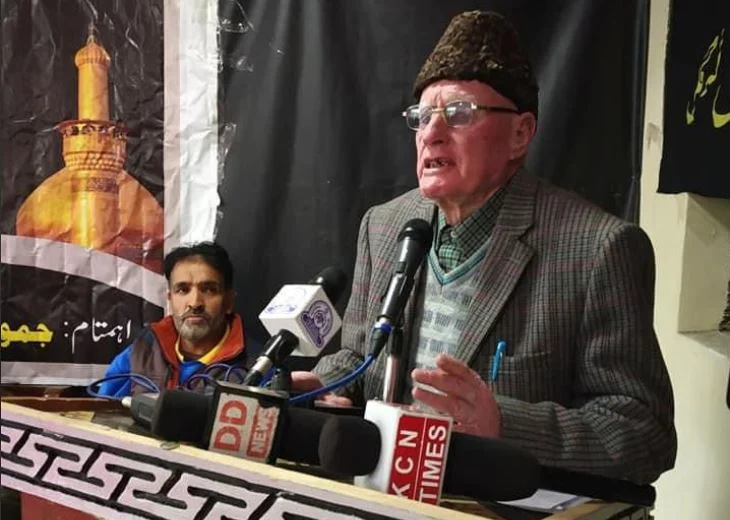
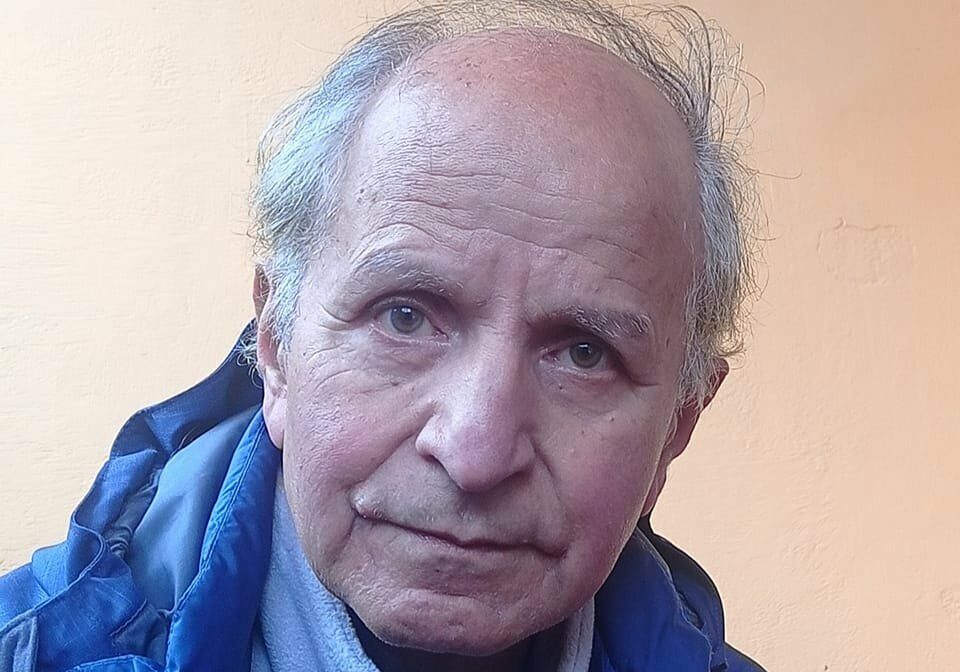
A heartfelt Condolence Meeting in memory of the late Haji Khawaja Abdul Hamid Tanveer, the eminent scholar, writer, and poet of Kargil, Ladakh, was held today at the Ladakh Cultural Academy Hall, Kargil.
This gathering brought together the literary and cultural community of Kargil, including esteemed writers, poets, and cultural activists, who paid their deepest respects and expressed heartfelt condolences for the loss of this iconic literary figure.
Haji Khawaja Abdul Hamid Tanveer, who passed away today morning in Srinagar, Kashmir, was remembered for his immense contributions to literature and culture. Known as an “ocean of knowledge,” his prose and poetry were celebrated for their depth, wisdom, and literary craftsmanship. His work left a lasting impact on Kargil’s cultural identity, inspiring both his contemporaries and the younger generations.
The attendees honored the late scholar’s memory with a solemn two-minute silence, and “Surah-e-Fatiha” was recited to pray for his departed soul’s peace. His legacy as a guiding light in Kargil’s literary circles was acknowledged by all, with deep admiration for his significant contributions to the region’s literary heritage.
Distinguished individuals present at the meeting included Padmashree Dr. Akhoon Asgar Ali Basharat, State Awardee Ghulam Ahmed Jawan, Alhaj Aga Sayed Hadi Shah, Muhammad Hussain Rehnuma, Muhammad Hussain Fayaz, Nazir Hussain (Deputy Secretary, LAACL), Muhammad Ali Tak (OSD/Under Secretary), Department of Tourism & Culture, UT Ladakh, Zakir Hussain (HA, LAACL), Gulzar Hussain Mendoktsar, Shafaqat Ali, and others.
In his speech, Alhaj Aga Sayed Hadi Shah highlighted that the late Haji Khawaja Abdul Hamid Tanveer was not only a respected literary scholar but also his personal mentor and a guiding influence in the field of literature. He was closely associated with All India Radio (AIR) Kargil, the J&K Cultural Academy, and the Ladakh Cultural Academy, leaving behind a rich legacy of cultural contributions.
On this occasion, both Padmashree Dr. Akhoon Asgar Ali Basharat and Muhammad Hussain Rehnuma paid tribute to the late poet by reciting a special poem dedicated to his memory and achievements.
The entire region of Ladakh grieves the loss of this legendary writer and poet. His wisdom, knowledge, and literary legacy will forever be cherished, serving as a source of inspiration for generations to come. His contributions to the field of education, particularly his role as Zonal Education Officer (ZEO) in Kargil, were also acknowledged with deep respect, reflecting his unwavering dedication to the community he served with passion and commitment.
source: http://www.boldnewsonline.com / Bold News / Home> Art & Culture / by Bold News Online Desk / November 16th, 2024
Tragically, Munawar Ali Khan Sahib died at the peak of his career, at the age of 59 in Kolkata in 1989.
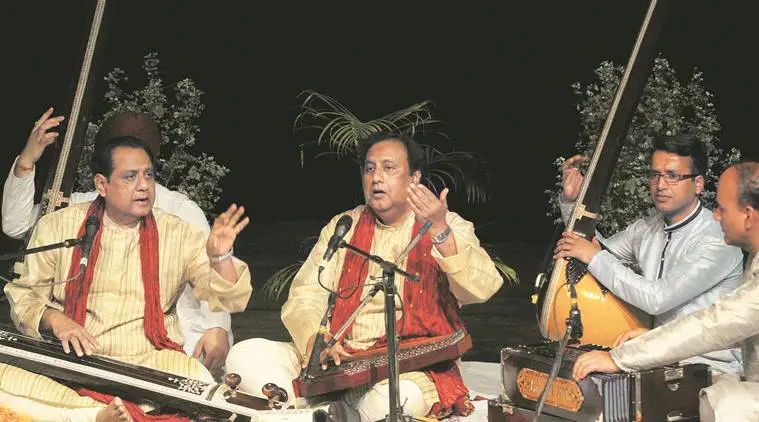
Artistes perform at Tagore Theatre in Sector 18, Chandigarh, on Saturday. Express
Triveni Sangeet Sabha paid a homage to late Ustad Munawar Ali Khan of Kasur Patiala Gharana on Sunday evening at Tagore Theatre. An audio-visual presentation on Ustad Munawar Ali by Niharika Popli was projected. This was followed by vocal recitals by Ustad sahib’s son Raza Ali Khan and his two nephews Ustad Mazar AlI and Awaad Ali Khan. Chandigarh-based Primila Puri, his disciple, also sang.
Ustad Munawar Ali Khan was born in 1930 in Lahore. He was the son of the legendry maestro Padmabhushan Ustad Bade Ghulam Ali Khan and trained under his father and his uncle Ustad Barkat Ali Khan. Munawar Ali Khan had a full-throated, powerful voice with open aakar, which adapted itself to different styles of bandishes like khayal, thumri, dadra and after his father’s death in 1968, he became a worthy representative and the ‘Khalifa’ of the Kasur Patiala Gharana. He created many khyals, thumris, geets and ghazals and sang brilliantly difficult ragas of his gharana and also created a new raga named Malini Basant.
Tragically, Munawar Ali Khan Sahib died at the peak of his career, at the age of 59 in Kolkata in 1989. The Kasur Patiala legacy is now carried on by his son Raza Ali Khan and his nephews Jawaad Ali Khan, Mazhar Ali Khan and Naqi Ali Khan.
source: http://www.indianexpress.com / The Indian Express / Home> News> Cities> Chandigarh / by Express News Service / March 18th, 2018
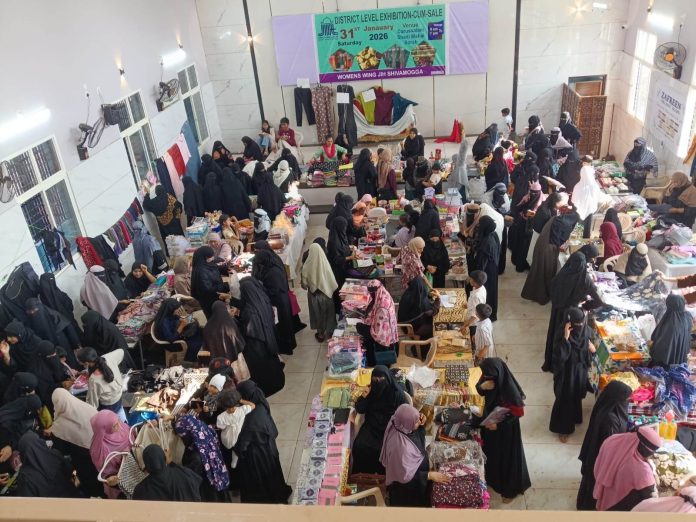
A one-day Exhibition-cum-Sale was organised by the Women’s Wing of Jamaat-e-Islami Hind, Shivamogga District. The exhibition was inaugurated by the State Secretary of the Women’s Wing, Jamaat-e-Islami Hind, Mohtarma Taskeela Khanum.
The objective of such programmes is to economically strengthen and empower women. In the context of rising inflation, unemployment, and poverty, it was emphasised that addressing these challenges is a shared responsibility, and that women must play an effective role alongside men in the nation’s economic development.
The organisers highlighted that such exhibitions provide women with practical business experience, opportunities to interact with people from diverse backgrounds, and support in developing entrepreneurial ideas. These platforms also enable women to engage in halal business practices within the limits of Shari’ah, while facilitating growth through networking and referrals.
Islam permits women to engage in business, including running enterprises from their homes, as reflected in Islamic history through the example of Khadijah bint Khuwaylid رضی الله عنها, a successful businesswoman. Islam also encourages honest and ethical business practices for both men and women.
Nearly 100 women from across the district set up stalls showcasing clothing, handbags, fancy items, abayas, home-made products, and more. A food court offering a wide variety of food items was another major attraction. Members, associates of Jamaat-e-Islami Hind, and women entrepreneurs from different parts of the district actively participated in the exhibition.
The women-exclusive exhibition attracted around 3000 women visitors, who actively shopped at the stalls. The event was described as highly encouraging, as it highlighted the talents, skills, and entrepreneurial potential of women.
Such exhibitions form part of the organisational plan of Jamaat-e-Islami Hind to promote women’s empowerment. Efforts will be made to strengthen the women entrepreneurs’ network.
Feedback received from participants reflected a high level of satisfaction, with many expressing a desire for similar programmes to be organised regularly. Participants particularly appreciated that the exhibition was organised by women, for women, and exclusively for women, creating a comfortable environment that enabled them to conduct business with confidence.
The organisers were widely appreciated, and participants expressed eagerness to remain connected and take part in future programmes. The total sales from all stalls amounted to approximately ₹3 lakh during the one-day exhibition.
The programme concluded on a positive note, reinforcing the importance of such initiatives in promoting women’s economic empowerment and community development.
[The writer of this report is Member Mashavrati Board Karnataka, and District Organiser of JIH Women’s Wing Shimoga]
source: http://www.radiancenews.com / Radiance News / Home> Entrepreneurship> Focus / by Naseema Begum / February 01st, 2026
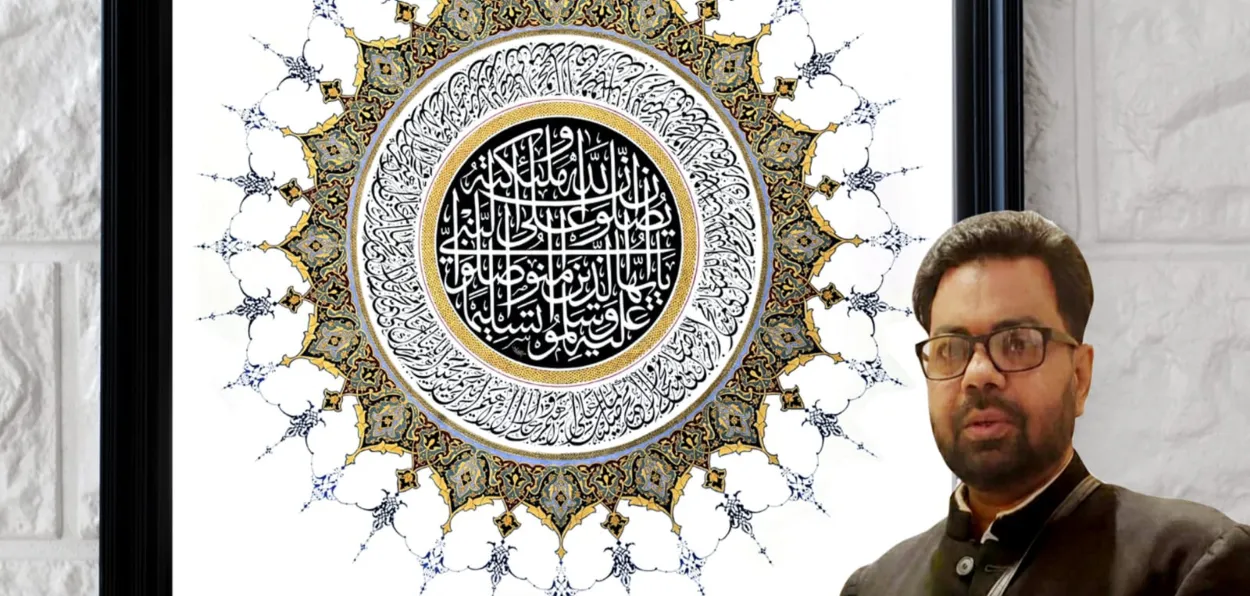
Qari Mutiullah Wasifi, a calligrapher from Tonk, a city in Rajasthan, won the second prize in the International Islamic Calligraphy Competition, organised by the Islamic Art Society in New York, USA.
This recognition comes amid the rise of digital fonts and artificial designs globally.
Qari Mutiullah Wasifi competed with more than 4000 artists from around the world. On this occasion, Qari said his success at an international forum is not sudden. Over the past four years, India’s presence in this competition has been consistent, and the Wasifi family has made it to the top every time.
In 2022, Qari Mutiullah Wasifi received the first prize. A year later, his son Haris Wasifi secured second place. In 2024, Haris won the first prize.
This year, the first prize was bagged by Egypt, the second by India, the third by Pakistan, and the fourth by Turkey. The award includes a certificate, a memento, and a cash prize. However, for the Wasifi family, the real honour is the recognition that comes with representing India.
Qari Mutiullah Wasifi at work
Qari Mutiullah Wasifi’s journey didn’t begin at an art college. His first school was his own home. His late father, Qari Salimullah Wasif Furqani, was a renowned calligrapher, reciter of the Quran, and a scholar. He had a command of Arabic, Persian, and Urdu.
His calligraphy of the Quran was his speciality. As a child, Mutiullah watched his father sit for hours, writing. The sharpness of the pen, the curves of the letters, and the measured amount of ink used were not mere play for him, but a matter of discipline.
For formal education, he enrolled at the Maulana Abul Kalam Azad Arabic-Persian Research Institute (APRI) in Tonk. He completed a four-year diploma course, recognised by the National Council for Promotion of Urdu Language (NCPUL), Delhi. This is the same institution that has made Tonk a centre for Arabic and Persian studies.
Tonk is generally known for its madrasas, books, and Islamic education. But this city has also witnessed a well-established tradition of calligraphy. During the Nawab era, calligraphers from Iran and Central Asia taught locals the art.
Institutions like Maulana Abul Kalam Azad Arabic Persian Research Institute (APRI) have preserved this legacy. This institution has trained many calligraphers who have made a name for themselves in India and abroad. Qari Mutiullah Wasifi is an important link in this chain.
Wasifi told Awaz-the Voice that for him, calligraphy is not just a means of decoration, but a part of worship. To date, he has handwritten 27 copies of the Holy Quran. Some of these Qurans are written in extremely fine script, while others are adorned with gold and silver.
Qari Mutiullah Wasifi with a competitor
He has also undertaken unique projects, such as writing the entire Quran on a single large sheet of paper. This work requires years of practice and patience. The placement of each letter is crucial, and even a single mistake can ruin the entire work.
One of Qari Mutiullah Wasifi’s lesser-known yet important contributions is related to the preservation of manuscripts — completing the half-done copies of the Holy Quran and rare books in Arabic, Persian, and Urdu. So far, he has completed approximately 500 incomplete Qurans and hundreds of old books.
He has undertaken projects for private collectors, libraries, and research institutions. This effort breathes new life into books that might otherwise have been lost to oblivion.
Wasifi’s art is not limited to paper. He has done calligraphy on cloth, leather, wood, metal, grains of rice, lentils, marble, hair, and even inside bottles. This art is not only a test of manual dexterity but also of concentration and balance.
Tomorrow is the last day to enjoy the discount on incredible workshops by the Global Centre of Islamic Art during Islamic Art Week! 🌟 Access a variety of workshops on calligraphy and Islamic art in general by many talented artists… pic.twitter.com/XAg735bUeT
Wasifi participated in the international calligraphy competition organised by the Islamic institution “Irtika” in Istanbul, Turkey, in 2022. This institution organises a prestigious global calligraphy competition every two years, in which renowned calligraphers from around the world participate.
In 2023, he also participated in the international calligraphy competition organised by Fujairah Company in Dubai (UAE). This competition is known for its distinguished jury and global participation.
Wasifi says that if workshops, exhibitions, and competitions are considered together, his participation in national and international events, both within and outside India, totals approximately 30.
Wasifi thinks it’s not his achievement, but a means of showcasing the Indian calligraphy tradition at the international level.
According to him, such platforms provide artists with opportunities to learn, test themselves, and connect with calligraphers from around the world. He has also received several honours at the national level.
He has also participated in international exhibitions and workshops in places like Bengaluru, Udaipur, Aligarh, Diggi Palace in Jaipur, and the Lalit Kala Akademi in Delhi.
In the Wasifi family, this art has been passed down from one generation to the next. Qari’s eldest son, Haris Wasifi, is an internationally acclaimed calligrapher. The second son, Abbas Wasifi, is a Hafiz and Qari (one who has memorised the entire Quran and recites it with proper pronunciation) and is pursuing his education at Nadwatul Ulama, Lucknow.
The daughter, Sidra Wasifi, is an Alima (a female religious scholar) and teaches calligraphy to young girls. This family is not only preserving art but also discipline and heritage.
Qari Mutiullah Wasifi has established ‘Bazm-e-Wasif‘ in memory of his father. His dream is to create a special library and museum of calligraphy in Tonk, where his and his father’s manuscripts can be safely preserved. He says that despite the lack of resources, his resolve remains unwavering. His goal is to ensure that this calligraphic heritage of Tonk reaches future generations.
source: http://www.awazthevoice.in / Awaz, The Voice / Home> Stories / by Farhan Israeli, Tonk (Rajasthan) / January 29th, 2026
Kaprin Village (Shopian District), JAMMU & KASHMIR :
Shafi Shauq (Kashmiri poet and academic)
Srinagar :
Eminent Kashmiri scholar, poet, linguist and translator Prof Shafi Shauq has been named among the recipients of the Padma Shri Award 2026, India’s fourth-highest civilian honour, in recognition of his outstanding contribution to education and literature. The award places Shauq at the forefront of this year’s honourees from Jammu and Kashmir and Ladakh, marking a major national acknowledgement of his lifelong work in preserving and enriching the Kashmiri language and its literary heritage.
Born in 1950 in Kaprin village of Shopian district, Shafi Shauq is widely regarded as one of the most authoritative voices in Kashmiri studies. Over a distinguished academic career spanning more than three decades at the University of Kashmir, he authored, edited and translated over 100 books across Kashmiri, Urdu, Hindi and English. His seminal works—including Keeshur Lugaat (Kashmiri Dictionary), Keeshryuk Grammar, and Kaeshir Zaban ti Adibuk Tawaariekh (History of the Kashmiri Language and Literature), are considered foundational texts and remain indispensable to scholars, students and researchers.
The Padma Shri citation recognises not only Shauq’s scholarly output but also his role as a cultural custodian who ensured that Kashmir’s rich Sufi, poetic and intellectual traditions reached both national and international audiences. His celebrated series The Best of Kashmiri Literature, featuring iconic mystic-poets such as Lal Ded and Nund Reshi, played a crucial role in preserving and popularising Kashmir’s spiritual and literary canon beyond linguistic boundaries.
Alongside Prof Shafi Shauq, the Government of India has also announced Brij Lal Bhat (Social Work, Jammu and Kashmir) and Dr Padma Gurmeet (Medicine, Ladakh) as Padma Shri awardees for 2026, recognising exemplary service in their respective fields. However, Shauq’s inclusion has drawn particular attention in literary and academic circles, being seen as a long-overdue national honour for a scholar who devoted his life to safeguarding the linguistic soul of Kashmir.
Social worker Brij Lal Bhat has been conferred the Padma Shri 2026 for his sustained and wide-ranging contributions to social service. Known for his grassroots engagement, Bhat has worked extensively to strengthen spiritual and community institutions through yoga shiksha shivirs, spiritual retreats and Bhandara Seva. He has actively promoted social cohesion and communal harmony by organising inclusive festivals and community programmes, while also contributing to rural development by reclaiming barren land for apple and walnut orchards. His work is widely recognised for combining social service with spiritual outreach and environmental stewardship.
In addition to Shauq and Bhat, Dr Padma Gurmeet of Ladakh has been named a Padma Shri awardee in the field of medicine, underscoring the diverse range of contributions from the region honoured in 2026.
source: http://www.kashmirlife.net / Kashmir Life / Home> Kashmir Latest News / by KL News Network / January 25th, 2026
In a move that has sparked widespread outrage across Gujarat, a local BJP corporator has filed an objection to the voter registration of legendary folk artist and Padma Shri awardee, Mir Hajibhai Kasambhai, popularly known as “Haji Ramkadu.”
The controversy erupted just 48 hours after the Central Government announced the prestigious Padma Shri for the artist’s lifelong contribution to the arts. During the ongoing Voter Revision Program (SIR), BJP Corporator Sanjay Jamnadas Manvar submitted a Form 7 application, seeking the removal of the name “Hajibhai Rathod” from the electoral roll in Ward No. 8.
A Question of Identity or “Incorrect Motives”?
The artist, who has played dholak in over 3,000 charity programs for cattle welfare and 1,000 stage shows, expressed deep hurt over the move.
“They tried to remove my name from voter list, I have received award. I am very upset with this. I have lived in Ward No. 8 for over 60 years. Both the State and Central governments have honoured my work. What is lacking in my identity that an objection has been raised against my name?” Haji Ramkadu asked, calling for the government to ensure such incidents do not recur.
Defending his actions, Corporator Sanjay Manvar clarified that his objection was not a personal attack on the legend. “Hajibhai is the pride of the nation. My objection was regarding the surname ‘Rathod’ listed in the rolls, whereas his official name is Mir Hajibhai Kasambhai. To avoid confusion and potential misuse of dual identity cards, I requested a correction,” Manvar stated, adding that the artist is “like family.”
Political Firestorm
The opposition has been quick to seize the moment. A Congress spokesperson slammed the BJP-led administration and the Election Commission, labelling the incident “the height of malpractice.”
“On one hand, the government honours a man with the Padma Shri, and on the other, their own corporator tries to strike his name from the voter list,” the spokesperson said. “If a national icon like Haji Ramkadu is being played with, what must be the plight of the common citizen?”
The Legacy of Haji Ramkadu
Mir Hajibhai Kasambhai is a household name in the world of Bhajan, Santvani, Ghazal, and Qawwali. Known for his unique style of playing the Dholak, he has dedicated his life to spiritual and social causes. The announcement of his Padma Shri on the eve of Republic Day was celebrated as a victory for traditional Gujarati folk art-a celebration now clouded by this local electoral dispute.
As the Election Commission reviews the application, the citizens of Junagadh wait to see if this “clerical correction” will be settled amicably or continue to fuel political tensions.
source: http://www.ndtv.com / NDTV / Home> News> India News / by Saurabh Vaktania (headline edited) / January 28th, 2025
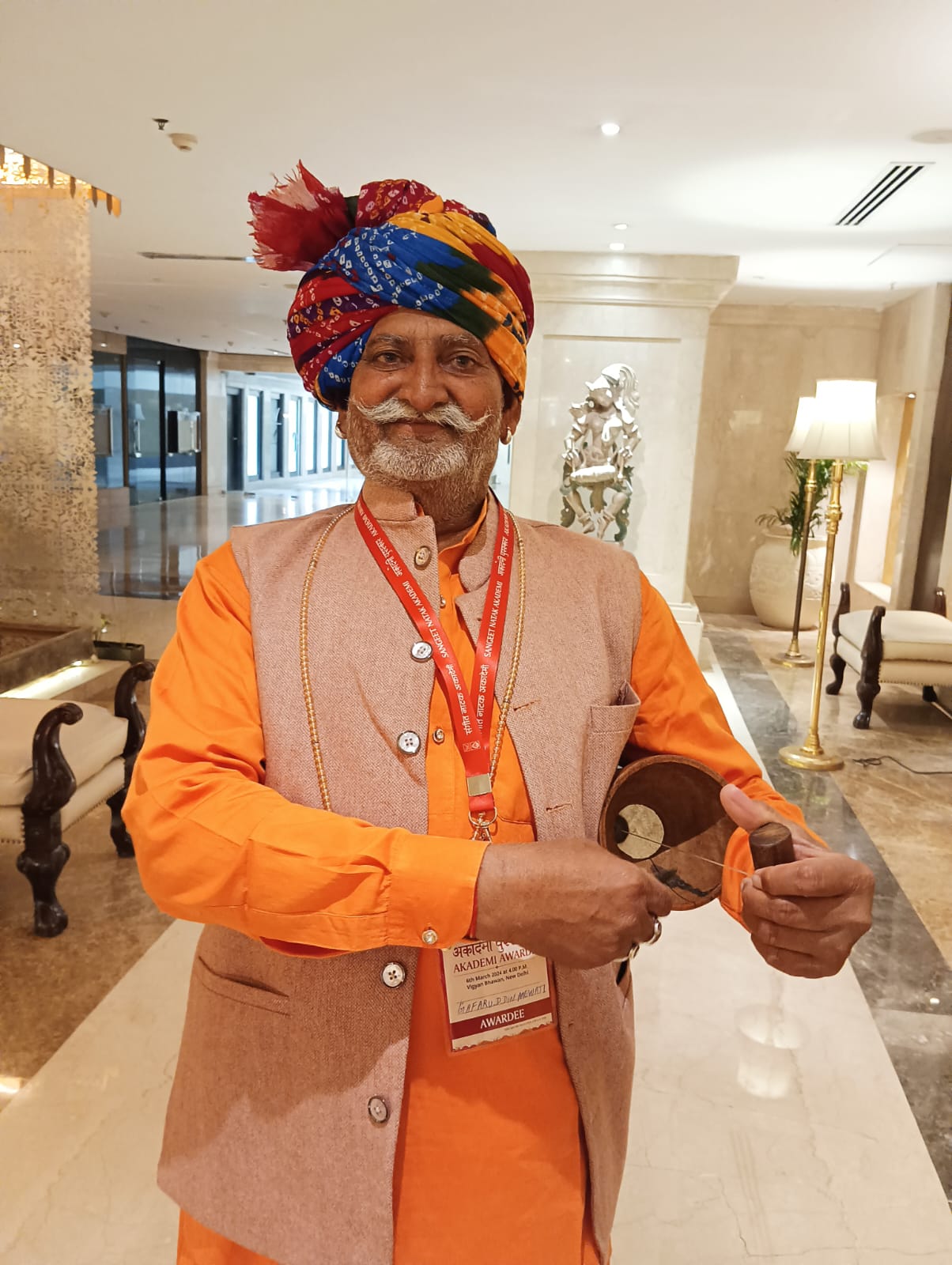
My joy is like that of a labourer who goes to work in the morning and receives his wages the same evening,” said Ghafruddin Jogi Mewati, a traditional singer, who has been selected for this year’s Padam Shri award by the government of India.
Ghaffaruddin, 68, has showcased his art for more than half a century, from the rugged lanes of Mewat to the seven seas. As soon as the announcement of the coveted award poured in, Ghafruddin, a resident of Alwar, was overwhelmed with emotion.
Memories of him wandering barefoot through the villages of Mewat, playing the bhapang (A traditional string instrument) and begging for flour, flashed in his mind. Today, he feels that he has received the wages for all that hard work he did to keep a traditional art form alive.
He feels the Padam Shri is not just an honour for an individual, but for the centuries-old Mewati culture, the legacy of the Jogi community, and the rhythm of the bhapang, which is on the verge of extinction.
The Mewat region, which straddles the borders of Haryana and Rajasthan, possesses a unique identity as a syncretic culture.
Here, the Jogi community, who are Muslims, has, for generations, sung episodes from the Mahabharata and other folk tales.
#WATCH | Folk artist Gafruddin Mewati Jogi, awarded the Padma Shri in the field of art, said the honour marks the culmination of a lifelong struggle.
He recalled learning and preserving the art by travelling with his father, passing it on to others, and continuing the… pic.twitter.com/xiYDWTOqSQ— DD News (@DDNewslive) January 26, 2026
Ghafruddin is one of the strongest exponents of this tradition. He says, “Stay connected to your language, culture, and folk art; that is our true identity.” For him, this honour is a debt he owes to the soil of Mewat, which nurtured him during his days of struggle.
Born in Kaithwara village in the Deeg district of Rajasthan, Ghafruddin’s childhood was no less dramatic than a film script. His father, the late Budh Singh Jogi, was an accomplished artist. At the tender age of four, when children usually play with toys, his father placed a ‘bhapang’ in Ghaffaruddin’s hands.
The Bhapang, which resembles a small drum but has a single string, is considered an evolved form of Lord Shiva’s damru (a small hourglass-shaped drum). Playing it requires an extraordinary coordination of abdominal muscles, fingers, and vocal rhythm.
As a child, he learned by travelling from village to village with his father, sitting in village squares, and listening to folk tales.
They had to beg for grain and flour in villages to support the family. Those were difficult days, but the rhythm of the Bhapang never let him lose hope.
The most significant aspect of Gafruddin Jogi’s art is his rendition of the Mahabharata. Remarkably, a Muslim artist sings the epic of Lord Krishna and the Pandavas with such devotion and purity that the listener is completely captivated. Alwar and the surrounding areas are historically linked to ‘Viratnagar,’ where the Pandavas spent their period of exile.
When Gaffaruddin narrates these folk tales in the Mewati dialect, history comes alive. His art has proven that music and culture know no religious boundaries.
The year1992 marked a major turning point in his life. He travelled abroad and performed for the first time. There has been no looking back since then.
He carried the sound of Bhapang to over 60 countries, including England, Australia, Canada, France, and Dubai. When he played Mewati folk tunes at an event celebrating Queen Elizabeth’s birthday in London, even the foreign audience was captivated by the magical rhythm.
When the call on his mobile came, he initially thought someone was playing a prank on him, but when the news was confirmed, he was emotional. He dedicated the award to the Mewat region and the Jogi community.
#WATCH | Alwar, Rajasthan: On being conferred with the Padma Shri 2026 in the field of art, folk artist Gafruddin Mewati Jogi says, “I am very happy that the struggle of my life has finally yielded results, and I have received this recognition… For seven years, I went from… pic.twitter.com/66UQBRb4W5
Today, the eighth generation of his family is carrying on this art form. His son, Dr Shahrukh Khan Mewati Jogi, has not only learned music but also earned a PhD on the culture of Mewat. While many traditional art forms are fading away, Ghaffaruddin’s family is keeping this flame alive.
Ghafruddin Jogi Mewati wants to open a school for folk arts. He wants the government to provide him with land where he can teach the new generation the art of playing the Bhapang, Mewati folk singing, and their traditional stories.
He says that if the younger generation does not stay connected to its roots, we will lose our identity. He says receiving the Padma Shri is not the destination for him, but the beginning of a journey that he wants to continue until his last breath.
source: http://www.awazthevoice.in / Awaz, The Voice / Home> Stories / by Younus Ali, Alwar / January 28th, 2026
Behind the lively performance lies a powerful story of courage, hussain operates from a wheelchair, yet runs his business with independence, confidence and sharp skill.
Hussain
Hyderabad’s food culture has always been rich, vibrant and full of character. From royal biryanis steeped in history to late-night street snacks bursting with flavour, the city’s culinary identity is celebrated across India. Now, Hyderabad has another reason to feel proud as Hussain, famously known as “Fire Paan Wala” represented the city on the national stage through MasterChef India Season 9.
Hussain, the founder of the viral Hussain Paan Parlour, made a fiery impression during the auditions of MasterChef India 9, which premiered on January 5, 2026.
Hussain stunned judges Vikas Khanna, Ranveer Brar and Kunal Kapur with his unique preparation of a paan which he crafted using lit cloves and a specialised filling technique refined over years of practice.
When he served the flaming paan to chef Ranveer Brar himself, the studio watched in awe. As the flame flickered and aromas filled the air, Ranveer tasted the paan with a smile, praising its flavour, creativity and bold presentation. The judges applauded Hussain’s confidence and art.
Hussain is a world record holder for creating over 1,000 varieties of paan. His pan parlours are located in Tolichowki and Banjara Hills. People come not only to eat paan, but to watch a show unfold. He is frequently hired for weddings and special events, where his unique paan experience adds a touch of excitement.
Hussain’s signature fire paan, briefly set aflame before serving, turned a simple mouth freshener into a thrilling experience. What began as a small street-side business soon became a Hyderabad sensation, attracting locals, tourists and food vloggers alike.
Hussain is instantly recognisable, not just for his paan, but for his unique style. He dresses in shiny, eye-catching outfits, wears a chunky gold necklace and a large gold bracelet on one hand, and moves with the flair of a performer. As he prepares paan, he adds rhythm, small dance steps and dramatic hand gestures, transforming food service into street theatre. Long before television fame, he was already a star on Hyderabad’s roads.
Behind the lively performance lies a powerful story of courage. Hussain operates from a wheelchair, yet runs his business with independence, confidence and sharp skill. His physical limitation never became a reason to slow down. Instead, it became part of his strength.
Stepping from a busy paan counter into the intense MasterChef kitchen was a bold leap one that has earned him admiration across the country.
This season also features other inspiring differently-abled contestants, including Manisha Sharma, who uses cooking as therapy while living with secondary Parkinson’s disease, and Ratna Tamang, a Nepali chef who cooks despite losing both hands. Their journeys have turned MasterChef into a tribute to the human spirit.
source: http://www.siasat.com / The Siasat Daily / Home> Siasat.com> Entertainment / by Shefali Shivasharan / January 18th, 2026
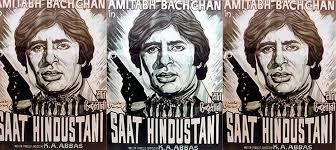
Multi-hyphenate talent Khwaja Ahmed Abbas worked in Urdu, Hindi and English and across writing mediums. Abbas, who died in 1987 at the age of 71, wrote social realist screenplays for Raj Kapoor and V Shantaram, directed films, published short stories and plays,and contributed a long-running weekly newspaper column. Among the best-known films he directed are Neecha Nagar, Sheharaur Sapna and Saat Hindustani. Set in Goa and tracing the efforts of seven revolutionaries to free the state from Portuguese rule, Saat Hindustani marks the debut of Amitabh Bachchan. An essay from the anthology Bread Beauty Revolution, edited by Iffat Fatima and Syeda Hameed, relates Abbas’s encounters with the “tall young man” and future screen icon. Bread Beauty Revolution includes writings from Abbas’s memoir I Am Not An Island: An Experiment in Autobiography as well as essays, stories,poems, photographs and columns.
The story of Saat Hindustani came out of the Goa struggle reminiscences of my assistant, Madhukar, who would often regale us with the adventures he had while trekking up with the non-violent commandos to hoist the tricolour on every police station they came across…
I was so excited when I finished the screenplay that I telephoned all my friends and informed all my assistants, including Madhukar, to come and hear it in my fourth floor office on the very next day. That was a ritual which they never missed and I would get their suggestions for casting the film.
I wanted to prove by my casting that there was no particular Hindu or Muslim, Tamilian, Maharashtrian or Bengali ethnic type. To begin with, I would transform the smart and sophisticated and versatile Jalal Agha into the Maharashtrian powada singer. Even Jalal was shocked to hear this. But I reassured him that, with the proper make-up and get-up, nobody would recognize him except as a rural Maharashtrian folk singer. Madhukar, who hails from Meerut, would be a Tamilian; Sharma (Brahmin by caste) would also undergo a similar transformation; and Utpal Dutt, the cigar-chewing admiral,would be the tractor-driving Punjabi farmer. So far the casting was clear in mymind. On one of my visits to Kerala I had met Madhu, the handsome hero of the Malayalam screen, and he had approached me and expressed his desire to work in a Hindi film with me. I would make him the sensitive Bengali; I wouldn’t have to work much on his Bengali accent for he had lived with a Bengali family. Now only the Hindi and Urdu fanatics were left. Jalal one day brought with him his friend Anwar Ali (brother of the comedian Mehmood), in whose eyes I saw the Jana Sanghi fanaticism. So I decided to make him the Swayam Sevak who hates Urdu and speaks jaw-breaking Hindi. That left one Indian, the Muslim Urdufanatic. Since I wanted these boys to be of different ages and different heights, the one vacancy left was for a tall and handsome man. He had to be thin, also corresponding to the thin image of my friend, the late Asrarul Haque “Majaz”.
One day someone brought a snapshot of a tall young man and I thought that the boy was in Bombay. I said, “Let me see him in person.” “He will be here day after tomorrow evening.” Again, presuming he was in Bombay, I thought he must be working somewhere and wouldn’t be free till the evening. On the third day, punctually at 6 pm, a tall young man arrived who looked taller because of the churidar pajama and Jawahar jacket that he was wearing. This young man would one day be known as Amitabh Bachchan, the heart-throb of millions. But I did not know his name. Roughly, the following dialogue took place between us:
“Sit down, please. Your name.”
“Amitabh.” (Not Bachchan.)
It was an unusual name — so I asked, “What does it mean?”
“The sun. It’s also one of the synonyms for the Gautama Buddha.”
“Education?”
“B.A. from Delhi University.”
“Have you worked in films before?”
“No one has taken me so far.”
“Who were they?”
He mentioned very prominent names.
“What did they find wrong with you?” The boy spoke with frankness. “They all said I was too tall for their heroines.”
“Well, we have no such trouble. In a way we have no heroine in our film. Even if we had, that wouldn’t prevent me from taking you.”
“Taking me? Are you really going to take me? Without even a test?”
“That depends. First I must tell you the story. Then I must tell you your role and see if you will be enthusiastic about playing it. Then I shall tell you what we can afford to pay you. Only then, if you agree, shall we sign the contract.”
I read him out the complete story and saw his face become alive with interest. I asked him which role he would like to play. He told me the two which particularly impressed him. The role of the Punjabi, and the role of the Muslim. I told him he was perhaps a Punjabi, and that made him unfit to play that role. He asked me why. I gave him the reason, the reason for having a scrambled cast. The idea appealed to him greatly. He said, “I think, I know what you mean. Then I would like to play the Muslim role, specially because he is under a cloud of suspicion. And only at the end the suspicions are removed and he is proved a patriot.” Then I told him we could pay him no more than five thousand rupees,which was the standard figure for all the roles.
He seemed a little hesitant, and I asked him, “Are you earning more than that?”
“I was,” he said.
I asked him what he meant.
He said that he was getting about sixteen hundred a month in a firm in Calcutta.
“I resigned the job and came over.”
I was astonished. “You mean to say that you resigned a job of sixteen hundred rupees a month, just on the chance of getting this role! Suppose we can’t give the role to you?”
He said, “One has to take such chances” with such conviction that I said, “The role is yours.”
Then I called my secretary, Abdul Rehman, to dictate the contract. I asked the tall young man for his name and address.
“Amitabh—” after some hesitation, “Amitabh Bachchan, son of Dr H.R. Bachchan.”
“Stop,” I said. “This contract cannot be signed until I telegraph and get your father’s consent. He is a colleague of mine on the Sovietland Nehru Award Committee. I wouldn’t like to have a misunderstanding with him. I am afraid you will have to wait for two days more.”
“You can ask my Dad, but frankly, do I look like a runaway?”
I told him that runaways don’t have any particular look. So I dictated, instead of the agreement, a telegram to Dr Bachchan in New Delhi and asked him if he was willing to let his son become an actor. Two days later a telegram came reading “No objection where you are concerned.” This is the whole story about how Amitabh Bachchan came into films.
Excerpted with permission from Bread Beauty Revolution, edited by Iffat Fatima and Syeda Saiyidain Hameed, Khwaja Ahmed Abbas Memorial Trust and Tulika Books.
source: http://www.scroll.in / Scroll.in / Home> Book Excerpt / by Khwaja Ahmed Abbas / November 14th, 2015
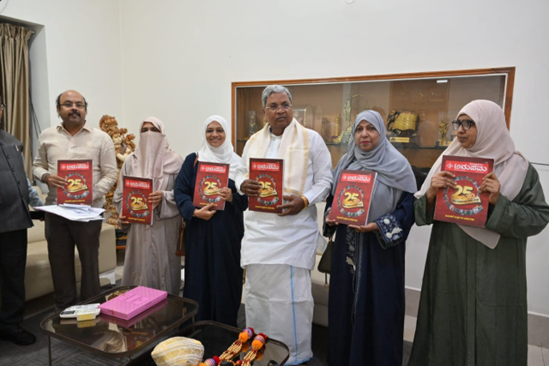
Anupama, the state’s only women’s monthly Kannada magazine run entirely by Muslim women, has completed 25 years. To mark this milestone, Chief Minister Siddaramaiah released a special silver jubilee issue, reflecting on its 25-year journey of success, in Bengaluru on Thursday.
Speaking at the event, the Chief Minister congratulated the team, saying, “There are only a handful of Muslim women in journalism. In such a scenario, it is highly commendable that the Anupama Women’s Monthly, run by women from the Muslim community and has successfully completed 25 years.”
Shahnaz M., the editor of Anupama, also spoke at the occasion. “The implementation of the ‘Guarantee’ schemes for women in the state has brought about significant changes in their lives. On behalf of the Anupama team and all women, I extend my gratitude to the government led by CM Siddaramaiah for their commitment to women’s development,” she stated.
The event was attended by Naseer Ahmed (Political Secretary to the CM), MLA Dr. Yathindra Siddaramaiah, BMTC Vice-Chairman Niket Raj Maurya, and Anupama’s sub-editors Samina Uppinangady, Sajida Momin, and Kulsum Abubakkar. Other notable attendees included S.M. Muthalib, Faisal Ismail, and Saleem Bolangadi.
source: http://www.radiancenews.com / Radiance News / Home> Latest News> Report/ by Radiance News Bureau / January 10th, 2026