Nazreen C J, who is hearing impaired, marvels art connoisseurs by transforming unheard tunes into elegant moves, reports Anuja Susan Varghese.
Nazreen is also interested in painting and photography | A Sanesh
Ernakulam :
The differently-abled are often blessed with myriad capabilities. Heightened sensory powers and special skills, developed by some individuals over several years overcoming challenges, at times leave audiences spellbound.
Such is the tale of Nazreen CJ, hearing impaired from birth. The limitations, however, did not stop the Kochi resident — called Kukku fondly — from exploring art and travel, and from honing her many talents. An expert bharatanatyam dancer, her performance, syncing steps by sensing vibrations of the beat on the floor, is an amazing sight.
From Class V, Nazreen has practised dance to the rhythm of classical music, mastering not just bharatanatyam, but kathak and mohiniyattom as well.
“She was a bright child from the very beginning,” says Nazreen’s mother, Noorjahan Jani. “We realised she could not hear or speak only after she was two, and by then it was too late.”
One huge positive for Nazreen, now 22, was that she studied in a regular school, enabling her to understand conversations by lip-reading.
“She learned to accept she was different from other children. Being part of the Kochi Kalabhavan, she received opportunities to perform in cultural events on various stages and also in television programmes,” Noorjahan points out. Family support is a pillar of strength for Nazreen, with her mother accompanying her to cultural events and competitions.
“During her schooldays, we travelled to Mumbai, Chennai and Ranchi. Though she is very confident now about managing on her own, we are still reluctant to let her travel alone,” says Noorjahan. Realising her mother was talking about her adventurous dreams, Nazreen gestures to say that they worry needlessly.
Her sister, Jasmine Anseer, says Nazreen did not have any special training method or additional assistance while learning classical dance. “She would pick up the steps and the rhythm as shown by her dance teacher. She continues with the steps till the dance sequence ends.” Her mother also recalls bitter experiences, when Nazreen was denied opportunities due to her condition. “Some organisers fear she would make mistakes on stage. Such experiences hurt her the most, yet she didn’t back down. Whenever she received opportunities, she has made sure that she puts up excellent performances,” Noorjahan says.
The walls of their home are stacked with prizes, with Nazreen having excelled in other fields too, like drawing, painting and photography. She used to play badminton as well. Recently, she modelled for Seematti, one of Kerala’s leading textile brands.
“She is a very different person when on stage. It won’t be apparent to anyone she can’t hear the music. Be it ramp walk or western dance, she nails them with elan. During solo performances, we just have to ensure one of us is there off-stage to alert her when the song starts and is about to end,” says Jasmine.
When asked about her ambition, Nazreen joyously nods and gestures she wants to become a wildlife photographer. Nazreen did her BSc in maths at the St Teresa’s College, and is now busy with programmes and photography sessions.
“Due to Covid, things were dull for a while. But life is now back on track,” says Jani C S, Nazreen’s father, beaming with pride. And Nazreen gestures, looking forward to the shows lined up.
source: http://www.newindianexpress.com / The New Indian Express / Home> Good News / by Anuja Susan Varghese / Express News Service / March 20th, 2022
Besides Aleppey Ashraf, eight people from different fields will also be honoured on the occasion
Noted script writer and filmmaker Aleppey Ashraf has been selected for the Prem Nazir Award for the year 2022 instituted by the Prem Nazir Samskarika Vedi on the occasion of the 33rd death anniversary of the actor.
The award will be presented at an event to be held at Kozhikode Town Hall on Tuesday at 5 p.m., which will be inaugurated by noted writer K.P. Ramanunni. Former MLA Purushan Kadalundi will be the guest of honour on the occasion.
Assistant Director R. Thankaraj will deliver the Prem Nazir commemoration lecture.
Besides Mr. Ashraf, eight people from different fields will also be honoured on the occasion.
As part of the event, a karaoke music competition will be held at the venue from 11 a.m. onwards.
Those interested in taking part in the competition may contact 8891922573 or 9778009088 to register.
There will also be a musical programme after the award ceremony, chairman of the Vedi P.T. Azad said.
source: http://www.thehindu.com / The Hindu / Home> News> Cities> Kozhikode / by Staff Reporter / Kozhikode – January 11th, 2022
Despite having faced an accident that changed his life, this youngster’s dreams and will are soaring high.
Kochi :
For 23-year-old Nishan Nizar, the time in his hands is not enough to visit all his dream destinations, indulge in adventures and chase a million dreams. Nishan is a romantic when it comes to life.
His ideas about life took life in the face of adversity. Nishan was returning home on his bike when he met with an accident a few years back. He suffered a spinal cord injury and multiple leg fractures. After being in hospital and staying bedridden for a year, Nishan decided to go to a rehabilitation centre. After three months of training, Nishan was on his journey to becoming self-sufficient. Soon he started dreaming big, understanding himself and realising his dreams. “I look back at the incident as something that changed me in a positive way. I could learn about myself more, find out my potential that I wouldn’t have explored otherwise,” he says.
A native of Thiruvananthapuram, Nishan resides at Kannammoola. He is presently gearing up for the Mr & Ms Wheelchair India contest where he is a finalist representing Kerala. Modelling is a passion he took to after he started using the wheelchair. “I used to do photoshoots before the accident, but never focused on modelling. One day, I chanced upon a modelling opportunity at a Banglore based company. I sent my application and got in,” says an excited Nishan. Having done ramp shows at three fashion events, Nishan says he enjoys his life as a professional model.
But Nishan’s dreams don’t stop there. He is currently building a community along with his friend Aneesha that creates awareness about differently-abled people and works for their welfare. Apart from modelling and social work, Nishan is also preparing to join an animation course. “I always loved creating art. I think it will be the right push for me,” says Nishan.
He says society needs to be more accepting of differently-abled people. “There is no need for sympathy. We just need to be accepted and treated as equals. But first, one needs to accept oneself. I could and that has helped me connect with my own strengths,” he says. Nishan dreams of joining the Paralympics. “I want to train in wheelchair badminton. I want to travel around the world, walk the ramps of Paris Fashion Week,” he gleams. His biggest dream is to build an NGO that aids people with physical disabilities and chronic illnesses. “I want to create an inclusive world where we wouldn’t look at people with disabilities as a problem to be fixed or eliminated, but as a beautiful expression of humanity. I will work to help others recognise this,” he says
source: http://www.newindianexpress.com / The New Indian Express / Home> Good News / by Aathira Haridas, Express News Service / March 03rd 2022
Eight poets of the past capture Delhi’s joys and sorrows
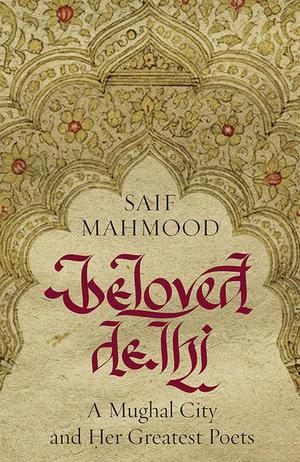
Saif Mahmood’s Beloved Delhi: A Mughal City and Her Greatest Poets offers offers a window into the life, times, and poetry of Delhi’s greatest Urdu poets from the 18th and 19th centuries, with witty and critical insight, in a conversational style that has become Saif’s hallmark in many a literary gathering.
Focusing on eight poets, he allows us to touch Delhi’s past and rethink its present through Urdu. Each chapter on a poet is divided into two sections — the first is biographical and provides the reader with insight into Delhi’s material conditions through the vicissitudes of the poet’s life. Thus, the 18th century poets are nomadic because of the post-Nadir Shah instabilities of Delhi.
The 19th century poets lead more sedentary lives, as the British Residency of Delhi provides the military support, at least until the cleavage of 1857. This upsets the tradition of the classical Urdu ghazal, and so the last poet analysed is Daagh Dehlvi, already writing in 1857, and a step-grandson of the last Mughal King, Bahadur Shah Zafar. The book also records this decline visually through Anant Raina’s photographs of the current gravesites of these poets, exhibiting the absolute lack of public or state support toward heritage maintenance.
The second part gives an excellent commentary on their poetry.
Saif’s familiarity with the tradition and his capacities for literary criticism shine through, as the raconteur in him narrates the stories of these poets’ poetry with coherence, complexity, and lucidity. The book highlights Urdu poets who are well known to Urdu readers, but not to listeners of ghazals or those interested in the literature from the outside.
Apart from Ghalib (described by Saif as ‘Master of Masters’), and Mir Taqi Mir (‘the Incurable Romancer of Delhi’), poets such as Sauda (‘the Great Satirist’), Mir Dard (‘Urdu’s Dancing Dervish’), Ustad Ibrahim Zauq (‘The Poet Laureate’), Bahadur Shah Zafar (the ‘Emperor’ who has an ‘Affair with Urdu’), and Daagh (‘the Last Casanova of Delhi’) get the attention they deserve.
The collection also brings out the specificities of their poetry including the great licence, often through satire, that many of these commanded with the ruling powers as dissenters. Tolerance for such criticism today rests uneasy with the crown. The poets extol the city of Delhi as picturesque, showing colours unimaginable, but also to be lamented after each violent tragedy, with a sense of loss, sometimes in a dedicated genre, the shahr-ashob or city-lament.
Beloved Delhi is for keeps and must be read by all with the remotest of interests in Urdu, Delhi, or poetry and poets.
Beloved Delhi: A Mughal City and Her Greatest Poets ; Saif Mahmood, Speaking Tiger, ₹599.
source: http://www.thehindu.com / The Hindu / Home> Books> Reviews / by Maaz Bin Bilal / November 03rd, 2018
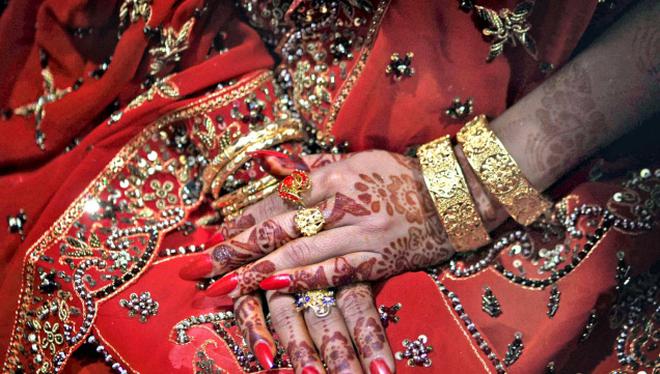
In a rare occurrence in the Capital, a female Qazi solemnized the wedding of the great-grandson of the former President of India Dr. Zakir Hussain on Friday.
Senior journalist Qurban Ali said that his daughter Ursila Ali got married to Gibran Rehan Rahman at Dr. Hussain’s residence in Jamia Nagar. The ceremony was performed by Dr. Syeda Saiyadain Hameed, a former member of the Planning Commission, as the Qazi.
“The terms set forth in the Nikaahnama were prepared under the auspices of Muslim Women’s Forum – an organization of which the groom’s great-grandmother Begum Saeeda Khurshid was a founding president,” Dr. Hameed said.
Mr. Ali said that the idea of the marriage being solemnized by a female Qazi was originally the bride’s and the groom welcomed it. “There was no concept of a female Qazi in the Indian Islamic society so we want to make a new beginning and when we talk about equality then why not a female Qazi,” he said.
Dr. Hameed said that the added significance of this Nikahnama is the Iqrarnama (agreement) “which enlists the conditions mutually agreed upon by the bride and groom, pertaining to the equal rights and responsibilities along with respect and regard for all aspects of married life”.
source: http://www.thehindu.com / The Hindu / Home> News> Cities / by Staff Reporter / Newe Delhi – March 11th, 2022
Ours is the only nation in the world to have three major film stars with the surname Khan who can proudly boast of having another famous person with the exact same name
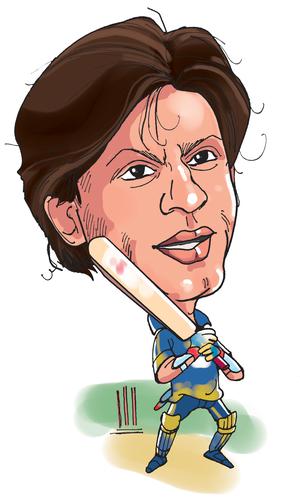
The arrival of Tamil Nadu cricketer Shahrukh Khan, whose ₹9 crore IPL deal catapulted him into mainstream attention, marks another proud moment in the rise of India as a nation of unique global status and importance.
This makes us the only nation in the world to have three major film stars with the surname Khan who can proudly boast of having another famous person with the exact same name. A world record.
Until the advent of Shahrukh Khan (the cricketer, not the actor), Shah Rukh Khan (the actor, not the cricketer) must undoubtedly have been at least mildly jealous of Salman Khan (the actor, not the…er…you get the drift) for having another Salman Khan (the Khan academy guy) and of Aamir Khan (the actor) for possessing an equivalent Amir Khan (the boxing champ). It cannot possibly be easy being the only superstar named Khan without a 1:1 mapping to another celebrity from a completely different walk of life. It must have been keeping him up at night. He might have been scouring social media to find at least one other Shahrukh Khan with some potential for global fame. Thankfully, his heart will now be at peace.
Surely, this landmark that India has achieved will trigger the envy of other so-called world powers like the United States and China, who have always been resentful of our glorious ancient past and our recent rise as a modern economic and cultural force. It is possible that, even as you read this, foreign powers are conspiring to unearth some pastry chef named Tom Cruise or cryptocurrency baron named Jackie Chan, just to discredit and defame India.
There are already negative-minded people who are pointing out discrepancies in the corresponding Khan names, just in order to take the sheen off India’s record. “You will notice that the cricketer goes by Shahrukh as a single name, unlike the actor who has carelessly inserted a space between the Shah and the Rukh. So it doesn’t really count” they might argue. “There’s an extra A in Aamir Khan’s name, which the boxing dude is clearly lacking” they may complain. But, to quote Inigo Montoya (and you should always quote Inigo Montoya when you get the chance), I reply with “Don’t bother me with trifles”. Only a cynic or an anti-national would allow such bothersome technicalities to detract from the collective joy that always springs forth from national triumph.
But the statistics don’t lie, as clearly demonstrated by official numbers on unemployment, GDP and COVID-19 cases in Uttar Pradesh, and they present irrefutable evidence that no other country even comes close to us. Some desperate people will point to the UK radio host named Chris Evans, or to the fact that Katy Perry and Michael Keaton were originally named Katy Hudson and Michael Douglas respectively, or to how Michael B. Jordan can be Michael Jordan — but they’re missing the point entirely. Anyone with a keen understanding of maths, such as Salman Khan (the Khan academy guy, not the actor), Nirmala Sitharaman, or Byju Raveendran can point out the critical feature in India’s Khan collection — all six celebrities in the set share the same surname. Like Don Bradman’s batting average, or the number of hero roles played by Prem Nazir, it’s a record that’s probably never going to be broken.
If T. Rajender were to sum up the whole thing, he might say, “All the other countries are incomplete, but India is the only country that is khancomplete.”
Anand Ramachandran is a Chennai-based writer and game designer who likes playing games with his writing.
source: http://www.thehindu.com / The Hindu / Home> Opinion> The Portzebie Papers / by Anand Ramachandran / March 12th, 2022
When bullock carts were the prime mode of transport, an Arab businessman was pained to see the beasts carry loads up the steep, rough climb.
In the 1930s, when bullock carts were the prime mode of transport, an Arab businessman was pained to see the beasts carry loads up the steep, rough climb from Hebbal Tank. Their hoofs wore thin very soon. So, he levelled the path, spending Rs 10,000 out of his pocket. When this came to the notice of Sir Mirza Ismail, the then diwan of Mysore, he promptly informed Krishnaraja Wadiyar. A private citizen spending for public good, the king thought, reflected badly on his administration. He made good the businessman’s expenses and named the area at the junction of Bellary Road, Jayamahal Road and CV Raman Avenue in his honour. Today , we call it Mekhri Circle.
The selfless businessman was M Enayathulla Mehkri (not ‘Mekhri’ as it is spelt today). The Enayathulla Mehkri Square was inaugurated by Sir John Hope, governor of the Madras Presidency , in April 1935.The space had a lamp post with five lights. A garden around it was maintained by ward officers. Later, in 1965, RM Patil, minister of home and municipal administration, notified it as Enayathulla Mekhri Circle through a notification in the state gazette.
Mehkri’s story , however, goes beyond the one philanthropic initiative he is most known by.
Mehkris were originally based near Medina in Arabia and migrated to India after the Turkish invasion. The family’s legacy dates back to more than 600 years. “While people believe that our name is derived from a place called ‘Mehkr’ in Syria, documents suggest that we were named after Mekhar in Maharashtra,” said Fazal Mehkri, nephew of Enayathulla Mehkri.
In India, the family held key posts under the Mughals and the Mysore maharajas.
Enayathulla Mehkri, born in 1898, went on to become a freedom fighter. At 17, he joined the Indian National Congress.
A contractor by profession, he participated in the freedom struggle, and was jailed for six months at Madras Central Jail along with C Rajagopalachari and EV Ramaswamy Naicker.
Mehkri was the municipal commissioner (between 1947 and 1948) and a councilor of the City Corporation for 16 years before that. He was not only the only member from Karnataka to be on the Advisory Council of the Freedom Fighters Cell of the AICC, he also headed the Karnataka Freedom Fighters’ Association till his death on November 28, 1990.
source: http://www.economictimes.indiatimes.com / The Economic Times / Home> Panache> ET Magazine> Travel> Business News> Magazine / by Divya Shekhar, ET Bureau / April 28th, 2016
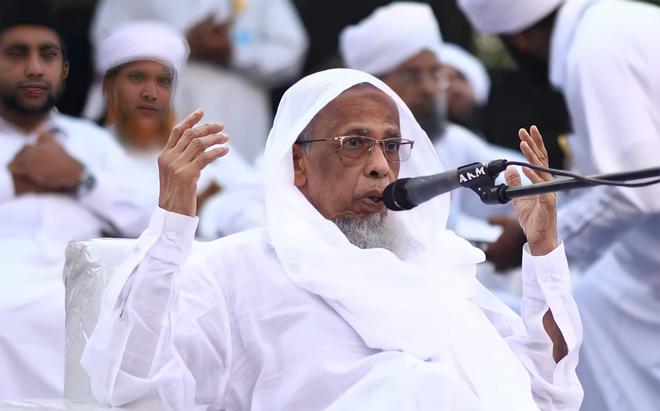
P.T. Kunhammu Musliar, popularly known as Kottur Ustad, leading the opening prayer at a function held to celebrate the 60th year of his teaching career at Kottur near Kottakkal on Monday. | Photo Credit: SAKEER HUSSAIN
Educational institution will be set up to mark 60th year of Kottur Ustad’s teaching career, says Kanthapuram
Veteran Islamic scholar P.T. Kunhammu Musliar, popularly known as Kottur Ustad, was felicitated at a function held to mark the 60 th year of his dars or teaching career at Kottur near Kottakkal on Monday.
His disciples from across the State, many of them veterans including leading fiqh (jurisprudence) scholar Ponmala Abdul Khadir Musliar, attended the function and prayed for their teacher whom they endearingly called Tajul Muhaqqiqin.
Sunni leader and Grand Mufti Kanthapuram A.P. Aboobacker Musliar led a special prayer for Samastha Kerala Jamiyyathul Ulama vice president Syed Hyderali Shihab Thangal, who died on Sunday.
Delivering the keynote address, Mr. Kanthapuram announced that an educational institution named Masalik Attariqa Al Muhammadiyya would be set up at Kottur to mark the 60 th year of Kottur Ustad’s dars.
Kanthapuram A.P. Mohammed Musliar, head of the Department of Fiqh at Markaz Sharia College, inaugurated the function. Samastha Kerala Jamiyyathul Ulama (AP group) president E. Sulaiman Musliar presided over the function. Fiqh scholar Ponmala Abdul Khadir Musliar, Haj Committee chairman C. Mohammed Faizi, and Kerala State Sunni Students Federation general secretary Nizamuddin Faizi spoke.
E. Sulaiman Musliar and Markaz president Syed Ali Bafaqi were also felicitated at the function.
Kottur Ustad, who has been a member of the Samastha Mushawara, the highest body of Islamic scholars, since 1989, led the opening prayer. He is estimated to have more than 20,000 students spread across the country.
He won the Imam Bukhari Award given by the Bukhari Institutions, Kondotty, in 2019. In 2018, he won Madin Academy’s Syed Ahmed Al Bukhari Award for his contributions to the Arabic language. He was the winner of the Imam Gazzali Award instituted by the Darul Ma’arif, Kodampuzha, in 2010.
source: http://www.thehindu.com / The Hindu / Home> News> National> Kerala / by Staff Reporter / Malappuram – March 09th, 2022
As Urdu Day approaches, Hyderabad-based author Jeelani Bano speaks about her bond with the language.
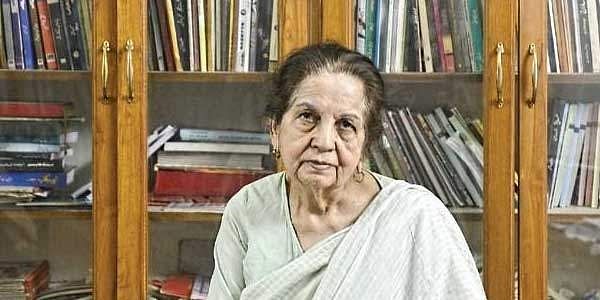
Jeelani Bano(Photo | R Satish Babu)
Jeelani Bano, 80, looks frail in her sea green sari with that mop of pepper-and-salt hair. Her demeanour is genteel, but only a talk about her stories on bonded labour, her aapa Ismat Chughtai and Progressive Writers’ Movement lights up her eyes. The decades pass on her soft wrinkled face as she turns pages of her autobiographical book Main Kaun Hoon and takes you back to an era gone by that’s still alive in her Banjara Hills house in Hyderabad, serenely tucked in another time-frame.
As Urdu Day approaches on November 9, she speaks about her association with the language. Many of her stories appear to be of our time. Jagirdari may have gone but capitalistic clutches don’t let go of the bonded slavery. Her story Paththaron ki Barish is heart-wrenching. Bano, who has authored 22 books, says, “A lot of writers of our time revolted against this inhuman system. Something also sparked in me and I wrote such stories. But today also, the situation of daily labourers is the same.”
Her book Aiwan-e-Ghazal, which tells the tales of feudal landlords in Hyderabad, has been translated into 14 languages. She then talks about her dear aapa—Ismat Chughtai—the firebrand writer.
“She was also from Badayun in Hyderabad, where I was born. She was friends with my mother and supported me a lot in writing,” says the 2016 NTR National Literary Award winner showing the letters Chughtai sent to her. Ismat wrote to her, “After marriage, respect your writing as much as you would respect your husband and in-laws.” In ’70s, when Jeelani Bano and her husband Anwar Moazzam, poet and writer, went to Pakistan, famous poets and scholars came to meet them at the border. She shares, “Nobody wants to understand what people of both the nations want. Sarhadein dilon ko nahin baant saktin (Borders can’t divide hearts).”
When once she went to the US, a scholar asked her, “You’re a Muslim woman. How did you get permission to write?” To this, she replied, “Nobody has stopped me from writing. Perhaps you haven’t been to India or else you wouldn’t have asked me this.”
Renowned poets and scholars such as Shakeel Badayuni, Makhdoom Mohiuddin, Jigar Muradabadi and Kaifi Azmi were hosted at her Mallepally home. But, she along with other children weren’t allowed to go to the baithaks. The young Bano would watch these poets, while playing in the courtyard.
source: http://www.newindianexpress.com / The New Indian Express / Home> Magazine / by Saima Afreen / November 05t, 2016
Muzaffar Alam’s ‘The Mughals and the Sufis’ is a remarkable and original work of scholarship.
Mughal emperor Jahangir chooses the Sufis. | Public Domain
The literature on the precepts of Sufism and the chronicles of its saints across various orders has a deep and prodigious lineage: from the great Kashf al-Mahjub of al-Hujwiri and the Risala of al-Qushayri, through Abdul Rahman Jaami’s Nufahat-ul-Uns, the wonderfully lucid Sakinat ul Auliya and Safinat ul Auliya, written by the 17th century Mughal Crown Prince Dara Shukoh, to the monumental compendium, A History of Sufism, by Saiyid Athar Abbas Rizvi, in our own times. The examination of the subtle and complicated interplay between religious doctrine, political influence, legitimacy and kingship throughout the Islamic period in India, though, is more recent.
Muzaffar Alam’s earlier book, The Languages of Political Islam in India c 1200-1800, published in 2004, was an important contribution to this discourse. It offered a fresh perspective by decoding the political vocabulary of those times to reveal the calibrations in theology, injunction and juridical practice, as Islam gradually became more “Indianised”.
In his new book, The Mughals and the Sufis – Islam and Political Imagination in India: 1500–1750, Alam once again breaks new ground, this time by harmonising two major domains of scholarship – Mughal History and Indian Islam – honed with painstaking care over a lifetime of study. What emerges is a highly nuanced and complex examination of the relationship between Mughal political culture and the two dominant strains of Islam’s Sufi traditions in South Asia: one centred around orthodoxy, the other focusing on a more inclusive and mystical spirituality.
The Sufi trajectory
The constituent chapters in the book, which can also be studied as stand-alone essays, chart the trajectory of the various Sufi silsilas and their principal actors, from the early, tenuous days of Babur and Humayun, through the 16th and 17th centuries, as the imperial position shifted from the more liberal outlook of Emperor Akbar (r 1556–1605) to the rigid attitudes of his great-grandson, Aurangzeb ’Alamgir (r 1658–1701).
Alam premises his critical study on a large number of contemporary Persian texts, court chronicles, epistolary collections, and biographies of Sufi mystics. Interestingly, the Maktubat-i Khwaja Muhammad Saif al-Din, compiled by Muhammad A’zam, Khwaja Muhammad Nasib Andalib’s Nala-i’ Andalib, and Muhammad Akram bin Shaikh Muhammad Ali’s Sawati‘al-Anwar are accorded no less importance than the staple Akbarnama or Badauni’s Muntakhab al-Tawarikh, known to every student of Mughal history.
This particular approach to Alam’s programme of study for his latest book serves two functions. First, his focus on relatively lesser-known figures and their writings, as well as many rare manuscripts, automatically inducts these long-underutilised texts into the bibliographical repertoire of mainstream historical research. Second, his own investigations enable Alam to challenge popular notions about the Sufis, upend unitonal hagiographic narratives of Sufi silsilas, and provide an alternate system of coordinates through which to view our cultural and religious history, in the process, reorienting our understanding of political Islam during the Mughal period.
A fundamental aspect of reappraisal is the relationship of a Sufi leader with the Mughal emperor. The usual perception is that the sole function of a Sufi saint was to be a spiritual pir (preceptor) for his murids (disciples), including those of royal blood. Alam cites numerous instances to the contrary, following a tradition that harked back to the Naqshbandi Sufis of Timurid times.
One of the key figures to emerge in this context is Khwaja ’Ubaid-Allah Ahrar, whose disciples included Timurid rulers and a number of their vassals throughout Central Asia. He and several of his descendants claimed they were not spiritual masters alone, but also the source of strength and assistance in the dispensation of politics as well as power struggles.
Although Khwaja Ahrar had died several years before Babur appeared at the threshold of Hindustan, the latter nevertheless ascribed many of his military achievements to the benediction of the pir. Most famously, at the Battle of Panipat against Ibrahim Lodhi in 1526, Babur, facing an enemy force that vastly outnumbered his own, is said to have meditated upon the image of the Khwaja, who then appeared as a horseman dressed in white, routing the Afghans.
Breaking myths
The Mughals and the Sufis also dispels some lingering stereotypes around the positions of the pirs in the Chishti and Naqshbandi orders. For instance, the Chishti pirs didn’t necessarily find ready disciples in the early Mughals and winning their allegiance was no trivial matter. A case in point is Shaikh ’Abd al-Quddus Gangohi, a member of the Sabiri branch of the Chishti order.
Khwaja Gangohi was a prominent preceptor of the Afghan elite at the Lodhi court, in fact, very nearly – the official royal pir. But as Babur established his supremacy in northern India through a series of brilliant, swift military campaigns, it took all of the Khwaja’s wisdom, tact and diplomacy, to reconcile himself to the rapidly changing realities. For his very vocal support of the Afghans, he had to suffer humiliation at the hands of the Mughals.
A similar stereotype concerns the perception of the non-inclusive, intransigent position of the Naqshandis throughout their history, as something of a monolith. Alam shows that the fervour of orthodoxy did sustain itself, from the pirs who were contemporaries of Amir Timur, to the Ahraris in the 15th and 16th centuries, through to the strident conservatism of Shaikh Ahmad Sirhindi and his followers in the 17th century. Aurangzeb’s unwavering support of the Naqshbandis ensured that the family of Shaikh Sirhindi enjoyed a favoured position at the imperial court.
Not only did this influence continue well after Alamgir’s reign, evidence is sighted of its influence outside the court in Delhi, for instance in literary circles, and beyond the capital, making inroads among sections of the civil society in Awadh, hitherto firmly entrenched in the Chishti-Sabiri tradition.
Through the following two centuries, however, Alam explains how a more muted and inclusive tenor of discourse developed within the Naqshbandi order, their change in position underscored by the triple forces of reformism, revivalism and modernism or Westernisation. Certainly, challenges from the West played a material role in changing the approach of modern Muslim intellectuals to Sufism.
Underlying many of the discussions are themes of influence, rivalry and conflict. Documentary evidence points to Sufis playing a role in informing and modulating imperial policy. Likewise, it is shown how the struggle for supremacy among rival princes (and princesses) was mirrored in the rise and fall of imperial allegiance to various silsilas.
Thus, when Akbar, at the peak of his religious innovations, is confronted by the outraged Naqshabandis, it is the latter who have to recant. And not long after Aurangzeb ascends the throne as the emperor Alamgir, Dara Shukoh’s Qadiri pir, Mullah Shah, is summoned to the imperial court and interrogated by the ’ulama. When it comes to a deeply critical and iconoclastic element of the Sufis, such as Sarmad Kashani, nothing less than execution would satisfy the emperor and conservative clergy. Viewed through this prism, the narrative of political Islam appears as a glazed mirror of the vicissitudes of princely wars of succession, and the leanings and idiosyncrasies of successive emperors.
What the women did
One of the criticisms that is often levelled against the academic patriarchy of medieval history is its scant attention to the women of the imperial household, their role and influence in contemporary politics and decisions that morphed and changed the empire. In this regard, the chapter-essay, “Piety, Poetry, and the Contested Loyalties of Mughal Princesses, c 1635-1700”, is a welcome inclusion in the present volume.
The legend of Jahanara, as the other-worldly princess who eschewed imperial titles in favour of the sobriquet of al Fakira, is well known. What is less well-known, though, are her allegiances to specific Sufi pirs and silsilas, and those of her sister, Roshanara, and her niece, Aurangzeb’s daughter, Zebunissa. This essay juxtaposes the contrasting religious beliefs and mystical leanings of these three ladies of the imperial household, despite their common upbringing.
Jahanara, even though she was initiated into the Qadiri sect, continued to retain a close spiritual affinity for the Chishti saints, in particular, Nizamuddin Auliya. Her choice is both a continuation of the pluralistic ethos instituted as imperial policy by Akbar, and a reflection of the deeply syncretic views of her favourite brother, Dara Shukoh – views that she wholeheartedly shared with him.
Roshanara played a far less public role than her sister, although she was a shrewd political observer, and increasingly, a key player in the filial strife that led to the War of Succession in 1657, ending with Aurangzeb’s ascendancy to the throne. Her close connection with the Naqshbandi-Mujaddidi order saw her acting as a mediator, during the attempts made by the sect to expand their influence over the entire imperial zenana.
Their sustained efforts to maintain dealings with the princess Zebunissa notwithstanding, the latter was far more inclined towards the practice and patronage of literary pursuits, than to the encouragement of the Mujaddidi brand of Islamic revival.
In a volume that offers much new perspective, the most insightful and striking essay is the penultimate chapter, “In Search of a Sacred King, Dara Shukoh and the Yogavsisthas of Mughal India”. In the author’s estimate, the Mughal Empire finds its intellectual and spiritual apotheosis not in the figure of Akbar, but Dara Shukoh, who, he boldly asserts, “is a step ahead of his great grandfather, Akbar”.
With this, Alam breaks with an unbroken line of rather uncritical adulation as regards Akbar that has stretched across generations of historians. For all his astute matrimonial alliances with Rajput chieftains, within the pecking order of the Hindu caste system, Akbar could only aspire to the status of a Kshatriya, Alam points out. Dara’s quest was far loftier – like Visvamitra, he sought to synthesise and embody the dual powers of the Kshatriya Raja and the Brahmin Rishi.
Akbar’s interest in Hindu scriptures, mythology and epics such as the Mahabharata reflect his curiosity about India’s political culture, but there was no great imperative for him to imbibe Indic norms of governance. In contrast, Dara’s project of translating the Yogavasistha goes well beyond intellectual curiosity or the inclination to recognise alternative formulations of spirituality. He becomes deeply immersed in the text, to the point of inhabiting it.
For Dara, the book is not only a philosophical treatise, worthy of study for a syncretic practicing Sufi – but a political manifesto – as the Crown Prince grapples with the eternal conflict between spiritual truth and temporal power. Rama Chandra is not the indigenous god from a hoary past but, in Dara’s dream, Lord Rama is a fellow-seeker of Truth, an elder brother.
In his quest for mystical and spiritual learning, Dara had perused the texts of several religious cultures, including his own. But it is only in the Yogavasistha, Alam proposes, that Dara finally found his model for the saint-king, one on which he wished to build the moral foundations of his own reign.
In a refracted light, The Mughals and the Sufis can perhaps be seen as an intellectual self-portrait, painted in the hues of scholarship, investigation and analysis. Now approaching his mid-70s, Alam remains as indefatigable as ever, poring over forgotten texts and rare manuscripts, to reveal the haqa’iq wa ma’arif (realities and truths) hidden within them.
The Mughals and the Sufis – Islam and Political Imagination in India: 1500-1750, Muzaffar Alam, Permanent Black.
source: http://www.scroll.in / Scroll.in / Home> Book Review / by Avik Chanda / April 28th, 2021