Category Archives: Arts, Culture & Entertainment

First biopic of Sir Syed resonates with contemporary Muslim issues

Aligarh, UTTAR PRADESH :

Apart from the need for education, it underlines the importance of representation in legislative bodies and jobs
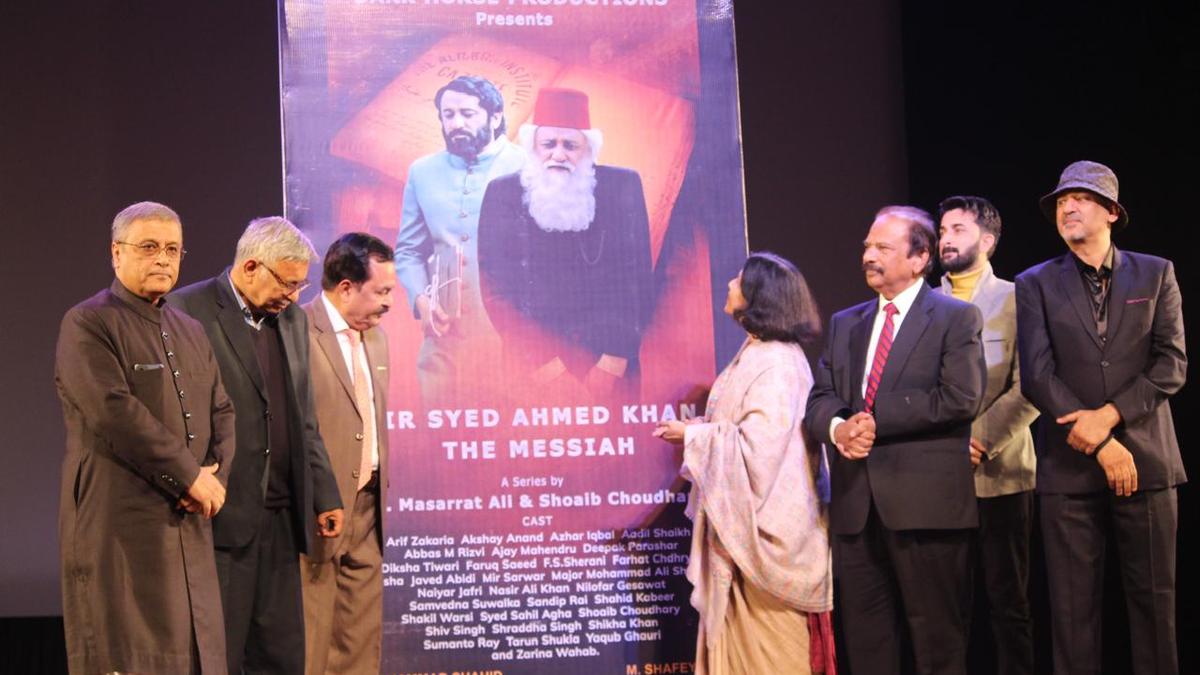
Syed Ahmed Khan biopic | Photo Credit: SPECIAL ARRANGEMENT

He is one of the architects of modern India or a proponent of the two-nation theory. However, moving away from easy binaries, the first biopic of Sir Syed Ahmed Khan attempts to find answers to the contested legacy of the founder of the Muhammedan Anglo-Oriental College that took the shape of Aligarh Muslim University (AMU). Long in the works, a two-hour cut of the OTT series, The Messiah premiered at the iconic Kennedy Auditorium in AMU on Monday, before the series streamed on Apple TV.

Coming at a time when the minority status of the Central University is being hotly debated in courts and society, the series details how Sir Syed confronted a section of the clergy and conservative elements within the Muslim community by creating a modern centre of learning to build bridges between the Muslims and the British government after the revolt of 1857, when the colonial power held the community largely responsible for the rebellion. “He held the ignorance as the primary reason behind the political decay of Muslims and thus pushed for modern education,” says Shoaib Hussain Chaudhary, who not only directed the series but also played the title role. “The role fell into my lap after big names declined to take up the challenge, perhaps because of the stigma attached to him.”

A known name in the television circuit, Chaudhary sees Sir Syed as an advocate of Hindu-Muslim unity, who was wrongly associated with the two-nation theory. “The theory came into being long after his demise in 1898. What he asked for was Muslim representation in legislative bodies and it remains relevant considering the political status of the community today.”

As someone who believed in answering a book with a book, Sir Syed responded to William Muir’s controversial commentary on Prophet Muhammad with a rational interpretation of Islamic tradition in Khutbat-e-Ahmadiya.

An adaptation of Hayat-e-Javed, Khwaja Altaf Hussain Hali’s biographical account of Sir Syed’s life, the series puts him in the league of reformists like Raja Ram Mohan Roy and Ishwar Chand Vidyasagar and argues that he was not a communal figure but a communitarian who was conscious of the fact that Hindus of Bengal were at least 50 years ahead of Muslims in taking up modern education.

Interestingly, the spark came from Mirza Ghalib. When Sir Syed approached the poet to write the preface of his translation of Ain-e-Akbari, he advised him to concentrate on the contemporary issues of the community and said there was no point in celebrating Akbar’s rule when the constitution of the world was being written in Calcutta.

‘Controversial ideas’

The series also critiques Sir Syed’s point of view on girls’ education and backward Muslims and debates whether he made a mistake by not joining hands with the Indian National Congress. It also explores his tumultuous relationship with his son Syed Mohammad, the first Muslim judge of a High Court during the British Raj, whose proclivity towards alcohol created problems in his personal and professional life. “Sir Syed’s character appears dichotomic but if you see him as a product of his times, things fall in place,” says screenwriter Mutyim Kamalee. “While Islam abhors slavery, he opted for pragmatism as after the revolt of 1857, the community was not in a position to take on the colonial power. Mahatma Gandhi also didn’t take the path of armed rebellion.” Kamalee says Sir Syed didn’t join the Congress but towards the end of his life he showed a change in his point of view and perhaps would have joined the Congress had he lived longer.”

Describing the series as an authentic portrayal of Sir Syed’s life and works, Prof. Shafey Kidwai, an authority on Sir Syed says, “Sir Syed views on women’s education and backward Muslims are widely misunderstood. The film tries to put the record straight in a convincing manner.”

Made on a tight budget, the series was shot on sets after AMU declined permission. “Filmmakers in the past didn’t live up to their promises, so the previous administration was circumspect about our intentions but I am glad now the university has embraced the film,” says Chaudhary.

Apart from Chaudhary, the series stars Akshay Anand, Zarina Wahab, Arif Zakaria, and Deepak Parashar in important roles.

source: http://www.thehindu.com / The Hindu / Home> News> India> Uttar Pradesh / by Anuj Kumar / December 20th, 2024

Asma Hussain The Royal Legacy Behind India’s Fashion Icon

Lucknow, UTTAR PRADESH :

Asma Hussain, an iconic name in the Indian fashion industry, is renowned for her remarkable designs and her deep-rooted connection to the royal family of Awadh. As a descendant of Shuja-ud-Daula, a ruler from the 18th century, Asma carries with her a rich legacy that has greatly influenced her work in fashion. Born into a family that has always been associated with culture and heritage, Asma Hussain’s foray into the world of fashion was a natural extension of her upbringing.

Since unveiling her first collection in 1994, Asma Hussain has become a household name in India and across the world, known not only for her royal heritage but also for her impeccable craftsmanship.

She is the founder of the Asma Hussain Institute of Fashion Technology (AIFT), an institution dedicated to imparting high-quality fashion education to young aspiring designers….

Early Life and Inspirations: Shaping a Designer’s Vision

Asma Hussain’s lineage has greatly shaped her journey as a designer. The royal family of Awadh is known for its contributions to art, culture, and history, and Asma has absorbed these influences into her design philosophy. Raised in a family that placed immense value on tradition, culture, and the finer things in life, Asma’s designs reflect a deep understanding of Indian craftsmanship, royal grandeur, and modern aesthetics.

While Asma’s royal connection often takes center stage in media discussions, it is her extraordinary skill and passion for design that truly sets her apart. Asma’s collection is an intersection of history and modernity, reflecting both her ancestry and the needs of the contemporary fashion world. She drew upon royal Indian textiles, ornate embroideries, and rich fabrics such as silk, velvet, and brocade to create collections that exude royalty while maintaining a sense of modern sophistication.

Her collection’s distinctive blend of Eastern and Western elements has helped her carve a unique niche in the fashion industry. Over the years, she has showcased collections that feature traditional styles combined with avant-garde concepts, which have gained the attention of both Indian and international clientele.

From AIFT to Fashion House: A Pioneer in Fashion Education

In addition to her success as a designer, Asma Hussain has contributed to the fashion industry in another significant way. In 1999, she founded the Asma Hussain Institute of Fashion Technology (AIFT) in Uttar Pradesh. The institute is recognized as one of the top fashion design schools in the country, offering comprehensive courses in fashion design, fashion technology, and merchandising.

AIFT was born out of Asma’s vision to provide young, aspiring designers with the skills, tools, and guidance they need to succeed in the competitive fashion world. Asma’s institute is unique because it goes beyond just offering technical knowledge—it teaches creativity, innovation, and critical thinking. The curriculum integrates both traditional and modern techniques of fashion design, which allows students to learn everything from embroidery and fabric manipulation to fashion history and business strategies.

Since its inception, AIFT has produced several successful fashion designers, many of whom have gone on to work for major fashion houses or start their own design labels. Asma’s role as an educator and mentor has become a cornerstone of her legacy, further cementing her influence on the Indian fashion scene.

https://www.instagram.com/reel/C7wOY5bNws4/?utm_source=ig_web_button_share_sheet

Asma Hussain’s Notable Clients and Collaborations

Asma Hussain’s clientele speaks volumes about her versatility and reach. Her designs have been worn by some of the most influential figures in India, including Bollywood legends, politicians, and celebrities. Asma’s ability to create outfits for a diverse group of people—from film stars to political leaders—demonstrates her exceptional skills and understanding of different tastes.

Some of Asma Hussain’s most notable clients include Bollywood actress Saira Banu, known for her timeless elegance, and Shabana Azmi, an award-winning actress and social activist. In addition to Bollywood icons, Asma’s fashion has also attracted attention from politicians, including the Prime Minister of India, Narendra Modi, and Uttar Pradesh Chief Minister, Yogi Adityanath. The fact that these high-profile figures have chosen Asma’s creations is a testament to her ability to craft outfits that blend traditional beauty with contemporary style.

In 1996, her fashion house was inaugurated by the legendary Bollywood actor Dev Anand, who was known for his style and charisma. Dev Anand’s association with Asma Hussain further solidified her reputation as a designer with a strong sense of elegance and sophistication. Since then, Asma’s creations have graced numerous high-profile events, cementing her position as one of India’s leading fashion designers.

Design Philosophy and Signature Style

Asma Hussain’s design philosophy is deeply rooted in the rich cultural traditions of India, especially those from her home state of Uttar Pradesh. Drawing from the royal aesthetics of Awadh, Asma’s clothing collections often feature ornate embroidery, luxurious fabrics, and rich color palettes. She is known for her use of traditional Indian textiles, such as Banarasi silks, georgette, and velvet, to create elegant yet modern garments.

One of the key elements of Asma’s designs is the intricate work on fabrics, especially hand-embroidered motifs that reflect the grandeur of royal craftsmanship. From sarees to lehengas, and even contemporary Western-style outfits, Asma’s attention to detail and craftsmanship is unparalleled. She is particularly known for her bridal collections, which are often a blend of traditional and contemporary styles, making them perfect for the modern bride who wants to feel regal on her special day.

Her designs are not limited to one particular category or occasion. Whether it is a wedding, a red-carpet event, or a festive occasion, Asma’s clothes can be seen on people from all walks of life. Her ability to create both traditional and contemporary looks has made her a favorite among clients looking for timeless elegance with a modern twist.

The Royal Influence: Awadh’s Rich Cultural Heritage in Every Stitch

The legacy of the royal family of Awadh plays a significant role in Asma Hussain’s designs. As a descendant of Shuja-ud-Daula, a ruler known for his opulence and patronage of arts and culture, Asma’s upbringing was steeped in the cultural richness of the region. The intricate embroidery and regal fabrics used in her creations are reminiscent of the royal courts of Awadh, where intricate craftsmanship was highly valued.

The use of zari work, brocade, and gold thread embroidery in her creations adds an aura of luxury and tradition. Each piece is meticulously crafted to ensure that it embodies the royal aesthetic, while also incorporating contemporary elements that make it relevant in today’s fashion landscape.

The Future of Asma Hussain in the Fashion Industry

Asma Hussain has not only succeeded in her career as a designer but has also played a pivotal role in shaping the future of fashion in India. Through her institute and her dedication to educating young talent, she is creating a legacy that will continue for generations. Asma’s vision for the future of fashion is one that embraces both tradition and innovation, ensuring that Indian fashion continues to evolve while staying grounded in its cultural heritage.

Her influence on the fashion industry is undeniable, and she continues to be a source of inspiration for aspiring designers. Asma Hussain is not just a fashion designer; she is a symbol of how tradition, culture, and modernity can come together to create something truly exceptional.

Asma Hussain’s Legacy in Indian Fashion

Asma Hussain is a name that has become synonymous with elegance, sophistication, and cultural heritage. With her roots deeply entrenched in the royal family of Awadh, Asma has successfully blended her ancestral legacy with her modern fashion sensibility. Her designs reflect the rich cultural heritage of India while catering to the modern woman’s needs, making her one of India’s most respected and successful designers.

Her legacy extends beyond her own creations to the many students who have passed through the Asma Hussain Institute of Fashion Technology, taking forward her vision and continuing to innovate in the world of fashion. Asma Hussain’s contribution to Indian fashion is undeniable, and her influence will be felt for years to come.

source: http://www.atlucknow.com / @Lucknow / Home> Lifestyle / by Mohd Badar / November 09th, 2024

Noted poet, social reformer , guide A M Shahbaz remembered

Shathgund Handwara Village, JAMMU & KASHMIR :

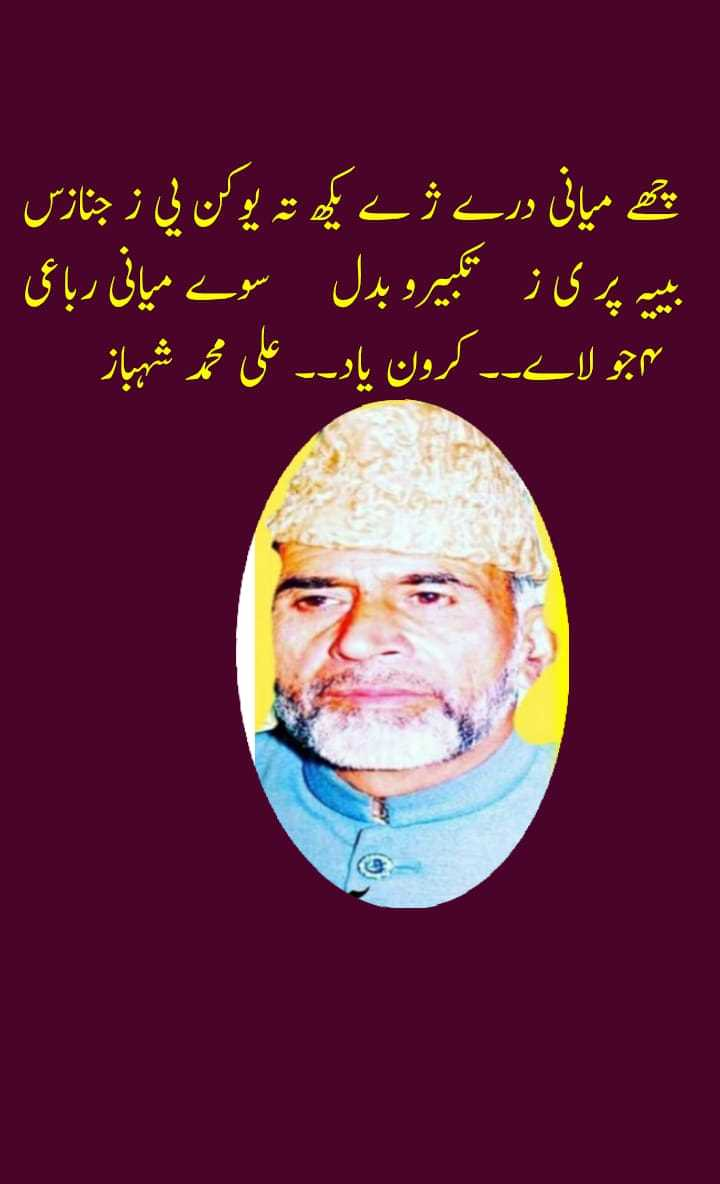
Popular Kashmiri poet and scholar Ali Mohammed Shahbaz was remembered across jammu and Kashmir on his 24th death anniversary. In this connection different functions and events were organized at various places and sites to pay glowing tributes to late literary luminary, who was Martyred  by unidentified gunmen on July 4,1996 at his his native village Shathgund Handwara. 

The major online event was organized by Kashmir Marksz- e -Adab -o -Saqafat chrar-i- Shareef.

The event was presided over by prof Mohd  Zaman  Azurdah. A large number of distinguished scholars, participated in the program and paid rich tributes to him. The speakers highlighted various dimensions of life and contribution of late poet.

The main attraction of the event was first ever Shahbaz memorial award. The award was presented to popular Kashmir folk singer, a house hold name of Kashmir folk singer Manzoor Ahmad Shah.

Dr Aziz Hajini, Convener Northern Regional Board Sahitya Akademi, New Delhi Presented the award to Manzoor Ahmad Shah. Dr Gazanfer Ali, president Kashmir Markaz e adab o Saqafat Chrari Shareef , Gen secretary Anayat Gul and son of late poet, Nazir Qureshi Ibn e Shahbaz were also present on the occasion. 

The prominent poets and writers  paid rich tribute to Late Ali Mohd Shahbaaz which  include Gh Qadir Shaheen, Rahim Rehna, Gh Rasool Josh, Mushtaq Mehram, Producer Radio kashmir, Javed Sofi, Nazim Nazir,  noted journalist and editor of  Brighter Kashmir  Farooq Wani.

Dr Sohan lal Koul, Bashir Bhadarwahi, Prem Nath Prem, Shown at Shafi Masoodi , Javed Rasool 

source: http://www.brighterkashmir.com / Brighter Kashmir / Home / by BK News Service / July 05th, 2020

Raffat Begum: How a begum’s emergence from the harem changed the lives of Rampur’s women

Rampur, UTTAR PRADESH :

Raffat Begum was a gifted poet and wrote with the pen name ‘Asmat’ and took advice from Azhar Inayati, a renowned poet of Rampur. She also wrote several barsaati folk songs celebrating monsoons as did Nawab Raza.

The names of brides have vanished from wedding cards in Rampur. So, we are cordially invited to the wedding of ‘Arif Khan, S/o Samiullah Khan to the daughter (no name) of Wahidullah Khan’. Even the names of women are concealed from vocalization by disrespectful male lips. The nameless miasma enveloping our girls is a recent trend in Muslim etiquette of this erstwhile princely state. It negates the ninety year journey the women of the city have traversed–all the tiny and large steps of emerging out of the zenanas, educating themselves and finding a voice. Maybe the unnamed daughter getting married was educated at one of the local women’s colleges established by the erstwhile Nawabs and has ambitions that involve a becoming.

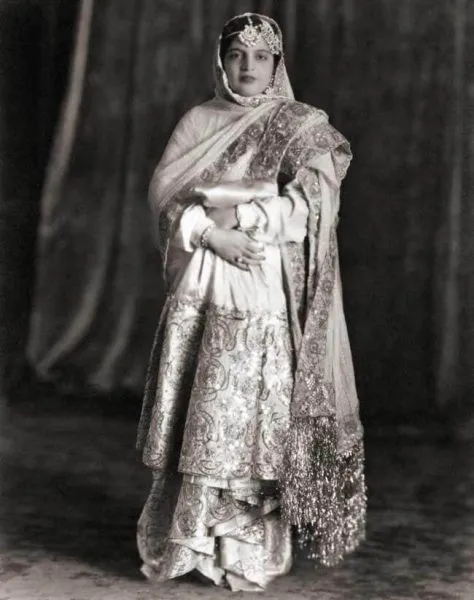
The emancipative journey of Rampur women began with the decision of a queen – Raffat Zamani Begum, wife of Nawab Raza Ali Khan– to leave the confines of the harem and become something more than a name. Nawab Raza (1930-1947), an enlightened ruler fully supported his wife in her decision and was possibly influenced by her in his very western and ‘modern’ outlook.  As the princesses and female members of the royal family followed Begum Raffat, there was a filtered down liberation among the women and girls of upper classes, and over the years a snowball effect that touched the lives of the of all classes of Rampur women.

Raffat Begum was the daughter of Sir Abdus Samad Khan, Prime Minister of Rampur under the colonial rule, an impeccable gentleman who traced his antecedents from the Najibabad royal family.  She was married to the crown prince, Raza Ali Khan, when she was five and he was six years old. The little bride sat on her grandmother’s lap, her heavy nath supported by her grandmother’s palm as the nikah ceremony was performed. The young daughter in law was granted all the paraphernalia of the future queen while still living with her father and had to attend court on special occasions. At a time when brides were given a new name and a title, her name was changed from Askari Begum to Raffat Zamani Begum.

When Raffat was thirteen, her father in law, Nawab Hamid Ali Khan (1894-1930) demanded that the rukhsati (going away ceremony) be performed. Raffat’s father insisted that they wait at least till the groom had completed his education. Raffat Begum wrote, and is quoted in her sister Jahanara Begum’s memoir, that the relations between the two gentlemen became strained. Finally, Nawab Hamid walked on foot from his Khas Bagh palace to the bride’s house, ‘Rosaville’, and the ceremony which usually took days was performed in a few hours; Raffat Begum left her paternal home amidst  songs extolling the valiant Rohilla Nawabs and martyrs of ancient battles.

The teenage couple began their married life often separated by the political intricacies and rules of the harem. Oral history says that they were not allowed to live together for seven years and Raffat Begum was declared infertile after her first son was born. Raza was forced to take a second wife by his father and stepmother. The women of Raffat Begum’s family did not practice strict purda. Her mother was the daughter of the regent of Rampur, General Azamuddin Khan (1888-1891) who had earned the ire of the maulvis of the time for his ‘kristaan’ viewpoint and his championing of female education. Some say he was murdered because of his radical outlook. It is therefore unsurprising that the educated Raffat Begum rejected the claustrophobic harem life she had endured for the first ten years of her married life as soon as Nawab Raza came to power. The couple showed a proclivity towards the ‘modern’ and western lifestyle in all areas and Raffat Begum became a major mover in the drastic transformation of the Rampur durbar, the zenana and Rampur culture. Though not documented in written histories, the influence of Raffat Begum on the dress, cuisine and court etiquettes finds testimony in oral history.

We get a vivid description of the Begum in her stepdaughter , Mehrunnisa Begum’s memoir, ‘An Extraordinary Life.’

Home tutored in English, Persian and Urdu, Raffat Begum entertained distinguished guests at royal banquets and sat for official pictures­­––the first pictures of women from the royal family. She wore latest western dresses, make up and was a chain smoker –– a ‘modern’ thing to do. In fact, she encouraged her children to smoke as it was considered fashionable. However, some women continued to live in the royal zenana ––more out of lack of choice and under confidence–– but there was no constraint on their movement. Given that Nawab Raza’s predecessor, Nawab Hamid confined his women to a sequestered life behind the laal purda, this was the beginning of a drastic change in the thought process and lifestyle of elite Rampur women.

The young princesses were sent to a boarding school after being brought up by British nannies in a strictly regimented nursery. Emulating the new trend, the elite landowning families and those associated with the court started educating their sons and daughters at boarding schools. So, my mother and her siblings were sent to La Martinere in the 1950s. The 1960’s saw Rampur’s first female doctors, teachers, writers and lawyers ––aspirational models for young girls studying in government colleges now housed in the old palaces and zenanas of yore. Nawab Raza gave a lot of emphasis to education particularly female education and the girls from ordinary families were now sent to girls’ schools in the city after initial misgivings. Covered rickshaws and thelas (carts) transported the burqa clad young ladies to schools. My mother became a doctor in 1967 and the women of my family practiced a flexi-veil where they would cover their heads, sit in curtained cars in Rampur and don sarees and bellbottoms outside of Rampur.

Raffat Begum was a gifted poet and wrote with the pen name ‘Asmat’ and took advice from Azhar Inayati, a renowned poet of Rampur. She also wrote several barsaati folk songs celebrating monsoons as did Nawab Raza. Some of her poetry was published.

Begum Noor Bano, her daughter in law and ex-Member of Parliament, recalls the after-dinner dastan sessions with the children and grandchildren gathered around their beloved ‘Mummy’.  The dastans were later written down by a scribe.

Mapara Begum, a court singer, says she would give importance to the lowliest person and welcome everyone with warmth. Which is why she was fondly called Raaj Maata, the queen mother of Rampur.

A few years after Nawab Raza’s death in 1966, Raffat Begum moved back to her father’s place, Rosaville, with her retinue of servants. It was an empty house. Her parents had passed away and her brothers and sisters had left in pursuit of their lives and careers. Life had come a full circle. She passed away at Rosaville in 1986 – an elegant begum, spirited and dignified till the end. Her plaintive lines are still echo on the lips of old timers:

“Aisey beemaar ki dava kya hai,jo batata nahi hua kya hai;

Kaun suntan hai is zamaney mein, kis se kahiye iltija kya hai.”

How can a person who cannot describe her ailment find a cure?

Even if I could find words for my pleas, would my entreaties find listeners.

Receiving yet another invite to the marriage of an anonymous daughter, I tried to remember the names of the wives of acquaintances and distant relatives. I came up with Naeem mamu ki biwi, Munney sahib ki ammi etc. etc. We are all guilty of using the blanket term bhabhi or khala to address the married women of various ages; we are introduced as wives, mothers and granddaughters. I used to laugh at the old style of explaining connections––‘Munney mian ki beti Shaddan Khan ke ghar mein hai’, indicating that Munney mian’s nameless daughter is married to Shaddan Khan. We have accepted an anonymous existence here and it is only logical that our girls get shrouded in namelessness on their wedding day.

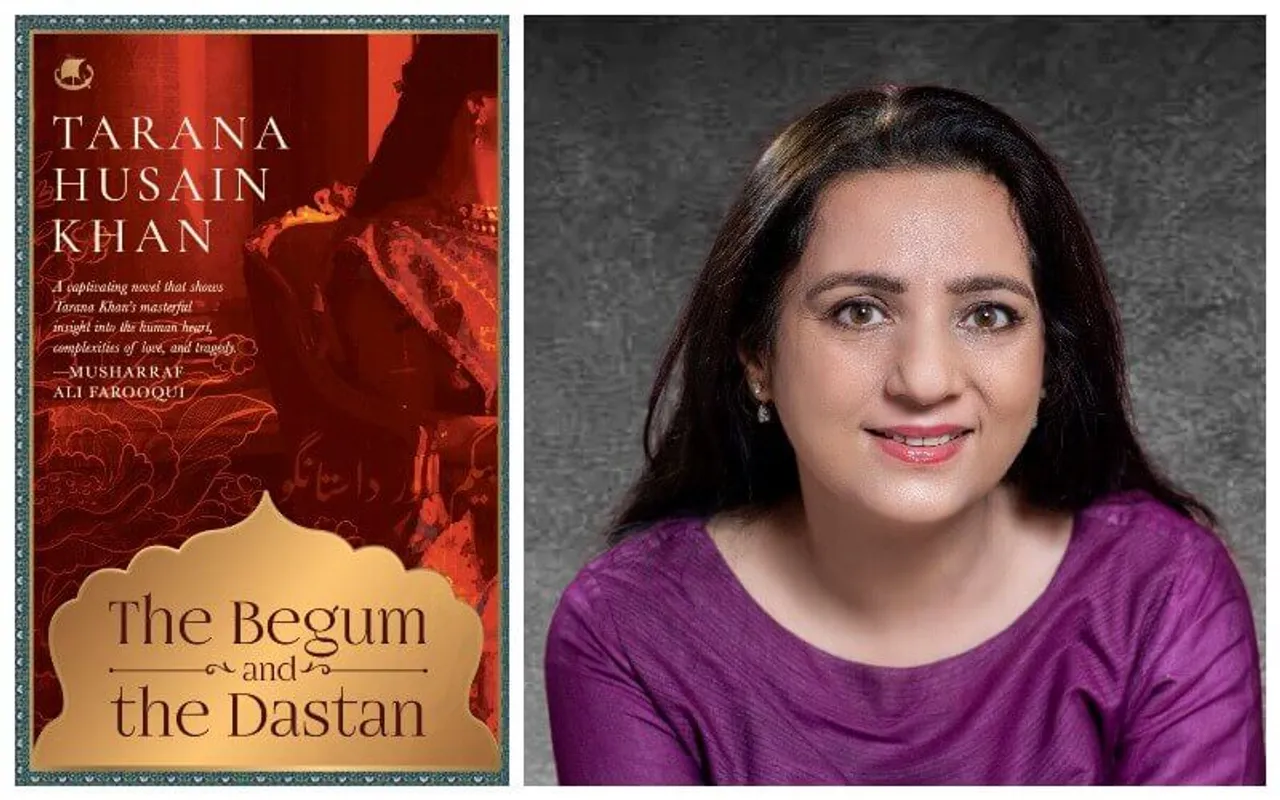
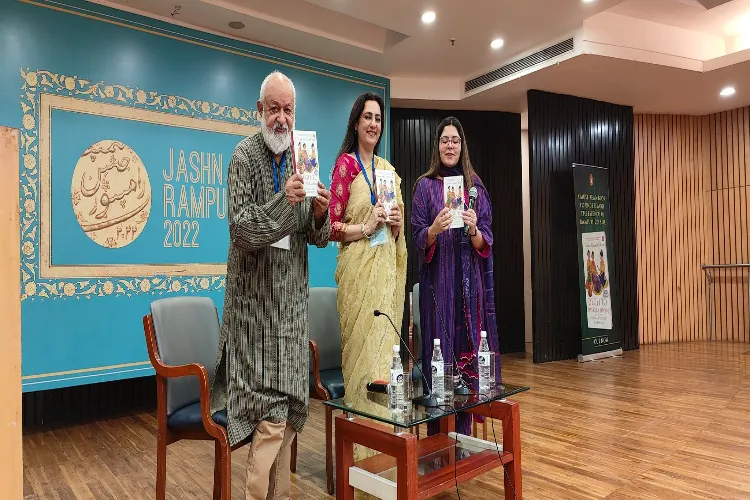
Tarana Husain Khan is a writer and researcher based in Rampur. Her historical fiction ‘The Begum and the Dastan’ has been recently published by Tranquebar. The views expressed are the author’s own.

source: http://www.shethepeople.com / SheThePeople / Home> Books / by Tarana Husain Khan / March 02nd, 2021

Motivational Speaker Extraordinaire Saeed Ahmed Changes Lives of Depressed Individuals

Sholapur / Pune, MAHARASHTRA :

Meet the man who is on a mission. He even gave up his lucrative job to completely devote himself to this cause. His goal is to inspire the next generation to become responsible and productive citizens by raising their level of awareness about education. He has been crisscrossing the length and breadth of the country since 2006.

The man is Syed Saeed Ahmed, a distinguished motivational speaker with a multifaceted personality who inspires and motivates others and unearths their hidden potential. He has an amazing sense of spontaneity, an inquisitive mind, and a captivating personality.

Throughout India, he has conducted countless personality development programs for the student fraternity, diverse academic community stakeholders involved in the teaching-learning process, the corporate sector, workers in extremely stressful work environments, and the group of people who accept their fate as pseudo-failures.

Saeed Ahmed’s workshops are widely recognized for their great content and distinctive, compelling style of delivery.

Ranked as one of the leading motivational speakers in India, Saeed Ahmed’s workshops are widely recognized for their great content and distinctive, compelling style of delivery. His energizing classes are intuitive, inspiring participants to realize their full potential, release their innate energy, and develop a burning drive for achievement and personal excellence. They are intended to provide participants with a great deal of energy and vitality, enabling them to advance both personally and professionally.

His successful endeavors to bring back to life pseudo-failures, particularly those with low motivational factors and a criminal past, have grabbed significant media attention. The last few years have seen the frequent publication of pieces celebrating these accomplishments in prominent newspapers, and multiple news channels have aired his pre-recorded interviews on the subject.

Born in Sholapur, a textile town in Maharashtra, Saeed Ahmed did his schooling through the Urdu medium and graduated in geography and political science. He went on to pursue higher learning. After completing his studies in library and information science, he did his post-graduation in the Urdu literature from Shivaji University in Kolhapur. He started his career in a modest capacity as an assistant librarian at a reputable college in Pune.

His early and modest profession served as a palette for shaping him into a multifaceted personality, as he was surrounded by antique and modern books, newsletters, and printed reference material of inter-disciplinary content. Gradually and steadily, he began to embody the roles of an actor, director, dramatist, journalist, writer, peace activist promoting global fraternity, and, most recently, a student. He is currently pursuing a doctorate at Pune University on the extremely relevant subject of “Hindustani stage and tradition of Urdu drama in Maharashtra.”

He is an expert at improving life skills, including stress management, time management, positive thinking, emotion management (for overcoming fear, grief, sorrow, rage, boredom, etc.), and a number of other crucial areas that participants may reveal themselves in. The contents change based on the situation, the amount of time available for engagement, and the participants’ overall characteristics, expectations, and concerns.

The evolution of a nationally renowned motivational speaker can be summed up by examining the thirty years of his career. This shows how a person’s life experiences, some natural and some others artificially created, play a crucial role in shaping a flexible personality that can handle any circumstance with ease. What makes the one and only “Saeed Ahmed” is a combination of his varied experiences with controversial topics and his recording of the algorithms used to address them.

Having spent a significant portion of his career working for an organization, he has encountered the typical challenges that all workers face in today’s cutthroat and materialistic workplace. As he began his dazzling career, he experienced moments of rivalry, envy, and unpleasant camaraderie from coworkers, superiors, and even higher authorities. To nearly all of them, he answered with forbearance, patience, and strengthened willpower. In actuality, they functioned as an oven to solidify his supple clay and imparted to him free psychological counseling, stress management techniques, and elegant interpersonal interactions.

Saeed Ahmed is not just a motivator of the highest caliber; he is also an actor, director, writer, documentary filmmaker, and journalist.

He was connected to several prominent theaters in Lahore, Pakistan, as well as Prithvi (Mumbai), Nehru Centre (Mumbai), Rangshankara (Bangalore), Hamdard University, Delhi, Balgandharva (Pune), and Punjab Naat-shala (Amritsar). He performed widely for an Indian audience with these theater groups, and three of his shows, which were shown consecutively for three years in a row at the “World Performing and Visual Arts Festival” in Lahore, were acclaimed internationally (2004, 2005, 2006). These were “Naquab” by Rafi Peerzada, “Jis Lahore Naee Dekhya” by Dr. Asghar Wajahat, and “Portrait” by Ratnakar Matkari.

Prior to this, most of the plays he directed and performed across the country were “Dhilli Khaat” by Naseem Mannan, “Portrait” by Ratnakar Matkari, “Najat” by Abdul Wahab Lunje, “Nafrat ke Rang” by Kazi Mushtaque Ahmed, and a few plays he wrote himself, including “Sir Sayyed Ahmed Khan (Founder of Aligarh Muslim University)”, “Toba Tek Singh,” a drama based on Saadat Hassan Monto, “Kahain Hai,” and “Dilli Ka Thagh” have received favorable reviews from critics and audiences alike. He made his acting debut as a character actor in the “Sunita” serial that was broadcast on Doordarshan. His drama “Sare Jahan Se Accha” had more than forty performances in Maharashtra.

An audio presentation in the form of an audio cassette, followed by audio CDs, and is currently in the process of creating a documentary directed, produced, and narrated by him about the life of Sir Sayyed Ahmed Khan. He also wrote the book “Sare Jahan Se Accha,” released by the Haji Ghulam Mohammed Azam Educational Trust, Pune.

In addition, he has contributed his expertise to the production of multiple documentaries for Pune-based organizations and cable networks.

Alongside his involvement in theater and the arts, he pursued a career as a professional journalist. From 1995 to 2001, he worked as a correspondent for Mumbai’s daily Inquilab and Munsif of Hyderabad and  Pune’s Urdu fortnightly Usool. He had also interviewed prominent figures.

When asked what inspired him to pursue a career in motivational speaking, he admitted with honesty that I was a shy boy in school with an inferiority complex who was accustomed to self-analysis.

Life is a “give and take” proposition, and the previous decades of my diverse work helped me learn enough to be ready for a “second innings” or platform change, in which I now hope to “give,” and in 2002, I made a lifestyle change, he said. In the year 2006, I left the well-secured job to venture into the turbulent waters of lending my ‘know-how’ for the personality development of all, he added.

About his experiences, he pointed out that materialism is prevalent in Muslim society, and there is a wrong notion prevailing in the society that education is for seeking a job. He stresses the need for “Taleem ke saath Tarbiat.”

Under his All India Educational Awareness 93-day tour, last year he traveled 10,000 km across the seven states and conducted 179 workshops in 134 cities. In the second part of the tour, starting on November 11, 2023, he will travel to 13 states.

source: http://www.radiancenews.com / Radiance News / Home> Focus> Pride of the Nation / by Abdul Bari Masoud / November 01st, 2023

Dr. Tarana’s book on forgotten Rampur foods released

Rampur, UTTAR PRADESH :

New Delhi :

Away from the hustle and bustle of the national capital Delhi, the food lovers gathered in Delhi’s India International Center to discuss the food – delicacies, genres and history – all day. It was for the release of Dr. Tarana Hasan Khan’s book ‘Deg to Dastarkhwan: Stories and Recipes from Rampur.

In this era of pizza, burger, and fast foods, we seems to be forgetting traditions of the Shahi, Mughlai and old delicious food.

Dr. Tarana Hasan Khan is one of the few to write on Dastarkhwan – the Indian cusine. She is also cultural historian.

Dr. Tarana Hasan Khan and her book

Her other book is: The Begum and the Dastan.

Dr. Tarana says It took her three years to cover the forgotten recipes of Rampur for the book. There is a chapter on rice and spices in this book.

Famous food writer Pushpant Pant also participated in the book launch ceremony. The program started with welcome address by Swati Pal, Principal of Janki Devi Memorial College.

She also discussed the problems faced in writing the book on the ‘forgotten foods of Rampur’ were mentioned. Yusuf Saeed and Naseema Naqvi had a long conversation on this subject. This was followed by a discussion on the history of the foods between Dr. Tarana and Pushpant Pant.

Dr. Tarana specially thanked Pushpesh Pant for attending the program and joining the discussion on delicious food. He has written about Pushpent Pant by posting on Twitter:

This book has been published by Penguin.

source: http://www.awazthevoice.in / Awaz, The Voice / Home / by Aasha Khosa / October 31st, 2022

Remembering Ustad Shafaat Ahmed Khan

NEW DELHI :

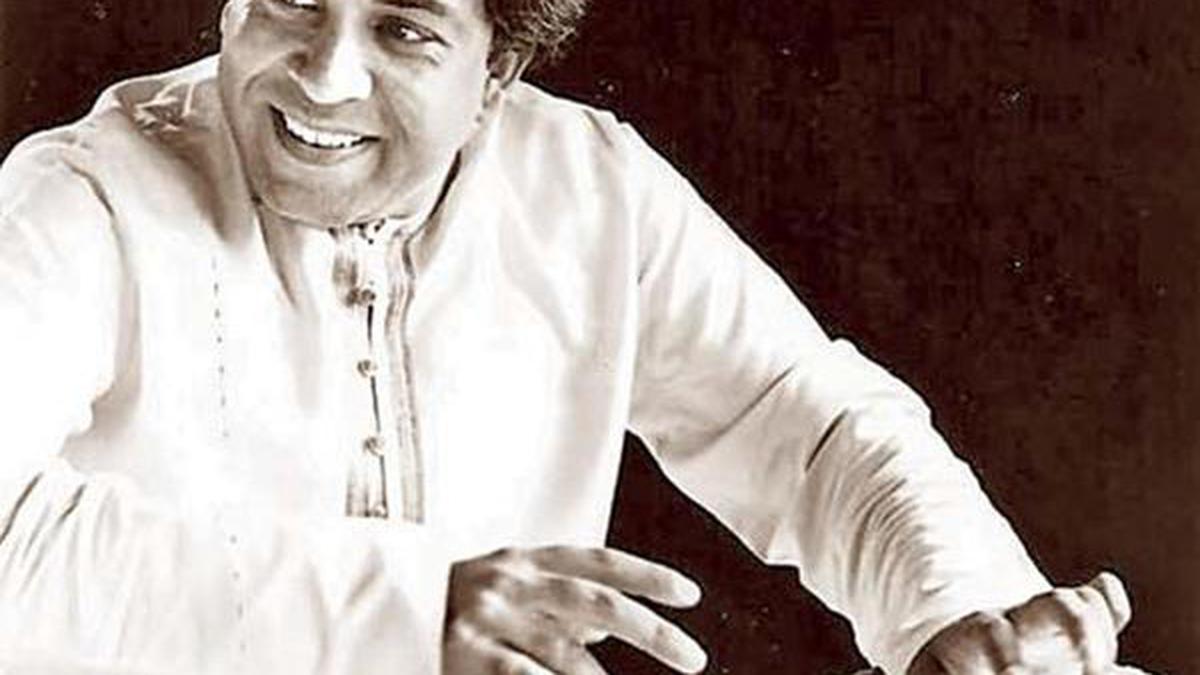
His own beat: Ustad Shafaat Ahmed Khan

Much before I became an admirer of Ustad Zakir Hussain, I was a devoted fan of Ustad Shafaat Ahmed Khan. The reason was simple. Growing up in New Delhi, I had the chance to see the tabla maestro regularly when I was a teenager, often with luminaries like santoor monarch Pandit Shivkumar Sharma, flautist Pandit Hariprasad Chaurasia and sarod maestro Ustad Amjad Ali Khan.

After moving to Mumbai, I continued to attend Khan’s shows, and interacted with him twice as a music journalist. It came as a huge shock when he passed away on July 24, 2005, at the untimely age of 51, after a bout of hepatitis. Among classical music lovers, memories of Khan’s music remains fresh. Coming Wednesday, on his 14th death anniversary, Pancham Nishad is organising a tribute concert at the Veer Savarkar auditorium, Shivaji Park. It will feature vocalist Sanjeev Chimmalgi and tabla maestro Swapan Choudhuri, whose performance was a highlight of the Ustad Allarakha birth centenary celebrations on April 29.

I first heard Khan perform in 1977 when I was 14, at the Shri Ram Centre, New Delhi. He was accompanying Shivkumar Sharma on Raag Bhoopali. It was the first time I heard the santoor and the experience was magical. I didn’t understand the technicalities, but was totally enraptured. Both Sharma and Khan became my heroes. The same show also featured violinist N. Rajam and vocalists Rajan and Sajan Mishra, with different tabla accompanists. So imagine my joy. I told my parents to take me to more concerts, and very often, Khan would perform.

Senior aficionados often talked about Khan representing the Delhi gharana, and Hussain being associated with the Punjab school. It made no difference to me, until I started writing about them. I also had the good fortune of seeing tabla players like Kishen Maharaj, Anindo Chatterjee and Suresh Talwalkar perform.

My first meeting with Khan took place in the early 2000s, when he was to perform at the Gunidas Sangeet Sammelan at Nehru Centre, Worli. While the interview was formal, he was delighted to see an ardent admirer like me. “People normally try to find fault in my technique. You are different,” he had joked. The second encounter was at Sharma’s birthday celebrations in 2004. It was a select gathering of about 25 people. This was where I discovered what a fantastic mimic Khan actually was.

He narrated hilarious incidents about musicians. One of them was about a senior instrumentalist who was yelled at by an elderly foreign lady at the Amsterdam airport because he was humming the notes of Raag Bageshri a tad loudly.

When Sharma pointed out that he was mimicking those not present at the party, prompt came the reply, “If I mimic you, you won’t let me play at your shows. My career will finish,” stated Khan clearly.

source: http://www.thehindu.com / The Hindu / Home> Entertainment> Music / by Narendra Kusnur / July 18th, 2019

The New Sound of Old Music

DELHI :

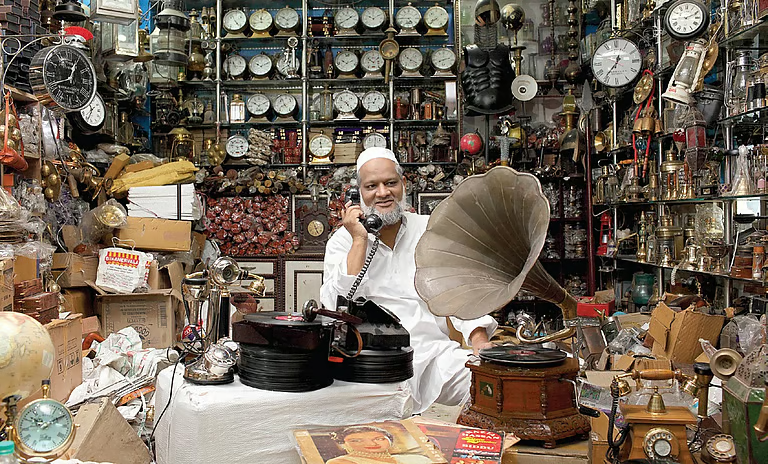
Rais Ahmad is one of the earliest to open for business in Chawri Bazaar in Old Delhi.

Rais Ahmad, 53, Sufia Handicrafts, Chawri Bazaar

Rais Ahmad is one of the earliest to open for business in Chawri Bazaar in Old Delhi. His tiny shop called Sufia Handicrafts is home to a mind-boggling number of miniature to mid-sized antiques. But before you begin to admire any of those, 53-year-old Ahmad takes you by your hand and pulls you towards the corner of the shop where his most precious collectables lay scattered—a side of the shop that’s home to heaps of original old gramophones and records. “So, what do you think about them?” he asks us, adding, “Have you ever seen a collection like this anywhere in Delhi?” Not waiting for our reply, he pulls us towards another corner of the shop where he takes our attention to imitations of the ones we had seen 20 seconds back.

Least to say, he loves his music and listens to Mohammed Rafi on a daily basis, while repairing all the gramophones that have been left behind to be fixed. He proudly tells us that he can set right almost any kind of snag, whether pertaining to manual gramophones or the electric ones.

Besides that, Ahmadji—as he is fondly addressed—stores vinyls in various regional languages, especially Bengali. While an original gramophone can cost you anywhere between `4,000 and `6,000, the imitations start at `1,500. The records, on the other hand, will cost you `100 to `200, and any kind of repair anywhere between `100 and `600, depending on how much it needs to be fixed.

Address: 1775, Main Road, Lal Kuan, Chawri Bazaar. Phone: 9810125493

source: http://www.newindianexpress.com / The New Indian Express / Home> The Sunday Standard / by SS / April 12th, 2015

Mumbai : Felicitation of AMU Achievers by Beauties of AMU

Mumbai, MAHARASHTRA :

Mumbai :

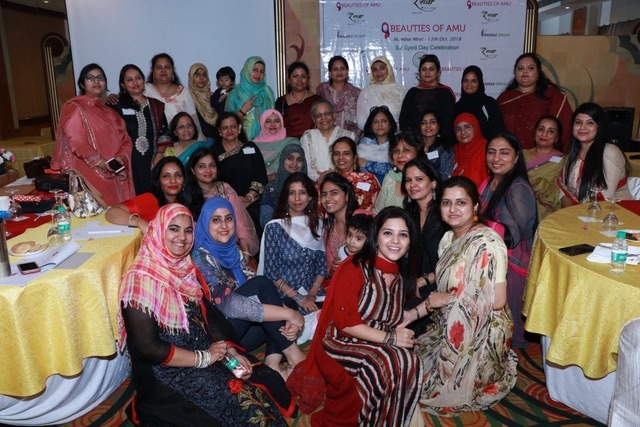
The Aligarh Muslim University Alumni Group formed by female community of this iconic citadel of modern education, known as Beauties of AMU held its Mumbai Meet  towards the Sir Syed Day celebrations on 13th October at Hotel Marine Plaza, Mumbai.

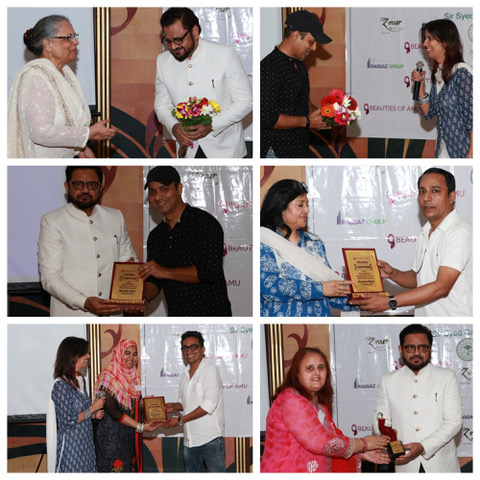
Noted philanthropist, business giant and AMU alumni, Raees Ahmad, MD, Rassaz Group was the Guest of Honour at the event. Faridoon Shehryar, a well known Bollywood journalist was among the AMU stars which illuminated the galaxy of AMU achievers at the event. Faraz Haider, director of War Chhod Na Yaar fame attended the meet in capacity of another AMU stars while famous lyricist Arafat Mehmood stole the show with his magical spell of beautiful words in perfect sync with the event.

The event saw a huge turnout including personalities from all walks of life who build up the social circuit of Mumbai.

Sir Syed lived briefly in the city which now boasts of being the financial capital of India, hence it is imperative to take the message to this very city which had alumni association focussing on male alumni.

Since it couldn’t offer much space to the female alumni based in the city for the nostalgic networking over chai. Beauties of AMU took the plunge and brought them all on the same page, allowing them their own space for discussing and dealing with issues of societal concerns.

At the event Mrs Farrukh Sayyeda highlighted the importance of space for women. She said it’s good to be ‘Mrs Somebody’ but anything that gives you self identity is rather more important and brings self-satisfaction. This identity is not necessarily connected to financial income, added Mrs Farrukh (former principal).

Extending the thoughts, Mr Rais Ahmed (Guest of Honor) talked about the role of Sir Syed in Women Empowerment.

Mumbai is more popularly known for the Indian film industry which has considerable contribution from Aligarh, such as Khwaja Ahmad Abbas, Saeed Jafri, Javed Akhtar, Surekha Sikri, Naseeruddin Shah, Dilip Tahil and to name recent additions, there are Anubhav Sinha, Faraz Haider, Faridoon Sheheryaar and Arafat Mehmood.

Alumni of AMU are front runners in every industry in every corner of the country and the world as well, whether it is Frank Islam of USA, who was the member of Barack Obama’s contingent to deliberate with Muslim world, being a key figure in the economy of USA or the pharma giant Cipla’s founder Khalid Hameed, who has served humanity in Africa so well that nobody would ever find an example like it.

Aligarh has come out of its cocoon with the first and second generations and prepares its next generations following the footsteps of Ismat Chugtai and Qurratulain Haider.

Beauties of AMU is playing the catalyst in this inferno which would reassure the paying back to the great institution of Aligarh, which has contributed largely for the cause of nation building.

Felicitation for AMU Achievers in Bollywood

  1. Faridoon Shahryar- An award winning journalist and known face as an anchor for popular chat show Talking Film, Mr Faridoon was felicitated for his achievements. He participated in event with exuded fervor reminiscing his AMU days with a mention of jumping walls and taste of fritters
  2. Mehmood Arafat- Inspired by his father who is a well known trade unionist, political figure, writer and a popular poet of west Bengal, Mr Arafat is a popular Bollywood Lyricist. His famous work includes songs from Loveyatri, Half Girlfriend, Heartless, Housefull 3, Welcome Back, Sarabjit, Kis kis ko pyar Karen, Machine, Jalebi etc. Mehmood Arafat relived the AMU days by reciting a poem filled with complete nostalgia of AMU, Abdullah Hall, Shamshad Market , Kennedy Hall
  3. Faraz Haider is a well known director of war na chod yaar and Nanu ki Jaanu movie fame attended the event and filled the vibes with laughter and fun by recalling an incident where he got a chance to visit Abdullah Hall

Beauties of AMU(BOA)  is a social welfare organization formed by female alumni of Aligarh Muslim University that functions to spread awareness about education and empowerment of women of all sections of society.

Started off as a Facebook group in 2017, by Iram Raza, a graduate of Department of Mass Communication, Aligarh Muslim University, Aligarh, this group has done meets in 3 cities (New Delhi, Lucknow, Aligarh) so far and the Mumbai Meet Up towards Sir Syed Day was a part of the reunion initiative of the group in the time span of 1 year.

The organization now plans to hold similar events in other parts of country for reuniting the female alumni of the university living in those cities, spreading out the message of goodness and universality.

BOA has been organizing meet-ups in different cities of India for the female alumni who haven’t been included in the old boys associations, providing them a platform to meet and greet and share happiness and nostalgia of their days at Aligarh furthering the reunions to social causes.

BOA has been instrumental in organising several events that contributed well to the cause of social welfare in general and AMU alumni in particular, that makes it stand apart from other alumni associations concerned with AMU.

source: http://www.muslimmirror.com / Muslim Mirror / Home> Exclusive Reports> Indian Muslim / by Faisal Hasan / October 18th, 202

Media innovator Farhat Khan joins global film powerhouse IIFSA as fellow and Astar award council member

Gorakhpur, UTTAR PRADESH / NEW DELHI :

Prof. Farhat Basir Khan (image outsourced)

India’s media innovator Farhat Khan joins global film powerhouse IIFSA as fellow and Astar award council member. Here is the report:

As the global film industry increasingly embraces innovation at the intersection of art, science, and education, an Indian academic has been named to one of its most distinguished international institutions.  Prof. Farhat Basir Khan has been elected a Fellow of the International Institute of Film Science and Art (IIFSA) and appointed to its Astar Award Council, becoming the first Indian to hold both positions.

The dual appointment represents a significant moment for India’s academic and cinematic communities. It signals the growing international recognition of India’s contributions to the evolving landscape of film theory, media education, and technological storytelling. As IIFSA prepares to host its inaugural Astar Awards in Bangkok on August 27, and expands its global academic alliances across Europe, North America, and Asia, Khan’s appointment places an Indian voice at the core of international decision-making on the future of screen culture.

The role is more than symbolic. The Astar Council will shape the vision and execution of one of the most anticipated new global awards in film and media innovation. The ceremony will convene leaders from across creative, academic, and technological fields, recognising those redefining what it means to tell stories in the digital age.

Based in New York City, IIFSA is a globally respected think tank advancing the integration of cinematic art with scientific and technological exploration. Its current roster of Fellows includes some of the most influential figures in the field: Demetri Terzopoulos, Oscar Technical Award winner and a pioneer in visual computing; Prof. Patricia Pisters, a leading theorist on neuro-cinema; and George Huang, the UCLA professor whose screenwriting work has shaped Hollywood’s narrative landscape. IIFSA’s initiatives range from academic research and policy reports to cross-continental educational reforms and interdisciplinary artistic collaborations.

Prof Farhat Khan’s journey to this global stage is built on decades of educational innovation. He was instrumental in developing the academic and technical foundation of the AJK Mass Communication Research Centre at Jamia Millia Islamia, now considered among the premier media schools in Asia. Farhat Khan portfolio includes the creation or restructuring of over 24 academic programmes, the establishment of 12 media production labs across Indian institutions, and the launch of the Department of Design and Innovation in 2021 , an interdisciplinary space focused on storytelling, technology, and civic engagement.

Currently heading the Centre for Media and Mass Communication Studies at Jamia Hamdard, Farhat Khan continues to influence media education with an emphasis on accessibility, innovation, and purpose-driven communication. His work extends far beyond the classroom: initiatives like Photos4Peace, ChitthiAayi Hai, and Votography have used visual storytelling as tools for public awareness, democratic participation, and social change.

Farhat Khan also led the Indian student team that won the country’s first Sony World Photography Award (Student Focus category) at Cannes in 2009, competing against teams from around the globe, a milestone still regarded as a turning point in India’s international visual arts recognition.

Farhat Khan election to IIFSA’s Fellowship and Council reflects the organisation’s emphasis on inclusive, global, and interdisciplinary leadership. As IIFSA seeks to shape the next era of cinematic practice and education, perspectives from emerging and underrepresented regions are being brought to the centre of the conversation ,and Khan’s presence plays a key role in that realignment.

Far from being a personal accolade alone, this appointment points to a broader shift: the recognition of India not only as a consumer or producer of cinema, but as a thought leader in how visual narratives will be conceived, taught, and experienced in the years to come.

source: http://www.theokhlatimes.com / The Okhla Times / Home> JMI-Edu / by The Okhla Times / August 08th, 2025