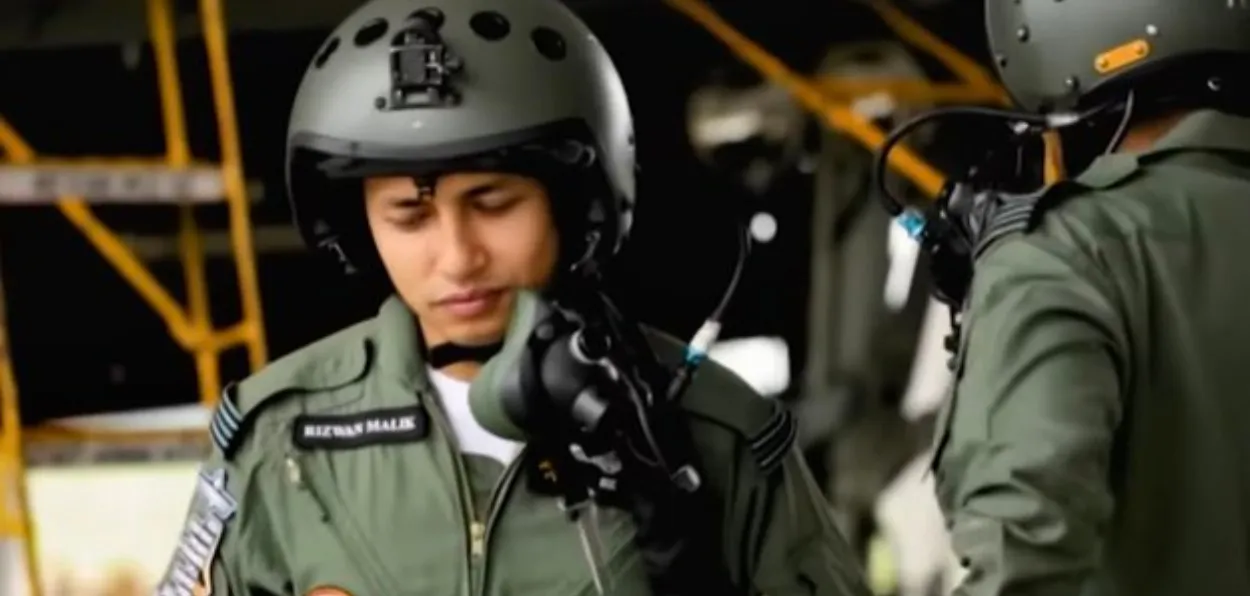
Manipuri people are gloating over Sqn Ldr. Rizwan Malik, son of the soil, being awarded Vir Chakra for his role in accurately striking targets inside Pakistan in Operation Sindoor.
Rizwan Malik is from No.102 Sqn of the Indian Air Force. According to Chief Minister N Biren Singh he is son of Alhaj Hafizuddin and Alhajan Waheeda Rehman of village Kheikhu.
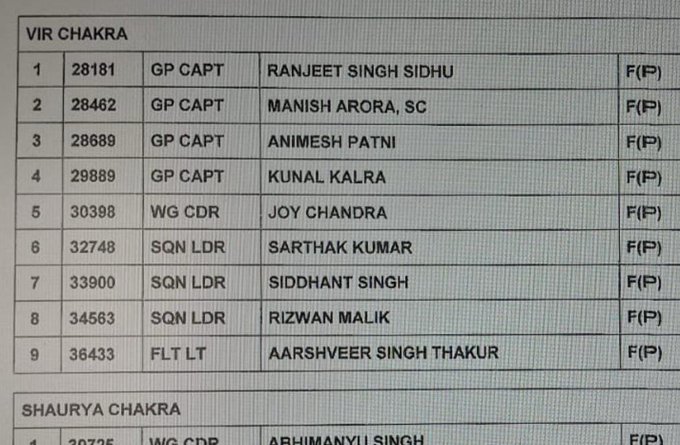
On the eve of Independence Day the government announced Vir Chakra for nine Indian Air Force brave hearts who struck military assets and terrorist hubs inside Pakistan during the Operation.
It’s for the first time in the Military history of India that Indian Air Force gets so many VCs for a single operation. It’s the third highest honour for war-time bravery and courage given to soldiers.
He flew Su-30Mki to hit Pakistani assets.
List of Vir Chakra awardees
Social media is full of praises for Rizwan Malik being conferred with VC along with eight other IAF pilot on the Republic Day.
A spree of congratulatory messages posted on social media started from Chief Minister N. Biren Singh:
Heartiest congratulations to Squadron Leader Rizwan Malik, son of Alhaj Hafizuddin and Alhajan Waheeda Rehman of Kheikhu, Manipur, on being awarded with the prestigious Vir Chakra for his heroic role in Operation Sindoor.
A former Maharaj of a Principality in Manipur also congratulated the son of the soil
A Big Congratulation 👏 🎉
Feel proud to have a son of soil like Squadron Leader Rizwan Malik of Keikhu, Manipur on being awarded with the prestigious Veer Chakra for his heroic role in OPERATION SINDOOR. pic.twitter.com/0fDxkIrfVn
— Maharaja Sanajaoba Leishemba. (@MaharajaManipur) August 14, 2025
A Rajasthan based defence analyst claimed Rizwan Malik had hit the Jaish-e-Muhammad headquarters in Bhawalpur, Punjab where an estimated 100 terrorists and their families died.
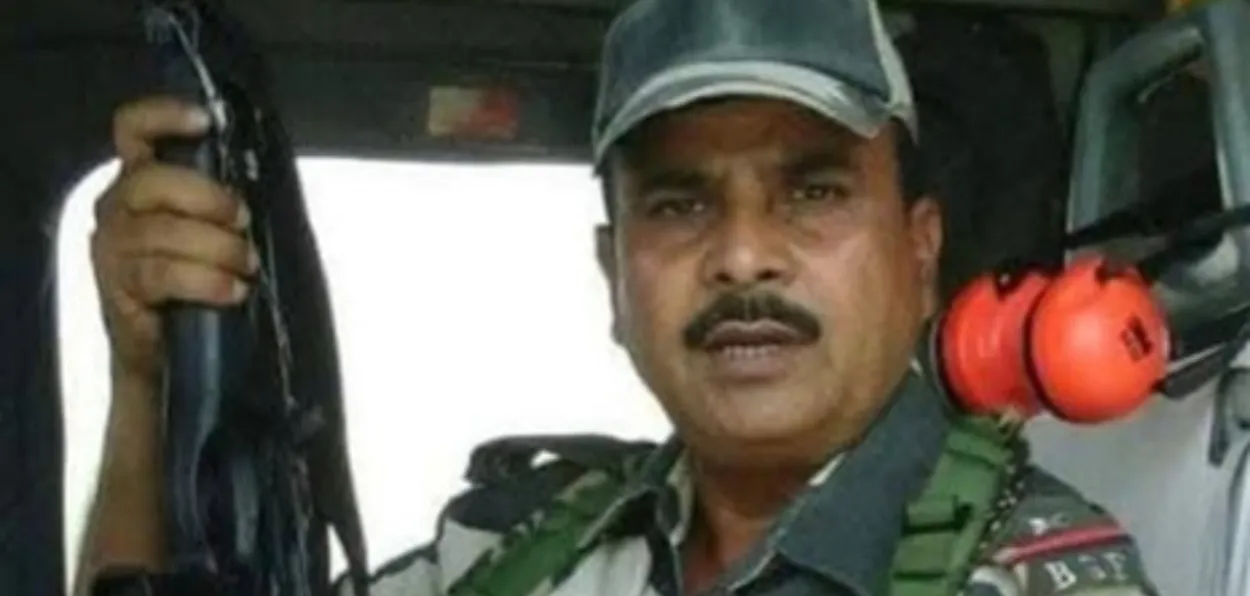
Border Security Force’s Sub-Inspector Mohd Imteyaj and Constable Deepak Chingakham were posthumously awarded Vir Chakra, the third highest war-time gallantry award – in recognition of their exceptional courage and self-less leadership in the face of adverse situation
Sub Inspector Mohammad Imteyaj was martyred on May 10, during cross-border firing along the International Border in RS Pura sector, Jammu and Kashmir.
Constable Deepak Chingakham hailed from Manipur. He sustained grave injuries during the exchange of fire with Pakistanis on the international border in RS Pura and laid down his life for the nation,
Imteyaj hailed from Narayanpur in Garkha, in Saran district of Bihar.
He was posted on the international border in Ranbirsinh Pura sector in Jammu. According to a Border Security Force (BSF) official, Sub-Inspector Mohammad Imtiyaz led the front bravely and made the supreme sacrifice.
He was buried with military honours in the cemetery located in Narayanpur village of Gadkha block of Saran district amid chanting of “Bharat Mata ki Jai” (Hail, mother India!). People showered their floral tributes on Imtiyaz’s body.
Mohammad Imtiyaz is survived by his wife, two sons, and two daughters. BSF said Mohammad Imtiyaz led from the front.
As soon as the news of Mohammad Imtiyaz’s martyrdom reached his home, initially his village and later the entire district went into mourning. A large crowd gathered outside his house; people were trying to show their sympathy to the family and gratitude to the brave son of the soil.
source: http://www.awazthevoice.in / Awaz, The Voice / Home> Stories / by Aasha Khosa, ATV / August 16th, 2025
About 28 years ago, I learnt one of the most fascinating tales of what military rivalry between India and Pakistan has meant for some families.
At a dinner party in New Delhi, an elegant gentleman walked up to me and asked if I was serving in the Indian Army. My haircut perhaps gave this away, as I answered in the affirmative (I was then an instructor at the Indian Military Academy, Dehradun). When I enquired if he had any military connections, he replied ‘yes’; his two elder brothers had both been officers. To this, my natural response was, “What were their regiments?” He then said with a sad smile, “Let me tell you a story.”
And this was the story he narrated to me:
Several years earlier, he had run into the Pakistani military attaché, Brigadier Beg, in India at a circuit house (Dak Bungalow) while driving on the Delhi-Ahmedabad highway. Apparently the attaché had upset him earlier in the day with his lack of road manners, and when informed of the same, to make up, the Pakistani Brigadier invited him for a drink. During the course of their conversation, and on learning that his guest (the gentleman who was narrating the incident to me) was an Indian Muslim, the Pakistani Brigadier said to him that it was only in the 1965 war that he learnt that Muslim officers were also serving in the Indian Army.
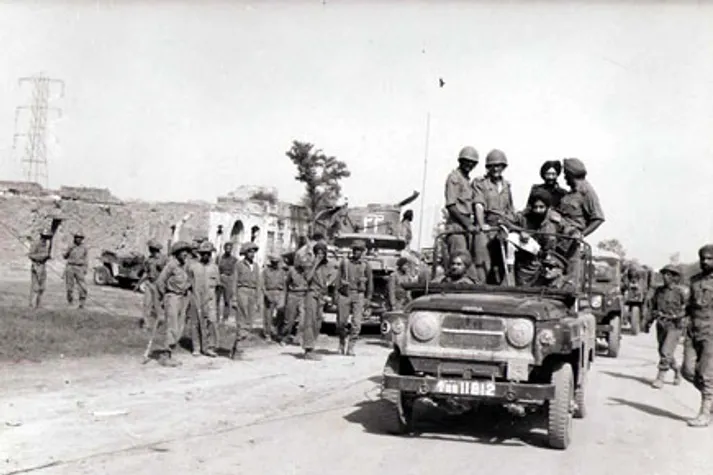
(The Indian Army’s armoured (tank) units had made substantial gains in fierce battles in the Sialkot sector of Pakistan’s Punjab. Many well known armoured regiments were part of India’s 1st Armoured Division’s thrust lines, such as Poona and Hodson’s Horse, 2nd Lancers, 3rd, 16 and 18 Cavalry. Many thought it was only a matter of time that Sialkot would fall to Indian troops, as Pakistan’s Armoured Division, despite its apparently superior tank units, was in retreat. Pakistan’s commanders desperately needed a tactical break to regain some of the momentum of battle.)
It was at this stage of the war—around 8 September 1965—that the Pakistani Brigadier, then a young Lieutenant, was summoned by his Brigadier Commander. He was asked plan and undertake a commando raid that would take him into Indian frontline positions around Sialkot. His task was to eliminate one or more Indian tank commander(s). This would leave that Indian unit briefly without a commander and give Pakistan that brief window of opportunity to break through India’s formidable frontline.
So this Pakistani officer (then a Lieutenant, now a Brigadier) set about preparing for the raid, to sneak in amongst Indian tanks, during darkness, and kill an Indian tank commander who was giving Pakistani troops a rough battle. So, on 8/9 September before dawn, Lieutenant Beg sneaked into his target area as Indian tanks were preparing for another day’s battle around Sialkot. (In those days, in the absence of night vision devices, tank battles were largely fought during day light). He soon identified a Squadron Commander’s tank, and climbed atop it unnoticed in the loud roar of tank engines as they were warming up for battle.
Peering inside the open cupola, he saw a Major in his radio headset who was poring over his maps, planning for another day’s battle. With no time to lose, Lieutenant Beg shot the Indian Major through the head. But before leaving the wounded Indian officer, Lieutenant Beg decided to take along some proof of having accomplished his mission. He quickly unbuttoned the shoulder flaps of the Indian Major, and pulled out the cloth epaulets of his ranks from his shoulders. On this was also embroidered ‘16 CAV’, the title of his regiment. And in the breast pocket of the Major, he also found a holy pendant that some Muslims carry on them as a good luck charm. His job done, this young Lieutenant with his raid party then quickly crossed back over into the territory that Pakistani troops were still holding onto, before dawn broke.
Lieutenant Beg then immediately went to see his Brigade Commander, who had sent him on the raid. He met him in the early hours of the morning, where he proudly reported that he had accomplished his mission. His Brigade Commander asked him if he had any proof of it. The young Lieutenant pulled out the epaulettes of the rank badges of the Indian Army Major he had shot, and handed it over to his Brigade commander. Then he suddenly saw the Brigadier become tense. Lieutenant Beg said to the Brigadier that he had possibly killed an Indian Muslim officer, as he handed over the holy pendant he had recovered from the dead Major’s pocket. As an afterthought, he added that he was quite surprised that India’s army also had Muslim officers who were fighting with such commitment and valour against Pakistan.
At that point his Brigade Commander’s hands began to shake and he couldn’t control his emotions any more. His voice became heavy and his eyes filled with tears as he slumped into a chair. Lieutenant Beg asked the Brigadier, with due respect, what the problem was. In a voice choked with emotion, he replied: “Young man, I have just realised from the evidence you have provided that I had tasked you to kill my younger brother.” The Commander kept shaking his head and then went on to add, “I hadn’t the foggiest idea that it was the 16 Cavalry that was directly pitted against us, because Major MAR Sheikh, whom you have just killed, was my younger brother and one of its squadron commanders. And he was their only Muslim officer.” Lieutenant Beg could say little else, as he saluted and took his commander’s leave.
And when Lieutenant Beg finished telling this story to the man who had related it to me, this gentleman told the Pakistani officer, “Brigadier, it may surprise you to know that the two brothers you have spoken about were both older to me… I am the youngest of the three brothers.”
And as the Brigadier stared at him in disbelief, the narrator of this tale requested Brigadier Beg to visit his family home—which was only a few hour’s drive from where they were—to meet his aged mother, who had always wanted to meet someone who had fought against her son! When the Pakistani Brigadier met the old begum the next day (who didn’t know that her son had died of wounds inflicted by the Brigadier), she seemed pleased that the enemy thought well of him!
Records show that Major Sheikh died of wounds in his head sustained in battle near Sialkot on 10 September 1965. He was posthumously awarded the gallantry award of a Vir Chakra. His brother, the Brigadier, rose on to become a General in Pakistan.
source: http://www.openthemagazine.com / Open / Home> Web Exclusive / by Maroof Raza / August 27th, 2015
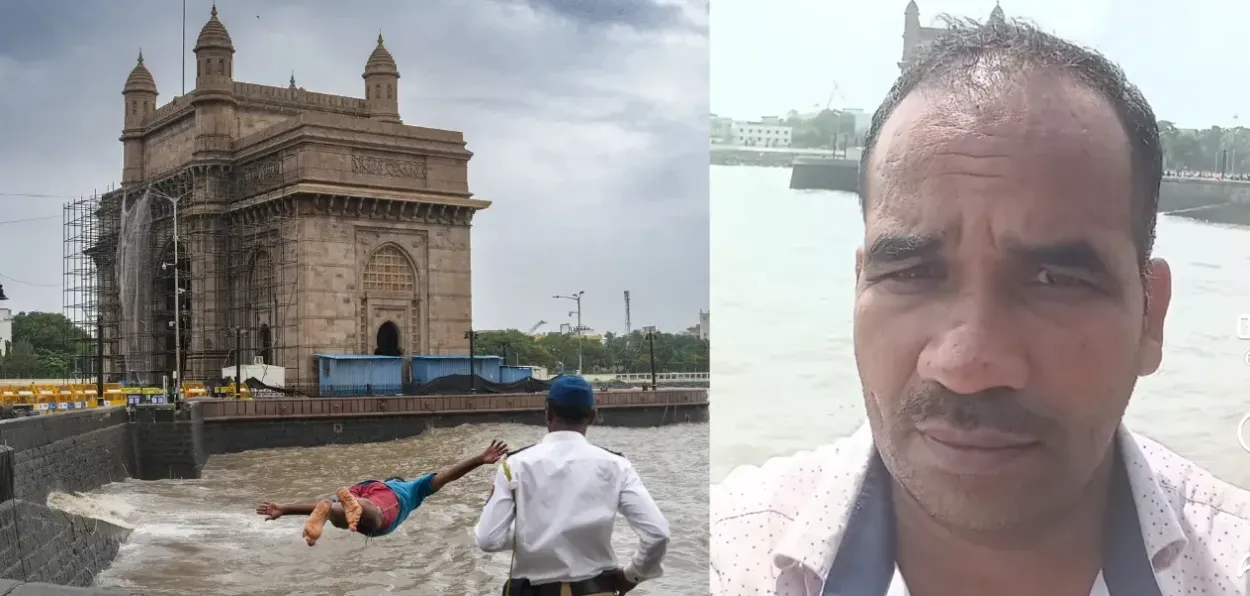
Mohammed Nazim Sheikh, 51, is a silent saviour of lives on the Mumbai shores. After selling pav (Mumbai bread) at the Colaba, from early monring till noon, the 51-year-old Mumbaikar, leaves for the beach at the Gateway of India to keep an eye on the sea lovers who might be unknowingly putting their lives at risk.
Like a silent sentinel, he has been guarding the dangerous beach at the Gateway of India for 35 years and has saved more than 300 persons so far.
Nazim says,”They (tourists) come closer to the sea to feel the splash. Once they slip, the tide pulls them into the water,” he says. “If somebody doesn’t rush for their help, they’re gone.”
Nazim started rescuing drowning people at the age of just 16. With the skills of a trained lifeguard and a sense of mission, he pulls people out of the water who are unaware of the dangers and are carelessly near death.
“They come just to feel the splash or to see the view, but one slip is enough, and the wave takes them away. If immediate action is not taken, it is not possible to save them,” he says.
Nazim says he has also recovered about 25 to 30 bodies so far—mostly men. He has witnessed many accidents during festivals.
Nazim’s most memorable rescue operation was in 1996 when he swam across during high tide. For this feat, he was awarded the title of ‘Best Swimmer’. In recent years, especially during the 2022 Ganpati immersion, he saved two people from drowning.
According to hawkers who set up shop around the Gateway of India, Nazim is always the first to arrive. Nowadays, due to social media, tourists often start making videos by crossing the safety barrier, which proves to be dangerous. In such a situation, when someone falls into the sea, the first name that comes to everyone’s mind is Nazim – even before the police or the fire brigade.
A 60-year-old woman who runs a stall in front of the Taj Hotel says: “I have been seeing Nazim for years. He has saved countless lives. Everyone working at the gateway knows that he is the one to call immediately in an emergency.”
A local photographer says, “Earlier they used to patrol right in front of the gateway, but now that area is closed for security reasons. Nowadays they are seen in front of the Taj Hotel where people come to enjoy the ocean waves.”
Another 51-year-old cameraman says: “Everyone working at the gateway knows the moderator and knows when to contact him. The best thing is that whether you call him or not, he arrives on his own.”
However, despite his selfless service Nazim has not received any official government recognition or honor till now. The Nazim said that he has written letters to the Prime Minister and the Chief Minister (Devendra Fadnavis), but no action has been taken.
“Still waiting, nothing has happened,” he shrugs. Many of Nazim’s awards and newspaper clippings have also been lost during the renovation of his house. He finishes selling pav by noon, but as soon as the tide comes in, he becomes alert.
“When someone is in trouble, be it locals or the police, they call me. I am not afraid of the sea. Allah has given me this strength, I just do my job,” he says humbly. Nazim was also part of the rescue team during the 2003 Gateway bombing and helped recover bodies from there.
Today, while beach safety has improved and suicides have declined, Nazim still stands as a silent sentinel on Mumbai’s beaches. “If anything happens, I’m ready,” he says resolutely.
Colaba Senior Police Inspector Pramod Bhaute said, “Nazim works as a lifeguard for us. He is always active and alert. His help has proven invaluable in many cases. He lives in the Jetty area. Mumbai Police says it’s grateful to him for him selfless mission in saving lives.
source: http://www.awazthevoice.in / Awaz, The Voice / Home> Story / by Onika Maheshwari, Mumbai / July 13th, 2025
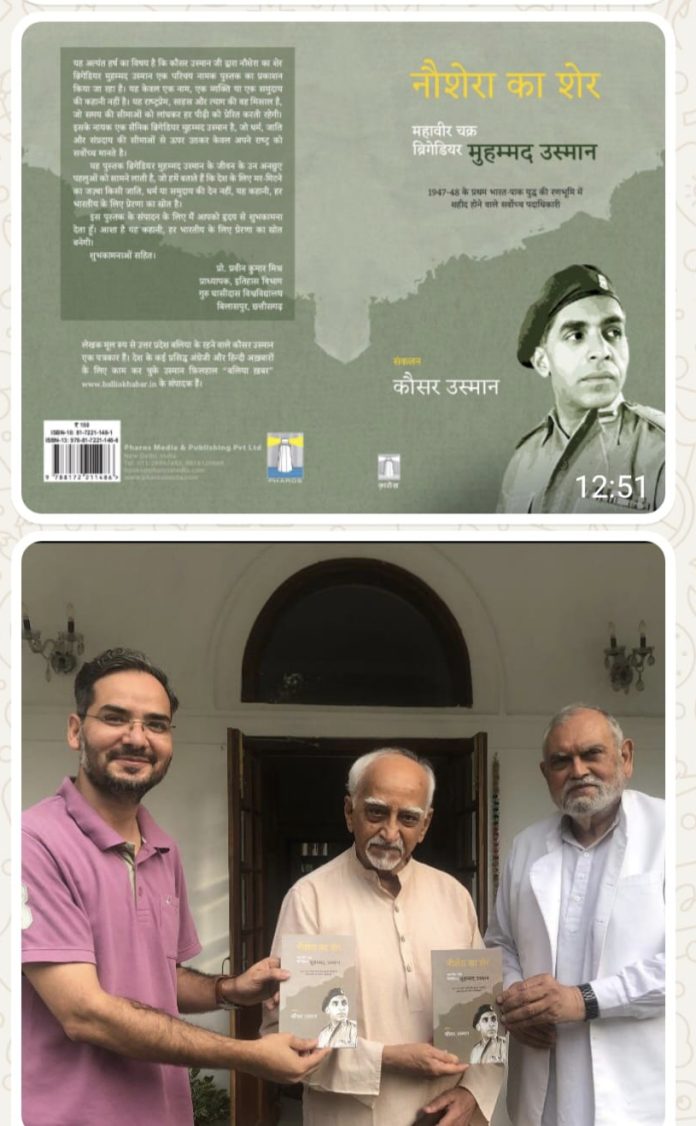
A grand launch event was held in the capital today for the book “Naushera ka Sher — Brigadier Mohammad Usman”, celebrating the life of the 1947–48 war hero. Authored by senior journalist Kauser Usman from Ballia, Uttar Pradesh, the book honours Brigadier Usman, famously known as the “Hero of Heroes.”
The book was officially released by former Vice President of India, Mr. Hamid Ansari, who is also a family member of Brigadier Usman. Speaking at the event, Mr. Ansari said,
“Brigadier Usman was more than a soldier — he symbolised patriotism, courage, and sacrifice. Kauser Usman’s book is a fitting tribute and an inspiration for future generations.”
Brigadier Mohammad Usman was one of the few Indian Army officers who laid down his life during the India-Pakistan war of 1947–48, without retreating. He was posthumously awarded the Maha Vir Chakra, India’s second-highest wartime gallantry honour.
Author Kauser Usman said,
“This book is my humble tribute to a national hero. Brigadier Usman’s life, simplicity, and service to the nation continue to guide us.”
Dr. Zafarul Islam Khan, former Chairman of the Delhi Minorities Commission, also attended the event.
The book is published by Pharos Media Publishing Pvt. Ltd., New Delhi.
source: http://www.radiancenews.com / Radiance News / Home> Art & Culture / by Mohd Naushad Khan / July 11th, 2025
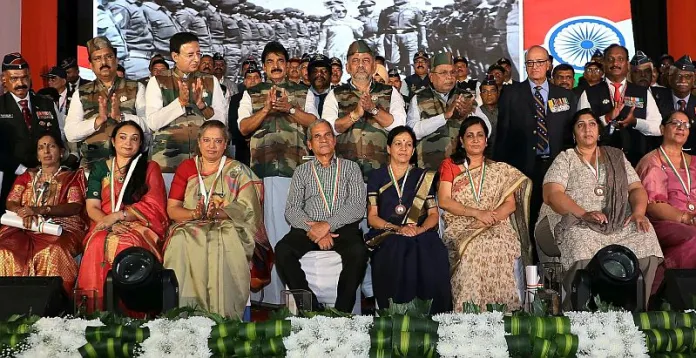
The Karnataka government organised a special event, ‘Jai Hind Sabha’, in honour of the Indian armed forces and facilitated retired military personnel in Bengaluru on Wednesday.
The programme was held at the Town Hall in Bengaluru, and it was given the tagline, ‘Jai Hind Jai Sena’.
During the event, senior officers who served in the Indian Army and ex-servicemen were felicitated. The families of brave soldiers who laid down their lives in service to the nation were also honoured.
Among those felicitated were the family members of late Major Sandeep Unnikrishnan (Ashoka Chakra awardee), Colonel Jojan Thomas (Ashoka Chakra awardee), Major M.C. Muthanna (Shaurya Chakra awardee), Major Ganesh Maddappa (Shaurya Chakra awardee), Captain M.V. Panjal (Shaurya Chakra awardee), Major Mohan Gangadharan (Shaurya Chakra awardee), Major Shafiq Mohammad Khan, and Colonel Ramamurthy (Sena Medal awardee).
More than a thousand senior army officers and ex-servicemen participated in the event. The Karnataka government had issued directions to organise such events across the country to salute the selfless service of Indian soldiers and stand in solidarity with them.
Addressing the “Jai Hind Sabha” programme, Chief Minister Siddaramaiah stated that soldiers, farmers, doctors, and teachers are as revered and memorable as one’s own parents.
He praised the legacy of Indian soldiers. “Soldiers dedicate themselves to national defence with a spirit of sacrifice. The responsibility of protecting the country does not lie with the army alone, but with all 1.4 billion Indians,” he said.
He emphasised that India has never compromised on the principle of protecting the righteous and eliminating evil, and it never will.
“This is the commitment of every Indian,” Siddaramaiah underlined.
The Chief Minister made a significant declaration that no excise duty will be levied on army canteens by the state. He also assured that all necessary steps would be taken for the welfare of retired soldiers.
Speaking after felicitating senior army officers, ex-servicemen, and the families of martyred soldiers, Deputy Chief Minister Shivakumar said, “To support all ex-servicemen in the state, the government is considering the establishment of a separate corporation. This proposal will be discussed in the state cabinet meeting before a decision is made.”=
“We are thinking of forming this corporation based on the suggestion of Mallikarjun, President of the Congress Party’s Sainik Cell. We are committed to the welfare of soldiers who have served our nation,” Shivakumar stated.
“It is a matter of pride to be part of such a significant event. On behalf of the Congress party and the nation, I extend my gratitude to all of you who have served our country with strength and dedication. The Congress party has always stood by the nation and our armed forces. This programme is a testimony to the fact that your sacrifices will always be remembered,” he added.
source: http://www.mangalorean.com / Mangalorean / Home> Mangalorean News> Local News / by IANS / May 28th, 2025
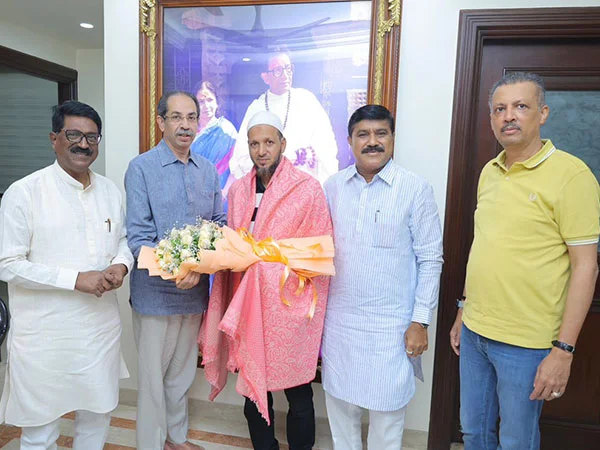
Shiv Sena (UBT) chief Uddhav Thackeray on Tuesday felicitated Arif Bamane who rescued around 35 passengers following the collision of a Navy speedboat with a passenger ferry off the Mumbai coast that resulted in the death of 15 people.
In a post on X, the party informed about the felicitations. The post also contains photographs of Thackeray with Arif.
“Arif Bamane, who showed bravery in saving the lives of 35 passengers in the Nilkamal boat accident, was honoured by party chief Hon. Uddhavsaheb Thackeray. Shiv Sena leader MP Arvind Sawant, Secretary MLA Milind Narvekar and Deputy Leader MLA Manoj Jamsutkar were present on this occasion,” said the party.
The tragic maritime accident occurred on December 18 near Mumbai when an Indian Navy boat collided with the passenger ferry Neelkamal causing it to capsize. The ferry was headed to the Elephanta Caves from Gateway of India. A total of 101 people were rescued.
According to reports, on receiving a distress call, Arif and his team rushed to the accident site, traversing a distance typically covered in 18–20 minutes in just eight minutes. Describing the horrific scene to reporters, Arif said, “It was devastating. People were crying for help, some floating on the waves, while others struggled to stay afloat without life jackets. I saw a little girl lying motionless, with her lungs filled with water. I also rescued a newborn who wasn’t breathing and revived him by hanging him upside down.”
Arif, aboard his boat Porwa, a pilot vessel used to assist larger ships in anchoring, led his team in pulling people out of the treacherous waves. While many at the Gateway of India stood as helpless spectators, praying for the victims, Arif jumped into action. His priority was the vulnerable — children and women — whom he dragged to safety, calmed with reassuring words, and provided them with life jackets.
source: http://www.clarionindia.net / Clarion India / Home> Editors Pick> India / by Team Clarion / December 24th, 2024
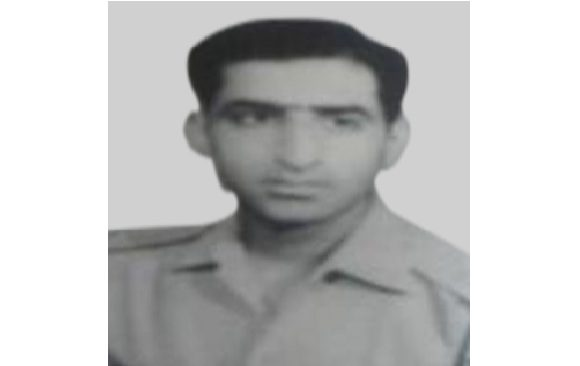
Major Mahmood Hasan Khan hailed from Dhanuri village in Jhunjhunu district of Rajasthan and was born on 02 March 1941. Son of Risaldar Nawab Mohd Hasan Khan, he was born into a military family but lost his father at an early age. He was brought up by his uncle Major Akbar Ali Khan who was serving with the then Nizam of Hyderabad. He completed his school education in Hyderabad and later went to Aligarh Muslim University for higher studies. He joined the Indian Army in the year 1962 as a Sepoy and subsequently got commissioned as a commissioned officer. He was commissioned into 14 Grenadiers of the Grenadiers Regiment, an infantry Regiment known for its brave soldiers with a rich history of various battle honours. In 1971, Maj MH Khan got involved in the thick of operations as his unit got deployed on the western border when the war with
Atian Supply Point Raid (Naushera Sector): 06 Dec 1971
During the Indo-Pak 1971 War, Maj MH Khan’s unit 14 Grenadiers was deployed on the western front. In December 1971, India had to go to war with Pakistan as the genocide perpetrated by the Pakistani army in their erstwhile eastern part of the country had resulted in an unprecedented influx of millions of refugees into India. Though the war was concentrated on the eastern front, Pakistan launched operations on the western front too. When the war was declared on 03 Dec 1971, 14 Grenadiers under the command of Lt Col Inderjit Singh was functioning under the operational control of 25 Div and was spread all over the Div AOR (Area of Responsibility) from Naushera to Poonch. On 06 Dec, 14 Grenadiers along with the elements of 8 Mahar battalion were tasked to raid the enemy’s Atian Supply Point to cause maximum damage to it. Maj MH Khan as ‘Raid Commander’ was tasked to carry out the assault along with two more officers, Capt Roy Chowdhary and 2nd Lt Prakash, and 49 OR (Other Ranks).
The raid involved going through a heavily guarded area and destruction of the objective of platoon strength. The team led by Maj MH Khan and divided into three groups planned a multi-directional attack on the enemy to achieve an element of surprise and cause maximum possible damage. The attack commenced at around 1800 hrs on 06 Dec and Major Khan led his men to the objective by shrewd manoeuvres, destroying post after post. The raid was thus successfully carried out after twelve hours of constant action. Maj MH Khan and his soldiers fightly valiantly, destroyed the enemy’s 12 storehouses, and 6 timber stocks, besides eliminating several mules and personnel. Maj MH Khan was given the gallantry award, “Vir Chakra” for his act of conspicuous gallantry, unyielding fighting spirit, and leadership. By the second week of Dec 1971, India had almost achieved victory on the eastern front but the border skirmishes were still going on, on the western front. Maj MH Khan’s unit 14 Grenadiers was involved in operations in the “Battle of Daruchhian” during that period.
“Battle of Daruchhian” (Indo-Pak War): 13/14 Dec 1971
After the failure of the Pakistani divisional attack on Poonch, the Indian Army decided to carry out local and limited actions all along the ceasefire line to improve its defensive posture. One such attack was launched by an infantry battalion in the area opposite Madarpur on the night of 10/11 December, and having captured Nangi Tekri, Jungle Tekri, Bump and other features denied the use of the Kotli-Madarpur-Hajira road to the enemy. As a follow-up to these operations, it was decided to secure Daruchhian, a feature blocking the Balnoi neck of the Kotli-Balnoi road between the Poonch River and the ceasefire line. Daruchhian was a conical feature, narrow and rugged at the top and with steep projections. It was forested on all sides except the southwest spur and was reportedly held by less than one Pakistani company of regular troops and some Mujahids as part of the main picquet line. 14 Grenadiers battalion under the command of Lt Col Inderjit Singh was tasked to launch an attack on Daruchhian and it was allotted an additional company and artillery support of four to six fire units. Maj MH Khan was functioning as a Company Commander of “D” Company at that time.
The capture of Daruchhian was planned to be carried out by 0800 hrs on 14 Dec in three phases. It was a multi-pronged attack involving primarily B, C, and D companies of 14 Grenadiers and elements of other outside resources. As per the plan, in Phase-I ‘B’ Company was to capture OP (Observation Post); in Phase-II ‘C’ Company was to capture West Spur and in Phase-III ‘D’ Company was to capture South West Spur. Besides the commanding officer Lt Col Inderjit Singh, Maj MH Khan, Maj HS Chahal(‘B’ Company Commander), and Capt Hamir Singh(‘C’ Company Commander) as company commanders were involved in planning and executing the operational plan. ‘A’ Company under the command of Maj SR Dogra was responsible for marking the FUP(Forming up Point) for Pase-I and then acting as a reserve for Phase II. The attack was launched on the night of 13/14 Dec 1971 in three phases with three assault groups attacking from different directions.
In Phase-III of the battle, Maj MH Khan’s ‘D’ Company was given orders to attack SW Spur at about 0400 hrs on 14 Dec. Maj MH Khan moved swiftly and ordered his platoons to give him fire support when he with one platoon moved towards the objective. Despite heavy enemy firing, Maj MH Khan and his men kept moving and reached the flat ground west of the OP position. While moving forward, Maj MH Khan noticed one of the enemy MGs that was impeding the advance and causing casualties. Maj MH Khan along with a few men in a daring move charged towards the bunker with grenades. However while doing so, Maj MH Khan was shot and got injured. But despite the injury, he moved forward and lobbed the grenade in the enemy bunker, before falling to another burst of fire on his head. The enemy gave a very stiff resistance and the battle for Daruchhian continued for over 12 hours. Maj MH Khan as the Company Commander of ‘D’ Company fought valiantly and led his men to give a befitting reply to the enemy firepower. In the fierce exchange of fire, during the battle, a total of eight officers, seven JCOs, and one hundred and forty-five other ranks were martyred, wounded, or missing in action. Besides Major MH Khan, the other martyred brave hearts included five officers (Maj HS Chahal, Maj SR Dogra, Capt OP Dalal, Capt Bakshish Singh, and 2nd Lt GP Bahukhandi), 4 JCOs ( Sub Jai Singh, Sub Taj Mohd Khan, Nb Sub Hasam Khan and Nb Sub Ram Sarup Singh) and 44 ORs.
Major MH Khan displayed commendable gallantry and devotion to duty during the operation and laid down his life in the service of the nation. Though he was given the gallantry award, “Vir Chakra” for his act of gallantry on 06 Dec 1971, he did not live long enough thereafter and made the supreme sacrifice on 14 Dec 1971 during the heroic ” Battle of Daruchhian”.
____________________________
2 Comments
Shaheen KhanReplyLate Major MH khan is my grandfather. We obviously have a lot of relevant information about him. Pease contact us so we can give as much info for the page of this great man.
Honourpoint is an online memorial to honour, appreciate and remember the spirited and valiant sons and daughters of India who had the distinction of serving the country in “military uniform”, and are no longer with us. It is an endeavour to ensure that supreme sacrifices of our soldiers and their families do not fade away and are given their rightful place in our nation’s collective consciousness. Read more…
The last conversation between Kargil hero Naik Abid Khan and his wife Firdaus Begum was a poignant one.
“It was the morning of June 30, 1999, when my telephone rang .
I received the call, and on the other side, my husband Naik Abid Khan said, ‘Apna aur bachchon ka dhyan rakhna, mera wapas aana mushkil hai. Maine poochha aisa kyu bol rahe hain to wo bole mushkil hai aur duaa karna mere liye aur meri battalion ke liye’ (Take care of yourself and the children, it is difficult for me to come back.
When I asked why are you saying this, he replied it would be difficult to return and asked me to pray for his battalion).”
On July 5, 1999, two soldiers arrived at Firdaus Begum’s house and spoke to her father and father-in-law. Her father informed her that Abid’s leg was fractured, but she intuited that had it been merely a fracture, the army soldiers would not have come to inform them personally. Her worst fears came true when she was informed that her husband had been killed in action.
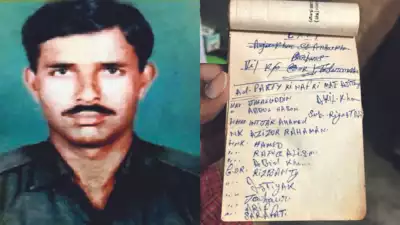
Sena Medal awardee Naik Abid Khan, a native of Moh-Kazi Sarai in Hardoi, was born on May 6, 1972.
After completing his early education, he joined the army on Aug 4, 988, at the tender age of 17. He was inducted into the 22 Grenadiers Battalion of the illustrious Grenadiers Regiment.
“Three months before Operation Vijay, he had come home on leave for 8-10 days during Bakrid. When he was leaving, he asked me to accompany him to the railway station to see him off, but I refused saying that I always feel very sad when he leaves and that I would have to return home from the station alone. I regret I didn’t go to see him off.”
“I was pregnant and had the responsibility of two daughters and a son. At that time, my elder daughter was seven, my son was five, and the youngest daughter was just two. Abid’s posting was in Hyderabad, but he was sent to Kargil. Twenty- five years have passed, but his uniform and one of his diaries still provides me the strength to live. On the last page of his diary, there are names of the soldiers from his battalion and all of them were killed in action,” she said.
During Kargil War, Abid was first shot in the leg, but he climbed the hill and fired indiscriminately at Pakistani bunkers, killing 17 enemy soldiers before succumbing to a second bullet that struck his neck.
In June-July 1999, Naik Abid’s unit was deployed in Batalik sector of Ladakh as part of Operation Vijay. The unit was functioning under the command of the 70 Infantry Brigade, with overall control being exercised by the 3 Infantry Division. The attack began on the night of June 30. Abid and his comrades led by Major Ajit Singh Shekhawat, managed to reach the objective but were counter-attacked by the enemy.
Heavily outnumbered, the Grenadiers fought continuously for three nights, inching forward, unmindful of the losses. The Pakistanis became impatient over Naik Abid Khan and his comrades’ resilience and asked their artillery to redouble the barrage. The fighting continued at an elevation of thousands of feet, amidst heavily fortified bunkers equipped with artillery and automatic weapons. The battle of Khalubar culminated in its capture.
source: http://www.timesofindia.indiatimes.com / The Times of India / Home> News> India News / by Fazal Khan, TNN / July 31st, 2024
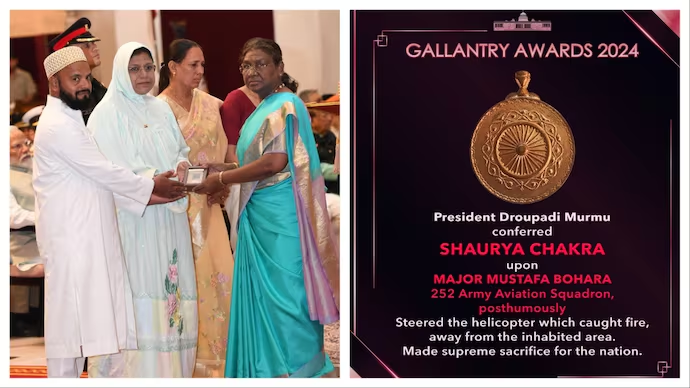
Major Mustafa Bohara, an esteemed officer of the Indian Army Aviation Corps, was posthumously awarded the Shaurya Chakra at a solemn ceremony held at Rashtrapati Bhavan on July 5, 2024. President Draupadi Murmu presented the prestigious award to Major Mustafa’s grieving parents, Fatima and Zakiuddin Bohara, recognizing their son’s exceptional courage and sacrifice.
Major Mustafa Bohara SC / pix: honourpoint.in
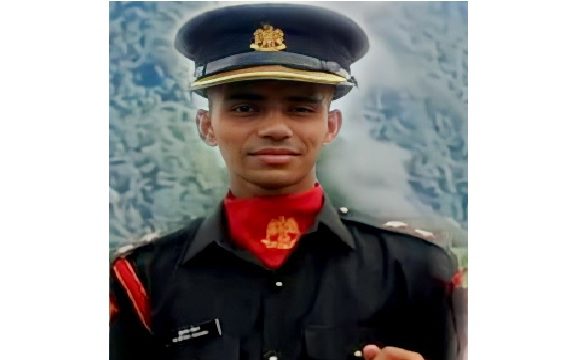
Born on May 14, 1995, in Kheroda village, Udaipur district, Rajasthan, Major Mustafa Bohara’s journey was defined by unwavering dedication to his country. Educated at Uday Shiksha Mandir Higher Secondary School in Kheroda and later at St. Paul’s School in Udaipur, he harboured a childhood dream of serving in the armed forces. His ambition led him to the National Defence Academy (NDA), where he excelled in the 128th course and was part of the distinguished November Squadron. Graduating from the Indian Military Academy (IMA) in Dehradun, he was commissioned as a lieutenant before specializing as a helicopter pilot in the Army Aviation Corps.
Major Mustafa’s mother, Fatima Bohara, spoke with both pride and sorrow, saying, “Martyrdom is not just a word but a true testament. Mustafa always aimed for excellence and believed in swiftly moving forward towards success.”
On October 21, 2022, Major Mustafa and Major Vikas Bhambhu, alongside three crew members, undertook a mission in Arunachal Pradesh’s challenging terrain. Unfortunately, their helicopter encountered an emergency near Mugung in Upper Siang district, known for its hostile weather and difficult conditions. Despite their extensive training and experience, the helicopter caught fire, compelling Major Mustafa and Major Vikas to manoeuvre the aircraft away from populated areas and ammunition depots. Their valiant effort to land safely ended tragically at 10:43 am, claiming their lives.m,
The ceremony at Rashtrapati Bhavan, attended by Vice President Jagdeep Dhankhar, Prime Minister Narendra Modi, Defence Minister Rajnath Singh, and Opposition Leader Rahul Gandhi, honoured both Major Mustafa and Major Vikas Bhambhu with the Shaurya Chakra. Their exemplary bravery in the face of grave danger was acknowledged, underscoring their selfless dedication to duty.
Deputy Secretary of the Shaheed Major Mustafa Trust, Virender Singh Solanki, announced that Major Mustafa’s family would return to Udaipur on July 7, 2024. They will receive a heartfelt welcome at Dabok Airport from Vallabhnagar MLA Uday Lal Dangi, political dignitaries, members of the Bohra community, and various social and religious organizations.
Major Mustafa Bohara’s legacy remains an enduring symbol of courage, dedication, and sacrifice. His heroic actions serve as a profound inspiration, embodying the unwavering spirit of India’s armed forces.
source: http://www.clarionindia.net / Clarion India / Home> Editor’s Pick / by Mohammad Alamullah, Clarion India / pix source: replaced with (Photo: X/@rashtrapatibhvn) (2) pix added source: honourpoint.in / July 07th, 2024