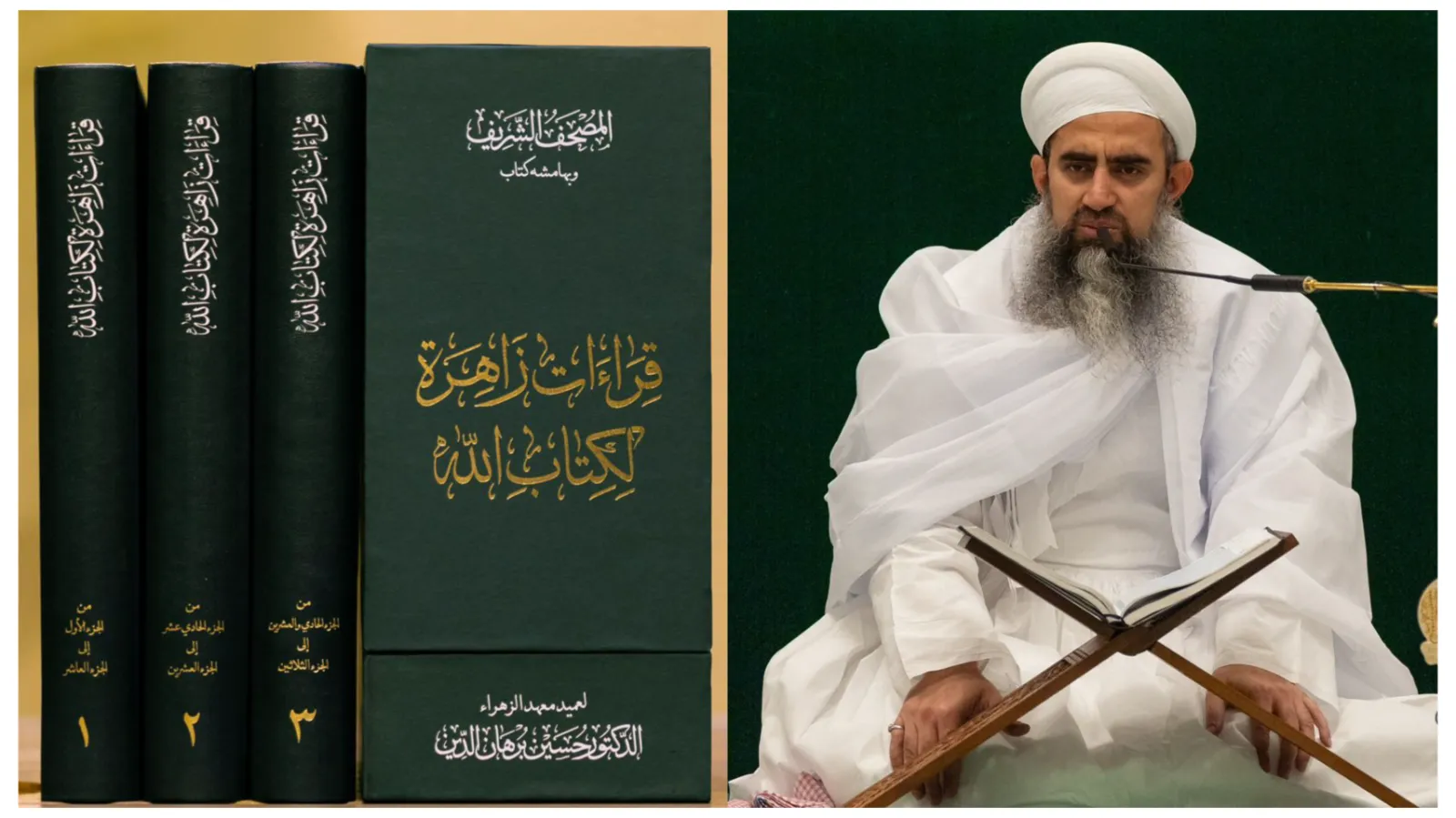
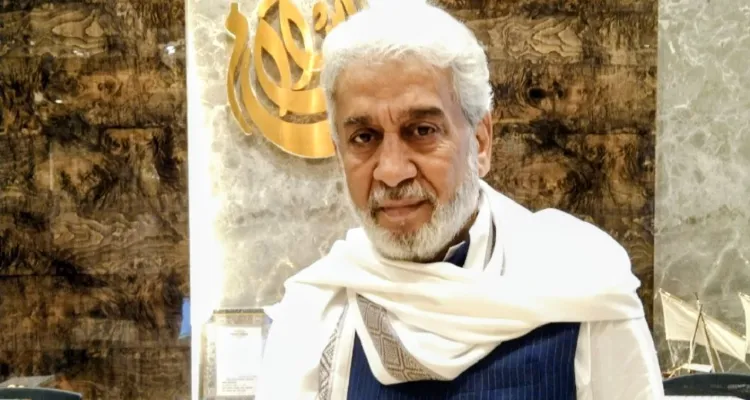
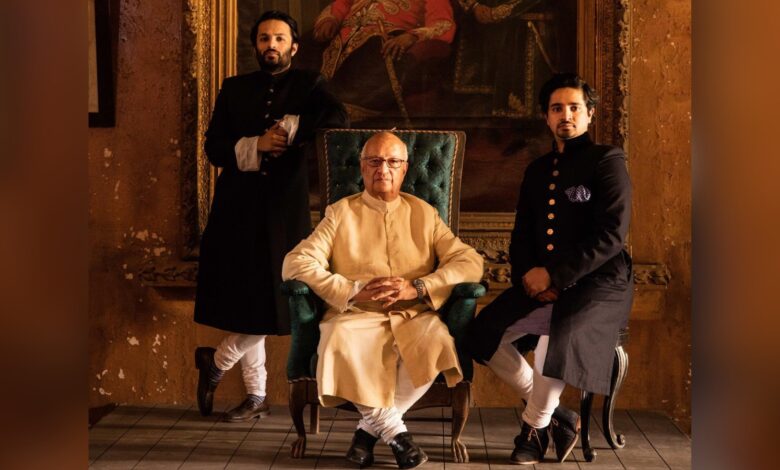
Shahzada Husain Burhanuddin, the youngest son of His Holiness Syedna Mufaddal Saifuddin.
Mumbai :
The Dawoodi Bohra community has launched a new online initiative aimed at expanding access to the sacred sciences of the Quran. The newly launched Sawt al-Quran al-Karim YouTube channel presents the recitation of the entire Quran in the voice of Shahzada Husain Burhanuddin, the youngest son of His Holiness Syedna Mufaddal Saifuddin. This project forms part of the work of Mahad al-Zahra, an institution dedicated to the study, memorisation and recitation of al-Quran al-Karim.
The channel presents the complete Quran according to the Khalaf ‘an Hamza narration, one of the ten canonical traditions of Quranic recitation preserved through continuous scholarly transmission over centuries. Known for its demanding precision and distinctive phonetic characteristics, this narration remains less widely available in full digital recordings. Its publication online offers students of the Quran a rare opportunity to study and listen to this recitational tradition in its entirety.
Mahad al-Zahra leads the Dawoodi Bohra community’s efforts in Quranic education. The institute was established in 1976 by the late Syedna Mohammed Burhanuddin to cultivate excellence in the memorisation and recitation of the Quran. Since 1998, Shahzada Husain Burhanuddin has guided the institution’s development, overseeing programmes that train students in the disciplines of tilawah (recitation) and hifz (memorisation) while maintaining rigorous scholarly standards.
In his role as provost of Aljamea-tus-Saifiyah, the community’s premier educational institute, Shahzada Husain Burhanuddin personally supervises examinations for huffaz (plural of hafiz, are individuals who have memorized the entire Quran), ensuring accuracy and mastery in Quranic memorisation. A distinguished qari himself, he also holds honorary membership in the Naqabat Qurra al-Quran al-Karim in Cairo, regarded as one of the world’s most respected guilds of Quran reciters.
His scholarship in the field of Quranic recitation includes the three-volume work Qiraat Zahira li Kitab Allah, which presents the principles of Quranic readings through structured tables and visual guides. Each page of the publication includes QR codes that connect readers directly to his recitation of the Qiraat ‘Ashr (the ten recognised schools of Quranic recitation, each preserving a unique phonetic tradition from a renowned reciter), allowing students to hear the precise rendering of the recitation rules they study. The work has received certification from Al-Azhar University, widely recognised as a leading authority in the teaching and transmission of Quranic sciences.
The launch of the Sawt al-Quran al-Karim channel reflects the vision of His Holiness Syedna Mufaddal Saifuddin to strengthen engagement with the Quran across generations. He has consistently encouraged families within the community to nurture the study of the Quran at home, expressing the hope that every household will include at least one hafiz and that the community will cultivate 100,000 huffaz worldwide.
By presenting authentic recitation through digital platforms, the initiative extends access to students and listeners across continents. Families, scholars and learners can now listen to and study these recitations regardless of location, strengthening their connection with the Quran in daily life.
Murtaza Jafar, a senior member of Mahad al-Zahra, described the initiative as an important step in sharing Quranic knowledge with a wider audience.
“The launch of this channel marks an important moment in our efforts to preserve and share the sacred sciences of the Quran. By publishing the complete Quran in the Khalaf ‘an Hamza narration, we are providing students and listeners around the world with access to a recitational tradition that requires great care and precision.”
He added that the project will continue to expand.
“We plan to add further recordings representing other recognised narrations of Quranic recitation. Work has already begun on recordings in the transmissions of Hafs ‘an Asim, Warsh ‘an Nafi and al-Susi ‘an Abi Amr. Our hope is that these resources will support students of the Quran for generations to come.”
The Sawt al-Quran al-Karim YouTube channel is now available online and offers listeners direct access to the complete recitation.
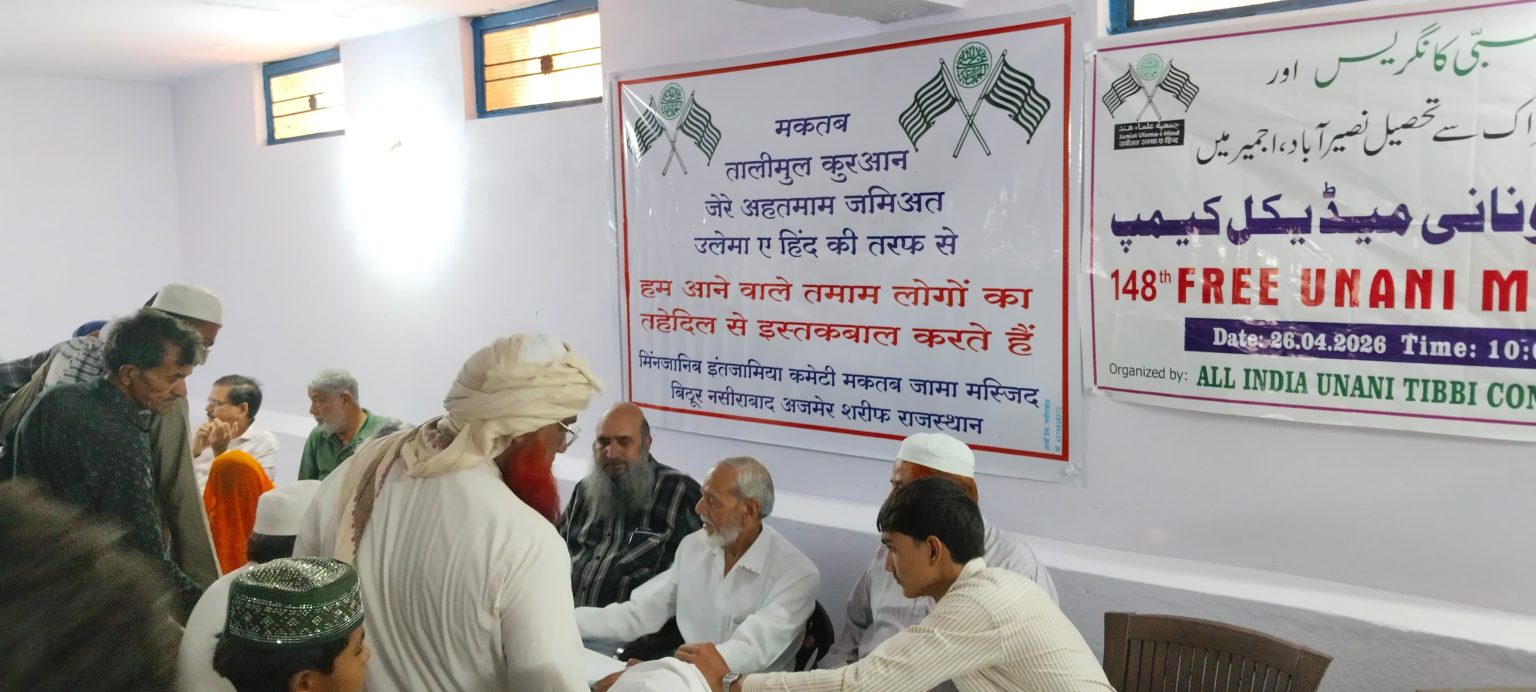
A large free medical relief camp was organised on Sunday in Bithoor village of Nasirabad tehsil under the joint aegis of Jamiat Ulema-i-Hind and All India Unani Tibbi Congress (AIUTC). Around 600 needy people from rural areas received treatment through the Unani system of medicine and were provided free medicines at the camp. This was the 148th Free Unani medical camp organised by AIUTC.
The main objective of the camp was to extend healthcare services to rural communities through the natural and effective Unani system of medicine. Held from 10:00 am to 2:00 pm, the camp witnessed a large number of patients seeking treatment for ailments such as stomach disorders, skin diseases, joint pain, fever, and common cold.
Medical experts not only examined the patients but also advised them on proper diet and preventive healthcare measures.
Experienced physicians from Delhi especially attended the camp and offered their services. They included Dr. Syed Ahmad Khan, Dr. Israr Ahmad Ujjaini, Dr. Nawaz-ul-Haq, Dr. Aneesur Rahman and Dr. Mohammad Roshan, along with other supporting staff.
A nursing team from Udaipur, comprising Afsana, Jodharam, Vineet Sharma, Krishna, and Prakash, managed the arrangements with dedication and played a key role in making the camp successful.
“Such camps are being organised under the guidance of Jamiat Ulema-i-Hind President Maulana Mahmood Madani so that healthcare services can reach even the last person in society.”
The successful conduct of the camp was made possible with the active support of several local social workers, including Maulana Aleemuddin (Organiser), Maulana Kamil, Mufti Mohammad Ahmad, and Mohammad Nazim of Madrasa Qasimul Uloom, Bithoor.
A notable feature of the camp was the enthusiastic participation of people from all faiths. Local residents appreciated the initiative, while the organisers reaffirmed their commitment to continue such welfare programmes in the future.
source: http://www.radiancenews.com / Radiance News / Home> Healthcare> Latest News / by Radiance News Bureau / April 26th, 2026
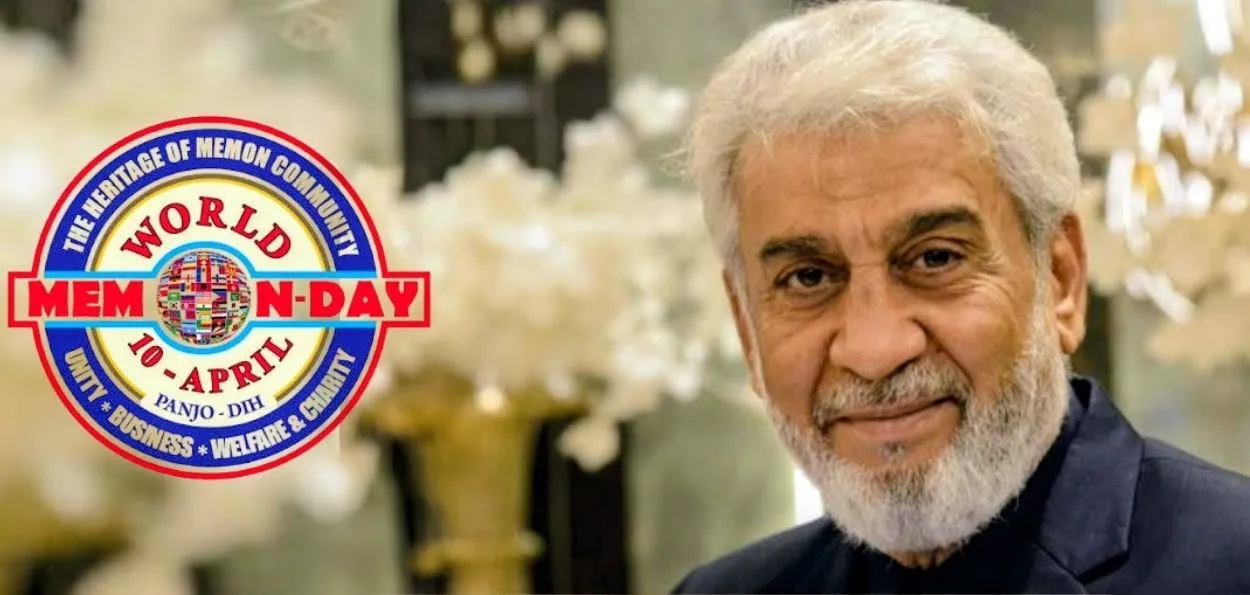
The Memon community—numbering around four million globally—is widely regarded as a globalised group known for its business acumen, prosperity, patriotism, and pro-development outlook.
These observations were shared by prominent Memon leader Yusuf Abrahani on the occasion of World Memon Day.
The Memons are a close-knit, predominantly Sunni Muslim business community. They trace their origins to Gujarat in India and Sindh in Pakistan. Historically known as maritime traders, they are largely concentrated in Mumbai and Karachi, where they have flourished as entrepreneurs in sectors such as import-export, shipping, and textiles.
The community’s roots go back to the 15th century, when members of the Lohana community in Sindh embraced Islam under the guidance of Syed Yusufuddin Gilani.
Known for their peaceful temperament and adaptability, Memons have built a reputation not only for prosperity but also for their strong commitment to social service.
Yusuf Abrahani, a former Member of the Legislative Assembly and president of the Islam Gymkhana, remains actively engaged in Mumbai’s political, business, and social spheres.
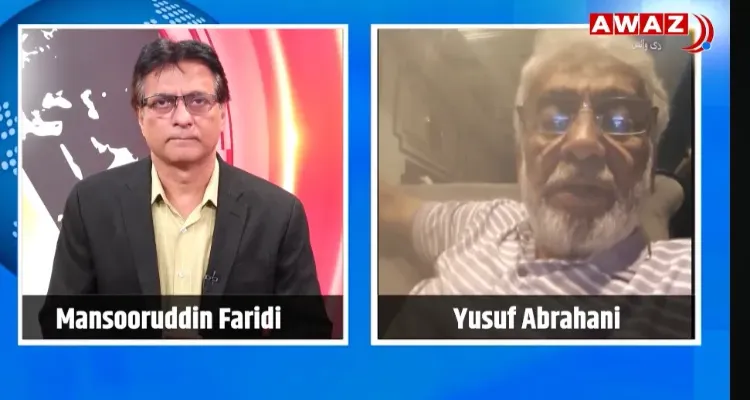
In a special interview with Mansooruddin Faridi, Editor of Awaz-the Voice Urdu, Abrahani noted that the Memon community is spread across the world, with members having migrated from Gujarat to various countries.
Describing the community’s ethos, he said, “Allah has blessed Memons immensely—with wealth, a generous spirit, and grace. Wherever a Memon settles, the first priority is to establish a madrasa, mosque, community hall, and medical dispensary. This tradition continues even today.”
Drawing from his six decades of experience, he added that Memons have established numerous institutions in Mumbai, including hospitals, mosques, madrasas, and charitable facilities.
World Memon Day is observed on April 10, and is marked by extensive charitable activities. Community members visit hospitals, organise welfare programmes for the poor and marginalised—including widows, the visually and physically challenged—and distribute essential supplies.
Abrahani noted that this culture of service has gained further momentum under the leadership of Iqbal Memon. Similar programmes are also organised in countries such as the United Kingdom, the United States, Australia, Canada, and New Zealand.
Despite their relatively small population, Memons have achieved notable success in education and economic development. Alongside India, significant Memon populations reside in countries like Canada, the United Kingdom, the United States, and Sri Lanka.
Honesty and integrity remain the hallmarks of the community, with a strong emphasis on imparting religious and ethical values to younger generations.
source: http://www.awazthevoice.in / Awaz, The Voice / Home> Stories / posted by Aasha Khosa / April 10th, 2026
In a city where commuters often face refusals from auto drivers, one Muslim driver has earned appreciation for his consistent service and care for passengers. Habib Bhai, an auto rickshaw driver, has gained attention for never refusing rides and offering added comfort to those who travel with him.
Passengers shared their experience, noting that finding an auto in Mumbai often involves repeated refusals for short or inconvenient routes. In contrast, Habib Bhai accepts all rides, whether short distance or long distance, across routes including the western line. This approach has changed the travel experience for many regular commuters.
What sets him apart is the effort he makes to ensure passenger comfort. His auto carries free drinking water, biscuits, chips, and sometimes fruits for riders. For many, the journey feels less like a routine commute and more like a welcoming service. His vehicle also includes simple arrangements to provide relief during hot weather.
Habib Bhai says his motivation comes from a sense of duty and the blessings he receives from people. He believes that refusing passengers causes inconvenience, so he makes it a rule to accept every request. He also shares that he keeps items ready for passengers so they feel cared for during the ride.
Beyond passenger service, he extends his care to animals on the road. He keeps food with him and offers it to animals he encounters during his daily work. This practice reflects his broader approach of kindness in everyday life.
His auto also displays the national flag, showing his sense of belonging and pride. Through small actions, he has built a reputation among commuters who now seek him out for a reliable and respectful ride.
Regular passengers say such examples highlight how simple efforts can improve daily experiences in a busy city. His work shows that public service roles carry opportunities to create positive impact through consistency and empathy.
source: http://www.radiancenews.com / Radiance News / Home> Latest News> Pride of the Nation> Markers of Excellence> Report / by Radiance News Bureau / April 07th, 2026
In an era where corporate success is often measured solely in balance sheets, Hamid Ahmed stands out as a rare blend of business acumen and social commitment—quietly carrying forward the towering legacy of his grandfather, Hakim Abdul Hameed, a visionary who believed that enterprise must serve society.
A young, suave, and dynamic Indian business leader, Ahmed today occupies multiple roles with ease and purpose. As the Chief Executive Officer and Trustee of Hamdard Foods India, and former Chancellor of Jamia Hamdard, he represents a new generation of leadership rooted in legacy but driven by innovation.Owing to his leadership acumen and expanding contributions to the service of humanity, he has been featured among the 100 Most Influential Muslims of India in the 2025 list compiled by the Muslim Mirror. The list also features distinguished personalities such as former Vice President of India Mohammad Hamid Ansari, noted industrialist Azim Premji, and politician-barrister Asaduddin Owaisi, among several other eminent names.
Born in 1977 in New Delhi, Ahmed’s early education at St. Columba’s School laid the foundation for a disciplined and forward-looking career. He went on to pursue a Bachelor’s degree in Economics from the University of Delhi, graduating in 1998, before earning an MBA from London in 2000—equipping himself with a global outlook at a young age.
His association with the Hamdard legacy began early. In 1995, he was appointed as a Trustee of Hamdard Laboratories India by his grandfather. By 2000, he had formally joined the organization, embarking on a professional journey that would span over two decades. When he assumed the role of CEO in 2016, Ahmed brought with him not just experience, but a renewed vision—one that sought to modernize while preserving the ethos of Unani medicine and ethical enterprise.
Under his leadership, Hamdard Foods India has expanded its footprint across both domestic and international markets, strengthening its position in the food and Unani healthcare sectors. His approach combines strategic expansion with a nuanced understanding of regional consumer behavior, reflecting years of hands-on experience across diverse markets.
Yet, Ahmed’s influence extends well beyond boardrooms. His commitment to education is deeply intertwined with the legacy of Jamia Hamdard, an institution founded on the principles of accessible and value-based learning. As Chancellor, he played a key role in reinforcing its academic and institutional growth, ensuring that the university continues to serve as a hub of excellence for students from all backgrounds. Today, Jamia Hamdard has secured a top-tier position among a plethora of private universities, distinguished for its academic excellence, research output, and commitment to holistic education.
He is also the Founder and President of the Unani Drug Manufacturers Association (UDMA), where he has worked to strengthen the traditional medicine sector and advocate for its modernization and global relevance.
Philanthropy remains central to his work. Through the Hamdard National Foundation India and the Hamdard Learning and Welfare Society, Ahmed has championed initiatives focused on education, skill development, employment generation, and the upliftment of economically weaker sections. These efforts echo his grandfather’s philosophy—that business must ultimately serve humanity.
His contributions gained particular prominence during the COVID-19 pandemic, when he led large-scale vaccination drives, organized holistic healthcare camps, and initiated environmental campaigns such as tree plantation drives—demonstrating a hands-on approach to crisis response and community care.
In recognition of his service, he was conferred the Paul Harris Fellow award by the Rotary Club of Delhi South in 2022—an honor reserved for individuals who make significant contributions to society.
Beyond his executive and philanthropic roles, Ahmed has also brought his expertise to the corporate governance space. He has served as a Non-Executive Independent Director on the boards of several prominent companies, including Religare Enterprises Limited, Religare Finvest Limited, Religare Housing Development Finance Corporation Limited, Care Health Insurance Limited, and Religare Broking Limited.
At a time when legacy institutions often struggle to remain relevant, Hamid Ahmed’s journey offers a compelling narrative—of continuity without stagnation, of growth anchored in values, and of a leadership style that sees business not merely as a vehicle for profit, but as a force for social transformation.
On his inclusion in the 100 Most Influential Muslims-2025 list, senior journalist Abdul Bari Masoud engaged Hamid Ahmed in an in-depth conversation for Muslim Mirror, exploring a wide spectrum of issues—from his leadership at Hamdard and vision for the Unani sector to his commitment to education, philanthropy, and inclusive nation-building.
Excerpts from the Interview
Q:To what extent were you inspired by your grandfather, Hakim Abdul Hameed Sahib?
A : Hakim Abdul Hameed Sahib was not only the founder of Hamdard but also a visionary who believed in combining traditional health system with modern scientific approaches. His life’s work was deeply rooted in service to humanity, education, and healthcare. His philanthropic initiatives, like establishing Jamia Hamdard University and other institutions, shows how he linked business success with social responsibility. His vision continues to inspire Hamdard’s focus on blending tradition with innovation. His humility and dedication to public welfare set a self reliant leadership and business model that balances growth with ethical responsibility.
Q:Which aspects of his life and philosophy had the greatest influence on you?
A: His decision to dedicate Hamdard as a charitable institution inspires my own sense of responsibility towards society. His passion for education, his humility and ethics, simplicity and global vision not only motivates me but drives me to spend my energies in the research, innovation and making Hamdard’s every effort relevant to the human beings in everyday life. For me, his life is a compass that shapes my journey into the future.
Q:What made Hamdard diversify into the food sector? And what was the thinking behind this transition?
A: Having Rooh Afza- a beverage stalwart already a household name, diversification into the food sector was a natural extension of consumer trust in Hamdard’s quality and purity. Naturally consumers expected that Hamdard could reach out for their food’s need requirements in the categories of core food and functional foods. This way Hamdard could see the light of faster growth and avenues for ensuring sustainable revenue growth, which helps out our charitable mission requirements. To meet India’s growing demand and global needs of quality foods, we introduced several products in a short span of time like, Milkshakes, Lassi, Juices, Squashes, Coconut Water, Honey, Saffron, Soya Nuggets, Vermicelli, Mustard Oil, Olive Oil and range of Spices.
Q:How do you assess the position of Hamdard Foods India within the current Indian food industry?
A: At Hamdard Foods, we have always believed in blending tradition with innovation. Consumer preferences in India are evolving rapidly, with a growing emphasis on quality foods and convenience. Our iconic brands like Rooh Afza continue to resonate deeply, but we are also expanding into new product categories that meet modern lifestyles — from ready-to-drink formats to sugar-free variants. Sustainability and quality remain at the heart of our mission, and we are committed to ensuring that every product we deliver carries forward our legacy of trust while embracing the future of the food business.
Q:What are your future plans and long-term ambitions for Hamdard Foods and the broader Hamdard legacy?
A: Hamdard Foods has always stood for trust, tradition, and purity. As we look ahead, our future plans are centered on three pillars: innovation, expansion, and sustainability. We are committed to introducing new product formats that cater to evolving consumer lifestyles, while ensuring that our heritage brands like Rooh Afza continue to remain relevant across generations.
On the global front, we aim to strengthen our presence in international markets, taking the Hamdard legacy of quality to new geographies. At the same time, we are investing in sustainable practices — from responsible sourcing to eco-friendly packaging — so that our growth is aligned with the well-being of both people and the planet.
Our long-term ambition is to ensure that Hamdard remains not just a household name in India, but a global symbol of nutritious food producer imbibing traditions along with innovations. We want the Hamdard legacy to inspire future generations by showing that a company rooted in heritage can thrive in modern times while staying true to its values.
Q:Is there any particular experience or anecdote that significantly shaped your outlook or altered the course of your thinking?
A: One experience that profoundly shaped my outlook was witnessing how Rooh Afza continued to unite generations within families. I recall visiting a household where grandparents, parents, and children all had their own stories tied to the drink — from Ramadan evenings decades ago to modern-day summer gatherings. That moment reminded me that Hamdard is not just about products, but about memories, traditions, and emotional connections.
It strengthens my thinking by reinforcing the idea that our responsibility goes beyond business growth. We are custodians of a legacy that touches lives deeply in personal ways. This realization drives me to ensure that every decision we make — whether it’s innovation, expansion, or sustainability — honors that heritage while preparing the brand for the future. It’s a constant reminder that Hamdard’s strength lies in being timeless yet adaptable.
source: http://www.muslimmirror.com / Muslim Mirror / Home> Interviews> Positive Story / by Abdul Bari Masoud / April 02nd, 2026
Recognising Hanif’s potential, Javed has been providing everything needed to ensure that his studies continue.
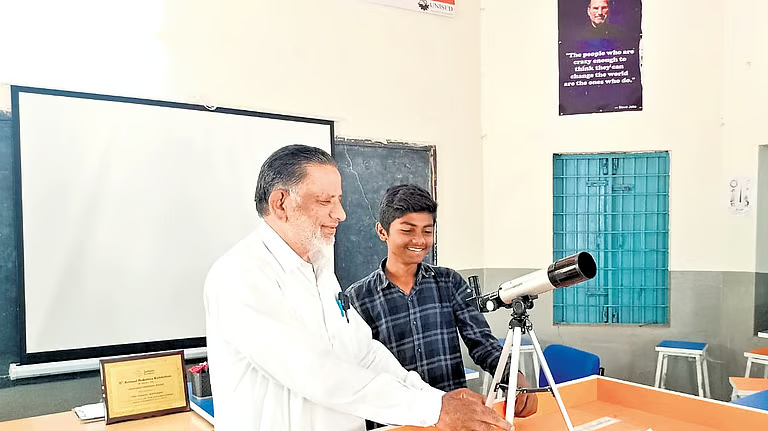
Md Javed, a Hindi teacher at the Government High School in Savaran, explains the working principle of a telescope to his student, Syed Hanif.(Photo | Express)
Karimnagar :
It began years ago with one struggling student — a boy who is now a software engineer in Hyderabad.
Today, government school teacher Md Javed is repeating that quiet act of kindness. Determined that poverty should not crush talent, he has stepped forward to support another promising student, Syed Hanif.
Javed, a Hindi teacher at Government High School in Savaran, has taken responsibility for the education and welfare of Hanif, a Class 9 student from a financially struggling family. The teacher has promised to support him until he completes his SSC.
For the teacher, this is not the first time he has changed a life. Earlier, while working at Government High School Dhangarwadi, he had supported another poor student — a boy who today works as a techie in Hyderabad.
Recognising Hanif’s potential, Javed has been providing everything needed to ensure that his studies continue. He arranged a bicycle for the student to commute to school, pays the rent for his room and has also arranged tuition in mathematics and spoken English, facilities usually available only to private school students.
To encourage better learning habits, the teacher provides Hanif with newspapers, study materials and nutritious food, including fruits. A small library has also been set up in the room where the student stays. Javed’s gesture has inspired others at the school. Fellow teachers recently contributed Rs 10,000 to support the boy’s education.
Hanif’s family had migrated to Karimnagar from Manuguru in search of work. His father earns a livelihood by selling buttermilk on a pushcart. To help the family become financially stable, Javed even purchased a pushcart and handed it over to Hanif’s father.
“I recognised Hanif’s talent, but poverty was holding him back. I wanted to ensure he gets the opportunity to succeed and become a responsible citizen,” Javed tells TNIE. With support from donors, he now spends nearly `1 lakh every year on Hanif’s education and other needs.
Hanif said the support has changed his life. “Earlier, I struggled to focus on studies because of our financial problems. Now I feel confident and can concentrate on my education,” he says.
Javed believes the boy will perform well in the SSC examinations among students from nearly 20 government schools in Karimnagar.
source: http://www.newindianexpress.com / The New Indian Express / Home> Good News / by Naveen Kumar Tallam / March 22nd, 2026
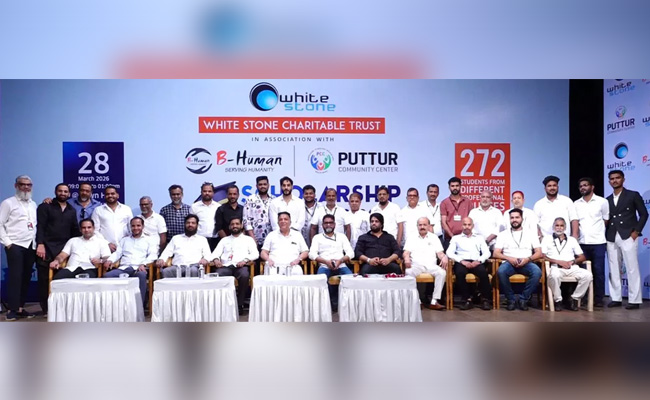
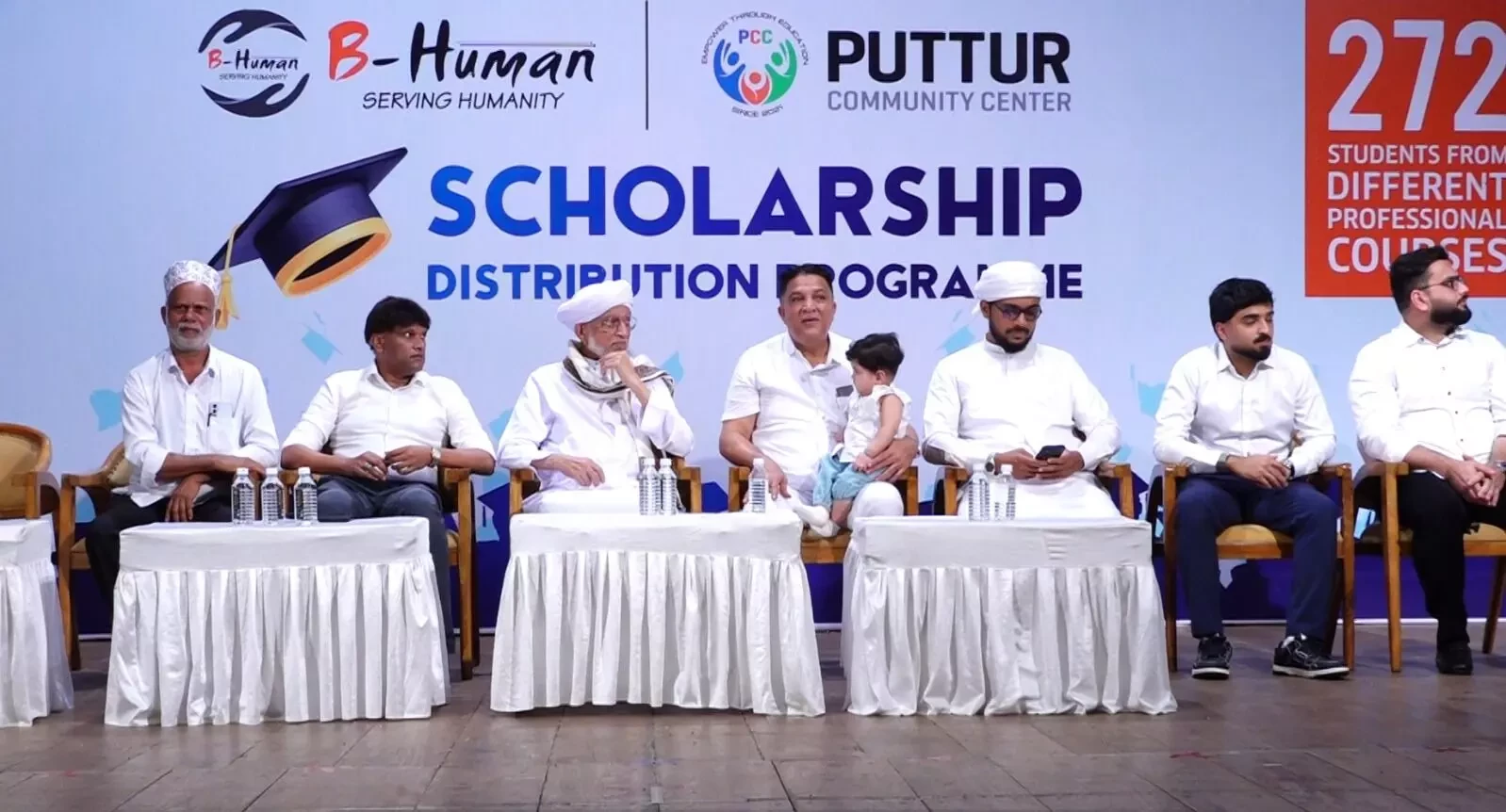
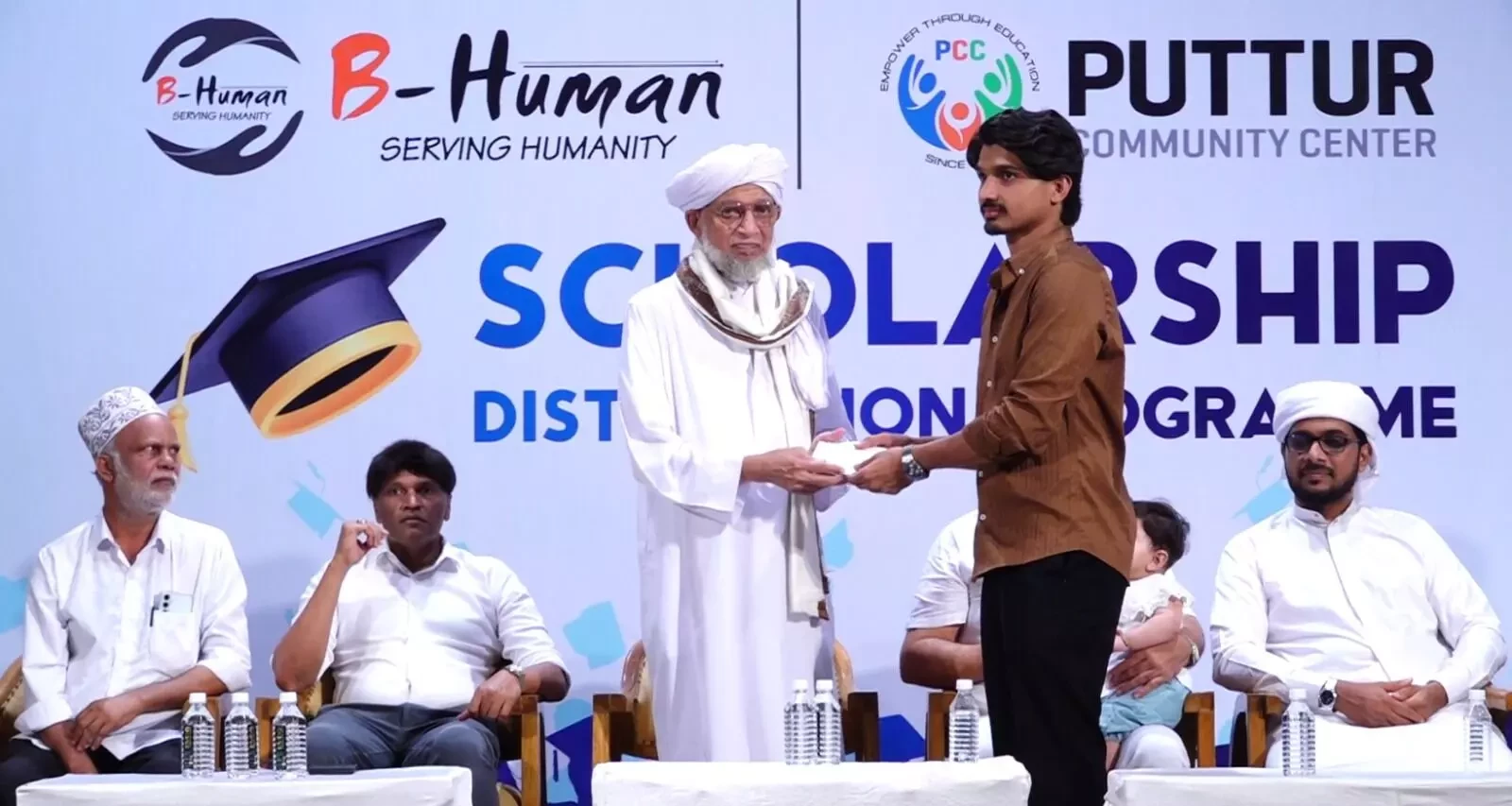
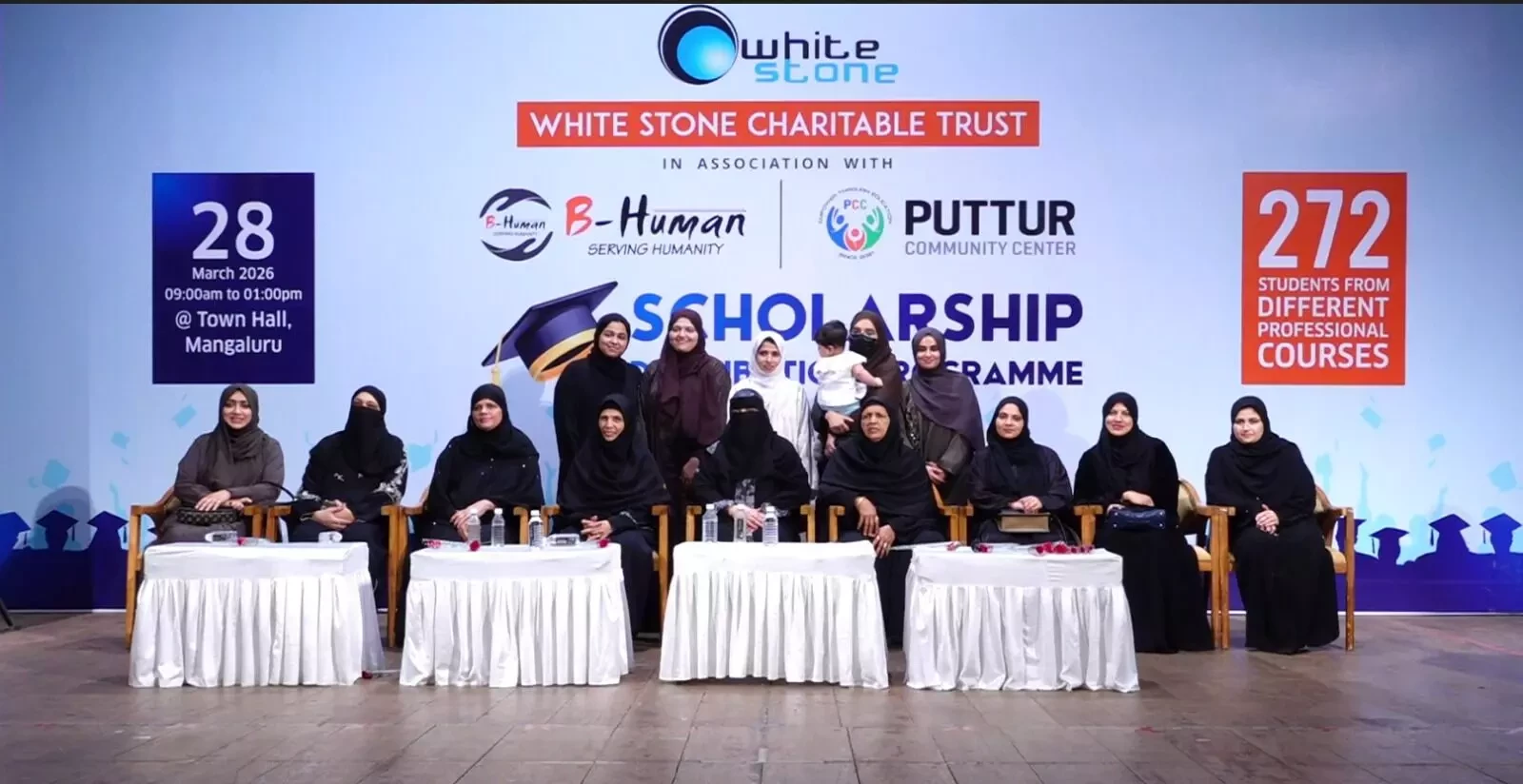
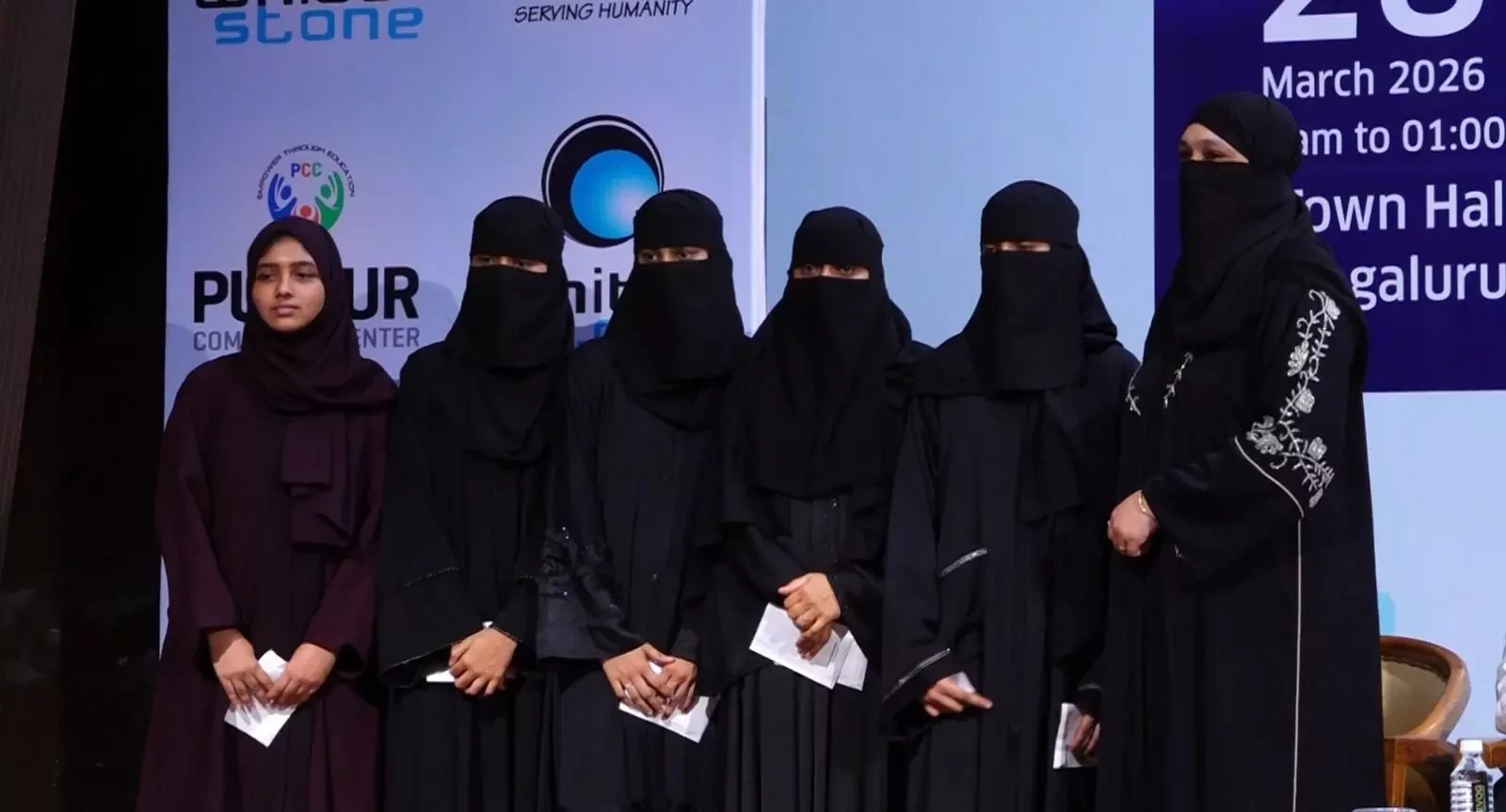
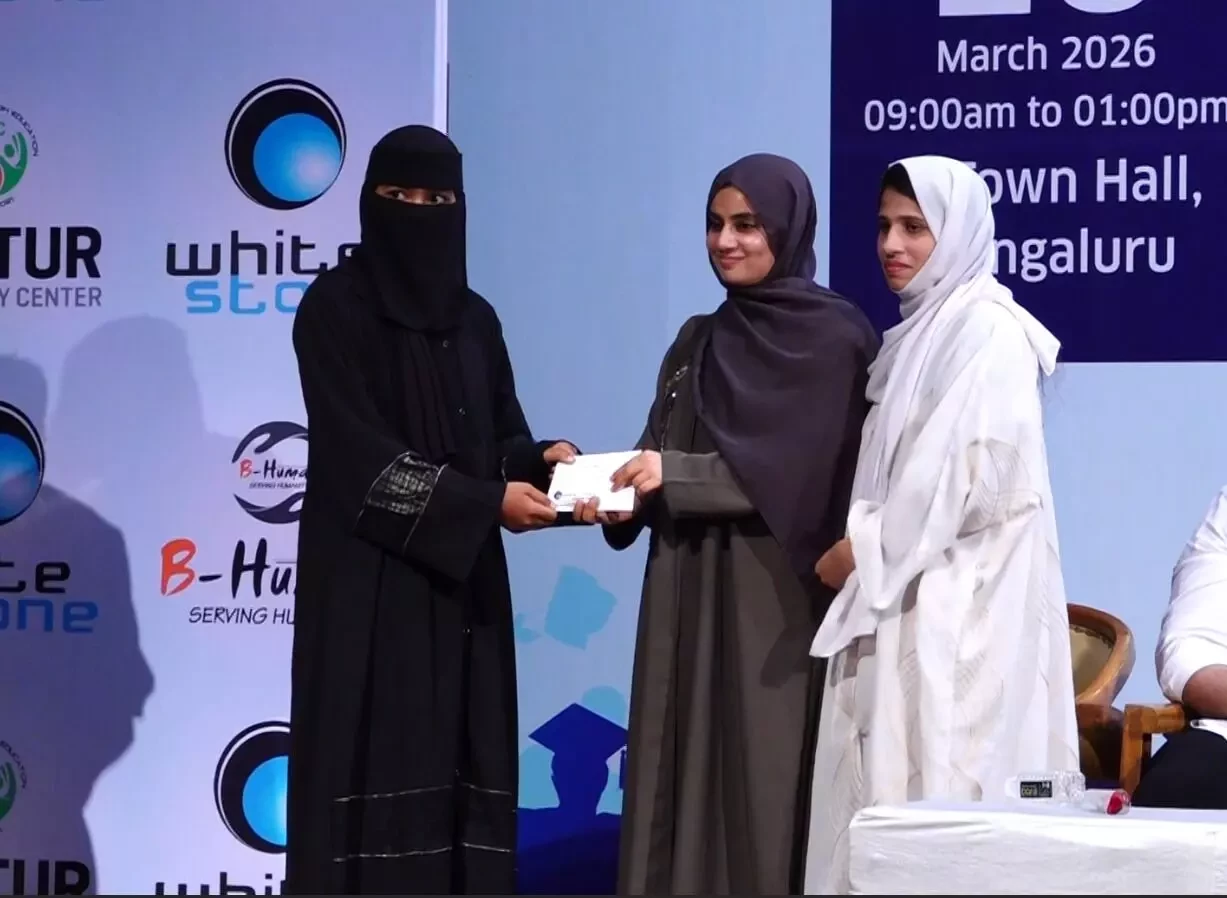
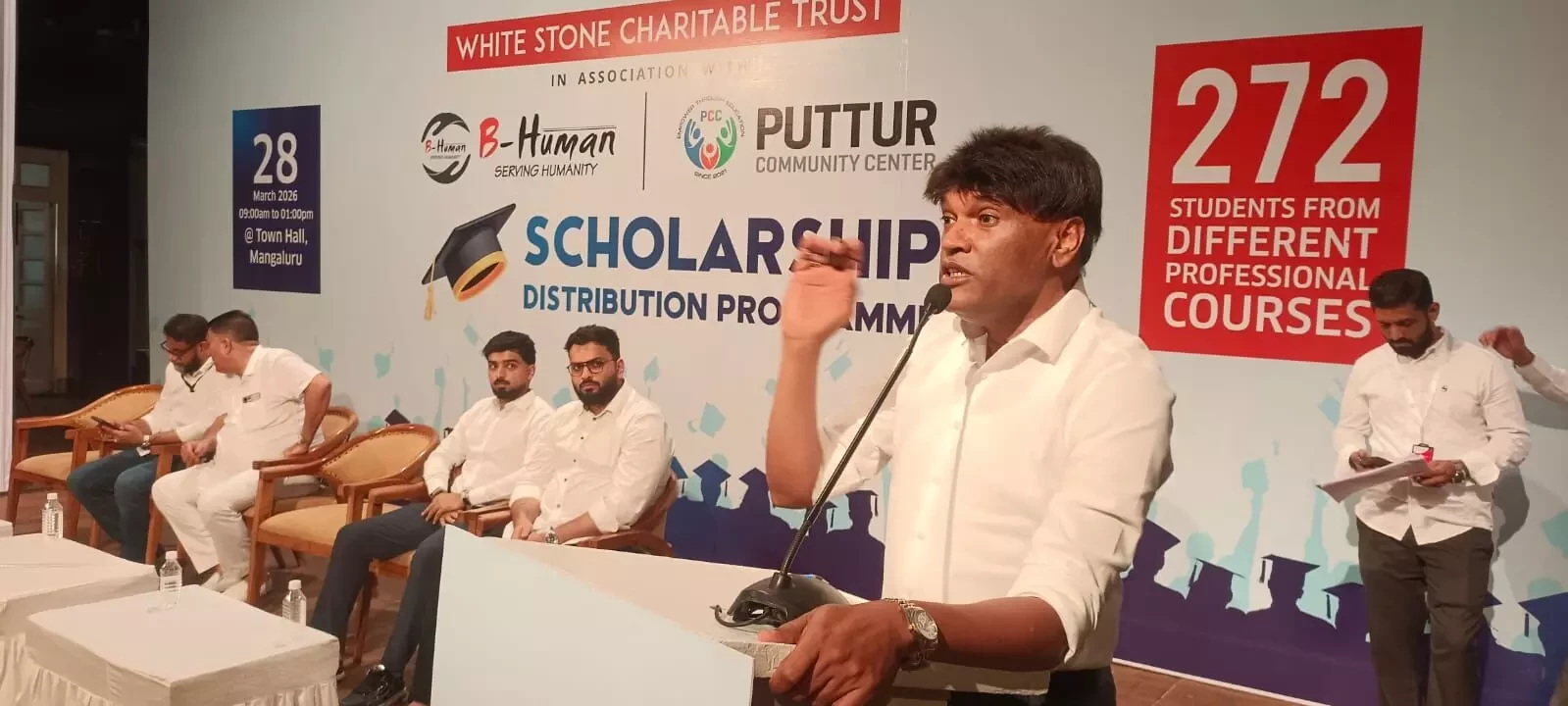
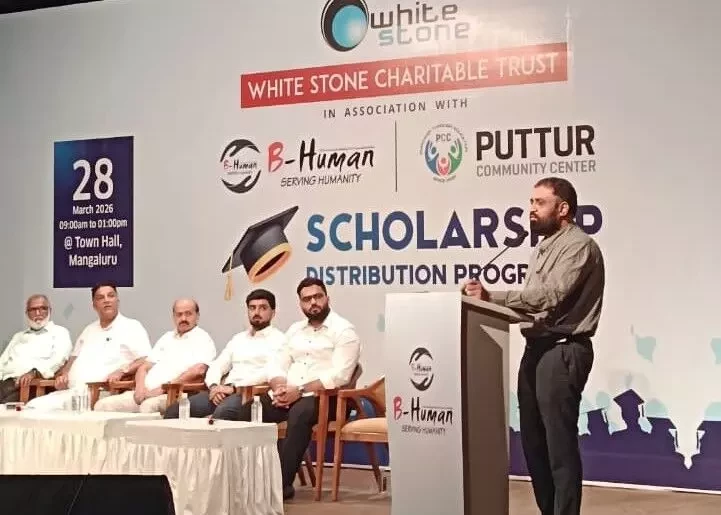
Businessman Whitestone Shareef, through the Whitestone Sharif Charitable Trust, distributed scholarships worth Rs 41 lakh to 272 students pursuing various vocational courses under the guidance of the Puttur Community Center. The programme was held at Kudmul Rangarao Town Hall in the city on Saturday.
Speaking on the occasion, Dr. U.T. Ifthikar Ali Fareed of the Karnataka State Allied and Healthcare Professions Council lauded the initiative, stating that Shareef Bolar of Whitestone has significantly supported students pursuing vocational education, enabling them to continue their studies in a better manner. He congratulated Whitestone Shareef for the initiative and also appreciated the efforts of the Puttur Community Center and B-Human Organization for their cooperation.
During the event, Whitestone Group CEO and Team B-Human President B.M. Shareef Bolar distributed the scholarships to the beneficiaries. Addressing the gathering, he said that as part of the trust’s plan for community development, scholarships have been provided to 272 students this year, expressing happiness over being able to extend such substantial support.
Hanif Puttur of the Puttur Community Center said that the organisation, which has been functioning for the past five years, has been supporting students under the leadership of Team B-Human, and scholarships have been distributed this year as well as in the previous year. He added that a total of 836 students are currently pursuing professional education, including 79 in MBBS, 25 in BDS, 26 in BAMS, 85 in CA, and 35 in Law. He emphasised that the initiative is not limited to any one community and that assistance is being extended to students from all communities.
Dakshina Kannada Qazi Thwaka Ahmed Musliyar, State Minorities Commission Director Jeelani Mokashi, Dakshina Kannada district officer Jinendra Kotian, Bearys Chamber of Commerce and Industry (BCCI) President S.M. Rasheed Haji, Muslim Educational Institutions Federation (MEIF) President Moosabba P. Beary Jokatte, Asif Deal and others were present.
source: http://www.english.varthabharati.in / Vartha Bharati / Home> Karavali / by Vartha Bharati / March 28th, 2026
The family of Ali Khan Mahmudabad, the Ashoka University professor whose social media post on Operation Sindoor set off a storm, footprint on Indian history stretches back to the medieval period.
Prof Ali Khan Mahmudabad, his father Raja Mohd Amir Mohd Khan (centre) and brother Rajkumar Amir Hasan Khan. Image courtesy: Mahmudabad Estate
The Supreme Court on March 16 closed the case against Prof Ali Khan Mahmudabad, the Ashoka University historian and columnist, after the Haryana government declined to grant sanction for his prosecution for his social media post on Operation Sindoor, a decision the court had itself nudged the state towards in an earlier order.
A Division Bench comprising Chief Justice of India (CJI) Suryakant and Justice Joymalya Bagchi had, in its order of January 6, asked the Haryana government to consider refusing sanction as a “one-time magnanimity.” The state obliged, bringing to an end a case that had drawn global attention to questions of free speech and academic freedom in India.
The matter had originated in a social media post made by Prof Mahmudabad in connection with Operation Sindoor of 2025. It snowballed rapidly after he received summons from the Haryana State Women’s Commission on May 12, 2025. The Supreme Court had granted him interim bail on May 21.
The man behind the case
Prof Mahmudabad holds a doctorate and a master’s degree from the University of Cambridge and teaches history and political science at Ashoka University. Also known by his courtesy title “Raja of Mahmudabad,” he is the latest in a long and storied line – a family whose footprint on Indian history stretches back to the medieval period.
During the Nawabi rule in Awadh and later under the British, the Rajas of Mahmudabad were among the largest Taluqdars, or feudal landholders, of the region, controlling over 400 villages and extensive urban properties across Lucknow, Sitapur, Lakhimpur Kheri and Nainital.
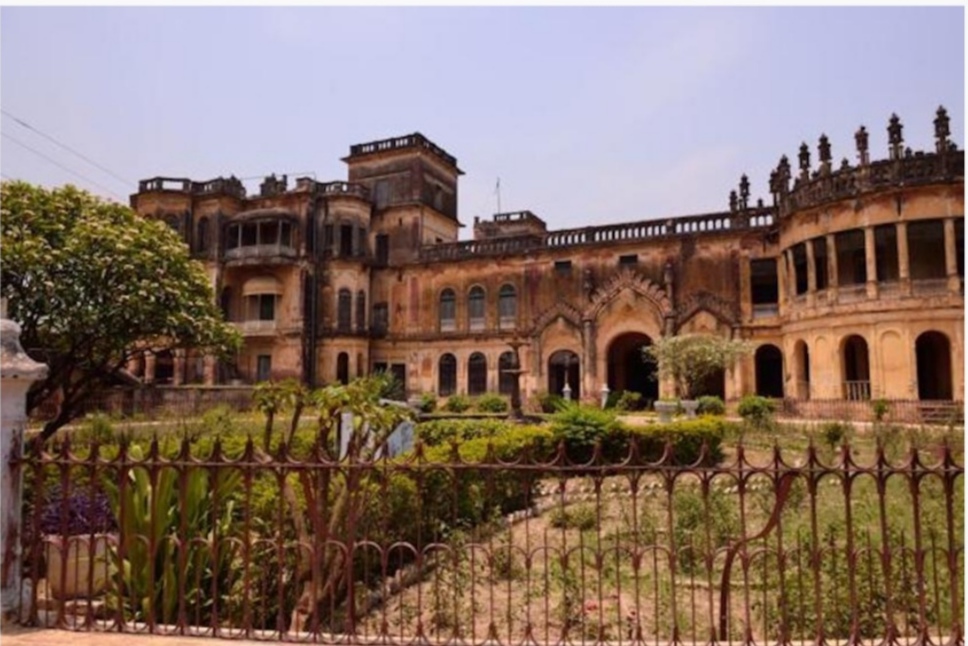
The family’s most visible legacy is the Mahmudabad Fort in Sitapur, a 19th century structure built in the Indo-Saracenic style that counts among the largest private residences in the world. It has hosted royalty, diplomats, political leaders and intellectuals from across the globe. Its library holds thousands of rare books and manuscripts in English, Hindi, Urdu, Sanskrit, Persian and Arabic – including handwritten copies of the Quran, the Bhagavad Gita and the Mahabharata, some dating to the 16th century.
The fort’s kitchens, too, have kept alive culinary traditions that have largely disappeared elsewhere. The original mud fort on the site was set ablaze by the British during the Revolt of 1857 and later rebuilt.
The family’s syncretic character runs deep. Its charitable endowments include temples, one gifted to the Udasin Sect founded by Sri Chand, son of Guru Nanak, replicas of the Muslim shrines of Najaf and Karbala in Iraq and a caravanserai built to shelter travellers.
Revolt of 1857 and after
The family’s political legacy is equally significant. During the Revolt of 1857, Muqim-ud-Daula Raja Nawab Ali Khan commanded several thousand rebel troops before being killed by British forces – the same forces that burned down his 16th century fort. His role has been documented in historical accounts of the period and in the Urdu novel “Aghaz-e-Sahar” by Khan Mahbub Tarzi, translated into English by Prof Mahmudabad himself under the title “The Break of Dawn.”
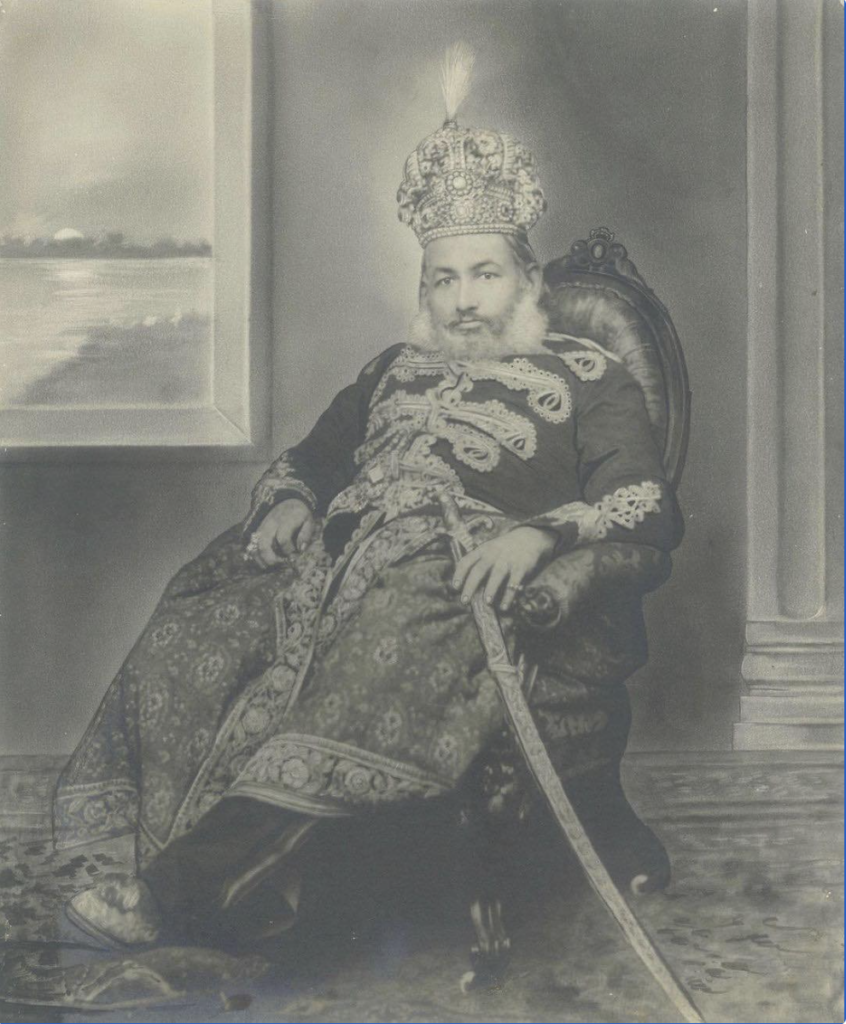
His son, Amir-ud-Daula Raja Sir Mohammad Amir Hasan Khan, served on the Legislative Council of the Lieutenant Governor of the North Western Provinces. Lucknow’s Amir-ud-Daula Public Library and Amir-ud-Daula Islamia Degree College are named after him.
Amir-ud-Daula Raja Sir Mohd Amir Hasan Khan. Image courtesy: Mahmudabad Estate
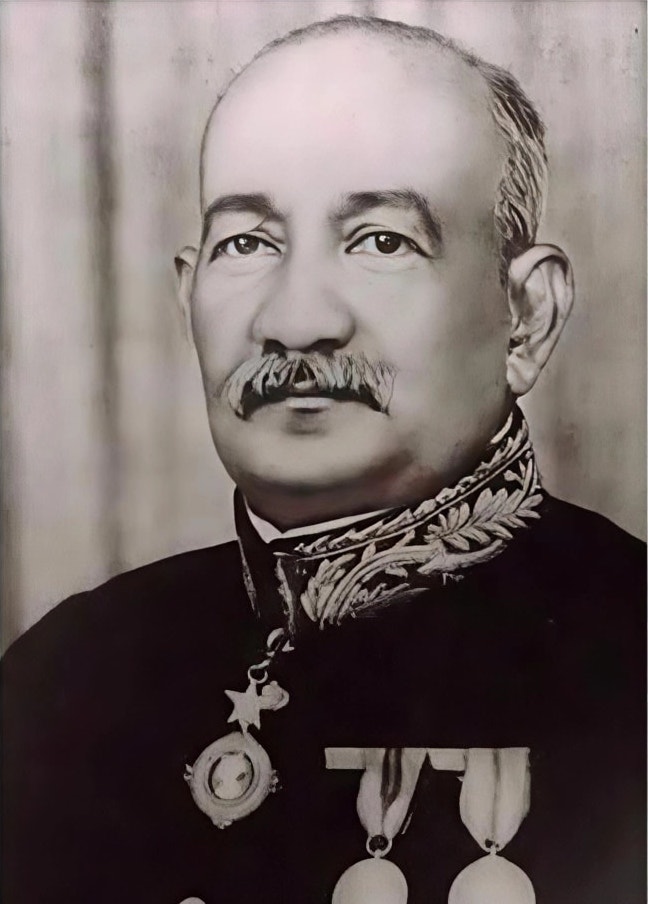
His son, Prof Mahmudabad’s great-grandfather Maharaja Sir Mohammad Ali Mohammad Khan was a pioneer of education who played a central role in establishing both Lucknow University and the Aligarh Muslim University, serving as the latter’s first Vice-Chancellor from 1920 to 1923. A residential hostel, Mahmudabad House, in Aligarh Muslim University’s Sir Shah Sulaiman Hall is named after him. He also served as the Home Member of the Governor of UP’s Executive Council.
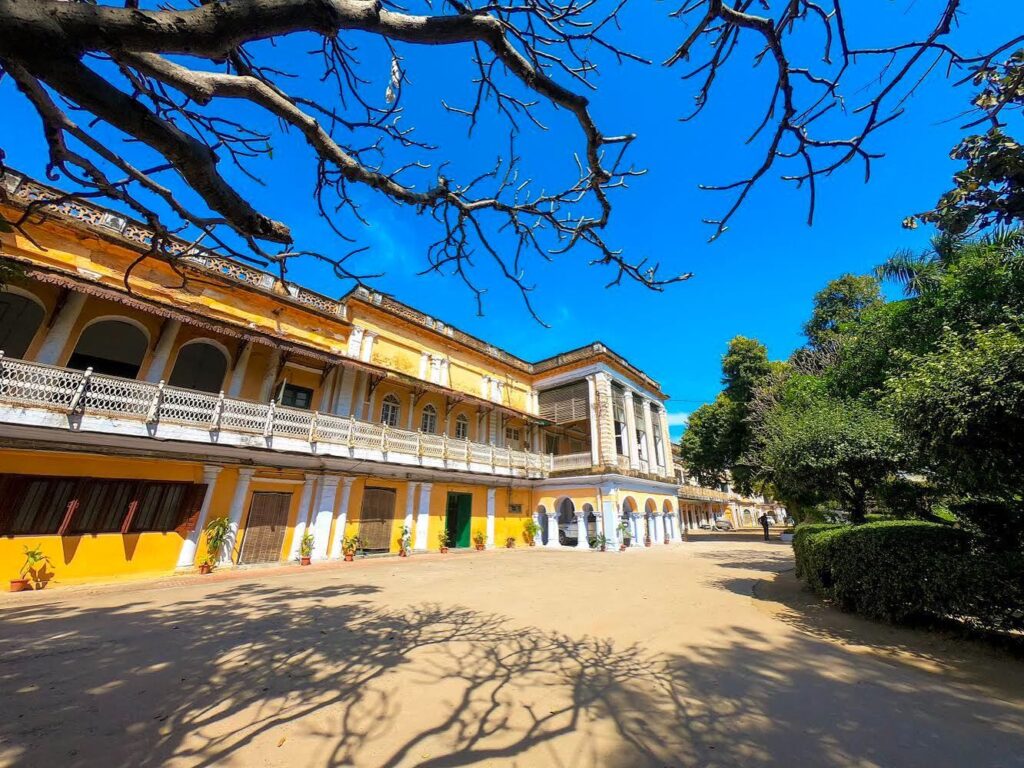
Mahmudabad House in Lucknow. Image courtesy: Mahmudabad Estate
A close friend of Motilal Nehru, he was instrumental in the signing of the Lucknow Pact of 1916 and served on the Imperial Legislative Council, the Council of State and the United Provinces Legislative Council. Lucknow’s Butler Palace, named after former UP Governor Sir Spencer Harcourt Butler, was built by him.
Maharaja Sir Mohammad Ali Mohammad Khan
Prof Mahmudabad’s father, Raja Mohammad Amir Mohammad Khan, was also a Cambridge graduate and an occasional professor of astrophysics at Imperial College London and the Institute of Astronomy at Cambridge. He was elected twice to the UP Legislative Assembly on a Congress ticket, in 1985 and 1989.
When he passed away in October 2023, thousands joined his funeral procession across religious lines, and schools, markets and commercial establishments across the area shut down in mourning.
A vindication, and a reminder
Prof Mahmudabad’s Lucknow home, Mahmudabad House – part of the historic Qaiserbagh Palace complex – continues to serve as a gathering place for intellectual and cultural exchange, much as the family’s spaces have for centuries.
The closure of his case, then, is more than a personal reprieve. Coming at a time of heightened scrutiny over free expression in India, it is being seen as a reaffirmation, however fragile, of the right to speak, question and dissent.
(Aman Alam is a student Barrister at the University of London and an Advocate in the Supreme Court. He has been a former Law Clerk-cum-Research Associate to a Supreme Court judge. He is also a Fellow of the Royal Asiatic Society of Great Britain and Ireland)
source: http://www.siasat.com / The Siasat Daily / Home> Featured News / by Aman Alam, Guest Contributor March 27th, 2026
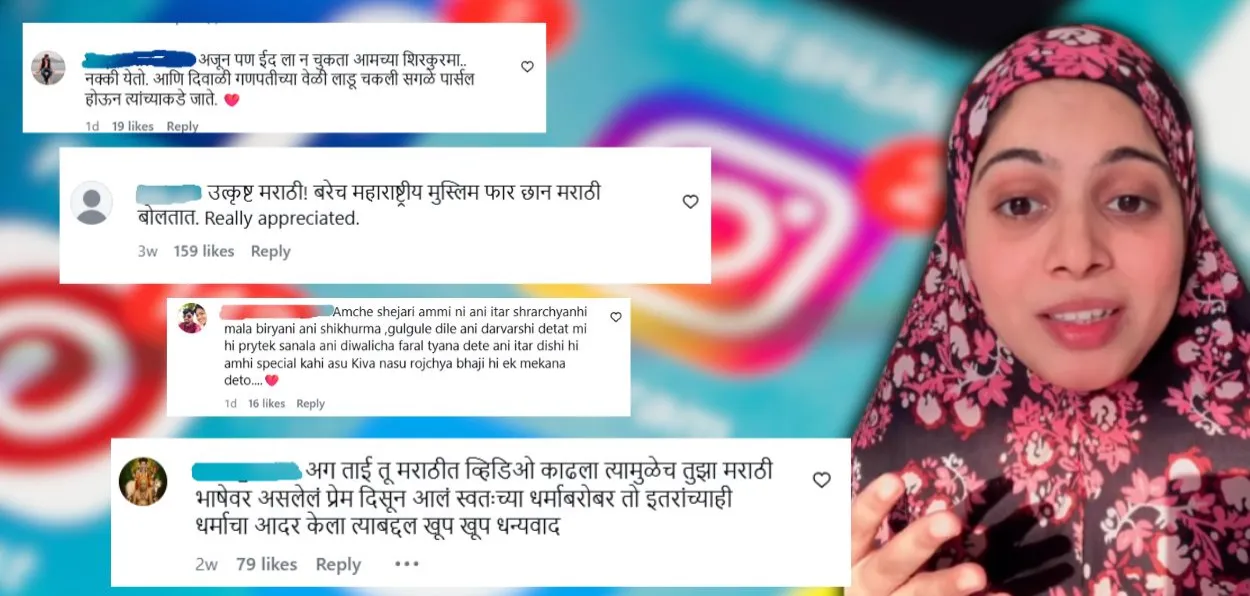
Using social media, Tanuja Mohsin Sande, a young Muslim woman from Pune, Maharashtra, is addressing a general perception that Muslims in Maharashtra do not speak Marathi. Tanuja has shattered this myth through her videos POSTED ONLINE.
In her videos, the Hijab-wearing Tanuja is seen communicating in fluent Marathi.
She says, “Many people think that Muslim people do not speak Marathi. But I want to tell them that I am a Maharashtrian Muslim and I was born in this very soil. Therefore, taking pride in the language, I decided to make my videos only in Marathi. And the majority of the audience watching my videos is Marathi-speaking. “
This style of speaking and her activism on social media were behind her special initiative ‘Ramadan Eid cha Dabba’ (Ramadan Eid Lunchbox).
Because of TV news and videos on social media, a perception is that there is inherent enmity between Hindus and Muslims.
However, if you peek into the life of a common man, the picture looks different. Through her initiative, Tanuja has highlighted this reality.
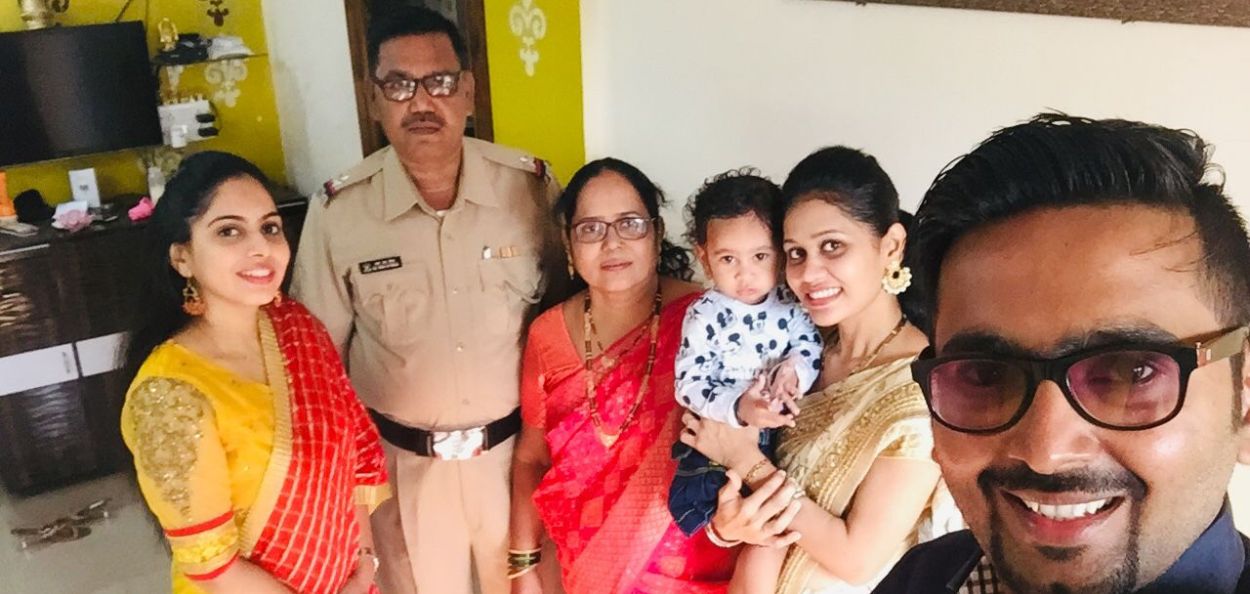
Tanuja spent her childhood in the police line of Dadar Hindmata, Mumbai. Her father, Rashid Shaikh, was an Assistant Sub-Inspector (ASI) in the Mumbai Police force.
Tanuja Mohsin Sande (Holding the baby) with her family
Spending her childhood in the police line, she says she never faced discrimination in the name of religion. Despite hers being the only Muslim house in the colony, she celebrated all festivals like Holi, Dahi Handi, and Shimga (a form of Holi) along with her Hindu neighbours.
Even today, while living in Pune, she preserves this legacy. Jain, Marwadi, and many Hindu families live in her society. On the day of Diwali, after the Lakshmi Pujan, the first plate of Faral (Diwali snacks) is delivered at her place.
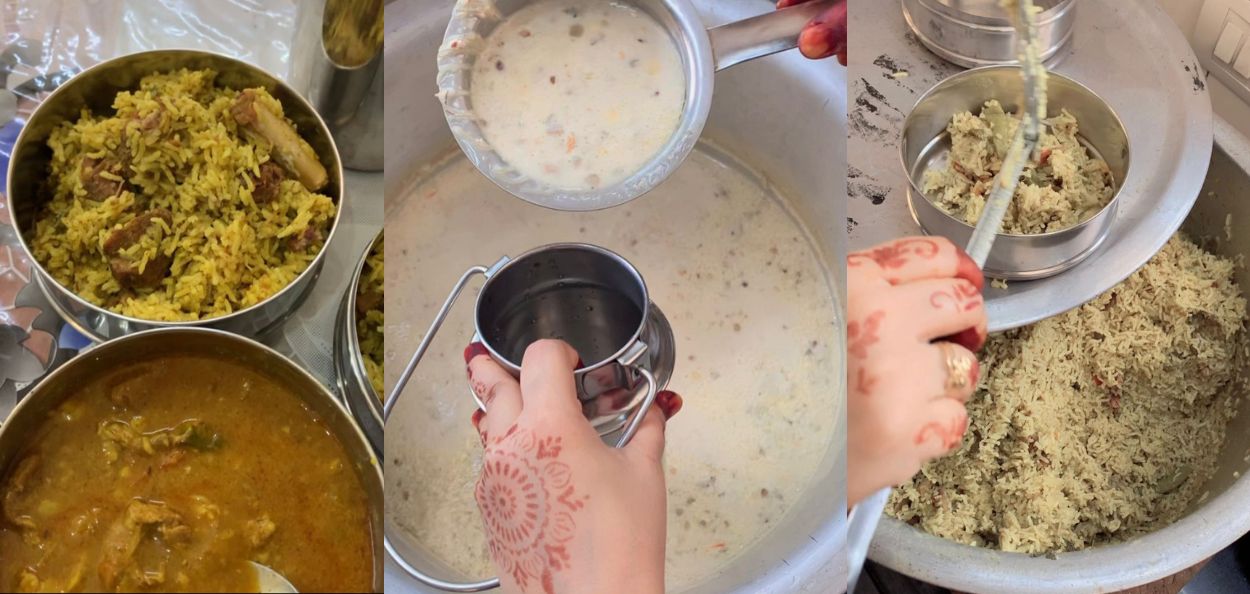
Similarly, on Eid, Tanuja personally delivers 30 to 35 lunchboxes to her neighbours before the family eats their meal. This year, under the concept of ‘Ramzadan Eid chaDabba‘, of her offering to her neighbours, Tanuja made a video and posted it on social media.
In that video, she mentioned that she was giving Eid lunchboxes to her Hindu neighbours. And she also gave a message of communal harmony.
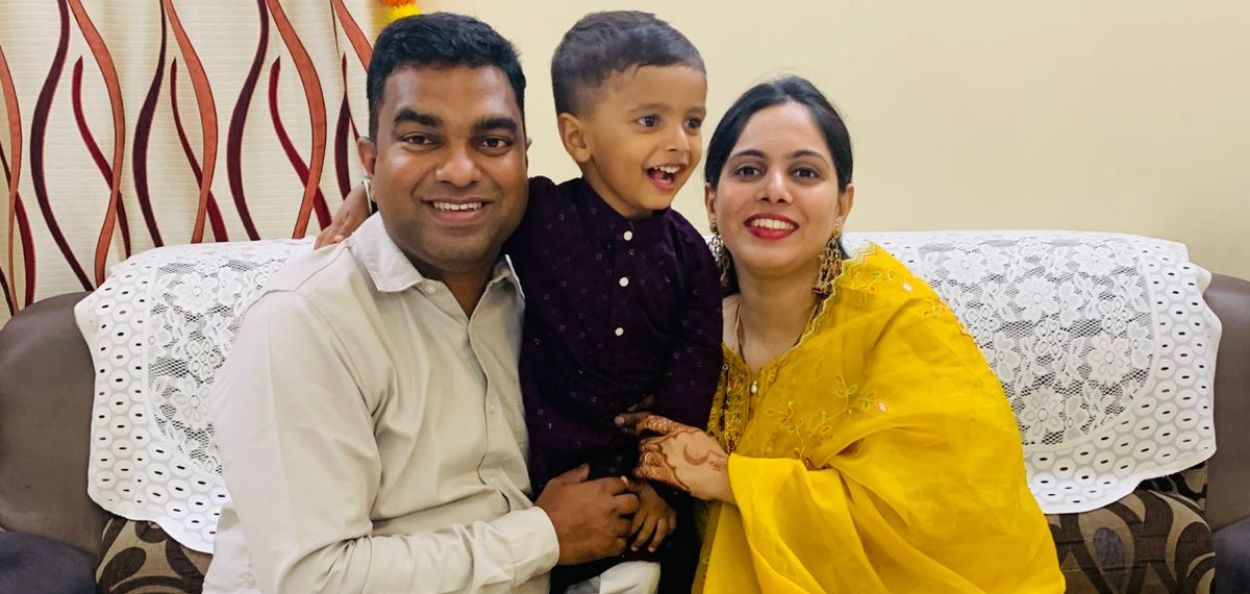
Tanuja Mohsin with her husband and son
Tanuja Sande explained the concept of her ‘Ramadan Eid cha Dabba’ initiative.
She says, “The politics in the name of religion makes people feel that Hindu-Muslim means something that creates enmity. But in reality, there is nothing like that. We are all still together today. When I participate in Hindu festivals, no one ever considers me an outsider. The things shown on social media are not true; what we actually experience is very different from the world of social media.”
She further says, “While giving the Ramadan lunchboxes, there is no compulsion of non-vegetarian food on anyone. To those who want vegetarian food, I lovingly give Sheer Khurma. Actually, our neighbours are very eagerly waiting for the Sheer Khurma.
How did you make this? What ingredients did you put in it? They ask for its recipe with such questions. And the joy one gets while sharing this recipe and spreading sweetness cannot be put into words.”
Tanuja Mohsin packing food for neighbours
After posting the video on social media on the day of Eid, she received a 99% positive response, but 1% of people made negative comments. Because of this, she was disturbed for some time. She thought of turning off the comment section or deleting the video.
She says, “When I turned off the comment section, people started messaging me. They requested, ‘Sister, your video is very nice, we want to share our experiences, please turn on the comments.'” After that, Tanuja decided to ignore the negativity. In her comment section, many people also wrote memories of their childhood Hindu-Muslim friendships.
Tanuja started a series of videos during Ramadanan. Interestingly, it was a question asked by the house help that made her start content creation.
She says, “I have a three-year-old son. When I fast for the whole month of Ramadan, our helper asks me many questions. Since she is a Hindu, it is natural for her to have all these questions. She was very curious to know how I would look after the baby while fasting.
“Will you stay hungry the whole day? How do you fast without drinking water? Do you break the fast after seeing the moon?”
The idea of making this series came from such simple questions of hers.” She made this series completely in Marathi, and people gave a tremendous response.
Tanuja is an engineering graduate, and she worked in the IT sector for 5 years. During the lockdown, she got married. She currently lives in Pune with her IT engineer husband, Mohsin Sande, and their 3-year-old son.
Her brother is also a content creator. He inspired Tanuja to do something different while staying at home. Her family supported her content creation. The very first like and comment on any of her videos comes from her father, she says.
Tanuja Sande’s message to the youth is: “Let politics remain only online. The politics on TV is different, and our real life is different. There has been equality of religions in Maharashtra right from the beginning, and it will remain so. My father raised me with this leaning, and I will raise my son with these same values.”
“In crises, nobody cares who is helping whom. Respecting all religions is Maharashtra’s culture, and we must preserve it,” she says.
source: http://www.awazthevoice.in / Awaz, The Voice / Home> Stories / by Bhakti Chalak / March 25th, 2026
(O Kashmiri language! I swear by you, you are my awareness, my vision too, the radiant ray of my perception, the whirling violin of my conscience.) — ‘Hymn to Language’, Rehman Rahi
Kashmir — where conflict and political upheaval always dominate headlines — is witnessing a quieter but equally pressing struggle, wages by a young girl, against the fading of the Kashmiri language, Koshur.
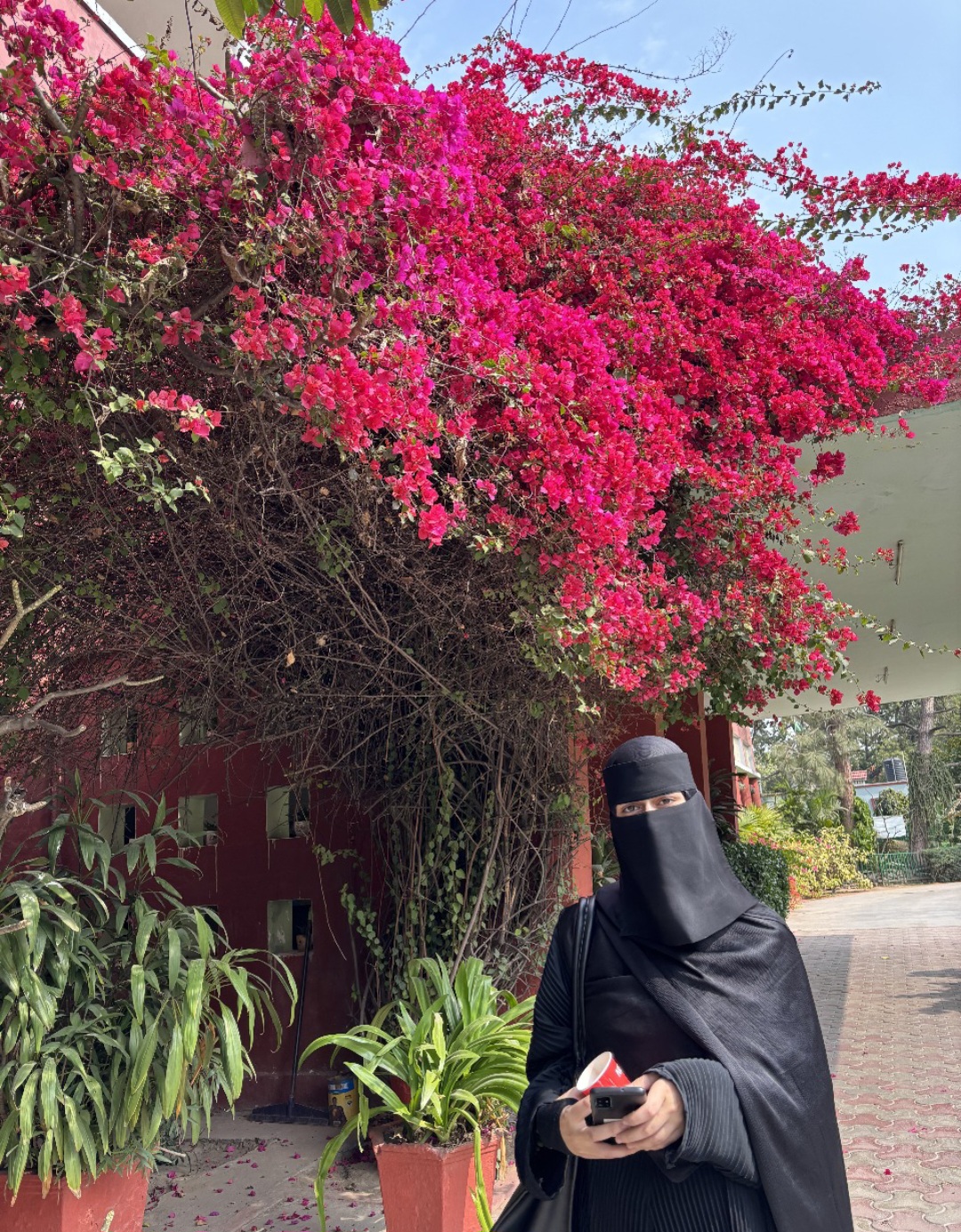
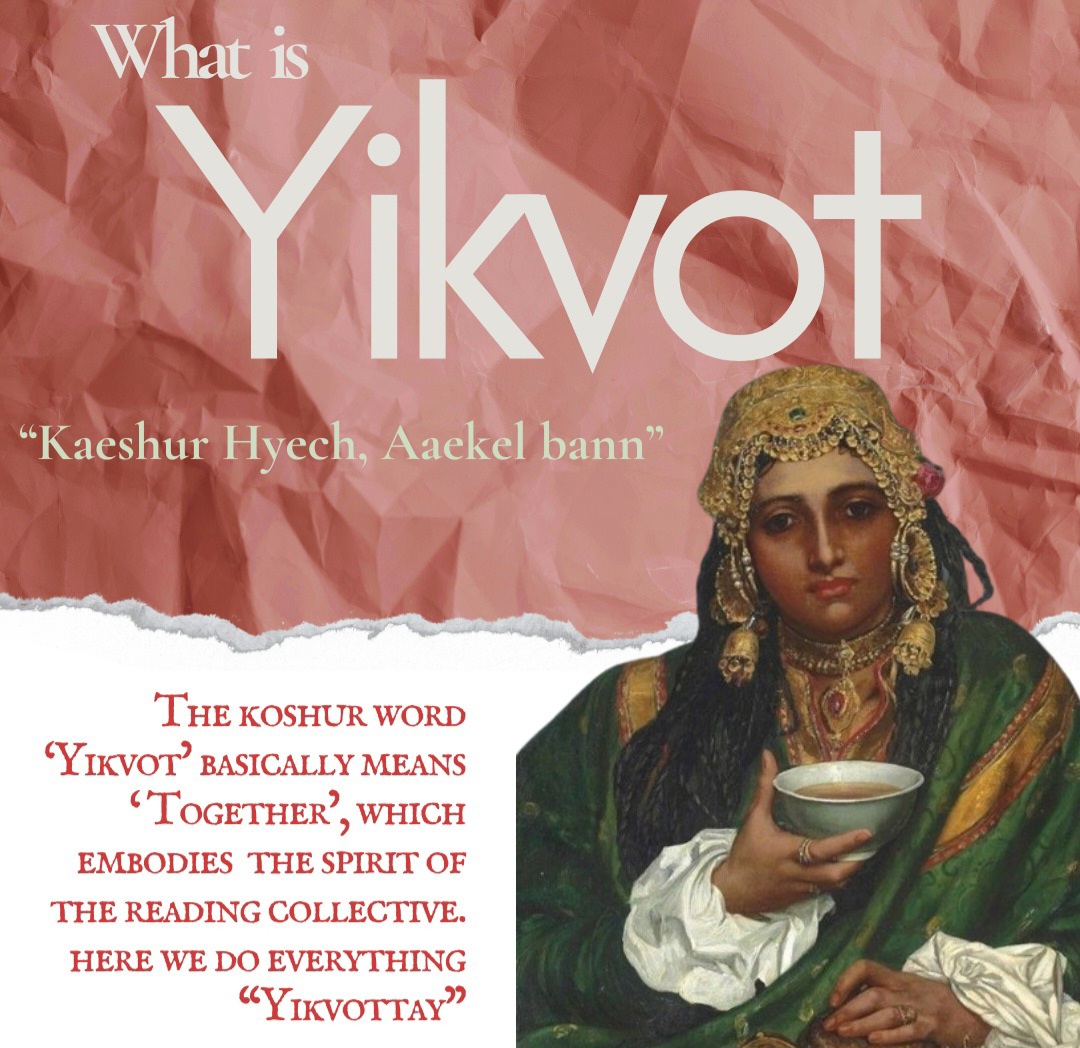
Seerat Hafiz, 22, a writer and peacemaker, has founded Yikvot — a reading club that means “together”. Her mission is to preserve and revive the beauty, rhythm and soul of Koshur, especially among the youth.
“For me, this language, which is now endangered, has been the voice of my grandparents. With English and Urdu-speaking parents, we often reserved our last bit of Kashmiri for the elderly, trying to converse only to bite back our tongue. This stands as a testament of resilience and faith,” she says.
She adds, “Kashmiri has a beautiful ring to it. I often say that it is impossible to translate any language without it missing its essence, its love and its sweetness. Kashmiri is one such language that not only is soulful and sweet but all kinds of emotions get expressed in it. I believe what was interesting to our readers was the quirky touch of Kashmiri added to the translation of the world-famous Russian author Dostoevsky’s Crime and Punishment.”
What began as a scribbled idea on a coffee shop napkin in 2024 has since blossomed into a vibrant literary movement, now boasting over 300 students. Through weekly meetups, social media outreach and intergenerational storytelling sessions, Seerat is not just preserving Koshur — she is giving it new life.
A revival
“The most exciting aspect of attending this class is the chance to get deeply involved with Kashmiri literature. The guest lectures, most of all, have been wonderfully insightful, making us get more intimately attached to our mother tongue. It was through Yikvot that I actually realised the richness of my own emotional attachment to the Kashmiri language,” says Fabiha (18), a student at Yikvot.
“Finding Yikvot marked a turning point for me. It made me want to be a part of a movement that not only preserves our language but also brings us back to our cultural heritage,” she adds.
For Noha (18), it is “how each of the members helps one another in learning new words and sentences, decoding the language” that makes Yikvot special. “I believe I have built a sense of connection and belonging at Yikvot. I joined the club because I wanted to meet people who do not have a prejudice against the language,” she says.
Unseen yet unshaken
But Seerat’s journey has not been without its obstacles. As a young woman wearing the veil, she is constantly met with judgment from within her own community. Her success and visibility have been tainted by criticism that targets not her work, but her appearance and gender.
“If my life were to be chronicled,” she says, “it would be marked by constant remarks like ‘itni padhayi karke niqab hi pehn’na tha aur reading club hi chalana tha?’” (After all that education, you chose to wear a veil and start just a reading club?) — a refrain meant to belittle her ambition and dim her spark.
Poster of Yikvot, the reading club
“For a year, I kept on pushing through and handling every aspect of Yikvot. I was not only a woman but a veiled one at that. Suddenly, my reading club fell into expectations of a religious entity, which was not my goal at all. People were joining my personal lifestyle with my work, causing distress. I believe the biggest setback of it all was to see different people coming up not to call me out or find any faults in the club, but to shame me for being an outspoken veiled woman and debating my hijab, perpetrating the same ideals that a woman who chooses to veil should not be in a public sphere,” Seerat says.
Despite these trials, Seerat stands resolute with form determination and a clear vision. Her dream is to transform Yikvot into a permanent, offline space — a cultural sanctuary where the young can learn and the old can guide, where Kashmiri literature, stories and emotions live on.
Valley’s lingering silence
Koshur, one of the oldest living languages in South Asia, belongs to the Dardic subgroup of the Indo-Aryan family. Despite its richness and resilience, the language has long faced systemic neglect.
In 1953, Kashmiri was officially removed from the school curriculum to “lighten the academic burden” on students. It was not until 2001 that it was reintroduced up to Grade 8 — yet even then, instruction remained patchy and symbolic at best.
By 2017, the then Jammu and Kashmir government made teaching regional languages, including Kashmiri, compulsory for grades 9 and 10 in areas where they are still spoken. But implementation has remained a major hurdle, with schools often ignoring the directive.
Dominant languages like Urdu, Hindi and English have taken center stage, pushing Kashmiri into the margins. This erosion is not merely linguistic — it is cultural, with each passing generation growing more detached from traditional poetry, storytelling and heritage.
Dr. Wahid Raza, a noted Kashmiri writer and columnist, highlights social media and unemployment as culprits. “People go abroad to earn a living, adopt the culture there, learn the local language and slowly start forgetting Kashmiri,” he tells TwoCircle.net.
Still, he believes there is hope. “As long as our dreams, our songs, our thoughts and our way of thinking live in our language, our language will stay alive.”
source: htttp://www.twocircles.net / TwoCircles.net / Home> News / by Sidra Fatima / April 30th, 2025